


Abstract
Every year in Bangladesh, approximately 5200 mothers die (172 maternal deaths/100,000 live births) due to maternal complications. The death rate is much higher in hard-to-reach areas and underprivileged communities, such as Bangladesh’s tea gardens. The women living in the tea garden areas are deprived of quality health care services due to inadequate knowledge, education, and access to health care services. Poverty and early marriage, followed by early pregnancy, are also triggering factors of maternal deaths in this community. This study explored the factors associated with maternal deaths in the underprivileged tea garden community in the Moulvibazar district of Bangladesh. It was a cross-sectional study conducted between January and March 2018. All maternal deaths reported by government health care providers in two sub-districts of Moulvibazar during 2017 were selected for community verbal autopsy using a structured questionnaire. Descriptive analysis was performed on quantitative data, and content analysis was performed on qualitative data. A total of 34 maternal deaths were reported in the two sub-districts in 2017, among which 15 deaths (44%) occurred in the tea garden catchment areas, where about 34% people live in the two upazilas. The majority of the mothers who died in the tea gardens delivered their babies at home (80%), many of whom also died at home (40%). Only 27% of women who died in the tea gardens received four or more antenatal care visits. Post-partum hemorrhage was found to be the leading cause of death (47%), followed by anemia (33%) and eclampsia (20%). There is a persistent high maternal mortality observed in the marginalized tea gardens, as compared to the general community of the Moulvibazar district, Bangladesh. The sustainable development goal (SDG) that has been set for maternal mortality rate (MMR) is 70/100,000 live births in Bangladesh. The findings of our study show that focused intervention is needed to reduce the burden of maternal deaths, which will improve the overall maternal health situation and also reach the SDG on time.
1. Introduction
Maternal death is a global public health agenda, costing more than 3 million women their lives every year [1]. Globally, every day approximately 830 women die from pregnancy and childbirth-related complications. The maternal mortality ratio (MMR) is 211 (i.e., 211 deaths per 100,000 live births), 99% of which occur in developing countries [2]. Bangladesh has achieved remarkable success in reducing maternal deaths in the last two decades [3]. However, there is still a long way to go to reach the sustainable development goal (SDG) target, which is 70 or fewer maternal deaths per 100,000 live births. The estimated maternal mortality in 2017 was 172 per 100,000 live births in comparison to 194 per 100,000 live births in 2010 [4,5]. The annual reduction rate is 5.6% at present. Though facility delivery increased from 9.1% to 28.8%, home delivery was still more than 62% [6]. The government of Bangladesh has prioritized the reduction of maternal death and in 2010 introduced the Maternal and Perinatal Death Review (MPDR) system in one district, which has now expanded to cover ten districts and approximately 20 million people [7]. Through the MPDR system, every maternal death has been captured and reported to the MPDR focal point by government health and family planning grassroots-level workers. Subsequently, community verbal autopsies have been conducted for every death at the residence of the deceased by first-line field supervisors, from the health and family planning department, in order to ascertain the possible causes of death [8,9]. The results of the verbal autopsy have been reviewed by the death review committee, led by the health managers [10], and the data analyzed by gynecologists and obstetricians in the medical college hospital at the divisional level [10,11]. The tea garden community, with a population of 400,000 is in the eastern part of the country, which is marginalized and hard to reach. The recent government data has shown that 39% of total maternal deaths in the Moulvibazar district are from the tea garden community. The district has a population of approximately two million and approximately 92 tea gardens. About 300,000 people are from the tea garden community. This study explored the factors associated with maternal deaths that have occurred in the underprivileged tea garden community and drawn comparisons with the corresponding general community in the Moulvibazar district of Bangladesh.
2. Materials and Methods
The study was conducted using the cross-sectional method. The duration of the study was from January to March 2018. The verbal autopsies of maternal deaths in two sub-districts of Moulvibazar in 2017, which were conducted by the government health care providers at community level using a structured questionnaire, were reviewed for this study. In-depth interviews were conducted with the deceased’s family members from in the tea gardens communities.
2.1. Study Site
The study was conducted in two purposively selected upazilas (sub-districts) of the Moulvibazar district. The maternal deaths reported and reviewed in the study areas in the year 2017 by the existing health system and the MPDSR program were considered in this study. The study covered 507,880 people in two sub-districts, or upazilas, of the Moulvibazar district: Sreemangal (278,232 people) and Kamalganj (229,648 people) [12]. The tea garden population living in these two upazilas is 171,075 [13,14,15].
2.2. Data Collection Tools
Maternal and Perinatal Death Surveillance and Responses (MPDSR) is a national program of the Ministry of Health and Family Welfare (MoH & FW) which follows a national guideline for MPDSR, that includes a training manual and data collection tools. The verbal autopsy tool is adopted from the World Health Organization (WHO) tool and contextualized according to country context. The study used the exiting MPDSR community death notification and verbal autopsy tools to gather quantitative data. The community death notification slip was used for the notification of maternal deaths in the community. The tool contains some key variables including the deceased’s name, age, time and place of delivery, place of death and detailed address. The verbal autopsy tool was used to collect in-depth information on maternal death at the household level. The verbal autopsy tool is a semi-structured questionnaire with several sections include questions on general information, antenatal care, delivery care, postnatal care, pregnancy-related complications, previous history and health-seeking behavior. For qualitative data, a guideline was developed for an in-depth understanding of the causes of death.
2.3. Training of the Field-Level Health Workers
The Bangladeshi government provided training for the different tier health care providers, using the MPDSR national training manual and tools at the sub-district level. The field-level government health care providers received training on community death notification, and the first-line supervisors on the field-level received training in community verbal autopsy. The training focused on the procedure to gather information on deaths from the community, reporting, registering deaths, and conducting and reporting verbal autopsies at the household level.
2.4. Death Notification
Trained grassroots-level health care providers, including health assistants (HA) and family welfare assistants (FWA), used a community network to identify and record a maternal death from their working catchment area. The community networks included community volunteers, members from a community group and community support group, teachers, religious leaders, members of local government, medicine shopkeepers, traditional birth attendants, village doctors, and other community members. After gathering initial information, the health care providers visited households to confirm suspected maternal deaths following the operational definition used in the MPDSR guidelines. The HA or FWA filled out the death notification slip and reported back to the nearby community clinic, which was the lowest-level primary health care center assigned per 6000 people, and also reported to the MPDSR focal person of the upazila.
2.5. Verbal Autopsy
The first line field supervisors, including health inspector, assistant health inspector and family planning inspector, were assigned to conduct the verbal autopsy of the maternal death at the household level. The health care provider was appointed by the MPDSR focal person of the upazila when they received a maternal death notification slip from a field-level health care provider. The health worker visited the household, met the relatives, and determined which respondent to interview. The health care provider used a structured community verbal autopsy form for the face-to-face interview, if needed, and also received information from associate respondents such as family members and neighbors who could provide more details. The health care provider acquired informed consent before the interview and returned the completed verbal autopsy form to the MPDSR focal person at the upazila.
2.6. In-Depth Case Studies
A guideline was developed to collect comprehensive information on maternal deaths. One trained research assistant was assigned to visit each of the deceased’s households, to meet with the family members and listen to each of the case stories. The information focused on the exploration of social behaviors, barriers, gaps, practices and challenges that may lead to the death of a woman.
2.7. Monitoring and Quality Assurance
MPDSR’s monitoring and quality assurance system monitors both community death slip notifications and verbal autopsy data collection. MPDSR’s quality improvement (QI) committee functions at the sub-district level, where the sub-district focal reports to the QI committee chair. Every monthly coordination meeting of the health and family planning department also discussed and analyzed the monthly MPDSR data, where all field-level health care providers participated.
Moreover, monthly coordination meetings were held at the upazila health complexes (primary health care center) where all field-level health workers participated to share their monthly updates. The MPDSR focal person and the chair of the MPDSR QI committee provided feedback on the data obtained. Among all the cases, 10% of the case studies were checked to ensure quality and consistency with the verbal autopsy data.
2.8. Cause Assignment of Verbal Autopsy
The verbal autopsy forms were reviewed by the physicians (consultant Obs-Gyane) who were trained earlier on this to assign the causes of death. If any query arose, the physicians discussed in a team to determine the causes of the deaths. Verbal autopsy data with inadequate information were coded as ‘undetermined’.
2.9. Data Analysis
The data analyst entered all of the data in Excel, cleaned it, and transferred it to SPSS version 21.0 for descriptive analysis. Data from tea garden and non-tea garden groups were compared using t-tests to determine whether differences between them were statistically significant or not. For qualitative data, content analysis was performed. The case reports were reviewed, read, and re-read to identify social determinants of maternal death and presented in a table by an anthropologist.
2.10. Ethical Approval
Ethical approval was obtained from the Ethical Review Committee, Centre for Injury Prevention and Research Bangladesh (ERC/CIPRB/2016/10). Informed consent was acquired from each respondent before the interview. The health workers maintained the anonymity and confidentiality of respondents through the process, taking a non-blaming approach. Participation in each interview was voluntary, and respondents were informed that they could skip any questions or leave the discussion at any point.
3. Results
3.1. Maternal Death Data Captured and Reported
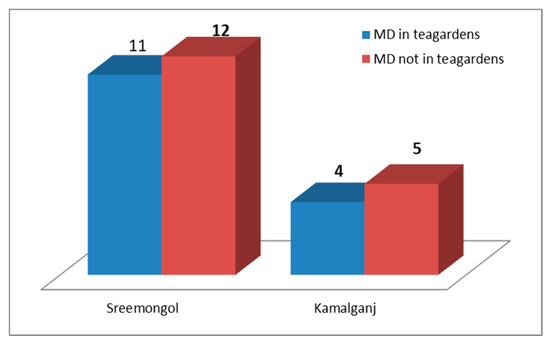
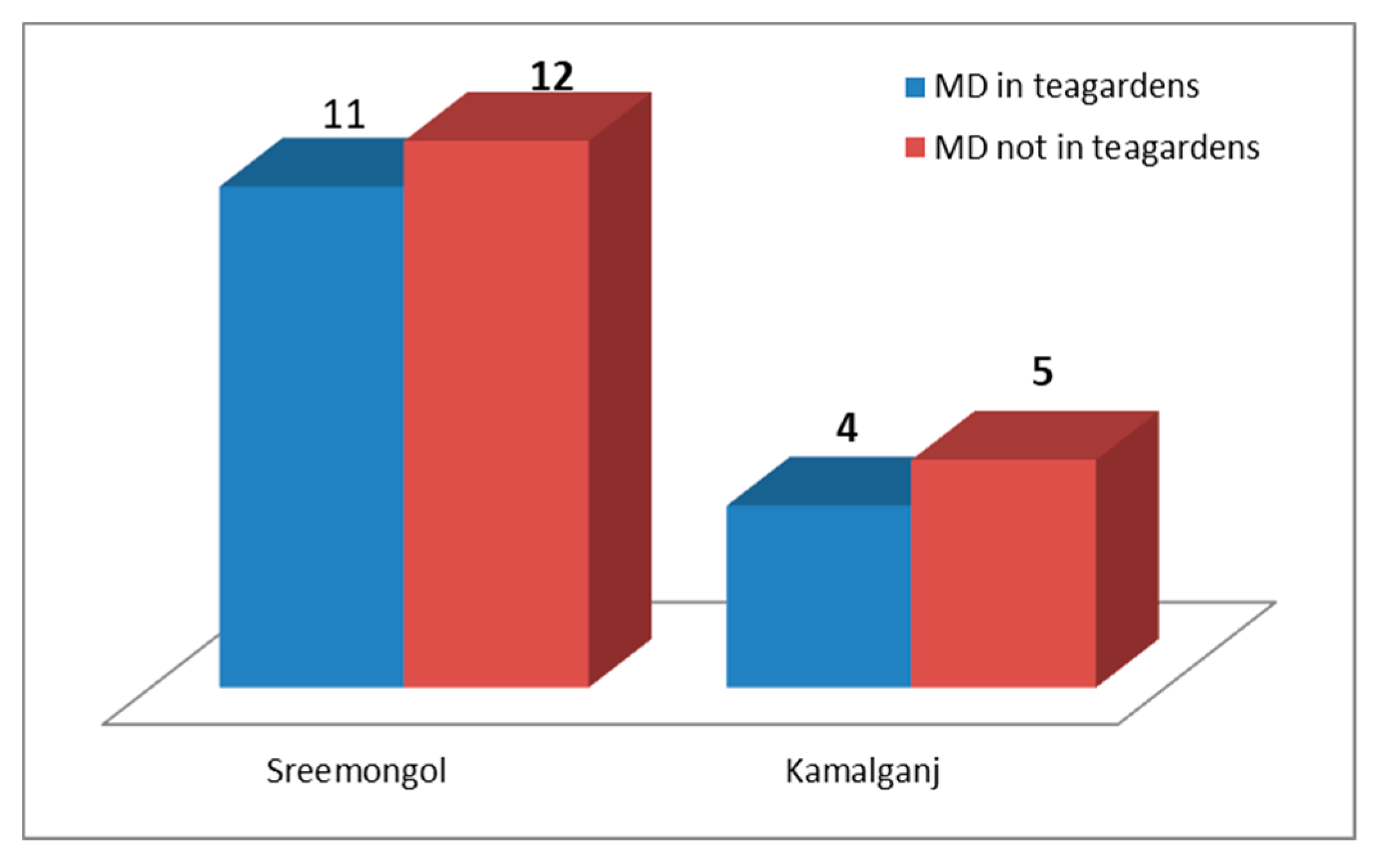
A total of 34 maternal deaths were identified and reported in the two sub-districts (Sreemangal and Kamalganj) of the Moulvibazar district in 2017. Among those, 15 deaths occurred in the tea garden catchment area. In Sreemangal, approximately 48% of deaths occurred in the tea garden, whereas 44% occurred in the Kamalganj upazila. The data were statistically significant (p value 0.001012, CI 95%) (Figure 1). Rajghat union had the highest number of maternal deaths out of the other unions in the Sreemangal upazila (n = 7) (Table 1).
Figure 1.
Comparing the maternal deaths in the tea gardens and outside of the tea garden communities in the sub-districts.
Table 1.
Number of deaths in the tea gardens in 2017.
3.2. Demographic Characteristics of the Deceased
The mean age of mothers who died inside the tea gardens was lower (24.9 y) than the age of those who died outside of the tea gardens (30.3 y). All of the women who died in the tea gardens had an education level below primary level. Around 27% of the women in the tea gardens received four or more antenatal care visits in comparison to outside of the tea garden, which is approximately 34%, with p value 0.004296, CI 95% (Table 2).
Table 2.
Demographic characteristics of the deceased mothers.
3.3. Place of Death of Women
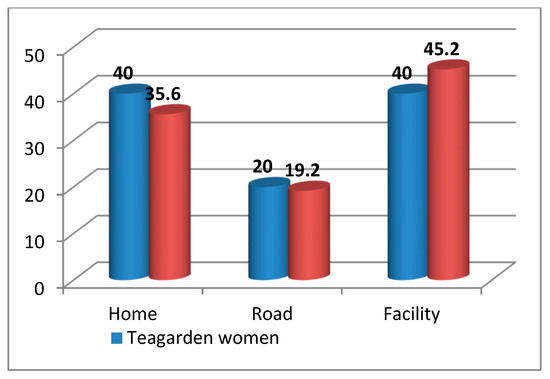
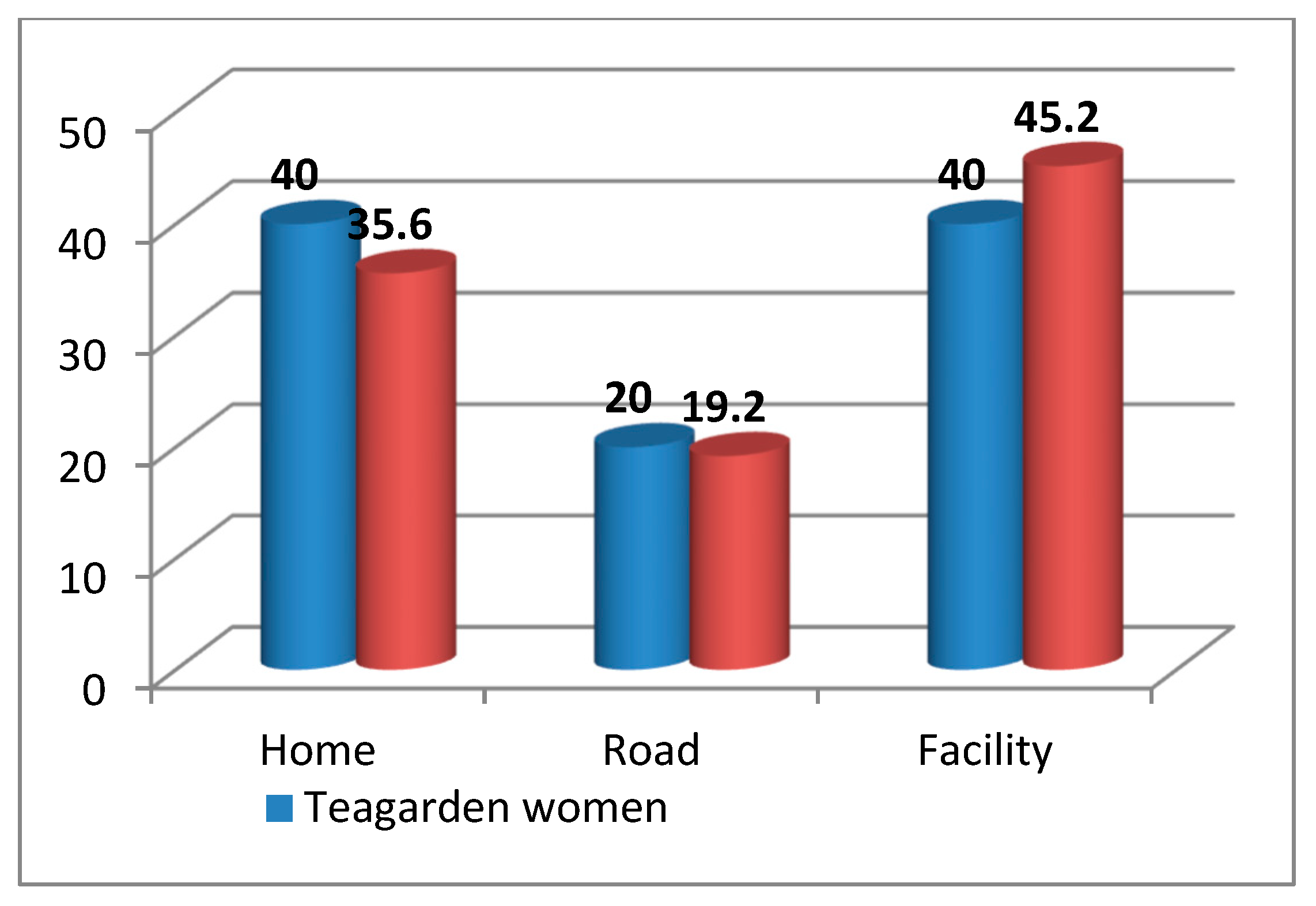
The tea garden mothers more often died in their homes (40%) and less frequently in health facilities (40%), as compared to mothers outside of the tea garden who died at home (35.6%) or in a facility (45.2%), which is statistically significant (p value < 0.0000001, CI 95%) (Figure 2).
Figure 2.
Comparing place of maternal deaths among tea garden and general communities.
3.4. Place of Delivery and Birth Attendant during Delivery
A total of 80% of the tea garden mothers delivered at home, whereas 58.5% of mothers outside of the tea gardens delivered at home, which is statistically significant (p value < 0.0000001, CI 95%). Every birth in the tea gardens was performed by traditional birth attendants. A total of 55.4% of mothers outside of the tea gardens delivered at home by means of traditional birth attendants.
3.5. Causes of Maternal Deaths
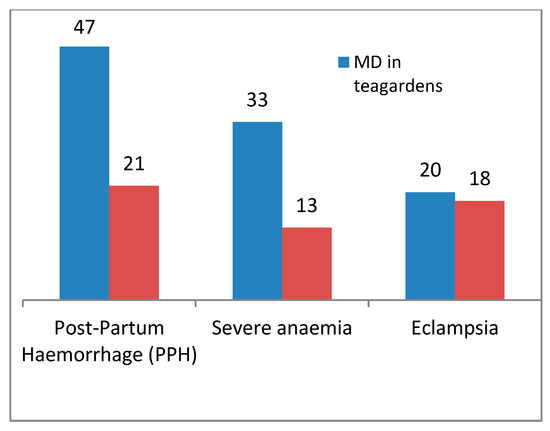
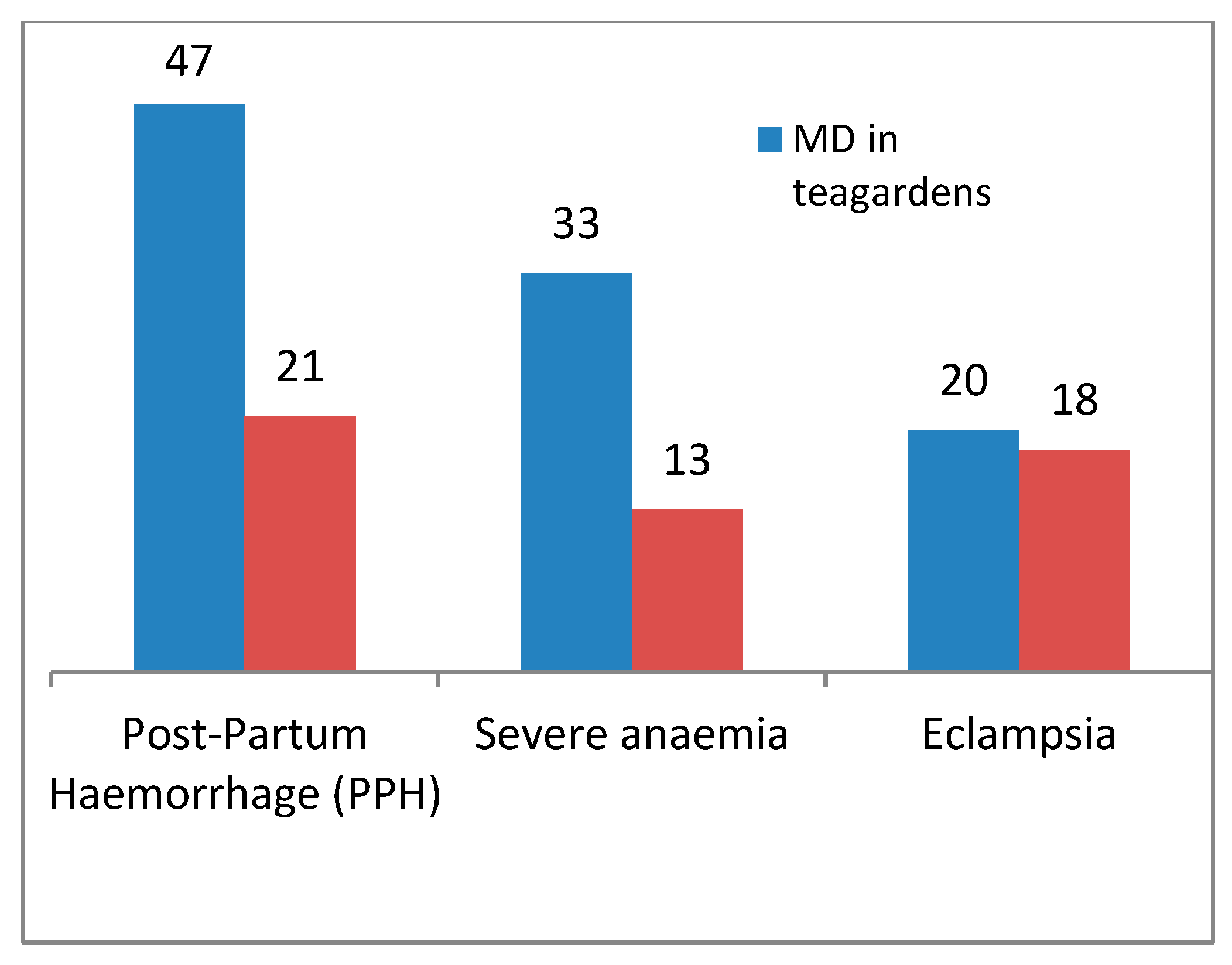
In the selected two sub-districts, 40% of all maternal deaths occurred due to post-partum hemorrhage, which is the leading cause of maternal deaths. The second leading cause was eclampsia (23%). Whereas among the 15 maternal deaths in the tea gardens, 47% occurred due to post-partum hemorrhage, which is statistically significant (p value < 0.0000001, CI 95%), 33% occurred due to severe anemia, and 20% occurred due to eclampsia (Figure 3).
Figure 3.
Cause of maternal deaths (n = 35) in tea gardens and outside tea gardens.
3.6. Decision and Transportation Delay among the Deaths in Tea Gardens
Among the 15 maternal deaths in the tea gardens, in 10 (67%) cases, it took one to two hours to make decisions after complications arise. Five (33%) cases needed around 2 h to reach the facility. Four mothers (27%) were not able to reach the facility and died in transit to the facility (Table 3).
Table 3.
Delay of mothers in decision making and transportation.
3.7. Findings from the Case Studies of Maternal Deaths in the Tea Gardens
The in-depth results of the cases in the tea gardens included age, profession, place of delivery and deaths, community delay, complications and causes of deaths. Social barriers of these deaths are also focused on in this table. The deaths occurred at an early age for the women. Lack of knowledge and practices regarding seeking maternal care, birth planning, delivery at the facility by skilled providers, ignorance of receiving care during pregnancy, during delivery and after delivery, were all typical features. The delay in making decisions after complications and also transportation delay was found to be common among the tea garden women (Table 4).
Table 4.
Detailed information of the maternal deaths in tea gardens (n = 15).
4. Discussion
The key findings of the study include that, of the maternal deaths in tea garden areas, 47% occurred due to post-partum hemorrhage (PPH), 33% occurred due to anemia, and 20% occurred due to eclampsia. PPH is also the leading cause of maternal death in the general communities (40%). The community delay includes decision delay and treatment delay, which were found to be common in tea garden areas. The main social factors behind the deaths in the tea gardens include the ignorance of receiving maternal care, ignorance in birth planning, and dependency on the traditional birth attendants during delivery and maternal complication.
The tea garden constitutes only one-third of the total population in these two sub-districts, but almost half of all maternal deaths occurred here. We found that, out of 34 maternal deaths in the two sub-districts, 15 deaths occurred in the tea garden catchment areas in 2017. The proportion is slightly higher than the report of the Directorate General of Health Services (DGHS) in 2014, that out of 120 maternal deaths, 47 deaths occurred in the tea garden area of the Moulvibazar district of Bangladesh. To accelerate the process, the government has introduced midwifery courses and allocation of the post to perform midwifery care in Bangladesh [16].
In this study, due to the low number of maternal deaths, we did not calculate the ratio; however, the recent Bangladesh maternal mortality and health care survey (BMSS) in 2016 mentioned that the current maternal mortality ratio in Bangladesh has stalled, in comparison to the last survey in 2010 [17]. As the tea garden is one of the hardest to reach areas with marginalized communities, this might play a role in the considerable number of maternal deaths [18].
Among all of the maternal deaths found in the two above mentioned sub-districts, post-partum hemorrhage (PPH) was responsible for 40% cases, and 23% occurred due to eclampsia. The scenario is almost the same in the tea garden, where 47% of mothers died from PPH and 20% from eclampsia. However, anemia was found to be another significant cause there, resulting in 33% of total maternal death. BMSS in 2016 reported that 55% of maternal deaths occurred due to PPH and eclampsia [17].
This study also revealed that 80% of the tea garden deceased mothers delivered at home, which is much higher compared to mothers outside of the tea gardens (58.5%), as well as the whole country, where the rate is 53% according to the BMMS 2016 report [17]. Since the majority of the deliveries in the tea gardens were conducted by the traditional birth attendant, future initiatives should focus on increasing the number of births attended by a skilled birthing attendant [19,20].
While analyzing the qualitative data, some social factors of maternal deaths in the tea gardens were revealed through the in-depth interviews, which included ignorance, negligence, and lack of knowledge and practices of maternity care. Believing in myths and superstition were also found to be indirectly responsible in the case of one maternal death. Moreover, a lack of coordination in the case of providing maternal and neonatal health care and the improper referral for related complications was also responsible, which was mentioned in a study done earlier in the tea garden [19].
The delay in decision making and transportation during maternal complications were found common within tea gardens in this study, which is quite similar to another study where community delay works as a vital factor in maternal deaths. In the majority of cases, it was found that the delivery was done by traditional birth attendants (TBA) who are very influential in the tea gardens, which constituted an essential factor in community delay [21].
Although the deaths were reported in the tea gardens, there was some delay in notification. Therefore, in some of the cases, verbal autopsy was not conducted within 21 days, as suggested in the national guideline. This may have resulted in an increased chance of recall bias. Moreover, the number of deaths is limited to tea gardens located in two sub-districts of the Moulvibazar district, which may not reflect the whole tea garden population, due to small sample size.
A considerable gap also existed in the timely referral of women from tea garden to the referral center, which should be minimized, because another study in the tea garden suggested that appropriate referral can save many maternal lives [20].
5. Conclusions
Marginalized communities such as tea gardens are still living without access to quality maternal health care. The high number of maternal deaths demand special intervention addressing the disparity in maternal health. Bangladesh is well on track to achieving the sustainable development goal regarding maternal deaths; however, the findings clearly highlight that improvement of quality maternal health care services in this community could affect overall maternal death reduction in the district. Bagan Mayer Jonno is an intervention which started to work for tea garden women in selective tea gardens with the collaboration of Government of Bangladesh (GoB), tea garden authorities, United Nations Population Fund (UNFPA) and Centre for Injury Prevension and Research, Bangladesh (CIPRB). Further investigations may be required on a larger scale in similar types of marginalized community to explore similar types of challenges for better intervention package design.
Author Contributions
A.B., A.H., A.S.M.A., F.R., S.D. and conceptualized and designed the study; A.S.M.A. assisted with data collection; A.B., A.S.M.A. and A.H. analyzed the data; A.B. and A.S.M.A. wrote the initial draft, S.D., F.R. and A.H. reviewed the manuscript. All authors have read and agreed to the published version of the manuscript.
Funding
No specific funding received for this study. However, the project in the marginalized tea garden community of Bangladesh named ‘Bagan Mayer Jonno’ is implemented through the funding support from UNFPA, Bangladesh.
Acknowledgments
We are grateful to Progga Paromita, Research Assistant from CIPRB, for editing the manuscript.
Conflicts of Interest
The authors declare that they have no competing interests.
Abbreviations
| FWA | family welfare assistant |
| HA | health assistants |
| MPDR | Maternal and Perinatal Death Review |
| MPDSR | Maternal and Perinatal Death Surveillance and Responses |
| MoH and FW | Ministry of Health and Family Welfare |
| PPH | post-partum hemorrhage |
| QI | quality improvement |
| SDG | sustainable development goal |
| TBA | Traditional birth attendant |
References
- GBD 2015 Maternal Mortality Collaborators. Global, regional, and national levels of maternal mortality, 1990–2015: A systematic analysis for the Global Burden of Disease Study 2015. Lancet 2016, 388, 1775–1812. [Google Scholar] [CrossRef] [Scilit]
- Alkema, L.; Chou, D.; Hogan, D.; Zhang, S.; Moller, A.B.; Gemmill, A.; Fat, D.M.; Boerma, T.; Temmerman, M.; Mathers, C.; et al. Global, regional, and national levels and trends in maternal mortality between 1990 and 2015, with scenario-based projections to 2030: A systematic analysis by the UN Maternal Mortality Estimation Inter-Agency Group. Lancet 2016, 387, 462–474. [Google Scholar] [CrossRef] [Scilit]
- National Institute of Population Research and Training (NIPORT). Bangladesh Demographic and Health Survey. 2014. BDHS. 2016. Available online: http://www.niport.gov.bd (accessed on 29 November 2019).
- National Institute of Population Research and Training (NIPORT); MEASURE Evaluation; Icddrb. Bangladesh Maternal Mortality and Health Care Survey 2010; NIPORT: Dhaka, Bangladesh, 2012; Available online: https://www.measureevaluation.org/resources/publications/tr-12-87 (accessed on 29 November 2019).
- Sample Vital Registration System (SVRS). Bangladesh Sample Vital Statistics Report 2017. Available online: http://bbs.portal.gov.bd/sites/default/files/files/bbs.portal.gov.bd/page/a1d32f13_8553_44f1_92e6_8ff80a4ff82e/Bangladesh%20%20Statistics-2017.pdf (accessed on 29 November 2019).
- El Arifeen, S.; Hill, K.; Ahsan, K.Z.; Jamil, K.; Nahar, Q.; Streatfield, P.K. Maternal mortality in Bangladesh: A Countdown to 2015 country case study. Lancet 2014, 384, 1366–1374. [Google Scholar] [CrossRef] [Scilit]
- National Institute of Population Research and Training (NIPORT). Bangladesh Demographic and Health Survey 2017–2018. Bangladesh. 2019. Available online: https://www.dhsprogram.com/pubs/pdf/PR104/PR104.pdf (accessed on 29 November 2019).
- Biswas, A.; Rahman, F.; Eriksson, C.; Dalal, K. Community Notification of Maternal, Neonatal Deaths and Still Births in Maternal and Neonatal Death Review (MNDR) System: Experiences in Bangladesh. Health 2014, 6, 2218–2226. [Google Scholar] [CrossRef]
- Biswas, A.; Rahman, F.; Halim, A.; Eriksson, C.; Dalal, K. Maternal and Neonatal Death Review (MNDR): A Useful Approach to Identifying Appropriate and Effective Maternal and Neonatal Health Initiatives in Bangladesh. Health 2014, 6, 1669–1679. [Google Scholar] [CrossRef]
- Halim, A.; Utz, B.; Biswas, A.; Rahman, F.; van den Broek, N. Cause of and contributing factors to maternal deaths. BJOG 2014, 121 (Suppl. 4), 86–94. [Google Scholar] [CrossRef] [Scilit] [PubMed]
- Biswas, A.; Rahman, F.; Halim, A.; Eriksson, C.; Dalal, K. Experiences of Community Verbal Autopsy in Maternal and Newborn Health of Bangladesh. HealthMed 2015, 9, 329–338. [Google Scholar]
- Banglapedia. Moulvibazar District. 2015. Available online: http://en.banglapedia.org/index.php?title=Maulvibazar_District (accessed on 5 March 2015).
- Gain, P. Slaves in These Times:Tea Communities of Bangladesh; Society for Health Extension and Development (SHED): Dhaka, Bangladesh, 2016; Available online: https://www.sehd.org/publications/tea-workers/121-slavesinthesetimes (accessed on 29 November 2019).
- Halim, A.; Biswas, A.; Abdullah ASMHalim, A.; Biswas, B.; Abdullah, A.S.M. Report on Baseline Survey of teagardens in Bangladesh 2016. CIPRB. Available online: https://www.researchgate.net/publication/327882331_Report_on_Baseline_Survey_of_teagardens_in_Bangladesh (accessed on 29 November 2019).
- International Labour Organization (ILO). A Study Report on Working Conditions of Tea Plantation Workers in Bangladesh. 2016. Available online: https://www.ilo.org/wcmsp5/groups/public/---asia/---ro-bangkok/---ilo-dhaka/documents/publication/wcms_563692.pdf (accessed on 29 November 2019).
- The Daily Star. Midwifery-Led Maternal Health. 2015. Available online: http://www.thedailystar.net/round-tables/midwifery-led-maternal-health-88339 (accessed on 28 June 2015).
- National Institute of Population Research and Training; International Centre for Diarrhoeal Disease Research, Bangladesh; MEASURE Evaluation. Bangladesh Maternal Mortality and Health Care Survey 2016: Preliminary Results. 2016. Available online: https://www.measureevaluation.org/resources/publications/tr-17-218 (accessed on 29 November 2019).
- Biswas, A.; Dalal, K.; Abdullah, A.S.M.; Gifford, M.; Halim, M. Maternal complications in a geographically challenging and hard to reach district of Bangladesh: A qualitative study. F1000Research 2016, 5, 2417. [Google Scholar] [CrossRef] [Scilit] [PubMed]
- Biswas, A.; Abdullah, A.; Ferdoush, J.; Doraisyami, S.; Halim, M.A. What’s Need for Maternal and Neonatal Health Service Delivery in the Marginalized Tea Garden Community of Bangladesh?—A Qualitative Study. Integr. J. Glob. Health 2018, 2. [Google Scholar] [CrossRef]
- Biswas, A.; Anderson, R.; Doraiswamy, S.; Abdullah, A.S.M.; Purno, N.; Rahman, F.; Halim, A. Timely referral saves the lives of mothers and newborns: Midwifery led continuum of care in marginalized tea garden communities—A qualitative case study in Bangladesh. F1000Research 2018, 7, 365. [Google Scholar] [CrossRef] [Scilit] [PubMed]
- Abdullah, A.S.M.; Hossian, M.S.; Rahman, F.; Halim, A.; Biswas, A. Community Delay in Decision Making and Transferring Complicated Mothers at Facilities Caused Maternal Deaths: A Qualitative Study in Rural Bangladesh. Integr. J. Glob. Health 2017, 1, 15. [Google Scholar]

© 2020 by the authors. Licensee MDPI, Basel, Switzerland. This article is an open access article distributed under the terms and conditions of the Creative Commons Attribution (CC BY) license (http://creativecommons.org/licenses/by/4.0/).