Article

Anti-Inflammatory and Mineralization Effects of Bromelain on Lipopolysaccharide-Induced Inflammation of Human Dental Pulp Cells
1
Department of Conservative Dentistry, Dental Science Research Institute, School of Dentistry, Chonnam National University, Gwangju 61186, Korea
2
Department of Conservative Dentistry, School of Dentistry, Jeonbuk National University, Jeonju 54896, Korea
3
Department of Oral Medicine, Dental Science Research Institute, School of Dentistry, Chonnam National University, Gwangju 61186, Korea
*
Authors to whom correspondence should be addressed.
Joo-Hyun Hong and Mi-Ra Kim contributed equally to this work as first authors.
Medicina 2021, 57(6), 591; https://doi.org/10.3390/medicina57060591

Submission received: 28 April 2021 / Revised: 3 June 2021 / Accepted: 4 June 2021 / Published: 8 June 2021
(This article belongs to the Special Issue Research on Dental Biomaterials and Equipment)

Abstract

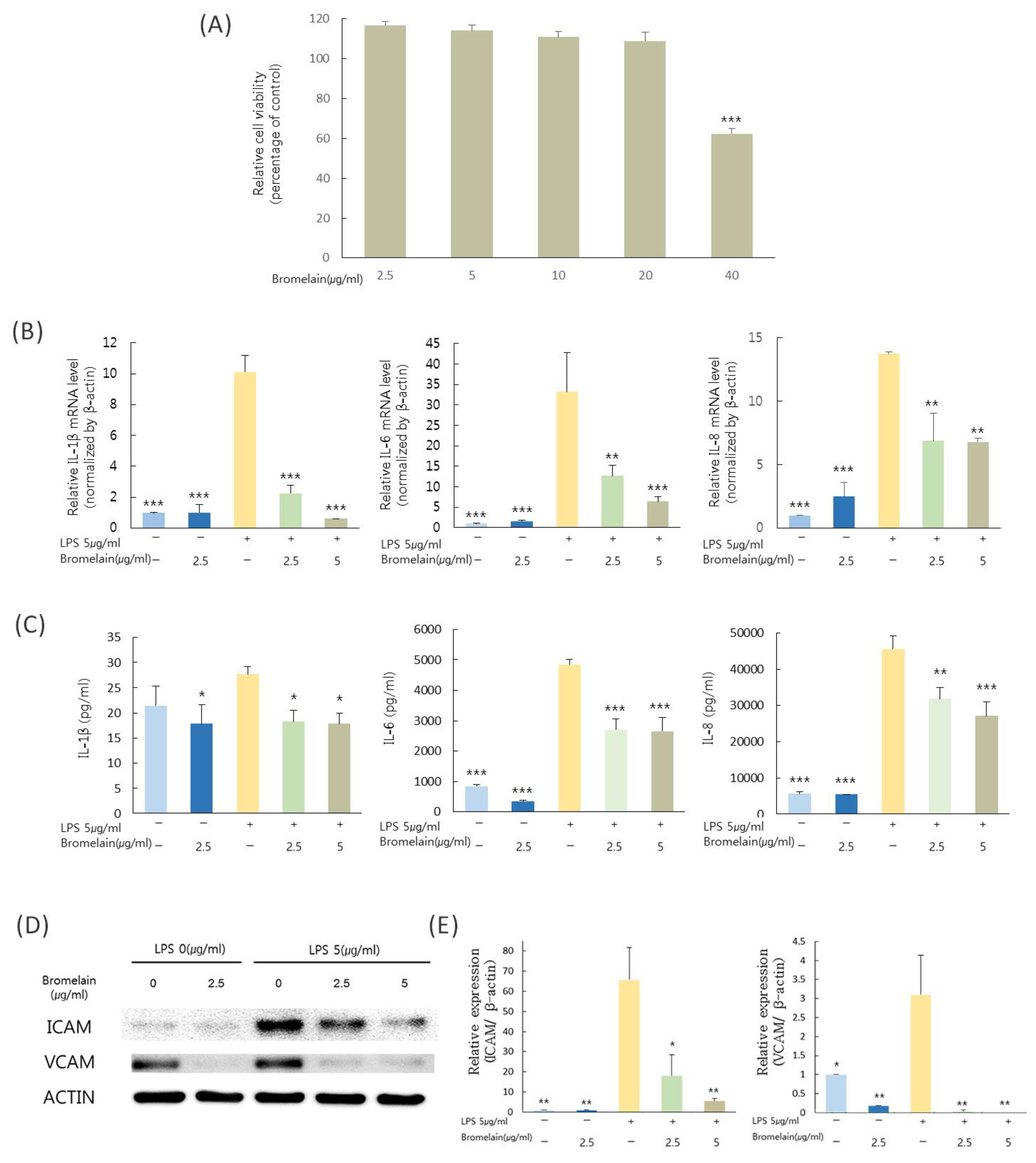
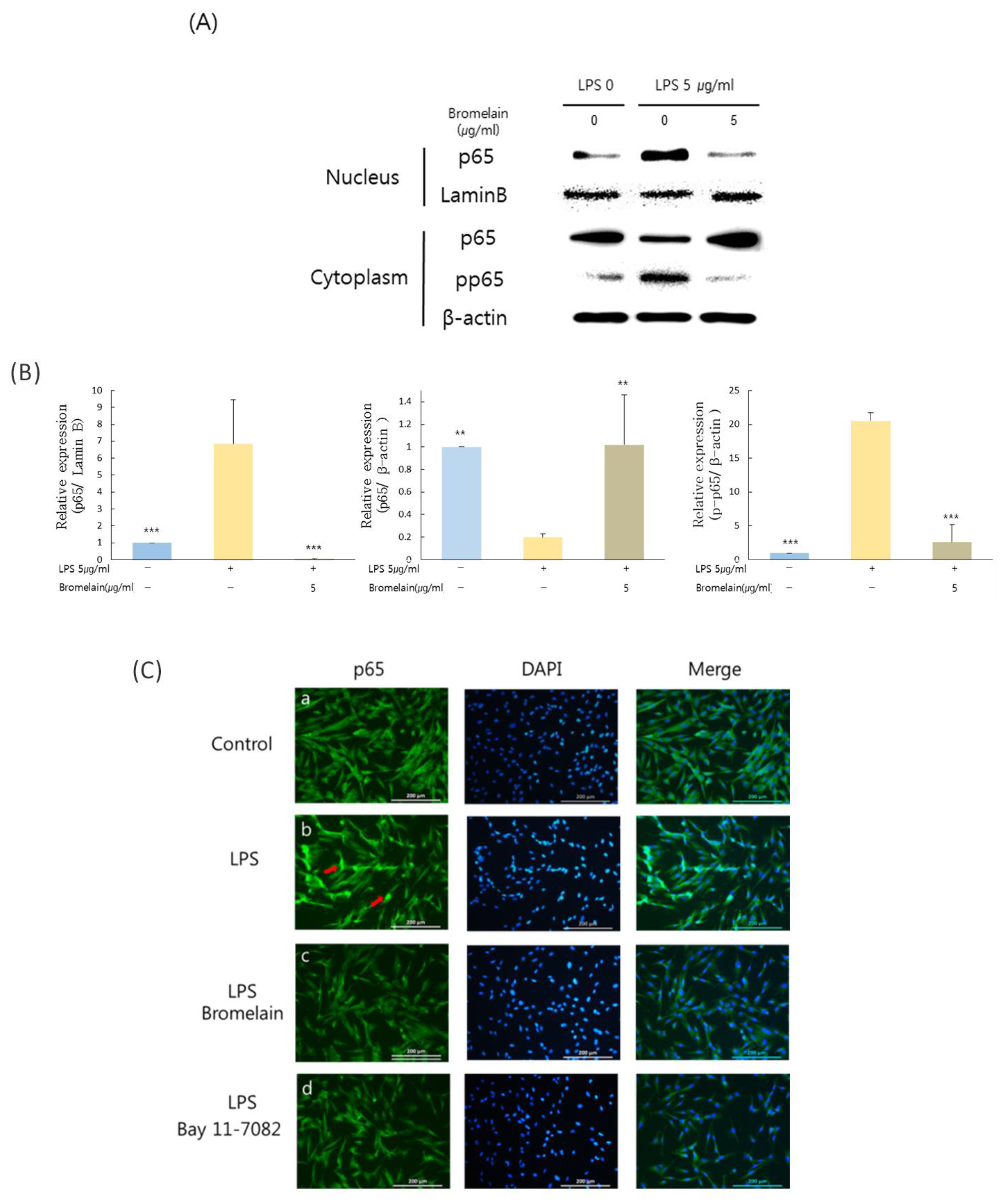
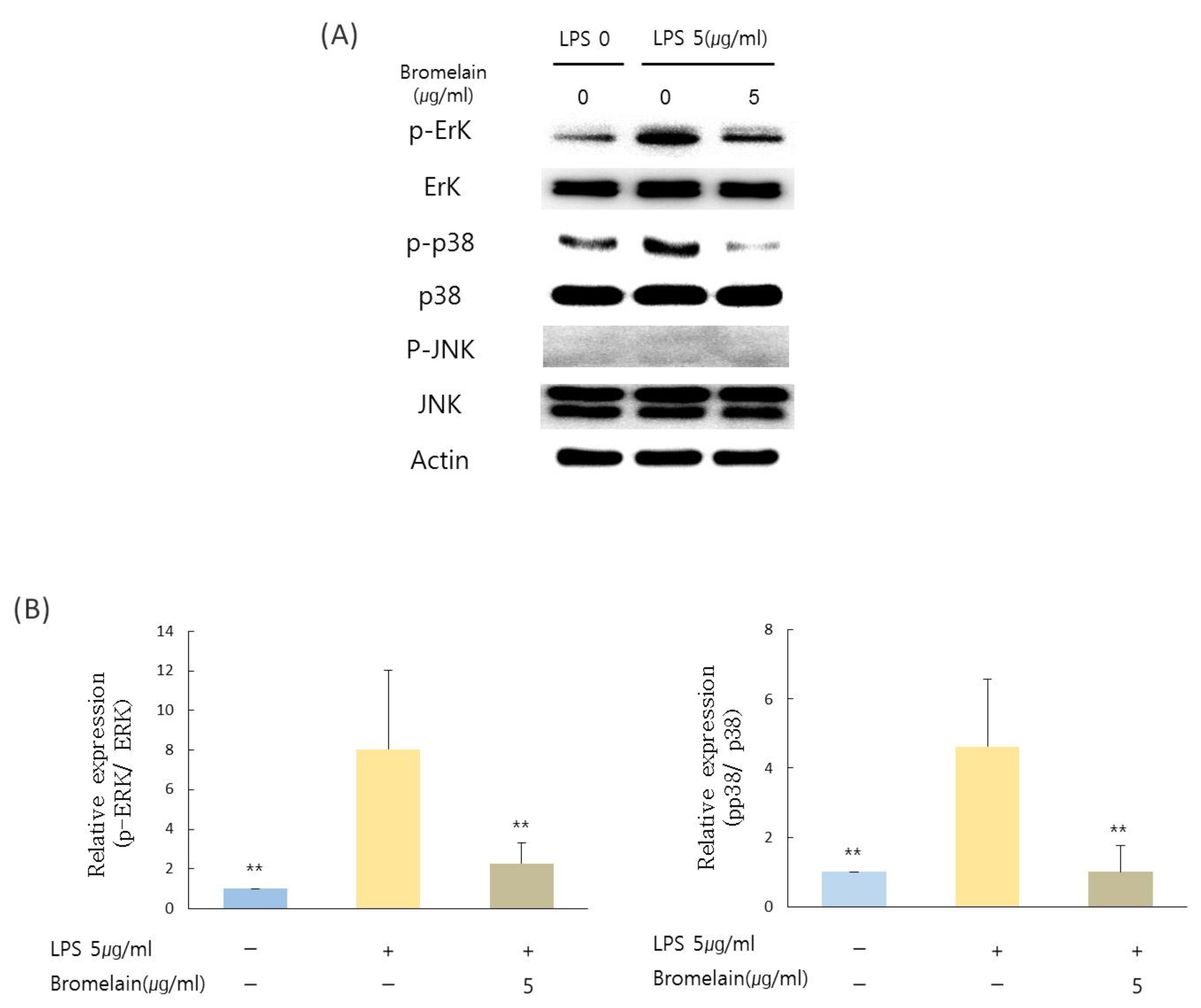
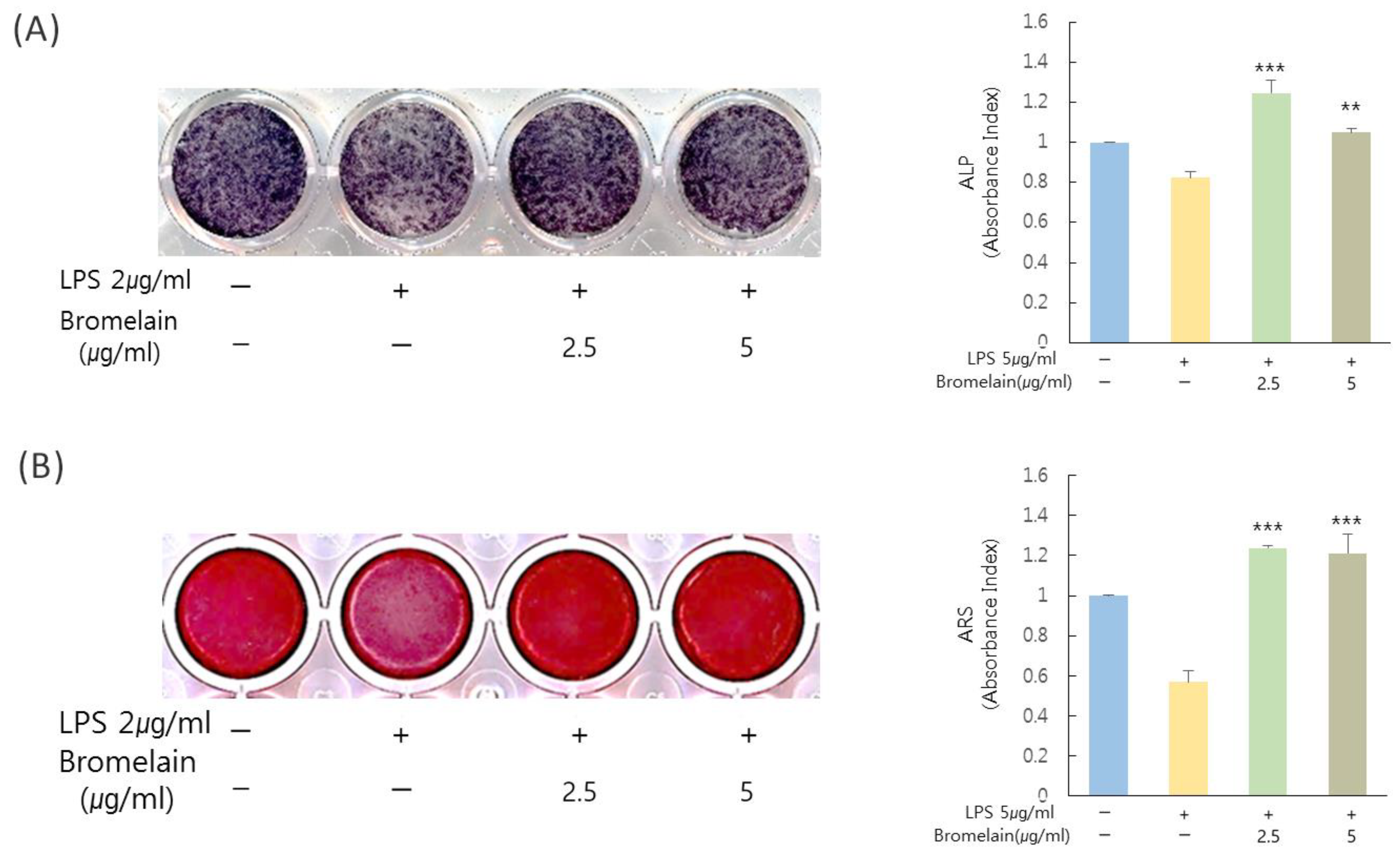
Background and Objectives: Bromelain is a mixture of protease obtained from pineapple fruits or stems. Even though the biological mechanism of action of bromelain has not been completely understood, it is well known that bromelain possesses anticancer, anti-inflammatory and immunomodulatory effects. This study investigated the anti-inflammatory effects of bromelain on lipopolysaccharide (LPS)-induced human dental pulp cells (hDPCs). Materials and Methods: Cell viability after bromelain treatment was measured using WST-1 assay. We exposed hDPCs to 5 µg/mL of LPS with 2.5 or 5 µg/mL of bromelain. We performed reverse-transcription polymerase chain reaction and enzyme-linked immunosorbent assay to detect interleukin-1β, interleukin-6, and interleukin-8 levels. Western blots were used to detect intercellular adhesion molecules-1 (ICAM-1) and vascular cell adhesion molecules-1 (VCAM-1) levels. Immunofluorescence staining and Western blots were used to determine bromelain’s anti-inflammatory mechanism. We also performed alkaline phosphatase and Alizarin red staining to verify mineralization nodule formation. Results: Bromelain at 2.5, 5, 10, or 20 µg/mL did not affect the viability of hDPCs significantly. LPS increased interleukin-1β, interleukin-6, interleukin-8, ICAM-1 and VCAM-1 expression in hDPCs. Bromelain significantly decreased interleukin-1β, interleukin-6, interleukin-8, ICAM-1, and VCAM-1 levels in hDPCs, which were stimulated by LPS. Bromelain treatment significantly reduced p65 phosphorylation in the cytoplasm and the nucleus. It also significantly decreased phosphorylation levels of extracellular signal-related kinases (ERK) and p38 mitogen-activated protein kinases (p38). Bromelain also promoted ALP activity and mineralized nodule formation. Conclusions: Bromelain inhibits the expression of inflammatory cytokines in LPS-stimulated hDPCs. The inhibitory effect of bromelain on inflammatory mediators is related to decreased NF-κB and the MAPK pathway. Therefore, bromelain might have the potential to be used for regenerative endodontics, including vital pulp therapy.
Keywords: bromelain; human dental pulp cells; lipopolysaccharide; NF-κB; MAPK bromelain; human dental pulp cells; lipopolysaccharide; NF-κB; MAPK