Article

Research on the Perceived Quality of Virtual Reality Headsets in Human–Computer Interaction

Department of Business Administration, Business School, Sichuan University, Chengdu 610207, China
*
Author to whom correspondence should be addressed.
Sensors 2023, 23(15), 6824; https://doi.org/10.3390/s23156824
Submission received: 13 June 2023 / Revised: 16 July 2023 / Accepted: 28 July 2023 / Published: 31 July 2023

Abstract

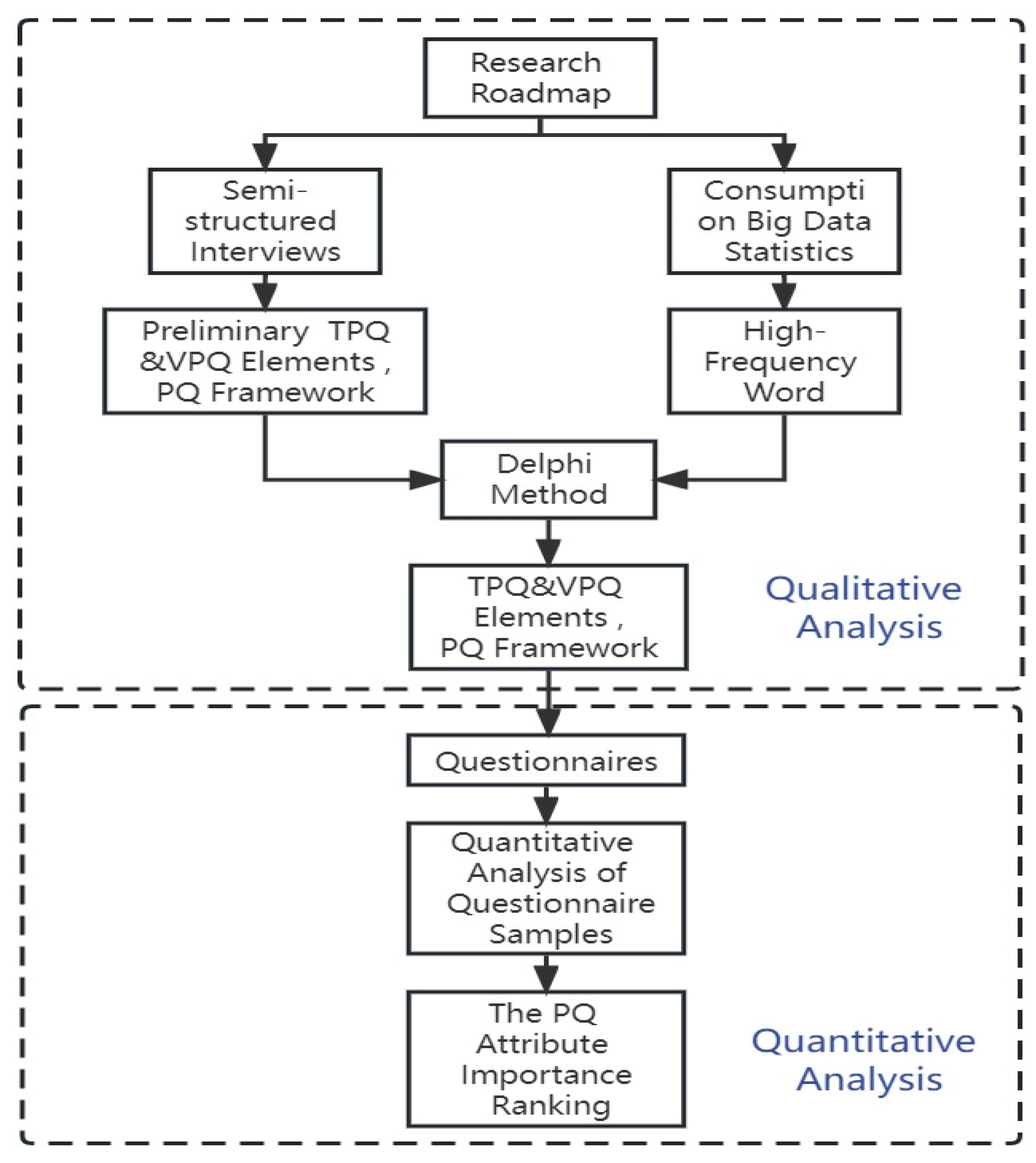
The progress of commercial VR headsets largely depends on the progress of sensor technology, the iteration of which often means longer research and development cycles, and also higher costs. With the continuous maturity and increasing competition of VR headsets, designers need to create a balance among user needs, technologies, and costs to achieve commercial competition advantages. To make accurate judgments, consumer feedback and opinions are particularly important. Due to the increasing maturity in the technology of commercial VR headsets in recent years, the cost has been continuously decreasing, and potential consumers have gradually increased. With the increase in consumer demand for virtual reality headsets, it is particularly important to establish a perceptual quality evaluation system. The relationship between consumer perception and product quality determined by evaluations of experience is improving. Using the research method implemented in this work, through semi-structured interviews and big data analysis of VR headset consumption, the perceptual quality elements of VR headsets are proposed, and the order of importance of perceptual quality attributes is determined by questionnaire surveys, quantitative analysis, and verification. In this study, the perceptual quality elements, including technical perceptual quality (TPQ) and value perceptual quality (VPQ), of 14 types of VR headsets were obtained, and the importance ranking of the VR headsets’ perceptual quality attributes was constructed. In theory, this study enriches the research on VR headsets. In practice, this study provides better guidance and suggestions for designing and producing VR headsets so that producers can better understand which sensor technology has met the needs of consumers, and which sensor technology still has room for improvement.
Keywords: sensor technology; human–computer interaction; VR headsets; consumption big data; perceived quality; perceived quality framework; PQAIR sensor technology; human–computer interaction; VR headsets; consumption big data; perceived quality; perceived quality framework; PQAIR