


Abstract
Bean weevil, Acanthoscelides obtectus, is a major post-harvest pest causing substantial losses in Phaseolus species worldwide. Identifying genetic resources with reduced susceptibility offers a sustainable alternative to chemical control. In this study, four Phaseolus coccineus and nine Phaseolus vulgaris landraces, along with one commercial cultivar, were evaluated under laboratory conditions using a free-choice test. Resistance-related traits, including oviposition (eggs per seed), adult emergence (holes per seed), damage incidence, and seed weight loss, were assessed across three replications. Significant genotypic variation was observed for all traits. Several P. vulgaris landraces (APN 42, APN 51, Yar) and one P. coccineus landrace (APN 85) showed no detectable seed damage or seed weight loss under free-choice conditions, whereas the susceptible check exhibited high infestation levels and up to 39.3% seed weight loss. Principal component analysis further distinguished low-damage genotypes from susceptible landraces, with resistance-associated traits contributing strongly to variation. These findings indicate that certain landraces exhibit reduced susceptibility to, or non-preference for, the bean weevil and may serve as valuable genetic resources for sustainable pest management.
1. Introduction
Although 81 species of beans belonging to the genus Phaseolus L. have been reported, only a few, including tepary bean (P. acutifolius A. Gray), scarlet runner bean (P. coccineus L.), lima bean (P. lunatus L.), year bean (P. dumosus Macfady), and common bean (P. vulgaris L.), have been cultivated for their dry or immature fresh seeds and green pods since pre-Columbian times [1,2,3]. Among these, the common bean is recognized as the predominant species globally, based on both cultivation area and production quantity [4]. Green pods and immature, fresh or dried, bean seeds are commonly consumed by low-income households in developing countries due to their high content of protein, dietary fiber, starch, and essential vitamins and minerals, including selenium, iron, zinc, potassium, and folic acid [5,6]. Beans are often used in intercropping and rotation systems, as they fix atmospheric nitrogen into the soil via symbiosis with Rhizobium bacteria [7]. Additionally, bean hay is a valuable source of roughage for animal nutrition due to its high protein content [8]. In 2024, beans played an important role in both national and international trade, with exports valued at $5.8 billion and imports at $5.9 billion worldwide [9]. Besides these advantages, beans rank first among all grain legumes, with dry bean production in 2024 reported at 30.3 million tons globally [10]. Although the seed yield potential of beans is comparable to that of other food legumes, the average seed yield remains low, at just 898.4 kg per hectare [10]. Yield losses in beans are attributed not only to insect damage in the field, but also to losses during storage [11,12]. The bean weevil [Acanthoscelides obtectus Say, 1831 (Coleoptera: Bruchidae)] causes reductions in yield, germination, and seed quality [13,14].
The bean weevil is a globally significant pest of beans, first described by Thomas Say in 1831 [15]. Although it is native to the mountainous regions of northern South America, the bean weevil has since spread worldwide [15]. This pest is not only associated with beans but also feeds on cowpea [Vigna unguiculata (L.) Walp.], other legumes, and maize [13,16,17,18]. The adult beetle, which does not feed, is small (2–3.7 mm long), grayish brown in color, and develops on mature pods in the field, later infesting beans in storage. Larvae feed on seeds, while adults feed on pollen grains. During her lifetime, a female may lay 70–75 whitish eggs on the surface of pods. The bean weevil has an average lifespan of approximately 28 days at 30 °C and 70% relative humidity [19]. Eggs incubate for 7–9 days, and the four larval stages occur within the seeds over 39–58 days. The bean weevil completes its first generation under field conditions, with a life cycle lasting 70–89 days. Up to four generations can develop if seeds are stored under suitable conditions [20]. The bean weevil can cause yield losses of up to 60% [21]. Several approaches have been used to control stored-product beetles, including chemical insecticides, biological agents, plant extracts, pheromones, hermetic storage, and cultural practices [14,22,23,24,25,26,27,28,29,30,31]. However, chemical control may leave residues harmful to human health and the environment, contribute to environmental pollution, and reduce seed germination rates [32,33,34,35]. Although alternative non-chemical methods such as biological agents, plant extracts, and cultural approaches have been explored, they can be inconsistent and less effective under certain conditions, or difficult to implement at scale. Therefore, the development and use of resistant cultivars represent a suitable, cost-effective, and long-term strategy for managing bean weevil infestations. Several studies have focused on screening and identifying resistant genotypes, highlighting their importance in integrated pest management programs [18,20,21,36,37,38].
Recent advances in plant genetics and breeding have improved our understanding of resistance to A. obtectus in common beans. Studies employing quantitative trait locus (QTL) mapping, genome-wide association studies (GWAS), and germplasm screening have identified genomic regions and candidate genes associated with resistance, as well as resistant breeding lines and interspecific introgressions [39,40,41,42,43]. These efforts have largely focused on improved cultivars, breeding populations, or specific diversity panels, contributing valuable insights into the genetic basis of resistance.
In contrast, traditional landraces, locally adapted populations maintained by farmers over generations, remain comparatively underexplored in this context, particularly in specific geographic regions such as Turkiye. Landraces are an important component of agrobiodiversity, often characterized by high genetic diversity, local adaptation, and resilience to biotic and abiotic stresses. They may harbor unique alleles or trait combinations that have been lost or underutilized in modern breeding programs. In addition to their agronomic value, landraces are culturally significant and frequently preferred by smallholder farmers for their stability, taste, and adaptation to marginal environments.
The evaluation of landraces for resistance-related traits under controlled conditions can provide valuable initial insights into their potential for sustainable pest management. Free-choice experimental designs allow assessment of insect preference and infestation dynamics under competitive conditions, which may reflect realistic storage scenarios in which multiple genotypes are present. Although such approaches cannot fully distinguish between insect non-preference and intrinsic host resistance, they are useful for identifying genotypes with reduced susceptibility to infestation. Therefore, the objective of this study was to evaluate common bean (P. vulgaris) and scarlet runner bean (P. coccineus) landraces from Turkiye for their response to A. obtectus under laboratory free-choice conditions by assessing key infestation parameters, including oviposition, adult emergence, damage incidence, and seed weight loss. This study aimed to identify landraces with reduced susceptibility and highlight their potential value as genetic resources for future breeding and integrated pest management strategies.
2. Materials and Methods
2.1. Plant Materials
The scarlet runner bean (P. coccineus) differs from the common bean (P. vulgaris) in several morphological and physiological traits, including germination type, seed and flower characteristics, root system, and life cycle. P. coccineus exhibits hypogeal germination, with cotyledons remaining below the soil surface, whereas P. vulgaris displays epigeal germination, with cotyledons emerging above ground. Most scarlet runner bean cultivars have reddish-vermilion flowers and multicolored seeds, although variation exists. In addition, Scarlet runner bean is a perennial vine under suitable conditions and develops tuberous roots, whereas common bean is an annual species with a typical taproot system [44,45]. A total of 13 landraces and one susceptible check, including 10 P. vulgaris and four P. coccineus genotypes, were selected from local collections maintained at Akdeniz University and from smallholder farmers across different regions of Turkiye (Table 1). Selection was based on geographic origin, seed type diversity, and representation of both species to capture a broad range of genetic and phenotypic variation. These landraces have been traditionally cultivated under low-input conditions and maintained over generations, making them valuable genetic resources with potential adaptation to local environmental conditions. In addition, several of these landraces are preferred by local communities due to their distinctive flavor, cooking quality, and culinary characteristics, which have contributed to their continued cultivation and conservation.
Table 1.
Characteristics of Phaseolus landraces originating from Türkiye evaluated for resistance to bean weevil.
The registered common bean cultivar ‘Onceler’ was included as a commercial control, while a susceptible landrace with a whitish-butter seed color was used as a control for insect rearing and comparison (Table 1). Prior to resistance testing, all seeds were incubated for two days at 26 ± 2 °C and 65 ± 5% relative humidity.
2.2. Rearing the Bean Weevil
The bean weevil (A. obtectus) used in this study was obtained from a laboratory colony maintained for approximately one year at the Department of Plant Protection (30°38′ E, 36°53′ N, 51 m above sea level), Faculty of Agriculture, Akdeniz University, Antalya, Turkiye. The colony was reared on seeds of a susceptible common bean (P. vulgaris) landrace at 26 ± 2 °C and 65 ± 5% relative humidity under complete darkness, following Azizoglu [46]. Seeds containing eggs were transferred to clean jars to obtain newly emerged adults of uniform age. The jars were filled with the same susceptible landrace and covered with a cotton mesh to allow air circulation. Adult emergence was monitored daily, and only adults aged 0–24 h were used in the experiments.
2.3. Resistance Testing
Resistance of bean landraces to the bean weevil was evaluated using a free-choice test under controlled laboratory conditions, following Raina [47], and was adapted from previous studies in chickpea [11] and pea [12]. A total of 14 genotypes (13 landraces and one commercial cultivar) were evaluated in each replicate. For each genotype, ten seeds were placed in a separate Petri dish, resulting in 14 Petri dishes (one per genotype) per cage. All Petri dishes were arranged randomly within a 20 L rectangular Plexiglas cage, which served as the experimental replicate. In each cage, 100 adult weevils (50 males and 50 females, aged 0–24 h) were released simultaneously to allow free choice among genotypes. Three independent cages were used, corresponding to three biological replicates. After seven days of oviposition, all adult weevils were removed. The number of eggs per seed was recorded for each genotype using a stereomicroscope (25× magnification). The same Petri dishes were maintained under the same environmental conditions, and adult emergence was monitored daily for 30 days. Emerging adults were counted and removed until no further emergence was observed. Within each cage, one Petri dish was used as a subsample for each genotype. Each cage was considered one experimental replicate, and a total of three independent cages (replicates) were used for the analysis.
2.4. Traits for Resistance Evaluation
Resistance to the bean weevil was evaluated using: (i) number of eggs per seed (oviposition), (ii) number of holes per seed (adult emergence), (iii) percentage of damaged seeds (damage incidence), and (iv) seed weight loss per landrace. Damaged seeds were identified by holes in the seed coat created by emerging adults. Damage incidence was calculated as the ratio of damaged seeds to total seeds, converted to a percentage [11]:
Seed weight loss caused by bean weevil infestation was determined by comparing the initial seed weight before infestation (n2) with the final seed weight after infestation (n1), using the following formula [11]:
2.5. Statistical Analyses
Descriptive statistics, including minimum, maximum, mean, and standard error, were calculated for all recorded traits using SPSS version 22.0. Analysis of variance (ANOVA) and Tukey’s HSD test were performed in R (2026.01.1+403). Genotype and replication were treated as fixed effects, and ANOVA was conducted for the number of eggs, the number of holes, seed weight loss, and damage incidence using the aov function. When genotype effects were significant, mean separation was performed using Tukey’s HSD test at p ≤ 0.05 with the agricolae package (1.3.7). In addition, principal component analysis (PCA) was conducted using the prcomp function in R with centered and standardized data (center = TRUE, scale = TRUE). Eigenvalues, principal component scores, and trait loadings were extracted to determine the contribution of variables to the principal components. PCA biplots were generated in R using the packagesfactoextra (1.0.7), ggplot2 (3.5.2), and ggrepel (0.9.6). Genotypes were categorized as low-damage, moderately susceptible, or susceptible based on infestation responses and visualized using different colors in the PCA plots.
3. Results
3.1. Oviposition (Eggs per Seed)
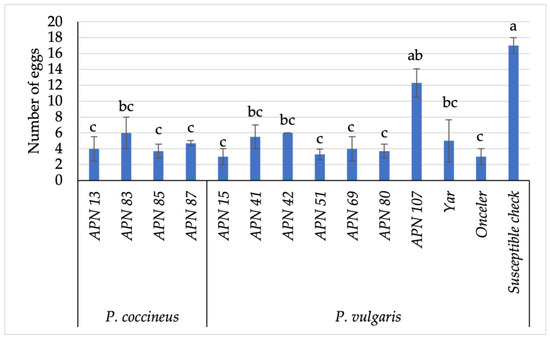
ANOVA revealed significant genotypic effects (p ≤ 0.05) on the number of eggs laid per seed. According to Tukey’s multiple comparison test (p ≤ 0.05), the susceptible check of P. vulgaris had the highest oviposition and differed significantly from most genotypes. Among the evaluated landraces, APN 107 exhibited relatively high oviposition and did not differ significantly from the susceptible check. In contrast, APN 13, APN 15, APN 51, APN 69, APN 80, APN 85, APN 87, and ‘Onceler’ exhibited lower egg numbers and were grouped among the least preferred genotypes for oviposition. There were no significant differences in oviposition between landraces and commercial cultivars, or between P. coccineus and P. vulgaris (Figure 1).
Figure 1.
Number of eggs per seed laid by bean weevil (Acanthoscelides obtectus) in landraces of Phaseolus coccineus and P. vulgaris. Bars indicate means ± standard errors. Different letters indicate significant differences among genotypes according to Tukey’s test (p < 0.05).
3.2. Adult Emergence (Holes per Seed)
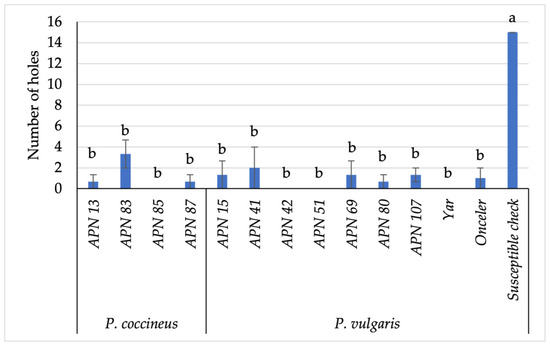
Significant genotypic differences (p ≤ 0.05) were observed for the number of holes per seed, which reflects adult emergence. According to Tukey’s multiple comparison test (p ≤ 0.05), the susceptible check of P. vulgaris exhibited the highest number of holes per seed and differed significantly from all evaluated genotypes. In contrast, APN 42, APN 51, Yar (P. vulgaris), and APN 85 (P. coccineus) showed no holes per seed under free-choice conditions, indicating reduced susceptibility to bean weevil infestation. Most landraces exhibited substantially lower numbers of holes than the susceptible check, while APN 83 and APN 41 showed relatively higher values among the tested landraces (Figure 2).
Figure 2.
Number of holes (adult emergence) per seed caused by bean weevils (Acanthoscelides obtectus) in landraces of Phaseolus coccineus and P. vulgaris. Bars indicate means ± standard errors. Different letters indicate significant differences among genotypes according to Tukey’s test (p < 0.05).
3.3. Damage Incidence (%)
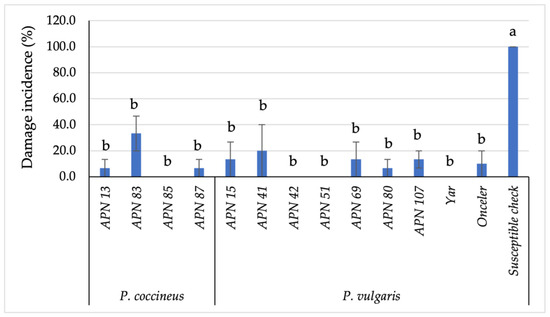
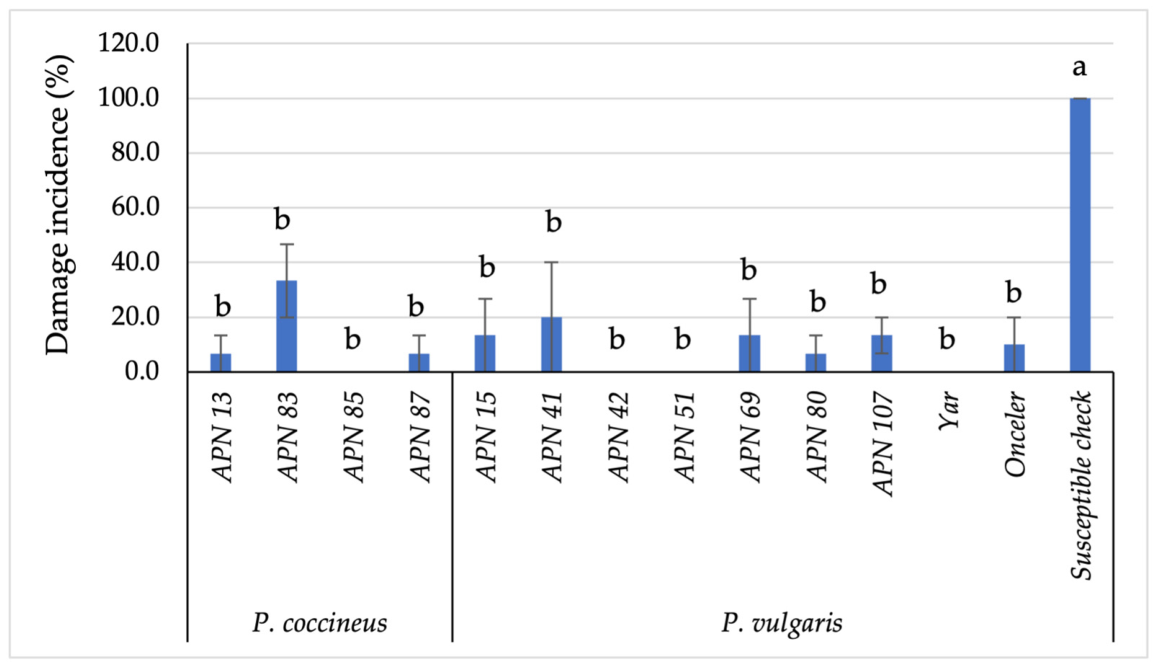
Significant variation in damage incidence was observed among genotypes (p ≤ 0.05; Figure 3). According to Tukey’s multiple comparison test (p ≤ 0.05), the susceptible check exhibited the highest damage incidence and differed significantly from all evaluated genotypes. In contrast, APN 42, APN 51, APN 85, and Yar showed no detectable seed damage under free-choice conditions, indicating strong resistance or reduced susceptibility to bean weevil infestation. Most landraces exhibited substantially lower damage incidence than the susceptible check, although APN 83 and APN 41 showed relatively higher levels of damage among the tested genotypes.
Figure 3.
Damage incidence (percentage of damaged seeds) caused by bean weevils (Acanthoscelides obtectus) in landraces of Phaseolus coccineus and P. vulgaris. Bars indicate means ± standard errors. Different letters indicate significant differences among genotypes according to Tukey’s test (p < 0.05).
3.4. Seed Weight Loss (%)
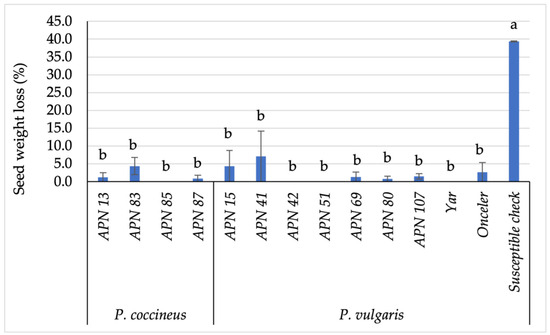
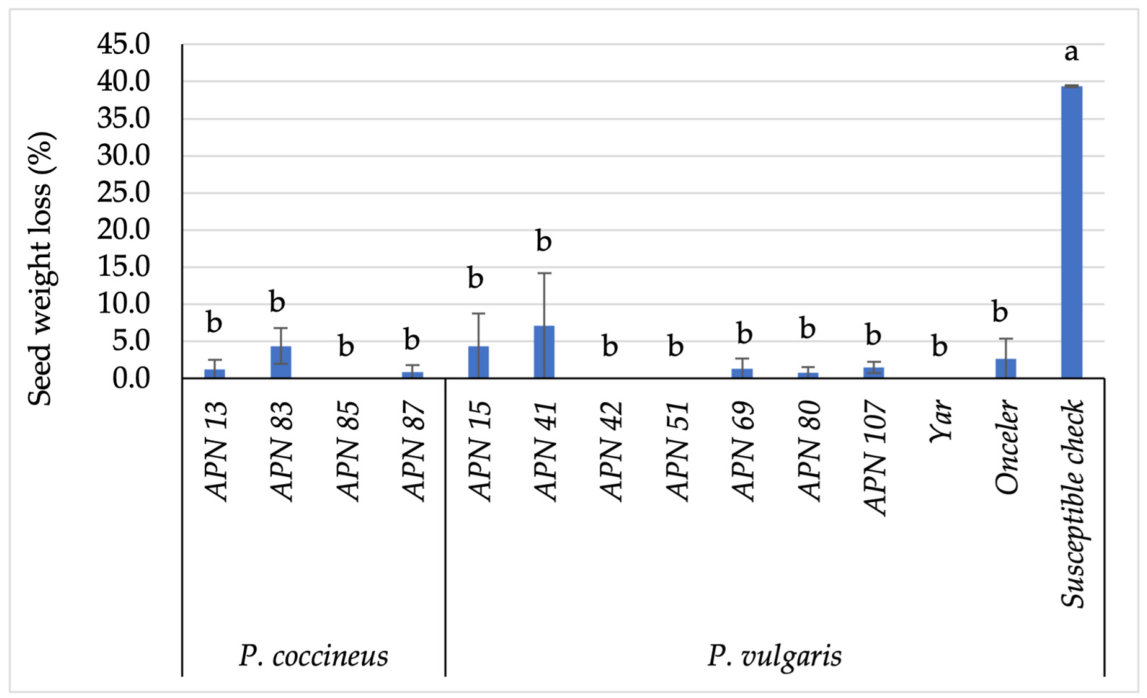
Significant differences in seed weight loss (%) were observed among genotypes (p ≤ 0.05; Figure 4). According to Tukey’s multiple comparison test (p ≤ 0.05), the susceptible check of P. vulgaris exhibited the highest seed weight loss and differed significantly from all evaluated genotypes. In contrast, APN 42, APN 51, APN 85, and Yar showed no detectable seed weight loss under free-choice conditions, indicating reduced susceptibility to bean weevil infestation. Most landraces exhibited minimal weight loss compared with the susceptible check, although APN 41 showed relatively higher seed weight loss among the tested genotypes. The evaluated landraces were less affected by bean weevil damage than the susceptible check.
Figure 4.
Total seed weight loss (%) due to presence of bean weevils (Acanthoscelides obtectus) in landraces of Phaseolus coccineus and P. vulgaris. Bars indicate means ± standard errors. Different letters indicate significant differences among genotypes according to Tukey’s test (p < 0.05).
3.5. Principal Component Analysis
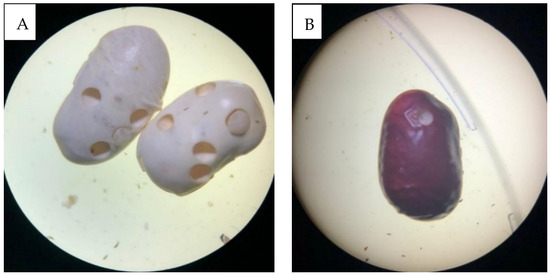
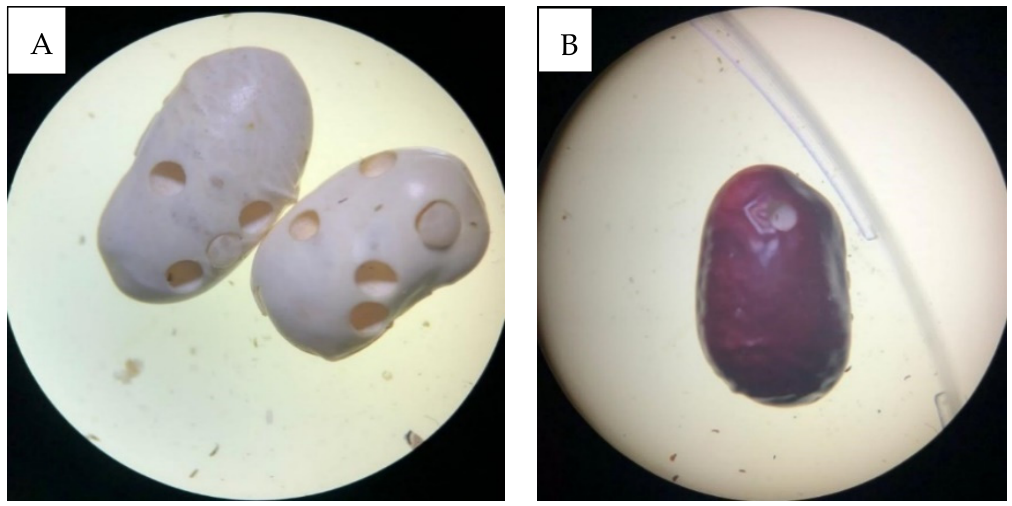
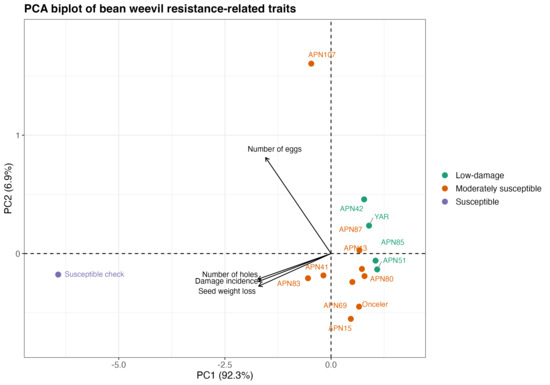
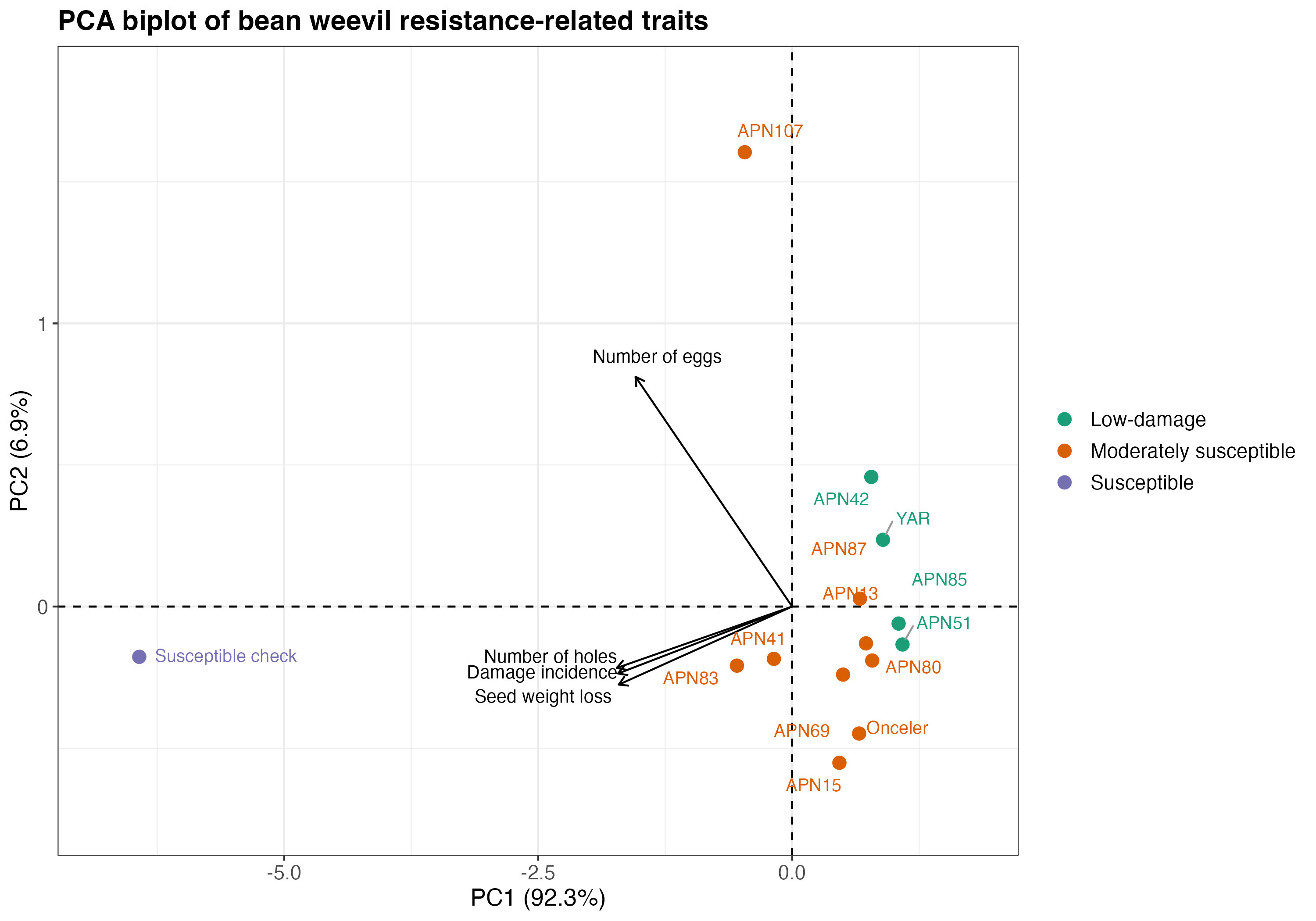
The susceptible check of P. vulgaris (Figure 5A) and a representative low-damage landrace of P. coccineus (Figure 5B) are presented in Figure 5. Principal component analysis (PCA) showed that the first two principal components explained most of the variation, with PC1 and PC2 accounting for 92.3% and 6.9% of the total variance, respectively. Damage-related traits, including the number of holes, seed weight loss, and damage incidence, were strongly associated with PC1 and clustered in the same direction, indicating their close relationship. The susceptible check was clearly separated from the other genotypes along PC1 and positioned toward higher damage-related traits. In contrast, most landraces clustered on the opposite side, suggesting lower susceptibility to bean weevil damage. APN107 was separated mainly along PC2 and was associated with a number of eggs, indicating a distinct oviposition-related response. The PCA separated highly susceptible genotypes from lower-damage genotypes and highlighted potential landraces for breeding programs targeting reduced bean weevil susceptibility (Figure 6).
Figure 5.
(A) Susceptible cultivar of Phaseolus vulgaris and (B) resistant landrace of P. coccineus as observed under a stereomicroscope (25×).
Figure 6.
The principal component analysis (PCA) biplot illustrating variation in bean weevil resistance-related traits among bean landraces.
4. Discussion
Bean landraces represent an important component of agricultural biodiversity, providing locally adapted genetic resources that can contribute to crop improvement and sustainable pest management [48,49,50]. Although the genus Phaseolus originated in Middle America and the Andes [51,52], its introduction to the Old World, including Anatolia in the 17th century, resulted in the development of diverse landraces adapted to regional environments. In Turkiye, common beans are widely cultivated, while scarlet runner beans are grown in cooler regions such as the Eastern Black Sea. Despite their long cultivation history, these local landraces have been evaluated only to a limited extent for their response to storage pests. Therefore, this study provides one of the first systematic assessments of Turkish bean landraces for their response to the bean weevil under controlled conditions.
Significant variation among genotypes was observed for all resistance-related traits, including oviposition, adult emergence, seed damage, and weight loss. Several landraces, particularly APN 42, APN 51, Yar (P. vulgaris), and APN 85 (P. coccineus), showed no detectable seed damage or weight loss under free-choice conditions, whereas the susceptible check exhibited high infestation levels. These results indicate substantial phenotypic diversity among landraces and highlight their potential as sources of reduced susceptibility to A. obtectus. The consistency of low damage across multiple traits further supports the reliability of these observations and suggests that these genotypes may possess traits that limit insect infestation or development. However, because resistance was evaluated under free-choice conditions, the observed reduction in infestation may reflect insect non-preference (antixenosis), intrinsic resistance (antibiosis), or a combination of both. In free-choice assays, insects can preferentially select or avoid specific genotypes, which may influence oviposition behavior and subsequent damage levels [53,54,55]. In the present study, oviposition did not differ significantly among most genotypes, indicating that female bean weevils did not strongly discriminate among landraces during egg laying. Despite similar egg counts, several landraces showed fewer holes, reductions in seed weight loss, and lower damage incidence compared with susceptible materials. This suggests that resistance mechanisms may act mainly after oviposition, potentially through antibiosis-related effects that reduce larval survival or development within the seed, as previously reported in resistant Phaseolus germplasm [56,57]. The absence of corresponding feeding damage despite egg deposition may indicate larval mortality during early developmental stages or unsuccessful penetration into the seed, although dead larvae or superficial feeding symptoms were not systematically evaluated in this study. Therefore, the low infestation observed in some landraces should be interpreted as evidence of reduced susceptibility under competitive infestation conditions rather than definitive evidence of a specific resistance mechanism. Confirmation using no-choice assays will be necessary to distinguish preference-driven avoidance from true host resistance mechanisms. Previous studies have reported variation in bean weevil resistance among cultivars, breeding lines, and wild relatives [18,20,21,36,37,38]. Resistance in beans has been associated with physical and chemical seed traits, including seed coat thickness, hardness, and the presence of defensive compounds [36,53,54,55,58]. For example, arcelin-containing genotypes and those with modified seed coat characteristics have shown enhanced resistance to bruchid pests [37,58]. The patterns observed in this study are consistent with these findings, suggesting that the reduced susceptibility of certain landraces may be associated with similar morphological or biochemical traits. However, further studies are required to elucidate the underlying mechanisms.
Previous studies have demonstrated that resistance to A. obtectus involves both qualitative and quantitative genetic components [37,39,59]. Recent genomic studies, including QTL mapping and genome-wide association studies (GWAS), have identified candidate loci associated with bean weevil resistance and highlighted the potential for marker-assisted breeding [39,40,41,42]. In the present study, several landraces exhibited reduced susceptibility to bean weevil damage, emphasizing the importance of traditional germplasm as a valuable source of resistance diversity. Landraces often harbor unique adaptive traits that may have been lost during modern breeding and can contribute to the development of cultivars with improved and more durable resistance to storage pests. Therefore, the identification and conservation of resistant local germplasm may play an important role in sustainable pest management and future bean improvement programs.
Principal component analysis further supported the differentiation between low-damage and susceptible genotypes. Traits associated with infestation severity, particularly the number of holes, seed weight loss, and damage incidence, were strongly associated and contributed most to PC1, indicating that these variables collectively describe the extent of bean weevil damage. Similar relationships among feeding damage, seed deterioration, and susceptibility have been reported previously in common bean and other legumes infested by bruchids [18,36,55]. In contrast, the number of eggs was less strongly associated with the main damage-related variables and contributed more to PC2, suggesting that oviposition alone may not reliably predict subsequent seed damage or larval success. Previous studies have shown that resistant genotypes may receive similar egg numbers but still limit larval establishment and development through antibiosis-related mechanisms associated with physical or biochemical seed traits [56,57]. This clear separation suggests that these traits collectively capture key aspects of the infestation response and can serve as effective indicators for preliminary screening of genotypes. Such multivariate approaches are useful for summarizing complex trait interactions and identifying promising candidates for further evaluation.
As a result, identifying landraces with minimal damage under free-choice conditions highlights the potential value of these genetic resources for sustainable pest management. Traditional landraces maintained under farmer selection across diverse environments may harbor unique trait combinations that contribute to reduced susceptibility to storage pests. However, the findings of this study should be considered as an initial screening step. Further research, including no-choice assays, field validation, and detailed physiological or molecular analyses, will be necessary to confirm intrinsic resistance and better understand the mechanisms underlying reduced susceptibility.
5. Conclusions
Among the 13 landraces and one susceptible check evaluated, three P. vulgaris landraces (APN 42, APN 51, Yar) and one P. coccineus landrace (APN 85) showed no detectable seed damage or weight loss under free-choice conditions, indicating reduced susceptibility to the bean weevil infestation. These findings highlight the potential value of traditional landraces as genetic resources for sustainable pest management. The identification of low-damage genotypes cultivated for generations in the mountainous regions of Anatolia suggests that locally adapted germplasm may harbor useful traits associated with reduced susceptibility to storage pests. However, because this study was conducted under free-choice conditions, the observed responses may reflect insect non-preference, intrinsic resistance, or a combination of both. Therefore, further studies, including no-choice assays, field validation, and detailed physiological or molecular analyses, are needed to confirm resistance mechanisms and support the effective use of these landraces in breeding programs aimed at developing durable bean weevil-resistant cultivars.
Author Contributions
H.S.: Conceptualization, Software, Formal analysis, Validation, Investigation, Data curation, Visualization, and Writing—review and editing. P.T.: Writing—original draft preparation, and Writing—review and editing. F.E.: Conceptualization, Methodology, Investigation, and Writing—review and editing. C.T.: Visualization, Resources, Supervision, and Writing—review and editing. H.C.: Conceptualization, Resources, Investigation, and Writing—review and editing. All authors have read and agreed to the published version of the manuscript.
Funding
This research received no external funding.
Institutional Review Board Statement
Not applicable.
Data Availability Statement
The original contributions presented in this study are included in the article. Further inquiries can be directed to the corresponding authors.
Acknowledgments
The authors are grateful to Akdeniz University Scientific Research Projects Unit for the experiments. We are thankful to anonymous farmers in provinces (Table 1) in Turkiye for providing seeds of bean landraces.
Conflicts of Interest
The authors declare no conflicts of interest.
References
- Freytag, G.F.; Debouck, D.G. Taxonomy, Distribution, and Ecology of the Genus Phaseolus (Leguminosae–Papilionoideae) in North America, Mexico and Central America. 2003. Available online: https://cgspace.cgiar.org/bitstreams/4b3045c8-c78a-448d-8763-6fb64a9ef203/download (accessed on 18 April 2026).
- Delgado-Salinas, A.; Bibler, R.; Lavin, M. Phylogeny of the genus Phaseolus (Leguminosae): A recent diversification in an ancient landscape. Syst. Bot. 2006, 31, 779–791. [Google Scholar] [CrossRef] [Scilit]
- Debouck, D.G. Phaseolus beans (Leguminosae: Phaseoleae). J. Bot. Res. Inst. Tex. 2021, 15, 73–111. [Google Scholar] [CrossRef] [Scilit]
- Singh, S.P. Common Bean Improvement in the Twenty-First Century; Springer Science & Business Media: Cham, Switzerland, 2013; Volume 7, Available online: https://www.google.com/books?hl=tr&lr=&id=ZY7tCAAAQBAJ&oi=fnd&pg=PR9&dq=55.%09Singh+SP+(ed.)+(2013)+Common+bean+improvement+in+the+twenty-first+century+(Vol.+7).+Springer+Science+%26+Business+Media.&ots=0cVrXVlOml&sig=w3zA4mvXYqSgq-tpbCkofVGkc8M (accessed on 18 April 2026).
- Celmeli, T.; Sari, H.; Canci, H.; Sari, D.; Adak, A.; Eker, T.; Toker, C. The nutritional content of common bean (Phaseolus vulgaris L.) landraces in comparison to modern varieties. Agronomy 2018, 8, 166. [Google Scholar] [CrossRef] [Scilit]
- Alcázar-Valle, M.; García-Morales, S.; Mojica, L.; Morales-Hernández, N.; Sánchez-Osorio, E.; Flores-López, L.; Enríquez-Vara, J.N.; Lugo-Cervantes, E. Nutritional, antinutritional compounds and nutraceutical significance of native bean species (Phaseolus spp.) of mexican cultivars. Agriculture 2021, 11, 1031. [Google Scholar] [CrossRef] [Scilit]
- Mendoza-Suárez, M.A.; Geddes, B.A.; Sánchez-Cañizares, C.; Ramírez-González, R.H.; Kirchhelle, C.; Jorrin, B.; Poole, P.S. Optimizing Rhizobium-legume symbioses by simultaneous measurement of rhizobial competitiveness and N2 fixation in nodules. Proc. Natl. Acad. Sci. USA 2020, 117, 9822–9831. [Google Scholar] [CrossRef] [Scilit]
- Ramírez, R.G.; Ledezma-Torres, R.A.; Martínez, R. Nutrient Utilization of Bean Straw, Alfalfa Hay and Leaves of the Shrub Cercidium macrum by Goats and Sheep. J. Appl. Anim. Res. 1999, 15, 137–148. [Google Scholar] [CrossRef] [Scilit]
- FAOSTAT; Food and Agriculture Organization of the United Nations. FAOSTAT Trade; FAO: Rome, Italy, 2026; Available online: https://www.fao.org/faostat/en/#data/TCL (accessed on 20 March 2026).
- FAOSTAT; Food and Agriculture Organization of the United Nations. FAOSTAT Crops and Livestock Products; FAO: Rome, Italy, 2026; Available online: https://www.fao.org/faostat/en/#data/QCL (accessed on 20 March 2026).
- Eker, T.; Erler, F.; Adak, A.; Imrek, B.; Guven, H.; Tosun, H.S.; Sari, D.; Sari, H.; Upadhyaya, H.D.; Toker, C.; et al. Screening of chickpea accessions for resistance against the pulse beetle, Callosobruchus chinensis L. (Coleoptera: Bruchidae). J. Stored Prod. Res. 2018, 76, 51–57. [Google Scholar] [CrossRef] [Scilit]
- Esen, A.; Sari, H.; Erler, F.; Adak, A.; Sari, D.; Eker, T.; Canci, H.; Ikten, C.; Kahraman, A.; Toker, C. Screening and selection of accessions in the genus Pisum L. for resistance to pulse beetle (Callosobruchus chinensis L.). Euphytica 2019, 215, 82. [Google Scholar] [CrossRef] [Scilit]
- do Nascimento, J.M.; Lopes, L.M.; Rocha, J.F.; dos Santos, V.B.; de Sousa, A.H. Population development of bean weevils (Coleoptera: Chrysomelidae: Bruchinae) in landrace varieties of cowpeas and common beans. Fla. Entomol. 2020, 103, 215–220. [Google Scholar] [CrossRef] [Scilit]
- Kljajić, P.; Andrić, G.; Golić, M.P.; Jovičić, I. Bean weevil Acanthoscelides obtectus (Say) survival and progeny production affected by residual insecticide deposits, and related damage of two types of bean. J. Stored Prod. Res. 2022, 98, 102004. [Google Scholar] [CrossRef] [Scilit]
- Say, T. Descriptions of new species of Curculionites of North America, with observations on some of the species already known, &c 1831. Psyche 1897, 8, 306–308. Available online: https://agris.fao.org/search/en/providers/122376/records/65119e517d5357a6f8ca0bea (accessed on 18 April 2026).
- Larson, A.O.; Fisher, C.K. The Bean Weevil and the Southern Cowpea Weevil in California. 1938. Available online: https://ageconsearch.umn.edu/record/165798/files/tb593.pdf (accessed on 18 April 2026).
- Alvarez, N.; Mckey, D.; Hossaert-Mckey, M.; Born, C.; Mercier, L.; Benrey, B. Ancient and recent evolutionary history of the bruchid beetle, Acanthoscelides obtectus Say, a cosmopolitan pest of beans. Mol. Ecol. 2005, 14, 1015–1024. [Google Scholar] [CrossRef] [Scilit]
- Szentesi, Á. How the seed coat affects the mother’s oviposition preference and larval performance in the bean beetle (Acanthoscelides obtectus, Coleoptera: Chrysomelidae, Bruchinae) in leguminous species. BMC Ecol. Evol. 2021, 21, 171. [Google Scholar] [CrossRef] [Scilit]
- Mason, L.J.; McDonough, M. Biology, behavior, and ecology of stored grain and legume insects. Stored Prod. Prot. 2012, 1, 7–20. [Google Scholar]
- Özdem, A. Researches on the biology of the Bean Weevil [Acanthoscelides obtectus (Say) (Col.: Bruchidae)] in Eskişehir. Plant Prot. Bull. 1997, 37. Available online: https://dergipark.org.tr/en/pub/bitkorb/article/48733 (accessed on 18 April 2026).
- Porca, M.; Ghizdavu, I.; Oltean, I.; Bunescu, H. Researches in artificial infestation condition and storage condition of some bean cultivars at bean weevil damage, Acanthoscelides obtectus Say. J. Cent. Eur. Agric. 2003, 4, 31–38. [Google Scholar]
- Hartweck, L.M.; Cardona, C.; Osborn, T.C. Bruchid resistance of common bean lines having an altered seed protein composition. Theor. Appl. Genet. 1997, 95, 1018–1123. [Google Scholar] [CrossRef] [Scilit]
- Schmale, I.; Wäckers, F.L.; Cardona, C.; Dorn, S. Biological control of the bean weevil, Acanthoscelides obtectus (Say) (Col.: Bruchidae), by the native parasitoid Dinarmus basalis (Rondani) (Hym.: Pteromalidae) on small-scale farms in Colombia. J. Stored Prod. Res. 2006, 42, 31–41. [Google Scholar] [CrossRef] [Scilit]
- Çetin, H.; Uysal, M.; Alaoğlu, Ö.; Şahbaz, A. Fumigant effect of acetone to bean weevil [Acanthoscelides obtectus Say (Coleoptera: Bruchidae)] adults. Turk. J. Entomol. 2009, 33, 23–30. [Google Scholar]
- Arthur, F.H.; Subramanyam, B. Chemical Control in Stored Products. 2012. Available online: https://krex.k-state.edu/server/api/core/bitstreams/9886c053-4de7-465a-9bc2-7ea38b3fc504/content (accessed on 18 April 2026).
- Mullen, M.A.; Vardeman, J.M.; Bagwell, J. 12 Insect-Resistant Packaging. In Stored Product Protection; Kansas State University: Manhattan, KS, USA, 2012; pp. 135–142. Available online: https://www.researchgate.net/profile/Matthias-Schoeller/publication/259150066_Biological_control_Insect_pathogens_parasitoids_and_predators/links/544255df0cf2a76a3ccae7fc/Biological-control-Insect-pathogens-parasitoids-and-predators.pdf#page=141 (accessed on 18 April 2026).
- Phillips, T.W.; Thoms, E.M.; DeMark, J.; Walse, S. 14 Fumigation. In Stored Product Protection; Kansas State University: Manhattan, KS, USA, 2012; pp. 157–178. Available online: https://www.postharvestinfo.com/_files/ugd/9125d4_bff86d8deada492fbdffcf3f858fd873.pdf#page=163 (accessed on 18 April 2026).
- Jumbo, L.O.V.; Faroni, L.R.; Oliveira, E.E.; Pimentel, M.A.; Silva, G.N. Potential use of clove and cinnamon essential oils to control the bean weevil, Acanthoscelides obtectus Say, in small storage units. Ind. Crops Prod. 2014, 56, 27–34. [Google Scholar]
- Nana, P.; Nchu, F.; Bikomo, R.M.; Kutima, H.I. Efficacy of vegetable oils against dry bean beetles Acanthoscelides obtectus. Afr. Crop. Sci. J. 2014, 22, 175–180. [Google Scholar]
- Freitas, R.S.; Faroni, L.R.A.; Sousa, A.H. Hermetic storage for control of common bean weevil, Acanthoscelides obtectus (Say). J. Stored Prod. Res. 2016, 66, 1–5. [Google Scholar] [CrossRef] [Scilit]
- Floros, G.D.; Kokkari, A.I.; Kouloussis, N.A.; Kantiranis, N.A.; Damos, P.; Filippidis, A.A.; Koveos, D.S. Evaluation of the natural zeolite lethal effects on adults of the bean weevil under different temperatures and relative humidity regimes. J. Econ. Entomol. 2018, 111, 482–490. [Google Scholar] [CrossRef] [Scilit] [PubMed]
- Sakhautdinov, I.M.; Gumerov, A.M.; Mukhamet’yanova, A.F.; Atangulov, A.B.; Yunusov, M.S. New Synthetic Method for the Racemic form of the Bean Weevil Acanthoscelides obtectus Male Pheromone. Chem. Nat. Compd. 2018, 54, 622–623. [Google Scholar] [CrossRef] [Scilit]
- Ascrizzi, R.; Flamini, G.; Bedini, S.; Tani, C.; Giannotti, P.; Lombardi, T.; Conti, B.; Fraternale, D. Ferulago campestris essential oil as active ingredient in chitosan seed-coating: Chemical analyses, allelopathic effects, and protective activity against the common bean pest Acanthoscelides obtectus. Agronomy 2021, 11, 1578. [Google Scholar] [CrossRef] [Scilit]
- Rodríguez-González, Á.; Guerra, M.; Ramírez-Lozano, D.; Casquero, P.A.; Gutiérrez, S. Germination and agronomic traits of Phaseolus vulgaris L. beans sprayed with trichoderma strains and attacked by Acanthoscelides obtectus. Agronomy 2021, 11, 2130. [Google Scholar] [CrossRef] [Scilit]
- Rodríguez-González, Á.; Carro-Huerga, G.; Guerra, M.; Mayo-Prieto, S.; Porteous-Álvarez, A.J.; Lorenzana, A.; Campelo, M.P.; Fernández-Marcos, A.; Casquero, P.A.; Gutiérrez, S. Spores of Trichoderma Strains over P. vulgaris Beans: Direct Effect on Insect Attacks and Indirect Effect on Agronomic Parameters. Insects 2022, 13, 1086. [Google Scholar] [CrossRef] [Scilit] [PubMed]
- Baldin, E.L.L.; Lara, F.M.; Camargo, R.S.; Pannuti, L.E.R. Characterization of resistance to the bean weevil Acanthoscelides obtectus Say, 1831 (Coleoptera: Bruchidae) in common bean genotypes. Arthropod-Plant Interact. 2017, 11, 861–870. [Google Scholar] [CrossRef] [Scilit]
- Kamfwa, K.; Beaver, J.S.; Cichy, K.A.; Kelly, J.D. QTL Mapping of Resistance to Bean Weevil in Common Bean. Crop Sci. 2018, 58, 2370–2378. [Google Scholar] [CrossRef] [Scilit]
- Woguem, V.; Fogang, H.P.D.; Womeni, H.M.; Tapondjou, L.A. Reducing postharvest losses of bean seeds during storage by using essential oil from Mondia whitei (Hook. f.). Int. J. Trop. Insect. Sci. 2023, 43, 851–859. [Google Scholar] [CrossRef] [Scilit]
- Li, X.; Tang, Y.; Wang, L.; Chang, Y.; Wu, J.; Wang, S. QTL mapping and identification of genes associated with the resistance to Acanthoscelides obtectus in cultivated common bean using a high-density genetic linkage map. BMC Plant Biol. 2022, 22, 260. [Google Scholar] [CrossRef] [Scilit] [PubMed]
- Li, X.; Wang, L.; Tang, Y.; Chang, Y.; Zhang, J.; Wang, S.; Wu, J. Genome-wide association analysis of resistance to Acanthoscelides obtectus in common bean. Chin. Bull. Bot. 2023, 58, 77–89. [Google Scholar]
- Bornowski, N.; Hart, J.P.; Palacios, A.V.; Ogg, B.; A Brick, M.; Hamilton, J.P.; Beaver, J.S.; Buell, C.R.; Porch, T. Genetic variation in a tepary bean (Phaseolus acutifolius A. Gray) diversity panel reveals loci associated with biotic stress resistance. Plant Genome 2023, 16, e20363. [Google Scholar] [CrossRef] [Scilit]
- Chinji, M.; Hamabwe, S.; Kuwabo, K.; Mugovu, I.; Thole, R.; Mazala, M.; Osorno, J.M.; McClean, P.; Jochua, C.; Urrea, C.; et al. Introgression and Stability of Common Bean Weevil (Acanthoscelides obtectus [Say]) Resistance in Diverse Market Classes from the Andean Gene Pool of Common Bean. Legume Sci. 2024, 6, e223. [Google Scholar] [CrossRef] [Scilit]
- Mugovo, I.; Chinji, M.; Thole, R.; Hamabwe, S.M.; Kuwabo, K.; Nkandela, M.; Zimba, K.; Jochua, C.; Urrea, C.; McClean, P.; et al. Genome-wide association analysis for weevil resistance in the Andean gene pool of common bean. Euphytica 2025, 221, 13. [Google Scholar] [CrossRef] [Scilit]
- Smartt, J. Grain Legumes: Evolution and Genetic Resources; Cambridge University Press: Cambridge, UK, 1990. [Google Scholar]
- Akgun, D.; Canci, H. Selection of faba bean (Vicia faba L.) genotypes for high yield, essential amino acids and low anti-nutritional factors. Agriculture 2023, 13, 932. [Google Scholar] [CrossRef] [Scilit]
- Azizoglu, U. Biochemical properties of Turkish common beans and their resistance against bean weevil Acanthoscelides obtectus (Coleoptera: Bruchidae). Arthropod-Plant Interact. 2018, 12, 283–290. [Google Scholar] [CrossRef] [Scilit]
- Raina, A.K. Observations on Bruchids as Field Pests of Pulses. 1971. Available online: https://www.cabidigitallibrary.org/doi/full/10.5555/19740514530 (accessed on 18 April 2026).
- Harlan, J.R. Our Vanishing Genetic Resources: Modern varieties replace ancient populations that have provided genetic variability for plant breeding programs. Science 1975, 188, 618–621. [Google Scholar] [CrossRef] [Scilit]
- Zeven, A.C. Landraces: A review of definitions and classifications. Euphytica 1998, 104, 127–139. [Google Scholar] [CrossRef] [Scilit]
- Villa, T.C.C.; Maxted, N.; Scholten, M.; Ford-Lloyd, B. Defining and identifying crop landraces. Plant Genet. Resour. 2005, 3, 373–384. [Google Scholar]
- Kaplan, L. The cultivated beans of the prehistoric Southwest. Ann. Mo. Bot. Gard. 1956, 43, 189–251. [Google Scholar] [CrossRef] [Scilit]
- Bitocchi, E.; Nanni, L.; Bellucci, E.; Rossi, M.; Giardini, A.; Zeuli, P.S.; Logozzo, G.; Stougaard, J.; McClean, P.; Attene, G.; et al. Mesoamerican origin of the common bean (Phaseolus vulgaris L.) is revealed by sequence data. Proc. Natl. Acad. Sci. USA 2012, 109, E788–E796. [Google Scholar] [CrossRef] [Scilit] [PubMed]
- Clement, S.L.; El-Din Sharaf El-Din, N.; Weigand, S.; Lateef, S.S. Research achievements in plant resistance to insect pests of cool season food legumes. Euphytica 1993, 73, 41–50. [Google Scholar] [CrossRef] [Scilit]
- Edwards, O.; Singh, K.B. Resistance to insect pests: What do legumes have to offer? Euphytica 2006, 147, 273–285. [Google Scholar] [CrossRef] [Scilit]
- Maldonado, S.G.; Marín-Jarillo, A.; Castellanos, J.Z.; De Mejía, E.G.; Acosta-Gallegosc, J.A. Relationship between physical and chemical characteristics and susceptibility to Zabrotes subfasciatus (Boh.) (Coleoptera: Bruchidae) and Acanthoscelides obtectus (Say) in common bean (Phaseolus vulgaris L.) varieties. J. Stored Prod. Res. 1996, 32, 53–58. [Google Scholar] [CrossRef] [Scilit]
- Cardona, C.; Kornegay, J.; Posso, C.E.; Morales, F.; Ramirez, H. Comparative value of four arcelin variants in the development of dry bean lines resistant to the Mexican bean weevil. Entomol. Exp. Appl. 1990, 56, 197–206. [Google Scholar] [CrossRef] [Scilit]
- Dobie, P.; Dendy, J.; Sherman, C.; Padgham, J.; Wood, A.; Gatehouse, A.M. New sources of resistance to Acanthoscelides obtectus (Say) and Zabrotes subfasciatus Boheman (Coleoptera: Bruchidae) in mature seeds of five species of Phaseolus. J. Stored Prod. Res. 1990, 26, 177–186. [Google Scholar] [CrossRef] [Scilit]
- Zaugg, I.; Magni, C.; Panzeri, D.; Daminati, M.G.; Bollini, R.; Benrey, B.; Bacher, S.; Sparvoli, F. QUES, a new Phaseolus vulgaris genotype resistant to common bean weevils, contains the Arcelin-8 allele coding for new lectin-related variants. Theor. Appl. Genet. 2013, 126, 647–661. [Google Scholar] [CrossRef] [Scilit]
- Kornegay, J.L.; Cardona, C. Inheritance of resistance to Acanthoscelides obtectus in a wild common bean accession crossed to commercial bean cultivars. Euphytica 1991, 52, 103–111. [Google Scholar] [CrossRef] [Scilit]

Disclaimer/Publisher’s Note: The statements, opinions and data contained in all publications are solely those of the individual author(s) and contributor(s) and not of MDPI and/or the editor(s). MDPI and/or the editor(s) disclaim responsibility for any injury to people or property resulting from any ideas, methods, instructions or products referred to in the content. |
© 2026 by the authors. Licensee MDPI, Basel, Switzerland. This article is an open access article distributed under the terms and conditions of the Creative Commons Attribution (CC BY) license.