


Abstract
Pesticidal plants are vital for pest management in sub-Saharan Africa, yet knowledge about them is culturally and geographically unevenly documented. This study examined ethnobotanical knowledge and the distribution of pesticidal plants among six ethnic groups (Maasai, Chagga, Iraqw, Pare, Nguu, Zigua) in northern Tanzania. Data related to ethnobotanical knowledge were collected from questionnaire surveys involving 266 participants, 24 focus group discussions, 26 key informant interviews, complemented by field verifications across the six ethnic groups. Pesticidal plant coordinates were accessed from herbarium voucher specimens from The National Herbarium of Tanzania. Chi-square tests of independence assessed associations between ethnic groups and knowledge transmission pathways. Penalized logistic regression analysis was conducted to assess the influence of demographic factors on reported knowledge of pesticidal plants. Spatial overlay was conducted to examine the distribution of pesticidal plant species occurrences across agroecological zones and rainfall gradients. The results revealed a significant association between ethnic group and the source of pesticidal plant knowledge. Across all ethnic groups, knowledge was predominantly acquired through family/community traditional sources, with the highest frequencies recorded among the Maasai, Iraqw, and Zigua. Knowledge is mainly transmitted orally, particularly among the Maasai, Iraqw, and Zigua. A total of one hundred and six distinct species were recorded across the six ethnic groups surveyed, with Tephrosia vogelii and Solanum incanum being the most frequently cited. Leaves were the most frequently used plant part across all ethnic groups, with notably high usage among the Chagga, Iraqw, and Maasai. Perceptions of the declining population of pesticidal plants were the highest among the Maasai. Spatial mapping revealed pesticidal plant hotspots in the Northern Rift and Volcanic Highlands agroecological zones, and they fall within zones receiving moderate to relatively high rainfall. The findings highlight that ethnobotanical knowledge of pesticidal plants in northern Tanzania is strongly shaped by ethnic affiliation, oral knowledge transmission, and localized ecological availability, with clear spatial hotspots aligned to specific agroecological zones and high-rainfall areas.
1. Introduction
In sub-Saharan Africa, agricultural production faces persistent challenges from pest infestations that threaten food security, livelihoods, and ecological balance [1,2]. Although synthetic pesticides are widely used for pest control [1,3,4,5], they are often inaccessible to smallholder farmers and are costly, and their application raises major concerns related to environmental degradation, pest resistance, and adverse effects on human and animal health [6,7,8,9]. In common with numerous agricultural regions, farmers have historically utilized indigenous plants with pesticidal attributes to safeguard their crops and mitigate losses. Additionally, there is a growing global interest in sustainable pest management practices rooted in traditional ecological knowledge systems [3].
Among many rural communities in Africa, the use of pesticidal plants is a long-established practice embedded within local knowledge and cultural traditions [2,3,4]. Ethnobotanical studies have extensively documented using plant-derived substances for pest control across diverse indigenous societies [10]. These pesticidal plants, which contain bioactive compounds with insecticidal, fungicidal, bactericidal, herbicidal, or nematocidal properties, serve as effective and environmentally friendly alternatives to chemical pesticides [1,8,11]. Commonly referred to as botanical pesticides, these substances are typically accessible, cost-effective, and biodegradable, making them especially valuable for resource-constrained smallholder farmers [11].
The knowledge associated with these plants, ranging from their identification to harvesting, preparation, and application, is intrinsically linked to cultural knowledge and ethnic identity. As such, understanding local knowledge creates the basis for advancing scientific research and promoting sustainable agricultural practices [12,13]. However, such knowledge remains under-documented and faces increasing erosion due to the expansion of modern agricultural systems, synthetic pesticide use, and the Westernization of younger generations [4,14]. Cultural diversity, reflected in differences in traditions, languages, and ecological practices among ethnic groups, influences how communities interact with natural resources [15]. These cultural systems also shape local or indigenous ecological knowledge transmitted orally through generations and represent a rich reservoir for sustainable development and ecological adaptation [15,16].
Within this context, ethnobotanical knowledge is understood as a biocultural system in which biological and cultural diversity are closely interconnected, with plant use and management shaped by culturally specific knowledge developed through long-term interactions between communities and their environments [17]. Within this biocultural diversity framework, variations in pesticidal plant knowledge among ethnic groups reflect differences in livelihoods, belief systems, and historical relationships with local ecosystems [17,18]. Traditional ecological knowledge (TEK) further conceptualizes the use of pesticidal plants as cumulative knowledge and practices transmitted across generations through direct environmental engagement, particularly within agro-pastoral and smallholder farming systems [19]. These knowledge systems are dynamic and subject to both erosion and adaptation, influenced by modernization, land-use change, and increased reliance on synthetic pesticides [20].
In this biocultural and TEK-based framework, the significant plant and ethnic biodiversity of Tanzania provides an ideal setting for investigating the relationship between culture and pest control methods. Previous research has highlighted the use of pesticidal plants by agro-pastoral communities in regions like Mbulu, yet much of this knowledge remains fragmented or at risk of being lost due to oral modes of transmission, declining intergenerational knowledge transfer, and increased reliance on synthetic pesticides [7,21]. In the northern regions of Tanzania, home to ethnic groups such as the Maasai, Chagga, Iraqw, Pare, Nguu, and Zigua, indigenous knowledge systems continue to support ecological farming, even as they face threats from socio-economic transitions and modern agricultural inputs [15,22]. The gradual erosion of this oral heritage, compounded by declining intergenerational transfer and language shifts, highlights the urgency of the documentation and protection of this knowledge [23]. Given these dynamics, this study aims to examine ethnobotanical knowledge of pesticidal plants among different ethnic groups in northern Tanzania by identifying the predominant sources of knowledge; assessing the influence of age, gender, education level, and ethnicity on knowledge possession; and evaluating the patterns of plant part use and access. Specifically, this study seeks to analyze ethnic variation in harvesting and utilization practices, document the local perceptions of pesticidal plant population trends as indicators of conservation status and usage pressure, and map the distribution of commonly used pesticidal plant species occurrences across agroecological zones and rainfall gradients.
2. Materials and Methods
2.1. Study Area
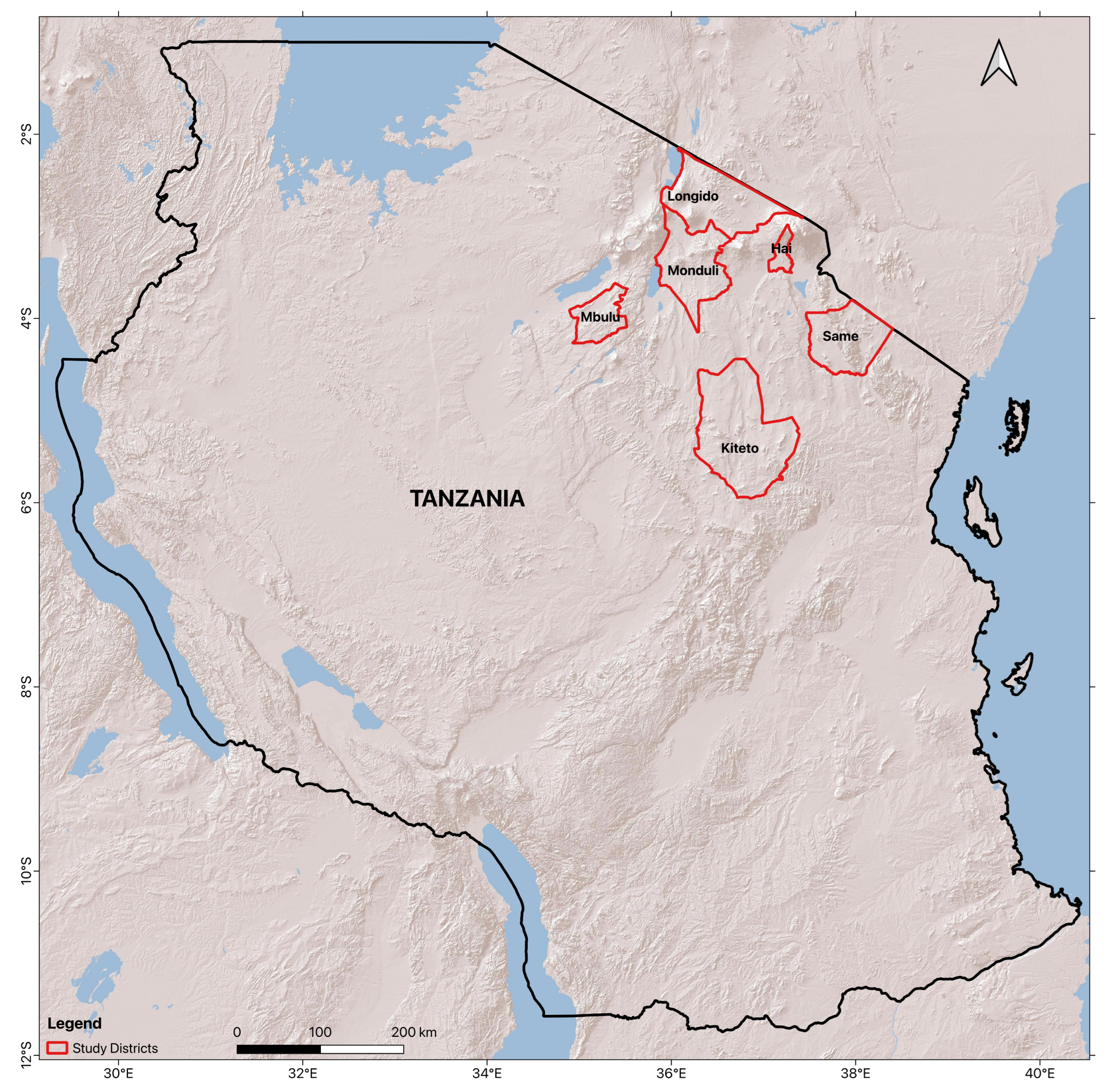
This study was conducted in northern Tanzania, which geographically spans latitudes 0.5° S to 11.5° S and longitudes 29.5° E to 40.5° E (Figure 1). The landscape encompasses a range of agroecological zones, including the Volcanic Highlands, Northern Rift Valley, Eastern Plateaux and Mountain Blocks, Central Plateau, and Undifferentiated Rocky Terrain, each supporting distinct vegetation types and ethnobotanical practices. The elevation ranges from 600 to over 5000 m above sea level. Climatic conditions vary widely: rainfall ranges between 500 and 1400 mm, and cooler temperatures (10–20 °C) prevail in highlands, while lowland zones are relatively warmer and drier. This diversity in altitude and climate fosters high biodiversity, including various pesticidal plant species [24]. Vegetation types across these zones reflect ecological gradients, such as the Volcanic Highlands being dominated by montane forests, bamboo thickets, and highland grasslands. The Northern Rift Valley features dry savannahs, open woodlands, and acacia-dominated grasslands, with riparian vegetation along seasonal rivers. The Eastern Plateaux and Mountain Blocks comprise miombo woodlands, bushlands, and scattered montane forest patches. The Central Plateau is characterized by semi-arid grasslands, dry woodlands, and scattered shrubs, whereas Undifferentiated Rocky Terrain supports sparse vegetation composed of hardy shrubs, succulents, and scattered trees. This heterogeneity provides a rich source of plant species traditionally used by local communities for pest management. Agriculture and livestock keeping are the dominant economic activities, with communities growing maize, beans, sorghum, bananas, vegetables, and coffee while also engaging in cattle rearing [21]. Ethnically, the region is home to the Maasai, Iraqw, Chagga, Pare, Zigua, and Barabaig communities, each with unique ethnobotanical knowledge and agricultural–cultural practices. An ethnobotanical survey was conducted across six districts: Longido (inhabited by Maasai), Monduli (inhabited by Maasai), Same (inhabited by Pare), Hai (inhabited by Chagga), Kiteto (inhabited by Maasai, Nguu, Zigua), and Mbulu (inhabited by Iraqw), located in the Arusha, Kilimanjaro, and Manyara regions.
Figure 1.
The location of study districts in northern Tanzania where ethnobotanical data on pesticidal plants were collected. The highlighted districts, Hai, Same, Monduli, Longido, Mbulu, and Kiteto, represent diverse ecological zones and are predominantly inhabited by distinct ethnic groups, including the Chagga, Pare, Maasai, Iraqw, Nguu, and Zigua.
2.2. Study Design
A cross-sectional ethnobotanical study design was employed using purposive and snowball sampling techniques. Districts and villages were purposively selected based on ecological diversity, ethnic representation, and the presence of traditional pesticidal plant use. Initial participants from agricultural extension officers, traditional healers, experienced farmers, and community elders were purposively selected for interviews based on their recognized expertise in the use of pesticidal plants. Subsequently, snowball sampling was used to identify additional knowledgeable respondents.
2.3. Data Collection
2.3.1. Ethnobotanical Interviews
Data were collected between October and December 2024 using questionnaire surveys (S4) (n = 266), focus group discussions (FGDs; n = 24 groups), key informant interviews (KIIs; n = 26), and field verifications across the six ethnic groups. Data collected included plant local names, plant parts used, preparation and application methods, perceived effectiveness, sources of knowledge, access pathways, and perceived population trends in pesticidal plants. Data were recorded digitally using Kobo Toolbox (https://www.kobotoolbox.org/). Questionnaires were prepared in English, translated into Swahili, and further translated into local languages where necessary to ensure comprehension. All participants provided oral informed consent prior to the interviews and their participation in the study.
2.3.2. Species Verification and Occurence Data
Plant species reported during interviews were identified and collected in the field with the assistance of a botanist and local collaborators to prepare herbarium specimens. Collected specimens were cross-referenced with those held at the National Herbarium of Tanzania (NHT) and the Flora of Tropical East Africa (FTEA) to verify taxonomic identity. Scientific names were further confirmed using the online database Plants of the World Online (POWO, https://powo.science.kew.org/). Species occurence coordinates data were obtained from the geo-referenced herbarium specimens.
2.4. Data Analysis
Descriptive statistics were used to summarize respondent demographics, and plant species used as pesticidal plants.
Chi-square or Fisher tests of independence were used to assess associations between ethnic groups and (i) knowledge transmission pathways, (ii) plant parts used, (iii) sources of plant materials, and (iv) perceptions of pesticidal plant population trends. Penalized logistic regression analysis was conducted to assess the influence of demographic factors (age, gender, education and ethnic) on reported knowledge of pesticidal plants. Analyses were conducted in R version 4.3 at a 95% confidence level. QGIS (https://qgis.org/) was used to visualize the occurrence patterns of the pesticidal plant species across agroecological zones and rainfall gradients. Thematic analysis was used to analyze the qualitative data obtained from key informant interviews and focus group discussions using the approach in [25].
3. Results
3.1. The Demographic Characteristics of the Respondents
Two hundred and sixty-six individuals were interviewed to assess ethnobotanical knowledge and the use of pesticidal plants across various ethnic groups. The distribution among ethnic groups was 36.1% Maasai (96), 22.6% Iraqw (60), 21.4% Chagga (57), 10.2% Pare (27), 5.6% Zigua (15), and 4.1% Nguu (11). Gender distribution comprised 139 males (52.3%) and 127 females (47.7%). Educational attainment was as follows: primary, 67.7%; secondary, 19.1%; no formal education, 8.3%; and tertiary, 4.9%. Age distribution was 9.4% 14–23 years, 28.2% 24–39 years, 30.5% 40–53 years, 19.9% 54–67 years, and 12% 68–80 years. Most respondents reported multiple roles, with the majority being farmers at 85.7% (228), followed by herdsmen at 29.3% (78), business persons at 3.4% (9), those with no job at 1.5% (4), executive officers at 1.1% (3), teachers at 0.8% (2), students at 0.8% (2), and livestock officers at 0.4% (1).
3.2. Sources and Determinants of Knowledge on Pesticidal Plants
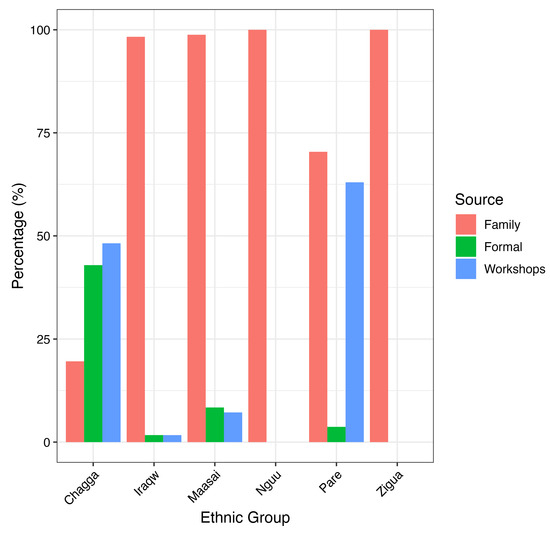
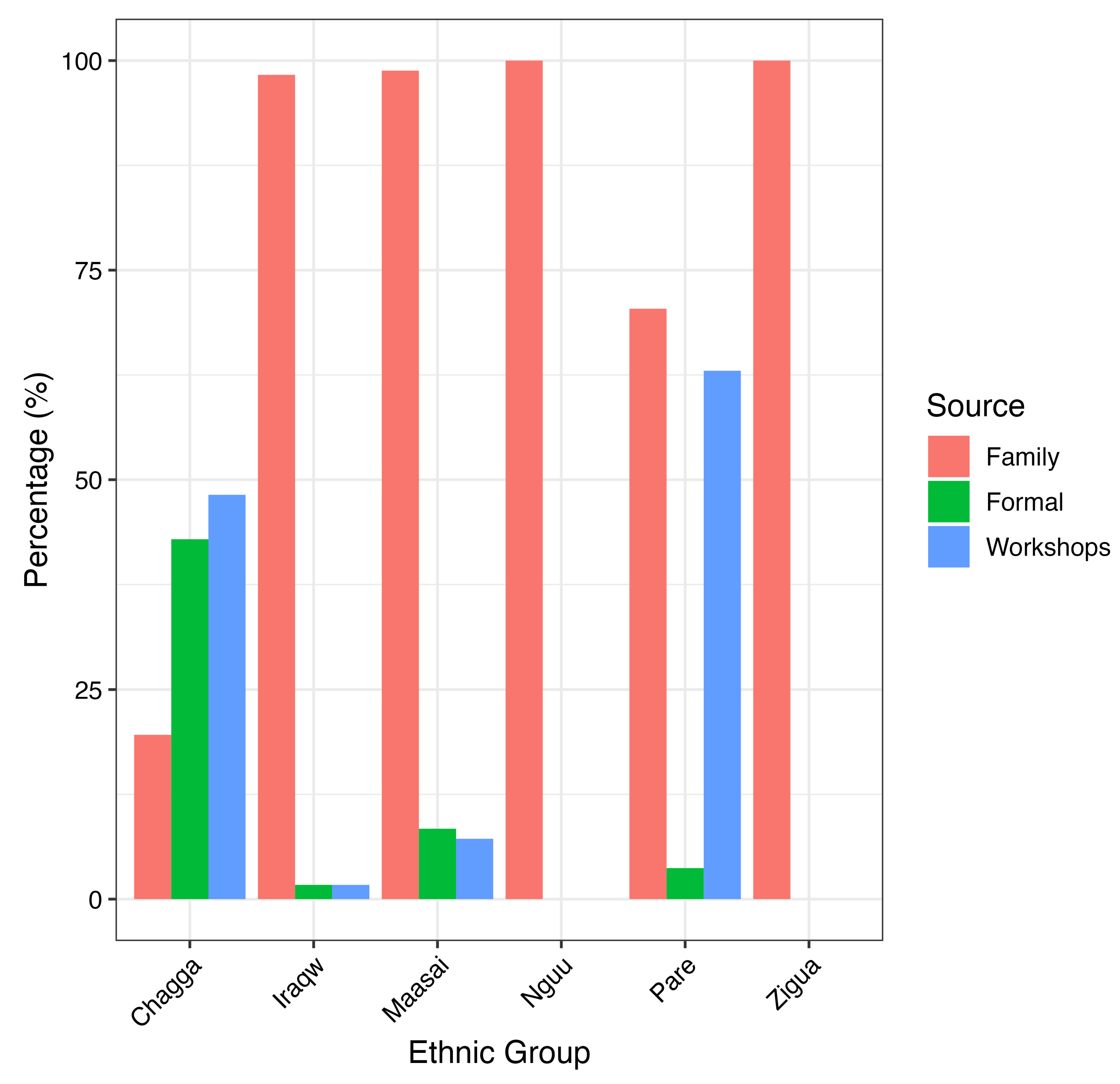
The sources of knowledge on pesticidal plants varied significantly across ethnic groups (χ2 = 144.46, df = 10, p < 0.001; Figure 2). Family/community tradition emerged as the dominant source of knowledge among Maasai, Iraqw, Nguu, and Zigua respondents, with nearly all participants in these groups (≥98%) reporting reliance on intergenerational transmission. This quantitative pattern aligns closely with qualitative evidence from key informants. As one Maasai elder explained, “We learned about these plants from our fathers and grandfathers. It is part of our tradition. We don’t write it, we live it.” This statement reinforces the statistical finding that knowledge in these communities is primarily orally transmitted and embedded within cultural practice rather than formal institutions.
Figure 2.
Sources of knowledge on pesticidal plants across ethnic groups (n = 246). Significant variation was observed among groups. Intergenerational transmission through family and community traditions predominated among Maasai, Iraqw, Nguu, and Zigua respondents, whereas Chagga and Pare communities reported greater reliance on formal education and workshops, reflecting integration of traditional and institutional knowledge systems.
In contrast, Chagga respondents reported substantially higher reliance on formal education (42.9%) and workshops or training (48.2%), indicating a more institutionalized knowledge pathway. This divergence is consistent with focus group discussions from Hai District, where participants noted that “agricultural officers and NGOs have occasionally provided training on pesticidal plant use, especially for vegetable farming.” The quantitative data therefore reflect the greater exposure of Chagga communities to extension services and organized training programs, suggesting the integration of traditional and formal knowledge systems.
Among Pare respondents, both workshops or training (63.0%) and family/community tradition (70.4%) were frequently reported, indicating a hybrid knowledge system where traditional transmission coexists with formal agricultural outreach. This mixed pattern suggests that Pare communities may be transitioning toward more structured knowledge dissemination mechanisms while retaining cultural foundations. Notably, respondents from the Nguu and Zigua ethnic groups reported exclusive reliance on family and community-based traditional knowledge, with no reported formal education or workshop-based training related to pesticidal plants. Furthermore, qualitative insights from Kiteto indicated the intergenerational erosion of knowledge, as one elder observed, “In these days, many of the youth have never even seen some of the pesticidal plants we grew up using. They now trust what they buy in shops over what they can grow or find.” This perception suggests emerging shifts in knowledge preference and a possible decline in traditional knowledge transmission among younger generations, despite the high overall reliance on tradition shown in the quantitative data.
Penalized logistic regression analysis (Table 1) showed that age and gender were not significant predictors of possessing knowledge on pesticidal plants (p > 0.05), indicating that knowledge distribution does not differ significantly across age groups or between males and females. Education level, however, revealed mixed effects. Respondents with primary education were significantly more likely to report knowledge compared to those with no formal education, whereas secondary and tertiary education were not statistically significant predictors. The qualitative findings provide important contextual explanations for these patterns. During focus group discussions, several participants emphasized that individuals with only primary education often remain closely involved in farming and traditional livelihood activities, which enhances exposure to plant-based pest control practices. As one elder explained, “Those who stopped at primary school are still in the fields with us. They know the plants because they use them.”
Table 1.
The penalized logistic regression results showing the effect of age, gender, ethnic group, and education level on knowledge of pesticidal plants. The model uses “female” as the reference category for gender, “Maasai” for ethnic group, and “no formal education” for education level.
In contrast, younger and more formally educated participants were frequently described as having limited practical experience with pesticidal plants. An FGD participant in Hai District noted, “Many of the youth who went to secondary school or college do not know these plants. They rely more on what they buy in shops than what we used traditionally.” Similarly, another elder remarked the following: “Modern education teaches chemicals and modern farming. It does not teach the plants we used before.” These narratives help explain why higher levels of formal education did not correspond to increased ethnobotanical knowledge in the quantitative analysis. Instead, the findings suggest that experiential learning and continued engagement in agricultural practice may be more influential determinants of knowledge than formal schooling beyond the primary level.
Ethnic group emerged as a significant determinant of reported knowledge on pesticidal plants. Using Maasai respondents as the reference category, Chagga and Iraqw respondents were significantly more likely to report knowledge of pesticidal plants, indicating meaningful variation in the familiarity and use of botanical pest control practices across ethnic groups. These differences appear to reflect variations in farming systems, crop specialization, and exposure to agricultural extension services.
The qualitative findings support this interpretation. In predominantly Chagga areas, participants described the active use of plant-based pesticides, particularly in vegetable farming systems. One participant explained, “We were trained on how to prepare plant extracts for controlling pests in tomatoes and cabbages. It helps us reduce chemical use.” Similarly, an Iraqw farmer noted, “We use some plants to control storage pests and field insects. Some we learned from elders, others from agricultural officers.” These accounts align with the significantly higher likelihood of pesticidal plant knowledge among Chagga and Iraqw respondents, suggesting that both traditional transmission and formal agricultural outreach contribute to knowledge retention in these communities.
Although Pare and Zigua respondents showed elevated odds relative to Maasai respondents, these differences were not statistically significant. Discussions suggested that pesticidal plant use in these communities may be present but less systematically practiced or less widely transmitted. In contrast, several Maasai participants indicated that while traditional plant knowledge exists, it is more strongly associated with veterinary or medicinal uses than crop pest control. As one elder stated, “We know many plants for livestock and medicine, but for crop pests we often buy chemicals now.” Nguu respondents did not differ significantly from Maasai respondents, and qualitative responses similarly reflected reliance on traditional knowledge systems with limited structured training on pesticidal plant preparation. Taken together, the quantitative and qualitative evidence suggests that ethnic differences in pesticidal plant knowledge are shaped by agricultural specialization, extension exposure, and the extent to which botanical pest control remains embedded within local farming practices.
3.3. Plant Species Used as a Pesticidal Plants
One hundred and six pesticidal plant taxa were recorded across the six ethnic groups surveyed, with a cumulative frequency of 688 mentions (S1). Among the most frequently cited species (Table 2), Tephrosia vogelii Hook.f. had the highest relative frequency of citation (RFC = 0.293) with 72 mentions, primarily from the Chagga (48) and Pare (23). Other widely cited taxa included Tithonia diversifolia (Hemsl.) A.Gray (57 citations, RFC = 0.232), Croton dichogamus Pax (54, RFC = 0.22), Tagetes minuta L. (37, RFC = 0.15), and Solanum incanum L. (36, RFC = 0.146). Those with over 20 mentions across multiple ethnic groups included Tithonia diversifolia (Hemsl.) A.Gray, Tagetes minuta L., Azadirachta indica A.Juss, Capsicum frutescens L., Lantana camara L., and Aloe volkensii Engl., although their distribution varied substantially among communities (χ2 = 562.34, df = 40, p < 0.001, Table 2).
Table 2.
Frequency of citation (FC) and relative frequency of citation (RFC) of major pesticidal plant taxa recorded across six ethnic groups in northern Tanzania.
The qualitative findings provide context for these citation patterns. During focus group discussions, Chagga elders emphasized the importance of Tephrosia vogelii, describing it as follows: ”The plant our fathers always used for bean insects.” They further explained that the leaves were harvested from farms and dried in shaded conditions to enhance potency before application. Iraqw participants similarly highlighted the role of Croton dichogamus, noting that “our ancestors kept it near the farm boundaries for controlling pests and protecting stored grain”. In contrast, Maasai informants described the use of Solanum incanum primarily in livestock management, particularly for protection against ectoparasites, reflecting differences in livelihood specialization across communities.
3.4. Pesticidal Plant Part Preferences
A Chi-square test was conducted to determine whether the use of pesticidal plant parts differed among the six surveyed ethnic groups (Chagga, Iraqw, Maasai, Nguu, Pare, and Zigua). The results revealed variation between ethnic affiliation and the plant part used (χ2 = 70.754, df = 25, p < 0.001; Table 3). Leaves were the most frequently used plant part across all ethnic groups, with particularly high citation among Chagga (56 mentions), Iraqw (53), and Maasai (52) respondents. In contrast, bark, seeds, roots, and whole plants were cited less frequently overall but displayed marked ethnic variation. The Maasai exhibited the greatest diversity in plant part utilization, reporting relatively high use of bark (20 citations), seeds (11), roots (8), and whole plants (12). Conversely, Zigua and Nguu respondents demonstrated a narrower pattern of use, relying predominantly on leaves and reporting minimal use of roots or seeds.
Table 3.
Frequency of plant parts used for pesticidal purposes across six ethnic groups in study area.
The qualitative findings from FGDs provide additional insight into these patterns. A Maasai elder explained, “Bark and roots are strong medicines for stubborn pests on cattle, but we know not to take too much from one tree.” This statement highlights both the perceived potency and awareness of sustainable harvesting practices. Similarly, Chagga respondents emphasized the regenerative advantage of leaf harvesting, with one participant noting, “We only pick leaves as they grow back quickly, and the plant lives on.” These narratives reinforce the quantitative findings, suggesting that plant part selection is influenced not only by efficacy but also by sustainability considerations and livelihood needs.
To further explore practical applications, fifteen plant species with the highest frequency of citation were selected for detailed analysis. These species were examined in terms of plant parts used, preparation methods, modes of administration, targeted pests, perceived efficacy, and reported limitations (S2). This deeper characterization provides insight into how pesticidal plant knowledge translates into applied pest management practices across communities.
3.5. Access and Sourcing Pathways of Pesticidal Plants
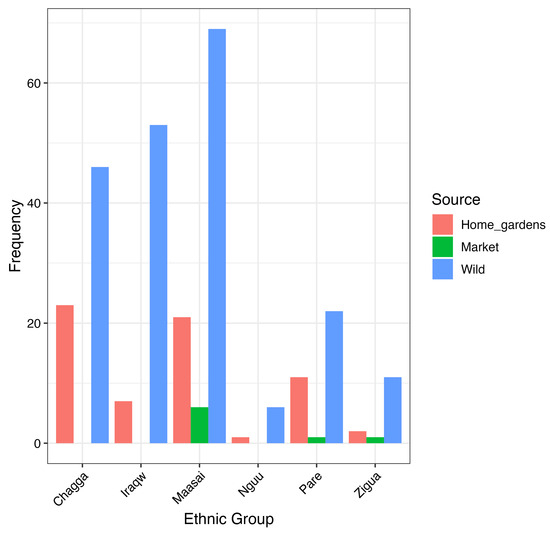
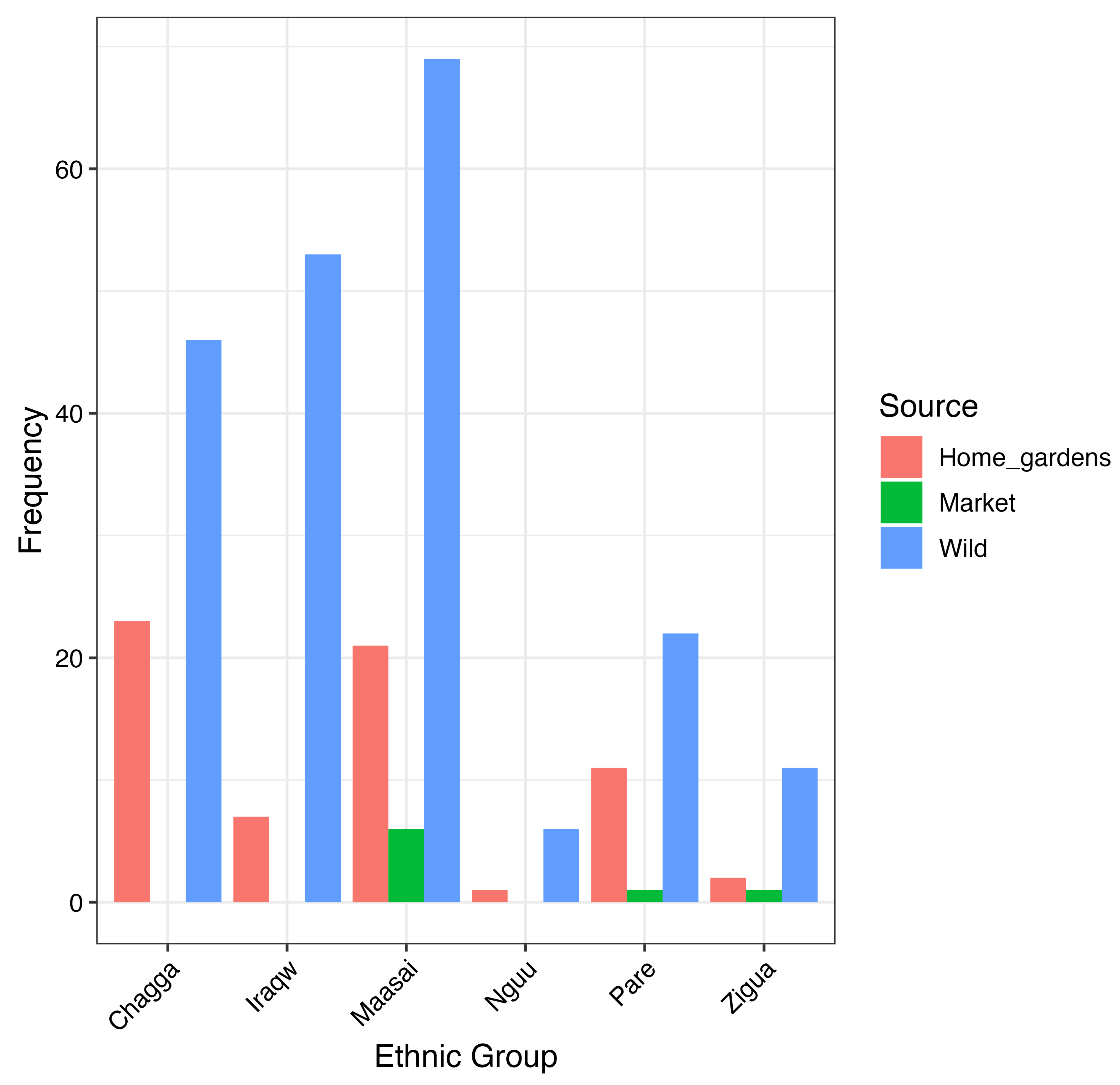
The sourcing of pesticidal plants varied across ethnic groups (χ2 = 19.957; df = 10; p-value = 0.02966), with the wild being the predominant source overall (Figure 3). Of the total 280 reported sourcing instances, 207 (73.9%) originated from wild habitats, 65 (23.2%) from home gardens, and only 8 (2.9%) from markets. Across all ethnic groups, wild collection dominated. The Maasai reported the highest number of wild-sourced plants (69), followed by the Iraqw (53) and Chagga (46). Home garden sourcing was also notable among the Maasai (21) and Chagga (23). Pare respondents reported moderate reliance on both wild (22) and home gardens (11).
Figure 3.
Percentage distribution of pesticidal plant sourcing pathways by ethnic group, showing variation in reliance on wild collection, home gardens, and markets.
Market acquisition was minimal across all groups, with only eight total mentions. The Maasai recorded the highest number of market-sourced plants (6), while Pare and Zigua each reported one instance. Chagga, Iraqw, and Nguu respondents reported no market-based sourcing. The qualitative findings from FGDs reinforce these patterns. Several participants emphasized the continued importance of wild landscapes as primary sources of pesticidal plants. A Maasai elder explained, “Most of these plants grow in the bush. We collect them when we need them; we do not usually buy them.” Similarly, an Iraqw participant noted, “These plants are around our farms and forests. We know where to find them.” In contrast, Chagga respondents highlighted the increasing role of home gardens for commonly used species. One participant stated, “Some plants like Tephrosia and Tithonia we grow near the house so that they are easy to access.” Market sourcing was rarely mentioned, and when it was, it was generally associated with species that are either scarce locally or already commercialized. As one Pare respondent observed, “Sometimes we buy neem from the market, but most other plants we collect ourselves.” To sum up, the quantitative and qualitative findings indicate that pesticidal plant use remains strongly embedded within local ecological systems, with limited dependence on formal markets.
3.6. The Perceptions of the Pesticidal Plants’ Population Status
The results showed an association between ethnic affiliation and the perceptions of pesticidal plant population trends (χ2 = 28.554, df = 10, p < 0.001; Table 4).
Table 4.
Perceptions of pesticidal plant population trends (declining, increasing, or stable) among six ethnic groups.
Across all respondents, the majority perceived pesticidal plant populations to be increasing (140 out of 246 responses), with this perception most frequently reported by the Chagga (41 responses) and Iraqw (39). In contrast, the Maasai reported the highest number of perceptions indicating declining plant populations (39 responses). Key informant interviews supported this concern, with one elder noting, “Some plants we used to find easily are now disappearing because the land is changing and more people are using chemicals”. The perceptions of stable populations were comparatively rare across all ethnic groups, with responses ranging from one to eight per group.
3.7. Distribution of Pesticidal Plant Occurrences Across Agroecological Zones and Rainfall Gradients
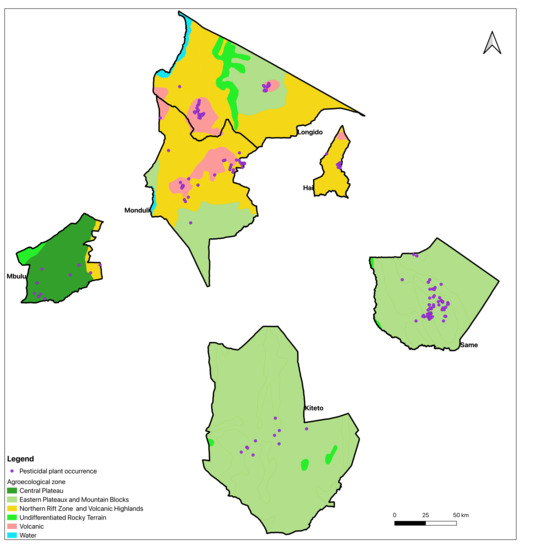
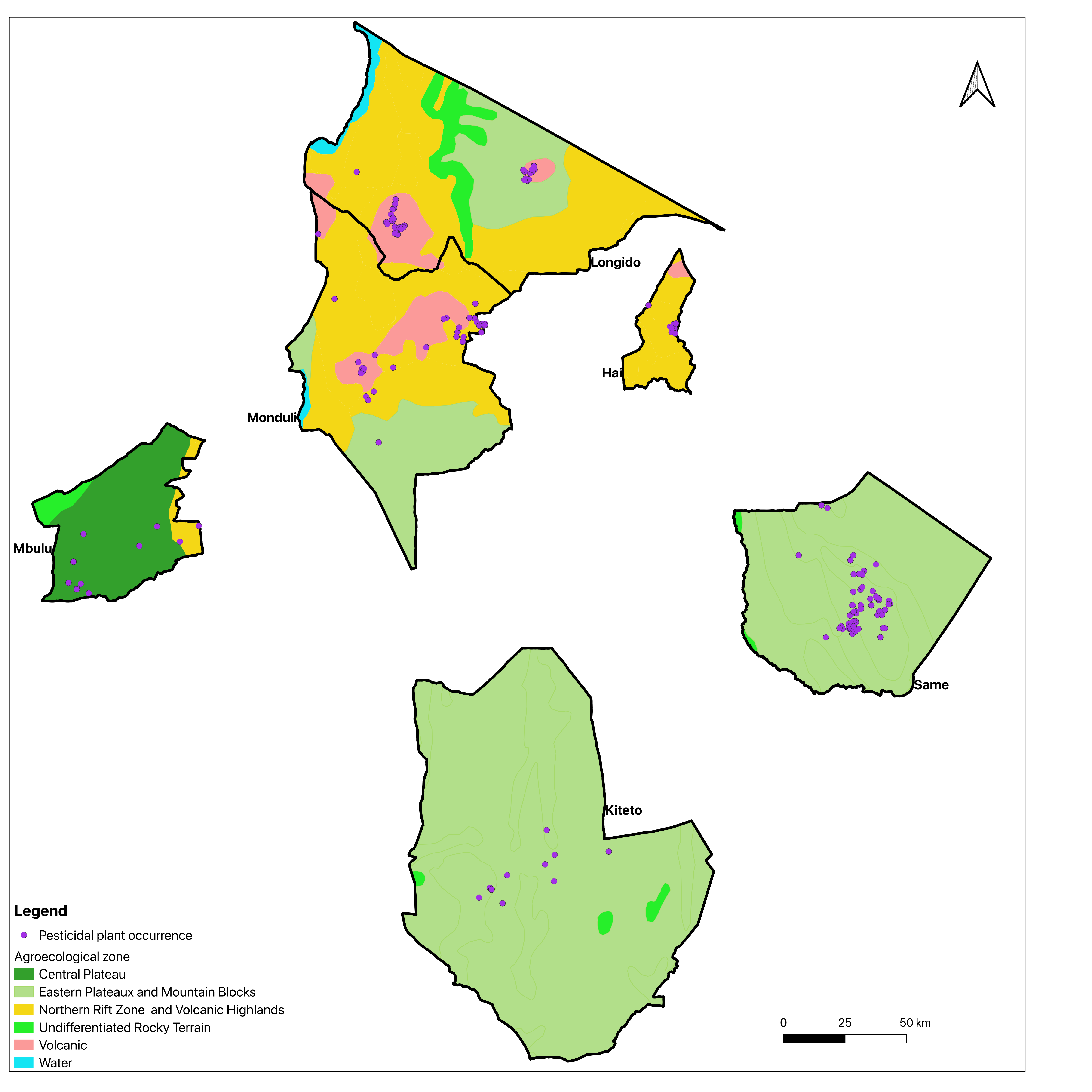
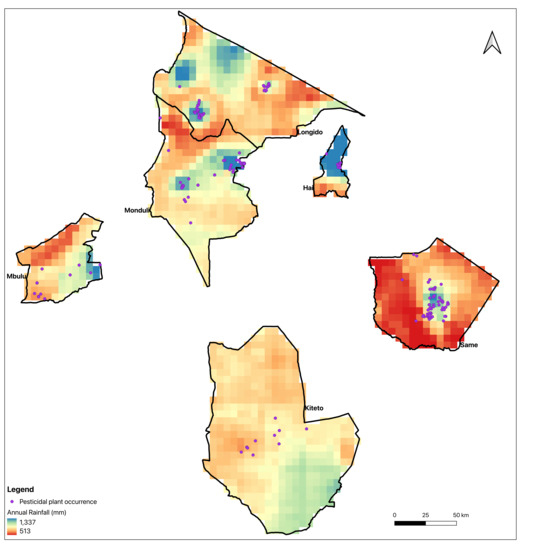
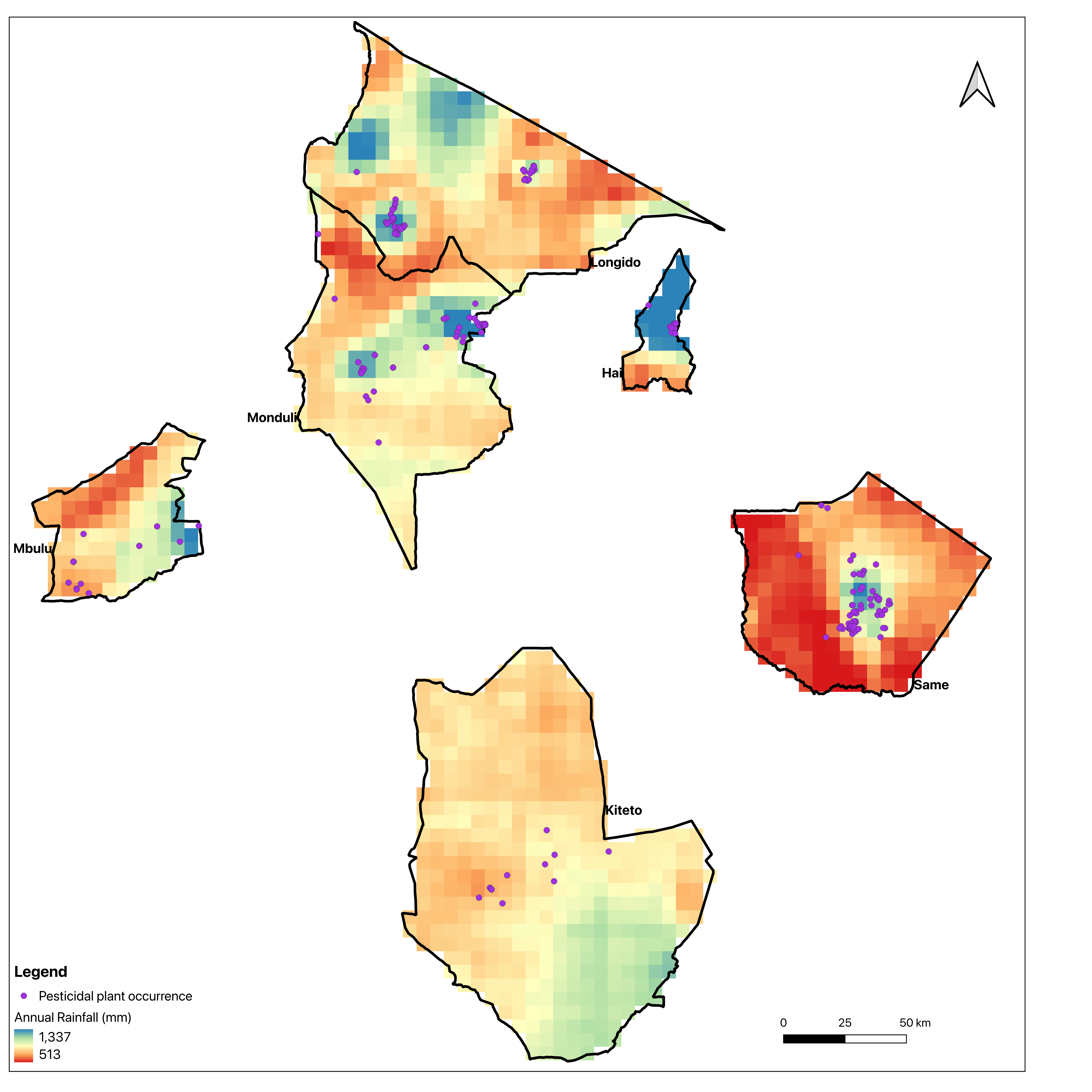
The distribution of pesticidal plant occurrences across the study area shows a clear ecological pattern associated with agroecological zones and rainfall gradients. Most records are concentrated within the Northern Rift Zone and Volcanic Highlands as well as the Eastern Plateaux and Mountain Blocks, while relatively fewer occurrences are observed in the Central Plateau and Undifferentiated Rocky Terrain (Figure 4). Districts such as Same and Monduli exhibit pronounced clustering, particularly in volcanic and montane landscapes. These areas are characterized by fertile soils, favorable microclimates, and high plant biodiversity, which may support a greater diversity of species producing bioactive secondary metabolites with pesticidal properties. Overlaying occurrence data with annual rainfall further reveals that most pesticidal plant records fall within zones receiving moderate to relatively high rainfall (approximately 800–1200 mm annually, Figure 5). Areas with lower rainfall show comparatively fewer occurrences. This suggests that moisture availability may play a role in supporting plant diversity and biomass productivity, thereby increasing the likelihood of encountering pesticidal species. Generally, the findings indicate that agroecological conditions, rainfall variability and volcanic soil fertility collectively influence the spatial distribution of pesticidal plants in the region.
Figure 4.
Occurrence of commonly used pesticidal plant species across agroecological zones in northern Tanzania. Species coordinates used to produce this map are found in S3.
Figure 5.
Spatial distribution of commonly used pesticidal plant species across rainfall gradient in northern Tanzania.
4. Discussion
4.1. Knowledge Transmission Pathways
The dominance of oral knowledge transmission among the Maasai, Iraqw, and Zigua reflects deeply rooted cultural systems in which pesticidal plant knowledge is inherited through family/community structures. Focus group discussions (FGDs) emphasized intergenerational learning through observation, participation, and daily practice, with elders identified as the primary custodians of knowledge. KIIs also pointed to limited formal education and unequal access to extension services as key factors reinforcing dependence on oral knowledge among these groups. These insights from FGDs and KIIs confirmed that such knowledge is rarely written and is instead learned through practice and observation, reinforcing the findings from previous ethnobotanical studies on other African countries [2,16,26]. Reliance on this oral transmission alone leaves pesticidal plant knowledge vulnerable to erosion over time, particularly in the context of socio-economic change, modernization, and shifting livelihood practices [20].
The hybrid knowledge systems observed among the Chagga and Pare appear to result from increased interaction with extension services and NGO-led trainings, a pattern repeatedly emphasized by FGD participants and agricultural officers’ similar trends reported by [22]. These interactions enhance local knowledge and practices but may gradually alter traditional knowledge structures, potentially affecting how orally transmitted knowledge is maintained within the communities [19]. The absence of formal knowledge exposure among the Nguu highlights structural inequities in extension access, suggesting the need for culturally inclusive outreach approaches led by extension services, NGOs, and local community organizations.
4.2. Demographic Predictors of Knowledge Possession
The findings indicate that ethnic affiliation and primary education level significantly influenced knowledge reporting, whereas age and gender were not statistically significant predictors. Ethnic group emerged as the strongest determinant of pesticidal plant knowledge. Compared to Maasai respondents, Chagga and Iraqw respondents were significantly more likely to report knowledge of pesticidal plants. This pattern likely reflects differences in agroecological settings, farming systems, and cultural knowledge transmission. The Chagga and Iraqw communities traditionally practice more intensive and permanent agricultural systems, particularly in highland and volcanic zones characterized by crop diversification. Such farming systems may promote greater experimentation with plant-based pest control methods and facilitate the retention of ethnobotanical knowledge. In contrast, Maasai communities are historically pastoralist, with relatively less emphasis on crop production, which may partly explain the lower reported likelihood of pesticidal plant knowledge in this group. However, these findings should not be interpreted as the absence of knowledge but rather as differences in domain-specific ethnobotanical specialization.
Education level also showed an important pattern. Respondents with primary education were significantly more likely to report pesticidal plant knowledge compared to those who had not attended school. This suggests that basic literacy may enhance the articulation or recall of traditional knowledge or may reflect greater interaction with agricultural extension systems. Interestingly, secondary and tertiary education were not significant predictors, and the wide confidence intervals suggest instability due to small sample sizes. In many contexts, higher formal education has been associated with erosion of traditional knowledge systems; however, the present findings do not provide strong evidence of such an effect. These supported the findings from [27], which observed that moderate education levels may facilitate traditional knowledge retention, whereas advanced formal education often correlates with knowledge loss due to curricular shifts. The qualitative evidence from FGDs further highlights the role of modern lifestyles and the allure of synthetic pesticides in eroding traditional practices, consistent with the concerns raised by [28].
Regarding gender, the findings in this study aligned with [29], which found no significant differences between men and women in medicinal plant knowledge across various cultural settings. Contrasting evidence from [30,31,32,33] highlighted that in some contexts, women, especially household caregivers, tend to hold greater ethnobotanical knowledge due to their roles in family health and food preparation. Although age was statistically not a significant predictor in this study, observational and qualitative evidence suggested its underlying influence. Focus group discussions revealed that older participants expressed concerns about knowledge erosion, particularly among youth. Many lamented that younger generations tend to lose interest in farming practices; these intergenerational gaps reflected the broader trends of declining interest in traditional knowledge among youth, as noted by [22,28]. Such insights emphasized the importance of combined quantitative and qualitative approaches in evaluating the dynamics of knowledge transmission.
It is important to note that several predictors exhibited wide confidence intervals, reflecting sparse outcome categories and potential quasi-complete separation. Although Firth’s penalized logistic regression was applied to reduce small-sample bias, caution is warranted in interpreting the magnitude of some odds ratios. Future studies with more balanced outcome categories and stratified sampling across ethnic groups would improve estimate precision. Generally, the findings highlight the importance of cultural and agroecological context in shaping ethnobotanical knowledge systems. The significant role of ethnic affiliation suggests that pesticidal plant knowledge is embedded within localized farming traditions and ecological adaptations. These insights highlight the need for culturally sensitive knowledge documentation and conservation strategies that recognize intra-regional diversity in traditional pest management practices.
4.3. Cultural Specificity in Plant Use
The pesticidal plants we documented across ethnic groups, with highly significant inter-ethnic variation in species preference (p < 0.001), highlight the depth of traditional ecological knowledge. Specific plant use patterns, such as Tephrosia vogelii among the Chagga and Pare and Croton dichogamus among the Iraqw, reflect both ecological adaptation and cultural selection criteria, consistent with the biocultural frameworks proposed by [34]. Such diversity in plant selection highlights the importance of localized conservation and documentation efforts. As key informants noted, many species are becoming less known or available due to changing land use and reduced reliance on traditional methods. These insights reaffirm the need for urgent ethnobotanical documentation and participatory conservation support, as noted by [35].
4.4. Harvesting Practices and Sustainability
Significant variation in plant part use was observed across ethnic groups. Leaf harvesting, favored by the Chagga and Iraqw, is more sustainable due to rapid regeneration, as supported by [36]. The broader use of roots, bark, and whole plants among the Maasai, while demonstrating diverse applications, raises sustainability concerns aligned with [37]. Community narratives stress the awareness of sustainable harvesting, such as not overharvesting bark, yet practical constraints and the lack of alternatives may lead to unsustainable practices. Tailored interventions that promote leaf-based formulations and the home cultivation of high-use species could mitigate ecological pressure while honoring cultural traditions.
4.5. Access and Sourcing Patterns
Ethnic variation in sourcing pathways indicates that access to pesticidal plants is shaped not only by ecological factors but also by social and economic dynamics. The predominance of wild-sourced plants, particularly among the Maasai and Iraqw, reflects continued reliance on natural ecosystems. However, the emergence of home gardens and market-based access among the Chagga and Pare suggests evolving strategies for plant availability. These findings mirror [38], which emphasizes that plant domestication and market integration often arise in response to environmental pressures and livelihood shifts. Supporting community-based propagation and improving access to seedlings may enhance both conservation and local livelihoods.
4.6. Perceptions of Pesticidal Plant Population Status
The significant association between ethnic affiliation and the perceptions of pesticidal plant population trends suggests that views on plant availability are shaped by localized ecological conditions, livelihood systems, and resource management practices. While the majority of respondents perceived pesticidal plant populations as increasing, this optimism was not uniformly distributed across communities. The relatively high reporting of increasing trends among Chagga and Iraqw respondents may reflect greater engagement in plant cultivation, home garden domestication, and agroforestry practices [22]. These communities are more crop-oriented, and their integration of pesticidal plants into farm systems likely enhances both visibility and perceived abundance [22].
In contrast, the Maasai reported the highest number of declining perceptions, which may be linked to their stronger reliance on wild landscapes for plant collection. Pastoral systems often depend on open rangelands where environmental degradation, land-use change, bush clearing, overgrazing, and climate variability can directly affect plant availability [39]. The qualitative evidence reinforces this interpretation, as one elder explained, “Some plants we used to find easily are now disappearing because the land is changing and more people are using chemicals.” This statement highlights two important pressures, environmental transformation and the growing use of synthetic pesticides. The shift toward commercial agrochemicals may reduce the active use and management of traditional species, potentially leading to neglect, the reduced transmission of knowledge, and lower conservation priority for certain taxa [4,14,21].
The relatively small proportion of respondents reporting stable populations suggests that most communities perceive ongoing ecological change rather than equilibrium. This aligns with the broader patterns of land-use intensification, population growth, and climate variability documented across northern Tanzania [40]. The perceptions of increasing populations may also reflect improved awareness, domestication efforts, and adaptation strategies, whereas the perceptions of decline likely signal the vulnerability of wild-harvested species under environmental stress.
4.7. Influence of Agroecological Zones and Rainfall Gradients on the Distribution of Pesticidal Plants
The spatial clustering of pesticidal plant occurrences within the Northern Rift Zone and Volcanic Highlands, as well as the Eastern Plateaux and Mountain Blocks, highlights the strong influence of agroecological conditions on ethnobotanical resource distribution. These regions are characterized by relatively fertile volcanic soils, heterogeneous topography, and favorable microclimatic conditions, which collectively support higher plant diversity [24]. Numerous ecological studies demonstrate that montane and volcanic landscapes often harbor greater floristic richness due to improved soil nutrient availability and moisture retention, factors that enhance biomass productivity and secondary metabolite synthesis [24,41,42]. The concentration of pesticidal plant species in these zones therefore aligns with broader biodiversity patterns observed in tropical highland ecosystems.
The association between pesticidal plant occurrences and moderate to high annual rainfall (approximately 800–1200 mm) further reinforces the importance of climatic drivers in shaping plant distribution. Rainfall availability is a fundamental determinant of vegetation productivity and species richness in savanna and montane systems [43]. Areas receiving higher precipitation typically exhibit greater plant biomass and structural complexity, increasing the probability of encountering species with bioactive secondary metabolites. Moisture availability also influences plant physiological processes, including the production of defensive compounds such as alkaloids, terpenoids, and phenolics, many of which underpin pesticidal properties [42].
In contrast, the comparatively lower occurrence of pesticidal plant records in the Central Plateau and Undifferentiated Rocky Terrain may reflect harsher edaphic conditions, reduced soil fertility, and lower rainfall regimes. Semi-arid zones are often characterized by lower species richness and biomass productivity, limiting the diversity of plant taxa available for ethnobotanical use [39]. However, it is important to note that lower recorded occurrences may also reflect sampling intensity, land-use pressure, or differences in traditional knowledge distribution rather than purely ecological constraints.
The pronounced clustering observed in districts such as Same and Monduli suggests that both environmental suitability and human knowledge networks contribute to spatial patterns. Ethnobotanical resource distribution is shaped not only by ecological gradients but also by cultural transmission and livelihood specialization [18]. Communities residing in ecologically diverse and agriculturally productive landscapes may have greater opportunities to identify, experiment with, and domesticate pesticidal plant species.
4.8. Limitations of This Study
While this study provides important insights into the distribution and ethnobotanical knowledge of pesticidal plants, several considerations should be taken into account when interpreting the findings.. First, the occurrence records of pesticidal plants were not derived from random sampling. Instead, data were collected through purposive ethnobotanical surveys and existing herbarium records, which may introduce spatial clustering and sampling bias. Consequently, the observed distribution patterns may partly reflect sampling effort rather than true ecological abundance. Second, ethnobotanical information relied on self-reported knowledge from respondents. Such data may be influenced by recall bias, personal experience, cultural transmission patterns, or selective reporting. Informants may also emphasize well-known or culturally significant species, potentially underrepresenting less familiar but ecologically important taxa. Finally, herbarium records do not necessarily indicate current abundance or population status. Specimens document historical presence at a given location and time but may not reflect present-day distribution due to land-use change, habitat degradation, climate variability, or local extinction.
5. Conclusions
This study demonstrates that ethnobotanical knowledge and the use of pesticidal plants in northern Tanzania are strongly shaped by ethnic affiliation, cultural transmission pathways, and ecological context. Knowledge acquisition is predominantly rooted in family, community, and traditional systems, with significant variation across ethnic groups, while formal education and workshops play a secondary but notable role among some communities, particularly the Chagga. Although age and gender did not significantly influence knowledge possession, ethnicity and primary education emerged as key predictors, highlighting the importance of culturally embedded learning systems in sustaining pesticidal plant knowledge. The documentation of 106 pesticidal plant species highlights a rich and diverse ethnobotanical repertoire, with strong ethnic specificity in species selection, plant part use, and sourcing pathways. Leaves were the most commonly harvested plant part across all groups, reflecting both effectiveness and sustainability considerations, while reliance on wild habitats as the primary source raises concerns about potential overharvesting. The perceptions of declining plant populations, especially among the Maasai, signal increasing pressure on key species and point to emerging conservation challenges. Spatial analyses further revealed that commonly used pesticidal plants are unevenly distributed, with clear hotspots in the Northern Rift Zone and Volcanic Highlands and areas with high rainfall, closely aligning with areas of high ethnobotanical knowledge and use. These findings emphasize the need for integrated conservation and land-use strategies that safeguard critical habitats, promote sustainable harvesting, and recognize the role of indigenous knowledge systems. Strengthening community-based conservation, supporting knowledge transmission, and incorporating spatially explicit information into policy and planning will be essential for sustaining pesticidal plant resources and the livelihoods that depend on them under increasing socioecological change.
Supplementary Materials
The following supporting information can be downloaded at: https://www.mdpi.com/article/10.3390/d18050253/s1. S1. Pesticidal plants checklist with their frequency of citation and relative frequency of citation. S2. Plant species used as a pesticidal plant in the study areas. S3. List of commonly used pesticidal plant species for spatial analysis. S4. Questionnaire on pesticidal plants in northern Tanzania.
Author Contributions
I.K.C., A.G.M. and R.A.G. conceived this study; I.K.C., R.A.G. and A.G.M. designed this study; I.K.C. conducted data collection; I.K.C. and R.A.G. performed data curation and analysis; I.K.C., R.A.G. and A.G.M. designed the methodology; R.A.G. and I.K.C. developed the manuscript; A.G.M. and R.A.G. reviewed the manuscript; A.G.M. acquired funding. All authors have read and agreed to the published version of the manuscript.
Funding
This research was supported by Organization for Women in Science for the Developing World (OSWD), Grant Number 4500501096.
Institutional Review Board Statement
Ethical review and approval were waived for this study due to the nature of the research. The study was conducted following community-level Free, Prior and Informed Consent (FPIC) processes, and individual informed consent was obtained from all participants before collecting any data.
Informed Consent Statement
Informed consent has been obtained from the communities to publish this paper.
Data Availability Statement
The datasets generated and analyzed during the current study are available from the corresponding author upon reasonable request.
Acknowledgments
We would like to acknowledge the local communities, district officials, agricultural and livestock officer in northern Tanzania for their cooperation and for generously sharing their indigenous knowledge and experiences on the use of pesticidal plants. Their contributions are the backbone of this study. Thanks to National Herbarium of Tanzania (NHT) for giving us this opportunity and access to herbaria specimens for this study.
Conflicts of Interest
The authors declare no conflicts of interest.
Abbreviations
The following abbreviations are used in this manuscript:
| FGDs | Focus Group Discussions |
| KIIs | Key Informant Interviews |
| NGOs | Non-Governmental Organizations |
| NHT | National Herbarium of Tanzania |
| QGIS | Quantum Geographic Information System |
| TEK | Traditional Ecological Knowledge |
References
- Dimetry, N.Z. Different plant families as bioresource for pesticides. In Advances in Plant Biopesticides; Singh, D., Ed.; Springer: New Delhi, India, 2014; pp. 1–20. [Google Scholar] [CrossRef] [Scilit]
- Mwine, J.; van Damme, P.; Kamoga, G.; Kudamba, K.; Nasuuna, M.; Jumba, F. Ethnobotanical survey of pesticidal plants used in South Uganda: Case study of Masaka district. J. Med. Plants Res. 2011, 5, 1155–1163. [Google Scholar]
- Acheuk, F.; Basiouni, S.; Shehata, A.A.; Dick, K.; Hajri, H.; Lasram, S.; Yilmaz, M.; Emekci, M.; Tsiamis, G.; Spona-Friedl, M. Status and prospects of botanical biopesticides in Europe and Mediterranean countries. Biomolecules 2022, 12, 311. [Google Scholar] [CrossRef] [Scilit] [PubMed]
- Ngegba, P.M.; Cui, G.; Khalid, M.Z.; Zhong, G. Use of botanical pesticides in agriculture as an alternative to synthetic pesticides. Agriculture 2022, 12, 600. [Google Scholar] [CrossRef] [Scilit]
- Yigezu, G.; Wakgari, M. Local and indigenous knowledge of farmers management practice against fall armyworm (Spodoptera frugiperda) (JE Smith) (Lepidoptera: Noctuidae): A review. J. Entomol. Zool. Stud. 2020, 8, 765–770. [Google Scholar]
- Ali, A.D.; Ior, L.D.; Dogo, G.A.; Joshua, J.I.; Gushit, J.S. Ethnobotanical survey of plants used as biopesticides by indigenous people of Plateau State, Nigeria. Diversity 2022, 14, 851. [Google Scholar] [CrossRef] [Scilit]
- Mkindi, A.; Mtei, K.M.; Njau, K.N.; Ndakidemi, P.A. The Potential of Using Indigenous Pesticidal Plants for Insect Pest Control to Small Scale Farmers in Africa; Scientific Research Publishing Inc.: Wuhan, China, 2015. [Google Scholar]
- Souto, A.L.; Sylvestre, M.; Tölke, E.D.; Tavares, J.F.; Barbosa-Filho, J.M.; Cebrián-Torrejón, G. Plant-derived pesticides as an alternative to pest management and sustainable agricultural production: Prospects, applications and challenges. Molecules 2021, 26, 4835. [Google Scholar] [CrossRef] [Scilit]
- Yadav, S.K. Pesticide applications-threat to ecosystems. J. Hum. Ecol. 2010, 32, 37–45. [Google Scholar] [CrossRef] [Scilit]
- Pila, D.; Maqueda, R.H. Traditional knowledge and use of plants as agricultural insecticides from a gender perspective in three rural communities of the Ecuadorian Andes. Ethnobot. Res. Appl. 2023, 26, 1–12. [Google Scholar] [CrossRef] [Scilit]
- Koul, O. Plant biodiversity as a resource for natural products for insect pest management. In Biodiversity and Insect Pests: Key Issues for Sustainable Management; John Wiley & Sons, Ltd.: Hoboken, NJ, USA, 2012; pp. 85–105. [Google Scholar] [CrossRef] [Scilit]
- Abate, T.; van Huis, A.; Ampofo, J. Pest management strategies in traditional agriculture: An African perspective. Annu. Rev. Entomol. 2000, 45, 631–659. [Google Scholar] [CrossRef] [Scilit]
- Melash, A.A.; Bogale, A.A.; Mengstu, S.G.; Aberra, D.A.; Tsegay, A.; Mengistu, D.K. Sustainable management practices for durum wheat production: Analyzing specific agronomic interventions on productivity, grain micronutrient content, and quality. Heliyon 2023, 9, e18733. [Google Scholar] [CrossRef] [Scilit]
- Tembo, Y.; Mkindi, A.G.; Mkenda, P.A.; Mpumi, N.; Mwanauta, R.; Stevenson, P.C.; Ndakidemi, P.A.; Belmain, S.R. Pesticidal plant extracts improve yield and reduce insect pests on legume crops without harming beneficial arthropods. Front. Plant Sci. 2018, 9, 1425. [Google Scholar] [CrossRef] [Scilit]
- Gómez-Baggethun, E. Is there a future for indigenous and local knowledge? J. Peasant Stud. 2022, 49, 1139–1157. [Google Scholar] [CrossRef] [Scilit]
- Singh, S.S.; Saha, A. Documentation of indigenous knowledge in farming system. Int. J. Bio-Resour. Environ. Agric. Sci. 2017, 3, 548–553. [Google Scholar]
- Bridgewater, P.; Rotherham, I.D. A critical perspective on the concept of biocultural diversity and its emerging role in nature and heritage conservation. People Nat. 2019, 1, 291–304. [Google Scholar] [CrossRef] [Scilit]
- Pretty, J.; Adams, B.; Berkes, F.; De Athayde, S.F.; Dudley, N.; Hunn, E.; Maffi, L.; Milton, K.; Rapport, D.; Robbins, P. The intersections of biological diversity and cultural diversity: Towards integration. Conserv. Soc. 2009, 7, 100–112. [Google Scholar] [CrossRef] [Scilit]
- Berkes, F.; Colding, J.; Folke, C. Rediscovery of traditional ecological knowledge as adaptive management. Ecol. Appl. 2000, 10, 1251–1262. [Google Scholar] [CrossRef]
- Reyes-García, V.; Guèze, M.; Luz, A.C.; Paneque-Gálvez, J.; Macía, M.J.; Orta-Martínez, M.; Pino, J.; Rubio-Campillo, X. Evidence of traditional knowledge loss among a contemporary indigenous society. Evol. Hum. Behav. 2013, 34, 249–257. [Google Scholar] [CrossRef] [Scilit]
- Qwarse, M.; Mihale, M.J.; Sempombe, J.; Mugoyela, V.; Henry, L.; Sunghwa, F. Ethnobotanical survey of medicinal and pesticidal plants used by agropastoral communities in Mbulu District, Tanzania. Tanzan. J. Sci. Technol. 2018, 1, 22–35. [Google Scholar] [CrossRef] [Scilit]
- Mkindi, A.; Coe, R.; Stevenson, P.; Ndakidemi, P.; Belmain, S. Qualitative cost-benefit analysis of using pesticidal plants in smallholder crop protection. Agriculture 2021, 11, 1007. [Google Scholar] [CrossRef] [Scilit]
- Fernández-Llamazares, Á.; Lepofsky, D.; Lertzman, K.; Armstrong, C.G.; Brondizio, E.S.; Gavin, M.C.; Lyver, P.O.B.; Nicholas, G.P.; Pascua, P.a.; Reo, N.J. Scientists’ warning to humanity on threats to indigenous and local knowledge systems. J. Ethnobiol. 2021, 41, 144–169. [Google Scholar] [CrossRef] [Scilit]
- Nkwabi, A.K.; Bukombe, J.; Maliti, H.; Liseki, S.; Lesio, N.; Kija, H. An overview of biodiversity in tanzania and conservation efforts. In Global Biodiversity; Apple Academic Press: Palm Bay, FL, USA, 2018; pp. 295–340. [Google Scholar]
- Braun, V.; Clarke, V. Using thematic analysis in psychology. Qual. Res. Psychol. 2006, 3, 77–101. [Google Scholar] [CrossRef] [Scilit]
- Moloise, S.D.; Matamanda, A.R.; Bhanye, J.I. Traditional ecological knowledge and practices for ecosystem conservation and management: The case of savanna ecosystem services in Limpopo, South Africa. Int. J. Sustain. Dev. World Ecol. 2024, 31, 29–42. [Google Scholar] [CrossRef] [Scilit]
- Rinto, R.; Iswari, R.S.; Mindyarto, B.N.; Saptono, S. Bridging the generational gap: Exploring youth understanding on ethnobotanical knowledge and its integration in higher education curricula. Ethnobot. Res. Appl. 2023, 26, 1–16. [Google Scholar] [CrossRef] [Scilit]
- Casagrande, A.; Ritter, M.R.; Kubo, R.R. Traditional knowledge in medicinal plants and intermedicality in urban environments: A case study in a popular community in southern Brazil. Ethnobot. Res. Appl. 2023, 25, 1–34. [Google Scholar] [CrossRef] [Scilit]
- Torres-Avilez, W.; Medeiros, P.M.d.; Albuquerque, U.P. Effect of gender on the knowledge of medicinal plants: Systematic review and meta-analysis. Evid. Based Complement. Altern. Med. 2016, 2016, 6592363. [Google Scholar] [CrossRef] [Scilit]
- Cantalice, A.S.; Gonçalves-Souza, T.; Albuquerque, U.P. Effects of socioeconomic and human-modified landscape variables on medicinal species richness at a macroscale: The case of the Caatinga, Brazil. J. Ethnobiol. Ethnomed. 2025, 21, 5. [Google Scholar] [CrossRef] [Scilit]
- Müller, J.G.; Boubacar, R.; Guimbo, I.D. The “how” and “why” of including gender and age in ethnobotanical research and community-based resource management. Ambio 2015, 44, 67–78. [Google Scholar] [CrossRef] [Scilit] [PubMed]
- Teixidor-Toneu, I.; Elgadi, S.; Zine, H.; Manzanilla, V.; Ouhammou, A.; D’Ambrosio, U. Medicines in the kitchen: Gender roles shape ethnobotanical knowledge in Marrakshi households. Foods 2021, 10, 2332. [Google Scholar] [CrossRef] [Scilit]
- Nyirenda, S.P.; Sileshi, G.W.; Belmain, S.R.; Kamanula, J.F.; Mvumi, B.M.; Sola, P.; Nyirenda, G.K.; Stevenson, P.C. Farmers’ ethno-ecological knowledge of vegetable pests and pesticidal plant use in Malawi and Zambia. Afr. J. Agric. Res. 2011, 6, 1525–1537. [Google Scholar]
- de Boer, H.; Lamxay, V. Plants used during pregnancy, childbirth and postpartum healthcare in Lao PDR: A comparative study of the Brou, Saek and Kry ethnic groups. J. Ethnobiol. Ethnomed. 2009, 5, 25. [Google Scholar] [CrossRef] [Scilit]
- Phengmala, K.; Saensouk, S.; Saensouk, P.; Souladeth, P. Ethnobotanical study of medicinal plants used by Lao ethnic group in Central Laos. Not. Bot. Horti Agrobot. Cluj Napoca 2024, 52, 13633. [Google Scholar] [CrossRef] [Scilit]
- Hamilton, A.C. Medicinal plants, conservation and livelihoods. Biodivers. Conserv. 2004, 13, 1477–1517. [Google Scholar] [CrossRef] [Scilit]
- Schippmann, U.; Leaman, D.J.; Cunningham, A.B. Impact of cultivation and gathering of medicinal plants on biodiversity: Global trends and issues. In Biodiversity and the Ecosystem Approach in Agriculture, Forestry and Fisheries; FAO: Rome, Italy, 2002. [Google Scholar]
- De Albuquerque, U.P.; De Medeiros, P.M.; De Almeida, A.L.S.; Monteiro, J.M.; Neto, E.M.d.F.L.; de Melo, J.G.; Dos Santos, J.P. Medicinal plants of the caatinga (semi-arid) vegetation of NE Brazil: A quantitative approach. J. Ethnopharmacol. 2007, 114, 325–354. [Google Scholar] [CrossRef] [Scilit]
- Selemani, I.S. Indigenous knowledge and rangelands’ biodiversity conservation in Tanzania: Success and failure. Biodivers. Conserv. 2020, 29, 3863–3876. [Google Scholar] [CrossRef] [Scilit]
- Lou, H.; Banerjee, A.; Mango, J.; Khan, U.; Singh, S.K. Understanding vegetation change in northern Tanzania: Interactions between climate variability and human activity. Phys. Chem. Earth Parts A/B/C 2025, 141, 104064. [Google Scholar] [CrossRef] [Scilit]
- Akula, R.; Ravishankar, G.A. Influence of abiotic stress signals on secondary metabolites in plants. Plant Signal. Behav. 2011, 6, 1720–1731. [Google Scholar] [CrossRef] [Scilit]
- Isah, T. Stress and defense responses in plant secondary metabolites production. Biol. Res. 2019, 52. [Google Scholar] [CrossRef] [Scilit] [PubMed]
- Johansson, E.; Martin, R.; Mapunda, K. Climate vulnerability of agroecological and conventional smallholders in Mvomero district, Tanzania: Using mixed-methods to uncover local experiences and motivations of farming for the future. Front. Sustain. Food Syst. 2024, 8, 1423861. [Google Scholar] [CrossRef] [Scilit]

Disclaimer/Publisher’s Note: The statements, opinions and data contained in all publications are solely those of the individual author(s) and contributor(s) and not of MDPI and/or the editor(s). MDPI and/or the editor(s) disclaim responsibility for any injury to people or property resulting from any ideas, methods, instructions or products referred to in the content. |
© 2026 by the authors. Licensee MDPI, Basel, Switzerland. This article is an open access article distributed under the terms and conditions of the Creative Commons Attribution (CC BY) license.