


Abstract
Observations suggest that headwater streams have lower species diversity within a site than larger streams, but higher beta diversity, and thus gamma diversity, across a catchment. This pattern of diversity includes taxonomic richness and genetic diversity, as well as a high degree of endemism. I review several mechanisms that potentially contribute to the overall high diversity of freshwater organisms in headwaters, although these mechanisms are interdependent. These include the high numbers of headwater streams, heterogeneity of habitats and resources, founder effects, colonization dynamics, isolation, and strong selection, all leading to diversification of forms. However, riverscape diversity patterns vary across taxonomic and functional groups, highlighting that patterns of diversity are driven by different processes for different organisms. More explicitly structured sampling designs will better address patterns of taxonomic richness and for a broader range of taxa. It will be interesting to find ways to partition the relative importance of different mechanisms in contributing to the variation in diversity among headwaters. The great importance of headwater streams to global biodiversity conservation is clear, but will be more evident when better assessments of diversity patterns across these small systems are available.
1. Introduction
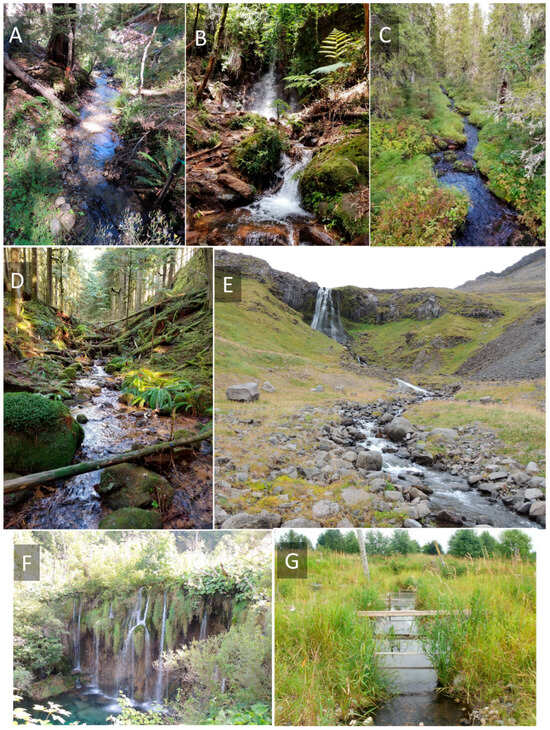
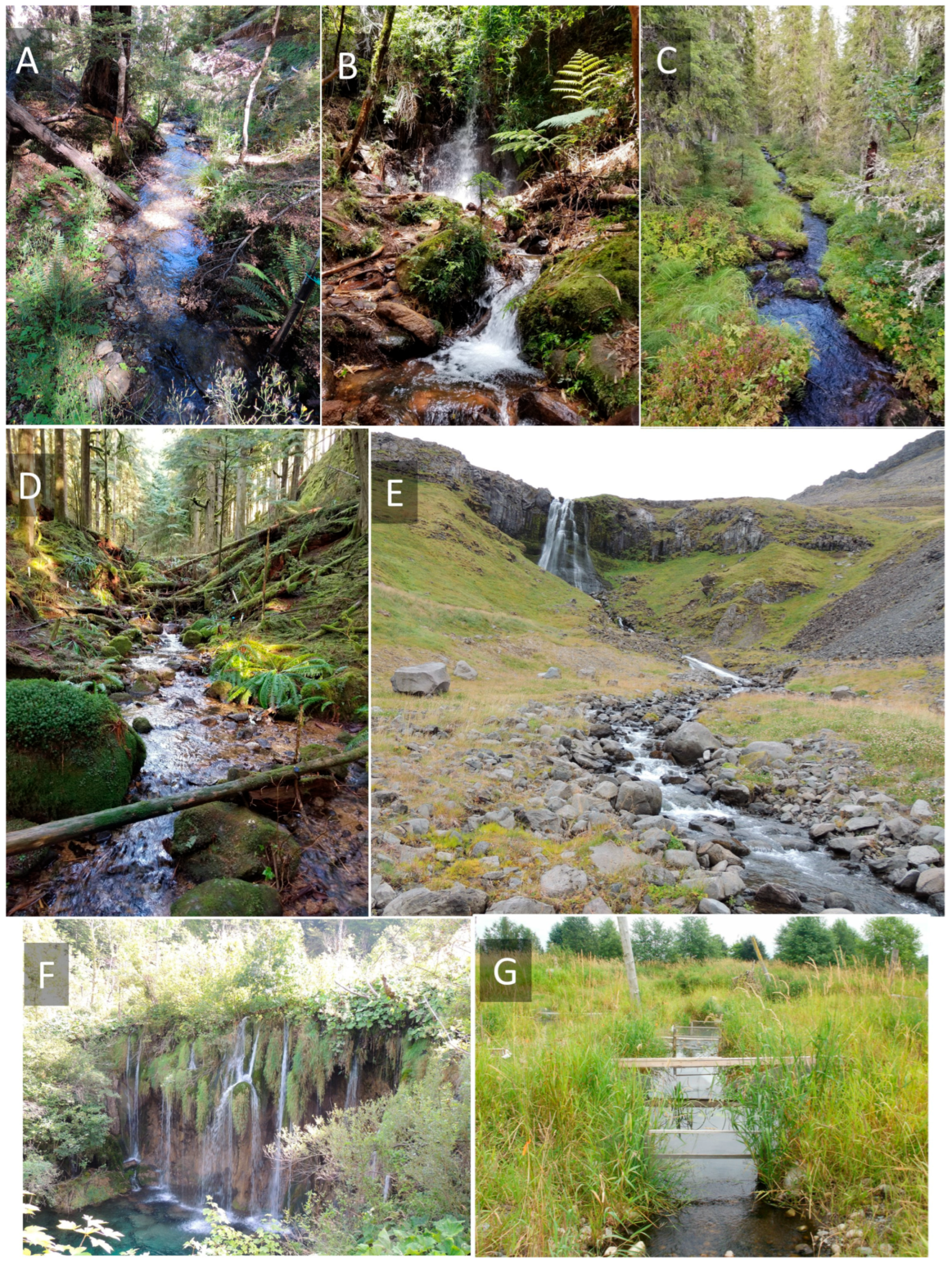
Headwater streams are a distinct subset of flowing-water ecosystems, although definitions of what constitutes a headwater vary. These are the smallest of streams, and can be characterized as the first expression of a flowing-water environment showing evidence of movement of alluvium and capable of flushing away accumulated organic materials that have fallen into the channel. Here I also include springs as the initiation point of many headwaters. The starting point of a headwater can occur anywhere from sea level to the highest elevations, and in just about any biome. The downstream extent of a headwater might be defined in a mechanistic sense by when it meets another permanently flowing channel, i.e., another headwater, after which we might consider that a stream network [1]. Other definitions often depend on calls to first or second-order channels as headwaters, often based on 1:24,000 map scales [2,3]. In whatever way we define them, they are small ecosystems at the fringe of the stream network, often isolated from each other by lengths of larger channels into which they flow [4] (Figure 1).
Figure 1.
Examples of headwater streams. (A). Middle Bush Stream, Cass, New Zealand, an extensively studied site. (B). Stream in Chile, near Valdivia. (C). Headwater stream in northeast Finland. (D). East Creek, Malcolm Knapp Research Forest, Canada, site of much headwater stream research. (E). near Kirkjufellsfoss, Iceland. (F). Groundwater springs in Plitvice Lakes Park, Croatia. (G). Gordon Brook, a meadow stream near Vancouver, Canada.
Several reviews about macroinvertebrates have noted the lower alpha diversity of individual headwaters, but the high beta diversity between small channels within a catchment. In comparison to larger streams, this results in high overall gamma diversity for headwaters [5,6,7]. This pattern also typically reflects lower intrapopulation genetic diversity in individual headwaters, but high gamma genomic diversity across catchments [5,8], but see [9]. Finn et al. [5] amassed several data sets to test the generality of these patterns for aquatic insects, and found strong support for the observation. However, in studies of other taxa, bacterial diversity (alpha) in individual headwaters was greater than downstream, and also had higher beta diversity than larger streams [10].
A number of papers have described communities of organisms in headwater streams that are distinct from downstream reaches, and may contain regionally rare species [2,11,12]. Moreover, many studies have found that some species appear to occur in only a single headwater stream out of many sampled within a region [13,14,15,16]. That latter observation may result from rare species being missed during surveys, but that has not been addressed explicitly and the bias is probably not substantially different from sampling in larger streams.
There are several models for how diversity may be distributed across headwater habitats, including the Stream hierarchy model and Island Biogeography Theory (Death Valley Model) [17]. The mechanistic basis of these models is primarily related to modes of dispersal. For instance, adult aquatic insects have higher overland dispersal options compared to an obligate aquatic species [5,18]. Obligate aquatic species can only disperse through the network, or in some cases species use phoresy on other organisms. Models for presence of some fishes in headwaters often consider barriers, such as cascades, that limit upstream movements, and these barriers have been used in management for forestry to identify the upper limit of fish distributions. Fagan [19] developed a general model that links colonization of headwater streams as a function of dispersal probabilities (e.g., mobility) and relative population sizes that has served as a foundation for predicting distribution in dendritic networks. Dispersal rates into headwaters is a key feature affecting community assembly in small streams. Of course, much of the comparison begs the question of how we define headwater streams versus “downstream” [6]. Clearly patterns of diversity will vary depending on the mechanisms contributing to variation in flowing-water habitats.
Studies of springs have also demonstrated high degrees of endemism (e.g., refs. [9,20,21]). As the initiation point of many headwater streams, the study of springs contributes to our overall understanding of diversity of small streams. It appears that small, freshwater ecosystems that are relatively isolated, i.e., colonization is dispersal limited, may lead to diversification of organisms in headwaters.
Several reviews have considered what makes headwater habitats unique, such as a relative refuge from large predators, different resources, different disturbance regimes, temperature regimes, greater sensitivity to land-use impacts and climate change, etc. [2,6,12,22]. Headwaters are cooler in summer on average as there is more flow contribution from groundwater and they often occur at higher elevation. These thermal conditions can provide an important refuge for coolwater fishes, and provide a seasonal refuge for some other species. In general, we expect headwaters to be relatively free of larger predators, providing a refuge and explains the distribution of many species [3,12]. A number of species migrate upstream to headwaters to breed or to grow. For instance, most Macrobrachium shrimp species give birth in estuaries and then larvae migrate upstream, presumably to reduce predation risk (and where they are themselves mesopredators). However, there are also examples of larger individuals within a species being found upstream and their young further downstream, such as Arctic Grayling and Brown Trout [23], so there are exceptions to most generalizations.
In this paper I discuss the possible mechanisms that may contribute to the putative patterns of low alpha diversity, but higher beta diversity across headwaters in contrast to mid-sized streams, and the evidence for each. I consider six mechanisms (Table 1): 1. the large number of headwater streams, 2. heterogeneity of the physical and trophic resource environments in headwaters, 3. founder effects and genetic drift in small populations (smaller habitats in general compared to larger streams), 4. complex colonization dynamics, 5. isolation of populations by distance and barriers such as cascades, and 6. strong selection and rapid evolution. These mechanisms are not independent, but separating them I hope will allow for a more explicit consideration of processes contributing to diversity of headwater communities. There may be other mechanisms, and perhaps this assessment will lead to better refinement of possibilities.
Table 1.
Mechanisms potentially contributing to patterns of diversity in headwater streams that contrast with larger reaches downstream.
2. Mechanisms
Most of the mechanisms described below are not independent of each other. Genetic differentiation of populations or evolution of separate species depends on sufficient genetic variation, isolation, strong selection, and time. The individual treatment of these mechanisms is not meant to imply they are sufficient in themselves to lead to diversification of headwater forms.
2.1. Numbers of Headwater Streams
As noted by Campbell Grant et al. [4] and others, streams are a dendritic network and the numbers of smaller and smaller streams increase hierarchically. Thus, there are many more small branches, i.e., headwaters, than larger streams, and much more stream length. One estimate is that about 73% of total stream length is made up of 1st and 2nd order streams based on a 1:24,000 map scale [24]. Based on a 1:24,000 map scale, many headwaters (estimates of 21 to 43% of total stream length) would not even be counted as streams [25,26]. In two large watersheds on Vancouver Island, Canada (each about 1000 ha), headwaters (streams < 3 m wide) represented 92 to 93% of total stream numbers (segments), and 70 to 75% of total stream lengths [27]. The sheer number of small stream segments and total lengths provides opportunities for many species that may only occur in some, but not all, headwaters within a catchment. This also provides expansive opportunities for exposure to different selective environments.
Many headwater streams may be intermittent, seasonal flowing-water environments. Even so, there are many species of organisms that persist in these kinds of periodic-flow systems [28,29]. Such streams are often overlooked, especially as they cannot be sampled by typical methods during their “dry” phase and a common assumption is that little survives there. More and more it is clear that there are organisms uniquely adapted to such headwater streams [30].
2.2. Habitat and Resource Heterogeneity
There can be tremendous physical and chemical heterogeneity between headwater streams [31]. Geomorphic structure can vary tremendously from colluvial to bedrock to alluvial forms, with channel gradients of a wide range. Groundwater sources of water can have strong chemical signals (nutrients, cations, dissolved organic matter) that differentiate sites. In addition, the relative magnitude of groundwater inputs, relative to other flow-generation sources, can create unique temperature regimes. These physical and chemical properties provide a range of conditions that local populations can adapt to, and given enough genetic variation and a strong selective environment it can lead to differentiation of populations. A lot of this between-population variation could be phenotypic, but evidence (see below) is accumulating to demonstrate the adaptive, heritable differences among populations.
Headwaters provide heterogeneity of energy sources as well, with higher concentrations and diversity in the types of dissolved organic matter (DOM) from terrestrial sources [32]. This is reflected in the significantly higher diversity of microbes in biofilms in headwater streams compared to larger downstream reaches [32]. The same may be the case for fungi. In two small streams of the Appalachians (USA) > 51 taxa of aquatic fungi were found, apparently associated with high rates of diverse leaf litter inputs [33], which may be attributable to high diversity of particulate organic matter sources. However, I have seen no network-wide consideration of fungal diversity.
2.3. Small Populations (Drift and Founder Effects)
Given that small streams are also small habitats we expect population sizes to be small relative to larger streams. This typically results in small effective population size, and the possibility of genetic bottlenecks associated with limited additive genetic variation represented within the limited population size. In a modelling study [19], they found that with high colonization probability of stream reaches, without directional dispersal, populations were able to persist longer in dendritic networks. One study of the pleurocerid snail, Leptoxis ampla, found effective population sizes in tributaries were generally small in comparison to downstream reaches, and some headwater populations contained unique haplotypes [34].
The prediction is often made that genetic diversity of small, relatively isolated populations with low effective population sizes in headwaters will be lower than for similar species in larger streams. Most studies of genetic diversity of headwater populations have found lower genetic diversity and higher beta diversity of haplotypes between populations within a region [8,35]. Blanchet et al. [36] found genetic diversity of fishes tended to be lower in headwaters within a species, but not always. Donohoo et al. [9] found that despite evidence of ancient population bottlenecks, there was generally higher genetic diversity for several pleurocerid snails in isolated spring environments than for similar species in downstream environments.
2.4. Colonization of Headwaters
Connections among headwaters can change in geological and current time due to a number of processes. Headwater capture can occur when streams generate new connections to a different drainage due to flooding, erosion, glaciation, uplift, tectonic processes, landslides or other geological processes (e.g., refs. [37,38,39]). The capture of populations often involves small numbers of individuals, with high probability of founder effects. However, there can be historic connections across basins from past events, including glaciation and tectonic processes, or even through karstic connections. Past glacial history can also be detected in the genetic structure of populations of some headwater species, for instance, Rainbow Darter, which shows signals of past glaciation in differences between headwaters within and between riverscapes [40]. Such long-term changes in drainage networks can lead to isolation and subsequent sympatry, reinforcing the results of any disruptive changes in genotypes. These changes also alter the ecological contexts by changing the suites of other species in the communities.
2.5. Isolation
Isolation, by which I mean none or limited gene flow from new colonists, sets a stage for founder effects and also different ecological contexts for those isolated populations. Populations in headwaters can be isolated by landscape resistance or isolated by network distance. Fagan [19] addressed both issues by illustrating that distance along the network alone was insufficient given that some of the distance along those networks may be inappropriate habitat. Inappropriate habitat might be because of predators, inhospitable physical and chemical conditions, or other features that restrict movement and survival of potential dispersers. This is of course primarily for those aquatic organisms that have no out-of-water dispersal potential (such as aquatic insects). Headwaters can be isolated by long reaches of unsuitable riverine habitats through which headwater-specialist forms cannot typically traverse. As headwaters occur in the upper parts of basins, there can be other geological barriers such as cascades that limit modern movements into headwaters, which can also leave isolated populations above such features on their own evolutionary trajectories.
Isolated populations risk local extinction. A couple of mechanisms may enhance the persistence of populations. Populations of some organisms have higher population persistence when there are many headwaters linked by nodes (junctions), for instance the northern spring salamander, Gyrinophilus porphyriticus [4]. In addition, there is evidence that spatial variation in populations of potential prey may reduce the ability of predators to track that variation, which could lead to higher local densities of some prey [4,41].
The strongly dendritic structure of stream networks can lead to genetic differentiation by isolation. With simple assumptions about population sizes and migration directions, Thomaz et al. [38] modelled outcomes of different catchment configurations and showed strong differentiation between headwaters. The terrestrial landscape may also impact dispersal, as arid landscapes appear to show stronger effects of isolation by distance than wetter landscapes, at least for aquatic insects [5]. In small, montane streams the populations of the stonefly Yoraperla brevis had greater genetic differences between streams than variation within streams, attributed to weak dispersal ability by the adults [42].
Some taxa have a preponderance of their species that are headwater specialists. One example are the darters (Etheostomatidae), which are represented by over 250 species in the eastern USA [37]. Their radiation is attributed to allopatric speciation in separate drainages isolated in headwater reaches. Such fine-scale diversification due to isolation has been noted for other headwater stream fishes and other organisms. Darters can also show strong evolutionary distinctions with almost no obvious isolation when there are environmental differences between nearby reaches [37].
2.6. Strong Selection and Rapid Evolution
All of the above characteristics set the ecological stage for the evolutionary play [43], which I consider here. Headwater streams can each represent different selective environments depending upon environmental conditions (geomorphology, chemistry, temperature regime, food resource types, etc.) and the biological community (types of predators, competitors). There can be gene flow to headwater populations, depending on stream environmental characteristics, and even in the absence of barriers, local environments may impose strong selection on local populations. For instance, waterfalls impose barriers to movements of rainbow trout, and populations above waterfalls show genetic distinctions associated with life history traits that can result in sympatric occurrence of forms (anadromous and resident) that rarely interbreed [44]. The headwater model of gene flow as proposed mostly works for aquatic insects that have some potential to disperse overland [5], and evidence suggests that the main direction of dispersal is upstream and over the watershed divide rather than to adjacent headwaters flowing in the same direction [18]. The role of dispersal potential is a key element in understanding gene flow to and from headwater populations.
Several hypotheses have been proposed for how spatial structure can lead to genetic differentiation. In a study of the Chiapas killifish, Tlaloc hildebrandi (Profundulidae) in Mexico, evidence showed genetic distinctions between populations in nearby, but currently unconnected, headwaters [45]. Differentiation in life history traits between sympatric or nearly sympatric forms appear to be sufficient for divergent selection of some taxa leading to endemic forms [37]. Electric fish, Steatogenys elegans, in Amazonian streams encounter wide variation in their environments and genetic distinction between nearby populations was linked to their ecological situation [46].
Strong selection can lead to rapid evolution, particularly in small populations. Rapid evolution is also a key mechanism in diversification of organisms in communities [47]. Detailed field introductions and laboratory experiments with guppies (Poecilia reticulata) demonstrated rapid evolutionary responses of heritable life history traits of guppies adaptive to their predator regime [48,49,50]. Brightly coloured males showed stronger responses to selection than females, but both responded adaptively to their selective predator regime. Another example demonstrating rapid evolution is mosquitofish, which a century after introduction to isolated irrigation reservoirs in Hawai’i (on small streams), there was some evidence of life history evolution differentiating the populations, although much was attributed to plastic responses [51]. However, there was also a signal of founder effects on population life history characteristics. Rapid evolution of populations in different ecological contexts may be a key process in the diversification of headwater taxa.
3. Questions for Future Research
Patterns of taxonomic and genomic diversity across stream networks varies by type of organism. While there is support for high beta, and hence high gamma, diversity for aquatic insects in headwaters relative to downstream segments, this is not necessarily so for all taxa. These differences can be instructive in refining our hypotheses. More studies of the patterns of taxonomic and genetic diversity across riverscapes will be important contributors to the testing of different mechanisms generating and supporting diversity across stream networks (e.g., ref. [52]).
Advances in outlining contrasting hypotheses for patterns in diversity in headwaters will allow for more rigorous tests of the mechanism(s) responsible [53]. We need to develop studies that will allow for partitioning of the contributions of different mechanisms to diversity patterns, especially genetic mechanisms of small effective population sizes, founder effects, drift and strong selection. All these mechanisms appear to operate, but there are few studies able to attribute the particular relevance of each process. Of course, these mechanisms leading to patterns of species and genetic diversity of headwaters are not independent of each other. Isolation, coupled with strong selection and large numbers of headwaters, provides a canvas for rapid evolution and diversification.
Addressing questions about the number or extent of headwater streams may be a simple accounting procedure if studies are structured appropriately. However, we need better study designs for biodiversity as discussed by Clarke et al. [6] to get beyond sampling biases that confound such comparisons by sampling methods, intensity, and taxonomic resolution. In particular, one needs to be aware of the challenge of using basic species presence, i.e., richness, without accounting for densities and numbers of samples. Richness values can be rarefied, or species accumulation curves (asymptotes of species accumulation curves) might be better than richness alone. We need more structured sampling and more attention to how species richness is estimated [6]. It is also essential that we sample a greater range of microhabitat types [6]. One such study for a headwater stream is the Breitenbach study in Germany where a broad range of sampling methods were used, and a broad suite of taxonomic groups, including microbes, were considered [54].
How do some less mobile species reach headwaters in the first place? For aquatic insects, dispersal seems obvious enough, and for some species, e.g., parasites, there are vectors to provide colonization. However, there are many species found in headwaters and springs that are not easily capable of dispersal to these source streams. The role of dispersal mechanisms and isolation by distance (Euclidean and via network dispersal) for different taxonomic groups remains uncertain. One study of a pleurocerid snail found downstream reaches had higher genetic diversity and that dispersal tended to be biased towards downstream [34]. Different taxonomic groups with different dispersal mechanisms may result in divergent diversity patterns across catchments, and maybe mass effects in mid-order streams [55]. More explicit consideration of traits related to dispersal might lead to better models of diversity patterns in headwaters versus larger streams.
There is need for consideration of a wider range of taxonomic groups. To date, the majority of work contrasting headwaters with larger streams has focused on stream insects and fish. There are some notable exceptions of studies of microbes and non-insect invertebrates. Comparing different taxonomic and trophic groups will help with assessment of particular mechanisms that contribute to catchment-waterscape diversity patterns. In particular, microbes, protists, and meiofauna have been under-represented in contrasts of headwaters versus larger streams. In some cases, bacterial diversity has been higher in headwaters [32], and in another study the opposite was the case [56]. Moreover, in another study there was higher diversity of bacteria in headwaters in some seasons, but largely species of more terrestrial origin than those found in downstream reaches [57]. These differences might be explained by diversity of organic matter sources or by the numerical responses of species with time in transport downstream or whether the microbes are attached or free-living.
Studies using a riverscape genetics design are becoming more common [52]. Designs to address questions of genetic variation and distinctiveness across catchments are needed, as are sampling designs to appropriately characterize taxonomic richness. An outstanding question is whether there is as much additive genetic variation in non-insect headwater invertebrates and microbes as is demonstrated for aquatic insects and vertebrates.
Understanding patterns of diversity in headwaters for particular taxa depends on the key processes limiting their colonization and persistence. In some cases, geomorphic patterns and aspects of water chemistry may be key. For example, in a New Zealand fish, Galaxias vulgaris (Galaxiidae), populations were genetically distinct based on the underlying geology, which affects dispersal potential through river segments of contrasting geomorphology [58]. In other instances, headwaters may be associated with intermittent flows, which might confound persistence patterns for some species or broader groups, e.g., fungi in a prairie stream system [59]. Variation between headwaters in the physical and chemical situation is an important component to explaining patterns of distribution and abundance, and the selective environment for organisms living there.
Differences in headwater communities within catchments due to any of the mechanisms discussed can also lead to differences in rates of ecosystem functions. This can even occur with genetic differences within a species between individual headwaters. This idea of genes to ecosystems is not new. One example are the guppies from Trinidad, where predation regime shapes the evolutionary response. Different forms of guppies had dramatically different effects on other ecosystem processes, e.g., primary production, detrital decomposition, and invertebrate composition [60]. There are still relatively few examples mapping the effects of headwater community composition or genetic structure to community processes and ecosystem functions.
4. Conservation Implications
Headwater streams and springs are easily lost. Their frequency across the landscape can lead one to imagine they are substitutable and redundant, and that protecting a few is sufficient. However, it is clear that is not so. Nevertheless, protection of habitats may largely come from protection of species petitioned for listing as at risk and for conserving water quality.
Headwaters are considered as important refuge habitats for stream organisms in the face of warming temperature effects of climate change, although low flows may diminish their value. Cooler source streams also contribute to restricting temperature increases in downstream receiving reaches. Many of the arguments for protecting headwaters are linked to downstream impacts of the degradation or loss of headwater streams.
Headwater streams are easily degraded through forestry [61], mining, agriculture, and other land uses. In urban and urbanizing areas headwaters are often lost, buried as part of the storm-drain network. Fortunately, some jurisdictions are earnest about protecting headwater stream systems in the face of land-use activities, such as forestry [62]. However, the effectiveness of many best management practices, such as retention of fixed-width buffers during forest harvesting still need broader evaluation, especially for headwater streams [61,62,63]. Landscape-scale experiments to evaluate the measures necessary to sustain the species and functions of headwaters have demonstrated that more needs to be done. This often requires greater retention of riparian zone vegetation.
In urban and urbanizing areas there are many possible actions that could protect headwaters. The most obvious would be intentional protection of them and their source areas during municipal planning processes. Hatt et al. [64] present a long list of options that would help with protection of urban streams, for example retention of riparian buffers, permeable pavements, detention ponds and swales, and many policy elements. However, it is difficult to recreate headwaters once they are lost to burial in storm drain networks due to dense development.
Protection of headwater streams will require consideration of ecosystem services, such as clean water, in addition to species’ conservation [63]. Clearer evidence of the unique biodiversity of headwaters and its value will be needed to overcome the perception of the redundancy of so many headwaters in each network. Finn et al. [5] simulated the effects of the reduction in numbers of headwaters on the gamma diversity of genetic variance across a stream network and showed a rapid degradation of such diversity as headwaters were lost. Loss of headwaters may also have non-linear effects on downstream reaches, but until one passes such a tipping point the impacts may be unpredictable and unexpected.
5. Conclusions
Patterns of diversity in headwaters versus downstream (species and genotypic) vary by taxonomic group and landscape, reflecting different dispersal mechanisms constrained by the adjacent terrestrial systems and downstream riverine environments [8,19,38]. Headwaters are estimated to contribute $15.7 trillion USD in ecosystem services in the USA alone [65,66], and most of this is attributable to biodiversity contributing to the ecosystem functions of these streams. A more mechanistic consideration of diversity patterns in stream networks may contribute to better linking diversification of species with the ecological opportunities and pressures driving adaptive changes.
Funding
I am grateful to the funding from the Natural Sciences and Engineering Research Council of Canada and to the University of British Columbia for support.
Institutional Review Board Statement
Not applicable.
Data Availability Statement
No new data were created or analyzed in this study. Data sharing is not applicable to this article.
Conflicts of Interest
The author declares no conflicts of interest.
References
- Gomi, T.; Sidle, R.C.; Richardson, J.S. Understanding processes and downstream linkages of headwater systems. BioScience 2002, 52, 905–916. [Google Scholar] [CrossRef] [Scilit]
- Meyer, J.L.; Strayer, D.L.; Wallace, J.B.; Eggert, S.L.; Helfman, G.S.; Leonard, N.E. The contribution of headwater streams to biodiversity in river networks. J. Am. Water Res. Assoc. 2007, 43, 86–103. [Google Scholar] [CrossRef] [Scilit]
- Wohl, E. The significance of small streams. Front. Earth Sci. 2017, 11, 447–456. [Google Scholar] [CrossRef] [Scilit]
- Campbell Grant, E.H.C.; Lowe, W.H.; Fagan, W.F. Living in the branches: Population dynamics and ecological processes in dendritic networks. Ecol. Lett. 2007, 10, 165–175. [Google Scholar] [CrossRef] [Scilit]
- Finn, D.S.; Bonada, N.; Múrria, C.; Hughes, J.M. Small but mighty: Headwaters are vital to stream network biodiversity at two levels of organization. J. N. Am. Benthol. Soc. 2011, 30, 963–980. [Google Scholar] [CrossRef] [Scilit]
- Clarke, A.; MAC Nally, R.; Bond, N.; Lake, P.S. Macroinvertebrate diversity in headwater streams: A review. Freshwat. Biol. 2008, 53, 707–1721. [Google Scholar] [CrossRef] [Scilit]
- Heino, J.; Melo, A.S.; Bini, L.M.; Altermatt, F.; Al-Shami, S.A.; Angeler, D.G.; Bonada, M.; Brand, C.; Callisto, M.; Cottenie, K.; et al. A comparative analysis reveals weak relationships between ecological factors and beta diversity of stream insect metacommunities at two spatial levels. Ecol. Evol. 2015, 5, 1235–1248. [Google Scholar] [CrossRef] [Scilit]
- Hughes, J.M.; Schmidt, D.J.; Finn, D.S. Genes in streams: Using DNA to understand the movement of freshwater fauna and their riverine habitat. BioScience 2009, 59, 573–583. [Google Scholar] [CrossRef] [Scilit]
- Donohoo, S.A.; Johnson, P.D.; Whelan, N.V. Unique genetic diversity patterns and extreme endemism in temperate springs: Evidence from narrow-range endemic snails. Freshwat. Biol. 2025, 70, e70149. [Google Scholar] [CrossRef] [Scilit]
- Ookami, T.; Matsuoka, S.; Yokobe, T.; Tateno, R. Changes in diversity with stream order in particle-associated and free-living bacteria from headwater streams. Freshwat. Biol. 2025, 70, e70123. [Google Scholar] [CrossRef] [Scilit]
- Heino, J.; Soininen, J.; Lappalainen, J.; Virtanen, R. The relationship between species richness and taxonomic distinctness in freshwater organisms. Limnol. Oceanogr. 2005, 50, 978–986. [Google Scholar] [CrossRef] [Scilit]
- Richardson, J.S. Biological diversity in headwater streams. Water 2019, 11, 366. [Google Scholar] [CrossRef] [Scilit]
- Dieterich, M.; Anderson, N.H. The invertebrate fauna of summer-dry streams in western Oregon. Arch. Hydrobiol. 2000, 147, 273–295. [Google Scholar] [CrossRef] [Scilit]
- Price, K.; Suski, A.; McGarvie, J.; Beasley, B.; Richardson, J.S. Communities of aquatic insects of oldgrowth and clearcut coastal headwater streams of varying flow persistence. Can. J. For. Res. 2003, 33, 1416–1432. [Google Scholar] [CrossRef] [Scilit]
- Danehy, R.J.; Chan, S.S.; Lester, G.T.; Langshaw, R.B.; Turner, T.R. Periphyton and macroinvertebrate assemblage structure in headwaters bordered by mature, thinned and clearcut Douglas-fir stands. For. Sci. 2007, 53, 294–307. [Google Scholar] [CrossRef] [Scilit]
- Moldenke, A.R.; Linden, C.V. Effects of clearcutting and riparian buffers on the yield of adult aquatic macroinvertebrates from headwater streams. For. Sci. 2007, 53, 308–319. [Google Scholar] [CrossRef] [Scilit]
- Meffe, G.K.; Vrijenhoek, R.C. Conservation genetics in the management of desert fishes. Cons. Biol. 1988, 2, 157–169. [Google Scholar] [CrossRef] [Scilit]
- Lancaster, J.; Downes, B.J.; Finn, D.S.; St Clair, R.M. Connected headwaters: Indelible field evidence of dispersal by a diverse caddisfly assemblage up stream valleys to dry catchment boundaries. Freshwat. Biol. 2024, 69, 1–14. [Google Scholar] [CrossRef] [Scilit]
- Fagan, W.F. Connectivity, fragmentation, and extinction risk in dendritic metapopulations. Ecology 2002, 83, 3243–3249. [Google Scholar] [CrossRef]
- Cantonati, M.; Gerecke, R.; Jüttner, I.; Cox, E.J. Springs: Neglected key habitats for biodiversity conservation. J. Limnol. 2011, 70, 187. [Google Scholar]
- Cantonati, M.; Fensham, R.J.; Stevens, L.E.; Gerecke, R.; Glazier, D.S.; Goldscheider, N.; Knight, R.L.; Richardson, J.S.; Springer, A.E.; Tockner, K. An urgent plea for global spring ecosystem protection. Conserv. Biol. 2021, 35, 378–382. [Google Scholar] [CrossRef] [Scilit] [PubMed]
- Richardson, J.S. Headwater Streams. In Encyclopedia of the World’s Biomes; Goldstein, M.I., DellaSala, D.A., Eds.; Elsevier: Amsterdam, The Netherlands, 2020; Volume 4, pp. 371–378. [Google Scholar] [CrossRef] [Scilit]
- Hughes, N.F. Population processes responsible for larger-fish upstream distribution patterns of Arctic grayling (Thymallus arcticus) in interior Alaskan runoff rivers. Can. J. Fish. Aquat. Sci. 1999, 56, 2292–2299. [Google Scholar]
- Leopold, L.B.; Wolman, M.G.; Miller, J.P. Fluvial Processes in Geomorphology; W.H. Freeman: San Francisco, CA, USA, 1964. [Google Scholar]
- Hansen, W.F. Identifying stream types and management implications. For. Ecol. Manag. 2001, 143, 39–46. [Google Scholar] [CrossRef] [Scilit]
- Meyer, J.L.; Wallace, J.B. Lost linkages and lotic ecology: Rediscovering small streams. In Ecology: Achievement and Challenge; Press, M.C., Huntly, N.J., Levin, S., Eds.; Blackwell: Oxford, UK, 2001; pp. 295–317. [Google Scholar]
- Stackhouse, L.A.; Coops, N.C.; White, J.C.; Tompalski, P.; Hamilton, J.; Davis, D.J. Characterizing riparian vegetation and classifying riparian extent using airborne laser scanning data. Ecol. Indic. 2024, 152, 110366. [Google Scholar] [CrossRef] [Scilit]
- Feminella, J.W. Comparison of benthic macroinvertebrate assemblages in small streams along a gradient of flow permanence. J. N. Am. Benthol. Soc. 1996, 15, 651–669. [Google Scholar] [CrossRef] [Scilit]
- Priest, H.J.; Finn, D.S. Bucketloads of aquatic invertebrates in a dry intermittent stream. Ecology 2023, 104, e3936. [Google Scholar] [CrossRef] [Scilit]
- Intermittent Rivers and Ephemeral Streams: Ecology and Management; Datry, T., Bonada, N., Boulton, A., Eds.; Academic Press: Cambridge, MA, USA, 2017. [Google Scholar]
- Gooderham, J.P.R.; Barmuta, L.A.; Davis, J.A. Upstream heterogenous zones: Small stream systems structured by a lack of competence? J. N. Am. Benthol. Soc. 2007, 26, 365–374. [Google Scholar]
- Besemer, K.; Singer, G.; Quince, C.; Bertuzzo, E.; Sloan, W.; Battin, T.J. Headwaters are critical reservoirs of microbial diversity for fluvial networks. Proc. R. Soc. B Biol. Sci. 2013, 280, 20131760. [Google Scholar] [CrossRef] [Scilit]
- Gulis, V.; Suberkropp, K. Effects of whole-stream nutrient enrichment on the concentration and abundance of aquatic hyphomycete conidia in transport. Mycologia 2004, 96, 57–65. [Google Scholar]
- Whelan, N.V.; Galaska, M.P.; Sipley, B.N.; Weber, J.M.; Johnson, P.D.; Halanych, K.M.; Helms, B.S. Riverscape genetic variation, migration patterns and morphological variation of the threatened Round Rocksnail, Leptoxis ampla. Mol. Ecol. 2019, 28, 1593–1610. [Google Scholar] [CrossRef] [Scilit]
- Finn, D.S.; Poff, N.L. Examining spatial concordance of genetic and species diversity patterns to evaluate the role of dispersal limitation in structuring headwater metacommunities. J. N. Am. Benthol. Soc. 2011, 30, 273–283. [Google Scholar] [CrossRef] [Scilit]
- Blanchet, S.; Prunier, J.G.; Paz-Vinas, I.; Saint-Pé, K.; Rey, O.; Raffard, A.; Mathieu-Bégné, E.; Loot, G.; Fourtune, L.; Dubut, V. A river runs through it: The causes, consequences, and management of intraspecific diversity in river networks. Evol. Appl. 2020, 13, 1195–1213. [Google Scholar] [CrossRef] [Scilit] [PubMed]
- Fluker, B.L.; Kuhajda, B.R.; Harris, P.M. The influence of life-history strategy on genetic differentiation and lineage divergence in darters (Percidae: Etheostomatinae). Evolution 2014, 68, 3199–3216. [Google Scholar] [CrossRef] [Scilit] [PubMed]
- Thomaz, A.T.; Christie, M.R.; Knowles, L.L. The architecture of river networks can drive the evolutionary dynamics of aquatic populations. Evolution 2016, 70, 731–739. [Google Scholar] [CrossRef] [Scilit] [PubMed]
- Souza, M.S.; Thomaz, A.T.; Fagundes, N.J.R. River capture or ancestral polymorphism: An empirical genetic test in a freshwater fish using approximate Bayesian computation. Biol. J. Linn. Soc. 2020, 131, 575–584. [Google Scholar] [CrossRef] [Scilit]
- Luiken, J.M.; Gamble, T.; Berendzen, P.B. Comparative riverscape genomics of the rainbow darter (Etheostoma caeruleum) in glaciated and unglaciated environments. Ecol. Evol. 2021, 11, 18305–18318. [Google Scholar] [CrossRef] [Scilit]
- Cuddington, K.M.; Yodzis, P. Predator–prey dynamics and movement in fractal environments. Am. Nat. 2002, 160, 119–134. [Google Scholar] [CrossRef]
- Hughes, J.M.; Mather, P.B.; Sheldon, A.L.; Allendorf, F.W. Genetic structure of the stonefly, Yoraperla brevis, populations: The extent of gene flow among adjacent montane streams. Freshwat. Biol. 1999, 41, 63–72. [Google Scholar] [CrossRef] [Scilit]
- Hutchinson, G.E. The Ecological Theater and the Evolutionary Play; Yale University Press: New Haven, CT, USA, 1965. [Google Scholar]
- Pearse, D.E.; Hayes, S.A.; Bond, M.H.; Hanson, C.V.; Anderson, E.C.; Macfarlane, R.B.; Garza, J.C. Over the falls? Rapid evolution of ecotypic differentiation in steelhead/rainbow trout (Oncorhynchus mykiss). J. Hered. 2009, 100, 515–525. [Google Scholar] [CrossRef] [Scilit]
- Piller, K.R.; Parker, E.; McMahan, C.D.; Elias, D.J.; Matamoros, W.A.; Velazquez Velazquez, E. Highland islands: Assessing gene flow among populations of an aquatic highland endemic. Biol. J. Linn. Soc. 2024, 142, 294–307. [Google Scholar] [CrossRef] [Scilit]
- Cooke, G.M.; Landguth, E.L.; Beheregaray, L.B. Riverscape genetics identifies replicated ecological divergence across an Amazonian ecotone. Evolution 2014, 68, 1947–1960. [Google Scholar] [CrossRef] [Scilit] [PubMed]
- Reznick, D.N.; Losos, J.; Travis, J. From low to high gear: There has been a paradigm shift in our understanding of evolution. Ecol. Lett. 2019, 22, 233–244. [Google Scholar] [CrossRef] [Scilit] [PubMed]
- Endler, J.A. Natural selection on color patterns in Poecilia reticulata. Evolution 1980, 34, 76–91. [Google Scholar] [CrossRef] [Scilit] [PubMed]
- Reznick, D.A.; Bryga, H.; Endler, J.A. Experimentally induced life-history evolution in a natural population. Nature 1990, 346, 357–359. [Google Scholar] [CrossRef] [Scilit]
- Reznick, D.N.; Shaw, F.H.; Rodd, F.H.; Shaw, R.G. Evaluation of the rate of evolution in natural populations of guppies (Poecilia reticulata). Science 1997, 275, 1934–1937. [Google Scholar] [CrossRef] [Scilit]
- Stearns, S.C. A natural experiment in life history evolution: Field data on the introduction of mosquitofish to Hawaii. Evolution 1983, 37, 601–617. [Google Scholar]
- Davis, C.D.; Epps, C.W.; Flitcroft, R.L.; Banks, M.A. Refining and defining riverscape genetics: How rivers influence population genetic structure. Wiley Interdiscip. Rev. Water 2018, 5, e1269. [Google Scholar] [CrossRef] [Scilit]
- Tonkin, J.D.; Altermatt, F.; Finn, D.S.; Heino, J.; Olden, J.D.; Pauls, S.U.; Lytle, D.A. The role of dispersal in river network metacommunities: Patterns, processes, and pathways. Freshwat. Biol. 2018, 63, 141–163. [Google Scholar] [CrossRef] [Scilit]
- Central European Stream Ecosystems: The Long Term Study of the Breitenbach; Wagner, R., Marxsen, J., Zwick, P., Eds.; Wiley-VCH: Weinheim, Germany, 2011. [Google Scholar]
- Sarremejane, R.; Mykrä, H.; Bonada, N.; Aroviita, J.; Muotka, T. Habitat connectivity and dispersal ability drive the assembly mechanisms of macroinvertebrate communities in river networks. Freshwat. Biol. 2017, 62, 1073–1082. [Google Scholar] [CrossRef] [Scilit]
- Read, D.S.; Gweon, H.S.; Bowes, M.J.; Newbold, L.K.; Field, D.; Bailey, M.J.; Griffiths, R.I. Catchment-scale biogeography of riverine bacterioplankton. ISME J. 2015, 9, 516–526. [Google Scholar] [CrossRef] [Scilit]
- Hassell, N.; Tinker, K.A.; Moore, T.; Ottesen, E.A. Temporal and spatial dynamics in microbial community composition within a temperate stream network. Environ. Microbiol. 2018, 20, 3560–3572. [Google Scholar] [CrossRef] [Scilit] [PubMed]
- Waters, J.M.; Craw, D.; Burridge, C.P.; Kennedy, M.; King, T.M.; Wallis, G.P. Within river genetic connectivity patterns reflect contrasting geomorphology. J. Biogeogr. 2015, 42, 2452–2460. [Google Scholar] [CrossRef] [Scilit]
- Bond, C.T.; Nave, B.A., Jr.; Kemajou Tchamba, A.L.; Stanley, E.; Zeglin, L.H.; Jackson, C.R.; Zipper, S.; Aho, K.; Burgin, A.J.; You, Y.; et al. Fungal communities across a surface water permanence gradient in a non-perennial prairie stream network. ISME Commun. 2025, 5, ycaf151. [Google Scholar] [CrossRef] [Scilit] [PubMed]
- Palkovacs, E.P.; Marshall, M.C.; Lamphere, B.A.; Lynch, B.R.; Weese, D.J.; Fraser, D.F.; Reznick, D.N.; Pringle, C.M.; Kinnison, M.T. Experimental evaluation of evolution and coevolution as agents of ecosystem change in Trinidadian streams. Philos. Trans. R. Soc. B Biol. Sci. 2009, 364, 1617–1628. [Google Scholar] [CrossRef] [Scilit]
- Kuglerová, L.; Jyväsjärvi, J.; Ruffing, C.; Muotka, T.; Jonsson, A.; Andersson, E.; Richardson, J.S. Cutting edge: A comparison of contemporary practices of riparian buffer retention around small streams in Canada, Finland and Sweden. Water Resour. Res. 2020, 56, e2019WR026381. [Google Scholar] [CrossRef] [Scilit]
- McIntyre, A.P.; Hayes, M.P.; Ehinger, W.J.; Estrella, S.M.; Schuett-Hames, D.; Quinn, T. Effectiveness of experimental riparian buffers on perennial non-fish-bearing streams on competent lithologies in western Washington. In Cooperative Monitoring, Evaluation and Research Report CMER 18-100; Washington State Forest Practices Adaptive Management Program; Washington Department of Natural Resources: Olympia, WA, USA, 2018. [Google Scholar]
- Wenger, S.; Wohl, E.; Colvin, S.; Brinkerhoff, C.; Richardson, J. Where Rivers Are Born: The Scientific Imperative for Protecting Small Streams and Wetlands, 2nd ed.; American Rivers and Sierra Club: Washington, DC, USA, 2026. [Google Scholar]
- Hatt, B.E.; Athapaththu, C.; Behrens, J.R.; Boer, S.L.; Burns, M.J.; Burrows, R.M.; de Jong, R.L.; Elsner, C.; Grey, V.; Imberger, M.J.; et al. Practical pathways for protecting headwater streams in urbanizing areas. Freshwat. Sci. 2025, 44, 546–567. [Google Scholar] [CrossRef] [Scilit]
- Hill, B.H.; Kolka, R.K.; McCormick, F.H.; Starry, M.A. A synoptic survey of ecosystem services from headwater catchments in the United States. Ecosyst. Serv. 2014, 7, 106–115. [Google Scholar] [CrossRef] [Scilit]
- Creed, I.F.; Lane, C.R.; Serran, J.N.; Alexander, L.C.; Basu, N.B.; Calhoun, A.J.K.; Christensen, J.R.; Cohen, M.J.; Craft, C.; D’Amico, E.; et al. Enhancing protection for vulnerable waters. Nat. Geosci. 2017, 10, 809–815. [Google Scholar] [CrossRef] [Scilit]

Disclaimer/Publisher’s Note: The statements, opinions and data contained in all publications are solely those of the individual author(s) and contributor(s) and not of MDPI and/or the editor(s). MDPI and/or the editor(s) disclaim responsibility for any injury to people or property resulting from any ideas, methods, instructions or products referred to in the content. |
© 2026 by the author. Licensee MDPI, Basel, Switzerland. This article is an open access article distributed under the terms and conditions of the Creative Commons Attribution (CC BY) license.