


Abstract
Ecotourism in protected areas creates a conservation paradox: tourism revenue funds protection, yet tourism infrastructure simultaneously degrades the wildlife it protects. We examined this paradox in white-faced capuchins (Cebus imitator) in Tortuguero National Park, comparing behaviour across a high-tourism accommodation site (2152 monthly guests) and a strictly regulated terrestrial trail. Using focal animal and sweep sampling methods, we recorded 477 behavioural units across 261 min, analysing locomotion, feeding, and agonistic behaviours through generalized linear models. Primates in accommodation areas exhibited significantly reduced high substrate use (p = 0.005), showed a trend toward increased anthropogenic food reliance (p = 0.070), and higher—but not statistically significant—rates of agonistic behaviours (p > 0.05). The negative correlation between natural foraging and active food supply (r = −0.31) is consistent with anthropogenic provisioning that may alter primate ecological functions. These findings demonstrate that effective conservation in tourism contexts requires integrated management addressing three interconnected challenges: (1) habituation to human presence, (2) food provisioning with cascading consequences, and (3) ecosystem-level degradation through altered primate functions. We recommend evidence-based interventions including secured waste management, enforcement of wildlife feeding prohibitions, and environmental education programs with community participation. Ecotourism sustainability requires managing human–wildlife interactions and integrating local stakeholder perspectives to preserve animal welfare and ecosystem functions essential for conservation.
1. Introduction
Nature tourism is not always an effective conservation strategy. Although designed to support conservation, ecotourism can, in practice, harm ecosystems. Studies demonstrate that visitation inevitably produces environmental impacts, with wildlife being the primary recipients of these effects [1]. Specifically, poorly managed human–wildlife interactions can lead to harmful practices such as food provisioning, which causes disease transmission, behavioural and ecological changes, and mortality in individuals. Food availability influences how much time animals spend on daily activities and affects how long they remain in forest habitats. Moreover, excessive habituation to human presence can increase wildlife vulnerability to harm, though the severity of these responses varies considerably across species and may be mitigated through species-specific management strategies [2]. While ecotourism is often undermined by inadequate regulation, the underlying concept retains genuine conservation potential when effective management and regulatory oversight are established [3]. According to optimal foraging theory, animals must balance energy intake with the need to avoid predators and reproduce. When humans provide food, animals reduce their movement in search of natural resources, leading to behavioural alterations. In primates, these changes may include increased aggression to obtain food and behaviours such as stealing personal belongings from visitors to use as bargaining tools for food rewards. Research on token-based exchanges demonstrates that monkeys and great apes use objects symbolically to request specific food rewards [4,5]
For the Cebus genus specifically, food provisioning is the primary driver of human–primate conflict [6]. Human presence represents a critical factor for primate populations and must be carefully evaluated due to its potential influence on health, behaviour, and long-term species viability [7]. Furthermore, humans introduce pathogens into forest habitats that can be transmitted to primates. Primates in high-tourism areas may exhibit poorer health than those in undisturbed areas, as documented in howler monkeys [8] and observed in white-faced capuchins [7]. Altered nutritional intake from anthropogenic food can negatively impact primate health and may have long-term consequences for survival and reproduction. Additionally, provisioning reduces the time troops spend foraging, thereby altering faunal communities and ecosystem processes. For example, reduced foraging can decrease seed dispersal, a key ecological function uniquely provided by primates in tropical forests [9]. Provisioning by humans fundamentally alters primate ecological functions, including seed dispersal and plant–primate interactions critical for tropical forest regeneration [10], underscoring the importance of examining these impacts in tourism contexts.
Building on this conceptual background and the conservation challenges identified in the region, we focus on how contrasting tourism settings within Tortuguero National Park are associated with changes in the locomotion, feeding, and agonistic behaviour of Cebus imitator between a high-tourism accommodation complex and the more strictly regulated Jaguar Trail. In order to structure this analysis, we formulated the following hypotheses:
H1.
We hypothesize that primate behaviour and ecology differ significantly between accommodation areas and the Jaguar Trail due to differences in human presence, conservation regulations, and resource availability. We predict stronger behavioural impacts in the accommodation area (characterized by higher anthropogenic food availability, weaker conservation enforcement, and closer proximity to human structures) compared to the Jaguar Trail (under stricter regulations and greater natural resource availability).
H1.1.
Primate locomotion will differ between locations. Individuals will primarily use high substrates (arboreal/canopy) along the Jaguar Trail, while predominantly using lower substrates in the accommodation area where they forage for anthropogenic food sources.
H1.2.
Diet composition will differ between locations. Primates will show greater dependence on anthropogenic food sources in the accommodation area, while natural foraging will predominate along the Jaguar Trail.
H1.3.
Habituation to humans will affect behavioural patterns. Primates in the accommodation area will exhibit increased agonistic behaviour and directed food interactions reflecting greater habituation to humans, compared to those along the Jaguar Trail.
These hypotheses guided both the design of our observational protocol and the structure of the statistical analyses presented in Section 2.
This research aims to explore these dynamics through a case study on white-faced capuchin monkeys (Cebus imitator) in Tortuguero National Park, Costa Rica. By analysing the behavioural responses of this species to different tourism contexts, we seek to better understand the real conservation challenges posed by ecotourism in highly biodiverse environments.
1.1. Tortuguero National Park
Boca de Tortuga was the former name of the Tortuguero community when it was settled in the early 20th century. This Afro-Caribbean community was engaged in the intensive exploitation of sea turtles—for the consumption of their eggs and meat—and in logging for export. However, research by zoologist Archie Carr in the 1950s on green turtle (Chelonia mydas) behaviour revealed the ecological importance of Tortuguero as a major nesting site for turtles in the Caribbean. This discovery led to the conservation of the area, which was declared a National Park in 1970. The boundaries of this area have been expanded several times, with the current extent being 76,937 hectares, encompassing both marine and terrestrial areas.
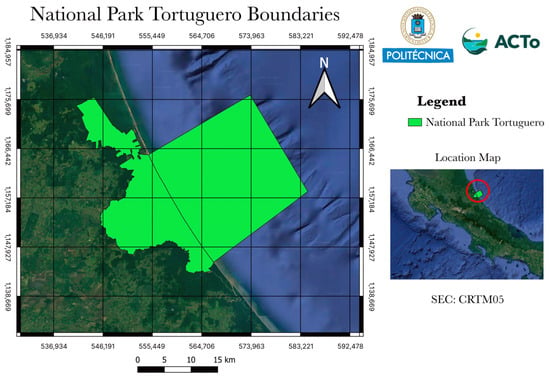
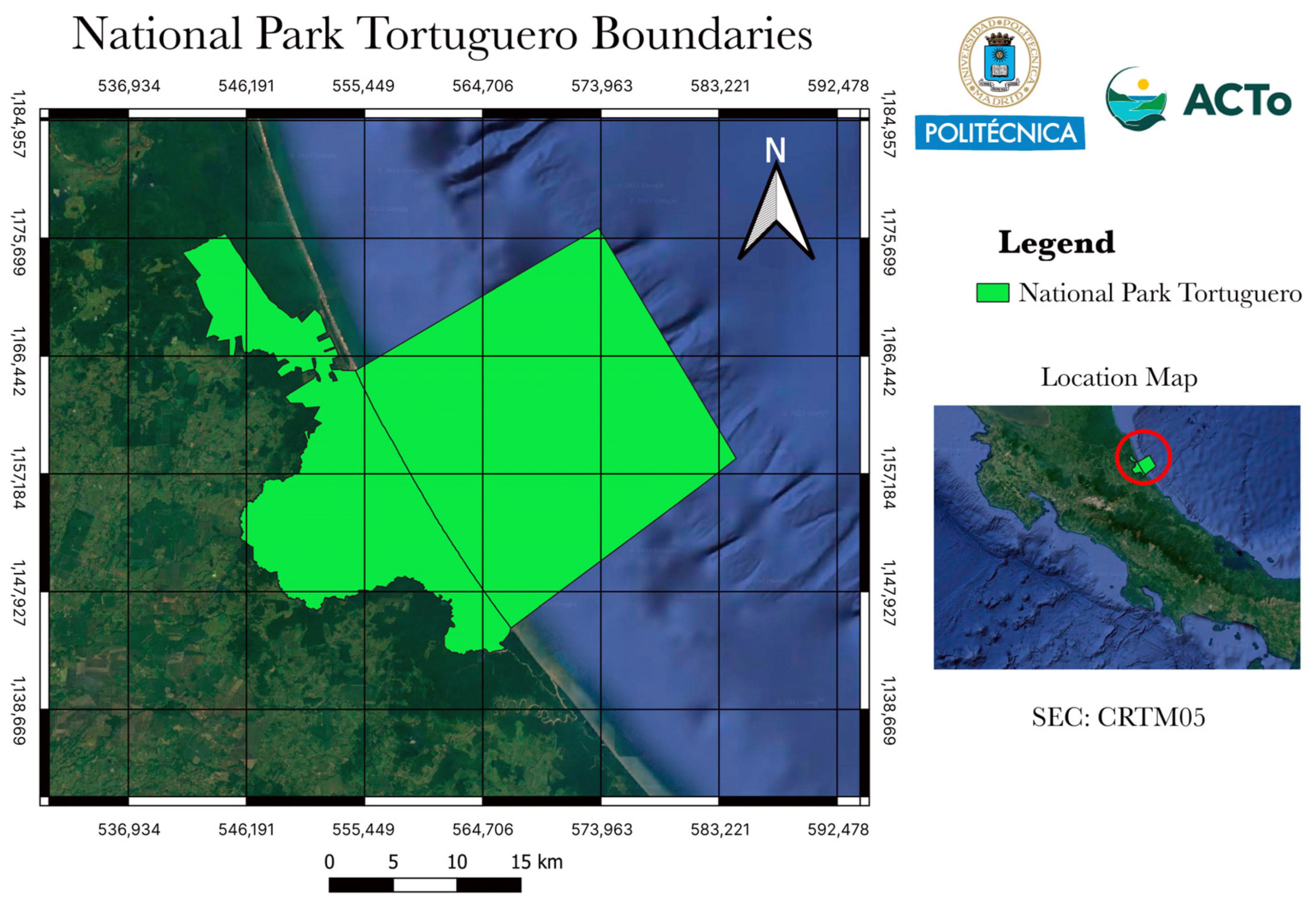
Tortuguero National Park (Parque Nacional Tortuguero, henceforth TNP) is located in the northeast of Costa Rica, on the Caribbean coast. It is part of the Limón region, bordering the communities of Tortuguero and San Francisco to the north, the Parismina community to the south, the Caribbean Sea to the east, and the Tortuguero Lagoon to the west. Figure 1 shows the boundaries of the National Park, including both its marine and terrestrial zones.
Figure 1.
Location and administrative boundaries of Tortuguero National Park (TNP), a 76,937-hectare protected area on Costa Rica’s Caribbean coast (Limón Province). The park encompasses marine and terrestrial zones and protects critical habitats for endangered species including manatees (Trichechus manatus), jaguars (Panthera onca), and white-faced capuchins (Cebus imitator), the focal species of this study.
TNP is now a key tourist destination, known for its biodiversity and its role in the conservation of marine and terrestrial species. It protects 30 km of beach crucial for the nesting of four species of sea turtles, as well as important habitats for endangered species like the manatee (Trichechus manatus) and the jaguar (Panthera onca) and for protected species like the white-faced capuchin (Cebus imitator). Its tropical wet and humid ecosystem, with an annual rainfall of 6000 mm and average temperatures between 25 °C and 30 °C, harbours a rich biodiversity that includes 734 plant species, 442 bird species, 138 mammal species, 118 reptile species, 58 amphibian species, and 460 arthropod species [11]. The community of Barra de Tortuguero relies heavily on nature tourism. The TNP and the community are interrelated, with tourism being a crucial source of income for local residents. In Costa Rican protected areas, primates often serve as flagship species, playing a central role in attracting visitors and generating economic benefits [12]. Conservation is essential for local economic development. Environmental education programs, as well as efforts by conservation organizations, reinforce the park’s role in protecting natural resources while promoting sustainable livelihoods [13]. The area was declared a National Park with the main goal of preserving tropical flora and fauna. Beyond its ecological value, TNP’s water channels and lagoons hold both ecological and scenic value. The National Park designation allows the area to be used for recreational, educational, and scientific purposes. Park authorities promote the responsible development of tourism through tools such as the Management of Visitor Flow, which aims to assess tourism activities comprehensively. This tool establishes impact indicators, thresholds of change, and a monitoring system to reduce or mitigate negative effects [11].
Recent studies have explored human–primate interactions in the region. White-faced capuchin monkeys (Cebus imitator) exhibit behavioural plasticity ranging from increased aggression to habituation, underscoring the importance of implementing species-specific conservation strategies to mitigate potential conflicts [2].
1.2. Cebus imitator
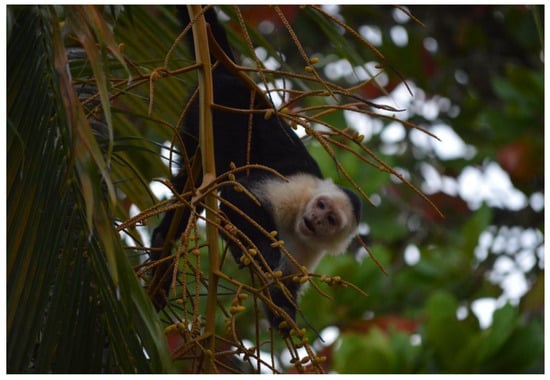
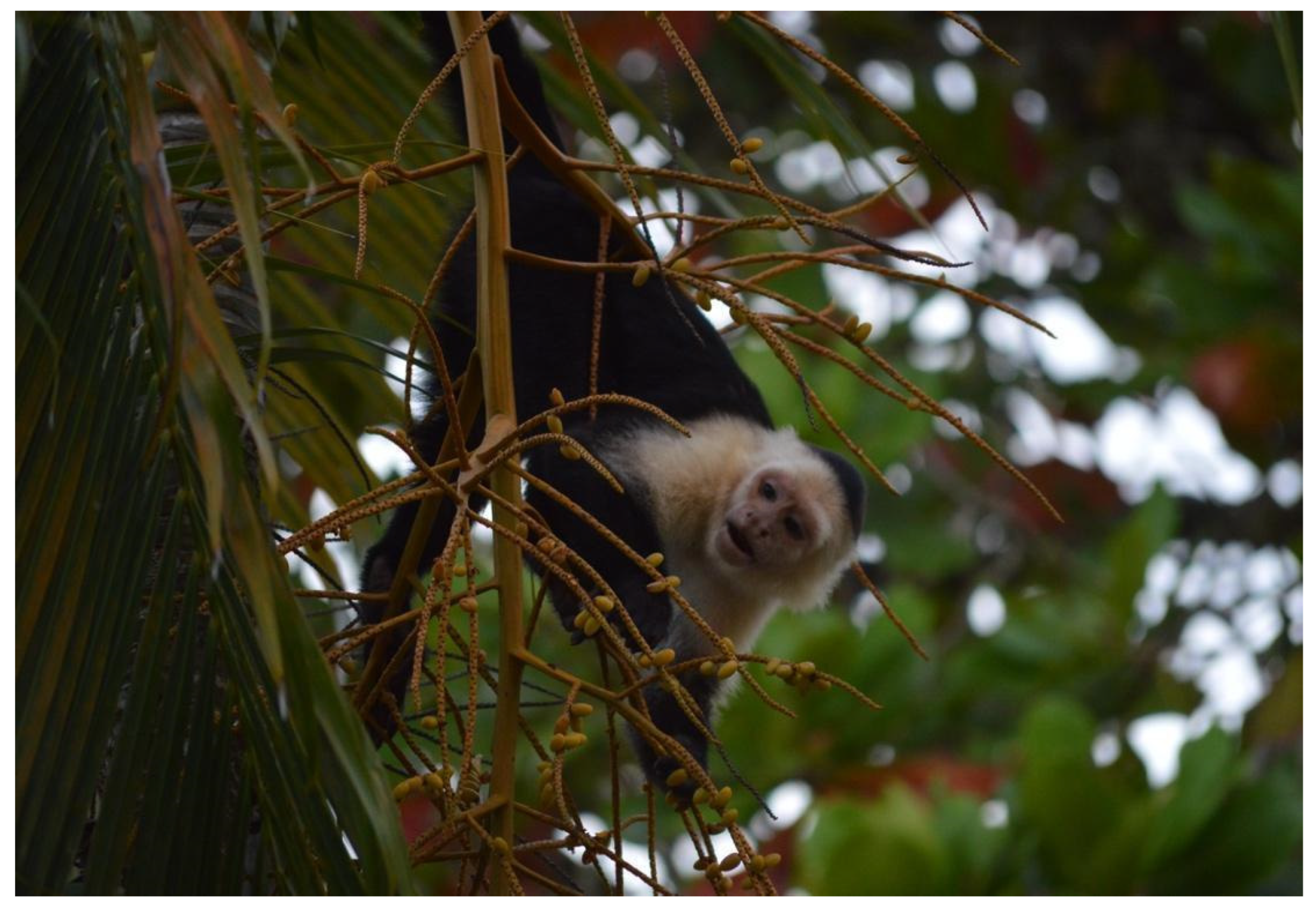
Our study species, commonly known as the white-faced capuchin, white-faced monkey, or white-headed monkey (Figure 2), belongs to the taxonomic subfamily Cebinae and to the commonly named New World monkeys. Cebines are easily recognizable due to their long-time use in the film industry, presence in the pet trade, and use in street performances. White-faced capuchin monkeys (Cebus imitator), formerly known as Cebus capucinus, are diurnal and mostly arboreal [14]. They live in a variety of habitats throughout Central America, including the wet lowlands forests on the Caribbean Coast and deciduous dry forest on the Pacific coast of Costa Rica. Capuchins weigh from 2.5 to 3.5 kg, with females being slightly smaller than males, and they measure between 80 and 90 cm in length, including the tail. Their diet is mainly omnivorous, including insects, ripe fruits, frogs, lizards, and squirrels, with food choices changing according to season. White-faced capuchins spend 70–80% of the day foraging and travelling, forming troops of about 30 individuals [14]. Beyond their primarily frugivorous diet, capuchins are recognized for their sophisticated behavioural repertoire, including tool use and problem-solving abilities [15], which may explain their relatively high capacity for adapting to anthropogenic environments and their susceptibility to habituation.
Figure 2.
Male adult Cebus imitator (white-faced capuchin) from Tortuguero National Park. The species exhibits distinctive white facial markings, small body size (2.5–3.5 kg), long prehensile tail, and sophisticated tool use and problem-solving abilities. These behavioural and morphological traits correlate with high adaptability to anthropogenic environments and susceptibility to habituation in tourism contexts (reproduced with permission from Ms. Alice Lapeyre, 2022).
This species is important in seed dispersal and their main predators are humans, raptors, large snakes, and felines. These primates often live up to 40 years of age in the wild, with the oldest recorded individual reaching 54 years in captivity. Cebus imitator faces several conservation threats, including pet trade, deforestation (habitat destruction), and hunting by farmers.
2. Material and Methods
A general assessment of the initial situation was carried out through a literature review of the state of the art, expert consultations, and interviews with locals and tourism sector workers. This research was conducted in compliance with Costa Rican Wildlife Conservation Law (No. 7317) and Tortuguero National Park (TNP) management regulations. Fieldwork consisted exclusively of non-invasive observational studies with no animal handling. Research access was formally approved by the Área de Conservación Tortuguero (Sistema Nacional de Áreas de Conservación, SINAC; Ministerio de Ambiente y Energía, MINAE) through authorization SINAC-ACTo-DASP-PNT-EPTS007-2022. A sample of nine hotels was selected to assess various conservation-related variables, including monthly visitor numbers, the degree of structural immersion within the forest, connectivity through natural or anthropogenic elements (e.g., cables), and food and beverage accessibility. The latter was evaluated based on restaurant infrastructure, food storage practices, and waste management systems. In addition, surveys were conducted in these hotels to assess human–primate interactions, aiming to determine in which establishments such interactions occurred, which primate species were involved, and the behavioural patterns exhibited by the animals during these encounters.
Based on this preliminary work, two key sites were selected for behavioural monitoring. The objective was to compare the behaviour of individuals of the primate species Cebus imitator in two different tourism-use scenarios. A field study was conducted between June and November 2022 to observe and compare primate behaviour in these two areas within TNP.
2.1. Study Area
To contextualize the study’s methodology and development, it is essential to understand the tourism offerings and infrastructure established in Tortuguero. Tourism in the community is a significant determinant of biodiversity conservation. TNP is the main tourist attraction in the community, attracting both national and international visitors. Key activities include motorboat, kayak, or canoe tours through the park’s canals, a nighttime turtle nesting tour, rainforest hikes and wildlife observation. These activities take place in settings such as the terrestrial Jaguar Trail, various water channels (Caño Harold, Caño Mora, Caño Chiquero, Caño Palma and Río Tortuguero), and Cuatro Esquinas Beach. In addition to TNP, there are complementary tourism offerings outside the park, such as nighttime nature tours, sport fishing, dining at the floating Katonga restaurant, and canopy tours at local hotels.
Accommodation services in Tortuguero are divided into two main categories. The first includes hotels and cabins primarily aimed at independent travellers, typically offering more affordable prices, and located in the town. The second category includes lodges, which attract a higher volume of guests and have direct commercial ties with wholesalers, tour operators, and airlines.
They also offer a greater number of services and are located along the canals, generally further away from the population centre. Lodges differ from regular hotels in that they are accommodations located in hard-to-reach areas, deep within the jungle, mountains, or strategic locations such as lagoons and rivers. The study will focus on this type of establishment due to their dimensional characteristics and significant integration into natural environments, which pose a greater risk of habituation for wildlife [2,10]. The cartographic figures included in this study were prepared using QGIS (v3.28).
An accurate description of the two study scenarios, where the comparison of monkey behaviour took place, is essential:
2.1.1. The Jaguar Trail
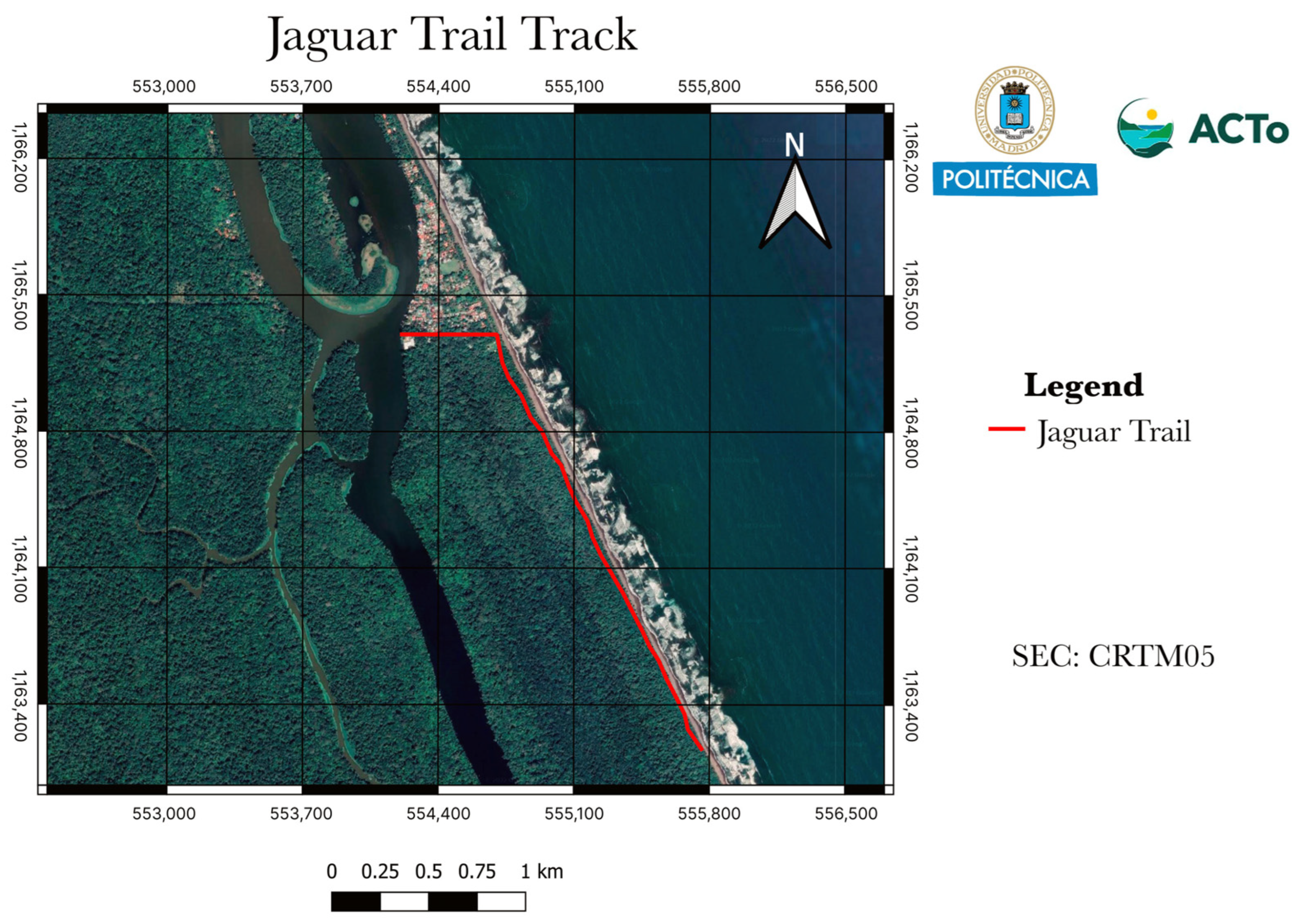
This is the only operational terrestrial walking trail currently available in TNP (hereafter the Jaguar Trail). It runs parallel to the beach and is used both by the public and by park rangers for monitoring and protection purposes (Figure 3). The trail covers a total distance of 2 km one way, making a total of 4 km for the round trip. It is marked every 100 m with numbers starting from 37 and ending at 60, which delineates the boundary of the park’s public use area. Each of these markers provides access to the beach. Additionally, as the trail is situated within the jungle, it offers opportunities to observe various wildlife species, including monkeys, agoutis, sloths, snakes, and iguanas, among others. This trail experiences less human interference due to the stricter regulations within TNP, which include prohibitions on construction and the introduction of food and beverages into the park. In addition to the prohibition on bringing food onto the trail, some studies [2] indicate that tourists may break this rule due to their increased interest to interact with wildlife in natural areas.
Figure 3.
Geographic representation of the Jaguar Trail (red line), the only operational terrestrial trail in Tortuguero National Park. The 4 km round-trip trail (2 km one-way) runs parallel to the Caribbean beach, demarcated by numbered markers every 100 m (markers 37–60), with beach access points at each marker. The trail is situated within primary tropical rainforest and provides wildlife observation opportunities. GPS coordinates were recorded at 100 m intervals using a portable GPS device during survey work. The Jaguar Trail experiences less human interference due to strict TNP conservation regulations prohibiting construction and food/beverage introduction.
Its track is depicted in Figure 3, which was generated from coordinates recorded every 100 m using a Garmin eTrex 22x global positioning system (GPS) device (Garmin Ltd., Olathe, KS, USA).
2.1.2. Evergreen Lodge and Rana Roja Lodge
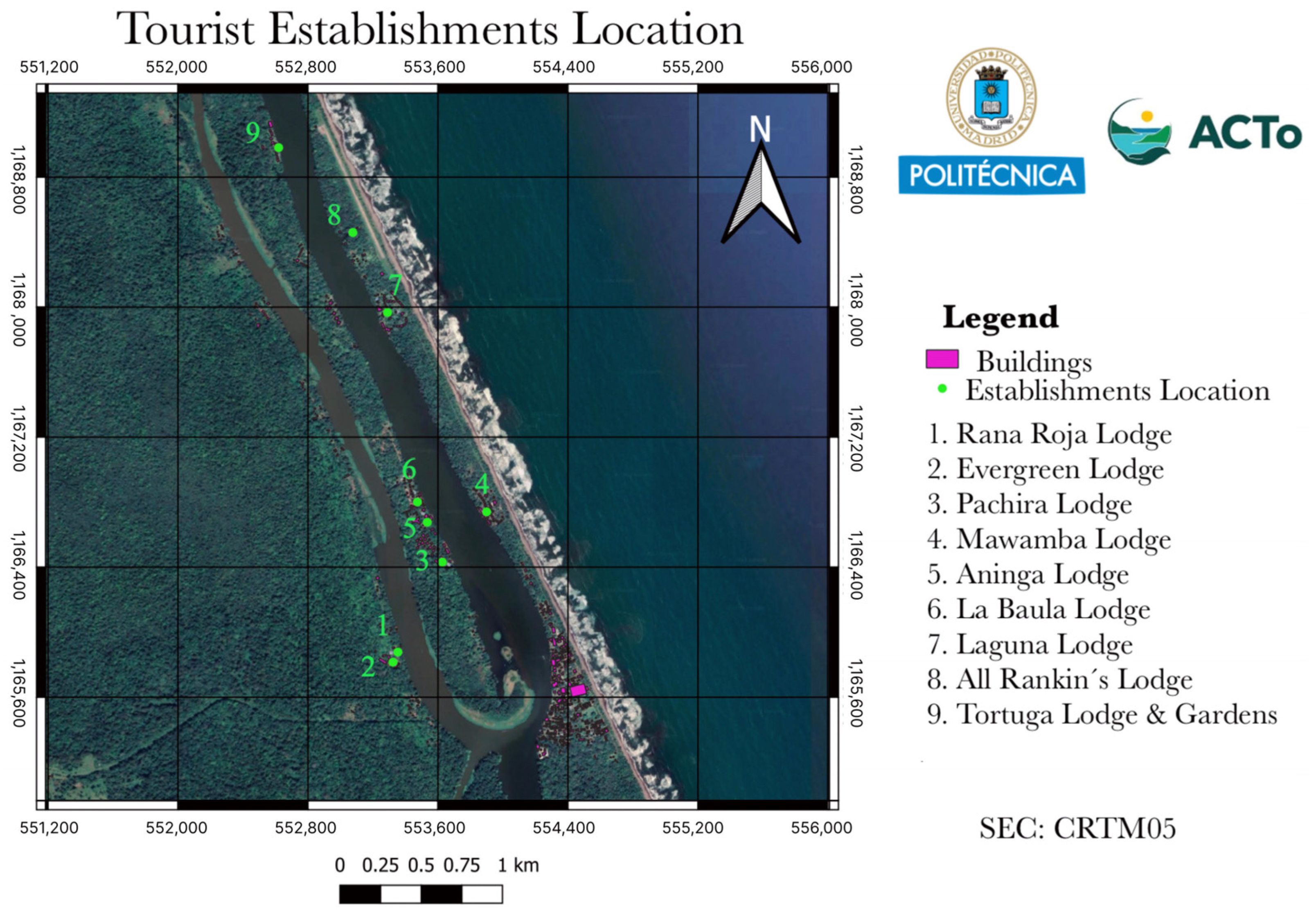
These two tourist accommodations, Evergreen Lodge and Rana Roja Lodge, constitute a single territorial unit, despite being separate establishments. They share the same spatial boundary and are located on a small land islet across from the main land bar where the Tortuguero community is situated. This islet connects directly to the terrestrial boundaries of TNP, forming a biological corridor. Together, they host approximately 2152 guests per month during the high season, which coincides with the study period. As part of an initial assessment to identify scenarios with the greatest anthropogenic pressure on primates, we conducted visits and surveys in nine hotels (Figure 4). We evaluated various parameters, including the number of tourists per month, the presence of sustainable management certifications, degree of immersion in the forest, ecological connectivity, accessibility of food and drink to wildlife, organic waste management, and the availability of environmental information. This analysis revealed that Evergreen Lodge and Rana Roja Lodge concentrate high levels of human–wildlife interaction pressure. Together, the two hotels rank second among all those studied in attracting tourists, with a total of 2152 during the high season (July and August). It was also observed that food and beverage accessibility in the hotels was high. They were the only establishments that, during interviews with local residents and tourism workers, were repeatedly mentioned as frequent observation sites for white-faced capuchins (Cebus imitator) and as locations where regular interactions between monkeys and guests were perceived as a recurring management issue. Moreover, Cebus imitator is a species that tends to approach humans and their facilities, indicating a high capacity for habituation [2]. Finally, and to prevent the normalization of feeding wildlife even outside protected areas, we consulted the relevant legislation [16]. Article 116 explicitly establishes the prohibition of feeding wildlife throughout the entire national territory.
Figure 4.
Spatial map of Tortuguero showing location of accommodation establishments evaluated for human–primate interaction pressure (n = 9 hotels surveyed). Study sites are indicated as (1) Rana Roja Lodge and (2) Evergreen Lodge, two adjacent lodges located on a small land islet forming a biological corridor directly adjacent to TNP boundaries. These establishments were selected based on highest tourism volume (2152 guests/month), greatest food accessibility to wildlife, maximum forest immersion, and documented capuchin interactions. The map illustrates the strategic location creating intense human–wildlife interface compared to the strictly regulated Jaguar Trail.
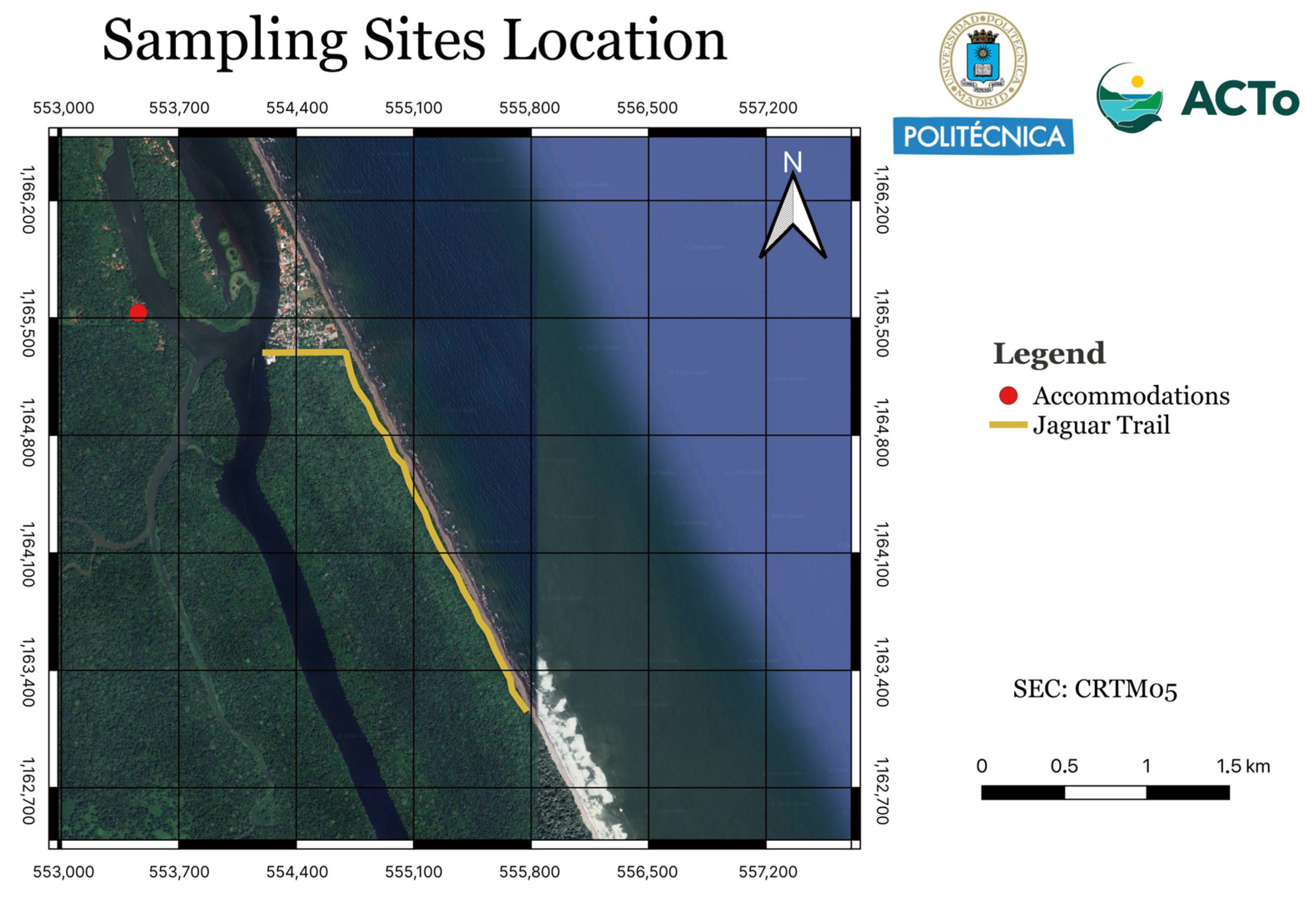
Finally, Figure 5 provides a clear representation of the spatial relationship between the two sampling sites, indicating the position of the Jaguar Trail relative to the hotel complex.
Figure 5.
Spatial relationship between the two sampling sites in Tortuguero. The red point marks the Evergreen–Rana Roja hotel complex on a small land islet adjacent to Tortuguero National Park, while the yellow line represents the 4 km Jaguar Trail running parallel to the Caribbean coast. The lagoon and river channels clearly separate the accommodation area from the terrestrial walking trail, making it unlikely that the same Cebus imitator troops regularly use both sites within a single day. This map is intended to illustrate the strong environmental contrast between the accommodation–forest interface and the protected forest trail sector of the park.
2.2. Sampling Design
Data were collected by Janire Sánchez, a trained observer who completed the field practicum as part of her master’s degree in Sustainable Ecological Tourism Management. To compare behavioural patterns of Cebus imitator between the accommodation area and the Jaguar Trail, we used a standardized ethogram (Table 1). Ethogram-based approaches are well-established methodologies for quantifying behavioural frequencies in primatological studies, particularly for comparing behavioural variation across different environmental contexts [6,7]. The ethogram was designed to incorporate behavioural categories organized into five functional classes—socialization, locomotion, rest, feeding, and agonistic behaviours—selected to characterize behavioural responses of Cebus imitator to tourism pressure and human provisioning [7]. These categories enabled us to distinguish between natural foraging activities and anthropogenic food consumption (active and passive supply), as well as assess habituation levels reflected in agonistic behavioural responses. Observations were conducted using Nikon Monarch M5 8x42 binoculars (Nikon Corporation, Tokyo, Japan) to view canopy-dwelling individuals, and a Casio HS-80TW stopwatch (Casio Computer Co., Ltd., Tokyo, Japan) was used to record the precise timing of observation intervals. We employed sweep sampling to record behavioural unit frequencies at the group level, capturing overall group activity and spatial organization across study sites [7]. When we identified a troop, continuous observations lasted 20 min. If the troop moved away, observation stopped, and departure time was recorded.
Table 1.
Comprehensive ethogram of behavioural categories and units recorded during primate behavioural observations (n = 14 observation days, 261 min total). The ethogram comprises 16 behavioural units organized into five functional categories: socialization (grooming together, auto-grooming, play), locomotion (jumping, high walk, low walk), rest (sleep, stand, motionless), feeding (foraging, active supply, passive supply), and agonistic behaviours (threaten, joint threaten, assault). Categories were adapted from established primatological methodologies and specifically designed to assess behavioural responses of Cebus imitator to differential tourism pressure and human food provisioning between accommodation sites and the strictly regulated Jaguar Trail [6,7].
We sampled systematically between the two scenarios during July, August, September, and October 2022, conducting observations during morning (7:00 AM–11:00 AM) and afternoon (12:00 PM–5:00 PM) sessions to capture the primary activity periods of Cebus imitator. Specifically, the dataset included observations conducted on the following days and during the corresponding hours (Table 2).
Table 2.
Detailed survey dataset for primate behavioural observations conducted in Tortuguero National Park during June–October 2022. Data include observation date, location (accommodation sites: Evergreen Lodge and Rana Roja Lodge; Jaguar Trail), time of visit (morning 07:00–11:00 AM or afternoon 12:00–17:00 PM), duration of continuous observation (minutes:seconds), and troop composition (number of individuals observed per sampling session). Total dataset comprises 25 survey days (14 successful observations yielding 261 min of behavioural recordings and 477 behavioural units; 11 no-encounter days). Sampling was systematically distributed across both sites to balance effort and capture seasonal variation in visitor pressure.
Additionally, we visited the accommodation with morning visits on 15 and 24 September, but we did not find any troops. We also visited the Jaguar Trail on 16, 19, 26 September and 1 and 5 October, but we did not find any individuals.
The studied species, Cebus imitator, is diurnal and forms part of a complex social structure referred to as a troop. Observed troops were usually composed of 12 to 15 individuals, commonly including one or two adult males.
2.3. Statistical Analysis
Statistical analyses and data visualisations were conducted in Python (v3.12.9) using pandas (v2.3.0), NumPy (v1.26.4), SciPy (v1.16.2), statsmodels (v0.14.6), matplotlib (v3.10.3), and seaborn (v0.13.2).
As mentioned previously, individual animals could not be reliably identified across sampling days. This means that some individuals may have been observed more than once, introducing the possibility of non-independence (autocorrelation) in the dataset. Because individual identity could not be included as a random effect, mixed-effect models were not feasible. Instead, we analysed behavioural counts using Generalized Linear Models (GLMs), which are appropriate for modelling count data, such as Poisson or Negative Binomial distributions. A GLM relates the expected value of the response variable—here, the counts of specific behaviours—to explanatory variables using a suitable probability distribution. Behavioural counts YijPoisson(ij) were modelled using a Poisson GLM with a log link, such that,
Observation duration (in minutes) was included as an offset to standardize behavioural counts to per minute rates and account for differences in sampling effort. Location was included as the main fixed effect of interest, with accommodation treated as the reference category, while time of day and group size were included as covariates to control for potential confounding effects. Model dispersion was assessed by comparing the Pearson chi-square statistic to its degrees of freedom, with values near or below one indicating adequate fit of the Poisson model. Effect sizes are reported as incidence rate ratios (IRRs) with 95% confidence intervals, representing rate contrasts relative to the reference category. For behaviours exhibiting structural zeros in some locations, Fisher’s exact tests were used for presence–absence comparisons, for which IRRs are not defined.
3. Results
The dataset comprised 25 survey days, of which primates were observed on 14 days, for a total of 4 h and 21 min (261 min) recording 477 behavioural units. The data were categorized into two distinct survey contexts:
- Jaguar Trail: A total of 130 min of observation yielded 234 recorded behaviours.
- Tourist Accommodation Sites (Evergreen Lodge and Rana Roja Lodge): A total of 131 min yielded 243 recorded behaviours.
3.1. Behavioural Patterns of Food Acquisition
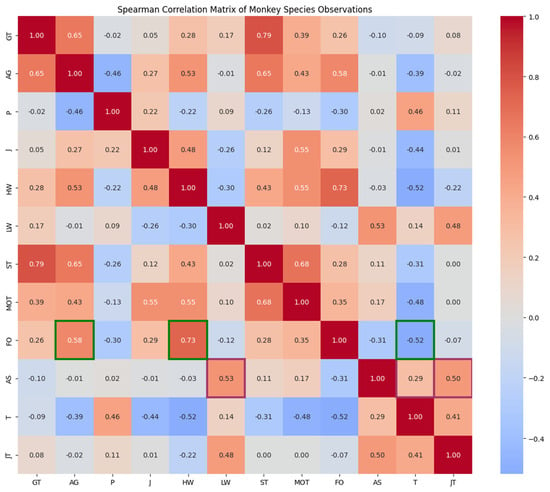
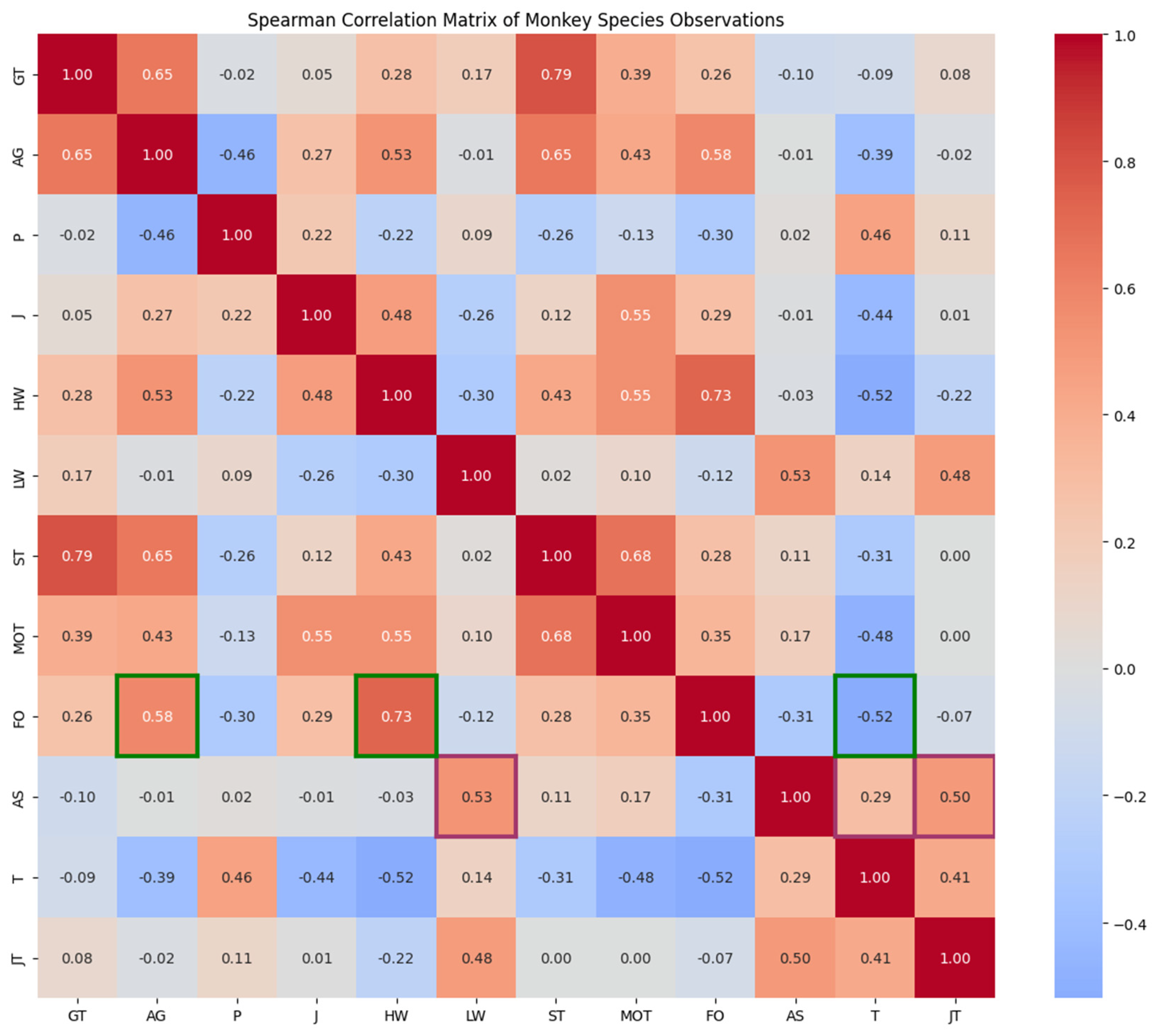
To analyse behavioural associations, we produced a correlation matrix (Figure 6) that compares each pair of behavioural units (rows/columns) using Spearman rank correlation values. Spearman correlation is a nonparametric, rank-based measure that is appropriate for our discrete and skewed behavioural counts, as it does not require normally distributed data and captures monotonic associations between behaviours. High positive correlations (red) indicate that the two behaviours frequently co-occurred within the same observation period, whereas low or negative correlations (blue) suggest that the presence of one behaviour typically excluded the presence of the other.
Figure 6.
Spearman rank correlation matrix of behavioural variables. Red and blue cells indicate positive and negative correlations, respectively. Green-framed cells highlight correlations involving foraging (FO), including its positive association with high walking (HW; r = 0.73) and auto-grooming (AG; r = 0.58), and negative association with threatening (T; r = −0.52). Purple-framed cells highlight correlations involving active supply (AS), including its positive associations with low walking (LW; r = 0.52) and agonistic behaviours (JT r = 0.50; T r = 0.29), and its negative association with foraging (FO; r = −0.31).
In the correlation matrix (Figure 6), several intuitive patterns emerge. Auto-grooming (AG) tends to co-occur with grooming together (GT), motionless behaviour (MOT), and standing, and is less frequent when agonistic behaviour is present, indicating that the matrix captures biologically meaningful associations.
Concerning food acquisition patterns, the following correlations emerged:
- Foraging (FO), highlighted by the green squares, was positively correlated with high walk (HW; r = 0.73) and auto-grooming (AG; r = 0.58), and negatively correlated with threatening (T; r = −0.52).
- Active supply (AS), marked in purple, was positively correlated with low walk (LW; r = 0.52) and joint threatening (JT; r = 0.50), and showed a weaker positive correlation with individual threatening (T; r = 0.29). In addition, it was negatively correlated with foraging (FO; r = −0.31).
Interestingly, no occurrences of assault, sleeping individuals, or passive supply were recorded during the study.
3.2. Influence of Tourist Areas on Primate Behaviour
We standardized behavioural data by converting raw counts to rates and modelled them using Poisson GLMs, checking the Poisson assumption by comparing residual deviance to degrees of freedom; all dispersion ratios were at or below one, indicating no overdispersion and supporting the use of the Poisson distribution. However, some behavioural units were entirely absent in certain locations, producing structural zeros that make count-based models inappropriate. For these behaviours, we instead analysed their presence or absence using Fisher’s exact tests, which better reflects the data structure when a behaviour does not occur at all in specific contexts.
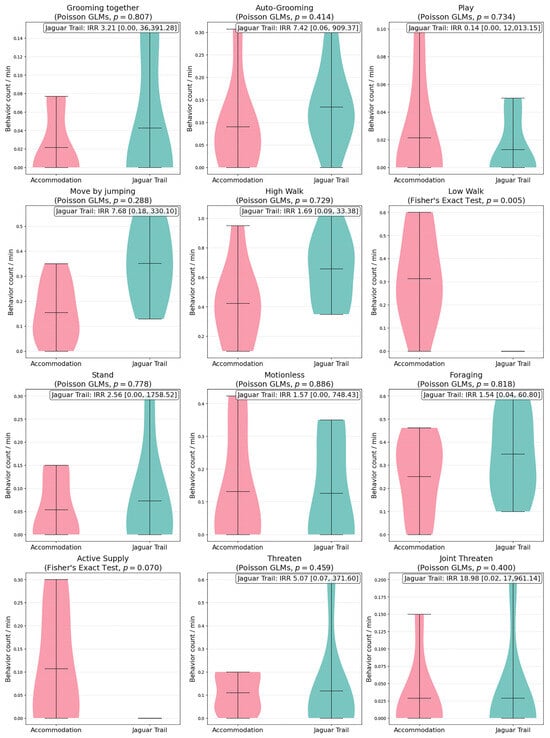
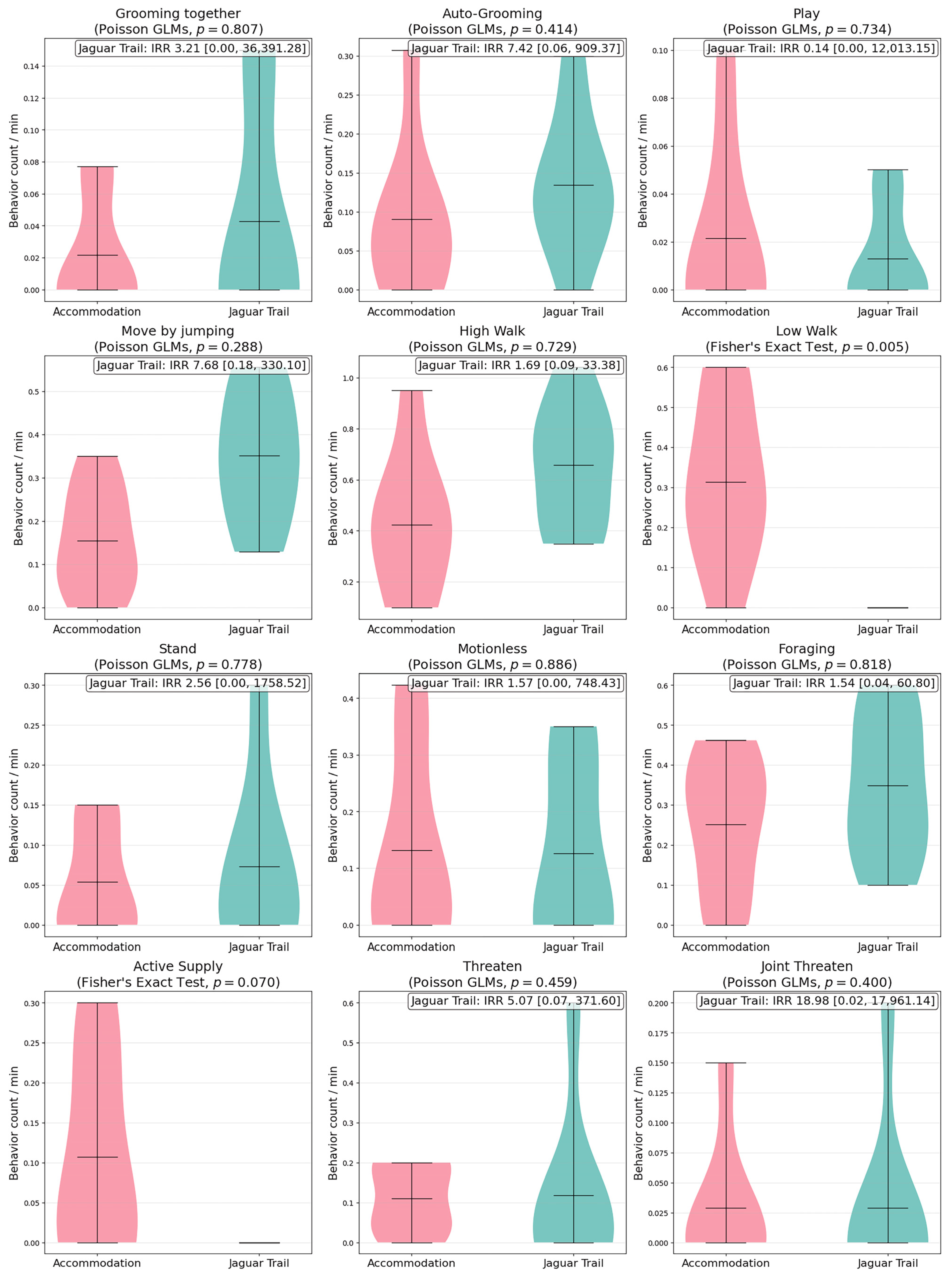
Behavioural patterns across the two locations are shown in Figure 7 using violin plots, which display the distribution shape along with the minimum, mean, and maximum values. Each plot indicates the behavioural unit analysed, the statistical test used, and its corresponding value. As shown in Figure 7, Poisson GLMs were used for all behavioural units except low walk and active supply, where the absence of these behaviours on the Jaguar Trail led us to use Fisher’s exact test instead. For behaviours analysed with Poisson GLMs, effect sizes (IRRs) with 95% confidence intervals are annotated directly on each subplot. For behaviours analysed with Fisher’s exact tests due to structural zeros, IRRs are not defined.
Figure 7.
Comparison of behavioural units between accommodation and Jaguar Trail sites using violin plots. Plots display distribution shape with minimum, mean, and maximum values. Poisson generalized linear models were used for most behavioural variables, while low walk and active supply (absent on the Jaguar Trail) were analysed using Fisher’s exact test.
Based on the analysis, the following insights were obtained:
- Regarding feeding activities, foraging was observed more frequently on the Jaguar Trail, although with the current level of sampling this difference cannot be considered statistically significant. In contrast, active food provisioning occurred exclusively at tourist accommodation sites, and the relatively low p-value (0.070) suggests a possible effect of location on diet composition (H1.2), although the evidence remains inconclusive.
- In terms of locomotion, high walking and jumping—both indicative of more active exploration—were more common on the Jaguar Trail, but these differences were not statistically significant (p-values: 0.729 and 0.288). However, low walking was found to be significantly lower on the Jaguar Trail (p-value: 0.005), providing partial support for H1.1 (primate locomotion differs between scenarios). This latter result suggests that, with a larger sample size, the differences observed in high walking and jumping might become detectable, although this cannot be determined from the present data.
- For agonistic interactions, both individual and joint threatening behaviours were more frequent at tourist accommodation sites than on the trail, but none of these differences reached statistical significance with the current dataset (p-values: 0.459 and 0.400).
4. Discussion
4.1. Interpretation of Behavioural Patterns
In this study, we hypothesized that Cebus imitator troops would exhibit different levels of habituation to humans depending on the scenario. Specifically, we predicted that wildlife on the more strictly regulated scenario (Jaguar Trail in TNP) would show lower habituation, whereas primates in tourist accommodations, where interactions with humans are less controlled, would exhibit higher habituation. Although behavioural data were compared between the two scenarios, it is not possible to directly attribute observed differences to human presence alone. Nevertheless, we know that the Jaguar Trail is less developed than the accommodation area, where multiple anthropogenic factors could influence primate behaviour. The following discussion interprets the results based on these contextual assumptions.
4.1.1. Locomotion
The percentage of primates observed walking on low substrates on the Jaguar Trail is zero, whereas in the accommodation, this behaviour is identified in addition to high walk.
According to literature, New World monkeys were thought to be entirely arboreal; however, wild capuchins can be quite terrestrial at times. They are bipedal and carry objects with their hands [15]. Although they are primarily arboreal, they can also walk on the ground with the objective of foraging [17] and this species is more terrestrial than other capuchin populations [15]. Although this behaviour does not always indicate an alteration in this fauna, some studies have shown that food provided by humans is a determining factor for primate troops to use the ground or low heights for their activities. Provisioning of primates by humans is known to impact their activity budgets, diets and ranging patterns. Making them more dependent on human food and less likely to forage naturally [10]. On the other hand, the positive correlations between “low walking” and “active supply”, and between “high walk” and “foraging”, suggest that when primates moved on low substrates they were often searching through waste or obtaining human-provided food, rather than foraging naturally. Furthermore, the comparison in Figure 7 shows significant differences in low walk behaviour between scenarios, which supports H1.1 and suggests that locomotion patterns differ across settings.
4.1.2. Feeding
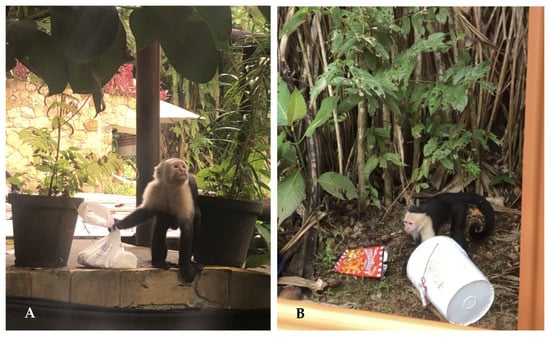
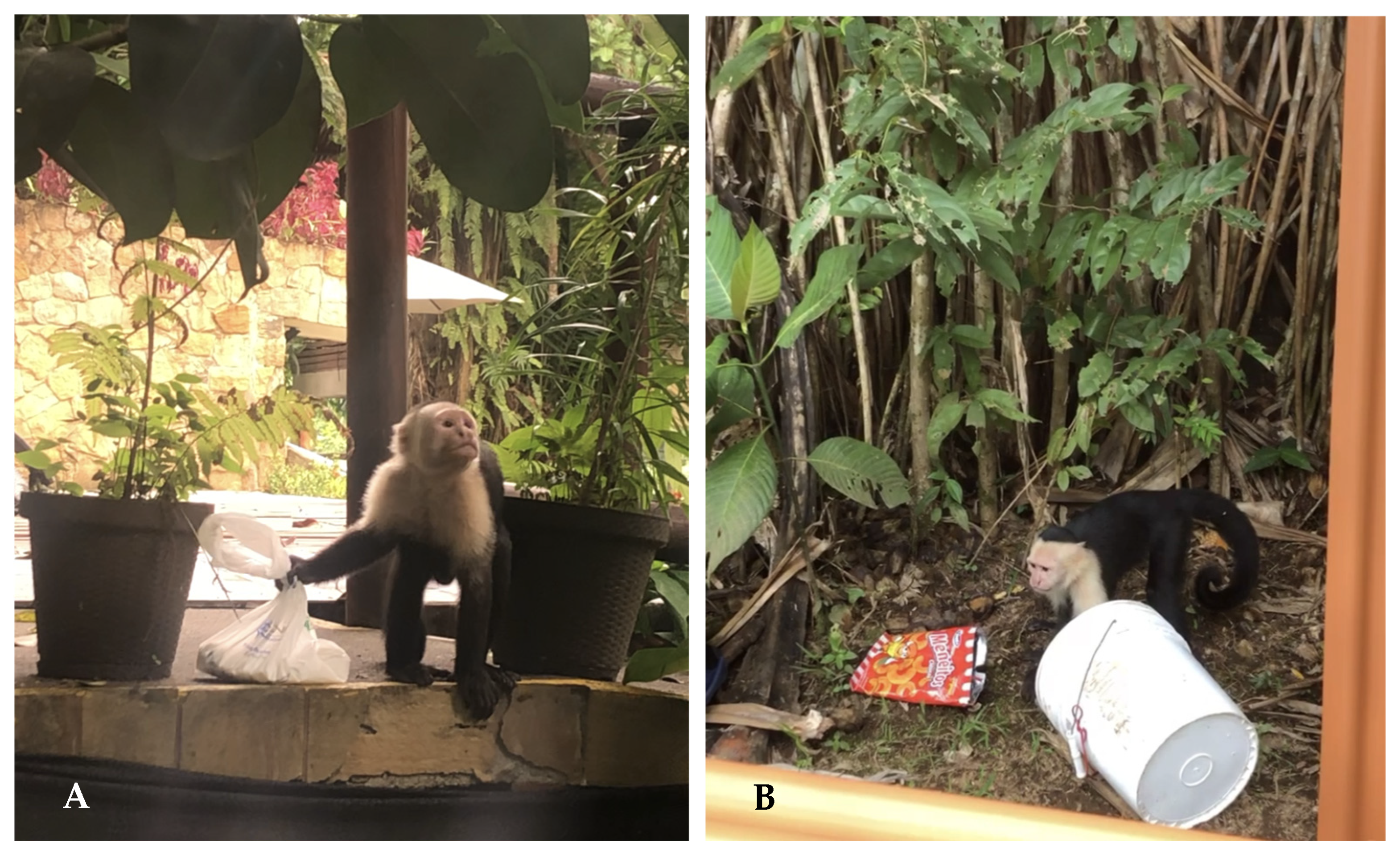
Human provisioning of wildlife with food is a widespread global practice that occurs in multiple socio-cultural contexts. Food is often provided voluntarily to animals within residential areas and temples as part of religious or cultural traditions, or at wildlife tourism sites to attract animals for viewing and photography. This practice is particularly common with primates, whose charismatic nature encourages people to feed them. However, such practices represent a potential threat to wildlife health. Consistent with previous studies, our results show that “active supply” occurred only at tourist accommodation sites, where monkeys increasingly consumed human-provided food in addition to natural resources (Figure 8A,B), indicating a shift toward anthropogenic diet supplementation and a progressive alteration of their normal foraging patterns. The effect of location on “active supply” had a relatively low p-value (p = 0.070), suggesting a possible location-related pattern that might become even more evident with a larger sample size. In contrast, no “active supply” was observed along the Jaguar Trail, where monkeys depended primarily on natural foraging due to the park’s conservation restrictions, although they could still be fed if tourists broke the rules. Thus, we cannot claim that primates are systematically fed by humans across all contexts, but we can support the part of H1.2 indicating that “active supply” is higher in the accommodation area and the negative correlation between “active supply” and “foraging”. While passive food supply (direct hand-feeding from tourists) was not directly observed during focal sampling, qualitative observations and staff interviews indicated that direct feeding occurs regularly outside formal observation periods. This suggests our quantitative assessment may underestimate total provisioning frequency.
Figure 8.
Anthropogenic food-related behavioural patterns in Cebus imitator at accommodation sites, illustrating mechanistic links between tourism infrastructure and primate behaviour. (A) Individual actively obtaining a discarded plastic bag from accommodation waste, exemplifying active supply (AS) behaviour—direct acquisition of anthropogenic food sources. This demonstrates the shift from natural foraging to opportunistic consumption of human-derived resources, a key mechanism driving H1.2 (diet composition differences). (B) Individual engaged in trash foraging at the accommodation perimeter, documenting active supply behaviour and the behavioural and ecological transition in high-tourism zones. These images provide direct visual evidence for correlation matrix findings (Figure 6), showing the negative relationship between natural foraging (FO) and active supply (AS; r = −0.31), linking behavioural change to altered ecosystem function. Photographs reproduced with permission from Ms. Janire Sánchez, 2022.
4.1.3. Agonistic
Agonistic behaviours among Cebus imitator serve to regulate intraspecific competition, particularly for resources. In the accommodation area, where provisioned food is readily available, increased joint threatening behaviour may reflect intensified competition for these high-value food resources [6].
Monkeys’ behavioural responses to human disturbance are difficult to predict due to the numerous variables influencing their behaviour. In tourist areas, individuals may be more responsive due to frequent contact with humans, or less responsive if they are habituated. In contrast, monkeys with little prior human contact tend to react more intensely to occasional disturbances [7]. Regarding agonistic behaviour, although higher rates were observed at accommodation sites, the small sample size prevented these differences from reaching statistical significance. Anecdotally, individual threats toward the observer were recorded at the accommodation, suggesting that extreme habituation may cause these animals to lose fear of humans and even perceive them as potential food sources.
Therefore, based on our analysis, we can state that foraging is inversely correlated with “threatening” and “active supply” is positively correlated with “joint threatening”. However, these relationships were not statistically significant, although a larger sample size would likely have allowed us to detect them. Capuchins, known for their cognitive flexibility and complex behavioural repertoire [15], may be particularly prone to developing habituated behaviours in response to repeated human contact.
Collectively, these three behavioural dimensions (locomotion, feeding, and agonistic patterns) suggest that tourist accommodation sites may exert greater anthropogenic pressure on Cebus imitator populations compared to the more strictly regulated Jaguar Trail. The behavioural suite observed (lower substrate use, increased use of anthropogenic foods, and higher—but not statistically significant—rates of agonistic interactions) is consistent with a population potentially moving toward greater habituation and dependence on human-derived resources, although our limited sample size and exploratory design preclude definitive conclusions. These findings raise critical conservation questions that extend far beyond the immediate welfare of individual primates at Tortuguero to encompass broader implications for primate populations throughout tourism-influenced landscapes worldwide. Understanding and managing these impacts thus requires examining not only individual behavioural responses but also the ecosystem-level consequences of altered primate ecology.
4.2. Implications for Conservation and Tourism Management and Future Work
Primates’ habituation to human presence raises new risks and conservation challenges such as potential human–wildlife conflicts. In regions of long-term shared habitats, such as in parts of Asia, injuries to both humans and primates are common. Hutschenreiter [18] notes that such shared habitats can also increase animal mortality as a side effect of coexistence. Habitat fragmentation further affects infant survival [19], highlighting the importance of well-designed tourist infrastructure and the establishment of biological corridors. Furthermore, habitat loss remains the most significant threat to the survival of many primate species [20,21].
Similar studies in other regions, such as [22], report changes in feeding behaviour influenced by anthropogenic food when primates share habitats with humans. Tortuguero is attractive to ecotourists, organizations, and universities due to its unique natural characteristics. However, conservation efforts in the area have primarily focused on sea turtles, leaving mammals, including Cebus imitator, with less attention. Developing a diversified ecotourism plan—such as reopening the old Gavilan Trail as an interpretative hiking route—could both support conservation and promote sustainable economic opportunities.
Conservation measures should also prioritize ecosystem restoration. Reforestation along the boundaries of hotels in direct contact with the forest, using plants from the Anacardiaceae and Melastomataceae families that Cebus imitator feed on, would help restore habitats [6]. Equally important is a clear wildlife management plan for tourists and staff that combines behavioural rules (no feeding, measures to prevent food theft, and reducing food access in restaurants and bars) with environmental education. Signage in the village, at Jaguar Trail access points and at key hotels can effectively raise visitor awareness and promote pro-conservation behaviour [23]. The community’s current efforts to curb deliberate feeding already represent a meaningful step toward reducing conflict.
In a context where wildlife-based tourism is one of the fastest-growing industries in the world [7], additional strategies to mitigate human–wildlife conflicts are highly necessary. Although white-faced capuchins are not as threatening or aggressive as other primate species—such as the rhesus macaque (Macaca mulatta)—the possibility of translocating certain groups has been discussed in the broader primate-tourism literature. However, in Tortuguero we currently lack systematic data on population density, troop home ranges, and habitat availability within the park, which are essential prerequisites for evaluating any translocation programme. In this context, translocation should be regarded as a long-term, hypothesis-generating management option rather than an immediate recommendation, and future research would need to assess its ecological feasibility and social acceptability before any implementation is considered [21]. Other studies, such as [24], also highlight the potential of physical exclusion measures and non-invasive deterrents as effective tools to reduce negative interactions between humans and primates.
Finally, this experience in Tortuguero revealed a critical coordination gap between the community, accommodation providers, and conservation organizations. A gap that extends beyond wildlife management to encompass the broader sustainability of tourism development. Engaging impartial mediators to facilitate dialogue among stakeholders is essential to strengthen conservation efforts and ensure equitable benefits for both fauna and ecosystems. Evidence from comparable conservation-based tourism initiatives, such as those documented at Manuel Antonio National Park in Costa Rica, demonstrates that successful coexistence of wildlife conservation and ecotourism requires sustained institutional coordination and genuine community engagement [25]. The success of sea turtle conservation in Tortuguero demonstrates that effective wildlife conservation can coexist with ecotourism, supporting both biodiversity and local economic growth. This coordinated approach has proven effective in maintaining both biodiversity protection and sustainable livelihoods, suggesting that similar mechanisms in Tortuguero could address current management gaps and generate long-term conservation benefits. Such coordination represents not merely a conservation option but a prerequisite for the long-term ecological and economic sustainability of Tortuguero as a globally significant protected area.
4.3. Limitations and Caution in Interpretation
After interpreting the data, it is essential to recognize several limitations in the analysis. First, the limited temporal and spatial sampling effort constrains statistical power and broader inference. Extending monitoring over a longer period, ideally encompassing at least a full year, would allow greater ecological and social variability to be captured, including high and low tourist seasons, differences in resource availability, and a wider range of troops, thereby strengthening the robustness of temporal comparisons. Additionally, quantitative habitat metrics (e.g., canopy height or understory density) were not available for inclusion as covariates in the statistical models. Although habitat characteristics were qualitatively assessed during site selection, the absence of standardized measurements limits our ability to incorporate habitat variables into the statistical analysis. It is also important to acknowledge that correlation does not imply causation; although some behavioural variables frequently co-occurred within the same context, this does not necessarily indicate a direct or causal relationship, as these associations may be influenced by unmeasured variables or external environmental factors. Furthermore, while some behavioural differences between locations follow clear tendencies, not all results are statistically robust, which is reflected in several p-values that did not reach conventional significance thresholds (p < 0.05). Finally, because individual animals or troops could not be identified, we cannot rule out the possibility of pseudoreplication, as repeated sampling may violate assumptions of independence and potentially overestimate the precision of statistical analyses. However, the sampling design, distributed across multiple days and spatially separated by a river and distances exceeding typical daily movement ranges for the species, combined with the ecological characteristics of these wide-ranging wild animals, reduces—though does not eliminate—the likelihood of repeatedly observing the same individuals or groups across sites.
5. Conclusions
As a small-scale case study based on 261 min of focal observation, our findings must be interpreted with caution. Our preliminary findings show significant differences in locomotion patterns between the two sites, with low-substrate walking significantly reduced on the Jaguar Trail compared to accommodations (p = 0.005), providing strong support for Hypothesis H1.1. This behavioural shift is primarily explained by differential food availability: active food supply behaviour—direct consumption of anthropogenic foods from human sources—was observed exclusively in accommodation areas (p = 0.070), indicating that tourism infrastructure creates an environment where primates concentrate near human structures rather than dispersing into the forest canopy. Although ground foraging for natural fruits may also contribute to low substrate use, the strict absence of active food supply on the Jaguar Trail, combined with the negative correlation between foraging and active supply (r = −0.31), suggest that anthropogenic food availability may be an important driver of the observed locomotion shift, although other unmeasured factors (e.g., fine-scale habitat structure) could also contribute.
Field observations (June–October 2022) revealed that critical management interventions were absent at accommodation sites. Accessible food sources persisted, and primates exhibited active food provisioning behaviour exclusively in these areas, indicating inadequate food access controls. Based on these behavioural patterns and established conservation literature, we recommend immediate adoption of an evidence-based management protocol addressing these deficiencies through the following:
(1) Secured waste management and elevated food storage using wildlife-proof infrastructure and systematic waste segregation protocols [26]; (2) ranger-based monitoring and visible enforcement of existing wildlife feeding prohibitions, implementing structured patrol systems and documented data collection to improve compliance; and (3) targeted environmental education programs that interpret both individual animal welfare and ecosystem-level consequences of human–wildlife interactions, as research demonstrates situational environmental education significantly shifts tourist behaviour (standardized path coefficient = 0.78) toward conservation objectives [27]. These integrated interventions directly address the observable management gaps documented in our study and align with demonstrated best practices for ecotourism governance.
Our observations of active food supply at accommodation sites exemplify three interconnected conservation challenges in primate tourism: habituation, provisioning, and disease transmission. Habituation—the reduced flight response to humans—increases primate vulnerability to poaching and human–wildlife conflict, while provisioning actively generates negative outcomes including escalating aggression, intra-group competition, obesity, and metabolic disorders. Among these threats, zoonotic disease transmission—the direct transfer of human pathogens to wildlife through proximity and contact—represents one of the most critical and least manageable threats to long-term primate population viability [21]. These interconnected issues collectively demonstrate the need for evidence-based tourism practices that actively safeguard both wildlife populations and their essential habitats.
Costa Rica has constructed an international reputation as a leading nature-based tourism destination since the creation of its first protected areas in the 1960s [28,29], positioning itself as a “green exception” within Latin America. Today, the country’s global image as an “exceptionally green” destination continues to attract ecotourists, organizations, and researchers worldwide. While this positioning has undoubtedly contributed positively to conservation financing and political support for habitat protection, it simultaneously creates significant ecological and social contradictions. Tourism expansion in protected areas can displace local communities, fragment habitats, and catalyse wildlife habituation—dynamics well-documented in comparative studies.
Most critically, tourist social imaginaries—deeply embedded cultural constructions such as the romantic association with “untouched tropical paradise,” indigenous peoples existing in “natural harmony” with wildlife, and the symbolic ethos of “Pura Vida” (literally “pure life”)—powerfully shape visitor expectations and behaviours [30,31]. These imaginaries frequently result in harmful practices as tourists attempt to secure “authentic” wildlife experiences at any cost, including violating wildlife feeding prohibitions and disturbing critical habitats. Addressing these contradictions requires integrating social, political, and cultural dimensions into conservation strategies [32], moving beyond purely ecological or economic approaches. The present study—demonstrating that primates in high-tourism areas exhibit reduced natural foraging, increased anthropogenic food dependence, and elevated agonistic behaviours—provides empirical evidence of how social imaginaries translate directly into ecological degradation.
Effective conservation in protected areas demands integrated approaches transcending purely economic or biological frameworks. Social, political, and cultural dimensions must be systematically integrated into conservation strategies, as tourism expansion creates complex human–wildlife interactions unmanageable through habitat protection alone. To sustain both Costa Rica’s conservation leadership and long-term ecological integrity, we recommend urgently implementing the following: (1) evidence-based management protocols addressing food access restrictions and enforcement of wildlife feeding prohibitions; (2) targeted environmental education for tourists, hospitality staff, and local communities; and (3) meaningful stakeholder participation ensuring equitable benefits for indigenous and Afro-Caribbean communities, historically dependent on these ecosystems. Without coordinated, integrated action, Costa Rica risks compromising both its conservation credibility and the ecological functions underlying sustainable tourism viability.
Future research should extend monitoring across full annual cycles, include a larger number of troops per site, incorporate quantitative habitat metrics as covariates, and adopt designs that explicitly track individually identified primates. Such work would allow rigorous tests of the hypotheses generated here regarding locomotion shifts, diet supplementation, and emerging agonistic patterns under contrasting ecotourism pressures.
Author Contributions
Investigation, J.S.; Methodology, J.S. and C.C.-G.; Conceptualization, C.C.-G. and J.S.; Software, Á.F.G.; Formal analysis, J.S. and Á.F.G.; Resources, J.S. and C.C.-G.; Data curation, J.S. and Á.F.G.; Validation, J.S., Á.F.G. and C.C.-G.; Visualization, J.S., Á.F.G. and C.C.-G.; Writing—original draft, J.S. and C.C.-G.; Writing—review & editing, C.C.-G., J.S. and Á.F.G.; Supervision, C.C.-G.; Project administration, C.C.-G.; Funding acquisition, C.C.-G. All authors have read and agreed to the published version of the manuscript.
Funding
This research received no external research funding. Fieldwork travel and subsistence costs for J.S. were partially supported through the Universidad Politécnica de Madrid (UPM) student travel aid programme for Final Degree Projects in International Cooperation for Sustainable Development (TFT-CIDS; Rectoral Resolution of 12 May 2022).
Institutional Review Board Statement
Ethical review and approval were not required for this study because it was based on non-invasive behavioural observations of free-ranging animals, with no animal handling or experimental manipulation. Research access was authorized by SINAC-MINAE (Área de Conservación Tortuguero) under permit SINAC-ACTo-DASP-PNT-EPTS007-2022.
Data Availability Statement
The dataset and analysis scripts supporting the study are publicly available at https://github.com/alvaro-francisco-gil/monkey-tourism-analysis, accessed on 24 January 2026.
Acknowledgments
We gratefully acknowledge the institutional support of the Vice-Rectorate for Internationalization of the Universidad Politécnica de Madrid (UPM) for promoting international academic cooperation, and Tortuguero National Park (SINAC-MINAE, Área de Conservación Tortuguero, Costa Rica) and Andrés González for their invaluable support during fieldwork.
Conflicts of Interest
The authors declare no conflicts of interest.
References
- Wolf, I.D.; Croft, D.B.; Green, R.J. Nature Conservation and Nature-Based Tourism: A Paradox? Environments 2019, 6, 104. [Google Scholar] [CrossRef] [Scilit]
- McKinney, T. Species-Specific Responses to Tourist Interactions by White-Faced Capuchins (Cebus imitator) and Mantled Howlers (Alouatta palliata) in a Costa Rican Wildlife Refuge. Int. J. Primatol. 2014, 35, 573–589. [Google Scholar] [CrossRef] [Scilit]
- Weaver, D.B. The Evolving Concept of Ecotourism and Its Potential Impacts. Int. J. Sustain. Dev. 2002, 5, 251–264. [Google Scholar] [CrossRef] [Scilit]
- Leca, J.B.; Gunst, N.; Gardiner, M.; Wandia, N. Acquisition of object-robbing and object/food-bartering behaviours: A culturally maintained token economy in free-ranging long-tailed macaques. Philos. Trans. R. Soc. Lond. B Biol. Sci. 2021, 376, 20190677. [Google Scholar] [CrossRef] [Scilit]
- Hambali, K.; Ismail, A.; Zulkifli, S.Z.; Md-Zain, B.M.; Amir, A. Human-Macaque Conflict and Pest Behaviors of Long-Tailed Macaques (Macaca fascicularis) in Kuala Selangor Nature Park. Trop. Nat. Hist. 2012, 12, 189–205. [Google Scholar] [CrossRef] [Scilit]
- Rodrigues, E. Impacto del Turismo en el Comportamiento del mono Carablanca (Cebus capucinus) en el Parque Nacional Manuel Antonio, Costa Rica. Master’s Thesis, Universidad de Costa Rica, San José, Costa Rica, 2013. Available online: https://repositorio.sibdi.ucr.ac.cr/items/2e9729e9-7540-4f1b-b5e6-46d06fbc73a2 (accessed on 15 October 2025).
- Webb, S.; McCoy, M. Ecotourism and primate habituation: Behavioral variation in two groups of white-faced capuchins (Cebus capucinus) from Costa Rica. Rev. Biol. Trop. (Int. J. Trop. Biol.) 2014, 62, 909–918. [Google Scholar] [CrossRef] [Scilit] [PubMed]
- Westin, J.L. Effects of ecotourism on the behavior and health of red howler monkeys (Alouatta seniculus) in Suriname. Ph.D. Dissertation, The University of Michigan, Ann Arbor, MI, USA, 2007. Available online: https://deepblue.lib.umich.edu/handle/2027.42/57667 (accessed on 20 October 2025).
- Sengupta, A.; McConkey, K.R.; Kwit, C. The Influence of Provisioning on Animal-Mediated Seed Dispersal. Oikos 2022, 2022, e08276. [Google Scholar] [CrossRef] [Scilit]
- Sengupta, A.; McConkey, K.R.; Radhakrishna, S. Primates, Provisioning and Plants: Impacts of Human Cultural Behaviours on Primate Ecological Functions. PLoS ONE 2015, 10, e0140961. [Google Scholar] [CrossRef] [Scilit]
- SINAC. Plan de Turismo Sostenible Parque Nacional Tortuguero (PNT); Parque Nacional Tortuguero, Área de Conservación Tortuguero: Guápiles, Costa Rica, 2013; 73p. [Google Scholar]
- Speiran, S.I. Monkey see, monkey do: The work of primates in Costa Rican sanctuaries. In Exploring Non-Human Work in Tourism; Kline, C., Rickly, J.M., Eds.; De Gruyter Oldenbourg: Berlin/Boston, Germany, 2021; pp. 181–206. [Google Scholar] [CrossRef] [Scilit]
- Kauffman, L. Interactions between tourists and white-faced monkeys (Cebus capucinus) at Manuel Antonio National Park, Quepos, Costa Rica. In Primate Tourism: A Tool for Conservation? Russon, A., Wallis, J., Eds.; Cambridge University Press: Cambridge, UK, 2014; pp. 230–244. [Google Scholar] [CrossRef] [Scilit]
- Global Biodiversity Information Facility (GBIF). GBIF Backbone Taxonomy. Zenodo. 2023. Species: Cebus imitator. Available online: https://doi.org/10.15468/39omei (accessed on 20 December 2025).
- Ottoni, E.; Izar, P. Capuchin Monkey Tool Use: Overview and implications. Evol. Anthropol. 2008, 17, 171–178. [Google Scholar] [CrossRef] [Scilit]
- Ley de Conservación de la Vida Silvestre, No. 7317. Sistema Costarricense de Información Jurídica. Art. 116. 1992. Available online: https://pgrweb.go.cr/scij/Busqueda/Normativa/Normas/nrm_texto_completo.aspx?param1=NRTC&nValor1=1&nValor2=12648&nValor3=110020¶m2=1&strTipM=TC&lResultado=5&strSim=simp (accessed on 12 October 2025).
- Graham, K.E.; Bulloch, M.J.; Lewis, T.R. Foraging behaviour of three primate species in a Costa Rican coastal lowland tropical wet forest. Biodivers. J. 2013, 4, 327–334. [Google Scholar]
- Hutschenreiter, A. Spider Monkey (Ateles geoffroyi) Habituate to Anthropogenic Pressure in a Low-Impact Tourism Area: Insights from a Multi-Method Approach. Int. J. Primatol. 2022, 43, 946–964. [Google Scholar] [CrossRef] [Scilit]
- Vegas Carrillo, A. Efectos de la Transformación del Hábitat en la Conducta y Niveles de Estrés de Alouatta palliata Mexicana. Ph.D. Dissertation, Universidad de Barcelona, Barcelona, Spain, 2008. Available online: https://diposit.ub.edu/server/api/core/bitstreams/779c5082-56ce-4260-ae06-463775348022/content (accessed on 5 October 2025).
- Boyle, S.A.; Lourenço, W.C.; da Silva, L.R.; Spironello, W.R. Spatial Ecology of Reddish-Brown Cuxiú Monkeys (Chiropotes sagulatus, Pitheciidae) in an Isolated Forest Remnant: Movement Patterns and Edge Effects. Diversity 2023, 15, 731. [Google Scholar] [CrossRef] [Scilit]
- Russon, A.; Wallis, J. Primate tourism as a conservation tool: A review of the evidence, implications, and recommendations. In Primate Tourism: A Tool for Conservation? Russon, A., Wallis, J., Eds.; Cambridge University Press: Cambridge, UK, 2014; pp. 313–332. [Google Scholar]
- Bempah, G.; Lu, C.; Yi, Y. Anthropogenic Food Utilization and Seasonal Difference in Diet of Cercopithecus lowei at a Community Protected Forest in Ghana. Diversity 2021, 13, 610. [Google Scholar] [CrossRef] [Scilit]
- Grossberg, R.; Treves, A.; Naughton-Treves, L. The incidental ecotourist: Measuring visitor impacts on endangered howler monkeys at a Belizean archaeological site. Environ. Conserv. 2003, 30, 40–51. [Google Scholar] [CrossRef] [Scilit]
- Kolinski, L.; Milich, K.M. Human-Wildlife Conflict Mitigation Impacts Community Perceptions around Kibale National Park, Uganda. Diversity 2021, 13, 145. [Google Scholar] [CrossRef] [Scilit]
- Porras-Murillo, L.; Wong, C.; Chacón, I. Human-Wildlife Interactions in a Major Tourist Destination: Manuel Antonio National Park, Costa Rica. Biodiversitas J. Biol. Divers. 2022, 23, 2417–2425. [Google Scholar] [CrossRef] [Scilit]
- Roos, C.; Scholes, R.J.; Blignaut, J.N. Proposing principles towards responsible waste management in South African protected areas. Koedoe 2023, 65, a1753. [Google Scholar] [CrossRef] [Scilit]
- Wang, J.; Dai, J.; Dewancker, B.J.; Gao, W.; Liu, Z.; Zhou, Y. Impact of Situational Environmental Education on Tourist Behavior—A Case Study of Water Culture Ecological Park in China. Int. J. Environ. Res. Public. Health 2022, 19, 11388. [Google Scholar] [CrossRef] [Scilit]
- Gutiérrez Arguedas, A.; Granados Chaverri, C. Nacionalismo, frontera y excepcionalismo verde en Costa Rica. Anu. Estud. Centroam. 2020, 46, 1–28. [Google Scholar] [CrossRef] [Scilit]
- Ramírez Cover, A. Excepcionalismo verde y desarrollo sostenible en Costa Rica. Anu. Cent. Investig. Estud. Políticos 2020, 1, 1–21. [Google Scholar] [CrossRef] [Scilit]
- Barboza Núñez, E. El enclave turístico y la imagen del “Buen Salvaje” americano. Un abordaje iconográfico. Estud. Perspect. Tur. 2017, 26, 760–780. [Google Scholar]
- Barboza Núñez, E. El contrapunteo entre imaginarios sociales y el desarrollo turístico: El caso de Costa Rica. Cienc. Soc. 2020, 45, 45–63. [Google Scholar] [CrossRef] [Scilit]
- Cordon, C.; Carmena, B.; Giménez, M.C.; García, J.L.; Calderon-Guerrero, C. Evolution of Ecotourism in Coastal Indigenous Communities: Comparison of the Case Studies of La Ventanilla and La Escobilla in Oaxaca, Mexico. Sustainability 2023, 15, 2207. [Google Scholar] [CrossRef] [Scilit]

Disclaimer/Publisher’s Note: The statements, opinions and data contained in all publications are solely those of the individual author(s) and contributor(s) and not of MDPI and/or the editor(s). MDPI and/or the editor(s) disclaim responsibility for any injury to people or property resulting from any ideas, methods, instructions or products referred to in the content. |
© 2026 by the authors. Licensee MDPI, Basel, Switzerland. This article is an open access article distributed under the terms and conditions of the Creative Commons Attribution (CC BY) license.