


Abstract
To address knowledge gaps in urban wetlands’ role in sustaining avian diversity along migration corridors, this study systematically surveyed three Yancheng wetland parks with a distinct habitat gradient. Monthly surveys were conducted from January to December 2024 using fixed-width line transects and point counts, with three 300 m transects set in each park and all birds within 50 m of the transect line recorded, and Shannon–Wiener, Simpson, Pielou’s Evenness, and Margalef Richness indices were employed for quantitative analysis. A total of 83 bird species across 16 orders and 41 families were documented, including the National Class I Protected and Endangered Oriental Stork and three Class II nationally protected species (Black-winged Kite, Crested Goshawk, Common Kestrel). Fengyi Lake Park, with 71 species, served as a critical migratory waterbird hub. Yandu Wetland Park sustained community stability through high habitat heterogeneity, supporting specialized breeders, and Dongfang Wetland Park, with 34 urban adaptor-dominated species, provided key autumn pulsed resources for frugivores and granivores. This study identifies habitat heterogeneity as the primary driver of avian community differentiation and highlights that the ecological functions of urban wetlands are contingent on multi-habitat complementarity. We, therefore, advocate for prioritizing the construction of heterogeneous habitat structures in urban wetland planning, enhancing functional complementarity and connectivity among distinct wetland types, and preserving the continuity of migratory bird habitat corridors along the East Asian-Australasian Flyway. These findings furnish robust scientific evidence and actionable guidance for regional green space planning and biodiversity conservation.
1. Introduction
The study and conservation of vertebrate biodiversity, taking into account the large-scale anthropogenic impact on the biosphere, is one of the global modern challenges [1,2]. Yancheng represents a rapidly urbanizing area within the densely populated Yangtze River Delta region, where the transformation of landscapes poses typical challenges for local biodiversity. As one of the most threatened migratory flyways globally, the East Asian-Australasian Flyway (EAAF) supports more than 50 million migratory waterbirds annually, with over 30% of its species facing population decline [3]. Yancheng, located in the core of the EAAF and home to the Yellow Sea (Bohai Sea) migratory bird habitat World Natural Heritage Site, is a critical hub for migratory birds along the flyway. Existing avian research in this region has predominantly focused on the coastal natural wetland reserves, which are widely recognized as irreplaceable habitats for endangered waterbirds such as the Spoon-billed Sandpiper and Red-crowned Crane. In contrast, the urban wetland parks within Yancheng’s built-up area, which form a nested ecological network within the broader heritage protection system, have received far less research attention. These urban wetlands, embedded in a rapidly urbanizing matrix of the Yangtze River Delta, are subject to intense anthropogenic pressure, yet their potential to serve as supplementary habitats, stopover sites, and buffer zones for migratory birds along the EAAF remains largely unquantified. This juxtaposition creates a compelling scenario: the city’s internal, anthropogenic matrix of green spaces exists within a regional context characterized by a rich avian species pool and significant migratory flux. Observing and understanding species diversity and abundance patterns across different locations is one of the core objectives of community ecology. Birds, being highly visible and sensitive to environmental changes, serve as excellent bioindicators for assessing the ecological quality and function of these urban green spaces [4].
A well-established core principle in community ecology holds that habitat heterogeneity is a fundamental driver of species diversity, with well-documented cascading effects on the structure, stability, and functional integrity of biological communities across both terrestrial and aquatic ecosystems [5]. Within wetland systems, the resource utilization patterns of avian communities directly reflect their realized ecological niches and the functional roles they fulfill in maintaining ecosystem stability and material cycling [6]. For urban wetland parks, fine-scale habitat heterogeneity—encompassing the composition, spatial configuration, and vertical structural complexity of habitat patches—creates a mosaic of diverse ecological niches. This habitat mosaic not only alleviates the habitat filtering effects imposed by intensive urbanization but also supports taxonomically and functionally distinct avian groups, from habitat-specialized migratory waterbirds to forest-associated resident passerines [7]. As a core functional component of wetland ecosystems, waterbirds serve dual roles as sensitive bioindicators of wetland health and critical ecological engineers that shape aquatic ecosystem structure and function. They exert multi-dimensional regulatory effects on aquatic food webs through key mechanisms: top-down control via predation on aquatic invertebrates and small vertebrates [8], regulation of primary productivity through grazing on aquatic macrophytes [9], modification of sediment geochemical cycles via bioturbation [10], and long-distance dispersal of plant propagules and nutrients along migratory flyways as mobile vectors [11].
Yandu Wetland Park, a representative historic wetland, has an integrated aquatic–terrestrial ecosystem. Over 30% is water linked to the ancient Chuandang River, with 43 ornamental bridges enhancing habitat connectivity and creating microhabitats [12]. Fengyi Lake Park, a modern open water habitat, centers on a 32-hectare deep artificial lake. Its shoreline has hardened/semi-natural revetments with sponge city design. Good water quality and open views attract gregarious waterfowl; simple vegetation limits tolerant passerines [13,14]. Dongfang Wetland Park, a constructed urban palustrine wetland, is split by Xincun Road into south and north zones. The south has shallow lakes, fruit forests, and wetland vegetation; the north features intensive landscaping. It has a high edge ratio and complex micro-topography, providing niches for specialized avian groups [15]. Different habitats influence bird species richness and evenness [16]. The three parks under consideration form a deliberate gradient, with the topography gradually transitioning from a complex multi-habitat wetland to a simplified open water body and a structured emergent marsh system.
Systematic and comprehensive surveys as well as integrated analyses of avian diversity in Yancheng’s urban wetland parks remain scarce. Few in-depth investigations have been conducted to examine the spatiotemporal distribution of avian communities in this region, the correlation between avian functional groups and habitat heterogeneity, or the responses of bird populations to local habitat gradients. Consequently, the supporting role of Yancheng’s urban green spaces in sustaining avian diversity and wetland ecological functions has yet to be fully elucidated.
The present study selected three public parks forming a typical habitat gradient, representing the primary types of urban green spaces [17]. A multi-faceted methodological framework was implemented, encompassing systematic field surveys [18], quantitative habitat characterization [19], and multi-dimensional ecological analysis. Field surveys were conducted from January to December 2024 to capture seasonal dynamics, following standardized avian biodiversity monitoring protocols [20]. We employed a combined approach of fixed-width line transects and point counts [21] at predetermined locations within each park. This study aims to clarify the species composition, quantitative distribution, and migratory status of birds in Yancheng wetlands. It systematically analyzes the spatiotemporal patterns of avian diversity across wetland park types and their conservation functions in regional ecological networks, clarifies their support for resident and migratory birds, and provides practical ecological guidance for urban green space planning along key migration corridors.
2. Materials and Methods
2.1. Study Region
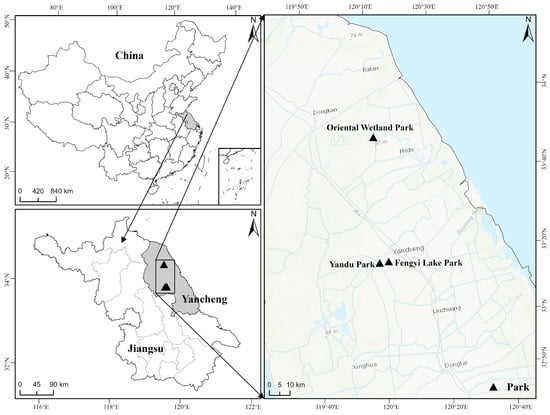
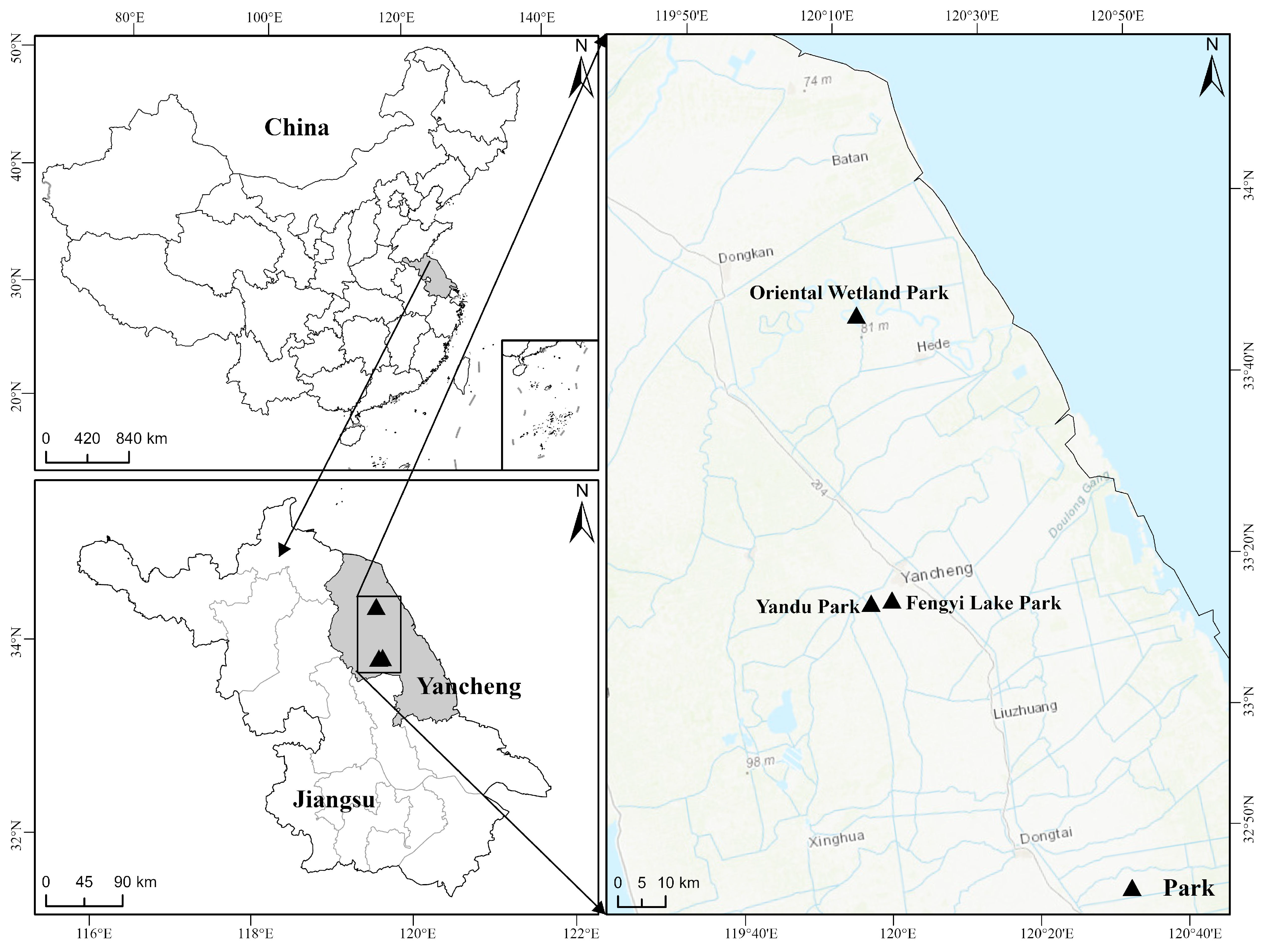
Yandu Wetland Park (33°34′ N, 120°05′ E) is situated in the Yannan High-Tech District. The park, open to the public free of charge, embodies a model of ecological and cultural integration, having been developed from a 1950s municipal nursery into a core component of the city’s Haidian Historical and Cultural District. Its landscape is a fine-scale mosaic where waterways constitute a significant portion of the area. These water bodies, including a 140 mu artificial lake developed in phases, are connected to the historic Yunchang River salt transport system. The terrestrial components are equally varied, featuring dedicated plant scenic areas, such as a cherry blossom garden and a rose garden, alongside sports and recreational zones.
Fengyi Lake Park (33°34′ N, 120°10′ E), located in the Yancheng Economic and Technological Development Zone, represents a contemporary approach to urban blue-green infrastructure [22]. The park is centered on a substantial artificial lake, with its design incorporating modern sponge city principles. The shoreline treatment emphasizes ecological revetments, and the water quality is maintained at a high standard. The surrounding areas are landscaped with permeable running tracks and curated plantings, framing the open water for both aesthetic and recreational purposes.
Dongfang Wetland Park (33°87′ N, 120°12′ E) is located in the Chengdong New District of Dafeng District. It presents a different wetland archetype, characterized by palustrine features. The park is divided by roads into northern and southern sections, with the southern part emphasizing shallow lakes, wetland vegetation, and preserved orchards, creating a softer, more naturalistic interface between land and water (Figure 1).
Figure 1.
A schematic diagram of the study area location and survey sample point.
2.2. Survey Methods
Avian community data were collected through systematic field surveys [23] conducted over a complete annual cycle from January 2024 to December 2024 to encompass all seasonal phases, including wintering, migration, and breeding. Surveys followed a standardized protocol integrating fixed-width line transects [24] and fixed-radius point counts [25]. For each park, we established 3 independent 300 m transects to cover all dominant habitat types, with a minimum interval of 200 m between adjacent transects to avoid double-counting of individual birds. Fixed-width transect surveys were conducted along each transect at a steady walking speed of ~1.5 km/h, and all birds detected visually or aurally within a 50 m bandwidth on either side of the transect line were recorded. Monthly surveys were conducted during peak bird activity windows (within 4 h after sunrise and 2 h before sunset), and restricted to days without heavy rain, strong wind, or dense fog to ensure consistent detection efficiency. All observers participated in standardized training and were equipped with binoculars (8 × 30 and 8 × 40) and digital camera units to ensure data consistency and spatial accuracy; photographic evidence was obtained for uncertain records and verified by experts. The raw data from each survey were systematically transcribed into a structured database, forming the primary dataset for subsequent analysis of community composition and dynamics.
2.3. Quantification of Habitat Variables
Park-level metrics, including total area and water body coverage, were derived from recent high-resolution satellite imagery using ArcGIS 10.8 (Esri, Redlands, CA, USA) Geographic Information System software. At the finer transect and point levels, in situ measurements were captured, encompassing variables including vegetation structural complexity, as assessed through vertical stratification profiles, the percentage of impervious surface, and a composite human disturbance index [26]. The index under scrutiny incorporated direct measures, including pedestrian density ascertained during surveys and ambient noise levels. Furthermore, landscape metrics quantifying the surrounding urban matrix were calculated to account for the broader spatial context.
2.4. Data Analysis
Bird species were accurately identified following the classification and identification guidelines provided in the A Checklist on the Classification and Distribution of the Birds of China, Birds of Jiangsu, and A Field Guide to the Birds of China. The protection status of species was strictly determined in accordance with the List of National Key Protected Wild Animals (2021 Edition) jointly issued by the China Forestry and Grassland Administration and the Ministry of Agriculture and Rural Affairs (Ministry of Agriculture and Rural Affairs of the People’s Republic of China 2021). The threat status of species was assessed according to the China Biodiversity Red List: Volume II Birds and aligned with the IUCN Red List of Threatened Species.
Avian community structure was evaluated using a multi-dimensional analytical framework to capture different facets of diversity. To assess within-habitat diversity (α-diversity) [27] for each park and season, a suite of complementary indices was employed. The Shannon–Wiener index [28] was used as a primary measure of overall community diversity, integrating both species richness and the evenness of individual distribution among species. The Simpson index [29] complemented this by providing greater sensitivity to the abundance of the most dominant species, thereby highlighting community dominance structures. To specifically isolate and quantify the evenness component of diversity, independent of species richness, Pielou’s evenness index [30] was calculated. Furthermore, to obtain a measure of species richness that is standardized for sampling effort and less influenced by total abundance, the Margalef richness index [31] was applied. We also use relative abundance and linear density.
Shannon–Wiener diversity index:
Simpson’s diversity index:
Pielou’s evenness index:
Margalef richness index:
Relative abundance:
Linear density:
where Pi was the ratio of the number of individuals of the ith species to the total number of individuals; S was the number of all species in the bird assemblage; N was the total number of individuals; and L was the length of the transect, expressed in kilometers (km).
3. Results
3.1. Annual Diversity Patterns
The year-round systematic monitoring revealed a substantial and dynamic avian diversity within the urban wetland parks of Yancheng City. A total of 83 distinct bird species, representing 16 orders and 41 families (Table 1), were recorded. The list includes four nationally protected species in China, namely, the Crested Goshawk (Accipiter trivirgatus), Common Kestrel (Falco tinnunculus), Black-winged Kite (Elanus caeruleus), and the first-class national protected Oriental Stork (Ciconia boyciana). Among these, Passeriformes (songbirds) was confirmed as the most species-rich order, comprising 49 species and accounting for a prominent 59.0% of the total avian community. It was followed by Anseriformes (waterfowl) with seven species (8.4%) and Charadriiformes (shorebirds and related waders) with three species (3.6%). Of particular conservation significance, the surveys documented the presence of globally threatened species, including the Endangered (EN) Oriental Stork—a flagship wetland bird species recorded in the study area of the urban wetland parks.
Table 1.
Bird taxonomic checklist.
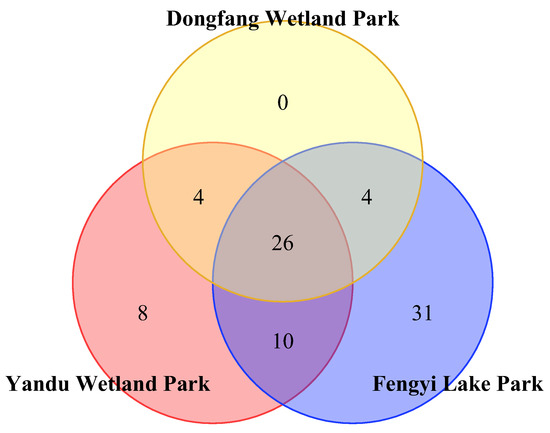
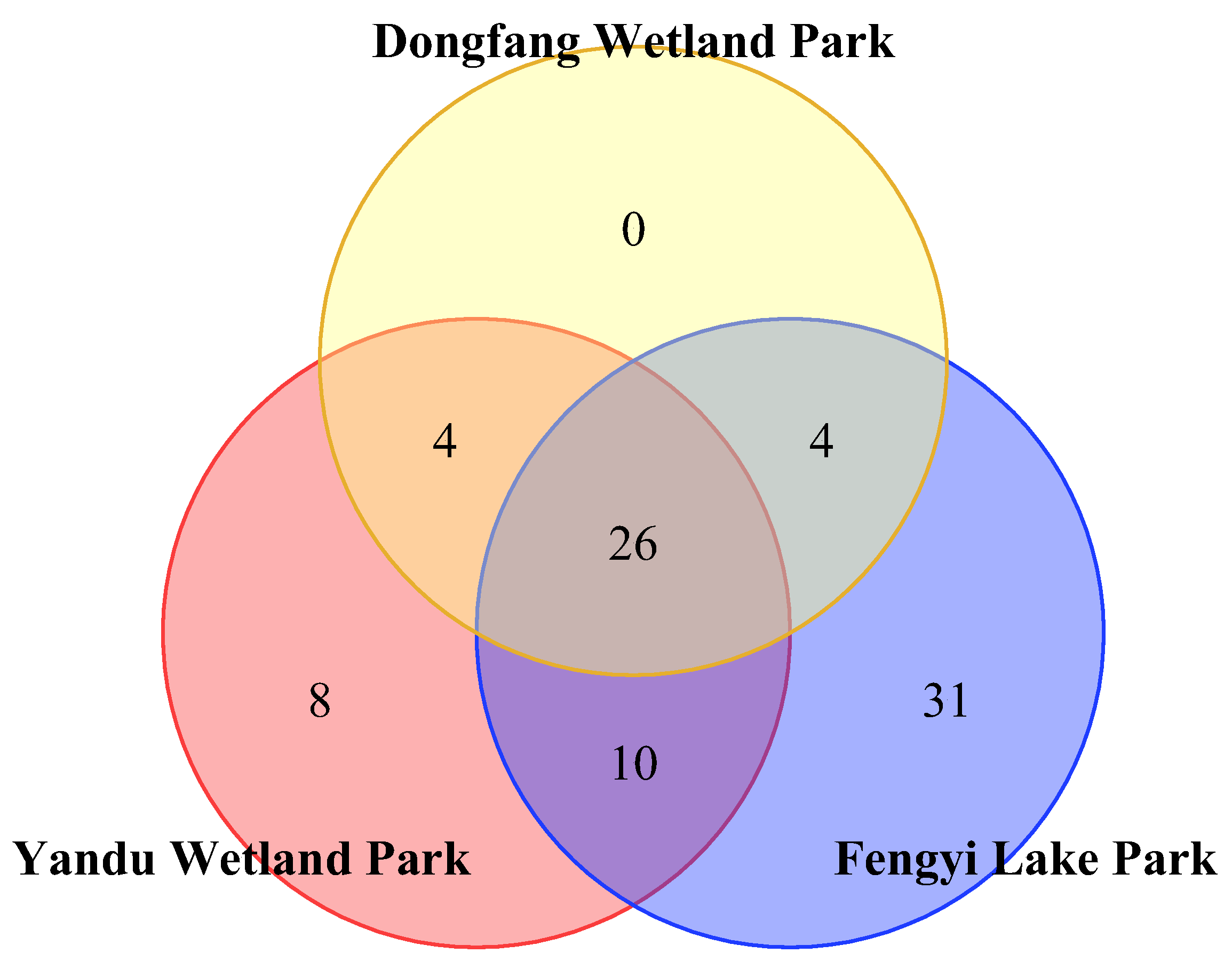
The avian community exhibited pronounced and predictable seasonal patterns. Across the habitat gradient, Fengyi Lake Wetland Park consistently exhibited the highest annual species richness (71 species) and diversity indices, whereas Dongfang Wetland Park consistently showed the lowest values (34 species) (Figure 2). It is worth noting that due to data loss by investigators, there is a lack of effective survey data for the Oriental Wetland Park during April.
Figure 2.
Avian species across different parks.
3.2. Cross-Park Seasonal Diversity Dynamics
The analysis of the systematic survey data from January to December 2024 revealed pronounced seasonal dynamics in the avian communities across Yancheng’s three urban wetland parks. These dynamics were closely synchronized with the phenological rhythm of the East Asian-Australasian Flyway, reflecting distinct patterns in species composition, richness, and abundance throughout the annual cycle.
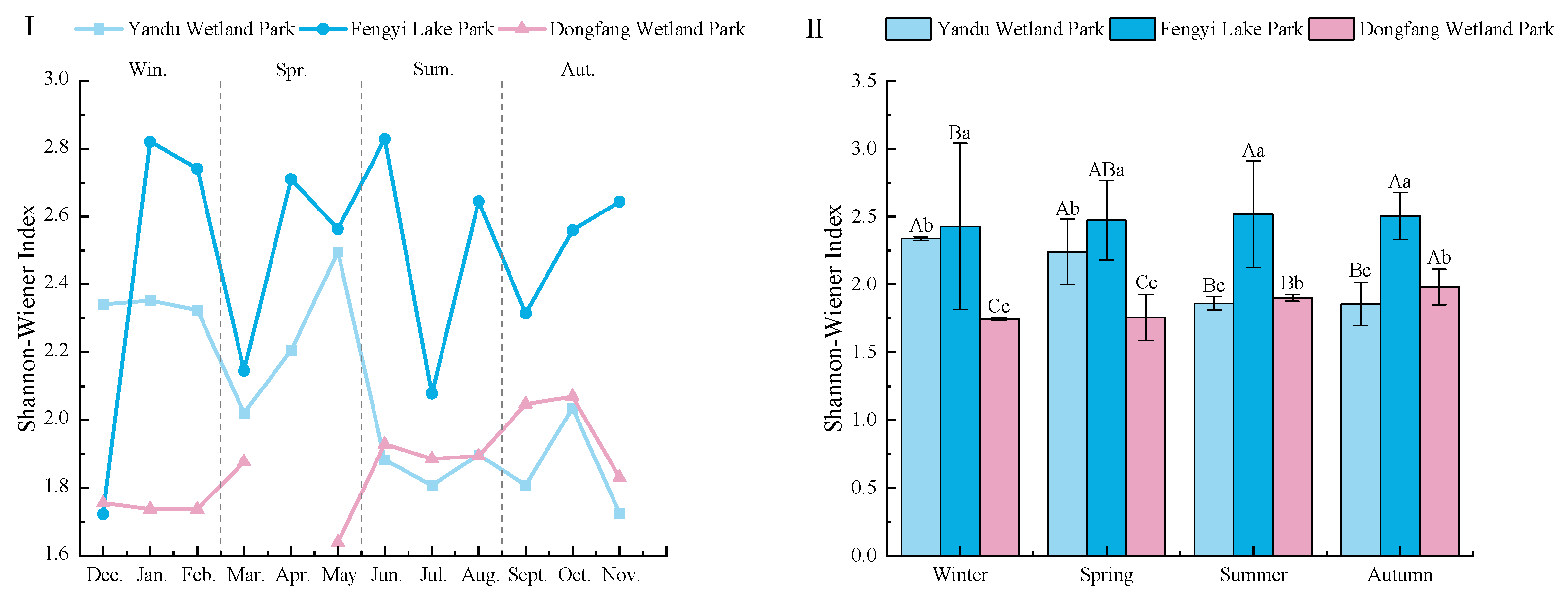
The Shannon–Wiener index displayed distinct monthly peak patterns across the three parks (Figure 3I). Fengyi Lake Park showed a bimodal pattern, with two equal peaks in January and July, reflecting the overlap of wintering and summer migratory bird communities. Yandu Wetland Park had a unimodal spring peak in March, followed by a steady summer decline to an annual minimum in August and a mild autumn recovery. Dongfang Wetland Park exhibited low-amplitude fluctuations with a flat trend, a slight October peak, and a notable drop corresponding to the April data gap, which coincided with low water levels and reduced habitat suitability for waterbirds. Seasonally (Figure 3II), Fengyi Lake Park had significantly higher overall diversity in all seasons, while Dongfang Wetland Park was consistently the lowest. Yandu Wetland Park and Dongfang Wetland Park showed no significant summer difference, due to a shared reduction in rare avian species. Within-park variation saw Fengyi Lake Park maintain high and stable diversity in spring and summer; Yandu Wetland Park peaked in winter and was lowest in summer; and Dongfang Wetland Park had the highest diversity in summer and autumn, with mild seasonal fluctuations.
Figure 3.
Shannon–Wiener index in avians species diversity: (I) monthly changes in the Shannon–Wiener index; (II) quarterly changes in the Shannon–Wiener index. Lowercase letters denote variations between different parks within the same season, while uppercase letters indicate variations between different seasons within the same park. Different letters (e.g., a vs. b) indicate a significant difference at the 0.05 level, detected by Duncan’s new multiple range test. Error bars represent the standard error (SE). Note: No valid data were available for Dongfang Wetland Park in April, and the spring mean was calculated using data from March and May. Notes for Figure 4, Figure 5 and Figure 6 are identical to those of Figure 3.
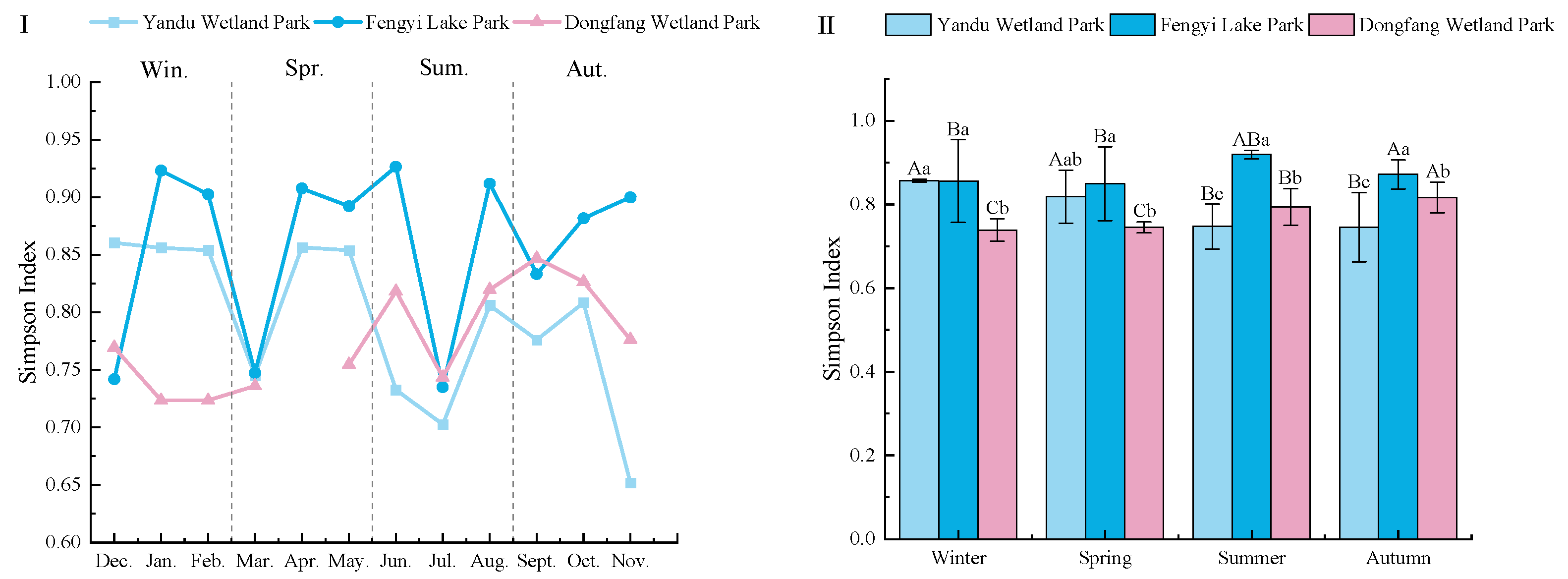
The Simpson index showed distinct stability characteristics across the three parks (Figure 4I). Fengyi Lake Park maintained high stability with minor fluctuations throughout the year and a slight July peak, reflecting improved species evenness during the breeding season. Yandu Wetland Park had a winter high plateau, a gradual spring–summer decline to an August minimum, and an autumn recovery, indicating increased dominance of a few common species in summer. Dongfang Wetland Park exhibited the most dramatic fluctuations, dropping to an April minimum (data gap) and rising to an October peak, a pattern reflecting heavy reliance on transient waterbird populations with drastic seasonal changes in community composition. Seasonally (Figure 4II), Fengyi Lake Park had the highest Simpson index across all seasons, indicating the lowest species dominance and most balanced community structure; Dongfang Wetland Park was the lowest, reflecting dominance by a few common waterbird species. No significant difference was found between Yandu Wetland Park and Dongfang Wetland Park in autumn, showing convergent species dominance characteristics. Within-park variation saw Fengyi Lake Park maintain low species dominance in summer and autumn; Yandu Wetland Park peaked in winter and was lowest in summer; and Dongfang Wetland Park had the highest values in summer and autumn.
Figure 4.
Simpson index in avian species diversity: (I) monthly changes in the Simpson index; (II) quarterly changes in the Simpson index.
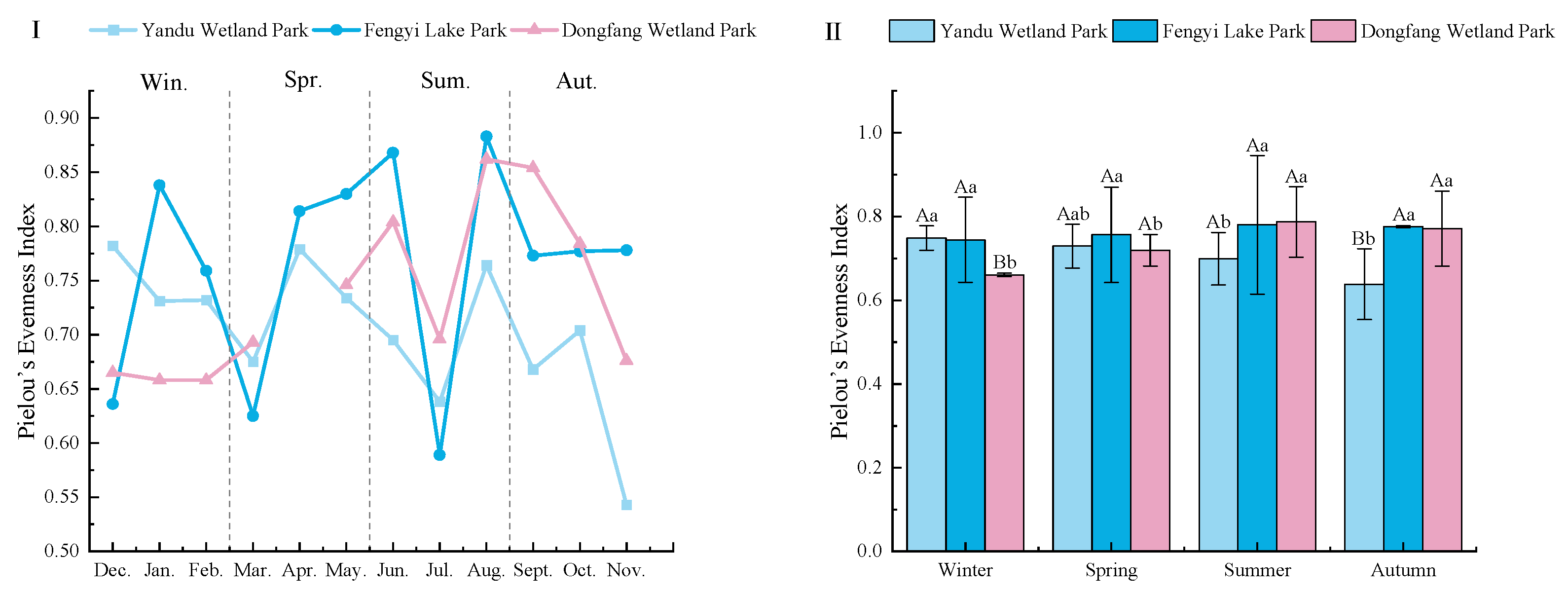
Pielou’s evenness index, quantifying individual species distribution uniformity, showed clear seasonal peak characteristics across the three parks (Figure 5I). Fengyi Lake Park had a striking summer peak in July, rising from a low January level and declining gradually in autumn, with high summer evenness linked to synchronous population growth of breeding species. Yandu Wetland Park maintained a winter high plateau, followed by a continuous spring–autumn decline to a November minimum, indicating increasingly uneven individual distribution driven by dominant common species. Dongfang Wetland Park showed moderate fluctuations, rising to a July peak and maintaining high evenness in summer and autumn, with the April data gap coinciding with a low evenness period due to reduced species richness. Seasonally (Figure 5II), Fengyi Lake Park had the highest summer evenness while Yandu Wetland Park was the lowest; no significant winter difference was found between Yandu Wetland Park and Fengyi Lake Park, reflecting uniform distribution of wintering species. Within-park variation saw Fengyi Lake Park peak in summer and was lowest in winter; Yandu Wetland Park peaked in winter and was lowest in autumn; and Dongfang Wetland Park had the highest evenness in summer and autumn, with mild seasonal fluctuations. This index complemented the understanding of avian diversity dynamics by revealing seasonal changes in species distribution uniformity behind richness and overall diversity variation.
Figure 5.
Pielou’s evenness index in avian species diversity: (I) monthly changes in Pielou’s evenness index; (II) quarterly changes in Pielou’s evenness index.
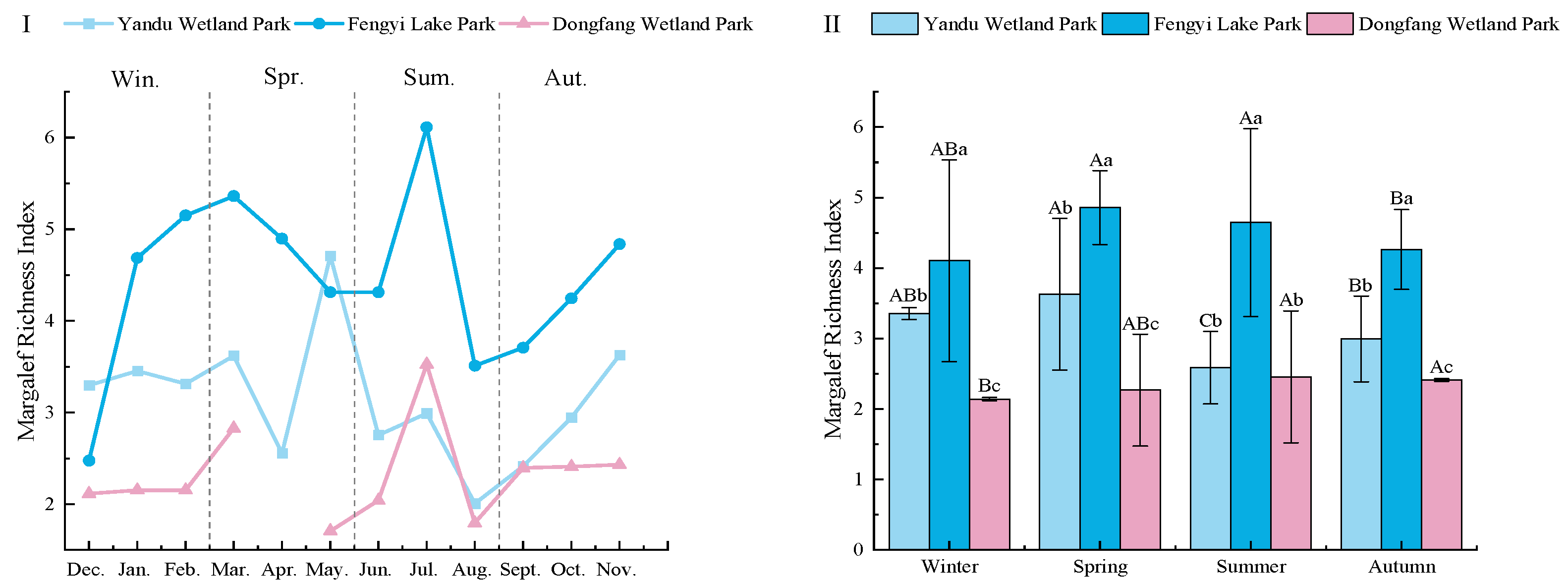
The Margalef richness index showed distinct monthly dynamics across the three parks (Figure 6I). Fengyi Lake Park presented a pronounced seasonal pulse, rising from a low winter baseline in December to a stable plateau in March–April and then surging to an annual peak in July, followed by a gradual autumn decline back to winter levels. Yandu Wetland Park had a mild seasonal cycle, climbing to a spring peak in May and dropping sharply to an annual minimum in August, with a slow autumn recovery. Dongfang Wetland Park showed the mildest fluctuations, maintaining a stable low level for most months with a modest July peak, and its April data gap disrupted the continuous spring variation trend of species richness. At the seasonal scale (Figure 6II), Fengyi Lake Park dominated in species richness across all seasons, with values significantly higher than Yandu Wetland Park and Dongfang Wetland Park. No significant difference was found between Yandu Wetland Park and Dongfang Wetland Park in summer, indicating convergent reduction in migratory bird species. For within-park variation, Yandu Wetland Park had the most dramatic seasonal fluctuation (spring richness far higher than summer); Fengyi Lake Park maintained high and stable richness in spring and summer; and Dongfang Wetland Park peaked in summer and autumn, with the lowest richness in winter.
Figure 6.
Margalef richness index in avian species diversity: (I) monthly changes in the Margalef richness index; (II) quarterly changes in the Margalef richness index.
3.3. Habitat-Specific Community Structure
Dominant bird species and their dominance indices in three Yancheng wetland parks show distinct seasonal and park-specific variations (Table 2). The Light-vented Bulbul was a core dominant species across the parks, with high dominance in multiple seasons at each site and an especially prominent status at Yandu Park across all four seasons. Dongfang Park saw the Tree Sparrow as a secondary dominant species in winter and autumn, while Fengyi Lake Park exhibited more obvious seasonal shifts in dominant species and was distinguished by the presence of waterbirds, such as the Eurasian Coot and Eastern Spot-billed Duck, among its dominant community. Yandu Park also had localized dominant species, including the Azure-winged Magpie in winter and the Common Blackbird in spring. Overall, the Light-vented Bulbul is a highly adaptable dominant species in Yancheng’s wetlands, and geographical differences between the three parks have led to unique dominant species compositions, with waterbird dominance being the key distinguishing feature of Fengyi Lake Park relative to the other two (Table A1).
Table 2.
Seasonal dominant species in the park.
A total of four nationally protected bird species were observed in the park. Among them (Table 3), the Oriental Stork is a Class I nationally protected animal, classified as Endangered (EN). The Black-winged Kite, Crested Goshawk, and Common Kestrel are all Class II nationally protected species, each classified as Least Concern (LC). Ecologically grouped as raptors, the Black-winged Kite and Common Kestrel share the Winter Visitor (W) residency type, following a migration pattern similar to the Oriental Stork: wintering in the south and migrating north in spring. The Crested Goshawk, however, is a Resident Bird (R), maintaining a stable year-round presence in this geographical area without undertaking long-distance migration during spring or autumn.
Table 3.
Protected species in the park.
4. Discussion
4.1. Composition of Avian Species
Bird community composition serves as a robust bioindicator for assessing habitat quality and ecological function [32]. Bird community composition acts as a robust bioindicator for evaluating habitat quality and ecological function of urban wetlands. This survey finds that this avifaunal assemblage constitutes a considerable component of the regional avian diversity in Jiangsu Province, accounting for approximately 80.0% of the recorded orders, 51.3% of the families, and 17.2% of the species in the province. This finding fully demonstrates the irreplaceable role of these urban wetland parks in conserving regional biodiversity and maintaining the completeness of avian community structure [33]. Taxonomic analysis showed Passeriformes as the dominant order, with 49 species (59.0% of the total) from 20 families, supported by the parks’ well-structured vegetation providing diverse resources for passerines. Anseriformes (nine waterfowl species, 10.8%) and Charadriiformes (seven shorebird species, 8.4%) were the main aquatic orders. Their high representation reflects the study area’s diverse aquatic habitats, which meet the foraging, roosting, and stopover needs of waterbirds. In addition, typical wetland- and terrestrial-associated orders such as Coraciiformes, Piciformes, and Galliformes were also recorded in the survey, each with a certain number of species. This taxonomic composition, characterized by the dominance of Passeriformes and the high richness of aquatic-dependent avian groups, accurately mirrors the terrestrial–aquatic composite habitat matrix of the surveyed urban wetland parks in Yancheng.
A considerable proportion of scholars [34] specializing in the study of species diversity have directed their research towards the analysis of avian communities. Compared to other wetland reserves along the migration route, these three parks recorded a higher number of bird species than the 71 species documented in the Huaibei Plain Wetland Reserve. However, the overall bird abundance recorded in this study was significantly lower than the approximately 50,000 individuals reported for the Huaibei Plain Wetland Reserve [35]. This discrepancy primarily stems from survey coverage. The present study encompassed three parks, whereas the Huaibei Plain Wetland Reserve survey covered ten protected areas across the Huaibei Plain, enabling more comprehensive documentation of bird populations across a larger geographical scope. Li et al. [36] surveyed avian composition and diversity in five central Guangzhou parks during January 1999 to April 2000 and July 2006 to June 2007, recording 64 species. Resident birds (64.1%), winter migrants (26.6%), and summer migrants (7.8%) dominated the community. A significant positive correlation between species richness and park area was also identified. Ji et al. [37] surveyed bird diversity in seven wetland plots in Ezhou City (2024), recording 55 species across 11 orders and 31 families. The city’s three sub-districts showed a positive correlation between Ecological Quality Index (EQI) and bird species richness, indicating that bird diversity directly reflects wetland ecological quality. The number of bird species recorded in the three parks surveyed exceeded those found in five parks within Guangzhou’s central urban area and seven wetland sites in Ezhou. This disparity may be attributed to Yancheng’s position at the heart of the East Asian-Australasian Flyway, resulting in greater avian diversity. Sang et al. [38] surveyed birds in Sichuan Haizi Mountain National Nature Reserve (2023–2024) via transects, combining field data with historical literature, and recorded 267 species across 20 orders and 60 families. The study revealed that forest and shrubland had the highest avian diversity and abundance; the community structure fluctuated seasonally, with diversity and abundance peaking in summer and reaching their lowest in winter. Kang et al. [39] established 25 monitoring transects across four representative ecosystems in the ecological green heart of the Changsha–Zhuzhou–Xiangtan urban cluster. Six rounds of avian diversity monitoring via transect surveys were conducted from June 2023 to May 2024, documenting 210 bird species across 17 orders and 57 families. The Shannon–Wiener index peaked from October to November and reached a nadir from June to July, the evenness index peaked from December to February and nadired from October to November, and the Simpson index peaked from August to September and nadired from October to November. However, the number of bird species recorded in this survey was significantly lower than that in the Sichuan Haizi Mountain National Nature Reserve and the ecological green heart of the Changsha–Zhuzhou–Xiangtan urban cluster. This disparity may be attributed to the former’s more frequent surveys and extensive monitoring transects, which likely yielded a more comprehensive record of avian species.
Analysis of the comprehensive 12-month dataset reveals distinct avian assemblage structures across the three urban parks in Yancheng, demonstrating clear habitat filtering effects within the urban matrix. The parks host complementary avian communities with marked differences in taxonomic composition, functional guild structure, and ecological specialization. Yandu Wetland Park supports high avian richness (48 annual species), with Passeriformes as the dominant order (36 species, 75.0% of the total avifauna). Its complex community structure, sustained by a diverse habitat mosaic of reed beds, woodlands, and interconnected waterways, is characterized by a high proportion of habitat specialists. State Class II nationally protected species (Crested Goshawk, Common Kestrel) and the Vinous-throated Parrotbill, a reed–shrub specialist closely associated with the park’s typical wetland vegetation, were recorded here. Abundant insectivorous passerines and foliage-gleaning guilds reflect high vegetation structural complexity, while wetland and reed–bed specialists underscore the park’s unique conservation value for wetland-associated avifauna [40]. Its resident-dominated avifauna maintains sustained insectivorous passerine populations, with the Light-vented Bulbul and Vinous-throated Parrotbill as key breeders. The number of species recorded in the park is significantly lower than the 196 species recorded in the Sanjiangyuan National Park, likely due to its larger area and minimal human disturbance [41].
Fengyi Lake Park had the highest avian richness (71 species) and harbored a functionally specialized waterbird community dominated by aquatic guilds, with its open-water habitat matrix exerting a strong filtering effect on avian composition. Anseriformes and Charadriiformes formed the core waterfowl assemblage, while diving piscivores and dabbling ducks accounted for over 60% of all observations in peak waterbird seasons, reflecting a clear adaptation to open-water habitats. In contrast to Yandu Park, the park had a markedly lower proportion of Passeriformes, with water-associated species making up 65% of total bird observations. It exhibited the most dramatic seasonal dynamics and served as a critical hub for wintering and migratory waterbirds, with massive winter aggregations reaching 438 waterfowl individuals in February, dominated by the Spot-billed Duck (150 individuals, 34.2%) and Eurasian Coot (90 individuals, 20.5%). Clear phenological succession was recorded here. October diving piscivores were dominated by the Little Grebe (18 individuals, 43.9% of diving waterbird observations), with other water-associated species supplementing the aquatic assemblage. The park’s high conservation value as a provider of high-quality aquatic habitats was highlighted by the record of the Endangered Oriental Stork, a flagship wetland species, with one individual documented in March. Compared to other wetland reserves along the same migratory route, Fengyi Lake Park (71 species) has recorded more bird species than Caiyun Lake National Wetland Park (70 species) but fewer than Yundonghai National Wetland Park (72 species) along the same migratory route [42,43]. Such a minor variation in species number underscores the considerable ecological contribution of Fengyi Lake Park as an urban wetland in supporting avian diversity alongside national-level wetland reserves on the same migratory route. Dongfang Park had the simplest avian community (34 species), dominated by urban adapters and generalists. Widespread urban birds formed the majority of observations, with strict habitat specialists rare and only a few wetland species recorded. The park fulfilled a key pulsed-resource role, critical for frugivorous and granivorous birds in autumn. October counted 220 individuals, and November saw a peak of 316, driven by increased frugivores and arriving granivorous migrant Bramblings, matching seasonal fruit and seed availability. Despite the lowest annual species richness, it had a unique functional importance by supplying vital resources in resource-limited autumn.
Temporal complementarity analysis reveals a coordinated network among the three wetlands, where each peaks in species richness in distinct seasons to maintain continuous resource availability [44]. In spring migration, all parks had elevated richness but divergent guilds, with Yandu supporting forest migrants, Fengyi Lake hosting waterbirds, and Dongfang providing stopover habitat. Yandu dominated summer breeding; autumn migration saw Fengyi Lake facilitating waterbird transitions and Dongfang supplying critical food resources. Winter featured large waterfowl aggregations at Fengyi Lake, with the other two parks serving as avian refuges. This spatiotemporal resource staggering supports 54 migratory species (65.1% of total avifauna), meeting their breeding, wintering, stopover, and refuge needs. Collectively, the three parks deliver greater ecological functionality than any single site, enhancing the urban wetland system’s resilience to seasonal fluctuations [45] and anthropogenic pressures and providing a practical model for urban biodiversity conservation via habitat heterogeneity and functional connectivity.
4.2. Diversity Indices and Ecological Implications
Through a comprehensive analysis of diversity indices, the structural and functional differences among the three urban wetland parks can be quantitatively revealed. The Shannon–Wiener diversity index quantifies community structural characteristics by integrating species richness and evenness [46]. Yandu Wetland Park exhibits a high overall diversity index, with a mean monthly Shannon–Wiener Index of 2.10. This combination reflects a species-rich community with high evenness. Pielou’s evenness index quantifies the uniformity of species abundance distribution in a community, with values ranging from 0 to 1 (higher values indicate greater evenness) [47]. The park’s Margalef richness index reached 4.7085, confirming its superior capacity to support diverse species, while Pielou’s evenness index remained consistently high across seasons. These values align with Yandu Wetland Park’s complex habitat mosaic of wetland, shrub, and herbaceous vegetation, which facilitates niche partitioning among avian species and supports specialized breeding species, such as the Vinous-throated Parrotbill, recorded exclusively at this park, with July observations confirming consistent breeding site fidelity. The stability of these diversity indices, with Shannon–Wiener values ranging from 1.725 to 2.497, indicates a highly resilient avian community [48]—one buffered by the park’s structural habitat complexity against the typical seasonal fluctuations in avian assemblages, a hallmark of its role as a stable summer breeding core. In contrast, Fengyi Lake Park exhibited the highest diversity, with a maximum Shannon index of 2.8296 and relatively high dominance showing distinct seasonal variation. The Margalef richness index reflects the number of species in a community; a higher value indicates greater species richness [49]. Its Margalef index was 6.1132, the highest among the three parks, reflecting a species-rich community frequently dominated by water-associated taxa—most notably winter aggregations of waterfowl, such as Spot-billed Duck, in February. This pattern underscores the park’s primary role as a seasonal reservoir for specialized waterbird guilds, with Simpson’s index spiking to 0.9231 in winter when large, monospecific flocks of Anatidae ducks and Rallidae coots formed, further highlights the strong temporal dominance of distinct waterbird functional groups. Dongfang Park, with the simplest terrestrial–shrub habitat structure among the three sites, recorded the lowest avian diversity metrics overall. The maximum Shannon index was 2.0693, and the Margalef index was 3.804. Pielou’s evenness index range was 0.71 to 0.86, indicating a strongly skewed community structure driven by pulsed resource availability, with frugivorous and granivorous species, such as the Light-vented Bulbul and Brambling, frequently constituting over 50% of total individuals during autumn peaks (e.g., November). The limited variability in diversity indices reflects a depauperate avifauna (34 species, the lowest species richness) with a specialized capacity to support autumn seasonal specialists while exhibiting low species availability and abundance in non-autumn periods due to simplified habitat structure. Jiang et al. [50] investigated avian diversity in Jinyun Mountain National Nature Reserve via infrared camera monitoring, transect, and point count surveys. Combined with the historical literature and public birdwatching records, 171 species (16 orders, 50 families, 114 genera) were identified, with the avifauna having a Shannon–Wiener index (H’) of 3.90, Simpson’s index (D) of 0.96, and an evenness index (J) of 0.43. Its Shannon–Wiener index and Simpson’s index both exceed those of the three parks surveyed in this study, indicating greater avian species richness. This may be attributable to its broader survey scope and more comprehensive recording. However, its lower evenness index suggests uneven species distribution, potentially indicating the presence of dominant species.
These diversity index variations across the three parks directly reflect the coupling of habitat structure and avian community assembly. Yandu’s high, stable indices stem from heterogeneous habitats driving niche differentiation; Fengyi’s seasonal index fluctuations mirror migratory waterbirds’ pulsed use of open-water resources; and Dongfang’s index characteristics confirm simplified habitats favor generalist and seasonal specialist species. These findings verify the habitat filtering hypothesis in urban wetlands and provide quantitative support for targeted management strategies.
5. Conclusions
Yancheng’s urban wetland parks serve as important carriers of regional avian diversity, harboring 83 bird species, including globally threatened and nationally protected taxa, which reflects both the terrestrial–aquatic composite habitat characteristics of urban wetlands and the ecological corridor function of the East Asian-Australasian Flyway. Habitat heterogeneity dominates the differentiation of avian community structures. Yandu Wetland Park’s complex habitat mosaic promotes niche differentiation, sustaining a stable and highly even community that acts as a core summer breeding site; Fengyi Lake Park’s open-water habitats filter specialized waterbird guilds with significant seasonal dynamics, providing critical stopover and wintering grounds for migratory waterbirds; and Dongfang Wetland Park, despite its simplified habitats and lowest species richness, serves as an essential supplementary habitat by supplying pulsed resources for frugivorous and granivorous birds in autumn. The three parks form a spatiotemporally complementary ecological network, meeting the full life-cycle habitat needs of migratory birds through seasonal resource staggering. Their combined ecological functions far exceed those of any single park, significantly enhancing the resilience of the urban wetland system to seasonal fluctuations and anthropogenic disturbances. Urban wetland conservation and management should move beyond single-habitat restoration, prioritizing the construction of heterogeneous habitat structures, strengthening the functional complementarity of different wetland types, and maintaining habitat connectivity to fully exert the role of urban wetlands as ecological nodes in migration corridors, thereby providing sustained support for regional biodiversity conservation.
Author Contributions
C.Z. and F.C. developed the ideas and designed the study. W.W. and Y.W. carried out the fieldwork. Y.H. statistically analyzed the data, and Y.C. and C.N. took the lead in writing the manuscript. Y.Z. and Y.S. supervised the research and provided multiple revisions of the writing. All authors have read and agreed to the published version of the manuscript.
Funding
This research was funded by the Comprehensive Scientific Investigation Project of the World Natural Heritage Site of Migratory Bird Habitats in the Yellow Sea (Bohai Sea) of China (Yancheng) (Grant No. JSZC-320900-YCCD-G2024-0026), and the investigation project on the population, distribution, and migration patterns of threatened waterfowl on the IUCN Red List in the Yellow Sea (Bohai Sea) migratory bird habitat World Natural Heritage Site (Yancheng), China (Grant No. GXCG-2024G-100ZX-01). Yanming Sui is supported by a fellowship from Jiangsu University Blue Project.
Institutional Review Board Statement
Not applicable.
Data Availability Statement
The original contributions presented in this study are included in the article. Further inquiries can be directed to the corresponding authors.
Acknowledgments
We thank the Yancheng Bird Watching Society for helping with field site selection and all the volunteers who carried out fieldwork, and we also thank Hongshan Li, Yuxuan Zhu and Shunrui Chu for their valuable contributions to this manuscript. All authors have read and agreed to the published version of the article.
Conflicts of Interest
The authors declare no conflicts of interest.
Appendix A
Table A1.
Avian composition, dominance, and linear densities across parks.
References
- Chaudhary, A.; Mooers, A.O. Terrestrial vertebrate biodiversity loss under future global land use change scenarios. Sustainability 2018, 10, 2764. [Google Scholar] [CrossRef] [Scilit]
- Andreychev, A.V.; Kuznetsov, V.A. Checklist of rodents and insectivores of the Mordovia, Russia. ZooKeys 2020, 1004, 129. [Google Scholar] [CrossRef] [Scilit]
- Bamford, M.; Watkins, D.; Bancroft, W.; Tischler, G.; Wahl, J. Migratory Shorebirds of the East Asian-Australasian Flyway: Population Estimates and Internationally Important Sites; Wetlands International, Oceania Canberra: Canberra, Australia, 2008. [Google Scholar]
- Rajashekara, S.; Venkatesha, M. The diversity and abundance of waterbirds in lakes of Bangalore city, Karnataka, India. Biosystematica 2010, 4, 63–73. [Google Scholar]
- Tews, J.; Brose, U.; Grimm, V.; Tielbörger, K.; Wichmann, M.C.; Schwager, M.; Jeltsch, F. Animal species diversity driven by habitat heterogeneity/diversity: The importance of keystone structures. J. Biogeogr. 2004, 31, 79–92. [Google Scholar] [CrossRef] [Scilit]
- Green, A.J.; Elmberg, J. Ecosystem services provided by waterbirds. Biol. Rev. 2014, 89, 105–122. [Google Scholar] [CrossRef] [Scilit]
- Luck, G.W.; Carter, A.; Smallbone, L. Changes in bird functional diversity across multiple land uses: Interpretations of functional redundancy depend on functional group identity. PLoS ONE 2013, 8, e63671. [Google Scholar] [CrossRef] [Scilit] [PubMed]
- Allouche, S.; Gaudin, P. Effects of avian predation threat, water flow and cover on growth and habitat use by chub, Leuciscus cephalus, in an experimental stream. Oikos 2001, 94, 481–492. [Google Scholar] [CrossRef] [Scilit]
- Rodríguez Pérez, H.; Green, A.J. Waterbird impacts on widgeongrass Ruppia maritima in a Mediterranean wetland: Comparing bird groups and seasonal effects. Oikos 2006, 112, 525–534. [Google Scholar] [CrossRef] [Scilit]
- Bodelier, P.L.; Stomp, M.; Santamaria, L.; Klaassen, M.; Laanbroek, H.J. Animal–plant–microbe interactions: Direct and indirect effects of swan foraging behaviour modulate methane cycling in temperate shallow wetlands. Oecologia 2006, 149, 233–244. [Google Scholar] [CrossRef] [Scilit]
- Green, A.J.; Soons, M.; Brochet, A.-L.; Kleyheeg, E. Dispersal of plants by waterbirds. In Why Birds Matter: Avian Ecological Function and Ecosystem Services; University of Chicago Press: Chicago, IL, USA, 2016; Volume 147. [Google Scholar]
- Wu, S.; Liu, S.J. Vertical Greening of Urban public spaces: Ecological value and innovative design. Design 2024, 9, 520. [Google Scholar] [CrossRef]
- Griffiths, J.; Chan, F.K.S.; Shao, M.; Zhu, F.; Higgitt, D.L. Interpretation and application of Sponge City guidelines in China. Philos. Trans. R. Soc. A 2020, 378, 20190222. [Google Scholar] [CrossRef] [Scilit] [PubMed]
- Thapa, J.B.; Saund, T.B. Water quality parameters and bird diversity in Jagdishpur Reservoir, Nepal. Nepal J. Sci. Technol. 2012, 13, 143–155. [Google Scholar] [CrossRef] [Scilit]
- Pérez Crespo, M.J.; Fonseca, J.; Pineda-López, R.; Palacios, E.; Lara, C. Foraging guild structure and niche characteristics of waterbirds in an epicontinental lake in Mexico. Zool. Stud. 2013, 52, 54. [Google Scholar] [CrossRef] [Scilit]
- Tu, H.M.; Fan, M.W.; Ko, J.C.J. Different habitat types affect bird richness and evenness. Sci. Rep. 2020, 10, 1221. [Google Scholar] [CrossRef] [Scilit]
- Rall, L.; Niemela, J.; Pauleit, S.; Pintar, M.; Lafortezza, R.; Santos, A.; Železnikar, Š. A Typology of Urban Green Spaces, Eco-System Services Provisioning Services and Demands. Report D3.1; European Commission: Brussels, Belgium, 2015; Available online: https://assets.centralparknyc.org/pdfs/institute/p2p-upelp/1.004_Greensurge_A+Typology+of+Urban+Green+Spaces.pdf (accessed on 20 February 2026).
- Morelli, F.; Brlík, V.; Benedetti, Y.; Bussière, R.; Moudrá, L.; Reif, J.; Svitok, M. Detection rate of bird species and what it depends on: Tips for field surveys. Front. Ecol. Evol. 2022, 9, 671492. [Google Scholar] [CrossRef] [Scilit]
- James, F.C.; Shugart, H.H., Jr. A quantitative method of habitat description. Audubon Field Notes 1970, 24, 727–736. [Google Scholar]
- Agosti, D.; Majer, J.D.; Alonso, L.E.; Schultz, T. Standard Methods for Measuring and Monitoring Biodiversity; Smithsonian Institution: Washington, DC, USA, 2000; Volume 9, pp. 204–206. [Google Scholar]
- Franzreb, K.E. The determination of avian densities using the variable-strip and fixed-width transect surveying methods. Stud. Avian Biol. 1981, 6, 32. [Google Scholar]
- Mell, I.; Scott, A. Definitions and context of blue-green infrastructure. In ICE Manual of Blue-Green Infrastructure; ICE Publishing: London, UK, 2023; pp. 3–22. [Google Scholar]
- Alldredge, M.W. Avian point count surveys: Estimating components of the detection process. Environ. Solut. 2004, 8, 117–122. [Google Scholar]
- Azhar, B.; Zakaria, M.; Yusof, E.; Leong, P.C. Efficiency of fixed-width transect and line-transect-based distance sampling to survey Red Junglefowl (Gallus gallus spadiceus) in Peninsular Malaysia. J. Sustain. Dev. 2008, 1, 63–73. [Google Scholar] [CrossRef] [Scilit]
- Hutto, R.L.; Pletschet, S.M.; Hendricks, P. A fixed-radius point count method for nonbreeding and breeding season use. Auk 1986, 103, 593–602. [Google Scholar] [CrossRef] [Scilit]
- Marcolin, F.; Segurado, P.; Chamberlain, D.; Reino, L. Testing the links between bird diversity, alien species and disturbance within a human-modified landscape. Ecography 2024, 2024, e06886. [Google Scholar] [CrossRef] [Scilit]
- Mao, Q.; Liao, C.; Wu, Z.; Guan, W.; Yang, W.; Tang, Y.; Wu, G. Effects of land cover pattern along urban-rural gradient on bird diversity in wetlands. Diversity 2019, 11, 86. [Google Scholar] [CrossRef] [Scilit]
- Strong, W.L. Biased richness and evenness relationships within Shannon–Wiener index values. Ecol. Indic. 2016, 67, 703–713. [Google Scholar] [CrossRef] [Scilit]
- Gorelick, R. Combining richness and abundance into a single diversity index using matrix analogues of Shannon’s and Simpson’s indices. Ecography 2006, 29, 525–530. [Google Scholar] [CrossRef] [Scilit]
- Jost, L. The relation between evenness and diversity. Diversity 2010, 2, 207–232. [Google Scholar] [CrossRef] [Scilit]
- Debataraja, I.; Pradana, D.; Winarni, N. The impact of landuse and the relationship between NDVI on the bird species richness in Sukmajaya District, Depok. In Proceedings of the IOP Conference Series: Earth and Environmental Science; IOP Publishing: Bristol, UK, 2021; p. 012004. [Google Scholar]
- Khan, M.; Khalid, S.; Khalid, M.A. Birds as bioindicators of environmental health. In Biodiversity in India: Implementation and Barriers of Regulatory Acts; M/S Academic Publishers & Distributors: Lucknow, India, 2025; pp. 1–17. [Google Scholar]
- Guo, Z.; Wu, X. Research on the bird diversity and key ecological elements of wetlands affecting bird distribution and restoration models. J. Environ. Manag. 2026, 400, 128683. [Google Scholar] [CrossRef] [Scilit] [PubMed]
- Sarah, N.; Twagiramaria, F.; Mwima, P.M. Diversity and distribution of waterbirds across wetlands of eastern Uganda. Adv. Res. 2020, 21, 167–182. [Google Scholar] [CrossRef] [Scilit]
- Li, Y.; Xu, H.; Wang, X.; Li, D.; Wang, W. Effects of environmental and anthropogenic variables on waterbird diversity in Wetland Protected Areas in Huaibei Plain, East China. Wetlands 2025, 45, 65. (In Chinese) [Google Scholar] [CrossRef] [Scilit]
- Li, H.; Hong, Y.; Zou, F.; Zhang, Q.; Huang, J. Avian diversity and seasonal dynamics of birds in urban central parks of Guangzhou City. Zool. Res. 2008, 29, 203–211. (In Chinese) [Google Scholar] [CrossRef] [Scilit]
- Ji, X.; Ye, C.; Cao, B.; Hu, H.; Ming, P.; Lei, Y.; Sheng, C.; Zhong, S. Survey and research on avian diversity in sample plots of wetland ecological quality in Ezhou City, Hubei Province. Hubei For. Sci. Technol. 2025, 54, 40–47. (In Chinese) [Google Scholar]
- Sang, N.; Mi, Z.; Wei, Y.; Dawazhaxiyangjin, D.; Jiang, L.; Xu, X.; Lu, B.; Mao, T. Spatio-temporal dynamics of avian diversity in Haizi Mountain National Nature Reserve, Sichuan Province. Sichuan J. Zool. 2025, 44, 710–719. (In Chinese) [Google Scholar]
- Kang, X.; Wu, J.; Feng, D.; Chen, J.; Xu, M.; Peng, L.; Duan, Y. Monitoring and characteristic analysis of avian diversity in the Ecological Green Core of the Changzhutan Urban Agglomeration. China Environ. Monit. 2025, 41, 75–84. (In Chinese) [Google Scholar] [CrossRef]
- Paracuellos, M. Relationships of songbird occupation with habitat configuration and bird abundance in patchy reed beds. Ardea 2006, 94, 87. [Google Scholar]
- Gao, H.; Cai, Z.; Qin, W.; Huang, Y.; Wu, T.; Chi, X.; Zhang, J.; Miao, Z.; Song, P.; Lian, X. Species diversity of birds in the three-river-source national park. Acta Ecol. Sin 2019, 39, 8254–8270. (In Chinese) [Google Scholar]
- CHENG, W.; YUAN, X. On bird community and diversity in Caiyun Lake National Wetland Park. J. Southwest China Norm. Univ. (Nat. Sci. Ed.) 2022, 47, 67–78. (In Chinese) [Google Scholar]
- Tong, F.; Deng, S.; Huang, Z.; He, X.; Mo, X.; Deng, L.; Li, J.; Ren, Y.; Xiao, Y. Preliminary study of avian diversity in Yundonghai National Wetland Park of Sanshui, Guangdong Province. Ecol. Environ. 2021, 30, 2142. (In Chinese) [Google Scholar]
- Shimadzu, H.; Dornelas, M.; Henderson, P.A.; Magurran, A.E. Diversity is maintained by seasonal variation in species abundance. BMC Biol. 2013, 11, 98. [Google Scholar] [CrossRef] [Scilit]
- Li, Y.; Shi, Y.; Qureshi, S.; Bruns, A.; Zhu, X. Applying the concept of spatial resilience to socio-ecological systems in the urban wetland interface. Ecol. Indic. 2014, 42, 135–146. [Google Scholar] [CrossRef] [Scilit]
- Goudarzian, P.; Erfanifard, S. The efficiency of indices of richness, evenness and biodiversity in the investigation of species diversity changes (case study: Migratory water birds of Parishan international wetland, Fars province, Iran). Biodivers. Int. J. 2017, 1, 41–45. [Google Scholar] [CrossRef] [Scilit]
- Gosselin, F. An assessment of the dependence of evenness indices on species richness. J. Theor. Biol. 2006, 242, 591–597. [Google Scholar] [CrossRef] [Scilit]
- McCloy, M.W.; Andringa, R.K.; Grace, J.K. Resilience of avian communities to urbanization and climate change: An integrative review. Front. Conserv. Sci. 2022, 3, 918873. [Google Scholar] [CrossRef] [Scilit]
- Latumahina, F.; Mardiatmoko, G.; Sahusilawane, J. Richness, diversity and evenness of birds in small island. In Proceedings of the Journal of Physics: Conference Series; IOP Publishing: Bristol, UK, 2020; p. 012023. [Google Scholar]
- Jiang, Z.; Wang, Z.; Yuan, Y.; Liu, Y.; Fu, K.; Wang, X.; Li, D. Survey and faunal analysis of avian diversity in Jinyun Mountain National Nature Reserve, Chongqing. J. Puer Univ. 2025, 41, 1–11. (In Chinese) [Google Scholar]

Disclaimer/Publisher’s Note: The statements, opinions and data contained in all publications are solely those of the individual author(s) and contributor(s) and not of MDPI and/or the editor(s). MDPI and/or the editor(s) disclaim responsibility for any injury to people or property resulting from any ideas, methods, instructions or products referred to in the content. |
© 2026 by the authors. Licensee MDPI, Basel, Switzerland. This article is an open access article distributed under the terms and conditions of the Creative Commons Attribution (CC BY) license.