


Abstract
This article documents abrupt lower distribution limits of sessile invertebrates and seaweeds from rocky intertidal habitats on Pacific and Atlantic shores from both hemispheres. The common feature of these striking patterns is that they are caused primarily by slow-moving predators or herbivores coming from lower elevations. This contribution aims at stimulating comparative studies on these fascinating systems as well as providing visual materials of educational value.
The degree of spatial overlap between consumers and the species they consume is an important community property that informs fundamental ecology, resource management, and climate change ecology [1]. Because of their unique nature, rocky intertidal habitats often exhibit distinctive patterns in this regard. Rocky intertidal habitats are found between the highest and lowest tide marks on marine rocky shores worldwide. Due to tide dynamics, the daily duration of aerial exposure during low tides increases from being brief at low elevations to long at high elevations. This determines a steep vertical gradient of abiotic stress from benign conditions at low elevations to stressful conditions at high elevations, where extremes in temperature and desiccation are common during low tides [2].
In rocky intertidal communities, the most abundant species are typically seaweeds and filter-feeding invertebrates such as mussels and barnacles, which are all sessile and thus live permanently attached to the substrate [2]. Many sessile species have relatively broad ecological niches and can therefore occupy several elevation zones. Consumers of those species include molluscs, crustaceans, echinoderms, fish, and seabirds. These consumers span a great range in mobility, from highly mobile species that come and go easily with the tides (e.g., crabs, fish, and seabirds) to slow-moving crawlers (e.g., sea stars and gastropods) [3].
Crawling consumers generally have a lower resistance to emersion stress than the sessile species they consume [4]. Therefore, as crawlers cannot track receding tides fast enough to survive, they are restricted to foraging at relatively low intertidal elevations. Because of that, crawling consumers often exhibit a clear upper boundary of foraging activity, whose precise location along the intertidal elevation gradient varies depending on local environmental conditions (e.g., tidal patterns, wave exposure, and intertidal slope) and seasonal energy requirements. When moving up the shore driven by food intake needs, these consumption fronts are often characterized by a tight aggregation of organisms as they forage through their resource from the bottom up [5]. Ultimately, these consumption boundaries cause sharp lower boundaries in the distribution of the sessile species they consume. These abrupt boundaries are not static but can show seasonal or interannual variation in their elevation according to changes in consumer activity. The purpose of this article is to show examples of the diversity of these striking patterns using photographs taken on Atlantic and Pacific shores in both hemispheres.
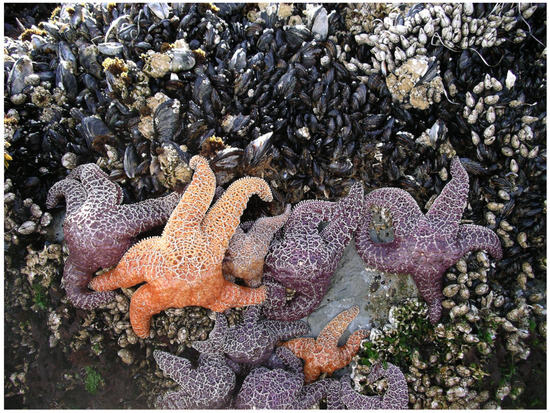
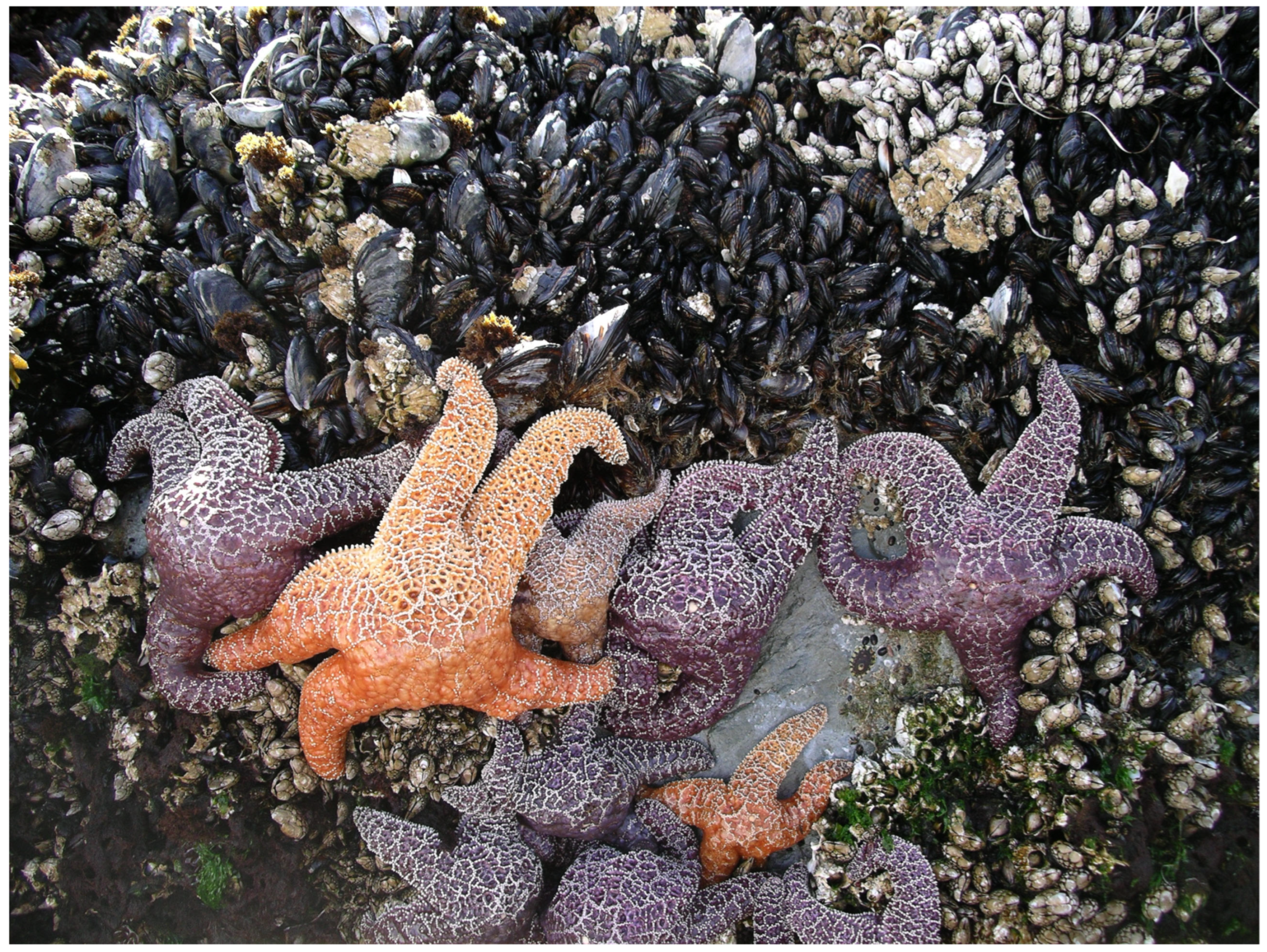
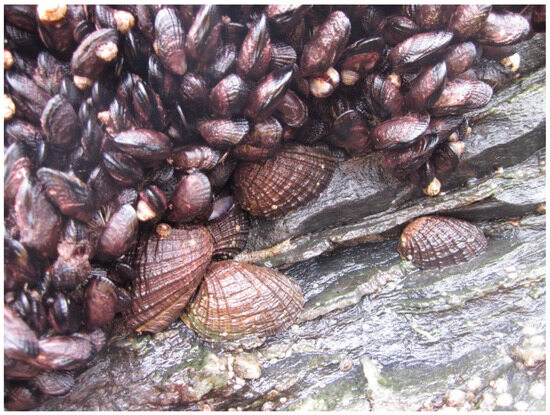
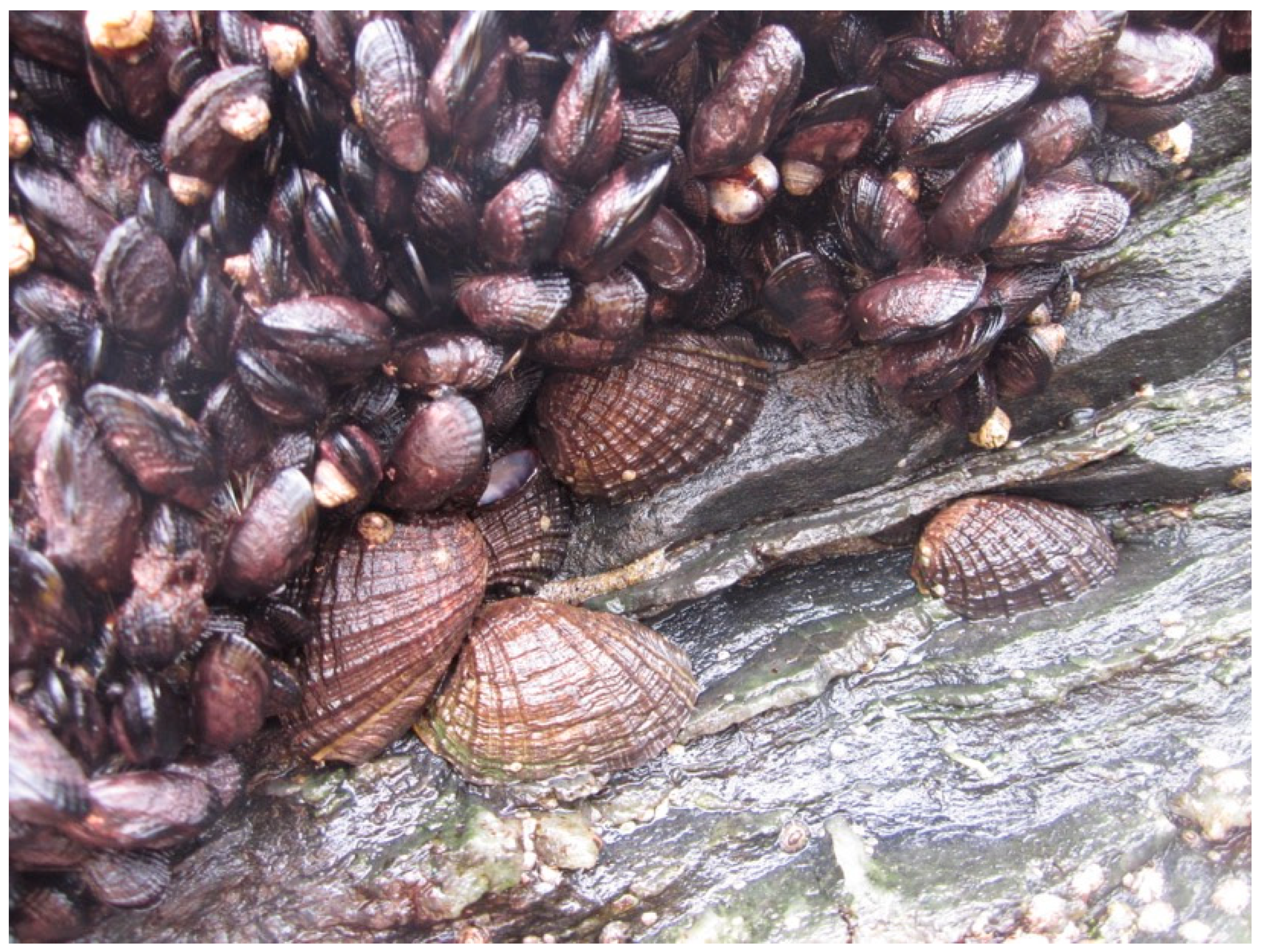
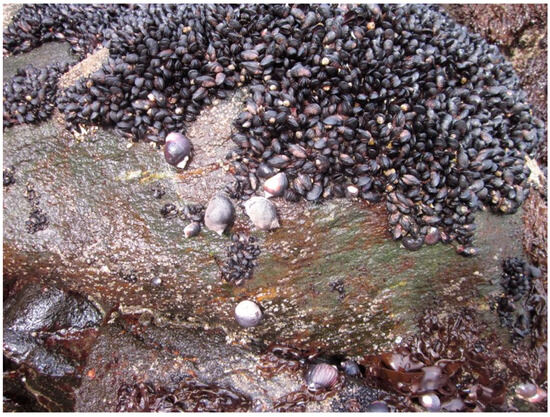
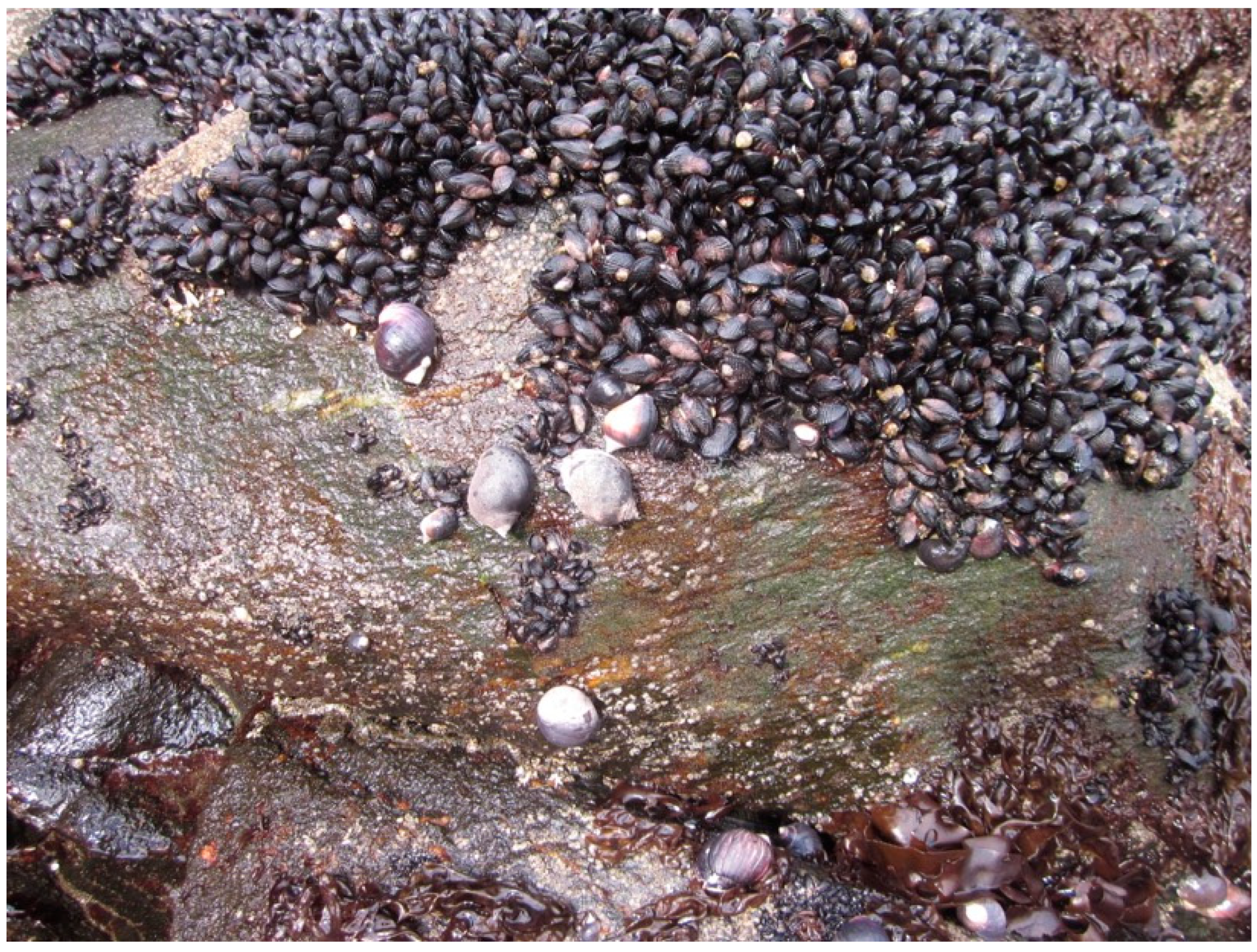
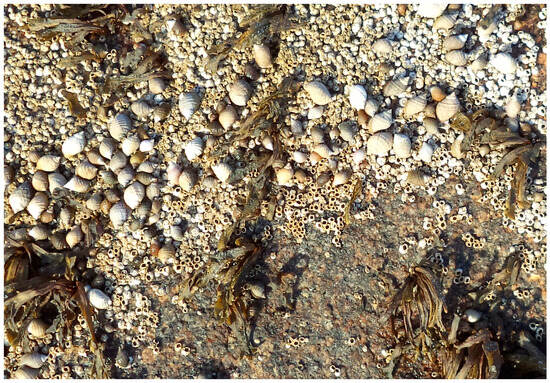
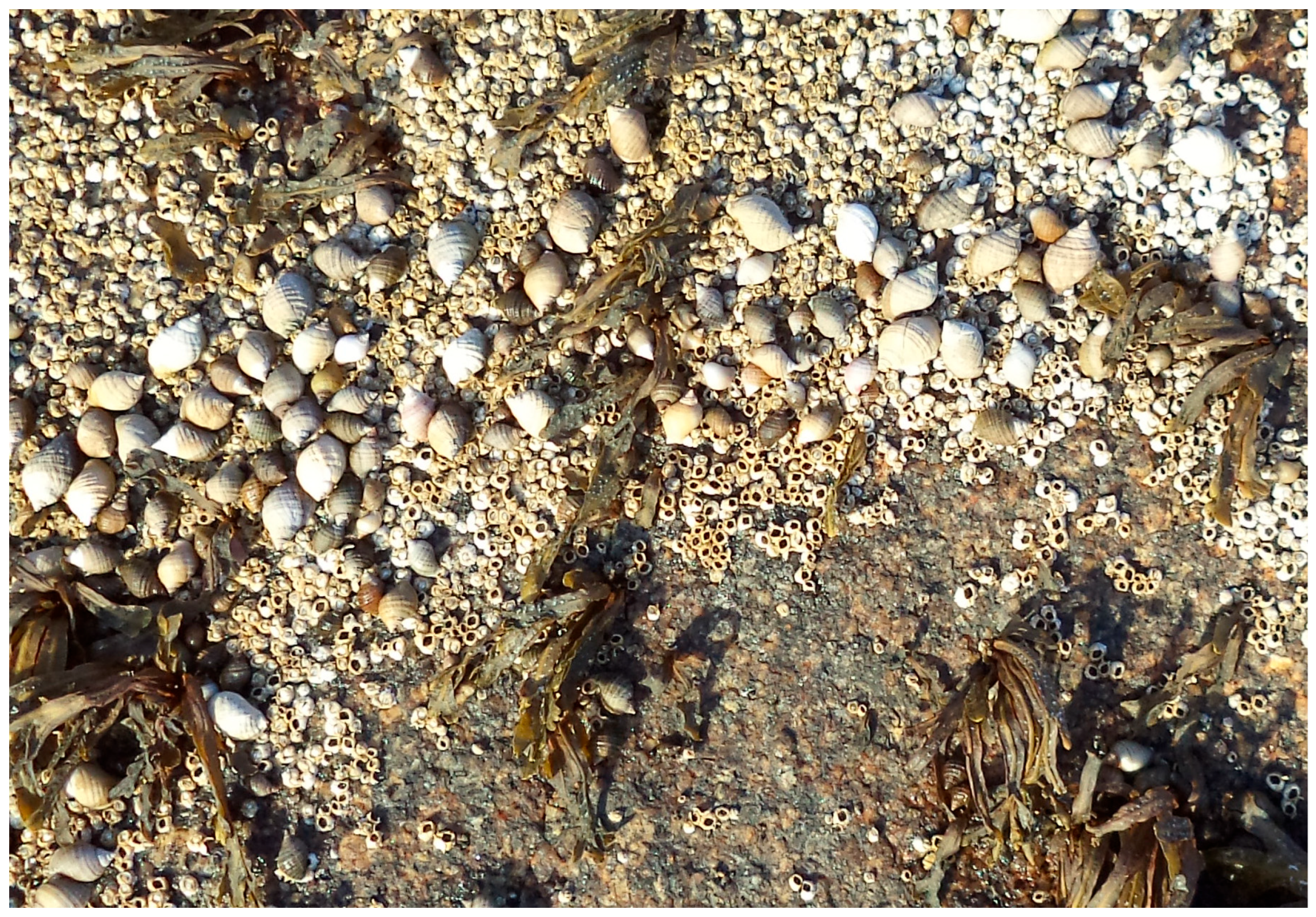
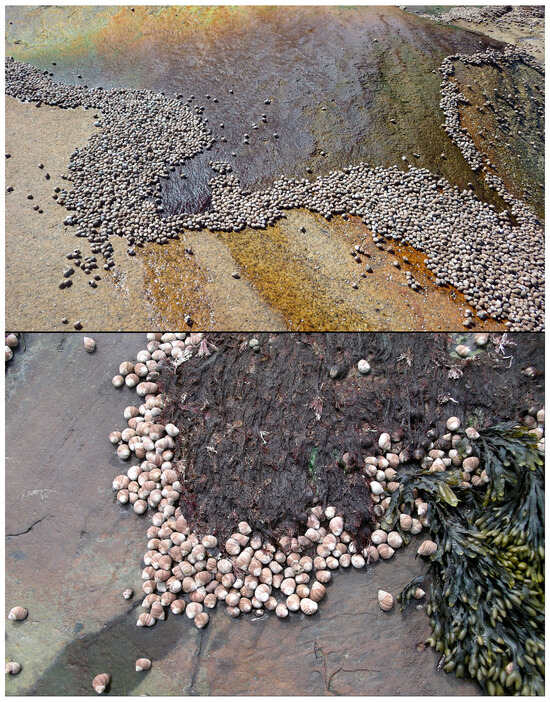
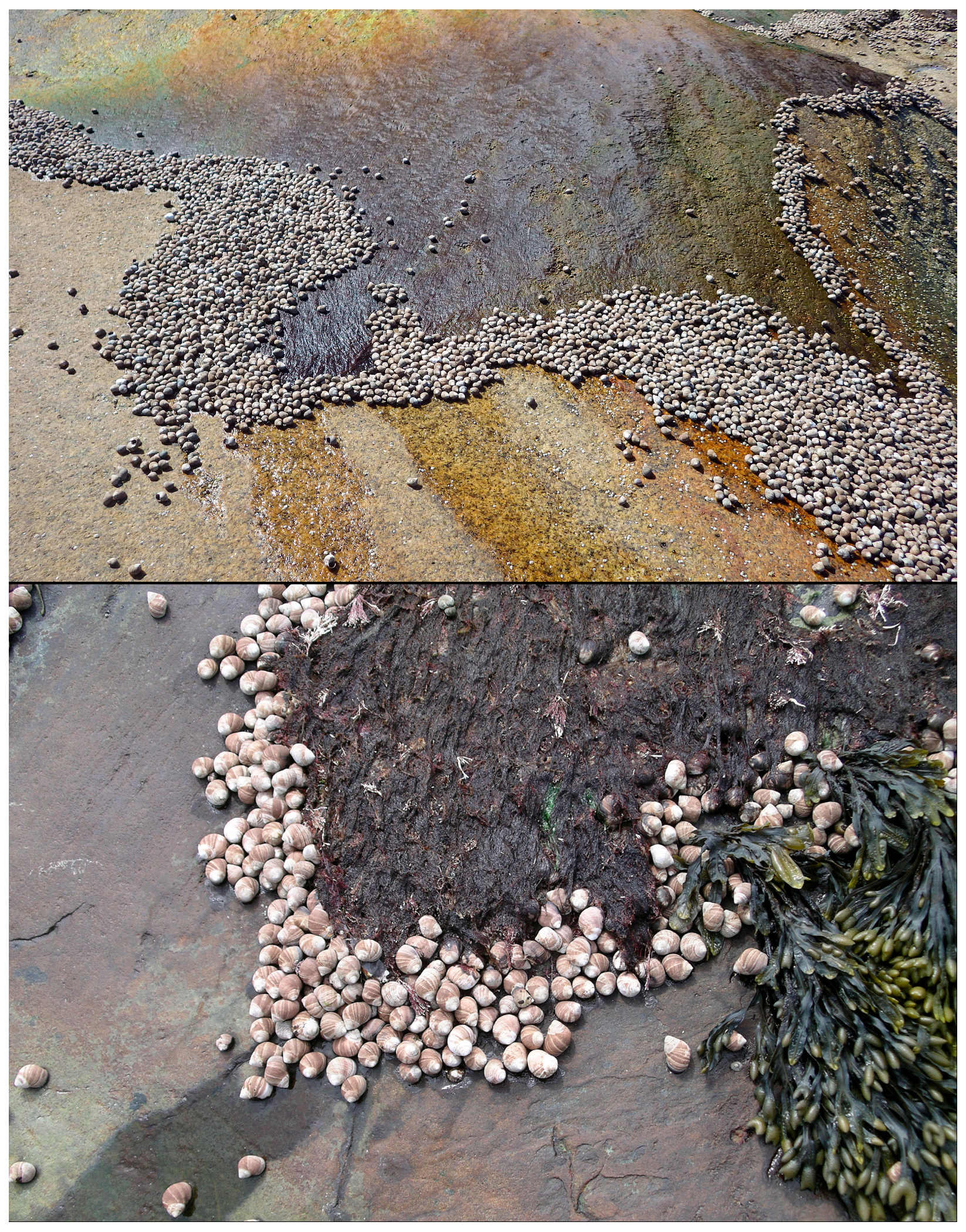
On temperate rocky shores, mussels often form extensive intertidal stands of densely packed individuals that host a diversity of small invertebrates, which makes mussels important foundation species [6]. On the northeast Pacific coast, beds of the large mussel Mytilus californianus often exhibit abrupt lower distribution boundaries in the presence of the sea star Pisaster ochraceus (Figure 1), which is an iconic keystone predator [7]. On the southeast Pacific coast, beds of a smaller mussel, Perumytilus purpuratus, can be equally extensive and show marked lower distribution limits determined by predatory gastropods, including a rock snail known as "loco", Concholepas concholepas [8] (Figure 2), and a whelk, Acanthina monodon [9] (Figure 3). Barnacle populations can also display sharp lower distribution boundaries of this kind. On the northwest Atlantic coast, for example, the barnacle Semibalanus balanoides can form extensive stands on wave-exposed intertidal habitats [10,11]. At the end of the growth season, feeding fronts of the dogwhelk Nucella lapillus can develop and move up the shore consuming barnacles once these have reached adult sizes after recruitment in the spring (Figure 4). Consumption fronts may also arise when the consumed species are primary producers. An example of this interaction is common on the northwest Atlantic coast [12]. Towards the end of the winter, small ephemeral algae can develop extensive beds covering the rocky intertidal substrate. By mid-spring, however, voracious herbivore snails, Littorina littorea, form dense groups of organisms that actively consume these beds starting from their lowest elevation, generating a visible algal distribution boundary that moves up the shore as consumption progresses (Figure 5). Overall, this collection of photographs is expected to stimulate comparative studies of these unique systems as well as to serve educational purposes in marine biology and ecology classes.
Figure 1.
Sea stars (Pisaster ochraceus) positioned at the lower distribution limit of mussels (Mytilus californianus) in a rocky intertidal habitat at the north end of Chesterman Beach, on the Pacific coast of Vancouver Island, British Columbia, Canada. Photo taken at low tide by the author on 10 July 2006.
Figure 2.
Rock snails or "locos" (Concholepas concholepas) positioned at the lower distribution limit of mussels (Perumytilus purpuratus) in a rocky intertidal habitat at Pucatrihue, on the Pacific coast of Chile. Photo taken at low tide by the author on 16 January 2015.
Figure 3.
Whelks (Acanthina monodon) positioned beneath the lower distribution limit of mussels (Perumytilus purpuratus) in a rocky intertidal habitat at Calfuco, on the Pacific coast of Chile. Photo taken at low tide by the author on 9 November 2013.
Figure 4.
Dogwhelks (Nucella lapillus) positioned at the lower distribution limit of barnacles (Semibalanus balanoides) in a rocky intertidal habitat at Deming Island, on the Atlantic coast of Nova Scotia, Canada. Note that, below the dogwhelk front, mostly only empty barnacle shells remain, as those barnacles had been consumed by dogwhelks shortly before this picture was taken. Photo taken at low tide by the author on 16 October 2019.
Figure 5.
Periwinkles (Littorina littorea) positioned at the edge of patches of ephemeral algae in rocky intertidal habitats on the Atlantic coast of Nova Scotia, Canada. Both photos were taken at low tide by the author, the upper one at Deming Island on 1 May 2016 and the lower one just north of Tor Bay Provincial Park on 5 May 2009.
Funding
This study was funded by a Discovery Grant (#311624) awarded to the author by the Natural Sciences and Engineering Research Council of Canada (NSERC).
Institutional Review Board Statement
These field photographs required no permits or ethical review.
Data Availability Statement
Not applicable.
Acknowledgments
I wish to thank the editor and three anonymous reviewers for helpful comments on an earlier version of this manuscript.
Conflicts of Interest
The author declares no conflicts of interest.
References
- Carroll, G.; Holsman, K.K.; Brodie, S.; Thorson, J.T.; Hazen, E.L.; Bograd, S.J.; Haltuch, M.A.; Kotwicki, S.; Samhouri, J.; Spencer, P.; et al. A review of methods for quantifying spatial predator–prey overlap. Global Ecol. Biogeogr. 2019, 28, 1561–1577. [Google Scholar] [CrossRef] [Scilit]
- Menge, B.A.; Branch, G.M. Rocky intertidal communities. In Marine Community Ecology; Bertness, M.D., Gaines, S.D., Hay, M.E., Eds.; Sinauer: Sunderland, MA, USA, 2001; pp. 221–251. [Google Scholar]
- Raffaelli, D.; Hawkins, S. Intertidal Ecology; Kluwer: Dordrecht, The Netherlands, 1999. [Google Scholar]
- Menge, B.A.; Sutherland, J.P. Community regulation: Variation in disturbance, competition, and predation in relation to environmental stress and recruitment. Am. Nat. 1987, 130, 730–757. [Google Scholar] [CrossRef] [Scilit]
- Silliman, B.R.; McCoy, M.W.; Angelini, C.; Holt, R.D.; Griffin, J.N.; van de Koppel, J. Consumer fronts, global change, and runaway collapse in ecosystems. Annu. Rev. Ecol. Evol. Syst. 2013, 44, 503–538. [Google Scholar] [CrossRef] [Scilit]
- Cameron, N.M.; Scrosati, R.A.; Valdivia, N.; Meunier, Z.D. Global taxonomic and functional patterns in invertebrate assemblages from rocky-intertidal mussel beds. Sci. Rep. 2024, 14, 26. [Google Scholar] [CrossRef] [Scilit] [PubMed]
- Paine, R.T.; Levin, S.A. Intertidal landscapes: Disturbance and the dynamics of pattern. Ecol. Monogr. 1981, 51, 145–178. [Google Scholar] [CrossRef] [Scilit]
- Castilla, J.C.; Durán, L.R. Human exclusion from the rocky intertidal zone of central Chile: The effects on Concholepas concholepas (Gastropoda). Oikos 1985, 45, 391–399. [Google Scholar] [CrossRef] [Scilit]
- Büchner-Miranda, J.A.; Salas-Yanquin, L.P.; Averbuj, A.; Navarro, J.M.; Cubillos, V.M.; Matos, A.; Zabala, S.; Chaparro, O.R. Ontogenetic shifts of predatory strategies by the carnivorous snail Acanthina monodon (Pallas, 1774). Malacologia 2021, 64, 93–108. [Google Scholar] [CrossRef] [Scilit]
- Menge, B.A. Organization of the New England rocky intertidal community: Role of predation, competition, and environmental heterogeneity. Ecol. Monogr. 1976, 46, 355–393. [Google Scholar] [CrossRef] [Scilit]
- Scrosati, R.A.; Ellrich, J.A. Support for the intermittent upwelling hypothesis using 10 years of barnacle recruitment data from a western ocean boundary in Atlantic Canada. PeerJ 2025, 13, e19470. [Google Scholar] [CrossRef] [Scilit] [PubMed]
- Lauzon-Guay, J.S.; Scheibling, R.E. Food-dependent movement of periwinkles (Littorina littorea) associated with feeding fronts. J. Shellfish Res. 2009, 28, 581–587. [Google Scholar] [CrossRef] [Scilit]
Disclaimer/Publisher’s Note: The statements, opinions and data contained in all publications are solely those of the individual author(s) and contributor(s) and not of MDPI and/or the editor(s). MDPI and/or the editor(s) disclaim responsibility for any injury to people or property resulting from any ideas, methods, instructions or products referred to in the content. |
© 2026 by the author. Licensee MDPI, Basel, Switzerland. This article is an open access article distributed under the terms and conditions of the Creative Commons Attribution (CC BY) license.