


Abstract
The ecological significance of benthic diatom taxocoenoses in marine ecosystems renders them a suitable reference when making decisions on conservation, as well as ecological and biogeographical issues. This study focuses on floristics of epiphytic diatoms of macroalgae from the central region of the Gulf of California and their biogeographical affinities. Based on current floristics for benthic diatoms of the Mexican NW, it was hypothesized that species richness would be higher for the central gulf (transitional) than for the tropical Revillagigedo Archipelago. Additionally, it was hypothesized that it would be composed mainly of common taxa of the region, with tropical and temperate components. Likewise, it was hypothesized that Mastogloia (tropical) would include less taxa and Lyrella would include more taxa in the transitional central gulf. The diatom flora yielded 333 taxa and 101 genera, and out of which the best represented were Navicula with 29 taxa, Amphora (27), Cocconeis (25), Nitzschia (24), Diploneis (19), Achnanthes (13), Halamphora (14), Fallacia (10), Lyrella (9), and Mastogloia (8), adding up to 53% of the total. The inspected diatom taxocoenosis included mostly taxa commonly distributed in the Mexican NW, albeit with 16 new records. This, plus the high species richness, as well as the proportions of selected taxa depicting this diatom taxocoenosis as being of transitional biogeographical affinity, back the posed hypotheses.
1. Introduction
Conservationist, ecological, and biogeographical perspectives in general for any given area require formal scientific knowledge of all living resources within. The first step of the unavoidable analysis required should be the identification of said elements as being either faunistic or floristic. In marine ecosystems, floristic elements include benthic diatom taxocoenoses whose ecological significance has distinguished them as a suitable reference when making decisions on conservation issues and ecological relations, particularly for protected areas [1].
After constructing reliable diatom floristics and estimating relative or proportional abundances (inventories) of the recorded taxa, they can be used for estimating ecological parameters that better describe the assemblages. Said ecological studies based on analyses of classical parameters can reflect the ecological status in pristine environments or various types of impact [2]. Thus, unlike species richness alone, the analysis of species diversity depicts a structure in benthic diatom assemblages based on species richness, diversity, dominance, etc., that can be used to assess environmental conditions in protected areas [3]. However, although floristics still constitutes the main basis for achieving this, in some parts of the biosphere where diatoms are abundant, very little is known about them. Moreover, the relevance of taxonomic issues such as the classification, determination, and identification of benthic diatoms in marine environments has shown the benefits of focusing on remote protected areas and unexplored environments worldwide [4]. According to this, not knowing enough about the distribution of benthic diatom taxa precludes building biogeographical distributional models.
In spite of the above, the publication of floristic studies carried out in the northwestern region of Mexico have been occasionally banned in certain journals under administrative policies without considering their scientific structure [5], undermining the eventual support for conservation issues. Notwithstanding, floristic studies of benthic diatoms along Mexican littorals have hitherto documented new records since the last published general taxonomic list [6] which included 1162 taxa, whilst the first one [7] comprised 493 taxa for the Baja California Peninsula (BCP); in both lists, a recurrence of many taxa is observed for several localities in the Mexican NW region. Therefore, it can be expected that the current floristic data for the Mexican NW region may allow for the detection of biogeographic affinities. Moreover, taxa recorded recently both from the central region of the Gulf of California (CRGC) and the Revillagigedo Archipelago (RA), such as Achnanthes apiculata (Greville) Riaux-Gobin, Compère, Hinz and Ector, Caloneis egena (Schmidt) Cleve, Coronia ambigua (Greville) Ruck and Guiry, Grammatophora gallopagensis Grunow, Gyrosigma parvulum Hustedt, Psammodictyon pustulatum (Voigt ex Meister) C.S. Lobban, Psammodictyon roridum (Giffen) D.G. Mann, Seminavis basilica Danielidis, Trachyneis aspera var. oblonga (Bailey) Cleve, and Tryblionella nicobarica (Grunow) D.G. Mann, among others [1,4,8,9], could be indicating a biogeographical connectivity between these regions, where warm conditions determine the presence of taxa with a tropical affinity. Additionally, the diatom assemblages may also be examined relying on the shared taxa belonging to a particular genus, such as Mastogloia, referring to its promised tropical affinity, or Lyrella, for which the highest number of taxa for any locality in NW Mexico was recorded for a temperate coastal lagoon on the western coast of the BCP, where transitional conditions prevail [1].
The generated floristic theory is expected to constitute a reliable basis for other hypothesis-driven studies, albeit dealing with ecological diversity measurements, both alpha and beta, that comprehend more extensive areas, revealing biogeographic patterns and requiring further complex (numerical) techniques. According to this, the following questions have been addressed: Which and how many epiphytic diatom taxa are to be found living on macroalgae in a locality in the central region of the Gulf of California? How are the Mastogloia and Lyrella taxa represented proportionally in these diatom assemblages? Additionally, can any biogeographical evidence be observed? The corresponding hypothesis stated that the epiphytic diatom assemblages living on macroalgae in the CRGC would be mainly composed of common taxa that are homogeneously distributed in the NW region of Mexico on both coasts of the BCP, albeit including conspicuous tropical and temperate components that define a biogeographical transition zone. Likewise, a hypothesis stated that the species richness (S) would be higher for the diatom taxocoenoses from the CRGC due to its transitional nature than for the diatom taxocoenoses from a tropical region such as in the RA. Additionally, it was expected that the S for Mastogloia would be much lower than for the RA taxocoenosis, while the number of Lyrella species would be much higher for CRGC.
2. Materials and Methods
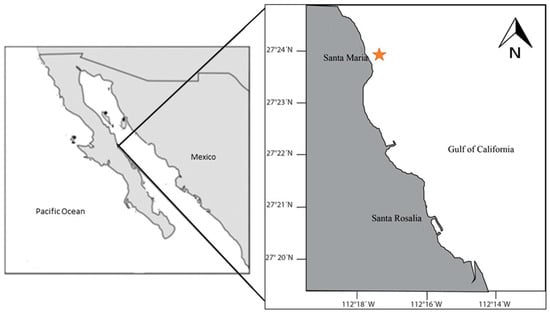
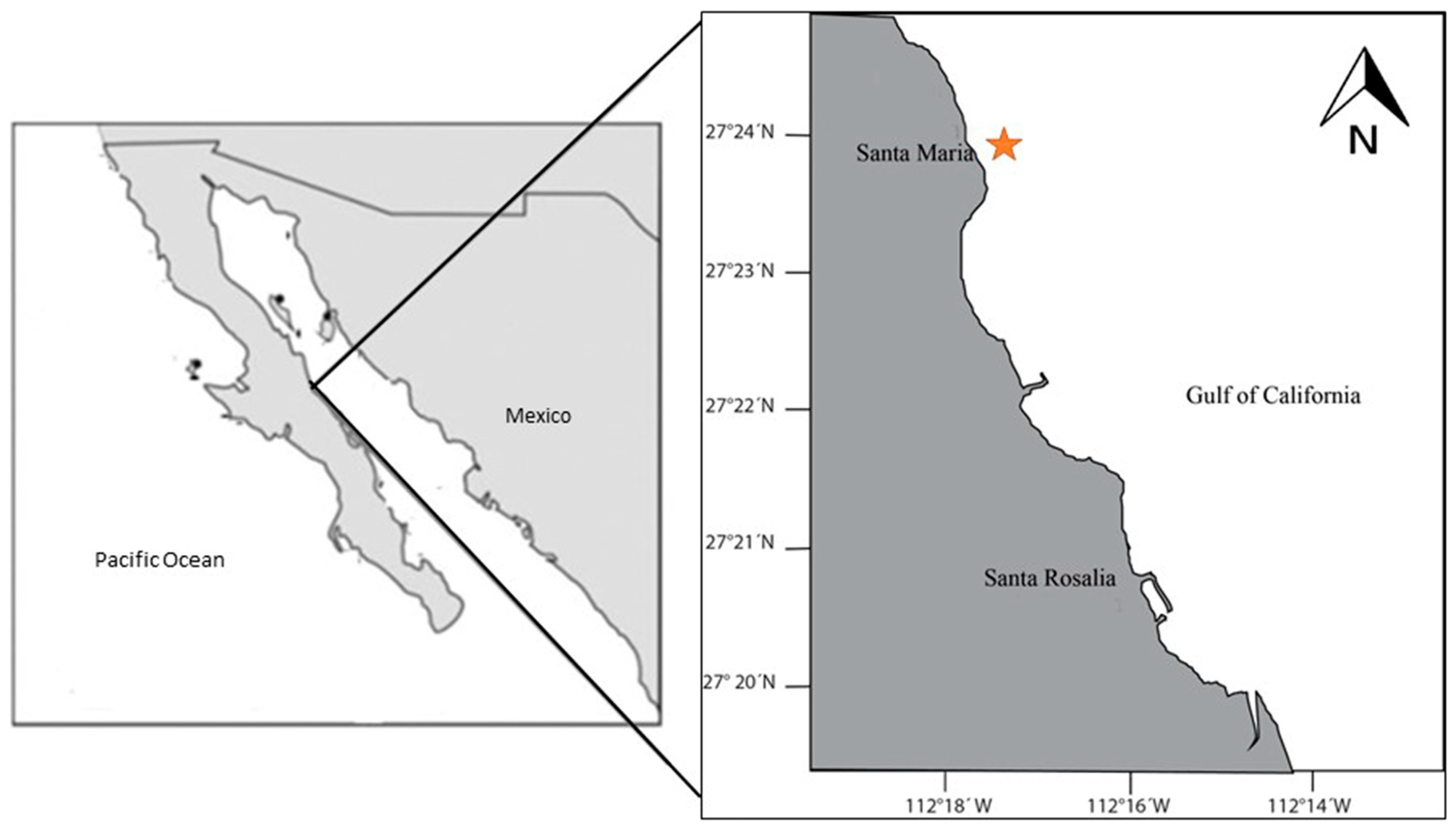
The sampling site, Santa Maria, is located in the central part of the Baja California Peninsula’s eastern coast, facing the Gulf of California (GC), 8 km north of the well-known mining town Santa Rosalia (27°20′ N, 112°16′ W) (Figure 1) [10]. Annual precipitation in the region is very low (<100 mm) and occurs mainly in association with tropical storms [11]. The area is influenced by GC currents which are linked to the intensification of the Mexican coastal current that flows S–N and enters along the eastern coast with alternating fluxes and exiting (N–S) along the peninsula coast [12,13]. These conditions are determinant for avoiding contamination risk by metals from the Santa Rosalia mining activities further south [14]. The assumed pristine conditions in Santa Maria ensure that the benthic diatom assemblages used as reference hold a high species richness and a species composition that can be compared to other benthic diatom surveys in the gulf region.
Figure 1.
Study area (CRGC) and sampling site ( ) Santa Maria, for epiphytic diatoms found on macroalgae off the coast of BCS, Mexico.
Six thalli of various macroalgae species were collected by hand according to their availability at two sites in Santa Maria (Figure 1) during March 2016. The collection of a single specimen of each macroalgae species was carried out using semi-autonomous diving equipment (hookah), at a depth of approximately 8 m. In the laboratory, sampled thalli were identified via their genus level according to [15] as follows: Codium sp., Dictyota sp., Sargassum sp. 1, Sargassum sp. 2, and Gracilaria sp. One specimen was just identified as being of the class Phaeophyceae. Epiphytic diatoms were scraped off from the macroalgae thalli while rinsing with purified water, and the total scraped-off material from each macroalgal taxon was poured into a test tube as a compound sample. Brushed-off diatom samples were placed in 60 mL test tubes and treated following [2] for oxidizing all organic matter inside and outside the diatom frustules in a mixture of sample, commercial alcohol, and nitric acid at a ratio of 1:1:5. The samples were rinsed repeatedly afterwards with purified water until reaching a pH > 6. Cleaned diatoms were mounted in duplicate on permanent slides in Pleurax® (RI = 1.7) (Bill Daily, University of Pennsylvania, Philadelphia, PA, USA). All slides were inspected thoroughly by doing a systematic sweep for all diatom taxa present. The diatom taxa were identified morphologically at 1000× under an Olympus compound microscope (Olympus, Tokyo, Japan) with planachromatic lenses, and a photographic ocular lens. Micrographs were taken of specimens of representative diatom taxa, and others were selected mainly according to the particular objectives of the study. Taxa identification followed that of [1,2,4,8,9,16,17,18,19,20,21,22,23,24,25,26,27] and was updated according to the Algaebase electronic platform [28].
3. Results
The inspection of epiphytic diatom flora from the macroalgae specimens collected at Santa Maria (CRGC) yielded a total of 333 taxa on the species and infra-species (SS) level, comprised within 101 genera (Table A1, Appendix A), and 283 of these taxa are represented in the iconographic catalog (Appendix B). The best represented genera were Navicula with 29 SS, Amphora (27), Cocconeis (25), Nitzschia (24), Diploneis (19), Achnanthes (12), Halamphora (14), and Fallacia (10). The number of SS by genus varied from 1 to 29, while 58 of the identified genera were represented by a single SS (singletons), i.e., 56%, and 13 SS were identified only to genus level. Out of the total taxa, 16 constituted new records for the region (Table A1). Concerning reference to selected taxa for ascribing biogeographical affinity, the Lyrella were represented by 9 SS, while Mastogloia included 8 SS and Grammatophora included 5 SS.
4. Discussion
The assumed pristine conditions for the study area corresponded with a high species richness (S) reaching 333 species and infra-species (SS) of the analyzed benthic diatom taxocoenosis (BDT), and this is similar to those recorded in other non-impacted productive environments from the NW Mexican region, either from the W coast of the Baja California Peninsula (BCP) or the Gulf of California. However, the recorded S for the Revillagigedo Archipelago (RA), that is currently 395 SS, actually resulted from two separate studies [4]. Notwithstanding, on the basis of information theory (H′), the estimated diversity in these localities reached very high values, 4.8 for CRGC and 5.2 for RA, using a relative abundance of species [29]. However different, when using the genus-to-species ratio as data for computing H’, the former reached 5.48 while the latter was 5.47. From this perspective, the authors attributed this to the displacement of equitability toward the rare species side of the distribution, whereby the percentage (57%) of the identified genera in the CGCR represented by a single SS (59) or singletons is somewhat higher than that of Revillagigedo BDT (52%) with 53 genera [29]. On the other hand, while the floristics from other studies allocated in the central region of the Gulf of California (CRGC) were not included here, a floristic study of epiphytic diatoms on Phyllodictyon pulcherrimum (Chlorophyceae) in the CRGC was carried out earlier [9]. Although said work did not include a diversity measurement based on the relative abundance of the taxa, it yielded a high species richness (S = 244 taxa) and 86 genera, whereby the best represented of which were Nitzschia (25 SS), Amphora (17), Diploneis (15), Navicula (13), Cocconeis (12), and Achnanthes (7), whilst in RA these were Cocconeis (27), Nitzschia (24), Amphora (23), Navicula (19), Diploneis (17), and Grammatophora (15). In contrast, the recorded genera containing more SS (Amphora, Cocconeis, Navicula, Nitzschia, and Diploneis) within the BDT from CRGC exhibited similar proportional numbers as in RA and several other localities [29].
In view of the biogeographical connotations of this study, it has to be made clear that the above comparisons did not consider that samplings were carried out in different seasons, while in this study, springtime conditions prevailed, conditions in the RA corresponded to Winter, and the P. pulcherrimum specimen was collected during summer. Although the tropical characteristics of these regions could suggest similar stable conditions, seasonal current circulation patterns comprising the interaction with the open Pacific Ocean and the Gulf of California water mass [30] are likely to influence the seasonal development of benthic diatom assemblages according to the more temperate or tropical affinity of the specific taxon. Further studies should be designed on this scenario in order to model the distribution of benthic diatom taxa and their biogeographical affinities.
In the present work, Amphora (27 spp.) stood out as being distinctively more diverse than in the other two studies. However, the main genera are the same and, although their S also differ, in all cases this could be explained by multifactorial causes, mainly the host macroalgal taxon and the season of sampling [25]. Thus, although the determining taxa in BDT at the genus level are much the same as in most of the surveyed environments in the Mexican marine coasts, the number of species within each genus differs, and so do the floristic assemblages. Thus, an ex profeso study is in hand to tackle this problem.
Concerning the distinction of taxa within the Lyrella and Mastogloia genera and their proportionality in relation to biogeographic affinity, the inspected locality (CGCR) yielded nine SS for the former, and eight for the latter, plus five Grammatophora SS, in contrast with those of RA which had fourteen, fifty-six, and fifteen SS, respectively. These comparisons indicate a likely biogeographical difference in which the Mastogloia and Grammatophora incline toward the tropical affinity, whilst the Lyrella seem to depart from it, inasmuch that a record number of SS for this genus was reported for the western coast of the Baja California Peninsula [1] from an ecosystem influenced by the cold waters of the California current. On the other hand, the majority of identified taxa (85%) were distributed commonly in the Mexican NW region [2,6,26], which also backs the posed hypothesis.
Since 2018, several new records have been added to the diatom flora of the CRCG and NW Mexico, 3 by [31] and 38 by [9], including a new taxon [32]. This, along with the 16 new records and the 13 unidentified taxa in this study, together with the estimated diversity using both relative abundances and the genus-to-species ratio [29], evidence the diversity potential of the region and show the need for continuous floristic efforts in the Gulf of California littorals. These types of simple but valuable floristic studies with basic design are useful for constructing the taxonomic bases of further hypothesis-based, ecological, and biogeographical research, and are still common worldwide, e.g., [33]. Likewise, further studies would conveniently be followed by ecological diversity assessment to establish scales of reference between protected pristine and non-protected pristine areas, using established approaches of beta diversity or by proposing new methodological perspectives, as has been achieved in the present case [29]. This will aid in supporting better ecosystem management, either under conservation perspectives, sustained exploitation, or biogeography issues for which other considerations are at hand. From this perspective, the feasibility of a close connection between the CGCR diatom flora and that from the Revillagigedo Archipelago should be explored by comparing various community parameters between epiphytic diatom samples from both localities.
5. Conclusions
In general, the Mastogloia may be considered to be a genus indicating tropical affinity, and to a lesser degree, the same goes for Grammatophora and Caloneis, while the Lyrella, Fallacia, and Achnanthes (13) correspond more to temperate latitudes. The high species richness, and proportions of indicator taxa, i.e., few Mastogloia and Grammatophora, and more Lyrella, depict BDT from the CGCR of transitional affinity, backing the posed hypothesis. The new records and the unidentified taxa in this study suggest a greater floristic reserve for the RCGC, and indicate the need for continuing the efforts toward the taxonomic identification or determination of benthic diatoms in the Gulf of California. Likewise, as with the distribution of diatom taxa either in marine, brackish, or fresh water environments which are commonly transgressed in various floristics reports, the distribution of genera in multiple environments and latitudes is also a common phenomenon. Thus, establishing distributional boundaries for benthic diatom taxa would require much more floristic research. Additionally, surveying various substrates such as rare macroalgae species as hosts for epiphytic diatoms may provide opportunities to seek new records of diatom taxa, or even new taxa, in regions around the world. Finally, based on the still incipient status of floristic studies along Mexican littorals and the sampling strategies used, i.e., spatially or temporarily discrete, it is inferred that new records of taxa for the region are to be found, whose absence from the overall species list is explained by discontinuous seasonal sampling or the omission of substrates.
Author Contributions
The first author, D.A.S.B., conceptualized and constructed the present report, and made the definitive identifications of the diatom taxa. The second author, Y.J.M., conceived and developed the general project in which this particular study was born, collected and processed the samples, and made preliminary identification of the taxa. The third author, F.O.L.-F., reviewed and updated the taxonomy for all of the identified taxa, and revised and formatted the manuscript. All authors have read and agreed to the published version of the manuscript.
Funding
This research was partially funded by Instituto Politécnico Nacional through projects SIP-20220157 and SIP-20171719.
Institutional Review Board Statement
Not applicable.
Data Availability Statement
Not applicable.
Acknowledgments
The first author is COFAA and EDI at Instituto Politécnico Nacional. Y.J.M. currently holds a postdoctoral research grant from CONACYT. F.O.L.-F. thanks the support of the Programa para el Desarrollo Profesional Docente (PRODEP) and SNI-CONACYT programs. The authors acknowledge the contributions by the appointed reviewers.
Conflicts of Interest
The authors declare no conflict of interest.
Appendix A
Table A1.
Floristic list of epiphytic diatoms of macroalgae from the Central Gulf of the California region on the Baja California Peninsula. SS = species and infra-species. NR = new record for the Mexican NW region.
Appendix B. Iconographic Catalog
Figure A1.
(a–d) Achnanthes apiculata; (e,f) Schizostauron trachyderma; (g) Achnanthes brockmanii; (h,i) Planothidium polare; (j) Achnanthes sp. 1; (k,l) Karayevia clevei; (m,n) Planothidium delicatulum; (o,p) Cocconeis sp. 3; (q) Achnanthes fimbriata; (r) Astartiella glacialis; (s) Achnanthes curvirostrum; (t–v) Planothidium hauckianum; (w,x) Astartiella punctifera.  Scale bar = 10 µm.
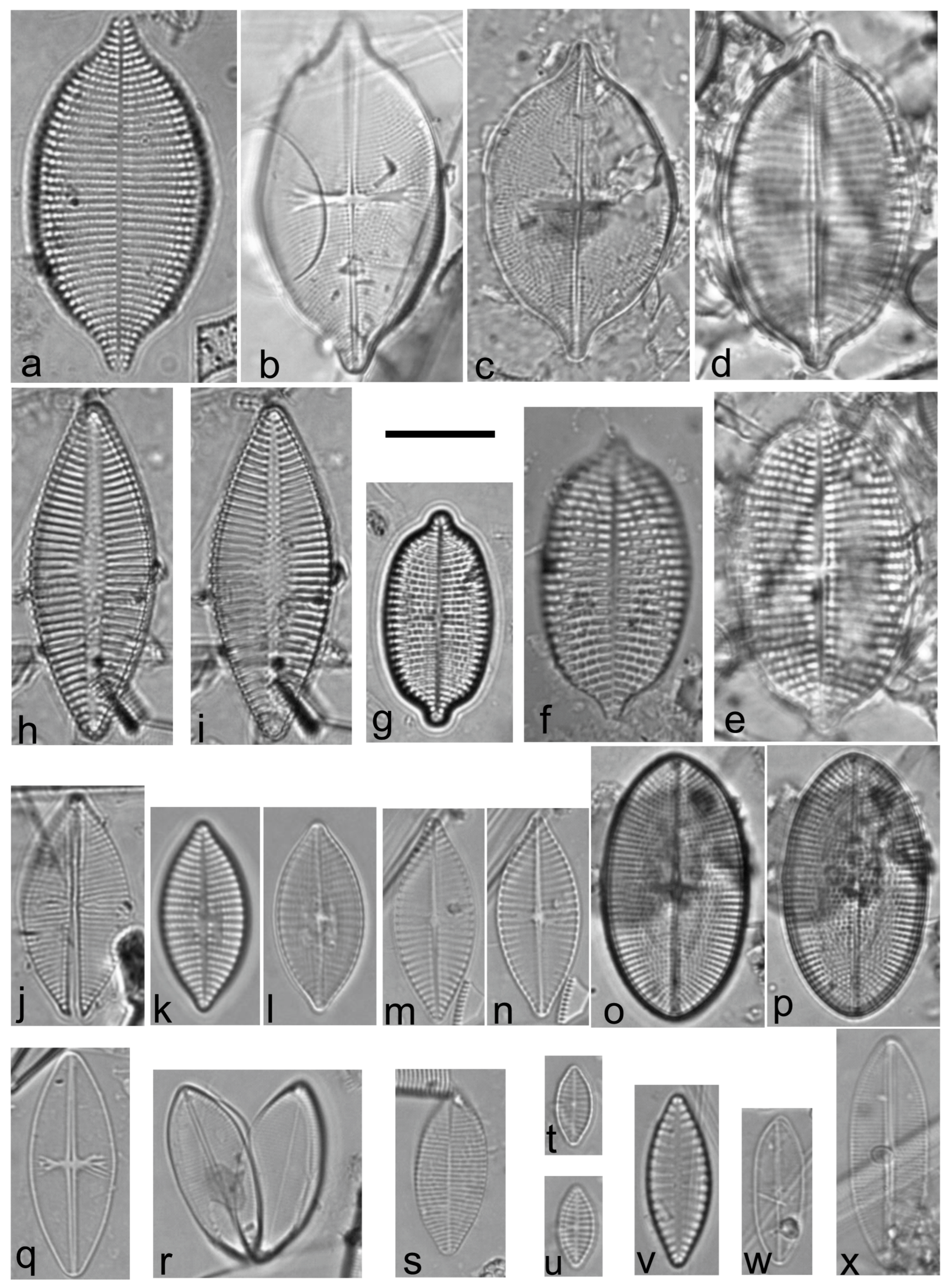
Figure A2.
(a–g) Achnanthes sp. 2; (h) A. yaquinensis; (i) A. septate; (j) A. brevipes var. intermedia; (k,l) A. brevipes var. brevipes; (m,q,r) A. groenlandica var. phinneyi; (n,o) Achnanthidium sp. 1.; (p) Rhoicosphenia sp.; (s–u) Achnanthes longipes; (v) Brachysira sp. Scale bar = 10 µm.
Scale bar = 10 µm.
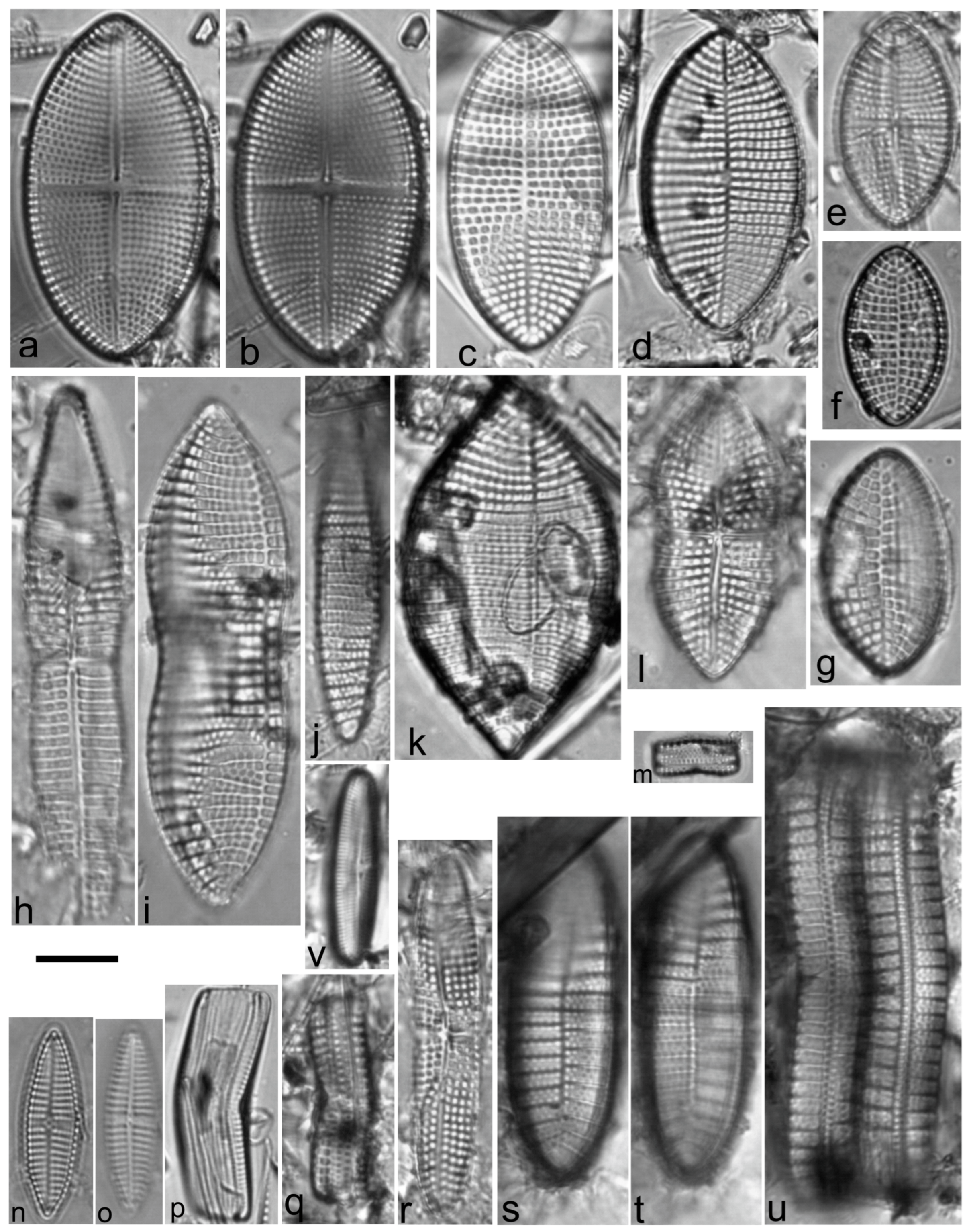
Figure A3.
(a–e) Cocconeis dirupta var. dirupta; (f–h,o,p) C. dirupta var. flexella; (l–n) C. guttata; (q,r) C. disculoides; (i) C. nugalas; (j,k) C. contermina; (s,t) Cocconeis sp. 3; (u–w,bb) C. convexa; (x,y) Cocconeis sp. 2; (z,aa) C. pseudodiruptoides; (cc,dd) Cocconeis sp. 1; (ee,ff) C. diruptoides. Scale bar = 10 µm.
Scale bar = 10 µm.
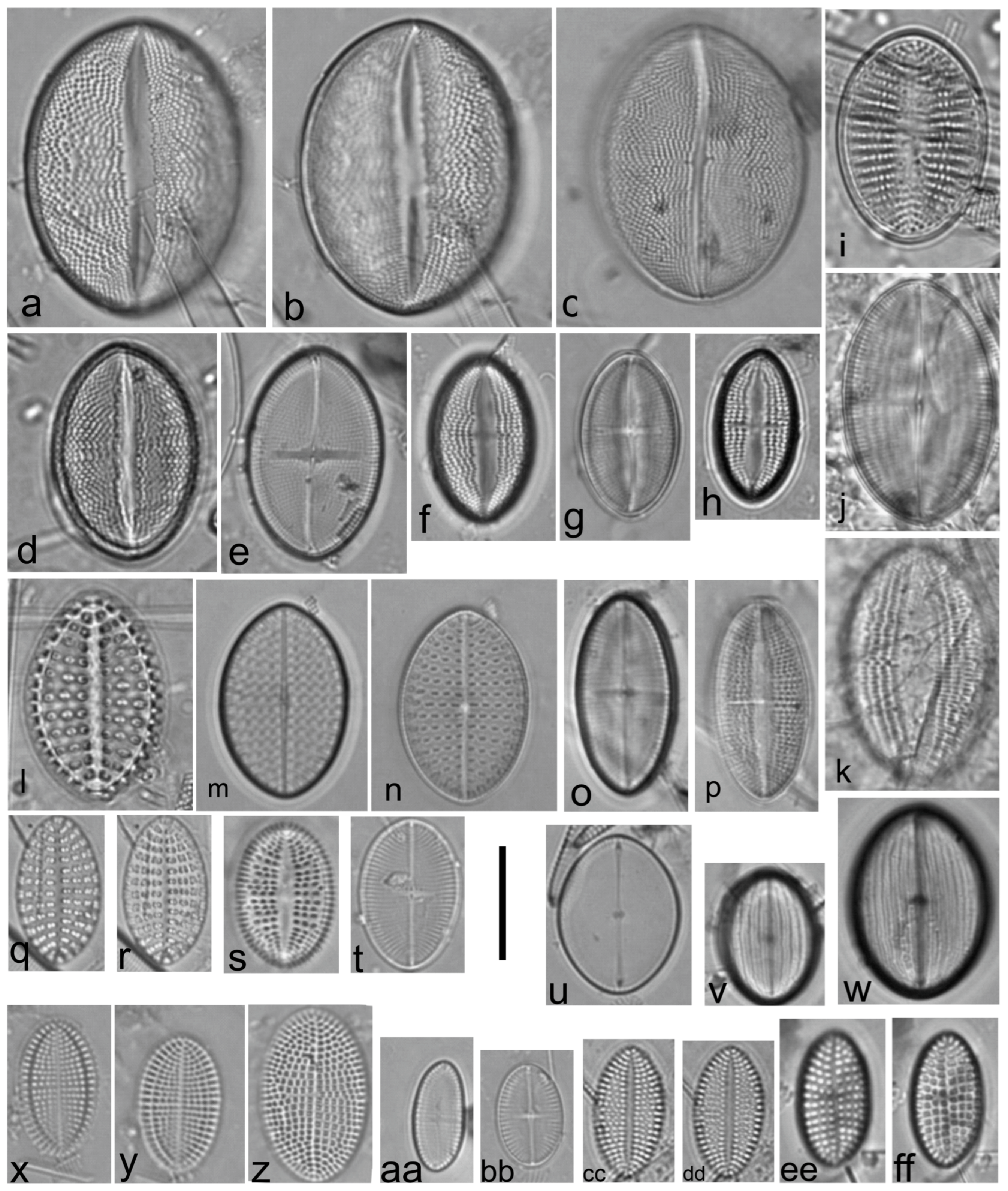
Figure A4.
(a–d) Cocconeis heteroidea; (e,f,i,j) C. pellucida var. nankoorensis; (g) C. pinnata; (h) C. vetusta; (k,p) C. scutellum; (l) C. krammeri; (m,n) C. pediculus; (o) C. molesta; (q) C. pseudomarginata; (r,s) C. stauroneiformis; (t,u) C. peltoides; (v,w) Cocconeis sp. 3; (x,y) Cocconeis sp. 4. Scale bar = 10 µm.
Scale bar = 10 µm.
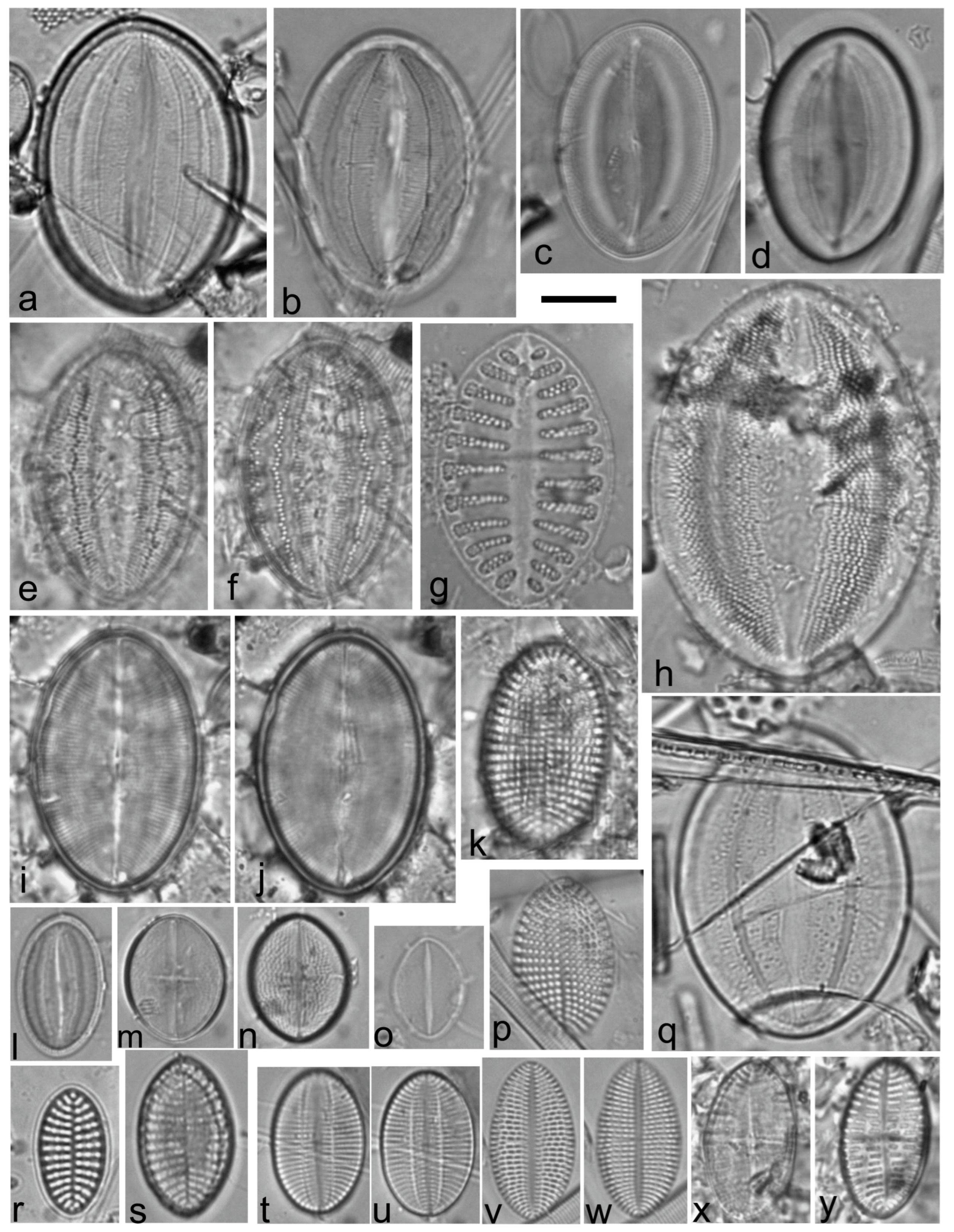
Figure A5.
(a) Diploneis splendida; (b) D. crabro var. crabro; (c–e,k) D. crabro var. dirhombus; (j) D. bombus; (f,g) D. gorjanovici; (h,i) D. crabro var. pandura; (l,m) D. muscaeiformis; (n) D. fusca var. hyperborea. Scale bar = 10 µm.
Scale bar = 10 µm.
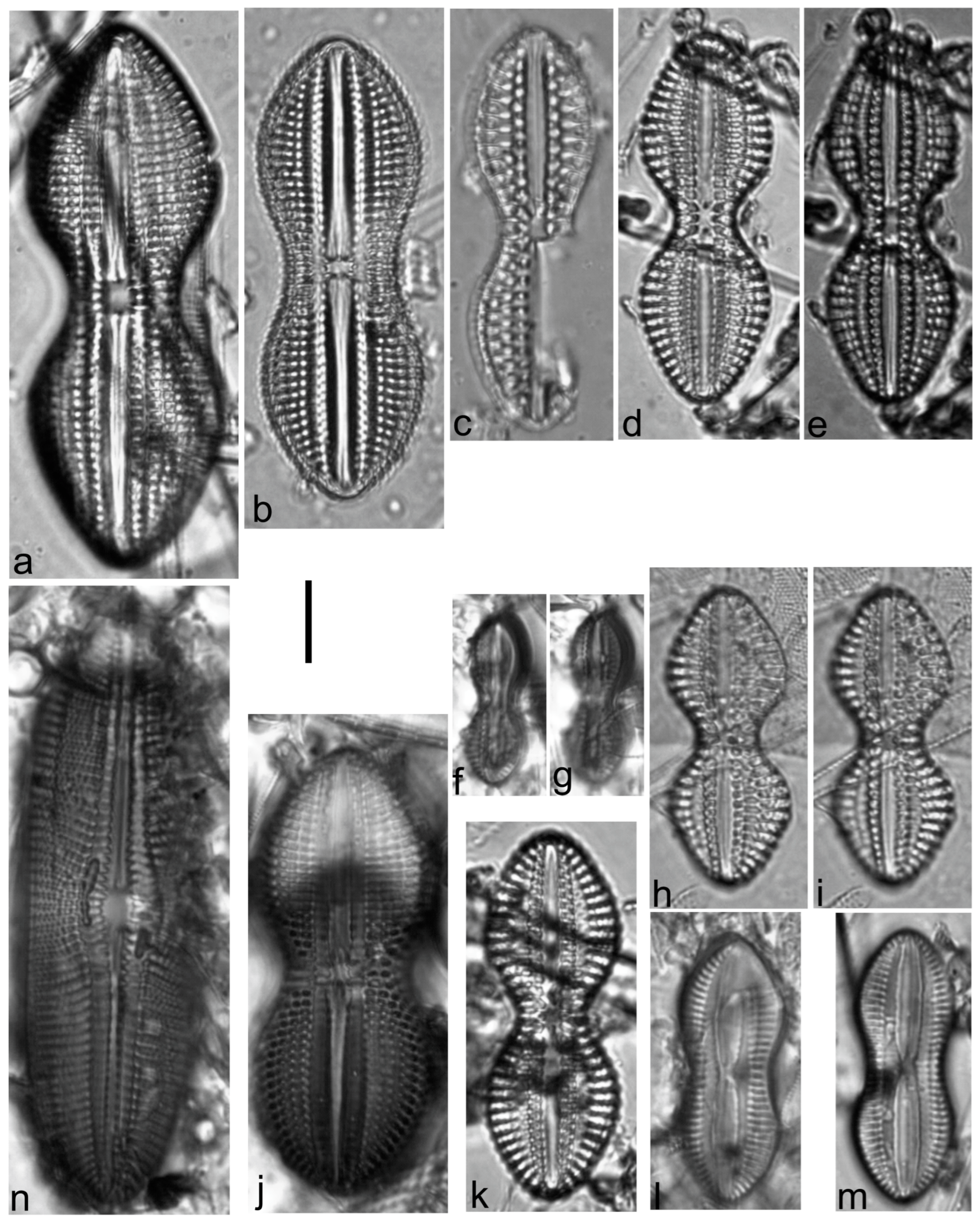
Figure A6.
(a,e,j) Diploneis smithii var. smithii; (b,q) D. papula var. constricta; (c) D. littoralis var. clathrata; (d) D. smithii var. recta; (e,i) D. serratula; (f) D. suborbicularis; (g,h) D. vacillans var. vacillans; (k) D. obliqua; (l) D. didyma; (m) Progonoia musca; (n) Oestrupia powelii; (o) Diploneis vacillans var. renitens; (p) Diploneis sp. 1. Scale bar = 10 µm.
Scale bar = 10 µm.
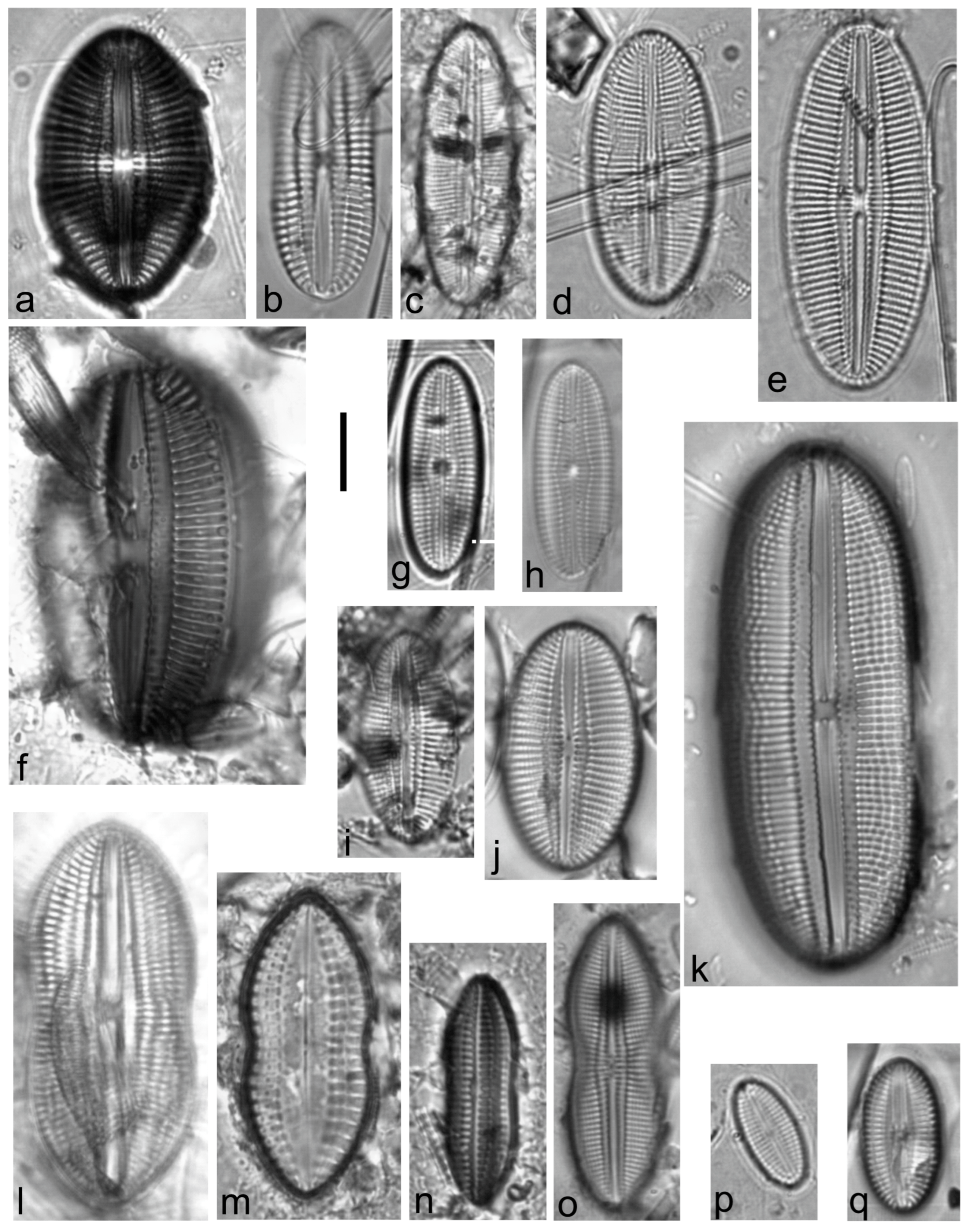
Figure A7.
(a) Mastogloia fimbriata; (b–g) M. subaffirmata; (h) M. elegans; (i) M. crucicula; (j) M. binotatta. Scale bar = 10 µm.
Scale bar = 10 µm.
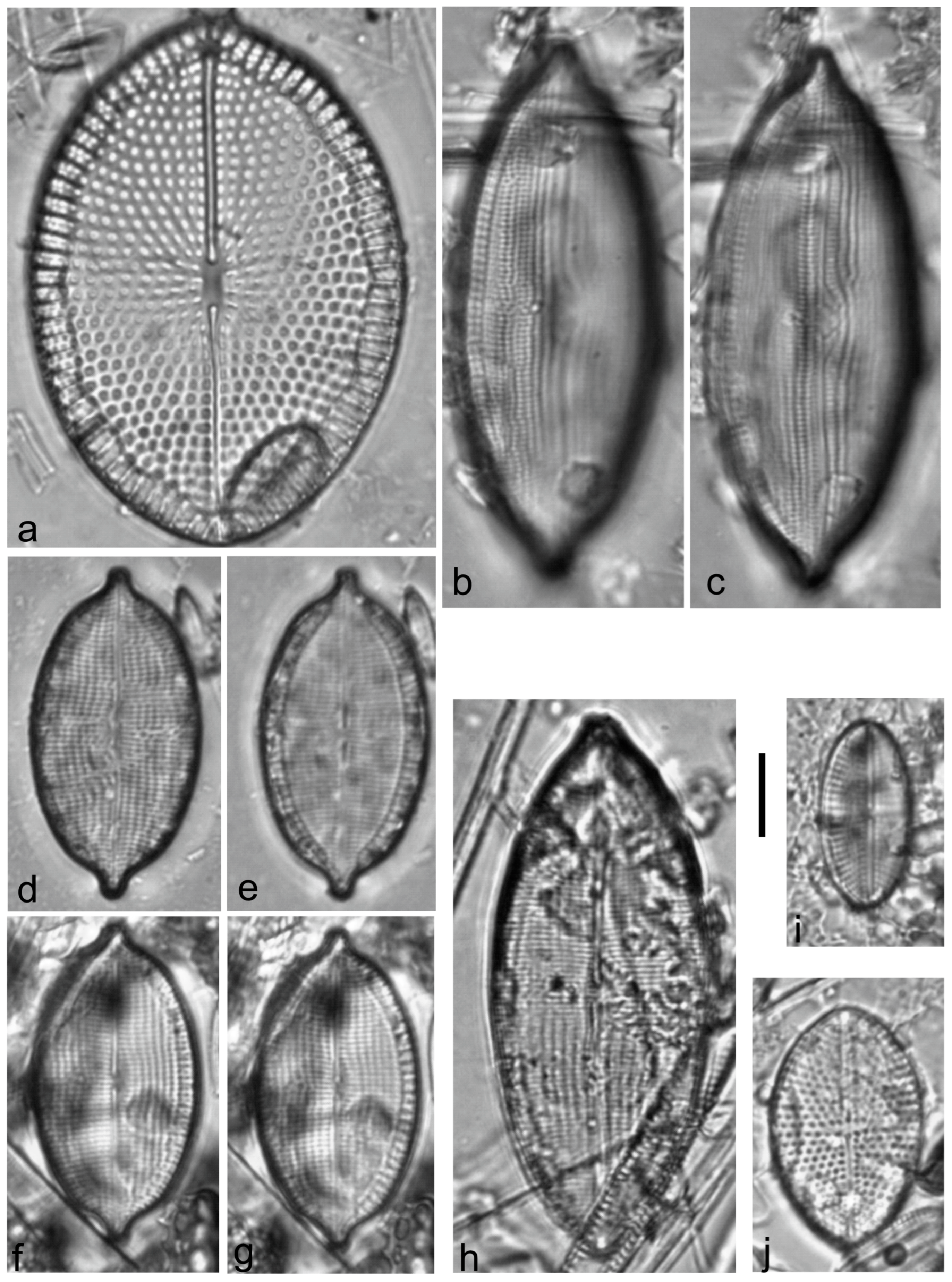
Figure A8.
(a,b) Mastogloia ciskeiensis; (c–e) M. marginulata; (f) M. borneensis; (g,h,j) Caloneis linearis; (i,k,l) C. bicuneata; (m) Trachyneis aspera var. aspera; (n) T. velata. Scale bar = 10 µm.
Scale bar = 10 µm.
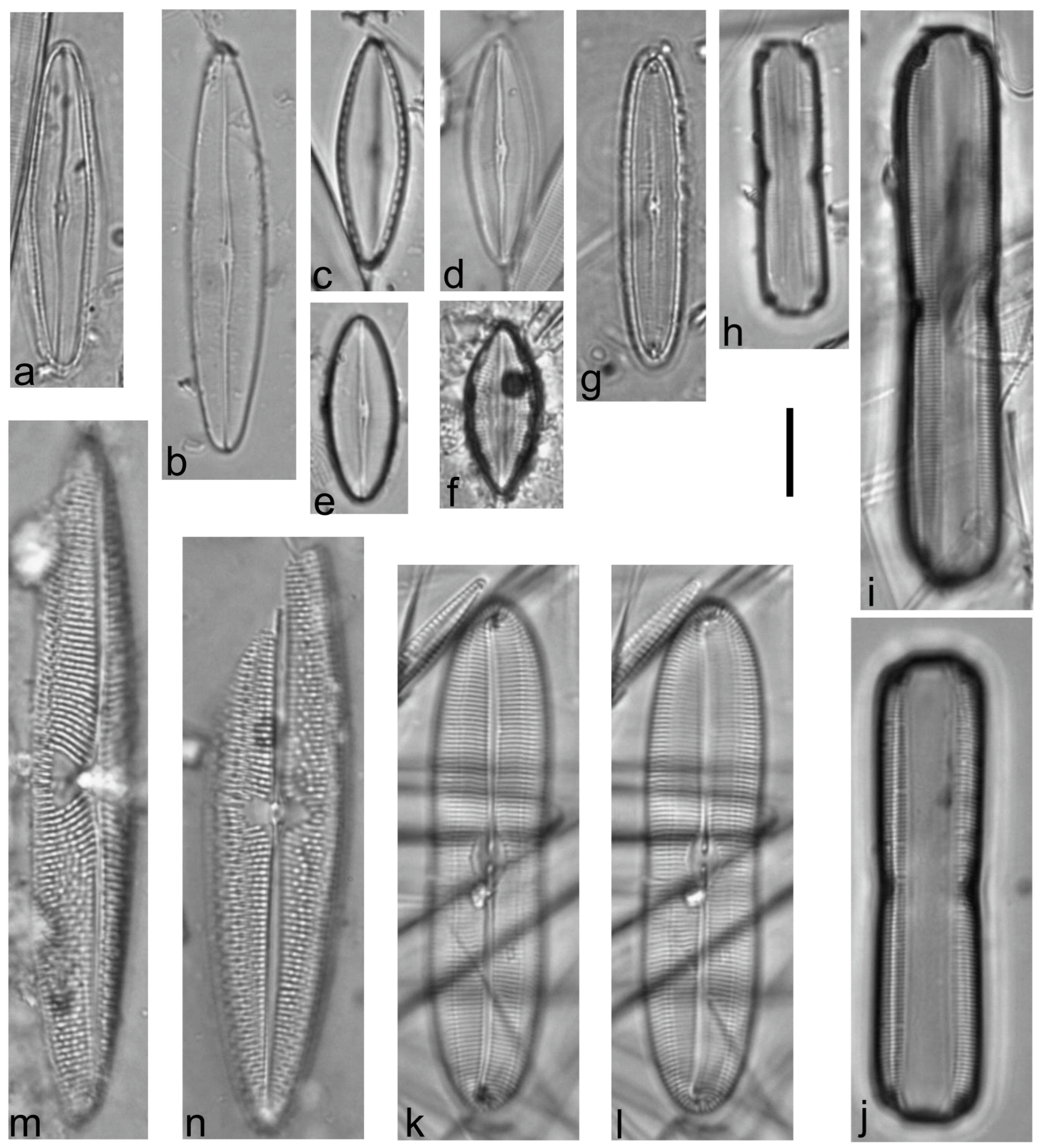
Figure A9.
(a,b) Lyrella clavata var. caribaea; (c) L. exsul; (d) L. clavata var. indica. Scale bar = 10 µm.
Scale bar = 10 µm.
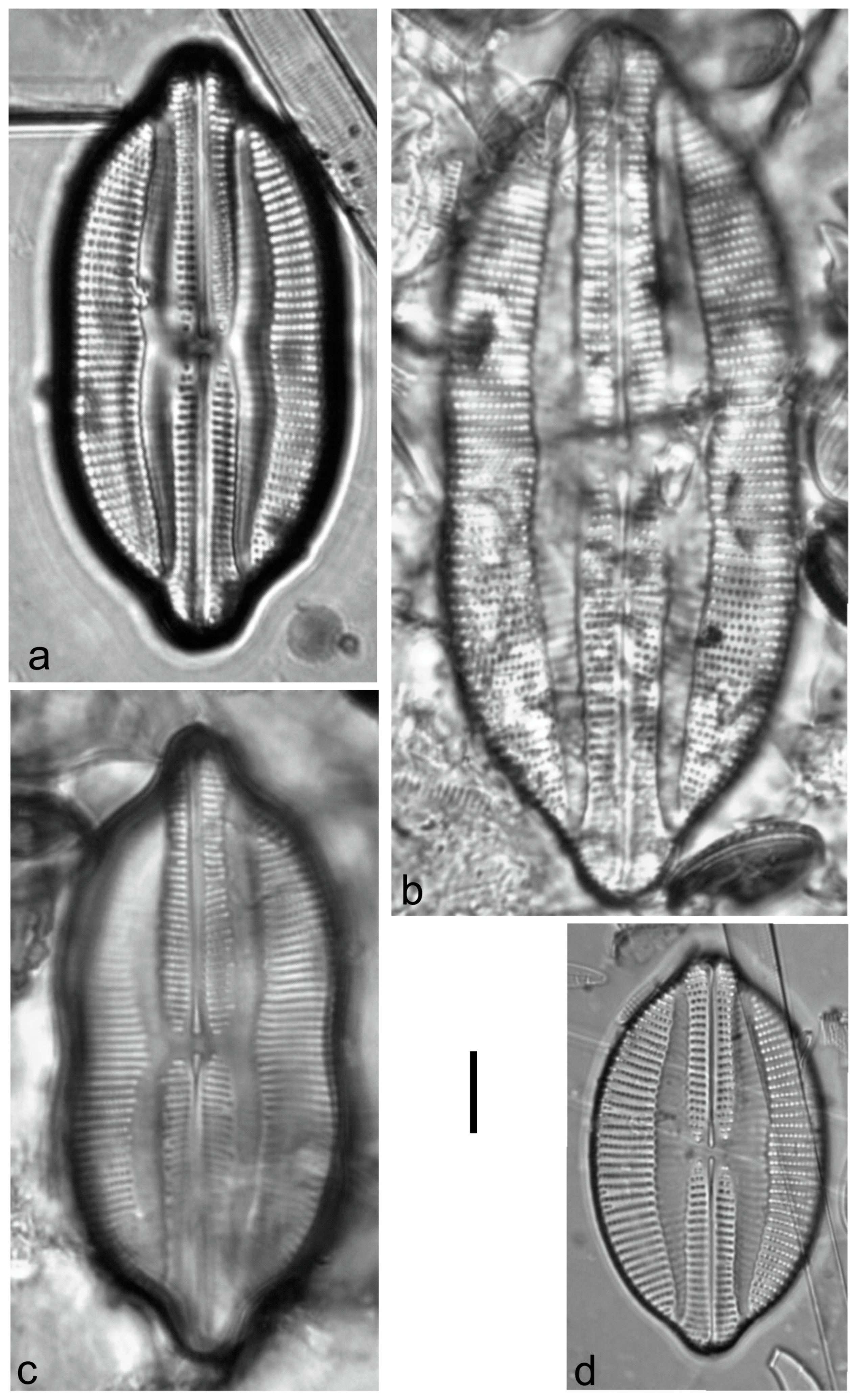
Figure A10.
(a) Lyrella lyra; (b–d) L. excavata; (e) L. approximatoides. Scale bar = 10 µm.
Scale bar = 10 µm.
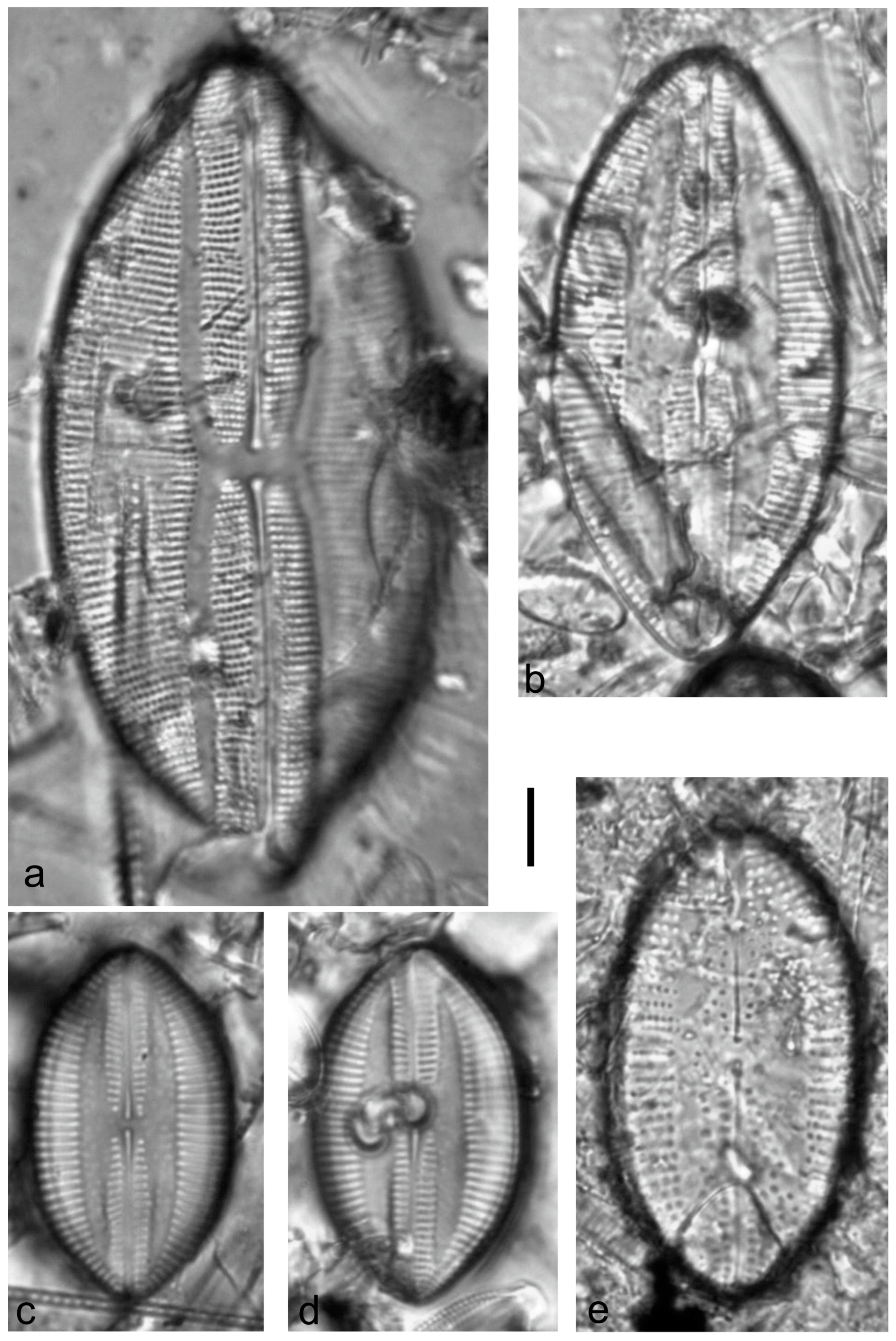
Figure A11.
(a,b) Lyrella irrorata; (c) L. abruptoides; (d) L. approximatoides. Scale bar = 10 µm.
Scale bar = 10 µm.
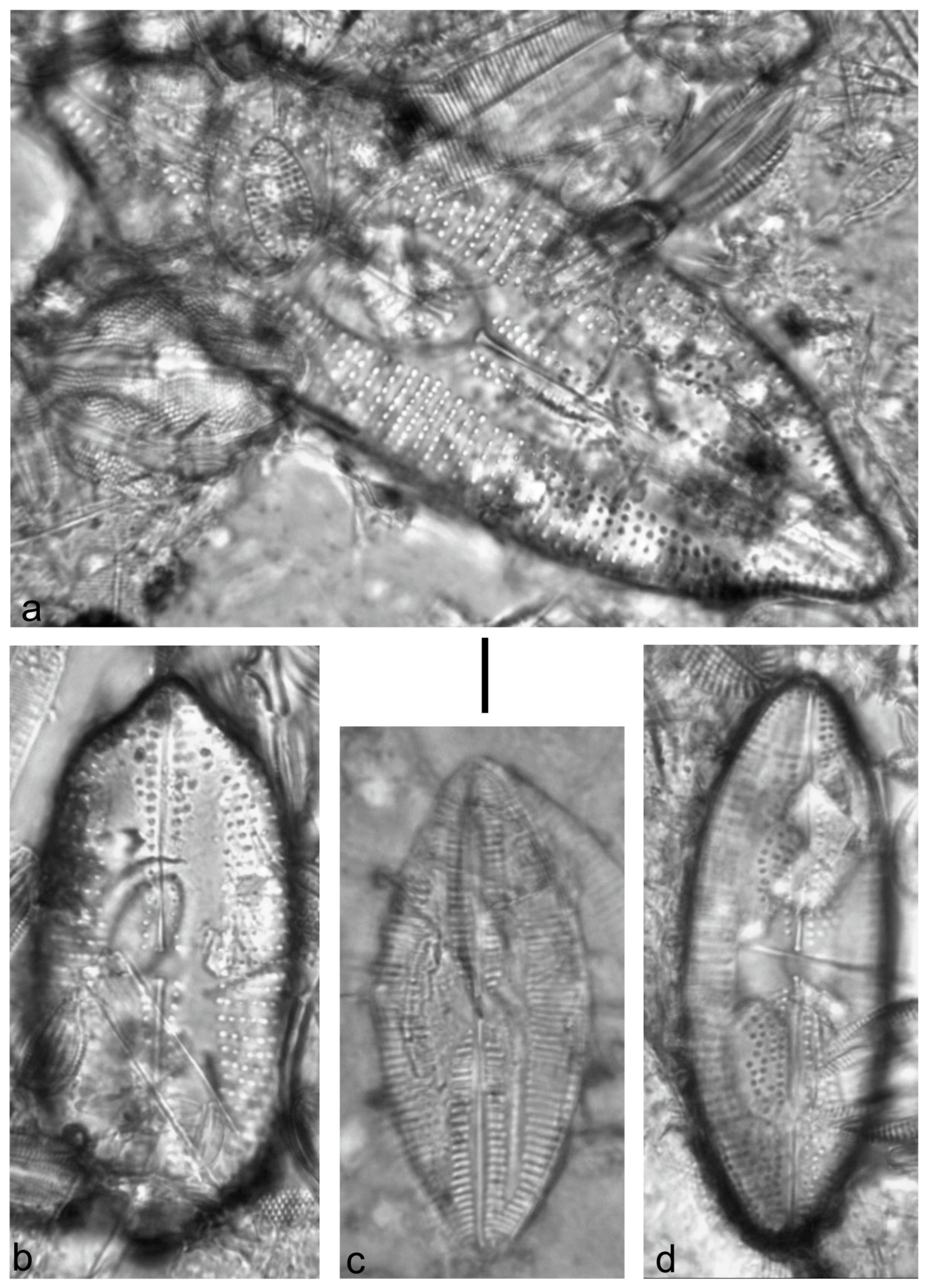
Figure A12.
(a–c) Fallacia minima; (d) F. nyella; (e) F. ny; (f,g) F. litoricola; (h,i) F. diploneoides; (j–l) F. inscriptura; (m–p) F. vittata; (q,t) F. forcipata; (r,s) F. subforcipata. Scale bar = 10 µm.
Scale bar = 10 µm.
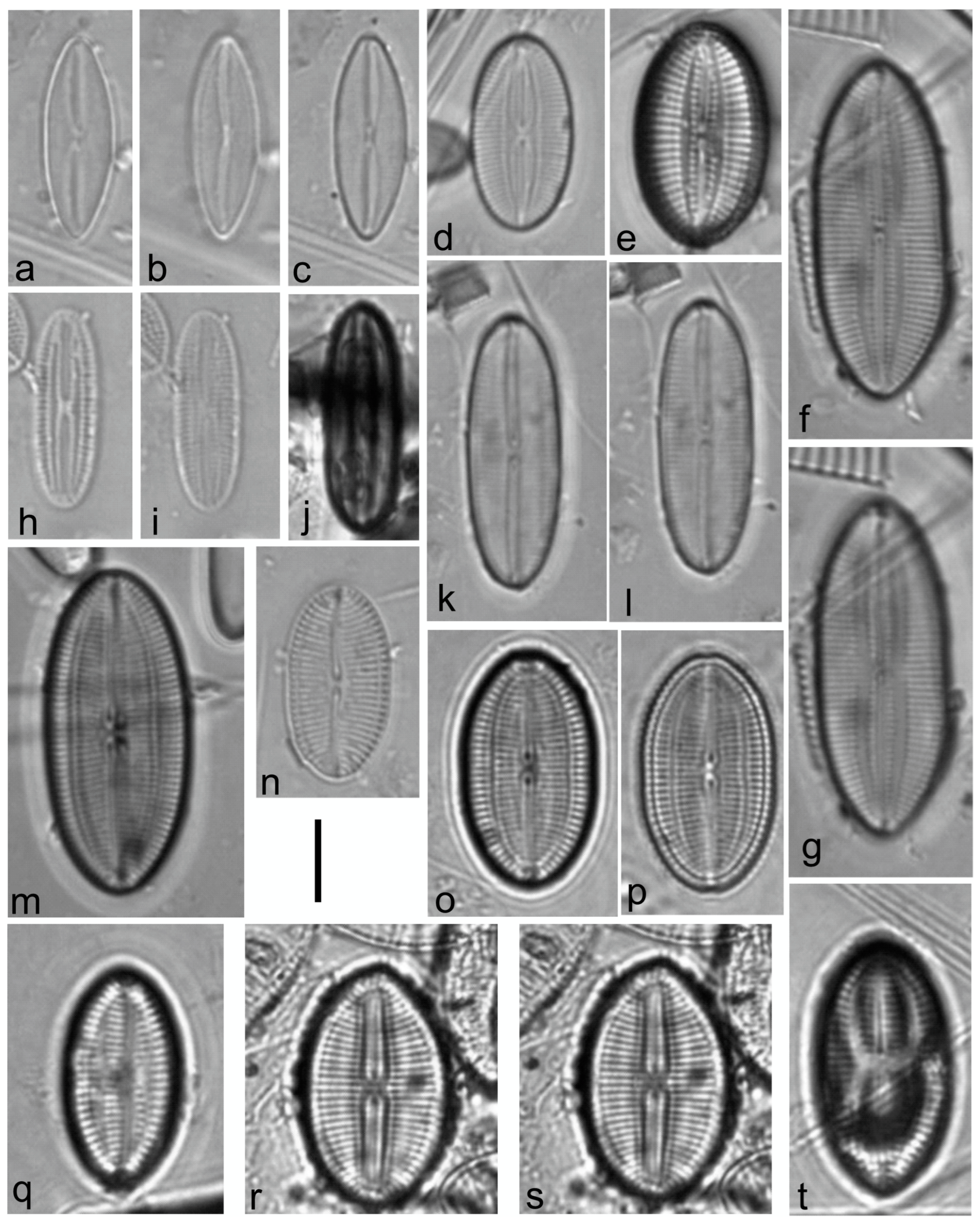
Figure A13.
(a–d) Seminavis strigosa; (e,f) Amphora angusta; (g,h) Seminavis eulensteinii; (i,j) Rhopalodia sterrenburgii. Scale bar = 10 µm.
Scale bar = 10 µm.
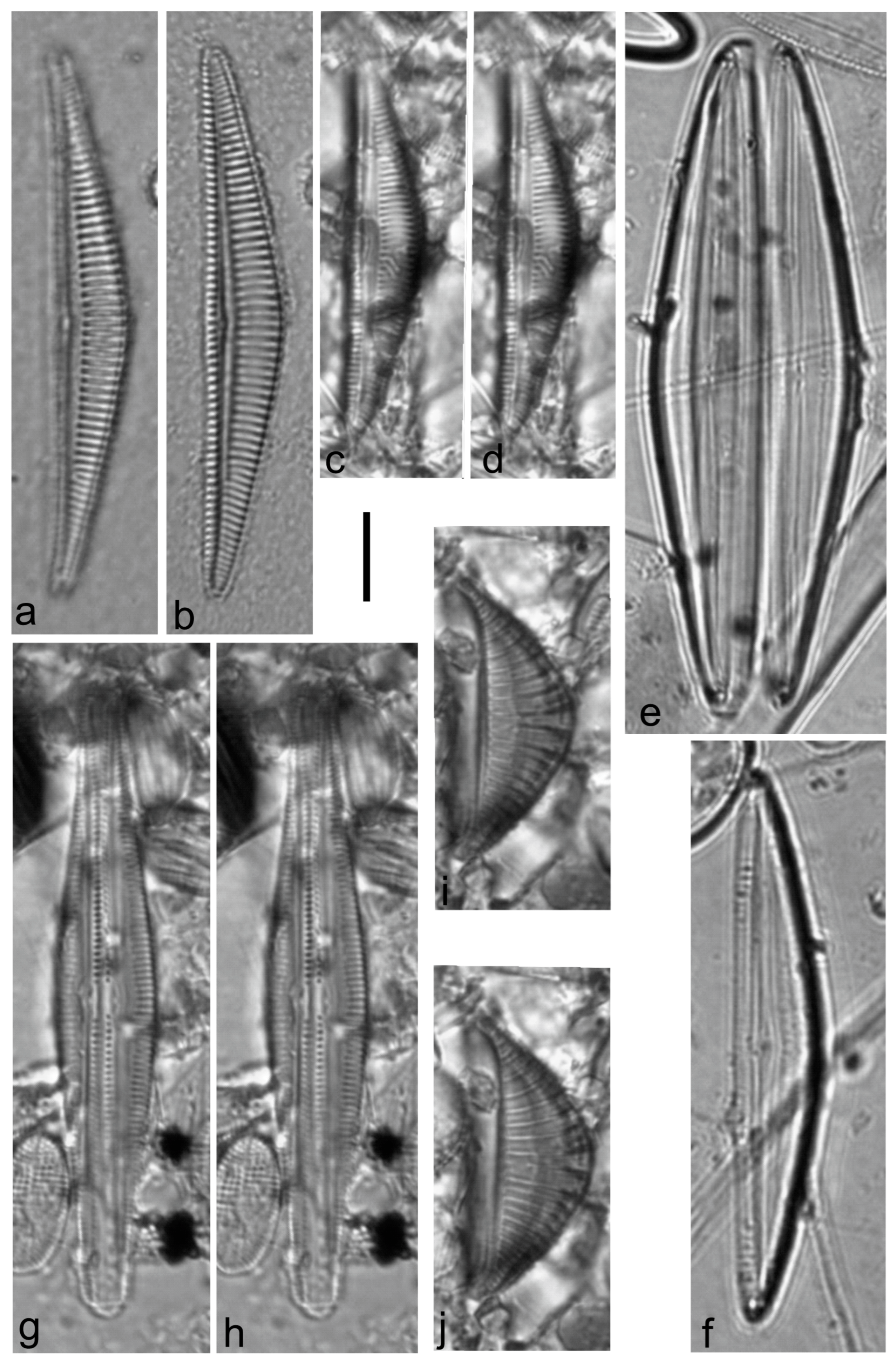
Figure A14.
(a) Staurophora sp 1.; (b–d) Craspedostauros cf. indubitabilis; (e,f) Trachyneis aspera var. ellipica; (g,i) T. velata; (h) T. aspera var. aspera. Scale bar = 10 µm.
Scale bar = 10 µm.
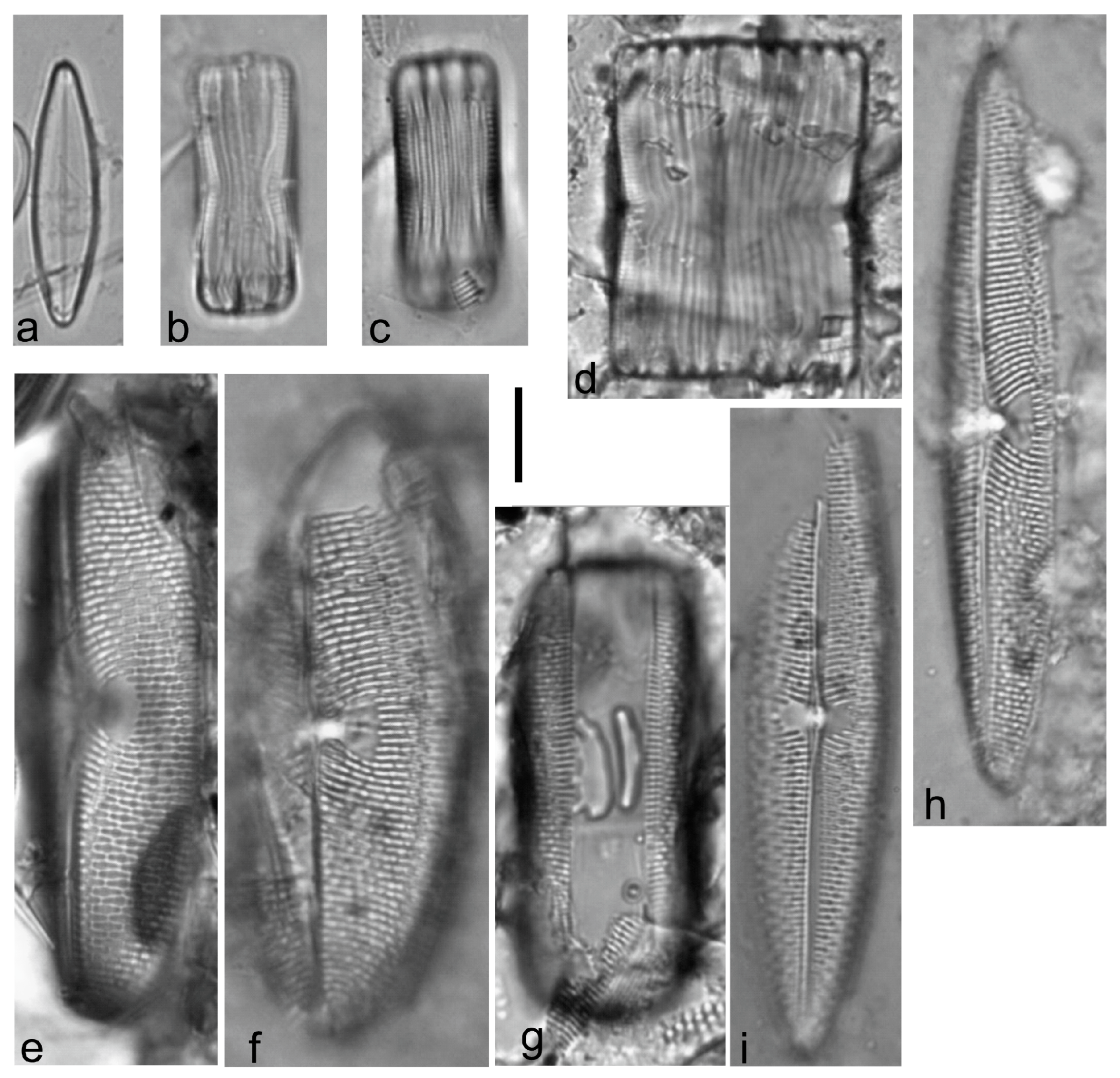
Figure A15.
(a,b,u) Navicula cincta; (c,d,f) N. abunda; (e,p) N. diversistriata; (g,h,m) N. directa; (i) N. cancellata; (j,k) Achnanthidium sp. 2; (l) Navicula johanrossii; (n,o,x,y) N. ammophila; (q) N. platyventris; (r) Gomphonemopsis sp.; (s,t) Craticula halophila; (v) Navicula microdigitoradiata; (w) N. leptoloba. Scale bar = 10 µm.
Scale bar = 10 µm.
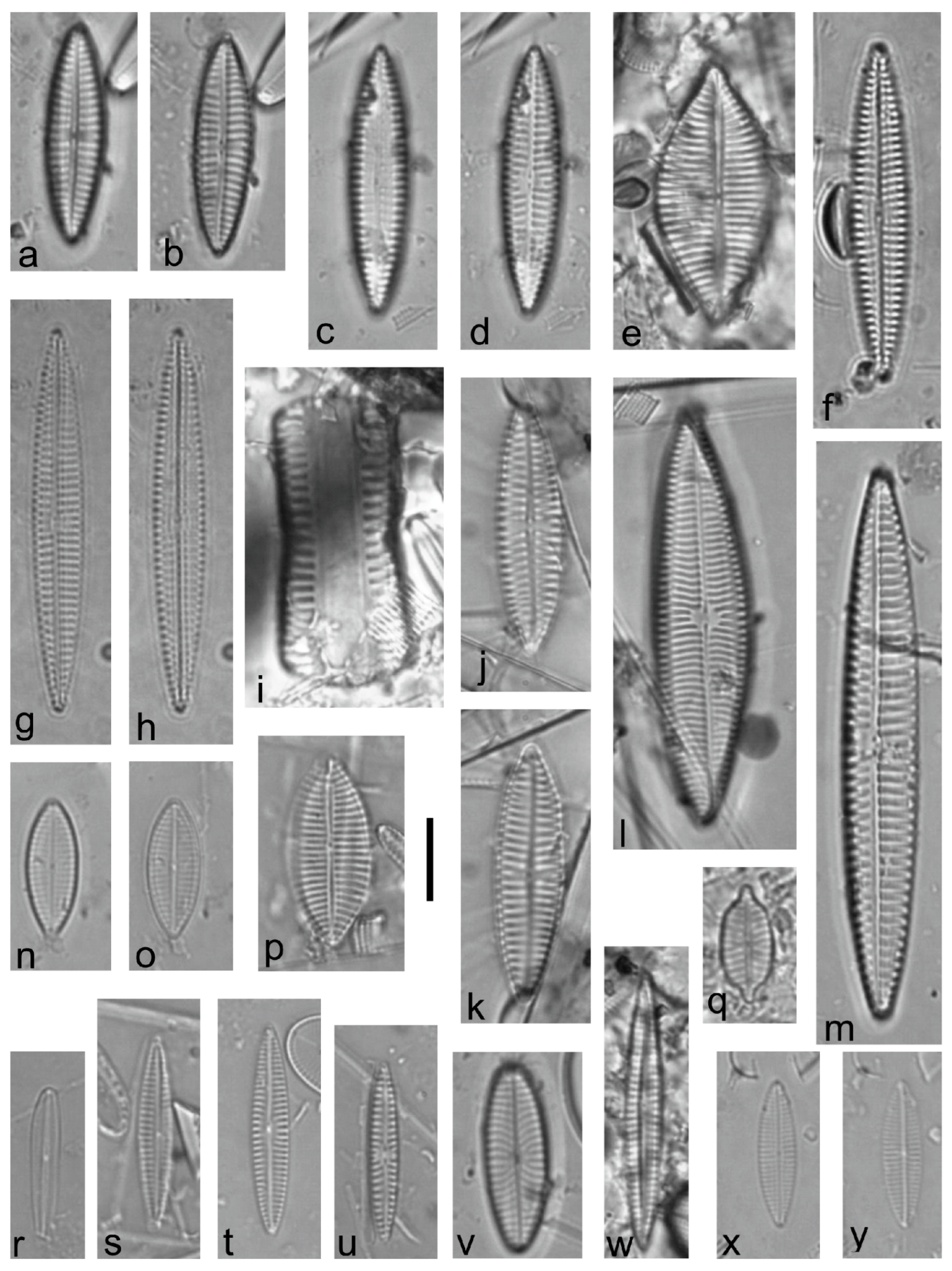
Figure A16.
(a) Navicula longa var. longa; (b) N. longa var. irregularis; (c) N. pavillardii; (d) N. pennata; (e) N. palpebralis; (f,g) N. salinarum; (h,i) Navicula sp. 1; (j,k) N. leptoloba. Scale bar = 10 µm.
Scale bar = 10 µm.
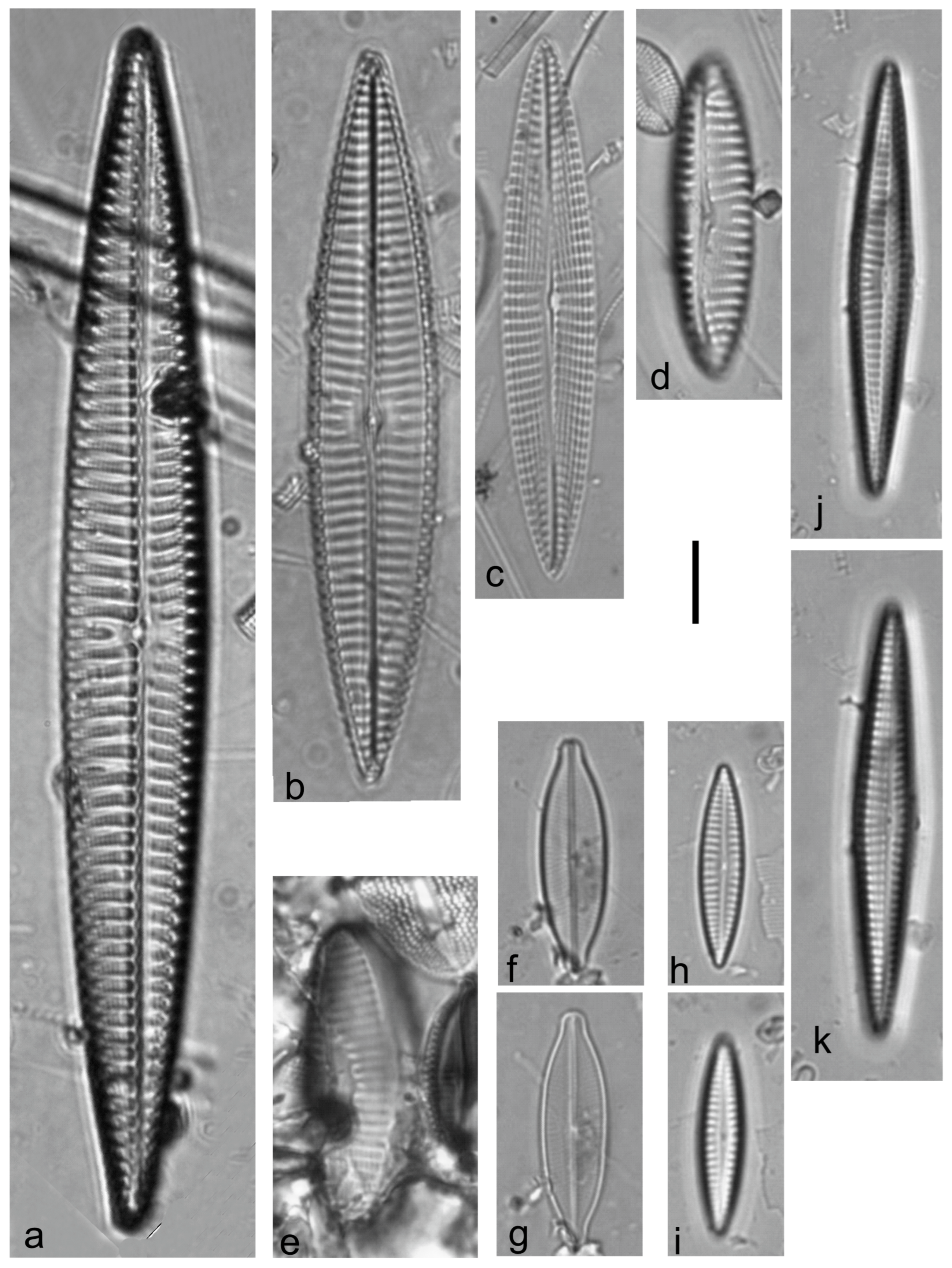
Figure A17.
(a,b,e,f,i,j,n,o) Navicula sp. 2; (k–m) Navicula sp. 3; (p,q) Navicula sp. 4; (c,d,g,h) Navicula sp. 5; (r,s) N. subagnita. Scale bar = 10 µm.
Scale bar = 10 µm.
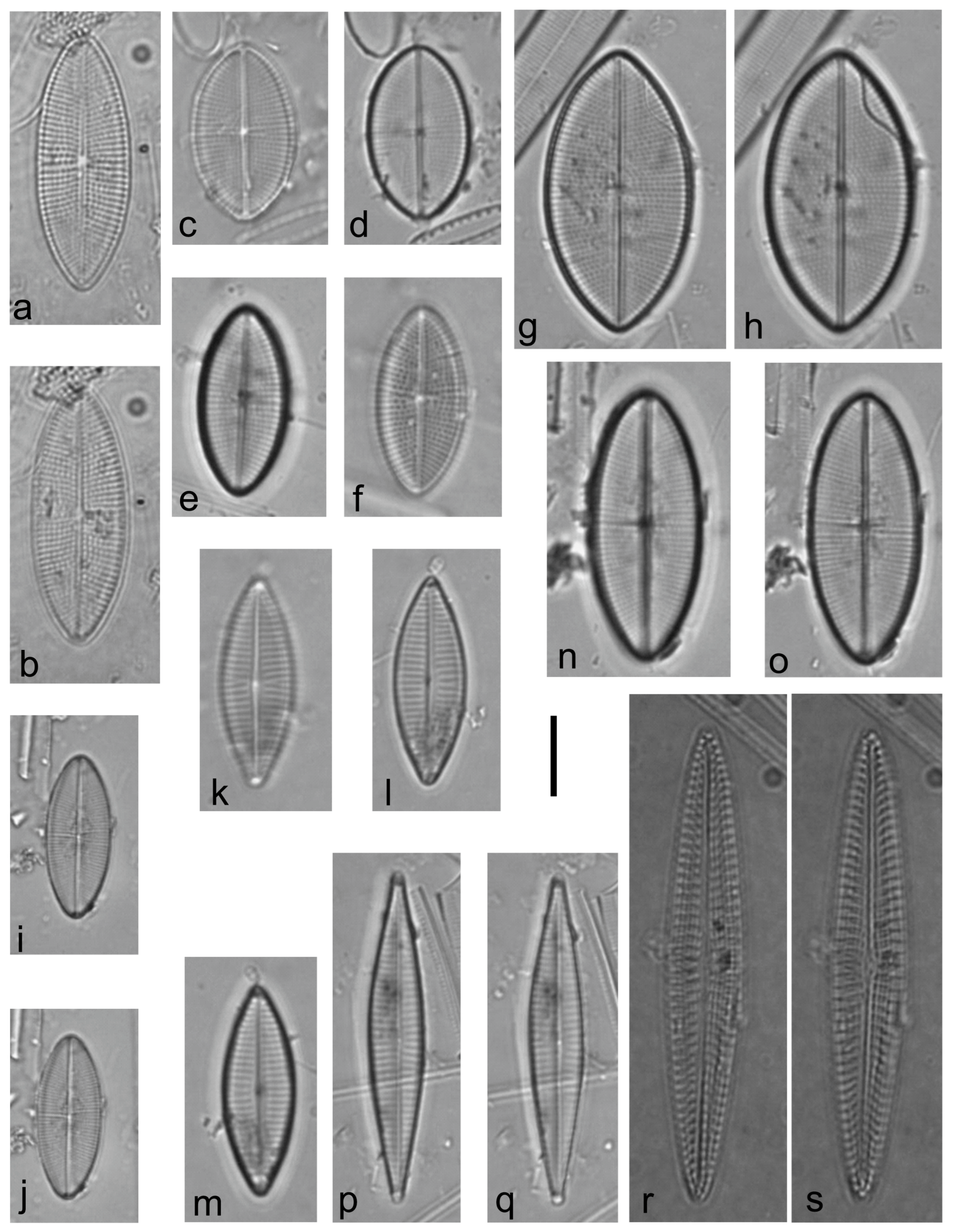
Figure A18.
(a) Navicula carinifera; (b) N. cancellata; (c) Cosmioneis grossepunctata; (d,e) Cymatoneis margaritae; (f) Libellus grevillei; (g) Navicula lanceolata; (h) N. libellus. Scale bar = 10 µm.
Scale bar = 10 µm.
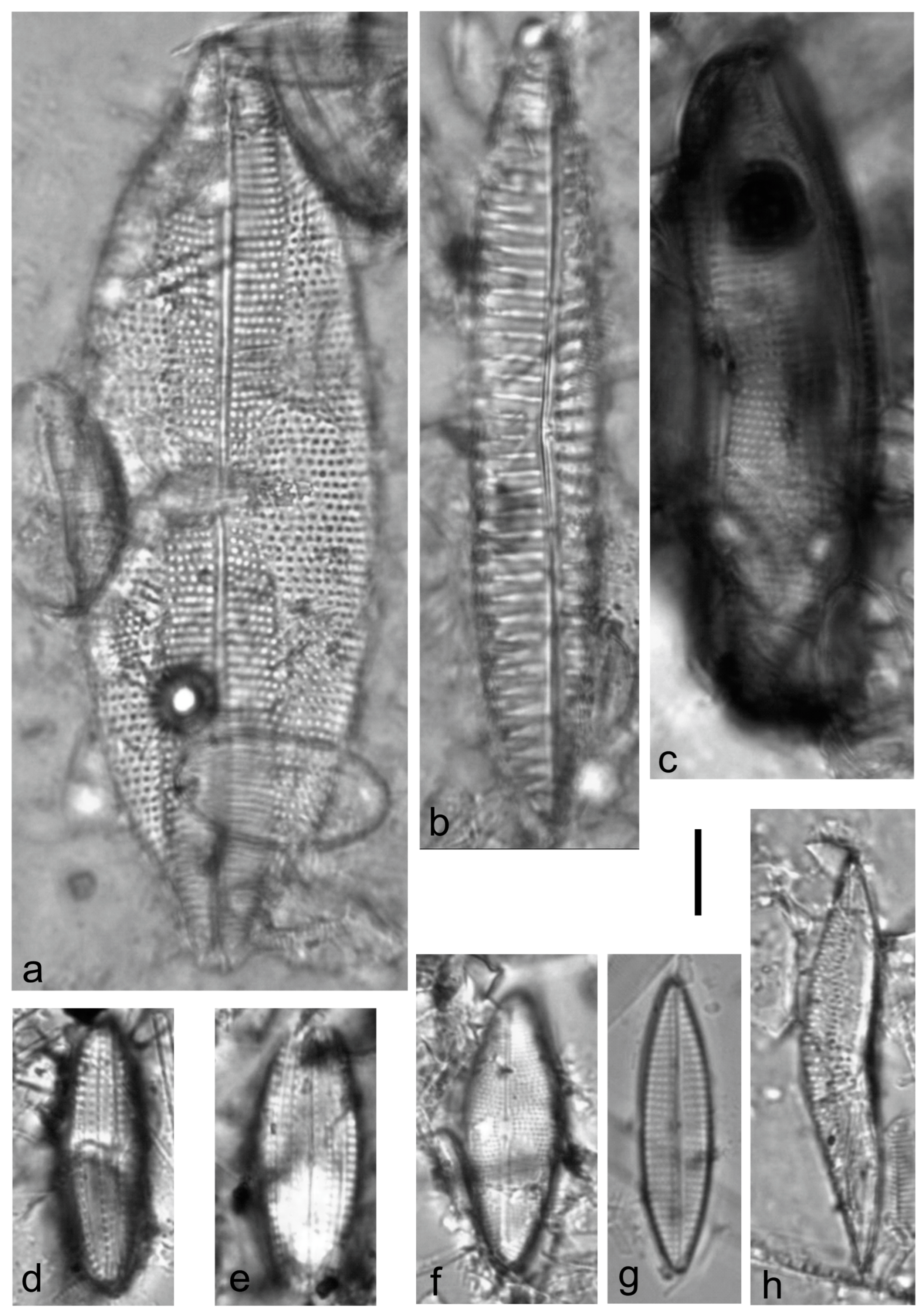
Figure A19.
(a) Parlibellus delognei; (b) P. hammulifer; (c) P. rhombicula; (d) Parlibellus sp. 1; (e,f) Staurophora sp. 2. Scale bar = 10 µm.
Scale bar = 10 µm.
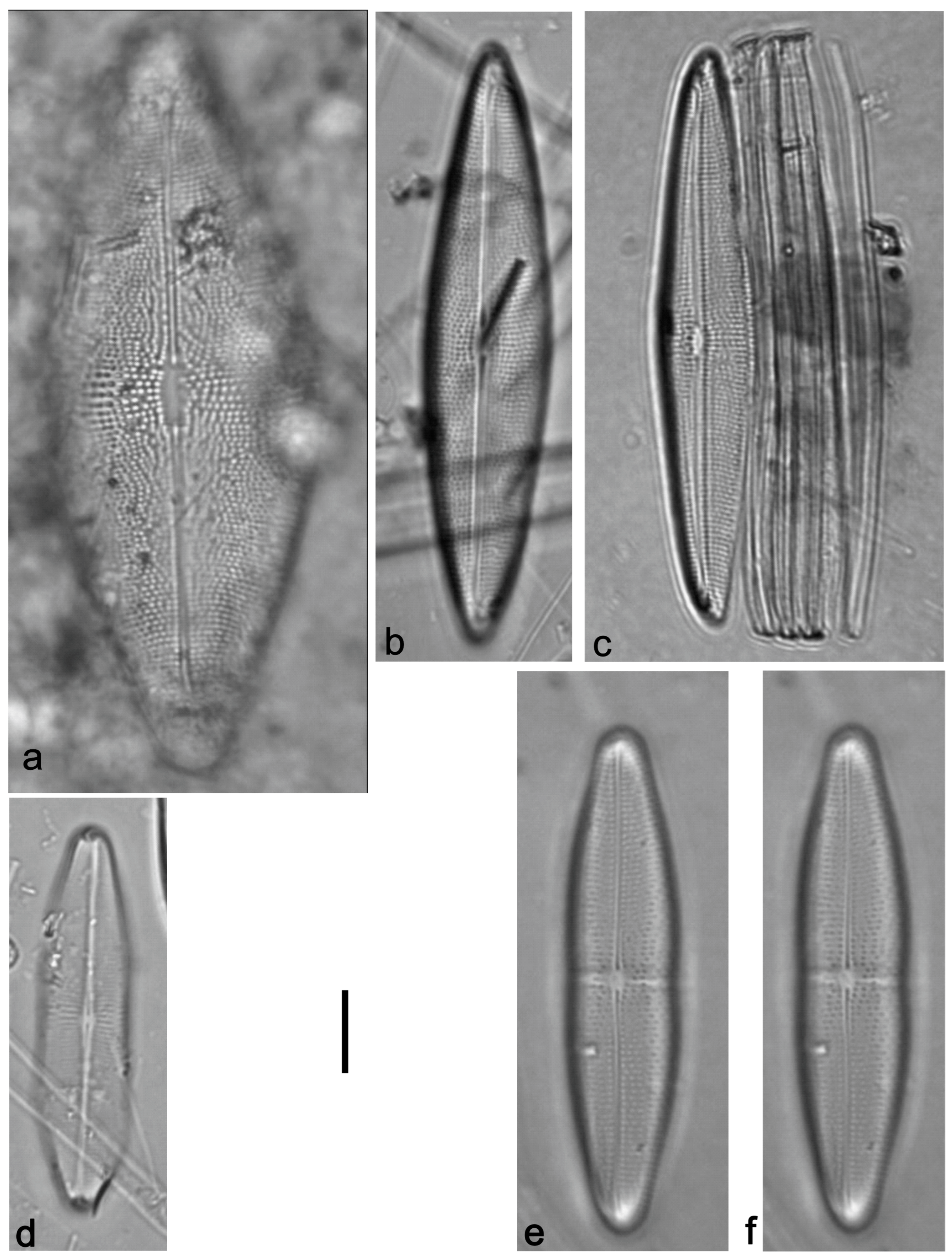
Figure A20.
(a) Gyrosigma peisonis; (b) Auricula pulchra; (c) Donkinia carinata; (d) Gyrosigma parvulum. Scale bar = 10 µm.
Scale bar = 10 µm.
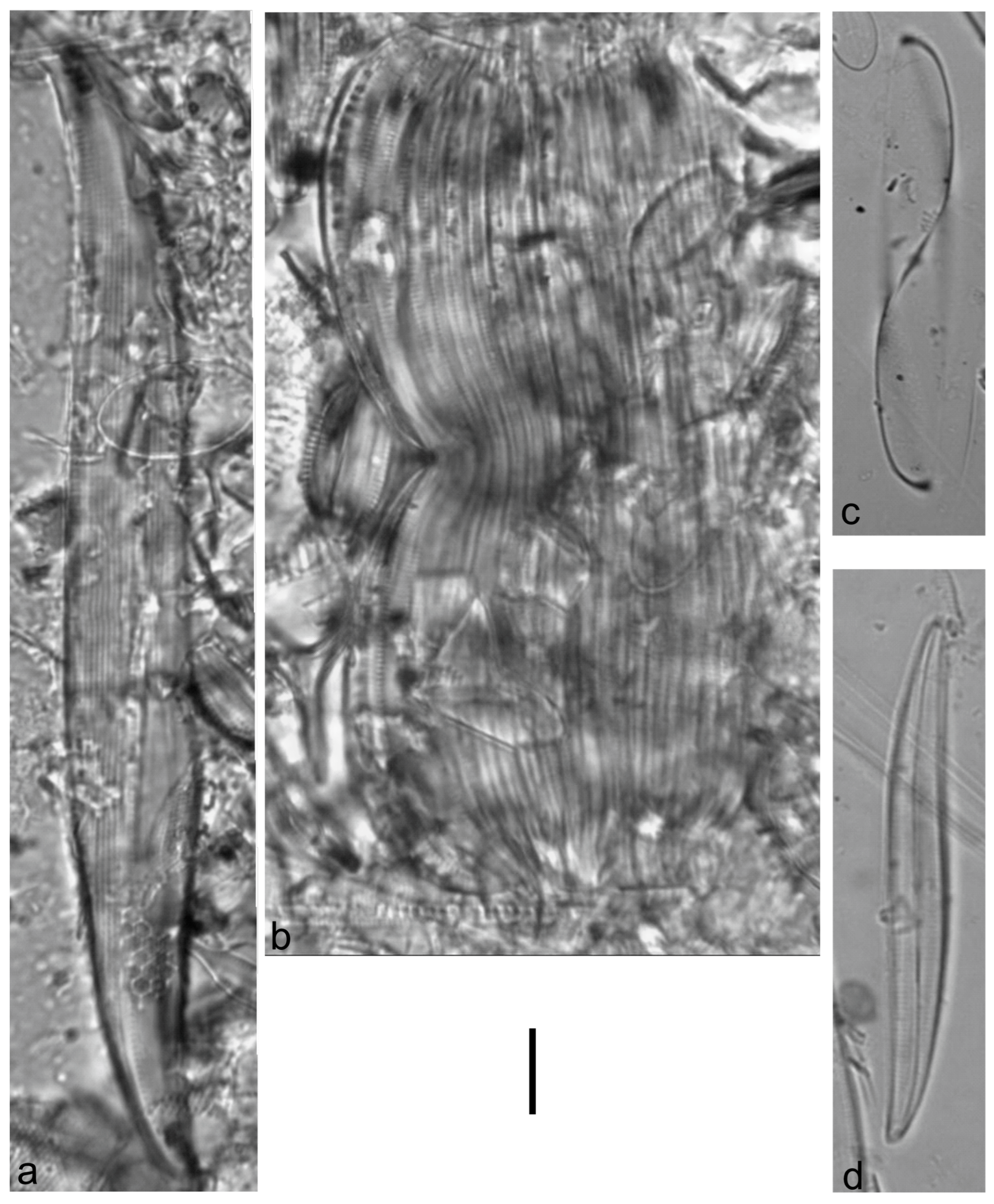
Figure A21.
(a) Seminavis obtusiuscula; (b,c,q) Amphora americana; (d–f,l) A. proteus var. proteus; (g) A. spectabilis; (h) Amphora sp. 2; (i) Halamphora wisei; (j) Amphora elegantula; (k) A. helenensis; (m) Halamphora pseudohyalina; (n) Amphora cf. zebrina; (o) Halamphora staurophora; (p) Tetramphora securicula; (r) Halamphora subangularis; (s) Amphora maletracta var. constricta. Scale bar = 10 µm.
Scale bar = 10 µm.
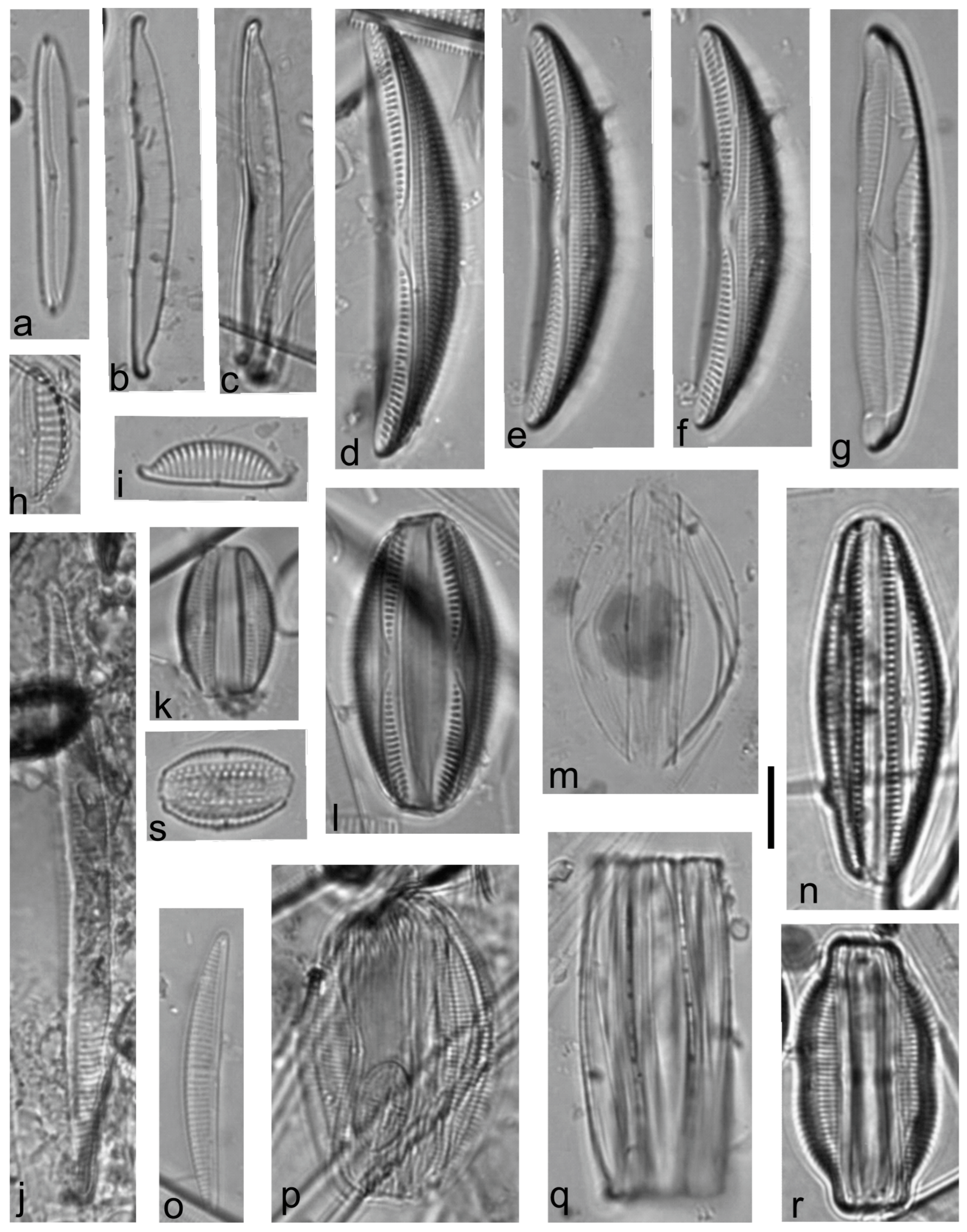
Figure A22.
(a) Amphora ostrearia var. vitrea; (b,c) Halamphora holsatica; (d,e) Amphora holsaticoides; (f) Halamphora dusenii; (g,h) Tetramphora securicula; (i,j) Amphora cingulata; (k,l,n) A. laevis; (m) Catenula adhaerens. Scale bar = 10 µm.
Scale bar = 10 µm.
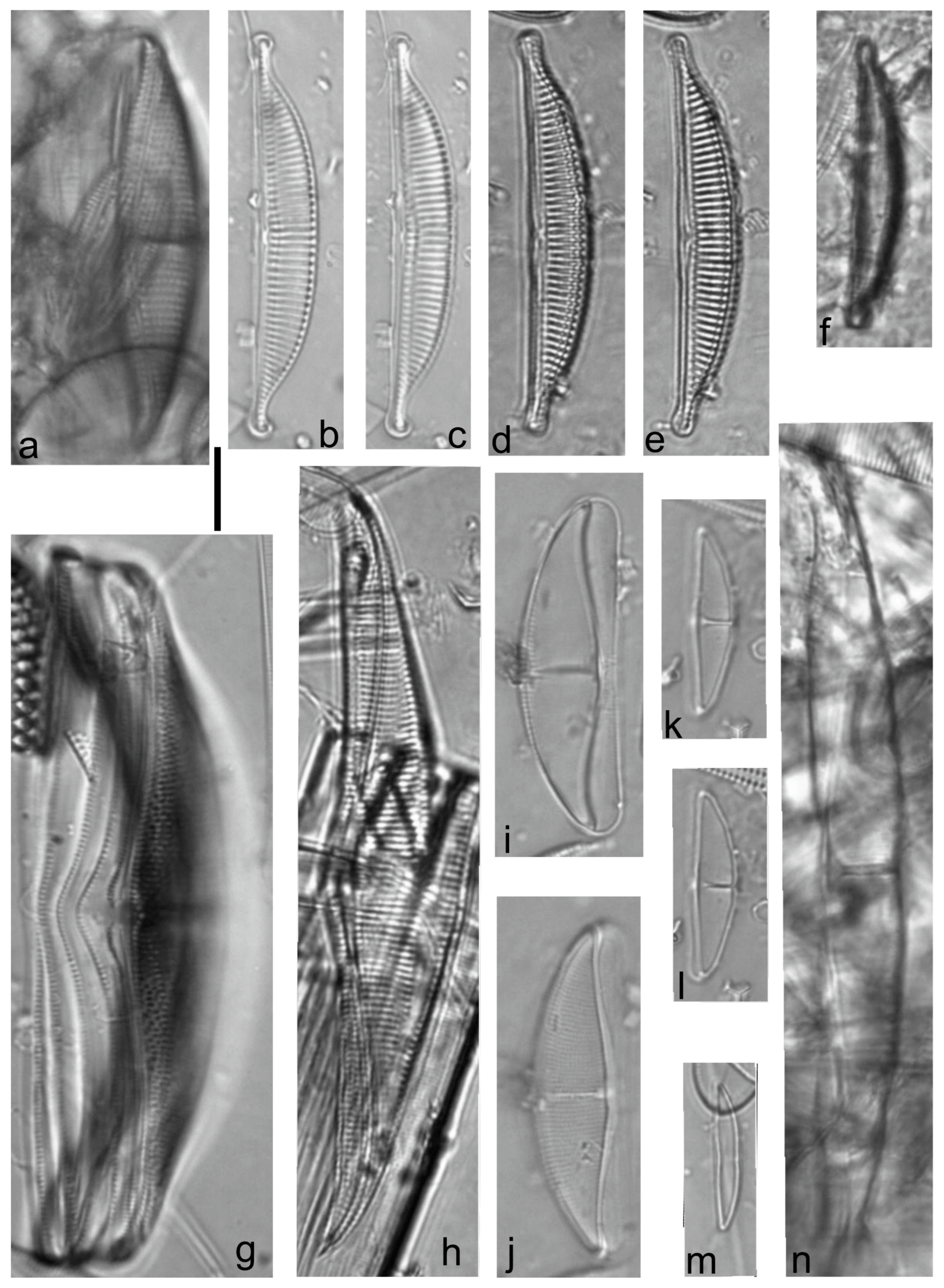
Figure A23.
(a,b) Halamphora cymbifera; (c,d) Amphora arcuata; (e) Halamphora coffeiformis; (f) Amphora bigibba var. bigibba; (g) A. graeffeana; (h) A. aspera; (i) Auricula complexa; (j) Halamphora hybrida; (k) Amphora spectabilis; (l) Halamphora kolbei; (m) H. turgida. Scale bar = 10 µm.
Scale bar = 10 µm.
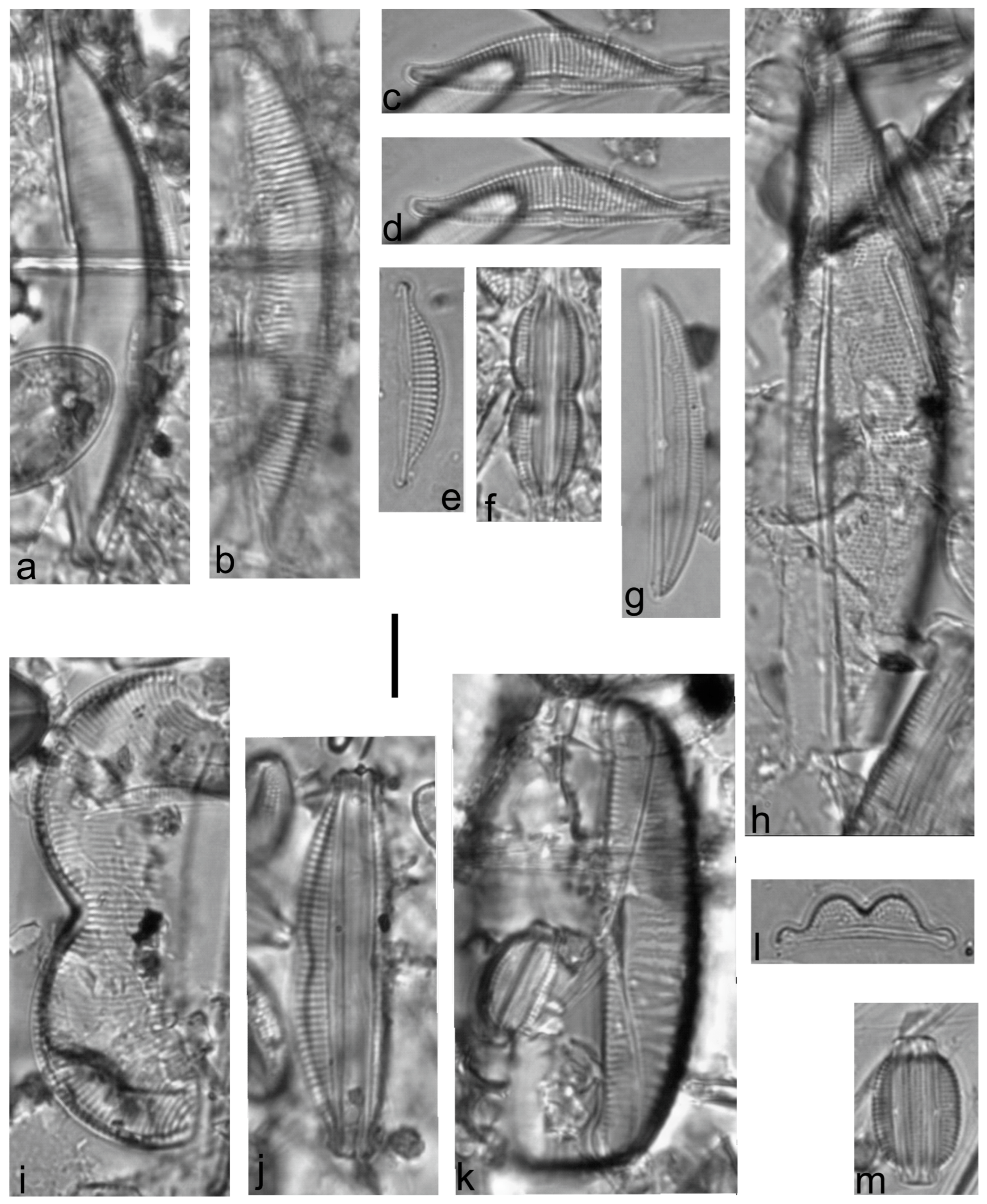
Figure A24.
(a,b) Amphora crassa var. punctata; (c,d) A. ostrearia var. vitrea; (e,f) Tetramphora securicula; (g–i) Amphora cf. janischii; (j) A. cf. amoena; (k,l) Amphora sp. 1. Scale bar = 10 µm.
Scale bar = 10 µm.
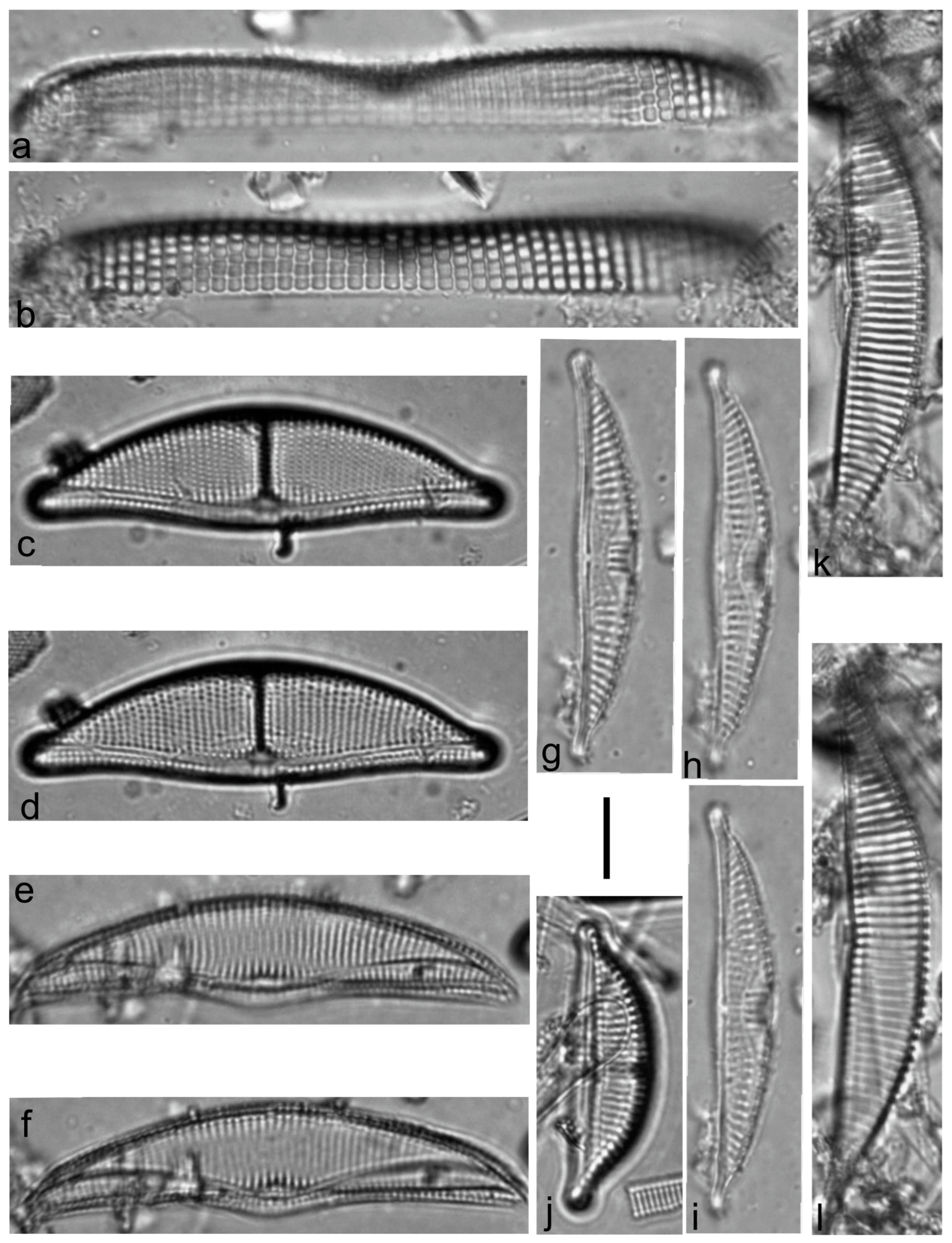
Figure A25.
(a,e) Halamphora costata; (b,c) Amphora cf. crassa; (d) A. cf. obstusa var. rectangulata; (f) Amphora sp. 3; (g) Halamphora eunotia; (h,i) Amphora sp. 1. Scale bar = 10 µm.
Scale bar = 10 µm.
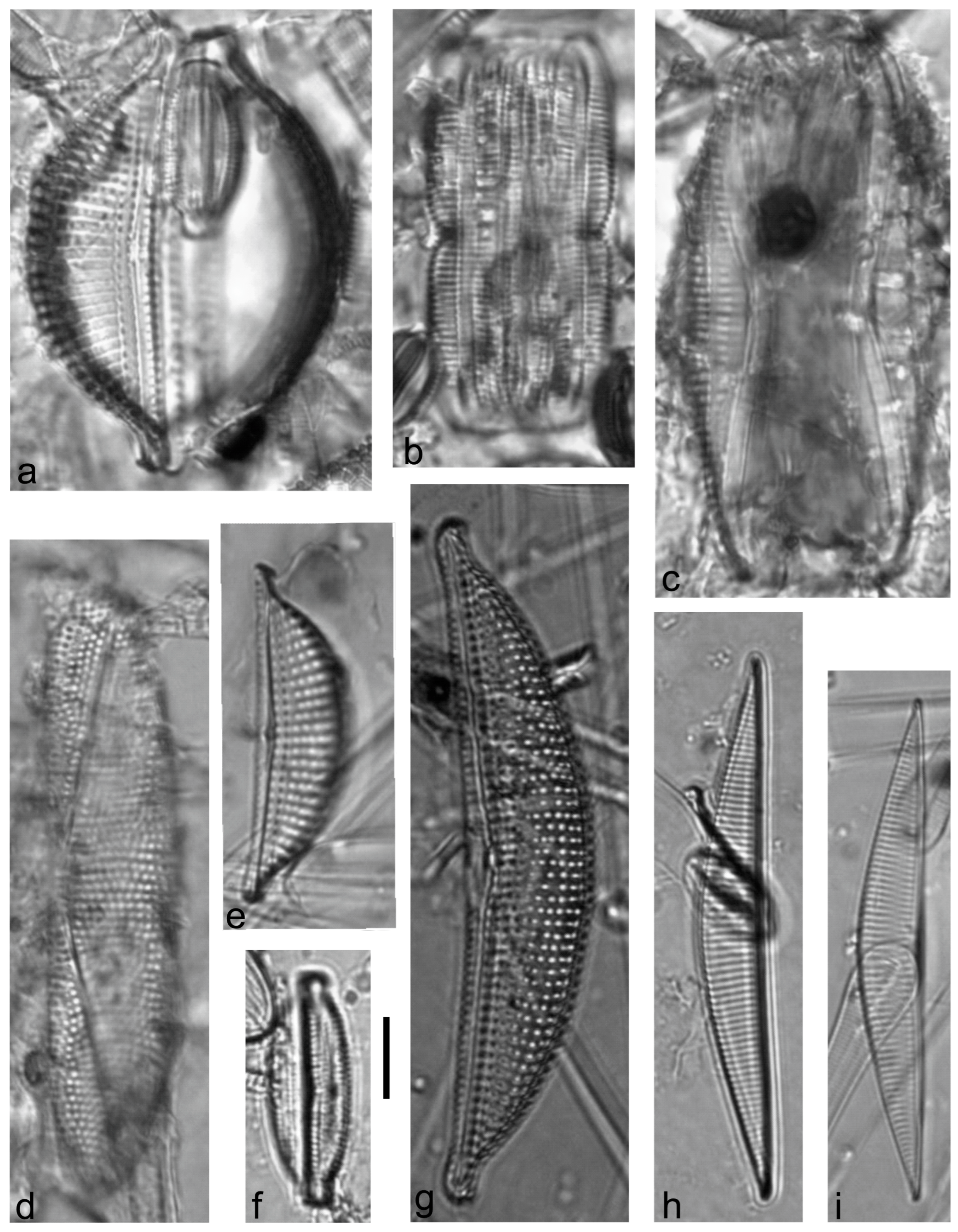
Figure A26.
(a) Amphora arenaria; (b,c) Biremis ambigua; (d) Brachysira sp.; (e) Biremis sp. Scale bar = 10 µm.
Scale bar = 10 µm.
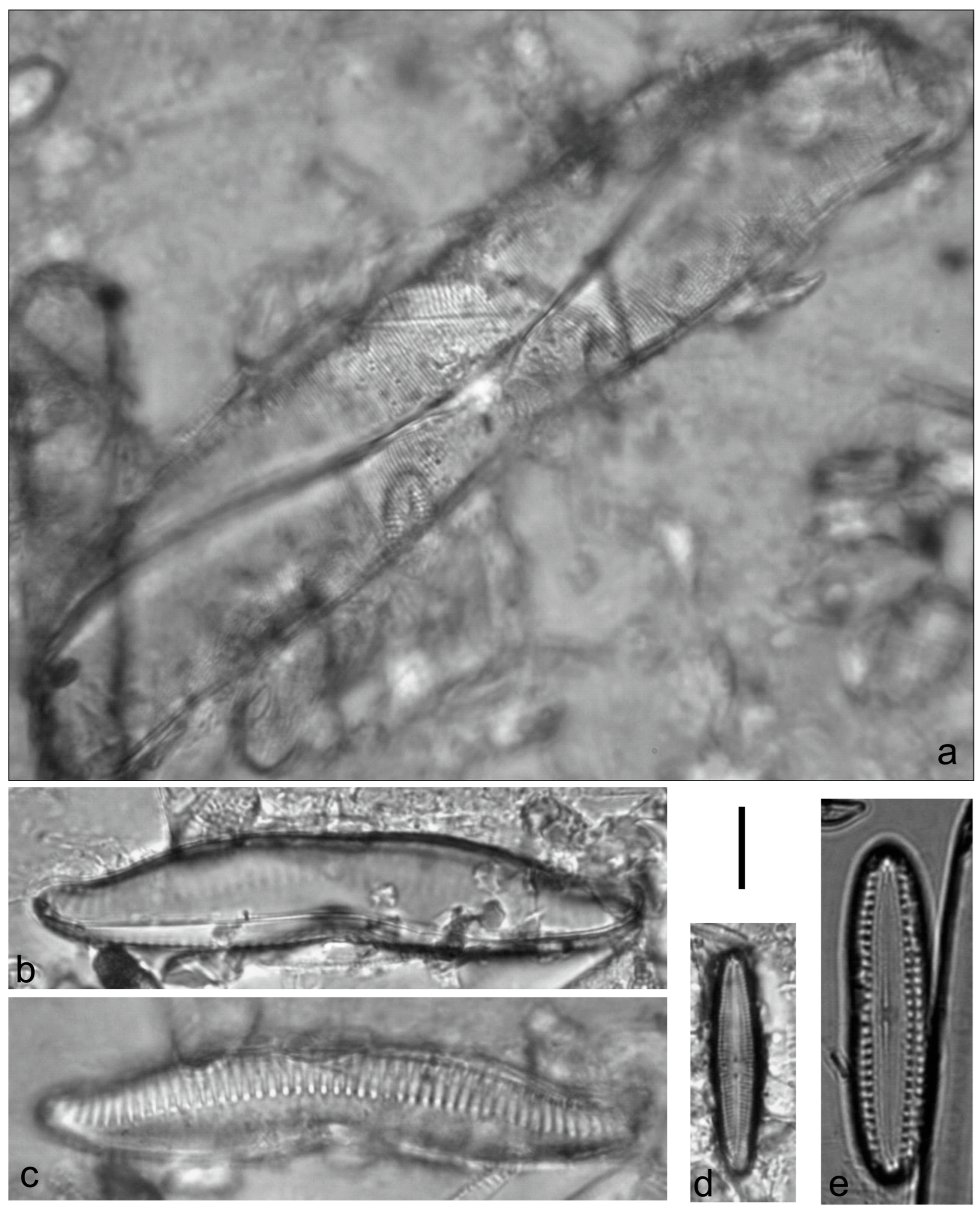
Figure A27.
(a) Nitzschia laevis; (b) N. bombiformis; (c,j) Tryblionella coarctata; (d) Psammodictyon constrictum; (e,m) Nitzschia angularis; (f) Tryblionella acuminata; (g) Nitzschia jelineckii; (h) N. agnita; (i) N. grossestriata; (k) Psammodictyon panduriforme var. latum; (l) Bacillaria socialis; (n) Nitzschia microcephala var. bicapitellata; (o,p) N. bicapitata. Scale bar = 10 µm.
Scale bar = 10 µm.
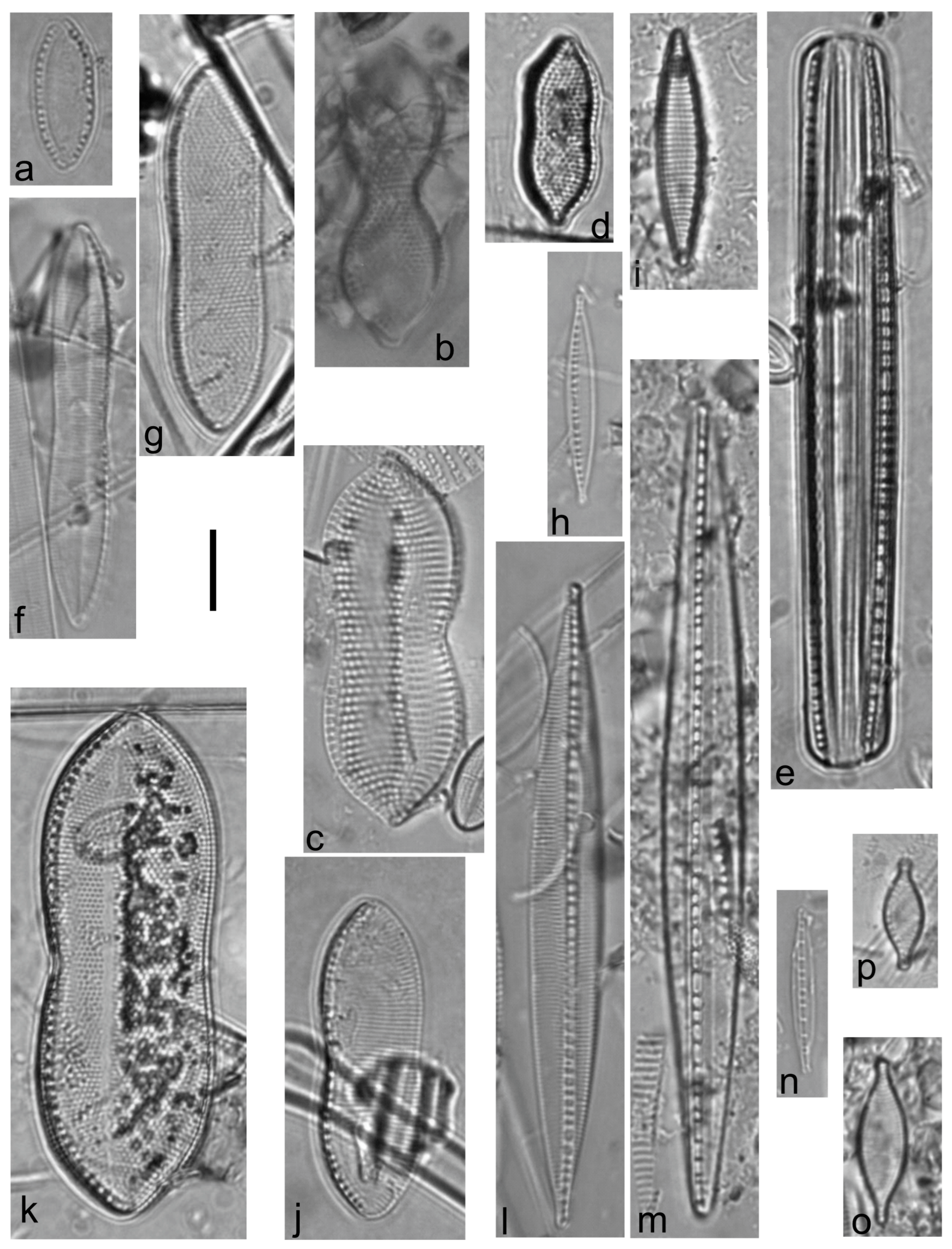
Figure A28.
(a,b) Nitzschia insignis; (c) N. scalpelliformis; (d) N. distans; (e) N. fluminensis; (f,g) N. sigma. Scale bar = 10 µm.
Scale bar = 10 µm.
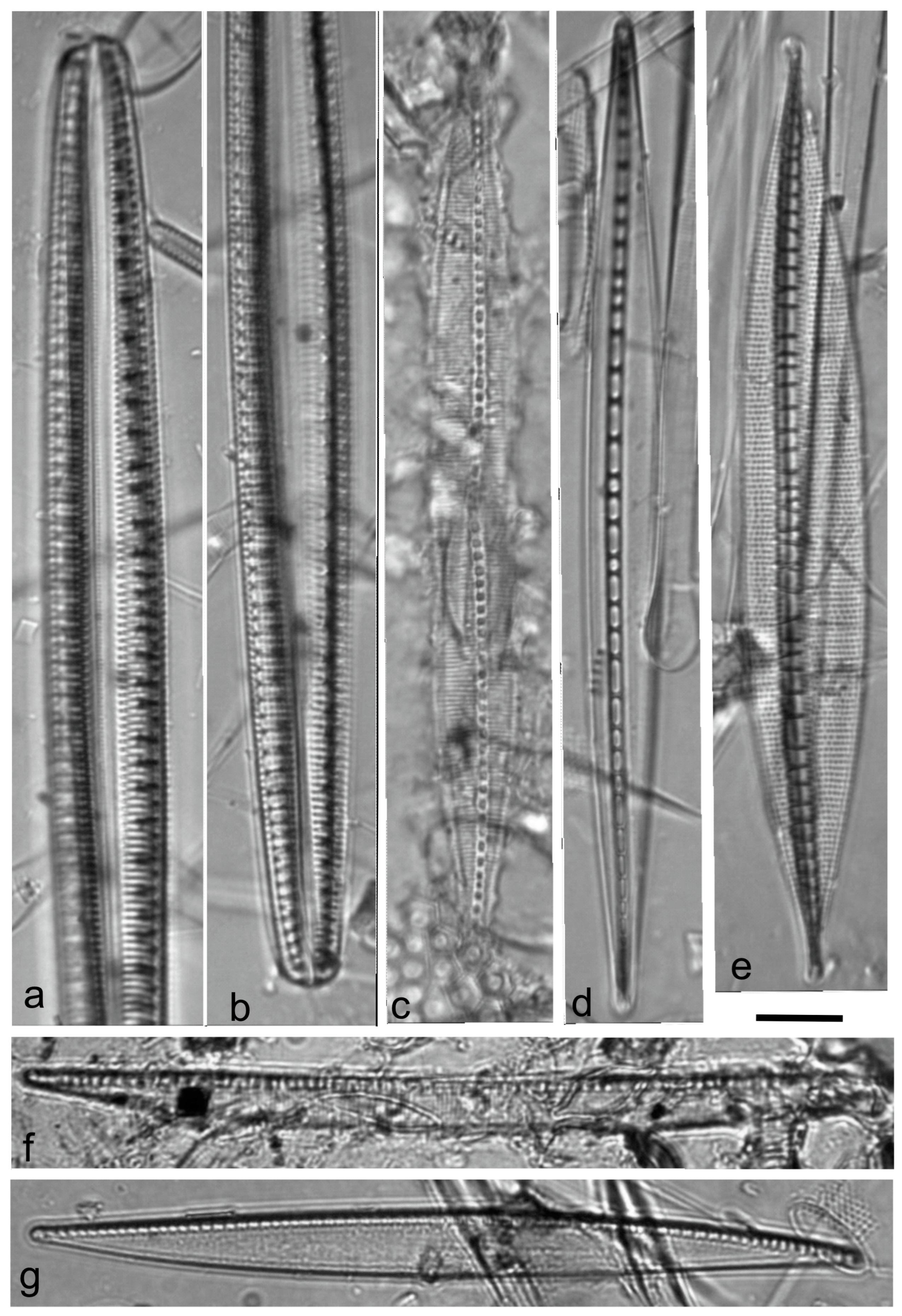
Figure A29.
(a,b) Campylodiscus neofastuosus; (c–e) Surirella recedens; (f) Campylodiscus giffenii. Scale bar = 10 µm.
Scale bar = 10 µm.
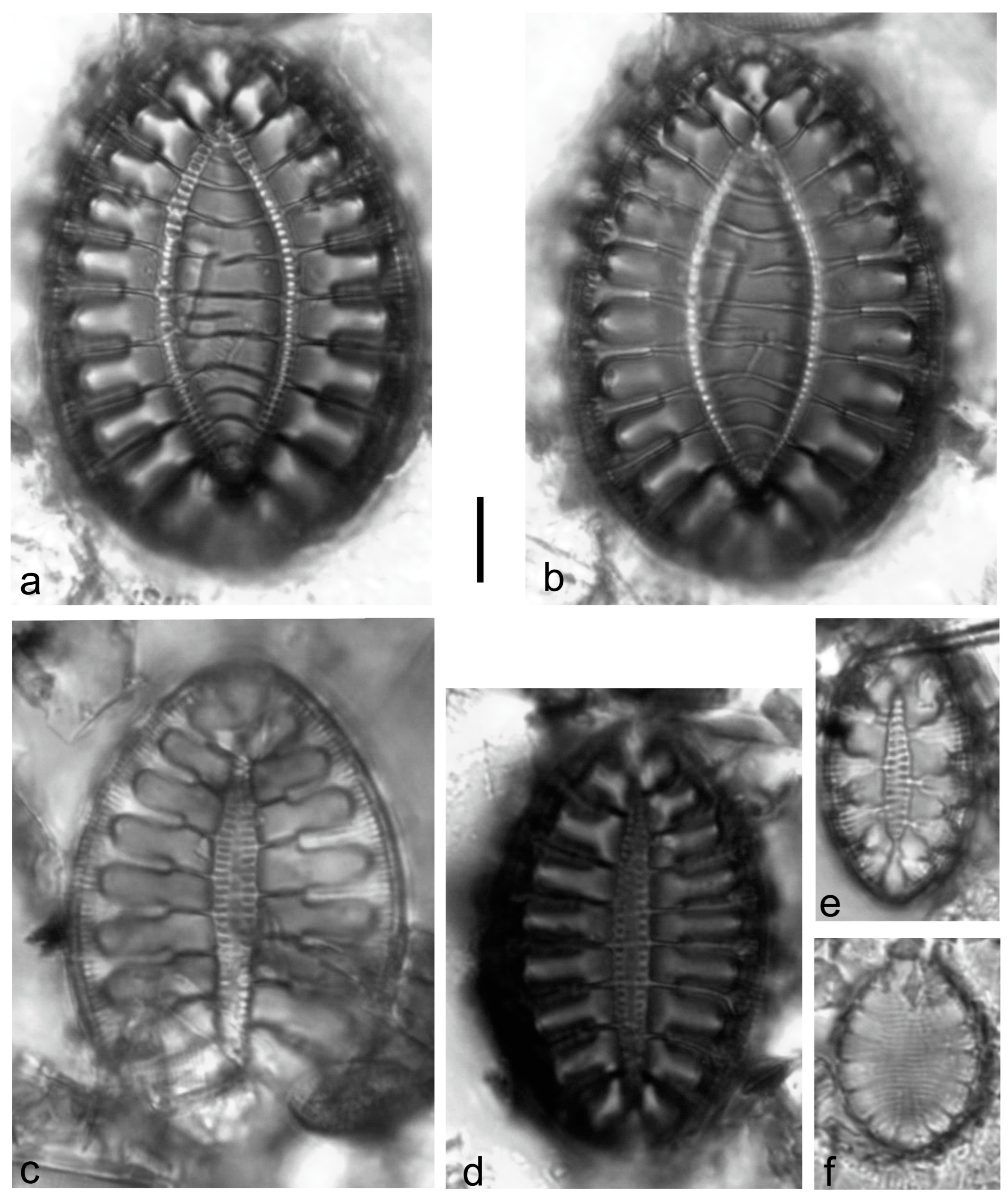
Figure A30.
(a,b) Coronia decora; (c,d,g) Campylodiscus thuretii; (e) C. neofastuosus; (f) C. cordatus. Scale bar = 10 µm.
Scale bar = 10 µm.
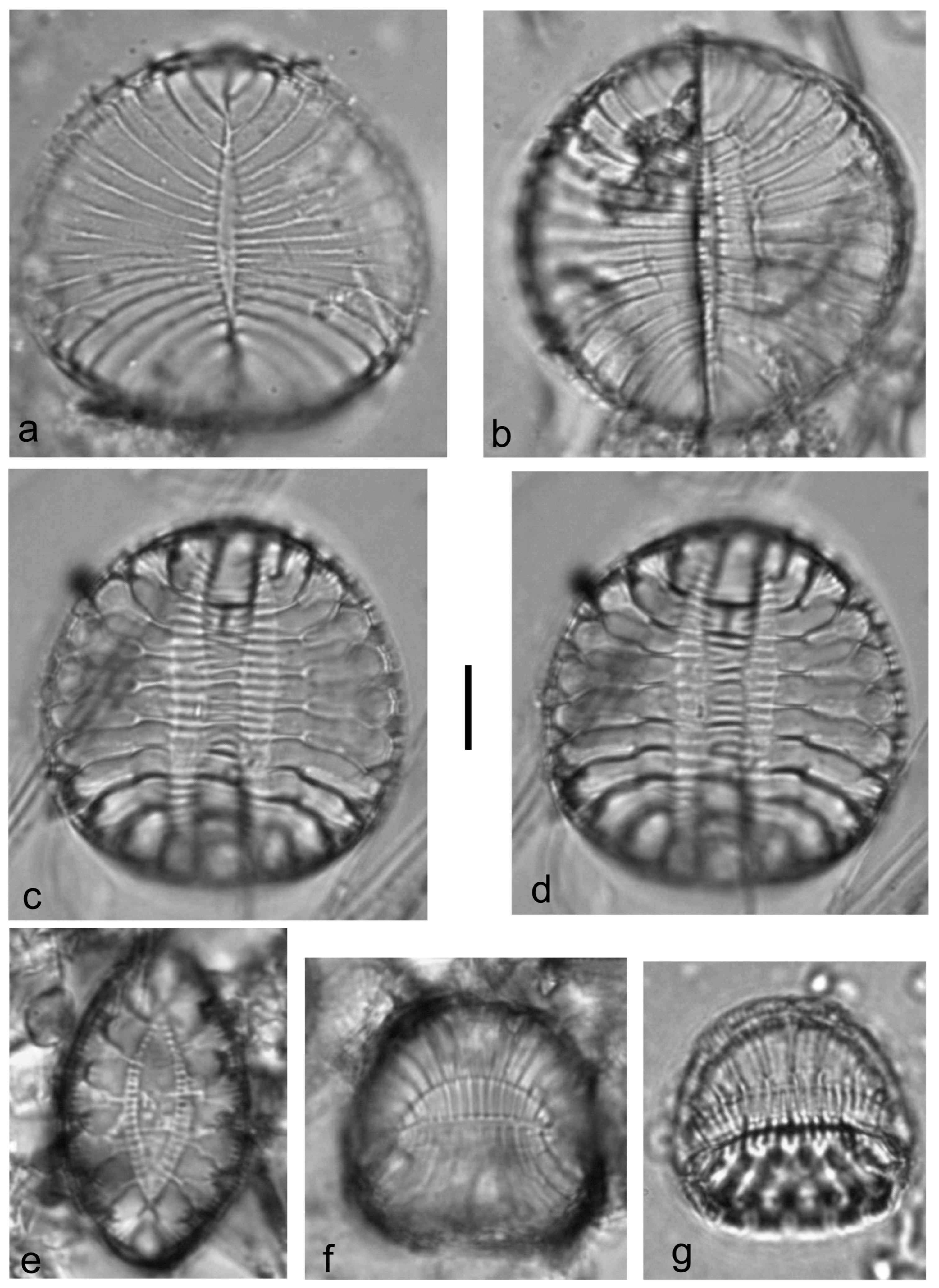
Figure A31.
(a,c) Campylodiscus latus; (b) Surirella recedens; (d) Campylodiscus cordatus. Scale bar = 10 µm.
Scale bar = 10 µm.
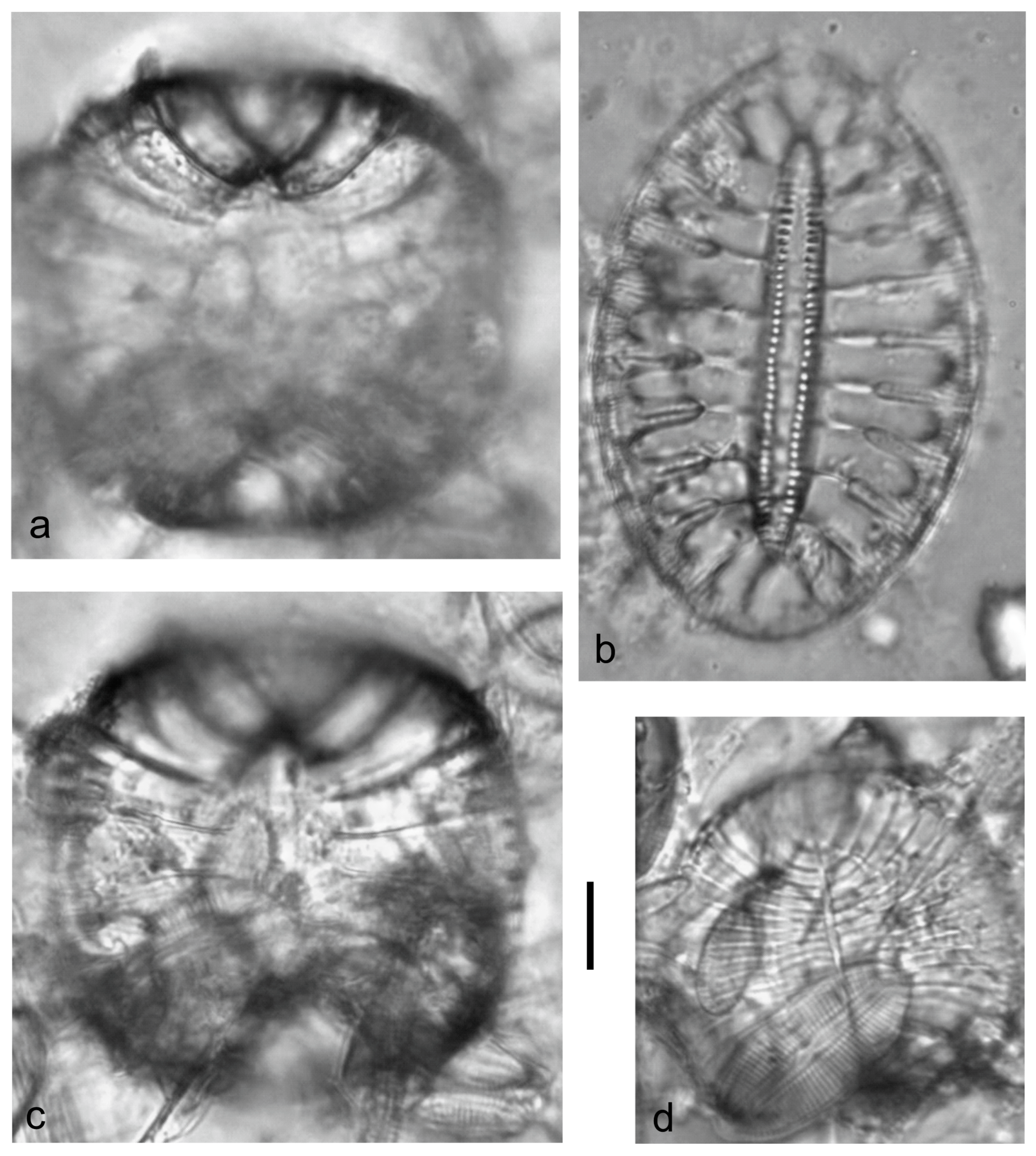
Figure A32.
(a–c,e,g–i) Grammatophora marina var. marina; (d) G. oceanica; (f) G. gallopagensis. Scale bar = 10 µm.
Scale bar = 10 µm.
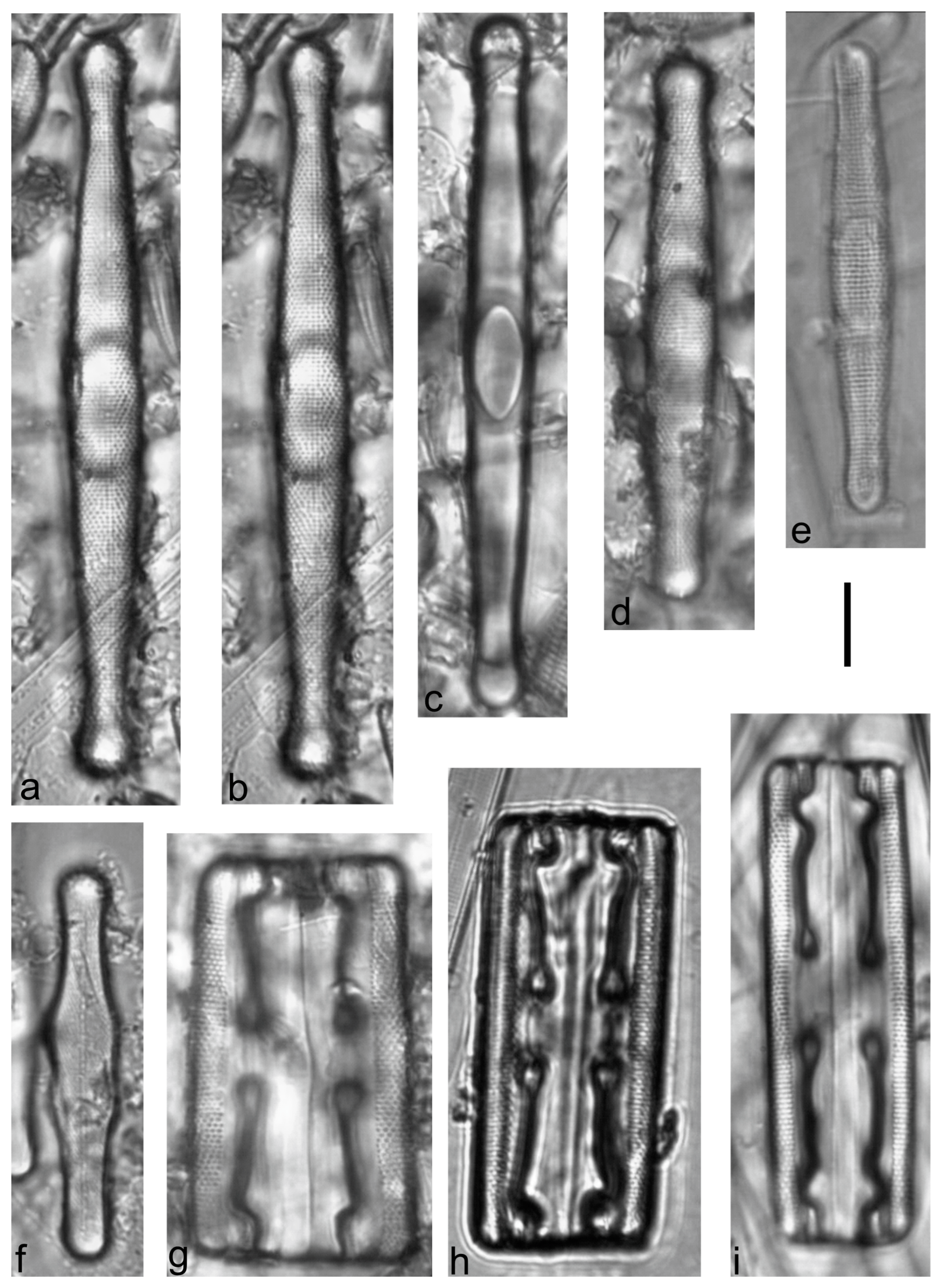
Figure A33.
(a) top, (d,f–h) Grammatophora marina var. marina; (a) bottom, (c) G. oceanica; (b,e) G. hamulifera; (i,j) G. marina var. gibba. Scale bar = 10 µm.
Scale bar = 10 µm.
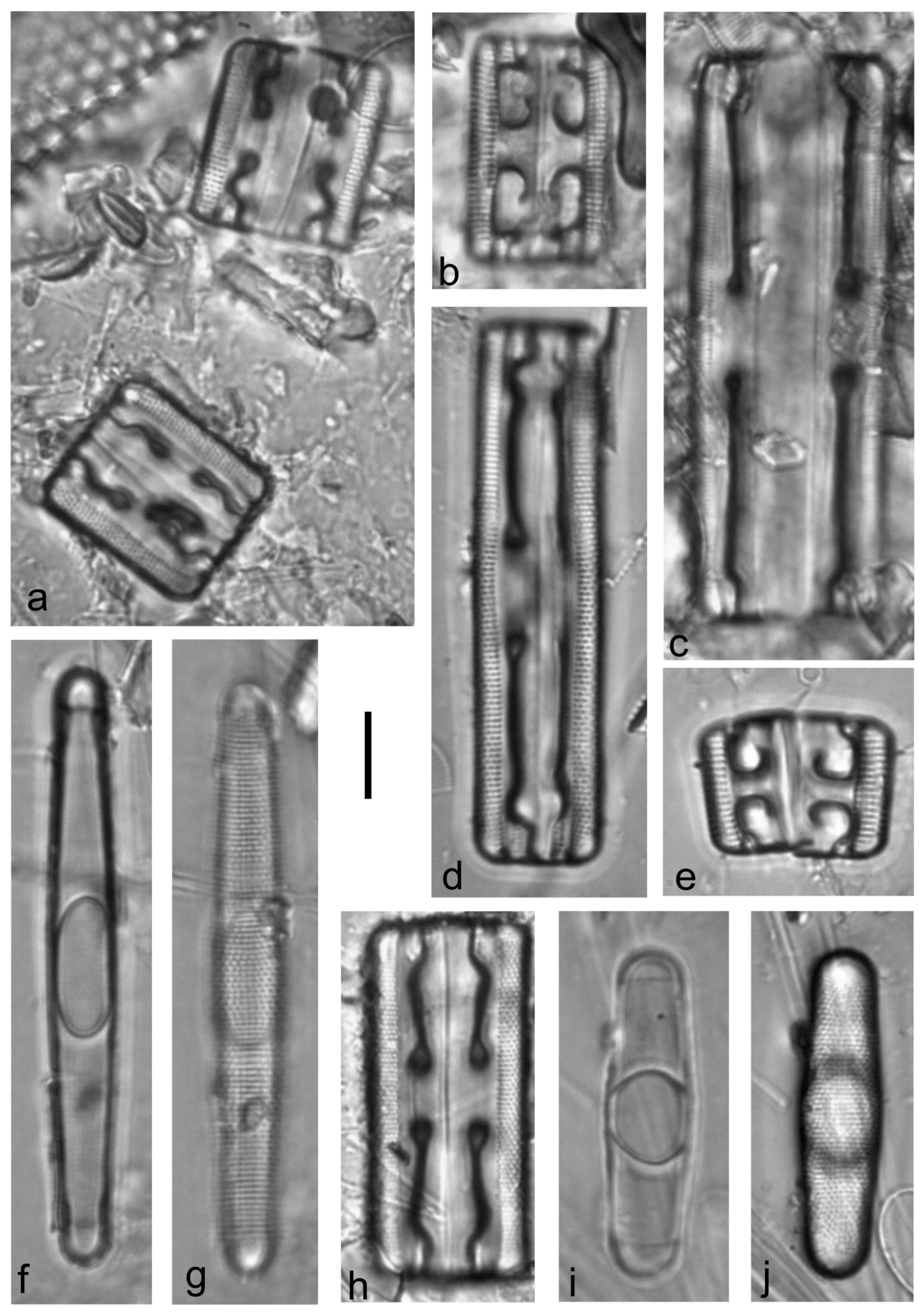
Figure A34.
(a,b,d,e) Grammatophora marina var. gibba; (c,h) G. marina var. marina; (f,g,i,j) G. gallopagensis. Scale bar = 10 µm.
Scale bar = 10 µm.
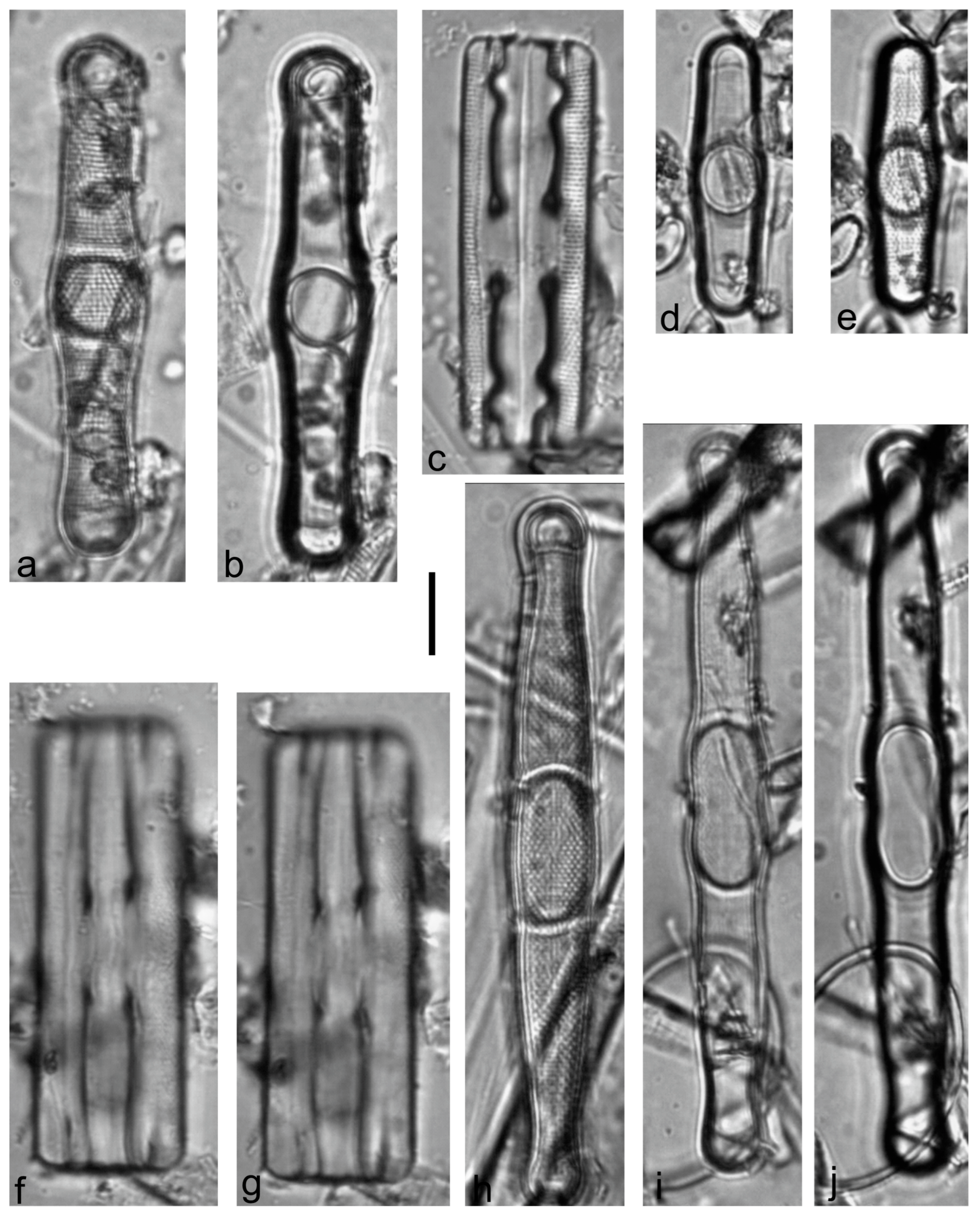
Figure A35.
(a,b) Glyphodesmis williamsonii f. lanceolata; (c) G. rhombica; (d) Plagiogramma minus; (e) Opephora schwartzii; (f–h) Plagiogramma interruptum; (i) Fragilariopsis pseudonana; (j) Opephora marina; (k) Plagiogramopsis sp.; (l) Fragilariopsis doliolus. Scale bar = 10 µm.
Scale bar = 10 µm.
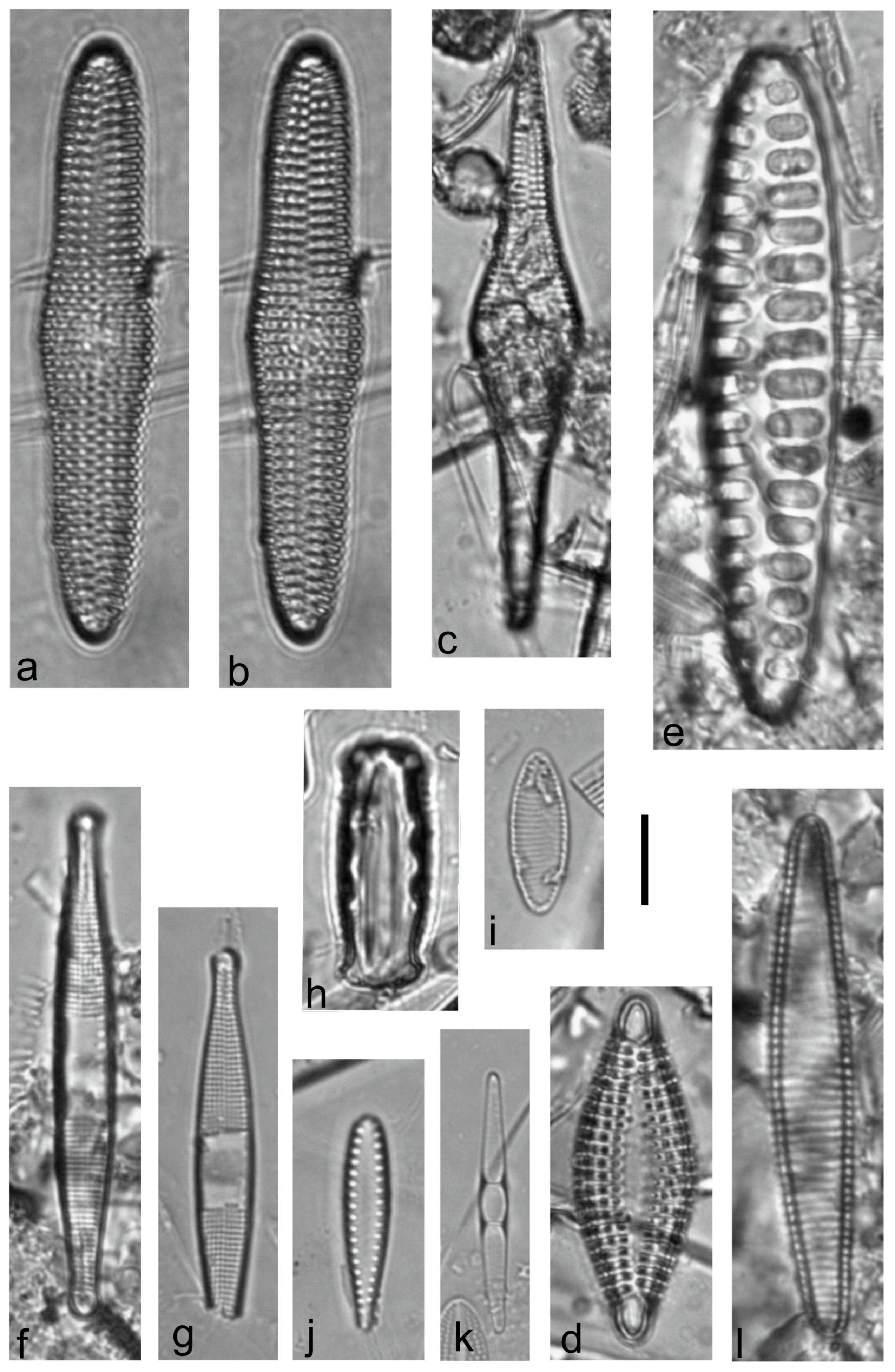
Figure A36.
(a) Licmophora gracilis; (b,c) L. juergensii; (d) L. paradoxa; (e) L. abbreviata; (f) Lioloma delicatulum; (g,k) Synedra commutata; (h) Licmophora debilis; (i) Tabularia affinis var. acuminata; (j) Thalassionema nitzschioides; (l) Tabularia tabulata. Scale bar = 10 µm.
Scale bar = 10 µm.
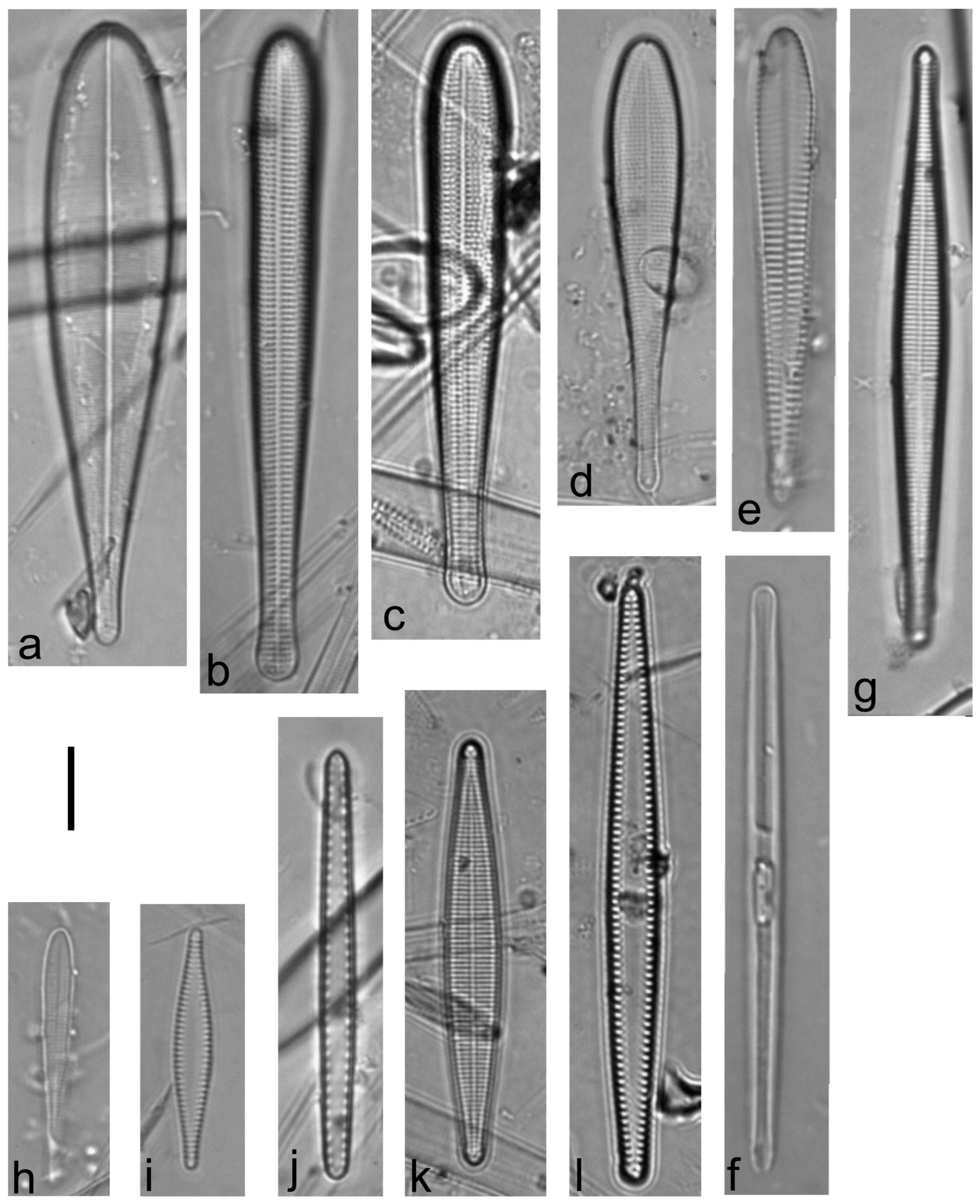
Figure A37.
(a–d) Licmophora flabellata; (e) Protoraphis hustedtiana; (f) Neosynedra provincialis. Scale bar = 10 µm.
Scale bar = 10 µm.
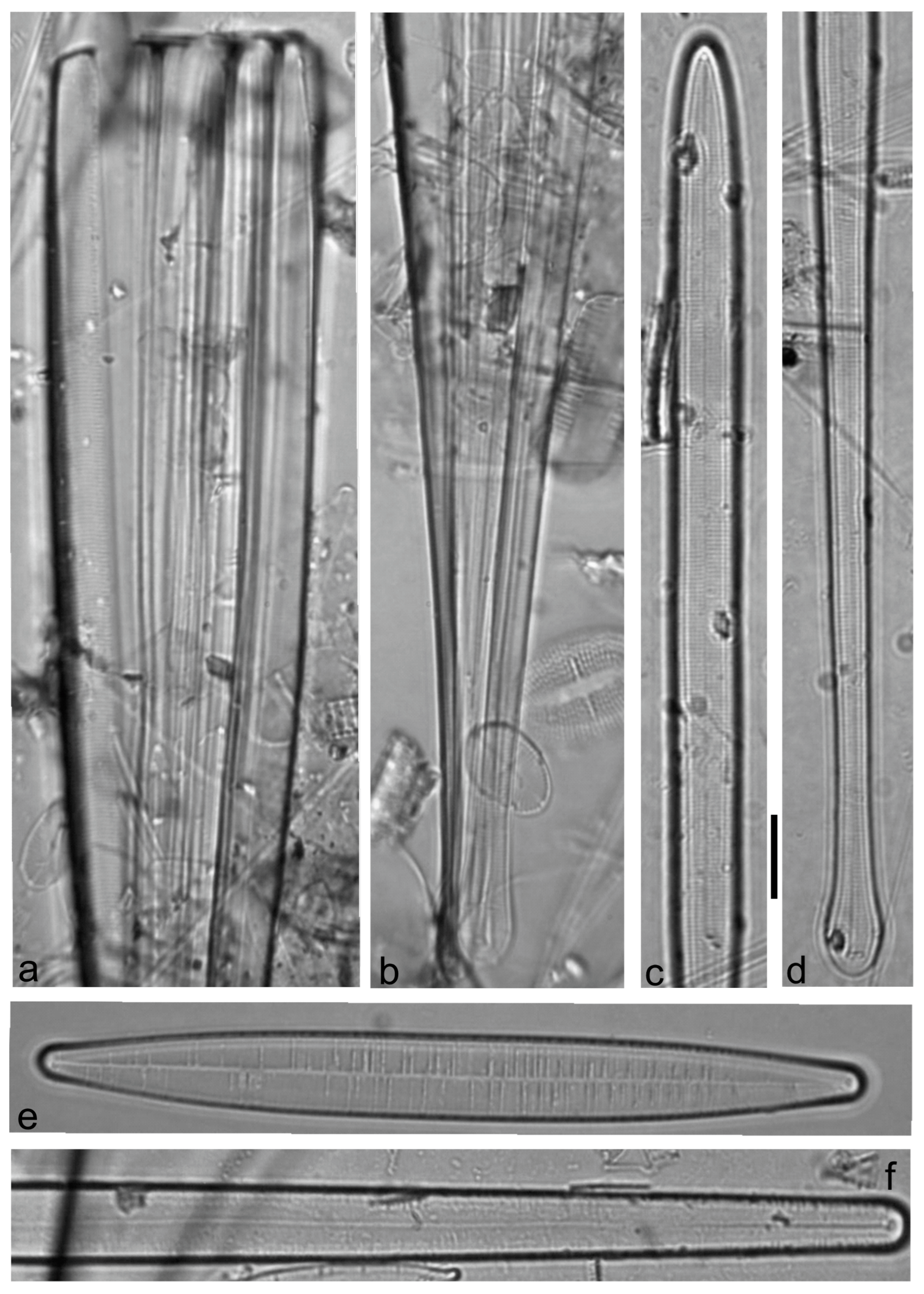
Figure A38.
(a–c) Climacosphaenia moniligera; (d) Ardissonea fulgens. Scale bar = 10 µm.
Scale bar = 10 µm.
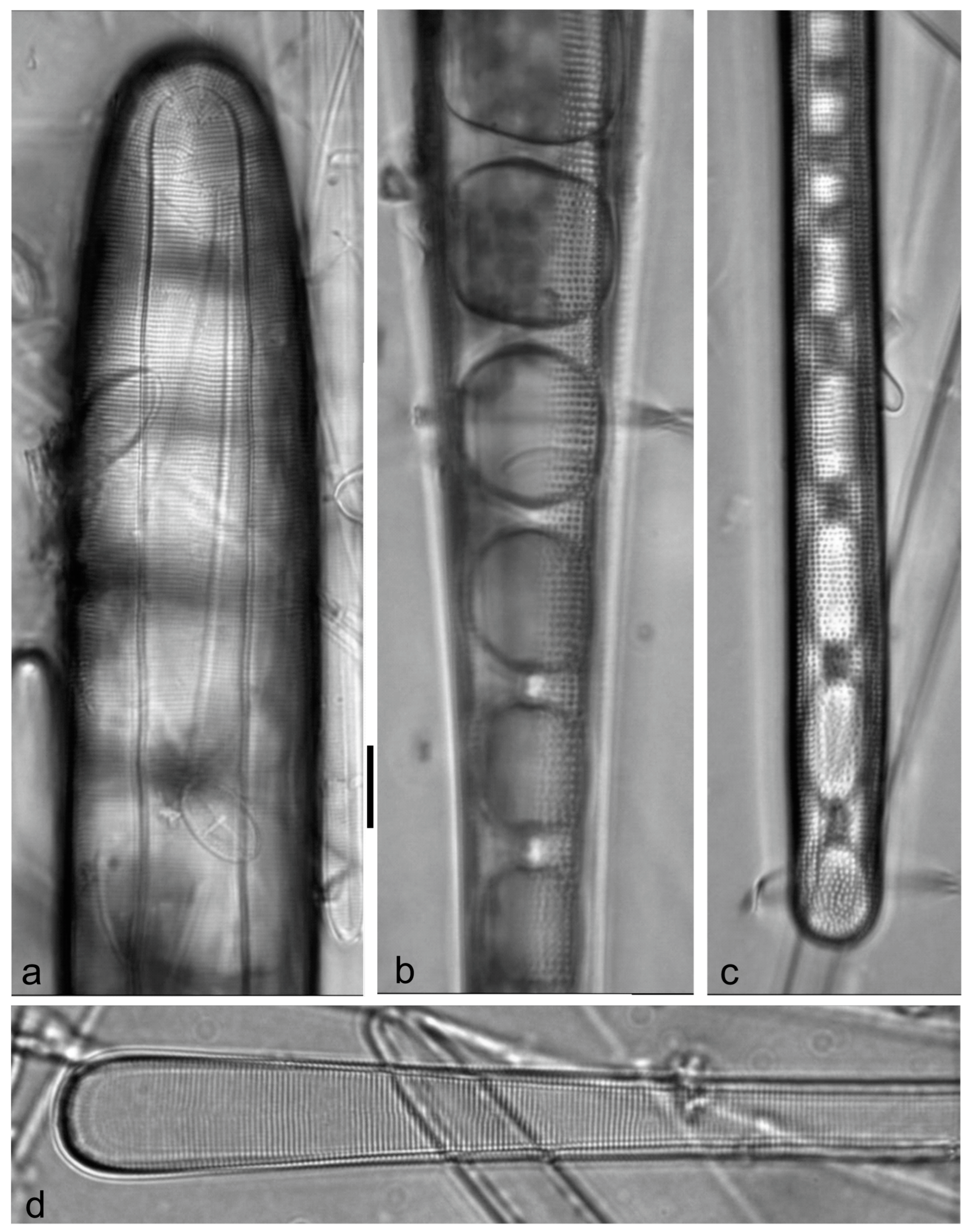
Figure A39.
(a) Grunowago bacillaris; (b,c) Ardissonea formosa; (d) Toxarium undulatum. Scale bar = 10 µm.
Scale bar = 10 µm.
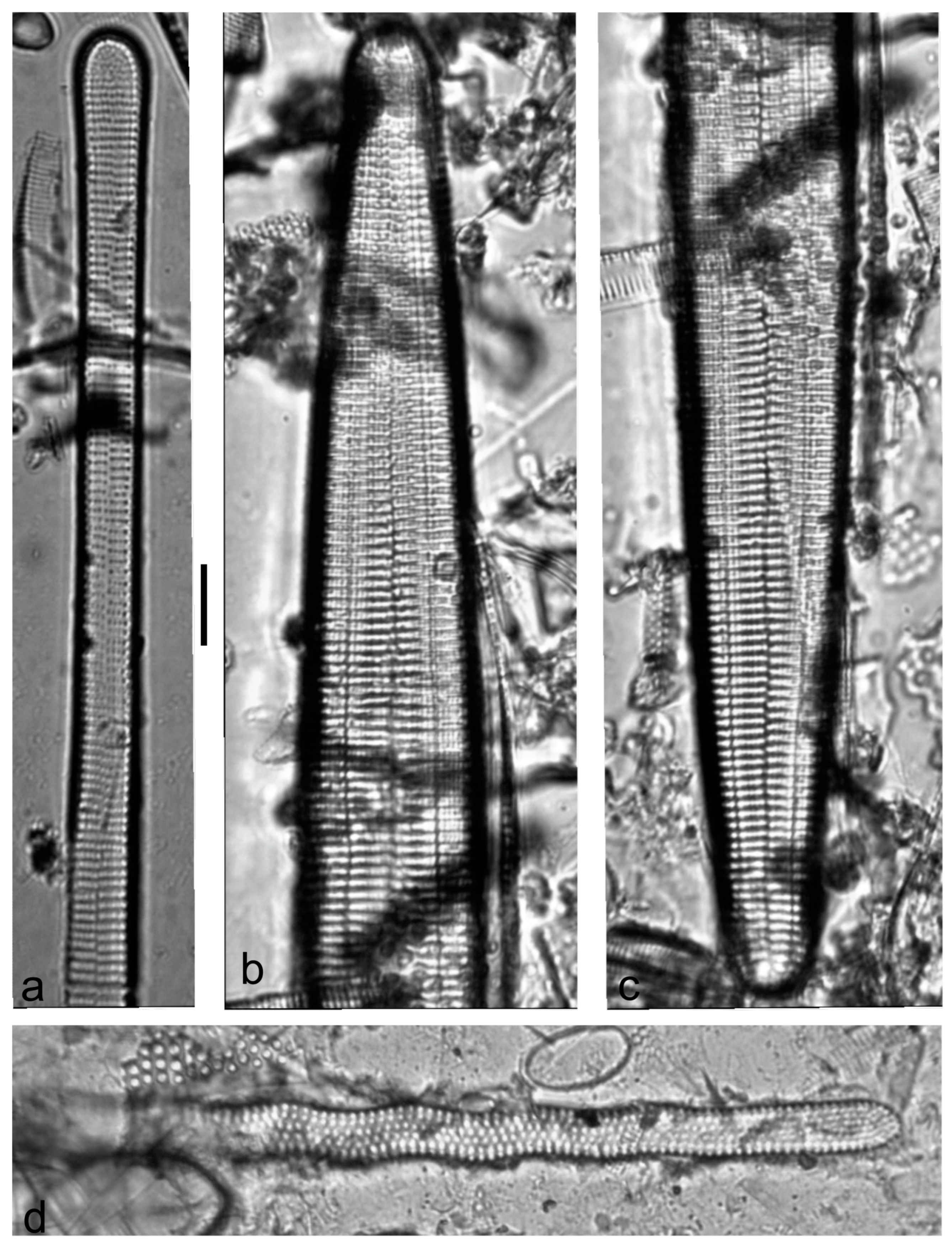
Figure A40.
(a) Podocystis spathulata; (b) Ardissonea robusta; (c) Rhabdonema adriaticum. Scale bar = 10 µm.
Scale bar = 10 µm.
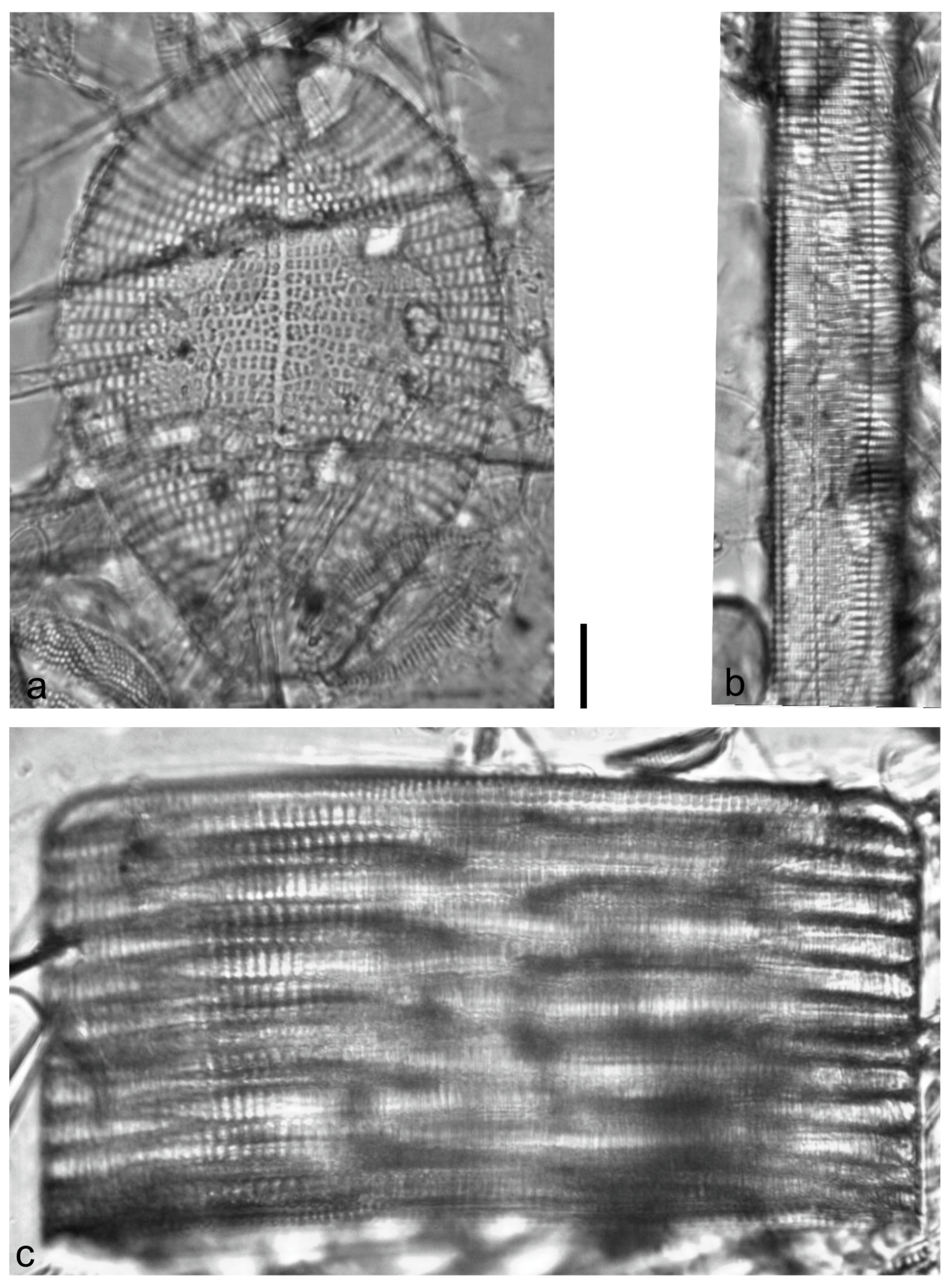
Figure A41.
(a–c,f) Actinoptychus concentricus; (d,e,g–i) A. minutus; (j,k) Psammodiscus nitidus; (l) Podosira stelligera. Scale bar = 10 µm.
Scale bar = 10 µm.
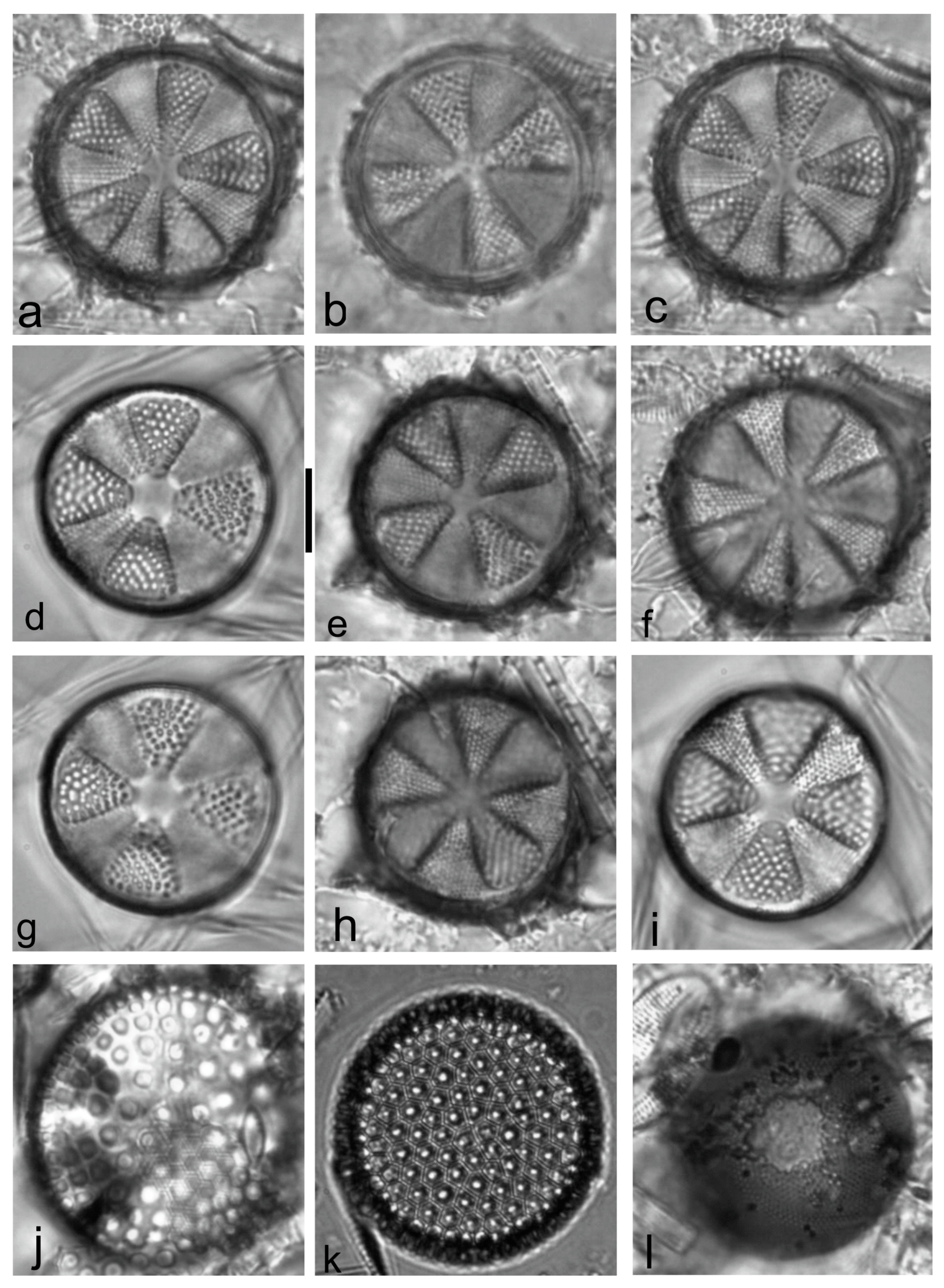
Figure A42.
(a,b) Actinoptychus aster; (c) Thalassiosira eccentrica; (d) Thalassiosira sp.; (e) T. simonsenii; (f,g) Shionodiscus oestrupii. Scale bar = 10 µm.
Scale bar = 10 µm.
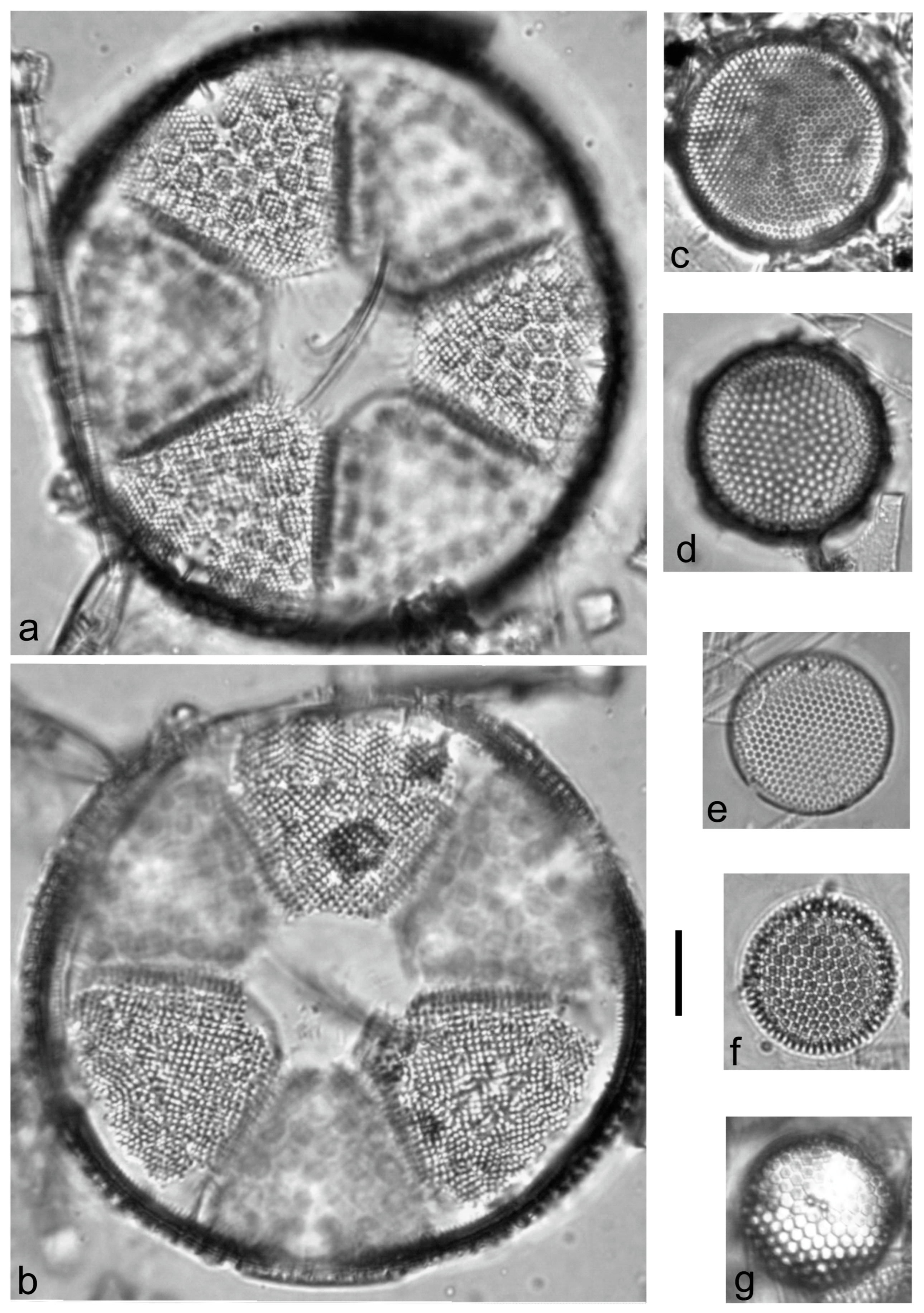
Figure A43.
(a,c) Coscinodiscus radiatus; (b) Actinocyclus octonarius var. tenellus; (d) Roperia tesselata; (e) Podosira montagnei. Scale bar = 10 µm.
Scale bar = 10 µm.
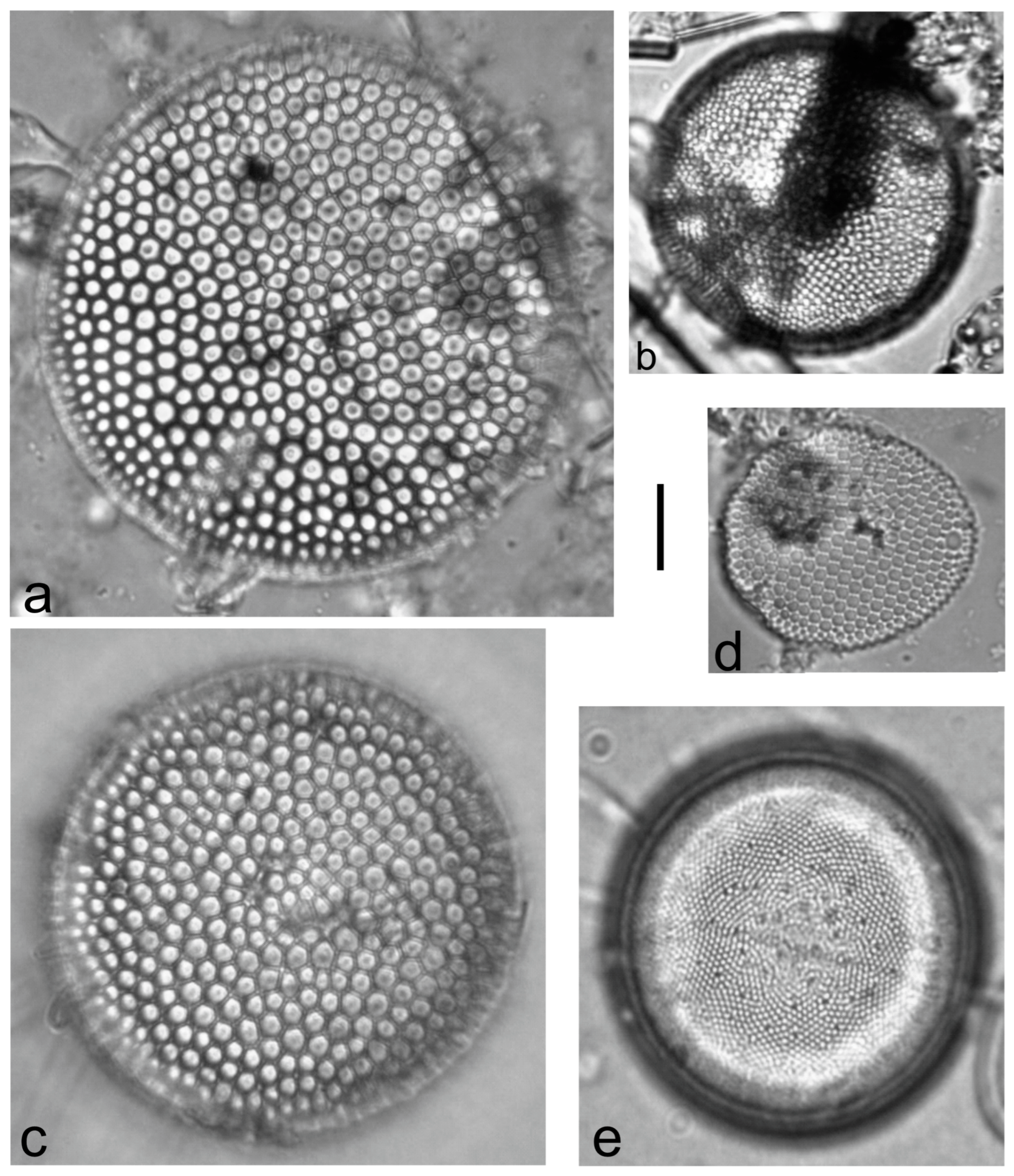
Figure A44.
(a) Actinocyclus octonarius var. crassus; (b,c) A. octonarius var. octonarius. Scale bar = 10 µm.
Scale bar = 10 µm.
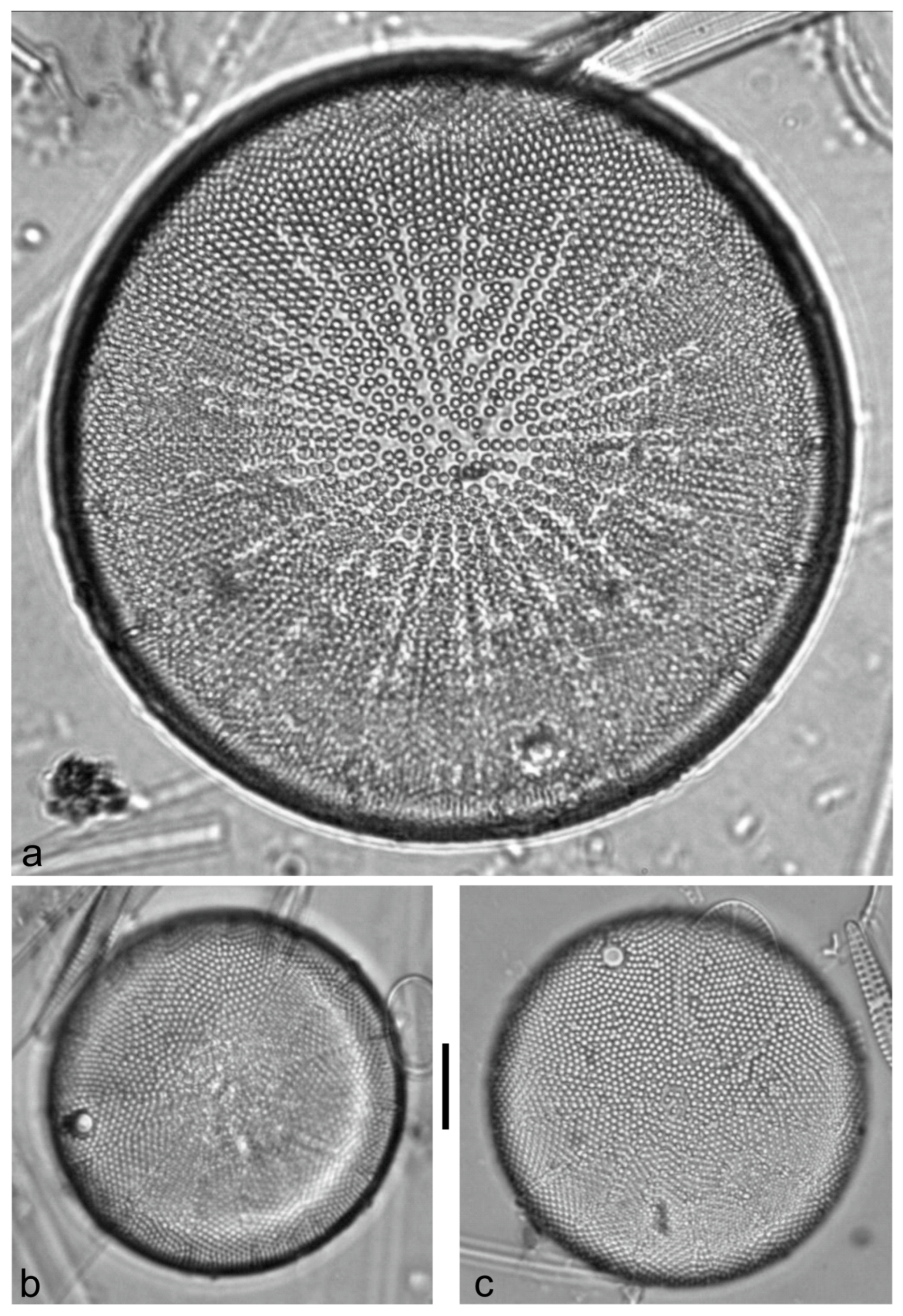
Figure A45.
(a) Actinocyclus subtilis; (b,c) A. octonarius var. octonarius. Scale bar = 10 µm.
Scale bar = 10 µm.
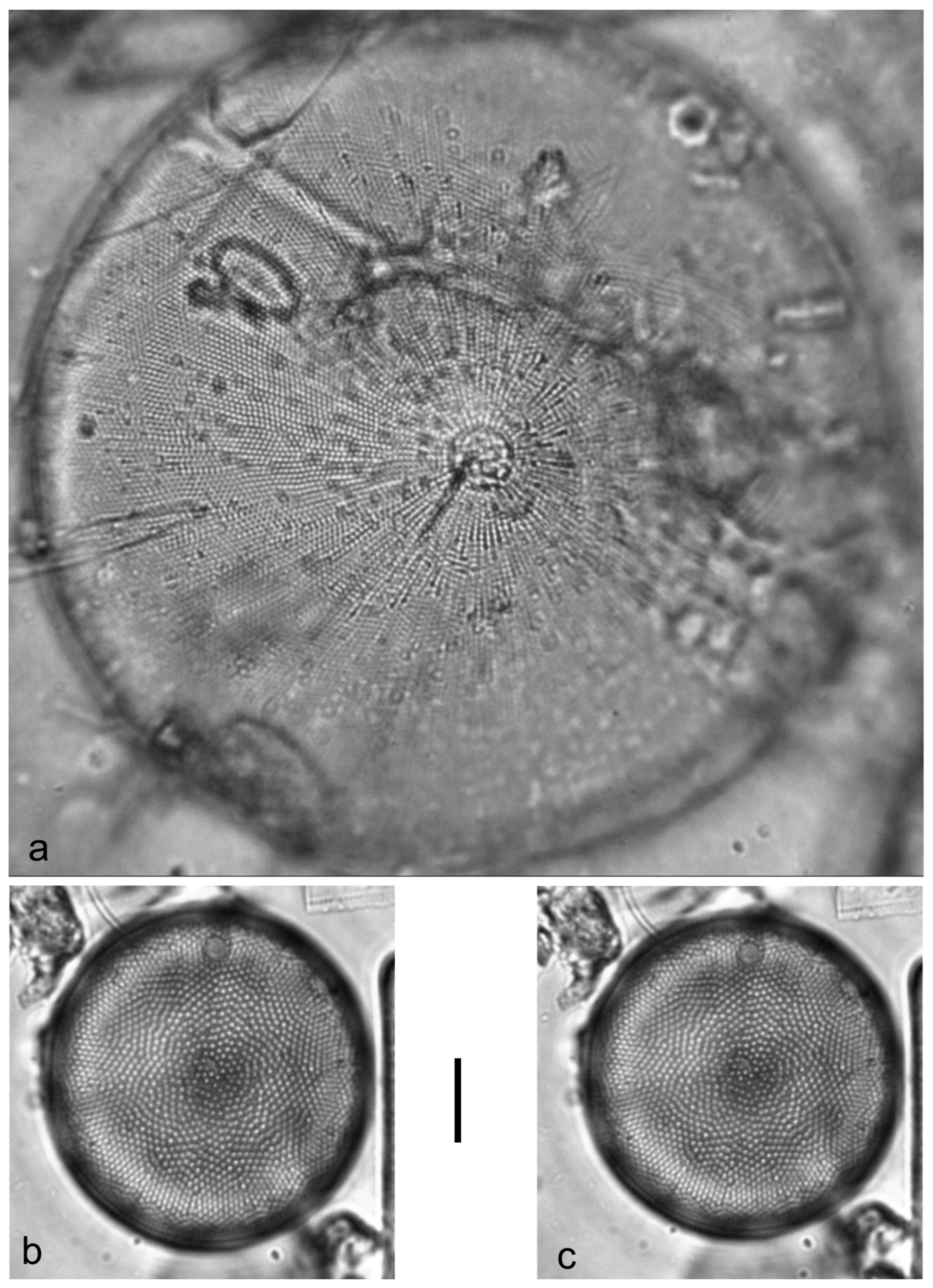
Figure A46.
(a) Actinocyclus octonarius var. octonarius; (b) A. curvaltulus; (c) Roperia tesselata; (d) Actinocyclus roperi. Scale bar = 10 µm.
Scale bar = 10 µm.
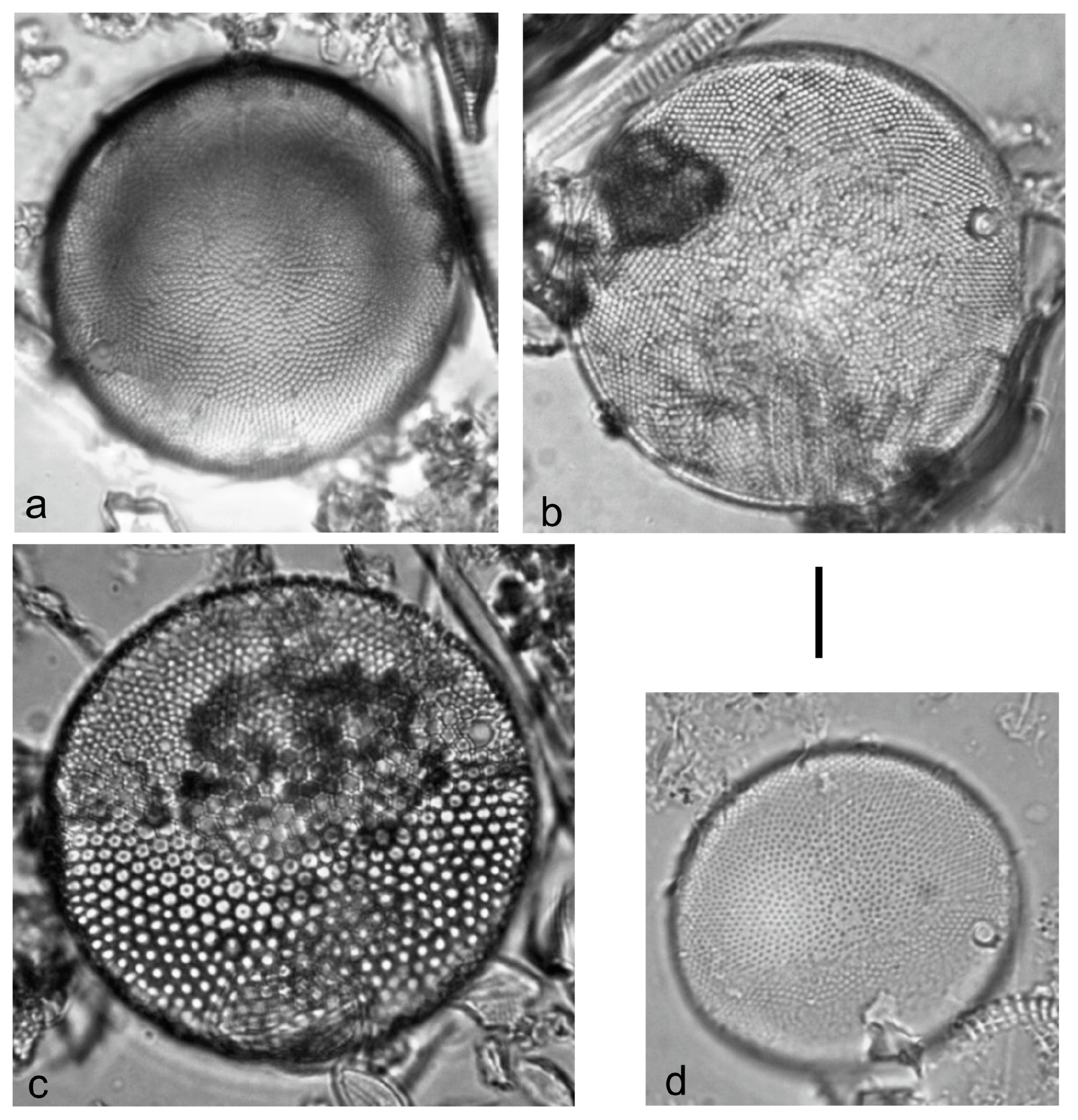
Figure A47.
(a,d) Actinocyclus curvatulus; (b) A. octonarius var. tenellus; (c) Stictodiscus cf. californicus; (e) Asteromphalus flabellatus. Scale bar = 10 µm.
Scale bar = 10 µm.
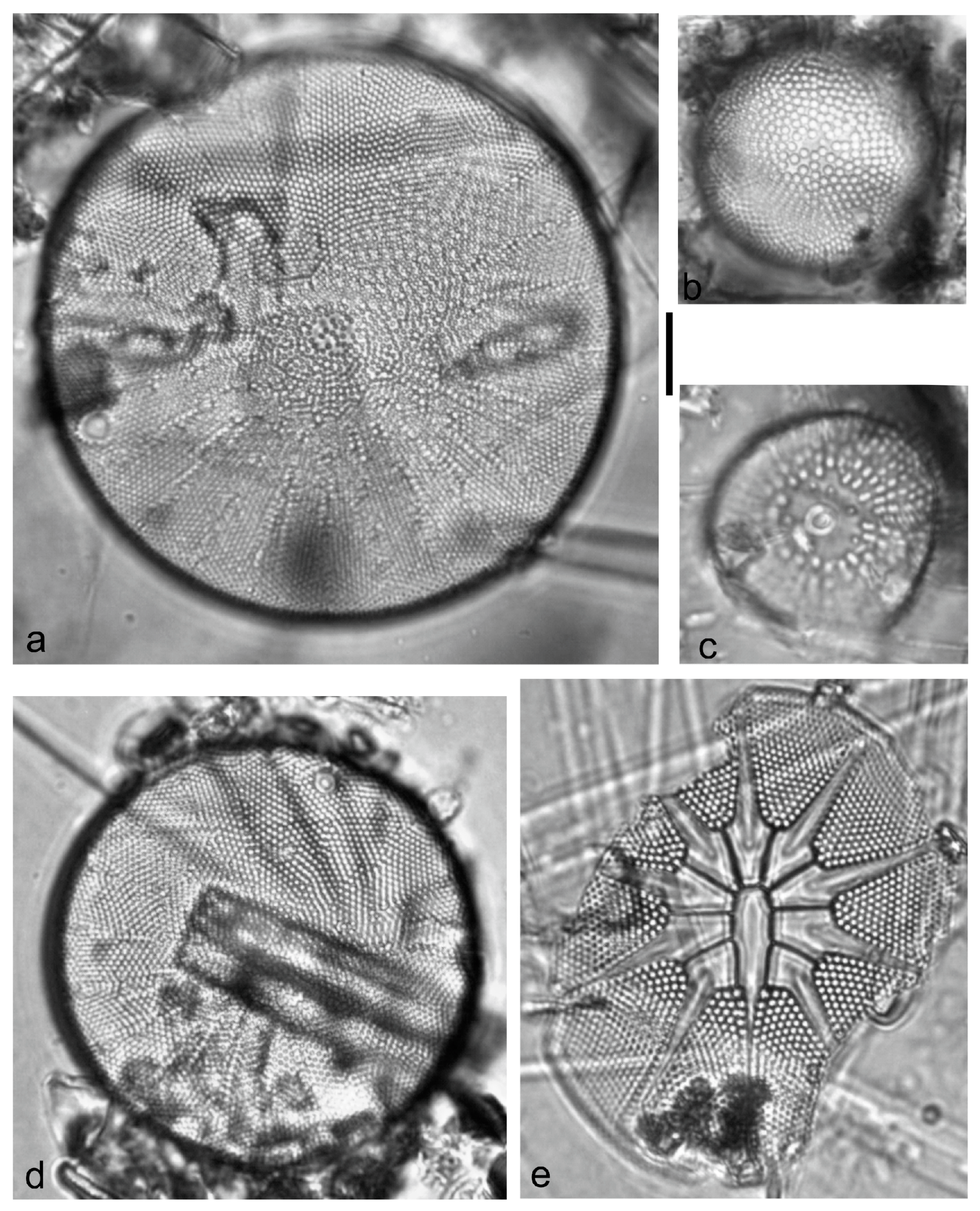
Figure A48.
(a–c) Triceratium pentacrinus var. quadrata; (d) Cyclotella striata; (e) Biddulphia tridens; (f,g) Pseudictyota dubia. Scale bar = 10 µm.
Scale bar = 10 µm.
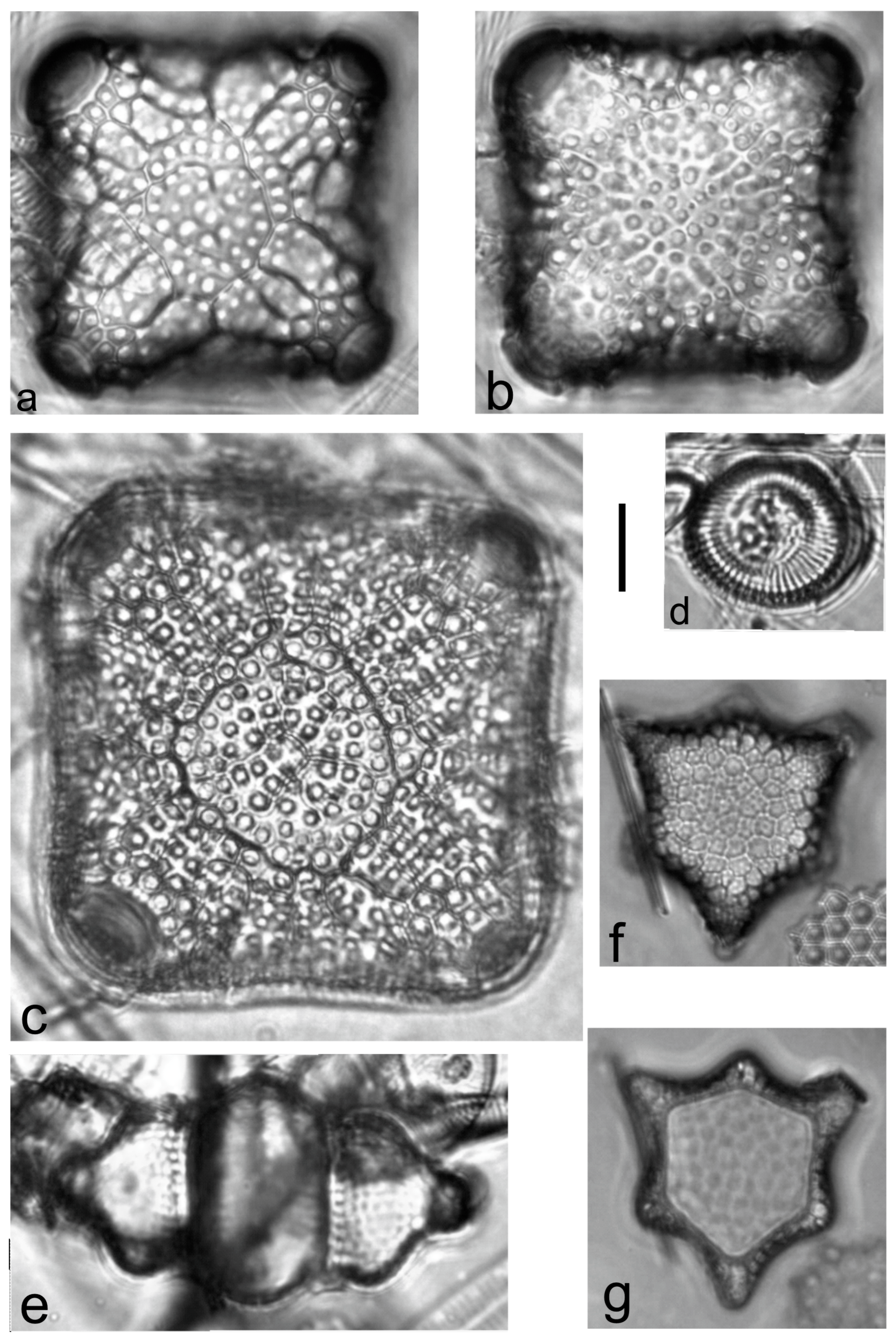
Figure A49.
(a,b) Pseudictyota dubia; (c) Odontella aurita; (d) Amphitetras antediluvianum; (e) Biddulphia alternans; (f) Craspedodiscus cf. nankoorensis; (g) Cyclotella striata; (h) Odontella obtusa; (i) Zygoceros ehrenbergii. Scale bar = 10 µm.
Scale bar = 10 µm.
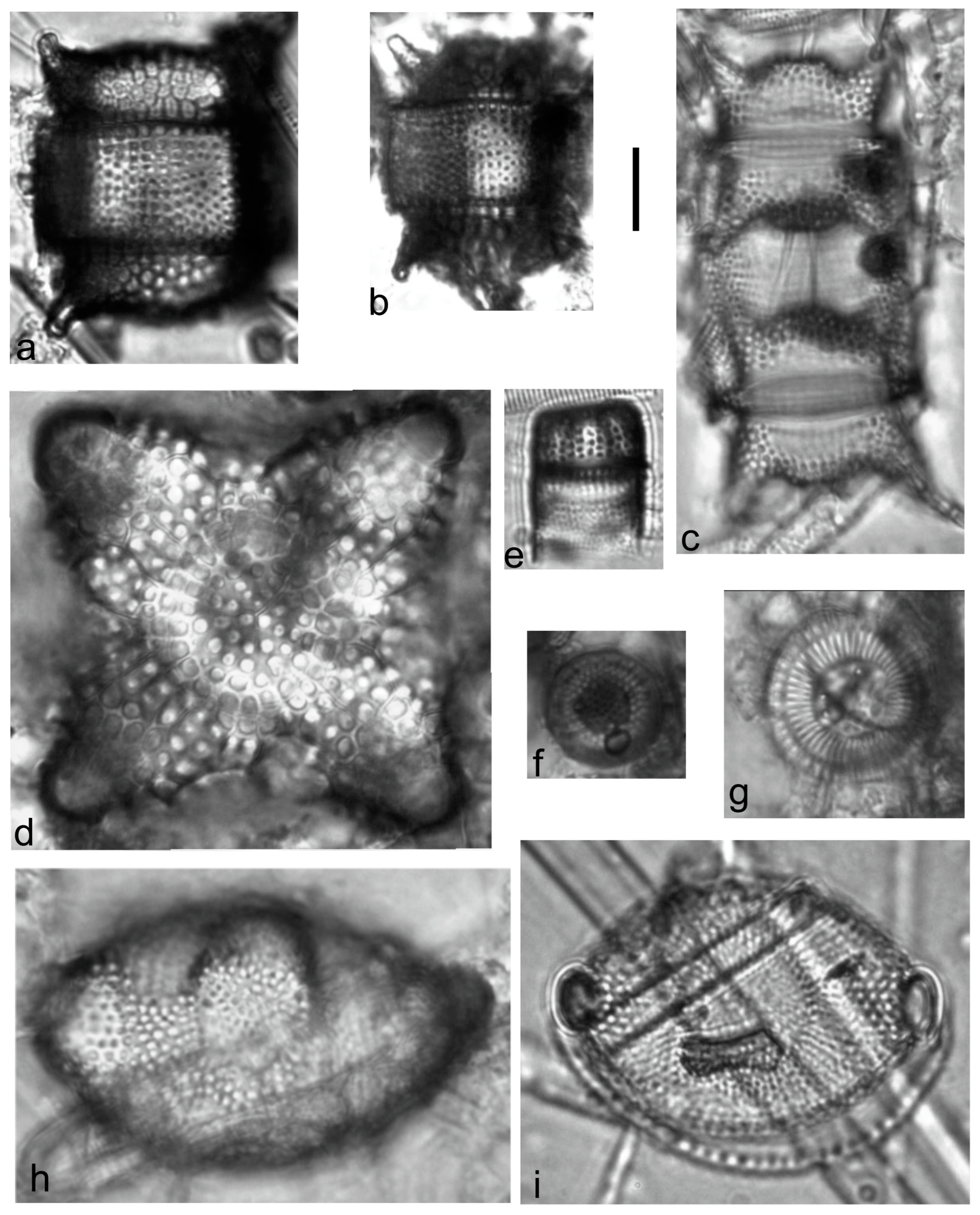
Figure A50.
(a,b) Odontella obtusa. Scale bar = 10 µm.
Scale bar = 10 µm.
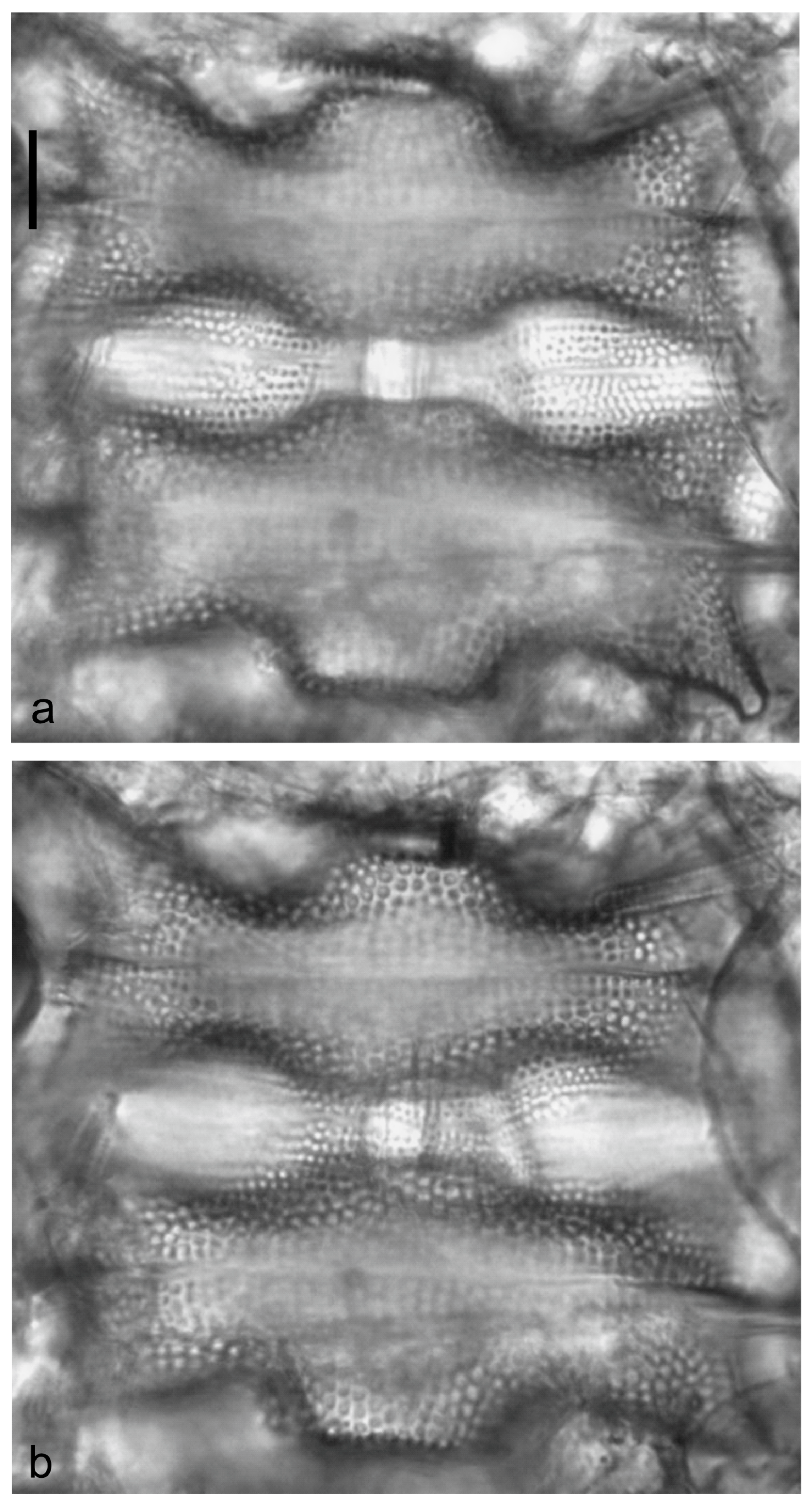
Figure A51.
(a,b) Biddulphia tuomeyii. Scale bar = 10 µm.
Scale bar = 10 µm.
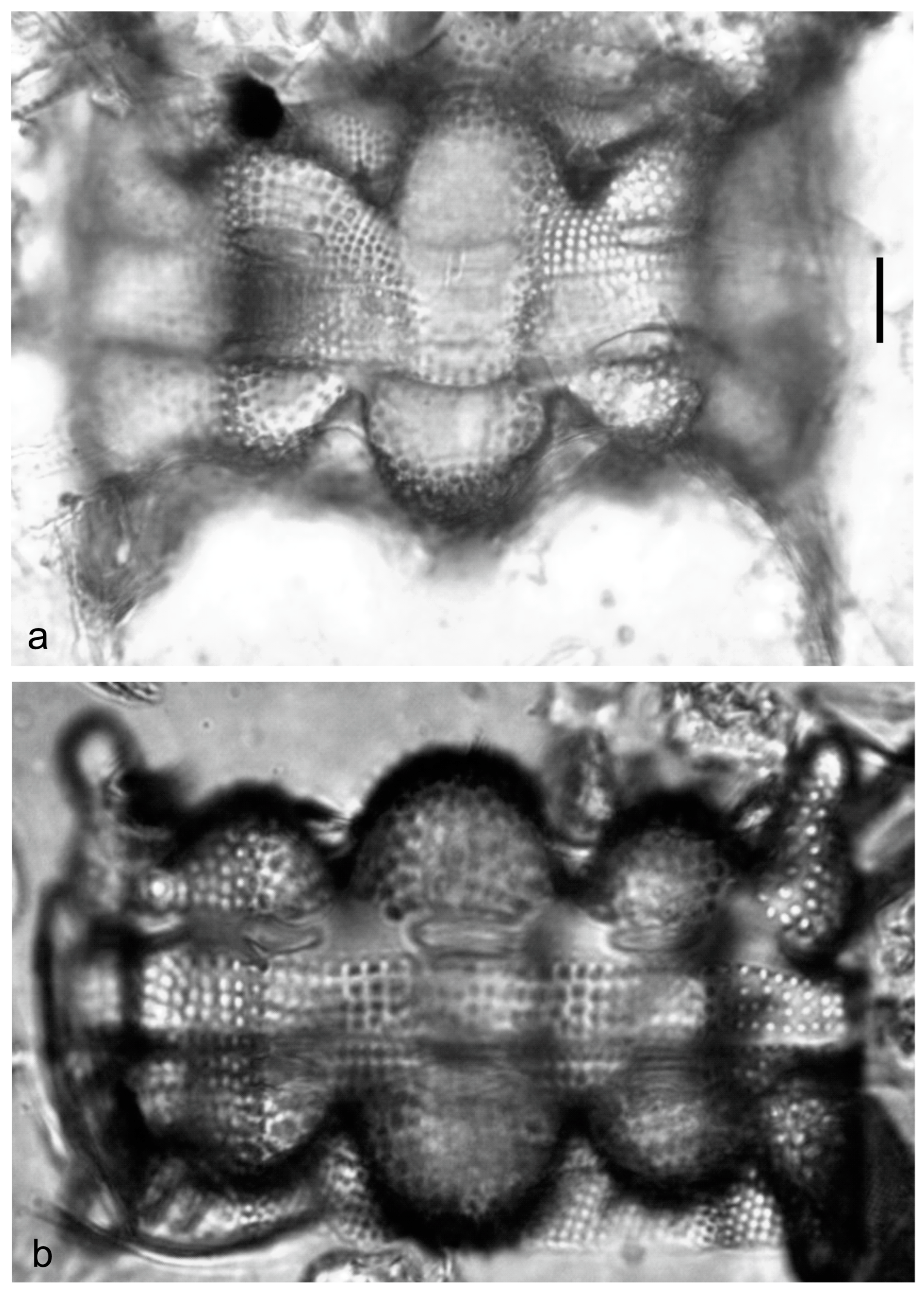
Figure A52.
(a,b) Biddulphia biddulphiana. Scale bar = 10 µm.
Scale bar = 10 µm.
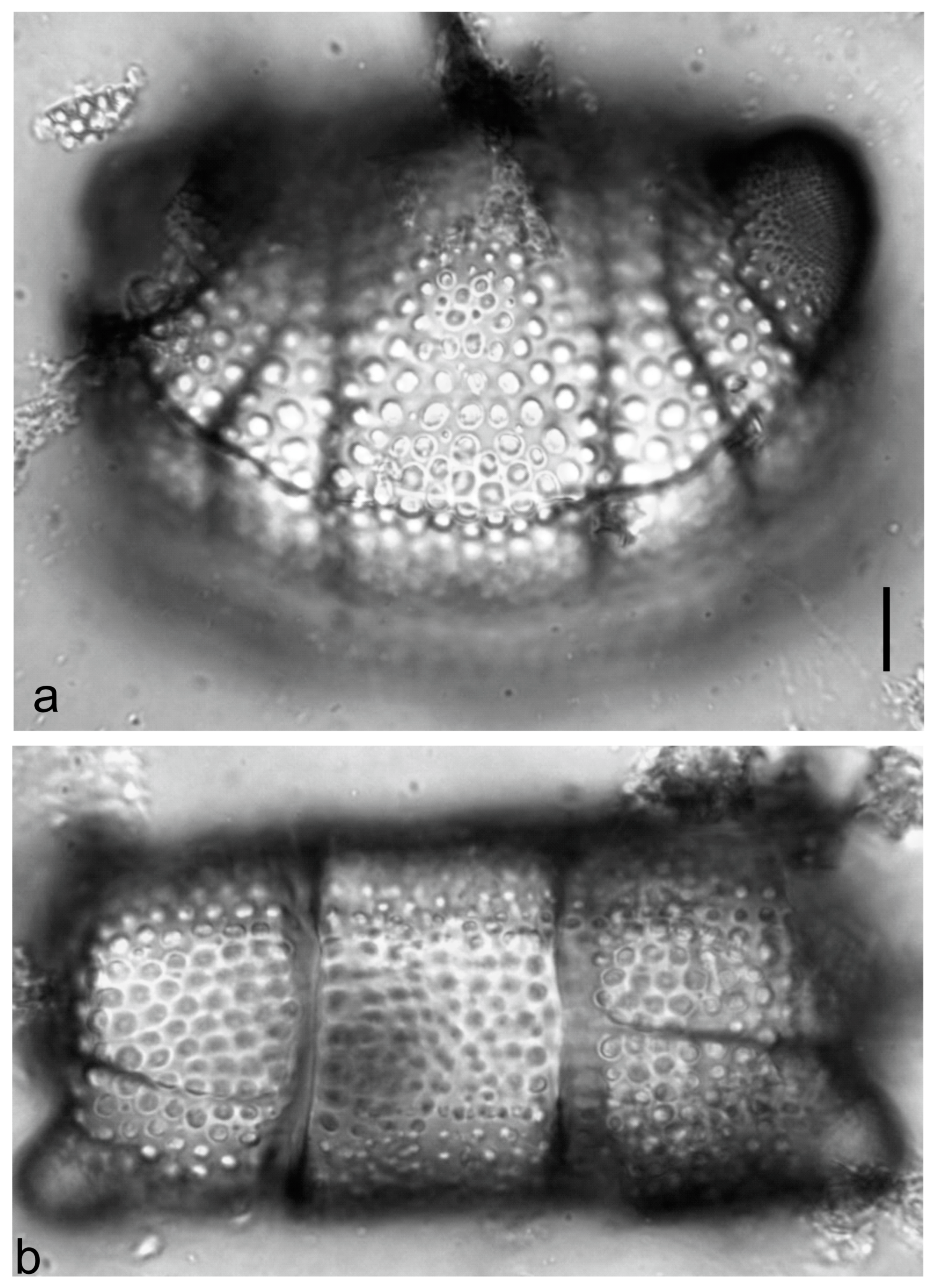
Figure A53.
(a) Odontella obtusa; (b) Lampriscus shadboltianum. Scale bar = 10 µm.
Scale bar = 10 µm.
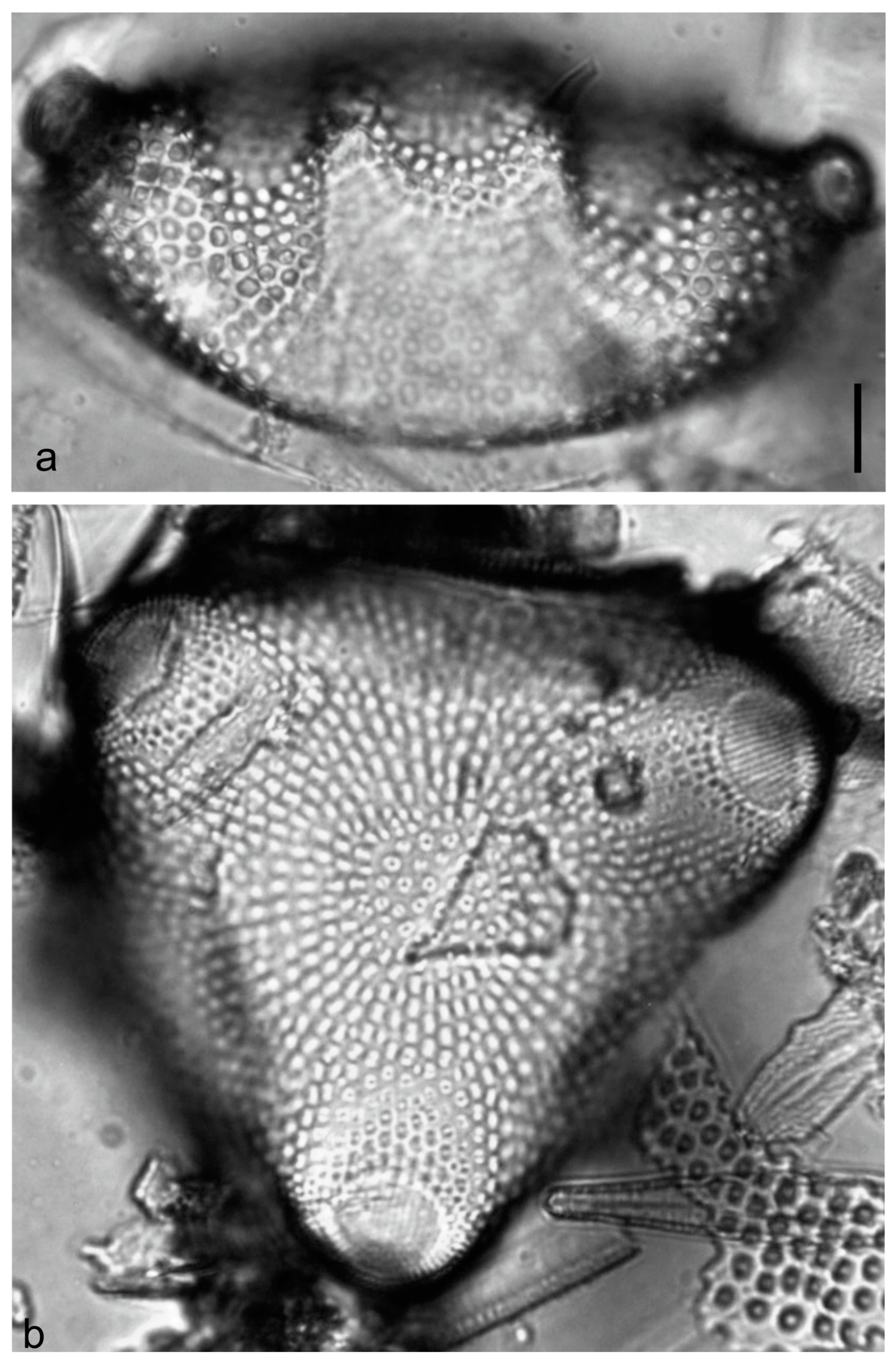
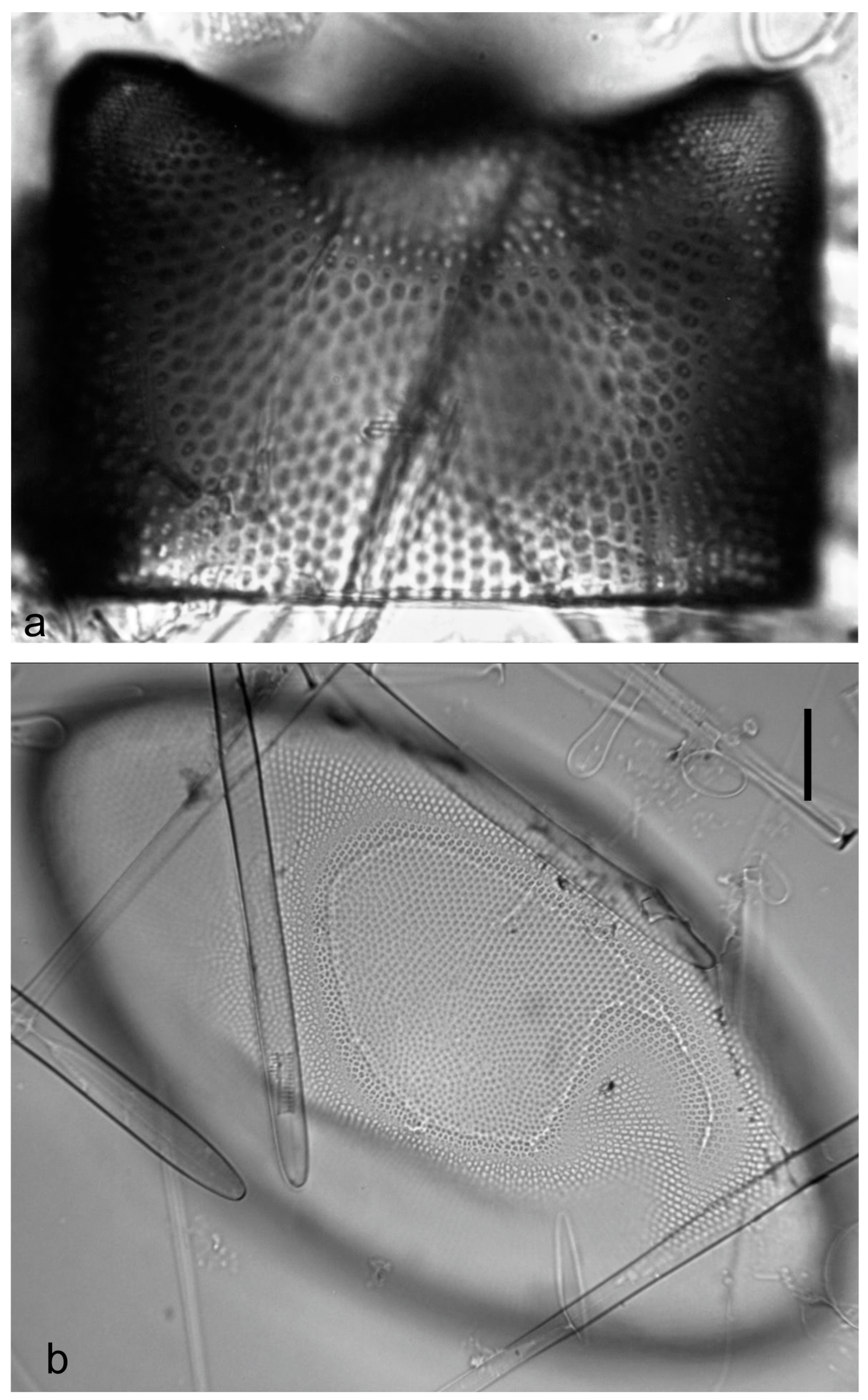
Figure A54.
(a) Lampriscus shadboltianum; (b) Biddulphiopsis membranacea. Scale bar = 10 µm.
Scale bar = 10 µm.
References
- Siqueiros Beltrones, D.A.; Argumedo-Hernández, U.; Hernández-Almeida, O.U. High species diversity (H′) of benthic diatoms in a coastal lagoon located within a natural protected area. Hidrobiológica 2017, 27, 293–300. Available online: https://www.redalyc.org/articulo.oa?id=57854568002 (accessed on 28 March 2023). [CrossRef]
- Siqueiros-Beltrones, D.A. Diatomeas Bentónicas de la Península de Baja California, Diversidad y Potencial Ecológico; IPN-CICIMAR: La Paz, Mexico, 2002; pp. 1–102. [Google Scholar]
- Siqueiros Beltrones, D.A.; Martínez, Y.J. Prospective floristics of epiphytic diatoms on Rhodophyta from the southern Gulf of Mexico. CICIMAR Oceán. 2017, 32, 35–49. [Google Scholar] [CrossRef] [Scilit]
- Siqueiros Beltrones, D.A.; López-Fuerte, F.O.; Martínez, Y.J.; Altamirano-Cerecedo, M.C. A first estimate of species diversity for benthic diatom assemblages from the Revillagigedo Archipelago, México. Diversity 2021, 13, 458. [Google Scholar] [CrossRef] [Scilit]
- Siqueiros Beltrones, D.A.; de la Cruz Agüero, J. Examen filosófico de las listas sistemáticas como informes científicos y porqué deben ser publicados. CICIMAR Oceán. 2004, 19, 1–9. [Google Scholar] [CrossRef] [Scilit]
- López-Fuerte, F.O.; Siqueiros Beltrones, D.A. A checklist of marine benthic diatoms (Bacillariophyta) from Mexico. Phytotaxa 2016, 283, 201–258. [Google Scholar] [CrossRef] [Scilit]
- Siqueiros Beltrones, D.A. Estudios sobre diatomeas bentónicas en litorales de la península de Baja California. In Proceedings of the IX Simposium Internacional de Biologia Marina, La Paz, Mexico, 1–5 June 1992. [Google Scholar]
- López-Fuerte, F.O.; Siqueiros Beltrones, D.A.; Jakes-Cota, U.; Tripp-Valdéz, A. New records of epizoic diatoms from the skin of stone scorpionfish Scorpaena mystes in Mexican waters. Open J. Mar. Sci. 2019, 9, 98–112. [Google Scholar] [CrossRef]
- López-Fuerte, F.O.; Siqueiros Beltrones, D.A.; Altamirano-Cerecedo, M.C. Species Composition and New Records of Diatom Taxa on Phyllodictyon pulcherrimum (Chlorophyceae) from the Gulf of California. Diversity 2020, 12, 339. [Google Scholar] [CrossRef] [Scilit]
- Volke-Sepúlveda, T.; Solórzano-Ochoa, G.; Rosas-Domínguez, A.; Izumikawa, C.; Velasco-Trejo, J.A. Remediación de Sitios Contaminados por Metales Provenientes de Jales Mineros en los Distritos de El Triunfo-San Antonio y Santa Rosalía, Baja California Sur; Centro Nacional de Investigación y Capacitación Ambiental Instituto Nacional de Ecología: Mexico City, Mexico, 2003; pp. 1–36. [Google Scholar]
- Rodríguez-Figueroa, G.; Shumilin, E.; Sánchez-Rodríguez, L. Heavy metal pollution monitoring using the brown seaweed Padina durvillaei in the coastal zone of the Santa Rosalia mining region, Baja California Peninsula, Mexico. J. Appl. Phycol. 2009, 21, 19–26. [Google Scholar] [CrossRef] [Scilit]
- Lavín, M.F.; Castro, R.; Beier, E.; Godínez, V.M.; Amador, A.; Guest, P. SST, thermohaline structure, and circulation in the southern Gulf of California in June 2004 during the North American Monsoon Experiment. J. Geophys. Res. 2009, 114, 1–22. [Google Scholar] [CrossRef] [Scilit]
- Pantoja, D.A.; Marinone, S.G.; Parés-Sierra, A.; Gómez-Valdivia, F. Numerical modeling of seasonal and mesoscale hydrography and circulation in the Mexican Central Pacific. Cienc. Mar. 2012, 38, 363–379. [Google Scholar] [CrossRef] [Scilit]
- Martínez, Y.J.; Siqueiros-Beltrones, D.A.; Marmolejo-Rodríguez, A.J. Response of Benthic Diatom Assemblages to Contamination by Metals in a Marine Environment. J. Mar. Sci. Eng. 2021, 9, 443. [Google Scholar] [CrossRef] [Scilit]
- Abbott, I.A.; Hollenberg, G.J. Marine Algae of California; Stanford University Press: Stanford, CA, USA, 1976; p. 827. [Google Scholar]
- Peragallo, H.; Peragallo, M. Diatomées Marines de France et des Districts Maritimes Voisins; Tempère, J., Ed.; Micrographe-Editeur: À Grez-sur-Loing, France, 1908. [Google Scholar]
- Schmidt, A.; Schmidt, M.V.; Fricke, F.V.; Heiden, H.; Muller, O.; Hustedt, F. Atlas der Diatomaceenkunde; Heft 1–120, Tafeln 1–460; Reisland: Leipzig, Germany, 1959. [Google Scholar]
- Hustedt, F. Marine littoral diatoms of Beaufort, North Carolina. Duke Univ. Mar. Station Bull. 1955, 6, 67. [Google Scholar]
- Round, F.E.; Crawford, R.M.; Mann, D.G. The Diatoms: Biology & Morphology of the Genera; Cambridge University Press: Cambridge, UK, 1990; p. 747. [Google Scholar]
- Witkowski, A.; Lange-Bertalot, H.; Metzeltin, D. Diatom Flora of Marine Coasts. In Iconographia Diatomologica; Lange-Bertalot, H., Ed.; Koeltz Scientific Books: Königstein im Taunus, Germany, 2002; pp. 1–925. [Google Scholar]
- Moreno, J.L.; Licea, S.; Santoyo, H. Diatomeas del Golfo de California; Universidad Autónoma de Baja California Sur-Sep-Fomes-Promarco: Mexico City, Mexico, 1996; p. 273. [Google Scholar]
- Siqueiros Beltrones, D.A. Diatomeas bentónicas asociadas a trombolitos vivos registrados por primera vez en México. CICIMAR Oceán. 2006, 21, 113–143. [Google Scholar] [CrossRef] [Scilit]
- Siqueiros Beltrones, D.A.; Hernández Almeida, O.U. Florística de diatomeas epifitas en macroalgas de un manchón subtropical. CICIMAR Oceán. 2006, 21, 11–61. [Google Scholar] [CrossRef] [Scilit]
- Hernández-Almeida, O.U.; Siqueiros Beltrones, D.A. Variaciones en asociaciones de diatomeas epifitas de macroalgas en una zona subtropical. Hidrobiológica 2008, 18, 51–61. [Google Scholar]
- Hernández-Almeida, O.U.; Siqueiros Beltrones, D.A. Substrate dependent differences in the structure of epiphytic vs. epilithic diatom assemblages from the southwestern coast of the Gulf of California. Bot. Mar. 2012, 55, 149–159. [Google Scholar] [CrossRef] [Scilit]
- López-Fuerte, F.O.; Siqueiros Beltrones, D.A.; Navarro, J.N. Benthic Diatoms Associated with Mangrove Environments in the Northwest Region of Mexico; CONABIO-UABCS-IPN: La Paz, Mexico, 2010; p. 217. [Google Scholar]
- Siqueiros Beltrones, D.A.; Martínez, Y.J.; Aldana-Moreno, A. Florística exploratoria de diatomeas epifitas en Rhodophyta de Islas Revillagigedo. Cymbella 2019, 5, 98–123. [Google Scholar]
- Guiry, M.D.; Guiry, G.M. AlgaeBase. World-Wide Electronic Publication. Galway: National University of Ireland. 2022. Available online: https://www.algaebase.or/search/genus/detail/?genus_id=43726&sk=0 (accessed on 15 May 2022).
- Siqueiros Beltrones, D.A.; Hernández-Almeida, O.U. Diversity measurement of benthic diatom taxocoenoses based on information theory (H′) using the genus-to-species ratio. Hidrobiológica 2022, 32, 245–249. [Google Scholar]
- Badan-Dangon, A.; Koblinsky, D.; Baumgartner, T. Spring and Summer in the Gulf of California: Observations of surface thermal patterns. Oceanol. Acta 1985, 8, 13–22. [Google Scholar]
- Martínez, Y.J.; Siqueiros Beltrones, D.A. New records of benthic diatoms (Bacillariophyceae) taxa for Mexican coasts from the Gulf of California. Hidrobiológica 2018, 28, 141–145. [Google Scholar] [CrossRef] [Scilit]
- López Fuerte, F.O.; Siqueiros Beltrones, D.A. Halamphora primus (Bacillariophyta): A new diatom species from the Gulf of California, Mexico. Phytotaxa 2018, 369, 21. [Google Scholar] [CrossRef] [Scilit]
- Park, J.S.; Lobban, C.S.; Lee, K.-W. Diatoms associated with seaweeds from Moen Island in Chuuk Lagoon, Micronesia. Phytotaxa 2018, 351, 101–140. [Google Scholar] [CrossRef] [Scilit]
Disclaimer/Publisher’s Note: The statements, opinions and data contained in all publications are solely those of the individual author(s) and contributor(s) and not of MDPI and/or the editor(s). MDPI and/or the editor(s) disclaim responsibility for any injury to people or property resulting from any ideas, methods, instructions or products referred to in the content. |
© 2023 by the authors. Licensee MDPI, Basel, Switzerland. This article is an open access article distributed under the terms and conditions of the Creative Commons Attribution (CC BY) license (https://creativecommons.org/licenses/by/4.0/).