


Abstract
SHORT INTERNODE (SHI)-related sequence (SRS) transcription factors are plant-specific zinc-finger proteins increasingly implicated in growth and abiotic stress responses. Despite their diverse vital role in plants, they are largely unexplored in bread wheat. In this study, we identified 15 TaSRS genes and classified them into five homoeologous groups in the bread wheat genome. Each TaSRS protein consisted of conserved RING-like zinc-finger and IGGH domains. The synteny and phylogenetic analyses provided insight into the evolutionary divergence and conservation of TaSRS proteins. Promoter analysis revealed the presence of stress-responsive cis-regulatory elements along with various transcription factor binding sites, indicating their plausible roles in drought and salinity stress responses and signalling. Additionally, the predicted regulation of a few TaSRS genes through certain miRNAs involved in hormone and stress responses, plant development, and nutrient uptake suggested their diverse functions. In silico protein–protein interaction and gene ontology analyses further anticipated an association of TaSRS proteins with organ development and hormone and stress response. High-throughput transcriptomic profiling revealed differential expression of TaSRS genes across various vegetative and reproductive stages and abiotic stress conditions. The qRT-PCR analyses confirmed the stress-responsive role of TaSRS1-1D, TaSRS2-3D, TaSRS4-7A, and TaSRS5-7A under drought and salinity conditions. These results indicated the potential role of TaSRS genes in stress adaptation and opened up opportunities for their detailed functional characterization and applications in the development of salinity and drought resilience in crops.
Keywords:
bread wheat; abiotic stress; SHI/STY family; SRS; transcription factors; drought; salinity 1. Introduction
Bread wheat (Triticum aestivum L.) ranks among the most significant staple crops worldwide, providing a primary source of nutrition for a substantial proportion of the population. The crop’s prevalence compared to others can be attributed to its cost-effectiveness and substantial nutritional benefits. Wheat productivity is significantly susceptible to environmental challenges, especially abiotic stresses. Salinity stress, primarily due to elevated sodium chloride (NaCl) levels, induces osmotic stress, disrupts ion equilibrium, and initiates oxidative damage. These factors collectively lead to inhibited growth, leaf chlorosis, early senescence, and significant reductions in yield [1]. Drought stress is a significant limiting factor in arid and semi-arid regions, where water scarcity constrains photosynthesis, affects plant growth, and induces oxidative stress, thereby reducing yields. The severity of the situation increases when drought and salinity co-occur, as these stresses frequently intersect in their physiological and molecular pathways, exacerbating the damage to wheat plants [2].
Wheat plants have developed complex molecular, physiological, and biochemical mechanisms to endure these stresses, which are mainly regulated by transcription factors (TFs). TFs interact with specific cis-regulatory elements of target gene promoters and regulate their expression. TFs regulate various adaptive responses, including osmotic adjustment, ion transport, antioxidant defence, and hormone signalling [2,3,4]. Various TF families have been identified as crucial in salinity stress response. DREB/CBF proteins regulate ABA-independent stress pathways, while NAC and WRKY transcription factors modulate ROS detoxification and ion homeostasis. Additionally, the bZIP and MYB transcription factors primarily function in ABA-dependent signalling to regulate osmolyte biosynthesis and stress-protective proteins [4,5]. The findings underscore the pivotal function of transcription factors as primary regulators of intricate gene networks that facilitate wheat’s tolerance to salinity stress.
Among the various TF families, the SHORT INTERNODES (SHI)-related sequence (SRS) family, also known as the SHI/STY family, has recently attracted attention for its roles in regulating growth and stress responses. The SRSs represent a plant-specific group of transcription factors consisting of two highly conserved domains: an N-terminal RING-like zinc-finger domain and a C-terminal IGGH domain [6,7]. The RING-like zinc-finger domain, also known as the RING domain, comprises the “C-X2-C-X7-C-X4-C-X2-C-X7-C” motif. The RING domain is engaged in numerous physiological and biochemical processes in plant cells. The C-terminal IGGH domain is rich in acidic amino acid residues and is supposed to facilitate protein dimerization. Interestingly, the IGGH domain appears unique to the SRS family, suggesting specialized regulatory roles [6,8,9].
The SRS family genes have been identified in numerous plant species, including Arabidopsis, maize, rice and others [6,7,10,11,12]. In Arabidopsis, this family comprises 10 members, including LRP1 (Lateral Root Primordium 1), SHI, and STY1 (STYLISH1), which exhibit functional redundancy. All of them consist of both the RING-like zinc-finger and IGGH domains, except SRS8 that lacks the IGGH domain [6,13,14]. AtSTY1 (SRS1) is crucial for the development of apical meristematic tissue due to its involvement in the biosynthesis of auxin [8]. AtLRP1 regulates root primordium formation via auxin modulation [15,16]. AtSHI influences gibberellin signalling and floral development processes, whereas AtSRS5 is responsible for regulating photomorphogenesis and inhibiting lateral root formation [6,14,17].
In monocots such as maize, rice, and barley, the SRS genes participate in developmental regulation; they influence awn elongation and pistil morphology, inflorescence architecture, and carbohydrate redistribution during senescence [10,18]. The ZmRUM1 protein, a part of the Aux/IAA-ARF unit, has the capacity to directly interact with the ZmLRP1 promoter, thereby suppressing its expression [19]. In rice, SHI1 regulates plant architecture by modulating the transcription factor OsIPA1 that governs tiller and panicle development [20].
Beyond development, increasing evidence suggests that the SRS genes also regulate abiotic stress responses, including salinity and drought. In rice, SHI1 coordinates growth stress trade-offs by integrating auxin, abscisic acid (ABA), and brassinosteroid (BR) signalling [20]. In soybean, GmSRS18 negatively regulates drought and salt tolerance [21]. In alfalfa, numerous MsSRS genes were strongly induced by cold and salt, indicating tissue-dependent stress regulation [22]. The MaSRS genes of sweet clover exhibited significant modulation when exposed to methyl jasmonate (MeJA), salicylic acid (SA), low temperature, and salinity [23]. In cotton, GhSRS21 negatively influences salt tolerance by operating through a mechanism that relies on reactive oxygen species metabolism [24].
Despite the diverse vital roles of SRS TFs in plants, they are still largely unexamined in bread wheat. In an earlier study, Yu et al. [25] identified TaSRS genes, but the study lacks proper nomenclature in accordance with international guidelines for wheat gene nomenclature and provides limited characterization of the genes, including their regulatory mechanisms. Hence, we carried out the comprehensive characterization of TaSRS genes across the A, B, and D sub-genomes of allohexaploid bread wheat (Triticum aestivum L.). The identified TaSRSs were analyzed for various key features, such as gene structure, conserved domains and motifs architecture, physicochemical properties, and evolutionary relationships. Additionally, we examined the occurrence of cis-regulatory elements (CREs), transcription factor binding sites (TFBSs), predicted miRNA interactions, protein–protein interaction (PPI) networks, and gene ontology (GO) enrichment to gain insight into their functions. Furthermore, the association of TaSRS genes with developmental processes as well as abiotic stress responses was examined using available high-throughput transcriptomic data. The roles of a few TaSRS genes under drought and salinity stress were also examined using qRT-PCR. This study provides detailed information on TaSRS genes in bread wheat, which will facilitate the functional characterization of each gene in future studies.
2. Results and Discussion
2.1. Identification, Chromosomal Distribution and Structure Analysis of TaSRS Genes
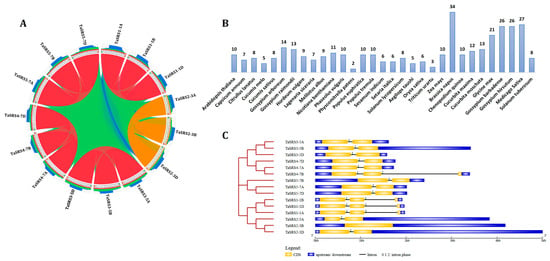
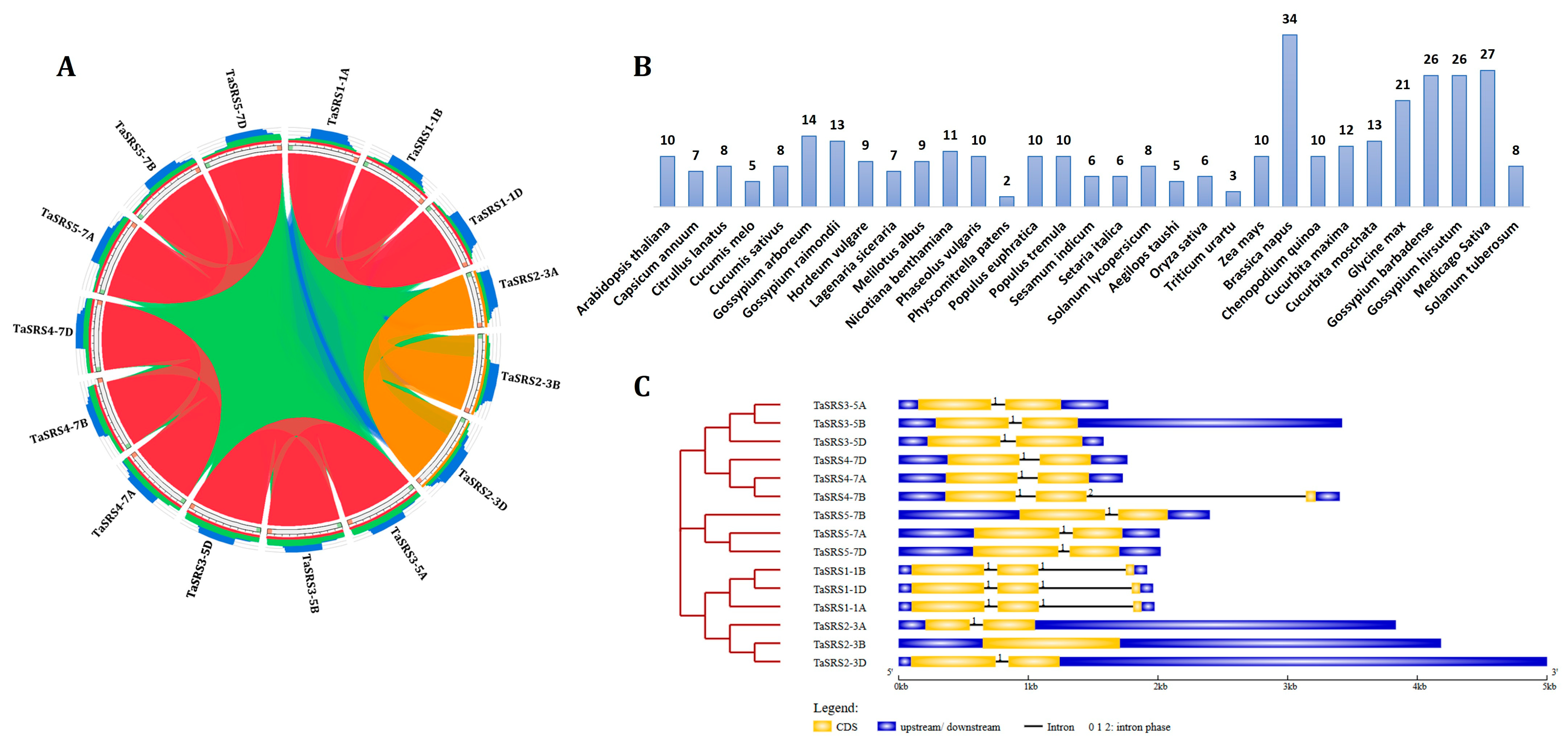
Gene mining is fundamental in plant genomics, as it enables the systematic identification of gene families with key physiological traits, including stress adaptation and development [26]. This is particularly important in complex genomes, like the allohexaploid genome of bread wheat, which is made up of three sub-genomes (AABBDD) [27,28]. In this study, we employed a comprehensive approach and integrated multiple bioinformatics tools to mine TaSRS genes. In total, 15 TaSRS genes were identified in the Ensemble plant database (Figure 1A, Table 1). All the identified TaSRS proteins consisted of a conserved RING-like zinc-finger domain (DUF702) (Pfam ID: PF05142), which is a characteristic feature of SRS proteins [6]. The A- and D-genome progenitors of bread wheat, i.e., Ae. tauschii, and T. urartu, comprised five and three SRS genes, respectively. Moreover, the number of genes identified in Ae. tauschii is similar to the number of genes present on the D sub-genome of bread wheat. However, the number of TaSRS genes on the A sub-genome is higher than that of T. urartu, which could be due to post-hybridisation duplication events [28]. The number of SRS genes varies across diploid and polyploid plant species. For instance, the diploid genome of Arabidopsis, tomato and rice consists of ten, eight and six SRS genes, respectively [6,7,8,11,14,29]; however, tetraploid genomes of barley and cotton comprise 34 and 26 SRS genes, respectively (Figure 1B) [9,24]. These results suggest the uneven distribution of SRS genes in various plant genomes, which could be due to variable duplication events during evolution [28].
Figure 1.
Homoeologous grouping and gene structure organization in TaSRS genes. (A) The figure shows homoeologous grouping among TaSRS genes located on A, B, and D sub-genomes of bread wheat. Syntenic relationship was analyzed using the Circoletto web tool (25.03.23). (B) Histogram illustrating the number of SRS genes identified in various plant species. (C) The figure shows exon, intron, and UTR organization of TaSRS genes, constructed using the Gene Structure Display Server 2.0. Exons, introns and UTRs are shown by a yellow box, a black line and a blue box, respectively. The numbers 1 and 2 represent the intron phases.
Table 1.
Physicochemical properties of TaSRSs of bread wheat.
The identified TaSRS genes were named using the standard guidelines (Table 1) [30]. The TaSRS genes formed five homoeologous groups (HGs) (TaSRS1–TaSRS5) based on their sub-genomic location and high sequence similarity (>97%) (Figure 1A). The TaSRS genes exhibit distinct patterns of conservation across the homoeologous groups. These genes are mapped on the four different chromosomes (1, 3, 5, and 7) across the A, B, and D sub-genomes. Each sub-genome contributed an equal composition of TaSRS genes. Chromosome 7 consists of two homoeologous group genes (TaSRS4 and TaSRS5), while TaSRS1, TaSRS2 and TaSRS3 homoeologous group genes were present on chromosome 1, chromosome 3, and chromosome 5, respectively (Figure S1). Similarly, the TaSRS genes are distributed across different chromosomes in various plants, including rice, maize, and others [10,11,12,29].
The gene structure analysis reveals various characteristic features, including the occurrence of UTRs, the number of exons, the pattern and phases of introns, and the distribution of cis-regulatory elements in promoter regions. In addition, it also provides evolutionary relatedness among the various genes of the gene family.
The majority of TaSRS genes consisted of two exons interrupted by one intron of variable length; however, TaSRS1 homoeologous group genes and TaSRS4-7D consisted of three exons and two introns, in which intron 1 is similar to the other genes in length (Figure 1C). Variation in exon-intron structure may arise from exonization or pseudoexonization, insertions or deletions, and gains or losses, and these changes play a critical role in the functional diversification of genes [31]. All the introns were in phase 1, except for a phase 2 intron in TaSRS4-7B. Earlier studies have shown that the phase 1 introns are disproportionately enriched in plant stress-related genes, ensuring splicing fidelity and enabling regulatory flexibility. In the TaSRS gene family, the dominance of phase 1 introns suggests a conserved ancestral origin and intense selective pressure, likely reflecting their role in precise splicing and stress-responsive regulation [32]. This indicates structural conservation, with phase 1 introns being the most prevalent, suggesting stability that minimizes disruptions during exon shuffling [33]. Except for TaSRS1, the homoeologs of genes belonging to TaSRS2, TaSRS3, TaSRS4, and TaSRS5 exhibit a compact architecture comprising two closely spaced exons and relatively short intronic regions (Figure 1C). This compact structure in the gene is recognized for helping rapid and efficient gene expression, a trait often found in plant transcription factors associated with stress responses, as evident in the studies of SRS genes in cotton and rapeseed [9,24].
2.2. Basic Physicochemical Properties of TaSRS Proteins
Physicochemical properties of proteins play an important role in determining their structure, stability and biological function. Parameters such as molecular weight, isoelectric point, hydrophobicity and aliphatic index provide crucial insights into protein behaviour under different physiological conditions. Understanding these properties helps in predicting protein solubility, localization, and potential interactions, supporting both structural and functional characterization.
A rigorous in silico investigation using the Expasy-Protparam tool revealed numerous physicochemical properties of TaSRS proteins (Table 1, Table S1). The length of TaSRS proteins ranged between 247 and 357 amino acid (AA) residues. TaSRS2-3A (247 AA) was the smallest, while TaSRS2-3B (357 AA) was the longest protein. Their MW ranged between 25.09 and 35.48 kDa, which is consistent with SRS proteins reported in various plant species, including Arabidopsis, rice, tomato, cotton, and soybean [6,7,11,14,21,29]. The pI values ranged from 7.70 to 8.96, indicating a distinctly basic nature for most TaSRS proteins. This basic nature is crucial, as it ensures a net positive charge at nuclear pH, thereby facilitating strong electrostatic binding to negatively charged DNA [34]. Further, all the TaSRS proteins contained an NLS (R/KRRER/K) and were predicted to be nuclear localized. Similar properties of SRS proteins, such as their basic nature and NLS, have also been reported in other plant species, including rice and soybean [11,21].
The negative GRAVY values (−0.684 to −0.276) indicated the hydrophilic nature of TaSRS proteins (Table S1) and support their solubility within the aqueous nuclear environment [35]. An instability index of more than 40, along with low-to-moderate aliphatic index values (38.86–56.36), indicated the unstable nature of TaSRS proteins. Such instability and structural plasticity are characteristics of the regulatory proteins, which facilitate rapid synthesis and proteasomal degradation. This dynamic turnover plays a crucial role in transcriptional reprogramming during stress adaptation [36].
2.3. Domains and Motifs Analyses
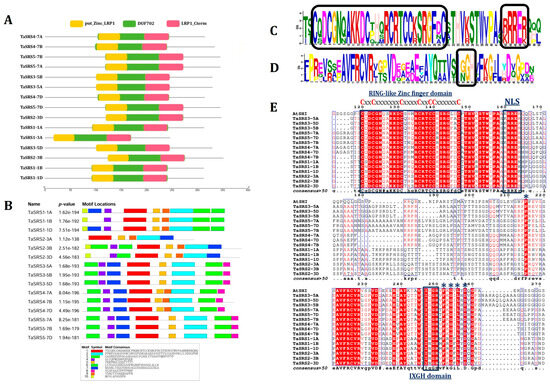
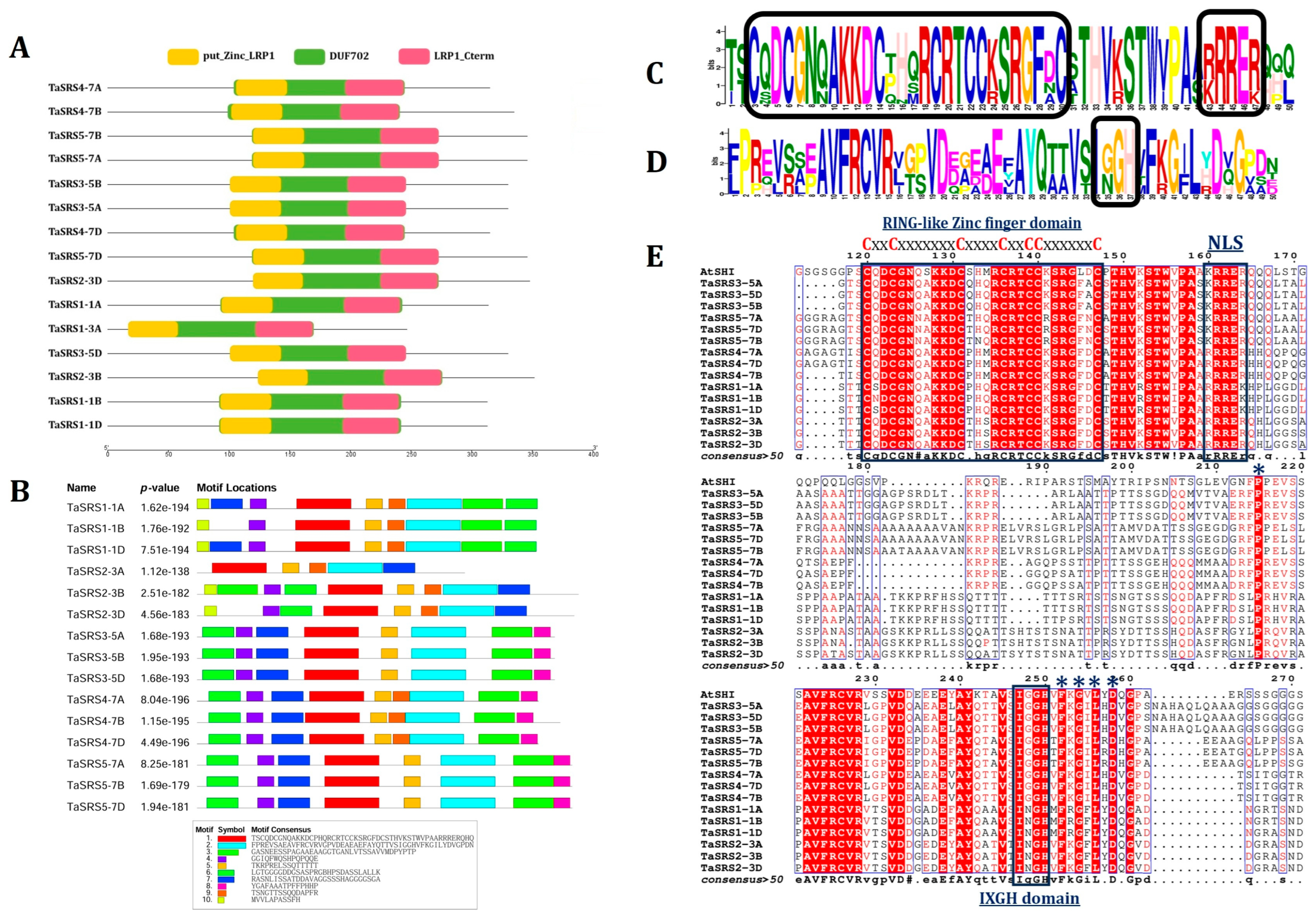
The domain architecture of TaSRS proteins was conserved. All of them consisted of three domains: DUF702 (PF05142), N-terminal putative zinc-finger (RING-like zinc-finger) (put_zinc_LRP1; IPR006510) and a C-terminal LRP1 domain (LRP1_Cterm; IPR006511). The N-terminal putative zinc-finger and C-terminal LRP1 domains overlap the DUF702 (Figure 2A, Table S2). A similar architecture of SRS proteins has also been reported in other plant species, such as Arabidopsis and rice [6,7,11].
Figure 2.
Domain architecture, conserved motif and MSA analyses of TaSRS proteins. (A) The figure illustrates the domain architecture and distribution in TaSRS proteins. Data obtained from NCBI-CD search and visualized using TBtools. (B) The figure shows the distribution of conserved motifs in TaSRS proteins identified by the MEME Suite. The consensus sequences for each motif are listed and shown in different colours. (C) The sequence logo represents the conserved RING-like zinc-finger domain and NLS. (D) The sequence logo shows a conserved IXGH domain. (E) The figure shows a multiple sequence alignment of SRS proteins from T. aestivum and AtSHI (as a representative), showing a conserved RING-like zinc-finger domain, a monopartite NLS, an IXGH domain, and several conserved amino acid residues (indicated by *). MSA analysis was carried out using the Multalin tool.
Additionally, we performed conserved motif analysis using MEME2.0 and multiple sequence alignment (Figure 2B–E). Motifs one and two were conserved in all the TaSRS proteins, which represent the RING-like zinc-finger, including the nuclear localisation signal (NLS), and IXGH domain, respectively. TaSRS1-1B lacks motif 7; however, it is located at the C-terminal region of TaSRS2 homoeologous proteins. Motif 10 was present only in homoeologs of TaSRS1 and TaSRS2, and motif 8 was specific to homoeologs of TaSRS3, TaSRS4 and TaSRS5.
The MSA revealed the conserved nature of TaSRS proteins, including conserved AA residues and structural features (Figure 2E). The RING and IXGH domains were found to be highly conserved, reaffirming the necessity for DNA binding and transcriptional activity [6,7,8,14]. The monopartite NLS (R/KRRER/K) was found to be conserved in all TaSRS sequences, suggesting a conserved mechanism for their nuclear translocation [37]. Additionally, P (215), F (252), G (254), L (256), and D (258) AA residues were also found conserved in all the TaSRS proteins; however, their functions need to be explored in future studies.
2.4. Evolutionary Analyses of TaSRSs
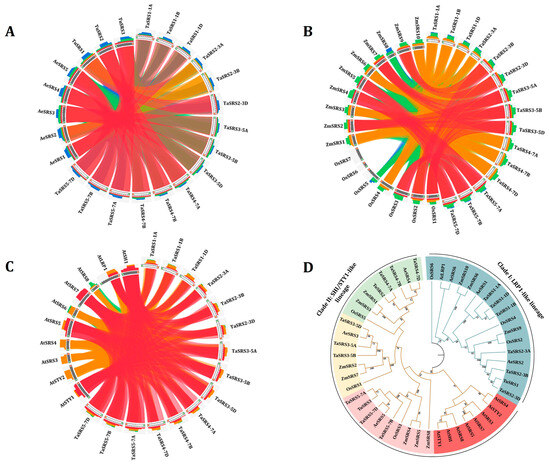
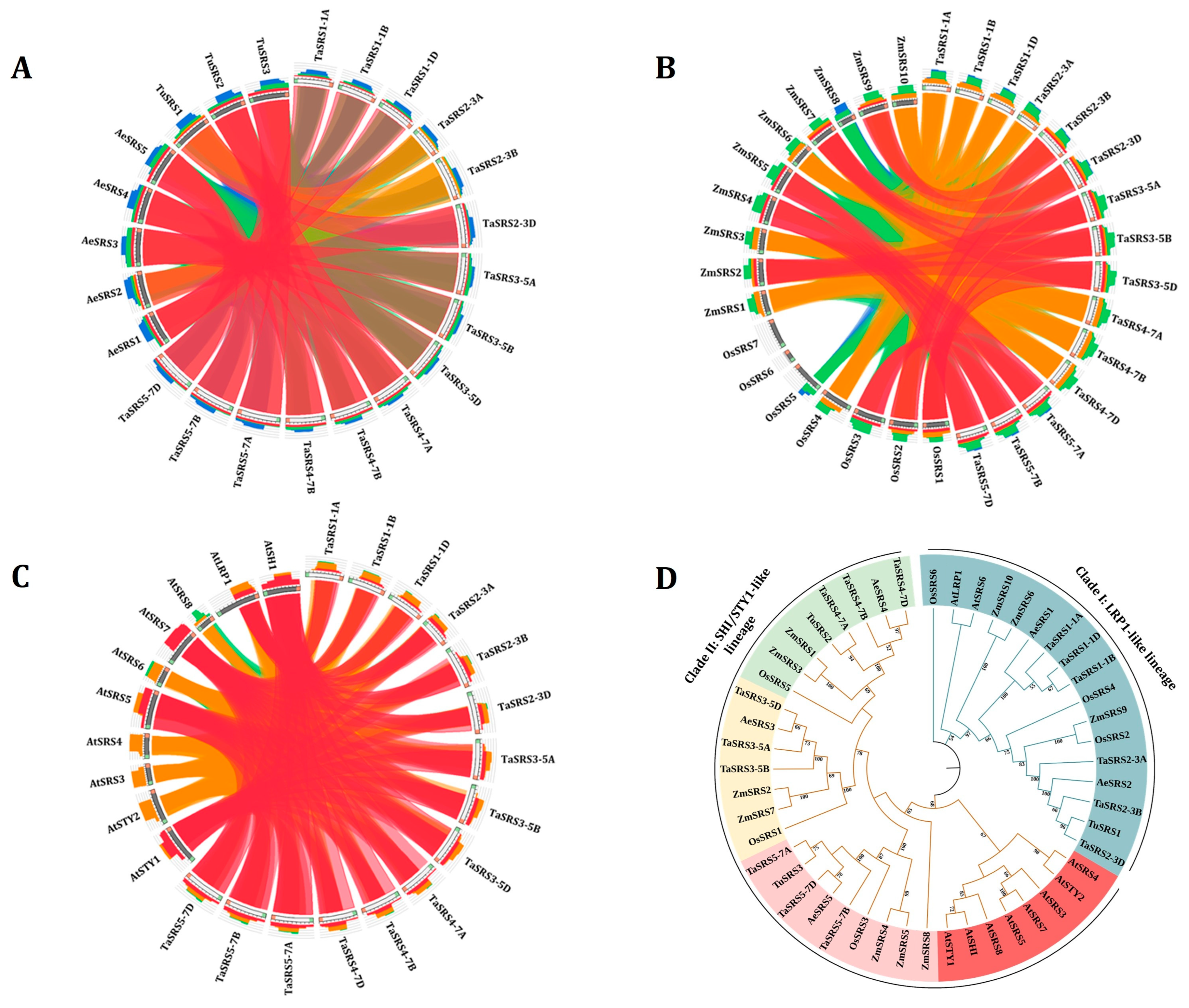
To explore evolutionary relatedness, the syntenic and phylogenetic relationships of the TaSRS proteins were examined with those of the SRS proteins from Ae. tauschii, T. urartu, A. thaliana, O. sativa, and Z. mays (Figure 3). The synteny with the wild ancestors of D and A sub-genomes of bread wheat, i.e., Ae. tauschii and T. urartu, respectively, revealed strong homology among the related SRS proteins, indicating well-known shared ancestry. For instance, the TaSRS2 homoeologous proteins showed a close relationship with the AeSRS2 and TuSRS1 (Figure 3A).
Figure 3.
Syntenic and phylogenetic relationship between SRS proteins of Triticum aestivum and other plants. The figure shows orthologous or syntenic pairing of SRS genes in Triticum aestivum with (A) Ae. tauschii and T. urartu (AeSRS, TuSRS), (B) O. sativa and Z. mays (OsSRS, ZmSRS), and (C) A. thaliana (AtSRS). Circos-style syntenic maps were generated using the Circoletto web tool. Coloured ribbons indicate orthologous gene pairs. (D) The figure illustrates the phylogenetic relationship among the SRS proteins in Ae. tauschii, A. thaliana, O. sativa, T. aestivum, T. urartu and Z. mays. The phylogenetic tree shows two major clades, further divided into five groups, each shown in a different colour. The phylogenetic tree was constructed in MEGA11 using the neighbour-joining method and 1000 bootstrap replicates. >50% bootstrap support values shown at the corresponding nodes, where higher values reflect more reliability.
The synteny analyses with rice and maize SRS proteins revealed a conserved orthologous relationship. We found that the TaSRS1 and TaSRS2 homoeologous group proteins were orthologous to OsSRS2 and ZmSRS9, while the TaSRS3 homoeologous proteins corresponded to OsSRS1, ZmSRS2 and ZmSRS7. The TaSRS4 homoeologous proteins shared orthology with ZmSRS3, ZmSRS2, and OsSRS1, while TaSRS5 shared orthology with OsSRS3, ZmSRS4, and ZmSRS5. Surprisingly, OsSRS6 formed a separate branch, suggesting species-specific divergence in rice (Figure 3B). The cross-family synteny analysis with Arabidopsis revealed that the homoeologous groups of TaSRS1 and TaSRS2 aligned with AtLRP1, while homoeologs of TaSRS3, TaSRS4 and TaSRS5 shared an orthologous relationship with AtSHI, AtSTY1, and AtSRS5 (Figure 3C). Similar syntenic relationship among the genes of bread wheat, rice, maize, and Arabidopsis was also reported in earlier studies [38,39].
The phylogenetic tree was constructed using full-length SRS sequences from various plant species and revealed a clear evolutionary relationship across the species (Figure 3D). The neighbour-joining analysis revealed two major evolutionary clades: Clade I-LRP1-like and Clade II-SHI/STY-like, corresponding to the functional specialization established in the Arabidopsis SRS family proteins. The role of AtLRP1 in regulating lateral root growth, auxin homoeostasis and photomorphogenesis has previously been demonstrated [15,16]. Clustering of TaSRS1 and TaSRS2 HG genes, ZmSRS6, ZmSRS10, OsSRS4 and OsSRS9 with AtLRP1 indicates their role in similar processes. AtSHI, AtSTY1, and AtSTY2 genes are known to regulate floral development, carpel formation, and auxin biosynthesis [7,40,41]. This clade includes several monocot SRS proteins, such as TaSRS3, TaSRS4 and TaSRS5 homoeologous group genes, that are likely to retain their regulatory roles in the regulation of reproduction and biosynthesis of auxin. Furthermore, the homoeologous TaSRS genes showed tight clustering among them and with the orthologous genes from Ae. tauschii and T. urartu, which could be due to an ancestral relationship among them. In addition, some of the TaSRS genes, such as TaSRS2 and TaSRS3 homoeologous groups, were closely clustered with OsSRS2 and ZmSRS9, indicating conserved monocot functions. Furthermore, the TaSRS homoeologs were distributed across multiple branches, suggesting their subfunctionalization.
2.5. Promoter Analyses
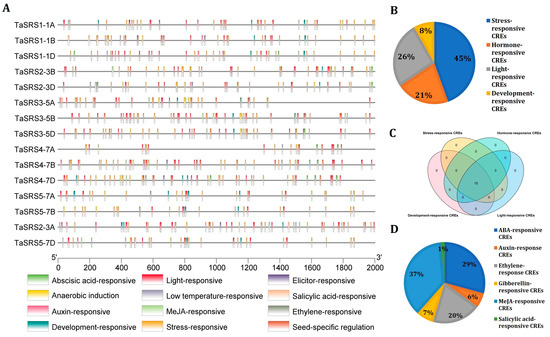
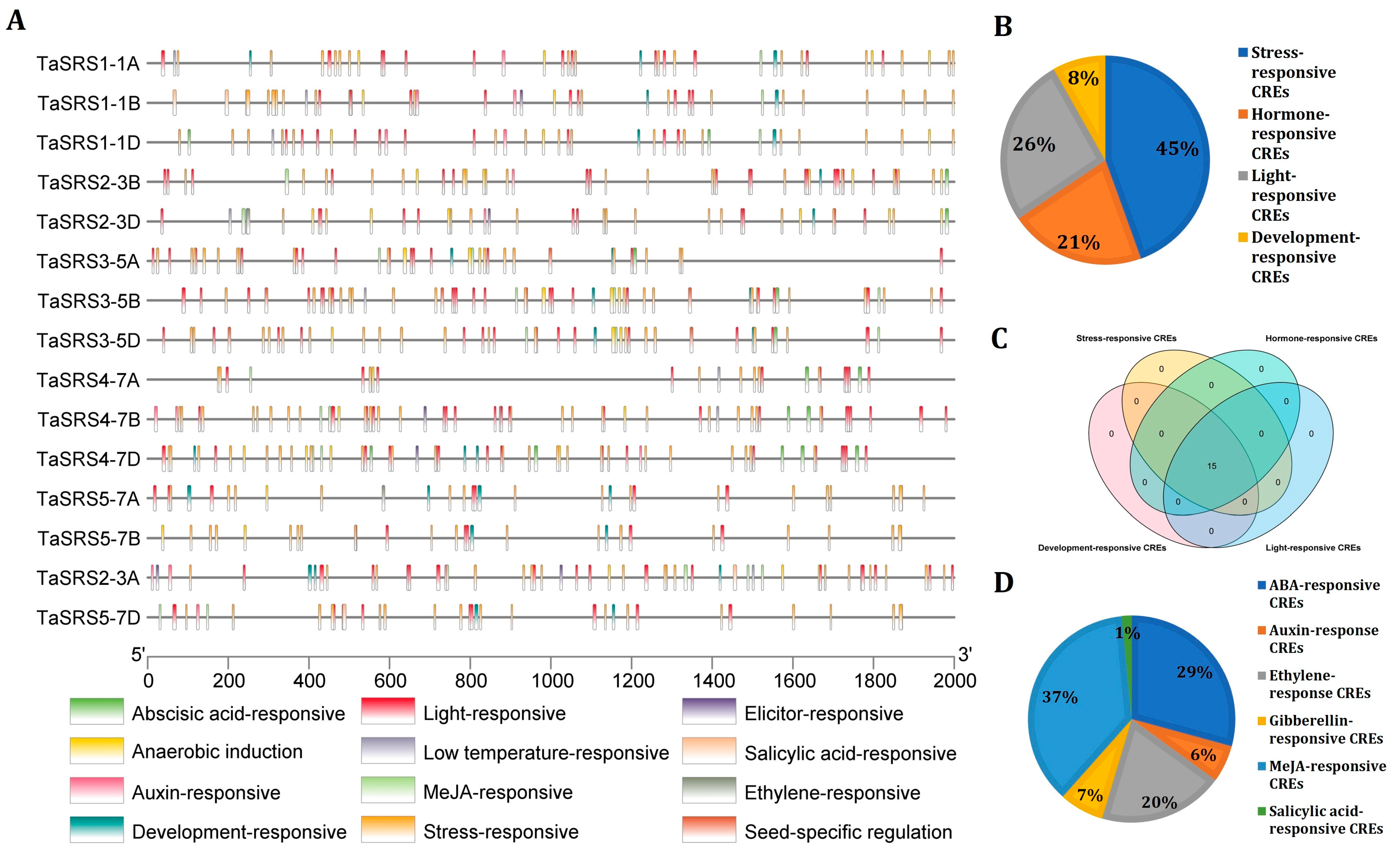
To understand the transcriptional regulation of TaSRS genes, the occurrence of cis-regulatory elements (CREs) and transcription factor binding sites (TFBS) was analyzed. TaSRS promoter sequences contained a wide range of CREs (Figure 4A, Table S3), which could be broadly divided into four categories. The majority of them were stress-responsive (45%), followed by hormones (26%), light (21%), and growth and development-related (8%), and were found across all TaSRSs (Figure 4B,C).
Figure 4.
In silico cis-regulatory element analysis in the promoter region of TaSRS genes. (A) The figure shows the distribution of putative cis-regulatory elements in the 2000 bp upstream promoter regions of TaSRS genes. The CREs were grouped based on their biological function, and each group is represented in a different colour, as indicated in the legend below. (B) The pie chart shows the relative proportion of stress, hormone, light and development-responsive CREs in TaSRS promoters. (C) The Venn diagram illustrates the distribution of four functional categories of CREs in TaSRS promoters. All 15 TaSRS genes contain CREs belonging to each functional category. (D) The pie chart shows the relative proportion of different hormone-responsive CREs in the upstream region of TaSRS genes. The putative CREs were identified using the PlantCARE database. The distribution landscape and the Venn diagram were generated using TBtools software.
The stress-responsive CREs included the components of the ABA signalling pathway (ABRE, ABRE3a, and ABRE4), which is a central mediator of plant responses to drought and salinity stress (Table S3) [4,42]. Similarly, DRE core and DRE1 elements known to regulate dehydration and salt-inducible gene expression were present in almost all the TaSRS promoter sequences, suggesting ABA-independent activation of SRS genes during drought and salt stress in wheat [43]. The pronounced presence of MYB and MYC binding sites further supports the role of TaSRS genes under osmotic and oxidative stress conditions. Other stress-responsive CREs include the WUN motif, involved in the wounding response and low-temperature response (LTR), the drought-related MYB site (MBS), and TC-rich repeats, which are widely associated with general defence mechanisms (Table S3). The presence of TCA elements, ERE, TGACG motif, and CGTCA motif suggest the association of TaSRS gene with pathogen response and systemic-acquired resistance [4,44,45,46].
Consistent with previous reports from Brassica and tomato, the TaSRS promoters contain motifs for meristematic activity (CAT-Box) and seed-specific CREs (O2 site and RY element). The light-responsive elements, such as the GATA motif, Sp1, LAMP element, and G-box element, distributed across the TaSRS gene family, suggest their possible role in responding to light fluctuations and photomorphogenic regulation [4,9,29], underpinning the role of TaSRS transcription factors in photosynthesis and developmental programmes. Among the hormone-responsive CREs, methyl jasmonate (37%) and ABA-responsive CREs (29%) constituted one third of the CREs (Figure 4D), suggesting a fine-tuned cross-talk between abscisic acid, jasmonic acid, salicylic acid, and auxin pathways. Earlier studies have demonstrated that the ABRE- and jasmonate-responsive motifs confer stress-inducible regulation in SRS gene expression during drought, salinity, and biotic stress conditions [4,43,46].
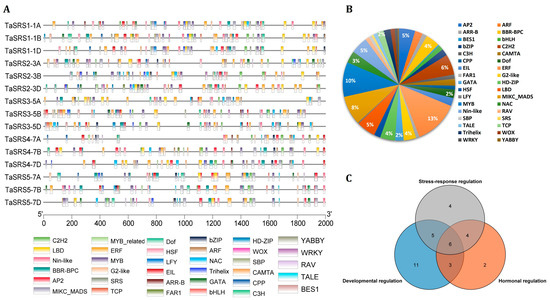
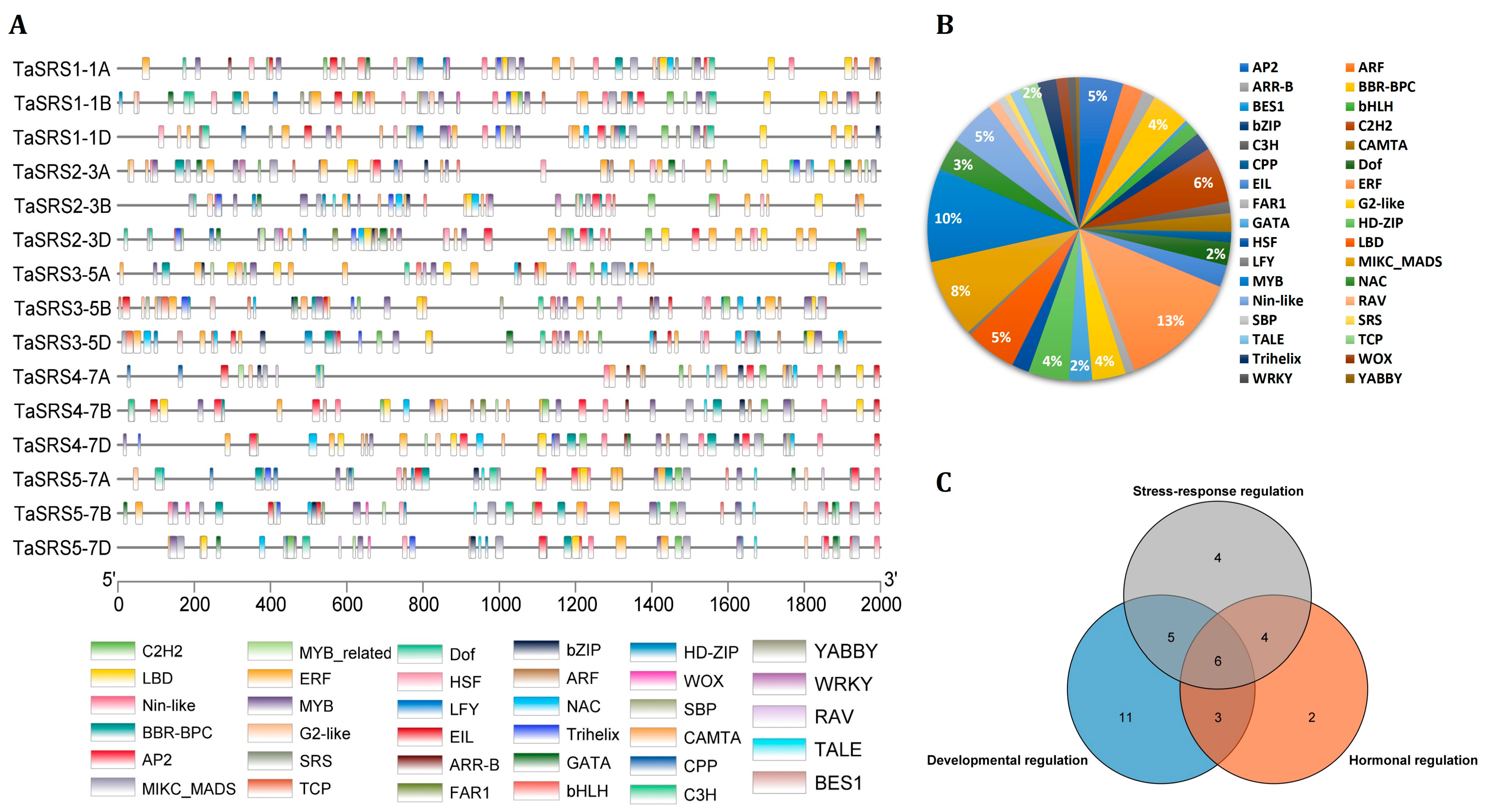
Comprehensive mapping of TFBS identified 810 predicted sites across 35 TF groups in the TaSRS promoter sequences, revealing pronounced diversity and gene-specific regulatory complexity (Figure 5A, Table S4). The occupation of TFBS was dominated by TFs, ERF (12.8%), MYB (10%), MIKC_MADS (8%), C2H2 (6%), and AP2, NIN-like and LBD (5%). Additionally, various stress-responsive TFBS, such as NAC, bZIP, EIL, HSF, WRKY, etc., were also identified in the majority of TaSRS promoter sequences (Figure 5B). Of the total identified TF groups, 19 belong to stress response, 15 to hormonal regulation, and 25 to developmental regulation (Figure 5C). ARF, BES1, ERF, and AP2 TFs are known for their roles in auxin, brassinosteroid, ethylene, and ABA signalling, respectively. Various TFs, such as CAMTA, MYB, NAC, and WRKY, play crucial roles in abiotic stress responses, including drought and salinity stress [2,4,5]. These findings suggest the association of various TaSRS genes with abiotic stress signalling. The presence of developmental regulators such as MIKC_MADS, C2H2, RAV, and TALE suggests the involvement of TaSRS genes in developmental pathways. The presence of multifunctional regulators such as MYB, AP2/ERF and NAC in all the TaSRS promoters suggest coordinated regulation of these genes across diverse adaptation and developmental processes [44,45].
Figure 5.
Predicted Transcription factor binding sites in the promoter of TaSRS genes. (A) The figure shows the distribution of predicted TFBSs in the 2000 bp upstream promoter region of TaSRS genes. Each transcription factor is represented by a different colour box, as indicated in the legend below. (B) The pie chart shows the relative proportion of these TFBSs predicted in the TaSRSs promoter. (C) The Venn diagram shows overlap among functional categories of predicted TFBSs in TaSRS promoters. TFBSs were predicted using the PlantRegMap web tool. The distribution patterns of predicted TFBSs and the Venn diagram were generated using TBtools software.
2.6. miRNA Interactions
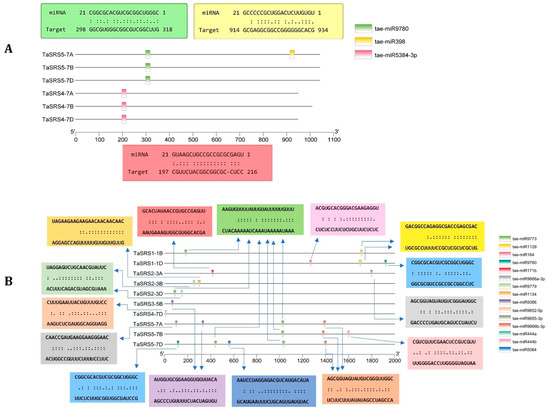
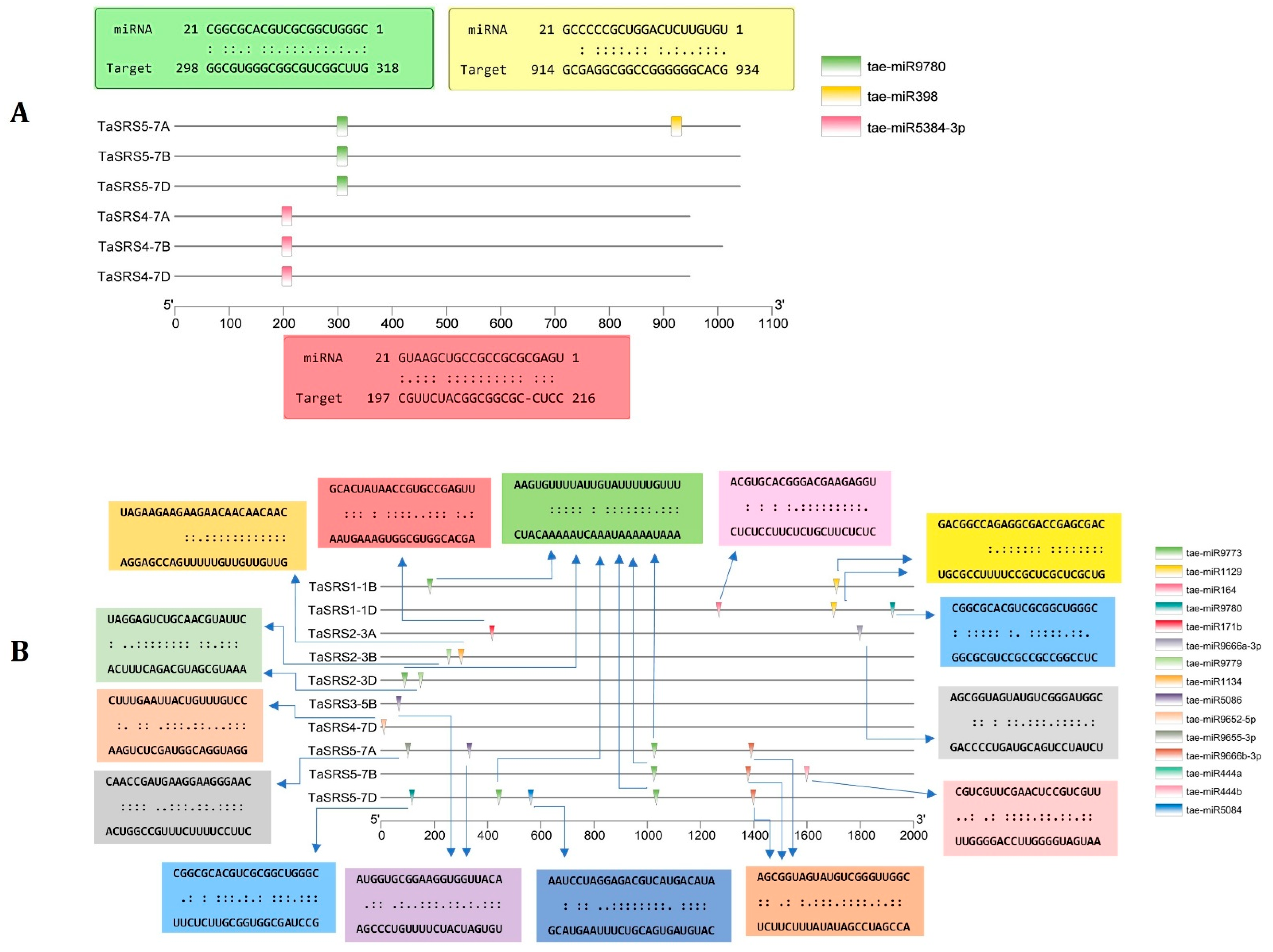
The miRNAs are known for post-transcriptional regulation of gene expression by complementary binding to the mRNAs in the cytoplasm. A few recent studies have demonstrated nuclear translocation of some miRNAs, which could interact with the promoter elements and modulate transcription [47]. Therefore, in the current study, we predicted the interaction of known miRNAs of bread wheat with both cDNA and promoter sequences of TaSRS genes (Figure 6). The in silico miRNA interaction study suggested the post-transcriptional regulation of the TaSRS4 and TaSRS5 homoeologous group genes by three known miRNAs of bread wheat (tae-miR398, tae-miR5384-3p and tae-miR9780) (Figure 6A). tae-miR3584-3p and tae-miR9780 showed interaction with TaSRS4 and TaSRS5 homoeologous group genes, respectively. These miRNAs could regulate gene expression by cleaving target mRNAs. However, tae-miR398 was predicted to target the TaSRS5-7A gene via a translation-inhibition mechanism. tae-miR398 and tae-miR9780 are known drought and salt stress-responsive miRNAs in wheat [48,49]. tae-miR398 is significantly down-regulated following NaCl treatment in wheat. Furthermore, miR398 exhibits differential regulation under drought conditions across wheat varieties, with upregulation in wild emmer wheat but potentially altered in cultivated species [49,50]. The interaction of these miRNAs with TaSRS genes indicate their role in similar stress conditions.
Figure 6.
Predicted miRNA-mediated regulation of TaSRS genes. (A) The figure shows the positions of predicted miRNAs binding within the CDS of TaSRS genes. (B) The figure shows the positions of predicted miRNAs within the 2000 bp upstream promoter region of TaSRS genes. Arrows represent the target sites of the miRNAs, and coloured boxes represent the complementary base pairing. miRNAs were predicted using the psRNATarget server and mapped using TBtools.
Multiple miRNA regulators were predicted to interact with the promoter region of various TaSRS genes, including tae-miR9780, tae-miR171b, tae-miR5084, tae-miR5086, tae-miR44a, tae-miR44b, etc. (Figure 6B). Strikingly, not all 15 TaSRS genes contain miRNA-binding sites in their promoters; only those with predicted complementarity are actively regulated. The positional distribution of miRNA-binding sites within the 2000 bp promoter region revealed clustering at specific locations; few TaSRS genes (e.g., TaSRS5-7D) contain multiple miRNA interactions dispersed across the promoter, while others (e.g., TaSRS3-5B and TaSRS4-7D) show single predicted targeting.
The identification of miRNA-binding sites within TaSRS promoter regions extends regulatory control beyond post-transcriptional mechanisms [51]. In wheat, where dynamic responses to drought and salinity stress are critical, promoter-targeted miRNA interactions could fine-tune SRS gene expression at both transcriptional and post-transcriptional levels, thereby amplifying the responsiveness of the regulatory network. The integration of miRNA-promoter interaction data with cDNA-level targeting provides information about an additional layer of control and its contribution to stress resilience in the wheat SRS gene family [48,49,50].
2.7. Protein–Protein Interactions (PPI)
PPIs are fundamental to cellular processes, enabling proteins to form dynamic networks that drive signal transduction, gene regulation, metabolic pathways and stress-adaptive responses [52]. Understanding these PPIs provides valuable insights into the complex molecular framework operating in living systems. It reveals how changes in these networks can affect plant development, physiology and stress tolerance [53]. Therefore, the characterization of PPIs is essential for understanding the core biological functions as well as for advancing the biotechnological applications, allowing the identification of key molecular regulators for precise genetic improvements [52,54].
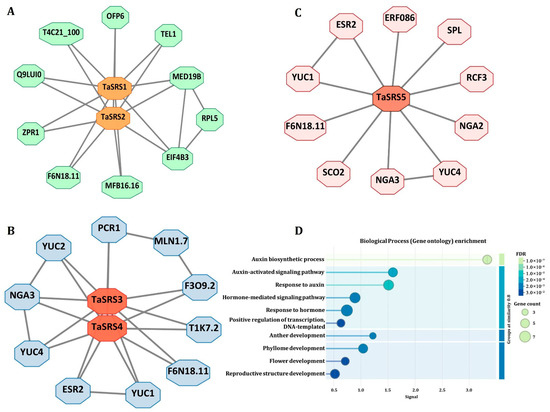
Previous studies in Arabidopsis, pitaya, sesame, and quinoa suggest that SRS proteins participate in diverse interaction networks that integrate hormone signalling, organogenesis, and stress response through specific protein partners. These PPI networks enable SRS transcription factors to act as molecular regulators, ensuring plant growth and adaptation to fluctuating environmental conditions [7,55,56]. Based on these foundational insights in the SRS TF family across diverse plant species, we constructed PPI networks for TaSRS proteins. Our predicted PPI analyses indicated that the TaSRSs function as central regulators in developmental, hormonal and environmental signalling networks. The homoeologous group proteins of TaSRS1 and TaSRS2 were found to interact primarily with proteins involved in cellular organization, such as MED19B, RPL5 and EIF4B3 (Figure 7A). Along with these, the homoeologs of TaSRS1 and TaSRS2 were found to interact with proteins involved in RNA processing (ZPR1) and maintenance of cellular structure (OFP6 and TEL1). These in silico interactions suggest the possible role of TaSRS1 and TaSRS2 homoeologous group proteins in coordinating the expression of genes involved in fundamental cellular processes [57,58,59,60]. The homoeologous group proteins of the TaSRS3 and TaSRS4 interaction network include the key enzymes involved in the auxin biosynthesis pathway (YUC2, YUC1, and YUC4) [61], organ development factors (NGA3 and ESR2), and proteins involved in hormonal regulation, such as PCR1 (Figure 7B) [62,63]. This suggests that TaSRS3 and TaSRS4 may participate in the formation of the reproductive structure and hormone-responsive growth in wheat.
Figure 7.
In silico analysis of protein–protein interaction (PPI) and GO enrichment of TaSRS proteins. The figure shows the predicted interaction networks between the identified proteins and the proteins belonging to (A) TaSRS1 and TaSRS2, (B) TaSRS3 and TaSRS4, and (C) TaSRS5. The homoeologous group members of each TaSRS protein were grouped, as they share a similar interaction profile. (D) The figure shows Biological Process (Gene ontology) enrichment of TaSRS proteins. The interacting proteins were identified using the STRING database, and the interaction network was constructed in the Cytoscape.
Moreover, we found that the TaSRS5 homoeologs interact with floral regulators and proteins involved in the auxin biosynthesis pathway (SPL, YUC1, NGA2, and NGA3) [61,62,64,65]. Furthermore, they showed interactions with proteins involved in stress response (NGAs, RCF3 and ERF086) (Figure 7C) [66,67,68]. These functional diversities of TaSRS proteins indicate their role in the integration of reproductive processes with environmental adaptation. Our findings were consistent with the previous studies on SRS proteins across diverse plant species. In Arabidopsis, SHI, STY1/STY2, and LRP1 regulate organ development by modulating auxin biosynthesis and signalling via the YUCCA genes, resulting in the formation of root, gynoecium, flower, and leaf architecture [8,40,41]. In cassava, SRSs regulate auxin homeostasis during development, and respond to hormonal stimuli and abiotic stress, highlighting their roles in growth and stress adaptation [69].
Gene ontology (GO) enrichment analysis revealed that the TaSRS proteins were predominantly associated with the auxin biosynthesis and signalling pathway, along with hormone-mediated regulation and various developmental processes (Figure 7D). The most significantly enriched biological process was auxin biosynthesis, with the highest signal value (10 × 10−7). Similarly, the auxin-activated signalling pathway and response to the auxin were highly enriched, emphasizing the pivotal role of SRS genes in regulating auxin metabolism and signalling cascades. These findings were consistent with the previous reports, highlighting the participation of SRS family members in auxin-mediated regulatory networks and their central role in coordinating growth and response to abiotic stresses [12,13,21,24,29].
2.8. Expression Analyses of TaSRS Genes
To understand the roles of TaSRS genes, a comprehensive expression analysis was performed using high-throughput transcriptomic data from various vegetative and reproductive tissues, as well as under drought, heat, and salinity stress conditions. Additionally, the expression of a few selected genes under drought and salinity stress was subsequently validated using qRT-PCR with gene-specific primers (Table S5).
2.8.1. Expression Analysis in Vegetative and Reproductive Tissues
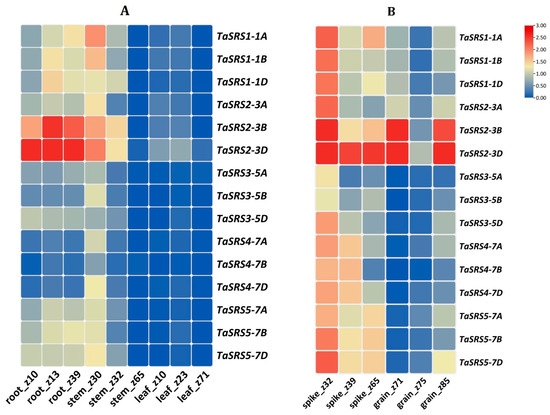
In vegetative tissues, the majority of TaSRS genes were expressed across developmental stages of root and stem tissues (Figure 8A). However, their expression was significantly lower across all leaf tissue developmental stages and in the later stages of stem development. TaSRS2-3B and TaSRS2-3D were among the most abundantly expressed genes across all developmental stages of vegetative tissues. These highly expressed genes were grouped into the LRP1-like lineage (Clade I) in phylogenetic analysis, which also comprises root-associated orthologues from Arabidopsis [16]. The results suggest that this clade has retained an ancestral role in root meristem maintenance and lateral root primordia formation. The promoters of TaSRS2 homoeologous genes were enriched in auxin, gibberellin and development-related CREs, as well as MYB, NAC, bZIP, and TCP TFBSs. This provided a mechanistic explanation for their preferential expression in actively growing root tissues and integration into the auxin-centred growth regulatory network [4,16].
Figure 8.
Expression profiling of TaSRS genes in various vegetative and reproductive tissues. (A) The figure represents the expression profiles of TaSRS genes in different vegetative tissues, viz., root, stem and leaves at various developmental stages. (B) This figure shows the expression profiles of TaSRS genes in reproductive tissues at multiple development stages. The fold change in expression levels was calculated against the control. The stages were categorized using the Zadoks scale. The heatmap was generated using TBtools. The high level of expression indicated by red and blue colours indicates lower expression.
In the case of reproductive tissues, the majority of TaSRS genes showed significant expression across all spike developmental stages; however, their expression was significantly reduced during grain development, except for TaSRS2-3B and TaSRS2-3D (Figure 8B). These results indicated the role of TaSRS genes in the early reproductive phases, probably during pollen and ovule formation. TaSRS2-3B and TaSRS2-3D showed the highest transcript levels across the reproductive tissues, followed by TaSRS1 homoeologous group genes. TaSRS1 and TaSRS2 homoeologous group genes were tightly clustered within the LRP1-like branch in the phylogenetic tree. The promoters of TaSRS1 and TaSRS2 HGs were found to be enriched in auxin, ABA, and general developmental CREs and to contain multiple binding sites for MADS-box, TCP, and other reproductive transcription factors, which correlate with their spike/grain expression levels. In contrast, SHI/STY-like TaSRS3-TaSRS5 HG genes, despite conservation at the protein level, possess more modest or divergent CRE and TFBS landscapes and show low or unresponsive reproductive expression, suggesting sub-functionalization into specialized or partially redundant roles during floral and grain development [4,7,9,12].
2.8.2. Drought and Heat-Responsive Expression
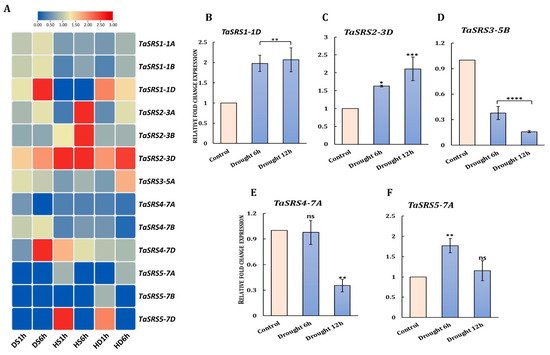
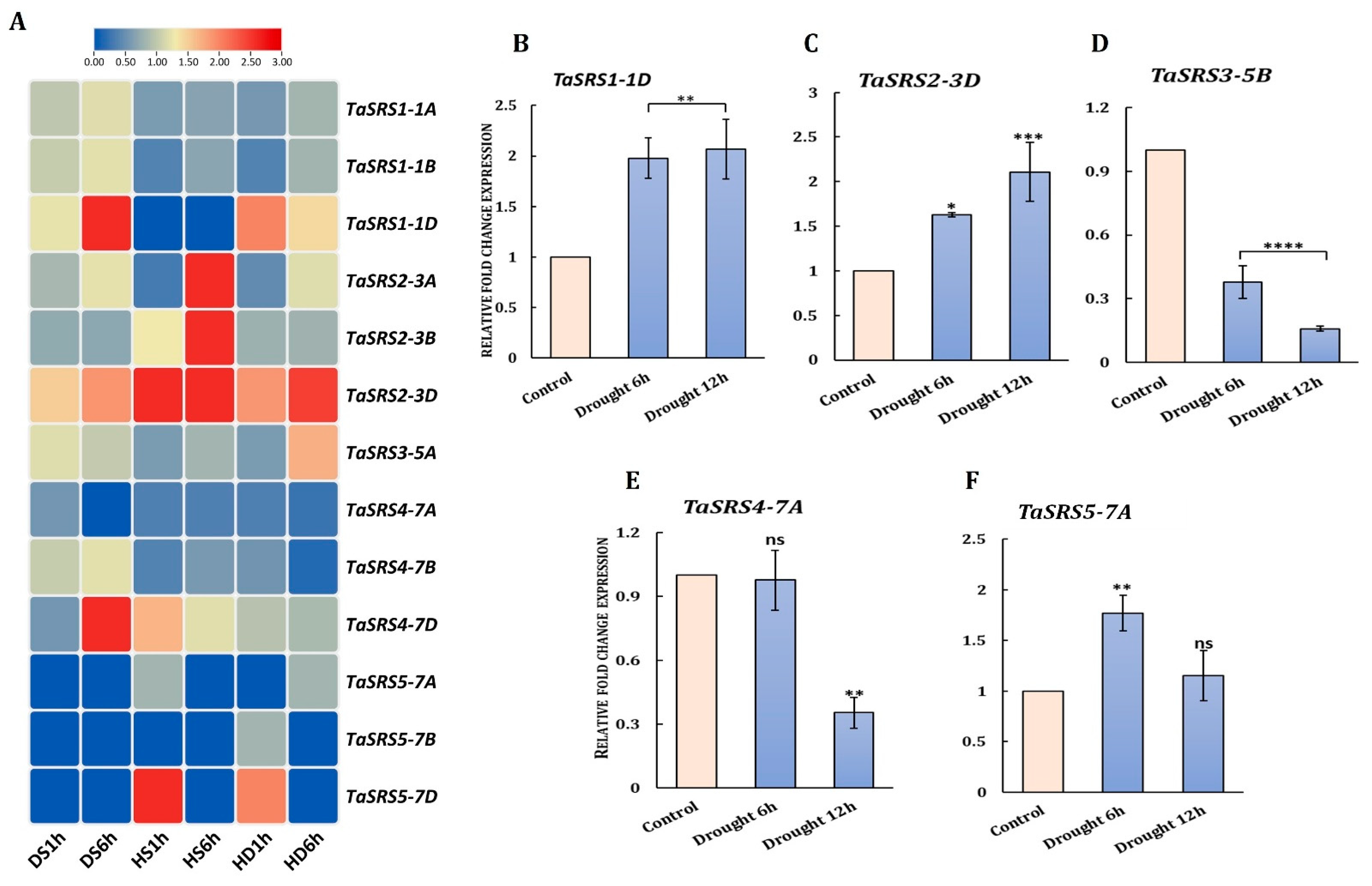
During drought and heat stress conditions, a distinct expression pattern was observed for some TaSRS genes (Figure 9A). The transcripts of TaSRS1-1D and TaSRS4-7D were highly accumulated at 6 h of drought, and TaSRS5-7D showed transient up-regulation at the early stage of heat treatment (1 h), whereas TaSRS2-3D was up-regulated across the treatments. These patterns were further validated by qRT-PCR, which showed significant upregulation of TaSRS1-1D and TaSRS2-3D at 6–12 h of drought, while TaSRS3-5B and TaSRS4-7A showed progressive downregulation with increasing stress duration, and TaSRS5-7A showed an early peak followed by a decline (Figure 9B–F). These results suggest the temporal differentiation of roles in stress perception and regulation. The TaSRS1-1D and TaSRS2-3D belong to the LRP1-like lineage, while the repressed or temporally expressed genes, i.e., TaSRS3-5B, TaSRS4-7A, and TaSRS5-7A, were grouped in the SHI/STY-like branch. These results suggest that phylogeny could be linked to functional divergence, with one clade predominantly participating in stress responses and the other in growth and development in plants [12,21]. Similar differences can be observed in their promoter composition; TaSRS1-1D and TaSRS2-3D possess a high density of ABRE and other stress-responsive CREs, with binding sites for NAC ERF, WRKY, and HSF transcription factors, which are known for their roles in ABA- and ROS-mediated drought signalling. TaSRS3-5B and TaSRS4-7A promoters were enriched for auxin- and development-related CREs, with few canonical stress TFBSs, consistent with their suppression, as growth-promoting pathways are attenuated during drought. Taken together, analogous lineage-based responses reported for SRS genes in plants suggest the LRP1-like TaSRS genes, composed of stress-responsive regulatory elements, act as positive regulators of drought adaptation, while SHI/STY-like members remain primarily developmental regulators as their expression is actively suppressed during drought [11,21,23,29,55,69].
Figure 9.
Expression analyses of TaSRS genes during drought and heat stress conditions. (A) The figure shows the fold change expression profiles (FPKM) of TaSRS genes at different time points of drought and heat stress, calculated against the control. The heatmap was generated using TBtools. The high level of expression indicated by red and blue colours indicates lower expression. (B–F) The bar graphs show transcript accumulation of selected TaSRS genes under drought stress at 1 and 6 h of the 20% PEG treatment. qRT-PCR was performed using total RNA of shoot tissues. TaARF was used as an internal control. The experiment was conducted in triplicate, and the data were represented as mean ± SD. Asterisks denote the level of significance compared with control (* p ≤ 0.05; ** p ≤ 0.01; *** p ≤ 0.001; **** p ≤ 0.0001; ns, not significant), determined by one-way ANOVA (Fisher’s and Dunnett’s post-test).
2.8.3. Salt-Responsive Expression
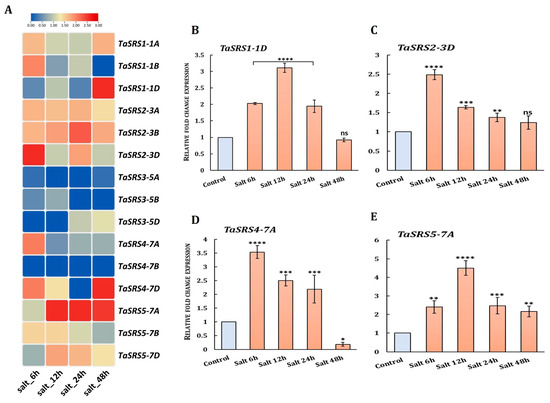
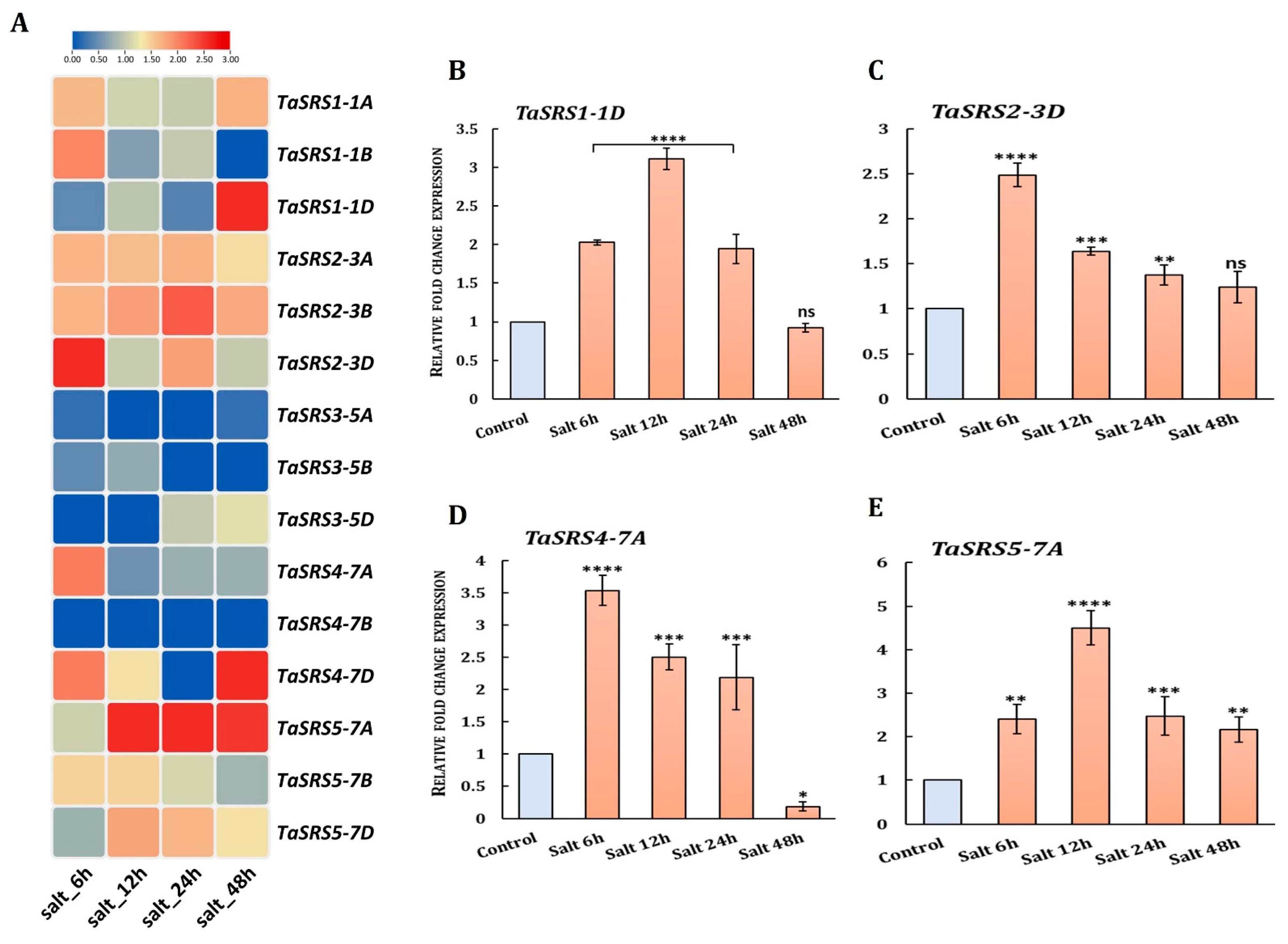
Salinity induced a partly overlapping but distinct subset of TaSRS genes. Transcripts of TaSRS1-1D, TaSRS2-3D, TaSRS4-7A and TaSRS5-7A were highly accumulated, whereas TaSRS2-3A, TaSRS2-3B and HGs of TaSRS3 were less responsive or slightly down-regulated (Figure 10A). The qRT-PCR analysis validated these results (Figure 10B–E). TaSRS1-1D and TaSRS2-3D (LRP1-like) showed approximately a two- to threefold increase in expression at 6–12 h, and TaSRS4-7A and TaSRS5-7A were strongly up-regulated (four- to five-fold), which persisted into later time points before down-regulation by 48 h. These results indicate that these genes function during the early and intermediate phases of salt stress. From a phylogenetic perspective, the presence of both LRP1-like and SHI/STY-like members among the salt-inducible genes indicate that salt-responsive functions arose independently within both lineages, consistent with cassava, soybean, sesame and others, where only specific SRS paralogs respond robustly to salt stress [23,56,69,70].
Figure 10.
Expression analyses of TaSRS genes during salinity stress conditions. (A) The figure shows the temporal fold change expression profiles (FPKM) of TaSRS genes during salinity stress, calculated against the control. The high level of expression indicated by red and blue colours indicates lower expression. The heatmap was generated using TBtools. (B–E) The bar graphs show transcript accumulation of selected TaSRS genes under salinity stress at 1 and 6 h of the 150 mM NaCl treatment. qRT-PCR was performed using total RNA of root tissues. TaARF was used as an internal control. The experiment was conducted in triplicate, and the data were represented as mean ± SD. Asterisks denote the level of significance compared with control (* p ≤ 0.05; ** p ≤ 0.01; *** p ≤ 0.001; **** p ≤ 0.0001; ns, not significant), determined by one-way ANOVA (Fisher’s and Dunnett’s post-test).
3. Materials and Methods
3.1. Identification of TaSRS Genes
We identified TaSRS genes in the bread wheat genome using a combination of homology-based and domain-specific strategies. Initially, the SRS protein sequences from rice and Arabidopsis were retrieved from the Ensembl Plants database (IRGSP-1) and The Arabidopsis Information Resource (TAIR) [71,72], respectively, and used as queries in the BLASTp search against the reference wheat genome (IWGSC RefSeq v2.1) in the Ensembl Plants database (release 56). Identified sequences were screened for the occurrence of DUF702/RING-like zinc-finger motif using the InterPro, Pfam and SMART databases [73]. Protein sequences that possessed RING-like zinc-finger domains were considered as TaSRS proteins and used for downstream analysis.
3.2. In Silico TaSRS Protein Characterization
Various protein features such as peptide length (PL), molecular weight (MW), grand average of hydropathicity (GRAVY), and theoretical isoelectric point (pI) were calculated using the Expasy-ProtParam tool [74]. Subcellular localization was predicted by the DeepLoc 2.1 web-tool and cross-validated using the WoLF PSORT (https://wolfpsort.hgc.jp/, accessed on 20 September 2025). The presence of signal peptides and nuclear localization signal was assessed using the SignalP 6.0, and transmembrane domains were assessed using the TMHMM 2.0, respectively.
3.3. Chromosomal Location, Nomenclature, and Gene Structure Analyses
The chromosomal and sub-genomic coordinates of TaSRS genes were retrieved from the T. aestivum reference genome (IWGSC RefSeq v2.1) via the Ensembl Plants database. Physical mapping visualization on chromosomes was generated using the MG2C_v2.1. Gene nomenclature for TaSRS followed the standardized guidelines of the International Wheat Genome Nomenclature Committee (98 Cat_Revised), ensuring consistent, universally recognized gene symbol assignments that reflect their chromosomal locations [30].
For gene structure characterization, the genomic and their corresponding coding sequences (CDSs) were downloaded from Ensembl Plants [71]. The exon-intron organization, including the distribution and length of untranslated regions (UTRs) and intron phases, were visualized using the Gene Structure Display Server 2.0.
3.4. Motifs and Conserved Domains Analyses
Conserved motifs were identified in the TaSRS protein using the MEME Suite (https://meme-suite.org/meme/, accessed on 22 September 2025) with default settings, except for limiting the maximum number of motifs to 10. The significance of identified motifs was assessed based on E-values and positional conservation across the sequences.
The SMART tool (https://smart.embl.de/help/smart_about.shtml, accessed on 25 September 2025) and the NCBI Conserved Domain Search (CD-Search) were employed to annotate conserved domains in the TaSRS proteins. The Tbtools-II software (v2.423) was used to visualize the domain organization [75].
3.5. Sequence Alignment, Phylogeny, and Synteny Analyses
Full-length TaSRS protein sequences were aligned using the Multalin web tool (http://multalin.toulouse.inra.fr/multalin/, accessed on 10 October 2025). Conserved residues, functional domains, and motifs were identified through visual inspection and manually annotated.
To explore shared evolutionary ancestry and genomic collinearity, we performed synteny analyses with the Circoletto web tool (Circoletto @ the BAT cave) (https://bat.infspire.org/circoletto/, accessed on 11 October 2025). Full-length SRS protein sequences from Aegilops tauschii, Triticum urartu, T. aestivum, O. sativa, Z. mays and A. thaliana were used as inputs into the Circoletto at default parameters with a minimum alignment score threshold of 180 bits.
The phylogenetic relationships among full-length SRS proteins from Ae. tauschii, T. urartu, T. aestivum, O. sativa, Z. mays and A. thaliana were inferred using multiple sequence alignment (MSA) generated by the MUSCLE algorithm incorporated within the MEGA 11 software. The neighbour-joining phylogenetic tree was constructed and subsequently visualized using the Interactive Tree of Life (iTOL) platform (https://itol.embl.de/upload.cgi, accessed on 12 October 2025).
3.6. Identification of CREs and TFBSs Analyses
Promoter regions extending 2000 base pairs upstream from the translation start site for each TaSRS gene were retrieved from the Ensembl Plants database. These sequences were subjected to in silico screening for CREs using the PlantCARE web tool (https://bioinformatics.psb.ugent.be/webtools/plantcare/html/, accessed on 15 October 2025). Detected CREs were systematically classified by their known or predicted biological functions, including responses to stress, hormonal signalling pathways, and developmental regulation. To further elucidate regulatory networks, potential TFBSs within these promoters were predicted using the PlantRegMap web tool (https://plantregmap.gao-lab.org/binding_site_prediction.php, accessed on 17 October 2025). The Tbtools-II software (v2.432) was used to visualize the distribution landscape of predicted CREs and TFBSs [75].
3.7. Interaction Analyses
To investigate post-transcriptional regulation, miRNA interactions were predicted for both TaSRS coding sequences and upstream promoter regions. These sequences were analyzed using the psRNATarget server (https://www.zhaolab.org/psRNATarget/, accessed on 18 October 2025) with default parameters including known miRNAs from T. aestivum. The Tbtools-II software (v2.432) was used to visualize the predicted miRNA-target interactions [75].
Protein–protein interaction (PPI) networks of TaSRS proteins were predicted using the STRING v12.0 server with default parameters. A full STRING network type was applied, and interactions were considered significant at a medium confidence threshold (score > 0.4). The resulting PPI networks were visualized and analyzed using the Cytoscape 3.10.4 software.
3.8. Gene Expression Analysis
Next-generation RNA-seq datasets of allohexaploid bread wheat were obtained from the Unité de Recherche en Génomique-Info (URGI) repository. Expression profiling of TaSRS genes was conducted across developmental stages in diverse tissues, including grain, spike, stem, leaf, and root, with two biological replicates. Additional RNA-seq data from Liu et al. (2015) [76] were used to assess TaSRS gene responses in leaf tissues under heat, drought, and combined heat-drought stress at 1 h and 6 h time points. Salinity stress expression patterns were analyzed using root transcriptomes from Zhang et al. (2016) [77] after treatment with 150 mM NaCl at different time intervals (6, 12, 24, 48 h). All datasets were processed through the Trinity pipeline, and gene expression was quantified in fragments per kilobase per million mapped reads (FPKM) [78]. Genes were identified as differentially expressed using a twofold change threshold and a FDR cutoff of 0.05. Expression heatmaps were generated using the TBtools software [75].
3.9. Plant Materials and qRT-PCR Analysis
To validate the RNA-seq expression profiles, qRT-PCR was performed for selected TaSRS genes using protocols established in our laboratory [79]. Seeds of T. aestivum were grown hydroponically after surface sterilization with 0.1% HgCL2 and subjected to drought (20% polyethylene glycol) and salinity (150 mM NaCl) treatments. Shoot and root tissues were used for total RNA isolation and cDNA synthesis for gene expression analysis under drought and salinity stress treatments, as described previously [79,80]. qRT-PCR reactions were performed using gene-specific primers and TB Green® Premix Ex Taq™ II (Tli RNase H Plus) (Takara Bio Inc., Shiga, Japan) on the CFX96 Real-Time PCR system (Bio-Rad Laboratories Inc., Hercules, CA, USA). Relative fold-change expression levels were calculated using the 2−ΔΔCT method, where TaARF was used as an internal reference gene [39,79]. All assays were conducted in three biological replicates, and one-way ANOVA was used to determine the statistical significance.
4. Conclusions
The study delineates the composition, structural features, and evolutionary relationships of the TaSRS genes in bread wheat. These properties are also linked to distinctive expression signatures under salinity and drought stress conditions. Integrating promoter architecture, phylogenetic placement, transcriptomic, and qRT-PCR data highlighted that a limited subset of TaSRS members consistently responds to drought and salinity stress, suggesting lineage- and context-specific regulatory roles in stress adaptation. However, the precise role of each TaSRS gene needs to be validated using overexpression or knock-out approaches in future studies.
Supplementary Materials
The following supporting information can be downloaded at: https://www.mdpi.com/article/10.3390/ijms27073269/s1.
Author Contributions
S.K.U. conceived the idea and designed the experiments. S.S.D., G.P. and Y.S. performed the experiments. S.S.D., P.C.V., J.S. and S.K.U. analyzed the data. S.S.D., G.P. and S.K.U. wrote the manuscript. All authors have read and agreed to the published version of the manuscript.
Funding
This research received no external funding.
Institutional Review Board Statement
Not applicable.
Informed Consent Statement
Not applicable.
Data Availability Statement
The original contributions presented in this study are included in the article and Supplementary Materials. Further inquiries can be directed to the corresponding authors.
Acknowledgments
The authors are grateful to Panjab University, Chandigarh, India, for facilities and the Rashtriya Uchchatar Shiksha Abhiyan (RUSA) scheme for the upgradation of instrumental facilities. S.S.D. is grateful to the Council of Scientific and Innovative Research (CSIR), India, and Y.S. is grateful to the University Grants Commission (UGC), India, for their research fellowship. S.K.U. is grateful to the INSA for the INSA-Associate fellowship.
Conflicts of Interest
The authors declare no conflicts of interest.
References
- El Sabagh, A.; Islam, M.S.; Skalicky, M.; Ali Raza, M.; Singh, K.; Anwar Hossain, M.; Hossain, A.; Mahboob, W.; Iqbal, M.A.; Ratnasekera, D.; et al. Salinity stress in wheat (Triticum aestivum L.) in the changing climate: Adaptation and management strategies. Front. Agron. 2021, 3, 661932. [Google Scholar] [CrossRef] [Scilit]
- Abhinandan, K.; Skori, L.; Stanic, M.; Hickerson, N.M.; Jamshed, M.; Samuel, M.A. Abiotic stress signaling in wheat—An inclusive overview of hormonal interactions during abiotic stress responses in wheat. Front. Plant Sci. 2018, 9, 734. [Google Scholar] [CrossRef] [Scilit]
- Kumar, J.; Singh, S.; Singh, M.; Srivastava, P.K.; Mishra, R.K.; Singh, V.P.; Prasad, S.M. Transcriptional regulation of salinity stress in plants: A short review. Plant Gene 2017, 11, 160–169. [Google Scholar] [CrossRef] [Scilit]
- Srivastava, V.; Mishra, S.; Mehrotra, S.; Upadhyay, S.K. (Eds.) Plant Transcription Factors: Contribution in Development, Metabolism, and Environmental Stress; Elsevier: Amsterdam, The Netherlands, 2022. [Google Scholar]
- Zhang, H.; Zhu, J.; Gong, Z.; Zhu, J.K. Abiotic stress responses in plants. Nat. Rev. Genet. 2022, 23, 104–119. [Google Scholar] [CrossRef] [Scilit]
- Fridborg, I.; Kuusk, S.; Robertson, M.; Sundberg, E. The Arabidopsis protein SHI represses gibberellin responses in Arabidopsis and barley. Plant Physiol. 2001, 127, 937–948. [Google Scholar] [CrossRef] [PubMed]
- Kuusk, S.; Sohlberg, J.J.; Magnus Eklund, D.; Sundberg, E. Functionally redundant SHI family genes regulate Arabidopsis gynoecium development in a dose-dependent manner. Plant J. 2006, 47, 99–111. [Google Scholar] [CrossRef] [Scilit] [PubMed]
- Eklund, D.M.; Thelander, M.; Landberg, K.; Ståldal, V.; Nilsson, A.; Johansson, M.; Valsecchi, I.; Pederson, E.R.A.; Kowalczyk, M.; Ljung, K.; et al. Homologues of the Arabidopsis thaliana SHI/STY/LRP1 genes control auxin biosynthesis and affect growth and development in the moss Physcomitrella patens. Development 2010, 137, 1275–1284. [Google Scholar] [CrossRef] [Scilit]
- Hu, M.; Xie, M.; Cui, X.; Huang, J.; Cheng, X.; Liu, L.; Yan, S.; Liu, S.; Tong, C. Characterization and potential function analysis of the SRS gene family in Brassica napus. Genes 2023, 14, 1421. [Google Scholar] [CrossRef] [Scilit]
- He, B.; Shi, P.; Lv, Y.; Gao, Z.; Chen, G. Gene coexpression network analysis reveals the role of SRS genes in senescence leaf of maize (Zea mays L.). J. Genet. 2020, 99, 3. [Google Scholar] [CrossRef] [Scilit]
- Yang, J.; Xu, P.; Yu, D. Genome-wide identification and characterization of the SHI-related sequence gene family in rice. Evol. Bioinform. 2020, 16, 1176934320941495. [Google Scholar] [CrossRef] [Scilit]
- Fang, D.; Zhang, W.; Cheng, X.; Hu, F.; Ye, Z.; Cao, J. Molecular evolutionary analysis of the SHI/STY gene family in land plants: A focus on the Brassica species. Front. Plant Sci. 2022, 13, 958964. [Google Scholar] [CrossRef] [Scilit] [PubMed]
- Fang, D.; Zhang, W.; Ye, Z.; Hu, F.; Cheng, X.; Cao, J. The plant specific SHORT INTERNODES/STYLISH (SHI/STY) proteins: Structure and functions. Plant Physiol. Biochem. 2023, 194, 685–695. [Google Scholar] [CrossRef] [Scilit]
- Fridborg, I.; Kuusk, S.; Moritz, T.; Sundberg, E. The Arabidopsis dwarf mutant shi exhibits reduced gibberellin responses conferred by overexpression of a new putative zinc finger protein. Plant Cell 1999, 11, 1019–1031. [Google Scholar] [CrossRef] [Scilit]
- Smith, D.L.; Fedoroff, N.V. LRP1, a gene expressed in lateral and adventitious root primordia of Arabidopsis. Plant Cell 1995, 7, 735. [Google Scholar]
- Singh, S.; Yadav, S.; Singh, A.; Mahima, M.; Singh, A.; Gautam, V.; Sarkar, A.K. Auxin signaling modulates LATERAL ROOT PRIMORDIUM1 (LRP1) expression during lateral root development in Arabidopsis. Plant J. 2020, 101, 87–100. [Google Scholar] [CrossRef] [Scilit]
- Yuan, T.T.; Xu, H.H.; Li, J.; Lu, Y.T. Auxin abolishes SHI-RELATED SEQUENCE 5-mediated inhibition of lateral root development in Arabidopsis. New Phytol. 2020, 225, 297–309. [Google Scholar] [CrossRef] [Scilit]
- Yuo, T.; Yamashita, Y.; Kanamori, H.; Matsumoto, T.; Lundqvist, U.; Sato, K.; Ichii, M.; Jobling, S.A.; Taketa, S. A SHORT INTERNODES (SHI) family transcription factor gene regulates awn elongation and pistil morphology in barley. J. Exp. Bot. 2012, 63, 5223–5232. [Google Scholar] [CrossRef] [Scilit]
- Zhang, Y.; Behrens, I.V.; Zimmermann, R.; Ludwig, Y.; Hey, S.; Hochholdinger, F. LATERAL ROOT PRIMORDIA 1 of maize acts as a transcriptional activator in auxin signalling downstream of the Aux/IAA gene rootless with undetectable meristem 1. J. Exp. Bot. 2015, 66, 3855–3863. [Google Scholar] [CrossRef] [Scilit]
- Duan, E.; Wang, Y.; Li, X.; Lin, Q.; Zhang, T.; Wang, Y.; Zhou, C.; Zhang, H.; Jiang, L.; Wang, J.; et al. OsSHI1 regulates plant architecture through modulating the transcriptional activity of IPA1 in rice. Plant Cell 2019, 31, 1026–1042. [Google Scholar] [CrossRef] [Scilit] [PubMed]
- Zhao, S.P.; Song, X.Y.; Guo, L.L.; Zhang, X.Z.; Zheng, W.J. Genome-wide analysis of the shi-related sequence family and functional identification of GmSRS18 involving in drought and salt stresses in soybean. Int. J. Mol. Sci. 2020, 21, 1810. [Google Scholar] [CrossRef] [Scilit] [PubMed]
- Yang, Y.; Qi, L.; Nian, L.; Zhu, X.; Yi, X.; Jiyu, Z.; Qiu, J. Genome-wide identification and expression analysis of the SRS gene family in medicago sativa. DNA Cell Biol. 2021, 40, 1539–1553. [Google Scholar] [CrossRef] [Scilit]
- Ma, B.; Nian, L.; Ain, N.U.; Liu, X.; Yang, Y.; Zhu, X.; Haider, F.U.; Lv, Y.; Bai, P.; Zhang, X.; et al. Genome-wide identification and expression profiling of the SRS gene family in Melilotus albus reveals functions in various stress conditions. Plants 2022, 11, 3101. [Google Scholar] [CrossRef] [Scilit]
- Sun, C.; Yu, L.; Zhang, S.; Gu, Q.; Wang, M. Genome-wide characterization of the SHORT INTER-NODES/STYLISH and Shi-Related Sequence family in Gossypium hirsutum and functional identification of GhSRS21 under salt stress. Front. Plant Sci. 2023, 13, 1078083. [Google Scholar] [CrossRef] [Scilit]
- Yu, Y.; Chang, Q.; Li, C.; Wu, K.; Wang, Y.; Guo, C.; Shu, Y.; Bai, Y. Genome-Wide Identification of SRS Gene Family in Wheat and Expression Analysis Under Abiotic Stress. Int. J. Mol. Sci. 2025, 26, 6289. [Google Scholar] [CrossRef] [Scilit] [PubMed]
- Li, L.; Peng, S.; Wang, Z.; Zhang, T.; Li, H.; Xiao, Y.; Li, J.; Liu, Y.; Yin, H. Genome mining reveals abiotic stress resistance genes in plant genomes acquired from microbes via HGT. Front. Plant Sci. 2022, 13, 1025122. [Google Scholar] [CrossRef] [Scilit] [PubMed]
- International Wheat Genome Sequencing Consortium (IWGSC). A chromosome-based draft sequence of the hexaploid bread wheat (Triticum aestivum) genome. Science 2014, 345, 1251788. [Google Scholar] [CrossRef] [Scilit]
- Levy, A.A.; Feldman, M. Evolution and origin of bread wheat. Plant Cell 2022, 34, 2549–2567. [Google Scholar] [CrossRef] [Scilit]
- Lu, W.; Wang, Y.; Shi, Y.; Liang, Q.; Lu, X.; Su, D.; Xu, X.; Pirrello, J.; Gao, Y.; Huang, B.; et al. Identification of SRS transcription factor family in Solanum lycopersicum, and functional characterization of their responses to hormones and abiotic stresses. BMC Plant Biol. 2023, 23, 495, Correction in BMC Plant Biol. 2025, 25, 738. https://doi.org/10.1186/s12870-025-06778-2. [Google Scholar] [CrossRef] [Scilit]
- Boden, S.A.; McIntosh, R.A.; Uauy, C.; Krattinger, S.G.; Dubcovsky, J.; Rogers, W.J.; Xia, X.C.; Badaeva, E.D.; Bentley, A.R.; Brown-Guedira, G.; et al. Updated guidelines for gene nomenclature in wheat. Theor. Appl. Genet. 2023, 136, 72. [Google Scholar] [CrossRef] [Scilit] [PubMed]
- Xu, G.; Guo, C.; Shan, H.; Kong, H. Divergence of duplicate genes in exon–intron structure. Proc. Natl. Acad. Sci. USA 2012, 109, 1187–1192. [Google Scholar] [CrossRef] [Scilit]
- Rogozin, I.B.; Sverdlov, A.V.; Babenko, V.N.; Koonin, E.V. Analysis of evolution of exon-intron structure of eukaryotic genes. Brief. Bioinform. 2005, 6, 118–134. [Google Scholar] [CrossRef] [Scilit]
- Fedorov, A.; Suboch, G.; Bujakov, M.; Fedorova, L. Analysis of nonuniformity in intron phase distribution. Nucleic Acids Res. 1992, 20, 2553–2557. [Google Scholar] [CrossRef] [Scilit]
- Rohs, R.; Jin, X.; West, S.M.; Joshi, R.; Honig, B.; Mann, R.S. Origins of specificity in protein-DNA recognition. Annu. Rev. Biochem. 2010, 79, 233–269. [Google Scholar] [CrossRef] [Scilit] [PubMed]
- Qing, R.; Hao, S.; Smorodina, E.; Jin, D.; Zalevsky, A.; Zhang, S. Protein design: From the aspect of water solubility and stability. Chem. Rev. 2022, 122, 14085–14179. [Google Scholar] [CrossRef] [Scilit] [PubMed]
- Wright, P.E.; Dyson, H.J. Intrinsically disordered proteins in cellular signalling and regulation. Nat. Rev. Mol. Cell Biol. 2015, 16, 18–29. [Google Scholar] [CrossRef] [Scilit] [PubMed]
- Lange, A.; Mills, R.E.; Lange, C.J.; Stewart, M.; Devine, S.E.; Corbett, A.H. Classical nuclear localization signals: Definition, function, and interaction with importin α. J. Biol. Chem. 2007, 282, 5101–5105. [Google Scholar] [CrossRef] [Scilit]
- Taneja, M.; Upadhyay, S.K. Heavy Metal-Associated (HMA) Domain-Containing Proteins: Insight into Their Features and Roles in Bread Wheat (Triticum aestivum L.). Biology 2025, 14, 818. [Google Scholar] [CrossRef] [Scilit]
- Sharma, Y.; Kaur, A.; Upadhyay, S.K. Exploration of mitochondrial calcium uniporters suggested their role in abiotic stress response in bread wheat. Plant Physiol. Biochem. 2025, 227, 110180. [Google Scholar] [CrossRef] [Scilit]
- Sohlberg, J.J.; Myrenås, M.; Kuusk, S.; Lagercrantz, U.; Kowalczyk, M.; Sandberg, G.; Sundberg, E. STY1 regulates auxin homeostasis and affects apical–basal patterning of the Arabidopsis gynoecium. Plant J. 2006, 47, 112–123. [Google Scholar] [CrossRef] [Scilit]
- Gomariz-Fernández, A.; Sánchez-Gerschon, V.; Fourquin, C.; Ferrándiz, C. The role of SHI/STY/SRS genes in organ growth and carpel development is conserved in the distant eudicot species Arabidopsis thaliana and Nicotiana benthamiana. Front. Plant Sci. 2017, 8, 814. [Google Scholar] [CrossRef] [Scilit]
- Yoshida, T.; Fujita, Y.; Sayama, H.; Kidokoro, S.; Maruyama, K.; Mizoi, J.; Shinozaki, K.; Yamaguchi-Shinozaki, K. AREB1, AREB2, and ABF3 are master transcription factors that cooperatively regulate ABRE-dependent ABA signaling involved in drought stress tolerance and require ABA for full activation. Plant J. 2010, 61, 672–685. [Google Scholar] [CrossRef] [Scilit] [PubMed]
- Singh, D.; Laxmi, A. Transcriptional regulation of drought response: A tortuous network of transcriptional factors. Front. Plant Sci. 2015, 6, 895. [Google Scholar] [CrossRef] [Scilit]
- Barah, P.; Jayavelu, N.D.; Rasmussen, S.; Nielsen, H.B.; Mundy, J.; Bones, A.M. Genome-scale cold stress response regulatory networks in ten Arabidopsis thaliana ecotypes. BMC Genom. 2013, 14, 722. [Google Scholar] [CrossRef] [Scilit]
- Seo, P.J.; Lee, S.B.; Suh, M.C.; Park, M.J.; Go, Y.S.; Park, C.M. The MYB96 transcription factor regulates cuticular wax biosynthesis under drought conditions in Arabidopsis. Plant Cell 2011, 23, 1138–1152. [Google Scholar] [CrossRef] [Scilit]
- Sheshadri, S.A.; Nishanth, M.J.; Simon, B. Stress-mediated cis-element transcription factor interactions interconnecting primary and specialized metabolism in planta. Front. Plant Sci. 2016, 7, 1725. [Google Scholar] [CrossRef] [Scilit]
- Pu, M.; Chen, J.; Tao, Z.; Miao, L.; Qi, X.; Wang, Y.; Ren, J. Regulatory network of miRNA on its target: Coordination between transcriptional and post-transcriptional regulation of gene expression. Cell. Mol. Life Sci. 2019, 76, 441–451. [Google Scholar] [CrossRef] [Scilit] [PubMed]
- Selvi, A.; Devi, K.; Manimekalai, R.; Prathima, P.T.; Valiyaparambth, R.; Lakshmi, K. High-throughput miRNA deep sequencing in response to drought stress in sugarcane. 3 Biotech 2021, 11, 312, Correction in 3 Biotech 2021, 11, 375. https://doi.org/10.1007/s13205-021-02916-3. [Google Scholar] [CrossRef] [Scilit]
- Li, J.; Song, Q.; Zuo, Z.F.; Liu, L. MicroRNA398: A master regulator of plant development and stress responses. Int. J. Mol. Sci. 2022, 23, 10803. [Google Scholar] [CrossRef] [Scilit]
- Kantar, M.; Lucas, S.J.; Budak, H. miRNA expression patterns of Triticum dicoccoides in response to shock drought stress. Planta 2011, 233, 471–484. [Google Scholar] [CrossRef] [Scilit] [PubMed]
- Yang, G.; Li, Y.; Wu, B.; Zhang, K.; Gao, L.; Zheng, C. MicroRNAs transcriptionally regulate promoter activity in Arabidopsis thaliana. J. Integr. Plant Biol. 2019, 61, 1128–1133. [Google Scholar] [CrossRef] [Scilit]
- Allen, J.R.; Wilkinson, E.G.; Strader, L.C. Creativity comes from interactions: Modules of protein interactions in plants. FEBS J. 2022, 289, 1492–1514. [Google Scholar] [CrossRef] [Scilit]
- Razalli, I.I.; Abdullah-Zawawi, M.R.; Zainal Abidin, R.A.; Harun, S.; Che Othman, M.H.; Ismail, I.; Zainal, Z. Identification and validation of hub genes associated with biotic and abiotic stresses by modular gene co-expression analysis in Oryza sativa L. Sci. Rep. 2025, 15, 8465. [Google Scholar] [CrossRef] [Scilit]
- Dong, S.; Lau, V.; Song, R.; Ierullo, M.; Esteban, E.; Wu, Y.; Sivieng, T.; Nahal, H.; Gaudinier, A.; Pasha, A.; et al. Proteome-wide, structure-based prediction of protein-protein interactions/new molecular interactions viewer. Plant Physiol. 2019, 179, 1893–1907. [Google Scholar] [CrossRef] [Scilit]
- Zhu, X.; Wang, B.; Wang, X.; Wei, X. Genome-wide identification, structural analysis and expression profiles of short internodes related sequence gene family in quinoa. Front. Genet. 2022, 13, 961925. [Google Scholar] [CrossRef] [Scilit] [PubMed]
- Susmi, F.A.; Simi, T.I.; Hasan, M.N.; Rahim, M.A. Genome-wide identification, characterization and functional prediction of the SRS gene family in sesame (Sesamum indicum L.). Oil Crop Sci. 2024, 9, 69–80. [Google Scholar] [CrossRef] [Scilit]
- Schuster, W. Ribosomal protein gene rpl5 is cotranscribed with the nad3 gene in Oenothera mitochondria. Mol. Gen. Genet. MGG 1993, 240, 445–449. [Google Scholar] [CrossRef] [Scilit] [PubMed]
- Kiełbowicz-Matuk, A.; Czarnecka, J.; Banachowicz, E.; Rey, P.; Rorat, T. Solanum tuberosum ZPR1 encodes a light-regulated nuclear DNA-binding protein adjusting the circadian expression of StBBX24 to light cycle. Plant Cell Environ. 2017, 40, 424–440. [Google Scholar] [CrossRef] [Scilit] [PubMed]
- Liu, Y.; Douglas, C.J. A role for OVATE FAMILY PROTEIN1 (OFP1) and OFP4 in a BLH6-KNAT7 multi-protein complex regulating secondary cell wall formation in Arabidopsis thaliana. Plant Signal. Behav. 2015, 10, e1033126. [Google Scholar] [CrossRef] [Scilit]
- Freytes, S.N.; Gobbini, M.L.; Cerdán, P.D. The plant mediator complex in the initiation of transcription by RNA polymerase II. Annu. Rev. Plant Biol. 2024, 75, 211–237. [Google Scholar] [CrossRef]
- Mashiguchi, K.; Tanaka, K.; Sakai, T.; Sugawara, S.; Kawaide, H.; Natsume, M.; Hanada, A.; Yaeno, T.; Shirasu, K.; Yao, H.; et al. The main auxin biosynthesis pathway in Arabidopsis. Proc. Natl. Acad. Sci. USA 2011, 108, 18512–18517. [Google Scholar] [CrossRef] [Scilit]
- Martínez-Fernández, I.; Sanchís, S.; Marini, N.; Balanzá, V.; Ballester, P.; Navarrete-Gómez, M.; Oliveira, A.C.; Colombo, L.; Ferrándiz, C. The effect of NGATHA altered activity on auxin signaling pathways within the Arabidopsis gynoecium. Front. Plant Sci. 2014, 5, 210. [Google Scholar] [CrossRef] [Scilit]
- Song, W.Y.; Lee, H.S.; Jin, S.R.; Ko, D.; Martinoia, E.; Lee, Y.; An, G.; Ahn, S.N. Rice PCR1 influences grain weight and Zn accumulation in grains. Plant Cell Environ. 2015, 38, 2327–2339. [Google Scholar] [CrossRef] [Scilit]
- Durán-Medina, Y.; Serwatowska, J.; Reyes-Olalde, J.I.; De Folter, S.; Marsch-Martínez, N. The AP2/ERF transcription factor DRNL modulates gynoecium development and affects its response to cytokinin. Front. Plant Sci. 2017, 8, 1841. [Google Scholar] [CrossRef] [Scilit]
- Ritonga, F.N.; Xu, Y.; Cui, B.; Liu, X.; Gao, J.; Li, J. Unraveling the multifaceted roles of SPL transcription factors in leaf development. Front. Plant Sci. 2025, 16, 1696036. [Google Scholar] [CrossRef] [Scilit]
- Karlsson, P.; Christie, M.D.; Seymour, D.K.; Wang, H.; Wang, X.; Hagmann, J.; Kulcheski, F.; Manavella, P.A. KH domain protein RCF3 is a tissue-biased regulator of the plant miRNA biogenesis cofactor HYL1. Proc. Natl. Acad. Sci. USA 2015, 112, 14096–14101. [Google Scholar] [CrossRef] [Scilit] [PubMed]
- Dey, S.; Corina Vlot, A. Ethylene responsive factors in the orchestration of stress responses in monocotyledonous plants. Front. Plant Sci. 2015, 6, 640. [Google Scholar] [CrossRef] [Scilit]
- Sato, H.; Takasaki, H.; Takahashi, F.; Suzuki, T.; Iuchi, S.; Mitsuda, N.; Ohme-Takagi, M.; Ikeda, M.; Seo, M.; Yamaguchi-Shinozaki, K.; et al. Arabidopsis thaliana NGATHA1 transcription factor induces ABA biosynthesis by activating NCED3 gene during dehydration stress. Proc. Natl. Acad. Sci. USA 2018, 115, E11178–E11187. [Google Scholar] [CrossRef] [Scilit]
- Huang, H.; Song, J.; Feng, Y.; Zheng, L.; Chen, Y.; Luo, K. Genome-wide identification and expression analysis of the SHI-related sequence family in Cassava. Genes 2023, 14, 870. [Google Scholar] [CrossRef] [Scilit] [PubMed]
- Büyük, İ.; Okay, A.; Aras, S. Identification and characterization of SRS genes in Phaseolus vulgaris genome and their responses under salt stress. Biochem. Genet. 2022, 60, 482–503. [Google Scholar] [CrossRef] [Scilit]
- Kinsella, R.J.; Kähäri, A.; Haider, S.; Zamora, J.; Proctor, G.; Spudich, G.; Almeida-King, J.; Staines, D.; Derwent, P.; Kerhornou, A.; et al. Ensembl BioMarts: A hub for data retrieval across taxonomic space. Database 2011, 2011, bar030. [Google Scholar] [CrossRef] [Scilit] [PubMed]
- Reiser, L.; Bakker, E.; Subramaniam, S.; Chen, X.; Sawant, S.; Khosa, K.; Prithvi, T.; Berardini, T.Z. The Arabidopsis information resource in 2024. Genetics 2024, 227, iyae027. [Google Scholar] [CrossRef] [Scilit]
- Blum, M.; Andreeva, A.; Florentino, L.C.; Chuguransky, S.R.; Grego, T.; Hobbs, E.; Pinto, B.L.; Orr, A.; Paysan-Lafosse, T.; Ponamareva, I.; et al. InterPro: The protein sequence classification resource in 2025. Nucleic Acids Res. 2025, 53, D444–D456. [Google Scholar] [CrossRef] [Scilit]
- Gasteiger, E.; Hoogland, C.; Gattiker, A.; Duvaud, S.E.; Wilkins, M.R.; Appel, R.D.; Bairoch, A. Protein identification and analysis tools on the ExPASy server. In The Proteomics Protocols Handbook; Humana Press: Totowa, NJ, USA, 2005; pp. 571–607. [Google Scholar]
- Chen, C.; Chen, H.; Zhang, Y.; Thomas, H.R.; Frank, M.H.; He, Y.; Xia, R. TBtools: An integrative toolkit developed for interactive analyses of big biological data. Mol. Plant 2020, 13, 1194–1202. [Google Scholar] [CrossRef] [Scilit]
- Liu, Z.; Xin, M.; Qin, J.; Peng, H.; Ni, Z.; Yao, Y.; Sun, Q. Temporal transcriptome profiling reveals expression partitioning of homeologous genes contributing to heat and drought acclimation in wheat (Triticum aestivum L.). BMC Plant Biol. 2015, 15, 152. [Google Scholar] [CrossRef] [Scilit]
- Zhang, Y.; Liu, Z.; Khan, A.A.; Lin, Q.; Han, Y.; Mu, P.; Liu, Y.; Zhang, H.; Li, L.; Meng, X.; et al. Expression partitioning of homeologs and tandem duplications contribute to salt tolerance in wheat (Triticum aestivum L.). Sci. Rep. 2016, 6, 21476. [Google Scholar] [CrossRef] [Scilit] [PubMed]
- Haas, B.J.; Papanicolaou, A.; Yassour, M.; Grabherr, M.; Blood, P.D.; Bowden, J.; Couger, M.B.; Eccles, D.; Li, B.; Lieber, M.; et al. De novo transcript sequence reconstruction from RNA-seq using the Trinity platform for reference generation and analysis. Nat. Protoc. 2013, 8, 1494–1512. [Google Scholar] [CrossRef] [Scilit] [PubMed]
- Sharma, Y.; Dixit, S.; Singh, K.; Upadhyay, S.K. Decoding the features and potential roles of respiratory burst oxidase homologs in bread wheat. Curr. Plant Biol. 2024, 37, 100315. [Google Scholar] [CrossRef] [Scilit]
- Kaur, A.; Sharma, A.; Singh, K.; Upadhyay, S.K. Investigation of two-pore K+ (TPK) channels in Triticum aestivum L. suggests their role in stress response. Heliyon 2024, 10, e27814. [Google Scholar] [CrossRef] [Scilit]

Disclaimer/Publisher’s Note: The statements, opinions and data contained in all publications are solely those of the individual author(s) and contributor(s) and not of MDPI and/or the editor(s). MDPI and/or the editor(s) disclaim responsibility for any injury to people or property resulting from any ideas, methods, instructions or products referred to in the content. |
© 2026 by the authors. Licensee MDPI, Basel, Switzerland. This article is an open access article distributed under the terms and conditions of the Creative Commons Attribution (CC BY) license.