Article

Anticancer Effects of Mitoquinone via Cell Cycle Arrest and Apoptosis in Canine Mammary Gland Tumor Cells

1
Department of Livestock, Korea National University of Agriculture and Fisheries, Jeonju-si 54874, Republic of Korea
2
Department of Animal Biotechnology, College of Life Science, Sangji University, Wonju-si 26339, Republic of Korea
3
Department Smart Life Science, College of Life Science, Sangji University, Wonju-si 26339, Republic of Korea
*
Author to whom correspondence should be addressed.
These authors contributed equally to this work.
Int. J. Mol. Sci. 2024, 25(9), 4923; https://doi.org/10.3390/ijms25094923
Submission received: 26 March 2024 / Revised: 29 April 2024 / Accepted: 29 April 2024 / Published: 30 April 2024
(This article belongs to the Special Issue A Molecular Perspective on Reproductive Health)

Abstract

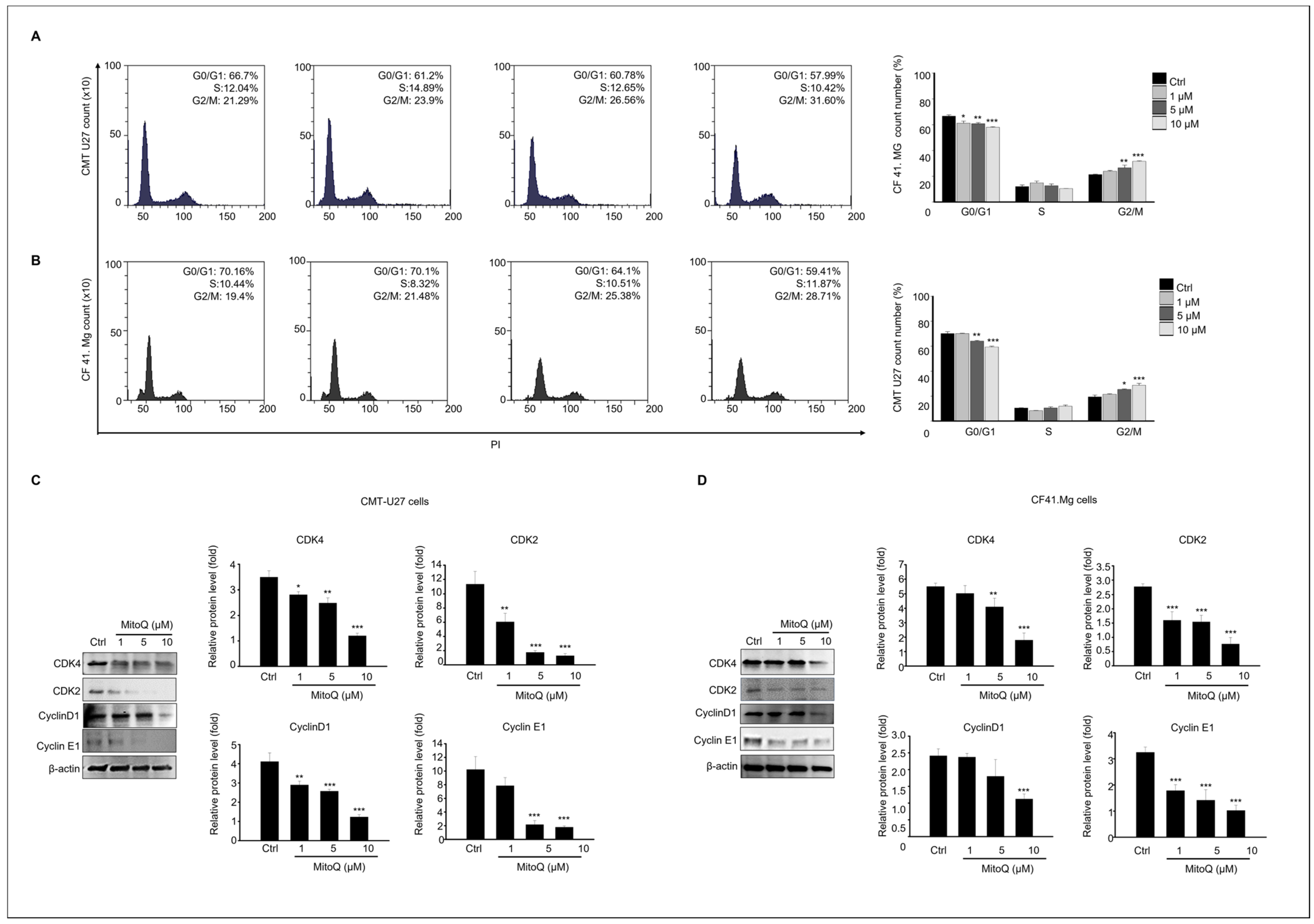
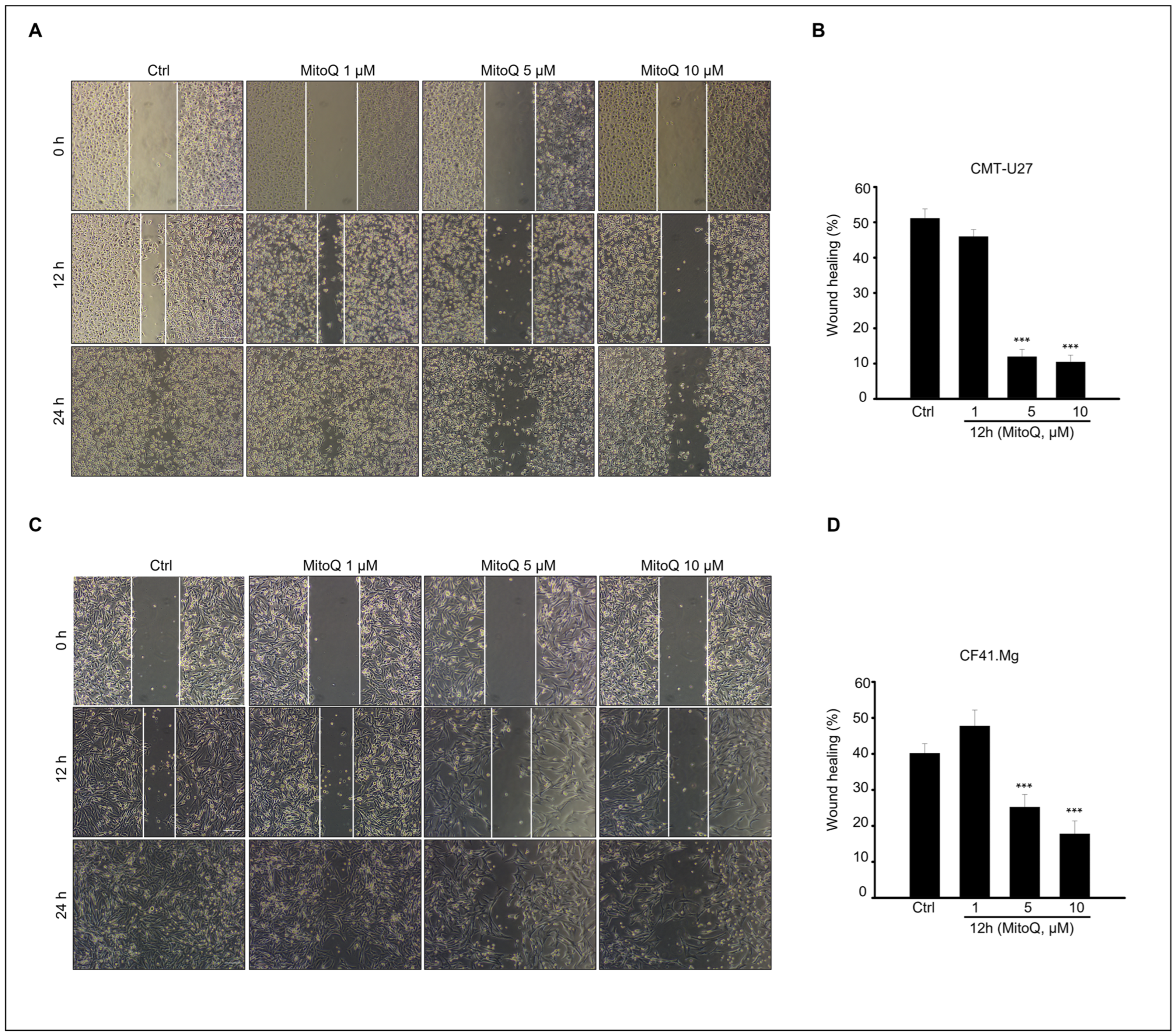
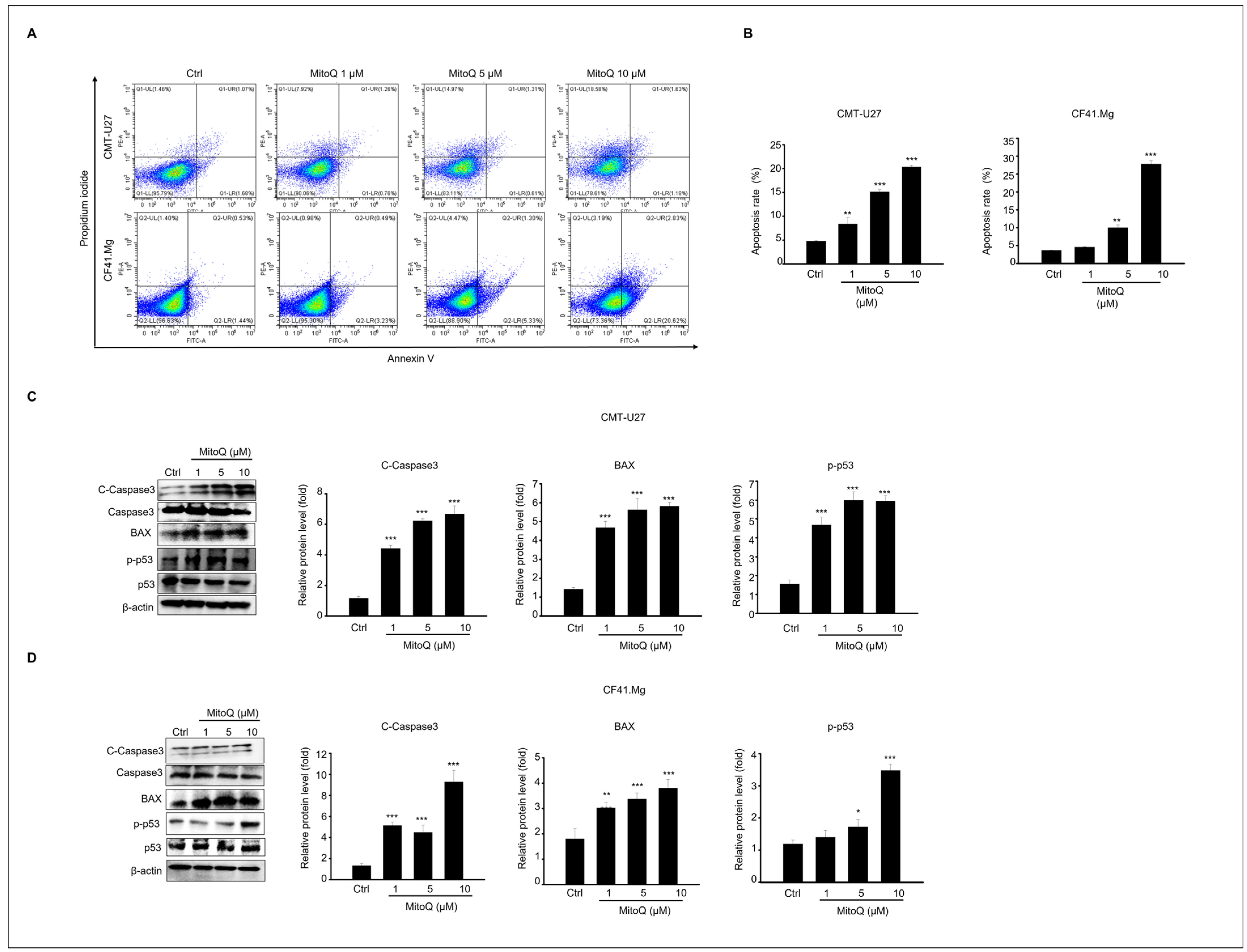
Treating female canine mammary gland tumors is crucial owing to their propensity for rapid progression and metastasis, significantly impacting the overall health and well-being of dogs. Mitoquinone (MitoQ), an antioxidant, has shown promise in inhibiting the migration, invasion, and clonogenicity of human breast cancer cells. Thus, we investigated MitoQ’s potential anticancer properties against canine mammary gland tumor cells, CMT-U27 and CF41.Mg. MitoQ markedly suppressed the proliferation and migration of both CMT-U27 and CF41.Mg cells and induced apoptotic cell death in a dose-dependent manner. Furthermore, treatment with MitoQ led to increased levels of pro-apoptotic proteins, including cleaved-caspase3, BAX, and phospho-p53. Cell cycle analysis revealed that MitoQ hindered cell progression in the G1 and S phases in CMT-U27 and CF41.Mg cells. These findings were supported using western blot analysis, demonstrating elevated levels of cleaved caspase-3, a hallmark of apoptosis, and decreased expression of cyclin-dependent kinase (CDK) 2 and cyclin D4, pivotal regulators of the cell cycle. In conclusion, MitoQ exhibits in vitro antitumor effects by inducing apoptosis and arresting the cell cycle in canine mammary gland tumors, suggesting its potential as a preventive or therapeutic agent against canine mammary cancer.
Keywords: antioxidants; cancer; canine; mammary gland; apoptosis antioxidants; cancer; canine; mammary gland; apoptosis