


Abstract
While skin injuries and chronic wounds impose a serious global health and socio-economic burden, silk proteins (silk fibroin and silk sericin) present a prominent alternative due to their high biocompatibility, low inflammatory potential, and regenerative properties. In this study, a descriptive bibliometric analysis was conducted to evaluate the global scientific progress, knowledge structure, thematic transformation, and international collaboration networks of silk protein-based wound healing research between 1999 and 2026. Conducted in accordance with the principles of the BIBLIO guidelines, the data were retrieved from the Web of Science Core Collection (WoSCC) on 30 July 2026, and 1347 publications meeting the inclusion criteria were subjected to performance and science mapping analyses using R software (version RVER; Bibliometrix 4.6.1/Biblioshiny 5.0). Findings indicate that annual publication productivity gained significant momentum after 2020, reaching its highest complete-year value in 2024 (207 publications); a logistic life-cycle model fitted to complete years placed the inflection point around 2030, indicating that the field is still growing rather than approaching saturation. The International Journal of Biological Macromolecules (147 publications) was identified as the most productive journal, P. Aramwit (Chulalongkorn University, Thailand; 32 publications) as the most productive author, and the 2004 study by B. M. Min et al. (1004 citations) as the most impactful publication. China contributed to the largest number of publications (586), followed by India, the USA, and Iran. Where the silk source was reported, Bombyx mori silk predominated, whereas wild silkworm, spider, and recombinant silks remained marginal. Thematic evolution analyses reveal that the research focus has shifted from traditional scaffolds and electrospinning techniques toward smart hydrogels, diabetic wound care, angiogenesis, and photothermal therapy, with exosome delivery systems emerging recently, while silk sericin forms a stable but specialised research niche. Human clinical studies accounted for less than 1% of the corpus; future studies should therefore focus on standardised reporting of silk sources, global purification standards, and adequately powered human clinical trials.
1. Introduction
Skin injuries, particularly chronic wounds, represent a substantial global healthcare and socio-economic burden due to high treatment costs, elevated risks of infection, and complex healing processes [1,2]. Gold-standard therapeutic approaches, such as autografts and allografts, are constrained by limitations including pathogen transmission risks, high costs, and limited availability. Furthermore, hyaluronic acid- or collagen-based dermal fillers have been reported to potentially trigger delayed immunological reactions. Consequently, developing alternative biomaterials that are biocompatible, biodegradable, biologically functional, and readily accessible has become imperative in wound care management [3,4].
Silks represent a class of natural proteins produced by various organisms, including silkworms, spiders, scorpions, and wasps. Fibroin and sericin are the two primary structural components forming raw silk [5,6]. Versatile fibers derived from the Bombyx mori silkworm, specifically silk fibroin (SF) and silk sericin (SS), are the most widely recognized and utilized types. These silk fibers consist predominantly of hydrophobic silk fibroin and hydrophilic silk sericin [7]. While fibroin serves as a core structural protein conferring mechanical strength, sericin acts as a flexible glue binding the two fibroin filaments and imparting elasticity to silk constructs [8]. Due to their versatile molecular structures, biocompatibility, and biodegradability, these proteins can be adapted into complex architectures to meet diverse biological demands [9]. The intrinsic functional groups of both proteins enable tailored chemical functionalization and crosslinking with various biomaterials, thereby endowing the resulting matrices with desirable antioxidant and antibacterial properties. Depending on the intended biomedical applications, silk proteins can be integrated with complementary materials to fabricate nanofibers, hydrogels, thin films, and micro/nanoparticles [5,10]. Owing to their outstanding biological profile and tunable physicochemical attributes, fibroin and sericin are widely employed across pharmaceutical and biomedical domains, including tissue engineering, wound repair, drug delivery systems, and cancer therapy [6,7,11].
In recent years, silk proteins have emerged as some of the most prominent biopolymers in tissue engineering and wound healing. Silk proteins have gained extensive applicability in tissue regeneration owing to their high biocompatibility, minimal inflammatory potential, excellent gas/moisture permeability, and structural support for cell adhesion [12,13]. Silk-based hydrogel systems intrinsically mimic the native extracellular matrix (ECM), thereby maintaining optimal moisture balance at the wound site [8,14]. Beyond promoting cell proliferation and migration, these matrices modulate inflammatory cascades within the wound microenvironment. Specifically, they attenuate early-stage inflammation by downregulating the expression of pro-inflammatory cytokines such as interleukin-1 beta (IL-1β) and tumor necrosis factor-alpha (TNF-α). Furthermore, they facilitate the phenotypic shift of macrophages from a pro-inflammatory M1 phenotype to a pro-healing M2 phenotype by promoting the secretion of anti-inflammatory and regenerative cytokines, including IL-10 and transforming growth factor-beta (TGF-β) [15,16,17].
The versatile processability of silk proteins has established them as a cornerstone material not only in conventional wound dressings but also in advanced, smart wound care technologies [17,18]. Phyto-hydrogels formulated by combining silk with botanical extracts like Aloe vera synergistically accelerate tissue regeneration through the sustained release of bioactive compounds. On the other hand, integrating silk hydrogels with inorganic nanostructures such as zinc oxide nanorods (ZnONRs) enables flexible electronic skin (E-skin) applications; leveraging piezoelectric and triboelectric properties, these systems can harvest energy from biomechanical movements while simultaneously monitoring physical dynamics at the wound bed [19,20].
These multifaceted contributions of silk proteins to wound healing have driven a rapid expansion of research volume across biomedical and biomaterial literature. However, this rapid accumulation of publications makes it challenging to maintain a comprehensive overview of the field’s historical evolution, predominant thematic foci, global collaboration networks, and emerging trajectories. Bibliometric analysis offers a robust approach to deciphering the intellectual architecture of a domain by systematically assessing academic output from extensive databases via quantitative and qualitative science mapping techniques. Therefore, this study aims to perform a comprehensive bibliometric analysis of global research focusing on silk proteins in wound healing. Within this scope, publication trends, prominent authors and institutions, the biological sources of the silk proteins investigated, foundational high-impact articles, and the evolution of research themes over time are meticulously examined.
2. Results and Discussion
This study provides a comprehensive quantitative bibliometric overview of the global scientific development, knowledge structure, thematic evolution, and international collaboration dynamics of silk protein-based (silk fibroin and silk sericin) wound healing research between 1999 and 2026. Conducted in compliance with the BIBLIO guidelines, this investigation delineates the historical evolution of the field spanning over a quarter-century and unveils emerging research trajectories through data-driven science mapping techniques.
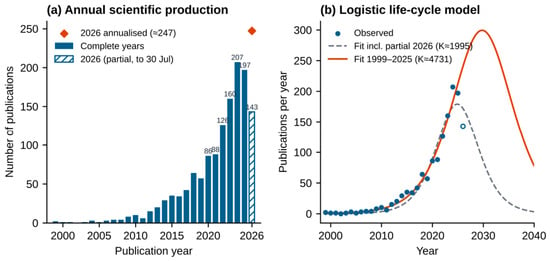
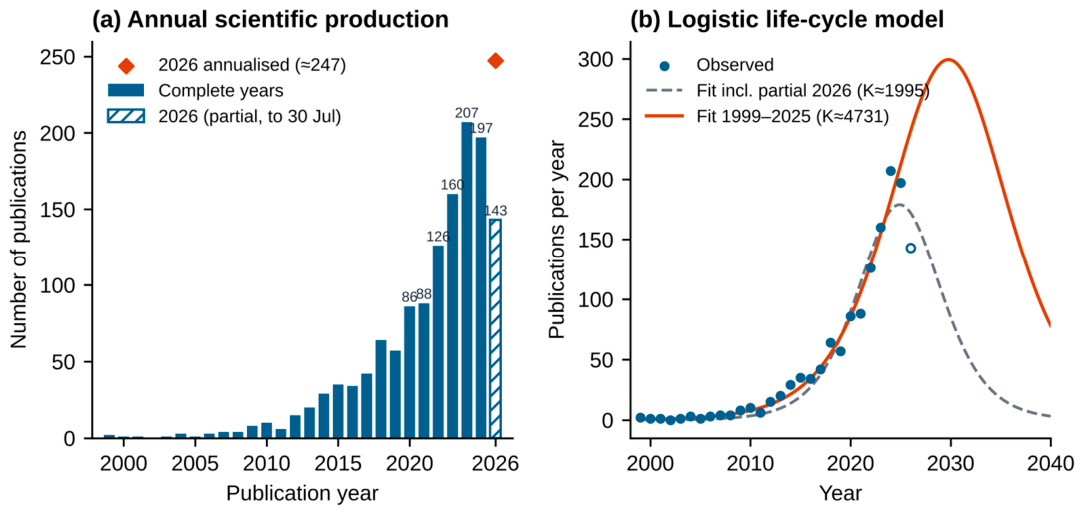
Annual scientific publication output remained modest during the initial phase (1999–2011), followed by a gradual increase between 2012 and 2019. A marked acceleration in publication volume was observed post-2020, with the highest complete-year output in 2024 (207 publications) and a similar level in 2025 (197 publications) (Figure 1a). The 143 records for 2026 cover only the period up to the retrieval date (30 July 2026); annualised, this corresponds to approximately 247 publications, so the apparent decline in 2026 reflects the incomplete year and indexing lag rather than a genuine contraction. The limited output during the foundational period (1999–2011) indicates that the biomedical application of silk proteins was predominantly in an exploratory stage focused on basic material characterization, whereas the period from 2020 onward represents a phase of robust expansion. When the logistic life-cycle model was fitted to all years including the incomplete 2026, it yielded a saturation limit of K = 1995 publications (SE = 198; 95% CI 1587–2403), an inflection year of 2024.9 (SE = 0.5) and R2 = 0.961 (Table S7). This fit, however, is driven by the truncated final observation. When only complete years (1999–2025) were used, the estimated saturation limit increased to 4731 publications (SE = 1694; 95% CI 1235–8228), the inflection year shifted to 2029.8 (SE = 2.2), and the fit improved (R2 = 0.984; RMSE 7.6 vs. 12.2 publications/year); annualising the 2026 count gave similar estimates (K = 5404; t0 = 2030.6; R2 = 0.989) (Figure 1b). Thus, the data do not indicate that the field has reached saturation; silk protein-based wound healing research appears to be still in its growth phase, and the wide confidence intervals show that its eventual size cannot be reliably forecast from publication counts alone. Publication counts also cannot distinguish genuine changes in research activity from terminological drift (e.g., use of “protein-based biomaterial” rather than “silk protein”) or from changes in database coverage (see Limitations of the Study, below).
Figure 1.
(a) Annual scientific production, 1999–2026; the 2026 bar covers 1 January–30 July 2026 and the diamond shows the annualised value. (b) Logistic life-cycle model fitted to annual output including the partial 2026 (dashed line) and to complete years 1999–2025 only (solid line); K = estimated saturation limit. In panel (b), filled circles show complete years, and the open circle shows the incomplete 2026 count, which was not used in the complete-year fit.
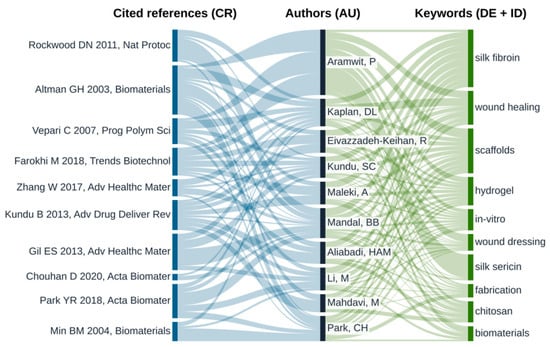
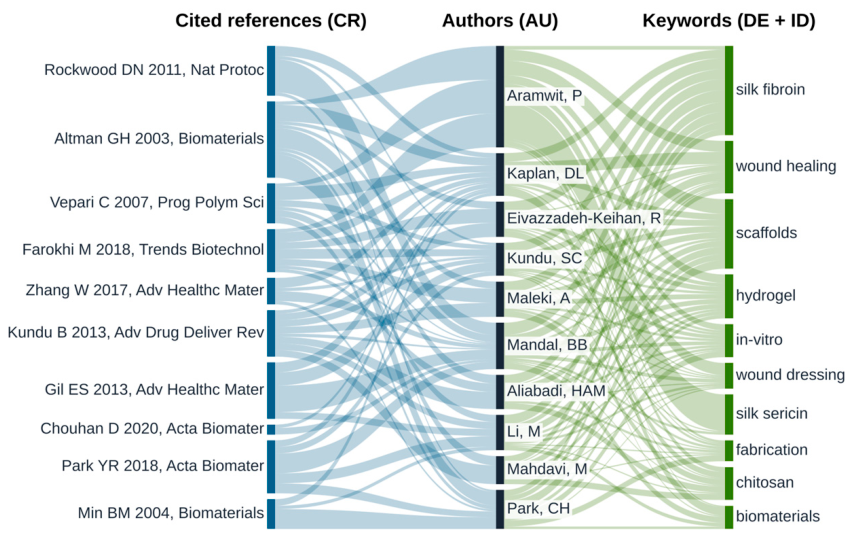
The Three-Field Plot analysis illustrates the interrelationships among the most frequently cited references, the most productive authors, and the most frequently used keywords within the domain (Figure 2). The thematic focus of the research domain primarily revolves around key terms such as “silk fibroin,” “wound healing,” “scaffolds,” “hydrogel,” “wound dressing,” “silk sericin,” “chitosan,” and “biomaterials.” Within the network, P. Aramwit, D. L. Kaplan, S. C. Kundu, B. B. Mandal, and the Iranian group of R. Eivazzadeh-Keihan, A. Maleki, and H. A. M. Aliabadi emerge as authors who connect the foundational literature with the main thematic areas [21,22,23,24,25]. Landmark foundational studies, notably Altman et al. (2003) [26], Vepari and Kaplan (2007) [27], Kundu et al. (2013) [25], Rockwood et al. (2011) [28], and Min et al. (2004) [29], together with the randomised clinical trial by Zhang et al. (2017) [22], are cited across all of these author groups. Collectively, the Three-Field Plot analysis reveals that the domain is anchored upon a small set of pioneering works, with contemporary literature predominantly concentrating on silk fibroin-based biomaterials and their targeted applications in wound healing.
Figure 2.
Three-field plot linking the ten most frequently cited references (left), the ten most productive authors after full-name disambiguation (middle), and the ten most frequent keywords ((right); author keywords and Keywords Plus merged). Box height is proportional to the number of links, and band width to the number of documents connecting two items. The cited references shown in the left column are [22,25,26,27,28,29,30,31,32,33].
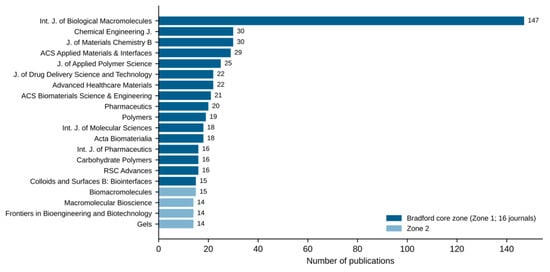
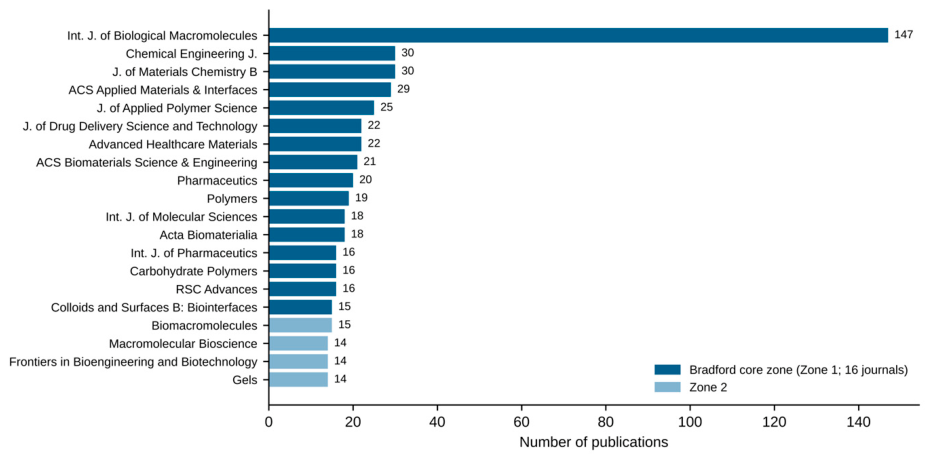
Figure 3 illustrates the top 20 most prolific journals in the research domain. Across the evaluated dataset, the 1347 publications were distributed across a total of 359 distinct journals. The application of Bradford’s Law confirmed a highly focused and discipline-specific publication pattern (R2 = 0.9887, KSp = 0.973) (Table S2). Notably, only 16 of the 359 journals (~4.5%) constituted the Core Zone (Zone 1), whereas Zone 2 comprised 52 journals and Zone 3 the remaining 291 journals, demonstrating that scientific knowledge in this field is strongly concentrated within a select group of specialized sources. International Journal of Biological Macromolecules emerged as the unequivocally dominant publishing venue, contributing 147 publications. It was followed by Chemical Engineering Journal (30), Journal of Materials Chemistry B (30), and ACS Applied Materials & Interfaces (29). The prominent representation of journals specializing in materials science, soft matter engineering, drug delivery systems, and regenerative medicine indicates that silk protein research operates at a dynamic interdisciplinary nexus bridging polymer chemistry, functional biomaterial fabrication, and translational pharmaceutical technology.
Figure 3.
The 20 most relevant sources. Dark bars indicate journals in the Bradford core zone (Zone 1).
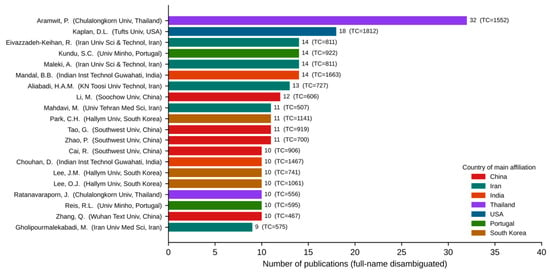
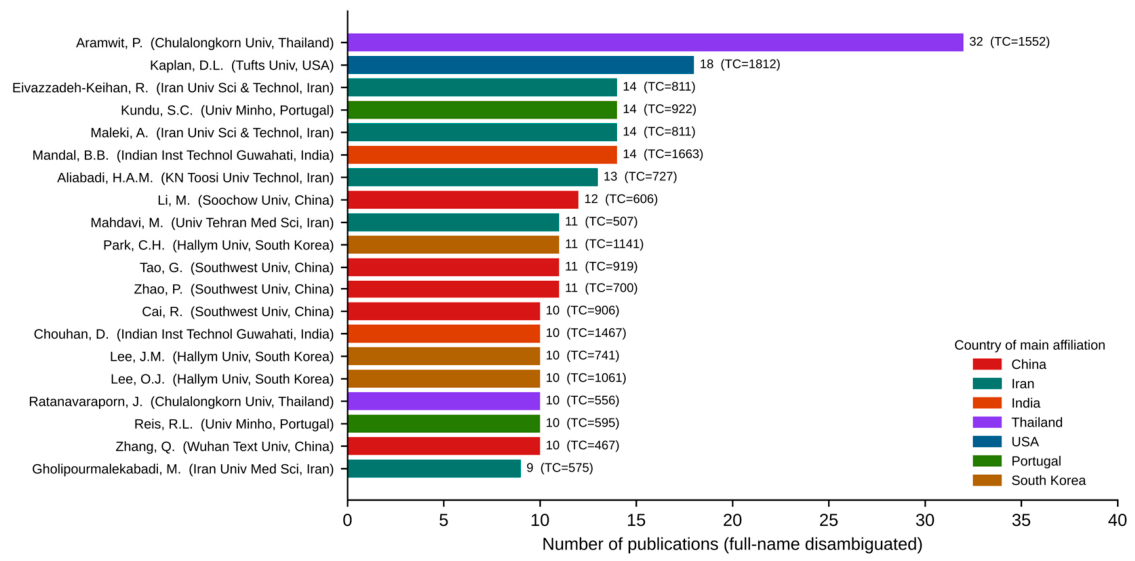
After full-name disambiguation, P. Aramwit (Chulalongkorn University, Thailand) leads the domain with 32 publications, standing out as the most consistent contributor with an uninterrupted research trajectory spanning from 2007 to the present. Other highly published investigators include D. L. Kaplan (Tufts University, USA; n = 18), R. Eivazzadeh-Keihan and A. Maleki (Iran University of Science and Technology, Iran; n = 14 each), S. C. Kundu (University of Minho, Portugal; n = 14), B. B. Mandal (Indian Institute of Technology Guwahati, India; n = 14), H. A. M. Aliabadi (K. N. Toosi University of Technology, Iran; n = 13), and M. Li (Soochow University, China; n = 12) (Figure 4; the full list is given in Table S3). A ranking based on the abbreviated author names used by Bibliometrix would instead place “Li, Y” (n = 21), “Zhang, Y” (n = 20), “Zhang, Q” (n = 20), “Wang, L” (n = 17), and “Chen, L” (n = 16) among the top contributors; however, these short forms were linked to 19, 15, 12, 17, and 11 different institutions, respectively, indicating that each aggregates several researchers with common names rather than a single prolific author (Table S3b). The disambiguated ranking also explains the apparent inconsistency between country- and author-level results: Iran, the fourth most productive country at the document level, is represented by four authors among the top ten (R. Eivazzadeh-Keihan, A. Maleki, H. A. M. Aliabadi, and M. Mahdavi), whereas Chinese output is distributed across many research groups (e.g., Southwest University, Soochow University, Donghua University, and Wuhan Textile University), none of which individually dominates the author ranking. Overall, the domain reflects a dynamic interplay between foundational biomaterials groups, such as those of D. L. Kaplan and S. C. Kundu, and highly productive groups that emerged after 2020, such as the Iranian groups active between 2020 and 2024; the field is therefore not monopolized by a single research entity but is driven by a well-distributed global network of specialized investigators.
Figure 4.
The 20 most productive authors after full-name disambiguation, with the most frequent institution and country of each author (TC = total citations within the corpus).
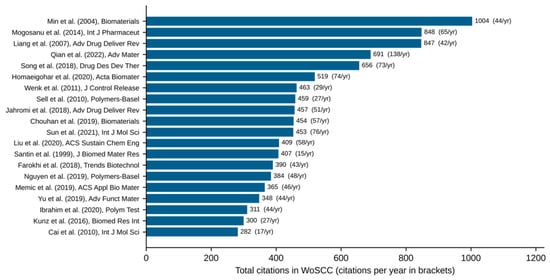
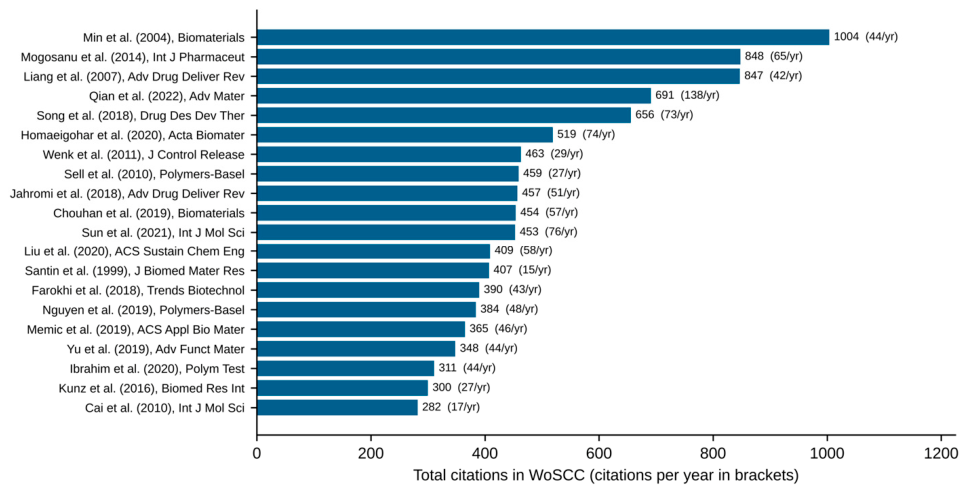
An analysis of the top 20 most globally cited documents identifies the seminal study by Min et al. (2004, Biomaterials) [29] as the most influential publication in the domain, with 1004 global citations. This pioneering investigation into electrospun silk fibroin nanofibrous matrices serves as a foundational reference point for silk-based scaffold engineering. Subsequent high-impact contributions include key reviews and empirical studies by Mogosanu & Grumezescu (2014, International Journal of Pharmaceutics; 848 citations) [34], Liang et al. (2007, Advanced Drug Delivery Reviews; 847 citations) [35], Qian et al. (2022, Advanced Materials; 691 citations) [36], and Song et al. (2018, Drug Design, Development and Therapy; 656 citations) [37], which primarily focus on advanced wound dressings and localized drug delivery systems (Figure 5). Because total citation counts favour older publications, citations per year are also shown in Figure 5; by this normalised indicator, the most influential document is the study by Qian et al. (2022; approximately 138 citations per year) on a photo-enhanced glycyrrhizic acid hydrogel scaffold for immunoregulation in diabetic wound repair [36].
Figure 5.
The 20 most globally cited documents (total WoSCC citations; citations per year in brackets). The documents shown are [6,29,30,34,35,36,37,38,39,40,41,42,43,44,45,46,47,48,49,50].
The thematic alignment of these top-cited documents demonstrates that functional biomaterials, controlled drug delivery platforms, and regenerative wound care form the core knowledge infrastructure of the field. This intellectual framework is further supported by the Reference Co-citation network. Louvain cluster analysis confirms that pivotal works, such as Altman et al. (2003) [26], Vepari & Kaplan (2007) [27], and Rockwood et al. (2011) [28], function as structural bridges across distinct sub-clusters, establishing the fundamental intellectual backbone of silk protein research.
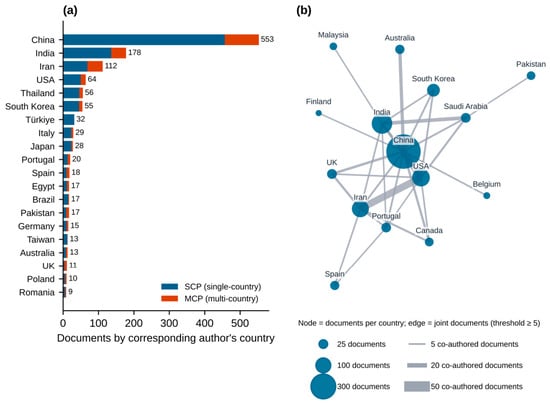
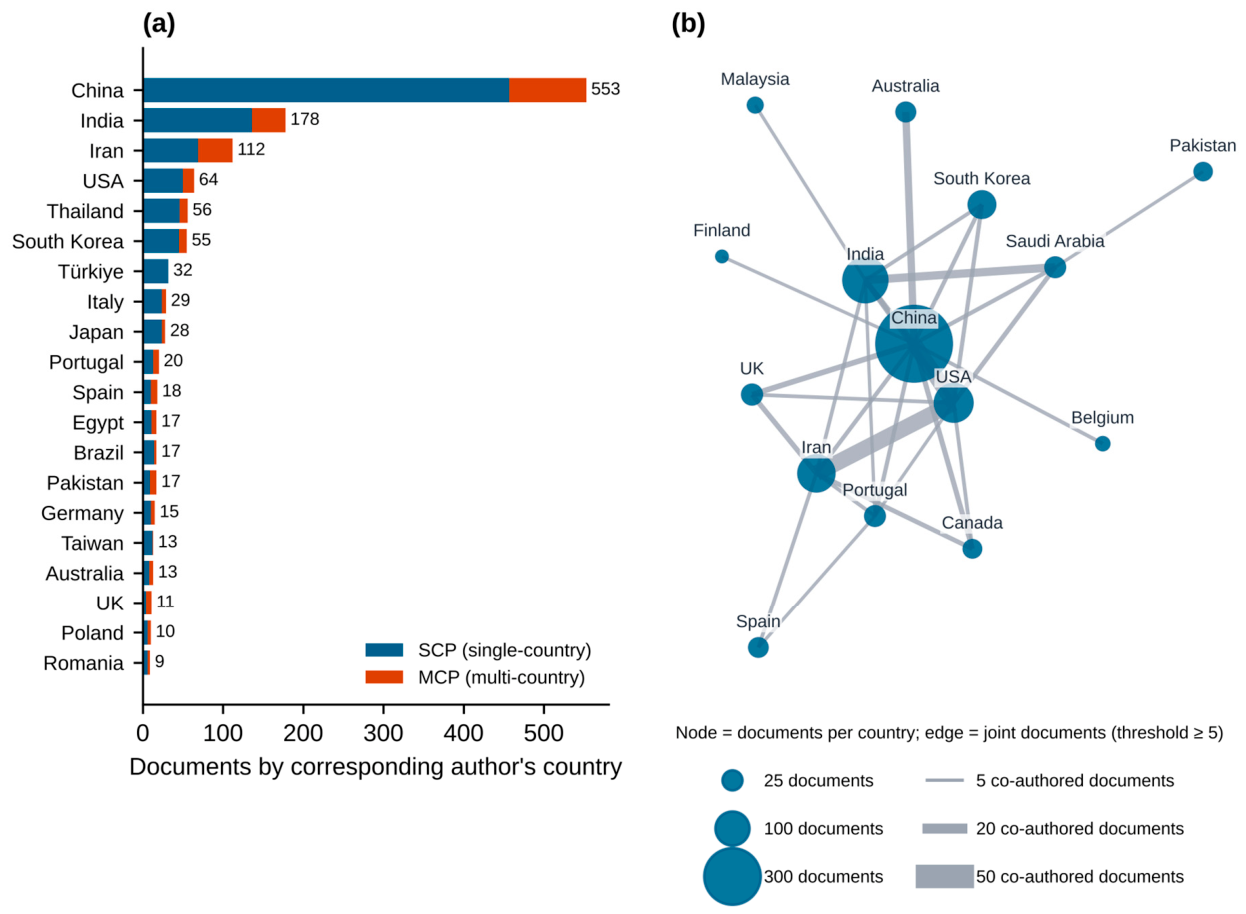
Figure 6a and Table S4 summarise country contributions. Publication activity is concentrated in Asia: China contributed to 586 documents (43.5% of the corpus) and was the corresponding-author country for 553, followed by India (199 documents; 178 as corresponding-author country), the United States (145; 64), Iran (133; 112), South Korea (69; 55), Thailand (58; 56), and Türkiye (41; 32). The values produced by the Bibliometrix Country Scientific Production function (e.g., China 1915, Iran 489, India 488, and the USA 302) represent the number of author-affiliation occurrences rather than the number of publications and therefore exceed the total number of documents; for example, Iran’s 489 affiliation mentions derive from 133 documents, reflecting large multi-institutional author teams. Among European countries, Italy (41 documents), the United Kingdom [37], and Portugal [36] contributed most, alongside Japan (36 documents) in East Asia. The share of internationally co-authored papers (MCP ratio) varied markedly, from 17.4% for China and 23.6% for India to 38.4% for Iran, whereas all 32 Türkiye-led papers were single-country publications. Collectively, these metrics underscore an Asian-driven research landscape, supported by North American and European contributions, whereas scientific production across most of Africa and South America remains comparatively modest.
Figure 6.
Country contributions to silk protein-based wound healing research. (a) The 20 most productive countries by corresponding-author country; SCP = single-country publications, MCP = multiple-country publications. (b) International co-authorship network: node size is proportional to the number of documents with at least one author affiliation in the country, and edge width to the number of co-authored documents; only links with ≥5 co-authored documents are shown.
Evaluating the international co-authorship network reveals a multi-hub architecture (Figure 6b). The strongest bilateral links were Iran–USA (33 co-authored documents) and China–USA (32 documents), followed by India–Saudi Arabia (16 documents) and China–Australia (14 documents), with China, the United States, India, and Iran acting as the main hubs. China’s marked predominance in this domain can be attributed to a confluence of factors: a deep-rooted historical and economic foundation in sericulture, substantial public R&D investment in biomaterial innovation, and the presence of large-scale tissue engineering research centers. However, despite the active multinational integration observed among technologically advanced nations, clear structural disparities persist, as most countries in Africa and South America remain largely peripheral to these primary international collaboration networks.
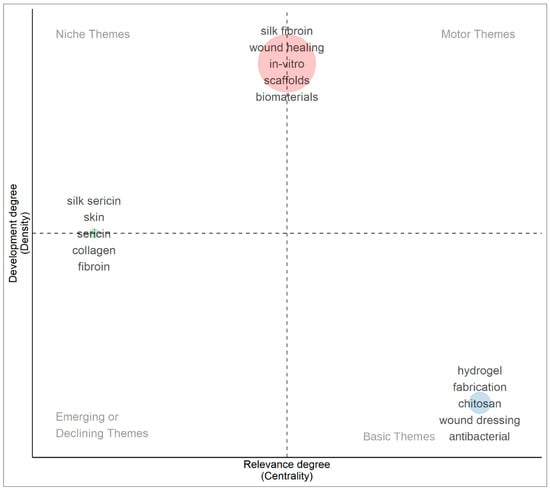
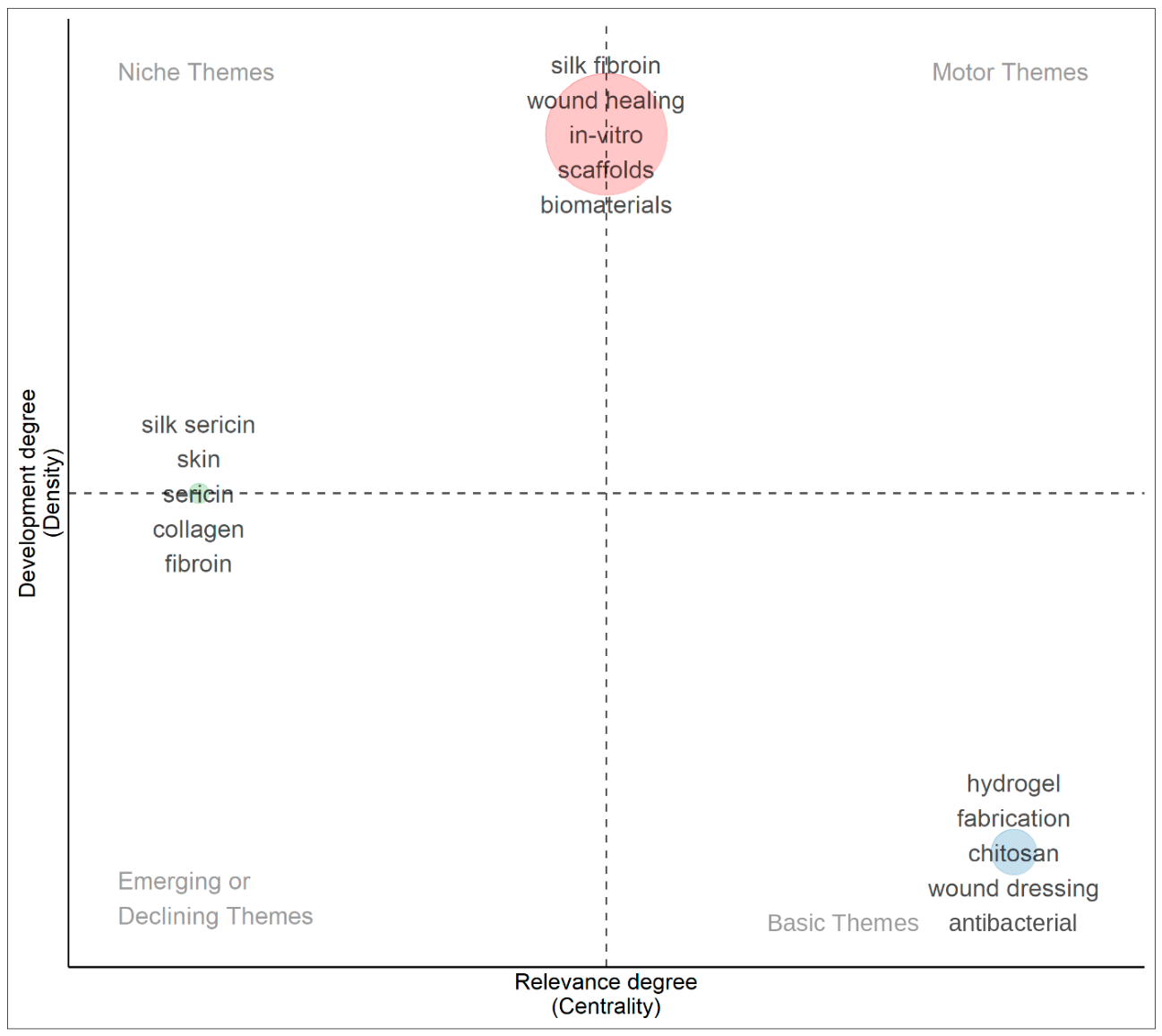
An analysis of the thematic map based on centrality and density metrics delineates the conceptual architecture of the research domain. The cluster comprising keywords such as “silk fibroin,” “wound healing,” “biomaterials,” “scaffolds,” and “in vitro” occupies the motor themes quadrant, characterized by high centrality and high density, reflecting well-developed, core research topics that drive the field (Figure 7). In contrast, themes encompassing “hydrogel,” “chitosan,” “wound dressing,” “fabrication,” and “antibacterial” function as basic and transversal themes, representing foundational knowledge essential to the broader literature. Situated in the lower-left quadrant, terms including “silk sericin,” “sericin,” “collagen,” “fibroin,” and “skin” denote themes that are weakly developed and weakly connected to the rest of the field. Because this quadrant cannot distinguish emerging from declining themes, the temporal profile of sericin was examined directly (Table 1 and Table S6): sericin-containing records numbered 83 in 1999–2019 (24.4% of that period), 46 in 2020–2022 (15.3%), 58 in 2023–2024 (15.8%), and 54 in 2025–2026 (15.9%). Sericin is therefore neither clearly emerging nor disappearing; rather, it is a stable, specialised niche whose relative share declined as fibroin-based research expanded. The separate placement of “fibroin” and “silk fibroin,” and of “sericin” and “silk sericin,” also illustrates the effect of keyword synonyms on science mapping (Table S9). Overall, these findings confirm that silk fibroin-based biomaterials constitute the primary focal point of wound care research, while hydrogel- and chitosan-functionalized dressing matrices represent pivotal, high-growth trajectories for future development.
Figure 7.
Thematic map (strategic diagram) of the research area. The x-axis shows Callon’s centrality (degree of interaction of a theme with other themes) and the y-axis Callon’s density (internal development of a theme); bubble size is proportional to the number of keyword occurrences in each cluster. Quadrants: upper right, motor themes; upper left, niche themes; lower left, emerging or declining themes; lower right, basic and transversal themes [51].
Table 1.
Silk protein types and silk sources reported in the 1347 records, overall and by period.
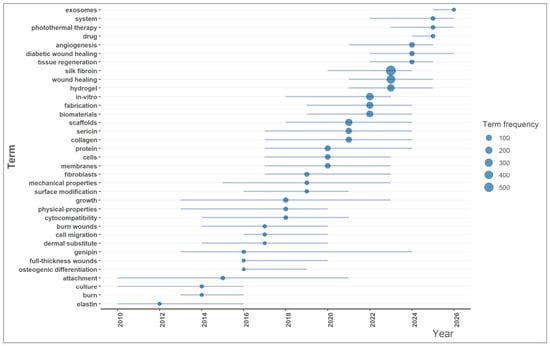
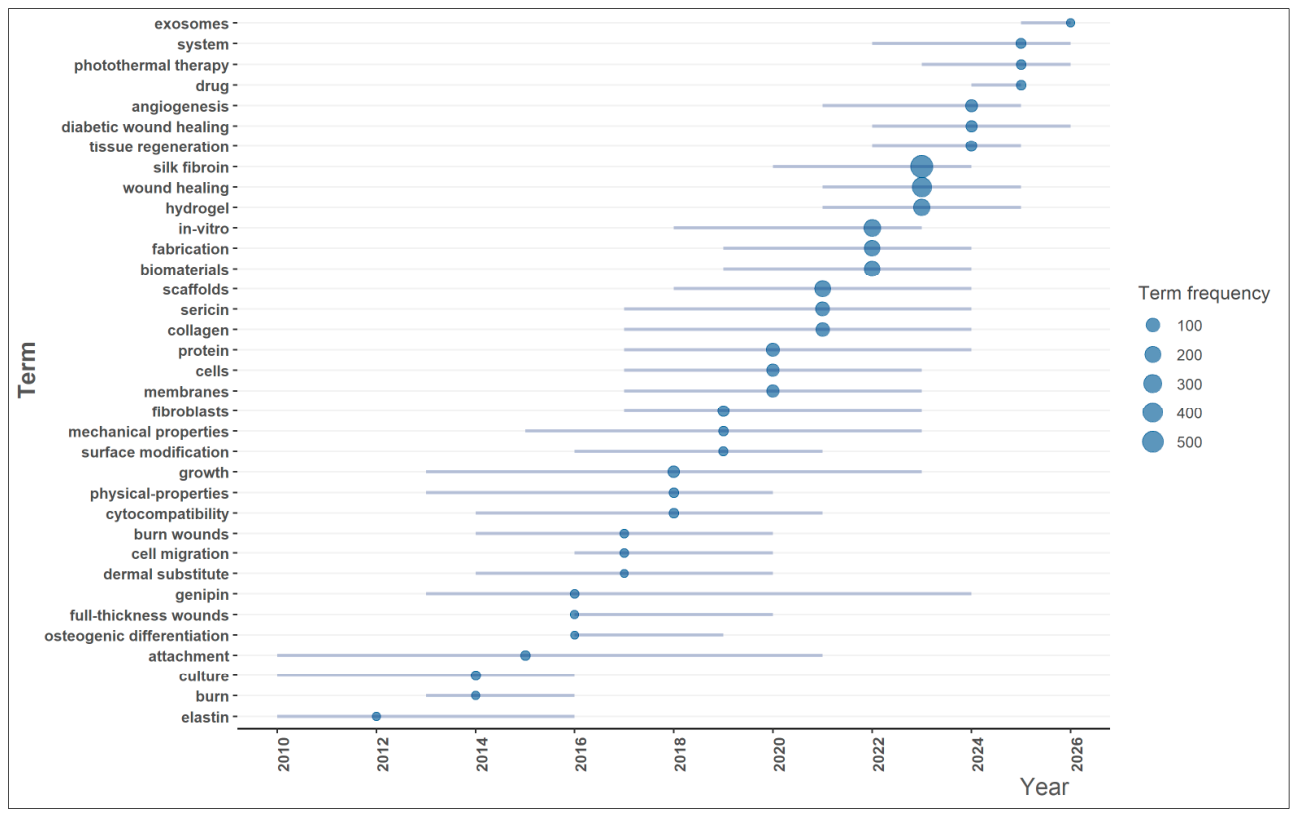
The trend-topic analysis traces the temporal succession of research terms (Figure 8). Early terms (median years 2012–2016), such as “elastin,” “burn,” “culture,” “attachment,” and “genipin,” reflect basic cell–material interaction and crosslinking studies. Between 2017 and 2020, terms describing wound models, material performance, and cellular responses—“burn wounds,” “dermal substitute,” “cytocompatibility,” “mechanical properties,” “fibroblasts,” “membranes,” and “protein”—predominated. The core terms “silk fibroin,” “wound healing,” and “hydrogel” reached their median year in 2023, coinciding with the period of fastest growth. The most recent terms are “angiogenesis,” “diabetic wound healing,” and “tissue regeneration” (median year 2024), “photothermal therapy” and “drug” (2025), and “exosomes” (2026). However, these most recent terms have low absolute frequencies (for example, only 15 records mentioned exosomes in their title, abstract, or keywords), so they indicate emerging directions rather than established research fronts.
Figure 8.
Trend topics (author keywords and Keywords Plus; minimum keyword frequency 5; up to three terms per year). Dots mark the median publication year of each term, horizontal lines the interquartile range of publication years, and dot size the term frequency.
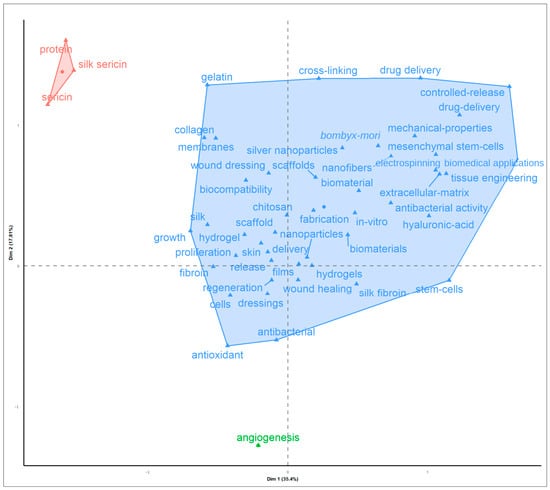
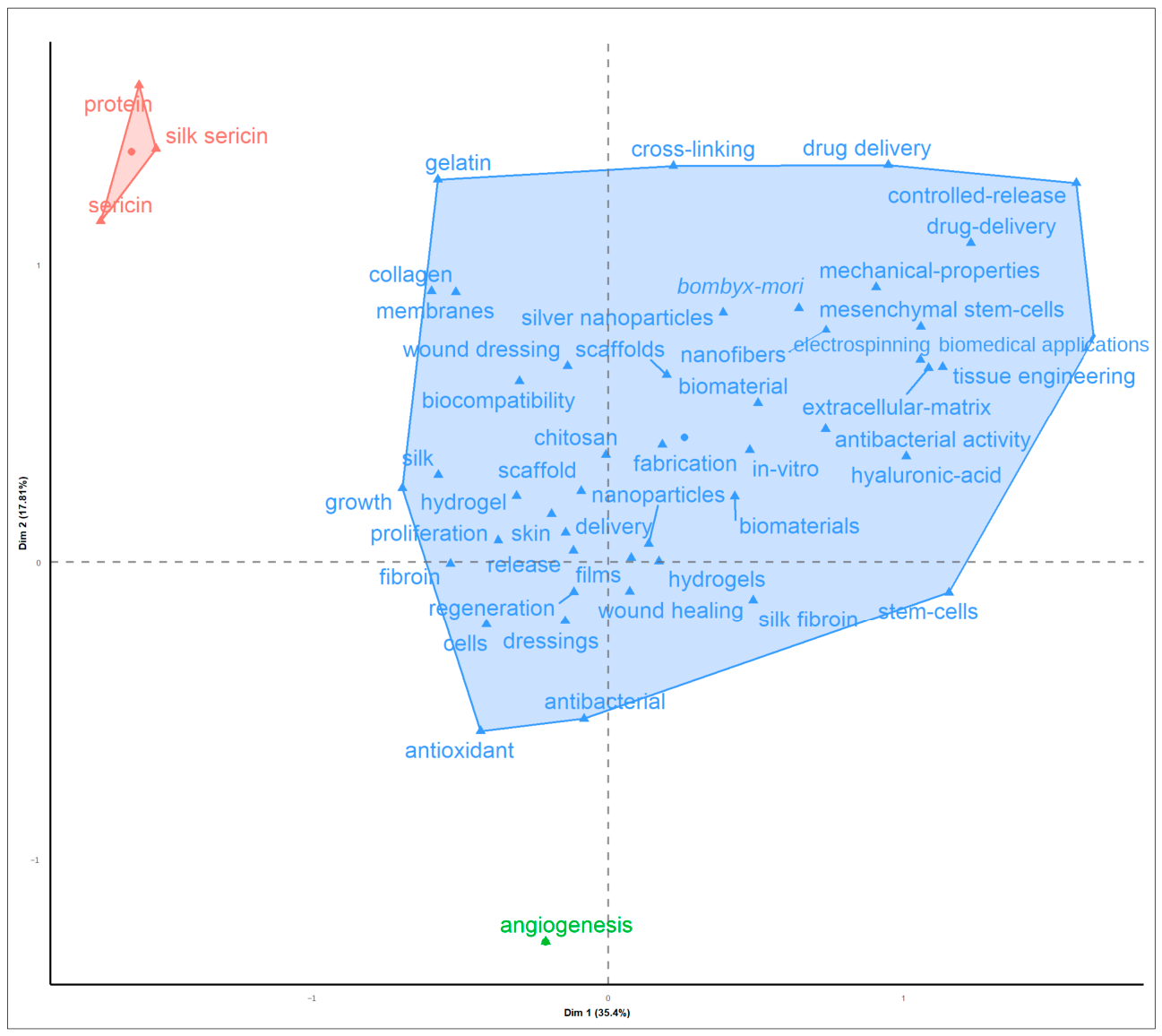
Multiple Correspondence Analysis (MCA) delineates the conceptual architecture of the domain into three distinct clusters. The primary and most expansive cluster encompasses key terms such as “silk fibroin,” “biomaterials,” “wound healing,” “hydrogel,” “chitosan,” “nanoparticles,” “drug delivery,” “tissue engineering,” and “scaffold,” constituting the core thematic backbone of the field. The second cluster centers on “sericin,” “silk sericin,” and “protein,” representing dedicated research into sericin-derived platforms; its small size and separation from the main cluster are consistent with the stable but niche position of sericin described above. The third, highly isolated cluster consists exclusively of “angiogenesis,” highlighting vascularization as a specialized, stand-alone research imperative within tissue regeneration. Overall, these findings underscore that silk fibroin-based constructs integrated with drug delivery and tissue engineering modalities dominate the domain’s conceptual structure (Figure 9).
Figure 9.
Multiple correspondence analysis (MCA) of the 50 most frequent keywords (“All Keywords”; minimum document frequency 5), grouped into three clusters; proximity between terms indicates similar co-occurrence profiles.
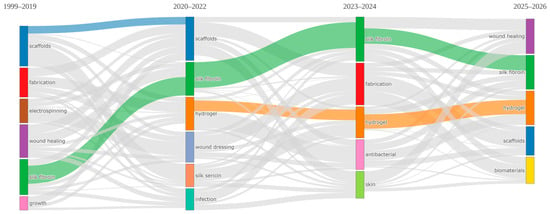
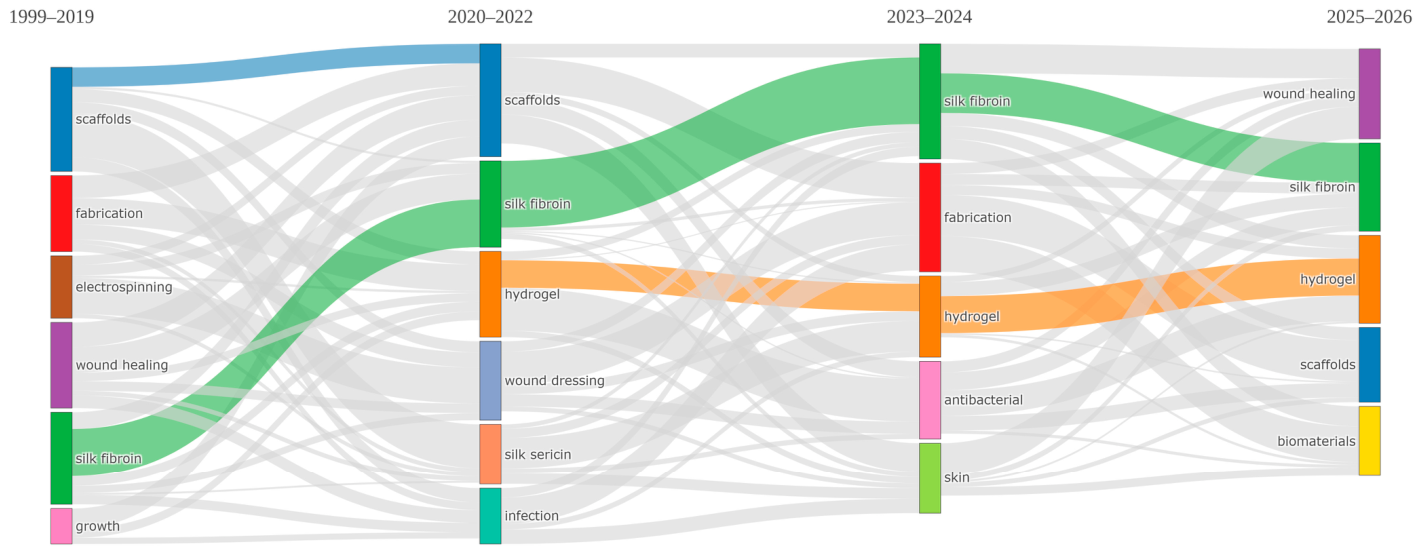
Figure 10 illustrates the longitudinal thematic evolution of silk protein-based wound healing research from 1999 to 2026, delineated across four temporal intervals (1999–2019, 2020–2022, 2023–2024, and 2025–2026). During the foundational period (1999–2019), the domain was predominantly driven by core themes such as “scaffolds,” “fabrication,” “electrospinning,” “wound healing,” “silk fibroin,” and “growth,” reflecting an early research paradigm focused primarily on basic processing technologies, structural scaffold development, and preliminary biomaterial characterization. In the subsequent 2020–2022 interval, while “scaffolds” and “silk fibroin” sustained their central positions, new themes including “hydrogel,” “wound dressing,” “silk sericin,” and “infection” emerged prominently. The strong structural continuity of “silk fibroin” underscores its role as an unwavering research anchor, while the emergence of “hydrogel” marks a strategic shift toward matrix-oriented, functional platforms tailored for wound management.
Figure 10.
Thematic evolution of silk protein-based wound healing research from 1999 to 2026. Node size is proportional to keyword occurrences within each period, and flows indicate keywords shared between themes of consecutive periods.
This momentum accelerated during the 2023–2024 period, where the research focus coalesced around “silk fibroin,” “fabrication,” “hydrogel,” “antibacterial,” and “skin.” “Silk fibroin” and “hydrogel” consolidated as the primary structural pillars of the literature, while the prominent appearance of “antibacterial” and “skin” highlights an increasing demand for multifunctional biomaterials designed to combat localized infections and promote tissue-specific regeneration. In the most recent period (2025–2026), the thematic landscape has been shaped by “wound healing,” “silk fibroin,” “hydrogel,” “scaffolds,” and “biomaterials.” The sustained presence of “silk fibroin” and “hydrogel” confirms their enduring relevance, while the consolidation of broad terms like “wound healing” and “biomaterials” reflects the mature integration of silk-derived platforms into translational wound care.
Collectively, this longitudinal mapping demonstrates a pronounced paradigm shift in research priorities. The domain has steadily progressed from early foundational fabrication technologies, primarily revolving around electrospinning and generic scaffold production, toward highly functionalized, application-driven therapeutic systems, such as bioactive smart hydrogels, targeted antibacterial dressings, and advanced skin repair matrices. The emergence of “antibacterial” as an independent thematic domain further underscores this transition toward versatile platforms capable of simultaneously mitigating infection and accelerating tissue regeneration. Throughout this quarter-century evolution, silk fibroin has displayed remarkable conceptual stability, consistently serving as the core biomaterial platform underpinning the entire field.
Synthesizing the thematic map, MCA, Trend Topics, and Thematic Evolution findings clarifies the position of silk sericin. Historically, sericin was regarded merely as an unwanted, potentially immunogenic byproduct discarded during industrial degumming; subsequent studies have highlighted its intrinsic antioxidant, anti-inflammatory, and moisture-retentive properties [8,16,52,53], and sericin-based dressings have been evaluated in human burn wounds and split-thickness skin graft donor sites [54,55]. Bibliometrically, however, sericin constitutes a specialised niche rather than an independent, expanding domain: it is located in the lower-left quadrant of the strategic diagram, forms a small separate MCA cluster, and appears as a node of the thematic evolution only in 2020–2022, while its share of the annual output has remained at approximately 15–16% since 2020. Its absence from the later thematic-evolution periods reflects the clustering thresholds applied, under which sericin-related terms were absorbed into larger fibroin- and hydrogel-dominated clusters, rather than a disappearance of sericin research, which continued at 54–58 records per period.
Biomedically, hydrogels that biomechanically mimic the native extracellular matrix (ECM) offer an optimal microenvironment for exudate management and cellular migration [56,57]. Furthermore, empirical literature confirms that silk-based hydrogels exert potent immunomodulatory effects by inducing macrophage polarization from a pro-inflammatory M1 phenotype toward a pro-healing M2 phenotype, thereby suppressing the expression of pro-inflammatory cytokines such as IL-1β and TNF-α [9,58,59]. The prominence of terms such as “photothermal therapy,” “angiogenesis,” and “diabetic wound healing” in the Trend Topics analysis highlights a major conceptual evolution: silk proteins have evolved from passive structural barriers into active, multifunctional delivery platforms. In challenging microenvironments such as diabetic foot ulcers, these advanced constructs combine photothermal antibacterial action with targeted neovascularization [53]. Crucially, the isolated positioning of “angiogenesis” along an independent axis in the Multiple Correspondence Analysis (MCA) map underscores a major therapeutic imperative. Because insufficient vascularization remains the primary bottleneck in chronic wound repair, combining silk proteins with pro-angiogenic bioactives or exosomes [60,61,62] has crystallized into a dedicated, high-priority target within modern regenerative medicine.
Table 1 summarises the silk protein types and biological sources reported in the corpus. Fibroin dominated the field: 80.1% of records investigated fibroin only and a further 6.2% both fibroin and sericin, whereas 11.7% focused on sericin alone. Where the biological source was explicitly reported in the title, abstract, or keywords, Bombyx mori silk was by far the most common (152 records, 11.3%), followed by non-mulberry/wild silkworm silks such as Antheraea (tussah/tasar, muga) and eri silk (38 records, 2.8%), spider silk—mostly recombinant spidroins—(37 records, 2.7%), and other recombinant or bioengineered silk-like proteins (20 records, 1.5%). The share of records explicitly mentioning wild silkworm silks decreased from 5.3% in 1999–2019 to 1.2% in 2025–2026, whereas recombinant silk-like proteins increased slightly in the most recent period (2.4%). Notably, 84.6% of records did not specify the silk source in these fields; because regenerated silk fibroin is in practice mostly obtained from B. mori cocoons [28], this proportion most likely reflects under-reporting rather than a diversity of sources. Clearer reporting of silk origin, degumming conditions, and molecular weight would improve the comparability and reproducibility of silk-based wound dressings, as these factors influence the biological performance of fibroin and sericin [8,28].
The bibliometric profile contrasts with the limited clinical translation of silk-based wound products. Screening of abstracts identified only ten human clinical studies within the corpus (<1% of records; Table S8), including a randomised controlled trial of a silk fibroin film in 71 patients [22], a randomised trial of a silk–gelatin bilayered dressing at split-thickness skin graft donor sites [63], clinical studies of sericin-based dressings in burn and donor-site wounds [54,55], and recent comparative studies of silk fibroin wound-closure dressings after surgery. Outside the corpus, a systematic review identified only nine clinical studies of non-suture silk products published between 2011 and 2018 [64], and a 2025 randomised trial of a commercially available silk fibroin powder dressing (Fibroheal) in 142 patients with superficial surgical site infections reported shorter healing times than saline dressings [65]. Apart from silk sutures, which have long been used in surgery, the silk fibroin devices that have received regulatory clearance are mainly scaffolds for soft-tissue support, such as the SERI Surgical Scaffold (FDA 510(k) K123128, 2013) and SERI Contour (K172545, 2017), both made of pure silk fibroin [66,67]. Thus, although research volume has grown rapidly, the evidence base for silk-based wound dressings in humans remains small, and the gap between preclinical output and approved wound-care products is substantial.
Limitations of the Study
This study has several limitations inherent to bibliometric analyses. First, only the WoSCC was searched. Although WoSCC provides standardised records and reliable citation data, its coverage differs from that of Scopus, PubMed/MEDLINE, and Dimensions—particularly for regional and non-English journals—so some relevant publications may have been missed and country shares may be biased toward regions well represented in WoSCC [68]. Second, total citation counts are time-dependent: older papers have had longer to accumulate citations, whereas recent publications (2025–2026) are systematically under-cited; citations per year are therefore also reported (Figure 5), but neither indicator is fully comparable across publication years or across the materials-science and clinical journals that publish this research [69]. Third, the “sleeping beauty” phenomenon—papers that receive little attention for years before being widely cited—cannot be captured by a cross-sectional citation snapshot [70]. Fourth, keyword-based science mapping is sensitive to synonyms and spelling variants (e.g., “silk fibroin,” “fibroin,” “SF,” and “Bombyx mori silk”; “sericin” and “silk sericin”), which were not merged before mapping and may fragment themes (Table S9); likewise, the search string may miss studies that describe silk-derived materials only with broader terms such as “protein-based biomaterial,” and the silk-source classification relied on titles, abstracts, and keywords rather than full texts. Fifth, author names in Bibliometrix are abbreviated, which conflates researchers with common names; although full-name disambiguation was applied, residual errors are possible. Sixth, the 2026 data are incomplete, which limits the interpretation of the most recent trends and of the life-cycle model, and four retracted publications (0.3%) were retained in the dataset. Finally, bibliometric indicators describe the volume, visibility, and structure of research; they do not assess the methodological quality, clinical relevance, or validity of individual studies, and citation counts should not be interpreted as measures of scientific quality [71].
3. Materials and Methods
3.1. Study Design
This investigation is a descriptive bibliometric analysis designed to evaluate the scientific evolution, research trends, knowledge structure, international collaborations, and conceptual shifts in silk protein-based (silk fibroin and silk sericin) wound healing research. Bibliometric analysis utilizes quantitative methods to examine the bibliographic characteristics of scientific publications, providing an objective evaluation of productivity, citation relationships, author/institutional collaborations, knowledge networks, and thematic development. Unlike traditional review articles, bibliometric analyses not only summarize existing literature but also elucidate the historical progression, intellectual framework, and future trajectories of a scientific domain.
This study was planned, executed, and reported in accordance with standard methodological frameworks for bibliometric research, adhering strictly to the BIBLIO (Bibliometric Literature Review Reporting Guideline) principles [72,73]. This ensures methodological transparency, reproducibility of the analytical pipeline, and alignment with standardized reporting metrics in bibliometric literature.
3.2. Data Source and Search Strategy
The Web of Science Core Collection (WoSCC; Clarivate, London, UK) database was selected as the primary data source for this study. WoSCC was chosen due to its standardized bibliographic records, reliable citation metrics, and broad interdisciplinary coverage, making it one of the most widely preferred databases in bibliometric research. Relying on a single primary database preserved data standardization, minimized duplicate entries, and ensured cross-record consistency.
The search strategy was formulated based on preliminary trial searches designed to comprehensively capture the target domain. The search was performed using the “All Fields” query mode in WoSCC without restricting the publication time frame, thereby capturing all indexed publications from inception to the date of retrieval. The search and data export were performed on 30 July 2026; consequently, records for 2026 cover only the period from January to July (approximately 58% of the calendar year).
The applied search query was structured as follows:
(“silk fibroin” OR “silk sericin” OR “silk protein*”) AND (“wound healing” OR “wound dressing” OR “wound care” OR “cutaneous wound*” OR “skin wound*” OR “diabetic wound*” OR “diabetic foot ulcer*” OR “burn wound*” OR “pressure ulcer*” OR “venous ulcer*” OR “chronic wound*”)
The initial search yielded a total of 1426 bibliographic records. To refine the dataset, only original research articles (“Article”) and review articles (“Review Article”) published in English were included. Furthermore, indexing was restricted to the Science Citation Index Expanded (SCI-Expanded), Social Sciences Citation Index (SSCI), and Emerging Sources Citation Index (ESCI). Publications with “Early Access” status were excluded due to potential fluctuations in their bibliographic metadata. Following the application of inclusion and exclusion criteria, the final dataset comprised 1347 publications for bibliometric analysis: 1096 original articles (including eight proceedings papers, one book chapter, and four retracted publications indexed as articles) and 251 reviews. The four retracted records (0.3%) were retained to preserve the WoSCC record set. The complete list of the 1347 records, together with the full ranked lists of sources, authors, and countries, is provided in the Supplementary Materials (Tables S1–S4).
3.3. Data Preparation and Preprocessing
Full bibliographic records and cited references of the included publications were exported from WoSCC in Plain Text format. Prior to analysis, the dataset underwent thorough manual verification to detect duplicates, incomplete fields, variations in author name spelling, and potential data inconsistencies. Following data cleaning, the finalized dataset was utilized for downstream analyses. Because Bibliometrix identifies authors by surname and initials, which conflates different researchers with common names (e.g., the short form “Li, Y” was linked to 19 different institutions), author productivity was additionally recomputed using full author names (AF field) combined with the author–affiliation links in the address field (C1); the most frequent institution and country of each author were recorded (Table S3).
All bibliometric analyses were performed using the Bibliometrix package (version 4.6.1; K-Synth Srl, Naples, Italy) executed in the R software environment (version RVER; R Foundation for Statistical Computing, Vienna, Austria), alongside its web-based graphical user interface, Biblioshiny (version 5.0). The Bibliometrix package was selected for its capability to integrate performance metrics and science mapping within a unified computational framework, offering reproducibility and versatile analytics. The Biblioshiny interface enabled standardized parameter configuration and graphical rendering without manual code scripting.
3.4. Bibliometric Analysis
Bibliometric evaluations were conducted using two primary analytical approaches: performance analysis and science mapping [74]. Performance metrics included Annual Scientific Production to trace research volume, Average Citations per Year to evaluate academic impact, and a Logistic Growth Model (Life Cycle Analysis) to examine field growth dynamics. The logistic model assumes that the cumulative number of publications in a research field follows an S-shaped curve: growth is initially exponential, slows after an inflection point, and approaches a saturation limit (K) as the field matures [75,76]. Annual output was therefore modelled as the derivative of the three-parameter logistic function, P(t) = K·r·e^(−r(t − t0))/[1 + e^(−r(t − t0))]2, where r is the intrinsic growth rate and t0 the inflection (peak) year. Parameters were estimated by non-linear least squares; standard errors were derived from the parameter covariance matrix, and goodness of fit was assessed by the coefficient of determination (R2) and the root-mean-square error (RMSE). Because the final calendar year was incomplete at retrieval, sensitivity analyses were performed excluding 2026 and with the 2026 count annualised (Python 3.13, Python Software Foundation, Wilmington, DE, USA; SciPy 1.18; Table S7). The model is feasible for this dataset because the corpus covers a continuous 28-year period with a clear acceleration phase; however, its estimate of K is sensitive to the most recent observations and is interpreted descriptively rather than predictively. Bradford’s Law of scattering [77] states that, when journals are ranked by their productivity on a subject and divided into three zones each containing approximately one-third of the articles, the number of journals in successive zones increases approximately in the ratio 1:n:n2. It was applied to identify the core journals of the domain, complemented by the Most Relevant Sources analysis; this approach is appropriate here because silk protein wound-healing research is dispersed across a large and heterogeneous set of journals (359 sources), so identifying a small core zone is informative for researchers and information specialists.
Author productivity and trajectories were assessed using Most Relevant Authors (after full-name disambiguation) and Authors’ Production over Time. High-impact contributions were identified using the Most Global Cited Documents analysis based on total citation counts. To illustrate the flow of scientific knowledge, a Three-Field Plot analysis was constructed to visualize relationships among the top cited references, most productive authors, and most frequent keywords (evaluating the top 10 items in each field to improve readability).
Geographic productivity was evaluated via Country Scientific Production. In Bibliometrix, this indicator counts the occurrences of each country across all author affiliations (address lines) and therefore weights multi-author, multi-institution papers more heavily than single-group papers. To obtain document-level estimates, we additionally counted (i) the number of documents with at least one author affiliation in each country and (ii) the country of the corresponding author, distinguishing single-country publications (SCP) from multiple-country publications (MCP) (Table S4). Global collaborative patterns were examined using a country co-authorship network in which nodes represent countries (node size proportional to the number of documents) and edges represent co-authored documents (edge width proportional to the number of joint documents); isolated nodes were removed and only links with at least five co-authored documents were displayed to optimize readability (NetworkX 3.7, Kamada–Kawai layout).
The conceptual structure of the domain was mapped using Trend Topics, Thematic Map, Multiple Correspondence Analysis (MCA), Factorial Dendrograms, and Thematic Evolution analyses. For Trend Topics, parameters were set to a minimum keyword frequency of 5 and a maximum of 3 keywords per year. The MCA analysis utilized the “All Keywords” field with parameters set to 50 keywords, 3 clusters, a minimum document frequency of 5, and a label size of 10. To evaluate the temporal progression and thematic evolution within the research domain, the dataset was partitioned into four distinct time slices: 1999–2019, 2020–2022, 2023–2024, and 2025–2026. The segmentation of these time intervals was designed to maintain a balanced distribution of publication volume across periods, thereby mitigating potential analytical bias arising from the exponential growth of scientific output over time. Consequently, the respective time slices comprised 340, 300, 367, and 340 publications. Finally, the intellectual structure of the field was evaluated using Author Co-citation Analysis (ACA), constructing co-citation networks with Association normalization and Louvain clustering.
To characterise the material basis of the field, each record was classified by silk protein type (fibroin only, sericin only, both, or not specified) and by the silk source explicitly reported in the title, abstract, author keywords, or Keywords Plus: Bombyx mori (mulberry) silk; non-mulberry/wild silkworm silks (e.g., Antheraea spp. [tussah/tasar, muga] and Samia ricini [eri]); spider silk (native or recombinant spidroins); recombinant or bioengineered silk-like proteins; and other arthropod silks. Classification used predefined, case-insensitive search terms (Tables S5 and S6); source categories were non-exclusive, and records not naming a source were classified as “not specified”. Figure 1, Figure 2, Figure 3, Figure 4, Figure 5 and Figure 6 were redrawn from the exported records in Python (matplotlib 3.11) at 600 dpi, and Figure 7, Figure 8, Figure 9 and Figure 10 were re-exported from Biblioshiny at high resolution.
4. Conclusions
Bibliometric evidence spanning 1999–2026 indicates that silk protein-based wound healing research is still in a phase of rapid growth: output has risen steadily since 2020, and a logistic life-cycle model fitted to complete years does not indicate that saturation has been reached. Over the past quarter-century, research focus has shifted from passive physical scaffolds and electrospun matrices toward smart, multifunctional hydrogel platforms equipped with anti-inflammatory, pro-angiogenic, antibacterial, and photothermal capabilities. Silk fibroin, mostly derived from Bombyx mori, remains the dominant material, whereas silk sericin constitutes a stable but specialised research niche, and wild silkworm, spider, and recombinant silks remain marginal.
Emerging directions include flexible electronic skins (E-skins) for real-time wound microenvironment monitoring, exosome-loaded acellular systems for therapeutic tissue regeneration, and eco-friendly phyto-hydrogel formulations, although these topics are still represented by relatively few publications. Bridging the gap between preclinical success and routine clinical adoption—currently reflected by human clinical studies accounting for less than 1% of the corpus—will require standardised reporting of silk source and processing, global regulatory and purification standards (ISO/FDA) for fibroin and sericin, rigorous and adequately powered randomized human clinical trials, and scalable, medical-grade manufacturing infrastructure.
Supplementary Materials
The following supporting information can be downloaded at: https://www.mdpi.com/article/10.3390/molecules31224147/s1, Table S1: Full bibliographic dataset (n = 1347); Table S2: All sources with Bradford zones; Table S3: All authors after full-name disambiguation, with institution and country; Table S3b: Bibliometrix short-form author names and number of linked institutions; Table S4: All countries (documents, affiliation mentions, corresponding-author SCP/MCP); Table S4b: Country co-authorship pairs; Table S5: Silk sources; Table S6: Silk protein types; Table S7: Logistic growth model parameters; Table S7b: Annual publication counts; Table S8: Human clinical studies in the corpus; Table S9: Keyword variants.
Author Contributions
Conceptualization, A.Ç.Y., İ.A. and H.C.A.; methodology, A.Ç.Y., İ.A. and H.C.A.; software, A.Ç.Y., İ.A. and H.C.A.; validation, A.Ç.Y., İ.A. and H.C.A.; formal analysis, A.Ç.Y., İ.A. and H.C.A.; in-vestigation, A.Ç.Y., İ.A. and H.C.A.; resources, A.Ç.Y., İ.A. and H.C.A.; data curation, A.Ç.Y., İ.A. and H.C.A.; writing—original draft preparation, A.Ç.Y., İ.A. and H.C.A.; writing—review and ed-iting, A.Ç.Y., İ.A. and H.C.A.; visualization, A.Ç.Y., İ.A. and H.C.A.; supervision, A.Ç.Y., İ.A. and H.C.A.; project administration, A.Ç.Y., İ.A. and H.C.A. All authors have read and agreed to the published version of the manuscript.
Funding
Agencies in the public, commercial, or not-for-profit sectors received no funding.
Data Availability Statement
The bibliographic records analysed in this study were retrieved from the Web of Science Core Collection (Clarivate) on 30 July 2026. The complete list of records and all derived ranked lists are provided in the Supplementary Materials (Tables S1–S9).
Conflicts of Interest
The authors declare that there are no conflicts of interest.
References
- Bhar, B.; Chakraborty, B.; Nandi, S.K.; Mandal, B.B. Silk-based phyto-hydrogel formulation expedites key events of wound healing in full-thickness skin defect model. Int. J. Biol. Macromol. 2022, 203, 623–637. [Google Scholar] [CrossRef] [Scilit]
- Li, Y.; Wu, T.; Zhang, G.; Fang, A.; Li, Y.; Wang, S.; Yan, H.; Liang, P.; Lian, J.; Zhang, Y. A native sericin wound dressing spun directly from silkworms enhances wound healing. Colloids Surf. B Biointerfaces 2023, 225, 113228. [Google Scholar] [CrossRef] [Scilit]
- Tao, G.; Wang, Y.; Cai, R.; Chang, H.; Song, K.; Zuo, H.; Zhao, P.; Xia, Q.; He, H. Design and performance of sericin/poly(vinyl alcohol) hydrogel as a drug delivery carrier for potential wound dressing application. Mater. Sci. Eng. C 2019, 101, 341–351. [Google Scholar] [CrossRef] [Scilit]
- Lin, D.; Li, M.; Wang, L.; Cheng, J.; Yang, Y.; Wang, H.; Ye, J.; Liu, Y. Multifunctional hydrogel based on silk fibroin promotes tissue repair and regeneration. Adv. Funct. Mater. 2024, 34, 2405255. [Google Scholar] [CrossRef] [Scilit]
- Lyu, Y.; Liu, Y.; He, H.; Wang, H. Application of Silk-Fibroin-Based Hydrogels in Tissue Engineering. Gels 2023, 9, 431. [Google Scholar] [CrossRef] [Scilit]
- Sun, W.; Gregory, D.A.; Tomeh, M.A.; Zhao, X. Silk Fibroin as a Functional Biomaterial for Tissue Engineering. Int. J. Mol. Sci. 2021, 22, 1499. [Google Scholar] [CrossRef] [Scilit]
- De Giorgio, G.; Matera, B.; Vurro, D.; Manfredi, E.; Galstyan, V.; Tarabella, G.; Ghezzi, B.; D’Angelo, P. Silk Fibroin Materials: Biomedical Applications and Perspectives. Bioengineering 2024, 11, 167. [Google Scholar] [CrossRef] [Scilit]
- Silva, A.S.; Costa, E.C.; Reis, S.; Spencer, C.; Calhelha, R.C.; Miguel, S.P.; Ribeiro, M.P.; Barros, L.; Vaz, J.A.; Coutinho, P. Silk Sericin: A Promising Sustainable Biomaterial for Biomedical and Pharmaceutical Applications. Polymers 2022, 14, 4931. [Google Scholar] [CrossRef] [Scilit]
- Indrakumar, S.; Dash, T.K.; Mishra, V.; Tandon, B.; Chatterjee, K. Silk Fibroin and Its Nanocomposites for Wound Care: A Comprehensive Review. ACS Polym. Au 2024, 4, 168. [Google Scholar] [CrossRef] [Scilit]
- Farokhi, M.; Aleemardani, M.; Solouk, A.; Mirzadeh, H.; Teuschl, A.H.; Redl, H. Crosslinking strategies for silk fibroin hydrogels: Promising biomedical materials. Biomed. Mater. 2021, 16, 022004. [Google Scholar] [CrossRef] [Scilit]
- Hassan, M.A.; Basha, A.A.; Eraky, M.; Abbas, E.; El-Samad, L.M. Advancements in silk fibroin and silk sericin-based biomaterial applications for cancer therapy and wound dressing formulation: A comprehensive review. Int. J. Pharm. 2024, 662, 124494. [Google Scholar] [CrossRef] [Scilit]
- Mazurek, Ł.; Szudzik, M.; Rybka, M.; Konop, M. Silk Fibroin Biomaterials and Their Beneficial Role in Skin Wound Healing. Biomolecules 2022, 12, 1852. [Google Scholar] [CrossRef] [Scilit]
- Ghosh, S.; Pati, F. Decellularized extracellular matrix and silk fibroin-based hybrid biomaterials: A comprehensive review on fabrication techniques and tissue-specific applications. Int. J. Biol. Macromol. 2023, 253, 127410. [Google Scholar] [CrossRef] [Scilit]
- Zhang, T.; Zhang, R.; Zhang, Y.; Kannan, P.R.; Li, Y.; Lv, Y.; Zhao, R.; Kong, X. Silk-based biomaterials for tissue engineering. Adv. Colloid Interface Sci. 2025, 338, 103413. [Google Scholar] [CrossRef] [Scilit]
- Loo, Y.L.; Ooi, P.S.; Kamalathevan, P. Silk-Based Biomaterials in Cutaneous Wound Healing: A Systematic Review. Adv. Skin. Wound Care 2018, 31, 565–573. [Google Scholar] [CrossRef] [Scilit]
- Mazurek, Ł.; Rybka, M.; Jurak, J.; Frankowski, J.; Konop, M. Silk Sericin and Its Effect on Skin Wound Healing: A State of the Art. Macromol. Biosci. 2024, 24, 2400145. [Google Scholar] [CrossRef] [Scilit]
- Öksüz, K.E.; Özkaya, N.K.; İnan, Z.D.Ş.; Özer, A. Novel natural spider silk embedded electrospun nanofiber mats for wound healing. Mater. Today Commun. 2021, 26, 101942. [Google Scholar] [CrossRef] [Scilit]
- Gogurla, N.; Roy, B.; Kim, S. Self-powered artificial skin made of engineered silk protein hydrogel. Nano Energy 2020, 77, 105242. [Google Scholar] [CrossRef] [Scilit]
- Dang, Z.; Zhang, H.; Liu, Q.; Xu, W.; Wang, Z.; Wang, C.; Zhang, Y. Silk fibroin-based wound dressings: Advances toward smart trauma care platforms. Sens. Actuators A Phys. 2025, 393, 116793. [Google Scholar] [CrossRef] [Scilit]
- Galateanu, B.; Hudita, A.; Zaharia, C.; Bunea, M.-C.; Vasile, E.; Costache, M. Silk-Based Hydrogels for Biomedical Applications. In Cellulose-Based Superabsorbent Hydrogels; Polymers and Polymeric Composites: A Reference Series; Mondal, M., Ed.; Springer: Cham, Switzerland, 2018. [Google Scholar] [CrossRef] [Scilit]
- Aramwit, P.; Kanokpanont, S.; Nakpheng, T.; Srichana, T. The Effect of Sericin from Various Extraction Methods on Cell Viability and Collagen Production. Int. J. Mol. Sci. 2010, 11, 2200–2211. [Google Scholar] [CrossRef] [Scilit]
- Zhang, W.; Chen, L.; Chen, J.; Wang, L.; Gui, X.; Ran, J.; Xu, G.; Zhao, H.; Zeng, M.; Ji, J.; et al. Silk Fibroin Biomaterial Shows Safe and Effective Wound Healing in Animal Models and a Randomized Controlled Clinical Trial. Adv. Healthc. Mater. 2017, 6, 1700121. [Google Scholar] [CrossRef] [Scilit]
- Li, X.; Li, Y.; Zhang, X.; Xu, J.; Kang, J.; Li, B.; Zhao, B.; Wang, L. Cross-Linking Methods of the Silk Protein Hydrogel in Oral and Craniomaxillofacial Tissue Regeneration. Tissue Eng. Regen. Med. 2024, 21, 529–544. [Google Scholar] [CrossRef] [Scilit]
- Mandal, B.B.; Kundu, S.C. Non-bioengineered silk gland fibroin protein: Characterization and evaluation of matrices for potential tissue engineering applications. Biotechnol. Bioeng. 2008, 100, 1237–1250. [Google Scholar] [CrossRef] [Scilit]
- Kundu, B.; Rajkhowa, R.; Kundu, S.C.; Wang, X. Silk fibroin biomaterials for tissue regenerations. Adv. Drug Deliv. Rev. 2013, 65, 457–470. [Google Scholar] [CrossRef] [Scilit]
- Altman, G.H.; Diaz, F.; Jakuba, C.; Calabro, T.; Horan, R.L.; Chen, J.; Lu, H.; Richmond, J.; Kaplan, D.L. Silk-based biomaterials. Biomaterials 2003, 24, 401–416. [Google Scholar] [CrossRef] [Scilit]
- Vepari, C.; Kaplan, D.L. Silk as a biomaterial. Prog. Polym. Sci. 2007, 32, 991–1007. [Google Scholar] [CrossRef] [Scilit]
- Rockwood, D.N.; Preda, R.C.; Yücel, T.; Wang, X.; Lovett, M.L.; Kaplan, D.L. Materials fabrication from Bombyx mori silk fibroin. Nat. Protoc. 2011, 6, 1612–1631. [Google Scholar] [CrossRef] [Scilit]
- Min, B.; Lee, G.; Kim, S.H.; Nam, Y.S.; Lee, T.S.; Park, W.H. Electrospinning of silk fibroin nanofibers and its effect on the adhesion and spreading of normal human keratinocytes and fibroblasts in vitro. Biomaterials 2004, 25, 1289–1297. [Google Scholar] [CrossRef] [Scilit]
- Farokhi, M.; Mottaghitalab, F.; Fatahi, Y.; Khademhosseini, A.; Kaplan, D.L. Overview of Silk Fibroin Use in Wound Dressings. Trends Biotechnol. 2018, 36, 907–922. [Google Scholar] [CrossRef] [Scilit]
- Gil, E.S.; Panilaitis, B.; Bellas, E.; Kaplan, D.L. Functionalized Silk Biomaterials for Wound Healing. Adv. Healthc. Mater. 2013, 2, 206–217. [Google Scholar] [CrossRef] [Scilit]
- Chouhan, D.; Mandal, B.B. Silk biomaterials in wound healing and skin regeneration therapeutics: From bench to bedside. Acta Biomater. 2020, 103, 24–51. [Google Scholar] [CrossRef] [Scilit]
- Park, Y.R.; Sultan, M.T.; Park, H.J.; Lee, J.M.; Ju, H.W.; Lee, O.J.; Lee, D.J.; Kaplan, D.L.; Park, C.H. NF-κB signaling is key in the wound healing processes of silk fibroin. Acta Biomater. 2018, 67, 183–195. [Google Scholar] [CrossRef] [Scilit]
- Mogoşanu, G.D.; Grumezescu, A.M. Natural and synthetic polymers for wounds and burns dressing. Int. J. Pharm. 2014, 463, 127–136. [Google Scholar] [CrossRef] [Scilit]
- Liang, D.; Hsiao, B.S.; Chu, B. Functional electrospun nanofibrous scaffolds for biomedical applications. Adv. Drug Deliv. Rev. 2007, 59, 1392–1412. [Google Scholar] [CrossRef] [Scilit]
- Qian, Y.; Zheng, Y.; Jin, J.; Wu, X.; Xu, K.; Dai, M.; Niu, Q.; Zheng, H.; He, X.; Shen, J. Immunoregulation in Diabetic Wound Repair with a Photoenhanced Glycyrrhizic Acid Hydrogel Scaffold. Adv. Mater. 2022, 34, 2200521. [Google Scholar] [CrossRef] [Scilit]
- Song, R.; Murphy, M.; Li, C.; Ting, K.; Soo, C.; Zheng, Z. Current development of biodegradable polymeric materials for biomedical applications. Drug Des. Dev. Ther. 2018, 12, 3117–3145. [Google Scholar] [CrossRef] [Scilit]
- Homaeigohar, S.; Boccaccini, A.R. Antibacterial biohybrid nanofibers for wound dressings. Acta Biomater. 2020, 107, 25–49. [Google Scholar] [CrossRef] [Scilit]
- Wenk, E.; Merkle, H.P.; Meinel, L. Silk fibroin as a vehicle for drug delivery applications. J. Control. Release 2011, 150, 128–141. [Google Scholar] [CrossRef] [Scilit]
- Sell, S.A.; Wolfe, P.S.; Garg, K.; McCool, J.M.; Rodriguez, I.A.; Bowlin, G.L. The Use of Natural Polymers in Tissue Engineering: A Focus on Electrospun Extracellular Matrix Analogues. Polymers 2010, 2, 522–553. [Google Scholar] [CrossRef] [Scilit]
- Jahromi, M.A.M.; Zangabad, P.S.; Basri, S.M.M.; Zangabad, K.S.; Ghamarypour, A.; Aref, A.R.; Karimi, M.; Hamblin, M.R. Nanomedicine and advanced technologies for burns: Preventing infection and facilitating wound healing. Adv. Drug Deliv. Rev. 2018, 123, 33–64. [Google Scholar] [CrossRef] [Scilit]
- Chouhan, D.; Dey, N.; Bhardwaj, N.; Mandal, B.B. Emerging and innovative approaches for wound healing and skin regeneration: Current status and advances. Biomaterials 2019, 216, 119267. [Google Scholar] [CrossRef] [Scilit]
- Liu, W.; Du, H.S.; Zhang, M.M.; Liu, K.; Liu, H.Y.; Xie, H.X.; Zhang, X.Y.; Si, C.L. Bacterial Cellulose-Based Composite Scaffolds for Biomedical Applications: A Review. ACS Sustain. Chem. Eng. 2020, 8, 7536–7562. [Google Scholar] [CrossRef] [Scilit]
- Santin, M.; Motta, A.; Freddi, G.; Cannas, M. In vitro evaluation of the inflammatory potential of the silk fibroin. J. Biomed. Mater. Res. 1999, 46, 382–389. [Google Scholar] [CrossRef] [Scilit]
- Nguyen, T.P.; Nguyen, Q.V.; Nguyen, V.H.; Le, T.H.; Huynh, V.Q.N.; Vo, D.V.N.; Trinh, Q.T.; Kim, S.Y.; Le, Q.V. Silk Fibroin-Based Biomaterials for Biomedical Applications: A Review. Polymers 2019, 11, 1933. [Google Scholar] [CrossRef] [Scilit]
- Memic, A.; Abudula, T.; Mohammed, H.S.; Navare, K.J.; Colombani, T.; Bencherif, S.A. Latest Progress in Electrospun Nanofibers for Wound Healing Applications. ACS Appl. Bio Mater. 2019, 2, 952–969. [Google Scholar] [CrossRef] [Scilit]
- Yu, Y.L.; Li, P.F.; Zhu, C.L.; Ning, N.; Zhang, S.Y.; Vancso, G.J. Multifunctional and Recyclable Photothermally Responsive Cryogels as Efficient Platforms for Wound Healing. Adv. Funct. Mater. 2019, 29, 1904402. [Google Scholar] [CrossRef] [Scilit]
- Ibrahim, H.M.; Klingner, A. A review on electrospun polymeric nanofibers: Production parameters and potential applications. Polym. Test. 2020, 90, 106647. [Google Scholar] [CrossRef] [Scilit]
- Kunz, R.I.; Brancalhao, R.M.C.; Ribeiro, L.D.C.; Natali, M.R.M. Silkworm Sericin: Properties and Biomedical Applications. BioMed Res. Int. 2016, 2016, 8175701. [Google Scholar] [CrossRef] [Scilit]
- Cai, Z.X.; Mo, X.M.; Zhang, K.H.; Fan, L.P.; Yin, A.L.; He, C.L.; Wang, H.S. Fabrication of Chitosan/Silk Fibroin Composite Nanofibers for Wound-dressing Applications. Int. J. Mol. Sci. 2010, 11, 3529–3539. [Google Scholar] [CrossRef] [Scilit]
- Cobo, M.J.; López-Herrera, A.G.; Herrera-Viedma, E.; Herrera, F. An approach for detecting, quantifying, and visualizing the evolution of a research field: A practical application to the Fuzzy Sets Theory field. J. Inf. 2011, 5, 146–166. [Google Scholar] [CrossRef] [Scilit]
- Aramwit, P.; Siritientong, T.; Kanokpanont, S.; Srichana, T. Formulation and characterization of silk sericin–PVA scaffold crosslinked with genipin. Int. J. Biol. Macromol. 2010, 47, 668–675. [Google Scholar] [CrossRef] [Scilit]
- Prakash, M.; Naganna, C.M.; Radhakrishnan, V.; Somayaji, P.; Sabu, L. Therapeutic potential of silkworm sericin in wound healing applications. Wound Repair Regen. 2024, 32, 916–940. [Google Scholar] [CrossRef] [Scilit]
- Aramwit, P.; Palapinyo, S.; Srichana, T.; Chottanapund, S.; Muangman, P. Silk sericin ameliorates wound healing and its clinical efficacy in burn wounds. Arch. Dermatol. Res. 2013, 305, 585–594. [Google Scholar] [CrossRef] [Scilit]
- Siritientong, T.; Angspatt, A.; Ratanavaraporn, J.; Aramwit, P. Clinical potential of a silk sericin-releasing bioactive wound dressing for the treatment of split-thickness skin graft donor sites. Pharm. Res. 2014, 31, 104–116. [Google Scholar] [CrossRef] [Scilit]
- Arango, M.C.; Jaramillo-Quiceno, N.; Badia, J.D.; Cháfer, A.; Cerisuelo, J.P.; Álvarez-López, C. The Impact of Green Physical Crosslinking Methods on the Development of Sericin-Based Biohydrogels for Wound Healing. Biomimetics 2024, 9, 497. [Google Scholar] [CrossRef] [Scilit]
- Yonesi, M.; Ramos, M.; Ramirez-Castillejo, C.; Fernández-Serra, R.; Panetsos, F.; Belarra, A.; Chevalier, M.; Rojo, F.J.; Pérez-Rigueiro, J.; Guinea, G.V.; et al. Resistance to Degradation of Silk Fibroin Hydrogels Exposed to Neuroinflammatory Environments. Polymers 2023, 15, 2491. [Google Scholar] [CrossRef] [Scilit]
- Chen, Z.; Cheng, J.; Wang, M.; Jiang, Y.; Jiang, D.; Yang, Y.; Bai, Y.; Wang, L.; Ma, C.; Ye, J.; et al. In situ forming silk fibroin hydrogel dressing accelerates acute wound healing via immunomodulation and extracellular matrix regeneration. J. Control. Release 2025, 387, 114228. [Google Scholar] [CrossRef] [Scilit]
- Li, D.; Liang, R.; Wang, Y.; Zhou, Y.; Cai, W. Preparation of silk fibroin-derived hydrogels and applications in skin regeneration. Health Sci. Rep. 2024, 7, e2295. [Google Scholar] [CrossRef] [Scilit]
- Hu, P.; Chiarini, A.; Wu, J.; Wei, Z.; Armato, U.; Prà, I.D. Adult Human Vascular Smooth Muscle Cells on 3D Silk Fibroin Nonwovens Release Exosomes Enriched in Angiogenic and Growth-Promoting Factors. Polymers 2022, 14, 697. [Google Scholar] [CrossRef] [Scilit]
- Sun, M.; Li, Q.; Yu, H.; Cheng, J.; Wu, N.; Shi, W.; Zhao, F.; Shao, Z.; Meng, Q.; Chen, H.; et al. Cryo-self-assembled silk fibroin sponge as a biodegradable platform for enzyme-responsive delivery of exosomes. Bioact. Mater. 2022, 8, 505–514. [Google Scholar] [CrossRef] [Scilit]
- Zhang, A.; Wong, J.K.U.; Xia, Y.; Bilek, M.; Yeo, G.; Akhavan, B. Surface biofunctionalised porous materials: Advances, challenges, and future prospects. Prog. Mater. Sci. 2025, 154, 101518. [Google Scholar] [CrossRef] [Scilit]
- Hasatsri, S.; Angspatt, A.; Aramwit, P. Randomized clinical trial of the innovative bilayered wound dressing made of silk and gelatin: Safety and efficacy tests using a split-thickness skin graft model. Evid.-Based Complement. Altern. Med. 2015, 2015, 206871. [Google Scholar] [CrossRef] [Scilit]
- Foppiani, J.A.; Weidman, A.; Hernandez Alvarez, A.; Valentine, L.; Devi, K.; Kaplan, D.L.; Lin, S.J. Clinical use of non-suture silk-containing products: A systematic review. Biomimetics 2023, 8, 45. [Google Scholar] [CrossRef] [Scilit]
- Chandavaram, B.P.; Kumbhar, U.S.; Reddy, A.P. Effectiveness of silk fibroin dressing compared to saline dressing on wound healing in post-laparotomy patients with superficial surgical site infections: A single-blinded randomised control trial. Sultan Qaboos Univ. Med. J. 2025, 25, 981–989. [Google Scholar] [CrossRef] [Scilit]
- U.S. Food and Drug Administration. 510(k) Premarket Notification K123128: SERI Surgical Scaffold (Allergan). 2013. Available online: https://www.accessdata.fda.gov/scripts/cdrh/cfdocs/cfpmn/pmn.cfm?ID=K123128 (accessed on 6 November 2026).
- U.S. Food and Drug Administration. 510(k) Premarket Notification K172545: SERI Contour (Sofregen Medical, Inc.). 2017. Available online: https://www.accessdata.fda.gov/scripts/cdrh/cfdocs/cfpmn/pmn.cfm?ID=K172545 (accessed on 6 November 2026).
- Mongeon, P.; Paul-Hus, A. The journal coverage of Web of Science and Scopus: A comparative analysis. Scientometrics 2016, 106, 213–228. [Google Scholar] [CrossRef] [Scilit]
- Waltman, L. A review of the literature on citation impact indicators. J. Inf. 2016, 10, 365–391. [Google Scholar] [CrossRef] [Scilit]
- Ke, Q.; Ferrara, E.; Radicchi, F.; Flammini, A. Defining and identifying Sleeping Beauties in science. Proc. Natl. Acad. Sci. USA 2015, 112, 7426–7431. [Google Scholar] [CrossRef] [Scilit]
- Hicks, D.; Wouters, P.; Waltman, L.; de Rijcke, S.; Rafols, I. Bibliometrics: The Leiden Manifesto for research metrics. Nature 2015, 520, 429–431. [Google Scholar] [CrossRef] [Scilit]
- Özkan, E.; Özsoy, H.; Çankaya, A. Reporting of Bibliometric Reviews: Translation of the BIBLIO Checklist into Turkish. Curr. Perspect. Health Sci. 2025, 6, 1–8. [Google Scholar]
- Montazeri, A.; Mohammadi, S.; M.Hesari, P.; Ghaemi, M.; Riazi, H.; Sheikhi-Mobarakeh, Z. Preliminary guideline for reporting bibliometric reviews of the biomedical literature (BIBLIO): A minimum requirements. Syst. Rev. 2023, 12, 239. [Google Scholar] [CrossRef] [Scilit]
- Aria, M.; Cuccurullo, C. Bibliometrix: An R-tool for comprehensive science mapping analysis. J. Inf. 2017, 11, 959–975. [Google Scholar] [CrossRef] [Scilit]
- Price, D.J.d.S. Little Science, Big Science; Columbia University Press: New York, NY, USA, 1963. [Google Scholar]
- Bornmann, L.; Mutz, R. Growth rates of modern science: A bibliometric analysis based on the number of publications and cited references. J. Assoc. Inf. Sci. Technol. 2015, 66, 2215–2222. [Google Scholar] [CrossRef] [Scilit]
- Bradford, S.C. Sources of information on specific subjects. Engineering 1934, 137, 85–86. [Google Scholar]

Disclaimer/Publisher’s Note: The statements, opinions and data contained in all publications are solely those of the individual author(s) and contributor(s) and not of MDPI and/or the editor(s). MDPI and/or the editor(s) disclaim responsibility for any injury to people or property resulting from any ideas, methods, instructions or products referred to in the content. |
© 2026 by the authors. Licensee MDPI, Basel, Switzerland. This article is an open access article distributed under the terms and conditions of the Creative Commons Attribution (CC BY) license.