


Abstract
Botanical insecticides are increasingly being investigated as alternatives to synthetic pesticides for stored-grain protection. This review critically evaluates Aloe ferox Mill. as a candidate botanical insecticide with potential relevance to Sitophilus zeamais Motsch, the major stored-maize pest. The available evidence related to the phytochemistry, reported pesticidal activities, proposed mechanisms of action, safety, and research needs was synthesised. A. ferox possesses a variety of secondary metabolites like anthraquinones, flavonoids, phenolics, chromones, tannins, alkaloids, and saponins, some of which have been reported to possess insecticidal, repellent, antifeedant, or growth-regulatory activity in other biological systems. But there is currently no direct experimental proof of the effectiveness of A. ferox against S. zeamais. A large proportion of the evidence relevant to pesticides is from other Aloe species, other insect and arthropod pests, or from one component or phytochemical studied in a different biological system. The findings, therefore, offer a justification for further investigations, but do not provide evidence of efficacy. Future research should focus on bioassays that directly test dose–responses, phytochemical standardisation, mechanism validation, formulation development, grain quality and residue evaluation, safety evaluation, and validation using realistic storage conditions.
1. Introduction
Botanical insecticides, which are plant-derived, may be an appropriate alternative to synthetic insecticides because they are environmentally friendly, generally species-specific, inexpensive, biodegradable, less vulnerable to insect resistance, and non-toxic to humans [1,2]. They also have various modes of action, providing quick knockdown and helping reduce storage losses. The following plants have been used as sources for commercialising botanical pesticides: Schoenocaulon officinale, Azadirachta indica, Tanacetum cinerariifolium, Ryania speciosa, and Nicotiana tabacum [1,3,4].
The misuse and excessive use of pesticides have led to a variety of environmental and health issues, as well as impacts on non-target species [5]. Only 1–25% of the pesticide applied reaches the target pests, while the rest enters neighbouring ecosystems, leading to soil degradation, water pollution, biodiversity loss, and greenhouse gas emissions [2]. According to the World Health Organisation, 200,000 people around the world are killed each year as a direct result of the effects of pesticides [4]. The risk of human fatality from the use of pesticides has been reported as being highest in Africa [4]. Ample evidence shows a carcinogenic risk associated with pesticide use. Major chronic health effects of pesticides include neurological, respiratory, and reproductive effects; cardiovascular problems; gastrointestinal disturbances; and cancer [6,7]. These health impacts are chronic and may not be detected until several years after exposure, highlighting the need for strict regulations and improved management practices [6]. Although many reviews have been published on botanical insecticides, no comprehensive review specifically focuses on the potential of A. ferox as a botanical insecticide for controlling S. zeamais. This review synthesises existing information on its phytochemistry, reported pesticidal activities, possible mode of action, safety concerns, and future research needs.
S. zeamais Motsch. (1855) (Coleoptera: Curculionidae) stands out as the main pest of stored grains, responsible for significant deterioration of stored products, and is particularly important in maize crops [8,9,10]. The maize weevil infests a wide range of cereals and their products, resulting in weight reduction, depreciation of commercial value, reduction in nutritional value, and secondary causes such as the emergence and dissemination of fungi due to the increase in moisture of the grain mass as a result of the high density of insects [11]. S. zeamais cause qualitative and quantitative damage to stored products, ranging from 20 to 90% reduction in grain weight resulting from untreated stored maize [9,12,13].
Postharvest losses refer to the loss of edible food in the food value chain, including production, storage, transportation, processing, and marketing, before it reaches the market [14,15]. Postharvest losses are among the biggest problems for food security in the developing world and can occur at any point in the food chain, from harvest to consumption [16]. Reducing postharvest losses is one practical way to boost agricultural output and sustainably stabilise the food supply [17]. Postharvest loss exacerbates the nation’s food insecurity problem by reducing the amount of food available, which raises food prices [18].
Rather than completely replacing synthetic pesticides, plant insecticides are increasingly regarded as complementary components in integrated pest management systems. Taken together, recent studies suggest that plant-based pesticides offer several benefits, such as biodegradability, lower environmental persistence, multiple modes of action, and generally lower resistance potential. However, these benefits are not universal, as the effectiveness of botanical insecticides can vary greatly among plant species, phytochemicals, extraction processes, formulations, and target pests. In addition, synthetic pesticides are highly effective for rapid pest control but raise significant concerns about environmental contamination, non-target toxicity, and the development of resistant insect populations. These issues have sparked a search for plant compounds with strong pest-control and environmental-safety properties. Therefore, screening plants with diverse secondary metabolites and bioactive properties, such as A. ferox, has become increasingly important for finding sustainable alternatives for stored-grain protection and meeting food security requirements. The aim of this review is to critically address the phytochemical composition, as well as reported insecticidal activity, mechanisms of action, safety profile, and gaps in the knowledge of A. ferox for use as a botanical insecticide in the sustainable management of S. zeamais in stored grains.
2. Literature Search Methodology
This study aimed to explore the potential of A. ferox as a botanical insecticide for stored-grain pests, especially S. zeamais, through a critical literature review. The literature reviewed was found mostly using Google Scholar and Scopus. The search was non-systematic and based on keyword combinations aligned with the review’s goals and major topics. The keywords used were “Aloe ferox”, “Aloe vera”, “Aloe species”, “botanical insecticides”, “biopesticides”, “plant-derived pesticides”, “phytochemicals”, “secondary metabolites”, “Sitophilus zeamais”, “maize weevil”, “stored-grain protection”, “postharvest pest management”, “repellent activity”, “antifeedant activity”, “larvicidal activity”, “acaricidal activity”, “integrated pest management”. We used the Boolean operators AND and OR as needed to link keywords. The search was conducted as a narrative and exploratory review, so no single search string was used across databases.
No year limit was placed on the literature; both recent and past literature were reviewed. Earlier publications were included as they contained background information on the taxonomy, traditional use, phytochemical composition, biological activities, or insecticidal properties of the Aloe species, while more recent publications were included if they were particularly relevant to the current developments of botanical insecticides, stored-grain protection, safety, and formulation. During the literature search, no intention was made to limit the language; however, the literature that was considered in the review was mainly written in English and accessible to the authors.
The reviewed literature was selected mainly from peer-reviewed journal articles that contained information about the phytochemicals, biological activity, insecticidal activity, action mechanisms, toxicity and safety of A. ferox and related Aloe species, as well as the environmental impact. Other species of Aloe were included in the studies where there was no direct evidence of the A. ferox effect, and were employed as indirect evidence of the insecticidal activity of A. ferox. Likewise, research with stored-product insects was given higher priority; other insects or arthropods of economic significance were included only when they supplied data relevant to supporting information on the biological activity or potential mode of action of compounds produced by Aloe. In the synthesis, this distinction was retained to prevent the blending of evidence from other Aloe species or unrelated arthropods with that of S. zeamais and A. ferox.
The reference lists of key articles that were retrieved were examined to locate additional relevant publications. Relevant studies were identified through backward citation searching, which may not have been identified in the original keyword searching. Relevant publications that were scientifically sound and useful for understanding the phytochemistry, biological activity, insecticidal activity, safety, and application potential of A. ferox and related aloe species were chosen. Peer-reviewed journal articles were given a higher level of priority, although seminal articles were included where they were crucial for foundational and/or contextual information.
This was a narrative review, and therefore there was no application of a formal systematic review protocol, no application of a predefined systematic review framework (PRISMA), and no quantitative risk of bias assessment and quality scoring system. Therefore, no prospective records were recorded for record-by-record screening, the number of records screened, or the reasons for excluding individual records. The review is not intended to be a systematic or comprehensive review of the literature. Instead, the evidence identified was critically and thematically synthesised to assess existing knowledge, gaps, limitations, and future research prospects for developing A. ferox as a botanical insecticide for stored-grain protection.
3. Biology and Economic Importance of S. zeamais
S. zeamais is an important storage pest of maize and is a cosmopolitan stored-product pest that can also start an infestation in the field. It affects nutritional quality and impacts the commercial and agronomic value and sensory properties of stored grains such as maize, wheat, rice, and sorghum [19,20,21]. Maize infestation can reduce the nutritional value, germination rate, and weight. A single S. zeamais weevil can cause a 35 mg weight loss in a maize kernel from development to the adult stage [19]. Maize weevils significantly hamper food security through postharvest losses. Maize weevils can cause 90% losses in extreme infestations [22]. Stored grain quality depends on many factors, including inadequate light, humidity, temperature, and time since harvest, as well as biotic factors such as fungi, bacteria, rodents, and insects [23].
Early detection is difficult in S. zeamais because females lay eggs in grain-boring holes, and pest management is complicated by multiple generations within a single season. Adults and larvae cause damage to grain. Adults bore through the grain to deposit eggs, which hatch into larvae after 5–6 days. The larvae feed on the endosperm of the grain and enter the pupal stage. Larvae are white, stout, and dense, with no legs, and they possess a brown head that is approximately 4 mm long. The larval stage lasts approximately 25–30 days, and the pupal stage lasts 5–8 days (average 6). Once pupae turn into adults, they bore into the grain and emerge into the environment. Pupae are white and 3–4 mm long. Adults live 4–5 months when food is available and about 36 days without food. During a female’s reproductive life, she can lay as many as 250 eggs, with a maximum of 300 eggs. The life cycle is around 30–45 days at 29 °C, 70% RH, and a seed moisture content of 14%. If the moisture content of the material in storage exceeds 15%, then the population increases very rapidly. In temperate zones, there are two to three generations per year [24,25,26].
The biological features of S. zeamais are, to a great extent, responsible for its status as one of the most destructive pests of stored cereals in the world. The immature stages develop within the grain kernel and are not exposed to environmental stresses or direct contact with insecticides, unlike those of many other external feeders. Populations build up rapidly before infestations become apparent because of hidden development, high reproduction rates, overlapping generations, and a relatively long adult lifespan under good storage conditions. Furthermore, the relationship between insect infestation and inadequate storage conditions forms a vicious cycle in which insect feeding leads to greater grain damage and moisture, which, in turn, allows more fungal contamination and further damage. Together, these measures indicate that control must target several developmental stages of the insect life cycle, not just the adult stage of S. zeamais.
4. Botanical Insecticides in Stored-Grain Protection
The dried flowers of Tanacetum cinerariifolium (Asteraceae) are the source of pyrethrum, the most widely used botanical insecticide worldwide, although the precise amount used is difficult to determine. In recent years, pyrethrin use for crop protection has increased [27]. The following plant species: Maesa lanceolata, Croton macrostachyus, Carica papaya, Calpurnia aurea, Clausena anisata, Vernonia amygdalina, Chenopodium sp., and Nicotiana sp. have been used to control the maize weevil [16,28]. In the case of pulse beetles, it was observed that all of the plants’ leaf extracts (Prosopis spp., Nerium spp., Ocimum spp., Acalypha spp., Catharanthus spp., and Vitex spp.) were found to have a noticeable ovipositional deterrent effect [29]. Several plants, including Ryania speciosa, Schoenocaulon officinale, Nicotiana tabacum, Tanacetum cinerariifolium, and Azadirachta indica, have already been exploited and commercialised as botanical pesticides [1].
Essential oils (EOs) are gaining popularity as a promising biorational strategy to control stored insect pests of maize, particularly S. zeamais, as fumigants and contact insecticides, with demonstrated efficacy [30]. The buds, flower petals, stem rhytidome, leaves, seeds, roots, resins, and fruit peels of the plant are sources of EOs [30]. Previous investigations demonstrated the potential of EOs to control S. zeamais through toxic (contact, ingestion, and fumigation) and behavioural (feeding deterrence, repellency, and inhibition of oviposition and growth) effects [31,32].
Secondary metabolites in plants are crucial for their natural defence against pests, diseases, and abiotic stressors [33]. As natural products, they are biodegradable, less harmful to people, and participate in a variety of activities. Depending on their chemical structure, plant secondary metabolites fall into four main groups: phenolics, nitrogen-containing compounds, terpenes, and sulphur-containing compounds [33]. Although plant products have been extensively tested in laboratories worldwide, only a few have passed the registration process for use in the storage sector. Botanical extracts are complex chemical mixtures that may disrupt the nervous systems of stored-product pests, as well as their reproduction or behaviour [34].
The body of evidence shows that botanical insecticides act through multiple, complementary modes of action rather than a single toxic mechanism. Botanical products can cause mortality via contact toxicity and fumigation, and can also affect development, reproduction, oviposition, and feeding, depending on the plant species and their phytochemical composition. Multiple bioactive constituents may provide several modes of action, although the mechanism depends on the botanical preparation and target pest. However, published studies are difficult to compare directly because experimental conditions, extraction processes, application rates, storage conditions, and target insect species vary widely. Hence, despite the consistently good insecticidal activity demonstrated in laboratory studies, there is still a long way to go towards reliable field or commercial use in storage systems, necessitating improvements in the standardisation of extraction protocols, efficacy testing, and product formulation.
5. Botanical Description and Economic Importance of A. ferox and Related Aloe Species
The Aloe species belong to the family Asphodelaceae [35]. Aloes are perennial plants, succulent forbs, shrubs, and trees that may grow up to 3300 m above sea level in a range of environments [36], and most of them may be identified morphologically by their rosettes of thick, fleshy, frequently sword-shaped, spiky leaves that end at the trunk or branches [37]. The blooms, which are primarily tubular but occasionally bell-shaped in some species, are typically vividly coloured and grouped in simple or branched inflorescences resembling candles or cones. Most fruits are dry, dehiscent capsules that release winged seeds [36].
They have been utilised as a laxative, antiulcer, immunostimulant, purgative, antiseptic, emmenagogue, and remedy for inflammatory conditions, wound and burn healing, antitumor activity, gastrointestinal and skin issues, microbial infections, and antidiabetic activity [36,38]. They have antibacterial and cell-proliferative properties; hence, they have been utilised to treat wounds and burns [36]. Aloe leaves contain two components: the gel and the leaf exudate. Aloe leaf gel is often used in traditional medicine as a skin treatment for wounds and sunburns. The polysaccharides and glycoproteins of this gel are believed to contribute to wound-healing activity and are present in the inner leaf. The bitter leaf exudate has been recognised for its laxative effect [35]. Aloe has been used medicinally to treat various diseases, as a food component and in cosmetics for hundreds of years in Africa, Asia, Europe, and the Middle East, and is used in many commercial preparations for various applications [39,40].
A. ferox, also known as bitter aloe or Cape aloe, belongs to the Asphodelaceae family. It is native to South Africa and is widely used in the Western, Southern, and Eastern provinces [41], where it is largely used to treat various diseases, including sexually transmitted infections (STIs) such as gonorrhoea and syphilis [42]. It is a single-stemmed tree that grows to 1.52–1.83 m tall. It has rosettes of canvas-green leaves up to 2½ feet wide and sometimes irregular, sparse tufts of spines [42]. The Food and Drug Administration (FDA) has approved A. ferox as a food additive and as a natural flavouring. It is increasingly used in products such as health drinks, beverages, and foods because of its beneficial biological activities [41]. Bitter aloe is used as a laxative in Africa and Europe and is recognised for its bitter tonic, anti-inflammatory, anticancer, antimicrobial, and antioxidant properties [43,44]. Currently, South Africa is the world’s largest producer of wild-harvested aloe bitters, and rural people can benefit economically from the commercial growth of the aloe-tapping business [43].
While many Aloe species have demonstrated medicinal and commercial potential, A. ferox possesses recognised medicinal and commercial value and is particularly unique in South Africa for its high phytochemical diversity, extensive traditional use, and economic importance. Research has focused mainly on its applications in pharmaceuticals, cosmetics, and nutraceutical products, while crop protection has received comparatively less attention. This imbalance creates an opportunity, as many secondary metabolites important for their medicinal properties are also linked to defensive properties against herbivores and pathogens in plants. As a result, the known ethnobotanical uses and market availability of A. ferox provide a valid scientific basis for exploring its potential beyond traditional medicine, particularly for the sustainable use of a botanical insecticide to control stored-grain pests.
6. Phytochemistry of Aloe
The phytochemicals and nutrients found in aloe plants include amino acids, indoles, proteins, dicarboxylic acids, chromones, minerals, organic compounds, polysaccharides, flavonoids, anthrones, ketones, enzymes, carbohydrates, alkaloids, pyrones, vitamins, pyrimidines, sterols, phenolic compounds, tannins, glucomannans, alkanes, aldehydes, flavonoids, anthraquinones, alkaloids, saponins, fatty acids, and sterols [45,46]. These compounds support Aloe’s important pharmacological properties and enhance its commercial value. For example, aloe plants have been shown to have pharmacological properties, including antibacterial, anti-inflammatory, antiviral, immunomodulatory, antidiabetic, anti-ageing, skin-protective, antioxidant, wound-healing, antifungal, moisturising, antiproliferative, and anticancer properties [45,46].
Compounds such as aloin and aloe-emodin have been shown to possess anti-inflammatory, antiparasitic, antiviral, neuroprotective, laxative, antibacterial, hepatoprotective, and anticancer properties [45,47]. The antioxidant, antibacterial, cytotoxic, and anti-inflammatory activities of aloin against various tumour cell lines have recently attracted pharmacologists’ interest [48]. Aloe-emodin is currently being extensively studied for its exceptional antineoplastic activity against various tumour cell types, including gastric, colon, lung, melanoma, hepatic, and breast cancer cells [47].
The main components of Aloe are aloin, aloe-emodin, and aloeresin [49]. Aloe roots and leaves contain various phytochemicals, including anthraquinones, alkaloids, anthrones, furans, naphthalenes, steroids, anthraquinones, and pre-anthraquinones [39,48]. Aloin, a major phytochemical constituent of aloe, has the molecular formula of C21H22O9, and the molecular weight is 418.3940 g/mol [48]. Aloe pulp, or parenchyma tissue, contains lipids, flavonoids, vitamins, anthraquinones, inorganic compounds, amino acids, chromones, small organic compounds, anthrones, enzymes, proteins, coumarins, and various carbohydrates [39,50].
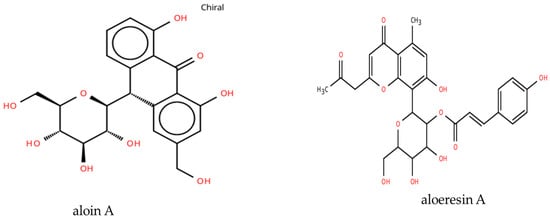
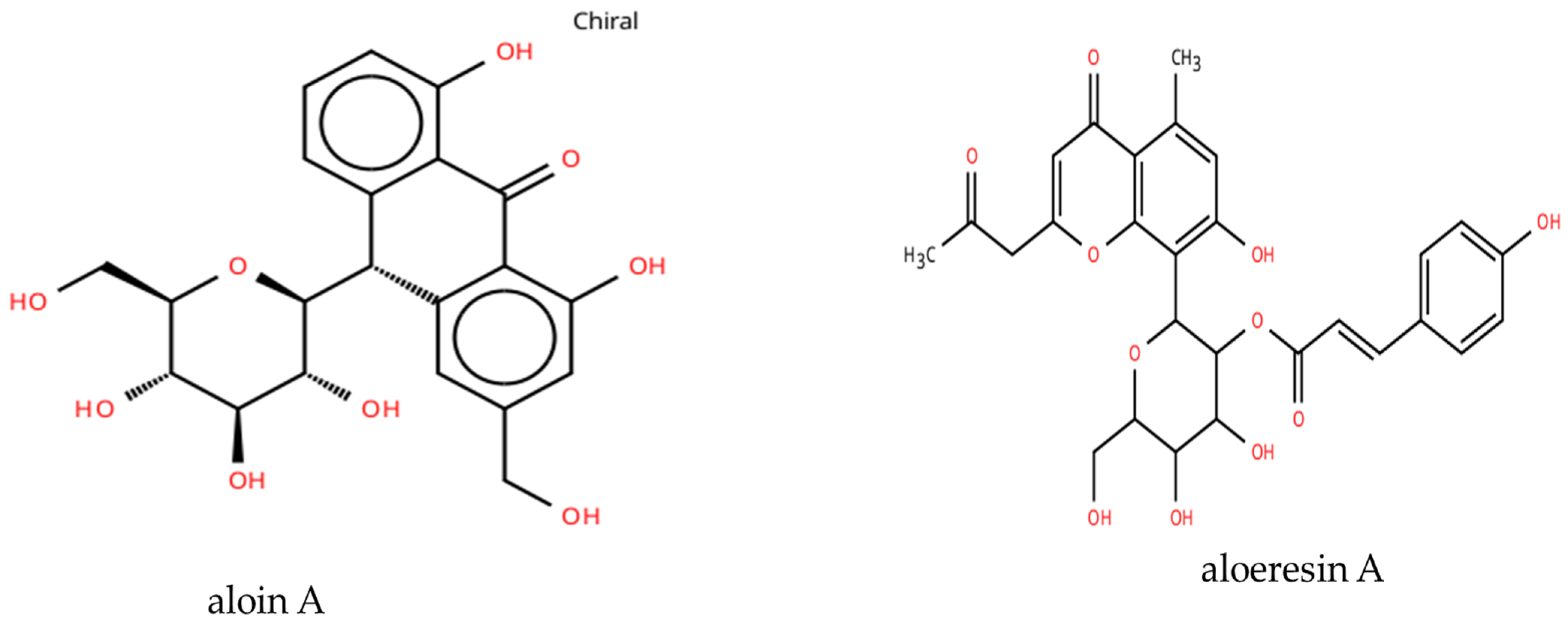
A. ferox leaf exudate has yielded several bitter compounds. The chromones aloeresin A (Figure 1) and aloesin, as well as the hydroxyanthracene derivative (anthrone derivative) aloin, are the most significant among them [44]. The exudate contains the two diastereoisomers of aloin (A and B) Figure 1, which are among the biologically active components of Aloe extracts: aloin A (10S)-10-glucopyranosyl-1,8-dihydroxy-3 (hydroxymethyl)-9(10H)-anthracenone ALNA) and aloin B (10R)-10-glucopyranosyl-1,8-dihydroxy-3-(hydroxymethyl) 9(10H)-anthracenone, ALNB) [44,49,51]. A. ferox also contains the anthraquinones aloe-emodin, emodin, rhein, and physcion, which are hydroxyanthracene derivatives. Sugars, amino acids, and organic acids are other components [44].
Figure 1.
Chemical structure of aloin A and aloeresin A.
The phytochemical profile of A. ferox also indicates that its biological activity is not due to a single compound but rather the result of the synergistic effects of multiple secondary metabolites. Each compound in anthraquinones, chromones, flavonoids, phenolic compounds, tannins, and saponins has been linked to various pharmacological and biological activities, indicating that the observed bioactivity of anthraquinones is likely the result of interactions among these compounds rather than a single metabolite exerting its activity. Although most attention has focused on aloin and aloe-emodin because of their abundance and broad biological activities, recent studies show that less-studied compounds such as chromones and phenolics may play a significant role in plant defence mechanisms. Moreover, phytochemical profiles vary significantly among Aloe species and even within different populations of A. ferox because of varying environmental conditions, harvesting seasons, plant ages, and extraction methods. Therefore, understanding phytochemical variability in A. ferox is useful for developing reproducible botanical insecticides, since phytochemical variation can affect efficacy and the consistency of pest control.
The biological activities reported do not necessarily indicate insecticidal activity. For several constituents, evidence is limited to their occurrence in A. ferox or activity in non-insect biological systems; therefore, their efficacy in S. zeamais remains to be investigated rather than proven (See Table 1).
Table 1.
Major phytochemical constituents of Aloe ferox and their reported biological activities and relevance to insecticidal research.
Experimental research findings of different Aloe species in relation to pesticidal activities against insects and other arthropods are summarised in Table 2. Most of this evidence comes from A. vera and from organisms other than S. zeamais, and should therefore be viewed as comparative rather than conclusive for A. ferox. However, the spectrum of insecticidal, repellent, acaricidal, larvicidal, and antifeedant responses provides a rationale for directly assessing the activity of A. ferox against S. zeamais under laboratory and realistic storage conditions.
Table 2.
Experimental evidence of pesticidal activities of Aloe species against insect and arthropod pests.
The mechanisms summarised in Table 3 here represent different levels of evidence. Unless otherwise stated, they have not been experimentally proven to be valid mechanisms of action for A. ferox against S. zeamais and thus are regarded as proposed/ indirect mechanisms of action.
Table 3.
Evidence supporting proposed mechanisms of action of phytochemicals relevant to the insecticidal potential of A. ferox.
7. Potential of A. ferox Against S. zeamais
Experimental evidence for the insecticidal activity of A. ferox against S. zeamais is scarce. Studies on Aloes have demonstrated larvicidal, growth-regulating, repellent, and feeding deterrent effects against several arthropod pests [55,56]. The activity reported in the present studies, however, should be regarded only as indirect evidence when discussing the activity of A. ferox against S. zeamais, especially for other Aloe species and target pests.
A. ferox is characterised by the presence of various classes of secondary metabolites such as anthraquinones, steroids, flavonoids, anthrones, pyrones, phenolic compounds, tannins, naphthalenes, alkaloids, glycoproteins, and chromones [46,83,84]. Many of these compound classes have been reported to exhibit insecticidal, repellent, antifeedant, or developmental activities in other insect systems. For instance, flavonoids have been reported to exhibit repellency, feeding deterrence, and developmental disruption in S. zeamais [80], while phenolic compounds, alkaloids, tannins, and saponins have been reported to possess various insect toxicity and defence responses [85,86,87]. However, the studies here do not prove that A. ferox extracts have the same effects on S. zeamais.
Overall, the available evidence provides a rationale for direct experimental testing of A. ferox against S. zeamais but does not establish efficacy for stored-grain protection.
8. Structure–Activity Relationship of Major A. ferox Constituents
A. ferox is known to be biologically active with its chemically diverse group of specialised metabolites, such as anthrones, anthraquinones, chromones, and phenols. Of these, aloin A and aloin B are regarded as being the major constituents of the exudate of the leaves. The exudate of A. ferox contains about 70–97% of aloeresin A, aloesin, and aloin A/B on a dry weight basis, according to a geographical study, and the four compounds have been consistently found at high concentrations in 101 samples by using UHPLC–MS (ultra-high-performance liquid chromatography) [88,89].
8.1. Anthrones and Anthraquinones
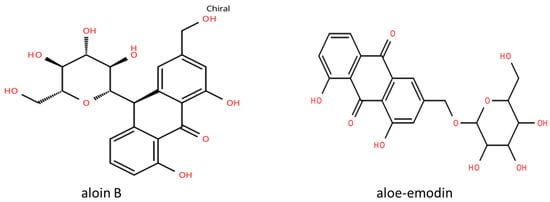
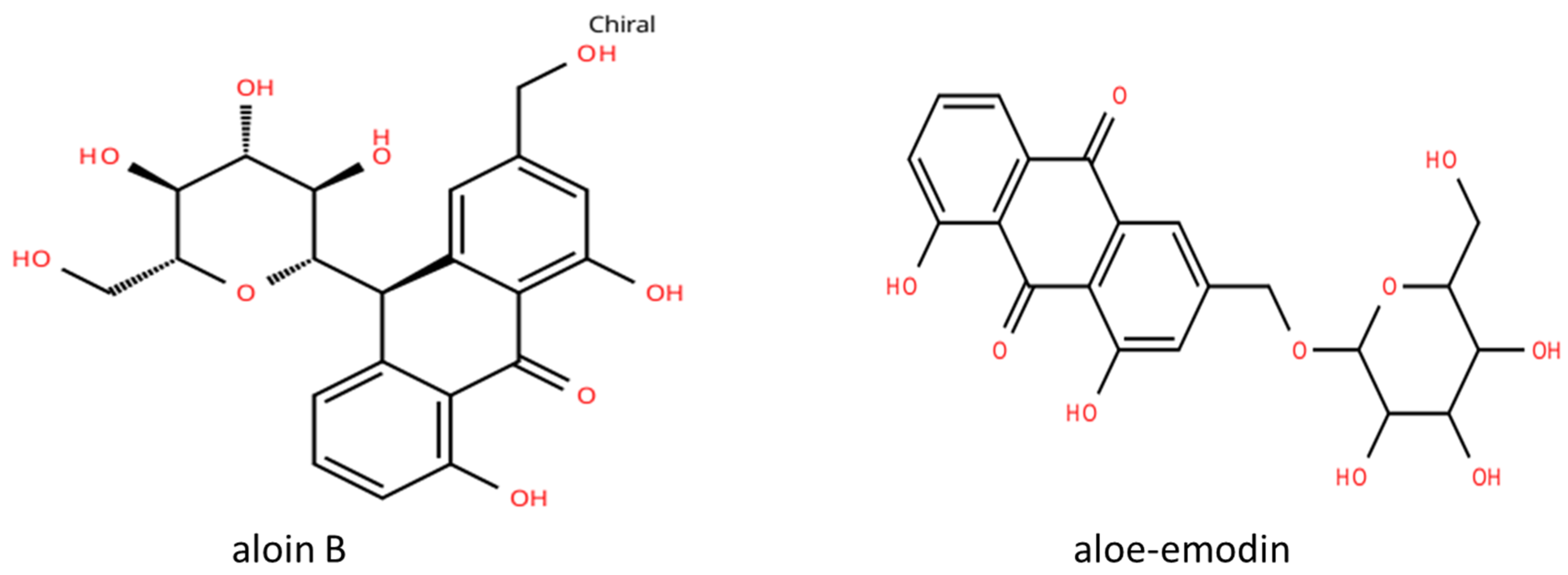
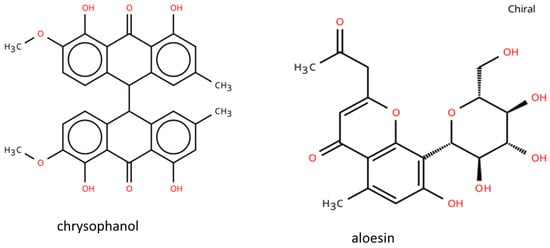
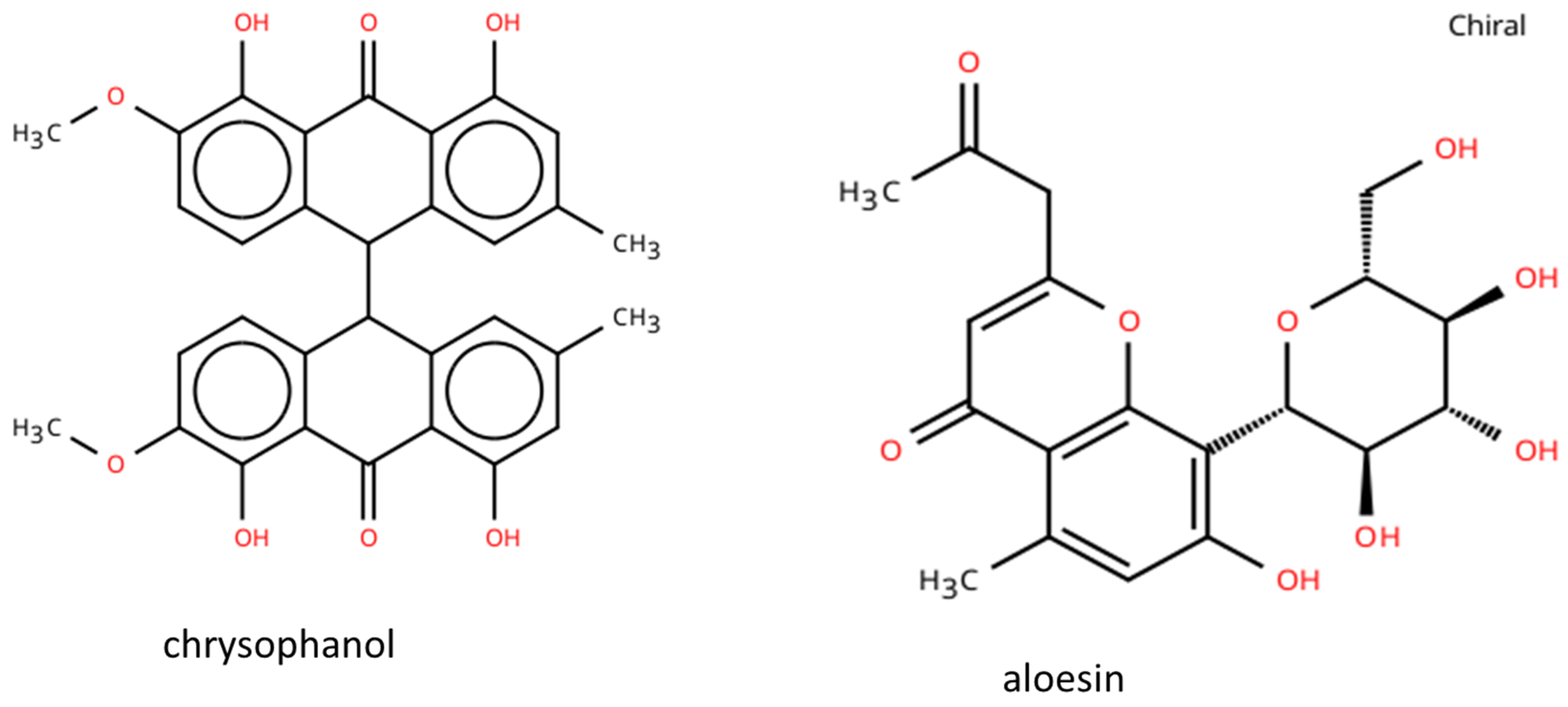
Among the most extensively investigated constituents of A. ferox are anthrones and anthraquinones. Aloin A and B (Figure 2) are anthrone C-glycosides, while aloe-emodin (Figure 2) and chrysophanol (Figure 3) are anthraquinones. Their structural differences include the oxidation state of the central ring and the types of substituents on the aromatic system. The chemical structure of aloin A is the β-D-glucopyranosyl substituent attached to the anthrone skeleton by a C–C bond; the chemical structure of aloe-emodin and chrysophanol is the anthraquinone carbonyl system. Structural differences affect molecular polarity and other physicochemical properties, and they can be compared in terms of biological activity [43,52].
Figure 2.
Chemical structures of aloin B and aloe-emodin.
Figure 3.
Chemical structures of chrysophanol and aloesin.
Kambizi et al. isolated aloe-emodin, chrysophanol, and aloin A from A. ferox leaves, providing direct evidence of the biological activity of the isolated anthrones and anthraquinones. Aloe-emodin and aloin A inhibited all six species of bacteria tested, while chrysophanol inhibited three of the tested organisms. In this study, the minimum inhibitory concentrations of aloe-emodin and aloin A ranged from 62.5 to 250 µg/mL, depending on the organism [52]. The results show that the biological profile of structurally related constituents can vary.
These differences may relate to structure, such as the carbonyl group of anthraquinones and hydroxyl substitution, or the presence or absence of a glycosyl group. Note: The observations do not demonstrate an insecticidal SAR. The reported antibacterial activities of aloe-emodin, chrysophanol, and aloin A cannot be directly extrapolated to S. zeamais. Instead, they select structurally defined components that can be studied directly against the insect.
8.2. Chromones
The other class of abundant constituents of A. ferox are called chromones. The main compounds are aloesin (Figure 3) and aloeresin A, as well as several structurally related compounds. Most A. ferox chromones share an 8-C-glucosyl-7-hydroxy-5-methyl-2-propyl-4-chromone framework, with structural variation arising from side-chain oxidation, methylation, and glucose esterification [43].
These compounds are quantitatively important in A. ferox. UHPLC–MS analyses of 101 exudates of A. ferox revealed high levels of aloesin (111.8–561.8 µg/mg) and aloeresin A (129.0–371.6 µg/mg). Aloin A and aloin B were found in small quantities [88]. Biological activity is also shown at the compound level for aloesin. Mikayoulou et al. extracted aloesin and aloeresin A from A. ferox and tested them for anti-tyrosinase activity. Aloesin inhibited the enzyme with moderate activity (IC50 = 31.5 µM), while aloeresin A was identified as a substrate of mushroom tyrosinase, not just an inhibitor [90].
The results suggest that the structure of related chromones may affect their interaction with biological targets. However, the anti-tyrosinase activity should not be considered as insecticidal activity. The toxicity, repellency, or fumigant activity of the chromone scaffold or specific substituents to S. zeamais still has to be determined experimentally.
8.3. Flavonoids and Phenolic Compounds
A. ferox also has a variety of structural diversity with phenolic compounds and flavonoids. Compounds reported in Aloe material include catechin, epicatechin, chlorogenic acid, sinapic acid, and aloe-emodin-8-O-β-D-glucopyranoside. These were identified and quantified in a comparative phytochemical study of seven Aloe cultivars, which identified aloin, aloe-emodin-8-O-β-D-glucopyranoside, catechin, epicatechin, sinapic acid, and chlorogenic acid [53]. They are characterised by phenolic hydroxyl groups and, in some cases, glycosyl or ester substituents that affect polarity and molecular interactions.
Phenolic compounds can have multiple hydroxyl groups, which can affect the physicochemical and biological properties, along with other substitutions such as glycosylation. However, the available literature on A. ferox does not provide enough evidence to identify these structures specifically as responsible for insecticidal activity against S. zeamais. Thus, these constituents can be considered potential bioactive constituents but are not established as such.
8.4. Volatile Constituents
The volatile fraction of A. ferox is chemically distinct and could be significant for managing stored-product insects, as it may act via vapour-mediated and/or behavioural effects. Twenty-one compounds have been identified in A. ferox leaf volatile oil, which constitutes over 99.99% of the total volatile matter. The major constituents included 3,6-octatriene (23.86%), 3-cyclohexene-1-methanol (7.31%), bornylene (5.24%), 1,3-cyclopentadiene (4.07%), and 5-methyl-3-heptanol (3.92%) [54].
These constituents are more volatile and have lower molecular masses than the less volatile anthrones, anthraquinones, and chromones. These properties make the volatile fraction worth evaluating for fumigating or repelling stored-product insects. The A. ferox volatile oil study, however, was mainly a chemical characterisation study, and not proof of toxicity or repellence for S. zeamais. As a result, its role in A. ferox insecticidal activity remains an important research gap.
8.5. Overall Structure–Activity Implications
Overall, the A. ferox chemical profile suggests that certain structural elements may play significant roles in biological activity, such as oxygenated aromatic systems, hydroxyl and carbonyl groups, C-glycosylation, esterification, and molecular volatility. Experimental models have shown biological activity for isolated A. ferox constituents, with aloe-emodin, chrysophanol, aloin A, and aloesin showing activity in antibacterial or enzyme-inhibition models, primarily against S. zeamais [43,46]. Results of several A. ferox isolated constituents are biologically active in non-insect experimental systems, but these cannot be directly extrapolated to S. zeamais.
9. Safety and Environmental Considerations of A. ferox as a Botanical Insecticide
A. ferox extract is known to have a different phytochemical composition depending on the method of extraction, plant part, solvent, growth stage, and plant source. Anthraquinones, flavonoids, tannins, sterols, alkaloids, and volatile oils have been reported as constituents. Toxicological effects have also been observed to differ across preparations of A. ferox, such as aqueous leaf extract, leaf resin, and other extracts [46]. It must be noted that the potential use of A. ferox as a botanical insecticide does not mean that it is an inherently safe pesticide. Thus, the safety of an A. ferox-based insecticidal preparation should be assessed not based on the use of the plant for medicinal purposes or traditional use, but on the extraction method, chemical composition, dosage, mode of application, and formulation of the product.
Experimental evidence on the oral toxicity of A. ferox is limited and relates to particular preparations. Celestino et al. evaluated the acute oral toxicity of A. ferox resin in Wistar rats after a single dose of 5.0 g/kg, and found that its hydroxyanthracene derivative (as aloin) was 33.5%. No mortality or other signs of acute toxicity were seen during the 14-day observation period, except for moderate diarrhoea and reduced motor activity in the first hour. As a result, it was not possible to calculate the LD50 and was therefore regarded as likely to be above 5.0 g/kg. The authors found the resin to be of low acute oral toxicity but noted the need for additional studies on chronic and reproductive toxicity, mutagenicity, and carcinogenicity. Therefore, this study does not demonstrate the safety of a specific A. ferox resin product or repeated dietary exposure to A. ferox-treated grain [91].
Hydroxyanthracene derivatives are special because they are represented by an important part of the preparations of various Aloe species, such as A. ferox and A. vera. EFSA remarked that hydroxyanthracene derivatives, such as emodin, aloe-emodin, and danthron (which have similar structures), exhibited genotoxic potential in vitro. In addition, aloe-emodin has been demonstrated to be genotoxic in vivo on colon cells, and the whole-leaf A. vera extract exhibited carcinogenic activity in experimental animal studies. On this basis, EFSA concluded that hydroxyanthracene derivatives should be considered genotoxic and carcinogenic unless specific data indicate otherwise (e.g., for rhein), and identified a safety concern for extracts containing hydroxyanthracene derivatives, but noted remaining uncertainties. Characterisation and control of the hydroxyanthracene constituents present in botanical formulations used in food commodities is of great importance, as these compounds were identified in these products [92].
The effects on grain germination also need to be explored, especially if maize is stored and later used for seeding. Mbombo and Ngobese conducted an experiment to determine the allelopathic effect of aqueous extracts of A. ferox and other plant species on germination of various plants, including Zea mays. The study found that all extracts inhibited maize germination compared with the untreated control. Importantly, maize treated with 100% crude A. ferox extract achieved 85% germination by day 21, with stronger inhibition noted for some of the other plant extracts (e.g., Anthocleista grandiflora with 54% germination) [93]. This experiment directly applied seeds to aqueous extracts and was not a stored-grain insecticide safety study. Hence, the results should not be taken as an indication of any damage to stored maize caused by treatment with A. ferox. They do, however, agree that germination and seed viability should be tested when selecting appropriate concentrations and application methods for stored-grain protection.
The safety of any intended A. ferox-based grain protectant should be evaluated for the specific formulation, concentration, method of application, and exposure scenario, including evaluations of residues, dietary and grain-quality, and non-target assessments.
10. Research Gaps and Future Directions
Although interest in botanical insecticides is growing, critical knowledge gaps hinder the use of A. ferox as a viable grain protectant. First, experimental results comparing A. ferox extracts with S. zeamais are scarce and partly based on data from other Aloe species and insect pests. Second, the phytochemical composition of A. ferox depends on geographical origin, environmental conditions, plant age, harvest season, and extraction method, and only a handful of studies examine how these sources of variation affect insecticidal activity or product consistency. Third, extraction methods are not well standardised and cannot be easily compared across published studies.
Additional research is required to determine the optimal formulation, application rate, and application method for stored-grain protection under realistic storage conditions. Most published work has been performed under controlled laboratory conditions, while information on semi-field and commercial storage systems remains limited. In addition, little data are available on the long-term insecticidal activity in grain during storage, compatibility with integrated pest management programmes, effects on grain germination and quality, and potential effects on non-target organisms.
Mechanisms of interaction among the major phytochemicals of A. ferox that underlie the insecticidal effects should also be explored, as these compounds could act synergistically to significantly contribute to insecticidal activity. Last but not least, economic feasibility, regulatory aspects, product standardisation, and market scalability must be considered alongside biological effectiveness to move A. ferox from laboratory research to practical implementation in sustainable stored-grain protection. The potential of nanoformulations, microencapsulation, emulsifiable concentrates, and controlled-release formulations of A. ferox remains largely unstudied.
11. Conclusions
The biological activities of the secondary metabolites of A. ferox make it an interesting candidate for a botanical insecticide. However, direct experiments proving its effectiveness against S. zeamais remain insufficient. Comparative and mechanistic evidence from other Aloe species, other arthropod pests, and individual phytochemicals is useful but does not establish A. ferox efficacy against this stored-grain pest.
Therefore, it is recommended that A. ferox be investigated further before being used as a protectant for stored grains. Prioritise direct efficacy and dose–response studies on S. zeamais, phytochemical and formulation standardisation, residue and safety evaluations, and grain-quality evaluation. Once the treatment is deemed effective in the laboratory, it must be tested under realistic storage conditions before practical or commercial application.
Author Contributions
F.B.A. drafted, conceptualised, and wrote the manuscript. L.B.-K., L.U.-N.P.H., N.E.C., T.O.A., S.L., S.M., M.S., and C.S.M. reviewed and edited the manuscript. All authors have read and agreed to the published version of the manuscript.
Funding
This research was funded by the South African Medical Research Council for financial support, grant number (SAMRC/UFH/P790), DSTI/NRF SARChI Chair in Water Quality and Environmental Genomics, grant number (RCHDI241119283812), and the Research Niche Area on Sustainable Agriculture, Water Usage and Climate Change, with no specific grant number. The University of Fort Hare, Alice, South Africa, funded the APC.
Institutional Review Board Statement
Not applicable.
Informed Consent Statement
Not applicable.
Data Availability Statement
No new data were created or analysed in this study. Data sharing is not applicable to this article.
Acknowledgments
We are grateful to the University of Fort Hare, Alice, South Africa; the Research Niche Area on Sustainable Agriculture, Water Usage and Climate Change at the University of Fort Hare; and the South African Medical Research Council and DSTI/NRF SARChI Chair in Water Quality and Environmental Genomics for financial support.
Conflicts of Interest
The authors declare no conflicts of interest.
Abbreviations
The following abbreviations are used in this manuscript:
| IPM | Integrated Pest Management |
| FDA | Food and Drug Administration |
| EOs | Essential oils |
| STIs | Sexually Transmitted Infections |
| MIC | Minimum Inhibitory Concentration |
| UHPLC-MS | Ultra-High-Performance Liquid Chromatography |
| HPLC | High-Performance Liquid Chromatography |
| SAR | Structure-activity Relationship |
References
- Mpoke, R.S.; Kinyua, J.; Kimani, J.W.; Ajene, I.J.; Likhayo, P.; Khamis, F.M. Efficacy of Botanical Extract Formulations of Zanthoxylum usambarense and Warburgia ugandensis on Post-Harvest Management of Sitophilus zeamais in Maize. Sustainability 2023, 15, 10833. [Google Scholar] [CrossRef] [Scilit]
- Saikumar, T.; Manideep, S.; Paschapur, A.U.; Thrilekha, D. Botanical Pesticides: Exploring Successes, Challenges, and Future Directions in Sustainable Pest Management. J. Plant Dis. Prot. 2025, 132, 175. [Google Scholar] [CrossRef] [Scilit]
- Divekar, P. Botanical Pesticides: An Eco-Friendly Approach for Management of Insect Pests. Acta Sci. Agric. 2023, 7, 75–81. [Google Scholar] [CrossRef] [Scilit]
- Ngegba, P.M.; Cui, G.; Khalid, M.Z.; Zhong, G. Use of Botanical Pesticides in Agriculture as an Alternative to Synthetic Pesticides. Agriculture 2022, 12, 600. [Google Scholar] [CrossRef] [Scilit]
- Lengai, G.M.; Muthomi, J.W.; Mbega, E.R. Phytochemical Activity and Role of Botanical Pesticides in Pest Management for Sustainable Agricultural Crop Production. Sci. Afr. 2020, 7, e00239. [Google Scholar] [CrossRef] [Scilit]
- Shekhar, C.; Khosya, R.; Thakur, K.; Mahajan, D.; Kumar, R.; Kumar, S.; Sharma, A.K. A Systematic Review of Pesticide Exposure, Associated Risks, and Long-Term Human Health Impacts. Toxicol. Rep. 2024, 13, 101840. [Google Scholar] [CrossRef] [Scilit]
- Zhou, W.; Li, M.; Achal, V. A Comprehensive Review on Environmental and Human Health Impacts of Chemical Pesticide Usage. Emerg. Contam. 2025, 11, 100410. [Google Scholar] [CrossRef] [Scilit]
- Mancera-Rico, A.; Vázquez-Badillo, M.E.; Cerna-Chávez, E.; Sánchez-Vega, M.; González-Estrada, E. Sitophilus zeamais (Coleoptera: Curculionidae) Activity and Germination of Corn Seeds Stored under Vacuum Pressure. Agriculture 2023, 13, 2035. [Google Scholar] [CrossRef] [Scilit]
- Ojo, J.A.; Omoloye, A.A. Development and Life History of Sitophilus zeamais (Coleoptera: Curculionidae) on Cereal Crops. Adv. Agric. 2016, 2016, 7836379. [Google Scholar] [CrossRef] [Scilit]
- Tschoeke, L.F.; de Melo, J.P.; da Silva Filho, J.G.; Aquino, P.G.; Júnior, J.L.d.A.M.; Bernardo, V.B.; Santana, A.E.; Santoro, K.R.; Monteiro, V.B.; Badji, C.A. Insecticidal Activity of Schinus terebinthifolius Essential Oil for the Management of Permethrin-Resistant Sitophilus zeamais (Coleoptera: Curculionidae). J. Asia-Pac. Entomol. 2024, 27, 102301. [Google Scholar] [CrossRef] [Scilit]
- Cortese, D.; Mareco Da Silva, M.M.; de Oliveira, G.S.; Mussury, R.M.; Fernandes, M.G. Repellency and Reduction of Offspring Emergence Potential of Some Botanical Extracts against Sitophilus zeamais (Coleoptera: Curculionidae) in Stored Maize. Insects 2022, 13, 842. [Google Scholar] [CrossRef] [Scilit]
- Benson, G.A.; Oyetunde, O.A.; Adeboye, K.A.; Asebioge, O.O.; Joda, A.O.; Oyetunde, A.K.; Adeshina, G.A. An Assessment of the Relationship between Seed Nutritional Components and Resistance of Maize to Sitophilus zeamais. Cereal Res. Commun. 2024, 52, 1081–1089. [Google Scholar] [CrossRef] [Scilit]
- Suleiman, R.; Rosentrater, K.A.; Bern, C. Evaluation of Maize Weevils Sitophilus zeamais Motschulsky Infestation on Seven Varieties of Maize. J. Stored Prod. Res. 2015, 64, 97–102. [Google Scholar] [CrossRef] [Scilit]
- Khan, A.A.; Siddiqui, Y.; Siddique, K.H.; Bobo, J.A.; Ali, A. Minimising Postharvest Food Losses: A Vital Strategy to Alleviate Food Insecurity and Malnutrition in Developing Nations: A Review. Discov. Food 2024, 4, 145. [Google Scholar] [CrossRef] [Scilit]
- Stathers, T.; Holcroft, D.; Engelbert, M.; Ravat, Z.; Marion, P. The Evidence on Crop Postharvest Loss Reduction Interventions for Sub-Saharan African and South Asian Food Systems: A Systematic Scoping Review Update 2024. J. Stored Prod. Res. 2025, 114, 102727. [Google Scholar] [CrossRef] [Scilit]
- Gindaba, A.; Negeri, M.; Abdisa, B.; Nemo, R.; Kitila, C. Phytochemical Screening and Insecticidal Activities of Some Medicinal Plants against the Maize Weevil, Sitophilus zeamais (Motschulsky) (Coleoptera: Curculionidae). Sci. Rep. 2024, 14, 8678. [Google Scholar] [CrossRef] [Scilit]
- Ali, M.; Ali, A.; Ali, S.; Chen, H.; Wu, W.; Liu, R.; Chen, H.; Ahmed, Z.F.; Gao, H. Global Insights and Advances in Edible Coatings or Films toward Quality Maintenance and Reduced Postharvest Losses of Fruit and Vegetables: An Updated Review. Compr. Rev. Food Sci. Food Saf. 2025, 24, e70103. [Google Scholar] [CrossRef] [Scilit]
- Debebe, S. Post-Harvest Losses of Crops and Its Determinants in Ethiopia: Tobit Model Analysis. Agric. Food Secur. 2022, 11, 13. [Google Scholar] [CrossRef] [Scilit]
- Altunc, Y.E.; Agrafioti, P.; Lampiri, E.; Güncan, A.; Tsialtas, I.T.; Athanassiou, C.G. Population Growth of Prostephanus truncatus and Sitophilus zeamais and Infestation Patterns in Three Maize Hybrids. J. Stored Prod. Res. 2023, 101, 102091. [Google Scholar] [CrossRef] [Scilit]
- Galeano, L.J.N.; Prieto-Rodríguez, J.A.; Patiño-Ladino, O.J. Synergistic Insecticidal Activity of Plant Volatile Compounds: Impact on Neurotransmission and Detoxification Enzymes in Sitophilus zeamais. Insects 2025, 16, 609. [Google Scholar] [CrossRef] [Scilit]
- Peschiutta, M.L.; Achimón, F.; Brito, V.D.; Pizzolitto, R.P.; Zygadlo, J.A.; Zunino, M.P. Fumigant Toxicity of Essential Oils against Sitophilus zeamais (Motschulsky) (Coleoptera: Curculionidae): A Systematic Review and Meta-Analysis. J. Pest. Sci. 2022, 95, 1037–1056. [Google Scholar] [CrossRef] [Scilit]
- Saeed, M.B.; Laing, M.D. Biocontrol of Maize Weevil, Sitophilus zeamais Motschulsky (Coleoptera: Curculionidae), in Maize over a Six-Month Storage Period. Microorganisms 2023, 11, 1261. [Google Scholar] [CrossRef] [Scilit]
- Garcia-Saldana, E.A.; Vidal-Limon, A.; Bojorquez-Velazquez, E.; Ruiz-May, E.; Elizalde-Contreras, J.M.; Ibarra-Juarez, L.A.; Guerrero-Analco, J.A.; Barrera-Mendez, F.; Zamora-Briseno, J.A. Evaluation of α-Glucosidases as Potential Targets for the Control of Corn Weevil, Sitophilus zeamais (Coleoptera, Curculionidae). J. Stored Prod. Res. 2025, 112, 102650. [Google Scholar] [CrossRef] [Scilit]
- Jiménez-Galindo, J.C.; Castillo-Rosales, A.; Castellanos-Pérez, G.; Orozco-González, F.; Ortega-Ortega, A.; Padilla-Chacón, D.; Butrón, A.; Revilla, P.; Malvar, R.A. Identification of Resistance to the Corn Weevil (Sitophilus zeamais M.) in Mexican Maize Races (Zea mays L.). Agronomy 2023, 13, 312. [Google Scholar] [CrossRef] [Scilit]
- Sebayang, A.; Rohimatun; Salim; Rubiana, R.; Sipi, S.; Manwan, S.; Fattah, A.; Arrahman, A.; Yasin, M.; Saenong, M. Sitophilus zeamais (Motschulsky): The Primary Obstacles in the Maize Quality and Quantity. IOP Conf. Ser. Earth Environ. Sci. 2023, 1230, 012089. [Google Scholar] [CrossRef] [Scilit]
- Wanna, R.; Bunphan, D.; Kunlanit, B.; Khaengkhan, P.; Khaengkhan, P.; Bozdoğan, H. Chemical Composition of Essential Oil from Apium graveolens L. and Its Biological Activities against Sitophilus zeamais Motschulsky (Coleoptera: Dryophthoridae). Plants 2025, 14, 347. [Google Scholar] [CrossRef] [Scilit]
- Isman, M.B. Botanical Insecticides in the Twenty-First Century—Fulfilling Their Promise? Annu. Rev. Entomol. 2020, 65, 233–249. [Google Scholar] [CrossRef] [Scilit]
- Sori, W. Effect of Selected Botanicals and Local Seed Storage Practices on Maize Insect Pests and Health of Maize Seeds in Jimma Zone. Singap. J. Sci. Res. 2014, 4, 19–28. [Google Scholar] [CrossRef] [Scilit]
- Chugh, P.; Singh, R.K.; Mishra, S.; Khan, A.; Hazarika, S.; Haokip, S.W.; Nengparmoi, T. Recent Development and Review on Botanicals from Plants to Stored Grains. Int. J. Plant Soil Sci. 2023, 35, 929–936. [Google Scholar] [CrossRef] [Scilit]
- Sousa, P.A.; Neto, J.; Barbosa, J.V.; Peres, J.; Magro, A.; Barros, G.; Sousa, J.M.; Magalhães, F.D.; Mexia, A.; Aguiar, A.A. Novel Approach for a Controlled Delivery of Essential Oils during Long-Term Maize Storage: Clove Bud and Pennyroyal Oils Efficacy to Control Sitophilus zeamais, Reducing Grain Damage and Post-Harvest Losses. Insects 2023, 14, 366. [Google Scholar] [CrossRef] [Scilit]
- Opiyo, S.A.; Njoroge, P.W.; Ndirangu, E.G. A Review of Pesticidal Activity of Essential Oils against Sitophilus oryzae, Sitophilus granarius and Sitophilus zeamais. IOSR J. Appl. Chem. 2022, 15, 39–51. [Google Scholar]
- Patiño-Bayona, W.R.; Nagles Galeano, L.J.; Bustos Cortes, J.J.; Delgado Ávila, W.A.; Herrera Daza, E.; Suárez, L.E.C.; Prieto-Rodríguez, J.A.; Patiño-Ladino, O.J. Effects of Essential Oils from 24 Plant Species on Sitophilus zeamais Motsch (Coleoptera, Curculionidae). Insects 2021, 12, 532. [Google Scholar] [CrossRef] [Scilit]
- Lyubenova, A.; Georgieva, L.; Antonova, V. Utilisation of Plant Secondary Metabolites for Plant Protection. Biotechnol. Biotechnol. Equip. 2023, 37, 2297533. [Google Scholar] [CrossRef] [Scilit]
- Nayak, M.K.; Athanassiou, C.G.; Stejskal, V.; Arthur, F.H. Current Status and Future Prospects of Contact Insecticides in Stored-Product Protection. Annu. Rev. Entomol. 2025, 71, 229–252. [Google Scholar] [CrossRef] [Scilit]
- Breaud, C.; Lallemand, L.; Mares, G.; Mabrouki, F.; Bertolotti, M.; Simmler, C.; Greff, S.; Mauduit, M.; Herbette, G.; Garayev, E. LC-MS Based Phytochemical Profiling towards the Identification of Antioxidant Markers in Some Endemic Aloe Species from Mascarene Islands. Antioxidants 2022, 12, 50. [Google Scholar] [CrossRef] [Scilit]
- Adetunji, T.L.; Olisah, C.; Adegbaju, O.D.; Olawale, F.; Adetunji, A.E.; Siebert, F.; Siebert, S. The Genus Aloe: A Bibliometric Analysis of Global Research Outputs (2001–2020) and Summary of Recent Research Reports on Its Biological Activities. S. Afr. J. Bot. 2022, 147, 953–975. [Google Scholar] [CrossRef] [Scilit]
- Singh, K.; Ajao, A.A.; Sabiu, S. Ethnobotanical, Phytochemistry, Toxicological and Pharmacological Significance of the Underutilised Indigenous Aloe Species of West Africa. S. Afr. J. Bot. 2022, 147, 1007–1015. [Google Scholar] [CrossRef] [Scilit]
- Loots, D.T.; van der Westhuizen, F.H.; Botes, L. Aloe ferox Leaf Gel Phytochemical Content, Antioxidant Capacity, and Possible Health Benefits. J. Agric. Food Chem. 2007, 55, 6891–6896. [Google Scholar] [CrossRef] [Scilit]
- Diriba, T.F.; Deresa, E.M. Botanical Description, Ethnomedicinal Uses, Phytochemistry, and Pharmacological Activities of Genus Kniphofia and Aloe: A Review. Arab. J. Chem. 2022, 15, 104111. [Google Scholar] [CrossRef] [Scilit]
- El Sayed, A.M.; Ezzat, S.M.; El Naggar, M.M.; El Hawary, S.S. In Vivo Diabetic Wound Healing Effect and HPLC-DAD-ESI-MS/MS Profiling of the Methanol Extracts of Eight Aloe Species. Rev. Bras. Farmacogn. 2016, 26, 352–362. [Google Scholar] [CrossRef] [Scilit]
- Ismail, H.; Mohamed, A.I.; Islam, M.S. Aloe ferox Leaf Gel Extracts Attenuate Redox Imbalance in Oxidative Renal Injury and Stimulate Glucose Uptake, Whilst Inhibiting Key Enzymes Linked to Diabetes and Obesity. Sci. Afr. 2024, 26, e02425. [Google Scholar] [CrossRef] [Scilit]
- Ombito, J.O.; Salano, E.N.; Yegon, P.K.; Ngetich, W.K.; Mwangi, E.M.; Koech, G.K.K.; Yegon, K. A Review of the Chemistry of Some Species of Genus Aloe (Xanthorrhoeaceae Family). J. Sci. Innov. Res. 2015, 4, 49–53. [Google Scholar] [CrossRef] [Scilit]
- Chen, W.; Van Wyk, B.-E.; Vermaak, I.; Viljoen, A.M. Cape Aloes—A Review of the Phytochemistry, Pharmacology and Commercialisation of Aloe ferox. Phytochem. Lett. 2012, 5, 1–12. [Google Scholar] [CrossRef] [Scilit]
- Galli, C.L.; Cinelli, S.; Ciliutti, P.; Melzi, G.; Marinovich, M. Lack of in Vivo Genotoxic Effect of Dried Whole Aloe ferox Juice. Toxicol. Rep. 2021, 8, 1471–1474. [Google Scholar] [CrossRef] [Scilit]
- Hao, Y.-P.; Wang, L.; Li, Q.-W.; Fan, Y.-R.; Cheng, Y.-J.; Li, Z.-W.; Sun, G.-F.; Zhang, J.-Z.; Sun, M.-Y.; Xing, Q. Unravelling the Functional Components in Medicinal Aloe Species Based on UPLC-MS/MS Metabolomics. Food Med. Homol. 2026, 3, 9420098. [Google Scholar] [CrossRef] [Scilit]
- Nalimu, F.; Oloro, J.; Kahwa, I.; Ogwang, P.E. Review on the Phytochemistry and Toxicological Profiles of Aloe vera and Aloe ferox. Future J. Pharm. Sci. 2021, 7, 145. [Google Scholar] [CrossRef] [Scilit]
- Dong, X.; Zeng, Y.; Liu, Y.; You, L.; Yin, X.; Fu, J.; Ni, J. Aloe-emodin: A Review of Its Pharmacology, Toxicity, and Pharmacokinetics. Phytother. Res. 2020, 34, 270–281. [Google Scholar] [CrossRef] [Scilit]
- Xiao, J.; Chen, S.; Chen, Y.; Su, J. The Potential Health Benefits of Aloin from Genus Aloe. Phytother. Res. 2022, 36, 873–890. [Google Scholar] [CrossRef] [Scilit]
- Adams, Z. Comparative Phytochemical Analyses of Aloe ferox Mill. Found in Eastern and Western Cape Provinces in South Africa. Master’s Thesis, University of Fort Hare, Alice, South Africa, 2013. [Google Scholar]
- Banik, S.; Sharangi, A.B. Phytochemistry, Health Benefits and Toxicological Profile of Aloe. J. Pharmacog Phytochem. 2019, 8, 4499–4506. [Google Scholar]
- Fanali, S.; Aturki, Z.; D’Orazio, G.; Rocco, A.; Ferranti, A.; Mercolini, L.; Raggi, M.A. Analysis of Aloe-based Phytotherapeutic Products by Using nano-LC-MS. J. Sep. Sci. 2010, 33, 2663–2670. [Google Scholar] [CrossRef] [Scilit]
- Kambizi, L.; Sultana, N.; Afolayan, A. Bioactive Compounds Isolated from Aloe ferox.: A Plant Traditionally Used for the Treatment of Sexually Transmitted Infections in the Eastern Cape, South Africa. Pharm. Biol. 2005, 42, 636–639. [Google Scholar] [CrossRef] [Scilit]
- Lai, Q.; Wang, H.; Guo, X.; Abbasi, A.M.; Wang, T.; Li, T.; Fu, X.; Li, J.; Liu, R.H. Comparison of Phytochemical Profiles, Antioxidant and Cellular Antioxidant Activities of Seven Cultivars of Aloe. Int. J. Food Sci. Technol. 2016, 51, 1489–1494. [Google Scholar] [CrossRef] [Scilit]
- Magwa, M.; Gundidza, M.; Coopoosamy, R.; Mayekiso, B. Chemical Composition of Volatile Constituents from the Leaves of Aloe ferox. Afr. J. Biotechnol. 2006, 5, 1652–1654. [Google Scholar]
- Subramaniam, J.; Kovendan, K.; Kumar, P.M.; Murugan, K.; Walton, W. Mosquito Larvicidal Activity of Aloe vera (Family: Liliaceae) Leaf Extract and Bacillus sphaericus against Chikungunya Vector, Aedes aegypti. Saudi J. Biol. Sci. 2012, 19, 503–509. [Google Scholar] [CrossRef] [Scilit]
- Radwan, I.T.; Eltaly, R.I.; Baz, M.M.; Yousif, M.; Selim, A.; Taie, H.A.; Manaa, E.A.; Khater, H.F. Novel Acaricidal and Growth-Regulating Activity of Aloe vera and Rheum rhabarbarum Extracts and Their Oil/Water Nanoemulsions against the Camel Tick, Hyalomma dromedarii. Sci. Rep. 2023, 13, 16802. [Google Scholar] [CrossRef] [Scilit]
- Abebaw, B.G. Evaluation of Aloe Species–Based Botanical Treatments and Application Methods for Controlling Termite Infestations Associated with Maize Crop in Northwest Ethiopia. Int. J. Agron. 2026, 2026, 6457174. [Google Scholar] [CrossRef] [Scilit]
- Kabir, N. Evaluation of the Insecticidal Efficacy of Aloe vera L. Leaf Powder on Adult Bean Weevil (Callosobruchus maculatus (F.)). Sahel. J. Life Sci. FUDMA 2023, 1, 32–38. [Google Scholar] [CrossRef] [Scilit]
- El-Enine, A.; Habeba, M.; Metwally, E.; El-Deeb, M.; Mohamed, Z.A. Biological and Lethal Effects of Some Volatile Plant Oils, Aloe Aqueous Extract and Spinosad on Cowpea Beetle, Callosobruchus maculatus (F.). Zagazig J. Agric. Res. 2016, 43, 977–988. [Google Scholar] [CrossRef] [Scilit]
- Omotoso, O. Insecticidal and Insect Productivity Reduction Capacities of Aloe Vera and Bryophyllum pinnatum on Tribolium castaneum (Herbst). Afr. J. Appl. Zool. Environ. Biol. 2005, 7, 95–100. [Google Scholar]
- Chore, J.K.; Obonyo, M.; Wachira, F.N.; Mireji, P.O. Larvicidal Activity of Selected Aloe Species against Aedes aegypti (Diptera: Culicidae). J. Insect Sci. 2014, 14, 202. [Google Scholar] [CrossRef] [Scilit][Green Version]
- Mallavadhani, U.; Prasad, B.R.; Soujanya, P.L.; Rao, M.B.; Ratanlal, M. Aloe vera (L.) Burm. f.: A Highly Useful Indian Traditional Plant for the Management of Maize Storage Pest, Sitophilus oryzae L. (Coleoptera: Curculionidae). J. Biopestic. 2016, 9, 157. [Google Scholar] [CrossRef] [Scilit]
- Malolo, H.S.; Shechambo, L.F.; Martin, M.J. An Effective Dosage of Neem (Azadirachta indica Juss) and Aloe vera (Aloe barbadensis Miller) Extracts against Adult Aphid (Myzus persicae Sulzer) and Melon Flies (Bactrocera cucurbitae Coquillet). J. Curr. Opin. Crop Sci. 2024, 5, 157–163. [Google Scholar] [CrossRef] [Scilit]
- Patel, P.C. Pesticidal Effect of Aloe vera Extracts on Some Larvae of Crop Damaging Pests. Int. J. Appl. Univ. Res. 2017, 4, 6–9. [Google Scholar]
- Eleawa, M. Efficiency of Natural Extract, Aloe barbadensis Against Two Species of Phytophagous Mites. J. Product. Dev. 2013, 18, 447–455. [Google Scholar] [CrossRef] [Scilit]
- Al-Fuhaid, N. Repellency and Fumigant Toxicity of Aloe vera, Astragalus sarcocolla, Commiphora myrrha and Ferula assafoetida L. Gum Resin Powders and Methanol Extracts against Trogoderma granarium Everts. Int. J. Agric. Sci. 2017, 7, 597–604. [Google Scholar]
- Wei, J.; Ding, W.; Zhao, Y.-G.; Vanichpakorn, P. Acaricidal Activity of Aloe vera L. Leaf Extracts against Tetranychus cinnabarinus (Boisduval) (Acarina: Tetranychidae). J. Asia-Pac. Entomol. 2011, 14, 353–356. [Google Scholar] [CrossRef] [Scilit]
- Elayidam, U.G. Efficacy of Aqueous Extracts of Selected Plant Products against Papilio polytes L. Curr. Biot. 2014, 8, 303–308. [Google Scholar]
- Mavundza, E.J.; Maharaj, R.; Chukwujekwu, J.C.; Finnie, J.F.; Van Staden, J. Screening for Adulticidal Activity against Anopheles arabiensis in Ten Plants Used as Mosquito Repellent in South Africa. Malar. J. 2014, 13, 173. [Google Scholar] [CrossRef] [Scilit]
- Asad, M.; Khan, R.R.; Aljuboory, A.B.; Rashid, M.H.U.; Kumar, U.; Haq, I.U.; Hafeez, A.; Noureldeen, A.; Alharbi, K. Toxic and Antifeedant Effects of Different Pesticidal Plant Extracts against Beet. Phyton 2023, 92, 1161–1172. [Google Scholar] [CrossRef] [Scilit]
- Darwish, A.A.-F.; Mansy, A.S.M.; Atia, M. Evaluation of Certain Botanical Extracts and Synthetic Insecticides against Whitefly, Bemisia tabaci (Gennadius) and Cotton Aphid, Aphis gossypii L. on Cucumber (Cucumis sativus L.) under Field Condition. Alex. Sci. Exch. J. 2022, 43, 317–324. [Google Scholar] [CrossRef] [Scilit]
- Javed, A.; Tahir, S.; Anwar, T.; Ahmed, A. Comparative Toxicity and Residual Effect of Aloe Vera and Deltamethrin on Trogoderma granarium. Int. J. Biol. Biotech. 2025, 22, 491–496. [Google Scholar]
- Şen, E.; Gençer, N.S. Toxic Effects of Essential Oils against Bemisia tabaci (Gennadius, 1889) (Hemiptera: Aleyrodidae) and Its Certain Important Natural Enemies. Pak. J. Agri Sci. 2023, 60, 33–41. [Google Scholar] [CrossRef] [Scilit]
- Moyo, B.; Masika, P.J.; Dube, S.; Maphosa, V. An In-Vivo Study of the Efficacy and Safety of Ethno-Veterinary Remedies Used to Control Cattle Ticks by Rural Farmers in the Eastern Cape Province of South Africa. Trop. Anim. Health Prod. 2009, 41, 1569–1576. [Google Scholar] [CrossRef] [Scilit]
- Zhang, Y.; Zhang, Q.; Luo, J.; Ding, W. Acaricidal Active Fractions from Acetone Extract of Aloe vera L. against Tetranychus cinnabarinus and Panonychus citri. Acta Physiol. Plant. 2017, 39, 195. [Google Scholar] [CrossRef] [Scilit]
- Kalmobe, J.; Vildina, J.D.; Boursou, D.; Menga, H.N.T.; Kouam, S.F.; Ndjonka, D. Anthelmintic Activity of Crude and Separated Extract of Aloe vera (Xanthorrhoeaceae) against Bovine Adult Parasites of Onchocerca ochengi and Infected Larvae of Drug-Resistant Strains of the Free-Living Nematode Caenorhabditis Elegans. J. Parasit. Dis. 2024, 48, 891–903. [Google Scholar] [CrossRef] [Scilit]
- Shifna, C. Larvicidal Activity of Leaf Extracts Against Anopheles. Bachelor’s Thesis, Bharata Mata College, Thrikkakara, India, 2020. [Google Scholar]
- Weny, W.N.F.; Ilyas, S.; Panggabean, M. The Effectivity Test of Aloe vera Leaf Extract to Larvae Culex Species. Asian J. Pharm. Clin. Res. 2018, 11, 255. [Google Scholar] [CrossRef] [Scilit]
- Obiefule, I.; Ogbuefi, E.; Aniefuna, C.; Anyanebechi, W.; Ekeh, N. Toxicity of Pulverised Leaf Powder of Aloe barbadensis against Callosobruchus maculatus (F.) on Stored Cowpea. Int. J. Entomol. Res. 2025, 10, 95–100. [Google Scholar]
- Pereira, V.; Figueira, O.; Castilho, P.C. Flavonoids as Insecticides in Crop Protection—A Review of Current Research and Future Prospects. Plants 2024, 13, 776. [Google Scholar] [CrossRef] [Scilit]
- Simmonds, M.S. Flavonoid–Insect Interactions: Recent Advances in Our Knowledge. Phytochemistry 2003, 64, 21–30. [Google Scholar] [CrossRef] [Scilit]
- Singh, P.P.; Urvashi; Sangeetha, K.; Sharma, U.; Reddy, S.E. Insecticidal Activities and Mechanism of Action of Steroidal Saponins from Trillium govanianum Wall. Ex D. Don Against Plutella xylostella (L.) and Aphis craccivora Koch: PP Singh et al. Neotrop. Entomol. 2025, 54, 67. [Google Scholar] [CrossRef] [Scilit]
- Maliehe, T.S.; Nqotheni, M.I.; Shandu, J.S.; Selepe, T.N.; Masoko, P.; Pooe, O.J. Chemical Profile, Antioxidant and Antibacterial Activities, Mechanisms of Action of the Leaf Extract of Aloe arborescens Mill. Plants 2023, 12, 869. [Google Scholar] [CrossRef] [Scilit]
- Yadeta, A.T. A Review on Antimalarial Activities of Aloe Species Extracts. J. Commun. Dis. 2022, 54, 58–66. [Google Scholar] [CrossRef] [Scilit]
- Hazzam, K.E.; Mhada, M.; Bakrim, W.B.; Taourirte, M.; Yasri, A. Antinutritional and Insecticidal Potential of Chenopodium quinoa saponin-rich extract against Tribolium castaneum (Herbst) and Its Action Mechanism. Sci. Rep. 2025, 15, 6829. [Google Scholar] [CrossRef] [Scilit]
- Qasim, M.; Islam, W.; Ashraf, H.J.; Ali, I.; Wang, L. Saponins in Insect Pest Control. In Co-Evolution of Secondary Metabolites; Springer: Berlin/Heidelberg, Germany, 2020; pp. 897–924. [Google Scholar]
- Tlak Gajger, I.; Dar, S.A. Plant Allelochemicals as Sources of Insecticides. Insects 2021, 12, 189. [Google Scholar] [CrossRef] [Scilit]
- Kanama, S.K.; Viljoen, A.M.; Kamatou, G.P.; Chen, W.; Sandasi, M.; Adhami, H.-R.; Van Wyk, B.-E. Simultaneous Quantification of Anthrones and Chromones in Aloe ferox (“Cape Aloes”) Using UHPLC–MS. Phytochem. Lett. 2015, 13, 85–90. [Google Scholar] [CrossRef] [Scilit]
- Van Wyk, B.-E.; Van Oudtshoorn, M.V.R.; Smith, G. Geographical Variation in the Major Compounds of Aloe ferox Leaf Exudate. Planta Med. 1995, 61, 250–253. [Google Scholar] [CrossRef] [Scilit]
- Mikayoulou, M.; Mayr, F.; Temml, V.; Pandian, A.; Vermaak, I.; Chen, W.; Komane, B.; Stuppner, H.; Viljoen, A. Anti-Tyrosinase Activity of South African Aloe Species and Isolated Compounds Plicataloside and Aloesin. Fitoterapia 2021, 150, 104828. [Google Scholar] [CrossRef] [Scilit]
- Celestino, V.R.; Maranhão, H.M.; Vasconcelos, C.F.; Lima, C.R.; Medeiros, G.C.; Araújo, A.V.; Wanderley, A.G. Acute Toxicity and Laxative Activity of Aloe ferox Resin. Rev. Bras. Farmacogn. 2013, 23, 279–283. [Google Scholar] [CrossRef] [Scilit]
- EFSA Panel on Food Additives and Nutrient Sources added to Food (ANS); Younes, M.; Aggett, P.; Aguilar, F.; Crebelli, R.; Filipič, M.; Frutos, M.J.; Galtier, P.; Gott, D.; Gundert-Remy, U. Safety of Hydroxyanthracene Derivatives for Use in Food. EFSA J. 2018, 16, e05090. [Google Scholar] [CrossRef] [Scilit]
- Mbombo, B.; Ngobese, N. The Allelopathic Effect of Aloe ferox, Aloe Marlothii, Anthocleista grandiflora and Pollichia campestris Extracts on the Germination of Selected Plants. S. Afr. J. Bot. 2024, 171, 389–396. [Google Scholar] [CrossRef] [Scilit]

Disclaimer/Publisher’s Note: The statements, opinions and data contained in all publications are solely those of the individual author(s) and contributor(s) and not of MDPI and/or the editor(s). MDPI and/or the editor(s) disclaim responsibility for any injury to people or property resulting from any ideas, methods, instructions or products referred to in the content. |
© 2026 by the authors. Licensee MDPI, Basel, Switzerland. This article is an open access article distributed under the terms and conditions of the Creative Commons Attribution (CC BY) license.