


Abstract
Foodborne diseases remain a major global public health concern. According to the World Health Organization (WHO), contaminated food causes nearly 500,000 deaths annually. Consequently, the development of novel strategies to control foodborne pathogens and prevent microorganism-induced plant diseases remains an important research priority, attracting considerable scientific attention worldwide. This study describes the design and synthesis of novel dihydropyrazolines containing an ethylpiperazine moiety as potential antimicrobial agents. The antibacterial activity of the newly synthesized heterocyclic compounds, along with their corresponding chalcone precursors, was evaluated against Gram-positive and Gram-negative foodborne pathogens and phytopathogenic bacteria. The assessment was performed using a two-step protocol comprising an initial qualitative screening of selected bacterial species, followed by a quantitative evaluation of the inhibitory effects of individual compounds and their combinations. Among the tested compounds, pyrazolines 4a and 4b and chalcone 3b exhibited notable strain-dependent antibacterial activity, particularly against phytopathogenic strains of Pseudomonas syringae, while compound 4a demonstrated the highest efficacy against the Gram-negative foodborne pathogens Escherichia coli, Salmonella enterica and Listeria monocytogenes. Thus, the potential of the N-ethylpiperazine moiety as a key structural feature contributing to the antimicrobial activity of the studied compounds is revealed.
1. Introduction
Foodborne diseases are described as a serious threat to public health and represent a global problem. According to current WHO data, the annual consumption of contaminated food and food products causes nearly 500,000 deaths, 30% of which occur among children under the age of five [1]. Salmonella and Shiga-toxin-producing Escherichia coli are among the most common foodborne pathogens, while Listeria monocytogenes poses a major risk to people in high-risk groups [2]. Plants, including agricultural crops, are also constantly exposed to various pathogens. These phytopathogens can significantly reduce the productivity of major crops worldwide, with annual yield losses ranging from 20 to 40% [3]. At the same time, the ability of certain pathogenic bacteria (phytopathogenic or human-associated) to induce physiological and morphological changes in new hosts (from different kingdoms) has led to the emergence of cross-kingdom pathogenicity [4].
The control of foodborne and plant pathogens affecting plant-based food ingredients is a critical step in the food production chain. This is achieved through the implementation of conventional measures such as monitoring and biosecurity (sanitary conditions, disinfection, pest control, vaccination) through feed and water additives, as well as through preventive safety management systems (good manufacturing practices, good hygiene practices, good agricultural practices, and HACCP) [5,6]. Nevertheless, progress in developing effective control strategies has been slow and is hampered by the adaptation of major food and plant pathogens to various environmental stressors, antimicrobial resistance, heavy metals, biocides, acid tolerance, resistance to Cu2+ ions, enhanced colonization/virulence, and biofilm formation, among others [7,8]. In addition, the excessive use of synthetic chemicals with non-specific antimicrobials negatively impacts the environment and human health. Thus, their application in the agricultural sector and food production is discouraged. As a result, researchers worldwide are turning their attention to alternative, environmentally friendly strategies for eliminating the microorganisms responsible for foodborne illnesses and preventing plant diseases caused by microorganisms.
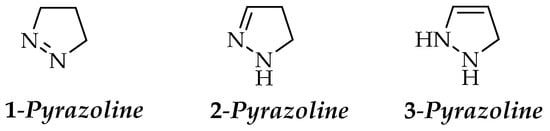
Pyrazoline is a dihydro derivative of pyrazole and exists in three isomeric forms—1-pyrazoline, 2-pyrazoline, and 3-pyrazoline (Figure 1)—depending on the position of the endocyclic double bond. In recent years, considerable scientific interest has been directed toward the modification of the 2-pyrazoline ring, owing not only to its stability but also to its occurrence in numerous pharmaceutical agents and the broad spectrum of biological activities exhibited by 2-pyrazoline derivatives [9]. A wide range of 2-pyrazolines has been reported as potential therapeutic agents for Alzheimer’s disease [10] and other age-related disorders [11], as well as anticancer drugs [12]. 2-Pyrazoline derivatives have been identified as novel promising antischistosomal [13] and antioxidant agents [14]. The antimicrobial properties of various dihydropyrazoles [15,16,17,18], including morpholine-containing analogues [19], have also been extensively investigated.
Figure 1.
Chemical structures of the isomeric forms of pyrazoline.
In this study, we report the synthesis of three novel pyrazoline derivatives 4a–c bearing an N-ethylpiperazine moiety and evaluation of their antibacterial activity. Considering the significant contribution of the piperazine ring to the biological activity of numerous bioactive compounds [20,21] and given that antibacterial pyrazoline derivatives containing a (4-ethylpiperazin-1-yl)phenyl fragment at the 5-position of the heterocyclic core have not been reported to date, this study aimed to investigate the effect of this previously unexplored structural feature in combination with different 4-substituted phenyl groups at the 3-position of the same heterocycle. To further elucidate the role of the (4-ethylpiperazin-1-yl)phenyl moiety, a pyrazoline derivative 4d incorporating a 4-piperidinylphenyl fragment at position 5 was also included in the biological evaluation.
In addition, to assess the influence of the pyrazoline ring on the biological properties of the target nitrogen-containing heterocyclic compounds 4a–c, their antibacterial activity was compared with that of the corresponding chalcone precursors 3a–c.
2. Results and Discussion
2.1. Synthesis
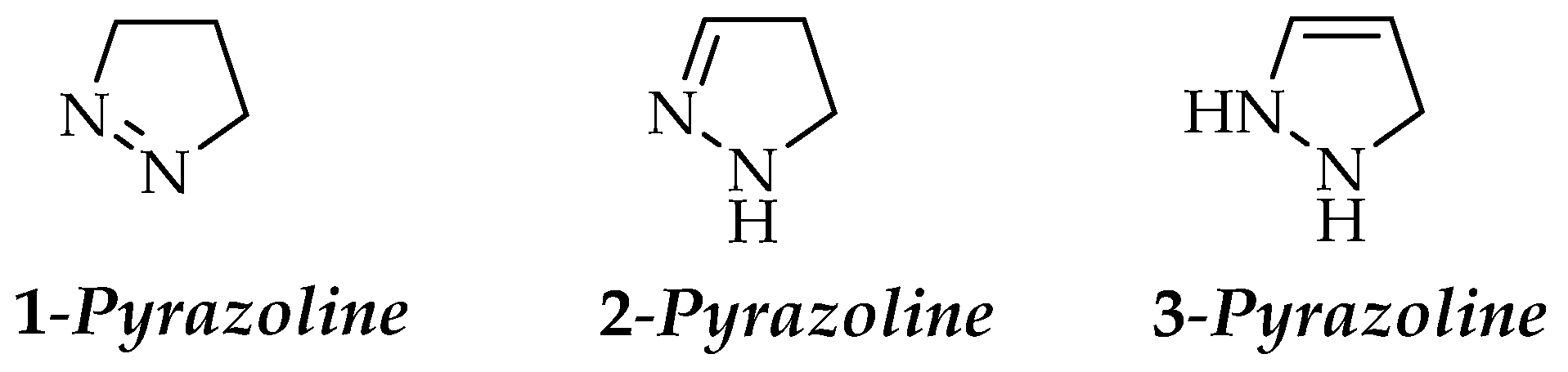
The synthetic route for the preparation of the target pyrazoline derivatives 4a–d is outlined in Scheme 1 and comprises a two-step protocol. In the first step, four chalcones 3a–d were synthesized via a base-catalyzed Claisen–Schmidt condensation of acetophenones 1 with 4-substituted benzaldehydes 2 in alcoholic reaction media. Aldehydes 2 were prepared from 4-fluorobenzaldehyde according to a procedure previously described in the literature [22] that provides a convenient synthetic approach for the incorporation of diverse heterocyclic fragments with valuable biological properties, including piperazine and piperidine moieties, into ring B of the corresponding chalcone scaffold. In the second step (Scheme 1), the desired pyrazolines 4a–d were obtained through condensation of chalcones 3a–d with phenylhydrazine and subsequent cyclization under basic conditions. Compounds 3a–c and 4a–d are novel, and their structures were confirmed by 1H- and 13C-NMR spectroscopy and mass spectral analyses.
Scheme 1.
Synthesis and yields of chalcones 3a–d and dihydropyrazolines 4a–d.
The successful cyclization leading to the formation of the pyrazoline ring in compounds of type 4 was confirmed by the presence of characteristic signals corresponding to the diastereotopic methylene protons at position 4 and the methine proton at position 5 of the pyrazoline ring. Three double doublets were observed in the regions of 3.07–3.11 ppm, 3.77–3.78 ppm, and 5.18–5.19 ppm, which were assigned to the Ha, Hb, and Hx protons (Scheme 1), respectively, with vicinal coupling constants 3Jax = 7.0–7.5 Hz and 3Jbx = 12–12.5 Hz and geminal coupling constant 2Jab = 17.0 Hz.
Both types of compounds (3 and 4) were isolated as crystalline solids in good to excellent yields without any further purification. In addition, they were characterized by determination of their melting points.
2.2. Antimicrobial Activity
This study assessed the antibacterial potential of a series of newly synthesized nitrogen-containing heterocyclic compounds against five bacterial foodborne disease transmitters and five phytopathogens (see Table 1). They encompass type cultures and wild local isolates from infected tomato and pepper plants, the latter kindly provided by Maritsa Vegetable Crops Research Institute, Bulgaria. Among them, sensitive species were selected through a two-step approach. This included an initial qualitative screening of the aforementioned bacteria, followed by quantitative evaluation of the inhibition potential of individual substances or combinations thereof, based on the highest antibacterial activity and species specificity.
Table 1.
Gram-positive and Gram-negative bacteria responsible for food-born illnesses transmission and plant diseases.
The results of the screening procedure are presented in Table 2A,B. As shown, the studied compounds inhibited bacterial growth (9.8 to 23.8 mm zones) in a species- and strain-dependent manner. The strongest effect was observed against L. monocytogenes ATCC 13932, followed by S. enterica ATCC 14028 and E. coli ATCC 8739. Among the model phytopathogens, the P. syringae strains (R0 and R1) were susceptible to the inhibitory effect of the studied compounds. Based on these results, the most promising compounds, namely, all investigated pyrazolines 4a–d and a chalcone derivative 3b, were tested for MIC and MBC against these Gram-negative bacterial cultures.
Table 2.
(A) In vitro antibacterial activities of compounds 3a–c and 4a–d against foodborne disease transmitters. CLPH—chloramphenicol. (B) In vitro antibacterial activities of compounds 3b and 4a–d against phytopathogenic bacteria. AMX—amoxicillin.
The MIC and MBC data for the foodborne disease transmitters L. monocytogenes ATCC 13932, S. enterica ATCC 14028, and E. coli ATCC 8739 are shown in Table 3A. They indicate that compounds 3b and 4a are effective growth inhibitors of the tested bacterial species. Their MIC values were within the range of 1.25 to 7.50 × 10² µM. The MBC values confirmed this tendency, with the best inhibitory effect demonstrated by compound 4a (2.50 × 10² µM against L. monocytogenes ATCC 13932).
Table 3.
(A) Minimal Inhibitory Concentrations (MIC) and Minimal Bactericidal Concentrations (MBC) of compounds 3b and 4a–d against L. monocytogenes, E. coli, and S. enterica species. (B) Minimal Inhibitory Concentrations (MIC) and Minimal Bactericidal Concentrations (MBC) of compounds 3b and 4a–d against P. syringae strains.
Furthermore, as regards the MIC and MBC of the tested compounds against the phytopathogenic P. syringae strains, 3b, 4a, and 4b (Table 3B) demonstrated a potent antimicrobial activity, which was strain dependent and better presented for Pseudomonas syringae R1 (MIC = 0.63 × 10² µM and MBC = 1.25 × 10² µM).
The use of newly synthesized compounds with a defined structure and proven targeted microbicidal/microbiostatic effects is a rational approach to studying the impact of chemical substances on the biotic environment. Thus, five newly synthesized compounds were selected and tested for their antibacterial properties and potential application for monitoring cross-pathogenicity and controlling phytopathogens that attack plant-based raw materials. A qualitative screening procedure combined with quantitative analysis of MIC and MBC was applied. The data showed that three of the newly synthesized compounds exhibit potent antibacterial activity. Compounds 4a and 4b, which differ solely in the substituent at the 3-position of the pyrazoline ring, together with chalcone 3b, the corresponding starting material for the synthesis of 4b, displayed notable, strain-dependent antibacterial effect, especially against the phytopathogenic Pseudomonas syringae strains, while pyrazoline 4a was most efficient against the foodborne disease transmitters L. monocytogenes, E. coli, and S. enterica.
3. Materials and Methods
3.1. Chemistry
All solvents used in the present study were HPLC grade and are commercial chemical substances. Starting compounds—4-fluorobenzaldehyde, 1-ethylpiperazine, piperidine, acetophenone (1a), 1-(4-(dimethylamino)phenyl)ethan-1-one (1b), 1-(4-methoxyphenyl)ethan-1-one (1c) and phenylhydrazine, are commercially available and were used as supplied. 4-(4-Ethylpiperazin-1-yl)benzaldehyde (2a) and 4-(piperidin-1-yl)benzaldehyde (2b) were synthesized from 4-fluorobenzaldehyde by nucleophilic substitution with 1-ethylpiperazine or piperidine, respectively, following the procedure reported by Tintory et al. [22], and the structures of the aldehydes 2a and 2b were verified through the spectroscopic characterization of the corresponding chalcone products. Compound 3d is already described in the literature [25]. The melting points (m.p.) of the compounds were determined on Kofler melting point apparatus and are uncorrected. NMR spectra were obtained in CDCl3 as a solvent, unless otherwise specified, using a Bruker Avance III 500 HD NMR spectrometer, Bruker BioSpin AG, Fällanden, Switzerland, operating at 500.13 MHz for 1H and 125.76 MHz for 13C NMR. The chemical shifts are presented in ppm (δ) using tetramethylsilane (TMS) as an internal standard (Supplementary Materials). Liquid chromatography mass spectrometry analysis (LC-MS, Supplementary Materials) was carried out on a Q Ex-active® hybrid quadrupole-Orbitrap® mass spectrometer (Thermo-Scientific Co., Waltham, MA, USA) equipped with a HESI® (heated electrospray ionization) module, TurboFlow® Ultra High-Performance Liquid Chromatography (UHPLC) system (Thermo-Scientific Co., Waltham, MA, USA), and HTC PAL® autosampler (CTC Analytics, Zwingen, Switzerland).
The course of the reactions was monitored by thin-layer chromatography. The studies were carried out with silica gel ALUGRAM® SIL G/UV 25460 Macherey-Nagel, Düren, Germany ready-to-use plates with a layer thickness of 0.2 mm.
General procedure for the synthesis of chalcones 3a–d
Equal molar amounts of the starting aldehyde and the corresponding arylmethyl ketone were mixed in alcohol (methanol or ethanol). The reaction mixture was then cooled in an ice bath, and a 20% aqueous sodium hydroxide solution (5-fold molar excess of NaOH) was added. The mixture was stirred at room temperature overnight until complete consumption of the starting carbonyl compounds, as monitored by TLC. The resulting chalcone precipitate was filtered off, washed thoroughly with ethanol, and air-dried.
(E)-3-(4-(4-Ethylpiperazin-1-yl)phenyl)-1-phenylprop-2-en-1-one (3a)
Obtained from 2a (0.764 g, 3.5 mmol), 1a (0.421 g, 3.5 mmol) and sodium hydroxide (0.700 g, 17.5 mmol) in 4.0 mL of methanol. Yield = 0.806 g (72%), m.p. = 154–155 °C.
1H-NMR δ = 1.14 (t, 3H, H-CH3, J = 7.0 Hz), 2.48 (q, 2H, H-CH2, J = 7.0 Hz), 2.60 (t, 4H, H-Pip, J = 5.0 Hz), 3.35 (t, 4H, H-Pip, J = 5.0 Hz), 6.90 (d, 2H, H-Ph, J = 8.0 Hz), 7.37 (d, 1H, H-CH, J = 16.0 Hz), 7.49 (t, 2H, H-Ph, J = 8.0 Hz), 7.54–7.57 (m, 3H, H-Ph), 7.77 (d, 1H, H-CH, J = 15.5 Hz), 8.00 (dd, 2H, H-Ph, J = 1.5, 8.0 Hz). 13C-NMR δ = 190.69 (C=O), 152.77, 145.22, 138.85, 132.33, 130.17 (2C), 128.51 (2C), 128.36 (2C), 125.23, 118.38, 114.75 (2C), 52.57 (2C), 52.36, 47.77 (2C), 12.00. LC-MS Chemical Formula: C21H24N2O, Exact Mass [M+H]+: 321.19614, Found: [M+H]+: 321.19586.
(E)-1-(4-(Dimethylamino)phenyl)-3-(4-(4-ethylpiperazin-1-yl)phenyl)prop-2-en-1-one (3b)
Obtained from 2a (1.42 g, 6.5 mmol), 1b (1.06 g, 6.5 mmol) and sodium hydroxide (0.260 g, 6.5 mmol) in 7.5 mL of ethanol. Yield = 2.13 g (90%), m.p. = 190–192 °C.
1H-NMR δ = 1.07 (t, 3H, H-CH3, J = 7.5 Hz), 2.40 (q, 2H, H-CH2, J = 7.5 Hz), 2.53 (t, 4H, H-Pip, J = 5.0 Hz), 3.00 (s, 6H, H-NCH3), 3.25 (t, 4H, H-Pip, J = 5.0 Hz), 6.63 (d, 2H, H-Ph, J = 8.5 Hz), 6.83 (d, 2H, H-Ph, J = 8.5 Hz), 7.37 (d, 1H, H-CH, J = 15.5 Hz), 7.48 (d, 2H, H-Ph, J = 8.5 Hz), 7.87 (d, 1H, H-CH, J = 15.5 Hz), 7.93 (d, 2H, H-Ph, J = 8.5 Hz). 13C-NMR δ = 188.02 (C=O), 153.21, 152.37, 142.82, 130.64 (2C), 129.76 (2C), 126.52, 126.06, 118.60, 114.93 (2C), 110.82 (2C), 52.63 (2C), 52.37, 47.99 (2C), 40.08 (2C), 12.01. LC-MS Chemical Formula: C23H29N3O, Exact Mass [M+H]+: 364.23833, Found: [M+H]+: 364.23853.
(E)-3-(4-(4-Ethylpiperazin-1-yl)phenyl)-1-(4-methoxyphenyl)prop-2-en-1-one (3c)
Obtained from 2a (0.764 g, 3.5 mmol), 1c (0.525 g, 3.5 mmol) and sodium hydroxide (0.140 g, 3.5 mmol) in 4.0 mL of ethanol. Yield = 0.692 g (56%), m.p. = 143–144 °C.
1H-NMR δ = 1.07 (t, 3H, H-CH3, J = 7.0 Hz), 2.41 (q, 2H, H-CH2, J = 7.0 Hz), 2.53 (t, 4H, H-Pip, J = 5.0 Hz), 3.26 (t, 4H, H-Pip, J = 5.0 Hz), 3.81 (s, 3H, H-CH3), 6.83 (d, 2H, H-Ph, J = 9.0 Hz), 6.90 (d, 2H, H-Ph, J = 9.0 Hz), 7.32 (d, 1H, H-CH, J = 15.5 Hz), 7.48 (d, 2H, H-Ph, J = 8.5 Hz), 7.70 (d, 1H, H-CH, J = 15.5 Hz), 7.96 (d, 2H, H-Ph, J = 9.0 Hz). 13C-NMR δ = 189.89 (C=O), 163.11, 152.63, 144.31, 131.66, 130.62 (2C), 130.02 (2C), 125.49, 118.17, 114.81 (2C), 113.73 (2C), 55.48, 52.59 (2C), 52.36, 47.84 (2C), 12.01. LC-MS Chemical Formula: C22H26N2O2, Exact Mass [M+H]+: 351.20670, Found: [M+H]+: 351.20648.
(E)-1-Phenyl-3-(4-(piperidin-1-yl)phenyl)prop-2-en-1-one (3d)
Obtained from 2b (1.10 g, 5.8 mmol), 1a (0.698 g, 0.685 mL, 5.8 mmol) and sodium hydroxide (1.16 g, 29.0 mmol) in 6.5 mL of methanol. Yield = 1.56 g (92%).
1H-NMR (CDCl3) δ 1.55–1.64 (m, 6H, H-Piperidine), 3.24 (t, 4H, H-Piperidine, J = 5.0 Hz), 6.82 (d, 2H, H-Ph, J = 8.5 Hz), 7.27 (d, 1H, H-CH, J = 15.5 Hz), 7.41 (t, 2H, H-Ph, J = 7.5 Hz), 7.46–7.50 (m, 3H, H-Ph), 7.70 (d, 1H, H-CH, J = 15.5 Hz), 7.93 (d, 2H, H-Ph, J = 7.5 Hz).
General procedure for the synthesis of dihydropyrazolines 4a–d
The corresponding chalcone (0.5 mmol), phenylhydrazine (1.0 mmol), solid sodium hydroxide (1.25 mmol) and ethanol (4 mL) were mixed into a round bottom flask, fitted with a condenser. The reaction mixture was refluxed for 3–4 h until the complete consumption of the starting chalcone, as monitored by TLC. The resulting precipitate of dihydropyrazoline was filtered off, washed thoroughly with ethanol and air-dried.
1-(4-(1,3-Diphenyl-4,5-dihydro-1H-pyrazol-5-yl)phenyl)-4-ethylpiperazine (4a)
Obtained from 3a (0.160 g), phenylhydrazine (0.108 g) and solid sodium hydroxide (0.050 g). Yield = 0.144 g (70%), m.p. = 155–156 °C.
1H-NMR δ = 1.12 (t, 3H, H-CH3, J = 7.0 Hz), 2.46 (q, 2H, H-CH2, J = 7.0 Hz), 2.58 (t, 4H, H-Pip, J = 4.5 Hz), 3.11 (dd, 1H, Ha-CH2, 3Jax = 7.0 Hz, 2Jab = 17.0 Hz), 3.19 (t, 4H, H-Pip, J = 4.5Hz), 3.78 (dd, 1H, Hb-CH2, 3Jbx = 12.5 Hz, 2Jab = 17.0 Hz), 5.19 (dd, 1H, Hx-CH, 3Jax = 7.5 Hz, 3Jbx = 12.5 Hz), 6.76 (t, 1H, H-Ph, J = 7.5 Hz), 6.87 (d, 2H, H-Ph, J = 9.0 Hz), 7.08 (d, 2H, H-Ph, J = 8.0 Hz), 7.17 (dt, 2H, H-Ph, J = 1.5, 7.5 Hz), 7.20 (d, 2H, H-Ph, J = 8.5 Hz), 7.31 (t, 1H, H-Ph, J = 7.5 Hz), 7.37 (dt, 2H, H-Ph, J = 1.5, 7.5 Hz), 7.71 (d, 2H, H-Ph, J = 7.5 Hz). 13C-NMR δ = 150.82, 146.73, 145.04, 133.36, 132.92, 128.85 (2C), 128.52 (2C), 128.48, 126.75 (2C), 125.71 (2C), 118.96, 116.31 (2C), 113.44 (2C), 64.13, 52.86 (2C), 52.37, 48.92 (2C), 43.57, 11.99. LC-MS Chemical Formula: C27H30N4, Exact Mass [M+H]+: 411.25432, Found: [M+H]+: 411.25452.
4-(5-(4-(4-Ethylpiperazin-1-yl)phenyl)-1-phenyl-4,5-dihydro-1H-pyrazol-3-yl)-N,N-dimethylaniline (4b)
Obtained from 3b (0.182 g), phenylhydrazine (0.108 g) and solid sodium hydroxide (0.050 g). Yield = 0.214 g (94%), m.p. = 217–219 °C.
1H-NMR δ = 1.12 (t, 3H, H-CH3, J = 7.0 Hz), 2.46 (q, 2H, H-CH2, J = 7.0 Hz), 2.58 (t, 4H, H-Pip, J = 5.0 Hz), 2.99 (s, 6H, H-CH3 (NCH3)), 3.07 (dd, 1H, Ha-CH2, 3Jax = 7.5 Hz, 2Jab = 17.0 Hz), 3.19 (dd, 4H, H-Pip, J = 4.5, 6.0 Hz), 3.74 (dd, 1H, Hb-CH2, 3Jbx = 12.0 Hz, 2Jab = 17.0 Hz), 5.19 (dd, 1H, Hx-CH, 3Jax = 7.5 Hz, 3Jbx = 12.0 Hz), 6.69–6.73 (m, 3H, H-Ph), 6.87 (d, 2H, H-Ph, J = 9.0 Hz), 7.05 (d, 2H, H-Ph, J = 7.5 Hz), 7.14 (dd, 2H, H-Ph, J = 7.0, 8.5 Hz), 7.21 (d, 2H, H-Ph, J = 8.5 Hz), 7.59 (d, 2H, H-Ph, J = 9.0 Hz). 13C-NMR(CDCl3) δ 150.70, 150.50, 147.68, 145.70, 133.93, 128.77 (2C), 127.03 (2C), 126.81 (2C), 120.96, 118.28, 116.30 (2C), 113.21 (2C), 111.98 (2C), 63.98, 52.88 (2C), 52.37, 48.98 (2C), 43.93, 40.37 (2C), 11.99. LC-MS Chemical Formula: C29H35N5, Exact Mass [M+H]+: 453.28869, Found: [M+H]+: 453.28922.
1-Ethyl-4-(4-(3-(4-methoxyphenyl)-1-phenyl-4,5-dihydro-1H-pyrazol-5-yl)phenyl)piperazine (4c)
Obtained from 3c (0.175 g), phenylhydrazine (0.108 g) and solid sodium hydroxide (0.050 g). Yield = 0.214 g (97%), m.p. = 172–174 °C.
1H-NMR δ = 1.04 (t, 3H, H-CH3, J = 7.5 Hz), 2.38 (q, 2H, H-CH2, J = 7.5 Hz), 2.55 (t, 4H, H-Pip, J = 5.0 Hz), 3.00 (dd, 1H, Ha-CH2, 3Jax = 7.5 Hz, 2Jab = 17.0 Hz), 3.12 (dd, 4H, H-Pip, J = 4.5, 6.0 Hz), 3.67 (dd, 1H, Hb-CH2, 3Jbx = 12.5 Hz, 2Jab = 17.0 Hz), 3.75 (s, 3H, H-OCH3), 5.06 (dd, 1H, Hx-CH, 3Jax = 7.5 Hz, 3Jbx = 12.5 Hz), 6.67 (t, 1H, H-Ph, J = 7.0 Hz), 6.79 (d, 2H, H-Ph, J = 9.0 Hz), 6.82 (d, 2H, H-Ph, J = 9.0 Hz), 6.98 (d, 2H, H-Ph, J = 9.0 Hz), 7.08 (dd, 2H, H-Ph, J = 7.0, 9.0 Hz), 7.12 (d, 2H, H-Ph, J = 8.5 Hz), 7.57 (d, 2H, H-Ph, J = 8.5 Hz). 13C-NMR δ = 160.05, 150.58, 146.82, 145.35, 128.83 (2C), 127.19 (2C), 126.77 (2C), 125.71, 118.68, 116.31 (2C), 113.99 (2C), 113.33 (2C), 64.12, 55.35, 52.86 (2C), 52.37, 48.94 (2C), 43.82, 11.98. LC-MS Chemical Formula: C28H32N4O, Exact Mass [M+H]+: 441.26488, Found: [M+H]+: 441.26517.
1-(4-(1,3-Diphenyl-4,5-dihydro-1H-pyrazol-5-yl)phenyl)piperidine (4d)
Obtained from 3d (0.145 g), phenylhydrazine (0.108 g) and solid sodium hydroxide (0.050 g). Yield = 0.188 g (99%), 186–188 °C.
1H-NMR δ = 1.53 (m, 2H, H-Piperidine), 1.66–1.70 (m, 4H, H-Piperidine), 3.09–3.14 (m, 5H, H-Piperidine and Ha-CH2), 3.77 (dd, 1H, Hb-CH2, 3Jbx = 12.0 Hz, 2Jab = 17.0 Hz), 5.18 (dd, 1H, Hx-CH, 3Jax = 7.0 Hz, 3Jbx = 12.0 Hz), 6.76 (t, 1H, H-Ph, J = 7.0 Hz), 6.87 (d, 2H, H-Ph, J = 9.0 Hz), 7.08 (dd, 2H, H-Ph, J = 1.5; 9.0 Hz), 7.15–7.19 (m, 4H, H-Ph), 7.29–7.32 (m, 2H, H-Ph), 7.37 (dt, 2H, H-Ph, J = 1.5; 7.0 Hz), 7.71 (dd, 2H, H-Ph, J = 1.5; 9.0 Hz). 13C-NMR δ = 151.54, 146.74, 145.06, 132.97, 132.82, 128.83 (2C), 128.51 (2C), 128.45, 126.62 (2C), 125.71 (2C), 118.93, 116.74 (2C), 113.46 (2C), 64.21, 50.42 (2C), 43.59, 25.87 (2C), 24.27. LC-MS Chemical Formula: C26H27N3, Exact Mass [M+H]+: 382.22777, Found: [M+H]+: 382.22784.
3.2. Antimicrobial Activity
3.2.1. Screening for Antimicrobial Activity
The newly synthesized nitrogen-containing heterocyclic compounds were screened for antimicrobial activity against Gram-positive and Gram-negative bacteria responsible for transmission of foodborne illnesses and plant diseases (Table 1) using the agar diffusion (well) method [26] and results interpreted in accordance with CLSI standards [27]. The foodborne diseases’ transmitters were grown on Tryptic Soy Agar (TSA) (HiMedia, Mumbai, Maharashtra, India) at 37 °C for 24 h (except B. cereus ATCC 11778—at 28 °C for 24 h), and the phytopathogens on Potato Dextrose Agar (PDA) (HiMedia, Mumbai, Maharashtra, India) at 28 °C for 24 h. Microbial suspensions were prepared using Ringer’s solution (Merck Millipore, Darmstadt, Germany) until the turbidity reached a level equivalent to a 0.5 McFarland standard (ca. 1 × 10⁸ CFU/mL). A total of 100 µL from each suspension was inoculated in the relevant agar plates, melted and cooled to 45–50 °C. Following solidification, wells were drilled in the inoculated agar plates using a sterile cork-borer (6 mm in diameter). Solutions of the tested newly synthesized nitrogen-containing heterocyclic compounds were prepared in dimethyl sulfoxide (DMSO) (Merck Millipore, Darmstadt, Germany) at 1.00 mM and 0.50 mM. Each well was loaded with 100 µL of the corresponding test solution, and the agar plates were incubated at 4 °C for 30 min, allowing the test compound to diffuse in the medium. The agar plates were then cultured at the relevant temperature (see above) for 18–20 h. After the incubation period, the antimicrobial effect was verified by measuring the size of the inhibition zones (incl. the well width). The results were compared with those of a positive control, commercial antibiotics chloramphenicol (30 µg/disc) and amoxicillin (30 µg/disc) (HiMedia, Mumbai, Maharashtra, India). DMSO was used as a negative control.
3.2.2. Determination of Minimum Inhibitory and Minimum Bactericidal Concentrations
The Minimum Inhibitory Concentration (MIC) was determined by real-time monitoring of microbial growth. A microplate reader (BMG Labtech, Ortenberg, Germany) with an automated data acquisition and analysis module was used for measuring OD600. The microplate dilution method was applied using 48-well plates with a working volume of 300 µL. The tested compounds were used to prepare two-fold dilutions, and 150 µL of each was transferred into the microplate, followed by the addition of 150 µL stock solution of the tested microbial strains (0.5 McFarland standard in the relevant media). The tested compounds were at final concentrations of 0.75 to 0.0156 mM. As a positive control for growth, 150 µL of the test strain stock solution was mixed with 150 µL of the relevant medium. The negative control (assay background) contained the tested compounds and the corresponding nutrient medium. The microplates were incubated for 24 h at the relevant temperature for the foodborne disease transmitters and the phytopathogens. The MIC values were determined in accordance with CLSI standards [28].
The Minimum Bactericidal Concentration (MBC) was determined by subculturing the broth dilutions of the microplates, corresponding to and above the MIC. The broth cultures were serially tenfold diluted and plated dropwise on the relevant solid nutrient medium. The MBC was defined as the lowest concentration of the tested compounds showing no visible microbial growth.
All assays were performed in triplicate and repeated three times. Data were processed using the MS Excel inbuilt functions, and results are presented as means ± standard deviations (n = 3).
4. Conclusions
In this article, we report the synthesis and evaluation of the antibacterial activity of three novel pyrazoline derivatives, 4a–c, bearing an N-ethylpiperazine moiety against foodborne and phytopathogens. Their antibacterial properties were compared with those of the corresponding precursors—chalcones 3a–c, which have not previously been described in the literature. Our results indicate that 2-pyrazolines, containing N-ethylpiperazine fragment at the 5-position of the main heterocyclic core, namely, 4a and 4b, possess notable inhibitory potential with MICs within the 1.25–7.5 × 10² µM range and may serve as promising lead compounds for the design and development of novel derivatives with enhanced antimicrobial activity. A comparison of the biological activities of products 4 and chalcones 3 (Table 2A,B and Table 3A,B) suggests that the transformation of the latter into heterocyclic derivatives 4, involving the formation of a five-membered dihydropyrazoline ring, plays a significant role in enhancing the antibacterial activity of these compounds. Furthermore, an analysis of the antibacterial properties of the N-ethylpiperazine-containing pyrazoline 4a and its piperidine analogue 4d (Table 2A,B and Table 3A,B) indicates that, at this stage of our investigations, the N-ethylpiperazine moiety may be considered a key structural feature contributing to the antimicrobial activity exhibited by the studied compounds. However, further analyses are needed to elucidate the cytotoxicity profile of the studied pyrazolines to fully reveal their biopotential as antimicrobial leads.
Supplementary Materials
The following supporting information can be downloaded at: https://www.mdpi.com/article/10.3390/molecules31132380/s1, Figure S1: 1H-NMR Spectrum (CDCl3, 500 MHz) (E)-3-(4-(4-Ethylpiperazin-1-yl)phenyl)-1-phenylprop-2-en-1-one (3a); Figure S2: 13C-NMR Spectrum (CDCl3, 125.76 MHz) (E)-3-(4-(4-Ethylpiperazin-1-yl)phenyl)-1-phenylprop-2-en-1-one (3a); Figure S3: LC-MS of (E)-3-(4-(4-Ethylpiperazin-1-yl)phenyl)-1-phenylprop-2-en-1-one (3a); Figure S4: 1H-NMR Spectrum (CDCl3, 500 MHz) of (E)-1-(4-(Dimethylamino)phenyl)-3-(4-(4-ethylpiperazin-1-yl)phenyl)prop-2-en-1-one (3b); Figure S5: 13C-NMR Spectrum (CDCl3, 125.76 MHz) of (E)-1-(4-(Dimethylamino)phenyl)-3-(4-(4-ethylpiperazin-1-yl)phenyl)prop-2-en-1-one (3b); Figure S6: LC-MS of (E)-1-(4-(Dimethylamino)phenyl)-3-(4-(4-ethylpiperazin-1-yl)phenyl)prop-2-en-1-one (3b); Figure S7: 1H-NMR Spectrum (CDCl3, 500 MHz) of (E)-3-(4-(4-Ethylpiperazin-1-yl)phenyl)-1-(4-methoxyphenyl)prop-2-en-1-one (3c); Figure S8: 13C-NMR Spectrum (CDCl3, 125.76 MHz) of (E)-3-(4-(4-Ethylpiperazin-1-yl)phenyl)-1-(4-methoxyphenyl)prop-2-en-1-one (3c); Figure S9: LC-MS of (E)-3-(4-(4-Ethylpiperazin-1-yl)phenyl)-1-(4-methoxyphenyl)prop-2-en-1-one (3c); Figure S10: 1H-NMR Spectrum (CDCl3, 500 MHz) of 1-(4-(1,3-Diphenyl-4,5-dihydro-1H-pyrazol-5-yl)phenyl)-4-ethylpiperazine (4a); Figure S11: 13C-NMR Spectrum (CDCl3, 125.76 MHz) of 1-(4-(1,3-Diphenyl-4,5-dihydro-1H-pyrazol-5-yl)phenyl)-4-ethylpiperazine (4a); Figure S12: LC-MS of 1-(4-(1,3-Diphenyl-4,5-dihydro-1H-pyrazol-5-yl)phenyl)-4-ethylpiperazine (4a); Figure S13: 1H-NMR Spectrum (CDCl3, 500 MHz) of 4-(5-(4-(4-Ethylpiperazin-1-yl)phenyl)-1-phenyl-4,5-dihydro-1H-pyrazol-3-yl)-N,N-dimethylaniline (4b); Figure S14: 13C-NMR Spectrum (CDCl3, 125.76 MHz) of 4-(5-(4-(4-Ethylpiperazin-1-yl)phenyl)-1-phenyl-4,5-dihydro-1H-pyrazol-3-yl)-N,N-dimethylaniline (4b); Figure S15: LC-MS of 4-(5-(4-(4-Ethylpiperazin-1-yl)phenyl)-1-phenyl-4,5-dihydro-1H-pyrazol-3-yl)-N,N-dimethylaniline (4b); Figure S16: 1H-NMR Spectrum (CDCl3, 500 MHz) of 1-Ethyl-4-(4-(3-(4-methoxyphenyl)-1-phenyl-4,5-dihydro-1H-pyrazol-5-yl)phenyl)piperazine (4c); Figure S17: 13C-NMR Spectrum (CDCl3, 125.76 MHz) of 1-Ethyl-4-(4-(3-(4-methoxyphenyl)-1-phenyl-4,5-dihydro-1H-pyrazol-5-yl)phenyl)piperazine (4c); Figure S18: LC-MS of 1-Ethyl-4-(4-(3-(4-methoxyphenyl)-1-phenyl-4,5-dihydro-1H-pyrazol-5-yl)phenyl)piperazine (4c); Figure S19: 1H-NMR Spectrum (CDCl3, 500 MHz) of 1-(4-(1,3-Diphenyl-4,5-dihydro-1H-pyrazol-5-yl)phenyl)piperidine (4d); Figure S20: 13C-NMR Spectrum (CDCl3, 125.76 MHz) of 1-(4-(1,3-Diphenyl-4,5-dihydro-1H-pyrazol-5-yl)phenyl)piperidine (4d); Figure S21: LC-MS of 1-(4-(1,3-Diphenyl-4,5-dihydro-1H-pyrazol-5-yl)phenyl)piperidine (4d).
Author Contributions
Conceptualization, M.I.K., T.S.N. and I.K.R.; methodology, M.I.K., T.S.N. and I.K.R.; validation, P.G.B., S.T.I., V.D.M., V.V.L., V.S.L. and A.A.A.; formal analysis, M.I.K., V.V.L. and V.S.L.; investigation, P.G.B., S.T.I., V.D.M., V.V.L. and A.A.A.; resources, M.I.K., T.S.N. and I.K.R.; data curation, M.I.K., T.S.N. and I.K.R.; writing—original draft preparation, M.I.K., T.S.N. and I.K.R.; writing—review & editing, M.I.K., T.S.N. and I.K.R.; supervision, M.I.K., T.S.N. and I.K.R.; funding acquisition, M.I.K. and T.S.N. All authors have read and agreed to the published version of the manuscript.
Funding
This research received no external funding.
Data Availability Statement
The original contributions presented in this study are included in the article/Supplementary Material. Further inquiries can be directed to the corresponding author.
Acknowledgments
M.I.K., P.G.B., S.T.I., V.D.M., T.S.N., and I.K.R. gratefully acknowledge the financial support provided by the Bulgarian National Science Fund (BNSF) through Project KP-06-COST/20, “AntiMicroNitroHet” (25 August 2025), COST Action 22102.; M.I.K. is grateful for the research funding by European Union Next Generation EU, through the National Recovery and Resilience Plan of the Republic of Bulgaria, project № BG-RRP-2.004-0008-C01. The support by the Operational Program “Research, Innovation and Digitalization for Smart Transformation”, PRIDST 2021–2027, funded by EU and Bulgarian Government, (Project BG16RFPR002-1.014-0001 Centre of Competence “Sustainable Utilization of Bio Resources and Waste of Medicinal and Aromatic Plants for Innovative Bioactive Products”) is gratefully acknowledged. The authors would like to thank Katya Vassileva (Maritsa Vegetable Crops Research Institute, Bulgaria) for kindly providing the phytopathogenic bacterial strains.
Conflicts of Interest
The authors declare no conflicts of interest.
References
- World Health Organization (WHO). Food Safety. Key Facts. 2022. Available online: https://www.who.int/news-room/fact-sheets/detail/food-safety (accessed on 15 May 2026).
- Bintsis, T. Foodborne pathogens. AIMS Microbiol. 2017, 3, 529–563. [Google Scholar] [CrossRef] [Scilit]
- Zholdasbek, A.; Tekebayeva, Z.; Kulzhanova, K.; Abzhalelov, A.; Bekshin, Z.; Yevneyeva, D.; Saylau, M.; Li, X.; Tan, Z.; Wang, Z.; et al. Microbiome and plant relationship: A symbiosis against phytopathogens. Front. Plant Sci. 2026, 17, 1722279. [Google Scholar] [CrossRef] [Scilit] [PubMed]
- Kim, J.-S.; Yoon, S.-J.; Park, Y.-J.; Kim, S.-Y.; Ryu, C.-M. Crossing the kingdom border: Human diseases caused by plant pathogens. Environ. Microbiol. 2020, 22, 2485–2495. [Google Scholar] [CrossRef] [Scilit] [PubMed]
- Xue, W.; Macleod, J.; Blaxland, J. The use of ozone technology to control microorganism growth, enhance food safety and extend shelf life: A promising food decontamination technology. Foods 2023, 12, 814. [Google Scholar] [CrossRef] [Scilit] [PubMed]
- Paparella, A.; Maggio, F. Detection and Control of Foodborne Pathogens. Foods 2023, 12, 3521. [Google Scholar] [CrossRef] [Scilit] [PubMed]
- Ramnarine, S.D.B., Jr.; Ali, O.; Jayaraman, J.; Ramsubhag, A. Early transcriptional changes of heavy metal resistance and multiple efflux genes in Xanthomonas campestris pv. campestris under copper and heavy metal ion stress. BMC Microbiol. 2024, 24, 81. [Google Scholar] [CrossRef] [Scilit] [PubMed]
- Acar, B.O.; Şenarısoy, H.; Bozdoğan, H. Resistance beyond the plate: Heavy metal, disinfectant, and antibiotic resistance in foodborne Staphylococcus aureus isolates. FEMS Microbiol. Lett. 2025, 372, 109. [Google Scholar] [CrossRef] [Scilit] [PubMed]
- Paul, R.; Das, S.; Maity, P.; Sarkar, N.; Ganguly, P.; Thakur, D.K.; Guria, T. Pyrazoline based privileged scaffolds in modern drug design: Synthetic innovations, structure activity relationships, and emerging therapeutic opportunities. J. Mol. Struct. 2026, 1372, 146553. [Google Scholar] [CrossRef] [Scilit]
- Sharma, A.; Maity, S.; Gupta, S.; Ali, A.; Ali, A.; Asati, V. Design, synthesis and biological evaluation of naphthalene-pyrazoline derivatives as neuroprotective agents foalzheimer’s disease. J. Indian Chem. Soc. 2025, 102, 101804. [Google Scholar] [CrossRef] [Scilit]
- Dascălu, A.-E.; Furman, C.; Lancel, S.; Lipka, E.; Liberelle, M.; Boulanger, E.; Ghinet, A. Ultrasound-Assisted Synthesis of Pyrazoline Derivatives as Potential Antagonists of RAGE-Mediated Pathologies: Insights from SAR Studies and Biological Evaluations. ChemMedChem 2025, 20, e202400527. [Google Scholar] [CrossRef] [Scilit] [PubMed]
- Tok, F.; Abas, B.İ.; Çevik, Ö.; Koçyiğit-Kaymakçıoğlu, B. Design, synthesis and biological evaluation of some new 2-Pyrazoline derivatives as potential anticancer agents. Bioorg. Chem. 2020, 102, 104063. [Google Scholar] [CrossRef] [Scilit] [PubMed]
- Morais, C.S.; Mengarda, A.C.; Miguel, F.B.; Enes, K.B.; Rodrigues, V.C.; Espírito-Santo, M.-C.C.; Siyadatpanah, A.; Wilairatana, P.; Couri, M.R.C.; de Moraes, J. Pyrazoline derivatives as promising novel antischistosomal agents. Sci. Rep. 2021, 11, 23437. [Google Scholar] [CrossRef] [Scilit] [PubMed]
- Kerek, A.L.; Kozan, L.; Fonseca, G.S.; dos Santos, B.S.; Guaringue, R.P.; Sens, L.; Fiorin, B.C. A Study of Antioxidant Properties and a Pharmacokinetic Investigation of Chalcones and Pyrazolines. Orbital Electron. J. Chem. 2025, 17, 234–240. [Google Scholar] [CrossRef]
- Mishra, V.K.; Mishra, M.; Kashaw, V.; Kashaw, S.K. Synthesis of 1,3,5-trisubstituted pyrazolines as potential antimalarial and antimicrobial agents. Bioorg. Med. Chem. 2017, 25, 1949–1962. [Google Scholar] [CrossRef] [Scilit] [PubMed]
- Asad, M.; Arshad, M.N.; Oves, M.; Khalid, M.; Khan, S.A.; Asiri, A.M.; Rehan, M.; Dzudzevic-Cancar, H. N-Trifluoroacetylated pyrazolines: Synthesis, characterization and antimicrobial studies. Bioorg. Chem. 2020, 99, 103842. [Google Scholar] [CrossRef] [Scilit] [PubMed]
- Tok, F.; Doğan, M.O.; Gürbüz, B.; Koçyiğit-Kaymakçıoğlu, B. Synthesis of novel pyrazoline derivatives and evaluation of their antimicrobial activity. J. Res. Pharm. 2022, 26, 1453–1460. [Google Scholar] [CrossRef] [Scilit]
- Payne, M.; Bottomley, A.L.; Och, A.; Asmara, A.P.; Harry, E.J.; Ung, A.T. Synthesis and biological evaluation of 3,5-substituted pyrazoles as possible antibacterial agents. Bioorg. Med. Chem. 2021, 48, 116401. [Google Scholar] [CrossRef] [Scilit] [PubMed]
- Wang, P.-F.; Qiu, H.-Y.; Ma, J.-T.; Yan, X.-Q.; Gong, H.-B.; Wang, Z.-C.; Zhu, H.-L. Dihydropyrazoles containing morpholine: Design, synthesis and bioassay testing as potent antimicrobial agents. RSC Adv. 2015, 5, 24997–25005. [Google Scholar] [CrossRef] [Scilit]
- Shaquiquzzaman, M.; Verma, G.; Marella, A.; Akhter, M.; Akhtar, W.; Khan, M.F.; Tasneem, S.; Alam, M.M. Piperazine Scaffold: A Remarkable Tool in Generation of Diverse Pharmacological Agents. Eur. J. Med. Chem. 2015, 102, 487–529. [Google Scholar] [CrossRef] [Scilit] [PubMed]
- Ten, A.; Koizhaiganova, R.; Bissenbay, D.; Tursynova, B.; Zhaxibayeva, Z.; Yu, V. Piperazine Derivatives: A Privileged Scaffold in Modern Synthesis and Medicinal Chemistry. ChemistryOpen 2026, 15, e202500366. [Google Scholar] [CrossRef] [Scilit] [PubMed]
- Tintori, C.; Brai, A.; Dasso Lang, M.C.; Deodato, D.; Greco, A.M.; Bizzarri, B.M.; Cascone, L.; Casian, A.; Zamperini, C.; Dreassi, E.; et al. Development and in Vitro Evaluation of a microbicide gel formulation for a novel non-nucleoside ReverseTranscriptase inhibitor belonging to the N-dihydroalkyloxybenzyloxopyrimidines (N-DABOs) family. J. Med. Chem. 2016, 59, 2747–2759. [Google Scholar] [CrossRef] [Scilit] [PubMed]
- Vasileva, K.; Ganeva, D.; Bogatzevska, N. Species composition of the bacterial population colonizing tomato flowers. Bulg. J. Agric. Sci. 2022, 28, 677–690. [Google Scholar]
- Vasileva, K.; Bogatzevska, N. Races of bacterial spot pathogen infecting genus Capsicum in Bulgaria. Agric. Sci. Technol. 2019, 11, 113–117. [Google Scholar] [CrossRef] [Scilit]
- Nelson, G.; Alam, M.A.; Atkinson, T.; Gurrapu, S.; Kumar, J.S.; Bicknese, C.; Johnson, J.L.; Williams, M. Synthesis and evaluation of p-N,N-dialkyl substituted chalcones as anti-cancer agents. Med. Chem. Res. 2013, 22, 4610–4614. [Google Scholar] [CrossRef] [Scilit]
- Bauer, A.W.; Kirby, W.M.; Sherris, J.C.; Turck, M. Antibiotic susceptibility testing by a standardized single disk method. Am. J. Clin. Pathol. 1966, 45, 493–496. [Google Scholar] [CrossRef] [Scilit]
- CLSI. Performance Standards for Antimicrobial Disk Susceptibility Tests, Approved Standard, 7th ed.; CLSI document M02-A11; Clinical and Laboratory Standards Institute: Wayne, PA, USA, 2012. [Google Scholar]
- CLSI. Methods for Dilution Antimicrobial Susceptibility Tests for Bacteria That Grow Aerobically, Approved Standard, 9th ed.; CLSI document M07-A9; Clinical and Laboratory Standards Institute: Wayne, PA, USA, 2012. [Google Scholar]

Disclaimer/Publisher’s Note: The statements, opinions and data contained in all publications are solely those of the individual author(s) and contributor(s) and not of MDPI and/or the editor(s). MDPI and/or the editor(s) disclaim responsibility for any injury to people or property resulting from any ideas, methods, instructions or products referred to in the content. |
© 2026 by the authors. Licensee MDPI, Basel, Switzerland. This article is an open access article distributed under the terms and conditions of the Creative Commons Attribution (CC BY) license.