


Abstract
Electronic commerce is the primary context of this study because platform-based transactions, online demand signals, omnichannel fulfillment, and data-intensive coordination make supply chain continuity especially time-sensitive. Although electronic-commerce intensity was not directly measured or used as a sampling criterion, the study provides insights that are highly relevant to organizations operating in electronic commerce and digitally enabled supply chain environments. Drawing on the resource-based view and dynamic capabilities theory, we examine how tangible resources, human skills, and intangible resources are associated with supply chain resilience (SCRE) through organizational agility, and how top management participation (TMP) conditions these relationships. The study uses a cross-sectional survey of 114 senior managers from 114 distinct firms in China and PLS-SEM followed by 5000 bootstrap resamples clustered on the firm identifier (114 clusters; one respondent per firm). Firm-level characteristics were matched from the Wind database, and all analyses retained the full sample of 114 responses. All three BDAC dimensions had significant indirect associations with SCRE through agility, while tangible resources also retained a direct association. None of the three hypothesized positive moderated-mediation effects was supported; instead, the human-skills indirect effect weakened as TMP increased. The findings show that resilience in electronic commerce environments depends both on access to analytics resources and on the organizational capacity to turn digital information into timely action.
1. Introduction
Supply chain resilience (SCRE) refers to a supply chain’s ability to anticipate disruptions, respond adaptively, and restore operational continuity [1,2,3]. This capability is especially important in electronic commerce, where customer demand, transactions, inventory records, platform interfaces, payment services, logistics, and after-sales support are connected through digital systems. The speed and visibility of online commerce raise customer expectations, but they also allow operational problems to spread rapidly across channels and partners. An inventory mismatch, platform interruption, or last-mile delay can affect order promises, seller ratings, and customer retention within a short period. Resilience in this setting therefore requires continuity in both physical flows and the information flows that coordinate online orders, fulfillment, and service recovery [4]. Big data analytics capability (BDAC) is relevant to this problem because it helps firms combine market, transaction, inventory, and logistics data to detect risks and coordinate responses [5].
However, despite the growing adoption of BDAC, analytics capability alone cannot fully prevent supply chain disruptions. BDAC enables firms to gather, process, and use large-scale datasets for timely decision-making [5,6,7], yet unprecedented events may still outpace existing forecasting models, digital infrastructures, and managerial routines. For example, despite sophisticated digital systems, IKEA faced substantial operational challenges during the coronavirus outbreak, including disruptions that temporarily affected its operations in China [8]. This case illustrates that firms must move beyond technology adoption and understand how analytics resources are linked with agile action. Thus, the central issue is not simply whether BDAC matters, but through what organizational pathways BDAC is associated with resilience in data-intensive commerce and supply chain settings.
Prior research has shown that BDAC can improve resource allocation, operational efficiency, and demand forecasting [9]. Yet the effects of BDAC on performance and resilience are not uniform, suggesting that analytics resources create value only when they are embedded in appropriate organizational capabilities and implementation contexts [10,11]. This study therefore combines the resource-based view (RBV) and dynamic capabilities theory (DCT). RBV explains why analytics-related tangible resources, human skills, and intangible resources can be valuable, while DCT explains how these resources are mobilized through agility to support resilient action. Agility enables firms to sense and respond to changes in demand, supply, and customer expectations; resilience refers more specifically to the ability to withstand, adapt to, and recover from disruptions [12,13]. In electronic commerce settings, the linkage between analytics insight and agile action is particularly consequential because online demand and fulfillment constraints can change quickly. Accordingly, this research asks: how does agility mediate the relationship between BDAC and SCRE?
Moreover, this study examines top management participation (TMP) as a moderating condition in the BDAC–agility–SCRE relationship. Senior executives shape electronic commerce strategy, allocate analytics resources, legitimize data-driven practices, and motivate employees to adopt new technologies [14,15]. In platform-enabled and data-intensive business environments, such participation may determine whether BDAC becomes a routinized organizational capability or remains a fragmented technical investment. Yet the role of TMP in conditioning the resilience value of BDAC remains underexplored. This motivates the second research question: how does TMP moderate the indirect effect of BDAC on SCRE through agility?
To test the propositions, we surveyed executives of listed companies through WeChat and analyzed the relationships among the three BDAC dimensions, agility, TMP, and SCRE. All three BDAC dimensions showed significant indirect associations with SCRE through agility. Only tangible resources had an additional direct association with SCRE. The moderated-mediation analysis did not support H2a–H2c as hypothesized: the indexes for tangible and intangible resources were not significant, while the human-skills index was significant in the opposite, negative direction.
This manuscript substantially extends the preliminary conference version [1] by reframing the research around supply chain resilience, expanding the theoretical positioning for JTAER, revising the literature review and hypothesis development, adding more detailed methodological and measurement explanations, and deepening the discussion of theoretical and managerial implications.
This study contributes to electronic commerce and supply chain research in three ways. It shows, first, that tangible resources, human skills, and intangible resources follow different paths to SCRE rather than acting as a single analytics bundle. It further identifies agility as a plausible organizational pathway linking analytics resources with coordinated disruption response, a relationship that is especially relevant when online demand and fulfillment conditions change quickly. Finally, the results suggest that TMP is not uniformly beneficial: senior managers can provide direction and resources, but intensive participation may weaken the contribution of specialist analytics skills. Together, these findings indicate that analytics-enabled resilience in electronic commerce is associated with both digital resources and the way decision authority and response routines are organized.
2. Theoretical Background and Literature Review
2.1. Dynamic Capabilities Theory
Dynamic capabilities theory (DCT) builds on the resource-based view (RBV) by explaining how firms renew and reconfigure valuable resources under changing conditions [16]. In this study, the two perspectives play complementary but distinct roles. RBV helps explain why analytics-related resources can be valuable, rare, and difficult to imitate, whereas DCT explains how these resources are mobilized into organizational responses. Ordinary capabilities support current operations, while dynamic capabilities enable firms to sense opportunities and threats, seize them through coordinated action, and transform existing routines when environments shift [17,18,19]. This distinction is important for electronic commerce supply chains because data assets and analytical tools alone do not produce resilience unless firms can use them to adjust routines, coordinate partners, and recover from disruption.
DCT further categorizes dynamic capabilities into a hierarchical structure of lower and higher orders, each playing distinct organizational roles [16,18]. Lower-order capabilities focus on dynamic enhancements in operational activities, while higher-order capabilities emphasize ongoing innovation and strategic adaptability, qualities needed to manage change and develop enterprise strategies [16]. Firm activities that involve special managerial decisions during the operational process can be categorized as sensing, seizing, and transforming, all of which can be collectively summarized as higher-level dynamic capabilities [19]. These three clusters work jointly and enable enterprises to maintain strategic flexibility and adaptability in a rapidly changing environment to achieve long-term competitive advantage [19,20]. The literature also suggests that higher-order dynamic capabilities rely on lower-order dynamic capabilities as their foundation, while the latter require guidance and support from the former. Together, they enable firms to achieve a balance between short-term and long-term development in a rapidly changing environment.
Within this framework, BDAC is treated as an analytics capability built from three resource groups: tangible resources, human skills, and intangible resources [21]. These resources provide the analytical base for sensing market, customer, platform, and logistics changes. Agility is conceptualized as a response capability because it captures the firm’s capacity to interpret signals and adjust actions rapidly [17,22,23]. SCRE is treated as a resilience outcome or meta-capability that reflects the firm’s ability to cope with, adapt to, and recover from supply chain disruption. This logic separates resource inputs, analytics capability, agile response, and resilience, which clarifies the hierarchy implied by DCT.
DCT also suggests that the value of lower-level capabilities depends on managerial and organizational conditions [18]. TMP is relevant because senior managers allocate resources, legitimize analytics initiatives, coordinate functions, and shape whether data-driven routines are sustained rather than left as isolated technical projects [24]. Accordingly, this study examines whether TMP conditions the extent to which BDAC resources are translated into agility and, through agility, into SCRE.
These considerations make DCT an appropriate theoretical foundation for this research. Grounded in DCT, we examine how organizational agility, as a higher-order dynamic capability, mediates the relationship between BDAC and supply chain resilience. We further examine how TMP conditions this process by shaping the organizational use of analytics resources in electronic commerce supply chain contexts.
2.2. Supply Chain Resilience (SCRE)
Supply chain resilience is a multidisciplinary concept and lacks a universally accepted definition [7]. Hohenstein et al. [3] defined it as the ability of a supply chain to prepare for unforeseen risks, respond to disruptions, and recover from interruptions, either by restoring its prior state or by moving toward a more favorable condition. The present study adopts this general construct definition and uses SCRE as the measured outcome. Electronic commerce is treated as the empirical context in which resilience is enacted. In that context, online transaction continuity, platform coordination, digital order visibility, customer service continuity, omnichannel fulfillment, and last-mile recovery are especially salient operational concerns. These contextual features do not redefine the measurement construct; they explain why SCRE is particularly consequential in electronic commerce settings.
Supply chain resilience can also be viewed as a higher-order capability that integrates multiple dynamic capabilities [25,26]. The resilience process can be described through three stages: anticipation, resistance, and recovery and response, which jointly support robust supply chain operations [27]. In the anticipation stage, firms identify potential disruption risks and formulate contingency plans, while leveraging data, digital platforms, and information-sharing technologies to strengthen early warning capabilities [27]. In electronic commerce settings, these capabilities are especially critical because online orders, inventory visibility, logistics coordination, and customer-facing service processes are highly time-sensitive and data-intensive. This process aligns with the logic of higher-order dynamic capabilities and can be combined with other dynamic capabilities. Under uncertainty, the adaptability and coherence of SCRE can strengthen the integration of dynamic capabilities and help firms maintain competitive advantage [26].
Existing studies emphasize the factors associated with supply chain resilience, particularly the roles of resource allocation and capability development [27]. Recent research has combined dynamic capabilities with supply chain resilience by examining the relationships of supply chain dynamism and disruption orientation with resilience and financial performance [28]. However, much of the existing literature treats supply chain resilience in a broad operational context and pays insufficient attention to the distinctive features of electronic commerce supply chains, such as platform-mediated transactions, real-time demand fluctuations, digital traceability, omnichannel logistics, and customer experience continuity. Moreover, prior research has not sufficiently explained how lower-order capabilities, such as BDAC, are associated with SCRE through higher-order dynamic capabilities.
This gap underscores the need for a more comprehensive understanding of how analytics-enabled capabilities contribute to resilience in electronic commerce supply chains. In response, this study identifies BDAC as a lower-order dynamic capability that may influence SCRE. By integrating dynamic capabilities theory, this study explains how lower-order analytics capabilities support higher-order capabilities and ultimately enhance resilience in electronic commerce supply chains. This perspective helps firms better recognize, anticipate, and respond to disruption-related problems in electronic commerce supply chain operations.
2.3. Big Data Analytics Capability
In today’s digital landscape, Big Data Analytics Capability (BDAC) has become an important source of competitive advantage for many organizations. Harnessing BDAC effectively requires an understanding of the resources that underpin it, drawing on RBV. BDAC refers to the ability of an organization to integrate, manage, and deploy its big data-specific resources effectively [6]. To be more specific, it encompasses the organization’s capacity to collect, store, process, and analyze large volumes of complex data using advanced technologies and methodologies [6,22]. In the context of supply chain management, BDAC can be viewed as the capacity of organizations to gather and organize supply chain data from diverse systems, conduct batch or real-time analytics, and visually present the insights to foster proactive supply chain systems and support informed decision-making [29]. It enables firms to make better use of big data resources, improve overall operational efficiency and market response capabilities in a dynamic market, achieve competitive advantages, and enhance enterprise performance [6]. BDAC can be segmented into three fundamental components: tangible resources, human skills, and intangible resources [6].
BDAC is underpinned by a portfolio of tangible, human, and intangible resources rather than by technology alone. Tangible resources include the data assets, analytical infrastructure, and financial or temporal commitments required to collect, store, process, and visualize large-scale information [6]. In electronic commerce supply chains, these resources are particularly salient because transaction records, customer traces, supplier updates, and logistics signals are generated continuously and must be transformed into usable managerial insight. Human skills determine whether these resources can be exploited effectively. Technical expertise supports data extraction, modeling, and interpretation, while managerial expertise connects analytical outputs with operational decisions and strategic priorities [6,10]. Intangible resources, such as data-oriented culture and organizational learning routines, further shape whether employees trust, share, and act on analytical evidence. Taken together, these resources provide the organizational foundation through which BDAC can support agile and resilient electronic commerce supply chain operations.
Recent studies have examined how BDAC affects supply chain and firm performance [29,30]. However, the evidence remains fragmented because BDAC has been modeled both as an aggregate capability and as a multidimensional bundle of resources. Several established studies already recognize its multidimensional nature, yet fewer studies examine whether tangible resources, human skills, and intangible resources contribute to resilience through the same pathway. This distinction matters because infrastructure and data assets can directly improve visibility, while skills and cultural routines may require agile decision processes before they affect disruption response. This study therefore examines the three BDAC dimensions separately to clarify their distinct roles in SCRE.
2.4. Agility
Agility is a critical capability that allows organizations to promptly identify and respond to changing market demands [31]. Supply chain agility refers to a company’s capability to detect and address immediate shifts in its supply chain and market conditions using recent resources, such as variations in demand, supply interruptions [32]. This involves actions like shortening material replenishment cycles, accelerating production processes, and scaling delivery capabilities. Essentially, it focuses on modifying operational dynamics without altering the fundamental design of the supply chain [32]. Therefore, an agile supply chain has the characteristics of market sensitivity, virtuality, process integration, and network-based operations, emphasizing customer responsiveness and collaborative awareness [33]. These features fit the concept of a higher-order capability, which enables organizations to adapt their business models and strategies to changing circumstances continuously, ultimately creating value [17].
Previous studies highlight the importance of agility in helping companies navigate competitive markets. Faster market response increases market share and strengthens industry position [7]. Mikalef and Pateli [31] empirically demonstrated that IT-enabled dynamic capabilities enhance organizational agility, which in turn significantly improves competitive performance by facilitating market capitalizing agility and operational adjustment agility. The role of agility in supply chain management has also gained recognition, enabling organizations to reconfigure supply chains based on market demands and enhance ambidexterity [34]. Gligor and Holcomb [35] conceptually analyzed the significant role of logistics capabilities in driving supply chain agility for manufacturing firms, highlighting how agility capabilities enhance responsiveness, integration, and flexibility across the supply chain management process. In today’s turbulent market environment, companies must actively identify new opportunities while simultaneously developing the capability to adapt flexibly to maintain competitiveness. This dual requirement underscores the importance of supply chain agility, which Christopher [33] identified as a critical enabler for organizations to respond effectively to unpredictable market conditions. However, limited empirical research explores the relationship between agility and SCRE.
Despite the importance of agility, many organizations have found it difficult to foster because organizations need an efficient environment that is conducive to informed decision-making. BDAC offers a way to address this challenge, because it improves decision-making quality and supports rapid responses through data integration and analysis [6,7]. While harnessing the full potential of BDAC is essential for leveraging agility and aligning with DCT, existing research presents a gap: although BDAC has been positively associated with firm performance, the relationship between BDAC and agility remains unclear [34]. To address this gap, this paper proposes that agility mediates the positive association between BDAC and SCRE, linking data analytics capabilities with stronger supply chain resilience.
3. Hypothesis Development
3.1. Big Data Analytics Capability, Agility, and Supply Chain Resilience
Drawing on the hierarchical logic of DCT, we argue that BDAC provides an analytical basis for developing agility, which subsequently strengthens SCRE. Electronic-commerce operations illustrate the motivating conditions behind this argument, including volatile demand, supplier disruptions, rapidly changing digital signals, and fulfillment constraints. These contextual examples motivate, but are not part of, the empirical measurement model. More generally, BDAC can improve the timeliness and quality of data-informed decisions, helping organizations revise routines and respond to unexpected changes [7].
Tangible resources, such as high-quality data, advanced technologies, and sufficient financial and temporal resources, underpin effective BDAC. These resources support the capture of operational, logistics, customer, and partner data, which improves the quality of sensing and decision-making. Human skills, including data-specific technical and managerial expertise, further strengthen agility by enabling firms to interpret analytics outputs and translate them into forecasting, contingency planning, and coordinated supply chain responses [9,36]. Intangible resources, including a data-driven culture and organizational learning, are equally important because they encourage employees to trust, share, and act on analytical insights. Together, these three BDAC dimensions provide the resource base through which firms can detect market changes, adjust routines, and respond more effectively to disruption.
BDAC enhances organizational agility by enabling firms to sense and respond to environmental changes more rapidly. Advanced analytics tools help organizations identify opportunities and threats in real time, including shifts in customer demand, supplier performance, logistics capacity, and competitive dynamics [37,38]. By integrating analytics into strategic planning and operational processes, firms can reduce uncertainty, coordinate decisions across functions, and respond more quickly to emerging challenges. Therefore, BDAC is expected to have a positive effect on agility.
Agility is expected to translate these analytical advantages into SCRE. Agile supply chains are able to sense market variation, adjust sourcing and fulfillment arrangements, and coordinate corrective action before disruptions escalate [26,39]. Such responsiveness supports service continuity by enabling firms to redeploy resources, revise operating routines, and maintain customer-facing performance when conditions change [40].
Agility is also expected to be positively associated with SCRE through improved coordination among supply chain participants. When information flows smoothly across internal functions, suppliers, and logistics partners, firms may develop a clearer view of emerging risks and coordinate responses more effectively [41]. Prior work further suggests that agile supply chains rely on timely information sharing with partners, which enables rapid alignment when disruptions occur [42]. We therefore expect agility to serve as an organizational pathway linking BDAC resources with general supply chain resilience.
H1a.
Agility mediates the relationship between tangible resources and SCRE.
H1b.
Agility mediates the relationship between human skills and SCRE.
H1c.
Agility mediates the relationship between intangible resources and SCRE.
3.2. Moderation Role of Top Management Participation
According to DCT, TMP conditions the relationship between BDAC and SCRE, particularly through agility. TMP refers to the actions and behaviors undertaken by top managers during the implementation of strategic choices [43]. In analytics-enabled organizational transformation, top managers provide strategic direction, allocate resources, promote cross-functional coordination, and legitimize the use of data in decision-making [15]. We therefore expect TMP to condition the extent to which BDAC is embedded in organizational routines, with implications for agility and subsequent resilience.
Specifically, TMP may strengthen the contribution of tangible analytics resources to agility by ensuring that data infrastructure, analytical tools, and financial commitments are aligned with operational priorities [15,44]. Such support can improve data visibility, integration, and coordination across supply chain functions. Top managers can also remove organizational barriers to the use of new information systems and encourage cross-functional cooperation; together, these actions make tangible analytics resources more usable for rapid response [45].
Top management’s role extends to leading transformation and strategically steering the firm. Through active participation, top managers can motivate employees to improve their data analysis skills and align analytics initiatives with business needs [45]. Top management also plays a critical role in connecting IT teams with other departments, ensuring that digital transformation initiatives are not isolated technical projects but are integrated into operational and strategic processes [15]. Such involvement supports internal data management, information sharing, and coordinated supply chain action, all of which contribute to enhanced agility.
TMP may be especially important for intangible analytics resources. Data-driven culture and organizational learning depend on shared interpretation, legitimacy, and repeated use rather than on technology investment alone. By endorsing analytics-based decision-making, allocating attention to learning routines, and communicating the strategic value of data use, top managers can reduce resistance and make employees more willing to share, trust, and act on analytical evidence [15,46]. For this reason, TMP is expected to strengthen the pathway from intangible resources to agility and then to SCRE.
In conclusion, we argue that higher levels of TMP enable firms to leverage BDAC more effectively, increase agility, and consequently enhance SCRE. Given the mediating role of agility, TMP is expected to positively moderate the indirect effects of tangible resources, human skills, and intangible resources on SCRE. Figure 1 presents the conceptual model.
Figure 1.
Conceptual model.
H2a.
TMP positively moderates the mediation effect of agility on the relationship between tangible resources and SCRE.
H2b.
TMP positively moderates the mediation effect of agility on the relationship between human skills and SCRE.
H2c.
TMP positively moderates the mediation effect of agility on the relationship between intangible resources and SCRE.
4. Methodology
4.1. Research Design
This study used a cross-sectional questionnaire survey to collect managerial assessments of organizational capabilities, analytics practices, and resilience-related routines in China. Electronic commerce is the primary application context because the research problem concerns continuity across digitally mediated demand, transactions, inventory, logistics, and customer-service processes. The study does not restrict electronic commerce to pure online retailers; it also recognizes the manufacturers, technology providers, financial-service firms, wholesalers, and other organizations that participate in or support digitally enabled commerce and fulfillment. The latent outcome remains general SCRE so that the analysis can draw on an established measure and connect the findings with the wider resilience literature. Electronic-commerce intensity was not measured, however, and this boundary is stated when interpreting the results. The cross-sectional design is appropriate for testing theoretically specified associations among latent capabilities but cannot establish temporal ordering or causality. All measurement items were adapted from previously validated scales and used a five-point Likert format ranging from 1 (strongly disagree) to 5 (strongly agree).
We used purposive convenience sampling because the study required senior managers familiar with digital operations, analytics practices, and supply chain activities. Participants represented listed firms in manufacturing, information technology services, finance, wholesale, and other industries. This sectoral coverage reflects the broader electronic commerce ecosystem, which includes organizations that sell through digital channels as well as firms that provide technology, payment, sourcing, distribution, and fulfillment support. Respondents’ familiarity with digital operations and supply chain activities provided relevant knowledge of the processes examined in the model. The questionnaire did not ask each respondent to report whether the firm sold online, operated a digital platform, or the share of revenue generated through electronic commerce; therefore, the extent of firm-level electronic-commerce engagement cannot be quantified from these data. The questionnaire was distributed through WeChat, respondents were informed of the academic purpose and anonymous treatment of their responses, and a reminder was sent by telephone or email after two weeks. The final analytical sample comprised 114 valid responses, all of which were retained throughout the empirical analyses.
Table 1 summarizes the 114 responses used throughout the study. The firm identifier used to link each survey record to the Wind database was also used as the clustering variable. Deduplication of this identifier showed that the 114 responses represented 114 distinct firms; thus, the analysis contained 114 firm clusters, each with exactly one respondent, and no firm contributed multiple responses. The design is therefore single-informant at both the respondent and firm levels. All participating executives held at least a bachelor’s degree, and their average organizational tenure was 8.31 years. For descriptive reporting, each respondent was assigned to one mutually exclusive primary-role category, with a specific named position taking precedence over a generic managerial category. The most frequent primary roles were other managerial title (44), company executive (30), and board secretary (29); the remaining respondents were directors, external supervisors, named C-suite officers, or a chairman. Their education and firm-specific experience supported their ability to evaluate organizational analytics resources, agility, and SCRE, while reliance on one respondent per firm still requires cautious interpretation. Firm-cluster robust inference and firm-cluster bootstrap resampling used these 114 identifiers. A sensitivity analysis indicated that N = 114 provides 80% power to detect f-squared effects of approximately 0.070 in each structural equation. For the interaction model, power was 0.322 for a conventional small effect and 0.984 for a medium effect; consequently, small moderation effects may remain undetected.
Table 1.
Descriptive Statistics of the Sample and Respondents.
Common-source bias was assessed, but not controlled or corrected, through procedural and statistical checks. Procedurally, the questionnaire was anonymous, respondents were told that there were no right or wrong answers, and construct blocks were placed in separate sections. Statistically, the first unrotated factor accounted for 53.7% of item variance, exceeding the conventional 50% heuristic, while the largest full-collinearity VIF was 3.64, also above the conservative 3.3 guideline. Marker-variable sensitivity checks left the principal agility paths and the agility-SCRE association substantively stable, although some SCRE coefficients changed in magnitude. Taken together, these mixed diagnostics do not provide reassuring evidence that common method variance is negligible and do not establish that it has been removed. The possibility of material common-source bias therefore remains, and all single-informant associations are interpreted cautiously. An early-versus-late response comparison found no significant differences across the six focal constructs (all p ≥ 0.428), but this test is only a proxy for non-response bias.
4.2. Measures
All constructs were measured using scales adapted from established studies. The questionnaire was prepared in English and Chinese through translation and review by researchers familiar with information systems and supply chain management terminology. Items were reviewed for clarity and conceptual fit with analytics practices, digital operations, and general supply chain disruption response. The measurement items do not operationalize electronic-commerce intensity, platform dependence, or an electronic-commerce-specific resilience construct. The Appendix A reports the measurement items, descriptive statistics, and literature sources.
Following Gupta and George [6], BDAC was modeled as a multidimensional capability composed of tangible resources, human skills, and intangible resources. All seven lower-order components were measured reflectively. In the first stage, latent scores were estimated for data, technology, basic resources, managerial skills, technical skills, data-driven culture, and organizational learning. In the second stage, these lower-order scores entered as formative indicators of the three higher-order BDAC composites, making each higher-order specification reflective-formative (Type II). This specification recognizes that the component dimensions need not covary perfectly and that omitting a component would change the meaning of its higher-order resource bundle. Human skills and intangible resources are nevertheless distinct: human skills capture expertise embedded in individual technical and managerial personnel, whereas intangible resources capture organization-level routines and shared properties, specifically data-driven culture and organizational learning [47]. Because the study examines the three higher-order BDAC dimensions separately, each was specified as a second-order construct.
Agility was assessed with six items adapted from Liang et al. [48]. Participants indicated the extent to which their firms could sense changes and adjust organizational responses on a five-point Likert scale.
SCRE was measured with four items adapted from the resilience scale developed by Ambulkar et al. [49]. The items capture coping, adaptation, rapid response, and disruption awareness in supply chain operations. These capabilities are directly relevant to electronic commerce organizations because they support continuity when online demand, inventory visibility, fulfillment capacity, or logistics coordination is disrupted. The scale measures the underlying resilience capability rather than a separate electronic-commerce-specific construct. Electronic-commerce intensity and specific outcomes such as platform outage recovery, digital order visibility, online transaction continuity, and last-mile service recovery were not measured, and this boundary is considered in the interpretation and future-research agenda.
TMP was measured using items adapted from Gopalakrishna-Remani et al. [15]. Because these items refer broadly to senior management participation in digital and information-system initiatives, we interpret TMP as managerial involvement in analytics-enabled transformation rather than as participation in a single BDAC project.
The structural equations included firm size and ownership controls matched from the Wind database. Firm size was measured as ln(1 + employees), and ownership was represented by a state-owned-enterprise indicator. Industry was assessed in a full-sample sensitivity model by retaining sufficiently represented industry codes and pooling sparse categories into other groups.
5. Analysis and Results
The analysis followed a sequential five-step procedure. PLS-SEM first assessed the reflective lower-order components, reflective structural constructs, and formative higher-order components. In the next step, Model 1 estimated agility from the three BDAC dimensions and controls; Model 2 estimated SCRE from agility, the three BDAC dimensions, and the same controls. Model 3 then added TMP and the three standardized BDAC × TMP products to the agility equation. In a fourth step, direct, indirect, total, conditional indirect, and moderated-mediation index estimates were evaluated with 5000 firm-cluster resamples at low (−1 SD), mean, and high (+1 SD) TMP. Finally, the results were compared with no-control, industry-control, and alternative firm-control specifications. Every model and robustness analysis retained the full sample of 114 responses.
5.1. Measurement Model
Because the model combines reflective lower-order measures and formative higher-order components, reliability and convergent validity were assessed in two phases. Phase One evaluated all seven reflective lower-order components forming the BDAC dimensions: data, technology, basic resources, managerial skills, technical skills, data-driven culture, and organizational learning. Phase Two evaluated agility, SCRE, and TMP, which enter the structural equations directly. As shown in Table 2, Cronbach’s alpha, composite reliability, and AVE exceeded 0.70, 0.70, and 0.50, respectively, for every reflective construct.
Table 2.
Reliability and Convergent Validity of Reflective Constructs.
The lowest AVE was 0.709, supporting convergent validity. Appendix B and Appendix C report the complete seven-construct Fornell–Larcker and HTMT matrices for all lower-order BDAC components, while Appendix F reports indicator-level VIFs for all seven components. The Fornell–Larcker criterion was satisfied, and all HTMT point estimates were below 0.90; the largest was 0.890 for managerial and technical skills. Bootstrap HTMT intervals were also examined rather than relying only on point estimates. The agility-SCRE HTMT was 0.827, but its 95% bootstrap confidence interval was [0.716, 0.906]. Because the upper bound slightly exceeds 0.90, agility and SCRE are empirically close and their discriminant validity is borderline rather than unequivocally established. The interval for data-driven culture and TMP extended marginally above 1.0 (HTMT = 0.771, 95% CI [0.562, 1.012]); discriminant validity for this pair is likewise treated cautiously.
For the formative higher-order components, Table 3 reports outer weights, outer loadings, 1000-resample bootstrap intervals, and component collinearity. Component VIF values ranged from 2.998 to 3.530 for tangible resources, were 3.227 for human skills, and were 1.257 for intangible resources. At the reflective-indicator level, DAHUCA2 had a VIF of 5.814; this elevated value is disclosed in Appendix F and indicates substantial shared variance within the managerial-skills scale. The item was retained because reflective indicators are expected to covary, its loading was 0.960, and removing it would narrow the construct’s content, but the result is interpreted cautiously. Data, technology, and managerial-skills weights were not individually significant, but their outer loadings were 0.880, 0.852, and 0.884, respectively, indicating absolute contribution and supporting their theory-based retention. A redundancy analysis could not be conducted because the questionnaire did not contain a separate global criterion item. Consequently, convergent validity of the formative higher-order specifications could not be tested directly; the reported collinearity, weight, and loading evidence is informative but does not fully establish formative measurement validity.
Table 3.
Higher-order construct validation.
PLS model-fit indices were treated as supplementary evidence. The SRMR was 0.054, whereas NFI was 0.829 and below the conventional 0.90 benchmark; these values were not interpreted as demonstrating global fit. The choice of PLS-SEM was based on the formative higher-order specifications, the prediction-oriented objective, and the modest sample rather than on the fit indices. In the full-sample controlled models, inner VIF values were below 3.35. The f-squared values for tangible resources, human skills, and intangible resources in the agility equation were 0.101, 0.109, and 0.174, respectively; in the SCRE equation, agility and tangible resources had f-squared values of 0.200 and 0.092, while the human and intangible direct paths were negligible. The three-interaction f-squared values were 0.006, 0.104, and 0.046. Cross-validated predictive relevance was positive for Model 1 (Q-squared = 0.597), Model 2 (Q-squared = 0.588), and Model 3 (Q-squared = 0.620). All ten predicted agility and SCRE indicators had positive Q-squared-predict values, and the PLS-like prediction error was lower than the linear benchmark for seven indicators.
5.2. Structural Model
Table 4 reports the two full-sample controlled structural equations using the 114 firm identifiers as clusters. Each cluster contained one respondent. The reported cluster standard errors, confidence intervals, and p-values are based on analytic firm-cluster robust sandwich inference. In Model 1, tangible resources (beta = 0.310, p = 0.034), human skills (beta = 0.288, p = 0.010), and intangible resources (beta = 0.335, p = 0.006) were positively associated with agility. Firm size was negatively associated with agility (b = −0.136, p = 0.012), whereas ownership was not significant. In Model 2, agility was positively associated with SCRE (beta = 0.465, p < 0.001), and tangible resources retained a positive direct association with SCRE (beta = 0.324, p < 0.001). Human and intangible resources had no significant direct associations with SCRE, and the controls were not significant. Models 1 and 2 explained 65.9% and 63.1% of the outcome variance, respectively.
Table 4.
Regression on agility and SCRE.
5.3. Test for Mediation
Table 5 decomposes each resource effect into direct, indirect, and total components using the full sample and 5000 resamples of the 114 singleton firm clusters. The agility-mediated effects were significant for tangible resources (beta = 0.144, 95% CI [0.012, 0.317]), human skills (beta = 0.134, 95% CI [0.018, 0.256]), and intangible resources (beta = 0.156, 95% CI [0.056, 0.299]), supporting H1a-H1c. Tangible resources showed a significant direct and indirect association, whereas the human and intangible direct effects were not significant. We therefore describe the pattern using the reported direct, indirect, and total effects rather than relying only on full-versus-partial mediation labels.
Table 5.
Direct, Indirect, and Total Effects with Firm-Cluster Bootstrap Intervals.
5.4. Test for Moderation
H2a–H2c test whether TMP changes the indirect effects of the three BDAC dimensions on SCRE through agility. Model 3 added TMP and the three standardized BDAC × TMP products while retaining the Wind-matched firm controls. Model 3 explained 71.7% of agility variance. Table 6 presents the focal Model 3 paths, conditional indirect effects, and indexes of moderated mediation using the full sample and 5000 firm-cluster resamples. The firm-size and ownership coefficients were −0.108 (p = 0.042) and −0.151 (p = 0.287), respectively.
Table 6.
Regression on Agility, Moderation Effect of TMP, and Bootstrapping Analysis for Conditional Indirect Effects.
The moderated-mediation indexes were not significant for tangible resources (index = 0.030, SE = 0.052, 95% CI [−0.091, 0.119]) or intangible resources (index = 0.084, SE = 0.053, 95% CI [−0.016, 0.191]); therefore, H2a and H2c were not supported. The human-skills index was negative and significant (index = −0.139, SE = 0.066, 95% CI [−0.279, −0.021]). Because H2b predicted a positive effect, this opposite-direction result also does not support H2b.
The conditional pattern and Figure 2 help interpret the unexpected H2b result. The human-skills simple slope toward agility was positive at low TMP (b = 0.481, 95% CI [0.118, 0.763]) but was not significant at mean TMP (b = 0.183, 95% CI [−0.010, 0.346]) or high TMP (b = −0.115, 95% CI [−0.400, 0.128]). Correspondingly, the human-skills indirect effect was positive at low TMP (beta = 0.224, 95% CI [0.039, 0.406]) but not at mean or high TMP. This attenuation is interpreted cautiously because the cross-sectional sample has limited power for small interaction effects.
Figure 2.
Simple slopes of human skills on agility at low, mean, and high TMP. Notes: Full Model 3 predictions include the TMP main effect; other variables are held at their means; 95% CIs use 5000 firm-cluster resamples.
5.5. Robustness Analyses
All robustness analyses retained the full sample of 114 responses. Removing the firm controls, introducing full-sample industry controls, and adding alternative Wind-based firm characteristics retained the positive resource-to-agility paths, the positive agility-SCRE path, the tangible-resource direct path, and the negative human skills × TMP path. The focal pattern therefore remained substantively stable across specifications. An alternative-direction diagnostic regressing agility on SCRE and the three resources also fit strongly (R-squared = 0.698), so the cross-sectional data cannot distinguish temporal direction and no causal conclusion is drawn. These checks support the main pattern but do not remove the limitations of convenience sampling and cross-sectional measurement.
6. Discussion and Implications
This study examined how BDAC resources are associated with SCRE through organizational agility and how this process depends on TMP. Electronic commerce provides the primary context in which these relationships are examined. Online transactions and digitally coordinated fulfillment generate extensive data, but data availability alone does not ensure continuity when demand shifts, platforms fail, inventories become inaccurate, or logistics are disrupted. The findings indicate that the associations with resilience differ across BDAC dimensions. Tangible resources, human skills, and intangible resources follow different empirical pathways to SCRE, with agility providing an indirect pathway for all three. Although the survey did not measure electronic-commerce intensity, these pathways are relevant to firms operating in electronic commerce and digitally enabled supply chain environments.
First, tangible analytics resources were associated with SCRE both directly and indirectly through agility. This pattern is consistent with data assets, analytics infrastructure, and financial or temporal commitments supporting supply chain visibility and disruption awareness while also being linked with agile adjustment. Integrated operational, logistics, and inventory information may shorten the time needed to identify disruptions and coordinate recovery. This may help explain why tangible resources retained a direct association with resilience, whereas the other BDAC dimensions did not.
Second, human skills and intangible resources showed significant indirect associations with SCRE through agility. The total effect of human skills, however, was not significant. Analytics skills, data-driven culture, and organizational learning may support interpretation, coordination, and rapid adjustment, but neither human nor intangible resources had a significant direct association with SCRE. The pattern is therefore consistent with agility as an organizational pathway linking these resources with resilience-related action.
Third, TMP did not show the hypothesized positive moderation of any mediated pathway. Instead, the human-skills index was significantly negative: the indirect effect weakened as TMP increased. This qualifies claims that more senior-management involvement is always beneficial. One plausible explanation is that intensive participation may centralize analytics decisions or constrain specialist autonomy. This interpretation remains tentative because the design is cross-sectional and the intangible-resource interaction was sensitive to the inferential method even though its moderated-mediation index was not significant.
6.1. Theoretical Implications
The study makes three contributions to electronic commerce and SCRE research. The first concerns why analytics resources do not contribute to resilience in the same way. Tangible resources, including data access, analytical infrastructure, and project funding, have both direct and agility-mediated associations with SCRE [50]. In electronic commerce settings, these resources may be associated with greater visibility across online demand, orders, inventory, and logistics even before broader organizational routines change. Human skills and intangible resources, by contrast, are associated with SCRE mainly through agility [51,52]. This asymmetry extends electronic commerce research beyond the availability of digital technology by suggesting that different analytics resources are linked with continuity through different organizational pathways [53,54].
A second contribution is evidence consistent with agility as an organizational pathway linking BDAC and SCRE. Electronic commerce firms routinely receive fast-moving information from customers, platforms, suppliers, and logistics partners, yet data volume and speed do not themselves imply resilience. The results are consistent with analytics resources being associated with resilience through rapid interpretation, coordination, and adjustment [55]. This connects digital capability research with resilience theory by positioning agility as the link between information use and resilience-related response.
The final contribution refines the role of senior management in digitally enabled supply chains. The negative human-skills index qualifies the common assumption that more management participation necessarily improves the value of digital initiatives. Electronic commerce often requires rapid decisions by analytics, operations, and fulfillment specialists. Senior managers can support this work by setting priorities, allocating resources, and removing coordination barriers, but close intervention in technical interpretation may reduce specialist discretion and slow local response [56]. This pattern is consistent with dynamic capabilities reasoning that distinguishes strategic sponsorship from operational involvement and suggests that the value of TMP may depend on how involvement is calibrated.
6.2. Managerial Implications
The findings offer practical guidance for online sellers, platform-based businesses, omnichannel retailers, manufacturers using digital sales channels, and organizations that support electronic commerce logistics and services. Managers should treat analytics infrastructure as a resilience resource rather than only an efficiency investment. Integrating order, customer, inventory, supplier, and logistics data may help make disruptions visible earlier and reduce the time needed to assess their effects [57]. Firms should also connect employee analytics skills to specific response routines, including demand sensing, exception monitoring, contingency planning, cross-functional response meetings, and supplier or logistics-partner coordination. A data-driven culture and organizational learning are most useful when employees are expected to share evidence and revise routines during disruption.
For electronic commerce organizations, agility should be built into the operating process rather than treated as a general aspiration. Analytics outputs can be linked to clear thresholds and actions: abnormal order patterns can trigger demand reviews, inventory discrepancies can prompt channel reallocation, and delivery delays can initiate coordination with logistics partners and customer-service teams [58]. Omnichannel firms should ensure that online availability, warehouse inventory, delivery capacity, and customer communication are updated together. These routines can connect analytics outputs with practical actions for maintaining transaction and fulfillment continuit [59,60].
Top management participation should support this system without crowding out specialist judgment. Senior managers can fund shared data infrastructure, assign decision rights, set escalation rules, and require cooperation across commerce, supply chain, IT, and customer-service functions. The conditional results show that the human-skills pathway is strongest at low TMP and is no longer significant at high TMP. Managers should therefore provide strategic sponsorship while allowing analytics and operations specialists to interpret signals and act within agreed limits. This balance is especially important in electronic commerce, where delayed approval can undermine the speed advantage created by real-time data.
6.3. Limitations and Future Research
Although this study contributes to research on SCRE, several limitations remain. The cross-sectional design does not support temporal or causal inference, and reverse causality is possible. The purposive convenience sample was recruited through one media company’s WeChat contacts, and all focal variables came from one respondent per firm at one point in time. The common-method procedures assessed rather than controlled or corrected common method variance. Given the first-factor variance of 53.7%, the full-collinearity VIF of 3.64, and the mixed marker-variable results, the possibility of material common-source bias remains; it may have inflated or attenuated some observed associations. Early-versus-late comparisons did not reveal differences in the focal constructs, but non-response bias cannot be ruled out. Future studies should use longitudinal, multi-informant, probability-based, archival, or quasi-experimental designs.
The sample size of 114 firms is modest for higher-order constructs, formative components, interaction terms, mediation, and moderated mediation. The 114 responses came from 114 distinct firms, so no within-firm agreement could be assessed and the study remains single-informant at the firm level. Firm-level controls were matched from the Wind database, but the primary model was limited to firm size and ownership. A reverse-direction diagnostic also fits the cross-sectional data strongly, confirming that the temporal ordering between agility and resilience cannot be identified from this design. The cross-industry sample remains heterogeneous. Although electronic-commerce intensity was not directly measured or used as a sampling criterion, the study provides insights that are relevant to organizations operating in electronic commerce and digitally enabled supply chain environments. The results should be read as evidence about general resilience associations and pathways that may apply to this context, rather than as sector-specific estimates for pure-play electronic commerce firms. Future research should compare firms with different levels of online-channel dependence and measure electronic-commerce intensity together with objective indicators of platform continuity, digital-order visibility, omnichannel fulfillment, and last-mile recovery.
Measurement validity also remains qualified. The upper bound of the agility-SCRE HTMT interval was 0.906, so these constructs are empirically close and their discriminant validity is not unequivocally established. In addition, no separate global criterion was collected for redundancy analysis of the formative higher-order BDAC specifications. Formative convergent validity therefore remains incomplete despite acceptable component collinearity and generally supportive loading evidence.
Author Contributions
Conceptualization, A.G. and Y.W.; methodology, A.G., Y.W. and D.G.; software, A.G. and X.Q.; validation, Y.W., T.Q. and D.G.; formal analysis, A.G. and X.Q.; investigation, T.Q. and X.Q.; resources, Y.W. and D.G.; data curation, A.G. and X.Q.; writing—original draft preparation, A.G. and Y.W.; writing—review and editing, Y.W., T.Q., X.Q. and D.G.; visualization, A.G. and X.Q.; supervision, Y.W. and D.G.; project administration, Y.W.; funding acquisition, Y.W. and D.G. All authors have read and agreed to the published version of the manuscript.
Funding
This research has been supported by the National Natural Science Foundation of China (NSFC) under grant No. 72271082, and No. 72571086; the Natural Science Foundation of Anhui Province under grant No. 2408085J041.
Institutional Review Board Statement
The study was conducted in accordance with the Declaration of Helsinki. The umbrella project underwent ethical review and received ethical approval from the Biomedical Ethics Committee of Hefei University of Technology in 2021, prior to participant recruitment and data collection. The study used an anonymous questionnaire survey and involved no clinical intervention, biomedical experiment, psychological intervention, or collection of personally identifiable information.
Informed Consent Statement
Informed consent was obtained from all participants involved in the study. Before completing the questionnaire, participants were informed of the purpose of the research, that their anonymity was assured, the voluntary nature of participation, how their responses would be analyzed and reported only in aggregate for academic research and publication, and that the non-interventional survey involved no foreseeable risks beyond those ordinarily associated with questionnaire participation. Participants could discontinue before submitting the questionnaire. Submission of the completed questionnaire indicated informed consent to participate.
Data Availability Statement
The data that support the findings of this study are available from the corresponding author upon reasonable request. The data are not publicly available due to privacy and confidentiality considerations.
Conflicts of Interest
The authors declare no conflict of interest.
Appendix A. Questionnaire
| Measure | Item | Mean | S.D. | Reference |
| Tangible Resources | [6] | |||
| Data | DATACA1: We have access to very large, unstructured, or fast-moving data for analysis. | 3.42 | 0.98 | |
| DATACA2: We integrate data from multiple internal sources into a data warehouse or mart for easy access. | 3.63 | 0.98 | ||
| DATACA3: We integrate external data with internal to facilitate high-value analyses of our business environment. | 3.69 | 1.02 | ||
| Technology | DATACA6: We have explored or adopted parallel computing approaches (e.g., Hadoop) to big data processing. | 3.23 | 1.11 | |
| DATACA7: We have explored or adopted different data visualization tools. | 3.67 | 0.98 | ||
| DATACA8: We have explored or adopted new forms of databases such as Not Only SQL(NoSQL) for storing data. | 3.50 | 1.03 | ||
| Basic Resources | DATACA4: Our ‘big data analytics’ projects are adequately funded. | 3.46 | 1.05 | |
| DATACA5: Our ‘big data analytics’ projects are given enough time to achieve their objectives. | 3.48 | 0.98 | ||
| Human Skills | ||||
| Managerial Skills | DAHUCA1: Our ‘big data analytics’ managers are able to understand the business need of (and collaborate with) other functional managers, suppliers, and customers to determine opportunities that big data might bring to our business. | 3.51 | 0.95 | |
| DAHUCA2: Our ‘big data analytics’ managers are able to coordinate big data-related activities in ways that support other functional managers, suppliers, and customers. | 3.53 | 0.96 | ||
| DAHUCA3: Our ‘big data analytics’ managers are able to understand and evaluate the output extracted from big data. | 3.52 | 0.97 | ||
| Technical Skills | DAHUCA4: Our ‘big data analytics’ staff has the right skills to accomplish their jobs successfully. | 3.54 | 0.94 | |
| DAHUCA5: Our ‘big data analytics’ staff is well trained. | 3.52 | 0.98 | ||
| Intangible Resources | ||||
| Data-driven Culture | DSDM1: We base our decisions on data rather than on instinct. | 3.89 | 0.80 | |
| DSDM2: We are willing to override our own intuition when data contradict our viewpoints. | 3.82 | 0.81 | ||
| Organizational Learning | DAINTA1: We are able to acquire new and relevant knowledge. | 3.88 | 0.86 | |
| DAINTA2: We have made concerted efforts for the exploitation of existing competencies and exploration of new knowledge | 4.05 | 0.71 | ||
| Agility | Agility1: We continuously pay close attention to actions of our competitors. | 4.05 | 0.80 | [48] |
| Agility2: We always try to forecast consumer preference changes. | 3.89 | 0.89 | ||
| Agility3: We are alert to economic shift. | 4.08 | 0.76 | ||
| Agility4: We implement rapidly new competitive strategies with regard to actions of our competitors. | 3.85 | 0.79 | ||
| Agility5: We quickly react to fundamental changes with regard to our customers. | 3.93 | 0.82 | ||
| Agility6: We respond quickly to changes in economic transformation. | 3.77 | 0.90 | ||
| Top Management Participation | TMP1: The senior management of our firm actively articulates a vision for the organizational use of Digital transformation. | 3.88 | 0.83 | [15] |
| TMP2: The senior management of our firm actively formulates a strategy for the organizational use of Digital transformation. | 3.85 | 0.84 | ||
| TMP3: The senior management of our firm actively establishes goals and standards to monitor the Digital transformation implementation. | 3.79 | 0.82 | ||
| SCRE | SCRE1: We are able to cope with changes brought by the supply chain disruption. | 3.67 | 0.81 | [49] |
| SCRE2: We are able to adapt to the supply chain disruption easily. | 3.39 | 0.86 | ||
| SCRE3: We are able to provide a quick response to the supply chain disruption. | 3.69 | 0.81 | ||
| SCRE4: We are able to maintain high situational awareness at all times. | 3.68 | 0.74 |
Appendix B. Fornell–Larcker in Phase One
| (1) | (2) | (3) | (4) | (5) | (6) | (7) | |
| (1) Data | 0.916 | ||||||
| (2) Technology | 0.770 | 0.911 | |||||
| (3) Basic resources | 0.782 | 0.809 | 0.967 | ||||
| (4) Managerial | 0.660 | 0.640 | 0.599 | 0.950 | |||
| (5) Technical | 0.672 | 0.705 | 0.691 | 0.832 | 0.963 | ||
| (6) Data-driven culture | 0.487 | 0.490 | 0.571 | 0.426 | 0.448 | 0.881 | |
| (7) Organizational learning | 0.453 | 0.472 | 0.499 | 0.498 | 0.493 | 0.457 | 0.945 |
Appendix C. HTMT in Phase One
| (1) | (2) | (3) | (4) | (5) | (6) | (7) | |
| (1) Data | |||||||
| (2) Technology | 0.853 | ||||||
| (3) Basic resources | 0.852 | 0.884 | |||||
| (4) Managerial | 0.713 | 0.695 | 0.638 | ||||
| (5) Technical | 0.735 | 0.776 | 0.746 | 0.890 | |||
| (6) Data-driven culture | 0.605 | 0.612 | 0.703 | 0.521 | 0.558 | ||
| (7) Organizational learning | 0.512 | 0.530 | 0.554 | 0.546 | 0.548 | 0.574 | |
| Note: Appendix B and Appendix C cover all seven reflective lower-order BDAC components. Indicator-level VIFs for these components are reported in Appendix F. | |||||||
Appendix D. Fornell–Larcker in Phase Two
| (1) | (2) | (3) | |
| Agility | 0.842 | ||
| SCRE | 0.756 | 0.865 | |
| TMP | 0.674 | 0.563 | 0.931 |
Appendix E. HTMT in Phase Two
| (1) | (2) | (3) | |
| Agility | |||
| SCRE | 0.827 | ||
| TMP | 0.733 | 0.614 | |
| Note: The agility-SCRE HTMT point estimate is 0.827; its 95% bootstrap confidence interval is [0.716, 0.906]. Because the upper bound exceeds 0.90 slightly, discriminant validity for this pair is treated as borderline rather than unequivocally established. | |||
Appendix F. Detailed Indicator and Higher-Order Construct Validation
| Construct | Indicator/Component | Loading | Weight | VIF | Boot SE | Assessment/95% CI |
| Data | DATACA1 | 0.912 | 2.824 | Reflective indicator | ||
| Data | DATACA2 | 0.921 | 3.088 | Reflective indicator | ||
| Data | DATACA3 | 0.916 | 2.848 | Reflective indicator | ||
| Technology | DATACA6 | 0.919 | 3.097 | Reflective indicator | ||
| Technology | DATACA7 | 0.877 | 2.293 | Reflective indicator | ||
| Technology | DATACA8 | 0.936 | 3.724 | Reflective indicator | ||
| Basic resources | DATACA4 | 0.969 | 4.153 | Reflective indicator | ||
| Basic resources | DATACA5 | 0.965 | 4.153 | Reflective indicator | ||
| Managerial skills | DAHUCA1 | 0.946 | 4.615 | Reflective indicator | ||
| Managerial skills | DAHUCA2 | 0.960 | 5.814 | Reflective indicator | ||
| Managerial skills | DAHUCA3 | 0.943 | 4.240 | Reflective indicator | ||
| Technical skills | DAHUCA4 | 0.961 | 3.701 | Reflective indicator | ||
| Technical skills | DAHUCA5 | 0.965 | 3.701 | Reflective indicator | ||
| Data-driven culture | DSDM1 | 0.879 | 1.438 | Reflective indicator | ||
| Data-driven culture | DSDM2 | 0.883 | 1.438 | Reflective indicator | ||
| Organizational learning | DAINTA1 | 0.955 | 2.606 | Reflective indicator | ||
| Organizational learning | DAINTA2 | 0.933 | 2.606 | Reflective indicator | ||
| Agility | Agility1 | 0.839 | 2.844 | Reflective indicator | ||
| Agility | Agility2 | 0.738 | 1.838 | Reflective indicator | ||
| Agility | Agility3 | 0.828 | 2.427 | Reflective indicator | ||
| Agility | Agility4 | 0.907 | 4.724 | Reflective indicator | ||
| Agility | Agility5 | 0.867 | 3.693 | Reflective indicator | ||
| Agility | Agility6 | 0.862 | 4.004 | Reflective indicator | ||
| TMP | TMP1 | 0.924 | 3.270 | Reflective indicator | ||
| TMP | TMP2 | 0.945 | 4.176 | Reflective indicator | ||
| TMP | TMP3 | 0.923 | 3.283 | Reflective indicator | ||
| SCRE | SCRE1 | 0.883 | 2.606 | Reflective indicator | ||
| SCRE | SCRE2 | 0.872 | 2.390 | Reflective indicator | ||
| SCRE | SCRE3 | 0.873 | 2.432 | Reflective indicator | ||
| SCRE | SCRE4 | 0.833 | 2.092 | Reflective indicator | ||
| Tangible resources | Data | 0.880 | 0.261 | 2.998 | 0.134 | [−0.028, 0.522]; weight n.s. |
| Tangible resources | Technology | 0.852 | 0.060 | 3.359 | 0.147 | [−0.204, 0.366]; weight n.s. |
| Tangible resources | Basic resources | 0.984 | 0.731 | 3.530 | 0.138 | [0.443, 0.981]; significant |
| Human skills | Managerial skills | 0.884 | 0.189 | 3.227 | 0.154 | [−0.175, 0.458]; weight n.s. |
| Human skills | Technical skills | 0.994 | 0.838 | 3.227 | 0.138 | [0.575, 1.151]; significant |
| Intangible resources | Data-driven culture | 0.903 | 0.696 | 1.257 | 0.148 | [0.401, 0.960]; significant |
| Intangible resources | Organizational learning | 0.780 | 0.476 | 1.257 | 0.173 | [0.090, 0.766]; significant |
References
- Wang, Y.; Qian, X.; Fang, C. Deconstructing supply chain resilience under big data analytics capability: Exploring the mediating and moderating roles of agility and top management participation. Proc. Int. Conf. Electron. Bus. 2024, 24, 108–121. Available online: https://aisel.aisnet.org/iceb2024/58/ (accessed on 14 September 2026).
- Brusset, X.; Teller, C. Supply chain capabilities, risks, and resilience. Int. J. Prod. Econ. 2017, 184, 59–68. [Google Scholar] [CrossRef] [Scilit]
- Hohenstein, N.-O.; Feisel, E.; Hartmann, E.; Giunipero, L. Research on the phenomenon of supply chain resilience: A systematic review and paths for further investigation. Int. J. Phys. Distrib. Logist. Manag. 2015, 45, 90–117. [Google Scholar] [CrossRef] [Scilit]
- Yan, X.; Li, J.; Sun, Y.N.; De Souza, R. Supply chain resilience enhancement strategies in the context of supply disruptions, demand surges, and time sensitivity. Fundam. Res. 2025, 5, 496–504. [Google Scholar] [CrossRef] [Scilit] [PubMed]
- Zamani, E.D.; Smyth, C.; Gupta, S.; Dennehy, D. Artificial intelligence and big data analytics for supply chain resilience: A systematic literature review. Ann. Oper. Res. 2023, 327, 605–632. [Google Scholar] [CrossRef] [Scilit] [PubMed]
- Gupta, M.; George, J.F. Toward the development of a big data analytics capability. Inf. Manag. 2016, 53, 1049–1064. [Google Scholar] [CrossRef] [Scilit]
- Han, Y.; Chong, W.K.; Li, D. A systematic literature review of the capabilities and performance metrics of supply chain resilience. Int. J. Prod. Res. 2020, 58, 4541–4566. [Google Scholar] [CrossRef] [Scilit]
- Walker, A. Coronavirus: The Economic Cost Is Rising in China and Beyond. BBC News, 6 February 2020. Available online: https://www.bbc.com/news/business-51386575 (accessed on 14 September 2026).
- Ashrafi, A.; Zare Ravasan, A.; Trkman, P.; Afshari, S. The role of business analytics capabilities in bolstering firms’ agility and performance. Int. J. Inf. Manag. 2019, 47, 1–15. [Google Scholar] [CrossRef] [Scilit]
- Akter, S.; Wamba, S.F.; Gunasekaran, A.; Dubey, R.; Childe, S.J. How to improve firm performance using big data analytics capability and business strategy alignment? Int. J. Prod. Econ. 2016, 182, 113–131. [Google Scholar] [CrossRef] [Scilit]
- Mandal, S. The influence of big data analytics management capabilities on supply chain preparedness, alertness and agility: An empirical investigation. Inf. Technol. People 2019, 32, 297–318. [Google Scholar] [CrossRef] [Scilit]
- Kazancoglu, I.; Ozbiltekin-Pala, M.; Mangla, S.K.; Kazancoglu, Y.; Jabeen, F. Role of flexibility, agility and responsiveness for sustainable supply chain resilience during COVID-19. J. Clean. Prod. 2022, 362, 132431. [Google Scholar] [CrossRef] [Scilit]
- Tufan, C.; Çiğdem, Ş.; Kılıç, Y.; Sayar, G. Agility and resilience in supply chains: Investigating their roles in enhancing financial performance. Sustainability 2024, 16, 7842. [Google Scholar] [CrossRef] [Scilit]
- Chatterjee, S.; Mariani, M.; Ferraris, A. Digitalization of supply chain and its impact on cost, firm performance, and resilience: Technology turbulence and top management commitment as moderator. IEEE Trans. Eng. Manag. 2024, 71, 10469–10484. [Google Scholar] [CrossRef] [Scilit]
- Gopalakrishna-Remani, V.; Jones, R.P.; Camp, K.M. Levels of EMR adoption in U.S. hospitals: An empirical examination of absorptive capacity, institutional pressures, top management beliefs, and participation. Inf. Syst. Front. 2019, 21, 1325–1344. [Google Scholar] [CrossRef] [Scilit]
- Ambrosini, V.; Bowman, C. What are dynamic capabilities and are they a useful construct in strategic management? Int. J. Manag. Rev. 2009, 11, 29–49. [Google Scholar] [CrossRef] [Scilit]
- Teece, D.; Peteraf, M.; Leih, S. Dynamic capabilities and organizational agility: Risk, uncertainty, and strategy in the innovation economy. Calif. Manag. Rev. 2016, 58, 13–35. [Google Scholar] [CrossRef] [Scilit]
- Winter, S.G. Understanding dynamic capabilities. Strateg. Manag. J. 2003, 24, 991–995. [Google Scholar] [CrossRef] [Scilit]
- Teece, D.J. Dynamic capabilities as (workable) management systems theory. J. Manag. Organ. 2018, 24, 359–368. [Google Scholar] [CrossRef] [Scilit]
- Peteraf, M.; Di Stefano, G.; Verona, G. The elephant in the room of dynamic capabilities: Bringing two diverging conversations together. Strateg. Manag. J. 2013, 34, 1389–1410. [Google Scholar] [CrossRef] [Scilit]
- Singh, N.P.; Singh, S. Building supply chain risk resilience: Role of big data analytics in supply chain disruption mitigation. Benchmarking Int. J. 2019, 26, 2318–2342. [Google Scholar] [CrossRef] [Scilit]
- Wang, Y.C.; Kung, L.; Byrd, T.A. Big data analytics: Understanding its capabilities and potential benefits for healthcare organizations. Technol. Forecast. Soc. Change 2018, 126, 3–13. [Google Scholar] [CrossRef] [Scilit]
- Ghasemaghaei, M.; Hassanein, K.; Turel, O. Increasing firm agility through the use of data analytics: The role of fit. Decis. Support Syst. 2017, 101, 95–105. [Google Scholar] [CrossRef] [Scilit]
- Kor, Y.Y.; Mesko, A. Dynamic managerial capabilities: Configuration and orchestration of top executives’ capabilities and the firm’s dominant logic. Strateg. Manag. J. 2013, 34, 233–244. [Google Scholar] [CrossRef] [Scilit]
- Gu, M.; Yang, L.; Huo, B. The impact of information technology usage on supply chain resilience and performance: An ambidexterous view. Int. J. Prod. Econ. 2021, 232, 107956. [Google Scholar] [CrossRef] [Scilit] [PubMed]
- Ponomarov, S.Y.; Holcomb, M.C. Understanding the concept of supply chain resilience. Int. J. Logist. Manag. 2009, 20, 124–143. [Google Scholar] [CrossRef] [Scilit]
- Kamalahmadi, M.; Parast, M.M. A review of the literature on the principles of enterprise and supply chain resilience: Major findings and directions for future research. Int. J. Prod. Econ. 2016, 171, 116–133. [Google Scholar] [CrossRef] [Scilit]
- Yu, W.; Jacobs, M.A.; Chavez, R.; Yang, J. Dynamism, disruption orientation, and resilience in the supply chain and the impacts on financial performance: A dynamic capabilities perspective. Int. J. Prod. Econ. 2019, 218, 352–362. [Google Scholar] [CrossRef] [Scilit]
- Arunachalam, D.; Kumar, N.; Kawalek, J.P. Understanding big data analytics capabilities in supply chain management: Unravelling the issues, challenges and implications for practice. Transp. Res. Part E Logist. Transp. Rev. 2018, 114, 416–436. [Google Scholar] [CrossRef] [Scilit]
- Wamba, S.F.; Dubey, R.; Gunasekaran, A.; Akter, S. The performance effects of big data analytics and supply chain ambidexterity: The moderating effect of environmental dynamism. Int. J. Prod. Econ. 2020, 222, 107498. [Google Scholar] [CrossRef] [Scilit]
- Mikalef, P.; Pateli, A. Information technology-enabled dynamic capabilities and their indirect effect on competitive performance: Findings from PLS-SEM and fsQCA. J. Bus. Res. 2017, 70, 1–16. [Google Scholar] [CrossRef] [Scilit]
- Eckstein, D.; Goellner, M.; Blome, C.; Henke, M. The performance impact of supply chain agility and supply chain adaptability: The moderating effect of product complexity. Int. J. Prod. Res. 2015, 53, 3028–3046. [Google Scholar] [CrossRef] [Scilit]
- Christopher, M. The agile supply chain: Competing in volatile markets. Ind. Mark. Manag. 2000, 29, 37–44. [Google Scholar] [CrossRef] [Scilit]
- Aslam, H.; Blome, C.; Roscoe, S.; Azhar, T.M. Dynamic supply chain capabilities: How market sensing, supply chain agility and adaptability affect supply chain ambidexterity. Int. J. Oper. Prod. Manag. 2018, 38, 2266–2285. [Google Scholar] [CrossRef] [Scilit]
- Gligor, D.M.; Holcomb, M.C. Understanding the role of logistics capabilities in achieving supply chain agility: A systematic literature review. Supply Chain Manag. Int. J. 2012, 17, 438–453. [Google Scholar] [CrossRef] [Scilit]
- Cetindamar, D.; Katic, M.; Burdon, S.; Gunsel, A. The interplay among organisational learning culture, agility, growth, and big data capabilities. Sustainability 2021, 13, 13024. [Google Scholar] [CrossRef] [Scilit]
- Barlette, Y.; Baillette, P. Big data analytics in turbulent contexts: Towards organizational change for enhanced agility. Prod. Plan. Control 2022, 33, 105–122. [Google Scholar] [CrossRef] [Scilit]
- Hyun, Y.; Park, J.; Kamioka, T.; Chang, Y. Organizational agility enabled by big data analytics: Information systems capabilities view. J. Enterp. Inf. Manag. 2023, 36, 1032–1055. [Google Scholar] [CrossRef] [Scilit]
- Singh, R.K.; Modgil, S. Adapting to disruption: The impact of agility, absorptive capacity and ambidexterity on supply chain resilience. Int. J. Product. Perform. Manag. 2025, 74, 637–658. [Google Scholar] [CrossRef] [Scilit]
- Gligor, D.; Gligor, N.; Holcomb, M.; Bozkurt, S. Distinguishing between the concepts of supply chain agility and resilience: A multidisciplinary literature review. Int. J. Logist. Manag. 2019, 30, 467–487. [Google Scholar] [CrossRef] [Scilit]
- Scholten, K.; Stevenson, M.; van Donk, D.P. Dealing with the unpredictable: Supply chain resilience. Int. J. Oper. Prod. Manag. 2020, 40, 1–10. [Google Scholar] [CrossRef] [Scilit]
- Kumar, S.; Singh, V. Strategic navigation of supply chain ambidexterity for resilience and agility in the digital era: A review. Int. J. Prod. Econ. 2025, 281, 109514. [Google Scholar] [CrossRef] [Scilit]
- Wei, S.; Ke, W.; Lado, A.A.; Liu, H.; Wei, K.K. The effects of justice and top management beliefs and participation: An exploratory study in the context of digital supply chain management. J. Bus. Ethics 2020, 166, 51–71. [Google Scholar] [CrossRef] [Scilit]
- Hu, Q.; Dinev, T.; Hart, P.; Cooke, D. Managing employee compliance with information security policies: The critical role of top management and organizational culture. Decis. Sci. 2012, 43, 615–660. [Google Scholar] [CrossRef] [Scilit]
- Rayburn, S.; Patel, J.; Kaleta, J.P. The influence of firm’s top management team characteristics on big data analytics capability and competitive advantage. Inf. Syst. Manag. 2024, 41, 265–281. [Google Scholar] [CrossRef] [Scilit]
- Hsu, H.Y.; Liu, F.H.; Tsou, H.T.; Chen, L.J. Openness of technology adoption, top management support and service innovation: A social innovation perspective. J. Bus. Ind. Mark. 2019, 34, 575–590. [Google Scholar] [CrossRef] [Scilit]
- Sarstedt, M.; Hair, J.F.; Cheah, J.-H.; Becker, J.-M.; Ringle, C.M. How to specify, estimate, and validate higher-order constructs in PLS-SEM. Australas. Mark. J. 2019, 27, 197–211. [Google Scholar] [CrossRef] [Scilit]
- Liang, H.; Wang, N.; Xue, Y.; Ge, S. Unraveling the alignment paradox: How does business–IT alignment shape organizational agility? Inf. Syst. Res. 2017, 28, 863–879. [Google Scholar] [CrossRef] [Scilit]
- Ambulkar, S.; Blackhurst, J.; Grawe, S. Firm’s resilience to supply chain disruptions: Scale development and empirical examination. J. Oper. Manag. 2015, 33–34, 111–122. [Google Scholar] [CrossRef] [Scilit]
- Hair, J.F., Jr.; Sarstedt, M.; Hopkins, L.; Kuppelwieser, V.G. Partial least squares structural equation modeling (PLS-SEM): An emerging tool in business research. Eur. Bus. Rev. 2014, 26, 106–121. [Google Scholar] [CrossRef] [Scilit]
- Sarstedt, M.; Hair, J.F.; Ringle, C.M.; Thiele, K.O.; Gudergan, S.P. Estimation issues with PLS and CBSEM: Where the bias lies! J. Bus. Res. 2016, 69, 3998–4010. [Google Scholar] [CrossRef] [Scilit]
- Henseler, J.; Ringle, C.M.; Sarstedt, M. A new criterion for assessing discriminant validity in variance-based structural equation modeling. J. Acad. Mark. Sci. 2015, 43, 115–135. [Google Scholar] [CrossRef] [Scilit]
- Teece, D.J. The foundations of enterprise performance: Dynamic and ordinary capabilities in an (economic) theory of firms. Acad. Manag. Perspect. 2014, 28, 328–352. [Google Scholar] [CrossRef] [Scilit]
- Liang, H.; Saraf, N.; Hu, Q.; Xue, Y. Assimilation of enterprise systems: The effect of institutional pressures and the mediating role of top management. MIS Q. 2007, 31, 59–87. [Google Scholar] [CrossRef] [Scilit]
- Dubey, R.; Gunasekaran, A.; Childe, S.J.; Fosso Wamba, S.; Roubaud, D.; Foropon, C. Empirical investigation of data analytics capability and organizational flexibility as complements to supply chain resilience. Int. J. Prod. Res. 2021, 59, 110–128. [Google Scholar] [CrossRef] [Scilit]
- Dubey, R.; Gunasekaran, A.; Childe, S.J.; Bryde, D.J.; Giannakis, M.; Foropon, C.; Roubaud, D.; Hazen, B.T. Big data analytics and artificial intelligence pathway to operational performance under the effects of entrepreneurial orientation and environmental dynamism: A study of manufacturing organisations. Int. J. Prod. Econ. 2020, 226, 107599. [Google Scholar] [CrossRef] [Scilit]
- Mikalef, P.; Krogstie, J.; Pappas, I.O.; Pavlou, P. Exploring the relationship between big data analytics capability and competitive performance: The mediating roles of dynamic and operational capabilities. Inf. Manag. 2020, 57, 103169. [Google Scholar] [CrossRef] [Scilit]
- Al-Darras, O.M.A.; Tanova, C. From big data analytics to organizational agility: What is the mechanism? SAGE Open 2022, 12, 21582440221106170. [Google Scholar] [CrossRef] [Scilit]
- Liu, H.; Lu, F.; Shi, B.; Hu, Y.; Li, M. Big data and supply chain resilience: Role of decision-making technology. Manag. Decis. 2023, 61, 2792–2808. [Google Scholar] [CrossRef] [Scilit]
- Olaniyi, O.O.; Abalaka, A.I.; Olabanji, S.O. Utilizing big data analytics and business intelligence for improved decision-making at leading Fortune company. J. Sci. Res. Rep. 2023, 29, 64–72. [Google Scholar] [CrossRef] [Scilit]
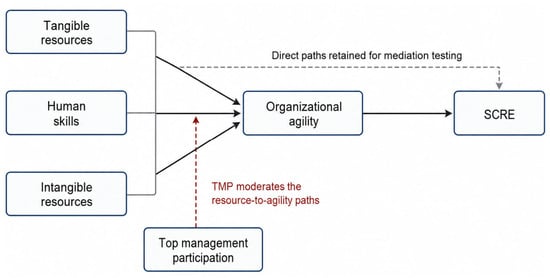
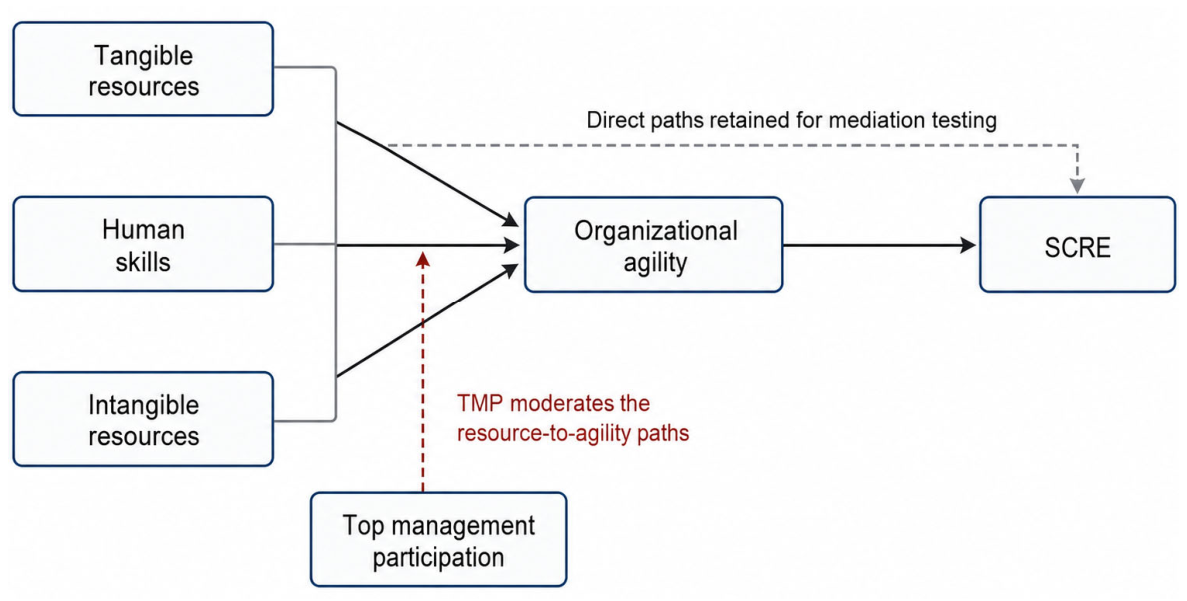
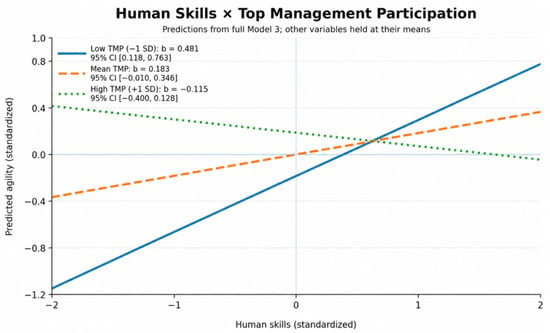
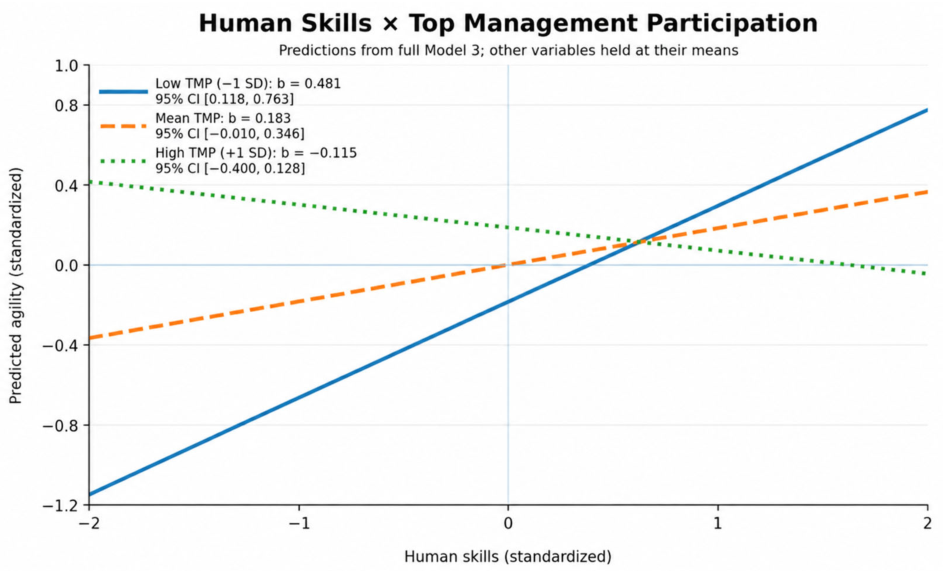

Disclaimer/Publisher’s Note: The statements, opinions and data contained in all publications are solely those of the individual author(s) and contributor(s) and not of MDPI and/or the editor(s). MDPI and/or the editor(s) disclaim responsibility for any injury to people or property resulting from any ideas, methods, instructions or products referred to in the content. |
© 2026 by the authors. Licensee MDPI, Basel, Switzerland. This article is an open access article distributed under the terms and conditions of the Creative Commons Attribution (CC BY) license.