


Abstract
Whether people buy sustainably may depend not only on their values, but on what they believe the retail platform makes possible. This study develops that argument by extending Value–Belief–Norm theory among UK online shoppers. It introduces beliefs about digital sustainability efficacy, a channel-level belief about whether online platforms support sustainable choices, and places spirituality at the value stage of the chain. A quota sample of 487 UK online shoppers, matched to ONS benchmarks for age, gender, and region, was surveyed through Prolific, and the model was estimated using structural equation modeling with bootstrap mediation analysis. Channel-level efficacy beliefs predicted moral obligation and reached behavior only through personal norms, independently of beliefs about environmental consequences. Spirituality predicted the chain through the belief stage, while religiosity, a single-item control, showed no effect. Personal norms were the strongest proximal predictor of behavior. What online shoppers believe about their platforms thus feeds the moral basis of sustainable consumption in general, which speaks to the argument that responsibility for sustainable consumption is shared between consumers and the channels through which they shop. Spirituality, an experiential rather than doctrinal orientation, emerges as a value antecedent for the chain in a secularized market.
1. Introduction
Most consumers say they care about sustainability; few buy sustainably. This disconnect between professed values and actual purchasing is among the most consistently documented findings in consumer research. White, Habib, and Hardisty [1] built their framework for shifting consumer behavior on it, and ElHaffar, Durif, and Dubé [2] found it persists across product categories and demographics. Reviewing the field, Andrade and Vieites [3] argued that existing accounts lean too heavily on the individual consumer and too little on the market environment in which choices are made. The problem is not indifference. It is that the psychological pathways from values to purchasing remain incompletely specified, and nowhere more so than in e-commerce, where the platform shapes what a shopper sees and can choose. Search rankings, defaults, assortment, and delivery options sit with the platform, not the consumer, before any personal value comes into play. Research on sustainable consumption in retailing has grown quickly but remains fragmented and undertheorized [4], with the accounts that link values to sustainable choice among its least developed strands. Critical work now questions whether responsibility for sustainable consumption can rest with the consumer at all, when the marketplace itself structures what any shopper can do [5]. This study argues that the platform is part of that structure. If moral obligation is activated not only by what consumers believe about the environment but also by what they believe the platform makes possible, then responsibility for sustainable purchasing does not rest with the shopper alone. To our knowledge, this is the first study to test that argument empirically, by modeling a belief about the platform among the psychological antecedents of sustainable consumption
When consumption runs through a digital platform, does the moral obligation that drives sustainable purchasing originate in the consumer alone, in the values they hold and the consequences they recognize, or partly in what they believe the platform makes possible? We address this question through Value–Belief–Norm (VBN) theory [6,7], the most developed causal account of how values translate into pro-environmental behavior. It specifies a sequence from values through environmental beliefs and personal responsibility to personal norms, the felt moral obligations that drive behavior directly. This ordered structure is what makes VBN suitable for the present study. A construct introduced at any stage can then be assessed within the chain rather than in isolation. The moral core of this question also guided the choice of theory. The theory of planned behavior explains action through attitudes, subjective norms, and perceived behavioral control, and treats moral obligation as an optional addition rather than a stage of its own [8]. Stimulus–organism-response models likewise route purchasing through reactions to situational and marketing cues rather than through felt obligation. The norm activation model does place moral obligation at its center [9], but it is VBN’s own ancestor, and VBN extends it upstream with an explicit value base, which is precisely the stage where this study introduces spirituality. A question about where moral responsibility originates therefore calls for the framework in which values, beliefs, and moral obligation are the specified sequence. Onel [10] found the chain particularly well-suited for sustainable purchasing. Extensions of the chain, meanwhile, have widened it without relocating its beliefs. Constructs have been added at the belief and norm stages, perceived behavioral control, and social norms among them [11]; the chain has been carried across behavior types [10,12], and in e-commerce, environmental awareness has been routed through planned-behavior constructs instead [13]. In every case, the beliefs doing the work remain properties of the person, judgements about consequences, responsibility, or one’s own capabilities, while the setting through which consumption occurs stays outside the model. DSE is therefore not a contextual adaptation of an existing efficacy construct. What changes is the referent, from the self to the channel (Section 2.4). Two features of VBN’s architecture, however, have received insufficient attention. The belief stage has admitted only person-level beliefs, awareness of consequences, and ascription of responsibility, leaving unexamined whether beliefs about the setting through which consumption occurs also feed norm activation. That omission is generic to the theory, but it becomes consequential in e-commerce, where the setting is a designed platform rather than a neutral backdrop. The value stage has been operationalized almost exclusively through Stern and Dietz’s [14] biospheric, altruistic, and egoistic orientations [10,15], overlooking other value constructs, religiosity and spirituality among them, that could in principle activate the chain.
The first of these shortcomings bears directly on e-commerce. VBN’s belief stage addresses whether individuals recognize environmental threats and accept personal responsibility, but not whether consumers believe the platform through which they shop can support sustainable choices. The platform mediates search, comparison, and choice, so a consumer’s ability to act sustainably depends partly on what it makes visible. For example, Bharani, Roy, and Tawde [16] showed that consumers respond to the sustainability practices an e-commerce firm adopts in product choice, packaging, and delivery, evidence that where consumers shop matters to how sustainably they buy. Catană, Imbrișcă, and Veith [17] point in the same direction for digital natives, finding Generation Z shoppers rewarding marketplaces that build eco-friendly practices and sustainable offerings into the experience. That evidence locates sustainability in the retailer’s practices, whereas the belief examined in this study concerns what the consumer thinks the platform itself is capable of. A substantial share of e-commerce runs through major marketplaces and platforms that operate across national markets [18], so the question of where responsibility for sustainable consumption sits is not specific to any one country. Existing platform-effectiveness measures address transactional security [19] or general platform engagement [20], not sustainability. Yet norm activation requires not only awareness of consequences but a belief that one’s actions can be effective [21]. Where the platform is perceived as ineffective, moral obligation may not translate into purchasing even when consequence beliefs are strong. If moral obligation depends partly on what the platform makes possible, then responsibility for sustainable purchasing cannot rest entirely on the consumer.
The second shortcoming lies at the value stage. Spirituality represents a value construct with strong theoretical credentials for VBN’s value position [22] but without empirical validation. Defined as a personal orientation towards meaning, interconnectedness, and transcendence [23], spirituality has been linked to pro-environmental attitudes and sustainable purchasing across countries and methods [24,25]. Chowdhury and Fernando [26] observed that spiritual well-being, though conceptually adjacent to the values that predict ethical consumer behavior, had been overlooked. Spirituality is distinct from religiosity. It is personal rather than institutional, and it is experiential rather than doctrinal [27]. The distinction has consequences for understanding sustainable consumption. In populations where institutional religion has receded, but spiritual orientation persists, an experiential value may activate the moral mechanism where doctrinal commitment no longer does [28]. Yet no study has tested spirituality as VBN’s value antecedent.
This study tests the extended model on 487 UK online shoppers using structural equation modeling, and makes two contributions to research on sustainable consumption in e-commerce. The first contribution concerns where moral responsibility for sustainable purchasing sits once consumption runs through a digital platform. The study introduces beliefs about digital sustainability efficacy (DSE), a channel-level belief about whether the online platform itself can support sustainable choices, and shows that among online shoppers this belief predicts the personal norms that carry sustainable consumption, independently of beliefs about consequences. What consumers think the platform makes possible thus enters the moral mechanism, which bears directly on the debate over whether responsibility for sustainable consumption can rest with the consumer alone. The second contribution returns to the value origin of the chain. Spirituality, an experiential orientation towards meaning and felt connection with the wider world, activates the same sequence in a secularized market where institutional religion, measured as religiosity, does not. Spirituality widens the circle of concern through interconnectedness rather than doctrine. These two extensions of VBN jointly inform online retailers and platform designers about what feeds the moral obligation behind sustainable purchasing and where responsibility for it may lie.
2. Literature Review and Hypotheses Development
2.1. Value–Belief–Norm Theory
The Value–Belief–Norm (VBN) theory explains environmentally significant behavior through a sequential causal chain [6,7]. It synthesizes Schwartz’s [9] norm activation model with Stern and Dietz’s [14] work on the value basis of environmental concern. They identified the biospheric, altruistic, and egoistic orientations, a distinction later validated by De Groot and Steg [29]. VBN links these into a sequence, i.e., values shape ecological worldviews, which shape awareness of consequences, which feeds ascription of responsibility, which activates personal norms, which drive behavior [7]. Values act as cognitive filters: they direct attention towards particular consequences and bias evaluation towards aligned options [14].
Across diverse populations and behaviors, moral norms operate alongside attitudes and perceived behavioral control as independent predictors of pro-environmental intention, which in turn drives behavior [30]. That synthesis contains the field’s first unresolved question, because a norm that predicts in parallel is not the same as a norm that terminates a chain. Steg, Dreijerink, and Abrahamse [15] validated the full chain for energy policy acceptance, yet whether upstream beliefs also reach behavior directly, without passing through obligation, is seldom examined. A second tension concerns explanatory reach. López-Mosquera and Sánchez [31] set the norm-based account against the attitude-based one for conservation payments and found the planned-behavior variables explaining more variance, a result that keeps the choice between the two accounts open rather than settled. Extensions have answered by widening the model rather than by resolving its structure. Fornara et al. [11] added perceived behavioral control and social norms across European biodiversity contexts, and Shang, Wu, and Schroeder [12] adapted the chain for green technology adoption, extending its value and belief components beyond the original specification. Onel [10] tested VBN across several sustainable behaviors and found the purchase model the best fitting, which recommends the chain for consumption specifically, and Konalingam et al. [32] found personal norms emerging as the key transmission point for altruistic and biospheric values in a Sri Lankan sample, evidence that the chain’s terminus holds even as its upper stages are contested. Where this literature meets e-commerce, the moral chain thins out. Yao, Liu, and Qi [13] brought consequence awareness into an online-returns decision, but within a planned-behavior framework in which awareness worked through attitudes and perceived control rather than through moral obligation, leaving the norm-activating step that VBN specifies untested in the channel. And the belief stage carries its own limitation there, because beliefs built for recognizing environmental problems say nothing about what a designed selling environment allows a shopper to do, so the stage under-specifies what must be believed for obligation to form where purchasing runs through a platform.
Two features of VBN’s architecture matter for the present study. The value position has historically been filled by Schwartz’s [22] orientations, though VBN itself does not require this. Any construct that orients individuals towards connectedness with the natural and social world should, by VBN logic, activate consequence beliefs as biospheric or altruistic values do. The belief stage has focused on awareness and ascription of responsibility, but the same logic admits any belief about whether one’s actions or the channel itself can produce pro-environmental outcomes. Ascription of responsibility is not modeled as a separate construct here. Stern et al. [6] did not include it as a separate construct in their original empirical test of VBN, nor did Nordlund and Garvill [33] in their test of values, problem awareness, and personal norms, and personal norms measured as felt moral obligation already presuppose it, since a person who feels morally obliged to act sustainably has accepted that the consequences are their concern. The present study retains the core chain, introduces spirituality as the value antecedent, and adds beliefs about digital sustainability efficacy alongside consequence beliefs.
2.2. Spirituality as a Value Antecedent in Vbn
Schwartz [22] examined spirituality as a candidate value type, defining its motivational goal as the search for meaning through transcendence; its content (spiritual life, meaning in life, inner harmony, unity with nature) overlaps considerably with the orientations VBN identifies as drivers of environmental concern. But spirituality did not replicate consistently across samples, and Schwartz [22] excluded it from the final circular model. The exclusion was empirical, not conceptual. This leaves open whether spirituality, as a distinct experiential orientation, can fill VBN’s value position and activate its causal chain. The question posed here is deliberately narrower than a contest. Spirituality overlaps the triad at its self-transcendent end, sharing interconnectedness with biospheric and altruistic orientations while adding the experiential dimensions of meaning and transcendence that the triad does not carry [22,23]. The claim tested is that spirituality can activate the chain, not that it activates it more strongly than the established orientations; that comparison would require measuring both within one design and remains a task for future research.
Spirituality is often conflated with religiosity [27], yet the two are distinct, and treating them as one would obscure which orientation activates the VBN chain. Religiosity is adherence to institutionalized doctrines, rituals, and communal practices. Spirituality is an individual experiential orientation, characterized by felt connectedness to something larger than the self, inner harmony, and a search for meaning. Kale [23], synthesizing definitions across psychology, management, and theology, identifies four phenomenological components, i.e., inner self, meaning, interconnectedness, and the Beyond.
Empirical evidence for a spirituality-sustainability link has accumulated, though studies disagree on the mechanism. Joshi and Rahman [24] found spirituality a strong predictor of sustainable purchase behavior among Indian consumers, behind only drive for environmental responsibility, and Sharma and Sharma [25] found spirituality affecting green purchasing intentions, with perceived consumer effectiveness partially mediating. Mazumdar and Mazumdar [34] found that distinct domains of spiritual well-being shape consumers’ consciousness for sustainable consumption differently, with some domains exerting stronger effects than others. Stillman et al. [35] and Hu et al. [36] trace an indirect mechanism: induced spirituality activates self-transcendent values that suppress materialistic motivation and the desire for conspicuous consumption. The specific mechanism connecting spirituality to environmental behavior appears to be interconnectedness. Garfield et al. [37] developed the Oneness Beliefs Scale and showed spiritual interconnectedness predicting pro-environmental attitudes and donation behavior, outperforming other religiousness measures. Saxena and Sharma [38] modeled spirituality as a behavioral belief within the theory of planned behavior and found that it shaped attitudes towards sustainable consumption. None of these studies has tested spirituality within VBN’s causal chain as the value antecedent.
Spirituality’s defining feature is a felt connection with nature and other beings [23,37]. Within VBN, values filter how individuals process environmental information [14]. A spiritually interconnected person should therefore perceive environmental degradation as a threat to valued objects, because their circle of concern extends beyond the self. Thus, it is hypothesized:
H1.
Spirituality positively influences beliefs about environmental and societal consequences.
2.3. Beliefs About Environmental and Societal Consequences
Within VBN, beliefs bridge abstract values and moral obligation. Awareness of consequences is the cognitive appraisal that environmental conditions pose threats to valued objects [6,14]. Strong biospheric or altruistic values become motivationally relevant only once the person perceives that environmental degradation actually harms what they care about. De Groot and Steg [39] showed this sequence to operate as a strict mediator model, i.e., awareness must precede ascription of responsibility, which must precede normative activation. Without cognitive recognition that a problem exists and threatens valued objects, the moral mechanism stays dormant.
VBN’s original formulation distinguished consequence categories tied to value orientations: egoistic, social-altruistic, and biospheric [14], with Stern et al.’s [40] awareness of consequences scale operationalizing the differentiation. Ryan and Spash [41] challenged this in factor analysis across UK samples: items split not by value orientation but between beliefs supportive of environmental action (BSEA) and beliefs supportive of environmental inaction (BSEI), with BSEA items loading together regardless of whether they referenced personal, social, or ecological outcomes. The present study adopts Ryan and Spash’s [41] reinterpretation and labels the construct Beliefs about Environmental and Societal Consequences (BEC).
The pathway from consequence beliefs to personal norms is among the most consistently supported relationships in VBN research. Steg and De Groot [21] showed experimentally that problem awareness activated felt responsibility, which mediated the effect on personal norms. López-Mosquera and Sánchez [31] replicated the chain in conservation contexts. It is difficult to feel morally obliged to solve a problem one remains unaware of. Thus, it is hypothesized:
H2.
Beliefs about environmental and societal consequences positively influence personal norms for sustainable consumption.
2.4. Beliefs About Digital Sustainability Efficacy
While consequence beliefs establish that a threat exists, efficacy beliefs determine whether an individual feels capable of mitigating it. Perceived consumer effectiveness (PCE) has historically filled this role. It is the belief that one’s individual actions can make a difference in addressing environmental problems [42]. PCE is empirically distinct from environmental concern and predicts marketplace behavior [42,43]; without it, consumers succumb to helplessness and abandon sustainable practices. The construct is grounded in Bandura’s [44] distinction between efficacy and outcome expectations. Zafar et al. [45] found perceived environmental effectiveness conditioning how consumers’ social media use shapes sustainable purchasing attitudes, evidence that individual-level efficacy beliefs carry weight in online settings.
PCE operates at the level of the individual consumer. In online shopping, a second efficacy question arises. It is whether the platform through which one shops can itself facilitate sustainable outcomes. This is a property of the platform, not the consumer. Where the platform hinders the process, individual efficacy alone becomes insufficient.
Existing platform-effectiveness research addresses related concerns but not this one. Fang et al. [19] and Tran [20] developed platform-effectiveness constructs (PEEIM and PEEP) measuring beliefs about transactional safeguards; both are security-trust constructs with no sustainability content. Ma and Liu [46] moved closer to sustainability with online environmental platform services, but their construct was built for dedicated environmental platforms rather than mainstream online retail. Cano et al. [47] examined consumer perceptions of e-marketplace sustainability contributions, coming closest in content but lacking psychometric validation history. Marketing evidence points the same way. Mume and Sun [48] found that green signals on the platform raised sustainable purchase intentions partly by building trust in those signals, and that turning trust into intention depended on the consumer’s capability to act online, so the effect runs through what the consumer believes about the channel even though their study names no construct for it. None of these constructs captures whether the online shopping platform itself can serve as an effective mechanism for sustainable consumption.
This study introduces a belief that captures the channel-level question concerning beliefs about digital sustainability efficacy (DSE). DSE is the belief that online shopping platforms are effective mechanisms for sustainable consumption, a response-efficacy belief held about the channel rather than about the self. It is not a digital adaptation of PCE. The two ask different questions, one about the consumer’s own capacity to make a difference and one about the platform’s, and they can come apart. Nor is DSE a channel-specific restatement of perceived behavioral control, the perceived ease or difficulty of performing a behavior [8], or of facilitating conditions, the belief that an infrastructure exists to support one’s use of a system [49]. Bandura [44] distinguishes efficacy expectations, the conviction that one can successfully execute a behavior, from outcome expectations, the estimate that a behavior will lead to given outcomes. Control beliefs and facilitating conditions are self-referent judgements of the first kind, concerning one’s own capability and resources. DSE is a judgement of the second kind whose referent is the system, a belief about whether the platform can deliver sustainable outcomes, which is why it belongs at VBN’s belief stage rather than among control beliefs. Green trust is different again. Defined as a willingness to depend on a product, service, or brand based on expectations about its environmental performance [50], trust concerns the credibility, benevolence, and ability of another party. Mume and Sun’s [48] green trust worked in exactly this way, carrying the credibility of the platform’s green signals. DSE involves no judgement of the platform’s integrity; a shopper may distrust a retailer’s motives yet still believe the channel’s tools make sustainable choices easier. The belief concerns what the channel enables, not whether the platform deserves confidence. Within VBN, DSE belongs in the belief stage alongside consequence beliefs, where it gives the chain a second route into moral obligation, this one running through what the channel is believed to make possible. Two properties qualify it for that stage. First, like awareness of consequences, DSE is a cognition about the world, a judgement of what is the case rather than an evaluation of the self, and the belief stage is defined by such cognitions, shaped by values upstream and feeding obligation downstream. Second, norm activation does not rest on problem recognition alone; obligation forms when effective action is seen to be available, and Steg and De Groot [21] showed experimentally that personal norms are bypassed without that sense of efficacy. Consequence beliefs supply the recognition that something is at stake. DSE supplies the availability of effective action for the channel through which purchasing runs, so consumers who believe their platform supports sustainability should feel a stronger obligation to use what it offers. Thus, it is hypothesized:
H3.
Beliefs about digital sustainability efficacy positively influence personal norms for sustainable consumption.
2.5. Personal Norms and Sustainable Consumption Behavior
Personal norms are the most proximal driver of behavior in the VBN causal chain. Schwartz [9] defined them as feelings of moral obligation to perform or refrain from specific actions, activated when a person becomes aware that their actions have consequences for others and accepts responsibility. Their sanctions are internal: violation produces guilt, conformity pride [9]. Because these persist without social observation, personal norms differ from social norms, which operate through external approval and sanction avoidance [51].
Personal norms also differ from attitudes. An attitude is an evaluative disposition; a personal norm carries obligatory force. Consumers frequently express positive environmental attitudes that fail to translate into sustainable purchases [30]. Attitudes permit inaction without penalty; personal norms do not. VBN therefore positions personal norms, not attitudes, as the proximal driver; they carry motivational force evaluative judgements lack.
Bamberg and Möser’s [30] meta-analysis confirmed moral norms as a substantial predictor of pro-environmental behavioral intention across many samples, comparable in effect size to attitudes and behavioral control; Steg, Dreijerink, and Abrahamse [15] confirmed their mediating role in the full VBN chain. Stern [7] reported that personal norms were the only psychological variable in his study independently associated with every form of non-activist environmental behavior he examined, once the other variables were held constant. In a recent retailing study, Sajjad et al. [52] found personal norms to be the strongest proximal driver of socially responsible consumption, carrying the influence of upstream drivers through to behavior. Sustainable consumption behavior (SCB) is operationalized here as purchasing behavior oriented towards products with environmental or social sustainability attributes, focused on acquisition rather than post-purchase practices [53]. Thus, it is hypothesized:
H4.
Personal norms for sustainable consumption positively influence sustainable consumption behavior.
Figure 1 presents the proposed research model.
Figure 1.
The research model.
3. Methodology
3.1. Research Design and Context
This study employs a cross-sectional survey design to test a VBN-based model of sustainable consumption behavior among UK online shoppers. The United Kingdom was selected as the empirical setting for two reasons, each tied to a feature of the model.
First, the UK is one of Europe’s largest e-commerce markets. Total retail sales reached £517 billion in 2024 [54], with online transactions accounting for 28.1% of that figure [55]. Consumer expenditure has been the single largest contributor to UK greenhouse gas emissions since 2015, at 24.6% of total emissions [56]. Six in ten Britons view climate change as the greatest threat to civilization, but only 21% are willing to spend more on sustainable products [57]. This gap makes the UK a relevant setting for examining the psychological mechanisms that connect values to sustainable consumption in digital contexts.
Second, the UK provides an interesting test case for the role of spirituality within VBN theory. The 2021 Census recorded that fewer than half the population (46.2%) identified as Christian and 37.2% reported no religion [58], yet 32% of Britain’s non-religious population still hold spiritual beliefs and 42% believe in some form of the supernatural [28]. Testing this experiential spirituality in a secularized population extends VBN’s applicability beyond its typical contexts. The sample is national, but the mechanisms under test are not. A belief about what the online channel makes possible and an experiential value that widens concern beyond the self are not tied to one country, and the UK offers an informative case in which to examine them.
3.2. Sample and Data Collection
The survey instrument was developed in Qualtrics and administered online through Prolific. Ethical approval for this study was granted by the relevant institutional research ethics committee. Before beginning the survey, all participants were presented with a participant information sheet setting out the purpose of the study, the voluntary nature of participation, their right to withdraw, and how their responses would be used and stored. Participants gave informed consent by confirming their agreement electronically before proceeding to the questionnaire, and only those who consented took part. Respondents were required to be UK-based adults aged 18 or older who had made at least one online purchase in the six months prior to the survey. Two attention check questions were embedded in the questionnaire to identify careless responding, and responses that failed either check were excluded before analysis. The questionnaire was pre-tested with 57 participants for wording clarity, and minor adjustments followed. These respondents were not included in the main study.
Respondents were recruited using Prolific’s pre-screening filters and demographic quotas for age, gender, and UK region matched to ONS benchmarks for the UK adult online shopper population. Prolific was selected as the recruitment platform because comparative evaluations of research panels report high data quality for its participant pool across attention, comprehension, and honesty checks [59]. The final sample (n = 487) was 57.9% female and 40.7% male, with 77.6% in employment. Annual household incomes ranged from under £15,000 to over £100,000, with the modal group earning £15,001–£25,000 (32.4%) and the modal online purchase frequency 2–3 times per month (40.9%). The full respondent profile is presented in Table 1.
Table 1.
Respondents’ profile.
3.3. Measurement Scales
The five constructs were measured using 23 items in total. Items were adapted from validated scales where available, with all items presented in Table 2 alongside confirmatory factor analysis results. Four constructs used a seven-point Likert scale (1 = strongly disagree, 7 = strongly agree); sustainable consumption behavior used a seven-point frequency scale (1 = never, 7 = always).
Table 2.
Measurement items, CFA, Reliability and Validity results.
Spirituality was measured using four items adapted from Goswami, Chatterjee, and Sakashita [60], who applied a seven-item spirituality scale drawn from Stillman et al. [35] within a sustainable consumption context. Three items were excluded at the scale-design stage, before data collection. Two reflecting explicitly theistic content were judged unsuitable for a secularized UK population, and a third (‘I feel a selfless caring for others’) was removed because its semantic overlap with the consequence beliefs construct posed a foreseeable discriminant validity risk.
Beliefs about environmental and societal consequences were measured using six items drawn from the Awareness of Consequences scale [40], all from the support-for-environmental-action (BSEA) domain identified by Ryan and Spash [41].
Beliefs about digital sustainability efficacy were measured using five items deductively derived from established parent constructs, following the approach in which the construct definition guides item writing [61]. The construct was defined as the belief that online shopping platforms are effective mechanisms for sustainable consumption. Where PCE concerns the individual’s own efficacy [42,43], the construct concerns the channel’s. Items were written for this study to sample that definition, informed by platform effectiveness research in online retail [19,20] and platform-level sustainability research [46,47]. The draft items were reviewed by three academics in marketing and consumer research, who assessed whether each item reflected the construct as defined and suggested wording refinements; the items were refined accordingly before fielding. The full instrument, including the five items, was then pre-tested with the 57 participants described in Section 3.2, and no further changes to the items were required. Consistent with the deductive route, in which items are written from an explicit construct definition and the hypothesized structure is then tested directly, confirmatory factor analysis established the scale’s psychometric properties [61].
Personal norms for sustainable consumption were measured using four items adapted from Steg, Dreijerink, and Abrahamse [15]. All four items employ a consistent ‘I feel morally obliged’ stem to ensure they tap internalized moral obligation. Items were adapted from the energy domain of the original scale to the broader domain of sustainable consumption.
Sustainable consumption behavior was measured using four items adapted from Jaiswal and Kant [53]. This study operationalizes the construct through purchasing behavior specifically, reflecting the focus on digitally mediated consumption contexts where the primary decision point is product selection rather than post-purchase practices.
3.4. Control Variables
Four control variables were included in the structural model: household income (categorical, seven bands), self-rated religiosity, general environmental concern, and digital confidence. Two respondents (0.4%) who preferred not to disclose household income were retained under the income variable’s final category code. Religiosity, environmental concern, and digital confidence were each measured with a single item on a five-point scale. Because single items cannot fully capture these constructs, the three are treated as exploratory controls rather than as substantive tests. Religious affiliation was recorded separately using ONS Census 2021 categories for England and Wales. Income controls for affordability constraints [62]; religiosity for religious worldviews independent of spirituality [63]; environmental concern for dispositional orientation that may bypass specific consequence appraisals [64] and that is itself a consistent predictor of sustainable consumption [65]; and digital confidence for general technological self-efficacy distinct from beliefs about digital sustainability [66]. Each control was specified with paths to the endogenous variables where its confounding influence on a hypothesized link would operate. Religiosity was pointed at consequence beliefs, so that spirituality’s effect on beliefs is estimated net of conventional religious commitment, and at behavior; environmental concern at personal norms, so that the path from consequence beliefs to norms is estimated net of dispositional concern, and at behavior; digital confidence at personal norms, so that the efficacy belief’s path reflects sustainability-specific conviction rather than general comfort with technology, and at behavior; and income at behavior, where affordability constrains purchasing. Age, gender, and UK region were balanced by design through the quota structure described in Section 3.2. The remaining demographic characteristics recorded (education, employment status, and online shopping frequency) served to characterize the sample (Table 1) and were not entered into the structural model, consistent with VBN’s specification of the causal chain through values, beliefs, and norms rather than through demographic categories [6,7].
4. Analyses and Results
4.1. Common Method Bias
Because all variables were self-reported, both procedural and statistical steps were taken to limit common method bias [67]. Procedurally, the survey used established scales where available, assured respondents of anonymity, placed the behavior items in a separate section with their own instructions, and varied response formats across constructs (Likert agreement scales for beliefs, values, and norms; a frequency scale for behavior) to disrupt consistent response patterns. Statistically, Harman’s single-factor test showed the first factor accounting for 25.3% of variance, well under the 50% threshold [67]. An unmeasured latent method factor was then added to the measurement model [67], and differences in standardized regression weights between the constrained and unconstrained models were small, all below 0.2, indicating no substantive method effects. As a further check, a full collinearity assessment was conducted following Kock [68], with each construct composite regressed on the remaining four. The resulting variance inflation factors (S = 1.275; BEC = 1.409; DSE = 1.151; PN = 1.336; SCB = 1.183) all fell below the 3.3 threshold [68], indicating that common method bias is unlikely to account for the observed relationships.
4.2. Measurement Model
A confirmatory factor analysis (CFA) using AMOS 28 assessed the five-factor measurement model, following Anderson and Gerbing’s [69] two-step approach. Model fit was good: χ2(220) = 510.113, p < 0.001; CFI = 0.952; TLI = 0.945; RMSEA = 0.052, 90% CI [0.046, 0.058]; PCLOSE = 0.273; SRMR = 0.0487. All standardized loadings were above 0.60, significant at p < 0.001, and ranged from 0.654 to 0.903 (Table 2).
All constructs exceeded the 0.70 thresholds for Cronbach’s alpha and composite reliability [70], with alphas from 0.833 (sustainable consumption behavior) to 0.926 (consequence beliefs) and CR values from 0.835 to 0.927. AVE surpassed 0.50 for every construct, ranging from 0.542 (digital sustainability efficacy) to 0.680 (consequence beliefs), confirming convergent validity [71]. The square root of AVE exceeded all inter-construct correlations (Table 3), and MSV fell below AVE throughout, supporting discriminant validity [71]. The square root of AVE exceeded all inter-construct correlations (Table 3), and MSV fell below AVE throughout, supporting discriminant validity [71]. Discriminant validity was further assessed using the heterotrait-monotrait ratio of correlations (Table 3) [72]. All HTMT values ranged from 0.077 (consequence beliefs with digital sustainability efficacy) to 0.433 (personal norms with sustainable consumption behavior), well below the conservative 0.85 threshold [72], corroborating the Fornell-Larcker results and confirming the distinctiveness of the digital sustainability efficacy construct.
Table 3.
Discriminant validity (Fornell-Larcker criterion) and HTMT ratios.
4.3. Structural Model and Hypotheses Testing
The structural model was estimated in AMOS 28 with four hypothesized paths and seven control paths. Religiosity was specified as a predictor of both consequence beliefs and behavior. General environmental concern and digital confidence each predicted personal norms and behavior, and income predicted behavior. The model fit the data well: χ2(302) = 589.092, p < 0.001; χ2/df = 1.951; CFI = 0.962; TLI = 0.956; RMSEA = 0.044, 90% CI [0.039, 0.050]; PCLOSE = 0.964; SRMR = 0.0511.
All four hypothesized paths were significant and in the expected direction (Table 4; Figure 2). Spirituality positively predicted beliefs about environmental and societal consequences (β = 0.397, p < 0.001), supporting H1. These beliefs predicted personal norms for sustainable consumption (β = 0.419, p < 0.001), supporting H2, with beliefs about digital sustainability efficacy contributing a smaller effect (β = 0.221, p < 0.001), supporting H3. Personal norms predicted sustainable consumption behavior (β = 0.441, p < 0.001), supporting H4. The full VBN causal chain from values through beliefs and norms to behavior held. The model explained 15.7% of the variance in consequence beliefs, 24.8% in personal norms, and 20.8% in sustainable consumption behavior.
Table 4.
Structural model results and hypotheses testing.
Figure 2.
Structural results.
None of the seven control paths reached significance (Table 4). Religiosity predicted neither consequence beliefs nor behavior; general environmental concern and digital confidence were unrelated to personal norms or behavior; income did not predict behavior. Because religiosity, general environmental concern, and digital confidence were each measured with a single item, these null results should be read with caution, since single-item measures carry lower reliability and attenuate estimated effects.
4.4. Mediation Analysis
Significant adjacent paths do not demonstrate that the VBN chain operates as a transmission mechanism. Indirect effects were tested using bias-corrected bootstrap confidence intervals with 2000 resamples [73], estimated within a competing model containing the bypassing direct paths (S → PN, S → SCB, BEC → SCB, DSE → SCB) to avoid upward bias in the indirect estimates [74,75,76]. Because all four indirect effects were directionally hypothesized, the bias-corrected intervals were estimated at the 90% level, the two-sided equivalent of a one-tailed test at the 5% level.
Four indirect effects were tested (Table 5); all were significant. Spirituality’s indirect effect on personal norms through consequence beliefs was the largest (β = 0.183, 90% BC CI [0.143, 0.296], p = 0.001). Consequence beliefs predicted behavior through personal norms (β = 0.164, 90% BC CI [0.134, 0.277], p = 0.001), as did digital sustainability efficacy (β = 0.093, 90% BC CI [0.048, 0.118], p = 0.001). The full serial chain from spirituality through consequence beliefs and personal norms to behavior was also significant (β = 0.065, 90% BC CI [0.037, 0.095], p = 0.001).
Table 5.
Mediation analysis results.
Each mediation was classified with Zhao, Lynch, and Chen’s [76] typology, using the four direct paths estimated in the same model. The direct paths from spirituality and digital sustainability efficacy to behavior were non-significant (S → SCB: β = −0.050, p = 0.387; DSE → SCB: β = 0.041, p = 0.457), indicating indirect-only mediation. The direct path from consequence beliefs to behavior was significant and positive (β = 0.170, p = 0.004); together with the positive indirect effect, this indicates complementary mediation. The direct path from spirituality to personal norms was significant and negative (β = −0.123, p = 0.026); set against the larger positive indirect effect through consequence beliefs, this indicates competitive mediation. The competing model showed acceptable fit (χ2(298) = 575.957, χ2/df = 1.933, CFI = 0.964, TLI = 0.957, RMSEA = 0.044).
5. Discussion
This study tested an extended VBN model among UK online shoppers, adding a channel-level belief about the online platform and an experiential value to the classical chain. The clearest result is that what online shoppers believe about their platforms feeds the moral mechanism behind sustainable consumption in general. Beliefs about whether the platform supports sustainability predicted personal norms and reached behavior only through them, independently of beliefs about environmental consequences. Spirituality predicted the same chain through its belief stage while single-item religiosity did not, and none of the seven control paths reached significance.
5.1. Theoretical Implications
The study’s central theoretical contribution concerns the online retail channel. Beliefs about digital sustainability efficacy predicted personal norms, supporting H3, and their influence on behavior ran entirely through those norms, with no significant direct path. DSE is a channel-level belief, not a digital restatement of perceived consumer effectiveness. Where perceived consumer effectiveness [42,43] asks whether a consumer’s own actions make a difference, DSE asks whether the platform through which those actions are taken supports sustainable outcomes. Because it reached behavior only by way of moral obligation, DSE worked in this sample as a moral lever rather than a convenience feature. Steg and De Groot [21] showed experimentally that activating personal norms takes both an awareness of the problem and a sense that action can be effective; DSE supplies the second at the level of the channel.
What consumers believe about the platform is therefore implicated in how moral obligation forms, which makes the platform more than a neutral backdrop to consumption. Moral obligation was partly conditional on what consumers believed the platform makes possible, which gives empirical content to the question of where responsibility sits once consumption is mediated by digital platforms [5]. On this evidence, the case for locating responsibility solely with the consumer weakens, although the behavior measured here was general sustainable purchasing rather than purchasing within the channel itself, so the allocation question stays open. Whether the platform bears that responsibility in fact, rather than in shoppers’ perceptions, is a theoretical implication of these results rather than a demonstrated one, and testing it requires designs that measure platform conduct directly. Earlier work in retailing has put that question inside the retail organization. Alm and Hultman [77] show the store manager working as a sustainability ambassador, interpreting corporate strategy on the shop floor that is itself the stage on which sustainable consumption is triggered at the point of purchase. Online retail removes that figure, and with the purchase running through an interface, the responsibility their account locates in the store falls instead to the consumer’s relationship with the platform.
This channel belief did separate work from the belief about consequences. The two were close to unrelated (Table 3), yet each predicted personal norms in its own right. The belief stage of VBN, at least in an online setting, therefore holds more than one kind of belief. Awareness that consumption has environmental and social consequences is one input; a belief that the channel can do something about them is another, and the two need not move together. A consumer can think the stakes are high while doubting the platform helps, or trust the platform while giving little thought to consequences. Treating the belief stage as a single appraisal misses this. The model here suggests it is better read as a set of parallel beliefs, some about the problem and some about the means, that activate moral obligation through different routes.
Consequence beliefs were the stronger of the two belief inputs and the more familiar one. They predicted personal norms with a substantial effect, confirming H2 and one of VBN’s most established relationships. A person has to register that environmental conditions carry real consequences before feeling any obligation to act on them [39], and the size of this path is consistent with that. The ordering of the two belief paths is also what the theory predicts. Problem recognition is the chain’s trigger, the appraisal that sets obligation in motion, while efficacy is a means-level belief that presupposes a problem already recognized, so a belief about means should carry less weight than the belief about the problem it serves. The comparison of 0.419 with 0.221 reads as that predicted asymmetry rather than as a weakness of the channel belief, and because the two inputs are close to unrelated, the smaller path is additional rather than redundant. The result also supports Ryan and Spash’s [41] reading of the awareness-of-consequences items, that beliefs supportive of environmental action hold together as one factor whether they refer to personal, social, or ecological outcomes.
What the mediation analysis adds is less comfortable for the theory. Consequence beliefs reached behavior by two routes of similar size, one through personal norms and one direct. VBN treats the chain as strictly sequential, with beliefs reaching behavior only by activating norms first [39]. The direct path here says otherwise. This returns the first unresolved point named in Section 2.1, whether norms terminate a chain or predict in parallel, and places the answer between the two. Consumers appear to act on what they know about consequences partly without the moral step, applying that knowledge to the purchase more directly. The sequence holds as one route among others rather than as the only one. Part of the direct route may also reflect the omission of ascription of responsibility as a separately modeled stage, a possibility that testing the full De Groot and Steg [39] sequence could settle.
Spirituality occupies the value position at the head of this chain, supporting H1. A non-Schwartz construct set the same sequence in motion, which extends the value stage beyond the biospheric, altruistic, and egoistic orientations that have filled it since Stern and Dietz [14] and that Onel [10] used. Schwartz’s [22] own decision to drop spirituality from the value circle, on the grounds that it did not replicate across samples, looks premature once the criterion is environmentally significant behavior rather than circular structure. Spirituality is an experiential orientation towards meaning, inner harmony, and felt connection with the world [23], overlapping with biospheric and altruistic values without reducing to either.
Its influence reached behavior through the chain, with no direct path of its own to sustainable consumption, which is what the theory expects of a distal value [7]. The path from spirituality to personal norms is the more interesting one. Once consequence beliefs were in the model, that path turned negative, while the indirect path through consequence beliefs was positive and larger. This is competitive mediation in Zhao, Lynch, and Chen’s [76] sense, where a direct and an indirect effect carry opposite signs. The reading it invites is that spirituality does its work by changing what people believe about consequences, and that whatever remains once those beliefs are held is not a further source of obligation. Spiritual motivation is not the guilt-driven duty that personal norms capture. Its pull on sustainable purchasing runs through the way it widens concern, not through felt obligation in its own right, which fits Chowdhury and Fernando’s [26] view that connectedness rather than transcendence drives environmental engagement.
Religiosity, by contrast, showed no effect in its exploratory single-item test. Measured with a single self-rating, it predicted neither consequence beliefs nor behavior as a control, and on behavior its sign was negative, though not significantly so. This matters because spirituality and religiosity are so often run together. Preston and Shin [78] found spirituality predicting stronger environmental attitudes while religious fundamentalism predicted weaker ones, and Saroglou, El Marsni, and Benaicha [79] reported that spiritual respondents outperformed both religious and non-believing ones on pro-environmental attitudes across secularized Europe. Leonidou, Gruber, and Schlegelmilch [80] found a negative cross-national link between religiosity and environmental sustainability beliefs, and Sardana, Gupta, and Sharma [81] found the reverse pattern in a devotional market, where intrinsic and extrinsic religiosity predicted the purchase of spiritual brands while spirituality did not, evidence that which orientation moves behavior depends on the domain. In a country where fewer than half the population identifies with any religion [58], it was the experiential orientation, not the doctrinal one, that moved the moral chain here. The contrast should be read with the measurement asymmetry in mind, since a single-item control gives religiosity less room to show an effect than a multi-item scale gives spirituality.
Personal norms carried the chain into behavior, supporting H4. They were the strongest proximal predictor in the model, consistent with Bamberg and Möser’s [30] meta-analysis, which places moral norms among the main predictors of pro-environmental behavioral intention, and with Onel [10], who found the purchase model the best fitting of the four VBN behaviors she tested. That none of the seven control paths reached significance, those for religiosity, general environmental concern, digital confidence, and income, leaves the hypothesized constructs carrying the explanatory weight. Measurement attenuation is the conservative reading of these null paths, but a theoretical reading deserves stating alongside it. Once the chain’s own constructs are specified, generalized dispositions may have no separate route into obligation. Concern that has not been converted into specific consequence beliefs, and comfort with technology that has not been converted into channel-specific efficacy, are exactly what VBN expects to be inert, because the theory routes broad orientations through specific beliefs and felt obligation rather than granting them direct force [7]. On that reading, the null control paths are not an anomaly to be explained away but a boundary the theory itself draws, a hypothesis that validated multi-item measures could test directly.
The two extensions reach parts of VBN that are normally left untouched. The belief stage, which has only ever concerned consequences, now also holds a belief about the retail channel, and through that belief what the platform is thought to make possible enters the formation of moral obligation. That is the theoretical insight DSE’s incorporation yields. In online settings, the belief stage is wider than consequence awareness, and channel-level efficacy is one of its parallel inputs. At the head of the chain sits a value from outside Schwartz’s set, an experiential orientation that does work institutional religion, as measured here, did not. Behavior itself remained the hardest element to predict, at a fifth of explained variance, which is where a distal chain should struggle. Purchasing sits furthest from values, where the attitude-behavior gap operates [2] and where habit, price, and availability intrude. Both findings suggest that responsibility for sustainable consumption does not rest with the individual consumer alone.
5.2. Managerial Implications
For online retailers and platform designers, the channel-level belief is something they control directly, and the results make it a lever on consumers’ moral obligation rather than on the purchase itself. Because it reaches behavior only through personal norms, the design task is not to push the sale but to make sustainability visible and credible enough that shoppers feel obliged to act on it. Sustainability filters, carbon-footprint indicators, certification badges, and comparison tools that include sustainability criteria all build the belief that the platform supports sustainable choices, and on this evidence that belief is what moves general sustainable purchasing among online shoppers. Deloitte’s [56] report found that 45% of UK consumers rely on businesses to provide sustainable products as standard, and DSE is the psychological link between that expectation and moral activation. Building it into the interface gives the platform an active part in the moral side of sustainable purchasing, the practical form of the shared responsibility this study suggests.
For brand managers, the spirituality result points to a different register. Messaging that draws on interconnectedness, meaning, and care for the natural world reaches a personal and experiential motive, not a doctrinal one, and the contrast with religiosity points the same way, though it rests on a single-item measure and is best read as suggestive. In a UK market with a large spiritual-but-not-religious segment [28], tying sustainable consumption to a sense of purpose and felt connection with the natural world is likely to reach more people than appeals built on religious frameworks. Product narratives about harmony with nature and the interdependence of human and ecological systems speak to the connectedness that drives consequence beliefs. This extends evidence that spirituality shapes consumer response in ethical-marketplace settings [82] to online retail.
Consequence beliefs do the heaviest work in the model, reaching behavior both through moral obligation and through the more direct route, so the practical priority is to make the consequences of consumption believable. For policymakers, campaigns that give clear and specific information about the environmental and social costs of consumption activate both the moral motive and the direct one. For retailers, the same logic sits at the level of the product page, where concrete consequence information, how a production process affects water use, carbon emissions, or labor conditions, feeds the beliefs that move purchasing. Framing matters too. Jiang, Mo, and Qin [83] show that matching the normative appeal to the advertisement’s focus—descriptive appeals with product-centered messages and injunctive appeals with cause-centered ones—strengthens sustainable consumption by engaging consumers’ sense of care and responsibility. Su, Yao, and Wu [84] reach a matching conclusion from the audience side, finding emotional appeals more persuasive for independently minded consumers and rational appeals for interdependent ones, so the same consequence information can be tuned to who is reading it.
5.3. Limitations and Future Research
Several limitations should be acknowledged. The cross-sectional design precludes causal inference; longitudinal or experimental designs would provide stronger evidence for the temporal sequence VBN specifies, and would capture how beliefs and norms evolve across a purchasing journey [85]. Reverse causality cannot be excluded, and for DSE in particular, consumers who already buy sustainably may come to credit platforms with efficacy rather than the belief preceding the behavior. All constructs were measured through self-report, with behavior operationalized as reported purchasing frequency rather than observed purchases. Social desirability remains a residual concern despite anonymous administration, and the statistical checks on common method bias did not include a marker variable.
Three measurement choices bound the claims. Sustainable consumption behavior was measured as general sustainable purchasing, not as purchasing within the online channel, so the findings show a channel-level belief predicting general sustainable consumption among online shoppers rather than online sustainable purchasing itself; future work should measure sustainable choices made on the platform directly. Religiosity, environmental concern, and digital confidence were single-item controls, whose lower reliability attenuates estimated effects, so their non-significance, and the contrast between spirituality and religiosity that builds on it, should be treated as suggestive until replicated with validated multi-item measures. The control paths were likewise specified on theoretical grounds rather than exhaustively, and fuller sets of control paths are a task for replication. The third choice concerns the value stage. Spirituality was measured without the biospheric, altruistic, and egoistic orientations alongside it, so the study shows that spirituality can activate the chain, not that it does so more strongly than the established triad, and measuring both within one design is a priority for future research.
The DSE scale is a new channel-level measure, with items deductively derived from established parent constructs, and it was developed and tested in the same sample; although the items were reviewed for content validity by academic colleagues before fielding, no formal quantitative procedure such as item sorting with independent judges was undertaken [61]. Its average variance extracted, the lowest among the constructs, sat only a little above the conventional threshold. The present sample provides initial psychometric evidence, but replication across retail contexts, product categories, and national markets, and with it cross-cultural validation of the construct, is needed before DSE can be considered fully established.
The sample brings its own boundaries. Prolific is an opt-in research panel, so self-selection cannot be excluded; quota matching to ONS benchmarks constrains the demographic drift this produces but cannot remove the underlying difference between people who join panels and people who do not. The sample was also limited to UK-based online shoppers, and the UK is a particular kind of market, with mature e-commerce infrastructure, active sustainability policy, and a large spiritual-but-not-religious segment. Each feature plausibly conditions a finding. DSE presupposes platforms capable of supporting sustainable choice, so its relevance should scale with platform maturity and the surrounding policy regime, while the spirituality result may not travel to more devout markets, where the doctrinal orientation that stayed inert here might do the work instead. Future research could test the model in countries with different digital infrastructures, sustainability policies, and cultural and religious compositions, examine whether religiosity moderates the spirituality-to-consequence-beliefs path, and measure interconnectedness directly to test it as a parallel route from spirituality to personal norms.
Finally, two stages of the fuller chain were not modeled. Ascription of responsibility was omitted for the reasons given earlier, so future tests of the strict De Groot and Steg [39] sequence, in which awareness precedes ascription and ascription precedes norms, could establish how much of the direct consequence-beliefs route it absorbs. The model also omits behavioral intention between personal norms and behavior, following VBN’s original specification. Onel [10] included intention and found it mediated the norm-behavior link, so future tests could examine whether adding intention reveals a further gap between moral obligation and actual purchasing. Beyond the chain’s own stages, variables outside it plausibly account for part of the unexplained variance in behavior. Habit, price and availability constraints, and social norms all bear on purchasing without passing through moral obligation, and the platform architecture itself, measured directly rather than through beliefs about it, is the variable the shared-responsibility question ultimately needs. Designs that observe what platforms actually present to shoppers, alongside what shoppers believe, would test both the omitted influences and the responsibility claim this study can only suggest.
6. Conclusions
This study asked whether the moral chain that carries values into sustainable consumption runs partly through the retail channel. Among 487 UK online shoppers, the answer is a qualified yes. What shoppers believe their platforms make possible fed the moral obligation behind general sustainable purchasing, independently of consequence beliefs, while spirituality activated the chain from the value stage in a market where doctrinal religiosity, tested as an exploratory control, did not. The chain’s core held: personal norms carried the largest proximal effect, and the belief stage proved wider than consequence awareness alone. The study contributes an extension of VBN for platform-mediated consumption, a psychometrically supported channel-level belief measure, and evidence consistent with responsibility for sustainable consumption being shared between shoppers and the channels through which they shop, a reading the design can suggest but not settle. Whether platforms in fact discharge that responsibility, and whether the same chain runs in markets with different infrastructures and religious compositions, are the questions this study hands to future research.
Funding
This research received no external funding.
Institutional Review Board Statement
The study was conducted in accordance with the Declaration of Helsinki and was approved by the Loughborough Business School Research Ethics Committee (Project ID: 18651) on 17 May 2024.
Informed Consent Statement
Informed consent was obtained from all participants involved in the study. Respondents reviewed a participant information sheet on Prolific and provided active consent by ticking a consent confirmation before starting the survey.
Data Availability Statement
The data presented in this study are available on request from the corresponding author.
Conflicts of Interest
The author declares no conflict of interest.
Abbreviations
The following abbreviations are used in this manuscript:
| VBN | Value–Belief–Norm |
| S | Spirituality |
| BEC | Beliefs about Environmental and Societal Consequences |
| DSE | Beliefs about Digital Sustainability Efficacy |
| PN | Personal Norms |
| SCB | Sustainable Consumption Behavior |
| PCE | Perceived Consumer Effectiveness |
| BSEA | Beliefs Supportive of Environmental Action |
| BSEI | Beliefs Supportive of Environmental Inaction |
| CFA | Confirmatory Factor Analysis |
| AVE | Average Variance Extracted |
| CR | Composite Reliability |
| CI | Confidence Interval |
| ONS | Office for National Statistics |
References
- White, K.; Habib, R.; Hardisty, D.J. How to SHIFT Consumer Behaviors to be More Sustainable: A Literature Review and Guiding Framework. J. Mark. 2019, 83, 22–49. [Google Scholar] [CrossRef] [Scilit]
- ElHaffar, G.; Durif, F.; Dubé, L. Towards closing the attitude-intention-behavior gap in green consumption: A narrative review of the literature and an overview of future research directions. J. Clean. Prod. 2020, 275, 122556. [Google Scholar] [CrossRef] [Scilit]
- Andrade, E.B.; Vieites, Y. Obstacles and opportunities for sustainable consumption: A comprehensive conceptual model, literature review, and research agenda. J. Consum. Psychol. 2025, 35, 637–662. [Google Scholar] [CrossRef] [Scilit]
- Singh, A.P.; Behera, R.K.; Bala, P.K. Evolution of sustainable retailing and how it influences consumer behavior: A bibliometric review. Int. Rev. Retail Distrib. Consum. Res. 2025, 35, 260–290. [Google Scholar] [CrossRef] [Scilit]
- Bankel, R.; Solér, C. Embedded-embodied consumer experiences and the limits of responsibilization theory. Soc. Responsib. J. 2025, 21, 793–808. [Google Scholar] [CrossRef] [Scilit]
- Stern, P.C.; Dietz, T.; Abel, T.; Guagnano, G.A.; Kalof, L. A value-belief-norm theory of support for social movements: The case of environmentalism. Hum. Ecol. Rev. 1999, 6, 81–97. [Google Scholar]
- Stern, P.C. New Environmental Theories: Toward a coherent theory of environmentally significant behavior. J. Soc. Issues 2000, 56, 407–424. [Google Scholar] [CrossRef] [Scilit]
- Ajzen, I. The theory of planned behavior. Organ. Behav. Hum. Decis. Process 1991, 50, 179–211. [Google Scholar] [CrossRef] [Scilit]
- Schwartz, S.H. Normative influences on altruism. Adv. Exp. Soc. Psychol. 1977, 10, 221–279. [Google Scholar] [CrossRef] [Scilit]
- Onel, N. Transforming consumption: The role of values, beliefs, and norms in promoting four types of sustainable behavior. J. Consum. Behav. 2024, 23, 491–513. [Google Scholar] [CrossRef] [Scilit]
- Fornara, F.; Molinario, E.; Scopelliti, M.; Bonnes, M.; Bonaiuto, F.; Cicero, L.; Admiraal, J.; Beringer, A.; Dedeurwaerdere, T.; de Groot, W.; et al. The extended value-belief-norm theory predicts committed action for nature and biodiversity in Europe. Environ. Impact Assess. Rev. 2020, 81, 106338. [Google Scholar] [CrossRef] [Scilit]
- Shang, D.; Wu, W.; Schroeder, D. Exploring determinants of the green smart technology product adoption from a sustainability adapted value-belief-norm perspective. J. Retail. Consum. Serv. 2023, 70, 103169. [Google Scholar] [CrossRef] [Scilit]
- Yao, X.; Liu, Y.; Qi, G. Enhancing environmental awareness for sustainable retail: Analysis of the buy-online-and-return-in-store policy adoption using theory of planned behavior. J. Theor. Appl. Electron. Commer. Res. 2024, 19, 129. [Google Scholar] [CrossRef] [Scilit]
- Stern, P.C.; Dietz, T. The value basis of environmental concern. J. Soc. Issues 1994, 50, 65–84. [Google Scholar] [CrossRef] [Scilit]
- Steg, L.; Dreijerink, L.; Abrahamse, W. Factors influencing the acceptability of energy policies: A test of VBN theory. J. Environ. Psychol. 2005, 25, 415–425. [Google Scholar] [CrossRef] [Scilit]
- Bharani, S.; Roy, S.; Tawde, S. Green products wrapped and delivered: Consumer’s preference for sustainable e-commerce practices. Int. Rev. Retail Distrib. Consum. Res. 2024, 34, 331–360. [Google Scholar] [CrossRef] [Scilit]
- Catană, Ș.-A.; Imbrișcă, C.-I.; Veith, C. Understanding Generation Z’s purchasing behaviour on online marketplaces: A TAM-based approach. J. Theor. Appl. Electron. Commer. Res. 2025, 20, 260. [Google Scholar] [CrossRef] [Scilit]
- Wunderman Thompson Commerce. Distribution of Online Purchases Worldwide as of April 2024, by Channel; Statista: New York, NY, USA, 2024; Available online: https://www.statista.com/statistics/861336/share-online-shopping-customers-vs-sales-by-platform/ (accessed on 16 May 2026).
- Fang, Y.; Qureshi, I.; Sun, H.; McCole, P.; Ramsey, E.; Lim, K.H. Trust, satisfaction, and online repurchase intention: The moderating role of Perceived Effectiveness of E-Commerce Institutional Mechanisms. MIS Q. 2014, 38, 407–428. [Google Scholar] [CrossRef] [Scilit]
- Tran, L.T.T. Managing the effectiveness of e-commerce platforms in a pandemic. J. Retail. Consum. Serv. 2021, 58, 102287. [Google Scholar] [CrossRef] [Scilit]
- Steg, L.; De Groot, J. Explaining prosocial intentions: Testing causal relationships in the norm activation model. Br. J. Soc. Psychol. 2010, 49, 725–743. [Google Scholar] [CrossRef] [Scilit] [PubMed]
- Schwartz, S.H. Universals in the Content and Structure of Values: Theoretical advances and empirical tests in 20 countries. Adv. Exp. Soc. Psychol. 1992, 25, 1–65. [Google Scholar] [CrossRef] [Scilit]
- Kale, S.H. Spirituality, religion, and globalization. J. Macromark. 2004, 24, 92–107. [Google Scholar] [CrossRef] [Scilit]
- Joshi, Y.; Rahman, Z. Consumers’ Sustainable Purchase Behaviour: Modeling the impact of Psychological factors. Ecol. Econ. 2019, 159, 235–243. [Google Scholar] [CrossRef] [Scilit]
- Sharma, C.S.; Sharma, N. Relationship between Consumers’ Spirituality and Green Purchasing Intentions: The Mediation Effect of Perceived Consumer Effectiveness. IIM Kozhikode Soc. Manag. Rev. 2017, 6, 204–214. [Google Scholar] [CrossRef] [Scilit]
- Chowdhury, R.M.M.I.; Fernando, M. The Role of Spiritual Well-Being and Materialism in Determining Consumers’ Ethical Beliefs: An Empirical Study with Australian Consumers. J. Bus. Ethics 2013, 113, 61–79. [Google Scholar] [CrossRef] [Scilit]
- Mathur, A.; Barak, B.; Zhang, Y.; Lee, K.S.; Yoo, B. Global personal spirituality: Concept, measurement, and correlates across cultures. Int. J. Consum. Stud. 2018, 42, 865–877. [Google Scholar] [CrossRef] [Scilit]
- Waite, H. The Nones: Who Are They and What Do They Believe? Theos: London, UK, 2022; Available online: https://www.theosthinktank.co.uk/cmsfiles/The-Nones---Who-are-they-and-what-do-they-believe.pdf (accessed on 19 March 2026).
- De Groot, J.I.M.; Steg, L. Value orientations to explain beliefs related to environmental significant behavior: How to measure egoistic, altruistic, and biospheric value orientations. Environ. Behav. 2008, 40, 330–354. [Google Scholar] [CrossRef] [Scilit]
- Bamberg, S.; Möser, G. Twenty years after Hines, Hungerford, and Tomera: A new meta-analysis of psycho-social determinants of pro-environmental behaviour. J. Environ. Psychol. 2007, 27, 14–25. [Google Scholar] [CrossRef] [Scilit]
- López-Mosquera, N.; Sánchez, M. Theory of Planned Behavior and the Value-Belief-Norm Theory explaining willingness to pay for a suburban park. J. Environ. Manag. 2012, 113, 251–262. [Google Scholar] [CrossRef] [Scilit] [PubMed]
- Konalingam, K.; Thivaakaran, T.; Kengatharan, N.; Sivapalan, A.; Hensman, G.H.; Harishangar, A. Exploring the drivers of pro-environmental behavioral intentions in an emerging nation. Soc. Responsib. J. 2024, 20, 1697–1723. [Google Scholar] [CrossRef] [Scilit]
- Nordlund, A.M.; Garvill, J. Effects of values, problem awareness, and personal norm on willingness to reduce personal car use. J. Environ. Psychol. 2003, 23, 339–347. [Google Scholar] [CrossRef] [Scilit]
- Mazumdar, P.; Mazumdar, N. The role of spiritual well-being in consciousness for sustainable consumption. Soc. Responsib. J. 2025, 21, 2112–2132. [Google Scholar] [CrossRef] [Scilit]
- Stillman, T.F.; Fincham, F.D.; Vohs, K.D.; Lambert, N.M.; Phillips, C.A. The material and immaterial in conflict: Spirituality reduces conspicuous consumption. J. Econ. Psychol. 2012, 33, 1–7. [Google Scholar] [CrossRef] [Scilit]
- Hu, J.; Yang, Y.; Jing, F.; Nguyen, B. Awe, spirituality and conspicuous consumer behavior. Int. J. Consum. Stud. 2018, 42, 829–839. [Google Scholar] [CrossRef] [Scilit]
- Garfield, A.M.; Drwecki, B.B.; Moore, C.F.; Kortenkamp, K.V.; Gracz, M.D. The Oneness Beliefs Scale: Connecting Spirituality with Pro-Environmental Behavior. J. Sci. Study Relig. 2014, 53, 356–372. [Google Scholar] [CrossRef] [Scilit]
- Saxena, N.; Sharma, R. Impact of spirituality, culture, behaviour on sustainable consumption intentions. Sustain. Dev. 2024, 32, 2724–2740. [Google Scholar] [CrossRef] [Scilit]
- De Groot, J.I.M.; Steg, L. Morality and Prosocial Behavior: The role of awareness, responsibility, and norms in the norm activation model. J. Soc. Psychol. 2009, 149, 425–449. [Google Scholar] [CrossRef] [Scilit] [PubMed]
- Stern, P.C.; Kalof, L.; Dietz, T.; Guagnano, G.A. Values, beliefs, and proenvironmental action: Attitude formation toward emergent attitude objects. J. Appl. Soc. Psychol. 1995, 25, 1611–1636. [Google Scholar] [CrossRef] [Scilit]
- Ryan, A.M.; Spash, C.L. The Awareness of Consequences Scale: An exploration, empirical analysis, and reinterpretation. J. Appl. Soc. Psychol. 2012, 42, 2505–2540. [Google Scholar] [CrossRef] [Scilit]
- Ellen, P.S.; Wiener, J.L.; Cobb-Walgren, C. The role of perceived consumer effectiveness in motivating environmentally conscious behaviors. J. Public Policy Mark. 1991, 10, 102–117. [Google Scholar] [CrossRef] [Scilit]
- Kim, Y.; Choi, S.M. Antecedents of green purchase behavior: An examination of collectivism, environmental concern, and PCE. Adv. Consum. Res. 2005, 32, 592–599. [Google Scholar]
- Bandura, A. Self-efficacy: Toward a unifying theory of behavioral change. Psychol. Rev. 1977, 84, 191–215. [Google Scholar] [CrossRef] [PubMed]
- Zafar, A.U.; Shen, J.; Ashfaq, M.; Shahzad, M. Social media and sustainable purchasing attitude: Role of trust in social media and environmental effectiveness. J. Retail. Consum. Serv. 2021, 63, 102751. [Google Scholar] [CrossRef] [Scilit]
- Ma, Y.; Liu, C. The impact of online environmental platform services on users’ green consumption behaviors. Int. J. Environ. Res. Public Health 2022, 19, 8009. [Google Scholar] [CrossRef] [Scilit] [PubMed]
- Cano, J.A.; Londoño-Pineda, A.A.; Campo, E.A.; Fernández, S.A. Sustainable business models of e-marketplaces: An analysis from the consumer perspective. J. Open Innov. Technol. Mark. Complex. 2023, 9, 100121. [Google Scholar] [CrossRef] [Scilit]
- Mume, A.H.; Sun, X. Driving sustainable consumption online: The interplay of green digital marketing and digital literacy in shaping purchase intentions for sustainable coffee in urban Ethiopia’s e-commerce. J. Theor. Appl. Electron. Commer. Res. 2026, 21, 25. [Google Scholar] [CrossRef] [Scilit]
- Venkatesh, V.; Morris, M.G.; Davis, G.B.; Davis, F.D. User acceptance of information technology: Toward a unified view. MIS Q. 2003, 27, 425–478. [Google Scholar] [CrossRef] [Scilit]
- Chen, Y.-S. The drivers of green brand equity: Green brand image, green satisfaction, and green trust. J. Bus. Ethics 2010, 93, 307–319. [Google Scholar] [CrossRef] [Scilit]
- Thøgersen, J. Norms for environmentally responsible behaviour: An extended taxonomy. J. Environ. Psychol. 2006, 26, 247–261. [Google Scholar] [CrossRef] [Scilit]
- Sajjad, A.; Zhang, Q.; Asmi, F.; Anwar, M.A.; Bhatia, M. Identifying the motivating factors to promote socially responsible consumption under circular economy: A perspective from norm activation theory. J. Retail. Consum. Serv. 2024, 76, 103544. [Google Scholar] [CrossRef] [Scilit]
- Jaiswal, D.; Kant, R. Green purchasing behaviour: A conceptual framework and empirical investigation of Indian consumers. J. Retail. Consum. Serv. 2018, 41, 60–69. [Google Scholar] [CrossRef] [Scilit]
- Ward, M. Retail Sector in the UK; House of Commons Library Briefing Paper SN06186; House of Commons Library: London, UK, 2025; Available online: https://researchbriefings.files.parliament.uk/documents/SN06186/SN06186.pdf (accessed on 2 February 2026).
- Office for National Statistics. Retail Sales, Great Britain: October 2025. 2025. Available online: https://www.ons.gov.uk/businessindustryandtrade/retailindustry/bulletins/retailsales/october2025 (accessed on 22 January 2026).
- Deloitte. The Sustainable Consumer. Understanding Consumer Attitudes to Sustainability and Sustainable Behaviours. 2024. Available online: https://www.deloitte.com/uk/en/Industries/consumer/perspectives/the-sustainable-consumer.html (accessed on 17 February 2025).
- YouGov. British Attitudes Towards Sustainability on World Environment Day 2024. 2024. Available online: https://yougov.com/en-gb/articles/49572-british-attitudes-towards-sustainability-on-world-environment-day-2024 (accessed on 13 January 2026).
- Office for National Statistics. Religion, England and Wales: Census 2021. 2022. Available online: https://www.ons.gov.uk/peoplepopulationandcommunity/culturalidentity/religion/bulletins/religionenglandandwales/census2021 (accessed on 24 March 2026).
- Peer, E.; Rothschild, D.; Gordon, A.; Evernden, Z.; Damer, E. Data quality of platforms and panels for online behavioral research. Behav. Res. Methods 2022, 54, 1643–1662. [Google Scholar] [CrossRef] [Scilit] [PubMed]
- Goswami, R.; Chatterjee, S.; Sakashita, M. Sustainable Consumption in the East: Cross-Cultural variation of antecedents of green purchase intention based on religiosity, spirituality and values. Int. J. Consum. Stud. 2025, 49, e70071. [Google Scholar] [CrossRef] [Scilit]
- Hinkin, T.R. A brief tutorial on the development of measures for use in survey questionnaires. Organ. Res. Methods 1998, 1, 104–121. [Google Scholar] [CrossRef] [Scilit]
- Joshi, Y.; Rahman, Z. Factors affecting green purchase behaviour and future research directions. Int. Strateg. Manag. Rev. 2015, 3, 128–143. [Google Scholar] [CrossRef] [Scilit]
- Minton, E.A.; Kahle, L.R.; Kim, C.-H. Religion and motives for sustainable behaviors: A cross-cultural comparison and contrast. J. Bus. Res. 2015, 68, 1937–1944. [Google Scholar] [CrossRef] [Scilit]
- Bamberg, S. How does environmental concern influence specific environmentally related behaviors? A new answer to an old question. J. Environ. Psychol. 2003, 23, 21–32. [Google Scholar] [CrossRef] [Scilit]
- Maduku, D.K. How environmental concerns influence consumers’ anticipated emotions towards sustainable consumption: The moderating role of regulatory focus. J. Retail. Consum. Serv. 2024, 76, 103593. [Google Scholar] [CrossRef] [Scilit]
- Compeau, D.R.; Higgins, C.A. Computer Self-Efficacy: Development of a measure and initial test. MIS Q. 1995, 19, 189–211. [Google Scholar] [CrossRef] [Scilit] [PubMed]
- Podsakoff, P.M.; MacKenzie, S.B.; Lee, J.-Y.; Podsakoff, N.P. Common method biases in behavioral research: A critical review of the literature and recommended remedies. J. Appl. Psychol. 2003, 88, 879–903. [Google Scholar] [CrossRef] [Scilit] [PubMed]
- Kock, N. Common method bias in PLS-SEM: A full collinearity assessment approach. Int. J. e-Collab. 2015, 11, 1–10. [Google Scholar] [CrossRef] [Scilit]
- Anderson, J.C.; Gerbing, D.W. Structural equation modeling in practice: A review and recommended two-step approach. Psychol. Bull. 1988, 103, 411–423. [Google Scholar] [CrossRef]
- Hair, J.F.; Black, W.C.; Babin, B.J.; Anderson, R.E. Multivariate Data Analysis, 7th ed.; Pearson Prentice Hall: Upper Saddle River, NJ, USA, 2010. [Google Scholar]
- Fornell, C.; Larcker, D.F. Evaluating Structural Equation Models with Unobservable Variables and Measurement Error. J. Mark. Res. 1981, 18, 39–50. [Google Scholar] [CrossRef] [Scilit]
- Henseler, J.; Ringle, C.M.; Sarstedt, M. A new criterion for assessing discriminant validity in variance-based structural equation modeling. J. Acad. Mark. Sci. 2015, 43, 115–135. [Google Scholar] [CrossRef] [Scilit]
- Fritz, M.S.; MacKinnon, D.P. Required sample size to detect the mediated effect. Psychol. Sci. 2007, 18, 233–239. [Google Scholar] [CrossRef] [Scilit] [PubMed]
- Hayes, A.F. Introduction to Mediation, Moderation, and Conditional Process Analysis: A Regression-Based Approach, 2nd ed.; Guilford Press: New York, NY, USA, 2018. [Google Scholar]
- Rucker, D.D.; Preacher, K.J.; Tormala, Z.L.; Petty, R.E. Mediation Analysis in Social Psychology: Current practices and new recommendations. Soc. Personal. Psychol. Compass 2011, 5, 359–371. [Google Scholar] [CrossRef] [Scilit]
- Zhao, X.; Lynch, J.G.; Chen, Q. Reconsidering Baron and Kenny: Myths and Truths about Mediation Analysis. J. Consum. Res. 2010, 37, 197–206. [Google Scholar] [CrossRef] [Scilit]
- Alm, K.; Hultman, J. Sustainability ambassadorship—The role of the store manager in development of in-store sustainability communication. Int. Rev. Retail Distrib. Consum. Res. 2023, 33, 558–573. [Google Scholar] [CrossRef] [Scilit]
- Preston, J.L.; Shin, F. Opposing effects of Spirituality and Religious Fundamentalism on environmental attitudes. J. Environ. Psychol. 2022, 80, 101772. [Google Scholar] [CrossRef] [Scilit]
- Saroglou, V.; El Marsni, K.; Benaicha, I. Pro-environmental attitudes and behavior: The role of religion and spirituality in secularized Europe beyond relevant individual differences. J. Environ. Psychol. 2025, 107, 102799. [Google Scholar] [CrossRef] [Scilit]
- Leonidou, C.N.; Gruber, V.; Schlegelmilch, B.B. Consumers’ Environmental Sustainability Beliefs and Activism: A Cross-Cultural Examination. J. Int. Mark. 2022, 30, 78–104. [Google Scholar] [CrossRef] [Scilit]
- Sardana, D.; Gupta, N.; Sharma, P. Spirituality and religiosity at the junction of consumerism: Exploring consumer preference for spiritual brands. Int. J. Consum. Stud. 2018, 42, 724–735. [Google Scholar] [CrossRef] [Scilit]
- Suryavanshi, A.K.S.; Bhatt, V.; Thomas, S.; Patel, R.; Jariwala, H. Predicting cause-related marketing patronage intentions, corporate social responsibility motives and moderating role of spirituality. Soc. Responsib. J. 2024, 20, 682–702. [Google Scholar] [CrossRef] [Scilit]
- Jiang, K.; Mo, S.; Qin, M. Descriptive or injunctive? The effect of sustainable normative appeals and advertising orientations on environmentally responsible consumption behavior in a collective action perspective. J. Retail. Consum. Serv. 2024, 79, 103894. [Google Scholar] [CrossRef] [Scilit]
- Su, P.; Yao, Q.; Wu, X. How does self-construal influence green product purchase in the digital era? The moderating role of advertising appeal. J. Theor. Appl. Electron. Commer. Res. 2025, 20, 4. [Google Scholar] [CrossRef] [Scilit]
- Elhoushy, S.; Jang, S. How to maintain sustainable consumer behaviours: A systematic review and future research agenda. Int. J. Consum. Stud. 2023, 47, 2181–2211. [Google Scholar] [CrossRef] [Scilit]
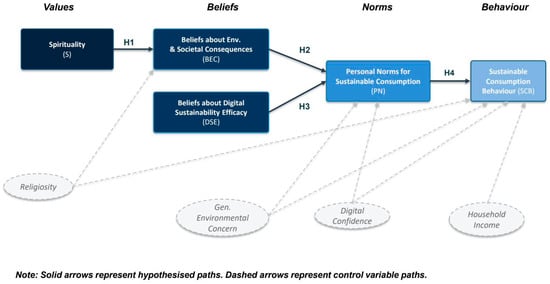
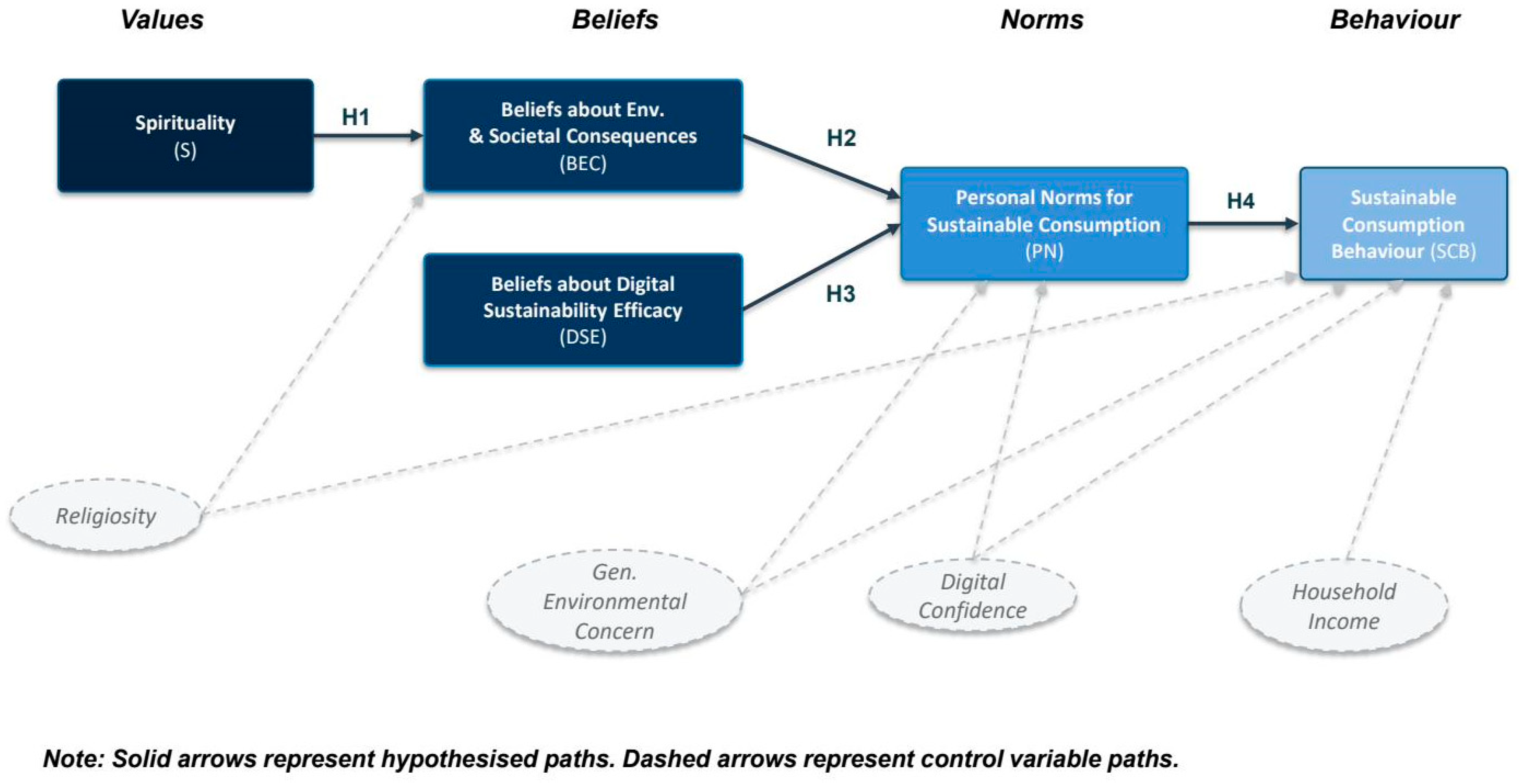
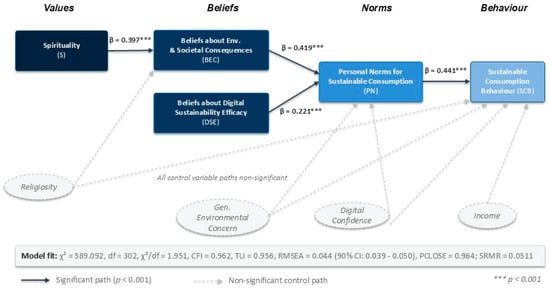
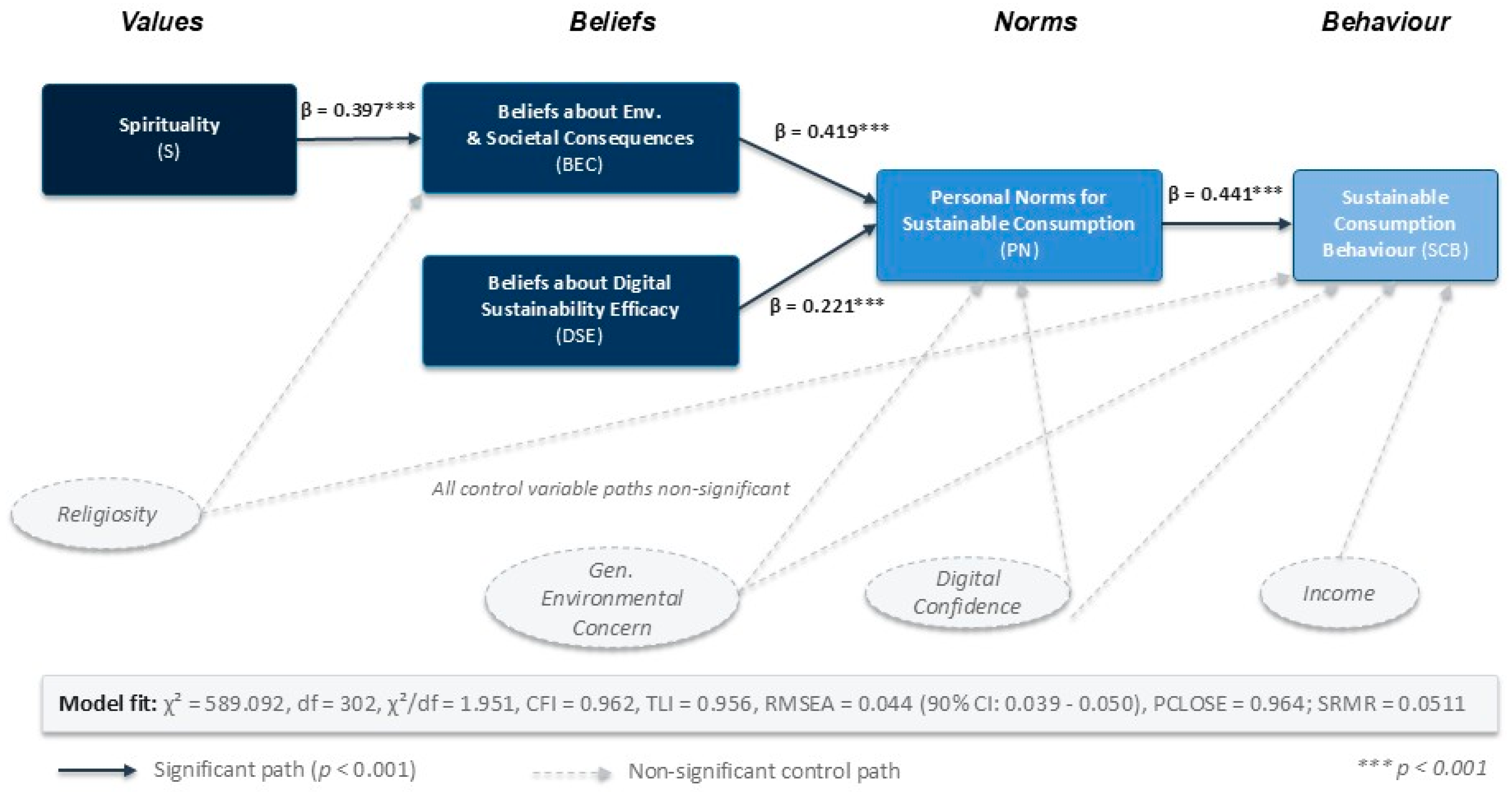

Disclaimer/Publisher’s Note: The statements, opinions and data contained in all publications are solely those of the individual author(s) and contributor(s) and not of MDPI and/or the editor(s). MDPI and/or the editor(s) disclaim responsibility for any injury to people or property resulting from any ideas, methods, instructions or products referred to in the content. |
© 2026 by the author. Licensee MDPI, Basel, Switzerland. This article is an open access article distributed under the terms and conditions of the Creative Commons Attribution (CC BY) license.