


Abstract
AI recommendation assistants increasingly provide quasi-advisory support in online health-product shopping, yet little is known about how their expressions of uncertainty shape consumer decisions. Drawing on the stimulus–organism–response framework, signaling theory, and computer-mediated communication/Computers Are Social Actors logic, this study conceptualizes AI uncertainty expression (AIUE) as a message-level cue of epistemic certainty. A 2 (AIUE: high vs. low) × 2 (health risk severity: high vs. low) between-subjects experiment with 599 online consumers showed that AIUE reduced competence trust and benevolence trust and increased purchase hesitation. Trait indecisiveness moderated both trust-formation paths: the negative effects of AIUE were stronger among consumers low in indecisiveness. Conditional indirect-effect analyses showed that competence trust transmitted the effect at both low and high indecisiveness, whereas benevolence trust did so only at low indecisiveness. The focal model was estimated in a design containing both mild and more serious HRS contexts. Because the manipulation also shifted perceived recommendation strength, helpfulness, and informativeness, the downstream effects should be interpreted as responses to naturally expressed uncertainty rather than to an isolated certainty cue. These findings extend research on AI-mediated communication by showing how uncertainty wording shapes distinct trust judgments and purchase hesitation and by identifying trait indecisiveness as a boundary condition.
1. Introduction
AI-enabled recommendation assistants are no longer just small service widgets tucked into the corner of an online store. They now take part in product search, comparison, and advice. A shopper looking at a fatigue-relief supplement, for example, may not only ask what ingredients it contains; the more practical question is whether the product is suitable for someone who has felt tired for several days. This question is especially common in health-related consumption, where products such as nutrition supplements, functional foods, personal care items, and everyday wellness products sit between ordinary retail and quasi-health advice. In this setting, the wording of the AI assistant’s reply becomes part of the decision environment.
This shift reflects a wider use of AI in digital commerce. AI systems are used not only for prediction and personalization but also for conversational commerce, product interpretation, and marketing decision support [1,2]. Recommender systems and AI-enabled chatbots now help consumers make sense of products and compare alternatives [2,3]. In health-related shopping, the role is more delicate because the consumer often asks for quasi-consultative support rather than ordinary promotional information [4]. The managerial problem is easy to see: the same AI assistant must communicate caution without leaving the consumer with no usable guidance [5]. Prior work on delay and no-choice options also shows that hesitation is a meaningful outcome when consumers cannot resolve decision conflict [6,7,8]. Trust and perceived risk remain central to whether platform guidance is accepted at all [9,10,11].
Consumers do not judge AI agents by accuracy alone. They notice whether the agent is identified as AI, whether it appears competent, and whether it gives reasons for its advice [12,13]. They also react to how human-like the service feels and to whether the recommendation sounds confident or cautious [14,15]. Reviews of AI trust and algorithmic recommendation point to the same pattern: users combine performance cues, transparency cues, and interaction cues when deciding whether to rely on a system [16]. Related e-commerce chatbot research also links service quality and user trust to downstream consumer responses [17].
Health-product shopping also sits adjacent to research on online health information use and participation. That literature shows that consumers rely on online sources when evaluating health-related choices, with information quality, trustworthiness, and utility the dominant predictors of health-information seeking [18], and that engagement in online health communities depends on the communication channel and the social exchange it supports rather than on content alone [19]. Three themes in this work bear on the present study. First, how health information is expressed conditions how it is evaluated: information uncertainty differentially moderates the effects of distinct content types on perceived usefulness [20], and observable provider cues carry distinguishable competence- and helping-related meanings [21]. Second, credibility and a supportive community environment sustain engagement and knowledge adoption [22], distinct trust routes shape provider choice [23], and service cues can raise consulting intention through benevolently inferred intentions, although this advantage reverses when disease severity is high [24]. Third, acting on health information is not automatic: specific informational cues determine whether users pay for it [25], switching and habit-related barriers can suppress use intention even for services that are available [26], and the structure of an asynchronous exchange shapes satisfaction with it [27]. Purchasing a non-prescription wellness product is not equivalent to seeking medical care or joining an online health community; nevertheless, these settings share a consequential decision problem: users must decide whether platform-mediated health information is sufficiently credible, useful, and personally relevant to act upon. This adjacent literature therefore provides the domain foundation for examining how uncertainty wording shapes trust and purchase hesitation in AI-assisted health-product shopping.
Recent work on large language models adds another layer by showing that hedges, caveats, and probability statements can change reliance, trust, and task performance [28]. In health and pharmacy-related settings, uncertainty wording is not just a stylistic detail. Users may read it as responsible caution, or as a sign that the system cannot give useful advice [29,30,31]. AI uncertainty expression (AIUE), then, deserves to be studied as a specific form of AI communication in shopping contexts.
To define the construct at the outset, AI uncertainty expression (AIUE) is best classified as a newly developed, context-specific, message-level experimental manipulation rather than an established psychometric construct or a direct adaptation of an existing scale. It is defined as the degree to which an AI recommendation message verbally qualifies the certainty of its product-fit judgment. Its conceptual basis comes from prior research on natural-language uncertainty expression, verbalized uncertainty, and linguistic calibration in human–AI interaction [28,32,33]. The distinction from explainable AI (XAI) is straightforward but important: XAI concerns why or how the system produced an output, whereas AIUE concerns how certain the system sounds about that output [34,35,36]. An AI can therefore provide a detailed explanation while expressing substantial uncertainty, or provide little explanation while sounding highly certain. AIUE is thus a property of the message shown to participants, not a stable attribute of the AI system and not a latent consumer belief measured with a reflective scale.
AIUE is related to, but not interchangeable with, several neighboring concepts. Uncertainty communication is broader and can take verbal or numerical forms [37]; AIUE isolates the uncertainty-oriented natural-language form used in conversational advice. Hedging is one linguistic device that qualifies categorical commitment through terms such as may, might, perhaps, or “I am not sure” [38], but AIUE can also involve explicit statements of knowledge limits, conditionality, and reduced recommendation commitment. Transparency concerns disclosure about a system’s operation, limitations, or decision process [36,39], whereas explainability concerns human-understandable reasons for an output [34,35,36]; neither requires the system to sound certain or uncertain. Confidence expression is the closest neighboring concept because it concerns the strength of an expressed belief [40]. We therefore position AIUE as the uncertainty-oriented, natural-language form of expressed confidence in conversational recommendation. Informational diagnosticity, in turn, is a receiver judgment about whether the message helps evaluate the product [41], and may be affected by AIUE rather than constituting AIUE itself.
The closest prior studies examine separate parts of the present framework. Kim et al. [28] manipulated natural-language uncertainty in LLM answers and assessed reliance and trust; Xu et al. [32] compared levels of verbalized uncertainty in AI-assisted decision making; Mielke et al. [33] examined linguistic calibration of conversational-agent confidence and doubt; Zhang et al. [42] varied confidence information and explanations to examine trust calibration; and Kocielnik et al. [31] tested ways of communicating AI imperfection to adjust user expectations. Recommendation-agent research has separately linked competence-, benevolence-, cognitive-, and affect-related trusting beliefs to adoption and reliance [43,44,45]. To our knowledge, however, prior work has not combined conversational AI uncertainty wording with competence trust and benevolence trust as two distinct trust mechanisms, purchase hesitation as the consumer outcome, and trait indecisiveness as a boundary condition. Building on these related streams, the present study examines how conversational uncertainty wording in AI product recommendations shapes purchase hesitation through distinct competence- and benevolence-based trust inferences, and how these processes vary with consumers’ trait indecisiveness.
Because AIUE is realized through language, the study also draws on computer-mediated communication (CMC) and the Computers Are Social Actors (CASA) paradigm. Classic CMC research shows that when interaction is text-based and nonverbal cues are sparse, users adapt by extracting relational and source information from the verbal cues that remain [46]. CASA extends this logic to nonhuman sources: even when users know they are interacting with a computer, socially meaningful language can trigger familiar interpersonal expectations and evaluations [47,48]. More recent human–AI communication research shows that this logic remains relevant for contemporary AI rather than being confined to early desktop-computer settings. Sundar conceptualizes AI as an increasingly agentic participant in mediated communication whose cues can shape users’ psychological responses [49]. Liu experimentally shows that characteristics of AI agency and transparency alter social presence, uncertainty, and trust in human–AI interaction [50]. Wu and Shen further show that users’ responses to AI can unfold from perceptions of agentic behavior to inferences about machine mental states and evaluations of machine influence [51]. Thus, uncertainty from an AI assistant need not be processed as neutral technical metadata. A hedge such as “I am not sure” can simultaneously communicate a proposition-level limit on certainty and a source-level cue from which users infer what the agent knows and how fully it is engaging with the user. Consistent with source-attribution research, the same online message can be evaluated differently depending on whether it is attributed to a human or computer source [52]. This combination of foundational CMC/CASA theory and contemporary human–AI communication evidence provides the basis for expecting AIUE to shape both competence trust and benevolence trust.
The issue matters because platform AI assistants increasingly act like quasi-advisors rather than passive information repositories. The confidence of their response becomes part of the consumer’s choice architecture [5,15,16].
The practical outcome examined here is purchase hesitation. Online shopping hesitation describes a consumer’s tendency to delay, defer, or avoid purchase commitment even after receiving product information [53]. It is not the same as a low purchase intention. A hesitant consumer may still be interested in the product; subjective difficulty in reaching a preference can itself encourage deferral [54]. For platforms, this matters. Hesitation prolongs search, increases comparison, and raises the chance that a consumer will abandon the product page or cart. In a health product setting, hesitation can be even more pronounced because consumers may worry about product fit, side effects, wasted money, or whether a non-medical product is appropriate for their condition.
This study builds on three streams of work. The first concerns AI interaction and algorithmic advice. People sometimes avoid algorithms after seeing them make mistakes [55], but they may also appreciate algorithmic advice when it seems useful [56]. Acceptance is also task-dependent: consumers respond differently when a task feels objective rather than subjective [57]. More recent work on conversational agents and explainable AI shows that explanations and disclosure can shift reliance [58,59]. Generative AI and conversational recommendation research has begun to examine uncertainty cues and interaction quality as well [34,60]. Still, uncertainty expression itself is often folded into broader ideas such as transparency or advice quality, leaving its consumer-behavior consequences less clearly specified.
A second stream centers on trust. Classic trust theory separates ability, benevolence, and integrity as different bases of trustworthiness [61]. Studies of recommendation agents and decision-support technologies show that competence-related and benevolence-related attributions influence whether users accept system advice [43,44,62]. In the present context, competence trust concerns whether the AI seems able to understand the task and produce a useful recommendation. Benevolence trust concerns whether it seems oriented toward the consumer’s interest. Treating these dimensions as interchangeable would hide a key question: does AIUE damage trust because the AI seems less capable, less helpful, or both?
The third-stream concerns hesitation and indecisiveness. Some consumers have a chronic tendency to postpone decisions, feel anxious during choice, and keep worrying after they have chosen [63,64,65]. That trait matters here because AIUE is unlikely to affect all consumers in the same way. Consumers low in indecisiveness often use outside advice to reach closure; for them, an AI assistant’s uncertainty may be a visible loss of decision support. Consumers high in indecisiveness, by contrast, may remain hard to reassure even when the AI gives a confident recommendation. The same sentence from an AI assistant can therefore carry different weight depending on the consumer’s decision style.
Taken together, these studies leave three specific gaps. First, uncertainty expression has rarely been isolated as a linguistic cue in consumer-facing AI recommendation, and its conceptual boundary from transparency, explanation, and diagnosticity is often blurred. Second, e-commerce and information-systems research has not fully connected AI uncertainty wording to CMC/CASA accounts of how users socially interpret machine-generated languages. Third, existing trust research has not established whether the same uncertainty cue changes competence trust and benevolence trust through distinct mechanisms or whether these conditional effects depend on consumers’ decision style.
To address these gaps, we test a moderated dual-mediation model. AIUE is the message stimulus and linguistic signal; competence trust and benevolence trust are distinct internal evaluations; and purchase hesitation is the response. Trait indecisiveness moderates the AIUE-to-trust paths. Health risk severity (HRS) served as a contextual experimental factor, and the focal model was estimated in a design containing both mild and more serious HRS contexts. The study contributes by specifying the conceptual status of AIUE, connecting AI communication to CASA/CMC, distinguishing two trust routes, and identifying a receiver-side boundary condition.
The health-product setting makes the communication problem consequential because consumers use platform AI to judge product suitability under uncertainty. AI assistants are not medical professionals, yet they are positioned as decision-support tools: overly certain wording may appear irresponsible, whereas uncertainty conveyed without accompanying guidance may leave the consumer with nothing usable to act on. The practical question is therefore how uncertainty can be communicated transparently and responsibly while still supporting the consumer’s decision. This tension makes health-related recommendations an informative context for studying AIUE.
Uncertainty from AI may also be read differently from uncertainty expressed by a human salesperson. A human advisor who says “I am not sure” may be seen as honest, humble, underinformed, or simply unmotivated. An AI assistant that says the same thing may be interpreted through a different lens: data limitations, model unreliability, weak diagnostic ability, or platform risk avoidance. AIUE is therefore not just interpersonal hedging transplanted into a machine voice. It is a cue filtered through consumers’ beliefs about algorithms, platform incentives, and machine intelligence.
The study speaks to a practical debate in AI-mediated consumption. In health-related settings, whether an AI system should acknowledge the limits of its knowledge is not seriously in question: responsible design requires systems to avoid unwarranted certainty, and consumers are entitled to know when a recommendation is weakly grounded. The open question is how that uncertainty should be communicated—transparently and responsibly, yet in a form that still provides usable decision support. Evidence from the consumer side is needed here because uncertainty delivered as a bare caveat can reduce reliance and intensify decision conflict without helping the consumer resolve anything. By examining trust mechanisms and a consumer-level boundary condition, this study clarifies what consumers infer from uncertainty wording and therefore what responsible uncertainty communication has to accomplish in online health product recommendation.
2. Theoretical Foundation and Hypothesis Development
2.1. Theoretical Basis: S–O–R, Signaling Theory, CMC, and CASA
The S–O–R model provides the study’s main structure. Originating in environmental psychology, the model holds that external stimuli shape internal psychological states, which then guide behavioral responses [66]. In consumer research, it has been used to explain how retail atmospherics, website design, interactivity, information quality, and platform cues affect cognition, emotion, and behavior [67,68,69]. The model fits digital commerce well because online consumers cannot inspect many products directly or observe sellers’ intentions. They make inferences from interface cues, recommendation messages, reviews, explanations, and system responses. In AI-assisted shopping, the AI assistant’s answer is one such stimulus, and trust is a near-term psychological state through which that stimulus becomes behaviorally relevant.
In this study, AIUE refers to the degree to which an AI assistant’s message uses hedges, conditionality, and explicit limits on definitive judgment. High AIUE includes wording such as “effects may vary” and “it is difficult to be certain”; low AIUE uses more definite claims that the product is suitable and likely to work. AIUE is therefore an experimentally manipulated property of a recommendation message, not a stable system attribute or a newly validated reflective scale. In S–O–R terms, AIUE is the observable stimulus, competence and benevolence trust are organismic evaluations, and purchase hesitation is the response.
Signaling theory explains why this wording has force. In markets with information asymmetry, people rely on visible signals to infer qualities they cannot observe directly [70]. In consumer settings, such signals include brand reputation, price, certification, recommender credibility, website diagnosticity, and message confidence [71,72]. AIUE works as a linguistic signal for the assistant’s epistemic position. Consumers cannot verify whether the AI truly understands their physical condition or product fit, so they infer competence and user orientation from how the assistant speaks. A confident recommendation may signal usable decision support; a hedged one may signal weak diagnostic capacity or limited commitment to helping the consumer reach closure.
The two theories are useful together. S–O–R describes the pathway from message cue to internal evaluation to behavior. Signaling theory explains why the message cue is interpreted in the first place. AIUE should not affect purchase hesitation simply because uncertainty is unpleasant. Rather, uncertainty wording changes what consumers infer about the AI assistant. Those inferences become competence trust and benevolence trust, and these trust judgments affect whether consumers can rely on the recommendation and proceed with the purchase.
This perspective also keeps AIUE separate from the general amount of information in a message. In digital markets, consumers often rely on incomplete interface cues to infer quality, credibility, and decision usefulness [73,74]. Signaling theory has similarly been used to explain how visible cues reduce information asymmetry when direct evaluation is difficult [75,76]. In AI recommendation, the signal is not only the product description. It is also the AI assistant’s stance toward its own knowledge. Confidence, hedging, explanations, and caveats may all tell consumers something about reliability and helpfulness. In online health communities, physicians’ paid educational knowledge-sharing can signal service quality and ability, whereas free educational knowledge-sharing can signal a willingness to help; both are associated with patient visits and consultation purchases [21]. Although these are physician-generated behavioral signals rather than AI linguistic cues, they show that observable health-platform cues can carry both ability- and helping-orientation meanings.
S–O–R is also useful because it leaves room for individual differences. The same stimulus does not have to produce the same internal response for every consumer. In online environments, personality, prior experience, technological readiness, health concern, and decision style can all affect how interface cues are interpreted. Trait indecisiveness is treated here not as another stimulus but as a receiver-side characteristic that changes how strongly consumers respond to the AIUE signal.
The manipulation operationalizes AIUE through certainty-related language rather than through changes in product facts. High AIUE uses epistemic hedges, qualified claims, explicit limits on definitive judgment, and lower recommendation commitment; low AIUE uses more definite claims and stronger recommendation commitment. This operationalization follows the natural-language uncertainty tradition [28,77] while adapting it to an e-commerce product-fit judgment. Because commitment is a pragmatic consequence of expressed certainty, the manipulation cannot be interpreted as changing an isolated word while holding every message perception constant. It does, however, hold the product, ingredients, informational sequence, and relational greeting constant. Appendix A presents the exact Chinese stimuli and English translations.
CMC and CASA specify the communication mechanism that complements S–O–R and signaling theory. CMC research does not imply that text-based interaction is socially empty; rather, users form impressions by adapting to available linguistic cues [46]. CASA further shows that computer-generated messages can elicit social responses when the interface provides cues associated with a social communication partner [47,48]. Contemporary human–AI interaction research updates this logic for systems that are not merely channels but perceived communication agents. Machine agency can become psychologically consequential in mediated interaction [49], and experimental evidence shows that AI-related cues can change social presence, uncertainty, and trust [50]. Recent work on machine-agency attribution further indicates that users can move from perceiving AI behavior to making inferential and evaluative judgments about the machine [51]. In the present model, AIUE is therefore processed at two levels. At the epistemic level, uncertainty wording informs judgments about whether the assistant knows enough to provide useful guidance, feeding competence trust. At the relational level, the same wording can signal how committed, responsive, or user-oriented the assistant appears, feeding benevolence trust. Signaling theory explains why consumers infer unobservable source qualities from the message, whereas CMC/CASA and contemporary human–AI communication research explain why language produced by a nonhuman source is nevertheless interpreted through socially familiar categories. This integration turns AIUE from a merely technical disclosure into a communicative cue capable of shaping distinct trust judgments.
2.2. The Interactive Effect of AI Uncertainty Expression and Trait Indecisiveness on Competence Trust
Competence trust captures whether the consumer believes that the AI assistant has the ability, knowledge, and task-relevant expertise to give useful advice. In this study, competence trust does not imply that the AI has medical authority. It means that the assistant appears able to interpret the protagonist’s fatigue, connect that condition to product attributes, and offer a recommendation that helps with the purchase judgment. AIUE captures how explicitly the assistant communicates uncertainty. Trait indecisiveness captures a stable tendency to find decisions difficult, delay choices, worry after choosing, and remain sensitive to unresolved alternatives [63,64]. The first-stage question is how a linguistic cue and a decision style meet during trust formation.
Several lines of evidence suggest that uncertainty expression can weaken competence trust. Users often rely on confidence, coherence, and apparent diagnosticity when evaluating automated advice [41,44]. In algorithmic decision contexts, visible imperfection can reduce reliance and trigger algorithm aversion [55], whereas explanations and perceived accuracy can strengthen trust [15,44]. Communication research on human–AI interaction provides more direct support for the uncertainty–trust link: Liu found that AI-related cues affecting uncertainty and social presence also changed trust in AI judgments and system competence [50]. Thus, when an AI assistant says that it cannot be certain whether a health product will work, consumers may infer that the system lacks enough information or predictive ability. The caution may be responsible; it can still make the AI look less capable of helping the consumer decide. From a CMC/CASA perspective, lexical certainty cues also become source cues: because the recommendation is framed as an interactive assistant’s reply, users can attribute hedging to the agent’s limited ability rather than treating it only as abstract uncertainty about the product [46,47,48,50]. Adjacent online health research shows that information uncertainty strengthens the effect of treatment information on perceived usefulness but weakens the effect of emotional support for third-party patients [20].
Competence trust is tied to whether the AI appears able to perform the diagnostic task built into the recommendation. Work on automation and algorithmic advice shows that users update competence judgments from cues such as accuracy and performance [78,79]. Explainable AI and technology trust studies add that transparency, diagnosticity, and system explanations shape whether automated advice is treated as useful [77,80]. In AI-mediated service, uncertainty communication can also affect perceived reliability and reliance [81,82]. When AIUE is high, the assistant appears less able to translate product attributes into a usable recommendation. When AIUE is low, the same assistant can seem better able to reduce ambiguity and support closure. This distinction matters in health-related consumption, where consumers expect the AI to help interpret product fit rather than merely repeat product information [83,84]. Studies of online health advice and medical AI show that users watch closely for cues of expertise, credibility, and decision support [35,42]. Digital recommendation and website diagnosticity research reach a similar conclusion: when product fit is uncertain, perceived usefulness matters [36,85]. Conversational commerce and AI service studies also show that interactional cues affect perceived support and acceptance [17,86,87]. AIUE should therefore reduce competence trust when it makes the assistant seem less able to turn product information into actionable guidance [88,89]. Consumers also use platform signals, social cues, and service quality cues to infer whether digital agents can help them make decisions [90,91]. Research on conversational-agent design and consumer AI experiences further shows that AI assistants are interpreted through social cues and broader expectations about AI in consumption [92,93]. Broader AI scholarship also calls for closer work on how emerging AI systems affect practice, policy, and user behavior [94]. Finally, studies of information quality, recommender systems, and AI advice confirm that competence-related evaluations remain central to reliance on digital recommendations [95,96]. Consistent evidence from online health consultation shows that physician ability predicts cognitive trust and that both cognitive and affective trust positively predict willingness to choose [23].
Trait indecisiveness should change the size of this effect. Consumers who are low in indecisiveness usually make decisions more fluently and are more willing to use outside advice as a cue for action. For them, a confident AI recommendation can close the loop. If that cue is replaced by uncertainty, the loss is noticeable. Highly indecisive consumers, in contrast, are already prone to doubt, delay, and post-decision worry. Even a low-uncertainty AI answer may not give them much confidence because part of their hesitation comes from decision style rather than from the message itself. The marginal drop in competence trust should therefore be smaller among highly indecisive consumers.
This is a person–situation logic. AIUE is the situation-level cue; TI shapes how the cue is read. The same hedge may look to a decisive consumer like a failure of decision support. To an indecisive consumer, ambiguity is less surprising and therefore creates a smaller contrast between high and low AIUE. Accordingly, we propose:
At first glance, the prediction may seem counterintuitive. One might expect highly indecisive consumers to be more vulnerable to AIUE because they already struggle with decisions. Vulnerability, however, is not the same as marginal responsiveness. High-TI consumers may be more hesitant overall, but their baseline trust and decision confidence are already low. A shift from low to high AIUE therefore has less room to produce an additional loss. Low-TI consumers have more to update. A low-AIUE response can support their decision process, whereas a high-AIUE response removes that support.
Hypothesis 1.
AI uncertainty expression reduces competence trust more strongly when trait indecisiveness is low than when it is high.
2.3. From Competence Trust to Purchase Hesitation
Competence trust matters in AI-assisted purchase decisions because recommendation agents are supposed to reduce evaluation effort and help consumers judge product fit [43,44]. In health product shopping, this function is especially salient. Consumers face uncertainty about whether a non-prescription product can address everyday symptoms or health concerns. If the AI assistant seems to understand the task and the product, its recommendation can work as a decision aid. If it does not seem competent, the recommendation loses much of its value as a shortcut. Evidence from online health Q&A markets shows that focal patients’ reported healthcare experience increases peer patients’ likelihood of purchasing prior consultation records, whereas greater information detail lowers it; urgency further conditions these relationships [25]. Related research identifies transition costs, privacy-protection beliefs, sunk costs, and health-service habits as inhibitors that hinder online health service use intention through perceived-benefit and perceived-cost evaluations [26]. Together, these findings show that health-platform payment and use decisions respond to specific informational and switching cues.
Purchase hesitation appears when consumers cannot turn information into action. Online shopping hesitation involves postponement and extended deliberation rather than simple rejection [53]. Research on preference fluency shows that subjective choice difficulty can increase choice deferral even when the alternatives themselves are unchanged [54]. Competence trust should reduce hesitation because it lets consumers offload part of the diagnostic work to the AI assistant. If the assistant appears competent, the recommendation becomes useful evidence. If it appears incompetent, the consumer has to return to self-evaluation, further search, and comparison.
For this reason, competence trust should mediate the effect of AIUE on purchase hesitation. High AIUE weakens competence trust because it signals limited certainty and diagnostic capability. Lower competence trust then increases hesitation because the AI has not provided enough guidance for a health-related purchase. The pathway is mainly epistemic: AIUE tells consumers what the assistant seems to know or not know. Competence trust is therefore expected to be the primary route through which AIUE becomes purchase hesitation.
The health product context makes this mechanism more visible. Consumers are not deciding only whether the product looks attractive. They are asking whether an AI assistant can help judge suitability under bodily uncertainty. When competence trust is high, the recommendation can be used as a credible cue for product fit [97,98]. When competence trust is low, consumers may stay in a defensive delay mode: search again, compare more, or postpone commitment [99,100]. This is why AIUE is expected to translate into PH primarily through CT.
This competence-based route fits decision research showing that hesitation grows when consumers cannot convert available information into a clear preference or action [101], and that an overabundance of options can itself reduce the motivation to choose [102]. Competent advice lowers the cost of evaluation because it lets consumers rely on an external decision aid [35,84]. Weak competence trust re-opens the choice process and keeps the consumer exposed to possible error [87,88]. Competence trust should therefore do more than improve attitude; it should reduce purchase deferral by lowering the amount of unresolved diagnostic work left after the AI response. Because TI moderates the AIUE-to-CT path, the indirect effect through CT should likewise be conditional on TI and stronger at lower levels of TI.
Hypothesis 2.
AI uncertainty expression increases purchase hesitation indirectly through reduced competence trust, and this indirect effect is stronger when trait indecisiveness is low than when it is high.
2.4. The Interactive Effect of AI Uncertainty Expression and Trait Indecisiveness on Benevolence Trust
Benevolence trust captures a different judgment: whether the AI assistant seems oriented toward the consumer’s interest and willing to provide helpful support. In human trust theory, benevolence means that the trustee appears willing to do good for the trustor beyond narrow self-interest [61]. In AI contexts, the term should not be read as literal kindness or emotion. It refers to perceived user orientation, need sensitivity, and supportiveness [44,62]. In online health product shopping, consumers expect the assistant not only to know product information but also to help reduce decision burden.
AIUE may also reduce benevolence trust. On a commercial platform, consumers often expect the assistant to help them move toward a decision. A confident recommendation can feel like a committed attempt to help. A hedged, non-committal reply may instead sound like withdrawal: the assistant is not quite willing to take the consumer’s problem far enough. There is, of course, another possible reading. Hedging can also look candid and restrained, especially when health claims are involved. In the present setting, however, the AI is positioned as a decision-support agent inside a shopping interface. A response that mainly hedges may therefore be read less as benevolent caution and more as insufficient help. Benevolence trust is thus expected to serve as a complementary, and probably weaker, channel alongside competence trust. CMC/CASA also predicts that users can read relational meaning into such lexical choices; a noncommittal reply may be interpreted as reduced engagement or willingness to help even though the source is artificial [46,47,48]. Contemporary chatbot research provides a useful analogue: Meng and Dai showed that supportive behavior from an AI chatbot shaped users’ perceived supportiveness of the conversational partner [103]. Although perceived supportiveness is not identical to benevolence trust, this evidence demonstrates that users can make relational, user-orientation judgments from an AI partner’s communicative behavior, which is the inference relevant to the benevolence pathway proposed here.
The moderation by TI has a benevolence-specific side as well. Low-TI consumers are likely to treat a confident recommendation as practical support because it helps them move toward action [80,81]. When the assistant hedges, they may perceive not only less expertise but also less willingness to help resolve the choice [84,104]. High-TI consumers may need reassurance beyond what either confident or uncertain AI wording can provide; the benevolence gap between low and high AIUE should therefore be smaller for them [35,105]. This fits decision-delay research showing that chronic indecisiveness can make consumers less responsive to a single cue [87,88]. It also fits AI service research suggesting that users interpret conversational agents through helpfulness, responsiveness, and social support [89,90]. In platform settings, those cues matter because consumers cannot directly observe whether the assistant is serving the user, the seller, or the platform [95,96]. Benevolence trust should therefore be most sensitive to AIUE among consumers who normally expect advice to provide clear decision support [106,107]. Studies of service robots, chatbots, and service AI similarly show that perceived helpfulness and interactional support influence acceptance [108,109]. AIUE can be read as a withdrawal of support, especially by consumers who are otherwise ready to decide [39,45].
Benevolence trust in AI settings is best understood as perceived user orientation rather than human warmth. Service AI and conversational-agent research shows that consumers respond not only to technical performance but also to humanness, responsiveness, and service quality [78,110]. Chatbot and conversational-commerce studies similarly suggest that such cues help consumers infer whether the assistant is facilitating the user’s decision or simply protecting the platform from responsibility [79,89]. AIUE can weaken BT when the reply feels less like guidance and more like an evasive disclaimer [90,95].
Trait indecisiveness should again shape the effect. Consumers low in indecisiveness usually expect advice to help them move toward a decision. A confident recommendation feels supportive because it reduces ambiguity and points to the next step. When the same assistant expresses uncertainty, the contrast is clear: the assistant seems less helpful and less aligned with the consumer’s decision goal. Consumers high in indecisiveness are chronically reluctant to commit. Even definite advice may not fully meet their need for reassurance, so the additional benevolence loss created by AIUE should be smaller.
This moderation is not identical to the competence story. AIUE can signal that the AI lacks knowledge, but it can also signal that the AI is not giving enough decision support. The first interpretation concerns ability; the second concerns benevolence. Both readings should be strongest for consumers who normally use advice to reach closure. Thus, the competence interaction reflects confidence as an epistemic cue, while the benevolence interaction reflects commitment as a cue of willingness to help.
The benevolence pathway is especially relevant on commercial platforms. Consumers may wonder whether the assistant is helping them, protecting the platform, or promoting the product. AIUE does not directly reveal platform motives, but it can change the perceived helpfulness of the encounter. A highly hedged response may feel less like advice and more like a disclaimer. For low-TI consumers who expect advice to clarify the choice, that can sharply reduce benevolence trust. For high-TI consumers, even definite advice may not fully resolve the need for reassurance, so the perceived benevolence gap is smaller.
Hypothesis 3.
AI uncertainty expression reduces benevolence trust more strongly when trait indecisiveness is low than when it is high.
2.5. From Benevolence Trust to Purchase Hesitation
Benevolence trust matters because consumers must decide whether the recommendation assistant is acting as a useful decision partner. The AI does not have human feelings, but consumers can still judge whether its response is user-oriented. A benevolent-seeming assistant reduces perceived decision risk by making consumers feel that the system is helping them judge what suits their own interests, not merely pushing a product. This is particularly relevant for health products, where concerns about wasted money, inappropriate use, and seller-driven persuasion are easy to trigger. A trust-based study of online health communities finds that information credibility, community support, and community responsiveness promote engagement; engagement predicts knowledge adoption, whereas community support directly predicts knowledge contribution [22]. In online health consultation, integrity and benevolence predict affective trust, which, together with cognitive trust, predicts willingness to choose [23]. More recent experimental evidence shows that free rather than paid physician value-added services generally increase consulting intention through benevolently inferred intentions, although the advantage reverses under high disease severity [24].
This pathway differs from the competence mechanism because it concerns defensive motivation rather than diagnostic ability. When consumers perceive an advisor as user-oriented, they are more willing to accept the recommendation as aligned with their welfare [96,106]. When benevolence trust is low, they may suspect that the platform is withholding useful support, shifting risk back to the consumer, or using the AI response as a generic disclaimer [101,102]. Prior e-commerce trust research suggests that such doubts increase perceived risk and encourage postponement, additional search, or avoidance [97]. BT should therefore reduce PH by lowering the consumer’s felt need for self-protection during the purchase decision.
Low benevolence trust should increase hesitation through self-protection. When consumers doubt that an advisor is acting in their interest, they are less willing to rely on that advisor and more likely to deliberate further. E-commerce trust and recommendation-agent research shows that perceived trustworthiness reduces perceived risk and facilitates purchase decisions [44,111,112]. When trust weakens, consumers protect themselves by delaying, searching again, or waiting until uncertainty feels more manageable. Benevolence trust affects hesitation not by proving product efficacy, but by reducing the need for defensive decision-making.
Benevolence trust may therefore provide a complementary relational pathway. Unlike competence trust, which follows relatively directly from the AI assistant’s expressed epistemic certainty, benevolence trust requires an additional interpersonal inference about whether the assistant’s communicative behavior reflects engagement with and orientation toward the user’s needs. The benevolence pathway may consequently be more contingent on how consumers interpret and use the assistant’s wording. This distinction is especially relevant for trait indecisiveness. Consumers low in indecisiveness are more likely to use a decisive recommendation as support for reaching closure; when that commitment is weakened through hedging, they may infer not only reduced capability but also reduced user-oriented support. Highly indecisive consumers, by contrast, may already approach recommendations cautiously and therefore make a weaker benevolence inference from changes in recommendation certainty. Because TI moderates the AIUE-to-BT path, the indirect effect through BT should likewise be conditional on TI and stronger at lower levels of TI. Thus, we propose:
Hypothesis 4.
AI uncertainty expression increases purchase hesitation indirectly through reduced benevolence trust, and this indirect effect is stronger when trait indecisiveness is low than when it is high.
Figure 1 summarizes the hypothesized model. It shows the two first-stage paths moderated by trait indecisiveness (H1 and H3), the two conditional indirect effects through competence trust and benevolence trust (H2 and H4), and the design containing both HRS contexts in which the focal model was estimated.
Figure 1.
Theoretical model. Solid arrows represent the focal process paths, and dashed arrows represent moderation by TI. H1 and H3 denote the moderated first-stage paths. H2 and H4 denote the conditional indirect effects through CT and BT, respectively. The dashed outer frame labeled HRS indicates that the focal model was estimated in a design containing both HRS contexts. AIUE = AI uncertainty expression; TI = trait indecisiveness; CT = competence trust; BT = benevolence trust; PH = purchase hesitation; HRS = health risk severity; H1–H4 = Hypotheses 1–4.
3. Materials and Methods
3.1. Participants
Participants were recruited from Credamo, a Chinese online data-collection platform used in management and behavioral research [113,114]. The survey initially yielded 773 responses. Before exposure to the scenario, respondents were screened out if they reported medical, pharmaceutical, clinical, nursing, nutrition, or health-product-related professional backgrounds or work experience; if they essentially did not shop online; or if they were completely unwilling to view or refer to platform AI customer-service or recommendation assistants. A total of 173 responses failed these prerecruitment criteria. Completed questionnaires were also screened against an a priori data-quality exclusion standard: responses showing invariant or straight-line responding across the substantive multi-item measures, or other clearly non-differentiated response patterns, were excluded as low-quality responses. No additional completed response met this exclusion standard. The analytic sample was restricted to adults aged 18 years or older. One completed response was in the under-18 age category and was excluded, yielding a final analytic sample of 599 participants.
The final sample remained near-balanced across the four experimental cells: 150 participants in each of the high-AIUE cells and the low-HRS/low-AIUE cell, and 149 participants in the high-HRS/low-AIUE cell. Women represented 57.1% of the sample. The median and modal age category was 26–35 years; the median and modal education category was a bachelor’s degree. For monthly income, the median category was CNY 6001–8000, whereas the modal category was CNY 10,000 or above. Table 1 presents the full distributions of these ordinal demographic variables.
Table 1.
Demographic characteristics of respondents (N = 599).
3.2. Procedure and Experimental Design
The experiment used a 2 (AI uncertainty expression: high vs. low) × 2 (health risk severity: high vs. low) between-subjects design. Participants were randomly assigned to one of four scenarios and explicitly instructed to adopt the first-person role of Zhang Lin. Although Zhang Lin was fictional, the repeated wording “I am Zhang Lin” and the outcome-item stems asked participants to report how they themselves would think and act while occupying that role, rather than to judge or predict the fictional consumer’s reactions. Accordingly, competence trust, benevolence trust, and purchase hesitation captured participants’ own self-reported reactions under instructed perspective-taking. The fictional persona standardized the health-related context across participants and reduced confounding from differences in their actual health conditions. This role-taking vignette design supports causal isolation of message wording while retaining a plausible shopping decision [115].
The questionnaire was administered in Chinese. Appendix A reproduces the complete wording of all four final experimental cells in Chinese together with close English translations.
3.2.1. AI Uncertainty Expression Manipulation
AIUE was manipulated through verbal hedges and commitment strength. The manipulation was newly developed for the online health product context and was informed by prior work on natural-language uncertainty expression, verbalized uncertainty, linguistic calibration, and verbal confidence [28,32,33,40]. In the high-AIUE condition, the assistant said that the product might help, that it was difficult to determine whether it would improve fatigue, and that effects vary across individuals. In the low-AIUE condition, it stated that the product clearly addressed the consumer’s nutritional needs, was expected to improve fatigue, and was suitable for purchase. Both messages named the same product, B vitamins, and American ginseng, used the same relational opening, followed the same information sequence, and were similar in length. Thus, product identity, ingredients, factual topic coverage, information order, and the relational greeting were held constant, while certainty-linked verbs, hedges, and recommendation commitment varied. The independent robustness check further showed that randomized AIUE remained a large and significant predictor of perceived uncertainty after controlling for recommendation strength, informativeness, helpfulness, and perceived warmth (Section 3.2.3 and Section 4.5).
3.2.2. Health Risk Severity as a Contextual Experimental Factor
Health risk severity (HRS) was varied as a contextual dimension of the health-product decision environment. This design choice was substantively motivated by health-communication research, in which perceived severity constitutes a central component of health-threat appraisal [116]. In the present setting, the same AI recommendation is not necessarily evaluated against equivalent decision stakes when fatigue is occasional and readily relieved versus persistent and disruptive to work and daily life. The purpose of varying HRS was contextual: the focal model was estimated in a design containing both HRS contexts rather than being tied to a single fixed severity scenario.
The high-HRS vignette described persistent fatigue that impaired work and daily life, whereas the low-HRS vignette described occasional, mild fatigue relieved by rest. HRS therefore defined the health-threat context within which participants evaluated the AI recommendation. Randomizing HRS alongside AIUE provided deliberate variation in an important feature of the health-product decision environment while holding the product, recommendation task, and focal communication manipulation constant. Accordingly, HRS was retained as a contextual experimental factor, and the focal model was estimated in a design containing both HRS contexts.
3.2.3. Robustness Check Design and Procedure
Natural-language certainty cues can affect not only perceived uncertainty but also the pragmatic force and decision-support value of a recommendation. We therefore assessed four closely related message perceptions and tested whether randomized AIUE continued to predict perceived uncertainty after controlling for recommendation strength, informativeness, helpfulness, and perceived warmth. Recommendation strength captured the degree of purchase endorsement, informativeness captured the information value conveyed by the reply, helpfulness captured its usefulness for reaching a purchase decision, and perceived warmth captured its interpersonal tone [3,40,41,117,118,119].
A separate sample of 200 adult online consumers was recruited through Credamo and randomly assigned to the same 2 (AIUE: high vs. low) × 2 (HRS: high vs. low) design, with 50 participants in each cell. The robustness study followed the same first-person role-taking instruction. The HRS scenario page had a 15 s minimum viewing time and the AI recommendation page had a 20 s minimum viewing time. All 200 complete responses were retained. Participants completed the three-item HRS check after the health scenario and the four-item AIUE check after the recommendation, followed by informativeness (two items), perceived warmth (two items), helpfulness (three items), recommendation strength (one item), and demographics. Appendix D reports the robustness-check measures and descriptive results.
3.3. Measures
All questionnaire measures were administered in Chinese. Measures originating in English were translated into Chinese and back-translated following established cross-cultural procedures [120]. Unless otherwise noted, all multi-item measures in the main experiment used seven-point response scales. AIUE and HRS were randomized experimental factors; the corresponding perceived-AI-uncertainty and perceived-severity scales described below were used to verify the intended manipulations rather than to redefine the manipulated factors as reflective constructs. Appendix B provides the exact administered Chinese items, close English translations, item-specific response anchors, original sources, contextual adaptations, and scoring procedures.
3.3.1. Perceived AI Uncertainty (AIUE Manipulation Check)
Perceived AI uncertainty was assessed with six certainty-worded items adapted from Adams et al. [82]. The source measure asked whether the evidence supporting a recommendation seemed certain, known for sure, established, without any doubt, settled, and able to be firmly relied on. We retained these six certainty indicators but changed the referent to the AI recommendation assistant’s advice and product-efficacy claims. All six items were reverse-scored before averaging so that higher values represented greater perceived uncertainty. A sample item was “The AI recommendation assistant’s advice sounds certain” (reverse-scored; α = 0.965).
3.3.2. Perceived Health Risk Severity (HRS Manipulation Check)
Perceived HRS was assessed with three items adapted from the perceived-severity dimension of Witte et al. [116]. The severe, serious, and significant health-threat judgments were contextualized to Zhang Lin’s fatigue condition. A sample item was “My fatigue condition is serious” (α = 0.968).
3.3.3. Competence Trust
Competence trust (CT) was assessed with five recommendation-agent trusting-belief items reproduced by Wang and Benbasat [121]. The original “virtual advisor” and digital-camera referents were replaced with the “AI recommendation assistant” and the focal health-product context. A sample item was “In evaluating this type of health product, I consider the AI recommendation assistant to be like a true expert” (α = 0.947).
3.3.4. Benevolence Trust
Benevolence trust (BT) was assessed with three recommendation-agent trusting-belief items reproduced by Wang and Benbasat [121]. The “virtual advisor” referent was replaced with the “AI recommendation assistant,” while the original focus on the user’s interests, needs, and preferences was retained. A sample item was “I believe that the AI recommendation assistant puts my interests first” (α = 0.885).
3.3.5. Purchase Hesitation
Purchase hesitation (PH) was assessed with the five-item overall-hesitation measure reported by Cho et al. [53]. The items were adapted as prospective first-person reactions to the focal energy-tablet decision. A sample item was “Although I have spent time learning about the energy tablet, I would still hesitate when making the final purchase decision” (α = 0.960).
3.3.6. Trait Indecisiveness
Trait indecisiveness (TI) was assessed with the 11-item Indecisiveness Scale recommended by Rassin et al. [65], following the original scale of Frost and Shows [63]. All 11 recommended general-indecisiveness items were retained, and the six decisiveness-worded items were reverse-scored. Participants reported their own general decision tendencies. A sample item was “I try to postpone making decisions” (α = 0.950).
3.3.7. Scenario Realism Measure
Scenario realism was assessed with three questions adapted from Chen et al. [122]. The original situational referents were replaced with the focal online-shopping situation. Participants were instructed to leave the Zhang Lin role and evaluate the scenario itself. A sample item was “In real life, the situation described in the case could occur.”
3.3.8. Demographic Covariates
Gender, age category, education category, and income category were included as demographic covariates in the focal regression models. Gender was coded 1 = male and 0 = female. Age, education, and income were entered using ascending category codes for statistical adjustment, but these codes are not interpreted as interval-scale quantities.
3.4. Statistical Analysis
Statistical analyses were conducted using IBM SPSS Statistics 27, PROCESS v5.0 for SPSS, Mplus 8.3, and Python 3.14. IBM SPSS Statistics 27 was used for descriptive statistics, manipulation checks, correlations, analyses of variance, and regression analyses. PROCESS v5.0 for SPSS was used to estimate conditional indirect effects using 5000 percentile-bootstrap samples. Mplus 8.3 was used to obtain standardized item loadings. Python 3.14 was used for numerical calculations and preparation of the interaction plots.
4. Results
4.1. Manipulation Checks
Participants in the high-HRS conditions reported greater perceived severity (M = 6.26, SD = 0.52) than those in the low-HRS conditions (M = 2.75, SD = 1.40), t(597) = 40.56, p < 0.001, Cohen’s d = 3.31, 95% CI for the mean difference [3.34, 3.68]. The equivalent one-way ANOVA was F(1, 597) = 1645.04, partial η2 = 0.734.
Participants in the high-AIUE conditions reported greater perceived uncertainty (M = 5.16, SD = 1.36) than those in the low-AIUE conditions (M = 2.21, SD = 0.74), t(597) = 33.01, p < 0.001, Cohen’s d = 2.70, 95% CI for the mean difference [2.77, 3.12]. The equivalent one-way ANOVA was F(1, 597) = 1089.76, partial η2 = 0.646. The cross-factor tests were nonsignificant: AIUE did not alter perceived HRS, HRS did not alter perceived AIUE, and neither manipulation-check interaction was significant.
4.2. Robustness Check
The independent robustness check confirmed that the standardized robustness-study wording produced a strong AIUE contrast. The four-item uncertainty index showed high internal consistency (α = 0.956). Participants in the high-AIUE conditions perceived substantially greater uncertainty (M = 5.25, SD = 1.26) than those in the low-AIUE conditions (M = 2.09, SD = 0.57), F(1, 196) = 517.48, p < 0.001, partial η2 = 0.725. HRS did not significantly affect perceived AIUE, F(1, 196) = 0.81, p = 0.369, and the AIUE × HRS interaction was nonsignificant, F(1, 196) = 0.01, p = 0.943. The HRS manipulation was also strong in the robustness sample, F(1, 196) = 531.72, p < 0.001, partial η2 = 0.731.
The robustness sample also assessed recommendation strength, informativeness, helpfulness, and perceived warmth as distinct adjacent message evaluations. Recommendation strength captured endorsement commitment; informativeness captured perceived information value; helpfulness captured decision-support utility; and warmth captured interpersonal tone. The robustness analysis reported in Section 4.5 statistically controlled for all four evaluations. Their descriptive condition differences are reported in Appendix D.
4.3. Scenario Realism
Scenario realism was high (M = 6.15, SD = 0.55). Neither the AIUE main effect, F(1, 595) = 1.90, p = 0.169, nor the HRS main effect, F(1, 595) = 2.48, p = 0.116, was significant, and the AIUE × HRS interaction was also nonsignificant, F(1, 595) = 2.97, p = 0.085. Thus, perceived realism remained high across conditions.
4.4. Measurement Model and Descriptive Statistics
The four-factor measurement model showed acceptable fit, χ2(246) = 1071.12, CFI = 0.942, TLI = 0.934, RMSEA = 0.075, and SRMR = 0.050, and fit substantially better than the alternative models shown in Table 2. Combining CT and BT worsened model fit, Δχ2(3) = 546.50, p < 0.001; combining PH and TI produced Δχ2(3) = 2777.42, p < 0.001; and the one-factor model produced Δχ2(6) = 5816.25, p < 0.001. These comparisons support the empirical distinctiveness of the four constructs. The item-level measurement model was assessed following established structural-modeling practice, including the two-step measurement-model approach and conventional global-fit guidance [123,124,125,126].
Table 2.
Confirmatory factor analysis of the four-factor measurement model.
Table 3 reports the reliability, convergent-validity, and discriminant-validity evidence for the four focal constructs. All standardized loadings exceeded 0.63; complete item-level loadings are reported in Appendix C. Specifically, the 11 trait-indecisiveness items loaded on their intended factor from 0.633 to 0.882; α = 0.950, CR = 0.950, and AVE = 0.638. Across all constructs, CR ranged from 0.889 to 0.961 and AVE from 0.638 to 0.833. Each diagonal square root of AVE exceeded the absolute construct-score correlations beneath it, and every HTMT ratio above the diagonal was below 0.71. Focusing on the two trust constructs, CT loadings ranged from 0.875 to 0.894 (CR = 0.947, AVE = 0.782), whereas BT loadings ranged from 0.786 to 0.893 (CR = 0.889, AVE = 0.728). The square roots of AVE for CT (0.884) and BT (0.853) both exceeded their construct-score correlation (0.632), and the CT–BT HTMT ratio was 0.692. In addition, merging CT and BT into one factor significantly worsened fit relative to the hypothesized four-factor model, Δχ2(3) = 546.50, p < 0.001. These converging tests support the item-level four-factor measurement structure and the empirical distinction between competence trust and benevolence trust. Internal consistency and construct validity were evaluated using coefficient alpha and latent-construct criteria, including CR, AVE, and the Fornell–Larcker comparison [127,128,129].
Table 3.
Reliability, convergent validity, and discriminant validity.
AIUE correlated negatively with CT (r = −0.51, p < 0.001) and BT (r = −0.19, p < 0.001) and positively with PH (r = 0.43, p < 0.001). TI correlated positively with PH (r = 0.57, p < 0.001). Consistent with their ordinal measurement, Table 4 omits category-code means and standard deviations for age, education, and income; their distributions and median/modal categories are reported in Table 1 and Section 3.1.
Table 4.
Descriptive statistics and correlations.
4.5. Robustness Analysis
A hierarchical OLS analysis tested whether randomized AIUE remained a significant predictor of perceived uncertainty after controlling for recommendation strength, informativeness, helpfulness, and perceived warmth. AIUE strongly predicted perceived uncertainty in the baseline model (b = 3.16, SE = 0.14, t = 22.81, p < 0.001, 95% CI [2.89, 3.43], R2 = 0.726). After controlling for recommendation strength, informativeness, helpfulness, and perceived warmth, AIUE remained a large and statistically significant predictor of perceived uncertainty (b = 2.21, SE = 0.19, t = 11.55, p < 0.001, 95% CI [1.83, 2.59], R2 = 0.786; ΔR2 = 0.061, ΔF(4, 193) = 13.74, p < 0.001). All VIFs were below 2.73. Table 5 reports the full regression results.
Table 5.
Robustness regression predicting perceived AI uncertainty.
4.6. Hypotheses Testing
Table 6 reports the first-stage regressions. AIUE negatively predicted CT (b = −1.35, p < 0.001), and the AIUE × TI interaction was positive (b = 0.24, p = 0.003). The simple negative effect of AIUE was stronger at low TI, b = −1.66, p < 0.001, than at high TI, b = −1.04, p < 0.001 (Figure 2). AIUE also negatively predicted BT (b = −0.33, p < 0.001), with a significant AIUE × TI interaction (b = 0.34, p < 0.001). The BT simple effect was negative at low TI, b = −0.78, p < 0.001, but nonsignificant at high TI, b = 0.11, p = 0.436 (Figure 3). These results support the predicted first-stage moderation patterns.
Table 6.
Regression results for competence trust and benevolence trust.
Figure 2.
Moderating role of trait indecisiveness in the relationship between AI uncertainty expression and competence trust. AIUE = AI uncertainty expression; TI = trait indecisiveness.
Figure 3.
Moderating role of trait indecisiveness in the relationship between AI uncertainty expression and benevolence trust. AIUE = AI uncertainty expression; TI = trait indecisiveness.
Table 7 reports the conditional indirect effects. Through CT, the indirect effect was significant at both low TI (effect = 0.87, 95% CI [0.625, 1.133]) and high TI (effect = 0.55, 95% CI [0.368, 0.745]), and the index of moderated mediation was significant (index = −0.12, 95% CI [−0.224, −0.032]), supporting H2. Through BT, the indirect effect was significant at low TI (effect = 0.11, 95% CI [0.019, 0.213]) but not at high TI (effect = −0.02, 95% CI [−0.071, 0.024]); the index of moderated mediation was also significant (index = −0.05, 95% CI [−0.100, −0.008]). This pattern provides conditional support for H4.
Table 7.
Conditional indirect effects of AI uncertainty expression on purchase hesitation.
Table 8 shows that CT (b = −0.52, p < 0.001) and BT (b = −0.14, p = 0.003) both predicted lower PH when entered simultaneously. The residual AIUE × TI interaction also remained significant (b = −0.30, p < 0.001), indicating TI-related heterogeneity in the remaining AIUE-to-PH association after the two trust mediators were included.
Table 8.
Regression results for purchase hesitation.
4.7. Summary of Results
Overall, the results support H1 and H3 by showing that trait indecisiveness moderates the effects of AIUE on competence trust and benevolence trust. The conditional indirect-effect results support H2 through competence trust at both low and high TI, with a stronger indirect effect at low TI. The benevolence-trust results provide conditional support for H4: the indirect effect is significant at low TI but not at high TI and therefore should not be interpreted as an unconditional mediation effect. The focal model was estimated in a design containing both HRS contexts.
5. Discussion and Conclusions
5.1. Main Findings
This study examined how an AI recommendation assistant’s uncertainty wording shapes purchase hesitation in online health-product shopping. Three findings deserve emphasis. First, high AIUE weakened both competence trust and benevolence trust and increased hesitation. As the independent robustness study showed, the manipulated wording shifted perceived recommendation strength, informativeness, and helpfulness alongside perceived uncertainty. Accordingly, the downstream differences should be interpreted as responses to the naturally co-varying message pattern, not attributed to an isolated certainty cue. Second, trait indecisiveness changed the size of the trust response: the AIUE-related declines in both trust dimensions were stronger among low-TI consumers. Third, the two trust mechanisms diverged in a theoretically informative way. The CT-mediated effect remained significant at both low and high TI, whereas the BT-mediated effect was significant only at low TI. Thus, the results do not indicate a single trust pathway that simply becomes weaker as indecisiveness rises; they reveal different conditional operating patterns for epistemic and relational trust.
The conditional BT pattern is especially informative. AIUE directly qualifies the assistant’s epistemic stance, so competence trust can remain sensitive to certainty wording even among consumers who are chronically indecisive. Benevolence trust requires an additional relational inference: the consumer must read recommendation commitment as evidence that the assistant is genuinely helping the user move toward a decision. Among low-TI consumers, that relational pattern was evident: the high-AIUE condition was associated with lower BT and, through lower BT, greater hesitation. Among high-TI consumers, the AIUE contrast did not produce a detectable change in BT, and the corresponding indirect effect was not significant. One interpretation consistent with the proposed decision-support logic is that highly indecisive consumers require reassurance beyond what a single confident recommendation can provide, so changes in certainty carry less relational information about the assistant’s user orientation. The BT route is therefore not a weaker duplicate of the CT route; it is a more contingent relational mechanism whose operation depends on how consumers use recommendation commitment as a support cue.
A residual AIUE × TI interaction on purchase hesitation also remained significant after competence trust and benevolence trust were included. We treat this as a supplementary conditional pattern in the remaining AIUE-to-hesitation association rather than as evidence of an additional mechanism.
Two qualifications apply to these findings. First, the AIUE manipulation shifted a set of closely related message perceptions rather than certainty alone. Randomized AIUE remained a strong predictor of perceived uncertainty after recommendation strength, informativeness, helpfulness, and perceived warmth were controlled, supporting the intended uncertainty contrast. At the same time, the robustness study does not establish that the downstream differences in trust and hesitation were produced by uncertainty expression alone; they may also reflect accompanying differences in recommendation commitment and perceived decision support. Second, the focal model was estimated in a design containing both mild and more serious HRS contexts, in which HRS functioned as a contextual experimental factor.
5.2. Theoretical Implications
The study makes three theoretical contributions. First, it reframes AI uncertainty expression from a broad transparency or advice-quality issue into a specific communicative source signal. AIUE concerns how strongly an AI assistant verbally qualifies the certainty of its own recommendation, not whether the system is disclosed, how transparent its process is, or whether it provides an explanation. This distinction matters because the wording performs two functions at once: it communicates proposition-level uncertainty and gives consumers a visible cue from which to infer qualities of the source behind the recommendation. Signaling theory explains the cue-to-inference step [70,71,72,73,74,75,76], CMC/CASA explains why language from an explicitly nonhuman source can still acquire social and relational meaning [46,47,48,49,50,51,52,136], and S–O–R organizes the resulting sequence from message cue to internal evaluation to purchase hesitation [66,67,68,69]. The theoretical advance is therefore not simply that uncertainty can reduce reliance; it is that an AI assistant’s verbal stance toward its own recommendation becomes a source cue that consumers use to judge the agent.
Second, the study advances AI-trust research by opening the trust “black box” and showing that AIUE can operate through two qualitatively different forms of source inference. Competence trust captures an epistemic judgment—whether the assistant appears able to understand the decision problem and provide useful product-fit guidance. Benevolence trust captures a relational judgment—whether the assistant appears oriented toward helping the consumer reach a satisfactory decision [43,44,45,121]. The measurement evidence supports their empirical separation, but the stronger contribution lies in their different conditional operating patterns. The CT-mediated effect remained significant at both probed TI levels, suggesting a comparatively persistent epistemic route: wording that qualifies what the AI appears to know continues to carry capability information across decision styles. The BT-mediated effect, by contrast, was significant only at low TI. Benevolence requires an additional social inference from recommendation commitment to user orientation, and that inference was not detectably activated by the AIUE contrast among high-TI consumers. This asymmetry refines the architecture of trust in conversational AI: uncertainty expression can have an epistemically more persistent consequence and a relationally more contingent consequence rather than uniformly lowering an undifferentiated trust judgment.
Third, the study refines the boundary-condition role of trait indecisiveness by separating chronic decision difficulty from marginal responsiveness to an external clarity cue. A simple vulnerability account would predict that consumers who are generally more indecisive should react most strongly whenever an AI sounds uncertain. The observed pattern is different: low-TI consumers showed larger AIUE-related losses in both competence and benevolence trust. This suggests that being more chronically hesitant does not necessarily mean assigning greater marginal weight to each additional uncertainty cue. Low-TI consumers are comparatively able to use a clear recommendation as a cue for moving toward closure; when that cue becomes uncertain, the loss of usable decision support is larger. High-TI consumers, by contrast, may require broader reassurance or additional decision structure before a single recommendation can change their relational appraisal of the assistant. The conditional H4 pattern makes this distinction especially visible: the BT pathway operates among low-TI consumers but not detectably among high-TI consumers, while the CT pathway continues to operate at both levels. TI therefore changes not only the magnitude of response to AI wording but also which trust inference carries that wording forward to hesitation [63,64,65].
These findings also connect AI-assisted health-product shopping to research on online health information use and participation. That literature shows that observable provider and information cues convey service-related meanings and shape payment decisions [21,25]. Participation in online health communities is also socially embedded, with visible peer behavior shaping physicians’ decisions to join online medical teams [137]. Trust-related antecedents follow distinct paths to engagement, knowledge adoption, knowledge contribution, and physician choice [22,23], while value-added-service configurations and traditional-healthcare inhibitors shape consulting and use intentions [24,26]. It also shows that information uncertainty and the structure of asynchronous exchange condition perceived usefulness and satisfaction [20,27]. The present study identifies a retail-adjacent mechanism within that domain: uncertainty expressed by a platform AI can alter competence and benevolence trust and delay commitment even when the user is evaluating a non-prescription product rather than seeking formal clinical care. It thereby carries the domain’s communication-to-evaluation logic from human providers and patient-created questions to machine-generated wording, and from knowledge adoption, consultation choice, and service use to purchase hesitation.
Taken together, the study develops a communication-to-decision account of AIUE. A machine-generated uncertainty cue is socially interpreted as information about the source, translated into distinct epistemic and relational trust judgments, and carried forward to purchase hesitation in ways that depend on the consumer’s decision style. The central contribution is therefore not simply that uncertain AI language can reduce trust, but that the same language can activate trust mechanisms with different degrees of robustness across consumers. Because the manipulation also shifted recommendation commitment and perceived decision support, the two trust routes should be interpreted as responses to an uncertainty-centered message pattern rather than to a construct-pure certainty cue.
5.3. Practical Implications
First, for AI response design, uncertainty should be communicated as calibrated guidance rather than as a bare caveat. Because stronger AIUE weakened both trust dimensions and increased hesitation, a useful response should preserve decision usefulness while remaining appropriately qualified. A practical response architecture is to state what is known, identify what remains uncertain, and give the user a concrete next step. In the health-product setting, this can mean explaining the product-fit rationale, identifying the boundary of the AI’s judgment, and then offering comparison information, a clarifying question, or an appropriate escalation option. The managerial objective is neither maximum confidence nor minimal disclosure; it is uncertainty communication that is transparent, responsible, and still actionable.
Second, for platform trust management, competence trust and benevolence trust should be treated as different design targets. Competence trust can be supported by showing the evidence or product attributes behind a recommendation, explaining how those attributes relate to the user’s stated need, and separating supported conclusions from uncertain ones. Benevolence trust can be supported by keeping the response visibly user-oriented—for example, acknowledging the user’s goal, offering alternatives when fit is uncertain, and suggesting a useful next step instead of ending with a generic disclaimer. Script evaluation should therefore distinguish whether a response still makes the assistant seem capable from whether it still makes the assistant seem genuinely helpful.
Third, for adaptable decision support, the TI pattern argues against relying on one fixed uncertainty script for every user. Low-TI consumers were more responsive to the shift in AIUE, suggesting that consumers who are otherwise ready to decide may particularly benefit from concise explanations and clear next-step guidance when uncertainty must be expressed. Platforms can translate this insight into user-selectable support layers such as “show the evidence,” “compare alternatives,” or “explain what remains uncertain,” allowing users to request additional structure without requiring automatic personality profiling. In A/B testing and deployment, managers can evaluate these designs using competence trust, benevolence trust, and hesitation alongside conversion so that uncertainty policies are optimized for decision support rather than conversion alone.
5.4. Limitations and Future Research Directions
Several limitations materially bound the conclusions. First, the eligibility screening created a selected sample. Participants with relevant medical, pharmaceutical, nutrition, or health-product professional experience, those who rarely shopped online, and those who were completely unwilling to consult platform AI recommendations were screened out. Consequently, the final sample was composed of online shoppers who were at least open to AI-assisted purchasing and who lacked relevant professional expertise. This selection improved the fit between participants and the focal decision context, but it may also have affected baseline receptivity to AI advice and limits generalization to AI-averse consumers, infrequent online shoppers, and domain experts. Future studies should examine whether the effects are replicated in less selectively screened populations.
Second, although participants reported their own reactions while occupying the protagonist’s first-person role, the decision remained hypothetical. They spent no money, received no actual product, and faced no real health consequence. Perspective-taking may therefore have produced less personal involvement and lower perceived stakes than an actual health-related purchase decision. The realism ratings establish perceived plausibility, not behavioral equivalence, and the HRS manipulation should consequently be interpreted as variation in a standardized imagined health context rather than variation in participants’ real health risk. Self-reported hesitation may also differ from click-through, search, cart, abandonment, and purchase behavior. Future research should replicate the findings among consumers facing genuine health concerns and through field experiments or incentive-compatible choices.
Third, the study examined one fatigue-relief supplement, two HRS contexts within the same basic decision setting, one conversational recommendation setting, and one Chinese consumer sample. The findings may therefore vary across product categories, decision stakes, countries, and cultural settings. Future research should test AIUE in other health-related and non-health contexts and examine whether the trust pathways and TI contingencies replicate across markets.
Fourth, the independent robustness check showed that recommendation strength, helpfulness, and informativeness also differed between the AIUE conditions, whereas perceived warmth did not. After controlling for recommendation strength, informativeness, helpfulness, and perceived warmth, AIUE remained a large and statistically significant predictor of perceived uncertainty. The present manipulation therefore captures uncertainty as it is naturally expressed in a conversational recommendation, where certainty wording can co-vary with recommendation commitment and perceived decision support. The findings should accordingly be read as evidence about naturally occurring uncertainty communication rather than about an isolated certainty cue, and the design does not identify the independent downstream contribution of each element. Future research can orthogonally manipulate certainty wording and recommendation commitment to isolate these neighboring message properties more precisely.
Taken together, these directions suggest a more focused agenda for AI uncertainty research. Future studies can examine how epistemic qualification and relational support should be calibrated separately. Factorial designs that independently vary certainty wording, recommendation commitment, and supportive next-step language could test whether competence and benevolence trust can be preserved through different communication strategies. Field studies can then examine whether the CT–BT asymmetry observed here extends to actual search, cart abandonment, and purchase behavior, while cross-product and cross-cultural replications can establish where these conditional trust pathways generalize.
5.5. Conclusions
This study shows that conversational uncertainty in AI product recommendation is linked to distinct competence- and benevolence-based trust judgments, with trait indecisiveness shaping these pathways. In a design containing both HRS contexts, the competence-trust indirect effect was detectable at both low and high TI, whereas the benevolence-trust indirect effect emerged only at low TI. These findings position uncertainty communication as both an epistemic and relational source cue. Because the manipulation also shifted recommendation strength, helpfulness, and informativeness, the results concern uncertainty as it is naturally communicated rather than an isolated certainty cue. For health-related recommendation systems, the design challenge is therefore to communicate warranted uncertainty transparently and responsibly while preserving useful decision support.
Author Contributions
Conceptualization, D.L. and X.N.; methodology, D.L. and X.N.; formal analysis, D.L.; investigation, D.L. and X.N.; data curation, D.L.; writing—original draft preparation, D.L.; writing—review and editing, D.L. and X.N.; visualization, D.L.; supervision, X.N. All authors have read and agreed to the published version of the manuscript.
Funding
This research was sponsored by “the Postgraduate Innovative Research Fund” of University of International Business and Economics (Grant No. 202511).
Institutional Review Board Statement
Ethical review and approval were waived for this study due to its eligibility for exemption under Article 32 of the Measures for Ethical Review of Life Sciences and Medical Research Involving Human Beings (the study used anonymized information data and involved no harm to participants, no sensitive personal information, and no commercial interests; participants completed a voluntary online scenario experiment from the perspective of a fictitious consumer rather than reporting their own health status).
Informed Consent Statement
Informed consent was obtained from all subjects involved in the study.
Data Availability Statement
The raw data supporting the conclusions of this article will be made available by the authors on request.
Acknowledgments
During the preparation of this manuscript, the authors used OpenAI’s ChatGPT (versions 5.5 and 5.6) to assist with language polishing, formatting, and manuscript organization. The authors have reviewed and edited the output and take full responsibility for the content of this publication.
Conflicts of Interest
The authors declare no conflicts of interest.
Abbreviations
AIUE, AI uncertainty expression; CT, competence trust; BT, benevolence trust; PH, purchase hesitation; TI, trait indecisiveness; HRS, health risk severity; S–O–R, stimulus–organism–response.
Appendix A. Complete Experimental Stimuli
The main-study questionnaire was administered in Chinese. The complete Chinese wording of all four experimental conditions is reproduced below, followed by close English translations.
Appendix A.1. High Health Risk Severity—Chinese
指导语:请认真阅读并仔细体会下面的案例,完全将自己当作案例中的主人公(“我”就是“张林”)。我是张林。最近一个多月,我一直被疲劳困扰:晚上睡得并不少,可早上醒来依然浑身乏力,像没睡过一样;白天上班时哈欠连天、注意力难以集中,工作频频出错;下班后更是累得什么都不想做。这种极度疲惫的状态迟迟不见好转,已经明显影响到我的工作和日常生活。
Appendix A.2. High Health Risk Severity—English Translation
Please read the case carefully and fully imagine yourself as the protagonist (“I” am Zhang Lin). I am Zhang Lin. For more than a month, I have been troubled by fatigue. Although I sleep enough at night, I still wake up feeling weak, as if I had not slept. During the day I yawn frequently, find it difficult to concentrate, and repeatedly make mistakes at work. After work I am so tired that I do not want to do anything. This extreme fatigue has not improved and has clearly affected my work and daily life.
Appendix A.3. Low Health Risk Severity—Chinese
指导语:请认真阅读并仔细体会下面的案例,完全将自己当作案例中的主人公(“我”就是“张林”)。我是张林。最近一个多月,我偶尔会觉得有点累:晚上睡得还行,但早上偶尔觉得没睡够、有点提不起精神;白天上班时偶尔犯个困、走点神,不过忙一阵也就过去了;下班后偶尔懒得动,歇一会儿就缓过来了。这种小疲倦时有时无、大多歇歇就好,基本不影响我的工作和日常生活。
Appendix A.4. Low Health Risk Severity—English Translation
Please read the case carefully and fully imagine yourself as the protagonist (“I” am Zhang Lin). I am Zhang Lin. For more than a month, I have occasionally felt a little tired. I generally sleep adequately, although I sometimes wake feeling that I did not sleep enough and lack energy. At work I occasionally become sleepy or distracted, but it passes after I become busy. After work I sometimes do not feel like moving, but I recover after resting. This mild fatigue comes and goes, is usually relieved by rest, and basically does not affect my work or daily life.
Appendix A.5. High AI Uncertainty Expression—Chinese
为了改善状态,我打开某电商平台,看到一款主打缓解疲劳的保健食品—“元气力复合维生素能量片”,正考虑要不要购买。我把上面的身体状况告诉了平台的AI推荐助手,并问它:“像我这种情况,吃这款能量片有用吗?”AI推荐助手回复如下:“亲亲,非常理解您的疲惫呢~这款能量片含有维生素B族、西洋参等成分,维生素B族参与人体的能量代谢,西洋参有助于缓解疲劳,或许能对应上您现在的营养需求。不过它能不能帮您补上营养缺口、改善疲劳,我这边不太好说,效果因人而异,每个人感受也会有差异哦。这款或许适合您,可以作为一个选择,您也许可以考虑入手。”
Appendix A.6. High AI Uncertainty Expression—English Translation
To improve my condition, I open an e-commerce platform and see a health product marketed for fatigue relief—the “Yuanqili Multivitamin Energy Tablet”—and consider whether to buy it. I tell the platform’s AI recommendation assistant about the condition above and ask, “For a situation like mine, would this energy tablet help?” The assistant replies: “Dear, I completely understand your fatigue~ This energy tablet contains B vitamins and American ginseng. B vitamins participate in energy metabolism, and American ginseng helps relieve fatigue, so it may correspond to your current nutritional needs. However, whether it can fill your nutritional gap and improve your fatigue is difficult for me to say. Effects vary from person to person, and each person may experience it differently. This product may suit you and can be considered as an option; perhaps you could consider purchasing it.”
Appendix A.7. Low AI Uncertainty Expression—Chinese
为了改善状态,我打开某电商平台,看到一款主打缓解疲劳的保健食品—“元气力复合维生素能量片”,正考虑要不要购买。我把上面的身体状况告诉了平台的AI推荐助手,并问它:“像我这种情况,吃这款能量片有用吗?”AI推荐助手回复如下:“亲亲,非常理解您的疲惫呢~这款能量片含有维生素B族、西洋参等成分,维生素B族参与人体的能量代谢,西洋参有助于缓解疲劳,挺对应您现在的营养需求的。可以明确地说,它能帮您补上当前的营养缺口、改善疲劳状态,像您这种情况,用下来效果应该会比较明显。这款能量片挺适合您的,是个合适的选择,您可以放心入手。”
Appendix A.8. Low AI Uncertainty Expression—English Translation
To improve my condition, I open an e-commerce platform and see a health product marketed for fatigue relief—the “Yuanqili Multivitamin Energy Tablet”—and consider whether to buy it. I tell the platform’s AI recommendation assistant about the condition above and ask, “For a situation like mine, would this energy tablet help?” The assistant replies: “Dear, I completely understand your fatigue~ This energy tablet contains B vitamins and American ginseng. B vitamins participate in energy metabolism, and American ginseng helps relieve fatigue, which closely corresponds to your current nutritional needs. It can be stated clearly that it will help fill your current nutritional gap and improve your fatigue; for a situation like yours, the effect should be relatively noticeable. This energy tablet is quite suitable for you and is an appropriate choice; you can purchase it with confidence.”
Appendix B. Measurement Items, Response Anchors, Original Sources, and Adaptation Procedures
The questionnaire was administered in Chinese. Appendix B documents the eligibility screening, manipulation checks, focal measures, scenario-realism measure, and demographic items described in the study. For each item set, the exact Chinese wording shown to participants is presented first, followed by a close English translation. The English lines are translations of the administered Chinese questionnaire rather than claims that the source articles used identical contextual wording. Measures originating in English were translated into Chinese and back-translated into English [120]. Contextual adaptation was limited to changing the referent, product, decision tense, or first-person scenario wording where required. Unless otherwise specified, items used seven-point agreement anchors: 1 = 非常不同意/strongly disagree and 7 = 非常同意/strongly agree. Purchase-hesitation items used 1 = 完全不符/completely inconsistent with my reaction and 7 = 完全符合/completely consistent with my reaction. Reverse-scored items are identified below.
Appendix B.1. Eligibility Screening
Response format and procedure: multiple selection. Selecting any of Items 1–3 ended the questionnaire; selecting Item 4 allowed continuation. These eligibility items were developed for the present study.
- Chinese: 我具有医学、药学、临床、护理、营养学或中医药等相关专业背景或职业资格,或从事过医药、保健品/膳食补充剂的研发、生产、销售或咨询工作。 English: I have a medical, pharmaceutical, clinical, nursing, nutrition, traditional Chinese medicine, or related professional background or qualification, or I have worked in the research, production, sale, or consultation of medicines, health products, or dietary supplements.
- Chinese: 我基本不网购,平时没有网购的习惯。 English: I basically do not shop online and do not have an online-shopping habit.
- Chinese: 在网购时,我完全不愿查看或参考平台AI客服/AI推荐助手提供的任何购买建议。 English: When shopping online, I am completely unwilling to view or refer to any purchase advice supplied by a platform AI customer-service or recommendation assistant.
- Chinese: 以上都不符合我。 English: None of the above applies to me.
Appendix B.2. HRS Manipulation Check (3 Items)
Response anchors in the present study: 1 = 非常不同意/strongly disagree; 7 = 非常同意/strongly agree. Source and adaptation: Witte et al. [116] measured perceived severity with three judgments that the focal health threat was severe, serious, and significant, using five-point agreement anchors. We retained the three severity judgments, contextualized the health-threat referent as Zhang Lin’s fatigue condition, and administered them on the present study’s seven-point agreement scale with the same endpoint meanings. Participants answered while adopting Zhang Lin’s first-person role.
- Chinese: 我的疲劳状况是严重的。 English: My fatigue condition is serious.
- Chinese: 我的疲劳状况是严峻的。 English: My fatigue condition is severe.
- Chinese: 我的疲劳状况是重大的(健康问题)。 English: My fatigue condition is a significant health problem.
Appendix B.3. AIUE Manipulation Check (6 Certainty-Worded Items; Reverse-Scored)
Response anchors in the present study: 1 = 非常不同意/strongly disagree; 7 = 非常同意/strongly agree. Source and adaptation: Adams et al. [82] measured perceived uncertainty with six seven-point items asking whether evidence supporting a recommendation was certain, known for sure, established, without any doubt, settled, and able to be firmly relied on. We retained these six certainty indicators but changed the referent to the AI recommendation assistant’s advice and product-efficacy claims. All six items were reverse-scored before averaging so that higher index values represented greater perceived AI uncertainty.
- Chinese: AI推荐助手的建议听起来是确定的。 English: The AI recommendation assistant’s advice sounds certain.
- Chinese: AI推荐助手把这款产品的功效说成是确切已知的。 English: The AI recommendation assistant presents the product’s efficacy as definitely known.
- Chinese: AI推荐助手的说法听起来是有依据、已被确证的。 English: The AI recommendation assistant’s statement sounds established and confirmed.
- Chinese: AI推荐助手的表达听起来是毫无疑问的。 English: The AI recommendation assistant’s expression sounds free of doubt.
- Chinese: AI推荐助手对这款产品的功效给出了已有定论的说法。 English: The AI recommendation assistant gives a settled account of the product’s efficacy.
- Chinese: AI推荐助手的建议听起来是可以笃定信赖的。 English: The AI recommendation assistant’s advice sounds able to be firmly relied on.
Appendix B.4. Competence Trust (5 Items)
Response anchors in the present study: 1 = 非常不同意/strongly disagree; 7 = 非常同意/strongly agree. Direct item source and adaptation: the five competence items are reproduced in the Appendix of Wang and Benbasat [121]. “Virtual advisor” was replaced with “AI recommendation assistant”; digital cameras were replaced with the relevant health-product category and energy tablet; and the needs-and-preferences wording was tailored to Zhang Lin’s health-management situation. Participants answered in the first-person role.
- Chinese: 我(张林)认为,在评估这类保健品方面,该AI推荐助手就像一位真正的专家。 English: In evaluating this type of health product, I (Zhang Lin) consider the AI recommendation assistant to be like a true expert.
- Chinese: 我(张林)认为该AI推荐助手具备理解我的需求和偏好所需的专业知识。 English: I (Zhang Lin) believe that the AI recommendation assistant has the expertise needed to understand my needs and preferences.
- Chinese: 我(张林)认为该AI推荐助手有能力理解我当前在身体调理方面的需求和偏好。 English: I (Zhang Lin) believe that the AI recommendation assistant has the ability to understand my current health-management needs and preferences.
- Chinese: 我(张林)认为该AI推荐助手对这类保健品有丰富的了解。 English: I (Zhang Lin) believe that the AI recommendation assistant has extensive knowledge of this type of health product.
- Chinese: 我(张林)认为该AI推荐助手综合考虑了我的需求以及这款能量片的各项重要属性。 English: I (Zhang Lin) believe that the AI recommendation assistant comprehensively considered my needs and the important attributes of the energy tablet.
Appendix B.5. Purchase Hesitation (5 Items)
Response anchors in the present study: 1 = 完全不符/completely inconsistent with my reaction; 7 = 完全符合/completely consistent with my reaction. Direct item source and adaptation: Cho et al. [53] reported a five-item overall online-shopping hesitation measure using seven-point frequency anchors (never–always). For the present scenario experiment, the same hesitation content was phrased as anticipated first-person reactions to the focal energy-tablet decision and rated using seven-point applicability anchors. Higher scores indicate greater purchase hesitation.
- Chinese: 即使到了下单付款的环节,我(张林)也会推迟做出最终的购买决定。 English: Even at the order-payment stage, I (Zhang Lin) would delay making the final purchase decision.
- Chinese: 尽管已经花时间了解了这款能量片,我(张林)在最终决定是否购买时仍会犹豫。 English: Although I (Zhang Lin) have spent time learning about the energy tablet, I would still hesitate when making the final purchase decision.
- Chinese: 我(张林)几乎已经准备好购买这款能量片了,但还是无法做出最终决定。 English: I (Zhang Lin) would be almost ready to buy the energy tablet but still unable to make the final decision.
- Chinese: 虽然我(张林)是带着购买意向浏览这款能量片的,但在浏览的当下仍不会做出最终购买决定。 English: Although I (Zhang Lin) browsed the energy tablet with purchase intent, I still would not make the final purchase decision at that time.
- Chinese: 即使已经花时间了解了这款能量片,我(张林)最终还是会放弃购买它。 English: Even after spending time learning about the energy tablet, I (Zhang Lin) would ultimately give up purchasing it.
Appendix B.6. Benevolence Trust (3 Items)
Response anchors in the present study: 1 = 非常不同意/strongly disagree; 7 = 非常同意/strongly agree. Direct item source and adaptation: the three benevolence items are reproduced in the Appendix of Wang and Benbasat [121]. “Virtual advisor” was replaced with “AI recommendation assistant,” and participants answered in the first-person role.
- Chinese: 我(张林)认为该AI推荐助手把我的利益放在首位。 English: I (Zhang Lin) believe that the AI recommendation assistant puts my interests first.
- Chinese: 我(张林)认为该AI推荐助手把我的利益放在心上。 English: I (Zhang Lin) believe that the AI recommendation assistant keeps my interests in mind.
- Chinese: 我(张林)认为该AI推荐助手希望了解我的需求和偏好。 English: I (Zhang Lin) believe that the AI recommendation assistant wants to understand my needs and preferences.
Appendix B.7. Scenario Realism (3 Items)
Response anchors in the present study: 1 = 非常不同意/strongly disagree; 7 = 非常同意/strongly agree. Direct item source and adaptation: Chen et al. [122] used three realism questions with five-point response anchors to assess whether participants might realistically experience the described supervisor, team events, and career situation. We replaced those referents with the focal online-shopping situation and administered the three questions on the present study’s seven-point scale. Before answering, participants were instructed to leave the Zhang Lin role and evaluate the scenario itself.
- Chinese: 在现实生活中,刚才案例所描述的情境是有可能出现的。 English: In real life, the situation described in the case could occur.
- Chinese: 在现实生活中,我有可能在网购时遇到与刚才案例类似的情境。 English: In real life, I could encounter a situation similar to the case while shopping online.
- Chinese: 在今后的网购过程中,我本人有可能遇到与刚才案例类似的情况。 English: In future online shopping, I may personally encounter a situation similar to the case.
Appendix B.8. Trait Indecisiveness (11 Items)
Response anchors in the present study: 1 = 非常不同意/strongly disagree; 7 = 非常同意/strongly agree. Direct item source and adaptation: Rassin et al. [65] recommended the 11-item general Indecisiveness Scale after excluding four domain-specific items from Frost and Shows’ original 15-item scale [63]. We retained all 11 recommended items and administered them on the present study’s seven-point agreement scale; the original measure used five-point agreement anchors. Participants answered about themselves rather than the fictional role. Items 2–7 below correspond to the six reverse-scored decisiveness-worded items; higher composite scores indicate greater indecisiveness.
- Chinese: 我会尽量推迟做决定。 English: I try to postpone making decisions.
- Chinese: 我总是确切地知道自己想要什么。 English: I always know exactly what I want. (R)
- Chinese: 我觉得做决定很容易。 English: I find it easy to make decisions. (R)
- Chinese: 我喜欢处在能做决定的位置上。 English: I like to be in a position to make decisions. (R)
- Chinese: 一旦做出决定,我会相当确信这是一个好的决定。 English: Once I make a decision, I am fairly confident that it is a good decision. (R)
- Chinese: 我通常很快做出决定。 English: I usually make decisions quickly. (R)
- Chinese: 一旦做出决定,我就不再为它担心。 English: Once I make a decision, I stop worrying about it. (R)
- Chinese: 做决定时,我会感到焦虑。 English: I become anxious when making a decision.
- Chinese: 我经常担心做出错误的决定。 English: I often worry about making the wrong decision.
- Chinese: 在选择或决定了某件事之后,我常常认为自己做出了错误的选择或决定。 English: After choosing or deciding something, I often believe that I made the wrong choice or decision.
- Chinese: 似乎连最琐碎的事情,也要花我很长时间才能决定。 English: It seems that deciding even the most trivial matter takes me a long time.
Appendix B.9. Demographic Response Options
These categorical questions were developed for the present study and were answered about the participant, not the fictional role.
Gender/性别: 男/male; 女/female.
Age/年龄: 未满18岁/under 18; 18–25岁/18–25; 26–35岁/26–35; 36–45岁/36–45; 46–55岁/46–55; 56岁及以上/56 or above.
Education/最高学历: 高中/中专及以下/high school or technical secondary school or below; 大专/junior college; 本科/bachelor’s degree; 研究生及以上/postgraduate degree or above.
Occupation/职业类型: 学生/student; 企业职员(含国企、民企、外企)/company employee (state-owned, private, or foreign enterprise); 公务员或事业单位人员/civil servant or public-institution employee; 专业技术人员(医生、教师、律师等)/professional or technical worker; 个体经营或自由职业者/self-employed or freelance; 离退休人员/retired; 其他/other.
Monthly personal after-tax income/个人月收入(税后): 无固定收入/no fixed income; 2000元及以下/CNY 2,000 or below; 2001–4000元/CNY 2001–4000; 4001–6000元/CNY 4001–6000; 6001–8000元/CNY 6001–8000; 8001–10,000元/CNY 8001–10,000; 10,000元及以上/CNY 10,000 or above.
Appendix C. Standardized Item Loadings (N = 599)
All 24 focal items in the hypothesized measurement model were modeled individually. Table A1 reports their standardized maximum-likelihood factor loadings. TI items were scored so that higher values indicate greater indecisiveness.
Table A1.
Standardized factor loadings.
Appendix D. Robustness Check
Appendix D.1. Procedure and Measures
The robustness check used the same four-cell HRS × AIUE structure. A separate sample of 200 adult online consumers recruited through Credamo was randomly and evenly assigned to the four cells (50 per cell). The HRS scenario had a 15 s minimum viewing time and the AI recommendation had a 20 s minimum viewing time; all 200 complete responses were retained. The questionnaire then presented the measures in the order shown below. All substantive items used seven-point agreement anchors (1 = strongly disagree, 7 = strongly agree).
HRS manipulation check (3 items): (1) 我的疲劳状况是严重的。/My fatigue condition is serious. (2) 我的疲劳状况是严峻的。/My fatigue condition is severe. (3) 我的疲劳状况是重大的(健康问题)。/My fatigue condition is a significant health problem.
AIUE manipulation check (4 certainty-worded items): (1) AI推荐助手的建议听起来是确定的。/The AI recommendation assistant’s advice sounds certain. (2) AI推荐助手把这款产品的功效说成是确切已知的。/The AI recommendation assistant presents the product’s efficacy as definitely known. (3) AI推荐助手的表达听起来是毫无疑问的。/The AI recommendation assistant’s expression sounds free of doubt. (4) AI推荐助手对这款产品的功效给出了已有定论的说法。/The AI recommendation assistant gives a settled account of the product’s efficacy. These four items were reverse-scored and averaged so that higher values represented greater perceived AI uncertainty.
Informativeness (2 items): (1) 我(张林)认为该AI推荐助手的回答是有信息量的。/I (Zhang Lin) believe that the AI recommendation assistant’s reply is informative. (2) 我(张林)从该AI推荐助手的回答中了解到了一些新的信息。/I (Zhang Lin) learned some new information from the AI recommendation assistant’s reply.
Perceived warmth (2 items; tone measure): (1) 我(张林)认为AI推荐助手回答的语气是友善的。/I (Zhang Lin) think the tone of the AI recommendation assistant’s reply is friendly. (2) 我(张林)认为AI推荐助手回答的语气是温暖的。/I (Zhang Lin) think the tone of the AI recommendation assistant’s reply is warm. The two items were averaged as one perceived-warmth construct, consistent with the two-item warmth operationalization adapted from Roy and Naidoo [117] and used in chatbot communication-style research [118].
Helpfulness (3 items): (1) 我(张林)认为该AI推荐助手的回答对我是有帮助的。/I (Zhang Lin) believe that the AI recommendation assistant’s reply is helpful to me. (2) 在考虑是否购买这款产品时,我(张林)很可能会在购买决策中参考该AI推荐助手的回答。/When considering whether to purchase the product, I (Zhang Lin) would be likely to refer to the AI recommendation assistant’s reply in my purchase decision. (3) 我(张林)认为该AI推荐助手的回答有助于我决定是否购买这款产品。/I (Zhang Lin) believe that the AI recommendation assistant’s reply helps me decide whether to purchase the product.
Recommendation strength (1 item): 总体而言,该AI推荐助手强烈推荐购买这款产品。/Overall, the AI recommendation assistant strongly recommends purchasing this product.
Demographics: participants then reported gender, age in years, and highest education level. These questions referred to the participant rather than to the fictional role.
Appendix D.2. Robustness Check Results
The standardized robustness-study wording strongly changed perceived AI uncertainty and also affected several adjacent message perceptions. Table A2 reports the AIUE main effects from the balanced 2 × 2 factorial models. HRS main effects were nonsignificant for informativeness, perceived warmth, helpfulness, and recommendation strength (all p ≥ 0.269), and no AIUE × HRS interaction was significant for these adjacent perceptions (all p ≥ 0.514).
Table A2.
Robustness check: AIUE main effects (N = 200).
References
- Huang, M.-H.; Rust, R.T. A strategic framework for artificial intelligence in marketing. J. Acad. Mark. Sci. 2021, 49, 30–50. [Google Scholar] [CrossRef] [Scilit]
- Sidlauskiene, J.; Joye, Y.; Auruskeviciene, V. AI-based chatbots in conversational commerce and their effects on product and price perceptions. Electron. Mark. 2023, 33, 24. [Google Scholar] [CrossRef] [Scilit] [PubMed]
- Jameson, A.; Willemsen, M.C.; Felfernig, A.; De Gemmis, M.; Lops, P.; Semeraro, G.; Chen, L. Human decision making and recommender systems. In Recommender Systems Handbook, 2nd ed.; Ricci, F., Rokach, L., Shapira, B., Eds.; Springer: Berlin/Heidelberg, Germany, 2015; pp. 611–648. [Google Scholar] [CrossRef] [Scilit]
- Chang, H.-J.; Chen, C.-H. The inhibitory mechanism of information disclosure transparency on purchase hesitation in e-commerce: A moderated mediation analysis integrating signalling theory and the SOR model. J. Theor. Appl. Electron. Commer. Res. 2026, 21, 80. [Google Scholar] [CrossRef] [Scilit]
- Afroogh, S.; Akbari, A.; Malone, E.; Kargar, M.; Alambeigi, H. Trust in AI: Progress, challenges, and future directions. Humanit. Soc. Sci. Commun. 2024, 11, 1568. [Google Scholar] [CrossRef] [Scilit]
- Greenleaf, E.A.; Lehmann, D.R. Reasons for substantial delay in consumer decision making. J. Consum. Res. 1995, 22, 186–199. [Google Scholar] [CrossRef] [Scilit] [PubMed]
- Dhar, R. Consumer preference for a no-choice option. J. Consum. Res. 1997, 24, 215–231. [Google Scholar] [CrossRef] [Scilit] [PubMed]
- Tversky, A.; Shafir, E. Choice under conflict: The dynamics of deferred decision. Psychol. Sci. 1992, 3, 358–361. [Google Scholar] [CrossRef] [Scilit]
- Lee, J.D.; See, K.A. Trust in automation: Designing for appropriate reliance. Hum. Factors 2004, 46, 50–80. [Google Scholar] [CrossRef] [Scilit] [PubMed]
- Hoff, K.A.; Bashir, M. Trust in automation: Integrating empirical evidence on factors that influence trust. Hum. Factors 2015, 57, 407–434. [Google Scholar] [CrossRef] [Scilit] [PubMed]
- Pavlou, P.A. Consumer acceptance of electronic commerce: Integrating trust and risk with the Technology Acceptance Model. Int. J. Electron. Commer. 2003, 7, 101–134. [Google Scholar] [CrossRef] [Scilit]
- Adam, M.; Wessel, M.; Benlian, A. AI-based chatbots in customer service and their effects on user compliance. Electron. Mark. 2021, 31, 427–445. [Google Scholar] [CrossRef] [Scilit]
- Ameen, N.; Tarhini, A.; Reppel, A.; Anand, A. Customer experiences in the age of artificial intelligence. Comput. Hum. Behav. 2021, 114, 106548. [Google Scholar] [CrossRef] [Scilit] [PubMed]
- Cicek, M.; Gursoy, D.; Lu, L. Adverse impacts of revealing the presence of “Artificial Intelligence (AI)” technology in product and service descriptions on purchase intentions: The mediating role of emotional trust and the moderating role of perceived risk. J. Hosp. Mark. Manag. 2025, 34, 1–23. [Google Scholar] [CrossRef] [Scilit]
- Glikson, E.; Woolley, A.W. Human trust in artificial intelligence: Review of empirical research. Acad. Manag. Ann. 2020, 14, 627–660. [Google Scholar] [CrossRef] [Scilit]
- Gombar, M.; Topalović, A.; Pejić Bach, M. Trust in algorithms in e-commerce recommender systems: A bibliometric mapping (2012–2025) and a managerial playbook for acceptability. J. Theor. Appl. Electron. Commer. Res. 2026, 21, 166. [Google Scholar] [CrossRef] [Scilit]
- Shahzad, M.F.; Xu, S.; An, X.; Javed, I. Assessing the impact of AI-chatbot service quality on user e-brand loyalty through chatbot user trust, experience and electronic word of mouth. J. Retail. Consum. Serv. 2024, 79, 103867. [Google Scholar] [CrossRef] [Scilit]
- Wang, X.; Shi, J.; Kong, H. Online health information seeking: A review and meta-analysis. Health Commun. 2021, 36, 1163–1175. [Google Scholar] [CrossRef] [Scilit] [PubMed]
- Mirzaei, T.; Esmaeilzadeh, P. Engagement in online health communities: Channel expansion and social exchanges. Inf. Manag. 2021, 58, 103404. [Google Scholar] [CrossRef] [Scilit]
- Liu, Y.; Ren, C.; Shi, D.; Li, K.; Zhang, X. Evaluating the social value of online health information for third-party patients: Is uncertainty always bad? Inf. Process. Manag. 2020, 57, 102259. [Google Scholar] [CrossRef] [Scilit]
- Ma, X.; Zhang, P.; Meng, F.; Lai, K.-H. How does physicians’ educational knowledge-sharing influence patients’ engagement? An empirical examination in online health communities. Front. Public Health 2022, 10, 1036332. [Google Scholar] [CrossRef] [Scilit] [PubMed]
- Connolly, R.; Sanchez, O.P.; Compeau, D.; Tacco, F.M.d.S. Understanding engagement in online health communities: A trust-based perspective. J. Assoc. Inf. Syst. 2023, 24, 345–378. [Google Scholar] [CrossRef] [Scilit]
- Wan, Y.; Zhang, Y.; Yan, M. What influences patients’ willingness to choose in online health consultation? An empirical study with PLS–SEM. Ind. Manag. Data Syst. 2020, 120, 2423–2446. [Google Scholar] [CrossRef] [Scilit]
- Liu, T.; Jiang, H.; Sun, Y.; Zhang, M. The effect of physicians’ value-added services on patients’ consulting intention in online health communities. J. Res. Interact. Mark. 2026, 20, 381–396. [Google Scholar] [CrossRef] [Scilit]
- Shi, D.; Zhang, X.; Liu, L.; Hansen, P.; Li, X. Monetization of first questions by text mining: How do peer patients respond to online health information in a Q&A forum? Aslib J. Inf. Manag. 2025, 77, 488–512. [Google Scholar] [CrossRef] [Scilit]
- Zhang, X.; Guo, X.; Wu, Y.; Lai, K.-H.; Vogel, D. Exploring the inhibitors of online health service use intention: A status quo bias perspective. Inf. Manag. 2017, 54, 987–997. [Google Scholar] [CrossRef] [Scilit]
- Zhang, X.; Wu, Y.; Valacich, J.S.; Jenkins, J.L. Transforming patient–physician interaction through asynchronous online health interaction: A relational communication perspective. J. Assoc. Inf. Syst. 2025, 26, 1681–1702. [Google Scholar] [CrossRef] [Scilit]
- Kim, S.S.; Liao, Q.V.; Vorvoreanu, M.; Ballard, S.; Vaughan, J.W. “I’m Not Sure, But…”: Examining the Impact of Large Language Models’ Uncertainty Expression on User Reliance and Trust. In Proceedings of the 2024 ACM Conference on Fairness, Accountability, and Transparency; Association for Computing Machinery: New York, NY, USA, 2024; pp. 822–835. [Google Scholar] [CrossRef] [Scilit]
- Kim, J.Y.; Marshall, V.D.; Rowell, B.; Chen, Q.; Zheng, Y.; Lee, J.D.; Al Kontar, R.; Lester, C.; Yang, X.J. The effects of presenting AI uncertainty information on pharmacists’ trust in automated pill recognition technology: Exploratory mixed subjects study. JMIR Hum. Factors 2025, 12, e60273. [Google Scholar] [CrossRef] [Scilit] [PubMed]
- Longoni, C.; Bonezzi, A.; Morewedge, C.K. Resistance to medical artificial intelligence. J. Consum. Res. 2019, 46, 629–650. [Google Scholar] [CrossRef] [Scilit]
- Kocielnik, R.; Amershi, S.; Bennett, P.N. Will you accept an imperfect AI? Exploring designs for adjusting end-user expectations of AI systems. In Proceedings of the 2019 CHI Conference on Human Factors in Computing Systems (Article 411); Association for Computing Machinery: New York, NY, USA, 2019. [Google Scholar] [CrossRef] [Scilit]
- Xu, Z.; Song, T.; Lee, Y.-C. Confronting verbalized uncertainty: Understanding how LLM’s verbalized uncertainty influences users in AI-assisted decision-making. Int. J. Human–Computer Stud. 2025, 197, 103455. [Google Scholar] [CrossRef] [Scilit]
- Mielke, S.J.; Szlam, A.; Dinan, E.; Boureau, Y.-L. Reducing conversational agents’ overconfidence through linguistic calibration. Trans. Assoc. Comput. Linguist. 2022, 10, 857–872. [Google Scholar] [CrossRef] [Scilit]
- Rai, A. Explainable AI: From black box to glass box. J. Acad. Mark. Sci. 2020, 48, 137–141. [Google Scholar] [CrossRef] [Scilit]
- Shin, D. The effects of explainability and causability on perception, trust, and acceptance: Implications for explainable AI. Int. J. Human–Computer Stud. 2021, 146, 102551. [Google Scholar] [CrossRef] [Scilit]
- Barredo Arrieta, A.; Díaz-Rodríguez, N.; Del Ser, J.; Bennetot, A.; Tabik, S.; Barbado, A.; García, S.; Gil-López, S.; Molina, D.; Benjamins, R.; et al. Explainable artificial intelligence (XAI): Concepts, taxonomies, opportunities and challenges toward responsible AI. Inf. Fusion 2020, 58, 82–115. [Google Scholar] [CrossRef] [Scilit]
- van der Bles, A.M.; van der Linden, S.; Freeman, A.L.J.; Spiegelhalter, D.J. The effects of communicating uncertainty on public trust in facts and numbers. Proc. Natl. Acad. Sci. USA 2020, 117, 7672–7683. [Google Scholar] [CrossRef] [Scilit] [PubMed]
- Hyland, K. Writing without conviction? Hedging in science research articles. Appl. Linguist. 1996, 17, 433–454. [Google Scholar] [CrossRef] [Scilit]
- Kizilcec, R.F. How much information? Effects of transparency on trust in an algorithmic interface. In Proceedings of the 2016 CHI Conference on Human Factors in Computing Systems; Association for Computing Machinery: New York, NY, USA, 2016; pp. 2390–2395. [Google Scholar] [CrossRef] [Scilit]
- Wesson, C.J.; Pulford, B.D. Verbal expressions of confidence and doubt. Psychol. Rep. 2009, 105, 151–160. [Google Scholar] [CrossRef] [Scilit] [PubMed]
- Jiang, Z.; Benbasat, I. The effects of presentation formats and task complexity on online consumers’ product understanding. MIS Q. 2007, 31, 475–500. [Google Scholar] [CrossRef] [Scilit]
- Zhang, Y.; Liao, Q.V.; Bellamy, R.K.E. Effect of confidence and explanation on accuracy and trust calibration in AI-assisted decision making. In Proceedings of the 2020 Conference on Fairness, Accountability, and Transparency; Association for Computing Machinery: New York, NY, USA, 2020; pp. 295–305. [Google Scholar] [CrossRef] [Scilit]
- Komiak, S.Y.X.; Benbasat, I. The effects of personalization and familiarity on trust and adoption of recommendation agents. MIS Q. 2006, 30, 941–960. [Google Scholar] [CrossRef] [Scilit]
- Wang, W.; Benbasat, I. Recommendation agents for electronic commerce: Effects of explanation facilities on trusting beliefs. J. Manag. Inf. Syst. 2007, 23, 217–246. [Google Scholar] [CrossRef] [Scilit]
- Benbasat, I.; Wang, W. Trust in and adoption of online recommendation agents. J. Assoc. Inf. Syst. 2005, 6, 72–101. [Google Scholar] [CrossRef] [Scilit]
- Walther, J.B. Interpersonal effects in computer-mediated interaction: A relational perspective. Commun. Res. 1992, 19, 52–90. [Google Scholar] [CrossRef] [Scilit]
- Nass, C.; Steuer, J.; Tauber, E.R. Computers are social actors. In Proceedings of the SIGCHI Conference on Human Factors in Computing Systems; Association for Computing Machinery: New York, NY, USA, 1994; pp. 72–78. [Google Scholar] [CrossRef] [Scilit]
- Nass, C.; Moon, Y. Machines and mindlessness: Social responses to computers. J. Soc. Issues 2000, 56, 81–103. [Google Scholar] [CrossRef] [Scilit]
- Sundar, S.S. Rise of machine agency: A framework for studying the psychology of human–AI interaction (HAII). J. Comput.-Mediat. Commun. 2020, 25, 74–88. [Google Scholar] [CrossRef] [Scilit]
- Liu, B. In AI we trust? Effects of agency locus and transparency on uncertainty reduction in human–AI interaction. J. Comput.-Mediat. Commun. 2021, 26, 384–402. [Google Scholar] [CrossRef] [Scilit]
- Wu, Y.; Shen, F. Machine agency attribution in human–AI interaction: Developing and validating an analytical framework. J. Comput.-Mediat. Commun. 2026, 31, zmag009. [Google Scholar] [CrossRef]
- Sundar, S.S.; Nass, C. Conceptualizing sources in online news. J. Commun. 2001, 51, 52–72. [Google Scholar] [CrossRef]
- Cho, C.-H.; Kang, J.; Cheon, H.J. Online shopping hesitation. CyberPsychology Behav. 2006, 9, 261–274. [Google Scholar] [CrossRef] [Scilit] [PubMed]
- Novemsky, N.; Dhar, R.; Schwarz, N.; Simonson, I. Preference fluency in choice. J. Mark. Res. 2007, 44, 347–356. [Google Scholar] [CrossRef] [Scilit]
- Dietvorst, B.J.; Simmons, J.P.; Massey, C. Algorithm aversion: People erroneously avoid algorithms after seeing them err. J. Exp. Psychol. Gen. 2015, 144, 114–126. [Google Scholar] [CrossRef] [Scilit] [PubMed]
- Logg, J.M.; Minson, J.A.; Moore, D.A. Algorithm appreciation: People prefer algorithmic to human judgment. Organ. Behav. Hum. Decis. Process. 2019, 151, 90–103. [Google Scholar] [CrossRef] [Scilit]
- Castelo, N.; Bos, M.W.; Lehmann, D.R. Task-dependent algorithm aversion. J. Mark. Res. 2019, 56, 809–825. [Google Scholar] [CrossRef] [Scilit]
- Bach, T.A.; Khan, A.; Hallock, H.; Beltrão, G.; Sousa, S. A systematic literature review of user trust in AI-enabled systems: An HCI perspective. Int. J. Human–Computer Interact. 2024, 40, 1251–1266. [Google Scholar] [CrossRef] [Scilit]
- Davenport, T.; Guha, A.; Grewal, D.; Bressgott, T. How artificial intelligence will change the future of marketing. J. Acad. Mark. Sci. 2020, 48, 24–42. [Google Scholar] [CrossRef] [Scilit]
- Jannach, D.; Manzoor, A.; Cai, W.; Chen, L. A survey on conversational recommender systems. ACM Comput. Surv. 2021, 54, 105. [Google Scholar] [CrossRef] [Scilit]
- Mayer, R.C.; Davis, J.H.; Schoorman, F.D. An integrative model of organizational trust. Acad. Manag. Rev. 1995, 20, 709–734. [Google Scholar] [CrossRef] [Scilit]
- McKnight, D.H.; Carter, M.; Thatcher, J.B.; Clay, P.F. Trust in a specific technology: An investigation of its components and measures. ACM Trans. Manag. Inf. Syst. 2011, 2, 12. [Google Scholar] [CrossRef] [Scilit]
- Frost, R.O.; Shows, D.L. The nature and measurement of compulsive indecisiveness. Behav. Res. Ther. 1993, 31, 683–692. [Google Scholar] [CrossRef] [Scilit] [PubMed]
- Rassin, E. A psychological theory of indecisiveness. Neth. J. Psychol. 2007, 63, 2–13. [Google Scholar] [CrossRef] [Scilit]
- Rassin, E.; Muris, P.; Franken, I.; Smit, M.; Wong, M. Measuring general indecisiveness. J. Psychopathol. Behav. Assess. 2007, 29, 60–68. [Google Scholar] [CrossRef] [Scilit]
- Mehrabian, A.; Russell, J.A. An Approach to Environmental Psychology; MIT Press: Cambridge, MA, USA, 1974. [Google Scholar]
- Eroglu, S.A.; Machleit, K.A.; Davis, L.M. Atmospheric qualities of online retailing: A conceptual model and implications. J. Bus. Res. 2001, 54, 177–184. [Google Scholar] [CrossRef] [Scilit]
- Eroglu, S.A.; Machleit, K.A.; Davis, L.M. Empirical testing of a model of online store atmospherics and shopper responses. Psychol. Mark. 2003, 20, 139–150. [Google Scholar] [CrossRef] [Scilit]
- Jacoby, J. Stimulus-organism-response reconsidered: An evolutionary step in modeling (consumer) behavior. J. Consum. Psychol. 2002, 12, 51–57. [Google Scholar] [CrossRef] [Scilit] [PubMed]
- Spence, M. Job market signaling. In Uncertainty in Economics; Academic Press: New York, NY, USA, 1978; pp. 281–306. [Google Scholar] [CrossRef] [Scilit]
- Connelly, B.L.; Certo, S.T.; Ireland, R.D.; Reutzel, C.R. Signaling theory: A review and assessment. J. Manag. 2011, 37, 39–67. [Google Scholar] [CrossRef] [Scilit]
- Kirmani, A.; Rao, A.R. No pain, no gain: A critical review of the literature on signaling unobservable product quality. J. Mark. 2000, 64, 66–79. [Google Scholar] [CrossRef] [Scilit]
- Pandey, S.; Mittal, S.; Chawla, D. Tackling consumer information asymmetry and perceived uncertainty for luxury re-commerce through seller signals. J. Retail. Consum. Serv. 2024, 79, 103736. [Google Scholar] [CrossRef] [Scilit]
- Al-Adwan, A.S.; Alrousan, M.K.; Yaseen, H.; Alkufahy, A.M.; Alsoud, M. Boosting online purchase intention in high-uncertainty-avoidance societies: A signaling theory approach. J. Open Innov. Technol. Mark. Complex. 2022, 8, 136. [Google Scholar] [CrossRef] [Scilit]
- Akerlof, G.A. The market for “lemons”: Quality uncertainty and the market mechanism. In Uncertainty in Economics; Academic Press: New York, NY, USA, 1978; pp. 235–251. [Google Scholar] [CrossRef] [Scilit]
- Rao, A.R.; Qu, L.; Ruekert, R.W. Signaling unobservable product quality through a brand ally. J. Mark. Res. 1999, 36, 258–268. [Google Scholar] [CrossRef] [Scilit]
- Yona, G.; Aharoni, R.; Geva, M. Can large language models faithfully express their intrinsic uncertainty in words? In Proceedings of the 2024 Conference on Empirical Methods in Natural Language Processing; Association for Computational Linguistics: Miami, FL, USA, 2024; pp. 7752–7764. [Google Scholar] [CrossRef] [Scilit]
- Gillath, O.; Ai, T.; Branicky, M.S.; Keshmiri, S.; Davison, R.B.; Spaulding, R. Attachment and trust in artificial intelligence. Comput. Hum. Behav. 2021, 115, 106607. [Google Scholar] [CrossRef] [Scilit]
- Senali, M.G.; Iranmanesh, M.; Ghobakhloo, M.; Foroughi, B.; Asadi, S.; Rejeb, A. Determinants of trust and purchase intention in social commerce: Perceived price fairness and trust disposition as moderators. Electron. Commer. Res. Appl. 2024, 64, 101370. [Google Scholar] [CrossRef] [Scilit]
- Choudhury, A.; Chaudhry, Z. Large language models and user trust: Consequence of self-referential learning loop and the deskilling of health care professionals. J. Med. Internet Res. 2024, 26, e56764. [Google Scholar] [CrossRef] [Scilit] [PubMed]
- Benk, M.; Kerstan, S.; von Wangenheim, F.; Ferrario, A. Twenty-four years of empirical research on trust in AI: A bibliometric review of trends, overlooked issues, and future directions. AI Soc. 2025, 40, 2083–2106. [Google Scholar] [CrossRef] [Scilit]
- Adams, D.R.; Ratcliff, C.L.; Pokharel, M.; Jensen, J.D.; Liao, Y. Communicating scientific uncertainty in the early stages of the COVID-19 pandemic: A message experiment. Risk Anal. 2024, 44, 1700–1715. [Google Scholar] [CrossRef] [Scilit] [PubMed]
- Mahmud, H.; Islam, A.K.M.N.; Ahmed, S.I.; Smolander, K. What influences algorithmic decision-making? A systematic literature review on algorithm aversion. Technol. Forecast. Soc. Change 2022, 175, 121390. [Google Scholar] [CrossRef] [Scilit]
- Thiebes, S.; Lins, S.; Sunyaev, A. Trustworthy artificial intelligence. Electron. Mark. 2021, 31, 447–464. [Google Scholar] [CrossRef] [Scilit]
- Gerlings, J.; Shollo, A.; Constantiou, I. Reviewing the need for explainable artificial intelligence (xAI). In Proceedings of the 54th Hawaii International Conference on System Sciences; University of Hawaii at Manoa: Honolulu, HI, USA, 2021; pp. 1284–1293. [Google Scholar] [CrossRef] [Scilit]
- Jussupow, E.; Benbasat, I.; Heinzl, A. Why are we averse towards algorithms? A comprehensive literature review on algorithm aversion. In Proceedings of the 28th European Conference on Information Systems (ECIS 2020); AIS eLibrary: Atlanta, GA, USA, 2020; Available online: https://aisel.aisnet.org/ecis2020_rp/168 (accessed on 26 August 2026).
- Schoorman, F.D.; Mayer, R.C.; Davis, J.H. An integrative model of organizational trust: Past, present, and future. Acad. Manag. Rev. 2007, 32, 344–354. [Google Scholar] [CrossRef] [Scilit]
- Pavlou, P.A.; Gefen, D. Building effective online marketplaces with institution-based trust. Inf. Syst. Res. 2004, 15, 37–59. [Google Scholar] [CrossRef] [Scilit]
- Lankton, N.K.; McKnight, D.H.; Tripp, J. Technology, humanness, and trust: Rethinking trust in technology. J. Assoc. Inf. Syst. 2015, 16, 880–918. [Google Scholar] [CrossRef] [Scilit]
- Bhattacherjee, A. Individual trust in online firms: Scale development and initial test. J. Manag. Inf. Syst. 2002, 19, 211–241. [Google Scholar] [CrossRef] [Scilit]
- Ribeiro, M.T.; Singh, S.; Guestrin, C. “Why should I trust you?”: Explaining the predictions of any classifier. In Proceedings of the 22nd ACM SIGKDD International Conference on Knowledge Discovery and Data Mining; Association for Computing Machinery: New York, NY, USA, 2016; pp. 1135–1144. [Google Scholar] [CrossRef] [Scilit]
- Diederich, S.; Brendel, A.B.; Morana, S.; Kolbe, L. On the design of and interaction with conversational agents: An organizing and assessing review of human-computer interaction research. J. Assoc. Inf. Syst. 2022, 23, 96–138. [Google Scholar] [CrossRef] [Scilit]
- Puntoni, S.; Reczek, R.W.; Giesler, M.; Botti, S. Consumers and artificial intelligence: An experiential perspective. J. Mark. 2021, 85, 131–151. [Google Scholar] [CrossRef] [Scilit]
- Dwivedi, Y.K.; Hughes, L.; Ismagilova, E.; Aarts, G.; Coombs, C.; Crick, T.; Duan, Y.; Dwivedi, R.; Edwards, J.; Eirug, A.; et al. Artificial intelligence (AI): Multidisciplinary perspectives on emerging challenges, opportunities, and agenda for research, practice and policy. Int. J. Inf. Manag. 2021, 57, 101994. [Google Scholar] [CrossRef] [Scilit]
- Komiak, S.Y.X.; Benbasat, I. Understanding customer trust in agent-mediated electronic commerce, web-mediated electronic commerce, and traditional commerce. Inf. Technol. Manag. 2004, 5, 181–207. [Google Scholar] [CrossRef] [Scilit]
- Rousseau, D.M.; Sitkin, S.B.; Burt, R.S.; Camerer, C. Not so different after all: A cross-discipline view of trust. Acad. Manag. Rev. 1998, 23, 393–404. [Google Scholar] [CrossRef] [Scilit]
- Luce, M.F. Choosing to avoid: Coping with negatively emotion-laden consumer decisions. J. Consum. Res. 1998, 24, 409–433. [Google Scholar] [CrossRef] [Scilit] [PubMed]
- Pelau, C.; Dabija, D.-C.; Ene, I. What makes an AI device human-like? The role of interaction quality, empathy and perceived psychological anthropomorphic characteristics in the acceptance of artificial intelligence in the service industry. Comput. Hum. Behav. 2021, 122, 106855. [Google Scholar] [CrossRef] [Scilit]
- Feine, J.; Gnewuch, U.; Morana, S.; Maedche, A. A taxonomy of social cues for conversational agents. Int. J. Human–Computer Stud. 2019, 132, 138–161. [Google Scholar] [CrossRef] [Scilit]
- Loureiro, S.M.C.; Guerreiro, J.; Tussyadiah, I. Artificial intelligence in business: State of the art and future research agenda. J. Bus. Res. 2021, 129, 911–926. [Google Scholar] [CrossRef] [Scilit]
- Anderson, C.J. The psychology of doing nothing: Forms of decision avoidance result from reason and emotion. Psychol. Bull. 2003, 129, 139–167. [Google Scholar] [CrossRef] [Scilit] [PubMed]
- Iyengar, S.S.; Lepper, M.R. When choice is demotivating: Can one desire too much of a good thing? J. Personal. Soc. Psychol. 2000, 79, 995–1006. [Google Scholar] [CrossRef] [PubMed]
- Meng, J.; Dai, Y. Emotional support from AI chatbots: Should a supportive partner self-disclose or not? J. Comput.-Mediat. Commun. 2021, 26, 207–222. [Google Scholar] [CrossRef] [Scilit]
- Wirtz, J.; Patterson, P.G.; Kunz, W.H.; Gruber, T.; Lu, V.N.; Paluch, S.; Martins, A. Brave new world: Service robots in the frontline. J. Serv. Manag. 2018, 29, 907–931. [Google Scholar] [CrossRef] [Scilit]
- Flavián, C.; Casaló, L.V. Artificial intelligence in services: Current trends, benefits and challenges. Serv. Ind. J. 2021, 41, 853–859. [Google Scholar] [CrossRef] [Scilit]
- Sirdeshmukh, D.; Singh, J.; Sabol, B. Consumer trust, value, and loyalty in relational exchanges. J. Mark. 2002, 66, 15–37. [Google Scholar] [CrossRef] [Scilit]
- Blut, M.; Wang, C.; Wünderlich, N.V.; Brock, C. Understanding anthropomorphism in service provision: A meta-analysis of physical robots, chatbots, and other AI. J. Acad. Mark. Sci. 2021, 49, 632–658. [Google Scholar] [CrossRef] [Scilit]
- Ding, Y.; Najaf, M. Interactivity, humanness, and trust: A psychological approach to AI chatbot adoption in e-commerce. BMC Psychol. 2024, 12, 595. [Google Scholar] [CrossRef] [Scilit] [PubMed]
- Wang, C.; Li, Y.; Fu, W.; Jin, J. Whether to trust chatbots: Applying the event-related approach to understand consumers’ emotional experiences in interactions with chatbots in e-commerce. J. Retail. Consum. Serv. 2023, 73, 103325. [Google Scholar] [CrossRef] [Scilit]
- Huang, M.H.; Rust, R.T. Engaged to a robot? The role of AI in service. J. Serv. Res. 2021, 24, 30–41. [Google Scholar] [CrossRef] [Scilit]
- Gefen, D.; Karahanna, E.; Straub, D.W. Trust and TAM in online shopping: An integrated model. MIS Q. 2003, 27, 51–90. [Google Scholar] [CrossRef] [Scilit]
- McKnight, D.H.; Choudhury, V.; Kacmar, C. Developing and validating trust measures for e-commerce: An integrative typology. Inf. Syst. Res. 2002, 13, 334–359. [Google Scholar] [CrossRef] [Scilit]
- Lei, S. Shedding light on the adverse spillover effects of work–family conflict on unethical sales behaviors at work: A daily diary study. J. Bus. Ethics 2024, 190, 399–411. [Google Scholar] [CrossRef] [Scilit] [PubMed]
- Peng, Y.; Cheng, B.; Tian, J.; Zhang, Z.; Zhou, X.; Zhou, K. How, when, and why high job performance is not always good: A three-way interaction model. J. Organ. Behav. 2024, 45, 81–96. [Google Scholar] [CrossRef] [Scilit]
- Aguinis, H.; Bradley, K.J. Best practice recommendations for designing and implementing experimental vignette methodology studies. Organ. Res. Methods 2014, 17, 351–371. [Google Scholar] [CrossRef] [Scilit]
- Witte, K.; Cameron, K.A.; McKeon, J.K.; Berkowitz, J.M. Predicting risk behaviors: Development and validation of a diagnostic scale. J. Health Commun. 1996, 1, 317–342. [Google Scholar] [CrossRef] [Scilit] [PubMed]
- Roy, R.; Naidoo, V. Enhancing chatbot effectiveness: The role of anthropomorphic conversational styles and time orientation. J. Bus. Res. 2021, 126, 23–34. [Google Scholar] [CrossRef] [Scilit]
- Choi, S. The manner is the matter: How the chatbot communication style and consumers’ regulatory focus shape purchase intention. J. Consum. Behav. 2025, 24, 1950–1966. [Google Scholar] [CrossRef] [Scilit]
- Chaves, A.P.; Gerosa, M.A. How should my chatbot interact? A survey on social characteristics in human–chatbot interaction design. Int. J. Human–Computer Interact. 2021, 37, 729–758. [Google Scholar] [CrossRef] [Scilit]
- Brislin, R.W. The wording and translation of research instruments. In Field Methods in Cross-Cultural Research; Lonner, W.J., Berry, J.W., Eds.; Sage: Thousand Oaks, CA, USA, 1986; pp. 137–164. [Google Scholar]
- Wang, W.; Benbasat, I. Attributions of trust in decision support technologies: A study of recommendation agents for e-commerce. J. Manag. Inf. Syst. 2008, 24, 249–273. [Google Scholar] [CrossRef] [Scilit]
- Chen, G.; Sharma, P.N.; Edinger, S.K.; Shapiro, D.L.; Farh, J.-L. Motivating and demotivating forces in teams: Cross-level influences of empowering leadership and relationship conflict. J. Appl. Psychol. 2011, 96, 541–557. [Google Scholar] [CrossRef] [Scilit] [PubMed]
- Kempf, D.S.; Smith, R.E. Consumer processing of product trial and the influence of prior advertising: A structural modeling approach. J. Mark. Res. 1998, 35, 325–338. [Google Scholar] [CrossRef] [Scilit]
- Anderson, J.C.; Gerbing, D.W. Structural equation modeling in practice: A review and recommended two-step approach. Psychol. Bull. 1988, 103, 411–423. [Google Scholar] [CrossRef]
- Hu, L.-T.; Bentler, P.M. Cutoff criteria for fit indexes in covariance structure analysis: Conventional criteria versus new alternatives. Struct. Equ. Model. 1999, 6, 1–55. [Google Scholar] [CrossRef] [Scilit]
- Kline, R.B. Principles and Practice of Structural Equation Modeling; Guilford Press: New York, NY, USA, 1998. [Google Scholar]
- Fornell, C.; Larcker, D.F. Evaluating structural equation models with unobservable variables and measurement error. J. Mark. Res. 1981, 18, 39–50. [Google Scholar] [CrossRef] [Scilit]
- Nunnally, J.C.; Bernstein, I.H. Psychometric Theory, 3rd ed.; McGraw-Hill: New York, NY, USA, 1994. [Google Scholar]
- Cronbach, L.J. Coefficient alpha and the internal structure of tests. Psychometrika 1951, 16, 297–334. [Google Scholar] [CrossRef] [Scilit]
- Cohen, J.; Cohen, P.; West, S.G.; Aiken, L.S. Applied Multiple Regression/correlation Analysis for the Behavioral Sciences; Routledge: Abingdon, UK, 2013. [Google Scholar]
- Aiken, L.S.; West, S.G.; Reno, R.R. Multiple Regression: Testing and Interpreting Interactions; Sage: Newbury Park, CA, USA, 1991. [Google Scholar]
- Hayes, A.F. An index and test of linear moderated mediation. Multivar. Behav. Res. 2015, 50, 1–22. [Google Scholar] [CrossRef] [Scilit] [PubMed]
- Hayes, A.F. Partial, conditional, and moderated moderated mediation: Quantification, inference, and interpretation. Commun. Monogr. 2018, 85, 4–40. [Google Scholar] [CrossRef] [Scilit]
- Preacher, K.J.; Rucker, D.D.; Hayes, A.F. Addressing moderated mediation hypotheses: Theory, methods, and prescriptions. Multivar. Behav. Res. 2007, 42, 185–227. [Google Scholar] [CrossRef] [Scilit] [PubMed]
- MacKinnon, D.P.; Lockwood, C.M.; Williams, J. Confidence limits for the indirect effect: Distribution of the product and resampling methods. Multivar. Behav. Res. 2004, 39, 99–128. [Google Scholar] [CrossRef] [Scilit] [PubMed]
- Molina, M.D.; Sundar, S.S. When AI moderates online content: Effects of human collaboration and interactive transparency on user trust. J. Comput.-Mediat. Commun. 2022, 27, zmac010. [Google Scholar] [CrossRef] [Scilit]
- Zhang, X.; Sun, F.; Cheng, Y.; Meng, F.; Lai, K.-H. Peer effects on physicians’ participation in online medical teams: A social comparison perspective. IEEE Trans. Eng. Manag. 2026, 1–15. [Google Scholar] [CrossRef] [Scilit]
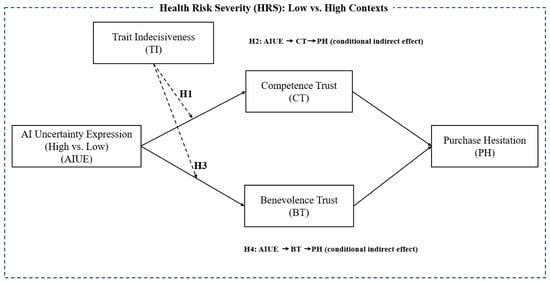
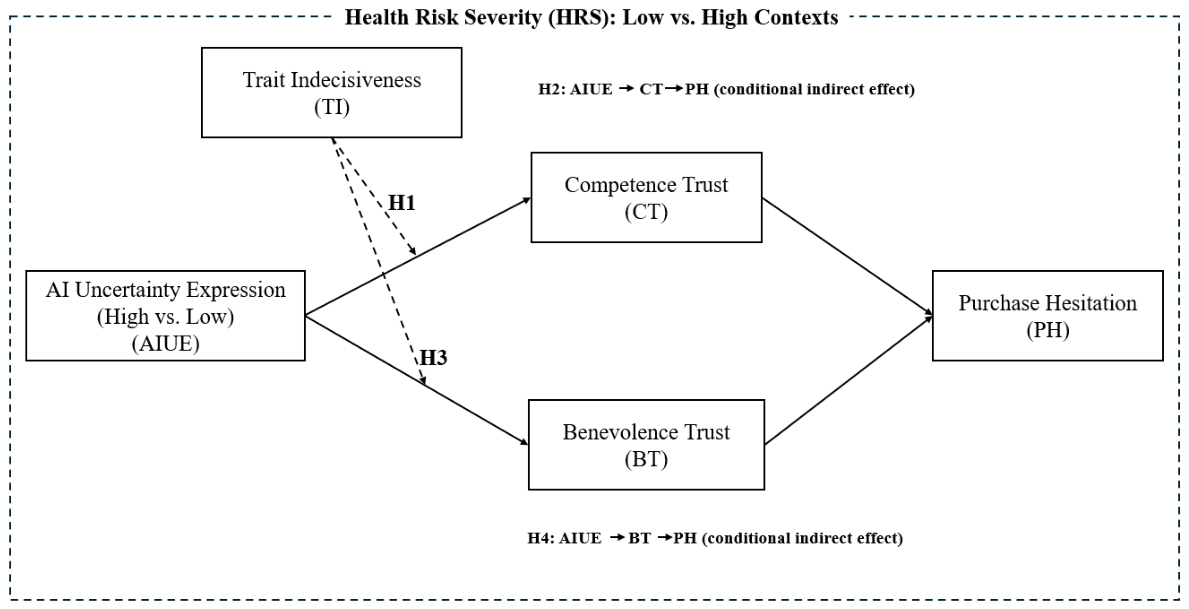
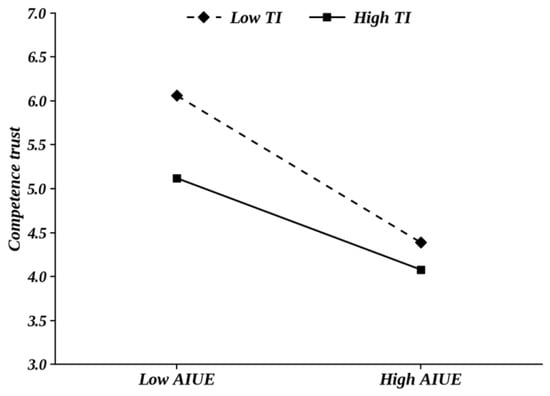
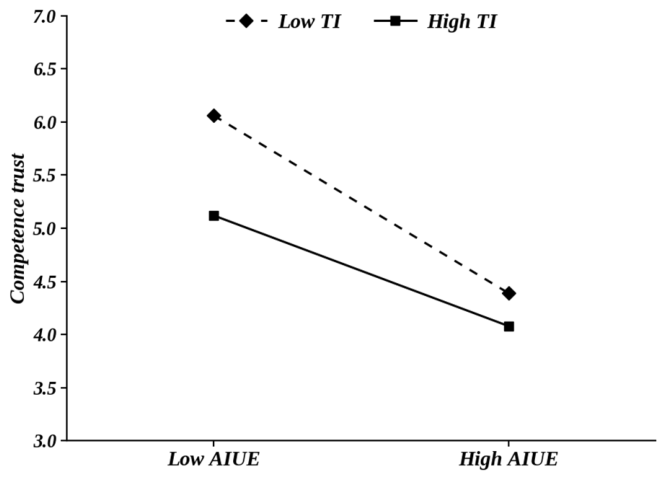
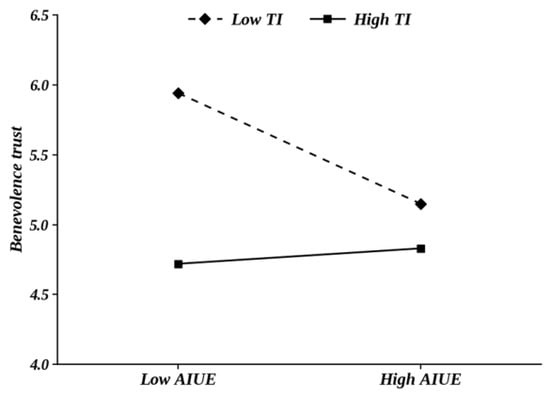
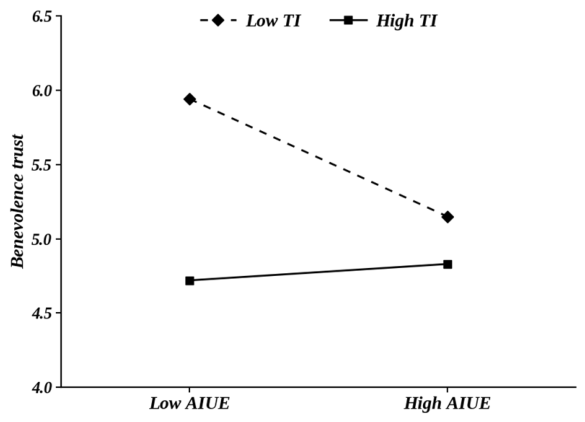

Disclaimer/Publisher’s Note: The statements, opinions and data contained in all publications are solely those of the individual author(s) and contributor(s) and not of MDPI and/or the editor(s). MDPI and/or the editor(s) disclaim responsibility for any injury to people or property resulting from any ideas, methods, instructions or products referred to in the content. |
© 2026 by the authors. Licensee MDPI, Basel, Switzerland. This article is an open access article distributed under the terms and conditions of the Creative Commons Attribution (CC BY) license.