


Abstract
This study investigates how user-generated content (UGC) and perceived experience of destination-generated social media content (DGC) shape satisfaction, destination image, and electronic word-of-mouth (eWOM) intention in lesser-explored tourism destinations. A dual-content model grounded in the stimulus-organism-response (SOR) framework is tested using partial least squares structural equation modeling (PLS-SEM) with data from 300 tourists who interact with destinations’ social media. Results reveal that UGC exerts limited influence on satisfaction, destination image, and eWOM intention, which diverges from much prior literature but is consistent with the scarcity and lower trustworthiness of UGC in small destinations. In contrast, perceived experience of DGC strongly enhances destination image and eWOM intention, highlighting the relevance of pre-visit digital experiences. In addition, moderation analysis shows that openness to experience significantly influences selected relationships, with stronger effects observed among tourists who are lower in openness. The findings underscore the importance of integrating pre-visit digital interactions and individual differences into destination marketing models and provide practical insights for destination management organizations (DMOs) in lesser-known destinations, emphasizing the strategic value of high-quality official content to compensate for limited UGC. This research advances destination marketing literature by jointly examining UGC and DGC and by introducing perceived experience of DGC and personality as key explanatory elements.
1. Introduction
The advent of digital technologies has led to major transformations across various sectors, including tourism and hospitality [1]. Specifically, regarding tourism destinations, online content generated on social media has emerged as a crucial tool for increasing destinations’ attractiveness and accessibility [2,3]. As a result, destination management organizations (DMOs) are increasingly leveraging their social media to enhance experiences and influence visitors’ perceptions [3]. Indeed, previous studies [4,5] acknowledge the importance of content produced by DMOs in terms of quality of information, ease of use and navigation, or credibility [6,7]. Likewise, traditionally, efforts of tourism organizations in building, promoting, and maintaining a destination’s image have long been considered crucial. However, other authors [8,9] also consider the content produced by users as relevant in influencing tourists’ behaviors due to the increasingly growing significance of electronic word-of-mouth (eWOM). In this sense, although the impact of social media content in the field of marketing destinations has focused on differentiating destination-generated social media content (DGC) and user-generated content (UGC) [10], it is a niche theme that has the potential to grow [11].
Furthermore, online content on social networks is increasingly regarded as an intangible asset that influences tangible assets and impacts business value [12]. Consequently, they are associated with the user experience (UX), which is related to a wide variety of meanings ranging from traditional usability to beauty, hedonic, affective, or experiential aspects of technology use [13]. Likewise, Verhulsdonck and Shalamova [14] suggest that, depending on how the contents are created and presented, the user will have a different perception and behavior towards the destination.
Content on social media also influences tourists’ evaluation or satisfaction, in some cases triggering a perceived destination image and word-of-mouth communications about the destination. This suggests that understanding visitor satisfaction, especially concerning different activities or attributes such as engagement with content sharing [15], is important for destination management [16].
Personality traits have increasingly been recognized as meaningful antecedents of tourist behavior [17,18], as they allow for a more nuanced understanding of individual differences beyond traditional sociodemographic segmentation variables such as age or gender [19]. In particular, openness to new experiences offers a valuable lens for examining tourist behavior in lesser-known destinations, where novelty seeking and tolerance for unfamiliarity may shape how tourists interpret information and respond to destination-related stimuli. Given the relevance of this trait to decision-making in tourism contexts [20,21], together with the mixed and sometimes inconclusive findings reported in previous personality-based tourism studies [22,23,24], the present paper also investigates the moderating role of personality traits within the proposed research framework.
In sum, this study contributes to broadening the application of the SOR framework [25] by conceptualizing UGC and DGC as two parallel stimuli, an empirical comparison that remains limited in destination marketing research, and by showing that their effects may differ in lesser-known destinations. Thus, the present research delimits the explanatory power of existing SOR-based models, which have largely been developed and tested in consolidated destinations characterized by high digital visibility and abundant UGC. Second, existing research on DGC has predominantly focused on content characteristics, destination image, or satisfaction, paying less attention to tourists’ perceived experience with official destination content, particularly at the pre-visit stage of the trip. Third, although personality traits have been identified as relevant predictors of tourist behavior, evidence of their moderating role in digital content evaluation remains fragmented, especially in contexts marked by lower visibility and greater uncertainty. Importantly, prior findings highlighting the persuasive strength of UGC have mostly been observed in highly visible destinations with abundant reviews, dense digital interaction, and stronger reputational cues [5,8]. By contrast, lesser-known destinations represent a structurally different informational environment, characterized by lower volumes of UGC, reduced content diversity, and weaker online reputational signals, all of which may diminish the credibility and diagnostic value of user-generated communication [7,26,27]. Accordingly, lesser-known destinations are not only an underexplored empirical setting, but also a theoretically relevant context for examining whether prevailing assumptions in digital tourism research remain valid under conditions of low visibility and greater uncertainty. From this perspective, the study is positioned as a boundary-condition test of established frameworks, explaining how online communication shapes tourists’ satisfaction, destination image, and eWOM. Grounded in the SOR framework, this study pursues two main objectives: (1) to analyze and compare the effects of UGC and tourists’ perceived experience with destination-generated content on satisfaction, destination image, and eWOM intention; and (2) to examine whether personality traits moderate these relationships in the context of lesser-known destinations. By doing so, the aim of the research is to advance theoretical understanding of digital destination marketing while offering practical insights for DMOs seeking to optimize promotional strategies under conditions of limited visibility and resources.
2. Literature Review and Development of Hypotheses
The stimulus-organism-response (SOR) framework, originally proposed by Mehrabian and Russell (1974) [25] within the field of environmental psychology, has been extensively utilized to investigate how environmental and media-related stimuli impact individual behavior (Baber & Baber, 2023) [8]. In tourism contexts, and specifically in this study, stimuli such as UGC and perceived experience of DGC operate as external cues that can shape tourists’ satisfaction with communications and/or perceived image of the destination (organism), and consequently influence their behavioral responses, such as sharing experiences via social media (eWOM intention).
Within this broader logic, expectation-confirmation theory (ECT) and, to a more limited extent, the technology acceptance model (TAM) are incorporated as complementary explanatory lenses to provide a more nuanced understanding of some of the mechanisms operating within the model. ECT contributes to explaining the role of satisfaction within the proposed model. According to this perspective, satisfaction emerges from the comparison between prior expectations and perceived performance or actual experience [28,29]. ECT thus supports the interpretation of satisfaction as an organism state through which online communication contributes to destination image and eWOM intention. TAM, in turn, posits that technology-related evaluations influence users’ attitudes toward digital environments and their subsequent behavioral responses [30]. In the present study, it serves to justify why tourists’ perceived experience of DGC may influence their internal evaluations (such as satisfaction or perceived image). Importantly, this construct is not intended as a direct operationalization of TAM dimensions, but rather as a narrower, context-specific perceived experience with official destination social media communication. This encompasses hedonic, interactive, informational, and participatory characteristics, as well as elements associated with perceived usefulness and perceived ease of use.
Thus, the SOR model provides the general causal structure of the model, whereas ECT and, to a lesser extent, TAM clarify specific mechanisms operating within that broader sequence.
Building on this theoretical integration, we will first formulate hypotheses related to UGC, followed by those addressing DGC, and finally, the hypothesis positing personality as a moderator.
2.1. User-Generated Content
UGC has become a central element of contemporary digital communication, particularly within tourism contexts [31]. Prior research conceptualizes UGC as content that is publicly accessible online, created with a degree of creativity, and produced by individuals outside professional or commercial settings [32]. It includes tourists’ narratives, opinions, evaluations, and recommendations shared across digital platforms such as social media, blogs, and online forums [33,34]. Through these channels, consumers actively participate in shaping the informational environment surrounding destinations.
Although closely related, UGC and eWOM represent distinct yet overlapping constructs. eWOM is generally defined more narrowly as consumption-related communication, such as online reviews, ratings, or recommendations, whereas UGC encompasses a broader range of user-created digital expressions [35,36]. While UGC emphasizes content creation, eWOM may also involve the dissemination or sharing of information originally produced by others. Despite this conceptual distinction, previous studies have frequently used the two terms interchangeably, particularly in tourism and marketing research [37,38]. Accordingly, the present study acknowledges their conceptual proximity, while treating UGC as the source of content and eWOM as a behavioral outcome reflecting information-sharing intentions [39].
Moreover, the increasing reliance on digital media and social networking platforms has substantially transformed how destination images are formed and communicated. Online interactions and user opinions shared on social media exert a significant influence on the perceived image of organizations and destinations [40]. In the tourism domain, perceived destination image has been widely recognized as a strategic asset that enhances destination competitiveness and fosters tourist loyalty [41]. Destination image is generally understood as a holistic mental representation formed through tourists’ beliefs, impressions, and associations derived from multiple information sources [3]. As such, it reflects a subjective and dynamic evaluation of a place rather than an objective reality [42].
From a branding perspective, destination image can be interpreted as a set of associations stored in tourists’ memory, encompassing functional, emotional, and symbolic attributes [42,43]. In digital environments, these associations are increasingly shaped by online content, contributing to what has been termed electronic reputation [44]. Consequently, destination image has become a focal topic in tourism research due to its influence on tourists’ perceptions, evaluations, and decision-making processes [45].
Recent studies emphasize that the quality and credibility of digital marketing initiatives, including DGC and social media marketing activities, play a critical role in shaping a favorable destination image [26]. However, beyond official communications, UGC has been shown to exert a strong influence on image formation [5,8]. In this regard, destination image is widely acknowledged as a multidimensional construct that integrates cognitive evaluations and affective responses shaped by online interactions [46].
In addition to influencing destination image, UGC also plays a crucial role in stimulating tourists’ intentions to engage in eWOM. Tourists are more inclined to share their experiences online when they perceive destination-related content as credible, useful, and influential [47,48]. Furthermore, motivational factors such as altruism, social interaction, and expectations of reciprocal benefits have been identified as key drivers of eWOM behavior [49]. As tourists consume and interact with UGC, their perceptions of the destination are reinforced, increasing their likelihood of disseminating information and recommendations through digital platforms. Based on this, we state the following hypotheses:
H1.
User-generated content positively influences tourists’ perceived destination image.
H2.
User-generated content positively influences tourists’ intention to engage in eWOM about the destination.
In line with the objectives of the present research, tourist satisfaction represents another key construct. Consumer satisfaction has long been regarded as a cornerstone of marketing theory due to its strategic relevance for organizational performance and long-term success [50]. Early conceptualizations describe satisfaction as an evaluative judgment formed after a purchase or as the cumulative result of repeated interactions between consumers and products or services [51]. This perspective emphasizes satisfaction as an attitudinal response emerging from consumption experiences.
More recent research has expanded this view by framing satisfaction as the outcome of a comparative process between consumers’ pre-consumption expectations and their post-consumption evaluations [52]. This approach is grounded in expectation-confirmation theory [28], which posits that satisfaction arises when perceived performance meets or exceeds prior expectations, whereas dissatisfaction occurs when performance falls short.
Applied to tourism destinations, this theoretical framework suggests that tourists experience higher levels of satisfaction when destination attributes, services, or experiences surpass what they initially anticipated [16]. Within digital tourism environments, UGC plays an important role in shaping satisfaction judgments. Online reviews and social media content provide experience-based information that helps tourists evaluate destination performance and identify specific sources of satisfaction or dissatisfaction [53]. As tourists increasingly rely on UGC to interpret and assess their travel experiences, such content becomes a salient antecedent of satisfaction formation. Therefore, the following hypothesis is posited:
H3.
User-generated content positively influences tourists’ satisfaction with UGC about the destination.
Prior research has consistently highlighted the interconnected roles of tourist satisfaction and destination image in shaping tourists’ behavioral intentions. Empirical evidence suggests that both constructs operate jointly to influence post-consumption responses, including recommendations and loyalty-related behaviors [54,55]. For instance, Marques et al. [56] demonstrate that the affective dimension of destination image is significantly shaped by tourists’ satisfaction levels and subsequently influences post-visit behavioral outcomes. Similarly, Xu et al. [39] report that UGC exerts an indirect effect on tourist loyalty by simultaneously influencing destination image and satisfaction, highlighting the sequential and complementary nature of these constructs.
Moreover, tourism is widely recognized as an information-intensive industry in which travelers rely heavily on information exchanges throughout the decision-making and experience-evaluation processes. With the rapid expansion of social media and digital platforms, online content has become a powerful stimulus capable of shaping tourists’ intentions and enhancing their satisfaction with destinations [57,58].
Thus, considering all previous discussions, the following hypotheses are proposed:
H4.
Tourists’ satisfaction with UGC positively influences their perceived destination image.
H5.
Tourists’ satisfaction with UGC positively influences their eWOM intention.
2.2. Perceived Experience of Destination-Generated Social Media Content
UX is a multidimensional concept that refers to the overall experience a person has when interacting with a product, system, or service. Rather than focusing solely on usability or interface efficiency, UX encompasses a broader range of factors, including the user’s emotions, perceptions, interpretations, and responses before, during, and after interaction [59,60]. This holistic view includes not only the functional aspects—such as usefulness and ease of use—but also how the interaction aligns with the user’s expectations and internal state [61].
UX is recognized as a professional role (e.g., UX designer), an academic discipline (UX design), and a heuristic framework in usability studies. Across these domains, the emphasis lies on designing experiences that are intuitive, seamless, and emotionally resonant [14]. By centering design efforts on the full spectrum of user interaction, UX extends the traditional scope of usability, aiming to enhance overall satisfaction and engagement [62].
Moreover, most UX models distinguish between hedonic and pragmatic dimensions of technology, the former being related to the emotional and engagement appeal of the interaction, while the latter are related to functional aspects [63]. In a similar vein, scholars such as Mani [64] conceptualize some of these UX elements through the lens of virtual hospitality, describing digital environments ─such as online communities─ as spaces capable of hosting social interactions that reflect the authentic hospitality of a tourist destination. From a more technical perspective, Piccoli et al. [65] frame hospitality in terms of information convenience (i.e., easy access to relevant product details), site navigation (the ability to locate information efficiently), and consumer confidence. Furthermore, Manna et al. [66] identify some key factors (e.g., trust, service experience, customer care, service quality, or ease of use) which influence UX.
Building on this understanding of UX, it is important to consider how it applies specifically to digital interactions within the tourism context, particularly in relation to DGC. DGC refers to content created and disseminated by official tourism organizations or companies through online channels, especially social media, as part of their promotional strategies [5]. These communications are not only a key component of the digital marketing mix but also play a critical role in shaping tourist perceptions and encouraging destination loyalty. In contrast to traditional advertising, DGC leverages the interactive and participatory nature of digital platforms to engage users more directly. In this sense, prior literature e.g., [67,68,69] suggests that official social media communication can generate experiential responses through its hedonic characteristics, entertainment value, interactivity, informativeness, and capacity to encourage participation and sharing. Based on this logic, the present study defines perceived experience of DGC as tourists’ overall perception of the experience derived from interacting with official destination content on social media. Importantly, this construct is not approached as a broad measure of UX in the general technological or interface-related sense. Instead, it is conceptualized as a narrower, context-specific form of UX linked to the social media content itself and to users’ interaction with it.
As a result, the perceived experience of DGC—how intuitive, informative, and engaging users perceive this content—can significantly influence tourists’ attitudes and behaviors, including their intention to engage in eWOM [70,71]. Thus, in the present study, the perceived experience with online DGC is examined as a key construct to understand how destination communications affect tourists in lesser-known destinations.
In the context of digital tourism marketing, perceived experience with DGC ─with websites and social media managed by DMOs─ has become a central element influencing tourist behavior and perception. This construct refers not only to usability but also to how intuitive, accessible, and engaging users find the interaction with digital platforms [8]. As Lam et al. [68] emphasize, well-designed destination platforms, featuring high usability and user-centered design, enhance the overall effectiveness of destination marketing and play a crucial role in shaping visitors’ perceptions. This aligns with findings from Montero et al. [72], who argue that ensuring a positive experience across digital platforms, including inclusivity and accessibility, is fundamental for influencing tourists’ cognitive and emotional responses to destinations.
Prior studies suggest that high-quality digital content—characterized by clear navigation, relevant information, and user-friendly interfaces—can foster trust, credibility, and ultimately behavioral responses such as eWOM [73,74]. In the same vein, Saleem et al. [75] further confirm that users who perceive content as valuable and trustworthy are more likely to communicate online their experiences with others. Moreover, tourism marketing efforts that incorporate entertainment, personalization, and interactive features have been found to positively influence destination image [76,77]. Other prior studies suggest that users’ motivations and experiences on social media play an important role in shaping their willingness to share information online. For instance, Lee and Ma [78] found that social interaction on social media positively stimulates intentions to disseminate content. In the tourism context, Lai et al. [79] similarly show that tourists who enjoy a positive and satisfying cuisine experience are more likely to develop favorable eWOM intentions. Within the tourism domain, it has been emphasized that tourists’ satisfaction and favorable experiences are key antecedents of eWOM behavior [80,81].
Research has also highlighted that sharing through social media can itself be perceived as an enjoyable and entertaining activity, which encourages more active platform use [82]. Beyond entertainment, other experiential aspects of digital platforms (such as ease of use, effective search functionality, and appealing design) can significantly strengthen users’ tendency to engage in positive eWOM [83].
In line with this literature, it is proposed that a favorable perceived experience with online DGC will positively influence tourists’ perception of the destination image, as well as their intention to engage in eWOM behavior:
H6.
Perceived experience of destination-generated social media content positively influences tourists’ perceived destination image.
H7.
Perceived experience of destination-generated social media content positively influences tourists’ intention to generate eWOM.
Tourism organizations are increasingly using digital platforms to understand visitor preferences and deliver personalized, engaging content that enhances satisfaction [84,85]. Studies show that personalization, usability, and content quality positively influence trust and user attitudes toward online platforms [86,87,88]. Destinations providing user-friendly and visually appealing digital experiences are more likely to meet visitors’ expectations, improve perceptions of service quality, and generate satisfaction with DGC [89,90].
Tourists frequently consult social media communications during the pre-visit stage of the travel process [91]. Through this exposure, they obtain information and knowledge about destinations, products, and services, which contributes to the formation of expectations and, subsequently, influences satisfaction [92]. In this context, organizations that design effective social media marketing experiences are better positioned to establish positive relationships with their audiences, thereby fostering higher levels of satisfaction and loyalty [93]. More specifically, social media communication that combines informative value with features such as entertainment, interaction, and customization can enhance customer satisfaction [16]. Likewise, Verhagen et al. [94] showed that, in online environments, more enjoyable digital experiences lead users to report greater satisfaction with the website. In a similar vein, McAlexander et al. [95] emphasized that user interaction and communication within the platform are central to strengthening relationships, increasing satisfaction, and supporting long-term loyalty.
Therefore, a positive perceived experience with online DGC is expected to lead to higher satisfaction with that content:
H8.
Perceived experience of destination-generated social media content positively influences tourists’ satisfaction with DGC.
Digital technologies and social media have become central channels through which tourists and destination management organizations (DMOs) construct and communicate destination images [96]. When users engage with DGC, they are exposed to curated information that shapes how they interpret and internalize the characteristics of a destination. This process of assimilating new stimuli contributes to the development of cognitive and affective evaluations that ultimately form the overall destination image [8,10]. Satisfaction with this official content is therefore essential, as trustworthy and credible sources tend to exert stronger influence on tourists’ perceptions [4]. According to ECT, tourists compare their expectations—often shaped by official content—with their actual experiences, influencing how they perceive the destination [68]. Therefore, greater satisfaction with DGC is likely to enhance destination image.
Beyond shaping image, satisfaction with DGC may also stimulate behavioral responses, including eWOM. Content originating from authoritative and reliable sources, such as DMOs, tends to elicit more favorable reactions and can motivate users to share information with others [97]. High-quality and engaging DGC strengthens digital marketing effectiveness and has been shown to influence tourists’ behavioral intentions, particularly their likelihood to recommend or comment on the destination online [98]. Moreover, official digital channels and eWOM collectively contribute to tourists’ satisfaction with a place and play a key role in triggering subsequent communicative behaviors [58,68,99]. Previous research has emphasized that destination image is not static, but evolves throughout and beyond the travel experience, thereby influencing tourists’ satisfaction and their subsequent behavioral responses, such as recommending the destination or revisiting it [4]. In online environments, satisfaction tends to increase when the actual experience with a brand or community meets or exceeds prior expectations, and this positive evaluation can strengthen both consumers’ purchase decisions and their willingness to disseminate information about the product or service [100]. In the tourism field, several empirical studies have likewise confirmed that satisfaction and positive experiences are closely associated with eWOM behavior [80,81].
More specifically, Lai et al. [79], in the context of cuisine tourism, found that tourists who enjoy satisfying consumption experiences are more likely to develop positive intentions to generate eWOM. In a similar vein, users who report satisfying experiences with a brand community tend to share their consumption experiences with others, both to assist other consumers and to express support for the brand [101].
Based on this, we state the following hypotheses:
H9.
Tourists’ satisfaction with online destination-generated content (social media) positively influences their perceived destination image.
H10.
Tourists’ satisfaction with online destination-generated content (social media) positively influences their eWOM intention.
Destination image has been extensively acknowledged in tourism literature as a fundamental antecedent of tourist behavior, exerting a significant influence on both travel-related decisions and post-visit outcomes [102,103]. A favorable destination image helps tourists form expectations and develop behavioral intentions toward the destination. Nevertheless, some scholars argue that visual or image-related cues alone may not always be sufficient to stimulate behavioral intentions, particularly when tourists exhibit low levels of involvement with the product or the experience [104].
Despite this limitation, when destination image is formed through a combination of cognitive evaluations (e.g., perceived quality, attractions, and infrastructure) and affective responses (e.g., emotions and feelings toward the destination), it becomes a powerful determinant of favorable behavioral outcomes. Prior studies indicate that a positive and well-established destination image enhances tourists’ propensity to engage in supportive behaviors, such as recommending the destination to others [105]. Consistent with this view, Baloglu and McCleary [106] identify destination image as a reliable predictor of word-of-mouth communication, including its electronic form.
Although eWOM has received considerable scholarly attention, recent research highlights the need for further investigation into its antecedents, particularly those related to perceptual and experiential constructs [107]. Empirical evidence suggests that destination image not only influences visit intentions and destination trust but also plays a critical role in encouraging tourists to share their experiences through online platforms [81]. A positive destination image may therefore increase tourists’ motivation to generate eWOM as a means of expressing satisfaction, reinforcing self-image, or assisting other potential travelers.
Based on these arguments, the following hypothesis is proposed:
H11.
A positive destination image increases tourists’ intention to generate eWOM.
2.3. Personality Traits
Personality traits have long been examined as influential factors in decision-making and are recognized for their value as practical and observable criteria for segmenting tourism markets. These traits enable DMOs to better tailor their offerings to the preferences of specific tourist profiles. Moreover, personality-based segmentation provides deeper insight into the complexity and variability of tourist behavior, going beyond the limitations of traditional approaches that rely primarily on demographic or typological characteristics [19]. In parallel, moderation analysis has gained prominence in empirical research, particularly within the fields of information systems and broader business and management domains [108]. As such, incorporating personality traits as moderating variables offers a valuable opportunity to expand our understanding of tourist behavior across different contexts.
In line with this idea and the variables examined in the present study, previous research has shown that tourists’ personality traits significantly influence their perception of destination image [109]. As noted by Beerli and Martin [110], both psychological and demographic characteristics shape how individuals cognitively process and organize their perceptions, which in turn affects how they perceive a destination. Specifically, traits such as agreeableness and openness to experience have been linked to a higher perceived value of a destination [111]. Conversely, extraversion has been associated with a lower perception of value, while neuroticism has shown no significant impact [23].
In relation to satisfaction, certain personality traits have been found to positively influence behavioral intentions [112]. Traits such as extraversion, agreeableness, conscientiousness, and openness to experience have been identified as significant predictors of satisfaction, whereas neuroticism appears to have no notable effect [24]. Notably, openness to experience has demonstrated the strongest association with memorable tourism experiences, suggesting its potential impact on overall tourist satisfaction [21].
Tourist personality traits have been identified as influential factors in both destination choice and the intention to share experiences related to that destination [17]. Supporting this, d’Ament et al. [113] found that neuroticism specifically plays a role in shaping tourists’ intentions to communicate their experiences. Similarly, Lin et al. [114] observed that extraversion positively correlates with information-sharing behavior on social media, whereas agreeableness, conscientiousness, and neuroticism were negatively associated with such behavior. In contrast, according to Kordzadeh and Bozan [115], openness to new experience, conscientiousness, and extraversion are the ones influencing online review use and writing.
In accordance with mainstream literature, we anticipate personality as a moderating variable in the hypothesized relationships in our proposed model. Therefore, we propose the following hypothesis:
H12a–H12k.
Personality traits significantly moderate the structural relationships between user-generated content, perceived experience of destination-generated social media content, online content satisfaction, perceived destination image, and the intention to communicate online (eWOM intention).
Figure 1 presents the proposed model of this study.
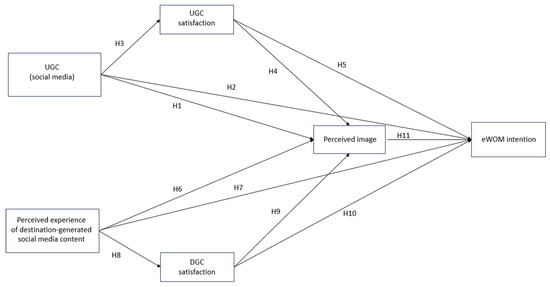
Figure 1.
Proposed model. Source: Authors’ proposal.
3. Methodology
To address the research objective, a quantitative methodology was employed using a structured, ad hoc questionnaire comprising exclusively closed-ended items.
The measurement items used to operationalize the study variables were adapted from established scales found in the marketing literature, ensuring alignment with the specific context and aims of this research. The scales developed by Yadav et al. [116] and Schivinski and Dabrowski [5] were adapted to assess online UGC. The constructs of UGC satisfaction, DGC satisfaction, and destination image were measured using the scale by Schivinski and Dabrowski [5]. The construct “perceived experience of destination-generated social media content” was operationalized as tourists’ perceived experiential quality of interacting with official destination social media content. The scale was adapted from [8], whose items capture hedonic, interactive, informational, and participatory aspects of social media interaction, as well as items related to perceived usefulness and perceived ease of use. The construct was theoretically reframed in line with tourism UX and platform-use experience literature, emphasizing ease of use, interactivity, and perceived experiential quality in digital destination environments [67,68,69,117]. The eWOM intention was evaluated using items from Cheung et al. [118] and Afshardoost and Eshaghi [119]. Lastly, regarding the tourists’ personality traits, the study employed the scale proposed by Picazo-Vela et al. [120], which is grounded in the Big Five personality framework [18,120]. All constructs were measured using a seven-point Likert scale ranging from 1 (strongly disagree) to 7 (strongly agree), and all items were treated as reflective indicators (see Table 1 with the operationalization of the constructs and measurement items).

Table 1.
Operationalization of the constructs and measurement items.
Given the breadth of the constructs included in the model, additional clarification is required regarding the operationalization of UGC and perceived experience of DGC. In this study, UGC is not conceptualized as a multidimensional second-order construct, but as tourists’ overall evaluation of user-generated destination content. The items adapted from Yadav et al. [116] and Schivinski and Dabrowski [5] capture different facets of this overall perception, including informativeness, reliability, relevance, persuasiveness, usefulness, comprehensiveness, and attractiveness. These elements are treated as reflective indicators because they are understood as manifestations of a common underlying evaluation of UGC quality and influence, rather than as independent dimensions that form the construct. Similarly, although UX is widely recognized as a multidimensional concept in the broader technology and design literature, the present study does not aim to measure UX in its full interface-design sense. Instead, it focuses on tourists’ perceived experience of destination-generated social media content as a bounded, context-specific construct. This construct captures tourists’ overall experiential evaluation of official destination content, including hedonic, informational, interactive, participatory, usefulness-related, and ease-of-use aspects. These aspects are therefore treated as reflective manifestations of a general perceived experience with DGC, rather than as separate first-order dimensions. This operationalization is consistent with the objective of the study, which is to compare the overall influence of UGC and DGC-related experience within the SOR framework, rather than to decompose each content source into multiple subdimensions.
The survey was distributed via QR code to tourists as they exited the tourist information offices they had visited. A non-probability convenience sampling approach was adopted, which is the most common method in service-related studies, including hospitality and tourism [121]. Accordingly, six tourist offices located in less-visited destinations within the Valencian Region of Spain agreed to participate in the study.
Before completing the survey, participants were presented with an introductory statement outlining the purpose of the study, the confidentiality of their responses, and their right to decline participation or withdraw at any time without consequence, which contributed to reducing evaluation apprehension and social desirability bias. In addition, as data were collected through a single questionnaire and from a single source, the potential presence of common method bias was considered. Following the procedure reported by Ahmed and Abdul Manab [122], Harman’s single-factor test was conducted by performing an unrotated exploratory factor analysis on all measurement items. The results indicated that a single factor explained 35.605% of the total variance, which is below the commonly accepted 50% threshold for serious common method variance concerns [123,124], as cited in Ahmed & Abdul Manab [122].
To ensure consistency between the sampling procedure and the research objective, the questionnaire included a filter question asking respondents whether they had previously visited or interacted with the destination’s social media. Only respondents who met this criterion were included in the analysis. Moreover, data collection formed part of a broader research project that also examined the influence of interactions with tourist information staff and brochure characteristics, which required respondents to be approached face to face at tourist information offices. Therefore, although the present study focuses on digital and social media behavior, the sampling procedure captures tourists who combine prior digital engagement with the use of traditional, in-person destination information services. This approach is appropriate for examining tourists with different levels of exposure to destination-related online content; however, it may underrepresent tourists who rely exclusively or primarily on digital and social media sources.
Data collection was conducted during two separate periods: May to June 2024, and again from December 2024 to January 2025, resulting in a total of 300 valid responses. This final sample size can be considered adequate for the estimation of the proposed PLS-SEM model according to the criterion proposed by Hair et al. [125]. According to these authors, the minimum required sample size should be determined by multiplying by ten either the largest number of formative indicators used to measure a construct or the highest number of structural paths directed at any endogenous construct in the model. In the present study, the maximum number of structural paths pointing to a single construct is five, which yields a minimum threshold of 50 observations, which is widely exceeded in the case of the current sample. Moreover, a sensitivity power analysis was conducted using G*Power 3.1.9.7 [126]. Following the logic of the most complex regression equation in the PLS-SEM model, the analysis was based on five predictors, α = 0.05, statistical power = 0.80, and a total sample size of 300 respondents. The results indicated that the sample was able to detect effects of f2 = 0.044 or larger. Since this value exceeds Cohen’s [127] conventional threshold for a small effect, f2 = 0.02, the sample size can be considered adequate for estimating the overall structural model. Table 2 shows the demographic composition of the sample.
Table 2.
General sample data.
The dataset was used to evaluate the proposed model through a two-step analytical process, using the PLS-SEM approach, implemented via the SmartPLS 4.1.1.2 software. This method has been increasingly adopted in academic research due to its flexibility and numerous methodological advantages [128]. Notably, PLS-SEM is a nonparametric technique that does not require data to follow a normal distribution, making it suitable for a wide range of empirical applications [125,129]. This technique also enables the assessment of the significance of factor loadings and structural paths through the bootstrapping procedure, a resampling method introduced by Efron and Tibshirani [130].
As part of the analysis, Henseler’s multi-group analysis (MGA) procedure was employed to examine moderating effects [108,131]. Before conducting the MGA, respondents were segmented into two groups based on their personality trait scores, using the midpoint of the seven-point Likert scale, grouping scores from 1 to 4 and from 5 to 7. This midpoint-split method is a widely accepted approach in PLS-SEM multi-group analysis and is particularly common in personality-based segmentation studies [132,133,134,135]. This approach was adopted because the aim of the study was to examine group-based heterogeneity in the structural relationships rather than to estimate a continuous latent interaction effect. In PLS-SEM, moderation can be assessed through either interaction terms or group comparisons, depending on the research objective [136]. Since this study adopts a segmentation-oriented perspective and compares lower- and higher-trait respondent profiles across multiple paths, multigroup analysis was considered more appropriate, whereas latent interaction approaches are better suited to estimating continuous moderation on specific relationships [136,137].
4. Analysis of Results
The validity and reliability of the measurement model were assessed by examining factor loadings, Cronbach’s alpha, composite reliability (CR), and the average variance extracted (AVE) for each latent construct within the proposed model. The Cronbach’s alpha coefficients surpassed the commonly accepted threshold of 0.7, indicating satisfactory internal consistency [138,139]. Similarly, the composite reliability values were well above the recommended minimum of 0.7, reinforcing the consistency of the constructs [140]. Furthermore, all AVE values exceeded the 0.5 benchmark, indicating that each construct accounts for more than 50% of the variance in its respective indicators [141](see Table 3). These results collectively support the reliability and convergent validity of the measurement model. These empirical findings further support the treatment of UGC and perceived experience of DGC as reflective unidimensional constructs. For UGC, all indicators were statistically significant and the construct showed high internal consistency and convergent validity (Cronbach’s α = 0.942; CR = 0.950; AVE = 0.637) (see Table 3). Similarly, perceived experience of DGC presented satisfactory reliability and convergent validity (Cronbach’s α = 0.880; CR = 0.905; AVE = 0.546), with all indicators loading significantly on the construct. These results suggest that the indicators share sufficient common variance to represent global evaluative constructs in the context of the present model.
Table 3.
Measurement instrument of the structural model: reliability and convergent validity.
Next, discriminant validity was evaluated using the heterotrait-monotrait ratio of correlations (HTMT), as suggested by Henseler et al. [142]. The results indicated that all HTMT values were below the recommended threshold of 0.90, thereby providing evidence of satisfactory discriminant validity [133,142] (see Table 4).
Table 4.
Discriminant validity (HTMT criterion).
Following the confirmation of the psychometric properties of the measurement instrument, the structural model was estimated to evaluate the hypothesized causal relationships. This analysis employed a bootstrapping procedure with 5000 resamples [143]. Additionally, the model’s explanatory and predictive capabilities were assessed through the coefficient of determination (R2) and the Q2 predictive relevance test [140], which presented acceptable values (UGC satisfaction: R2 = 0.676, Q2 = 0.673; DGC satisfaction: R2 = 0.613, Q2 = 0.608; Image: R2 = 0.456, Q2 = 0.404; eWOM intention: R2 = 0.443, Q2 = 0.400) (see Table 4).
After confirming the reliability and validity of the measurement model, the structural equation model was assessed. Table 5 presents the results of the hypothesized relationships.
Table 5.
Structural equation model results.
The results of the structural paths indicate that, among the hypotheses related to the UGC side of the model, both H1 (between UGC and destination image) and H3 (between UGC and UGC satisfaction) exhibit a positive and statistically significant effect, respectively (β1 = 0.201, p < 0.05; β3 = 0.822, p < 0.01). However, the remaining hypotheses on this side (H2, H4, H5) did not reach statistical significance, nor did H11, which examines the relationship between destination image and eWOM intention. In contrast, all hypotheses on the DGC side of the model were supported. Specifically, the perceived experience of DGC shows a significant and positive relationship with destination image (H6: β6 = 0.350, p < 0.01); eWOM intention (H7: β7 = 0.421, p < 0.01), and DGC satisfaction (H8: β8 = 0.783, p < 0.01). Furthermore, DGC satisfaction is positively and significantly associated with both destination image (H9: β9 = 0.327, p < 0.01) and eWOM intention (H10: β10 = 0.261, p < 0.01).
To test hypotheses H12a-k, a multigroup analysis (MGA) was conducted. Among the personality traits examined, the “openness to new experiences or complexity” emerged as the only one with a statistically significant moderating effect on the model’s relationships in this specific context.
Prior to executing the MGA, measurement invariance across groups was assessed to ensure the comparability of constructs. The three-step procedure proposed by Henseler et al. [128] was employed (see Table 6). Specifically, configural invariance was first confirmed, compositional invariance was subsequently assessed using permutation tests, and finally, the equality of composite means and variances across the two personality-based groups was examined. The results indicated that only three constructs—DGC satisfaction, perceived experience with DGC, and destination image—exhibited equality in both mean and variance, suggesting partial measurement invariance. This level of invariance is sufficient to proceed with MGA [128].
Table 6.
Results of invariance measurement testing.
The MGA results indicate that the personality trait “Open to new experiences, complex” significantly moderates two structural relationships. Following Henseler’s MGA criterion (p < 0.05 or p > 0.95; [144]), significant differences were found for the relationships UGC–UGC satisfaction (H12c) and DGC satisfaction–eWOM intention (H12j). The group-specific path coefficients show that both effects are stronger among tourists with lower openness to new experiences. For the UGC–UGC satisfaction relationship, low-openness tourists show a stronger effect (β12c = 0.858; p < 0.05) compared with high-openness tourists (β12c′ = 0.719; p < 0.05). Likewise, the effect of DGC satisfaction on eWOM intention is substantially stronger for the low-openness group (β12j = 0.548; p < 0.05) than for the high-openness group (β12j′ = 0.139; p < 0.05). No significant differences were observed for the remaining personality-moderated paths (H12a-H12b, H12d-H12i, H12k), as their MGA p-values did not meet the required thresholds (see Table 7). Thus, H12 is only partially supported, with moderation detected exclusively for H12a and H12j. Furthermore, to ensure the groups’ sample-size justification, additional sensitivity checks were conducted for each openness-based subgroup [126]. The lower-openness group comprised 96 respondents and was able to detect effects of approximately f2 = 0.142 or larger, whereas the higher-openness group comprised 204 respondents and was able to detect effects of approximately f2 = 0.065 or larger. Following Cohen’s [127] thresholds, these results indicate that the larger subgroup was sufficiently powered to detect small-to-medium effects (f2 = 0.02; 0.15), while the smaller subgroup was mainly powered to detect effects close to medium size (f2 = 0.15). Therefore, the MGA findings are interpreted cautiously, particularly regarding small between-group differences, and are presented as exploratory evidence of group-based heterogeneity rather than as definitive moderation effects.
Table 7.
Henseler’s MGA of personality.
5. Discussion and Implications
Grounded in the stimulus-organism-response (SOR) framework and incorporating notions from ECT and the technology acceptance model, this study advances understanding of how different types of online content influence tourists’ cognitive, affective, and behavioral responses in the context of lesser-known tourism destinations. By jointly analyzing UGC and DGC within a dual-content model, the findings reveal an asymmetric influence of these content sources on satisfaction, destination image, and eWOM intention.
Contrary to the dominant stream of tourism literature that tends to treat UGC as a broadly powerful and transferable driver of tourist responses [8,9,10], several hypothesized relationships on the UGC side of the model were not supported. Specifically, UGC did not significantly influence eWOM intention, and satisfaction with UGC did not significantly influence destination image or eWOM intention. These findings should not be interpreted as evidence that UGC is irrelevant in lesser-known destinations, since UGC still showed a positive effect on perceived destination image and on satisfaction with UGC. Rather, they suggest that the influence of UGC is selective and depends on its capacity to function as a sufficiently diagnostic information cue.
This interpretation provides a clearer mechanism for understanding the limited role of UGC in the present study. Prior research on online reviews and eWOM indicates that consumers are more likely to adopt online information when it is perceived as relevant, credible, current, factual, and useful for decision-making [145,146]. In highly visible and digitally mature destinations, UGC is usually abundant, diverse, recent, and socially validated by multiple users, which increases its perceived representativeness and credibility. Under these conditions, UGC can operate as a salient stimulus that reduces uncertainty, supports expectation formation, and stimulates subsequent evaluations and behavioral intentions. However, in lesser-known destinations, the informational environment is structurally weaker, as UGC is often scarcer, less diverse, and less socially reinforced [7,26,27]. Consequently, UGC may provide insufficient diagnostic value for tourists, limiting its ability to shape satisfaction-based evaluations and directly stimulate eWOM intention.
From this perspective, the non-significant effects of UGC can be explained through an information-diagnosticity and uncertainty-reduction mechanism. Tourism is an information-intensive sector in which tourists search for information to reduce uncertainty and perceived risk, especially when destinations are less familiar or less established [147,148]. If UGC is fragmented, limited, or weakly validated, it may remain a peripheral cue rather than a central stimulus capable of activating stronger organismic states or behavioral responses. This mechanism is aligned with the SOR framework, according to which external stimuli influence internal evaluations and behavioral responses only when they are sufficiently salient, meaningful, and capable of being processed by individuals [25] and Bigné et al. [149]. It is also consistent with expectation-confirmation logic, since less diagnostic UGC may provide insufficiently stable cues for forming or confirming expectations, thereby weakening its effect on satisfaction [16,28], a point also reflected in Meneses et al. [53].
In contrast, all hypothesized relationships related to DGC were supported. Perceived experience of destination-generated social media content emerged as a particularly strong stimulus, significantly influencing satisfaction, destination image, and eWOM intention. These results reinforce previous studies emphasizing the strategic role of official destination communication in shaping tourists’ perceptions, especially when content is perceived as credible, informative, and easy to use [e.g., 5, 91]. Prior research has shown that secondary and official information sources encountered before the visit can significantly influence the image formation process and account for the gap between projected and perceived destination image, particularly when tourists rely on them in the absence of richer alternative cues [4]. Thus, the stronger role of DGC further supports the proposed mechanism: when UGC lacks sufficient diagnosticity, official communication may become a more central and reliable information source. In low-visibility destinations, DGC should therefore not be viewed merely as a complementary source that reinforces UGC. Rather, it may assume a compensatory or even substitutive role, offsetting the scarcity and weakness of UGC and becoming a key digital mechanism through which tourists form evaluations, develop satisfaction with online communication, and generate eWOM intentions. In this sense, the present findings extend prior literature by showing that DGC may operate not only alongside UGC, but in certain contexts in place of it.
Nevertheless, these conclusions should be interpreted in light of the specific empirical context of the study, as the data were collected in lesser-known destinations within a single Spanish region, the Valencian Region of Spain. Therefore, the findings should not be generalized directly to all tourism destinations, particularly highly consolidated, internationally recognized, or digitally mature destinations. Rather, the results are most applicable to regional and lesser-known destinations characterized by limited digital visibility, lower volumes of UGC, and stronger dependence on official destination communication.
Importantly, by incorporating the perceived experience of destination-generated social media content as a pre-visit construct, the study captures tourists’ evaluations formed during the early stages of the travel journey, responding to recent calls to integrate pre-visit, on-site, and post-visit experiences within unified destination marketing models [150,151].
Another noteworthy finding concerns the non-significant relationship between perceived destination image and eWOM intention. While traditional tourism models often assume a direct link between image and communicative behavior [106], recent studies suggest that cognitive evaluations alone may be insufficient to trigger eWOM [152,153], particularly in low-involvement or emerging destinations. In such contexts, affective and experiential constructs appear to play a more decisive mediating role in transforming perceptions into behavioral responses. This interpretation is aligned with the current findings, which show that satisfaction with DGC and the tourist experience have a stronger influence on eWOM intention than destination image itself.
Finally, the moderation analysis reveals that, among all the personality traits examined, only openness to new experiences significantly moderates two relationships in the model: UGC with UGC satisfaction and DGC satisfaction with eWOM intention. Moreover, both effects are stronger for tourists who are lower in openness. Openness is the personality dimension most closely associated with novelty seeking, uncertainty tolerance, and information processing [154]. In the context of lesser-known destinations—characterized by limited visibility, scarce UGC, and higher uncertainty—individuals low in openness rely more strongly on available informational cues when forming satisfaction and behavioral intentions. Consequently, UGC evaluations and satisfaction with official content become more influential for this group. Other personality traits, more closely related to social interaction or emotional regulation, appear less relevant in shaping digital information processing at the pre-visit stage. This selective moderation is aligned with previous tourism research highlighting the dominant role of openness in digital content evaluation and eWOM behavior under conditions of uncertainty [18,20].
5.1. Theoretical Implications
From a theoretical perspective, this study primarily contributes to destination marketing literature by refining the application of the SOR framework in digital tourism contexts. More specifically, it shows how a model with two sides (UGC and DGC) of communications influences satisfaction with these contents and perceived image (organisms), and consequently, the tourists’ response behavior (eWOM intention). Within this overarching logic of the SOR model, ECT [28] offers a complementary explanation for the specific role of satisfaction, as satisfaction can be interpreted as a post-evaluative state that emerges when destination-related communication meets or confirms tourists’ prior expectations, even when confirmation is not modeled as a separate construct. This interpretation is consistent with recent tourism research [29] applying ECT to explain how expectation-related factors shape satisfaction and, subsequently, behavioral outcomes. By contrast, TAM [30] plays a more limited supporting role, contributing to the explanation of why tourists’ perceived experience of destination-generated social media content may be influenced by technology-related evaluations linked to ease, usefulness, and quality of digital interaction. Accordingly, while the SOR model provides the main causal architecture of the model, ECT and, more marginally, TAM serve as complementary lenses that clarify specific evaluative mechanisms within that broader sequence.
Moreover, the study refines the SOR framework in digital tourism by demonstrating that the effectiveness of online stimuli is contingent on the destination’s digital visibility and informational density environment, rather than being universally stable across contexts. In this sense, the findings suggest that UGC cannot be treated as a uniformly strong stimulus across contexts, but rather as a source whose effectiveness depends on the availability, diversity, and credibility of user-generated information. It also contributes to debates on content credibility by suggesting that, in low-visibility destinations, official destination-generated communication substitutes the scarce and less persuasive UGC. Finally, by incorporating perceived experience of destination-generated social media content as a pre-visit antecedent, the study highlights the theoretical importance of early-stage digital evaluations in shaping later image and eWOM responses.
The results also contribute to the literature by identifying a possible mechanism explaining why UGC may lose explanatory strength in lesser-known destinations. Specifically, the findings suggest that the influence of UGC depends not only on its existence, but also on its informational diagnosticity. Previous research has shown that online consumer information is more likely to be adopted when it is perceived as relevant, credible, current, factual, and useful for decision-making [145,146]. In tourism contexts, where information search plays a central role in reducing uncertainty and perceived risk [147,148], UGC may only operate as a strong stimulus when it provides sufficient social validation and decision-making value. Therefore, when UGC is scarce, fragmented, or weakly validated, as may occur in lesser-known destinations, it may be insufficient to activate stronger organismic evaluations or behavioral responses. This refines the application of the SOR framework by showing that online stimuli differ in their capacity to activate satisfaction, image, and eWOM depending on their salience, credibility, and perceived diagnostic value [25] and Bigné et al. [149]. Accordingly, the study advances destination marketing literature by moving beyond a general context-dependent explanation and proposing informational diagnosticity and uncertainty reduction as mechanisms through which the effectiveness of UGC is conditioned in low-visibility destination environments.
In addition, it introduces the experience with DGC as a key pre-visit antecedent, addressing a notable gap in prior research that has predominantly focused on content characteristics rather than experiential evaluations of official digital communication [5,10]. Importantly, the results indicate that in low-visibility destinations, official destination communication may assume a compensatory or even substitutive role, rather than acting merely as a complement to UGC, when user-generated information is too scarce or weak to effectively shape tourists’ evaluations. Third, the findings nuance existing assumptions regarding the role of destination image by showing that image alone may not be sufficient to stimulate eWOM intention, thereby reinforcing the importance of affective and experiential mediators e.g., [155]. Finally, by examining personality traits as moderators, the study advances understanding of individual differences in digital content processing, highlighting openness to experience as the most contextually relevant trait in uncertain destination environments.
5.2. Practical Implications
Before deriving practical implications, it is important to note that these findings should be interpreted within the specific profile of the sample and the regional context of the study. The data were collected from tourists in lesser-known destinations within the Valencian Region of Spain who had previously interacted with destination social media but were recruited at tourist information offices. Therefore, the implications are especially relevant for DMOs managing regional or lesser-known destinations that seek to integrate digital communication with traditional or in-person visitor information services, rather than for all tourism destinations in general. Thus, from a practical standpoint, the findings suggest that DMOs in these types of less consolidated destinations should treat official digital communication not as a secondary promotional channel, but as a core pre-visit information infrastructure. In contexts where UGC is scarce, fragmented, or weakly persuasive, DGC becomes the main digital source through which potential visitors reduce uncertainty and evaluate the destination. This implication is relevant not only for DMOs, but also for small tourism enterprises, which often face coordination problems, limited digital marketing capabilities, low innovation awareness, and restricted financial resources due to their size and weaker access to public support [156,157]. In such environments, official communication can function as a shared strategic asset for the destination.
The results also show that the experiential quality of official social media communication matters more than mere online presence. Accordingly, DMOs and local tourism businesses should prioritize content that is clear, updated, interactive, and easy to engage with, combining practical value with visual appeal. Since smaller firms often require different digital strategies than larger organizations [158], lesser-known destinations may benefit more from simple, coordinated, and manageable communication efforts than from high-cost campaigns. This is consistent with recent tourism marketing research emphasizing context-sensitive and platform-specific digital strategies [159]. Additionally, DMOs in lesser-known tourism destinations that normally have limited resources can leverage UGC on social media with incentives to enhance interaction and entertainment, such as participation in quizzes, lotteries, and proper hashtags or emojis in social media messages [6,160].
A further implication concerns psychographic segmentation [19]. Given that tourists who are lower in openness rely more strongly on structured and reliable information, DMOs could develop segmented promotional campaigns that distinguish between more reassurance-oriented and more novelty-seeking audiences, for instance, by using more concrete and confidence-building formats such as FAQs, “what to expect” videos, local service explanations, maps, practical recommendations, and curated visitor pathways. By contrast, content directed at more novelty-oriented tourists can place greater emphasis on discovery, uniqueness, and experiential storytelling.
In addition, destination management organizations with limited budgets may benefit from selective creator partnerships rather than costly mass promotion. Recent research shows that influencers and creator-led storytelling can improve destination image and reduce uncertainty, especially in rural or less-established places [161]. In practice, collaborations with micro-influencers, local ambassadors, and niche creators may offer a more credible and cost-effective alternative than large-scale campaigns.
Finally, AI-generated content may enable smaller destinations to produce visuals, short videos, translations, and message variations more efficiently. Recent studies suggest that AI can support resource-constrained DMOs in scaling content production [162]. At the same time, tourism research also indicates that explicit AI disclosure may reduce perceived originality and travel intention [163]. For this reason, AI should be used primarily as a support tool to organize and publish content, monitor the performance of social media content, and automate user responses (using social media analytics tools). In contrast, and more specifically in the context of lesser-known tourism destinations, human curation and local authenticity remain essential for maintaining trust, reinforcing the idea that small firms are often perceived as more authentic and reliable with more customized services than larger firms [164].
6. Limitations and Future Research
The present study has several limitations that, in some cases, offer opportunities for future research. First, the empirical analysis focuses on lesser-known tourism destinations, which may limit the generalizability of the findings to more established destinations. Comparative studies across different levels of destination maturity would help validate the robustness of the proposed model. Furthermore, the empirical analysis focuses on lesser-known tourism destinations located within a single Spanish region, the Valencian Region of Spain. This regional context is relevant because destination visibility, tourists’ social media behavior, trust in official communication, and the availability of UGC may vary across territories and cultural settings. Therefore, the findings should be interpreted as context-bound and should not be generalized directly to highly consolidated destinations, international tourism hubs, or destinations with more mature digital ecosystems. Future research should replicate the model in other regions, countries, and destination types to assess whether the relative influence of UGC and DGC varies according to destination maturity, digital visibility, and cultural context.
Second, although the total sample of 300 respondents is adequate for estimating the overall PLS-SEM model, the complexity of the framework and the use of multigroup moderation analysis should be acknowledged as limitations. The midpoint split based on openness to experience produced unequal subgroups. While both groups are acceptable for exploratory PLS-SEM multigroup comparisons, the smaller subgroup has more limited statistical power, particularly for detecting small between-group differences. Therefore, the MGA findings should be interpreted cautiously as exploratory evidence of group-based heterogeneity. Future studies should replicate the model with larger and more balanced samples and test moderation using alternative approaches, such as continuous interaction terms or latent interaction models.
Third, the use of a cross-sectional design restricts the ability to capture changes in tourists’ perceptions across the pre-, during-, and post-visit stages; longitudinal approaches are therefore encouraged. Fourth, the perceived experience of destination-generated social media content was measured perceptually, and future research could complement survey data with behavioral or experimental methods. Fifth, another limitation concerns the operationalization of UGC and perceived experience of DGC as global reflective constructs. Although this approach is consistent with the objective of comparing the overall influence of user-generated and destination-generated content within the proposed SOR model, both constructs may also be conceptualized multidimensionally. For instance, future studies could distinguish between informational, credibility-related, persuasive, and attractiveness-related dimensions of UGC, or between hedonic, pragmatic, interactive, and participatory dimensions of perceived experience with DGC. Such multidimensional modeling would allow researchers to identify which specific facets of online content are most influential in shaping satisfaction, destination image, and eWOM intention.
Sixth, although a filter question ensured that only respondents who had previously interacted with the destination’s social media were included in the analysis, participants were recruited at tourist information offices. Consequently, the sample may overrepresent tourists who actively seek official or in-person destination information and may underrepresent tourists who rely exclusively, or primarily, on digital and social media sources. This may have influenced the relative importance of DGC and UGC in the model, as tourists who visit information offices may be more receptive to official destination communication. Therefore, the findings should be interpreted as applying to tourists who combine social media use with traditional destination information-seeking behavior, rather than to all digital tourists or social-media-only users. Future research should replicate the model using online or social-media-based sampling strategies, such as recruiting respondents directly through destination social media profiles, travel communities, or platform-based advertising, to better capture tourists with stronger digital engagement.
Finally, although multiple personality traits were examined, only openness to experience showed significant moderation effects, suggesting that future studies should explore additional individual-difference variables.
Future research could also extend the current model by incorporating affective variables (e.g., emotions, anticipated enjoyment, or trust) as mediators between online content and behavioral intentions, particularly given the non-significant direct effect of destination image on eWOM intention observed in this study. Such extensions would contribute to a more comprehensive understanding of how cognitive, affective, and experiential mechanisms jointly drive tourists’ online communication behaviors. Furthermore, in line with Marti et al. [165], examining AI-generated content alongside UGC and DGC would allow future studies to assess whether AI acts as a complement to or substitute for human-generated content in the context of lesser-known destinations and to explore its implications for satisfaction, destination image formation, and eWOM behavior.
7. Conclusions
This study examined how user-generated content (UGC) and perceived experience of destination-generated social media content influence satisfaction, destination image, and electronic word-of-mouth (eWOM) intention in lesser-known tourism destinations. Grounded primarily in the stimulus-organism-response framework [25], the findings show that the effects of online communication are not uniform across content sources. While prior tourism research has frequently emphasized the persuasive role of UGC in shaping tourist perceptions and behaviors [5,8], the present results indicate that, in this empirical context, UGC exerts only limited influence beyond its positive effect on destination image and satisfaction with UGC. This limited role may be explained by the lower informational diagnosticity of UGC in lesser-known destinations, where user-generated information may be scarcer, less diverse, and less socially validated. By contrast, destination-generated communication appears to be particularly relevant in this context. Perceived experience of destination-generated social media content positively influenced DGC satisfaction, destination image, and eWOM intention, while DGC satisfaction also strengthened image and eWOM. These results suggest that, in lesser-known destinations with weaker digital visibility, official communication may help compensate for the limited availability [27] and diagnostic value of UGC [145,146], thereby qualifying some assumptions in the existing literature.
The study also shows that destination image alone is not sufficient to stimulate eWOM intention, which supports more recent views that cognitive evaluations do not always translate directly into communicative behavior in the absence of stronger experiential or affective triggers [107]. In addition, the moderation analysis revealed that openness to experience was the only personality trait with significant effects, highlighting that individual differences matter when tourists process online destination information under conditions of uncertainty [18,20]. However, these moderation findings should be interpreted cautiously, given the exploratory nature of the subgroup analysis and the unequal size of the openness-based groups.
Overall, the article contributes to destination marketing research by comparing UGC and DGC within the same model, introducing perceived experience of destination-generated social media content as a pre-visit antecedent, and demonstrating that the relative effectiveness of digital content depends on the destination’s informational environment. Nevertheless, these conclusions should be interpreted within the specific empirical scope of the study. The data were collected from tourists in lesser-known destinations located within the Valencian Region of Spain, and respondents were recruited at tourist information offices after having previously interacted with destination social media. Therefore, the findings are most applicable to tourists who combine social media use with traditional destination information-seeking behavior in similar regional, low-visibility destination contexts. Future research should replicate the model across other territorial, cultural, and digital contexts, using larger and more balanced samples and alternative sampling strategies, to assess the robustness and transferability of these findings.
Author Contributions
Conceptualization, C.-M.H.-C.; methodology, C.-M.H.-C. and M.B.; software, M.B.; validation, M.-E.R.-M., I.G.-S. and C.-M.H.-C.; formal analysis, M.B.; investigation, C.-M.H.-C.; resources, I.G.-S.; data curation, M.B.; writing—original draft preparation, C.-M.H.-C.; writing—review and editing, M.-E.R.-M. and C.-M.H.-C.; visualization, C.-M.H.-C.; supervision, I.G.-S. and M.-E.R.-M.; project administration, I.G.-S.; funding acquisition, I.G.-S. All authors have read and agreed to the published version of the manuscript.
Funding
This research was conducted within the framework of the project number PID2020-112660RB-I00, funded by MCIN/AEI/10.13039/501100011033, as well as by the research groups AICO/2021/144 and CIAICO/2023/069 (funded by the Consellería de Innovación, Universidades, Ciencia y Sociedad Digital of the Generalitat Valenciana). It also received support from the Consellería de Educación, Cultura, Universidades y Empleo of the Generalitat Valenciana, with co-funding from the European Social Fund Plus (ESF+).
Institutional Review Board Statement
This study is exempt from ethical approval according to the guidelines established by the European Code of Conduct for Integrity in Research, to which Universitat de València has adhered (https://www.uv.es/hrs4r/en/ethical-professional-aspects/code-good-practices.html, accessed on 12 March 2026). Moreover, in our research, we have strictly adhered to the ESOMAR Code of Conduct (https://esomar.org/code-and-guidelines/icc-esomar-code, accessed on 12 March 2026), ensuring that all procedures and practices align with the highest ethical and professional standards. This includes protecting the privacy and confidentiality of participants, transparency in the methodology used, and a commitment to the integrity and quality of the data collected. Our goal is to provide accurate and reliable results that respect the rights and dignity of all involved.
Informed Consent Statement
Informed consent was obtained from all subjects involved in the study.
Data Availability Statement
The original contributions presented in this study are included in the article. Further inquiries can be directed to the corresponding author.
Acknowledgments
During the preparation of this manuscript/study, the authors used ChatGPT 5 Pro for the purposes of improving the readability and language of the manuscript. The authors have reviewed and edited the output and take full responsibility for the content of this publication.
Conflicts of Interest
The authors declare no conflicts of interest.
References
- Hussein, H.; Albadry, O.M.; Mathew, V.; Al-Romeedy, B.S.; Alsetoohy, O.; Abou Kamar, M.; Khairy, H.A. Digital Leadership and Sustainable Competitive Advantage: Leveraging Green Absorptive Capability and Eco-Innovation in Tourism and Hospitality Businesses. Sustainability 2024, 16, 5371. [Google Scholar] [CrossRef]
- Mandić, A.; Garbin Praničević, D. Progress on the role of ICTs in establishing destination appeal: Implications for smart tourism destination development. J. Hosp. Tour. Technol. 2019, 10, 791–813. [Google Scholar] [CrossRef]
- Wang, J.; Li, Y.; Wu, B.; Wang, Y. Tourism destination image based on tourism user generated content on internet. Tour. Rev. 2021, 76, 125–137. [Google Scholar] [CrossRef]
- Beerli-Palacio, A.; Martín-Santana, J.D. Explaining the gap in the image of tourist destinations through the content of and exposure to secondary sources of information. Curr. Issues Tour. 2020, 23, 2572–2584. [Google Scholar] [CrossRef]
- Schivinski, B.; Dabrowski, D. The effect of social media communication on consumer perceptions of brands. J. Mark. Commun. 2016, 22, 189–214. [Google Scholar] [CrossRef]
- Bataoui, S. When e-commerce becomes more human by transposing the hospitality concept to merchant websites. J. Retail. Consum. Serv. 2022, 65, 102831. [Google Scholar] [CrossRef]
- Platov, A.V.; Litvinova, O.I.; Troitskaya, N.G. The structure of the online reputation analysis in tourism. In Proceedings of the 2nd International Scientific and Practical Conference “Modern Management Trends and the Digital Economy: From Regional Development to Global Economic Growth”(MTDE 2020), Yekaterinburg, Russia, 16–17 April 2020; Atlantis Press: Dordrecht, The Netherlands, 2020; pp. 813–816. [Google Scholar] [CrossRef]
- Baber, R.; Baber, P. Influence of social media marketing efforts, e-reputation and destination image on intention to visit among tourists: Application of S-O-R model. J. Hosp. Tour. Insights 2023, 6, 2298–2316. [Google Scholar] [CrossRef]
- Guerreiro, M.M.; Pinto, P.S.; Ramos, C.; Matos, N.; Golestaneh, H.; Sequeira, B.; Pereira, L.N.; Agapito, D.L.; Martins, R.; Wijkesjö, M. The online destination image as portrayed by the user-generated content on social media and its impact on tourists’ engagement. Tour. Manag. Stud. 2024, 20, 1–15. [Google Scholar] [CrossRef]
- Stojanovic, I.; Andreu, L.; Curras-Perez, R. Social media communication and destination brand equity. J. Hosp. Tour. Technol. 2022, 13, 650–666. [Google Scholar] [CrossRef]
- Moradi, E. Mapping of journal of hospitality and tourism insights themes: A retrospective overview. J. Hosp. Tour. Insights 2024, 7, 1211–1237. [Google Scholar] [CrossRef]
- Ramos, C.M.; Casado-Molina, A.M. Online corporate reputation: A panel data approach and a reputation index proposal applied to the banking sector. J. Bus. Res. 2021, 122, 121–130. [Google Scholar] [CrossRef]
- Hassenzahl, M.; Tractinsky, N. User experience—A research agenda. Behav. Inf. Technol. 2006, 25, 91–97. [Google Scholar] [CrossRef]
- Verhulsdonck, G.; Shalamova, N. Creating Content That Influences People: Considering User Experience and Behavioral Design in Technical Communication. J. Tech. Writ. Commun. 2020, 50, 376–400. [Google Scholar] [CrossRef]
- Grosso, F.O.; Rodriguez-Molina, M.Á.; Castañeda-Garcia, J.A. The impact of destination-brand social media content on consumer online brand-related activities (COBRAs). Tour. Manag. Perspect. 2024, 51, 101239. [Google Scholar] [CrossRef]
- Chen, J.; Becken, S.; Stantic, B. Assessing destination satisfaction by social media: An innovative approach using Importance-Performance Analysis. Ann. Tour. Res. 2022, 93, 103371. [Google Scholar] [CrossRef]
- Fanea-Ivanovici, M.; Baber, H.; Salem, I.E.; Pana, M.-C. What do you value based on who you are? Big five personality traits, destination value and electronic word-of-mouth intentions. Tour. Hosp. Res. 2025, 25, 104–119. [Google Scholar] [CrossRef]
- Hu, Y.; Kim, H.J. Positive and negative eWOM motivations and hotel customers’ eWOM behavior: Does personality matter? Int. J. Hosp. Manag. 2018, 75, 27–37. [Google Scholar] [CrossRef]
- Moisa, D. Reframing Tourist Segmentation: A Personality-Based Approach to Enhance Sustainable Destination Management. Ph.D. Thesis, University of Cumbria, Carlisle, UK, 2025. [Google Scholar]
- Dedeoğlu, B.B.; Okumus, F.; Yi, X.; Jin, W. Do tourists’ personality traits moderate the relationship between social media content sharing and destination involvement? J. Travel Tour. Mark. 2019, 36, 612–626. [Google Scholar] [CrossRef]
- Tešin, A.; Kovačić, S.; Obradović, S. The experience I will remember: The role of tourist personality, motivation, and destination personality. J. Vacat. Mark. 2024, 30, 713–730. [Google Scholar] [CrossRef]
- Kvasova, O. The Big Five personality traits as antecedents of eco-friendly tourist behavior. Personal. Individ. Differ. 2015, 83, 111–116. [Google Scholar] [CrossRef]
- Kim, M.J.; Hall, C.M.; Han, H. Behavioral Influences on Crowdfunding SDG Initiatives: The Importance of Personality and Subjective Well-Being. Sustainability 2021, 13, 3796. [Google Scholar] [CrossRef]
- Moghavvemi, S.; Woosnam, K.M.; Hamzah, A.; Hassani, A. Considering Residents’ Personality and Community Factors in Explaining Satisfaction with Tourism and Support for Tourism Development. Tour. Plan. Dev. 2021, 18, 267–293. [Google Scholar] [CrossRef]
- Mehrabian, A.; Russell, J.A. An Approach to Environmental Psychology; The MIT Press: Cambridge, MA, USA, 1974. [Google Scholar]
- Rodrigues, S.; Correia, R.; Gonçalves, R.; Branco, F.; Martins, J. Digital marketing’s impact on rural destinations’ image, intention to visit, and destination sustainability. Sustainability 2023, 15, 2683. [Google Scholar] [CrossRef]
- Martín-Delgado, L.M.; Sánchez-Martín, J.M.; Rengifo-Gallego, J.I. An analysis of online reputation indicators by means of geostatistical techniques—The case of rural accommodation in Extremadura, Spain. ISPRS Int. J. Geo-Inf. 2020, 9, 208. [Google Scholar] [CrossRef]
- Oliver, R.L. A Cognitive Model of the Antecedents and Consequences of Satisfaction Decisions. J. Mark. Res. 1980, 17, 460–469. [Google Scholar] [CrossRef]
- Chaoyi, C.; Huijuan, L.; Zhenbin, W. Influencing factors of tourist loyalty in China camping destinations based on Expectation Confirmation Theory: The mediating role of satisfaction and well-being. Humanit. Soc. Sci. Commun. 2025, 12, 1418. [Google Scholar] [CrossRef]
- Davis, F.D. Perceived Usefulness, Perceived Ease of Use, and User Acceptance of Information Technology. Manag. Inf. Syst. Q. 1989, 13, 319–340. [Google Scholar] [CrossRef] [PubMed]
- Ramadhani, D.P.; Alamsyah, A.; Febrianta, M.Y.; Damayanti, L.Z.A. Exploring Tourists’ Behavioral Patterns in Bali’s Top-Rated Destinations: Perception and Mobility. J. Theor. Appl. Electron. Commer. Res. 2024, 19, 743–773. [Google Scholar] [CrossRef]
- Wunsch-Vincent, S.; Vickery, G. Participative Web and User-Created Content: Web 2.0, Wikis and Social Networking; Organization for Economic Cooperation and Development (OECD): Paris, France, 2007. [Google Scholar]
- Juliana, J.; Sihombing, S.O.; Antonio, F. Systematic literature review analysis of positive e-WOM on the tourist future behavior in tourism village marketing. J. Ilm. Glob. Educ. 2023, 4, 2140–2152. [Google Scholar] [CrossRef]
- Santos, M.L.B.D. The “so-called” UGC: An updated definition of user-generated content in the age of social media. Online Inf. Rev. 2022, 46, 95–113. [Google Scholar] [CrossRef]
- Thao, T.; Shurong, T. Is it possible for electronic word-of-mouth and user-generated content to be used interchangeably. J. Mark. Consum. Res. 2020, 65, 41–48. [Google Scholar] [CrossRef]
- Wolf, L.; Madlberger, M. The Influence of Submission Devices on User-Generated Content—A Systematic Literature Review and Meta-Analysis. Int. J. Consum. Stud. 2025, 49, e70003. [Google Scholar] [CrossRef]
- Cox, C.; Burgess, S.; Sellitto, C.; Buultjens, J. The role of user-generated content in tourists’ travel planning behavior. J. Hosp. Mark. Manag. 2009, 18, 743–764. [Google Scholar] [CrossRef]
- Phua, J.; Jin, S.V.; Kim, J. Pro-veganism on Instagram: Effects of user-generated content (UGC) types and content generator types in Instagram-based health marketing communication about veganism. Online Inf. Rev. 2020, 44, 685–704. [Google Scholar] [CrossRef]
- Xu, H.; Cheung, L.T.O.; Lovett, J.; Duan, X.; Pei, Q.; Liang, D. Understanding the influence of user-generated content on tourist loyalty behavior in a cultural World Heritage Site. Tour. Recreat. Res. 2023, 48, 173–187. [Google Scholar] [CrossRef]
- Castellano, S.; Dutot, V. Investigating the influence of E-word-of-mouth on E-reputation. Int. Stud. Manag. Organ. 2017, 47, 42–60. [Google Scholar] [CrossRef]
- Moliner-Tena, M.Á.; Hernández-Lobato, L.; Fandos-Roig, J.C.; Solís-Radilla, M.M. Destination image and tourist motivations as antecedents of tourist engagement. Int. J. Tour. Cities 2024, 10, 662–681. [Google Scholar] [CrossRef]
- Llopis-Amorós, M.P.; Gil-Saura, I.; Molina, M.E.R. The role of marketing communications in generating brand equity for an event. Event Manag. 2018, 22, 825–848. [Google Scholar] [CrossRef]
- Aaker, D.A. Managing Brand Equity; Free Press: New York, NY, USA, 1991. [Google Scholar]
- Baber, H.; Pană, M.C.; Fanea-Ivanovici, M. Predicting Romanian tourism e-WOM intentions using value and personality theories. Eur. J. Innov. Manag. 2024, 27, 628–647. [Google Scholar] [CrossRef]
- Zhao, Y.; Zhan, Q.; Du, G.; Wei, Y. The effects of involvement, authenticity, and destination image on tourist satisfaction in the context of Chinese ancient village tourism. J. Hosp. Tour. Manag. 2024, 60, 51–62. [Google Scholar] [CrossRef]
- Adam, M.; Ibrahim, M.; Putra, T.; Yunus, M. The effect of e-WOM model mediation of marketing mix and destination image on tourist revisit intention. Int. J. Data Netw. Sci. 2023, 7, 265–274. [Google Scholar] [CrossRef]
- Šerić, M.; Došen, Đ.O.; Mikulić, J. Antecedents and moderators of positive word of mouth communication among tourist destination residents during the COVID-19 pandemic. Curr. Issues Tour. 2023, 26, 224–241. [Google Scholar] [CrossRef]
- Le, H.T.P.M.; Ryu, S. The eWOM adoption model in the hospitality industry: The moderating effect of the vlogger’s review. J. Hosp. Tour. Technol. 2023, 14, 225–244. [Google Scholar] [CrossRef]
- Cheung, C.M.; Lee, M.K. What drives consumers to spread electronic word of mouth in online consumer-opinion platforms. Decis. Support Syst. 2012, 53, 218–225. [Google Scholar] [CrossRef]
- Fournier, S.; Mick, D.G. Rediscovering Satisfaction. J. Mark. 1999, 63, 5–23. [Google Scholar] [CrossRef]
- Yi, Y. A critical review of consumer satisfaction. In Review of Marketing 1990; Zeithaml, V.A., Ed.; Marketing Classics Press: Decatur, GA, USA, 1990; pp. 68–123. [Google Scholar]
- Gnanapala, W.A. Tourists perception and satisfaction: Implications for destination management. Am. J. Mark. Res. 2015, 1, 7–19. [Google Scholar]
- Meneses, R.; Brito, C.; Lopes, B.; Correia, R. Satisfaction and Dissatisfaction in Wine Tourism: A User-Generated Content Analysis. Tour. Hosp. Res. 2025, 25, 120–134. [Google Scholar] [CrossRef]
- Jebbouri, A.; Zhang, H.; Imran, Z.; Iqbal, J.; Bouchiba, N. Impact of destination image formation on tourist trust: Mediating role of tourist satisfaction. Front. Psychol. 2022, 13, 845538. [Google Scholar] [CrossRef]
- Prayag, G.; Ryan, C. Antecedents of tourists’ loyalty to Mauritius: The role and influence of destination image, place attachment, personal involvement, and satisfaction. J. Travel Res. 2012, 51, 342–356. [Google Scholar] [CrossRef]
- Marques, C.; da Silva, R.V.; Antova, S. Image, satisfaction, destination and product post-visit behaviors: How do they relate in emerging destinations? Tour. Manag. 2021, 85, 104293. [Google Scholar] [CrossRef]
- Harrigan, P.; Evers, U.; Miles, M.; Daly, T. Customer engagement with tourism social media brands. Tour. Manag. 2017, 59, 597–609. [Google Scholar] [CrossRef]
- Arasli, H.; Abdullahi, M.; Gunay, T. Social Media as a Destination Marketing Tool for a Sustainable Heritage Festival in Nigeria: A Moderated Mediation Study. Sustainability 2021, 13, 6191. [Google Scholar] [CrossRef]
- Barnum, C.M. Establishing the essentials. In Usability Testing Essentials: Ready, Set—Test; Morgan Kaufmann Publishers: Burlington, MA, USA, 2021; pp. 9–33. [Google Scholar] [CrossRef]
- Hartson, H.R. What Are UX and UX Design? In The UX Book: Process and Guidelines for Ensuring a Quality User Experience; Morgan Kaufmann: Burlington, MA, USA, 2019; pp. 3–25. [Google Scholar] [CrossRef]
- Albert, B.; Tullis, T. Measuring the User Experience: Collecting, Analyzing, and Presenting UX Metrics; Morgan Kaufmann: Burlington, MA, USA, 2022; pp. 54–98. [Google Scholar]
- Nielsen, J. A 100-Year View of User Experience. 2017. Available online: https://www.nngroup.com/articles/100-years-ux/ (accessed on 8 May 2026).
- Mlekus, L.; Bentler, D.; Paruzel, A.; Maier, G.W. How to raise technology acceptance: User experience characteristics as technology-inherent determinants. Group Interact. Organ. Res. 2020, 51, 273–283. [Google Scholar] [CrossRef]
- Mani, Z. Les Dimensions de L’hospitalité Virtuelle: Le Cas des Sites Web Touristiques. Doctoral Dissertation, Aix-Marseille Université, Marseille, France, 2012. [Google Scholar]
- Piccoli, G.; Brohman, M.K.; Watson, R.T.; Parasuraman, A. Net-Based Customer Service Systems: Evolution and Revolution in Web Site Functionalities. Decis. Sci. 2004, 35, 423–455. [Google Scholar] [CrossRef]
- Manna, A.; Chakraborty, D.; Cheah, J.H.; Sigala, M. The digital tourist: Examining user experience in travel apps using machine learning approach. Tour. Recreat. Res. 2025, 1–18. [Google Scholar] [CrossRef]
- Martínez-Sala, A.M.; Monserrat-Gauchi, J.; Alemany-Martínez, D. User Usable Experience: A three-dimensional approach on usability in tourism websites and a model for its evaluation. Tour. Manag. Perspect. 2020, 33, 100579. [Google Scholar] [CrossRef]
- Lam, J.M.; Ismail, H.; Lee, S. From desktop to destination: User-generated content platforms, co-created online experiences, destination image and satisfaction. J. Destin. Mark. Manag. 2020, 18, 100490. [Google Scholar] [CrossRef]
- Jiménez-Barreto, J.; Rubio, N.; Campo, S.; Molinillo, S. Linking the online destination brand experience and brand credibility with tourists’ behavioral intentions toward a destination. Tour. Manag. 2020, 79, 104101. [Google Scholar] [CrossRef]
- Abbasi, A.Z.; Tsiotsou, R.H.; Hussain, K.; Rather, R.A.; Ting, D.H. Investigating the impact of social media images’ value, consumer engagement, and involvement on eWOM of a tourism destination: A transmittal mediation approach. J. Retail. Consum. Serv. 2023, 71, 103231. [Google Scholar] [CrossRef]
- Chrismardani, Y.; Iriani, S.S.; Artanti, Y. How Tourist Destination Online Content and Social Media Interaction Influence Tourist’s Visit Intention? In Proceedings of the International Joint Conference on Arts and Humanities 2024 (IJCAH 2024), Surabaya, Indonesia, 26 August–10 September 2024; Atlantis Press: Dordrecht, The Netherlands, 2025; pp. 166–180. [Google Scholar] [CrossRef]
- Montero, A.A.; Sales, L.H.; Idrissi, M.Y.; Benabbou, M. Web accessibility and inclusivity of tourist destinations in social media management: An intercultural analysis of Andalusia and Northern Morocco. Univers. Access Inf. Soc. 2025, 24, 249–265. [Google Scholar] [CrossRef]
- Armutcu, B.; Tan, A.; Amponsah, M.; Parida, S.; Ramkissoon, H. Tourist behavior: The role of digital marketing and social media. Acta Psychol. 2023, 240, 104025. [Google Scholar] [CrossRef]
- Loureiro, S.M.C. The Role of Website Quality on PAD, Attitude and Intentions to Visit and Recommend Island Destination. Int. J. Tour. Res. 2015, 17, 545–554. [Google Scholar] [CrossRef]
- Saleem, M.; Kamarudin, S.; Shoaib, H.M.; Nasar, A. Retail Consumers’ Behavioral Intention to Use Augmented Reality Mobile Apps in Pakistan. J. Internet Commer. 2022, 21, 497–525. [Google Scholar] [CrossRef]
- Al-Gasawneh, J.A.; Al-Adamat, A.M. The relationship between perceived destination image, social media interaction and travel intentions relating to Neom city. Acad. Strateg. Manag. J. 2020, 19, 1–12. [Google Scholar]
- Ghazali, R.M.; Cai, L. Social media sites in destination image formation. In Tourism Social Media: Transformations in Identity, Community and Culture; Munar, A.M., Gyimóthy, S., Cai, L., Eds.; Emerald Group Publishing: Leeds, UK, 2013; Volume 18, pp. 73–86. [Google Scholar] [CrossRef]
- Lee, C.S.; Ma, L. News sharing in social media: The effect of gratifications and prior experience. Comput. Hum. Behav. 2012, 28, 331–339. [Google Scholar] [CrossRef]
- Lai, I.K.W.; Liu, Y.; Lu, D. The effects of tourists’ destination culinary experience on electronic word-of-mouth generation intention: The experience economy theory. Asia Pac. J. Tour. Res. 2021, 26, 231–244. [Google Scholar] [CrossRef]
- Kim, J.Y.; Hwang, J. Who is an evangelist? Food tourists’ positive and negative eWOM behavior. Int. J. Contemp. Hosp. Manag. 2022, 34, 555–577. [Google Scholar] [CrossRef]
- Setiawan, P.Y.; Purbadharmaja, I.B.P.; Widanta, A.A.B.P.; Hayashi, T. How electronic word of mouth (e-WOM) triggers intention to visit through destination image, trust and satisfaction: The perception of a potential tourist in Japan and Indonesia. Online Inf. Rev. 2021, 45, 861–878. [Google Scholar] [CrossRef]
- Hur, K.; Kim, T.T.; Karatepe, O.M.; Lee, G. An exploration of the factors influencing social media continuance usage and information sharing intentions among Korean travellers. Tour. Manag. 2017, 63, 170–178. [Google Scholar] [CrossRef]
- Pourjahanshahi, F.; Mollahosseini, A.; Dehyadegari, S. Website quality and users’ intention to use digital libraries: Examining users’ attitudes, online co-creation experiences, and eWOM. J. Retail. Consum. Serv. 2023, 74, 103393. [Google Scholar] [CrossRef]
- Li, J.; Xu, L.; Tang, L.; Wang, S.; Li, L. Big data in tourism research: A literature review. Tour. Manag. 2018, 68, 301–323. [Google Scholar] [CrossRef]
- Yang, X.; Zhang, L.; Feng, Z. Personalized Tourism Recommendations and the E-Tourism User Experience. J. Travel Res. 2024, 63, 1183–1200. [Google Scholar] [CrossRef]
- Martínez-González, J.A.; Álvarez-Albelo, C.D. Influence of Site Personalization and First Impression on Young Consumers’ Loyalty to Tourism Websites. Sustainability 2021, 13, 1425. [Google Scholar] [CrossRef]
- Jeong, M.; Shin, H.H. Tourists’ Experiences with Smart Tourism Technology at Smart Destinations and Their Behavior Intentions. J. Travel Res. 2020, 59, 1464–1477. [Google Scholar] [CrossRef]
- Yoon, N.; Lee, H.-K. AI Recommendation Service Acceptance: Assessing the Effects of Perceived Empathy and Need for Cognition. J. Theor. Appl. Electron. Commer. Res. 2021, 16, 1912–1928. [Google Scholar] [CrossRef]
- Kumar, P.; Mishra, J.M.; Rao, Y.V. Analysing tourism destination promotion through Facebook by Destination Marketing Organizations of India. Curr. Issues Tour. 2022, 25, 1416–1431. [Google Scholar] [CrossRef]
- Sharafuddin, M.A.; Madhavan, M.; Wangtueai, S. Assessing the Effectiveness of Digital Marketing in Enhancing Tourist Experiences and Satisfaction: A Study of Thailand’s Tourism Services. Adm. Sci. 2024, 14, 273. [Google Scholar] [CrossRef]
- Nguyen, H.K.T.; Tran, P.T.K.; Tran, V.T. The relationships among social media communication, brand equity and satisfaction in a tourism destination: The case of Danang city, Vietnam. J. Hosp. Tour. Insights 2024, 7, 1187–1210. [Google Scholar] [CrossRef]
- Narangajavana Kaosiri, Y.; Callarisa Fiol, L.J.; Moliner Tena, M.Á.; Rodríguez Artola, R.M.; Sánchez García, J. User-generated content sources in social media: A new approach to explore tourist satisfaction. J. Trav. Res. 2019, 58, 253–265. [Google Scholar] [CrossRef]
- Hanaysha, J.R. Impact of social media marketing, price promotion, and corporate social responsibility on customer satisfaction. Jindal J. Bus. Res. 2017, 6, 132–145. [Google Scholar] [CrossRef]
- Verhagen, T.; Van Dolen, W. The influence of online store beliefs on consumer online impulse buying: A model and empirical application. Inf. Manag. 2011, 48, 320–327. [Google Scholar] [CrossRef]
- McAlexander, J.H.; Schouten, J.W.; Koenig, H.F. Building brand community. J. Mark. 2002, 66, 38–54. [Google Scholar] [CrossRef]
- Molinillo, S.; Liébana-Cabanillas, F.; Anaya-Sánchez, R.; Buhalis, D. DMO online platforms: Image and intention to visit. Tour. Manag. 2018, 65, 116–130. [Google Scholar] [CrossRef]
- Wang, S.; Kirillova, K.; Lehto, X. Reconciling unsatisfying tourism experiences: Message type effectiveness and the role of counterfactual thinking. Tour. Manag. 2017, 60, 233–243. [Google Scholar] [CrossRef]
- Shenghir, N.M.S. The Role of Electronic Marketing in Activating Tourism and Hospitality in Libya. Doctoral Dissertation, Sebelas Maret University, Surakarta, Indonesia, 2025. [Google Scholar]
- Abbasi, A.Z.; Rather, R.A.; Hooi Ting, D.; Nisar, S.; Hussain, K.; Khwaja, M.G.; Shamim, A. Exploring Tourism-Generated Social Media Communication, Brand Equity, Satisfaction, and Loyalty: A PLS-SEM-Based Multi-Sequential Approach. J. Vacat. Mark. 2024, 30, 93–109. [Google Scholar] [CrossRef]
- Kang, J. Effective marketing outcomes of hotel Facebook pages: The role of active participation and satisfaction. J. Hosp. Tour. Insights 2018, 1, 106–120. [Google Scholar] [CrossRef]
- Seow, A.N.; Foroughi, B.; Choong, Y.O. Tourists’ Satisfaction, Experience, and Revisit Intention for Wellness Tourism: E Word-of-Mouth as the Mediator. Sage Open 2024, 14, 21582440241274049. [Google Scholar] [CrossRef]
- Talaee Malmiri, A.R.; Norouzi Isfahani, R.; BahooToroody, A.; Abaei, M.M. A systematic approach for predicting loyalty behavior of tourist destinations. J. Tour. Futures 2026, 12, 23–37. [Google Scholar] [CrossRef]
- Yang, X.; Mohammad, J.; Quoquab, F. A study of cultural distance, eWOM and perceived risk in shaping higher education students’ destination image and future travel plan. J. Tour. Futures 2024, 10, 165–184. [Google Scholar] [CrossRef]
- Alhumaid, M.T.A. Effects of Twitter Multimodal EWOM Content Approaches on Product Purchase Intention in Saudi Arabia. Doctoral Dissertation, Victoria University, Melbourne, Australia, 2023. [Google Scholar]
- Akgün, A.E.; Senturk, H.A.; Keskin, H.; Onal, I. The relationships among nostalgic emotion, destination images and tourist behaviors: An empirical study of Istanbul. J. Destin. Mark. Manag. 2020, 16, 100355. [Google Scholar] [CrossRef]
- Baloglu, S.; McCleary, K.W. A model of destination image formation. Ann. Tour. Res. 1999, 26, 868–897. [Google Scholar] [CrossRef]
- Goyal, C.; Taneja, U. Electronic word of mouth for the choice of wellness tourism destination image and the moderating role of COVID-19 pandemic. J. Tour. Futures 2025, 11, 349–368. [Google Scholar] [CrossRef]
- Xu, Y.; Shiau, W.-L. Moderation analysis in business and management research: Common issues, solutions, and guidelines for future research. Int. J. Inf. Manag. 2026, 86, 102995. [Google Scholar] [CrossRef]
- Kovačić, S.; Jovanović, T.; Vujičić, M.D.; Morrison, A.M.; Kennell, J. What Shapes Activity Preferences? The Role of Tourist Personality, Destination Personality and Destination Image: Evidence from Serbia. Sustainability 2022, 14, 1803. [Google Scholar] [CrossRef]
- Beerli, A.; Martín, J.D. Factors influencing destination image. Ann. Tour. Res. 2004, 31, 657–681. [Google Scholar] [CrossRef]
- Vecchione, M.; Alessandri, G.; Roccas, S.; Caprara, G.V. A look into the relationship between personality traits and basic values: A longitudinal investigation. J. Personal. 2019, 87, 413–427. [Google Scholar] [CrossRef]
- Kovačić, S.; Šagovnović, I. Exploring the relationship between tourists’ emotional experience, destination personality perception, satisfaction and behavioral intentions. Psihologija 2023, 56, 371–398. [Google Scholar] [CrossRef]
- d’Ament, G.; Nayeem, T.; Saliba, A.J. Personality, mood, or emotion? Influence of customer trait and state during the cellar door experience on sales and word-of-mouth intention: A Bayesian approach. Wine Econ. Policy 2024, 13, 49–62. [Google Scholar] [CrossRef]
- Lin, H.; Wang, C.; Sun, Y. How big five personality traits influence information sharing on social media: A meta analysis. PLoS ONE 2024, 19, e0303770. [Google Scholar] [CrossRef]
- Kordzadeh, N.; Bozan, K. The Influence of the Big Five Personality Traits and Propensity to Trust on Online Review Behaviors: The Moderating Role of Gender. J. Theor. Appl. Electron. Commer. Res. 2024, 19, 1442–1470. [Google Scholar] [CrossRef]
- Yadav, N.; Verma, S.; Chikhalkar, R.D. eWOM, destination preference and consumer involvement—A stimulus-organism-response (SOR) lens. Tour. Rev. 2022, 77, 1135–1152. [Google Scholar] [CrossRef]
- Palos-Sanchez, P.; Saura, J.R.; Correia, M.B. Do tourism applications’ quality and user experience influence its acceptance by tourists? Rev. Manag. Sci. 2021, 15, 1205–1241. [Google Scholar] [CrossRef]
- Cheung, M.L.; Ting, H.; Cheah, J.H.; Sharipudin, M.N.S. Examining the role of social media-based destination brand community in evoking tourists’ emotions and intention to co-create and visit. J. Prod. Brand Manag. 2021, 30, 28–43. [Google Scholar] [CrossRef]
- Afshardoost, M.; Eshaghi, M.S. Destination image and tourist behavioral intentions: A meta-analysis. Tour. Manag. 2020, 81, 104154. [Google Scholar] [CrossRef]
- Picazo-Vela, S.; Chou, S.Y.; Melcher, A.J.; Pearson, J.M. Why provide an online review? An extended theory of planned behavior and the role of Big-Five personality traits. Comput. Hum. Behav. 2010, 26, 685–696. [Google Scholar] [CrossRef]
- Hsiao, T.Y.; Chuang, C.M.; Huang, L. The contents, determinants, and strategic procedure for implementing suitable green activities in star hotels. Int. J. Hosp. Manag. 2018, 69, 1–13. [Google Scholar] [CrossRef]
- Ahmed, I.; Abdul Manab, N. Moderating effects of board equity ownership on the relationship between enterprise risk management and firms performance: Data screening and measurement model. Res. J. Financ. Account. 2016, 7, 62–70. [Google Scholar]
- Podsakoff, P.M.; MacKenzie, S.B.; Lee, J.-Y.; Podsakoff, N.P. Common method biases in behavioral research: A critical review of the literature and recommended remedies. J. Appl. Psychol. 2003, 88, 879–903. [Google Scholar] [CrossRef] [PubMed]
- Lowry, P.B.; Gaskin, J. Partial least squares (PLS) structural equation modeling (SEM) for building and testing behavioral causal theory: When to choose it and how to use it. IEEE Trans. Prof. Commun. 2014, 57, 123–146. [Google Scholar] [CrossRef]
- Hair, J.; Hollingsworth, C.L.; Randolph, A.B.; Chong, A.Y.L. An updated and expanded assessment of PLS-SEM in information systems research. Ind. Manag. Data Syst. 2017, 117, 442–458. [Google Scholar] [CrossRef]
- Faul, F.; Erdfelder, E.; Buchner, A.; Lang, A.G. Statistical power analyses using G* Power 3.1: Tests for correlation and regression analyses. Behav. Res. Methods 2009, 41, 1149–1160. [Google Scholar] [CrossRef] [PubMed]
- Cohen, J. Statistical Power Analysis for the Behavioral Sciences, 2nd ed.; Lawrence Erlbaum Associates: Mahwah, NJ, USA, 1988. [Google Scholar] [CrossRef]
- Henseler, J.; Ringle, C.M.; Sarstedt, M. Testing measurement invariance of composites using partial least squares. Int. Mark. Rev. 2016, 33, 405–431. [Google Scholar] [CrossRef]
- Tiwari, P.; Kaurav, R.P.S.; Koay, K.Y. Understanding travel apps usage intention: Findings from PLS and NCA. J. Mark. Anal. 2024, 12, 25–41. [Google Scholar] [CrossRef]
- Efron, B.; Tibshirani, R. Bootstrap methods for standard errors, confidence intervals, and other measures of statistical accuracy. Stat. Sci. 1986, 1, 54–75. [Google Scholar] [CrossRef]
- Hair, J.; Alamer, A. Partial Least Squares Structural Equation Modeling (PLS-SEM) in second language and education research: Guidelines using an applied example. Res. Methods Appl. Linguist. 2022, 1, 100027. [Google Scholar] [CrossRef]
- Bissonnette, V.; Ickes, W.; Bernstein, I.; Knowles, E. Personality moderating variables: A warning about statistical artifact and a comparison of analytic techniques. J. Personal. 1990, 58, 567–587. [Google Scholar] [CrossRef]
- Hair, J.F., Jr.; Hult, G.T.M.; Ringle, C.M.; Sarstedt, M.; Danks, N.P.; Ray, S. An introduction to structural equation modeling. In Partial Least Squares Structural Equation Modeling (PLS-SEM) Using R; Hair, J.F., Jr., Hult, T.M., Ringle, C.M., Sarstedt, M., Danks, N.P., Ray, S., Eds.; Springer: Berlin/Heidelberg, Germany, 2021; pp. 1–29. [Google Scholar] [CrossRef]
- Sarstedt, M.; Cheah, J.H. Partial least squares structural equation modeling using SmartPLS: A software review. J. Mark. Anal. 2019, 7, 196–202. [Google Scholar] [CrossRef]
- Wu, Q.; Sun, Y.; Lei, P. Evaluating a Brief Big Five Personality Test in a Diverse Chinese Sample: The Role of Midpoint Designs and Reversely-Worded Items. J. Personal. Assess. 2023, 106, 301–313. [Google Scholar] [CrossRef] [PubMed]
- Fassott, G.; Henseler, J.; Coelho, P.S. Testing moderating effects in PLS path models with composite variables. Ind. Manag. Data Syst. 2016, 116, 1887–1900. [Google Scholar] [CrossRef]
- Henseler, J.; Chin, W.W. A Comparison of Approaches for the Analysis of Interaction Effects Between Latent Variables Using Partial Least Squares Path Modeling. Struct. Equ. Model. Multidiscip. J. 2010, 17, 82–109. [Google Scholar] [CrossRef]
- Churchill, G.A. A Paradigm for Developing Better Measures of Marketing Constructs. J. Mark. Res. 1979, 16, 64–73. [Google Scholar] [CrossRef]
- Nunnally, J.C.; Bernstein, I.H. Psychometric Theory; MacGraw-Hill: New York, NY, USA, 1994. [Google Scholar]
- Chin, W.W. The partial least squares approach to structural equation modeling. Mod. Methods Bus. Res. 1998, 295, 295–336. [Google Scholar] [CrossRef]
- Fornell, C.; Larcker, D.F. Evaluating structural equation models with unobservable variables and measurement error. J. Mark. Res. 1981, 18, 39–50. [Google Scholar] [CrossRef]
- Henseler, J.; Ringle, C.M.; Sarstedt, M. A new criterion for assessing discriminant validity in variance-based structural equation modeling. J. Acad. Mark. Sci. 2015, 43, 115–135. [Google Scholar] [CrossRef]
- Ringle, C.M.; Wende, S.; Becker, J.M. SmartPLS, version 4.1.1.2; SmartPLS GmbH: Oststeinbek, Germany, 2015. Available online: http://www.smartpls.com (accessed on 8 May 2026).
- Hair, J.F., Jr.; Sarstedt, M.; Ringle, C.M.; Gudergan, S.P. Advanced Issues in Partial Least Squares Structural Equation Modelling (PLS-SEM); Sage: Thousand Oaks, CA, USA, 2018. [Google Scholar]
- Filieri, R. What makes online reviews helpful? A diagnosticity-adoption framework to explain informational and normative influences in e-WOM. J. Bus. Res. 2015, 68, 1261–1270. [Google Scholar] [CrossRef]
- Filieri, R.; Hofacker, C.F.; Alguezaui, S. What makes information in online consumer reviews diagnostic over time? The role of review relevancy, factuality, currency, source credibility and ranking score. Comput. Hum. Behav. 2018, 80, 122–131. [Google Scholar] [CrossRef]
- Fodness, D.; Murray, B. A Model of Tourist Information Search Behavior. J. Travel Res. 1999, 37, 220–230. [Google Scholar] [CrossRef]
- Bigne, E.; Ruiz, C.; Curras-Perez, R. How consumers process online review types in familiar versus unfamiliar destinations. A self-reported and neuroscientific study. Technol. Forecast. Soc. Change 2024, 199, 123067. [Google Scholar] [CrossRef]
- Bigne, E.; Chatzipanagiotou, K.; Ruiz, C. Pictorial content, sequence of conflicting online reviews and consumer decision-making: The stimulus-organism-response model revisited. J. Bus. Res. 2020, 115, 403–416. [Google Scholar] [CrossRef]
- Azmi, E.; Che Rose, R.A.; Awang, A.; Abas, A. Innovative and Competitive: A Systematic Literature Review on New Tourism Destinations and Products for Tourism Supply. Sustainability 2023, 15, 1187. [Google Scholar] [CrossRef]
- Chaturvedi, R.; Verma, S.; Ali, F.; Kumar, S. Reshaping Tourist Experience with AI-Enabled Technologies: A Comprehensive Review and Future Research Agenda. Int. J. Hum. Comput. Interact. 2023, 40, 5517–5533. [Google Scholar] [CrossRef]
- Kim, J.M.; Kim, M.; Key, S. When profile photos matter: The roles of reviewer profile photos in the online review generation and consumption processes. J. Res. Interact. Mark. 2020, 14, 391–412. [Google Scholar] [CrossRef]
- Tunjungsari, H.K.; Willyanto, V.; Hoo, W.C.; Wolor, C.W. How User-Generated Content Affects Tourist Loyalty Behaviour at Cultural Heritage Sites in Indonesia. Int. J. Sustain. Dev. Plan. 2025, 20, 1243–1252. [Google Scholar] [CrossRef]
- Hu, J.; Wan, L.C. How tourism memory boosts creativity? The role of openness to experience. Tour. Manag. 2024, 100, 104833. [Google Scholar] [CrossRef]
- Ferreira, D.F.S.; da Costa, R.A.; Chim-Miki, A.F.; Kozak, M. What Emotions Trigger the Perceived Destination Image and Word-of-Mouth Recommendation in World Heritage Sites? Int. J. Tour. Res. 2025, 27, e70065. [Google Scholar] [CrossRef]
- Goffi, G.; Cucculelli, M. Explaining tourism competitiveness in small and medium destinations: The Italian case. Curr. Issues Tour. 2019, 22, 2109–2139. [Google Scholar] [CrossRef]
- Fedyk, W.; Sołtysik, M.; Bagińska, J.; Kołodziej, M.; Cieśliński, W.; Borzyszkowski, J. Organizational Orientation and the Effectiveness of Regional DMOs. J. Qual. Assur. Hosp. Tour. 2025, 1–41. [Google Scholar] [CrossRef]
- Brown, D.H.; Kaewkitipong, L. Relative size and complexity: E-business use in small and medium sized tourism enterprises in Thailand. J. Enterp. Inf. Manag. 2009, 22, 212–231. [Google Scholar] [CrossRef]
- Christou, E.; Giannopoulos, A.; Simeli, I. The Evolution of Digital Tourism Marketing: From Hashtags to AI-Immersive Journeys in the Metaverse Era. Sustainability 2025, 17, 6016. [Google Scholar] [CrossRef]
- Kraus, S.; Gast, J.; Schleich, M.; Jones, P.; Ritter, M. Content is king: How SMEs create content for social media marketing under limited resources. J. Macromark. 2019, 39, 415–430. [Google Scholar] [CrossRef]
- Chauhan, R.; Shaktan, A.; Shukla, A.; Khunsathitchai, K.; Yadav, N.; Savanurmath, J. Influencer Marketing in Rural Tourism: Enhancing Destination Image and Encouraging Homestay Choices. F1000Research 2026, 15, 32. [Google Scholar] [CrossRef]
- Seo, I.T.; Liu, H.; Li, H.; Lee, J.S. AI-infused video marketing: Exploring the influence of AI-generated tourism videos on tourist decision-making. Tour. Manag. 2025, 110, 105182. [Google Scholar] [CrossRef]
- Li, C.; Cao, Q.; Hua, S.; Tao, C.-W. When AI takes the wheel: The effectiveness of AI versus human-generated content in tourism marketing. J. Vacat. Mark. 2025, 13567667251393512. [Google Scholar] [CrossRef]
- Schnell, S.M. Deliberate identities: Becoming local in America in a global age. J. Cult. Geogr. 2013, 30, 55–89. [Google Scholar] [CrossRef]
- Marti, C.L.; Liu, H.; Kour, G.; Bilgihan, A.; Xu, Y. Leveraging artificial intelligence in firm-generated online customer communities: A framework and future research agenda. J. Serv. Manag. 2024, 35, 438–458. [Google Scholar] [CrossRef]
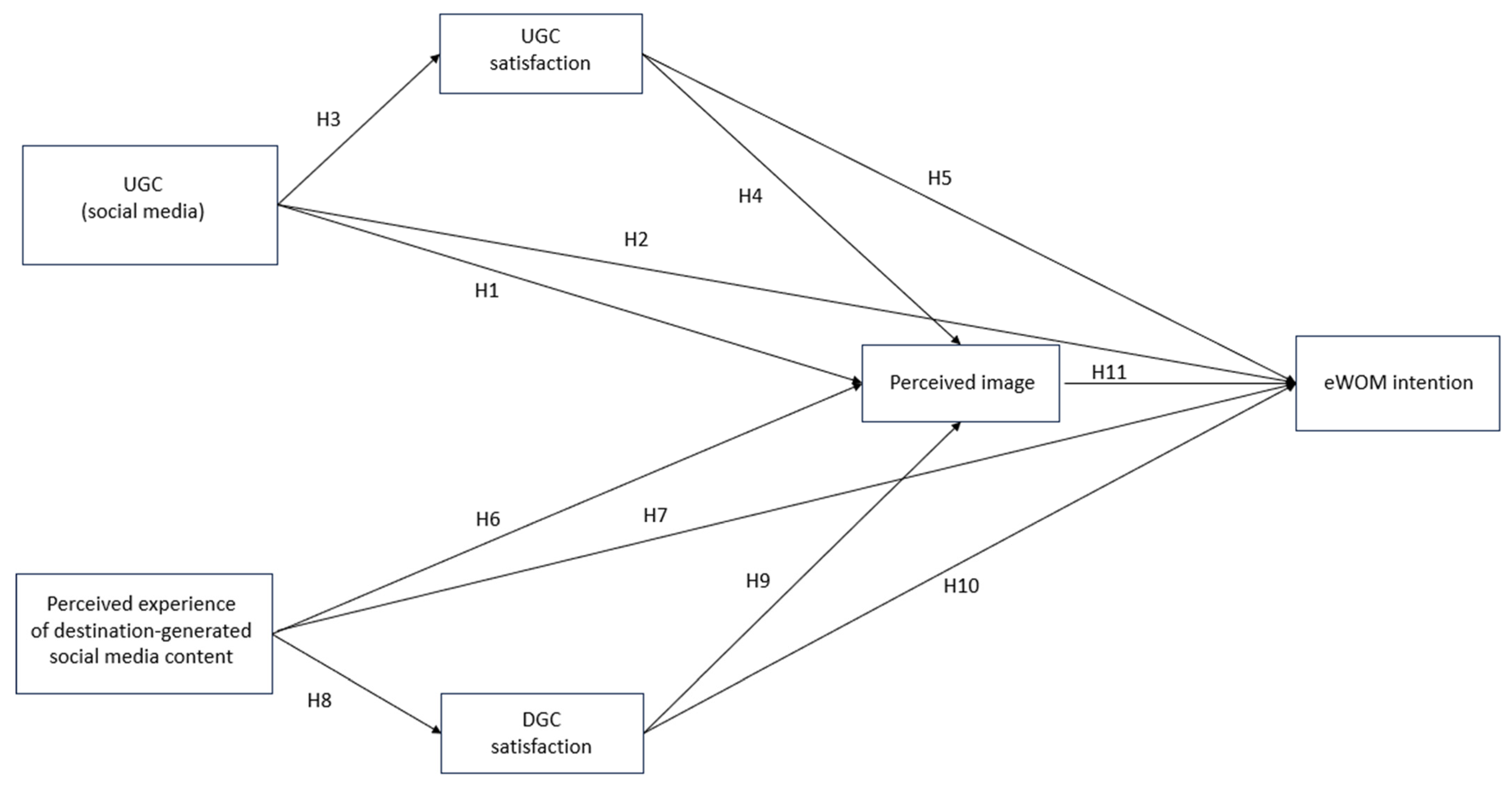
Disclaimer/Publisher’s Note: The statements, opinions and data contained in all publications are solely those of the individual author(s) and contributor(s) and not of MDPI and/or the editor(s). MDPI and/or the editor(s) disclaim responsibility for any injury to people or property resulting from any ideas, methods, instructions or products referred to in the content. |
© 2026 by the authors. Licensee MDPI, Basel, Switzerland. This article is an open access article distributed under the terms and conditions of the Creative Commons Attribution (CC BY) license.