


Abstract
This study investigates whether consumers’ hedonic and eudaimonic well-being orientations predict symbolic gift preferences in an online gift-choice setting. Building on evidence that hedonic and eudaimonic motives are distinct yet can co-occur, the framework predicts that congruent orientation–gift links will be stronger than cross-domain spillovers when both orientations are modeled simultaneously. Data were collected via a cross-sectional online survey with an embedded simulated online store task in which participants evaluated ten pretested gift options (five relatively hedonic; five relatively eudaimonic) as potential gifts for a close other (n = 574). Stimuli were calibrated in a pilot pretest (n = 100) to ensure separation on a hedonic–eudaimonic continuum. Hypotheses were tested using PLS-SEM with reflective measures for orientations and composite/formative outcomes for gift preferences, using nonparametric bootstrapping (5000 resamples) for inference. Results support congruent effects: eudaimonic orientation predicts eudaimonic gift preference and hedonic orientation predicts hedonic gift preference, whereas cross-domain paths are weak. Comparative tests indicate a robust hedonic congruence advantage, whereas the eudaimonic congruence advantage is directionally consistent but not statistically stable under bootstrap resampling. Gender shows a strong main effect on hedonic gift preference, while income exhibits a small positive association with hedonic gift preference. Implications for digital gift discovery and recommendation interfaces are discussed.
1. Introduction
Gift-giving is rarely just a transfer of products. Gift choice is a socially visible consumption act through which givers communicate relational intent and symbolic meaning—what they value, how they understand the relationship, and what kind of message they want the recipient (and others) to infer [1,2,3]. Because gifts are interpreted rather than merely used, their value is often judged in terms of what they signify (e.g., thoughtfulness, care, knowledge of the recipient) as much as what they provide functionally [4,5]. This symbolic character becomes especially salient in contemporary commerce, where gifting is increasingly enacted through digital channels—online retail, platform-based marketplaces, and technology-mediated recommendation systems—yet the social accountability of “getting the gift right” remains [6,7,8].
From a consumer-behavior perspective, gift selection is a theoretically distinctive form of symbolic consumption because it is other-directed and evaluative. Unlike private self-purchases, gift choices are made with an anticipated audience in mind, often intensifying impression-management concerns and fear of mismatch [1,5]. Prior work shows that gifting errors can be identity- and relationship-relevant: when a gift is perceived as inappropriate, it can threaten the giver’s desired image and prompt compensatory behavior [5]. A complementary stream emphasizes systematic giver–receiver discrepancies in gift evaluation, such as givers overweighting desirability and surprise relative to recipients’ preferences for feasibility and explicitness [9,10,11]. These findings underscore that gifting is not simply another purchase domain; it is an interpersonal judgment context in which consumers select symbolic benefits under uncertainty. Because gift choice is also embedded in socially scripted role expectations and accountability for “getting it right,” gender was additionally considered a theoretically meaningful baseline predictor of hedonic gift preference in online gift choice [6,12,13].
This study argues that a particularly parsimonious and theoretically grounded way to explain symbolic gift preferences is to focus on consumers’ well-being orientations—enduring motivational priorities about what constitutes a “good life.” Positive psychology differentiates between hedonic and eudaimonic orientations: hedonic orientation reflects prioritizing pleasure, enjoyment, and comfort, whereas eudaimonic orientation reflects prioritizing meaning, excellence, authenticity, and personal growth [14,15,16,17]. These orientations have been linked to distinct patterns of activity selection and value pursuit and, in consumer contexts, map onto different forms of experiential value sought through consumption [16,18]. The argument developed here is also informed by complementary theories introduced later in the manuscript: self-congruity theory, because symbolic gifts can affirm the giver’s self-relevant motives; social projection, because givers often use their own preferences as anchors when inferring recipient preferences; and self-determination theory, because contextual and resource conditions can support or constrain the autonomous enactment of motivational priorities [19,20,21,22,23,24]. Extending this logic to gift-giving, well-being orientations should shape not only what consumers choose for themselves but also what kinds of symbolic benefits they prefer to deliver to others through gifts. Eudaimonically oriented givers should be more attracted to gifts that symbolize or enable meaning and development (e.g., growth-oriented experiences), whereas hedonically oriented givers should be more attracted to gifts that symbolize or enable immediate enjoyment and indulgence [15,16,17].
Although gifting has been widely examined as symbolic exchange and relational work, comparatively less research has explicitly examined how these two well-being orientations translate into systematic differences in symbolic gift preferences, particularly in online gift-choice contexts. Integrative reviews of gift-giving research highlight that much of the literature concentrates on situational drivers (e.g., social closeness, obligation, and norms), giver–receiver mismatches, and the downstream relational consequences of gifts [6,25]. Separately, consumer research has established that hedonic and eudaimonic motives matter for self-directed consumption, but their implications for other-directed, socially accountable choices—such as gifts—remain less clearly articulated and empirically tested [15,16]. This gap is practically relevant in electronic commerce, where consumers frequently select gifts under informational constraints (e.g., limited tactile evaluation) and with algorithmic or AI-mediated assistance, making it especially important to understand the motivational bases of “what kind of gift” consumers are trying to give [7,8].
By linking well-being orientations to symbolic gift preferences in an online choice setting, this study contributes to consumer and electronic commerce scholarship in three ways. First, it extends hedonic–eudaimonic well-being theory into an interpersonal domain where consumption is socially accountable and meaning-laden [1,15]. Second, it contributes to self-congruity and self-determination perspectives by showing that self-relevant motivational orientations can guide other-directed symbolic choices, while resource and platform conditions may enable or constrain how these motives are enacted [19,20,24]. Third, it complements gift-giving research by introducing well-being orientations as a motivational lens for explaining systematic variation in symbolic gift preferences beyond situational drivers alone [6]. Fourth, it offers actionable implications for online retailers and platform designers: identifying whether consumers seek to convey enjoyment versus meaning through gifts can inform merchandising structures, framing cues, and recommendation logic that reduce selection anxiety and improve perceived fit in digital gifting journeys [7,9,10].
2. Literature Review: Well-Being Orientations and Symbolic Gift Preferences
2.1. Hedonic and Eudaimonic Orientations as Motivational Constructs in Consumer Behavior
Research in positive psychology distinguishes between two fundamental orientations to well-being: hedonic and eudaimonic [15]. A hedonic orientation reflects a motivational focus on pleasure, enjoyment, and comfort—maximizing positive feelings and minimizing pain or discomfort [16,26]. In contrast, a eudaimonic orientation emphasizes personal growth, meaningful goals, excellence, and authenticity, prioritizing a sense of purpose and self-realization over immediate gratification [14,16]. These orientations represent relatively stable individual differences in what people view as the “good life,” and they are not simply opposite ends of a single spectrum—an individual can pursue both to some degree, although people often gravitate toward one set of motives over the other [16,17].
Empirical research shows that these orientations map onto different patterns of activity and well-being. Eudaimonic orientation is associated with investing effort in personally meaningful and development-focused pursuits (e.g., learning, mastery, and prosocial contribution) and with stronger long-horizon outcomes such as life meaning and personal growth [16,27,28,29]. Hedonic orientation, by contrast, is associated with prioritizing leisure, entertainment, and immediate positive affect, and with higher day-to-day enjoyment [15,16]. The key implication for consumer behavior is that these orientations channel attention toward different kinds of value rather than representing mutually exclusive “either-or” motives [17].
Because marketplace choices are one route through which people pursue happiness, well-being orientations have direct implications for consumption. Hedonic orientation aligns with hedonic consumption—purchasing for fun, comfort, and sensory gratification [17,18,30]. Eudaimonic orientation aligns with “meaningful consumption,” in which purchases serve identity-consistent goals, virtue, growth, or contribution [31,32]. Importantly, the hedonic–eudaimonic distinction is not equivalent to the classic utilitarian–hedonic product dichotomy: it captures the motive for consuming (enjoyment vs. personal enrichment) rather than a fixed product category [15,33]. Many offerings can carry both kinds of value, but consumers differ in which aspect they prioritize when making trade-offs [17,31].
2.2. Symbolic Gift Preferences as Expressions of Well-Being Orientation in Digital Contexts
Gift-giving is a form of other-directed, socially evaluated consumption in which the chosen object operates as a symbolic message about the relationship and the giver’s intentions [1,4,34,35]. Because gifts are interpreted, givers anticipate recipients’ reactions and norms of appropriateness, often heightening anxiety about “getting it right” [5,6,36]. These properties make gifting a diagnostic setting for examining how well-being orientations map onto systematic symbolic preferences.
Hedonic versus eudaimonic orientations are expected to drive different symbolic gift preferences because well-being orientations shape the kinds of outcomes and values people seek to realize through consumption—not only for themselves, but also in interpersonal acts such as gifting [1,2,4,34]. Critically, in the present framework “hedonic” and “eudaimonic” are treated as motivational intentions (i.e., what the giver is trying to accomplish or communicate) rather than as fixed, inherent properties of the gift object. The same product can plausibly be interpreted—and deliberately positioned by the giver—as hedonic or eudaimonic depending on the relational context and the intended message [1,2,4]. This clarification also helps distinguish eudaimonic gifting from the more established hedonic–utilitarian distinction in product evaluation. Whereas utilitarian versus hedonic value typically reflects attribute-based judgments about functionality and pleasure [33], eudaimonia concerns meaning, self-realization, and goal-consistent growth [14,15,37]. Accordingly, an “apparently practical” gift (e.g., a high-quality tool) may carry eudaimonic meaning when it is intended to enable mastery or personal development, while an identical object may function as a hedonic comfort gift if framed as indulgence or immediate enjoyment [15,16,17].
Drawing on these motivational tendencies, eudaimonically oriented givers should be more attracted to gifts that they construe as expressing meaning, virtue, growth, or enduring benefit for the recipient—for example, gifts that support learning and skill development (e.g., a course enrollment), cultivate identity-relevant activities (e.g., high-quality hobby equipment), or signal prosocial values (e.g., a donation in the recipient’s honor) [15,38,39]. Such choices carry symbolic weight because they communicate not merely “what was bought,” but the giver’s intention to support the recipient’s longer-term flourishing and self-realization [37]. By contrast, hedonically oriented givers should be more attracted to gifts they construe as promising immediate enjoyment, pleasure, excitement, and comfort for the recipient [15,18]. Examples include entertainment experiences, indulgent treats, leisure-oriented services, or fashionable and fun items that are culturally legible as “delight” gifts. In symbolic terms, these choices communicate a desire to generate positive affect in the moment and to share enjoyment through the exchange [1].
Two complementary theoretical “bridges” strengthen why these personal orientations should translate into gift-type preferences despite gifting being other-directed. First, self-congruity theory suggests that consumers prefer choices whose symbolic meaning fits the self-concept [19,20]; this fit-based perspective is distinct from broader identity frameworks such as narrative identity, which emphasizes an internalized life story integrating past experiences and future aspirations [40]. Gifts are particularly identity-diagnostic because they communicate the giver’s values and relational intent to the recipient and, in many cases, to a broader audience [3,5,41]. Accordingly, selecting a “meaningful growth” gift versus a “fun indulgence” gift can function as self-expression: givers may prefer gifts congruent with their hedonic or eudaimonic orientation because such choices reinforce who they are (or aspire to be) within the relationship [19]. This identity-signaling role may be amplified in online gifting, where the offered item and a brief accompanying message often carry most of the symbolic intent [2].
Second, social projection offers a direct interpersonal account of how givers infer what recipients will value. Social projection and the related false-consensus effect indicate that people frequently use their own preferences and values as an anchor when estimating others’ preferences, especially under uncertainty and when perceived similarity is high [21,22,23]. Gift selection routinely requires such inference: givers must predict recipients’ reactions and, particularly in online environments, may have limited diagnostic cues at the moment of choice [42]. Consequently, a eudaimonically oriented giver may assume that the recipient will appreciate gifts that signal meaning and growth, whereas a hedonically oriented giver may assume that “joy now” gifts will be most welcome. Consumer research further suggests that projection is conditional rather than absolute: people project more when they feel similar to the target and adjust when they possess clear information that the other person’s tastes differ [43,44,45]. This contingency addresses a natural boundary case in gifting—namely, that a giver may personally value meaning and growth yet still select a hedonic “crowd-pleaser” when they know the recipient prefers immediate indulgence. Thus, the theoretical expectation is not that orientations rigidly determine gift choice, but that orientations bias preferences through (a) self-expressive congruity motives and (b) recipient-preference inferences that often rely on socially projective heuristics.
This framework is consistent with the broader gift-giving literature emphasizing that gifts are symbolic messages embedded in norms, relationship dynamics, and evaluation concerns [1,4,5,34,46]. It also aligns with evidence that choosing for others involves prediction difficulty and perspective gaps that can produce systematic mismatches between what givers expect recipients to value and what recipients actually value [42]. Therefore, while congruence between well-being orientation and gift-type preference is theoretically plausible, its strength should depend on how much the giver relies on self-expressive motives and projection versus concrete knowledge of the recipient’s idiosyncratic preferences [43,45]. Digital and online gifting environments can further intensify this reliance on heuristics by compressing cues and foregrounding platform-provided categories and recommendations [8].
With the growth of e-commerce, social media, and messaging apps, many gift exchanges now occur through digital interfaces—whether purchasing on a marketplace to be delivered as a gift, sending a digital voucher, or using in-app monetary and microgifting features [8,47,48]. In such contexts, givers often rely on short descriptions, visual cues, categorization labels, and platform signals (e.g., “gift ideas,” “most gifted”) to infer symbolic fit and expected recipient reactions [7,8,49]. These affordances do not replace the culturally embedded logic of gifting; rather, users appropriate platform tools to enact etiquette, care, reciprocity, and relationship maintenance [1,34,50].
Cross-cultural evidence indicates that messenger-based gifting practices reflect local norms. For example, Lee et al. [50] document how Japan’s LINE and China’s WeChat support distinct gifting scripts (e.g., curated presentation versus frequent, playful exchanges), underscoring that the meaning of “the same” digital feature can vary across cultural settings. Digital environments also enable fully virtual gift forms (e.g., live-streaming virtual gifts), in which gifting becomes highly visible and intertwined with entertainment and status signaling [51,52,53,54,55,56]. Across these channels, hedonic and meaning-oriented motives can co-exist but become behaviorally legible through what is given and how it is framed: pleasure-oriented gifts are oriented toward immediate delight and affective payoff, whereas eudaimonic gifts can signal longer-term support for growth, values, and flourishing [15,16].
2.3. Hypothesis Development
Gift-giving is a socially visible consumption act through which givers communicate relational intent and symbolic meaning [1,4,34,57]. Because gift choices are interpretive and evaluative, givers often anticipate recipients’ reactions and broader social judgments, which increases the salience of symbolic considerations beyond utilitarian functionality [5,6]. This signaling logic extends naturally into digital commerce contexts, where gifting is frequently mediated by online assortments, search, and algorithmic suggestions—yet the gift’s symbolic meaning remains central to how it is evaluated and experienced [7].
A central distinction in well-being scholarship concerns hedonic versus eudaimonic orientations. Hedonic orientation reflects prioritizing pleasure, enjoyment, and comfort, whereas eudaimonic orientation reflects prioritizing meaning, excellence, authenticity, and personal growth [14,15,16,17]. These orientations are conceptually distinct and can co-exist, implying that consumers may pursue both pleasure and meaning, but often with different relative emphasis [16,58]. Because gifts are symbolic vehicles that can represent and deliver different kinds of value, well-being orientations should systematically bias the types of gifts consumers prefer to give.
Eudaimonically oriented individuals tend to pursue activities and experiences that are development-focused and aligned with personally meaningful goals, which maps onto gift options that symbolize purpose, growth, and self-improvement [16,17,27]. In a gift-giving context, such preferences should be expressed as stronger attraction to gifts that enable learning, mastery, and self-development—forms of symbolic value consistent with eudaimonic motives [14,15]. Accordingly, the following is proposed:
H1.
Consumers with a strong eudaimonic orientation will exhibit a greater preference for eudaimonic gifts (gifts that symbolize personal growth, purpose, or virtue) compared to less eudaimonically-oriented consumers.
Hedonic orientation, in contrast, emphasizes enjoyment, comfort, and immediate positive affect [15,16]. Consumer research has long recognized that a major driver of marketplace behavior is experiential gratification—feelings, fantasies, and fun—making pleasure-oriented value salient in many consumption choices [18]. In gifting contexts, hedonic gifts may be especially attractive because they are readily interpreted as attempts to generate immediate recipient delight and positive emotion—outcomes that can also be socially rewarding for the giver [1,59]. Therefore, the following is hypothesized:
H2.
Consumers with a strong hedonic orientation will exhibit a greater preference for hedonic gifts (gifts that symbolize pleasure, fun, or sensory enjoyment) compared to less hedonically-oriented consumers.
Although congruent effects are expected, hedonic and eudaimonic orientations are not strict opposites; individuals can pursue pleasure and meaning in parallel, and both motives can contribute to well-being through overlapping pathways [16]. Therefore, cross-domain associations are not predicted to be negative. Instead, congruence is conceptualized as a relative-strength pattern: when hedonic and eudaimonic orientations are modeled simultaneously, each orientation’s unique variance should be most diagnostic of its motive-consistent symbolic preference, making cross-domain paths comparatively weak once the matching orientation is accounted for.
Boundary conditions may shape whether orientations translate into enacted gift preferences. Gendered gifting scripts may shift baseline attractiveness of “delight” gifts in digitally mediated choice, where quick affective cues and “safe” categories are salient (H5). Income can shape feasibility and thus enactment capacity: constrained resources may prevent consumers from translating motivational priorities into certain gift selections, whereas greater resources may expand the feasible set for discretionary gifts. This enactment logic aligns with self-determination theory’s emphasis on how contextual conditions support or constrain autonomous preference expression [15,24]. In the present study, monthly income is modeled as a resource-related covariate; future research can test explicit orientation × income moderation and its interaction with relational context.
At the same time, gift choice is a socially accountable act that is constrained by knowledge of the recipient and the desire to avoid gifting failure [5,6]. These constraints can produce limited cross-domain “spillover” in practice (e.g., growth-oriented gifts that are also fun; indulgent gifts that carry relational meaning), and givers may strategically select crowd-pleasing hedonic gifts even when they personally value meaning, particularly under uncertainty [9,10]. Therefore, congruence is operationalized as a relative-strength proposition: each orientation should relate more strongly to the gift category that best matches its underlying motive than to the non-matching category. Accordingly, the following comparative hypotheses are proposed:
H3.
The standardized effect of eudaimonic orientation on eudaimonic gift preference is stronger than its effect on hedonic gift preference.
H4.
The standardized effect of hedonic orientation on hedonic gift preference is stronger than its effect on eudaimonic gift preference.
Nevertheless, gift giving is subject to financial and logistical feasibility constraints. In online gift shopping, budget considerations are salient because assortments can be sorted or filtered by price and alternatives are easy to compare. Self-determination theory suggests that autonomy-supportive conditions enable people to enact intrinsic preferences, whereas constrained resources can shift behavior toward controlled, constraint-driven choices [15,24]. Because many hedonic gifts involve discretionary spending on indulgent experiences or premium treats, higher income should expand consumers’ feasible set for hedonic gifting. Accordingly, in this study monthly income is included as a resource-related covariate predicting both gift preference outcomes.
Gift selection is embedded in gendered norms and role expectations, particularly in domains involving relational labor and accountability for “getting it right.” Prior research suggests that gift planning and execution are frequently socially constructed as women’s responsibility, implying systematic baseline differences in involvement and felt accountability in gift-related tasks [12,60]. Related evidence indicates that women tend to select gifts that better match recipients’ preferences, which has been attributed to stronger interpersonal interest and sensitivity in gift-selection contexts [61].
In addition, gift choice is often motivated and rewarded by the recipient’s immediate affective response, such that givers pursue options expected to elicit visible delight (the “smile-seeking” motive; [13]). Because gift exchange can also be anxiety-laden and socially risky—especially when a gift’s meaning may be misread—hedonic “crowd-pleaser” options can function as a lower-ambiguity risk-management strategy that increases the likelihood of an overtly positive reaction [62,63]. In an online gift-choice setting, where pleasure cues are visually salient and “safe” categories are easy to identify and compare, these gendered scripts are likely to appear as baseline differences in the attractiveness of hedonic gift options rather than as differences in how motivational orientations map onto gift-category preferences [6]. Therefore, rather than modeling gender as a moderator of the core orientation–preference links, gender is specified as a direct predictor of hedonic gift preference:
H5.
Women will report higher hedonic gift preference than men.
Beyond gender and income, the orientation-gift mapping should be sensitive to relationship and cultural contexts that shape how gifts are evaluated and which symbolic benefits are considered appropriate. Relationship closeness can alter risk perceptions and strategy: when givers are socially close to the recipient, they may prioritize gifts that reliably elicit immediate delight as a way to avoid relational risk, potentially shifting choices toward hedonic “safe” gifts [63]. Recipient preference knowledge and occasion norms can similarly attenuate self-expressive gifting and increase strategic “fit” considerations [5,6]. Cultural norms can also shape digital gifting scripts, such as the prevalence of ceremonial etiquette and platform-specific gifting conventions in East Asian messenger environments, which may alter the relative salience of hedonic versus eudaimonic symbolism [50]. These boundary factors broaden the theoretical scope of the present framework and motivate relationship-embedded and cross-cultural extensions.
Figure 1 summarizes the conceptual model in three layers. First, the focal orientation paths link eudaimonic orientation to eudaimonic gift preference (H1) and hedonic orientation to hedonic gift preference (H2). The two cross-domain paths (EUD → hedonic gift preference; HED → eudaimonic gift preference) are retained so that motive-symbolism congruence can be tested as a relative-strength prediction rather than as a claim that cross-domain effects are absent. Accordingly, H3 predicts that the standardized effect of eudaimonic orientation on eudaimonic gift preference is stronger than its effect on hedonic gift preference, and H4 predicts that the standardized effect of hedonic orientation on hedonic gift preference is stronger than its effect on eudaimonic gift preference. Second, gender and monthly income are included as covariates predicting both gift preference outcomes to account for demographic and resource-related baseline differences; consistent with H5, gender (coded 0 = men, 1 = women) is also specified as a substantive direct predictor of hedonic gift preference. Third, the dashed boundary in Figure 1 indicates that the dependent variables were elicited in a controlled simulated online-store context, so the model represents symbolic gift preference formation in an online gift-choice task rather than observed marketplace purchasing behavior.
Figure 1.
Conceptual model of well-being orientations and symbolic gift preferences in an online gift-choice context. Note: Solid arrows denote focal substantive paths (H1, H2, and the direct gender effect in H5). Dashed arrows denote cross-domain paths retained to test H3 and H4 as relative-strength comparisons between congruent and incongruent effects. Dotted arrows denote covariate paths included for statistical control. The dashed frame marks the simulated online gift-choice context.
3. Materials and Methods
3.1. Overall Research Design
The study used a quantitative, cross-sectional online survey with an embedded simulated e-commerce task. The design combined (a) a gift-preference task presented in a controlled online-store environment and (b) a self-report questionnaire measuring individual well-being orientations (hedonic vs. eudaimonic) and demographics. Data were collected in October 2025. The core goal was to examine whether hedonic and eudaimonic orientations predict correspondingly hedonic and eudaimonic symbolic gift preferences (H1 and H2), whether congruent effects are stronger than cross-domain effects (H3 and H4), and whether women report higher hedonic gift preference than men (H5), while accounting for monthly income as a resource-related covariate. Because the design is cross-sectional and preference-based, the findings are interpreted as associative evidence rather than causal evidence of actual purchase behavior.
To preserve the ecological logic of online gift selection, the dependent variables were elicited in a digital environment designed to resemble an online storefront presenting gift options as product/service “offers.” The store displayed fictitious products and services using standardized visual and descriptive elements and uniformly moderate promotional language, approximating typical online shopping exposure while avoiding brand-specific confounds and minimizing unintended variation in promotional intensity across items (e.g., [64]). The procedure deliberately separated outcomes and predictors to reduce priming and common-method inflation: respondents first completed the gift task, and only afterward completed the orientation scale and demographic questions.
The simulated store was implemented as a browse-based, standardized storefront in which the 10 gift options were presented as individual “offers” in a consistent card-like format (e.g., image plus a short descriptor), similar to how gift options appear on a category or gift-ideas page in mainstream e-commerce. Respondents could scan the assortment and were instructed to evaluate the options as potential gifts for a close other. The interface was intentionally simplified to isolate symbolic-category preferences: the offers were fictitious and brand-neutral, the assortment was not personalized, and the task excluded live-platform elements such as search queries, filters, price sorting, review reading, recommender-system rankings, social proof metrics, cart behavior, and checkout constraints. Accordingly, the task captures one controlled slice of online gift shopping—rapid evaluation under limited diagnostic cues—while acknowledging that behavior on actual platforms may differ when consumers interact with dynamic search, recommendation, review, and transaction features.
3.2. Stimulus Development and Pretest (Pilot)
To calibrate the gift options used in the main study and ensure a clear separation between hedonic (immediate pleasure) and eudaimonic (enduring happiness/meaning) stimuli, an online pretest (n = 100) was conducted. Participants evaluated a pool of 20 candidate products/services using a bipolar 7-point scale anchored at 1 = “enjoyment” (immediate enjoyment/pleasure) and 7 = “happiness” (deeper happiness/meaning/spirituality). The prompt asked whether each product/service is oriented more toward immediate enjoyment or toward deeper, longer-term happiness.
For each candidate item, the mean rating was computed and the full pool was ranked along the hedonic–eudaimonic continuum. The five highest-rated items (most eudaimonic) and the five lowest-rated items (most hedonic) were then selected as the final stimulus sets for the main survey. This extreme-groups approach maximizes conceptual separation while preserving heterogeneity within each set (i.e., multiple domains rather than a single-category definition).
The eudaimonic set comprised: Foreign language course (M = 5.48, SD = 1.34), Trip to Tibet (M = 5.44, SD = 1.82), Gardening course (M = 5.26, SD = 1.75), Guitar (M = 5.25, SD = 1.53), and Singing course (M = 5.22, SD = 1.70). The hedonic set comprised: Romance novel (M = 2.72, SD = 1.69), Monthly coffee subscription with coffee machine (M = 2.74, SD = 2.03), Massage (M = 2.98, SD = 2.02), Tango course (M = 3.61, SD = 1.76), and Trip to Hawaii (M = 3.61, SD = 1.96). Descriptive statistics for the full candidate pool are reported in Appendix A Table A1. These options were selected to reflect the theoretical distinction between consumption oriented toward immediate enjoyment/comfort and consumption oriented toward growth and self-development [14,16]. These 10 items served as the gift options presented in the simulated store in the main study.
The pretest was designed as a brief stimulus-calibration task rather than a hypothesis-testing study; therefore, demographic variables were not collected to minimize respondent burden and maximize completion. Participants were recruited via the same channels as the main study, providing a comparable language and consumption context for stimulus calibration. Because the purpose of the pretest was to establish a relative hedonic–eudaimonic ordering of candidate stimuli (not to estimate population parameters or subgroup differences), the absence of demographic profiling does not compromise the validity of stimulus selection.
3.3. Participants, Recruitment, and Procedure
Data were collected in October 2025 via a Croatian-language online questionnaire administered using Google Forms. Participants were recruited through voluntary, open online distribution of the study invitation across social platforms (Facebook, LinkedIn, Instagram) and WhatsApp groups, resulting in a self-selected convenience sample [65]. No quota sampling was applied; participation was requested from adults (18+) on the study information/consent page, and because the invitation circulated through social networks and messaging groups, the response rate could not be tracked.
The data-collection workflow followed a two-step online process aligned with the online gifting context: respondents were first exposed to the simulated online store environment and then directed to the survey instrument, where they (a) evaluated each gift option, (b) completed the well-being orientation scale, and (c) reported demographic information. Respondents were explicitly asked to evaluate the options in the context of gifting to someone very dear to them. This projective “close-other” framing was used to elicit gift-selection judgments that better reflect gifting logic (rather than purely self-oriented consumption judgments) and to reduce overly self-presentational responding [66,67].
Before starting the questionnaire, participants provided electronic informed consent via the study information/consent page; participation was voluntary and respondents could withdraw at any point without consequences. The study was conducted in accordance with the Declaration of Helsinki [68], consistent with contemporary guidance on electronic consent in online research contexts [69]. The documentation for the study was reviewed by the Ethics Committee of Algebra Bernays University, which confirmed that the research was non-invasive, low-risk, involved adult participants only, excluded vulnerable groups, and did not include the collection of direct personal identifiers. No incentives were offered.
The final sample comprised n = 574 respondents (see Appendix A Table A2). The gender distribution was imbalanced (women: n = 435, 75.8%; men: n = 139, 24.2%), consistent with self-selected recruitment via social networks. This imbalance is reported explicitly because gender is tested as a direct predictor of hedonic gift preference and included as a covariate; consequently, descriptive means and gender-related structural coefficients should be interpreted with awareness that the male subgroup is smaller and that aggregate preference patterns are shaped primarily by female respondents. Age was measured in categories; the largest groups were 25–34 (n = 148), 18–24 (n = 140), and 35–44 (n = 115), with smaller representation in older categories (>64: n = 18). Monthly income was collected in ordinal ranges; income frequencies summed to n = 572 (two missing; 0.35%). Because income served only as an auxiliary covariate, the two missing values were mean-imputed on the midpoint-coded income variable prior to SEM estimation; given the negligible missingness, this decision is unlikely to materially affect substantive conclusions.
3.4. Measures
3.4.1. Hedonic and Eudaimonic Orientation
Hedonic and eudaimonic orientations were assessed using an adapted version of the Hedonic and Eudaimonic Motives for Activities (HEMA) measure [16]. The questionnaire was administered in Croatian, drawing on prior Croatian-language applications of the HEMA item set [70] and adapting wording for the present study context. Items were presented as statements referring to participants’ typical motives in work and leisure (e.g., seeking relaxation, seeking personal excellence) and were rated on a 7-point scale (1 = not at all; 7 = very much), consistent with prior HEMA applications [16].
Following adaptation and psychometric screening, the final instrument comprised eight items (four hedonic; four eudaimonic). To improve linguistic clarity in Croatian and reduce redundancy, two semantically overlapping hedonic “pleasure/enjoyment” intentions were consolidated into a single indicator during the adaptation process, yielding a parsimonious item set while preserving the theoretical coverage of hedonic comfort/pleasure motives [16,17]. Hedonic indicators captured motives related to relaxation/comfort, enjoyment/pleasure, calmness, and fun. Eudaimonic indicators captured motives related to skill development/learning, acting in line with one’s beliefs, striving for excellence, and giving one’s best/actualizing one’s potential [16,17].
3.4.2. Gift Preference Outcomes
Gift preferences were operationalized using two pretested stimulus sets identified via the pilot calibration (Section 3.2): five hedonic gift options and five eudaimonic gift options. Gift preferences were measured using evaluations of each gift option presented in the online-store task. Respondents were asked how inclined they were to give each product/service as a gift to someone very dear to them (i.e., the gift-choice task explicitly used a “close-other” gifting frame). Individual gift evaluations were then aggregated into two composite outcomes representing preference for hedonic versus eudaimonic symbolic gifts:
- Hedonic gift preference was operationalized from the five hedonic gift options selected in Section 3.2: Romance novel, Monthly coffee subscription with coffee machine, Massage, Tango course, and Trip to Hawaii. For descriptive and correlational analyses, the construct can be represented as the mean of the five hedonic gift evaluations; for PLS-SEM estimation, the five gift evaluations serve as the composite indicators of the formative hedonic gift preference construct.
- Eudaimonic gift preference was operationalized from the five eudaimonic gift options selected in Section 3.2: Foreign language course, Trip to Tibet, Gardening course, Guitar, and Singing course. For descriptive and correlational analyses, the construct can be represented as the mean of the five eudaimonic gift evaluations; for PLS-SEM estimation, the five gift evaluations serve as the composite indicators of the formative eudaimonic gift preference construct.
Consistent with measurement theory, the two gift-preference constructs were modeled as composite/formative constructs rather than reflective constructs. The rationale is that the individual gift options represent distinct manifestations of a broader symbolic category (hedonic vs. eudaimonic gifting) and are not assumed to be interchangeable reflections of a single underlying “gift preference trait” [71,72]. Accordingly, each gift indicator contributes unique content to the construct domain (e.g., experiential vs. product-based manifestations within the same symbolic class), making a composite specification more appropriate than a reflective one.
3.4.3. Demographics, Moderator, and Covariate
Gender was coded as a binary variable (0 = men, 1 = women) and included as a covariate predicting both gift preference outcomes. Consistent with H5, gender was additionally specified as a substantive direct predictor of hedonic gift preference. Monthly income was measured in ordinal ranges and converted to a continuous midpoint variable to serve as a covariate predicting both gift preference outcomes, capturing resource-related feasibility constraints in gift selection.
3.5. Measurement Model Assessment
3.5.1. Reflective Measurement Validation: Orientation Scales
Reflective measurement quality was assessed using internal consistency reliability, convergent validity, and discriminant validity criteria commonly recommended in SEM and PLS-SEM applications [73,74]. Internal consistency and convergent validity were evaluated using Cronbach’s alpha (α), composite reliability (ρc), and average variance extracted (AVE) [73]. The validated measurement results reported in the study materials indicate satisfactory performance:
- Eudaimonic Orientation: α = 0.783; ρc = 0.857; AVE = 0.601
- Hedonic Orientation: α = 0.738; ρc = 0.834; AVE = 0.558
Indicator loadings were acceptable (eudaimonic: 0.718–0.816; hedonic: 0.695–0.805), supporting indicator reliability while preserving theoretical content coverage [73].
Discriminant validity was assessed using the heterotrait–monotrait ratio (HTMT), a recommended criterion for distinguishing conceptually related constructs [75]. The HTMT between hedonic and eudaimonic orientation was 0.546, indicating that the two constructs were empirically separable.
3.5.2. Composite/Formative Assessment: Gift Preference Constructs
For formative/composite constructs, multicollinearity among indicators was examined using variance inflation factors (VIF), as high collinearity can distort estimated indicator weights and compromise interpretability [72,73]. Across model specifications, VIF values for indicators were within acceptable bounds (range approximately 1.00–1.65), suggesting no problematic collinearity and supporting stable composite estimation. Because gift preferences were modeled as composite constructs, collinearity checks were complemented by an assessment of indicator relevance based on bootstrapped outer weights and bias-corrected 95% confidence intervals (5000 resamples). Indicators with confidence intervals excluding zero were interpreted as providing stable unique contributions to the composite, whereas indicators with intervals including zero were retained to preserve content coverage.
3.6. Analytical Strategy and Model Estimation
3.6.1. Model Estimation Approach
Hypotheses were tested using partial least squares structural equation modeling (PLS-SEM), which is appropriate for models combining reflective constructs (orientations) with formative/composite outcomes (gift preferences) [73,76]. The models were estimated using SmartPLS 4 [77]. Inference relied on nonparametric bootstrapping with 5000 resamples to obtain standard errors and confidence intervals for structural paths and moderation effects, consistent with recommended procedures in PLS-SEM [73].
3.6.2. Structural Models
Model A estimated the main effects of eudaimonic and hedonic orientation on the two gift preference outcomes, with gender and monthly income included as covariates predicting both outcomes. Consistent with H5, gender was treated as a substantive direct predictor of hedonic gift preference (coded 0 = men, 1 = women). Model B added gender × orientation interaction terms as a supplementary test of whether the core orientation–preference links differ by gender; as reported in Section 4, these interactions were not statistically significant and did not materially change explained variance.
3.6.3. Testing Comparative Congruence Hypotheses (H3 and H4)
Beyond estimating the two cross-domain paths, congruence was operationalized as a relative-strength prediction. H3 and H4 were tested as comparative hypotheses using bootstrapped differences between standardized path coefficients (Δβ) in the PLS-SEM model. Specifically, Δβ_EUD was computed as β(EUD → EUD_gifts) − β(EUD → HED_gifts), and Δβ_HED as β(HED → HED_gifts) − β(HED → EUD_gifts), across 5000 bootstrap samples. Percentile 95% confidence intervals were then derived for each Δβ; support was inferred when the full 95% CI lay above zero (Δβ > 0 with CI excluding 0).
3.6.4. Model Evaluation Criteria
Model evaluation followed established PLS-SEM recommendations. The assessment included (a) collinearity diagnostics, (b) measurement reliability/validity assessment for the reflective orientation constructs and collinearity assessment for the composite outcomes, and (c) structural-path estimation, including supplementary interaction terms. Global model fit indices (e.g., SRMR) were interpreted cautiously, consistent with guidance that such indices should not be treated as decisive criteria in PLS-SEM model evaluation [76,78,79]. Predictive performance was evaluated using PLS-Predict [80]. To reduce common-method inflation, the gift-preference task was administered before the orientation and demographic measures.
4. Results
This section reports (1) descriptive patterns and bivariate associations, (2) measurement model quality for the reflective orientation constructs and the composite/formative gift-preference outcomes, (3) structural model performance, and (4) hypothesis tests aligned with the revised framework: congruent effects (H1 and H2), comparative (difference-in-path) congruence tests (H3 and H4), and gender as a direct predictor of hedonic gift preference (H5).
4.1. Descriptive Patterns and Zero-Order Associations
To contextualize the structural tests, respondents were classified into orientation profiles and gift-preference profiles using the established categorization logic. In the sample, respondents were more frequently predominantly eudaimonic (49.65%) than predominantly hedonic (32.93%), with 17.42% classified as balanced. In contrast, preferences expressed in the online gift-choice task were more frequently predominantly hedonic (53.14%) than predominantly eudaimonic (41.81%), with 5.05% classified as balanced. This pattern indicates that—within the simulated online store context—hedonic gifts were generally more preferred, even though respondents more often self-reported a predominantly eudaimonic motivational orientation.
Table 1 reports Spearman correlations among the focal constructs (n = 574). Hedonic and eudaimonic orientations were moderately correlated (ρ = 0.431), consistent with the conceptual claim that the two orientations can co-exist. Both orientations were positively associated with both gift-preference composites, but the strongest associations emerged for the congruent pairings: hedonic orientation correlated more strongly with hedonic gift preference (ρ = 0.257) than with eudaimonic gift preference (ρ = 0.164), whereas eudaimonic orientation correlated more strongly with eudaimonic gift preference (ρ = 0.222) than with hedonic gift preference (ρ = 0.151).
Table 1.
Spearman correlations among key variables (n = 574).
4.2. Measurement Model Results
Because the model combines reflective (orientations) and composite/formative (gift preferences) specifications, measurement quality was evaluated accordingly (Table 2). For the reflective constructs, internal consistency and convergent validity were satisfactory. Cronbach’s alpha, composite reliability, and AVE met conventional thresholds: eudaimonic orientation (α = 0.783; CR = 0.857; AVE = 0.601) and hedonic orientation (α = 0.738; CR = 0.834; AVE = 0.558). Indicator loadings were acceptable (eudaimonic: 0.718–0.816; hedonic: 0.695–0.805). Discriminant validity between hedonic and eudaimonic orientation was supported (HTMT = 0.546), indicating that the constructs are empirically separable.
Table 2.
Reflective measurement model quality (orientation constructs).
For the composite/formative gift-preference outcomes, collinearity among gift indicators was assessed via VIF. VIF values fell within an acceptable range (~1.00–1.65), suggesting no multicollinearity concerns that would compromise the stability of composite estimation.
Composite indicator relevance was further examined via bias-corrected bootstrapped outer weights (5000 resamples). For the eudaimonic gift preference composite, three indicators showed stable weights with 95% confidence intervals excluding zero: Foreign language course (w = 0.256, CI95% [0.006, 0.505]), Gardening course (w = 0.520, CI95% [0.196, 0.836]), and Singing course (w = 0.396, CI95% [0.143, 0.678]). For the hedonic gift preference composite, three indicators also exhibited stable weights: Massage (w = 0.512, CI95% [0.289, 0.718]), Romance novel (w = 0.339, CI95% [0.127, 0.565]), and Tango course (w = 0.333, CI95% [0.111, 0.549]). The remaining indicators (e.g., Guitar and Trip to Tibet in the eudaimonic set; Monthly coffee subscription with coffee machine and Trip to Hawaii in the hedonic set) had confidence intervals including zero and were retained to preserve conceptual breadth and content coverage rather than internal consistency.
Overall, these results indicate that each composite outcome is supported by multiple stable indicators and is not driven by a single item, which strengthens the content-validity justification for modeling gift preferences as composites.
To verify that the selected items represented distinct points on the hedonic–eudaimonic continuum, participant-level averages were computed separately across the five eudaimonic items and the five hedonic items. The eudaimonic set was rated substantially higher than the hedonic set (M_eud = 5.33, SD = 1.13 vs. M_hed = 3.13, SD = 1.36). A paired-samples comparison confirmed a strong separation between the two sets, t(99) = 11.54, p < 0.001, with a large within-participant effect (dz = 1.15). This provides pretest support that the selected stimuli capture clearly distinguishable eudaimonic versus hedonic gift categories in participant perceptions (see Appendix A Table A3).
4.3. Structural Model Performance (Models A and B)
Structural collinearity diagnostics indicated stable estimation (predictor VIFs ~ 1.00–1.65). Model fit was assessed with SRMR; the reported value was SRMR = 0.083, which is commonly interpreted as acceptable in applied PLS-SEM contexts.
As presented in Table 3, explained variance was modest and consistent across model specifications. For Model A, explained variance was R2 = 0.116 (adjusted R2 = 0.110) for eudaimonic gift preference and R2 = 0.160 (adjusted R2 = 0.154) for hedonic gift preference. For Model B, R2 values were essentially unchanged (R2 = 0.116, adjusted R2 = 0.109 for eudaimonic gifts; R2 = 0.162, adjusted R2 = 0.154 for hedonic gifts). This stability indicates that adding gender interactions did not materially improve explanatory power. The absolute R2 values should therefore be interpreted as modest rather than high: well-being orientations, gender, and income explain a meaningful but limited share of variance in symbolic gift preferences, implying that relational, situational, recipient-specific, and platform-level factors not included in the model likely account for additional variance.
Table 3.
Structural model summary (goodness-of-explanation).
4.4. Hypothesis Tests (Paths in Models A and B)
Table 4 reports the standardized path coefficients for Model B; Section 4.7 summarizes coefficient stability across Models A and B. The predicted congruent effects were supported: eudaimonic orientation positively predicted preference for eudaimonic gifts (β = 0.249, p < 0.001) and hedonic orientation positively predicted preference for hedonic gifts (β = 0.227, p < 0.001), supporting H1 and H2. The cross-domain paths were small and not statistically significant at the 0.05 level (eudaimonic → hedonic gifts: β = 0.108, p = 0.10; hedonic → eudaimonic gifts: β = 0.107, p = 0.06).
Table 4.
Structural model results for orientations, covariates, and gift preference outcomes (standardized β; PLS-SEM).
H5 predicted a gender difference in hedonic gift preference, such that women would report higher hedonic gift preference than men. In Model B, gender (coded 1 = women) showed a strong positive association with hedonic gift preference (β = 0.543, p < 0.001). The corresponding Model A coefficient was β = 0.529 (see Section 4.7). Thus, H5 was supported. In contrast, gender was not a significant predictor of eudaimonic gift preference (β = 0.175, p = 0.18), indicating that the gender effect observed in this dataset is specific to hedonic gift preference rather than a generalized shift across both gift categories.
Among covariates, gender (1 = women) showed a strong positive association with hedonic gift preference (β = 0.543, p < 0.001), whereas its association with eudaimonic gift preference was not significant (β = 0.175, p = 0.18). Income exhibited a small positive association with hedonic gift preference (β = 0.097, p ≈ 0.04) and a non-significant association with eudaimonic gift preference (β = 0.096, p = 0.10).
As shown in Figure 2, the overall pattern is characterized by stronger congruent than cross-domain links, a pronounced gender effect on hedonic gift preference, and modest explained variance for both endogenous constructs.
Figure 2.
Empirical structural model with standardized path coefficients and explained variance for symbolic gift preference outcomes. Note: Solid arrows denote focal substantive paths (H1, H2, and the direct gender effect in H5). Dashed arrows denote cross-domain paths retained to test H3 and H4 as relative-strength comparisons between congruent and incongruent effects. Dotted arrows denote covariate paths included for statistical control. The dashed frame marks the simulated online gift-choice context.
4.5. Comparative Hypothesis Tests for H3 and H4 (Congruence Advantage)
To align with the theoretical framework, H3 and H4 were treated as comparative (within-predictor) hypotheses rather than simple “null cross-path” predictions. Specifically, the analysis tested whether the congruent path was stronger than the incongruent path by using bootstrapped differences between standardized coefficients (Δβ) estimated in PLS-SEM (5000 bootstrap samples) and percentile 95% confidence intervals (Table 5).
Table 5.
Comparative tests (bootstrapped differences in standardized path coefficients).
4.6. Additional Demographic Analyses (Descriptive Robustness)
To complement the PLS-SEM results and provide further context for the (non-)moderation findings, simple bivariate relationships between demographics and the key study variables were examined (Table 6). Independent-samples t-tests indicated statistically significant gender differences in hedonic orientation (t = −3.53, p = 0.00045) and eudaimonic orientation (t = −2.36, p = 0.01865), as well as a pronounced gender difference in hedonic gift preference (t = −6.13, p < 0.001). The gender difference in eudaimonic gift preference was not statistically significant at the 0.05 level (t = −1.80, p = 0.0721). Interpreting directionally, this pattern is consistent with the structural model coding (1 = women) and the positive coefficient for gender predicting hedonic gift preference, indicating higher hedonic gift preference among women.
Table 6.
Additional demographic associations (bivariate tests).
Age-related patterns were also assessed using Spearman correlations. Age was weakly but significantly associated with eudaimonic orientation (ρ = 0.088, p = 0.035) and more clearly associated with eudaimonic gift preference (ρ = 0.138, p = 0.00091). By contrast, age was not significantly related to hedonic orientation (ρ = 0.0084, p = 0.841) or hedonic gift preference (ρ = 0.054, p = 0.198). Collectively, these bivariate patterns suggest that (a) gender differences in this dataset are most evident for hedonic gift preferences and (b) older respondents show slightly higher eudaimonic tendencies and eudaimonic gift preferences.
4.7. Robustness and Supplementary Findings (Controls, Effect Sizes, Predictive Relevance)
Conclusions were substantively unchanged across Model A and Model B. The congruent effects (H1 and H2) remained significant, cross-paths (H3 and H4) remained small and statistically unsupported at p < 0.05, and R2 values were essentially stable (Table 3). This pattern suggests that findings are not artifacts of including (or excluding) the moderation structure.
Gender exerted a strong, stable positive effect on hedonic gift preference (Model A: β = 0.529, p < 0.001; Model B: β = 0.543, p < 0.001; coding 1 = women), while gender did not significantly predict eudaimonic gift preference (β ≈ 0.175, p ≈ 0.18–0.19). Income showed a small but significant effect on hedonic gift preference (β ≈ 0.096–0.098, p ≈ 0.035–0.040) and a non-significant association with eudaimonic gift preference (β ≈ 0.096, p ≈ 0.10).
Effect sizes for the congruent identity paths were small but non-trivial (f2 approximately 0.050–0.059), whereas cross-paths were very small (f2 ~ 0.01) [81]. PLS-Predict results indicated positive predictive relevance with Q2_predict values in the 0.079–0.083 range for the gift-preference outcomes.
4.8. Known-Groups Comparisons (Convergent Validity Check)
In addition to the correlational and structural-model evidence, known-groups comparisons were conducted to provide a convergent validity check of the orientation–preference mapping (Table 7). Specifically, respondents were classified into high versus low preference groups for each gift category (hedonic vs. eudaimonic) using the study’s established classification logic, and orientation scores were compared across these groups.
Table 7.
Known-groups comparisons of orientation scores by high vs. low gift preference.
Results consistently showed that respondents with higher hedonic gift preference scored significantly higher on hedonic orientation than those with lower hedonic gift preference (Mann–Whitney U = 50,744.5, p < 0.001; one-way ANOVA F = 29.38, p < 0.001). Analogously, respondents with higher eudaimonic gift preference scored significantly higher on eudaimonic orientation than those with lower eudaimonic gift preference (Mann–Whitney U = 49,434.0, p < 0.001; one-way ANOVA F = 27.74, p < 0.001). The consistency across parametric and nonparametric tests strengthens confidence that the congruent associations observed in the SEM (H1 and H2) reflect a stable underlying pattern rather than a modeling artifact.
5. Discussion
This study examined whether hedonic and eudaimonic well-being orientations are systematically associated with symbolic gift preferences in an online gift-choice setting, and whether demographic/resource factors (gender and monthly income) explain additional variation. The results provide clear support for congruent orientation–preference links: higher eudaimonic orientation is associated with stronger preference for eudaimonic gifts and higher hedonic orientation is associated with stronger preference for hedonic gifts, whereas cross-domain paths are comparatively weak. This pattern is consistent with well-being theory distinguishing hedonia (pleasure/comfort) from eudaimonia (meaning/growth) as separable motivational priorities that guide what people pursue and value [15,16,17]. Comparative congruence tests reveal an asymmetry: the hedonic congruence advantage is statistically reliable, whereas the eudaimonic congruence advantage is directionally positive but not robust under bootstrap resampling. Supplementary interaction tests indicate that the two focal congruent links do not differ by gender; instead, gender exhibits a substantial main effect on hedonic gift preference, and income shows a small positive association with hedonic gift preference.
Although the significant structural paths support the theorized orientation–preference links, the R2 values indicate modest explanatory power (Model A: R2 = 0.160 for hedonic gift preference and R2 = 0.116 for eudaimonic gift preference). This pattern is theoretically plausible because gift selection is not driven by well-being orientation alone. It is also shaped by relational closeness, occasion type, recipient preference knowledge, perceived gifting risk, budget constraints, product availability, and platform cues such as reviews, social proof, and recommender-system rankings [5,6,9,10,63,82]. The model should therefore be read as a parsimonious motivational account of symbolic gift preference, not as a comprehensive predictive model of all gift-choice determinants.
5.1. Congruent Orientation–Gift Links as Symbolic Value Transmission
A central result is that consumers’ well-being orientations predict congruent symbolic gift preferences. Respondents higher in eudaimonic orientation expressed stronger preference for gifts characterized by meaning, growth, and enduring benefit, whereas respondents higher in hedonic orientation expressed stronger preference for gifts characterized by pleasure, enjoyment, and comfort. This mapping is in line with the positive psychology literature showing that eudaimonic motives reliably relate to activities oriented toward excellence, authenticity, and personal development, while hedonic motives relate to activities oriented toward enjoyment and relaxation [16,27]. It also aligns with consumer research on experiential value: consumption is often driven by “fantasies, feelings, and fun” [18], but consumers can also pursue “meaningful consumption” that delivers purpose and self-development [31].
Critically, the present findings extend these motivational patterns into the gift-giving domain, where consumption is other-directed and socially evaluated. Classic gift-giving theory emphasizes that gifts operate as symbolic messages rather than merely utilitarian transfers [1,2,34], and relational outcomes depend on how the gift is interpreted in the relationship [4,5]. In line with this view, the observed congruent links suggest that well-being orientations can be understood as an antecedent of “which kind of symbolic benefit” a giver is inclined to deliver—instant enjoyment versus long-term meaning—consistent with integrative accounts that locate gift value in symbolic and relational meaning-making [6,82]. The findings also refine self-congruity theory by showing that symbolic congruity can operate in an other-directed choice: the gift is selected for another person, but the symbolic meaning of the gift may still fit the giver’s self-relevant well-being orientation [19,20].
5.2. Comparative Congruence and the Asymmetric Pattern Between Hedonia and Eudaimonia
A second contribution is methodological and theoretical: rather than assuming cross-domain paths are strictly zero, the refined framework conceptualizes congruence as a relative-strength claim while allowing for (typically small) cross-domain spillovers. Consistent with this approach, the estimated coefficients show that (a) eudaimonic orientation predicts eudaimonic gift preference more strongly than hedonic gift preference, and (b) hedonic orientation predicts hedonic gift preference more strongly than eudaimonic gift preference. However, only the hedonic comparative hypothesis is supported: the bootstrapped difference in standardized coefficients indicates a reliable hedonic congruence advantage, whereas the eudaimonic congruence advantage is not statistically stable.
This asymmetric congruence aligns with several established patterns in gift-giving research. First, givers face uncertainty about recipient reactions and are motivated to avoid gifting “failure,” which can make immediately pleasurable gifts appear safer and more diagnostic of success [66,83]. The fact that hedonic orientation shows a stronger and more robust alignment with hedonic gift preference is therefore consistent with evidence that givers often prioritize choices expected to generate immediate positive affect and visible delight [1,9]. Second, gift evaluation research suggests systematic giver-receiver differences: givers overweight desirability relative to feasibility, while receivers often care more about feasibility [10]. In practice, desirability is frequently communicated through “fun,” indulgence, and experiential excitement—features typical of hedonic gifts—potentially strengthening the hedonic congruence pathway.
The weaker comparative dominance for eudaimonia can also be interpreted through the non-exclusivity of hedonia and eudaimonia. The well-being literature consistently emphasizes that hedonic and eudaimonic motives can co-occur and are not strict opposites [16,58,84,85]. In gifting, many choices plausibly carry mixed value (e.g., a class or hobby tool can be meaningful and enjoyable), which can increase “spillover” from eudaimonic orientation into hedonic gift preference and reduce the magnitude (and stability) of the eudaimonic comparative advantage. This interpretation is compatible with the small, directionally positive cross-domain paths: rather than indicating theoretical inconsistency, such cross-links align with the idea that consumers can view pleasure as one pathway to relational meaning and well-being [15,16].
Finally, the descriptive divergence observed in the sample—more respondents classified as predominantly eudaimonic, yet more respondents preferring hedonic gifts in the online task—also resonates with the relational-risk logic in gifting. Even if individuals endorse meaning-oriented life motives, the act of gifting may activate a pragmatic goal of “making the recipient happy now,” pushing choices toward more universally appealing crowd-pleasers [9,83]. This interpretation is consistent with recent evidence that social closeness can shift givers toward pleasure-oriented gifts as a risk-avoidance strategy [63], and with work showing that social distance affects the types of gifts people prefer to give [86].
5.3. Gender Effects: Supported Main Effect (H5) and Absence of Moderation
Although gender was initially considered as a potential boundary condition for whether well-being orientations translate into symbolic gift preferences, supplementary interaction terms did not meaningfully improve explanatory power, indicating that the core orientation–preference mapping operates similarly across genders. Importantly, however, gender shows a clear main effect on hedonic gift preference: women (coded 1) report higher hedonic gift preference than men, and the structural path from gender to hedonic gift preference is strong and statistically significant (β = 0.543, p < 0.001). This result supports H5 and suggests that gender differences in this online gift-choice context manifest primarily as baseline differences in the attractiveness of hedonic gift options—consistent with gendered gifting scripts and recipient-focused relational accountability—rather than as differences in how hedonic versus eudaimonic orientations are translated into symbolic preference. Consistent with this interpretation, gender does not significantly predict eudaimonic gift preference (β = 0.175, p = 0.18), reinforcing the conclusion that the gender effect is specific to hedonic gifting rather than a generalized shift across both symbolic gift categories [12,13,60,61,62]. At the same time, because women were overrepresented in the convenience sample, the magnitude and generalizability of the gender coefficient should be interpreted cautiously and tested in more balanced samples.
5.4. Interpreting the Online Gift-Choice Setting and Implications for Digital Commerce
Because the dependent variables were elicited in a simulated online store environment, the findings should be interpreted in light of digitally mediated decision-making. More broadly, digitalization does not only change the mechanics of search and purchase; it also reshapes consumer meaning-making and self-related consumption processes by altering how brands and consumption cues are encountered, interpreted, and used as symbolic resources in digital environments [87]. Online gift shopping typically increases reliance on visual descriptions, categorization cues, social proof, and recommendation tools—features that can amplify certain types of symbolic value in product presentation. In that regard, the prevalence of hedonic gift preferences in the task is consistent with the broader observation that pleasure-oriented value is often salient and easy to communicate through digital cues [18]. However, the simulated store captures a standardized browse-based slice of the e-commerce journey rather than actual platform behavior: respondents did not enter search queries, apply filters, compare reviews, see personalized rankings, respond to recommendation labels, add items to a cart, or face delivery and payment constraints. This design strengthens internal validity for symbolic-category comparisons but also defines an external-validity boundary because these live-platform affordances may shift which gifts feel safest, easiest, or most appropriate.
This connection matters because major marketplaces increasingly guide gift discovery through recommender systems and AI-assisted search that translate consumer intent into ranked option sets [49,88]. Platforms and retailers—including large marketplaces such as Amazon or Alibaba—can embed short “gifting-intent” prompts (e.g., “delight them now” vs. “support their growth”) into gift finders or conversational shopping assistants, and then weight hedonic versus eudaimonic signals when generating recommendations. Product cards, review summaries, and recommendation explanations could also make the symbolic logic explicit by indicating why an item fits an intended outcome (e.g., immediate enjoyment, skill development, self-care, or lasting memory). Consistent with recent evidence on AI-supported gifting [7], capturing a giver’s symbolic intent may reduce uncertainty and “getting it wrong” anxiety by aligning recommendation logic with the kind of well-being the giver seeks to transmit [9,10,83]. Future research should test these interventions experimentally by manipulating algorithmic cues (e.g., “recommended for you,” “bestseller,” or “most gifted”), review valence, search filters, and symbolic framing to determine whether platform cues amplify hedonic crowd-pleasing tendencies or facilitate meaning-oriented gift discovery.
6. Conclusions
The aim of this study was to explain symbolic gift preferences through a parsimonious motivational lens—consumers’ well-being orientations—while situating gift choice in a digitally mediated (online) decision context. Specifically, the study examined whether hedonic and eudaimonic orientations predict corresponding hedonic versus eudaimonic gift preferences in an online gift-choice task, and whether these relationships vary by gender while accounting for monthly income as a resource-related covariate.
The central theoretical implication is that well-being orientations, originally developed in positive psychology as distinct motivational approaches to the “good life” [15,16,17], meaningfully extend into other-directed symbolic consumption. Gift-giving has long been conceptualized as a symbolic, socially accountable practice [1,2,34]. The present findings support the idea that givers’ orientations bias the symbolic value they prefer to deliver—pleasure-oriented “instant delight” versus meaning-oriented “lasting benefit”—thereby linking the hedonic–eudaimonic distinction to the interpersonal domain of gifting [6]. More specifically, the study contributes to self-congruity theory by showing that congruity can operate through the giver’s self-relevant motives even when the product/service is chosen for another person [19,20]. It also contributes to self-determination theory by suggesting that autonomous motivational priorities can guide other-directed consumption, while resource and platform conditions should be treated as boundary conditions that may support or constrain motive enactment [24]. A second theoretical contribution is methodological: rather than treating cross-domain effects as necessarily absent, congruence was formalized as a relative-strength proposition (i.e., the congruent effect should exceed the incongruent effect). This approach is more consistent with the conceptual non-exclusivity of hedonia and eudaimonia [16,58] and provides a sharper operational test of “alignment” in symbolic preference formation.
The study also yields practical implications for electronic commerce. Online gift shopping often occurs under information constraints (e.g., limited sensory evaluation) and is increasingly shaped by algorithmic assistance via recommender systems and AI-mediated search, making it valuable to understand the motivational “intent” behind a gift search [49,88]. Platforms and retailers can translate the well-being orientation perspective into actionable design and merchandising choices. First, gift discovery pages can segment assortments not only by recipient, occasion, price, and delivery deadline, but also by symbolic intent (e.g., “Fun & Indulgent,” “Relaxing,” “Meaningful,” “Learning & Growth,” or “Lasting Memory”). Second, recommendation interfaces can incorporate brief intent prompts or filters and use those responses as input features for ranking hedonic versus eudaimonic options [7]. Third, product cards and review summaries can provide explainable cues that connect the item to the intended symbolic benefit (e.g., “best for immediate delight” or “supports a new skill”), thereby reducing ambiguity in the gift-selection process. Fourth, these motive-based cues should be combined with relationship closeness, occasion type, recipient interests, budget, and logistical constraints so that recommendations do not reduce gift choice to a simplistic psychographic label. Such features may reduce gift-selection anxiety and mismatch risks that are well documented in the gift-giving literature [9,10,83], while supporting consumers who approach gifting as either immediate affect generation or longer-horizon benefit provision.
Several limitations delimit the interpretation of these conclusions and suggest concrete avenues for future research. First, the research design is cross-sectional and preference-based; causal claims about how orientations shape online gift choice are therefore limited. Experimental designs that manipulate symbolic framing (e.g., “for joy now” vs. “for growth later”), search interfaces, or recommendation cues could test causal pathways and identify conditions under which eudaimonic motives are more strongly enacted [16]. In addition, the online setting was simulated and focused on a standardized browse experience. Although this increases control and supports symbolic-category comparison, it does not fully reproduce live-platform journeys that include search queries, filtering, review reading, social proof, personalized ranking, price comparison, cart behavior, delivery constraints, or algorithmic recommendation feedback. Consequently, the results should be interpreted as simulated preference evidence rather than direct evidence of marketplace behavior. Replications using behavioral clickstream, wish-list, basket, or transaction data—as well as experiments conducted on live platforms or in collaboration with retailers—would strengthen external validity and enable comparisons between simulated preferences and observed behavior.
Second, the explained variance of the structural model was modest (R2 = 0.160 for hedonic gift preference and R2 = 0.116 for eudaimonic gift preference in Model A). This limitation is consistent with the intentionally parsimonious design: well-being orientations, gender, and income were tested as focal motivational and demographic predictors, but important relational and situational determinants were not included. Future research should incorporate relationship closeness, occasion type, recipient preference knowledge, perceived risk of gifting failure, budget constraints, product availability, social proof, review information, and recommender-system cues to explain additional variance in online gift choice [5,6,9,10,63].
Third, the sample was a Croatian-language convenience sample recruited via social networks and was gender-imbalanced (75.8% women, 24.2% men). Because gender was both a covariate and a substantive predictor in H5, the imbalance may affect the precision and generalizability of gender-related estimates and may make aggregate hedonic gift preference more reflective of female respondents’ evaluations. The significant gender coefficient should therefore be interpreted cautiously as evidence from this sample rather than as a population-level estimate. Future studies should use quota-balanced or stratified samples, include broader gender categories where feasible, and test whether the hedonic gender effect replicates across cultures and platform contexts.
Fourth, the gift preference measures were based on a curated stimulus set. Because many consumption experiences can carry mixed hedonic and eudaimonic value [58], future work should broaden stimuli and measure perceived pleasure and meaning at the item level to isolate “pure” versus “blended” symbolic content more precisely [31]. Finally, gifting is relationally constructed and culturally situated. Because gifting scripts and digital gifting infrastructures vary across cultures (e.g., East Asian messenger gifting norms and etiquette; [50]), cross-cultural replications with more diverse samples are needed. Incorporating relationship closeness, occasion norms, and recipient preference knowledge would likely improve explanatory power and clarify when orientation-consistent versus strategically “safe” gifting is most likely [5,6,63].
Author Contributions
Conceptualization, N.D. and T.K.; methodology, N.D., T.K. and R.S.; software, N.D. and T.K.; validation, N.D., T.K. and R.S.; formal analysis, N.D. and T.K.; investigation, N.D., T.K. and R.S.; resources, T.K.; data curation, N.D., T.K. and R.S.; writing—original draft preparation, N.D., T.K. and R.S.; writing—review and editing, N.D., T.K. and R.S.; visualization, N.D. All authors have read and agreed to the published version of the manuscript.
Funding
This research received no external funding.
Institutional Review Board Statement
The documentation for this study was reviewed by the Ethics Committee of Algebra Bernays University, which confirmed that the research was non-invasive and low-risk, involved voluntary participation in an anonymous online survey with adult participants only, excluded vulnerable groups, and did not include the collection of direct personal identifiers. The study was conducted in accordance with the Declaration of Helsinki. Participants were presented with a study information/consent page before accessing the questionnaire, and participation was voluntary. No personal data, including direct personal identifiers, were collected.
Informed Consent Statement
Electronic informed consent was obtained from all subjects involved in the study before participation. Participants were informed about the purpose of the study, the voluntary nature of participation, and their right to discontinue participation at any time without penalty.
Data Availability Statement
The data presented in this study are available on request from the corresponding author.
Acknowledgments
During the preparation of this manuscript, the authors used ChatGPT 4.5 and 5.2 pro, Gemini 2.5 Pro, and Grammarly for the purposes of language editing and sentence rephrasing. The authors have reviewed and edited the output and take full responsibility for the content of this publication.
Conflicts of Interest
The authors declare no conflicts of interest.
Abbreviations
The following abbreviations are used in this manuscript:
| AI | Artificial intelligence |
| ANOVA | Analysis of variance |
| AVE | Average variance extracted |
| CI | Confidence interval |
| CR | Composite reliability |
| CSCW | Computer-Supported Cooperative Work and Social Computing |
| EUD | Eudaimonic orientation/eudaimonic path label in comparative tests |
| GDPR | General Data Protection Regulation |
| HED | Hedonic orientation/hedonic path label in comparative tests |
| PLS | Partial least squares |
| PLS-SEM | Partial least squares structural equation modeling |
| SEM | Structural equation modeling |
| HEMA | Hedonic and Eudaimonic Motives for Activities |
| HTMT | Heterotrait–monotrait ratio |
| SRMR | Standardized root mean square residual |
| VIF | Variance inflation factor |
Appendix A
Table A1.
Pretest ratings for the full candidate stimulus pool (n = 100).
Table A2.
Sample characteristics.
Table A3.
Separation between eudaimonic and hedonic stimulus sets in the pretest (paired comparison, n = 100).
References
- Sherry, J.F., Jr. Gift giving in anthropological perspective. J. Consum. Res. 1983, 10, 157–168. [Google Scholar] [CrossRef] [Scilit]
- McCracken, G. Culture and consumption: A theoretical account of the structure and movement of the cultural meaning of consumer goods. J. Consum. Res. 1986, 13, 71–84. [Google Scholar] [CrossRef] [Scilit]
- Belk, R.W. Possessions and the extended self. J. Consum. Res. 1988, 15, 139–168. [Google Scholar] [CrossRef] [Scilit] [PubMed]
- Ruth, J.A.; Otnes, C.C.; Brunel, F.F. Gift receipt and the reformulation of interpersonal relationships. J. Consum. Res. 1999, 25, 385–402. [Google Scholar] [CrossRef] [Scilit] [PubMed]
- Ward, M.K.; Broniarczyk, S.M. It’s not me, it’s you: How gift giving creates giver identity threat as a function of social closeness. J. Consum. Res. 2011, 38, 164–181. [Google Scholar] [CrossRef] [Scilit]
- Givi, J.; Birg, L.; Lowrey, T.M.; Galak, J. An integrative review of gift-giving research in consumer behavior and marketing. J. Consum. Psychol. 2023, 33, 529–545. [Google Scholar] [CrossRef] [Scilit]
- Fu, Y.; Dose, D.B.; Dimitriu, R. Gift giving in the age of AI: The role of social closeness in using AI gift recommendation tools. Psychol. Mark. 2024, 41, 2214–2238. [Google Scholar] [CrossRef] [Scilit]
- Volkmer, S.A.; Meißner, M. Beyond livestreaming: The rise of social media gifting and paid memberships—A systematic literature review and future research agenda. J. Bus. Res. 2024, 185, 114915. [Google Scholar] [CrossRef] [Scilit]
- Gino, F.; Flynn, F.J. Give them what they want: The benefits of explicitness in gift exchange. J. Exp. Soc. Psychol. 2011, 47, 915–922. [Google Scholar] [CrossRef] [Scilit]
- Baskin, E.; Wakslak, C.J.; Trope, Y.; Novemsky, N. Why feasibility matters more to gift receivers than to givers: A construal-level approach to gift giving. J. Consum. Res. 2014, 41, 169–182. [Google Scholar] [CrossRef] [Scilit]
- Rim, S.; Min, K.E.; Liu, P.J.; Chartrand, T.L.; Trope, Y. The gift of psychological closeness: How feasible versus desirable gifts reduce psychological distance to the giver. Personal. Soc. Psychol. Bull. 2019, 45, 360–371. [Google Scholar] [CrossRef] [Scilit]
- Fischer, E.; Arnold, S.J. More than a labor of love: Gender roles and Christmas gift shopping. J. Consum. Res. 1990, 17, 333–345. [Google Scholar] [CrossRef] [Scilit]
- Yang, A.X.; Urminsky, O. The smile-seeking hypothesis: How immediate affective reactions motivate and reward gift giving. Psychol. Sci. 2018, 29, 1221–1233. [Google Scholar] [CrossRef] [Scilit] [PubMed]
- Waterman, A.S. Two conceptions of happiness: Contrasts of personal expressiveness (eudaimonia) and hedonic enjoyment. J. Personal. Soc. Psychol. 1993, 64, 678–691. [Google Scholar] [CrossRef]
- Ryan, R.M.; Deci, E.L. On happiness and human potentials: A review of research on hedonic and eudaimonic well-being. Annu. Rev. Psychol. 2001, 52, 141–166. [Google Scholar] [CrossRef] [Scilit] [PubMed]
- Huta, V.; Ryan, R.M. Pursuing pleasure or virtue: The differential and overlapping well-being benefits of hedonic and eudaimonic motives. J. Happiness Stud. 2010, 11, 735–762. [Google Scholar] [CrossRef] [Scilit]
- Huta, V. Eudaimonic and hedonic orientations: Theoretical considerations and research findings. In Handbook of Eudaimonic Well-Being; Vittersø, J., Ed.; Springer: Cham, Switzerland, 2016; pp. 215–231. [Google Scholar] [CrossRef] [Scilit]
- Holbrook, M.B.; Hirschman, E.C. The experiential aspects of consumption: Consumer fantasies, feelings, and fun. J. Consum. Res. 1982, 9, 132–140. [Google Scholar] [CrossRef] [Scilit]
- Sirgy, M.J. Self-concept in consumer behavior: A critical review. J. Consum. Res. 1982, 9, 287–300. [Google Scholar] [CrossRef] [Scilit]
- Sirgy, M.J. Self-congruity theory in consumer behavior: A little history. J. Glob. Sch. Mark. Sci. 2018, 28, 197–207. [Google Scholar] [CrossRef] [Scilit]
- Krueger, J.I. On the perception of social consensus. Adv. Exp. Soc. Psychol. 1998, 30, 163–240. [Google Scholar] [CrossRef] [Scilit]
- Ross, L.; Greene, D.; House, P. The “false consensus effect”: An egocentric bias in social perception and attribution processes. J. Exp. Soc. Psychol. 1977, 13, 279–301. [Google Scholar] [CrossRef] [Scilit]
- Robbins, J.M.; Krueger, J.I. Social projection to ingroups and outgroups: A review and meta-analysis. Personal. Soc. Psychol. Rev. 2005, 9, 32–47. [Google Scholar] [CrossRef] [Scilit]
- Ryan, R.M.; Deci, E.L. Self-determination theory and the facilitation of intrinsic motivation, social development, and well-being. Am. Psychol. 2000, 55, 68–78. [Google Scholar] [CrossRef]
- Choi, W.J.; Park, J.H.; Yoon, H.-J. Your gift choice for your boss versus your subordinate would not be the same: The interplay of power and giver-receiver role on consumers’ gift preferences. J. Bus. Res. 2018, 91, 1–7. [Google Scholar] [CrossRef] [Scilit]
- Sharma, S.; Conduit, J.; Rao Hill, S. Hedonic and eudaimonic well-being outcomes from co-creation roles: A study of vulnerable customers. J. Serv. Mark. 2017, 31, 397–411. [Google Scholar] [CrossRef] [Scilit]
- Giuntoli, L.; Condini, F.; Ceccarini, F.; Huta, V.; Vidotto, G. The different roles of hedonic and eudaimonic motives for activities in predicting functioning and well-being experiences. J. Happiness Stud. 2021, 22, 1657–1671. [Google Scholar] [CrossRef] [Scilit]
- Pearce, K.; Huta, V.; Voloaca, M. How eudaimonic and hedonic orientations map onto seeing beyond the “me, now, and tangible”. J. Posit. Psychol. 2020, 16, 610–621. [Google Scholar] [CrossRef] [Scilit]
- Peiró, J.; Kozusznik, M.W.; Soriano, A. From happiness orientations to work performance: The mediating role of hedonic and eudaimonic experiences. Int. J. Environ. Res. Public Health 2019, 16, 5002. [Google Scholar] [CrossRef] [Scilit] [PubMed]
- Asano, R.; Igarashi, T.; Tsukamoto, S. The Hedonic and Eudaimonic Motives for Activities: Measurement Invariance and Psychometric Properties in an Adult Japanese Sample. Front. Psychol. 2020, 11, 1220. [Google Scholar] [CrossRef] [Scilit]
- Issock, P.B.I.; Mpinganjira, M.; Roberts-Lombard, M. Organic food consumption: A pleasure or a source of meaning? Appetite 2023, 186, 106633. [Google Scholar] [CrossRef] [Scilit]
- Gupta, A.; Eilert, M.; Gentry, J.W. Meaningful consumption. J. Macromark. 2024, 44, 637–652. [Google Scholar] [CrossRef] [Scilit]
- Batra, R.; Ahtola, O.T. Measuring the hedonic and utilitarian sources of consumer attitudes. Mark. Lett. 1991, 2, 159–170. [Google Scholar] [CrossRef] [Scilit]
- Belk, R.W. Gift-giving behavior. In Research in Marketing; Sheth, J.N., Ed.; JAI Press: Copenhagen, Denmark, 1979; Volume 2, pp. 95–126. [Google Scholar]
- Belk, R.W.; Coon, G.S. Gift giving as agapic love: An alternative to the exchange paradigm based on dating experiences. J. Consum. Res. 1993, 20, 393–417. [Google Scholar] [CrossRef] [Scilit]
- Weisfeld-Spolter, S.; Rippé, C.B.; Gould, S.J. Impact of giving on self and impact of self on giving. Psychol. Mark. 2015, 32, 1–14. [Google Scholar] [CrossRef] [Scilit]
- Ryff, C.D.; Keyes, C.L.M. The structure of psychological well-being revisited. J. Personal. Soc. Psychol. 1995, 69, 719–727. [Google Scholar] [CrossRef]
- Dunn, E.W.; Aknin, L.B.; Norton, M.I. Spending money on others promotes happiness. Science 2008, 319, 1687–1688. [Google Scholar] [CrossRef] [Scilit]
- Chan, C.; Mogilner, C. Experiential gifts foster stronger social relationships than material gifts. J. Consum. Res. 2017, 44, 284–311. [Google Scholar] [CrossRef] [Scilit]
- McAdams, D.P. The psychology of life stories. Rev. Gen. Psychol. 2001, 5, 100–122. [Google Scholar] [CrossRef]
- Paolacci, G.; Straeter, L.M.; de Hooge, I.E. Give me your self: Gifts are liked more when they match the giver’s characteristics. J. Consum. Psychol. 2015, 25, 487–494. [Google Scholar] [CrossRef] [Scilit]
- Lerouge, D.; Warlop, L. Why it is so hard to predict our partner’s product preferences: The effect of target familiarity on prediction accuracy. J. Consum. Res. 2006, 33, 393–402. [Google Scholar] [CrossRef] [Scilit]
- Ames, D.R. Strategies for social inference: A similarity contingency model of projection and stereotyping in attribute prevalence estimates. J. Personal. Soc. Psychol. 2004, 87, 573–585. [Google Scholar] [CrossRef] [Scilit]
- Barasz, K.; Kim, T.; John, L.K. The role of (dis)similarity in (mis)predicting others’ preferences. J. Mark. Res. 2016, 53, 597–607. [Google Scholar] [CrossRef] [Scilit]
- Orhun, A.Y.; Urminsky, O. Conditional projection: How own evaluations influence beliefs about others whose choices are known. J. Mark. Res. 2013, 50, 111–124. [Google Scholar] [CrossRef] [Scilit]
- Giesler, M. Consumer gift systems. J. Consum. Res. 2006, 33, 283–290. [Google Scholar] [CrossRef] [Scilit]
- Kwon, H.; Koleva, B.; Schnädelbach, H.; Benford, S. “It’s not yet a gift”: Understanding digital gifting. In Proceedings of the 2017 ACM Conference on Computer Supported Cooperative Work and Social Computing (CSCW ’17), Portland, OR, USA, 25 February–1 March 2017; Association for Computing Machinery: New York, NY, USA, 2017; pp. 2372–2384. [Google Scholar] [CrossRef] [Scilit]
- Kim, H.-W.; Kankanhalli, A.; Lee, S.-H. Examining gifting through social network services: A social exchange theory perspective. Inf. Syst. Res. 2018, 29, 805–828. [Google Scholar] [CrossRef] [Scilit]
- Linden, G.; Smith, B.; York, J. Amazon.com recommendations: Item-to-item collaborative filtering. IEEE Internet Comput. 2003, 7, 76–80. [Google Scholar] [CrossRef] [Scilit]
- Lee, Y.; Ahn, D.; Kwon, J.; Lee, S.; Lim, H. Understanding digital gifting through messengers across cultures: A comparative study of university students in South Korea, China, and Japan. Proc. ACM Hum. Comput. Interact. 2025, 9, CSCW508. [Google Scholar] [CrossRef] [Scilit]
- Hu, M.; Zhang, M.; Wang, Y. Why do audiences choose to keep watching on live video streaming platforms? An explanation of dual identification framework. Comput. Hum. Behav. 2017, 75, 594–606. [Google Scholar] [CrossRef] [Scilit]
- Cao, J.; Zhang, G.; Liu, D.; Shang, M. Influencing factors of users’ shift to buying expensive virtual gifts in live streaming: Empirical evidence from China. Front. Psychol. 2022, 13, 997651. [Google Scholar] [CrossRef] [Scilit] [PubMed]
- Li, R.; Lu, Y.; Ma, J.; Wang, W. Examining gifting behavior on live-streaming platforms: An identity-based motivation model. Inf. Manag. 2021, 58, 103406. [Google Scholar] [CrossRef] [Scilit]
- Xu, Y.; Ye, Y.; Liu, Y. Understanding virtual gifting in live streaming by the Theory of Planned Behavior. Hum. Behav. Emerg. Technol. 2022, 2022, 8148077. [Google Scholar] [CrossRef] [Scilit]
- Tang, Z.R.; Hu, T.E.; Warkentin, M. Give to give: The gifting motivation and behavior in the social live streaming service. J. Bus. Res. 2024, 185, 114918. [Google Scholar] [CrossRef] [Scilit]
- Xu, Y.; Kapitan, S.; Phillips, M. The commercial impact of live streaming: A systematic literature review and future research agenda. Int. J. Consum. Stud. 2023, 47, 2495–2527. [Google Scholar] [CrossRef] [Scilit]
- Segev, R.; Shoham, A.; Ruvio, A.A. What does this gift say about me, you, and us? The role of adolescents’ gift giving in managing their impressions among their peers. Psychol. Mark. 2012, 29, 752–764. [Google Scholar] [CrossRef] [Scilit]
- Huta, V.; Waterman, A.S. Eudaimonia and its distinction from hedonia: Developing a classification and terminology for understanding conceptual and operational definitions. J. Happiness Stud. 2014, 15, 1425–1456. [Google Scholar] [CrossRef] [Scilit]
- Aknin, L.B.; Human, L.J. Give a piece of you: Gifts that reflect givers promote closeness. J. Exp. Soc. Psychol. 2015, 60, 8–16. [Google Scholar] [CrossRef] [Scilit]
- di Leonardo, M. The female world of cards and holidays: Women, families, and the work of kinship. Signs 1987, 12, 440–453. [Google Scholar] [CrossRef] [Scilit]
- Pollmann, M.M.H.; van Beest, I. Women are better at selecting gifts than men. PLoS ONE 2013, 8, e81643. [Google Scholar] [CrossRef] [Scilit] [PubMed]
- Sherry, J.F., Jr.; McGrath, M.A.; Levy, S.J. The dark side of the gift. J. Bus. Res. 1993, 28, 225–244. [Google Scholar] [CrossRef] [Scilit]
- Gong, Y.; Zhao, L.; Guo, W.; Yan, B.; Hu, F. Giving pleasure or avoiding risk: How social closeness shapes givers’ gift choice. Asia Pac. J. Mark. Logist. 2025, 37, 3058–3079. [Google Scholar] [CrossRef] [Scilit]
- Pizzi, G.; Scarpi, D.; Pichierri, M.; Vannucci, V. Virtual reality, real reactions?: Comparing consumers’ perceptions and shopping orientation across physical and virtual-reality retail stores. Comput. Hum. Behav. 2019, 96, 1–12. [Google Scholar] [CrossRef] [Scilit]
- Gelinas, L.; Pierce, R.; Winkler, S.; Cohen, I.G.; Lynch, H.F.; Bierer, B.E. Using social media as a research recruitment tool: Ethical issues and recommendations. Am. J. Bioeth. 2017, 17, 3–14. [Google Scholar] [CrossRef] [Scilit]
- Galak, J.; Givi, J.; Williams, E.F. Why certain gifts are great to give but not to get: A framework for understanding errors in gift giving. Curr. Dir. Psychol. Sci. 2016, 25, 380–385. [Google Scholar] [CrossRef] [Scilit]
- Givi, J.; Mu, Y. Your gift, but my attitude: Gift-givers’ aversion to attitude-inconsistent gifts. Eur. J. Mark. 2022, 56, 1488–1511. [Google Scholar] [CrossRef] [Scilit]
- World Medical Association. World Medical Association Declaration of Helsinki: Ethical principles for medical research involving human subjects. JAMA 2013, 310, 2191–2194. [Google Scholar] [CrossRef] [Scilit] [PubMed]
- Yusof, M.Y.P.M.; Teo, C.H.; Ng, C.J. Electronic informed consent criteria for research ethics review: A scoping review. BMC Med. Ethics 2022, 23, 117. [Google Scholar] [CrossRef] [Scilit]
- Anic, P. Hedonic and eudaimonic motives for favourite leisure activities. Primenj. Psihol. 2014, 7, 5–21. [Google Scholar] [CrossRef] [Scilit]
- Bollen, K.A.; Lennox, R. Conventional wisdom on measurement: A structural equation perspective. Psychol. Bull. 1991, 110, 305–314. [Google Scholar] [CrossRef]
- Diamantopoulos, A.; Winklhofer, H.M. Index construction with formative indicators: An alternative to scale development. J. Mark. Res. 2001, 38, 269–277. [Google Scholar] [CrossRef] [Scilit]
- Hair, J.F.; Hult, G.T.M.; Ringle, C.M.; Sarstedt, M. A primer on partial least squares structural equation modeling (PLS-SEM). In Handbook of Market Research, 3rd ed.; Springer: Cham, Switzerland, 2022. [Google Scholar]
- Nunnally, J.C.; Bernstein, I.H. Psychometric Theory, 3rd ed.; McGraw-Hill: Columbus, OH, USA, 1994. [Google Scholar]
- Henseler, J.; Ringle, C.M.; Sarstedt, M. A new criterion for assessing discriminant validity in variance-based structural equation modeling. J. Acad. Mark. Sci. 2015, 43, 115–135. [Google Scholar] [CrossRef] [Scilit]
- Sarstedt, M.; Ringle, C.M.; Hair, J.F. Partial least squares structural equation modeling. In Handbook of Market Research; Malhotra, N.K., Ed.; Springer: Cham, Switzerland, 2021. [Google Scholar] [CrossRef] [Scilit]
- Ringle, C.M.; Wende, S.; Becker, J.-M. SmartPLS, version 4; SmartPLS: Monheim am Rhein, Germany, 2024.
- Henseler, J.; Dijkstra, T.K.; Sarstedt, M.; Ringle, C.M.; Diamantopoulos, A.; Straub, D.W.; Ketchen, D.J.; Hair, J.F.; Hult, G.T.M.; Calantone, R.J. Common beliefs and reality about partial least squares: Comments on Rönkkö and Evermann (2013). Organ. Res. Methods 2014, 17, 182–209. [Google Scholar] [CrossRef] [Scilit]
- Henseler, J.; Hubona, G.; Ash Ray, P. Using PLS path modeling in new technology research: Updated guidelines. Ind. Manag. Data Syst. 2016, 116, 2–22. [Google Scholar] [CrossRef] [Scilit]
- Shmueli, G.; Sarstedt, M.; Hair, J.F.; Cheah, J.-H.; Ting, H.; Vaithilingam, S.; Ringle, C.M. Predictive model assessment in PLS-SEM: Guidelines for using PLSpredict. Eur. J. Mark. 2019, 53, 2322–2347. [Google Scholar] [CrossRef] [Scilit]
- Cohen, J. Statistical Power Analysis for the Behavioral Sciences, 2nd ed.; Lawrence Erlbaum Associates: Mahwah, NJ, USA, 1988. [Google Scholar]
- Weinberger, M.F.; Baskin, E.; Gunasti, K. Relational gifting: Conceptual frameworks and an agenda for a new generation of research. J. Consum. Res. 2025, 51, 1252–1278. [Google Scholar] [CrossRef] [Scilit]
- Givi, J.; Galak, J. Sentimental value and gift giving: Givers’ fears of getting it wrong prevents them from getting it right. J. Consum. Psychol. 2017, 27, 473–479. [Google Scholar] [CrossRef] [Scilit]
- Williams, P.; Aaker, J.L. Can mixed emotions peacefully coexist? J. Consum. Res. 2002, 28, 636–649. [Google Scholar] [CrossRef] [Scilit] [PubMed]
- Henderson, L.W.; Knight, T. Integrating the hedonic and eudaimonic perspectives to more comprehensively understand wellbeing and pathways to wellbeing. Int. J. Wellbeing 2012, 2, 196–221. [Google Scholar] [CrossRef] [Scilit]
- Goodman, J.K.; Lim, S. When consumers prefer to give material gifts instead of experiences: The role of social distance. J. Consum. Res. 2018, 45, 365–382. [Google Scholar] [CrossRef] [Scilit]
- Bartoli, C. Consumer self-concept and digitalization: What does this mean for brands? Ital. J. Mark. 2022, 2022, 419–437. [Google Scholar] [CrossRef] [Scilit]
- Wang, J.; Huang, P.; Zhao, H.; Zhang, Z.; Zhao, B.; Lee, D.L. Billion-scale commodity embedding for e-commerce recommendation in Alibaba. In Proceedings of the 24th ACM SIGKDD International Conference on Knowledge Discovery & Data Mining (KDD ’18), London, UK, 19–23 August 2018; Association for Computing Machinery: New York, NY, USA, 2018; pp. 839–848. [Google Scholar] [CrossRef] [Scilit]
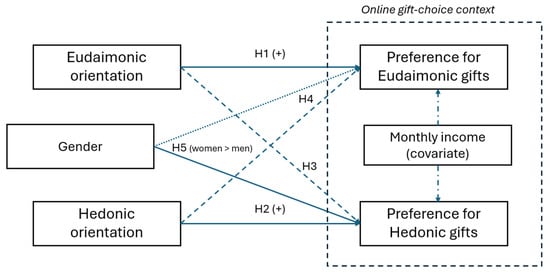
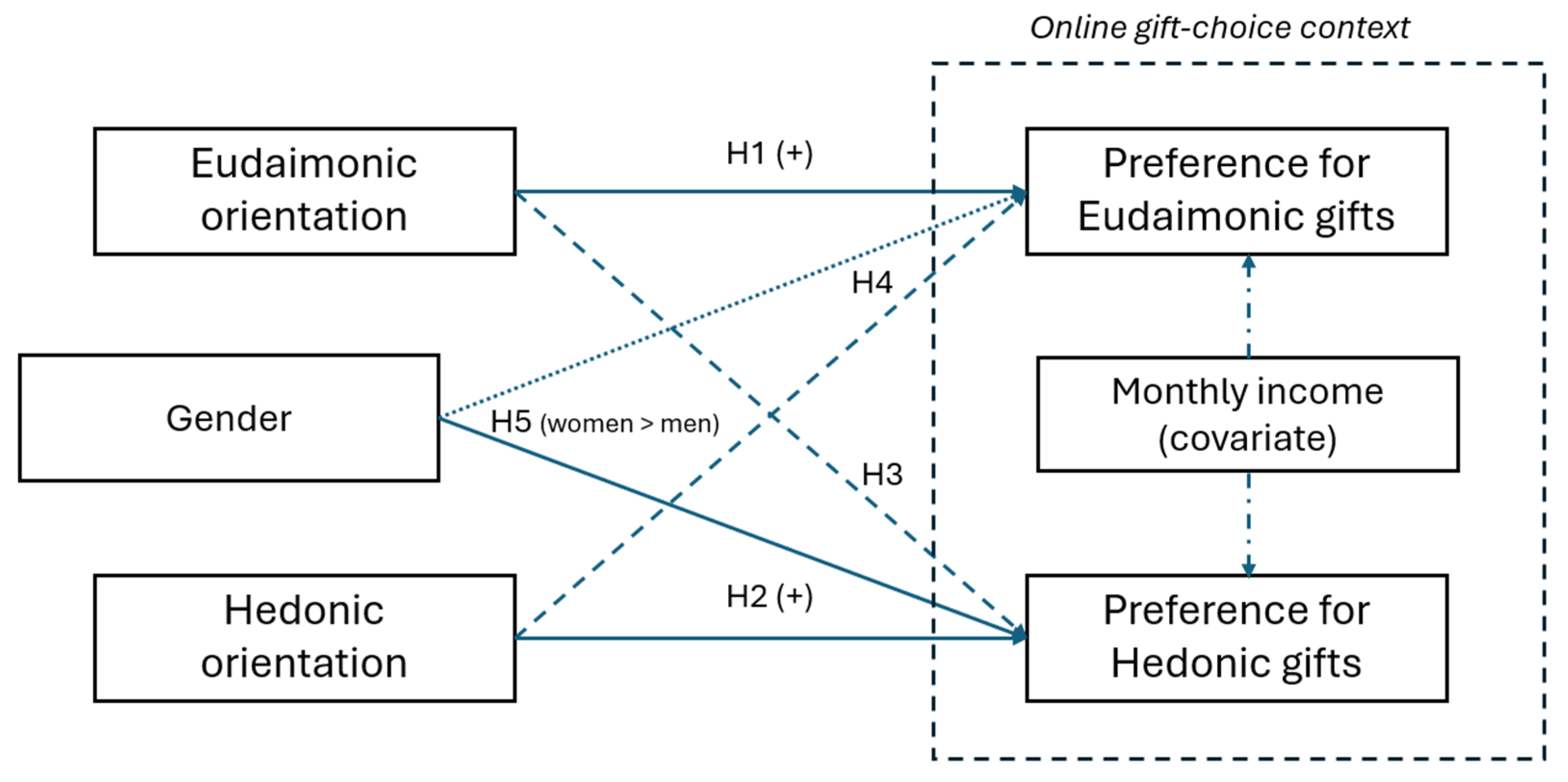
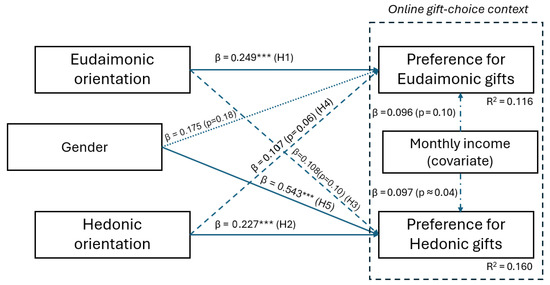
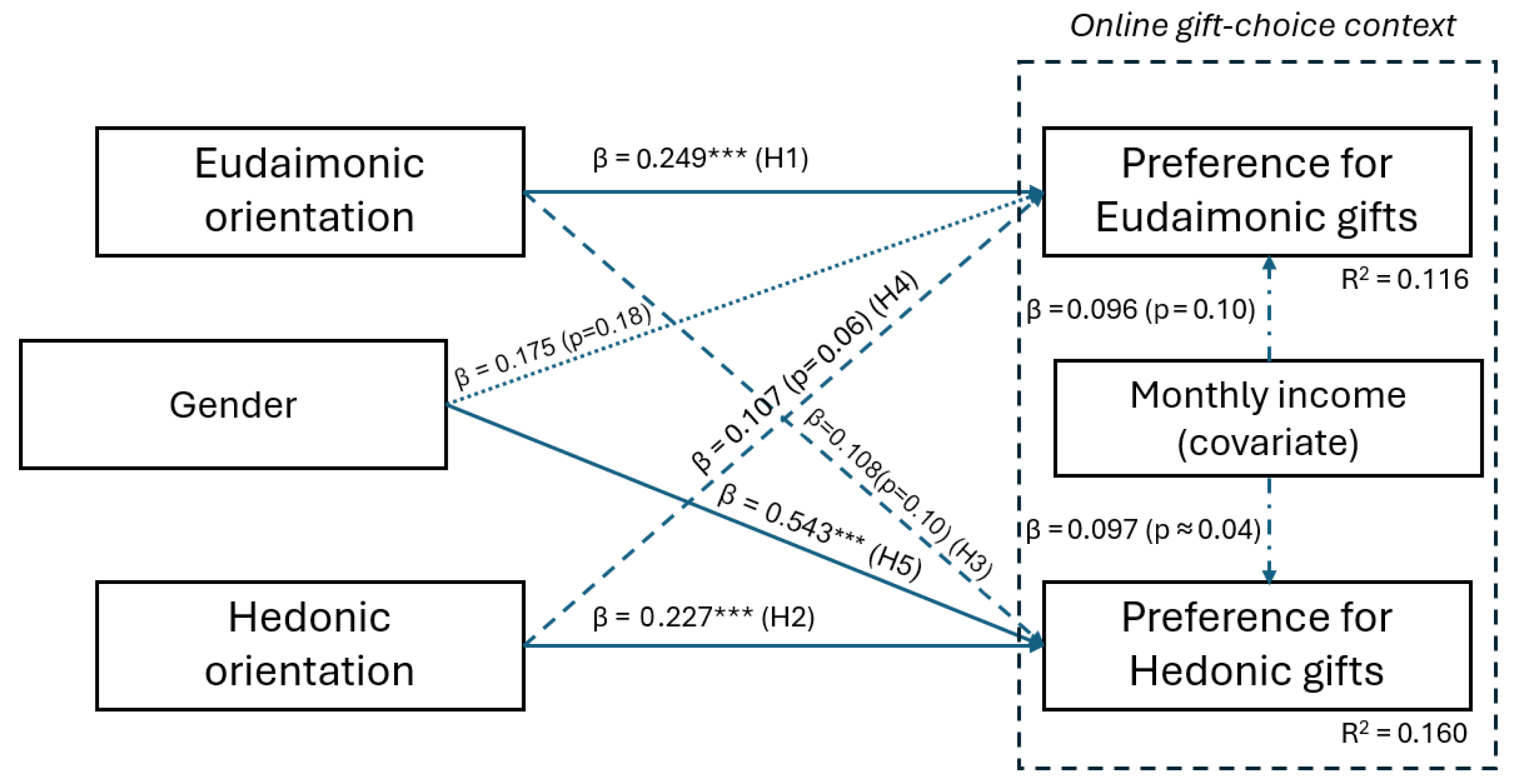

Disclaimer/Publisher’s Note: The statements, opinions and data contained in all publications are solely those of the individual author(s) and contributor(s) and not of MDPI and/or the editor(s). MDPI and/or the editor(s) disclaim responsibility for any injury to people or property resulting from any ideas, methods, instructions or products referred to in the content. |
© 2026 by the authors. Licensee MDPI, Basel, Switzerland. This article is an open access article distributed under the terms and conditions of the Creative Commons Attribution (CC BY) license.