


Abstract
This study investigates the determinants of mobile commerce (m-commerce) adoption among Moroccan consumers by extending the Technology Acceptance Model (TAM) with Perceived Security (PSec), Perceived Trust (T), and Subjective Norms (SN). Primary data were collected through a self-administered online survey (n = 424) during June–September 2024. Partial Least Squares Structural Equation Modeling (PLS-SEM) was conducted using SmartPLS 4.1.0.3. The structural model explained 73.7% of variance in Attitude and 62.2% in Intention to Use (standardized root mean square residual, SRMR = 0.053; normed fit index, NFI = 0.892). All twelve hypothesized paths were statistically supported (p < 0.01). Perceived Trust exerted the strongest effect on Attitude (β = 0.505, f2 = 0.969, p < 0.001), with roughly two-thirds of its total effect on Intention to Use (β_total = 0.301) mediated through Attitude and a smaller, complementary direct effect (β = 0.097, p = 0.006). Perceived Security exerted the single largest direct effect on Intention to Use (β = 0.503, f2 = 0.529, p < 0.001), together with a smaller but significant effect on Attitude (β = 0.117, p < 0.001). Subjective Norms emerged as the most structurally pervasive construct, significantly predicting Perceived Ease of Use (β = 0.531, f2 = 0.394), Perceived Security (β = 0.449), and Perceived Usefulness (β = 0.277), with a total effect on Intention to Use (β_total = 0.443, p < 0.001) that was transmitted mainly through the mediating constructs; in an alternative model adding a direct SN → Intention path, that path was small (β = 0.100, p = 0.007). Out-of-sample validation using PLSpredict and the Cross-Validated Predictive Ability Test (CVPAT) confirmed positive Q2predict values for all five endogenous constructs and a lower root-mean-square error (RMSE) than a linear-model benchmark for all 18 reflective indicators; the CVPAT advantage over the linear benchmark was significant overall (t = 5.096, p < 0.001) and for four of the five constructs (not for Attitude). These findings clarify the differential mechanisms through which trust and security influence adoption, reconceptualize social influence as a largely upstream (structural) antecedent in collectivist contexts, and provide theoretically grounded recommendations for marketers, platform designers, and policymakers in Morocco and comparable developing economies.
1. Introduction
Mobile commerce (m-commerce)—broadly defined as the conduct of commercial transactions and information exchange through mobile devices—has emerged as one of the most consequential transformations in consumer behavior over the past decade [1,2]. In developing economies, m-commerce represents a leapfrog technology with the potential to democratize access to financial services, retail, and digital governance [3,4]. According to Maroc Telecom’s 2023 Universal Registration Document [5], Morocco recorded 55.9 million mobile subscribers by the end of 2023, corresponding to a mobile penetration rate of 150.92%. During the same period, Internet subscriptions reached 38.29 million, resulting in an Internet penetration rate of 103.42%, reflecting the country’s high level of digital connectivity [5]. Government-led digital transformation initiatives—from the Digital Morocco 2013 strategy to the current National Digital Strategy—have invested substantially in telecommunications infrastructure, mobile payment frameworks, and e-government services [6].
These infrastructural investments are increasingly accompanied by targeted financial-inclusion policy. Bank Al-Maghrib’s National Financial Inclusion Strategy (SNIF), whose second phase (2024–2027) explicitly prioritizes digital-payment adoption and consumer trust in digitalization, reports that the bank-account ownership rate reached 58% of adults in 2024, that mobile-payment transaction volumes grew by 41% and their value by 87% between 2024 and 2025, and that the country’s composite Financial Inclusion Index reached 61/100 in 2023 [7]. This policy trajectory underscores that m-commerce and mobile-payment adoption are not merely a private-sector phenomenon in Morocco but an explicit object of national financial-inclusion policy, reinforcing the practical relevance of identifying the specific psychological and social determinants—trust, security, and social norms—that shape whether infrastructural and regulatory investment translates into actual consumer adoption.
Despite this infrastructural readiness, actual m-commerce adoption among Moroccan consumers has not kept pace with technological availability—a phenomenon described as the “adoption paradox” [8,9], mirroring the broader “digital paradox” documented across the Middle East and North Africa (MENA) [10]. The Technology Acceptance Model (TAM; [11]) remains the dominant framework in information systems (ISs) adoption research, yet its parsimony limits explanatory scope in environments where risk perceptions, institutional trust, and social dynamics are primary determinants of adoption [12,13].
Morocco’s socio-cultural landscape presents precisely such an environment. Moroccan consumers are embedded in collectivist social structures characterized by strong communal ties, high deference to social norms, and heavy reliance on word-of-mouth communication [14]. Simultaneously, the nascent state of digital payment infrastructure means that concerns about transactional security and provider trustworthiness constitute formidable adoption barriers [15,16]. These contextual realities demand a theoretical framework extending TAM to incorporate security perceptions, trust cognitions, and social influence mechanisms as first-order determinants.
While prior research has separately established that trust reduces perceived transactional risk in e-commerce settings and that security concerns constrain adoption in emerging digital-payment markets, two aspects remain theoretically unresolved. First, most extended-TAM studies model trust and security as a single undifferentiated risk-perception construct or test only one of the two possible pathways to adoption, leaving unclear whether—and how—these two constructs operate through distinct mechanisms (attitudinal versus direct) rather than a shared one. Second, the role of Subjective Norms in collectivist, infrastructure-constrained markets such as Morocco’s is typically modeled only as a direct predictor of intention, even though social norms may plausibly also shape the cognitive beliefs (ease of use, usefulness, security) that precede attitude formation—a structurally upstream role that remains empirically untested in this context. This study addresses this gap by pursuing the following research questions: (RQ1) Do Perceived Trust and Perceived Security influence m-commerce adoption in Morocco through distinct, separable pathways, or do they operate as a single undifferentiated risk-perception mechanism? (RQ2) Do Subjective Norms function solely as a direct predictor of Intention to Use, or does it additionally operate as a structural upstream antecedent shaping Perceived Ease of Use, Perceived Usefulness, and Perceived Security? Accordingly, the goal of this study is to develop and empirically test an extended TAM that jointly specifies Trust and Security as separable pathways and repositions Subjective Norms as a potential upstream antecedent, using data from Moroccan m-commerce consumers.
This study responds to that demand by developing and empirically testing an extended TAM framework incorporating Perceived Security (PSec), Perceived Trust (T), and Subjective Norms (SN) among n = 424 Moroccan consumers using Partial Least Squares Structural Equation Modeling (PLS-SEM). The analysis extends beyond direct path testing to examine total effects, enabling rigorous decomposition of how trust and security influence behavioral intention.
The three extensions are integrated because each addresses a distinct limitation of the classical TAM in this setting. TAM [11] explains adoption through the user’s own cognitive appraisals of a technology, but it is silent on the conditions under which a remote transaction can be made safely, on whether the provider can be relied upon, and on the social context in which the choice is made. Mobile commerce makes these conditions salient: it is conducted remotely, involves the transfer of financial and personal data, and depends on counterparties that the consumer cannot directly observe. Perceived Security captures the consumer’s assessment of the technical protection and confidentiality of this transfer, whereas Perceived Trust captures a belief about the reliability of transactions, the support offered by the provider, and its adherence to consumer-protection rules. The two constructs are related but not interchangeable, and modeling them separately allows their pathways to be tested rather than assumed. Subjective Norms capture the social pressure that, in collectivist settings, is expected to shape not only intention but also how easy, useful and safe a technology is perceived to be. Integrating the three constructs in a single model therefore allows technology-related, provider-related and socially related determinants of adoption to be examined jointly rather than in isolation.
In the Moroccan m-commerce context, this integrated specification adds knowledge in three respects. First, it tests whether security and trust, which are often conflated in studies of emerging digital-payment markets [15,16], operate through different routes, which matters in a market where payment infrastructure is still developing. Second, it examines whether social influence acts only on intention or also upstream on the beliefs that precede attitude, which is relevant to a society characterized by strong reliance on word-of-mouth communication [14]. Third, it provides evidence from North Africa, a region underrepresented in the adoption literature, and derives pathway-specific implications for providers and policymakers. The contribution is therefore not the application of established constructs to a new country, but a test of how their roles differ within a single model, which single-construct extensions cannot reveal. Because the evidence is cross-sectional and drawn from one country, these contributions are offered as theoretically meaningful findings that require replication, not as established regularities.
This study makes four theoretical contributions. First, it provides empirical validation of an extended TAM in a North African collectivist context, a region systematically underrepresented in IS adoption research. Second, it demonstrates that Perceived Trust is associated with Intention to Use predominantly, though not exclusively, through attitudinal mediation (β_total = 0.301, of which roughly two-thirds is indirect via Attitude), while Perceived Security is most strongly linked to behavioral intention chiefly through a large direct effect (β = 0.503, f2 = 0.529, p < 0.001) complemented by a smaller attitudinal route—a complementary dual-pathway pattern rather than a strict either/or dichotomy. Third, it reveals that Subjective Norms function as a pervasive structural antecedent predicting multiple cognitive perceptions upstream (SN → PEOU: β = 0.531; SN → PSec: β = 0.449; SN → PU: β = 0.277), reconceptualizing social influence beyond the single direct predictor role posited by UTAUT [13] (a small direct SN → Intention path appears only in an alternative model, β = 0.100, so the total effect remains predominantly indirect). Fourth, total-effects analysis generates actionable, pathway-specific recommendations that direct path analysis alone cannot provide. Section 6 specifies how these contributions go beyond applying established TAM constructs to a new national context.
The remainder of this article is organized as follows. Section 2 reviews the theoretical background and develops the twelve research hypotheses. Section 3 describes the sampling procedure, measurement instrument, and analytical approach. Section 4 reports the measurement- and structural-model results, including out-of-sample predictive validation. Section 5 discusses the findings in relation to prior literature, and Section 6 and Section 7 set out the theoretical and practical implications, respectively. Section 8 concludes, and Section 9 discusses the study’s limitations and directions for future research.
2. Theoretical Framework and Hypothesis Development
2.1. The Technology Acceptance Model and Its Limitations in M-Commerce Contexts
Davis [11] proposed TAM as a parsimonious account of individual IT adoption, grounded in the Theory of Reasoned Action [17]. TAM posits that Perceived Usefulness (PU) and Perceived Ease of Use (PEOU) are the principal determinants of Attitude and, subsequently, of behavioral intention (BI). King and He’s [18] meta-analysis of 88 studies confirmed the robustness of these relationships.
However, TAM’s parsimony becomes a limitation in m-commerce adoption in developing economies [12,19]. Venkatesh et al.’s [13] UTAUT synthesized eight prior models, identifying Social Influence as a core determinant of behavioral intention. UTAUT2 [20] incorporated Hedonic Motivation, Price Value, and Habit. Yet both treat social influence as a unidimensional direct predictor, obscuring its upstream effects on cognitive perceptions [21]. Neither systematically addresses security and trust as distinct constructs—a significant omission given their documented primacy as adoption barriers [16,22].
2.2. Attitude as a Mediating Mechanism
Attitude—an individual’s overall evaluative judgment of a behavior [17]—occupies a central mediating position in TAM. Research on mobile-wallet adoption indicates that attitude mediates the effects of usefulness, ease of use and trust on intention [23]. In collectivist societies such as Morocco, the affective components of attitude are particularly important because social judgments and normative compliance are mediated through attitude formation [24,25]. This study therefore reinstates attitude as a central mediating construct.
2.3. Hypothesis Development
2.3.1. Attitude and Intention to Use (H1)
Attitude, defined in the Theory of Reasoned Action as an individual’s overall positive or negative evaluative judgment of performing a given behavior [17], occupies a pivotal position in TAM as the proximal cognitive-affective antecedent of behavioral intention. Attitudes are learned evaluative patterns that shape how individuals think, feel, and ultimately act toward objects in their environment, and they are widely regarded as central to acceptance and use of information systems across contexts [18,26]. Meta-analytic evidence spanning technology acceptance research more broadly confirms that attitude-based theories such as TAM remain among the strongest predictors of both intention and use behavior, with effect sizes in the 0.32–0.51 range across dozens of independent samples, a level of consistency rarely matched by other constructs in the acceptance literature. In the specific case of mobile commerce, meta-analytic correlational evidence places the attitude–behavioral-intention relationship as the single strongest bivariate association among all TAM-related constructs tested, exceeding even the classic perceived usefulness–attitude and perceived ease of use–usefulness links. When consumers hold favorable evaluative judgments about m-commerce—viewing it as a good, wise, and pleasant course of action—they are substantially more likely to translate that evaluation into a concrete adoption intention, since attitude functions as the cognitive filter through which more distal beliefs (usefulness, ease of use, trust, security, social norms) are integrated into a single actionable orientation. This relationship has been empirically confirmed across diverse m-commerce contexts, including mobile banking, e-wallets, and cross-border retail applications [27,28,29].
Hypothesis 1 (H1).
Attitude toward m-commerce positively influences Intention to Use.
2.3.2. Perceived Ease of Use: Paths to Attitude and Usefulness (H2, H3)
Perceived Ease of Use (PEOU) reflects the degree to which a consumer believes that using a particular system would be free of effort [11]. Davis conceptualized PEOU as distinct from, yet causally prior to, Perceived Usefulness: a system perceived as effortless to operate frees cognitive resources that can then be redirected toward evaluating its functional benefits, while a system perceived as complex or confusing generates friction that can undermine perceived usefulness regardless of the system’s objective capabilities. In the m-commerce domain specifically, PEOU captures beliefs about the clarity of navigation, the intuitiveness of the interface, and the ease of completing transactions on a mobile screen—dimensions that are especially salient given the smaller display, touch-based input, and variable connectivity characteristic of mobile shopping relative to desktop e-commerce. Two theoretically distinct pathways are hypothesized. First, PEOU is expected to shape Attitude directly: an m-commerce platform that is simple and intuitive to use is more likely to be evaluated favorably overall, independent of its perceived usefulness, because ease of interaction itself carries hedonic and affective value for the user. Second, and more robustly documented in the TAM literature, PEOU is expected to shape Perceived Usefulness: platforms that are easier to use allow consumers to accomplish their shopping tasks more efficiently, thereby directly enhancing the perceived functional value of the technology. This PEOU → PU link is one of the most consistently replicated relationships across the technology acceptance literature, having been confirmed in extensions of TAM spanning three decades and in mobile-specific applications including m-banking, m-learning, and m-commerce [3,18,30].
Hypothesis 2 (H2).
Perceived Ease of Use positively influences Attitude toward m-commerce.
Hypothesis 3 (H3).
Perceived Ease of Use positively influences Perceived Usefulness.
2.3.3. Perceived Security: Paths to Attitude and Intention (H4, H5)
Perceived Security (PSec) refers to consumers’ beliefs that their m-commerce transactions—and the personal and financial information these transactions require—are adequately protected from unauthorized access, data breaches, and financial loss [22,29]. PSec is conceptually and empirically distinct from Trust: security is a relatively specific, often technically anchored cognitive assessment of transactional risk (encryption, authentication, fraud protection), whereas trust is a broader relational judgment about the provider’s overall integrity, benevolence, and reliability as an economic actor [22]. This distinction is maintained conceptually and operationally throughout the measurement model (Section 3.3); nonetheless, one PSec indicator (PSec4) uses the everyday verb “trust” in its item wording (“I trust that M-Commerce ensures the security of my financial information”), a lexical overlap with the Trust construct that is addressed further in Section 4.2 alongside the discriminant validity evidence separating the two constructs empirically. Two pathways are hypothesized for PSec, reflecting the dual-process view of risk-relevant judgments in consumer decision-making [31]. First, security perceptions may shape overall Attitude toward m-commerce: a consumer who believes the ecosystem of mobile payment and data-handling practices is generally safe is likely to form a more favorable global evaluation of m-commerce as a mode of transacting, integrating security into the broader affective-evaluative judgment captured by Attitude. Second, and often more directly, security perceptions are theorized to determine behavioral intention through a comparatively immediate, less deliberative protective response: because security threats carry acute, loss-framed consequences (financial fraud, identity theft), consumers may translate security beliefs into adoption or avoidance decisions without the full elaboration implied by attitude formation, a pattern consistent with dual-process and prospect-theoretic accounts of risk-relevant judgment [12,31]. Mobile-wallet research points to a similar combination of a trust-related route and a direct route: in a PLS-SEM study, perceived security affected both perceived trust (β = 0.423) and intention to use (β = 0.128) [32].
Hypothesis 4 (H4).
Perceived Security positively influences Attitude toward m-commerce.
Hypothesis 5 (H5).
Perceived Security positively influences Intention to Use m-commerce.
2.3.4. Perceived Trust: Paths to Attitude and Intention (H6, H7)
Perceived Trust (T)—the consumer’s confidence in the reliability, integrity, and competence of m-commerce service providers [33,34]—encompasses beliefs about provider honesty, adherence to consumer-protection commitments, and consistency of service delivery over repeated interactions; the Trust items (Section 3.3) capture these beliefs in part. Trust theory distinguishes several underlying dimensions, typically including ability (the provider’s competence to deliver on its commitments), benevolence (genuine concern for the consumer’s interests), and integrity (adherence to a set of principles the consumer finds acceptable); together these dimensions allow the consumer to reduce the perceived vulnerability inherent in transacting with a remote, often anonymous digital counterparty. Two pathways are hypothesized. The trust–attitude pathway is well established in e-commerce research: because trust reduces the perceived social and relational risk of the exchange, it is expected to translate into a more favorable overall evaluation of m-commerce as a transactional channel [26,34]. A more direct trust–intention pathway is also plausible, reflecting evidence that consumers may act on trust heuristically—“if I trust this provider, I will use this service”—without necessarily routing that judgment through a fully elaborated attitudinal evaluation; however, the strength of this specific direct effect once attitude is modeled remains an empirical question, since trust has been shown to act both directly and through attitude [34]. Both pathways are therefore retained as testable hypotheses rather than assumed a priori.
Hypothesis 6 (H6).
Perceived Trust positively influences Attitude toward m-commerce.
Hypothesis 7 (H7).
Perceived Trust positively influences Intention to Use m-commerce.
2.3.5. Perceived Usefulness and Attitude (H8)
Perceived Usefulness (PU) is defined as the degree to which a person believes that using a particular system would enhance their task performance [11]. In the m-commerce context, PU captures consumers’ beliefs that mobile shopping platforms improve the efficiency, convenience, and overall effectiveness of their purchasing transactions relative to alternative channels such as physical retail or desktop e-commerce—for instance, by enabling purchases at any time and location, reducing search costs, and streamlining payment. Within TAM’s causal chain, PU is theorized to be a stronger and more consistent predictor of Attitude than PEOU in utilitarian, task-oriented technology contexts, because the ultimate value proposition of a shopping platform lies less in how effortless it is to operate and more in the tangible functional benefits—time savings, product variety, price comparison—that it delivers to the consumer. This relationship has been consistently supported across m-commerce studies conducted in emerging economies, where infrastructural and connectivity constraints make the perceived practical payoff of mobile shopping a particularly salient driver of favorable evaluation [2,3], and is corroborated by broader e-commerce evidence showing that attitude toward purchase is positively and significantly shaped by perceived utility across product categories and cultural settings.
Hypothesis 8 (H8).
Perceived Usefulness positively influences Attitude toward m-commerce.
2.3.6. Subjective Norms: Upstream Influence on Cognitive Perceptions and Attitude (H9–H12)
Subjective Norms (SN), defined as an individual’s perception of social pressure from important referents—family, friends, colleagues—to perform or not perform a given behavior [21,24], are particularly salient in collectivist societies where individual decisions are embedded in dense communal networks and where deference to group expectations carries substantial normative weight [14]. Hofstede’s cultural-dimensions framework situates Morocco as a comparatively collectivist society, a positioning that has direct theoretical implications for how social influence should be modeled in Moroccan technology-adoption research [35]. This study departs from the conventional UTAUT specification, in which Social Influence is modeled as a single, direct predictor of behavioral intention [13], and instead positions SN as an upstream antecedent that reshapes the very cognitive evaluations—ease of use, usefulness, and security—on which subsequent attitudinal and intentional judgments are built. Three distinct theoretical mechanisms justify this reconceptualization. Social Information Processing Theory [36] explains the SN → PEOU and SN → PU pathways: in the relative absence of extensive prior personal experience with a novel technology, individuals construct their own evaluations of a system’s ease of use and usefulness substantially from the cues, testimonials, and vicarious experiences provided by their social network, rather than from first-hand interaction alone. Social Proof theory [37] explains the SN → PSec pathway: because security is inherently difficult for an individual consumer to verify directly (few users can technically audit a platform’s encryption or fraud-prevention systems), consumers instead rely heavily on the observed behavior and reported experiences of trusted peers as a proxy signal for the platform’s trustworthiness—if people the consumer trusts have transacted safely, the platform is inferred to be safe. Finally, classical normative-compliance reasoning explains a residual direct SN → Attitude pathway: beyond reshaping specific cognitive beliefs, social referents may also directly color the individual’s global evaluative stance toward m-commerce as a socially sanctioned or socially discouraged practice [3,21]. Diffusion-of-innovations theory further supports the plausibility of a structurally pervasive social-influence construct in this setting, identifying interpersonal communication channels as decisive drivers of adoption during the early and majority stages typical of a still-maturing m-commerce market such as Morocco’s [38]. In this article, “Subjective Norms” (SN) refers to the measured construct (two items adapted from Taylor and Todd [21]), whereas “social influence” is used as the broader theoretical notion, as in UTAUT [13].
This positioning is corroborated by recent evidence that social- and trust-related constructs remain active determinants of digital-commerce behavior across contexts, from QR-code mobile payment [39] and mobile-banking continuance [40] to cross-national e-commerce satisfaction [41] and last-mile delivery experience among Gen Z and Millennial consumers [42], rather than being confined to the foundational social-influence literature.
Hypothesis 9 (H9).
Subjective Norms positively influence Attitude toward m-commerce.
Hypothesis 10 (H10).
Subjective Norms positively influence Perceived Ease of Use.
Hypothesis 11 (H11).
Subjective Norms positively influence Perceived Security.
Hypothesis 12 (H12).
Subjective Norms positively influence Perceived Usefulness.
Taken together, these twelve hypotheses extend the classical TAM core (PEOU, PU, Attitude, Intention) in three ways: by specifying Trust and Security as two separable pathways to Attitude and Intention rather than a single undifferentiated risk-perception construct, by repositioning Subjective Norms as a structural upstream antecedent of PEOU, PU, and Security rather than solely a direct predictor of Intention, and by explicitly modeling both direct and attitude-mediated routes for Trust and Security to allow their relative contributions to be empirically disentangled.
Figure 1 presents the proposed research model, integrating the twelve hypotheses developed above into a unified structural framework.
Figure 1.
Proposed research model. The extended Technology Acceptance Model integrates Subjective Norms, Perceived Security, and Perceived Trust. Arrows represent the twelve hypothesized relationships (H1–H12) among the seven constructs.
3. Materials and Methods
3.1. Research Design
This study adopts a positivist epistemological stance, operationalized through a quantitative cross-sectional survey design aimed at testing the proposed structural model of m-commerce adoption [43]. The cross-sectional design captures consumers’ perceptions and stated intentions at a single point in time, which is common in TAM-based adoption research [18,19]. Because the data are cross-sectional, the structural coefficients reported below are interpreted as statistical associations consistent with the hypothesized model, not as evidence of causation; terms such as “effect”, “influence” and “driver” are used in this PLS-SEM sense.
3.2. Data Collection and Sampling
Primary data were collected via a self-administered online questionnaire (Google Forms; Google LLC, Mountain View, CA, USA) distributed through email and professional/social networks (WhatsApp, LinkedIn) during June–September 2024, following a mixed non-probability approach combining convenience and snowball sampling, a method widely used in information-systems and m-commerce adoption research in developing-country contexts where a comprehensive sampling frame is unavailable. Convenience sampling allowed respondents to self-select following an open invitation, while snowball sampling extended reach through respondent-driven referrals. Screening questions at the start of the survey verified Moroccan residency and prior m-commerce awareness. Non-probability sampling was considered acceptable here because the study aimed to test theoretically specified relationships rather than to estimate population parameters; its consequence is that the findings cannot be statistically generalized to the Moroccan population and are interpreted as applying to the sampled segment of digitally active consumers.
This approach was adopted in light of specific contextual constraints affecting digital survey research in Morocco. Despite high overall mobile penetration, structural disparities in digital access remain. According to the Moroccan National Telecommunications Regulatory Agency (ANRT, Rabat, Morocco), mobile phones are available in nearly all Moroccan households, while smartphone ownership at the household level reaches approximately 91.7%, with a significant urban–rural gap (94.4% in urban areas versus 85% in rural areas) [44]. However, household equipment does not necessarily translate into universal individual access or effective digital usage, as disparities in digital skills, affordability, and technological proficiency may persist. These inequalities may affect the representativeness of purely online data collection methods by potentially underrepresenting individuals with limited internet access or lower digital literacy. This limitation is further discussed in Section 9.
Prior to participation, respondents were explicitly informed of the voluntary and anonymous nature of the survey, of their right to withdraw at any time before submission, and of the fact that no personally identifiable information would be collected. As the survey collected no identifying information, written informed consent was not obtained; consistent with standard practice for anonymous online surveys, voluntary completion and submission of the questionnaire were considered to constitute implied informed consent. After rigorous screening to remove incomplete or unengaged responses, the final sample comprised n = 424 valid observations.
This sample size satisfies PLS-SEM adequacy criteria, exceeding the ten-times rule of thumb (minimum 120 observations) [45] and power analysis recommendations for detecting medium effect sizes at α = 0.05 with power = 0.80 [46]. Table 1 presents the full demographic profile.
Table 1.
Demographic and usage profile of respondents (n = 424).
The final sample (n = 424) was relatively balanced in terms of gender (51.2% male, 48.8% female). Most respondents were young adults, with 76.7% aged between 18 and 35, consistent with the demographic profile most active on m-commerce platforms in Morocco. The sample also displayed a comparatively high education level, with 88.9% holding at least a bachelor’s degree, and an established familiarity with mobile shopping, as 78.5% of respondents reported more than one year of m-commerce purchasing experience.
3.3. Measurement Instrument
All constructs were operationalized as reflective latent variables measured on five-point Likert scales (1 = strongly disagree to 5 = strongly agree). Items were adapted from established scales validated in prior TAM and m-commerce/mobile-wallet adoption research: Attitude and Subjective Norms items followed Taylor and Todd [21]; Perceived Ease of Use and Perceived Usefulness items followed Davis [11]; Perceived Security and Perceived Trust items drew on Sarmah et al. [47], Che Nawi et al. [29], and Yang et al. [26]; and Intention to Use items followed Megadewandanu et al. [48]. The specific source for each item is reported alongside its wording in Table 2. Terminology: “Perceived Trust” is abbreviated T in the model figures and Trust in the tables and text; “Intention to Use” (INT) denotes the construct measured here, whereas “behavioral intention” refers to the corresponding generic construct in TAM and the theory of planned behavior. The questionnaire was made available in French and Arabic so that respondents could answer in the language they were most comfortable with, and care was taken to preserve the meaning of the original constructs and items. The French and Arabic versions were produced through forward translation by bilingual translators and checked through back-translation into English to verify that each item conveyed the same meaning as the original. No formal expert-panel assessment of content validity was conducted for this study; the items relied on the content validity of the source scales. Before data collection, the questionnaire was pre-tested with 20 participants representative of the target population of Moroccan m-commerce consumers, to assess the clarity, comprehensibility and relevance of the items and the overall flow of the questionnaire. The pre-test indicated that the items and instructions were generally clear and understandable, and no substantial modifications were required. The Subjective Norm construct was measured with two items, following the original two-item operationalization of Taylor and Todd [21], which remains widely used in TAM-based adoption research; while a broader item set could capture additional facets of social influence (e.g., descriptive versus injunctive norms), the two-item measure showed strong reliability and loadings in this sample (Section 4.2) and was retained here for consistency with its established source rather than as a claim that it exhaustively captures the construct’s full conceptual breadth—a limitation acknowledged in Section 9. Table 2 presents the complete measurement instrument. Two Intention items (INT2 and INT4) refer partly to security and availability (“safer and available everywhere”) and to current everyday use (“part of everyday transactions”), which may overlap with Perceived Security and with actual usage; their content was therefore examined explicitly, and a robustness analysis retaining only INT1 and INT3 is reported in Section 4.3.8.
Table 2.
Measurement instrument: constructs, items, and sources.
3.4. Analytical Strategy
Data analysis was conducted using SmartPLS 4.1.0.3 (SmartPLS GmbH, Bönningstedt, Germany) [49], implementing PLS-SEM, following the analytical protocol of Hair et al. [45], also applied in our earlier PLS-SEM studies [50,51,52].
The choice of PLS-SEM over covariance-based SEM is justified on three grounds: (1) the study’s primary objective is variance explanation and predictive relevance; (2) PLS-SEM does not require multivariate normality; and (3) it performs robustly with constructs having fewer than three indicators (the SN construct has two items). While measuring constructs with three or more indicators is generally preferable, PLS-SEM provides robust and reliable estimates for two-item constructs when indicator reliability is high (outer loadings > 0.70) and the surrounding structural paths are well estimated, consistent with the guidelines of Hair et al. [45]; both SN indicators exceeded this threshold in the present study (Section 4.2). All estimations were run on the 424 complete responses (no missing values; five-point Likert items) using the path-weighting scheme, and significance was assessed with 5000 bootstrap resamples.
The analysis followed the two-stage protocol of Hair et al. [45]. Stage 1 assessed the measurement model: Cronbach’s α ≥ 0.70, composite reliability (CR) ≥ 0.70, outer loadings ≥ 0.70, AVE ≥ 0.50, and discriminant validity via the Fornell–Larcker criterion [53], the Heterotrait–Monotrait Ratio of correlations (HTMT) [54], and cross-loading inspection. Stage 2 evaluated the structural model: R2, effect sizes f2 (0.02 = small; 0.15 = medium; 0.35 = large [46]), predictive relevance Q2 (blindfolding, omission distance = 7), total effects, and 95% percentile bootstrap confidence intervals (5000 resamples, two-tailed, α = 0.05). Global fit was assessed using SRMR (<0.08) as the primary criterion, with NFI (conventional benchmark > 0.90) reported for completeness. Common method variance was evaluated via Harman’s single-factor test [55], a full collinearity test [56] and correlation-based checks (Section 4.1).
4. Results
4.1. Common Method Variance Assessment
To assess the potential presence of common method bias, Harman’s single-factor test was performed using an unrotated principal component analysis on all 24 indicators in IBM SPSS Statistics, version 21 (IBM Corp., Armonk, NY, USA). Table 3 reports the initial eigenvalues and extraction sums of squared loadings for the first two components. The first unrotated factor accounted for 37.9% of total variance, below the widely accepted 50% threshold [55]. Some authors apply a stricter 40% benchmark for this diagnostic; the observed value also lay below that more conservative cut-off, no single factor accounted for the majority of the variance, and the second factor independently explained a further 14.2% (cumulative 52.1%), indicating that no single latent factor dominated the covariance structure among indicators. On this test alone, common method bias did not appear to dominate the data. Because Harman’s single-factor test is a relatively weak diagnostic, three complementary checks were added. (i) A full collinearity test following Kock [56], in which each construct was regressed on all the others and VIF values above 3.3 were taken as indicative of pathological collinearity and potential common method bias: the full-collinearity VIFs were 1.65 (PU), 1.86 (SN), 1.97 (PSec), 2.06 (PEOU), 2.05 (Trust) and 2.72 (INT), all below 3.3, whereas Attitude reached 4.01, above 3.3 although below the more lenient value of 5. Because Attitude is the construct explained by the largest number of antecedents (R2 = 0.737), a high VIF is structurally expected for it, and this value is read as reflecting its central position in the model rather than as clear evidence of method bias; under Kock’s strict criterion, however, a residual method effect cannot be excluded for this construct. (ii) The highest correlation among latent constructs was 0.658 (PSec–INT; see Section 4.2), well below the 0.90 level commonly regarded as indicative of common method bias. (iii) A single dominant method factor would be expected to inflate the correlations among all constructs, yet Trust was almost uncorrelated with PEOU, PU, PSec and SN (|r| ≤ 0.050), and a correlational marker proxy based on the smallest latent correlation (|r| = 0.003) left all correlations essentially unchanged [57]. Together with the procedural safeguards applied ex ante (anonymous and voluntary participation; Section 3.2), these checks suggest that common method bias is unlikely to be a serious threat, but because all data are self-reported, collected at one point in time with a single instrument, it cannot be ruled out and is acknowledged as a limitation (Section 9).
Table 3.
Harman’s single-factor test.
4.2. Measurement Model Assessment
The measurement model output (Figure 2) and convergent validity statistics (Table 4) confirmed the reliability and validity of all seven constructs. Cronbach’s α ranged from 0.866 (ATT and PU) to 0.902 (SN); CR (rho_c) ranged from 0.914 (PEOU and PSec) to 0.953 (SN), all exceeding 0.70. The Dijkstra–Henseler ρ_A coefficient [59] exceeded 0.70 for all constructs (range: 0.866–0.903). All 24 outer loadings exceeded 0.80 (range: 0.835–0.955). AVE ranged from 0.726 (PSec) to 0.911 (SN), comfortably satisfying the ≥0.50 threshold [53].
Figure 2.
Measurement model—PLS-SEM output (SmartPLS 4.1.0.3, n = 424). Values on arrows = standardized outer loadings (all > 0.70).
Table 4.
Convergent validity: outer loadings, reliability, and Average Variance Extracted.
Discriminant validity was assessed via the Fornell–Larcker criterion (Table 5), cross-loadings (Table A1, Appendix A), and the Heterotrait–Monotrait Ratio (HTMT; Table 6) [54]. The Fornell–Larcker criterion was satisfied for all constructs: each √AVE exceeded its highest inter-construct correlation. Cross-loading analysis confirmed that all 24 indicators loaded higher on their intended construct. The HTMT analysis (Table 6) provided the most stringent confirmation of discriminant validity: all 21 construct pairs fell below the strict 0.85 threshold (Henseler et al. [54]), ranging from 0.028 (Trust–SN) to 0.746 (PSec–INT). Notably, the HTMT value between Perceived Security and Perceived Trust was 0.039—among the lowest of all 21 construct pairs—indicating that despite the lexical overlap in a single PSec indicator (PSec4, noted in Section 2.3.3), the two constructs are very weakly related and therefore empirically distinct rather than conflated. The same pattern holds for Trust and the other exogenous constructs: HTMT values with PEOU, PU, PSec and SN lie between 0.028 and 0.062, and the latent-variable correlations between Trust and these four constructs do not exceed 0.050 in absolute value (Table 5), whereas Trust is clearly associated with Attitude (r = 0.528; HTMT = 0.604) and, more weakly, with Intention to Use (r = 0.309). These low values were checked against the SmartPLS output, the indicator labels and the data processing: all four Trust indicators loaded positively and strongly on Trust (0.837–0.880) and no item was reverse-coded. They were therefore treated as an empirical characteristic of this sample—Trust was only weakly associated with the other exogenous beliefs in this sample and was linked to the outcomes mainly through Attitude—rather than as a measurement artifact. This supports the conclusion that all seven constructs are empirically distinct. However, the near-zero associations of Trust are unusual and should not be read as evidence that trust is unrelated to security, usefulness, ease of use or social norms in general; the checks made and a tentative interpretation are given in Section 5.1, and the pattern is listed among the limitations (Section 9). Contemporary PLS-SEM methodology treats HTMT as the more reliable discriminant-validity diagnostic, since the Fornell–Larcker criterion can lack sensitivity in models with reflective indicators showing high inter-item correlation [54]. The Fornell–Larcker and cross-loading results are reported here primarily for completeness and comparability with earlier PLS-SEM studies in the m-commerce literature; the HTMT result is treated as the primary basis for concluding that discriminant validity holds, and the convergence of all three diagnostics on the same conclusion further reinforces this assessment. Structural collinearity was assessed using Variance Inflation Factors (VIFs); all outer VIF values remained below 3.5 (max: 3.08, SN1 and SN2), and all inner-model VIFs remained below 2.0, well within the recommended threshold of 5.0 [45].
Table 5.
Discriminant validity: Fornell–Larcker criterion.
Table 6.
Discriminant validity: Heterotrait–Monotrait Ratio (HTMT).
4.3. Structural Model Assessment
4.3.1. Predictive Power and Model Fit
Table 7 summarizes the structural model’s predictive power. Attitude showed the strongest explanatory power (R2 = 0.737, substantial), followed by Intention to Use (R2 = 0.622, moderate). Perceived Usefulness (R2 = 0.320), PEOU (R2 = 0.282) and PSec (R2 = 0.201) achieved weaker, though still meaningful, explained variance, consistent with the fact that PEOU and PSec each have a single antecedent (Subjective Norms) and PU only two (Subjective Norms and PEOU), whereas Attitude is explained by five. Predictive relevance was large for ATT and INT (Q2: 0.461–0.572), medium for PU and PEOU (Q2: 0.203–0.248) and small for PSec (Q2 = 0.144), indicating that the model has predictive relevance within the estimation sample for all five endogenous constructs; out-of-sample evidence is reported separately in Section 4.3.2. Global fit: SRMR = 0.053 (<0.08), the primary fit criterion; NFI = 0.892, slightly below the conventional 0.90 benchmark, is reported for completeness because the NFI has no established inferential basis in PLS-SEM.
Table 7.
Structural model predictive power: R2, effect sizes (f2), and predictive relevance (Q2).
The gap between the substantial R2 for Attitude (0.737) and the more moderate R2 for Intention to Use (0.622) is itself substantively informative rather than a weakness to be explained away. It reflects the structural position of each construct in the model: Attitude is the direct convergence point of all five direct antecedents tested here (PEOU, PU, PSec, Trust, and SN), so a large share of the variance relevant to m-commerce adoption is, by design, captured before Intention is reached. Intention, in turn, is predicted by only three direct paths (ATT, PSec, Trust), and by construction inherits explanatory power from Attitude only to the extent that Attitude successfully mediates the upstream constructs—any variance in Intention driven by factors outside this three-path structure (e.g., situational constraints, price, product availability, or habit, none of which are modeled here) necessarily remains unexplained. This pattern is consistent with, rather than contrary to, TAM’s core logic, in which Attitude functions as a funnel that concentrates belief-level variance before it is partially, but not fully, carried forward into behavioral intention. Practically, this implies that interventions targeting the attitudinal antecedents modeled here (trust-building, security signaling, usefulness communication) are likely to be associated with more favorable evaluations of m-commerce, but that a meaningful residual share of the intention-formation process depends on factors beyond the belief structure examined in this study, a point we return to in the Limitations. Figure 3 presents the complete structural model output.
Figure 3.
Structural model—PLS-SEM output (SmartPLS 4.1.0.3, n = 424). All twelve hypothesized paths were statistically supported (p < 0.01). Values on arrows are standardized path coefficients with p-values in parentheses; R2 values are shown inside the endogenous constructs.
4.3.2. Out-of-Sample Prediction Assessment: PLSpredict and CVPAT
While the in-sample Q2 values reported in Table 7 (blindfolding, omission distance = 7) indicate that the model retains explanatory relevance for the estimation sample, recent methodological guidance argues that predictive claims for PLS-SEM models should additionally be supported by out-of-sample evaluation using the PLSpredict procedure and, where feasible, the Cross-Validated Predictive Ability Test (CVPAT) [61]. This distinction matters because in-sample Q2 assesses how well the model reconstructs the data it was estimated on, whereas PLSpredict and CVPAT assess how well the model generalizes to holdout data, which is the more demanding and arguably more policy-relevant standard.
Prior to selecting a predictive-accuracy metric, the distribution of the PLS-SEM prediction errors was examined through the descriptive statistics reported by SmartPLS, following the methodological guidance of Shmueli et al. [62]. Across all 18 reflective indicators of the five endogenous constructs, the mean prediction error was virtually zero (between −0.0005 and 0.000), and the skewness ranged from −0.810 to −0.240 (all negative, i.e., a mild left tail), within the ±1 range that Hair et al. [63] (p. 66) regard as excellent for skewness (values up to ±2 being generally acceptable); Cramér–von Mises tests nevertheless rejected exact normality (p < 0.001) for every indicator. Given this mildly asymmetric but not strongly skewed pattern, RMSE was retained as the primary metric for comparing the predictive performance of the PLS-SEM model against the linear-model (LM) benchmark, and MAE is reported alongside it (item-level results below) as a complementary, less outlier-sensitive check. Figure 4 illustrates this distribution for three representative indicators (PU1, ATT1 and INT1); the errors are centered on zero but visibly left-skewed, most clearly for PU1 and INT1.
Figure 4.
Out-of-sample prediction-error histograms of PLS-SEM for three representative indicators ((a) PU1, (b) ATT1, (c) INT1), from 10-fold cross-validated PLSpredict in SmartPLS 4.1.0.3 (10 repetitions; n = 4240 pooled predictions per indicator), with the normal distribution superimposed. The errors are centered on zero but mildly left-skewed (skewness: −0.558 for PU1, −0.255 for ATT1, −0.754 for INT1; −0.810 to −0.240 across all 18 indicators, within ±1), and Cramér–von Mises tests reject exact normality; RMSE is therefore used as the primary predictive-accuracy metric, with MAE reported as a complement (item-level results reported below).
PLSpredict (10-fold cross-validation, 10 repetitions) was applied to all reflective indicators of the five endogenous constructs. At the item level, the PLS-SEM model produced a lower root-mean-square error (RMSE) than the naïve linear-model (LM) benchmark for all 18 indicators without exception, the diagnostic pattern that Shmueli et al.’s decision rule identifies as evidence of high predictive power [62]. On MAE, PLS-SEM was lower than the LM benchmark for 16 of the 18 indicators; the two exceptions (INT2 and PEOU4) differed by 0.004 and 0.003, respectively. Table 8 summarizes these results at the construct level (averages of the indicator-level values).
Table 8.
Out-of-sample predictive power: PLSpredict summary and CVPAT.
All five endogenous constructs achieved positive Q2predict values (indicator averages: 0.143–0.446; every individual indicator was also positive), confirming out-of-sample predictive relevance beyond the in-sample Q2 already reported. In the CVPAT, the PLS-SEM model had a significantly lower average loss than the indicator-average (IA) benchmark for every construct and for the model overall (all p < 0.001). Against the more demanding linear-model (LM) benchmark, the loss difference was significant for Perceived Ease of Use (p = 0.005), Perceived Security (p < 0.001), Perceived Usefulness (p = 0.002), Intention to Use (t = 2.017, p = 0.044) and for the model overall (t = 5.096, p < 0.001), but not for Attitude (t = 1.742, p = 0.082), for which PLS-SEM was numerically but not significantly better. The predictive advantage over the LM benchmark is therefore statistically supported for four of the five endogenous constructs, and the Intention result lies only just below the 0.05 level and should be read cautiously. These out-of-sample results are reported separately from, and should not be read as a confirmation of, the in-sample explanatory power (R2, in-sample Q2) discussed in Section 4.3.1. We report the non-significant Attitude result transparently rather than selectively, consistent with current recommendations for predictive validation in PLS-SEM [61,62].
Following the methodological guidance of Shmueli et al. [62], the RMSE and MAE of the PLS-SEM model were compared against the linear-model (LM) benchmark at the level of each individual reflective indicator, complementing the construct-level summary reported above. Table 9 presents these item-level results. The RMSE values for the PLS-SEM model are consistently lower than those of the LM across all 18 reflective indicators without exception (the MAE values were lower in 16 of the 18 indicators), which, together with the CVPAT results, indicates a modest but consistent out-of-sample advantage over the linear benchmark, while also providing item-level evidence that the endogenous constructs are well predicted by the exogenous variables of the extended TAM in the Moroccan m-commerce context.
Table 9.
PLS-SEM and linear-model (LM) out-of-sample predictive metrics by indicator.
4.3.3. Hypothesis Testing of the Direct Paths
Table 10 presents the direct path coefficients (β), t-statistics, p-values, and 95% percentile bootstrap confidence intervals from bootstrapping (5000 resamples). All twelve hypothesized paths were statistically supported (p < 0.01), with eleven significant at p < 0.001.
Table 10.
Direct path coefficients and hypothesis testing results.
4.3.4. Total Effects and Mediation Analysis
Table 11 presents total effects, decomposing direct and indirect pathways. The most critical finding concerns the mediation structure of Trust’s effect on Intention to Use: with both the direct path (β = 0.097, p = 0.006) and the total effect (β_total = 0.301, T = 9.784, p < 0.001, †) statistically significant, Attitude functions as a complementary partial mediator, carrying approximately 68% of Trust’s total influence on Intention (indirect effect ≈ 0.204 of 0.301) while a smaller but genuine direct effect persists. The total effect of SN on Intention to Use (β_total = 0.443, T = 15.294, p < 0.001, †) operates, in the specified model, entirely through the upstream pathways specified in the model (PEOU, PU, PSec, and ATT). It should be noted that this fully indirect total effect is, in part, a consequence of the model specification itself: no direct SN → Intention path was included, following the theoretical framing of SN as a structural antecedent of cognitive beliefs (Section 2.3.6) rather than a direct predictor of Intention as in conventional UTAUT-type specifications. To test whether this specification drives the result, an alternative model adding a direct SN → Intention path was estimated on the same sample with identical settings. The direct path was positive and statistically significant but small (β = 0.100, t = 2.69, p = 0.007, 95% percentile CI [0.028, 0.175]; SmartPLS bootstrap, 5000 resamples); the R2 of Intention rose only from 0.622 to 0.628, and the other paths feeding Intention changed moderately (Attitude → Intention: 0.339 vs. 0.403; Perceived Security → Intention: 0.482 vs. 0.503; Trust → Intention: 0.131 vs. 0.097; f2 of the new path = 0.015), all remaining significant. Combining this direct path with the indirect paths gave a total effect of SN on Intention of β_total = 0.499 (95% CI [0.430, 0.566]), of which β = 0.399 (95% CI [0.340, 0.460]), i.e., about four-fifths, was transmitted through PEOU, PU, PSec and ATT. The statement that SN acts “entirely” indirectly therefore holds only for the baseline specification and is not an empirical finding: Subjective Norms also show a small direct association with intention, while most of their association with Intention runs through the upstream beliefs. Similarly, PSec’s substantial direct effect on Intention (β = 0.503) is complemented by a smaller indirect component through Attitude (≈0.047), yielding a total effect of 0.550 (†).
Table 11.
Total effects: decomposing direct and indirect pathways.
To further substantiate these mediation pathways, specific indirect effects were tested directly via bootstrapping (5000 resamples) rather than inferred solely from the product of constituent direct paths [64]. The specific indirect effect of Trust on Intention via Attitude was β = 0.204 (T = 8.877, 95% CI [0.161, 0.250], p < 0.001), confirming that this pathway is itself statistically robust rather than a residual arithmetic difference between total and direct effects. Likewise, the specific indirect effect of Perceived Security on Intention via Attitude was β = 0.047 (T = 3.907, 95% CI [0.025, 0.072], p < 0.001), and the specific indirect effect of Perceived Ease of Use on Attitude via Perceived Usefulness was β = 0.079 (T = 4.946, 95% CI [0.050, 0.112], p < 0.001). All three bootstrapped indirect effects were significant at p < 0.001, providing direct confirmatory evidence for the complementary partial-mediation structure reported above, consistent with contemporary guidance recommending that mediation be established through the significance of the indirect effect itself rather than through the traditional causal-steps approach [64]. For Subjective Norms, the largest specific indirect effects on Intention ran through Perceived Security (SN → PSec → INT: β = 0.226, 95% CI [0.180, 0.275]), directly through Attitude (SN → ATT → INT: β = 0.087, 95% CI [0.057, 0.119]) and through Perceived Ease of Use and Attitude (SN → PEOU → ATT → INT: β = 0.069, 95% CI [0.048, 0.093]); all were significant at p < 0.001. Because the data are cross-sectional, these decompositions describe statistical associations implied by the model, not causal effects. The complete set of specific indirect effects is reported in Table A2 (Appendix A).
4.3.5. Effect Sizes
Table 12 reports f2 effect sizes. Trust → ATT yielded by far the largest effect in the model (f2 = 0.969), confirming that Trust is the dominant driver of Attitude among the five antecedents tested. This large value follows from the definition f2 = (R2included − R2excluded)/(1 − R2included): with R2 of Attitude = 0.737, omitting Trust would lower it to approximately 0.482 (ΔR2 ≈ 0.255), which relative to the unexplained variance (0.263) gives f2 ≈ 0.97. It reflects both the strong path (β = 0.505) and the fact that Trust is almost uncorrelated with the other antecedents of Attitude (|r| ≤ 0.05 with PEOU, PU, PSec and SN), so that it explains variance in Attitude that the other constructs do not share. PSec → INT (f2 = 0.529) and SN → PEOU (f2 = 0.394) also registered large effects. By contrast, Trust → INT (f2 = 0.017), although statistically significant, is a negligible effect in substantive terms, indicating that Trust’s practical relevance for Intention operates almost entirely through its large effect on Attitude rather than through its modest direct path. This pattern illustrates why statistical significance and substantive effect size must be interpreted jointly: a significant coefficient with a very large sample (n = 424) does not by itself indicate a managerially important effect.
Table 12.
Effect sizes (f2) for all structural paths.
4.3.6. Relative Contribution of Indicators to Their Constructs
Table 13 details the contribution of each indicator to its respective construct by presenting the outer loadings, t-statistics, and the relative share of each indicator’s contribution, calculated as each indicator’s t-statistic divided by the sum of t-statistics within its construct. This decomposition illustrates the relative significance of each indicator within its latent construct. For the Attitude construct, the three indicators contribute fairly evenly, with shares ranging from 27.5% to 36.3%. A broadly similar pattern holds for Intention (21.7–28.6%), Perceived Ease of Use (20.9–28.7%), and Perceived Usefulness (30.2–37.3%). Perceived Security shows somewhat greater variability (20.5–31.3%), with PSec4 contributing most, consistent with its highest outer loading (0.872) reported in Table 4. Overall, this analysis confirms that all indicators are statistically significant (all t > 40, p < 0.001) and provide a reasonably balanced contribution to the definition of their respective constructs, reinforcing the convergent validity of the measurement model established in Section 4.2.
Table 13.
Percentage distribution of indicator contribution by t-value.
4.3.7. Comparison with a Baseline TAM
To directly quantify the incremental explanatory value of the extended model, a baseline TAM (Perceived Ease of Use, Perceived Usefulness, Attitude, and Intention to Use only, following Davis [11]) was separately estimated on the same sample (n = 424) using PLS-SEM with identical estimation settings, and re-estimated with 5000-sample bootstrapping. Table 14 reports the resulting path coefficients alongside the corresponding paths from the extended model. In the baseline model, Perceived Ease of Use and Perceived Usefulness explained 43.6% of the variance in Attitude (R2 = 0.436), and the full baseline model explained 42.2% of the variance in Intention to Use (R2 = 0.422); the direct PU → INT path was not statistically significant (β = 0.021, p = 0.656), consistent with its typical attenuation once Attitude was included as a mediator. By contrast, the extended model reported throughout this study explained 73.7% of the variance in Attitude and 62.2% in Intention to Use—an increase of 30.1 and 20.0 percentage points, respectively, on the same sample. This directly demonstrates, rather than merely suggests, that the addition of Perceived Security, Perceived Trust, and Subjective Norms provides substantial incremental explanatory power beyond the classical TAM core.
Table 14.
Comparison of baseline TAM and extended model: path coefficients and explained variance.
4.3.8. Robustness Check: Model Re-Estimation Excluding Content-Overlapping Intention Items
Because indicator INT2 (“because it is safer and available everywhere, I will use M-Commerce in my daily life”) explicitly invokes security-related content and INT4 (“M-Commerce is part of everyday transactions”) arguably captures a descriptive belief rather than behavioral intention, the full structural model was re-estimated using a reduced two-item Intention scale (INT1, INT3 only), with identical PLS-SEM and 5000-sample bootstrapping settings. Table 15 compares the resulting Intention-related path coefficients and R2 with those of the full four-item model. The direct effects of Attitude (β = 0.355 vs. 0.403) and Perceived Security (β = 0.489 vs. 0.503) on Intention remained substantively similar and highly significant (p < 0.001) under both specifications, confirming that these two central findings of the study are not artifacts of the flagged items. Perceived Security’s coefficient was practically unchanged (0.503 to 0.489) under the reduced scale, so the PSec → INT association cannot be attributed to the content overlap in INT2, and Perceived Security remains the single strongest direct predictor of Intention under both specifications; Attitude’s coefficient decreased modestly (0.403 to 0.355). The direct effect of Trust on Intention, already the weakest path in the full model (β = 0.097, p = 0.006), was almost unchanged in size under the reduced scale (β = 0.092, p = 0.013): it remained statistically significant at the conventional α = 0.05 threshold, but with a narrower margin, and this result should accordingly be interpreted with some caution rather than treated as equally robust to the Attitude and Perceived Security direct effects. Explained variance in Intention decreased from R2 = 0.622 to R2 = 0.542 under the reduced scale, an expected consequence of removing two indicators from the outcome construct. These results have a bearing on the construct validity of Intention to Use. INT2 (security and availability as reasons) and INT4 (a descriptive statement about everyday transactions) widen the construct beyond a pure statement of behavioral intention, so the four-item measure is best read as a broader adoption-intention construct, and the two-item measure as a narrower but less comprehensive one (lower R2). The substantive conclusions are the same under both measures: Attitude and Perceived Security remain strong and significant predictors of Intention, and the weak direct Trust path is interpreted with caution. We therefore retain the four-item scale as the primary measure for its content coverage and report the two-item results as a sensitivity analysis; the Perceived Security coefficient should nevertheless be read with the INT2 wording in mind, even though it changed only from 0.503 to 0.489.
Table 15.
Robustness check: intention-related path coefficients with and without content-overlapping items (INT2, INT4).
5. Discussion
5.1. Trust as the Dominant Driver of Attitude, with a Complementary Direct Pathway to Intention
The most consequential finding of this study is the overwhelming role of Perceived Trust in predicting Attitude toward m-commerce (β = 0.505, f2 = 0.969, p < 0.001), by far the largest effect size observed anywhere in the model. This confirms and substantially extends prior evidence that trust operates primarily as an attitudinal, relational construct grounded in beliefs about a provider’s integrity, benevolence, and competence [33,34], and consistent with technology-trust research showing that trust in a specific technology is a multidimensional construct, composed of beliefs about its functionality, helpfulness and reliability, and distinct from general trust [65]. Beyond this dominant attitudinal route, Trust also exerts a modest but statistically significant direct effect on Intention to Use (β = 0.097, p = 0.006, f2 = 0.017). Decomposing the total effect (β_total = 0.301) shows that roughly two-thirds of Trust’s influence on Intention is channeled through Attitude, with the remaining third operating directly—a pattern of complementary partial mediation, consistent with the dual direct and attitude-mediated effect of trust reported by Palvia [34]; a similar structure, with both a direct effect on intention and an effect through attitude, has been reported in mobile-payment research for privacy concerns, a related risk perception (direct β = −0.13) [66]. Comparable patterns are reported in mobile-wallet research, where attitude only partially mediated the effect of trust on intention [23]; in a meta-analysis of 70 studies of digital payments, where attitude partially mediated the effect of trust on intention and trust was the strongest influence on attitude [67]; and in mobile commerce, where trust had a strong effect on attitude and a smaller direct effect on intention [68].
This pattern is theoretically informative in its own right. A purely full-mediation account would imply that trust matters for adoption only insofar as it first colors the consumer’s overall evaluative judgment. The presence of a genuine, if modest, direct path suggests that Moroccan m-commerce consumers also translate trust into behavioral intention through a more immediate route—plausibly a heuristic “if I trust the provider, I will use the service” inference that does not require the full deliberative processing captured by Attitude [31]. This dual-route pattern is consistent with recent digital-payment research showing that privacy concerns, a related risk perception, can retain an independent, more proximal effect on intention even after attitude is accounted for [66]. This contrast is worth making explicit: Trust’s direct effect on Intention (β = 0.097, f2 = 0.017) is markedly weaker than Perceived Security’s direct effect on the same outcome (β = 0.503, f2 = 0.529, discussed in Section 5.2)—a five-fold difference in path magnitude despite Trust being the strongest predictor of Attitude in the entire model. One plausible interpretation is that trust operates primarily as a slower-forming, attitude-mediated relational judgment, whereas security functions as a more immediately actionable safeguard belief that bears directly on the transactional decision to proceed; a second, complementary interpretation is that in a market where digital-payment infrastructure and provider legitimacy are still consolidating (Section 1), consumers may treat security assurances as a more proximate gatekeeping condition for adoption than general provider trust, which instead shapes the broader evaluative stance captured by Attitude. Both interpretations remain speculative given the cross-sectional design and should be tested directly in future research (Section 9).
A further feature of the data also calls for interpretation. Trust is almost uncorrelated with PEOU, PU, PSec and SN (|r| ≤ 0.050; Table 5), whereas positive associations between trust and such beliefs would be expected on theoretical grounds. We do not interpret this as showing that trust is unrelated to these beliefs in general, and we avoid presenting the constructs as independent in the population. We checked that this was not due to restricted variance (the standard deviation of Trust was comparable to that of the other constructs), to the scoring of the items, or to a particular subgroup: the association also remained small at the item level and within each gender (|r| ≤ 0.13). We therefore treat it as an empirical feature of this sample that we cannot fully explain. One possible reading draws on the trust typology of McKnight and Chervany [33], which distinguishes trusting beliefs about the vendor (competence, benevolence, integrity) from institution-based trust and from a general disposition to trust, and on the distinction between trust in people or firms and trust in the technology itself [65]. Read in this way, the Trust items—reliability of transactions (Trust1), assistance when a problem occurs (Trust3) and compliance with consumer-protection laws (Trust4)—capture beliefs about the exchange partner and its institutional setting within a relational exchange [34], rather than beliefs about the system (PEOU, PU, PSec) or about social pressure (SN). Such beliefs may be linked to Attitude, in which vendor-related assurances are integrated into an overall evaluation, while forming separately from the other beliefs. This reading is our interpretation of the items and was not tested here; it should therefore be regarded as conjectural. This reading is compatible with the expectancy-value logic of the theory of reasoned action [17], in which attitude integrates distinct sets of beliefs that need not be correlated with one another, and with the view that usefulness and ease of use promote use whereas trust helps consumers cope with the risks of a transaction [34]. In the integrative model of Mayer et al. [69], trust in a counterpart rests on the trustor’s propensity to trust and on perceptions of the counterpart’s ability, benevolence and integrity, and is deliberately separated from the perception of risk, which concerns factors outside the relationship with the counterpart; applied to the present data, this separation is consistent with Trust being only weakly related to the Perceived Security of the system and to beliefs about its ease of use and usefulness. Gefen et al. [70] likewise distinguish the interaction with the e-vendor, to which trust applies, from the interaction with the website interface, to which TAM beliefs apply; however, they also report that an easy-to-use interface contributes to trust, and a meta-analysis of 118 studies found significant relationships between trust and antecedents such as perceived usefulness, perceived ease of use and perceived security, although culture moderated the relationships involving perceived usefulness and perceived security, but not perceived ease of use [71]. In that meta-analysis the pooled correlations of trust with perceived usefulness, perceived ease of use and perceived security were 0.50, 0.47 and 0.44, respectively, far above the values observed here. Studies of mobile payment and mobile commerce report moderate positive correlations of trust with perceived usefulness, perceived ease of use and subjective norms (r = 0.37–0.61) [68,72], and a study of mobile social commerce found the contribution of subjective norms to trust to be positive but small [73]. The near-zero associations observed here therefore differ from what the literature would lead one to expect, may be specific to this sample or context, and should be interpreted accordingly. Replication in other samples, and with trust measures separating institutional from platform-specific trust, is needed.
5.2. Perceived Security: A Powerful Direct Predictor of Intention with a Secondary Attitudinal Route
Perceived Security emerges as the second most substantively important construct in the model. Its direct effect on Intention to Use (β = 0.503, f2 = 0.529, p < 0.001) is the largest f2 among all paths feeding into Intention. While the present cross-sectional design cannot directly observe cognitive processing (e.g., deliberation time, System 1/System 2 activation), the size and directness of this path is consistent with one plausible interpretation: that security perceptions function as a comparatively immediate safeguard judgment that partly bypasses extensive attitudinal processing [31]. This interpretation aligns with dual-process accounts in which acute risk-relevant cues—here, beliefs about transactional and data security—are theorized to trigger a rapid protective response that translates directly into behavioral intention, though this specific processing mechanism was not directly measured here and should be treated as a plausible explanation for the observed direct effect rather than an empirically demonstrated one.
Beyond this dominant direct route, Perceived Security also exerts a small but statistically significant effect on Attitude (β = 0.117, f2 = 0.040, p < 0.001). This suggests that security is unlikely to operate exclusively through the comparatively immediate route discussed above: a small share (about 9%) of its influence on adoption is mediated through the consumer’s broader evaluative stance toward m-commerce (indirect effect via Attitude ≈ 0.047 of a 0.550 total effect on Intention). Substantively, this refines rather than overturns the dual-pathway logic: security operates predominantly, but not exclusively, through a direct cognitive route, while trust operates predominantly, but not exclusively, through an attitudinal route—two related but empirically distinguishable mechanisms rather than a strict either/or dichotomy.
This substantial direct effect of security on intention nonetheless warrants contextualization against emerging post-pandemic evidence. Kao [74], comparing US m-commerce consumers before, during, and after COVID-19, found that perceived security concerns did not influence in-store customers’ intention during the pandemic (the moderating effect was marginal, p = 0.08) and ceased to function as an additional adoption barrier for either in-store or online-only customers in the post-pandemic period, a pattern that Kao links to the lessons customers learned from the pandemic, although perceived security remained a significant predictor of intention in his post-pandemic sample (β = −0.45). The present findings differ from this pattern: Perceived Security remains the single strongest predictor of Intention to Use in our sample. One possible reading, which we have not tested, is a difference in market maturity rather than a contradiction. Kao’s evidence is drawn from US consumers who had lived through the pandemic shift to mobile shopping; Morocco’s m-commerce sector, by contrast, remains in an earlier, still-consolidating adoption phase, in which infrastructural, regulatory, and institutional trust in digital payments is still forming rather than settled. Under these conditions, security is plausibly still processed as a live, unresolved risk rather than a normalized background condition, which is consistent with the large direct effect documented here. This suggests that the pattern reported by Kao [74] may itself be time- and market-dependent, and that longitudinal replication of the present model as Morocco’s m-commerce market matures would be valuable to test whether the security effect changes over time.
5.3. Subjective Norms as a Pervasive Structural Antecedent
In the baseline model, Subjective Norms operate not as the simple direct intention predictor posited by UTAUT [13] but as the model’s most structurally pervasive construct; the alternative model qualifies this reading without overturning it (see below). SN exerts four significant upstream effects: on PEOU (β = 0.531, f2 = 0.394—large), PSec (β = 0.449, f2 = 0.252—medium), PU (β = 0.277, f2 = 0.081—small), and ATT (β = 0.215, f2 = 0.105—small). Because SN has no specified direct path to Intention in the research model, its total effect on Intention to Use (β_total = 0.443, p < 0.001) is, by construction, entirely indirect, transmitted through PEOU, PU, PSec, and ATT. The alternative model reported in Section 4.3.4 shows that SN also has a small direct association with Intention (β = 0.100, p = 0.007); roughly four-fifths of the total effect nevertheless remains indirect. This finding should be distinguished from the baseline result: in the baseline model the effect is indirect by construction, whereas in the alternative model, the direct association is statistically significant but small, and the predominantly indirect pattern is therefore not merely a consequence of the specification.
The magnitude of SN → PEOU (f2 = 0.394) implies that in Morocco’s collectivist context, ease-of-use perceptions are formed substantially through social endorsements rather than through direct system interaction alone—consistent with Social Information Processing Theory [36] and with Hofstede’s cultural framework, in which Morocco scores as a comparatively collectivist society where group norms carry heightened weight in individual decision-making [35]. The SN → PSec effect (β = 0.449) reflects Social Proof mechanisms [37]: peers’ positive security experiences appear to attenuate security concerns, suggesting that security perceptions are partly a social construction rather than a purely technical assessment. This structurally upstream role of Subjective Norms echoes a broader reassessment of social influence in the technology-adoption literature: a review of 113 studies notes that many models treat social influence as a compliance-based, direct predictor of intention, whereas internalization effects, most commonly an indirect effect of subjective norm on intention through perceived usefulness, appear in a large share of the studies and were dropped from UTAUT [75]. Evidence from a collectivist emerging-market setting shows that collectivism strengthens the effect of social influence on the adoption of AI applications [76], although that study modeled social influence as a direct predictor of adoption behavior. The present results reinforce this reassessment empirically: with all four upstream paths statistically significant (small to large in magnitude), omitting them—as UTAUT-based specifications typically do—would understate the structural weight of social influence in collectivist adoption settings such as Morocco.
The pervasive role of Subjective Norms documented here should nonetheless be situated alongside other emerging-market drivers of Moroccan m-commerce adoption. Gargari and Makloul [8], analyzing factors affecting mobile-commerce adoption in Morocco, highlight the growing importance of facilitating conditions and usage habit alongside social and attitudinal determinants, suggesting that once initial adoption barriers are overcome, infrastructural readiness and routinized use become increasingly influential relative to social referents. The present study did not model facilitating conditions or habit directly, so the SN-centered account offered here should be read as one structurally dominant pathway among several plausible drivers rather than an exhaustive explanation of adoption. For product design teams, this implies that social-proof mechanisms (peer tutorials, referral programs) are likely to be most relevant during early adoption, while sustained usage may increasingly depend on removing infrastructural friction and reinforcing habitual use patterns—an avenue for future extensions of the present model.
5.4. Attitude and Usefulness: Confirming the Cognitive Core of TAM
The Attitude → Intention relationship (H1: β = 0.403, f2 = 0.245, p < 0.001) replicates the core TAM finding and is a substantial path in the model (medium effect size), underscoring that despite the extensions introduced here, the classic attitudinal mechanism at the heart of TAM remains fully intact [18,27,29]. Perceived Ease of Use exerts a significant effect on both Attitude (H2: β = 0.320, f2 = 0.238, medium) and Perceived Usefulness (H3: β = 0.367, f2 = 0.142, small), confirming the two classic TAM pathways rather than the attitudinal weakening in utilitarian contexts sometimes reported in meta-analytic work [18]. Perceived Usefulness, in turn, is significantly associated with Attitude (H8: β = 0.215, f2 = 0.119, small), consistent with m-commerce studies in other emerging economies [2,3]. Together, these four paths confirm that the cognitive core of TAM operates robustly within the extended model, providing the structural backbone onto which Trust, Security, and Subjective Norms are layered.
5.5. Comparison with Prior Literature
The Trust → Attitude effect (H6: β = 0.505) is comparable in direction and broadly similar in magnitude to those reported by Almaiah et al. [22] in NFC mobile payment (β = 0.61) and Yang et al. [26] in cashless transactions (β = 0.55), suggesting that trust plays a similarly central attitudinal role in the Moroccan m-commerce context. The direct Security → Intention effect (H5: β = 0.503) mirrors findings from Sub-Saharan Africa [15], where security was identified as a direct adoption barrier, and is corroborated by mobile-wallet research combining PLS-SEM with artificial neural networks, in which perceived security emerged as the most influential predictor of intention-to-use once compatibility, convenience, and trust were jointly modeled [32]. Merchant-side mobile-wallet research likewise found a partial, trust-mediated route alongside a direct effect: perceived usefulness kept a significant direct effect on intention while trust partially mediated it (VAF = 25%) [77]. Fintech-adoption studies in other developing-economy settings likewise report that security risk had a direct negative effect on adoption intentions without a significant indirect effect through trust [78], consistent with the direct Security → Intention effect documented here alongside the Attitude-mediated role of Trust. The dominant SN → PEOU role (H10: β = 0.531) is consistent with Chung and Holdsworth [14], who found Moroccan consumers exhibited distinctly stronger social influence effects than counterparts in Singapore and Kazakhstan, and with diffusion-of-innovations theory, which identifies interpersonal communication channels as decisive in the early and majority adoption stages typical of an emerging m-commerce market such as Morocco’s [38], as well as with recent work on AI-application adoption in Pakistan, which found that collectivism strengthened the effect of social influence on adoption behavior [76]. Collectively, this convergence across payment, fintech, and AI-adoption contexts is consistent with the possibility that the trust–security dual pathway and the role of social influence documented here reflect broader regularities in technology adoption under conditions of institutional and infrastructural uncertainty, rather than artifacts specific to the Moroccan m-commerce setting alone.
6. Theoretical Implications
This study contributes four theoretical advances. First, the empirical demonstration that Trust and Security operate through complementary, only partly overlapping pathways—Trust predominantly attitudinal, Security predominantly direct—helps clarify a persistent ambiguity in m-commerce adoption research: prior models that conflate the two constructs, or that model only one of the two possible routes, risk mischaracterizing how each relates to adoption. Second, the reconceptualization of Subjective Norms as a structural upstream antecedent—predicting PEOU, PU, and PSec—offers a more granular account of how collectivist cultural dynamics penetrate technology adoption, consistent with Social Information Processing Theory [36]. Third, total-effects analysis provides an analytical template revealing the full structural influence of exogenous constructs through mediating pathways—a methodological contribution applicable beyond m-commerce contexts. Fourth, the study establishes an empirically validated extended TAM for m-commerce in Morocco, providing a theoretical baseline for future longitudinal and comparative research across the Maghreb and MENA region.
How, then, does the extended model advance knowledge beyond applying established constructs to a new national context? We see three specific advances, none of which depends on the Moroccan setting as such. (i) Specification: rather than adding Trust and Security as interchangeable risk-related antecedents, the model estimates them jointly with Attitude retained as a mediator and tests specific indirect effects (Table A2). This separates two routes that single-construct models cannot distinguish: Trust is linked to Intention mainly through Attitude (specific indirect effect β = 0.204 of a total effect of 0.301), whereas Security is linked to Intention mainly directly (β = 0.503; indirect effect via Attitude β = 0.047 of a total effect of 0.550). (ii) Social influence: instead of assuming that Subjective Norms act only as a direct predictor of intention, as in UTAUT-type specifications, the model places them upstream of PEOU, PU, PSec and Attitude and compares this with an alternative specification that adds a direct path; in that alternative model the direct path is small (β = 0.100) while about four-fifths of the total association with Intention (β_total = 0.499) remains indirect, so a direct-only specification would understate the role of social influence in this sample. (iii) Incremental and out-of-sample evidence: on the same sample, the extended model explains 30.1 and 20.0 percentage points more variance in Attitude and Intention than the baseline TAM (Section 4.3.7), and its RMSE is lower than that of a linear benchmark for all 18 indicators in out-of-sample PLSpredict, with significant CVPAT advantages for four of the five constructs (Section 4.3.2). These advances concern how existing constructs are specified, related and evaluated; the study does not propose new constructs, and, given the cross-sectional design and a non-probability sample, they should be read as associations that require replication rather than as causal or universal claims.
These contributions carry implications beyond the immediate empirical setting. Theoretically, the dual-pathway finding suggests that adoption models which include either trust or security as a single undifferentiated risk-perception construct risk masking two statistically distinct pathways, one operating predominantly through Attitude and one operating substantially outside it; future model specifications in security-sensitive domains such as mobile banking, e-health, and e-government should therefore test both constructs jointly with Attitude explicitly retained as a mediator, rather than treating Attitude as redundant once TAM’s core beliefs are included. Methodologically, the demonstration that Subjective Norms’ total effect on Intention to Use is transmitted predominantly through the model’s mediating constructs (β_total = 0.443; a direct SN → Intention path added in an alternative model was small, β = 0.100) while its direct effect on Attitude is comparatively modest relative to its effect on PEOU (β = 0.215 on Attitude versus β = 0.531 on PEOU) illustrates a broader risk in adoption research: studies reporting only direct-effect coefficients for social-influence constructs risk overlooking part of their structural importance in collectivist settings—a possibility worth considering for UTAUT-based specifications more generally, though this study does not formally test UTAUT models and this suggestion should accordingly be read as a hypothesis for future comparative research rather than a demonstrated finding. Finally, situating these findings alongside recent evidence from fintech, mobile-payment, mobile-wallet, and AI-adoption research in other contexts [66,74,75,76,77,78] suggests that the trust-security dissociation and the upstream positioning of social influence may reflect a broader pattern of technology adoption under conditions of institutional and infrastructural uncertainty, rather than context-specific artifacts of the Moroccan m-commerce setting alone; this remains a theoretically meaningful possibility that requires the comparative, cross-country replication called for in the Limitations section below before it can be treated as an established regularity.
7. Practical Implications
The differential pathway structure generates actionable, pathway-specific recommendations. For platform operators and financial institutions: the Security → INT direct effect (β = 0.503, the single largest driver of Intention in the model) signals that visible security features—two-factor authentication, real-time fraud alerts, encrypted payment certifications—must be communicated directly to consumers as transactional enablers, since most of this effect operates through a direct route to Intention rather than through extended attitudinal evaluation. For marketing strategists: the dominant Trust → ATT effect (β = 0.505, the largest effect size in the model, f2 = 0.969) argues for relationship marketing strategies (consistent service quality, transparent data handling, money-back guarantees) targeting attitude formation as the primary lever, while the smaller but genuine direct Trust → INT effect (β = 0.097) suggests that trust signals embedded directly in the purchase flow (verified-seller badges, visible reviews at checkout) can still yield incremental gains beyond attitude-building alone. For product design teams: the SN → PEOU effect (β = 0.531, the largest path coefficient in the model) implies social-proof mechanisms—peer tutorials, referral programs, community endorsements—are more effective than technical interface improvements alone in improving perceived ease of use. For policymakers: clear consumer protection frameworks for digital transactions would support institutional trust formation, while awareness campaigns leveraging community social networks would be substantially more effective than mass-media advertising, given the pervasive upstream role of Subjective Norms documented across Perceived Ease of Use, Perceived Security, and Perceived Usefulness alike.
These recommendations align directly with, and can inform the operationalization of, the second phase (2024–2027) of Bank Al-Maghrib’s National Financial Inclusion Strategy, which explicitly prioritizes digital-payment adoption and consumer trust in digitalization as policy objectives [7]. The strong direct effect of Perceived Security on Intention documented here suggests that the Strategy’s consumer-protection and fraud-awareness components should be paired with visible, transaction-level security signaling rather than institutional communication alone, since the security–intention pathway operates largely outside deliberative attitude formation. Similarly, the important upstream role of Subjective Norms as a driver of ease-of-use, usefulness, and security perceptions supports the Strategy’s emphasis on community-based financial literacy and digital-education programs over mass-media campaigns, as peer-driven channels are likely to shape the specific cognitive beliefs that ultimately determine adoption more effectively than broadcast messaging. These practical recommendations should be situated within Morocco’s existing data-protection framework. Personal data processing in Morocco is governed by Law No. 09-08 (Dahir No. 1-09-15 of 18 February 2009) on the protection of individuals with regard to the processing of personal data, enforced by the Commission Nationale de contrôle de la protection des Données à caractère Personnel (CNDP). Because Perceived Security in this study captures consumers’ beliefs about the confidentiality and safe handling of their personal and financial information, visible references to compliance with Law 09-08 and CNDP-registered data processing—rather than generic security assurances alone—may constitute a particularly credible signal for Moroccan m-commerce platforms seeking to strengthen the direct security-to-intention pathway documented here.
Embedding these psychological mechanisms into the Strategy’s implementation could help translate continuing infrastructural and regulatory investment into measurable gains in m-commerce adoption, rather than infrastructure availability alone. These recommendations are most directly applicable to the younger, urban, digitally literate consumer segment captured by the present sample; extending them to rural or less digitally literate populations would first require the stratified sampling called for in Section 9.
8. Conclusions
This study extended TAM with Perceived Security, Perceived Trust, and Subjective Norms to investigate m-commerce adoption among n = 424 Moroccan consumers. PLS-SEM confirmed all twelve hypothesized direct effects, explained 73.7% of variance in Attitude and 62.2% in Intention to Use, demonstrated in-sample predictive relevance across all five endogenous constructs (blindfolding Q2: 0.144–0.572), and, through out-of-sample PLSpredict and CVPAT, showed positive Q2predict values for all five endogenous constructs and a lower RMSE than a linear benchmark for all 18 indicators, so that its predictive value does not rest on in-sample fit alone. Four principal contributions distinguish this work: (1) empirical demonstration that Trust operates predominantly through attitudinal mediation (β_total = 0.301, ≈68% indirect) while Security operates predominantly through a large direct effect on Intention (β = 0.503, f2 = 0.529), with each construct retaining a smaller complementary effect through the opposite pathway; (2) reconceptualization of Subjective Norms as a pervasive structural upstream antecedent with a substantial total effect on Intention that is transmitted mainly through the mediating constructs (β_total = 0.443; direct path in an alternative model: β = 0.100); (3) out-of-sample confirmation, via PLSpredict and CVPAT, that the model’s predictive advantage over a linear benchmark generalizes beyond the estimation sample for four of the five endogenous constructs; and (4) establishment of a validated extended TAM framework for the underrepresented North African m-commerce context. These findings should be interpreted in light of the sample’s demographic profile, which skews toward younger, urban, and highly educated consumers (Section 9); the reported effects are therefore best understood as describing the young, highly educated and digitally active consumers represented in this convenience sample, not the full Moroccan population. With this caveat, the findings provide a theoretical baseline for future comparative research and practical guidance for operators, marketers, and policymakers.
9. Limitations and Directions for Future Research
Several limitations define productive avenues for future research. First, non-probability convenience sampling likely overrepresents younger, urban, digitally literate consumers. Relatedly, the sample is highly educated (88.9% hold at least a bachelor’s degree), which may limit generalizability to less-educated segments of the Moroccan population, whose adoption patterns and sensitivity to perceived ease of use could differ substantially. Future studies should employ stratified probability sampling including rural populations and older demographic groups. Second, the cross-sectional design cannot account for how trust, security concerns, and social norms evolve with m-commerce experience; longitudinal panel designs tracking adoption across multiple phases would be valuable. This limitation is particularly salient for Perceived Security: post-pandemic evidence from the United States suggests that security concerns did not act as an additional barrier for either in-store or online shoppers once pandemic conditions ended, although perceived security remained a significant predictor of intention [74], a pattern the present cross-sectional design cannot test directly for the Moroccan market. Longitudinal or repeated cross-sectional designs tracking the PSec → Intention path over successive stages of market maturity would clarify whether the large security effect documented here is a stable structural feature of the Moroccan context or a transitional phenomenon that may change as adoption becomes habitual. Third, all data are self-reported and cross-sectional; Harman’s single-factor test has limited sensitivity as a CMV diagnostic [55], and the full-collinearity VIF of Attitude (4.01) exceeded the 3.3 criterion of Kock [56], so a residual method effect cannot be excluded; future research should implement the marker variable technique [57] or unmeasured latent method construct approaches. Fourth, multi-group analysis (PLS-MGA) across gender, age, education, and urban/rural residence would reveal important heterogeneity. Fifth, Subjective Norms were measured with only two items, following their established source [21]; although reliability and loadings were strong in this sample, a broader item set capturing additional facets of social influence (e.g., descriptive versus injunctive norms, or influence from specific referent groups) would allow a more granular test of the construct’s proposed upstream role and should be considered in future replications. Relatedly, an alternative model including a direct SN → Intention to Use path was estimated in this study (Section 4.3.4); the direct path was small (β = 0.100) and the other results were not materially altered, but replication with a broader Subjective Norms’ scale is needed before the relative weight of direct and indirect social influence can be established. Sixth, a baseline TAM (PEOU, PU, ATT, INT only) was directly estimated on the same sample for formal comparison against the extended framework (Section 4.3.7); the extended model increased explained variance by 30.1 percentage points for Attitude (R2 = 0.737 vs. 0.436) and 20.0 percentage points for Intention to Use (R2 = 0.622 vs. 0.422), providing direct rather than indirect quantitative evidence of the extended framework’s incremental explanatory value. Although this same-sample comparison provides direct evidence of additional explanatory variance, further research using alternative samples, model specifications, and complementary model-comparison approaches (e.g., information-criterion-based or out-of-sample predictive comparisons) would help establish the robustness and generalizability of this incremental contribution beyond the present dataset. Finally, extending the model with perceived cost, mobile self-efficacy, personal innovativeness, and hedonic motivation would further enhance explanatory power for m-commerce adoption dynamics in Morocco and the broader Maghreb region. A further limitation concerns generalizability: although the trust-security dissociation and the upstream role of Subjective Norms documented here are consistent with recent findings from fintech, mobile-wallet, and AI-adoption research in other settings [66,74,75,76,77,78], the present sample is drawn exclusively from Moroccan m-commerce users, and single-country, cross-sectional data cannot establish whether these structural patterns hold with equal strength across the wider MENA region or in individualist cultural contexts; comparative multi-country replication using measurement-invariance testing would be required before treating the findings as culturally generalizable rather than context-specific.
Finally, a robustness check re-estimating the full model with a reduced two-item Intention scale (excluding INT2 and INT4, whose wording raised content-validity concerns; see Section 4.3.8) confirmed that the direct effects of Attitude and Perceived Security on Intention remain stable and highly significant but showed that the direct effect of Trust on Intention—already the weakest path in the full model—remained positive but with a narrower margin under the reduced scale (β = 0.092, p = 0.013, compared with β = 0.097, p = 0.006 in the full model); this specific result should accordingly be interpreted with more caution than the Attitude and Perceived Security direct effects. In addition, the near-zero correlations of Trust with PEOU, PU, PSec and SN are unusual; they are treated here as a characteristic of this sample (Section 4.2 and Section 5.1), and replication in other samples is needed before conclusions are drawn about the relative independence of these constructs.
This gap between initial data collection and reporting does not undermine the study’s internal validity. The present research follows an explanatory paradigm designed to test hypothesized structural relationships through structural equation modeling, an approach whose objective is to identify persistent underlying mechanisms rather than to produce a descriptive snapshot of a rapidly changing phenomenon [45]. The relationships tested here concern deep-seated behavioral constructs—such as trust and perceived usefulness—whose cognitive architecture has been shown in the foundational literature to exhibit strong individual-level temporal inertia [13,24]. At the macro-social level, diffusion-of-innovations theory similarly indicates that technology assimilation and the evolution of usage norms within a population follow a structurally gradual process [38]. Since Morocco’s m-commerce ecosystem has not undergone any major paradigmatic or regulatory disruption over this period, the curated dataset constitutes a solid and current basis for understanding the mechanisms of adoption.
This reasoning is consistent with the fact that the underlying adoption determinants examined here—trust, security, and social influence—are theorized as relatively stable psychological constructs rather than technology-specific features subject to rapid obsolescence; nonetheless, given the continuing evolution of Morocco’s m-commerce infrastructure and the ongoing rollout of the SNIF’s second phase, replication with more recent data would help confirm the temporal stability of the reported effects.
Author Contributions
Conceptualization, A.O., Y.E.W. and B.E.K.; methodology, A.O.; software, A.O.; validation, A.O., Y.E.W. and B.E.K.; formal analysis, A.O.; investigation, A.O.; data curation, A.O.; writing—original draft preparation, A.O.; writing—review and editing, A.O., Y.E.W. and B.E.K.; visualization, A.O.; supervision, Y.E.W. and A.O.; project administration, A.O. All authors have read and agreed to the published version of the manuscript.
Funding
This research received no external funding.
Institutional Review Board Statement
This study was based on an anonymous and voluntary questionnaire survey. According to the institutional practices and the national framework applicable to non-interventional social science research in Morocco, formal ethical review and Institutional Review Board approval were not required.
Informed Consent Statement
The data were collected through an anonymous questionnaire that did not involve the collection of any personal or identifying information. Participation was entirely voluntary, and respondents were informed of their right to withdraw at any time before submission. Therefore, written informed consent was not obtained, as the survey did not require participants to provide names, contact details, or any other information that could identify them. Completion and submission of the questionnaire were considered to constitute implied informed consent to participate in the study.
Data Availability Statement
The data supporting the findings of this study are available from the corresponding author upon reasonable request.
Acknowledgments
The authors sincerely thank all survey respondents for their participation and the colleagues who assisted in disseminating the questionnaire. The authors also express their gratitude to the anonymous reviewers for their valuable and constructive comments, which helped improve the manuscript. During the preparation of this manuscript, the authors used Claude 2.0 (Anthropic, San Francisco, CA, USA) to improve the language and readability of the text. All suggestions generated by the tool were carefully reviewed and edited by the authors, who take full responsibility for the content of the published manuscript.
Conflicts of Interest
The authors declare no conflicts of interest.
Abbreviations
The following abbreviations are used in this manuscript:
| TAM | Technology Acceptance Model |
| PLS-SEM | Partial Least Squares Structural Equation Modeling |
| SN | Subjective Norms |
| PEOU | Perceived Ease of Use |
| PU | Perceived Usefulness |
| PSec | Perceived Security |
| T | Perceived Trust |
| ATT | Attitude |
| INT | Intention to Use |
| UTAUT | Unified Theory of Acceptance and Use of Technology |
| MENA | Middle East and North Africa |
| AVE | Average Variance Extracted |
| CR | Composite Reliability |
| CMV | Common Method Variance |
| HTMT | Heterotrait–Monotrait Ratio |
| VIF | Variance Inflation Factor |
| SRMR | Standardized Root-Mean-Square Residual |
| NFI | Normed Fit Index |
| RMSE | Root-Mean-Square Error |
| MAE | Mean Absolute Error |
| LM | Linear Model |
| CVPAT | Cross-Validated Predictive Ability Test |
| CI | Confidence Interval |
| SD | Standard Deviation |
Appendix A
Table A1 reports the complete cross-loading matrix for all 24 indicators against the seven latent constructs, referenced in Section 4.2 as supporting evidence for discriminant validity. Table A2 reports all specific indirect effects of the model with their bootstrap confidence intervals.
Table A1.
Discriminant Validity: cross-loadings.
Table A2.
Specific indirect effects (SmartPLS bootstrap, 5000 resamples, percentile 95% CI).
References
- Siau, K.; Shen, Z. Building Customer Trust in Mobile Commerce. Commun. ACM 2003, 46, 91–94. [Google Scholar] [CrossRef] [Scilit]
- Lim, Y.J.; Osman, A.; Salahuddin, S.N.; Romle, A.R.; Abdullah, S. Factors Influencing Online Shopping Behavior: The Mediating Role of Purchase Intention. Procedia Econ. Finance 2016, 35, 401–410. [Google Scholar] [CrossRef] [Scilit]
- Alalwan, A.A.; Dwivedi, Y.K.; Rana, N.P.; Williams, M.D. Consumer Adoption of Mobile Banking in Jordan: Examining the Role of Usefulness, Ease of Use, Perceived Risk and Self-Efficacy. J. Enterp. Inf. Manag. 2016, 29, 118–139. [Google Scholar]
- Chitungo, S.K.; Munongo, S. Extending the Technology Acceptance Model to Mobile Banking Adoption in Rural Zimbabwe. J. Bus. Adm. Educ. 2013, 3, 51–79. [Google Scholar]
- Maroc Telecom. Universal Registration Document 2023 Including the Annual Financial Report; Maroc Telecom: Rabat, Morocco, 2024; Available online: https://www.iam.ma/documents/66341/779637/Maroc_Telecom_2023_Universal_Registration_Document.pdf (accessed on 12 June 2026).
- Dahab, D.; Soudi, N. Determinants of acceptance of m-payment in Morocco. In Proceedings of the International Conference on Emerging Technologies and Intelligent Systems, Online, 21–22 August 2021; Springer: Cham, Switzerland, 2021; pp. 405–415. [Google Scholar]
- Bank Al-Maghrib. Rapport Annuel sur l’Inclusion Financière—Exercice 2024 et Stratégie Nationale d’Inclusion Financière (Phase II, 2024–2027); Bank Al-Maghrib: Rabat, Morocco, 2025; Available online: https://www.bkam.ma/content/download/844040/9139542/Rapport_annuel_sur_l_Inclusion_financiere_2024.pdf (accessed on 12 June 2026).
- Gargari, O.; Makloul, Y. Analysis of Factors Affecting the Adoption of Mobile Commerce in Morocco: Towards an Integrated Model. Rev. Marocaine Rech. Manag. Mark. 2024, 16, 47–60. [Google Scholar]
- Ouajdouni, A.; Chafik, K.; Allioui, S.; Jbene, M. Patient Satisfaction with the Mawiidi Hospital Appointment Scheduling Application: Insights from the Information Systems Success Model and Technology Acceptance Model in a Moroccan Healthcare Setting. Big Data Cogn. Comput. 2024, 8, 180. [Google Scholar] [CrossRef] [Scilit]
- Wood, C.A. Digital Technology Adoption in the Middle East and North Africa: Trust and the Digital Paradox. In A New State of Mind: Greater Transparency and Accountability in the Middle East and North Africa; Belhaj, F., Gatti, R., Lederman, D., Sergenti, E.J., Assen, H., Lotfi, R., Mousa, M.E., Eds.; World Bank: Washington, DC, USA, 2022; pp. 205–222. [Google Scholar]
- Davis, F.D. Perceived usefulness, perceived ease of use, and user acceptance of information technology. MIS Q. 1989, 13, 319–340. [Google Scholar] [CrossRef] [Scilit] [PubMed]
- Martins, C.; Oliveira, T.; Popovič, A. Understanding the internet banking adoption. Int. J. Inf. Manag. 2014, 34, 1–13. [Google Scholar]
- Venkatesh, V.; Morris, M.G.; Davis, G.B.; Davis, F.D. User acceptance of information technology: Toward a unified view. MIS Q. 2003, 27, 425–478. [Google Scholar] [CrossRef] [Scilit]
- Chung, K.C.; Holdsworth, D.K. Culture and behavioural intent to adopt mobile commerce among the Y Generation. Young Consum. 2012, 13, 224–241. [Google Scholar] [CrossRef] [Scilit]
- Hassan, M.M.; Lee, G. Online Payment Options and Consumer Trust: Determinants of E-Commerce in Africa. Int. J. Entrep. Knowl. 2021, 9, 1–13. [Google Scholar] [CrossRef] [Scilit]
- Chetioui, Y.; Lebdaoui, H.; Hafid, N. Mobile Banking Usage in the Postpandemic Era: Demystifying the Disparities among Divergent User Segments in a Majority-Muslim Country. J. Islam. Mark. 2023, 14, 3053–3084. [Google Scholar] [CrossRef] [Scilit]
- Fishbein, M.; Ajzen, I. Belief, Attitude, Intention and Behavior: An Introduction to Theory and Research; Addison-Wesley: Reading, MA, USA, 1975. [Google Scholar]
- King, W.R.; He, J. A Meta-Analysis of the Technology Acceptance Model. Inf. Manag. 2006, 43, 740–755. [Google Scholar] [CrossRef] [Scilit]
- Schepers, J.; Wetzels, M. A Meta-Analysis of the Technology Acceptance Model: Investigating Subjective Norm and Moderation Effects. Inf. Manag. 2007, 44, 90–103. [Google Scholar] [CrossRef] [Scilit]
- Venkatesh, V.; Thong, J.Y.L.; Xu, X. Consumer acceptance and use of information technology: Extending UTAUT. MIS Q. 2012, 36, 157–178. [Google Scholar] [CrossRef] [Scilit]
- Taylor, S.; Todd, P.A. Understanding information technology usage: A test of competing models. Inf. Syst. Res. 1995, 6, 144–176. [Google Scholar] [CrossRef] [Scilit]
- Almaiah, M.A.; Al-Rahmi, A.; Alturise, F.; Hassan, L.; Lutfi, A.; Alrawad, M.; Alkhalaf, S.; Al-Rahmi, W.M.; Al-Sharaieh, S.; Aldhyani, T.H.H. Investigating the Effect of Perceived Security, Perceived Trust, and Information Quality on Mobile Payment Usage through Near-Field Communication (NFC) in Saudi Arabia. Electronics 2022, 11, 3926. [Google Scholar] [CrossRef] [Scilit]
- Chawla, D.; Joshi, H. Role of Mediator in Examining the Influence of Antecedents of Mobile Wallet Adoption on Attitude and Intention. Glob. Bus. Rev. 2023, 24, 609–625. [Google Scholar] [CrossRef] [Scilit]
- Ajzen, I. The theory of planned behavior. Organ. Behav. Hum. Decis. Process. 1991, 50, 179–211. [Google Scholar] [CrossRef] [Scilit]
- Shavitt, S.; Cho, H.; Barnes, A.J. Culture and Consumer Behavior. In Handbook of Cultural Psychology, 2nd ed.; Kitayama, S., Cohen, D., Eds.; Guilford Press: New York, NY, USA, 2019; pp. 678–698. [Google Scholar]
- Yang, M.; Mamun, A.A.; Mohiuddin, M.; Nawi, N.C.; Zainol, N.R. Cashless Transactions: A Study on Intention and Adoption of E-Wallets. Sustainability 2021, 13, 831. [Google Scholar] [CrossRef] [Scilit]
- Wasiq, M.; Johri, A.; Singh, P. Factors Affecting Adoption and Use of M-Commerce Services among Customers in Saudi Arabia. Heliyon 2022, 8, e11916. [Google Scholar] [CrossRef] [Scilit] [PubMed]
- Al-Khalaf, E.; Choe, P. Increasing Customer Trust towards Mobile Commerce in a Multicultural Society: A Case of Qatar. J. Internet Commer. 2020, 19, 32–61. [Google Scholar] [CrossRef] [Scilit]
- Che Nawi, N.; Al Mamun, A.; Hayat, N.; Seduram, L. Promoting Sustainable Financial Services through the Adoption of E-Wallet among Malaysian Working Adults. SAGE Open 2022, 12, 21582440211071107. [Google Scholar] [CrossRef] [Scilit]
- Venkatesh, V.; Davis, F.D. A Theoretical Extension of the Technology Acceptance Model: Four Longitudinal Field Studies. Manag. Sci. 2000, 46, 186–204. [Google Scholar] [CrossRef] [Scilit]
- Kahneman, D. Thinking, Fast and Slow; Farrar, Straus and Giroux: New York, NY, USA, 2011. [Google Scholar]
- Hidayat-ur-Rehman, I.; Alzahrani, S.; Rehman, M.Z.; Akhter, F. Determining the Factors of M-Wallets Adoption: A Twofold SEM-ANN Approach. PLoS ONE 2022, 17, e0262954. [Google Scholar] [CrossRef] [Scilit] [PubMed]
- McKnight, D.H.; Chervany, N.L. What Trust Means in E-Commerce Customer Relationships: An Interdisciplinary Conceptual Typology. Int. J. Electron. Commer. 2001, 6, 35–59. [Google Scholar] [CrossRef] [Scilit]
- Palvia, P. The Role of Trust in E-Commerce Relational Exchange: A Unified Model. Inf. Manag. 2009, 46, 213–220. [Google Scholar] [CrossRef] [Scilit]
- Hofstede, G. Culture’s Consequences, 2nd ed.; SAGE Publications: Thousand Oaks, CA, USA, 2001. [Google Scholar]
- Salancik, G.R.; Pfeffer, J. A Social Information Processing Approach to Job Attitudes and Task Design. Adm. Sci. Q. 1978, 23, 224–253. [Google Scholar] [CrossRef] [Scilit]
- Cialdini, R.B. Influence: Science and Practice, 4th ed.; Allyn & Bacon: Boston, MA, USA, 2001. [Google Scholar]
- Rogers, E.M. Diffusion of Innovations, 4th ed.; Free Press: New York, NY, USA, 1995. [Google Scholar]
- Yamin, M.A.Y.; Abdalatif, O.A.A. Examining Consumer Behavior towards Adoption of Quick Response Code Mobile Payment Systems: Transforming Mobile Payment in the Fintech Industry. Humanit. Soc. Sci. Commun. 2024, 11, 675. [Google Scholar] [CrossRef] [Scilit]
- Nguyen, G.D.; Dao, T.H.T. Factors Influencing Continuance Intention to Use Mobile Banking: An Extended Expectation-Confirmation Model with Moderating Role of Trust. Humanit. Soc. Sci. Commun. 2024, 11, 1228. [Google Scholar] [CrossRef] [Scilit]
- Dospinescu, O.; Dospinescu, N.; Bostan, I. Determinants of e-commerce satisfaction: A comparative study between Romania and Moldova. Kybernetes 2022, 51, 1–17. [Google Scholar] [CrossRef] [Scilit]
- Folinas, D.; Fakou, E.; Christou, A.; Folina, M.-T.; Mylonas, D. Last-Mile Delivery Performance Through the Eyes of Gen Z and Millennials. Businesses 2026, 6, 38. [Google Scholar] [CrossRef] [Scilit]
- Creswell, J.W.; Creswell, J.D. Research Design: Qualitative, Quantitative, and Mixed Methods Approaches, 5th ed.; SAGE Publications: Thousand Oaks, CA, USA, 2018. [Google Scholar]
- Moroccan National Telecommunications Regulatory Agency (ANRT). ICT Equipment and Uses by Households and Individuals: Synthesis Brochure; ANRT: Rabat, Morocco, 2025; Available online: https://anrt.ma/sites/default/files/2025-10/Synth%C3%A8se-Brochure_Fr.pdf (accessed on 6 July 2026).
- Hair, J.F.; Risher, J.J.; Sarstedt, M.; Ringle, C.M. When to Use and How to Report the Results of PLS-SEM. Eur. Bus. Rev. 2019, 31, 2–24. [Google Scholar] [CrossRef] [Scilit]
- Cohen, J. Statistical Power Analysis for the Behavioral Sciences, 2nd ed.; Lawrence Erlbaum Associates: Hillsdale, NJ, USA, 1988. [Google Scholar]
- Sarmah, R.; Dhiman, N.; Kanojia, H. Understanding Intentions and Actual Use of Mobile Wallets by Millennials: An Extended TAM Model Perspective. J. Indian Bus. Res. 2021, 13, 361–381. [Google Scholar] [CrossRef] [Scilit]
- Megadewandanu, S.; Suyoto; Pranowo. Exploring Mobile Wallet Adoption in Indonesia Using UTAUT2: An Approach from a Consumer Perspective. In Proceedings of the 2016 2nd International Conference on Science in Information Technology (ICSITech), Yogyakarta, Indonesia, 27–28 October 2016; IEEE: Piscataway, NJ, USA, 2016; pp. 11–16. [Google Scholar]
- Ringle, C.M.; Wende, S.; Becker, J.-M. SmartPLS 4; SmartPLS: Bönningstedt, Germany, 2024; Available online: https://www.smartpls.com (accessed on 5 November 2026).
- Boubker, O.; Arroud, M.; Ouajdouni, A. Entrepreneurship Education versus Management Students’ Entrepreneurial Intentions: A PLS-SEM Approach. Int. J. Manag. Educ. 2021, 19, 100450. [Google Scholar] [CrossRef] [Scilit]
- Ouajdouni, A.; Chafik, K.; Boubker, O. Measuring E-Learning Systems Success: Data from Higher Education Institutions in Morocco. Data Brief 2021, 35, 106807. [Google Scholar] [CrossRef] [Scilit] [PubMed]
- Ouajdouni, A.; Chafik, K.; Boubker, O. Factors Affecting E-Learning System Success: Evidence from Morocco. Int. J. Emerg. Technol. Learn. 2022, 17, 75–94. [Google Scholar]
- Fornell, C.; Larcker, D.F. Evaluating Structural Equation Models with Unobservable Variables and Measurement Error. J. Mark. Res. 1981, 18, 39–50. [Google Scholar] [CrossRef] [Scilit]
- Henseler, J.; Ringle, C.M.; Sarstedt, M. A New Criterion for Assessing Discriminant Validity in Variance-Based Structural Equation Modeling. J. Acad. Mark. Sci. 2015, 43, 115–135. [Google Scholar] [CrossRef] [Scilit]
- Podsakoff, P.M.; MacKenzie, S.B.; Lee, J.Y.; Podsakoff, N.P. Common Method Biases in Behavioral Research: A Critical Review of the Literature and Recommended Remedies. J. Appl. Psychol. 2003, 88, 879–903. [Google Scholar] [CrossRef] [Scilit] [PubMed]
- Kock, N. Common method bias in PLS-SEM: A full collinearity assessment approach. Int. J. e-Collab. 2015, 11, 1–10. [Google Scholar]
- Lindell, M.K.; Whitney, D.J. Accounting for Common Method Variance in Cross-Sectional Research. J. Appl. Psychol. 2001, 86, 114–121. [Google Scholar] [CrossRef] [Scilit] [PubMed]
- Tehseen, S.; Ramayah, T.; Sajilan, S. Testing and Controlling for Common Method Variance: A Review of Available Methods. J. Manag. Sci. 2017, 4, 142–168. [Google Scholar] [CrossRef] [Scilit]
- Dijkstra, T.K.; Henseler, J. Consistent Partial Least Squares Path Modeling. MIS Q. 2015, 39, 297–316. [Google Scholar] [CrossRef] [Scilit]
- Chin, W.W. The Partial Least Squares Approach to Structural Equation Modeling. In Modern Methods for Business Research; Marcoulides, G.A., Ed.; Lawrence Erlbaum Associates: Mahwah, NJ, USA, 1998; pp. 295–336. [Google Scholar]
- Hair, J.F., Jr.; Sarstedt, M.; Ringle, C.M.; Gudergan, S.P. Advanced Issues in Partial Least Squares Structural Equation Modeling, 2nd ed.; SAGE Publications: Thousand Oaks, CA, USA, 2024. [Google Scholar]
- Shmueli, G.; Sarstedt, M.; Hair, J.F.; Cheah, J.H.; Ting, H.; Vaithilingam, S.; Ringle, C.M. Predictive Model Assessment in PLS-SEM: Guidelines for Using PLSpredict. Eur. J. Mark. 2019, 53, 2322–2347. [Google Scholar] [CrossRef] [Scilit]
- Hair, J.F., Jr.; Hult, G.T.M.; Ringle, C.M.; Sarstedt, M. A Primer on Partial Least Squares Structural Equation Modeling (PLS-SEM), 3rd ed.; SAGE Publications: Thousand Oaks, CA, USA, 2022. [Google Scholar]
- Zhao, X.; Lynch, J.G., Jr.; Chen, Q. Reconsidering Baron and Kenny: Myths and Truths about Mediation Analysis. J. Consum. Res. 2010, 37, 197–206. [Google Scholar] [CrossRef] [Scilit]
- McKnight, D.H.; Carter, M.; Thatcher, J.B.; Clay, P.F. Trust in a Specific Technology: An Investigation of Its Components and Measures. ACM Trans. Manag. Inf. Syst. 2011, 2, 1–25. [Google Scholar]
- Bailey, A.A.; Pentina, I.; Mishra, A.S.; Ben Mimoun, M.S. Mobile Payments Adoption by US Consumers: An Extended TAM. Int. J. Retail Distrib. Manag. 2017, 45, 626–640. [Google Scholar] [CrossRef] [Scilit]
- Neves, C.; Oliveira, T.; Santini, F.d.O.; Ladeira, W.J. A Digital Payment Generalisation Model: A Meta-Analytic Structural Equation Modelling (MASEM) Research. Electron. Commer. Res. 2025, 25, 4283–4312. [Google Scholar] [CrossRef] [Scilit]
- Giovannini, C.J.; Ferreira, J.B.; da Silva, J.F.; Ferreira, D.B. The Effects of Trust Transference, Mobile Attributes and Enjoyment on Mobile Trust. BAR Braz. Adm. Rev. 2015, 12, 88–108. [Google Scholar] [CrossRef] [Scilit]
- Mayer, R.C.; Davis, J.H.; Schoorman, F.D. An Integrative Model of Organizational Trust. Acad. Manag. Rev. 1995, 20, 709–734. [Google Scholar] [CrossRef] [Scilit]
- Gefen, D.; Karahanna, E.; Straub, D.W. Trust and TAM in Online Shopping: An Integrated Model. MIS Q. 2003, 27, 51–90. [Google Scholar] [CrossRef] [Scilit]
- Sarkar, S.; Chauhan, S.; Khare, A. A Meta-Analysis of Antecedents and Consequences of Trust in Mobile Commerce. Int. J. Inf. Manag. 2020, 50, 286–301. [Google Scholar] [CrossRef] [Scilit]
- Nguyen, T.N.; Cao, T.K.; Dang, P.L.; Nguyen, H.A. Predicting Consumer Intention to Use Mobile Payment Services: Empirical Evidence from Vietnam. Int. J. Mark. Stud. 2016, 8, 117–124. [Google Scholar] [CrossRef] [Scilit]
- Liu, Y.; Cui, F.; Su, X.; Du, X. How Social Support Motivates Trust and Purchase Intentions in Mobile Social Commerce. Rev. Bras. Gest. Neg. 2019, 21, 839–860. [Google Scholar] [CrossRef] [Scilit]
- Kao, W.-K. What Has Changed Us? Investigating Consumers’ Behaviors for M-Commerce: Comparing the Pre- and Post-Pandemic Eras. J. Mark. Commun. 2026, 32, 231–253. [Google Scholar] [CrossRef] [Scilit]
- Graf-Vlachy, L.; Buhtz, K.; König, A. Social Influence in Technology Adoption: Taking Stock and Moving Forward. Manag. Rev. Q. 2018, 68, 37–76. [Google Scholar] [CrossRef] [Scilit]
- Bokhari, S.A.A.; Myeong, S. An Analysis of Artificial Intelligence Adoption Behavior Applying Extended UTAUT Framework in Urban Cities: The Context of Collectivistic Culture. Eng. Proc. 2023, 56, 289. [Google Scholar] [CrossRef] [Scilit]
- Singh, N.; Sinha, N. How Perceived Trust Mediates Merchant’s Intention to Use a Mobile Wallet Technology. J. Retail. Consum. Serv. 2020, 52, 101894. [Google Scholar] [CrossRef] [Scilit]
- Appiah, T.; Agblewornu, V.V. The Interplay of Perceived Benefit, Perceived Risk, and Trust in Fintech Adoption: Insights from Sub-Saharan Africa. Heliyon 2025, 11, e41992. [Google Scholar] [CrossRef] [Scilit] [PubMed]
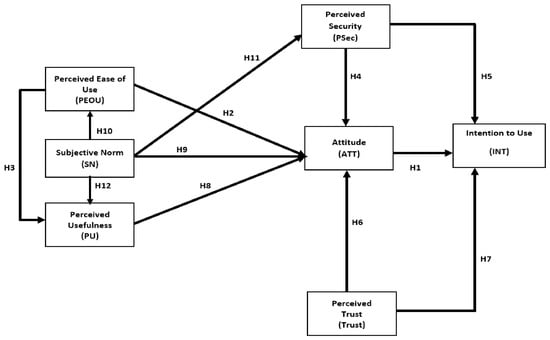
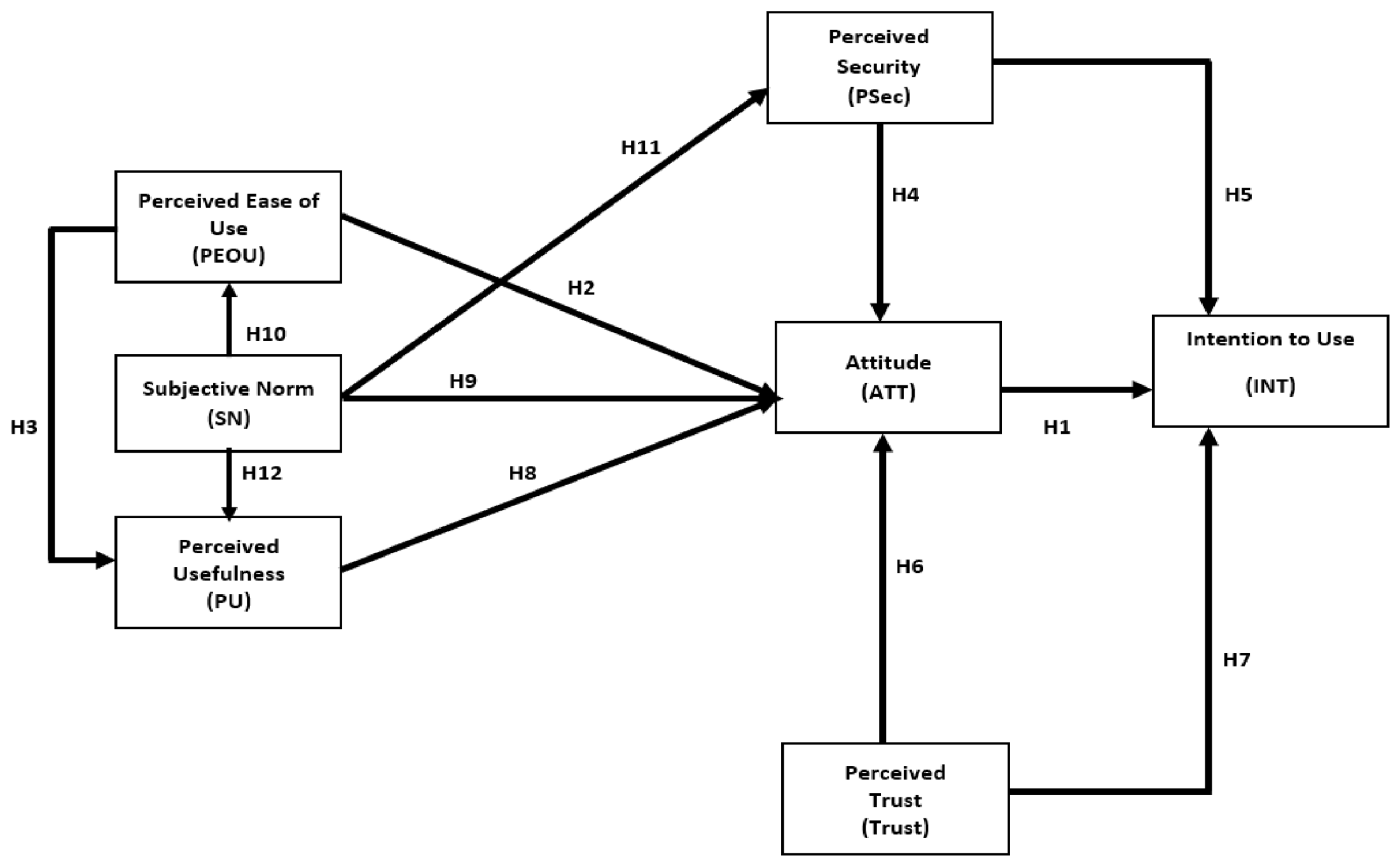
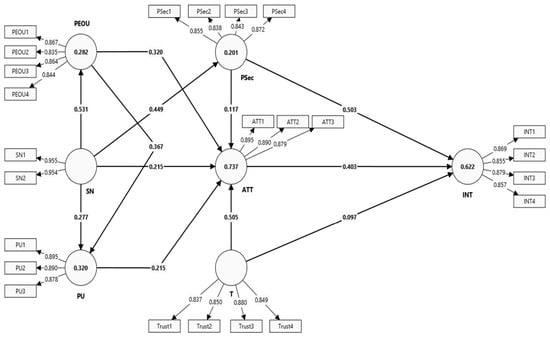
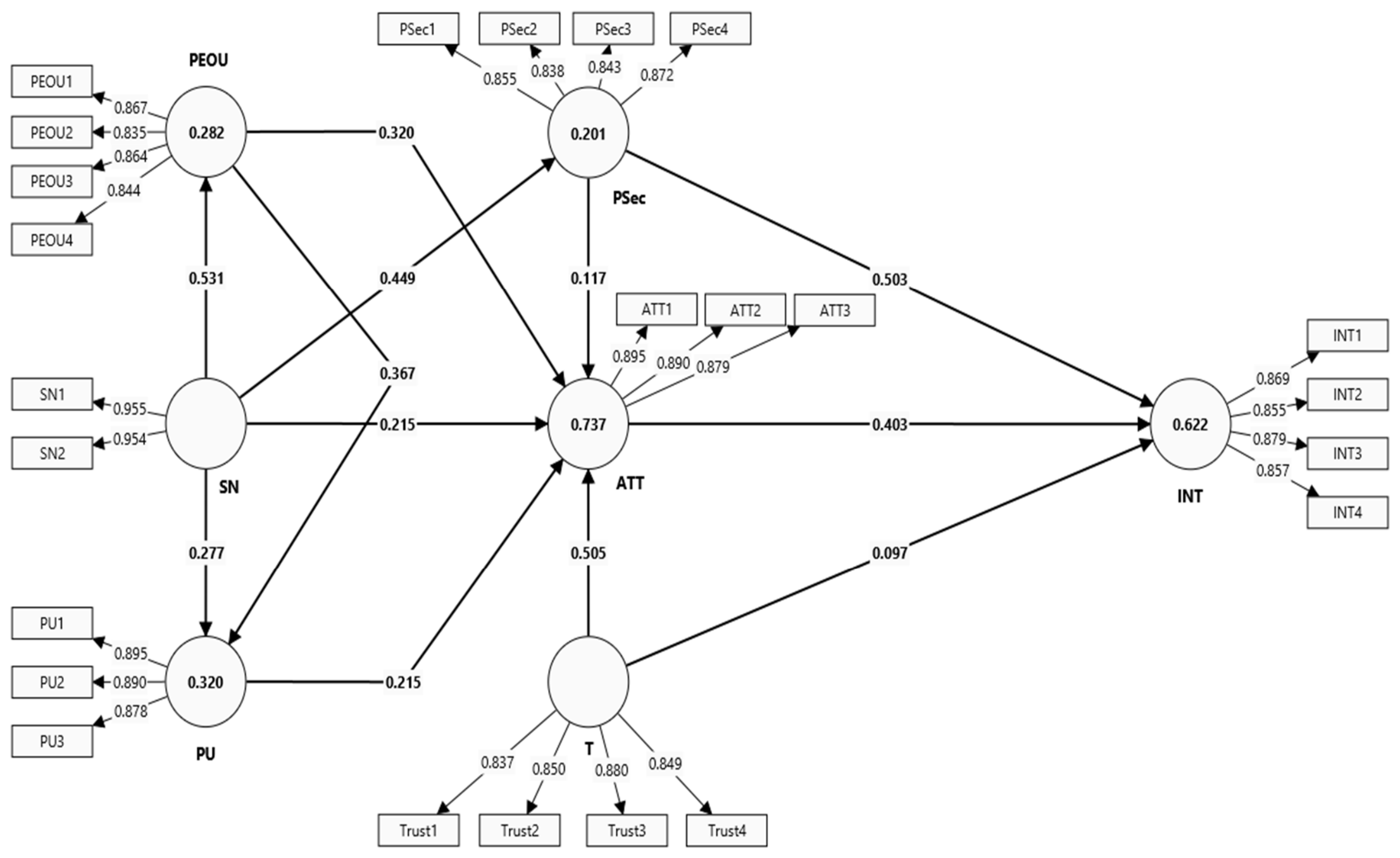
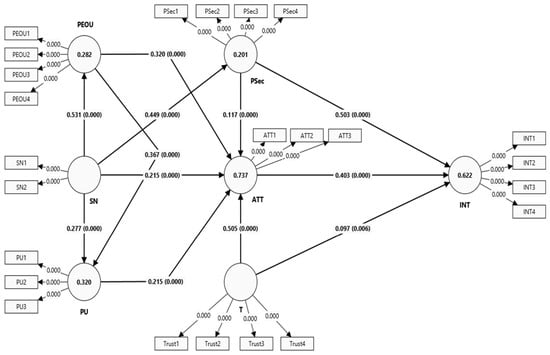
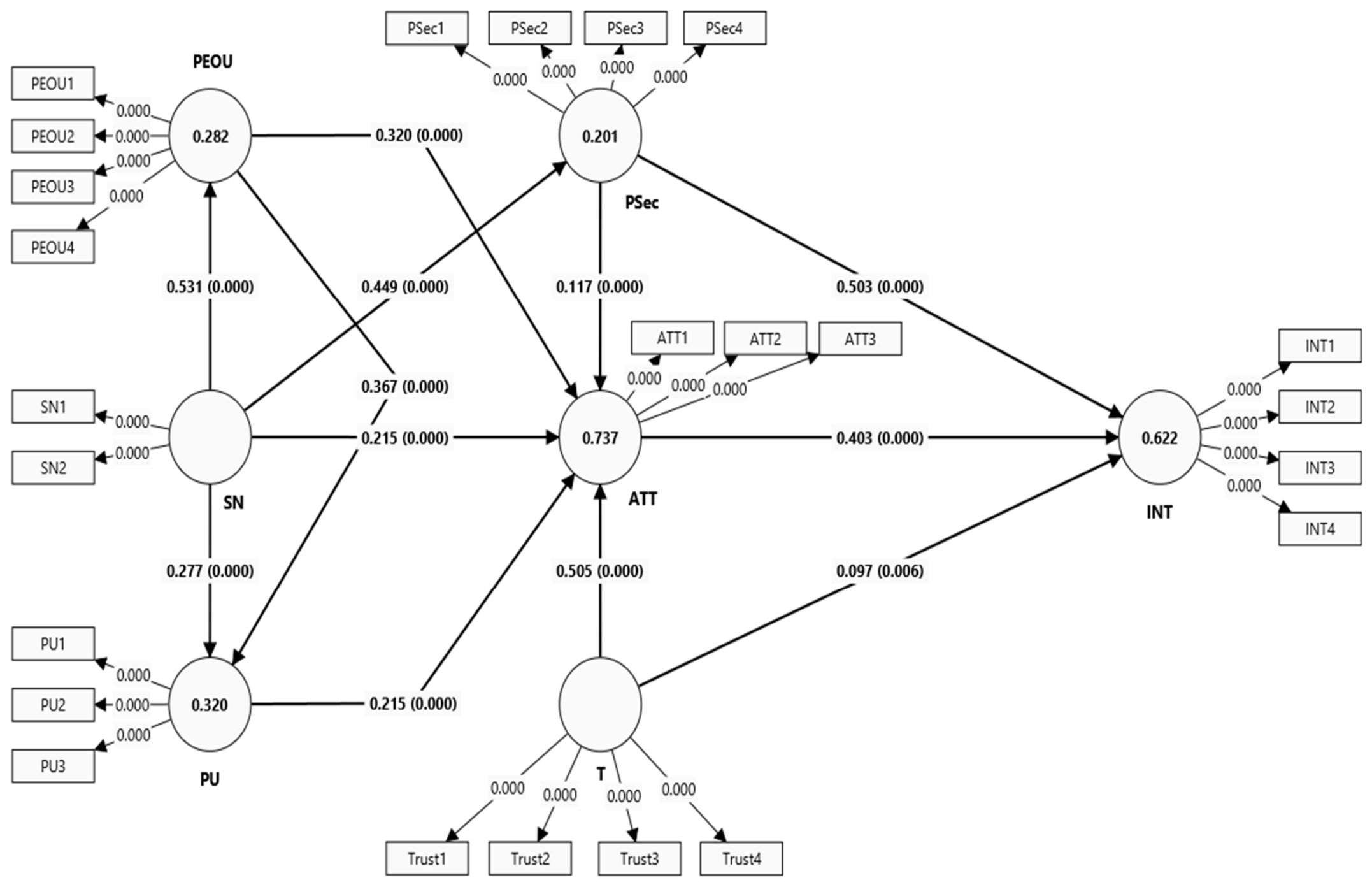
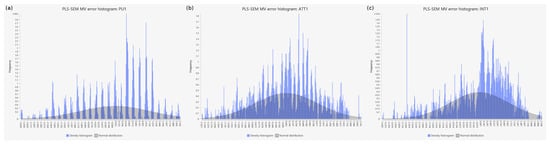
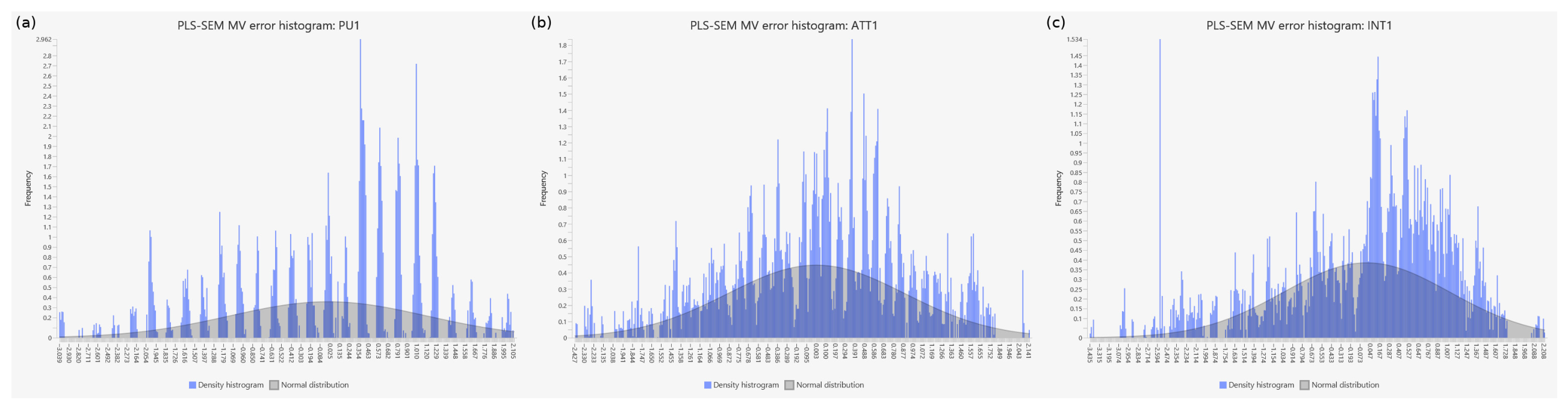

Disclaimer/Publisher’s Note: The statements, opinions and data contained in all publications are solely those of the individual author(s) and contributor(s) and not of MDPI and/or the editor(s). MDPI and/or the editor(s) disclaim responsibility for any injury to people or property resulting from any ideas, methods, instructions or products referred to in the content. |
© 2026 by the authors. Licensee MDPI, Basel, Switzerland. This article is an open access article distributed under the terms and conditions of the Creative Commons Attribution (CC BY) license.