


Abstract
Technical accessibility does not ensure usable accessibility. Without testing causes, we examine whether Korean e-commerce services publicly show support conditions that research on older users (55 and older) identifies beyond standard/legal criteria. The preliminary Age-Friendly Provision Signal Index (APSI; 19 standard/legal and 7 additional support items) was applied to web interfaces, product pages, and help pages of 39 services. Among nine help page items, with three of the five standard/legal ones being legally required notices, standard/legal items exceeded additional support items in detected availability by 46.8 percentage points (95% interval 39.2 to 54.7) and across all items by 11.9 percentage points (95% interval 6.1 to 17.6). The standard/legal rate was higher in all 38 compared services on the help page items and in 29 of 38 across the 26 items; alternative measurement choices yielded gaps of 6.6 to 46.8 percentage points. Additional support conditions were undetected in 53.0% of cells; age-specific adaptation, coded for six items, appeared in 1 of 228. Services with and without physical stores differed by 6.7 percentage points (95% interval −3.0 to 17.0) on common support items, inconclusive regarding the study-defined 16.67-percentage-point threshold. These findings inform assessment reviews without demonstrating standards failure or unmet needs among older users.
1. Introduction
Population aging and the shift of consumption online are occurring simultaneously in Korea. According to Statistics Korea’s 2025 Statistics on Older Persons, the share of the population aged 65 and older reached 20.3% in 2025, exceeding 20% for the first time [1] (p. 25). Online shopping for goods accounted for 26.9% of total retail sales in 2024 [2]. In the preceding year, nearly 100% of internet users in their 20s through 40s had shopped online, compared with 86.6% of those in their 50s, 46.1% of those in their 60s, and 18.3% of those aged 70 and older [3]. Independent use is lower still, according to a 2023 national survey of people aged 65 and older commissioned by the Ministry of Health and Welfare [4] (pp. 540–543, Tables 9-43 and 9-44). Of self-respondents, 12.0% reported that they could use e-commerce without help from others, 20.2% that they could conduct financial transactions, and 17.9% that they could order at a self-service kiosk. Research on the digital divide has shown that the divide has shifted from device ownership toward differences in skills, use, and outcomes [5] (p. 2), [6]. These figures describe users; whether e-commerce services provide the conditions that older users need remains open.
The existing literature provides only a partial answer. Research on e-commerce accessibility has expanded its methods to include automated evaluation, expert coding, and analyses of the relationship between legislation and compliance [7,8,9], but its measurement criteria have generally remained within the success criteria of the Web Content Accessibility Guidelines (WCAG) family, and the users it envisages have primarily been users with disabilities [10]. Studies that directly observed older users have documented other conditions, including human assistance, learning support, and alternative pathways provided by organizations [11], while digital divide research has accumulated evidence on user-level determinants [12]. A recent study of 389 Korean consumers aged 65 and older found that perceiving kiosk-only service settings as coercive was associated with stronger avoidance intentions, through perceived loss of autonomy and negative affect [13]; its authors left open how the visibility of human alternatives conditions such perceptions. In workshops reported in this Special Issue and involving 40 older and 34 younger adults in the United Kingdom, many older participants treated a landline telephone number and a physical business presence as cues of trustworthiness and more often expressed a need for human interaction when experiencing website issues [14] (pp. 10, 15). These findings motivate a complementary question: how often do services make these support conditions visible in public web pages and disclosure documents?
This study connects research on accessibility audits with research on older users’ support needs through a single measurement instrument. Its conceptual starting point is the distinction between technical and usable accessibility [15,16]. It uses standard/legal criteria as a benchmark and translates support conditions identified in empirical research on older users into audit items assessed alongside that benchmark in the same services. Service provision conditions are the conditions that a service itself offers its users, observed only as signals in public web pages, product pages, and help pages, with disclosures as supporting evidence for one exploratory item (Section 2.5). Research Question 1 asks to what extent Korean e-commerce services make visible, within specified collection procedures, the support conditions that research on older users (aged 55 and older; Section 3.1) identifies, and where visible provision is lacking. Three propositions address it: the gap between conditions within standard/legal criteria and these additional support conditions, which any user can use (Proposition 1), the non-detection of the latter (Proposition 2), and a difference between channel structures in common items (Proposition 3). Research Question 2, which is exploratory, examines associations between four characteristics of the operating corporations and the provision rates, reported as patterns for replication. Users’ experiences and outcomes are not measured, so the Age-Friendly Provision Signal Index (APSI) is proposed as a preliminary framework for documenting publicly visible support conditions, not as a validated measure of the accessibility, usability, satisfaction, or task performance that older users experience.
Among the sampled Korean e-commerce services, the within-service provision rate for the 19 standard/legal core items exceeded that for the seven additional support core items by 11.9 percentage points (95% interval 6.1 to 17.6) on average (38 services). The standard/legal rate was higher in 29 of the 38 services, whereas the size of the gap depended on how pages were collected and how items were defined and grouped (Section 4.2). For five common competence- and human-support items, services with and without physical stores differed by 6.7 percentage points (95% interval −3.0 to 17.0), below the study-defined threshold of 16.67 percentage points as an estimate but inconclusive regarding a difference of that size (Section 4.4). These results describe signals observed through particular procedures in public materials; because the two item groups differ in content and partly in observation pathway, they do not show why the gap arises.
The study makes two contributions. First, it extends the measurement domain of e-commerce accessibility audits by translating conditions identified in research on older users, including human assistance, learning support, and non-digital alternatives, into observable items assessed alongside standard/legal criteria in the same services under the same rules. These items complement rather than dispute existing standards, which address most older users’ needs [17] (Section 2.3). Second, it locates where visible provision is lacking, across item groups, items, service formats, and channel structures, and reports how the gap changes under alternative collection procedures and measurement choices, separately from uncertainty analyses and reproductions of earlier calculations (Section 4.2). Institutional theory, implementation cost, and existing resources offer interpretations of the gap that the study does not test (Section 2.1).
2. Theoretical Background
2.1. Conceptual Starting Point and Interpretive Frame
This study takes the distinction between technical accessibility and usable accessibility as its conceptual starting point. Henry [15] introduced usable accessibility to highlight the difference between meeting minimum accessibility standards and being able to use a product in practice, and noted that designers and developers who encounter accessibility through regulation often remain motivated by compliance with standards and guidelines, so that their attention concentrates on technical aspects. Applying this distinction to older users, Arch [16] argued that many of the needs of older web users concern usable accessibility rather than technical accessibility and that WCAG 2.0 can help address most of them. This assessment concerns needs within web content; non-digital alternatives, learning support, and human assistance are conditions that services provide beyond it.
This distinction defines the measurement scope. Standards and laws provide a benchmark for technical accessibility and transaction safeguards, and research on older users identifies additional support conditions relevant to using services in practice (Section 2.3), which this study specifies as items observable on the supply side; this extends the measurement domain rather than the theory. The distinction also suggests an expected pattern: if accessibility provision were oriented toward meeting standards and guidelines [15], conditions within standard/legal criteria would be observed more often, and additional support conditions would be rare across services (Propositions 1 and 2; Section 2.5).
Institutional theory offers one way to interpret such a pattern. Meyer and Rowan [18] argued that organizations gain legitimacy by incorporating practices defined by prevailing rules, independent of their immediate efficacy (p. 340), that such rules may be backed by the force of law (p. 341), and that elements not institutionalized in the environment have to be justified by efficiency and effectiveness (p. 361). DiMaggio and Powell [19] described coercive isomorphism, including direct responses to government mandates (p. 150) and to standards that the state designates for an entire field (p. 155). Read through this frame, the standard/legal items are linked to established criteria for online interfaces and disclosures (Section 3.2), whereas the additional support items lack directly corresponding, sanction-backed obligations, although duties to make efforts apply (Section 2.4), so their adoption may depend on other justifications, including anticipated benefits for customers and the business. The gap is not attributed to any one isomorphic mechanism or described as decoupling. A single cross-section cannot show isomorphic change. Applying the frame to e-commerce firms is an interpretation rather than a claim of the original works (Supplementary Materials S22). Implementation costs and existing resources offer competing explanations that this study does not test: several additional support items involve functions, staff, or programs that may require additional resources (post hoc check in Section 4.2), and resources a service already holds, such as stores and telephone channels, may shape what is provided (Proposition 3).
2.2. Measuring E-Commerce Accessibility: Conditions Within Standard/Legal Criteria
Previous studies have evaluated e-commerce accessibility using automated tools [7], expert coding combined with user testing [8], and WCAG 2.1 criteria [20]. Related work has applied accessibility criteria to the websites and apps of destination management organizations [21]. The relationship between accessibility legislation and compliance [9,22] and differences across sectors [23] have also been examined. These studies evaluate accessibility against the success criteria of WCAG and the Korean standards adapted from them (KWCAG) [24,25], and the users they envisage are primarily users with disabilities [10]. Clearly defined criteria enable reproducible measurement, but the measurement scope is limited to the conditions those criteria contain. WCAG 2.0 success criteria covered 50.4% of the problems encountered by 32 blind screen reader users [26], and the scope and results of automated tools varied across tools [27].
Conditions within standard/legal criteria also matter to older users. Because vision, hearing, and motor function change with age, many conditions developed with users with disabilities in mind also affect older users [28,29], so the standard/legal item group serves as a benchmark.
European instruments have a similar scope. EN 301 549 requires web pages to satisfy the WCAG Level A and AA success criteria (clause 9), based on WCAG 2.1 in V3.2.1 [30] and on WCAG 2.2 in V4.1.1 [31]. The European Accessibility Act, which covers e-commerce services, requires accessible websites and mobile applications, understandable information about the service, and, where available, support services that provide information on accessibility [32]. Both address persons with disabilities, although the Act’s recitals note that elderly persons would also benefit (recital 4); neither names older users or corresponds directly to the conditions measured by the additional support core items in the clauses examined, whereas most standard/legal interface items correspond to web clauses of EN 301 549 (Supplementary Materials S23).
2.3. Research on Older Users: Conditions Outside Standard/Legal Criteria
Studies that directly observed older users have documented a different set of conditions. During interviews in France, 48 community-dwelling older adults proposed solutions that included not only interface specifications but also conditions provided by organizations, such as human assistance, learning support, and alternative pathways [11]. Factors facilitating or hindering older users’ e-commerce use have also been investigated [33], and international organizations and regulators have compiled guidance on older adults’ digital transition and the fair treatment of vulnerable consumers [34,35]. Consumer vulnerability has been conceptualized as a state arising from the interaction between individual attributes and the market environment [36].
National statistics indicate that several of these conditions correspond to stated needs among older adults in Korea. The 2024 national digital divide survey defines its older-adult group as people aged 55 and older. The digital capability of this group was 55.9% of the general-population level, and 26.6% for those aged 70 and older [37] (p. 86). When problems arose while using digital devices, older respondents most often sought help from family members (76.4%) or from specialist personnel (64.5%) [37] (p. 112). Among people aged 65 and older, the forms of support most often chosen as needed for adapting to digital life were applications tailored to older adults (29.5%) and more diverse digital education programs (27.4%) [4] (pp. 544–545, Table 9-45). These responses parallel the items on caregiver-assisted or proxy use (F3.3), staff who help customers use the service (F3.4), senior, simplified, or larger-text modes (F2.1), and digital education (F3.1). They show demand among users, not that providing these conditions improves outcomes.
Because a formative measurement model requires the content to be specified before indicators are selected [38], the additional support items were specified from this research and relevant guidelines (Section 3.2). The literature also separates observable availability from the desirability of provision for older users. Services that assume deficits on the basis of age can pose a stereotype threat to older users [39], and a review of digital technology design for older adults identified ageism-based design decisions in 71.7% of the studies reviewed [40]. Work on older web users by the World Wide Web Consortium found that their needs overlap with those of people with disabilities and that existing W3C accessibility standards address most of them [17], which this study does not dispute. The additional support conditions lie outside what the standards and laws examined test (Section 2.2 and Section 2.4). This study records the observable availability of conditions that any customer can use and records explicit targeting of older users separately; it does not judge whether provision is desirable for older users.
2.4. Korea’s Normative Structure
By sanction mechanism, the norms corresponding to this study’s items fall into three categories (Table 1): obligations subject to administrative fines or corrective orders, written criteria with indirect enforcement, and conditions for which no provision imposes a sanction-backed obligation on private e-commerce businesses.
Table 1.
Norms Applicable to E-Commerce Services and Corresponding Study Items.
Obligations subject to administrative fines require information to be provided but not in a form tailored to older users, although Article 30-2 of the Personal Information Protection Act provides for evaluating whether privacy policies are easily understandable. For the additional support items, the closest provisions are duties to make efforts: MSIT Notice No. 2026-1 asks internet e-commerce businesses to make efforts to maintain a customer-support system that can respond at all times to persons who have difficulty using digital services (Article 6(2)), the closest provision to F4.2, and its design guidelines follow KWCAG 2.2 without an item specific to older users (Annex 3); no fine applies to either. No provision examined corresponds to digital education for customers (F3.1), caregiver-assisted or proxy use (F3.3), or non-digital alternatives (F4.3).
2.5. Measurement Model and Propositions
The study operationalizes service provision conditions (Section 1) as publicly identifiable signals: the five factors constitute their content dimensions, and the items serve as formative indicators. The index and the principal comparison use 26 of the 27 core items for online commerce; F3.4 is exploratory (Section 3.4). Consumer vulnerability is a state arising from the interaction of individual states, individual characteristics, and external conditions within a consumption context [36] (p. 134), and age alone does not define older people as vulnerable [36] (pp. 130, 135, 137); the study therefore does not measure vulnerability but observes provision signals among the external conditions that [36] identifies as able to increase or reduce it. In a formative model, heterogeneity among items is permissible [38,50], so internal consistency coefficients are not used, and items within each factor and factor scores receive equal weights [51,52] (Section 3.2).
Propositions 1 and 2 follow from the expected pattern described in Section 2.1: Proposition 1 locates the shortfall relative to the standard/legal benchmark, and Proposition 2 describes how widespread non-observation of additional support conditions is. Proposition 3 compares services with and without physical stores to examine whether resources that services already hold are associated with the availability of common competence- and human-support items. Retail research has treated online-only and online-and-offline retailers as contrasting units [53], and Herhausen et al. [54] found that integrating access to and information about offline channels into online channels provides greater value to customers with less internet shopping experience. Services with stores and staff might therefore present more information about competence and human support, whereas the compliance-oriented expectation implies that these conditions would be rare under both channel structures (other explanations predict the same patterns, so neither result discriminates among them); because Herhausen et al. [54] measured customer responses without an age criterion, their reasoning serves only as a benchmark, and channel boundaries have blurred in omnichannel retailing [55].
Research on corporate determinants has examined size and profitability with WCAG-based dependent variables [56,57]. Research Question 2 does not test determinants; it describes associations as patterns for replication (Section 3.5), and the implications for assessment criteria and practice are drawn from Research Question 1 (Section 5.3).
3. Methods
Figure 1 summarizes the organization of this section. The sample (Section 3.1) and the instrument (Section 3.2) define cells at the intersections of services and items, each recorded with three indicators and assigned an applicability state. Cell values come from automated checks of public web interfaces, external coding of help pages under two procedures, external coding of interface screens and of live pages for five items, and disclosure documents (Section 3.3 and Section 3.4). Interpretation is confined to the item-group level (Section 3.5 and Section 3.6). Changes from earlier versions are listed in Supplementary Materials S0.
Figure 1.
Research framework. The figure presents five stages under Research Questions 1 and 2 (problem and conceptual background, measurement instrument, data and measurement, analysis, and interpretation and recommendations), with the literature cited for stages 1 to 4 (stage 1: [11,24,25,28,34,35]; stage 2: [38,51,52,58,59]; stage 3: [60]; stage 4: [61,62,63,64,65]). Arrows indicate the research sequence, not causal relationships. Consumer-centered management certification is reported outside the index (Section 3.4).
3.1. Services Included in the Analysis
The sample comprises 39 e-commerce services serving consumers in South Korea, operated by 37 corporations and classified into five practical service formats at the design stage (Table 2). Official classifications (Distribution Industry Development Act [66], E-Commerce Act, Enforcement Decree of the Broadcasting Act [67], and the Online Shopping Survey [2]) were attached as descriptions after the sample had been fixed and were not used to assign services; boundary cases are listed in Supplementary Materials S1.
Table 2.
Services Included in the Analysis (Service Format × Channel Structure).
The sample was assembled in three rounds. In each of the first two rounds, the research team chose 12 services as representative services of the five categories rather than by transaction volume or size rank (Supplementary Materials S8). In the second round, the team also added Gongyoung Shopping, a public-interest home shopping channel of a type with a high share of older users, a choice that could have favored age-friendly provision. The third round included all online retail platforms that met the population definition and three eligibility conditions; eligibility required an annual business report or audit report for the operating corporation’s most recent fiscal year, because the corporate-characteristic variables rely on it. The sample is therefore purposive rather than probabilistic (Supplementary Materials S8).
Older users are defined as people aged 55 and older, following Article 2, subparagraph 1 of the Act on Prohibition of Age Discrimination in Employment and Elderly Employment Promotion [68] and Article 2(1) of its Enforcement Decree [69], the legal basis also used by Korea’s national digital divide survey [37] (p. 4). The threshold specifies for whom the observed conditions are relevant; it does not enter the measurement, and the coder-judged criteria contain no numeric age cut-off (Supplementary Materials S18).
The unit of analysis is the service. Ably has no customer service or help page reachable without logging in (Section 3.3); its nine help page items therefore cannot be observed, a structural rather than random gap that neither case deletion without report nor imputation would handle [51] (pp. 24–25). Under a rule fixed before the coders returned their judgments, it is excluded from the service-level comparisons and from all counts of the primary analyses, which use the 38 compared services; it is reported separately, and results with its help page items scored 0 are a sensitivity analysis (Supplementary Materials S12; Table S1.3). Two pairs of the 38 compared services are run by the same operating corporation: SSG.COM Corp. operates SSG.com and Emart Mall, and Gmarket Inc. operates Gmarket and Auction; the 38 services therefore have 36 operating corporations (Supplementary Materials S1). Because services of one corporation may share customer service, terms, and disclosures, they are not treated as independent observations, and the intervals for the service comparisons are obtained by resampling operating corporations (Section 3.6).
Channel structure, the basis of Proposition 3, was classified with a rule fixed when the proposition was declared and later restated with reference to official classifications, with the same result for all 39 services (17 online-and-offline and 22 online-only; Supplementary Materials S3 and S20): a service is online-and-offline if it has permanent sales stores where consumers can buy and take away goods, and either the operating corporation’s main business is store retailing or the corporation or another in its group operates a permanent store network under the service’s name. For an additional analysis only (Section 4.4), services were also classified by whether customers can collect online orders at, or return or exchange them in, a permanent store of the operator or its group (online–offline channel integration [54]; collection in store [70] (author manuscript, p. 2)), a capability of the store network related to, but different from, assistance with using the online service (16 services with, 21 without, 2 undetermined).
3.2. Measurement Instrument
The instrument is a checklist (v5.3) of five factors and 29 items; the cell at the intersection of a service and an item is the unit of measurement. The name of the first factor, ICT accessibility, follows the international standard on the accessibility of information and communication technology [71]. Each cell has three indicators. Feature availability (0 or 1), the primary indicator, records whether the condition the item asks about is present; extent of implementation equals the original item value; and age-specific adaptation (0 or 1) records whether the provision explicitly targets older users or users who find digital or non-face-to-face services difficult, or cites their needs as its rationale (provision aimed only at persons with disabilities is coded 0, and the indicator does not apply to technical properties of the interface). The additional support items, drawn from research on older users [11,28,29,34,35], are conditions that the standards and laws examined do not require and that anyone can use: general provision counts as available (for example, for F2.1, F3.1, and F4.2), and explicit targeting is recorded separately.
The 1-or-0 scoring of this revision was fixed from 30 October to 1 November 2026 (Supplementary Materials S0, Table S0.1, row 3; earlier conversion rules in Supplementary Materials S18). For coder-judged items, availability and age-specific adaptation come from the coders’ final values (Section 3.4). Every item is scored 1 or 0; no partial value counts as available. Where the item’s criterion comes from a standard or law, the condition for 1 follows its text, and the research team specified the observation scope and operational thresholds where needed: all observed Tab steps show a visible indicator (F1.9; WCAG SC 2.4.7; the first 10 to 20 steps and the pixel threshold set by the research team, Supplementary Materials S10), every main function present on the first page is reached and operated by keyboard (F1.5; SC 2.1.1), and every one of five core terms that appears is explained (F2.6; SC 3.1.3). Where no text gives a value, the research team set it: a median first-page font size of at least 16 px (F2.2) and at least half of the touch targets with a shorter side of 44 px or more (F2.3; the 44 px value is from SC 2.5.5). The F1.9 and F2.3 rules were fixed after the earlier values were known; results with a share of at least 0.8 for F1.9 and with all targets for F2.3 are reported as sensitivity analyses (Supplementary Materials S12). Table 3 gives the source of each threshold, and Table S17.4 states each threshold in full.
Table 3.
Factors, Item Groups, Normative Levels, Measurement Coverage, and Observation Pathways of the 29 Items.
The instrument designates 27 of its 29 items as core items for online commerce; the other two (F1.11 and F4.4) are for services with offline channels (Supplementary Materials S14). The 19 standard/legal items represent conditions within the criteria of WCAG [24], KWCAG 2.2 [25], or e-commerce legislation applicable to online transaction interfaces and disclosures, though not all are mandatory: Table 3 classifies each measured condition as a direct legal obligation (4 items), an explicit criterion of a standard (10), or a related proxy or recommendation (5), the last comprising three items for which no provision examined requires the measured condition (F2.2, F3.2, and F5.1), the researcher-developed proxy F2.3, and F2.6, which applies a Level AAA criterion (SC 3.1.3) to five core terms (Supplementary Materials S17). Five external experts rated the relevance of each item’s measured content and agreed or disagreed with its group assignment. Twenty-one of the 28 rated lines reached an item-level index [58] of 1.00, the criterion for five raters, and the scale-level average [59] was 0.822 for the 27 core items. Of the seven lines below the criterion, one of two candidate measures of F1.9 was dropped and the other six (F1.5, F2.1, F2.5, F2.6, F5.3, and F5.4) were redefined to observe their conditions directly; the same five experts, without older users, rated the revised lines, each reaching 1.00 with all five agreeing on its group assignment (Supplementary Materials S17). All five experts disagreed with the assignment of F2.4 to the standard/legal group: its measure, a top-level product menu visible at a glance on the first screen, does not test the cross-page consistency of WCAG SC 3.2.3, and its remaining basis is research on older users [29]. F2.4 is therefore in the additional support group; this reassignment was decided after all results were known and lowers the gap, and results with the declared assignment are reported alongside (Section 4.2; Supplementary Materials S12, line B6). Ratings are in Tables S17.5 and S17.2 (earlier three-expert panel). The level of each item indicates its normative basis, not how completely the operational measure captures it: several measures assess only part of the related criterion, for example the absence of a zoom-blocking setting rather than text reflow (F1.3), or contact guidance rather than reaching staff (F4.1). Table 3 therefore reports what each measurement covers.
Three applicability rules were applied to all core items: an item applies only if the object it measures exists on the interface (media alternatives, F1.4, do not apply without video, and input labels, F1.8, without an input field); support items apply to every service, because any service can offer them; and a cell whose source cannot by its nature contain the information has no observation pathway and is not scored 0 (Supplementary Materials S18). Of the 988 cells of the 26 items in the 38 compared services, 938 were applicable, 50 not applicable (F1.4 in 24 services, F1.8 in 20, F2.6 in 6), and 0 unassessable (counts for 29 items and for Ably in Supplementary Materials S18).
Nine customer-facing guidance and support items in the principal comparison (five standard/legal and four additional support items) were observed on public customer service and help pages under the same two procedures (Section 3.3), except F5.3, a standard/legal item judged on the live sites with a help page search that allowed up to five menu steps and search within long documents (Section 3.4); the comparison restricted to them therefore uses the same kind of public source for both groups, although the search effort behind the final values was not identical across the nine items (Section 4.2). F3.4 was observed in the same way as the eight others. The other items still differ in pathway: most standard/legal items are measured by automated interface checks. Group differences in the full comparison therefore reflect both item content and observation pathway.
The index is a composite of formative indicators [38,51] calculated from the availability indicator of the 26 items: values are averaged within each factor over applicable, assessable items on a 100-point scale, and APSI is the equally weighted mean of the factor scores that can be calculated. Every compared service has all five factor scores; Ably, which lacks assessable F3 and F4 scores, is scored on three factors and reported separately, with missing factor scores not treated as zero. Equal weighting is a common but contested choice [52]; because the study’s claims concern item groups, the index only describes the distribution across services (weighting sensitivity in Supplementary Materials S11, Table S11.4).
3.3. Data Collection
Interface data were restricted to content viewable without logging in; interface capture and the first automated measurement took place between August 29 and 1 September 2026, the observation window for channel classification. Help page conditions were observed under two procedures, each fixed before its pages were opened. Under the navigation procedure (8 October 2026), nine page types reachable within two steps from the home page, its footer, and the first customer-service page were collected without login or site search (Supplementary Materials S16, item 2); it reached required notices for nearly every service but usage guides for 6 and accessibility or user-support guidance for 2. Under the expanded procedure (25 October 2026), every service was searched again with fixed search terms in the site and customer-centre search and along the customer-service, help, terms, notice, FAQ, store, accessibility, and site-map links to three steps; any page so opened could serve as evidence for every condition of that service, and pages behind login or found outside the procedure were not used (Supplementary Materials S16, item 8). Ably’s web home page is a continuous product feed without a footer, and its My Page tab leads to a login screen, so its help page cells are unassessable under both procedures. The F2.4 and F2.5 screens of all 39 services were recaptured without logging in on 7 October 2026, because some archived screenshots had defects. Disclosure documents are the most recent annual business or audit reports publicly available on 29 August 2026 (fiscal year 2025). Neither procedure reaches pages behind login, ordering and payment steps, apps, or telephone consultation, so a condition not found is recorded as not detected, not as absent.
3.4. Measurement Pathways and Validation
Rule-assessable interface items were measured automatically with axe-core and scripts for the 39 services between 28 October and 31 October 2026, under fixed conditions (Supplementary Materials S16; earlier measurements in Supplementary Materials S10 and S12); the F1.9 rule was completed before any re-audit return, and the automated items of the two services that blocked automated access (SSG.com and Emart Mall) were measured by hand by the research team under the same rules (Supplementary Materials S10 and S16). An external auditor who did not see the automated values re-checked 38 listed cells and agreed with the script in 31; one of the 7 differing cells was an implementation error, which was corrected and reapplied to all 39 services, and the others are reported in Supplementary Materials S10 with both records. The reported values are reproduced from the stored data by the runner in the replication package (Supplementary Materials S7). Successful execution of an automated rule is therefore not equated with satisfaction of the broader accessibility condition (Table 3).
Under the navigation procedure, three external coders from outside the research team judged ten conditions on the saved help pages: five standard/legal items (F3.2, F4.1, F5.1, F5.2, F5.3) and five additional support items (F3.1, F3.3, F4.2, F4.3, and F4.4, outside the core items). The coders were not told the item groups, and F4.2 counted only consultation set up for reasons of age, disability, or digital difficulty (Supplementary Materials S18.1). Every coder detected all known positives from two retail banks outside the sample. This shows that the coders could apply the criteria, not how well naturally occurring guidance is detected. Agreement on availability, with Gwet’s AC1 [60] fixed as the primary statistic before the coders were contacted and Krippendorff’s alpha reported alongside [73] (pp. 416, 428), was 0.829 (alpha 0.812) and was lowest for step-by-step usage guidance (F3.2, 0.281) and non-digital alternatives (F4.3, 0.427) (Supplementary Materials S19, item 5).
The 52 disputed cells, with three unanimous positive cells resting only on terms of use or privacy policies, were adjudicated by an external expert, unaffiliated with the authors and not told the item groups, under two interpretation rules fixed before the adjudication (Supplementary Materials S19, items 8 and 9). Independent second raters of F3.2 and F4.3 agreed with the expert for 35 of the 38 services on each item, and no proposition decision changed with their values or the adjudicated values (Supplementary Materials S12, line E6a; Supplementary Materials S19, items 8 to 12).
Under the expanded procedure, three external coders, none of whom had made any earlier judgment, judged the ten help page conditions (the nine help page items of the principal comparison and F3.4) for the 38 services, with each service judged by one main coder (Supplementary Materials S16, item 8). The criteria were those of the navigation procedure with two changes fixed before collection: F4.2 counts general provision, with consultation set up for a stated reason analyzed as a sensitivity, and a virtual account or bank transfer alone does not count for F4.3. A random third of the services (13 services, 130 cells) was judged independently by a second coder: AC1 0.908 (95% interval 0.847 to 0.954), kappa 0.908, and agreement 95.4%; because additional support conditions were rarely judged available in these cells (Table S16.9), kappa is near zero for some conditions and AC1 is the primary statistic. These figures concern consistency in applying the rules, not search completeness (next paragraph). Every cell on which the two coders differed or whose value differed from the navigation value (80 cells) went to an external adjudicator who saw both records in random order and recorded a final value without a new search; the research team changed no value (Supplementary Materials S16, item 8, with the source of each of the 380 final values); the independent completeness check described below later changed 23 of these values.
Independent completeness check of the help pages. Five explorers from outside the research team who had not coded under either procedure searched the help pages of the 38 compared services for the four additional support conditions of the principal comparison (F3.1, F3.3, F4.2, F4.3; 152 cells), two per service, under a written procedure that extended the expanded search (Supplementary Materials S16, item 11), without being told the earlier values. Where the two explorers differed, a third person who saw both records decided the cell without a new search (21 of the 152 cells). Of the 111 cells that the expanded procedure had recorded as not detected, the explorers found the condition in 24 (21.6%; corporation-level bootstrap interval 14.4 to 28.7). Agreement between the two explorers’ first judgments was 88.8% (AC1 0.796). Under the rule fixed before the explorers were engaged, a cell found available is set to 1 in the principal analysis unless the guidance was dated after the expanded search (one cell); 23 cells changed, and the result with only the 4 cells whose guidance could be dated before that search is reported as a sensitivity analysis (Supplementary Materials S12, Table S12.1, line F3). The expanded procedure was therefore not complete (Supplementary Materials S16, item 11).
The coders of the navigation procedure also assessed the recaptured screens of all 39 services for F2.4 (agreement before adjudication: complete (AC1 and alpha 1.00)). F2.1, F2.5, F2.6, F5.3, and F5.4 were judged on the live sites by two of five external coders per service, assigned before collection, who did not consult one another; agreement is summarized by AC1 [60] (F2.1 1.000, F2.5 0.874, F2.6 0.786, F5.3 1.000, F5.4 0.525; percentage agreement 1.000, 0.897, 0.821, 1.000, 0.744). Cells on which they differed were decided by a third coder who saw both records in random order (21 of 195 cells; two adjudicated F5.4 values were later corrected, Section 4.3). For F2.5, every product judged available was checked by a recorded test of the means, with an independent review of the recordings; the index uses the value after this check, and the value before it is reported in Supplementary Materials S16.
Earlier keyword rules for the two disclosure-based items were replaced (Supplementary Materials S16, item 6). F3.4 is judged on the help pages of every service under both procedures, with the business reports of the 15 corporations that file them as supporting evidence; because one F3.4 cell could not be judged, the principal comparison uses 26 items under a rule fixed before these judgments were returned (Supplementary Materials S16, item 6; Supplementary Materials S20). F5.4 now records whether help pages describe how complaints and claims for damage are received and handled and offer a route that does not depend on the screen, or a procedure for older or digitally excluded customers (Table 3; Supplementary Materials S16, item 6). Consumer-centered management certification, formerly the F5.4 measure, records an externally assessed management system of the operating corporation rather than a customer-facing condition [74]; it is reported as an organizational characteristic outside the index (Section 4.3) and is not used in the propositions or in Research Question 2.
3.5. Propositions and Research Questions
Research Question 1 (Section 1) is addressed by three propositions.
Proposition 1.
When the same observation rules are applied to each item across all services, the provision rate averaged across services is higher for the standard/legal item group than for the additional support item group. The comparison restricted to the nine items observed on the same help pages is reported first.
Proposition 2.
Non-observation of additional support conditions is not limited to particular services or service formats but occurs across the sample. Non-observation refers to cells classified as not detected; not applicable and unassessable cells are counted separately. Its extent is described by service, format, and item; no falsification threshold is set, so its assessment is a descriptive result.
Proposition 3.
Online-only services and online-and-offline services differ in the observation rate of the six prespecified common items (F3.2, F3.3, F3.4, F4.1, F4.2, and F4.3). The proposition is nondirectional. With F3.4 exploratory, the primary outcome uses five of the six items, and the six-item result is reported alongside.
Because the two item groups are defined by the presence or absence of norms, the difference examined in Proposition 1 is not evidence of the index’s external validity. The procedural status of each proposition depends on when it was declared relative to data collection [75,76]: Propositions 1 and 2 were formulated after the 12 pilot services had been observed and before the 27 later services were incorporated, and the indicator, primary test, data, and grouping of F2.4 for Proposition 1 were changed after earlier results were known; Proposition 3 was declared before the third-round sample was measured, with its classification rule, indicator, and threshold fixed before testing; its classification table and cell set were revised later (Supplementary Materials S3). Supplementary Materials S20 lists when each later decision was made relative to the data it concerns, and those made after results were known are marked post hoc where they are reported.
Research Question 2 specifies no hypotheses. It examines whether four characteristics of the operating corporation (revenue size, hypermarket/department store format, operating profit margin, and mandatory periodic disclosure) are associated with provision rates for three dependent variables (the standard/legal group, the additional support group, and competence support and human support). All 10 tests fixed in the analysis plan are reported, and the two combinations completing the grid are labeled post hoc.
3.6. Statistical Methods
The estimand for Proposition 1 is the mean, across services, of the within-service difference in availability rates between the standard/legal and additional support groups (19 and 7 items), with uncertainty among the sampled corporations estimated by a corporation-level cluster bootstrap [61] that keeps each corporation’s services together. Proposition 1 is judged consistent with the data when the lower bound of the 95% interval exceeds zero (a criterion first stated in the second revision). Because this criterion concerns only the direction of the difference, the size of the gap is reported with its range across procedures and measurement choices. The item-label permutation test [62,77], originally primary, with p-values computed as (b + 1)/(m + 1) [78], is secondary, because item labels are difficult to treat as exchangeable.
For Proposition 3, the primary outcome is the availability rate of the five common items assessable for all services (F3.2, F3.3, F4.1, F4.2, and F4.3), with the same denominator for every service and age-specific adaptation reported separately. It replaced, in a post hoc change, the originally defined mean cell value of the six common items, which averaged availability and adaptation; the six-item availability and the original indicator are reported alongside. The bootstrap resamples the 36 operating corporations with replacement, each service keeping its own channel label, and gives a percentile interval of the difference in mean availability between online-and-offline and online-only services. The two-sided permutation test, conditional on the observed outcomes and on the labels of SSG.COM Corp., which operates one service in each channel (SSG.com and Emart Mall; Tables S1.1 and S3.1), reassigns the observed labels among the 35 corporations whose services share one label (16 online-and-offline and 19 online-only), keeping each corporation’s services together and the number of corporations with each label fixed; under its null hypothesis these label assignments are exchangeable, unrelated to the services’ availability rates [77] (p. 382). It neither adjusts for retail format nor tests a causal channel effect. The p-value is (b + 1)/(10,000 + 1), where b is the number of the 10,000 relabelings whose absolute difference is at least the observed one (Supplementary Materials S16, item 5). Because the bootstrap describes sampling variation around the observed difference, whereas the permutation test compares that difference with those produced by relabeling corporations, the two need not agree at a given level, and neither alone is used to infer a difference.
The study-defined threshold of 16.67 percentage points, fixed at the design stage as one item among six equally weighted common items, is a design criterion of the instrument, not a difference shown to be negligible for older users. The principal reading compares the 95% interval with ±16.67 percentage points: a difference of at least that size is indicated when the interval lies beyond the threshold, a smaller difference when it lies within the bounds, and the result is otherwise inconclusive; reading the 95% rather than the 90% interval is the more conservative choice, made post hoc, after the results were known. As a secondary reading, the 90% percentile bootstrap interval is compared with the same bounds by analogy with two one-sided tests at the 5% level [65], not as a formal equivalence test. The decision rule fixed before the tests, under which Proposition 3 is supported only when the observed difference is at least 16.67 percentage points (Section 4.7), the 20-percentage-point threshold that the same rule gives for five items (a sensitivity analysis), and the minimum detectable difference are reported alongside.
Research Question 2 uses the item-group rates of the 26 items, a definition common to all corporations that excludes F3.4 throughout, with the original specification (fractional logit [63], average marginal effects, HC3 p-values [79,80], corporation-level cluster bootstrap intervals, and Benjamini–Hochberg adjustment over the ten planned tests [64]; Supplementary Materials S13); estimates and intervals are the main results. A separate model is estimated for each characteristic; all models except that for revenue size control for log revenue, and effects of continuous characteristics are expressed per one standard deviation. Whether each interval lies within the study-defined one-item margin, a description of precision rather than an equivalence claim [65], is reported in Supplementary Materials S13. Significance is reported after and before adjustment, with the more conservative of the HC3 and clustered procedures.
For the help page items, all analyses are computed with the values of both procedures under the same decision rules and item sets, and results are reported whatever their direction. The expanded procedure is the primary measure (for when this was decided, see Supplementary Materials S20), under a completion rule that was met (Supplementary Materials S16, item 8), because site search and frequently asked questions are recognized routes to help: guidance on websites for older people lists a search function among its example techniques [81], the explanatory document for WCAG 2.2 success criterion 3.2.6 counts site search and frequently asked questions among self-help options [82], and in a study in which 16 older web users rated design guidelines, participants proposed placing the search facility where it can be noticed because some prefer searching to browsing [29] (p. 134). These sources do not compare how easily older users find support through search and through menus, and this study did not test it, so the difference between the two procedures is reported descriptively (Table S16.10; Section 4.2), not as an effect of the procedure alone.
Robustness analyses follow an approved plan (Supplementary Materials S20), with rules changed one at a time, including in the unfavorable direction, and in extreme combinations; the core-item restriction, the applicability rules, the corrected automated values, and F2.4’s reassignment were adopted after these results were known (Supplementary Materials S20). They are grouped by what they address (Supplementary Materials S12); the reproductions of earlier calculations include values identified as invalid and are not used as evidence of robustness.
Language-model outputs are not used to calculate APSI, test the propositions, or estimate associations. Analysis and measurement scripts were written and run with the assistance of a generative AI coding assistant (Claude, Opus 5.5 (Anthropic)); the authors specified the procedures, reviewed the code, and checked outputs against the source data, and all coder and expert judgments were made by people.
4. Results
Unless stated otherwise, rates are observed availability rates (the share of applicable cells in which the condition was detected), help page items take their values under the expanded procedure, and tests use service-level rates; values under the navigation procedure are labeled as such.
4.1. Distribution of the Index
The mean APSI across the 38 compared services, calculated from the availability indicator for the 26 items, was 59.4 points (standard deviation 10.0; range 39.0 to 75.6), compared with 43.6 points under the navigation procedure; Ably, scored on three factors, is reported separately (Section 3.2). With the original cell-value indicator applied to the current data, the mean was 42.1 points (Supplementary Materials S11).
4.2. Proposition 1: Gap in Provision Between the Two Item Groups
For the nine items observed on the same help pages (five standard/legal and four additional support items), the mean within-service difference in availability rates was 46.8 percentage points (95% interval 39.2 to 54.7) under the expanded procedure and 64.9 percentage points (95% interval 57.8 to 71.1) under the navigation procedure. This comparison applies one source to both groups, but the final values do not come from one collection procedure (F5.3 was judged again with a wider search, and 23 cells of the four additional support items were changed by the independent completeness check; Section 3.2 and Section 3.4), and it does not remove differences in item content or obligation: three of the five standard/legal items (F4.1, F5.2, and F5.3) are notices that the law requires.
With the 26 items of the principal comparison (19 standard/legal and 7 additional support), the mean within-service difference was 11.9 percentage points (95% interval 6.1 to 17.6), and 27.8 percentage points (95% interval 23.6 to 31.7) under the navigation procedure. Because the lower bound of the 95% interval exceeds zero, the result is consistent with Proposition 1. Availability was 58.9% for the standard/legal group (396 of 672 applicable cells) and 47.0% for the additional support group (125 of 266), and the standard/legal rate was higher in 29 of the 38 services (Figure 2; Table A1). The secondary item-label permutation test gave a one-sided p of 0.236. Without F5.4 (25 items), the difference was 15.9 percentage points (95% interval 10.6 to 21.1), and without the three items on documents required by law (F4.1, F5.2, and F5.3; added after review, Supplementary Materials S12), 3.5 (95% interval −2.4 to 9.3); results with 27, 29, and 23 items and in the 3 services with all 26 items assessable are in Supplementary Materials S11 (all between 2.5 and 19.0 percentage points). With F2.4 in the standard/legal group, as declared, the difference was 20.6 percentage points (95% interval 14.4 to 27.0), and the standard/legal rate was higher in 32 of the 38 services. Table 4 separates the standard/legal group by type of evidence.
Figure 2.
Availability rates for the standard/legal item group (filled dots) and the additional support item group (open dots) by service, 26 items of the principal comparison, help page items under the expanded procedure (38 services; Ably, without reachable help pages, is excluded; Table S1.3). Gray lines connect the two rates of each service. Services are ordered by the standard/legal rate; every service had at least one additional support item detected in the assessed sources. The means in the legend average service-level rates, whereas Section 4.2 reports shares of applicable cells.
Table 4.
Difference Between the Standard/Legal and Additional Support Item Groups by Type of Evidence (Post Hoc).
The two observation exercises differed simultaneously in collection date, coders, search coverage, and the definition of F4.2. Between them, 36 of the 41 additional support cells recorded as available in the expanded exercise had been recorded as not detected in the navigation exercise (Table S16.10, with paths; Supplementary Materials S16, item 8). These counts, and the nine-item comparison with the F4.2 definition held constant (Table S16.13), describe differences between the two exercises and are not estimates of the sensitivity of either search.
Grouped by the issues they address (Supplementary Materials S12, Table S12.1), the 16 alternative measurement choices gave estimates from 6.6 to 46.8 percentage points, and the 5 analyses of uncertainty and dependence gave estimates from 2.6 to 16.2 percentage points (extremes: lines E2a and E2b; post hoc grouping by item class: Table S12.4); a separate run counting F4.2 only where a reason was stated gave 14.9 percentage points (95% interval 9.5 to 20.3; Supplementary Materials S12). All were positive (the pilot-service interval included zero); their size depended on the collection procedure, the strictness of item criteria, and the normative level of the items compared (Table 4).
4.3. Proposition 2: Non-Observation of Additional Support Conditions
All 266 cells of the seven additional support items in the 38 compared services were applicable and assessable. Availability was 0 in 141 of the applicable cells (53.0%; 74.4% under the navigation procedure). No service lacked all seven conditions (1 under the navigation procedure); with F2.4 in the standard/legal group as declared, 4 of the 38 services lacked all six. For Ably (Section 3.3), three of its seven additional support items were assessable, and one (F2.4) was available. Age-specific adaptation was observed in 1 of the 228 coded additional support cells (F2.4, a property of the screen, is not coded; for F2.1 and F5.4, read from the recorded mode name and complaint route; Supplementary Materials S16, item 6), and in 0 of the 76 applicable cells of the two standard/legal items backed by administrative fines that were judged on saved help pages (F4.1 and F5.2); it was not recorded for F5.3, F2.5, and F2.6 under their definitions. This does not show that the information is unsuitable for older users, whose comprehension and task performance were not tested.
By service format, the mean additional support availability rate was 57.1% for hypermarkets (5 services), 50.0% for department stores and general shopping malls (4), 54.8% for open marketplaces (6), 36.3% for specialty shopping malls (13), and 50.0% for home shopping services (10); item-level counts are in Table A1. F3.4 (exploratory) was available in 1 of the 38 services judged under the expanded procedure (none of 37 under the navigation procedure) and in none of the business reports of the 15 corporations that file them. F5.4 was coded as available in 27 of the 38 services. Evidence for four agreed positive values remained ambiguous; Supplementary Materials S16, item 10 reports the corresponding post hoc sensitivity analysis. For Ohouse (and Ably, outside the comparison), the adjudicated values rested on a rights holders’ infringement-report form, not a customer complaint route; they were corrected to 0 after the results were known, and all results were recomputed; the principal difference changed from 11.5 to 11.9 percentage points, and no proposition decision changed (Supplementary Materials S16, item 10). Without F5.4 (25 items; Table S11.2), no service lacked all additional support conditions (130 of 228 cells not detected, 57.0%). As an organizational characteristic outside the index, the operating corporations of 11 of the 38 services held consumer-centered management certification as of 1 July 2026 [83]. F1.11 and F4.4 are described in Supplementary Materials S14.
4.4. Proposition 3: Channel Structure and the Common Items
The primary outcome, the availability rate of the five common items, was 75.3% among online-and-offline services and 68.6% among online-only services, a difference of 6.7 percentage points (95% interval −3.0 to 17.0; two-sided p = 0.230). The estimate is below the study-defined threshold of 16.67 percentage points, but the 95% interval extends beyond +16.67 percentage points; under the principal reading (Section 3.6; post hoc), a difference of that size is not excluded, and because the difference is also not statistically different from zero by the permutation test, the result is inconclusive [65] (pp. 260–261); it does not establish equivalence or the absence of a channel difference. The secondary 90% interval (−1.3 to 15.2) lies within ±16.67 percentage points, and with the 20-percentage-point threshold both intervals lie within the bounds. Under the decision rule fixed before the tests, which considers the observed difference alone, the proposition would not be supported at either threshold (Section 4.7). Under the navigation procedure, the difference was 1.3 percentage points (95% interval −6.2 to 8.8), with the interval wholly within ±16.67 percentage points. The minimum detectable difference, approximated from the bootstrap standard deviation (5.08) at two-sided α = 0.05 and power 0.8, was about 14.2 percentage points. Sensitivity analyses (the six-item and cell-value indicators, one service per corporation, and the additional channel classification (Section 3.1)) gave 3.9 to 8.2 percentage points (Supplementary Materials S12, Tables S12.2 and S12.3).
The outcome averages items with very different prevalence (Table 5) and is therefore sensitive mainly to items available in some services but not most. The procedure could reach store-related web pages through the specified searches and links but did not observe assistance in stores; on-site support (F4.4) is outside the core items (Supplementary Materials S14). The item-level comparison for F4.3, added after earlier results were known and not used for the decision, gave 94.1% versus 57.1% (37.0 percentage points (95% interval 11.1 to 61.5)).
Table 5.
Availability and Age-Specific Adaptation of the Six Common Items by Channel Structure.
4.5. Research Question 2: Associations with Operating Corporation Characteristics
Research Question 2 was examined with the item-group rates of the 26 items (38 services; Table 6). The largest estimated association was between revenue size and the additional support rate (10.5 percentage points per standard deviation, 95% interval 6.0 to 14.3; adjusted p <0.001). The estimate for operating profit margin and the standard/legal rate was −3.8 percentage points (95% interval −7.5 to −0.5; adjusted p = 0.190; −3.7 to −5.1 across treatments, Table S13.4), and mandatory periodic disclosure was associated with a lower standard/legal rate (−7.6 percentage points, 95% interval −12.7 to −2.2; adjusted p = 0.028). Estimates with 25 and 27 items and with the navigation-procedure values are in Supplementary Materials S13 (Table S13.4); the larger associations kept their sign across treatments (revenue size with the additional support rate positive; operating profit margin and mandatory periodic disclosure with the standard/legal rate negative), while several smaller ones changed sign. Across the ten tests in the analysis plan, the estimated associations ranged from −7.6 to 10.5 percentage points, with corporation block bootstrap 95% intervals from −15.3 to 14.3. Corporate revenue, profitability, and disclosure status may poorly represent the resources allocated to a particular shopping service, and the results are associations within this sample, reported as patterns for replication (Supplementary Materials S13).
Table 6.
Associations Between Operating Corporation Characteristics and Provision Rates (Fractional Logit, Average Marginal Effects).
4.6. Supplementary Check of Native Apps
We also examined native apps for F2.1, without changing the web-based value or the primary analysis (Supplementary Materials S15). The store descriptions and release notes of the official apps of all 39 services mentioned no such mode, and none declared Larger Text in the App Store accessibility labels. No such mode was found on the screens and settings of the Android apps; 11 apps whose settings required login were not fully checked; 2 were examined while the observing author was logged in, a departure from the no-login rule; and a second observer, one of the authors, agreed for 5 of five randomly selected apps (Supplementary Materials S15).
4.7. Assessments of the Propositions
Table 7 summarizes the assessments.
Table 7.
Assessments of the Propositions and Research Question 2.
5. Discussion
5.1. Interpretation of the Results
Under the specified item-specific observation procedures, conditions within standard/legal criteria were observed more often than additional support conditions in 29 of the 38 services (37 under the navigation procedure), consistent with Proposition 1; unlike studies that observed user problems directly [26], this comparison does not show that problems are left unaddressed. The size of the gap, however, reflects the procedure and the item set as well as the services (Section 4.2), and the positive aggregate contrast was not uniform across normative levels: for the explicit criteria of a standard alone, a post hoc level, the estimate was −4.5 percentage points (95% interval −10.7 to 1.6; Table 4), so there was no clear evidence that these criteria were observed more often than the additional support conditions. Because the two groups also differ in item content, scoring, and primary observation pathway, the gap does not show that normative status produced it. Because general provision that is clear to everyone may meet the same need, and labels indicating exclusive provision for older adults risk reinforcing stereotypes [39,40], the non-detection of explicit targeting (Section 4.3) is not treated as a deficiency. The nine-item comparison on the same help pages mainly sets legally required notices (contact, withdrawal, and personal data) against support arrangements, so its larger gap is not a general comparison between technical accessibility and practical support.
Non-digital alternatives (F4.3) were available in 28 of the 38 services under the expanded procedure (3 under the navigation procedure), 8 of them online-only home shopping services. Because a route counts only when the same passage gives customers the means to use it, a telephone order mentioned only in a processing table or terms of use is recorded as 0 (Supplementary Materials S19, items 8 and 10). Format and channel cannot be separated (nine of the ten home shopping services are online-only), so this pattern is not interpreted as a channel effect or as evidence that non-digital routes derive from a business model; either interpretation would require a prediction stated before observation in a separate sample.
The gap is compatible with several explanations, none of which this study tests (Section 2.1). Demand from older customers is a further candidate: home shopping app users include a larger share aged 50 or over than users of Coupang [84], but these data differ from this study in unit, age criterion, and channel and cannot separate demand from business model. In the exploratory analysis of Research Question 2, the negative estimate of the association between operating profit margin and the standard/legal rate is not significant after adjustment but is in the direction that De Andrés et al. reported for web accessibility, where less profitable firms were more likely to implement it [56] (p. 87); the estimate depends on measurement treatment (Section 4.5). Because reverse influence or a common cause cannot be ruled out, no association is used to support the compliance-oriented interpretation.
5.2. Theoretical Implications
Demand-side research has related older users’ difficulties to service design rather than solely to individual ability [13] and examined how digital capital relates to e-commerce use [85]. Supply-side observation complements these user reports by comparing publicly visible support conditions across services under consistent rules; measuring these conditions and older users’ outcomes at the same service touchpoints could connect the two streams, and the present study supplies the observational framework for the first part of that design.
First, the study extends the measurement domain of e-commerce accessibility audits by translating requirements of older users documented in an interview study [11] and a review of research on older web users [28] into supply-side items and locating where visible provision is lacking (Propositions 1 and 2). Second, because APSI combines the two item groups, its total score alone cannot show their contrast; reporting group-specific rates alongside the formative index preserves this distinction [38]. Third, the exploratory associations with corporate characteristics identify comparisons for replication beyond WCAG-based outcomes [56,57].
5.3. Recommendations for Policy and Practice
The findings identify practical targets for evaluation: the visibility of existing support routes, optional interface modes, and instructional support (Table 8). No proposal is based on Research Question 2. A review of assessment criteria could consider the additional support conditions, adding them on a trial basis and evaluating whether this changes provision; the results show neither failed standards nor a proven need, and whether universally clear provision serves older customers as well as age-targeted provision is open [39,40]. For optional older-user modes, the self-regulatory guidelines adopted by Korea’s Financial Services Commission with the banking sector, under which banks’ apps offer an optional older-user mode [86], are cited only by analogy. Non-digital alternatives (F4.3) were detected in 28 of the 38 services; where store or telephone routes exist, corporations could make them visible on help and customer service pages before developing new features, and those reducing non-digital channels could assess the effect on older customers. Competence support (F3) was detected in 53.5% of its applicable cells on average, mostly as step-by-step guidance (F3.2, 37 of 38 services), whereas digital education (F3.1) was detected in 3 of the 38 services; linking corporate instructional content with public digital training, as an option any customer can choose, is a possible direction.
Table 8.
Proposals, Supporting Findings, and Questions for Further Evaluation.
5.4. Limitations
First, no external criterion was available against which to assess the index: user outcomes were not observed, and the Korean information accessibility quality certification did not vary across the 38 compared services (Supplementary Materials S21). The index is therefore not validated as a measure of older users’ accessibility, usability, satisfaction, or task performance; a next step is to compare it with task success, completion time, and requests for assistance when older users find a product, make an inquiry, or request a return.
Second, observation was limited to web pages accessible without logging in, help pages reached under the two procedures, product pages without login, disclosures, and, for older-user modes only, native apps (11 not fully checked). A score of 0 means that a condition was not detected in these sources, not that it is absent; post-login pages, ordering and payment steps, telephone consultation, and offline store operations were not observed.
Third, detection depended on the procedure. Under the expanded procedure, 192 of the 380 cells rest on one coder’s judgment that agreed with the narrower earlier navigation judgment; the completeness check (Section 3.4) covered only the four additional support conditions, by two further searchers per service rather than exhaustive inspection; correcting misses among the standard/legal help page items outside the check could only widen the difference, and each of their positive values was also found by other coders under the navigation procedure or decided by an external adjudicator who saw both records (Supplementary Materials S16, items 8 and 11); the number of search terms differs between conditions; and the terms for F4.2 include words for older people and persons with disabilities, which may make explicit targeting easier to find for that item. Sites may also have changed between the two collections (Section 4.2). The sources also span different moments (disclosures filed between 19 November 2025 and 10 July 2026), and web content changes continuously [87], so the Digital Inclusion Act, in force since January 2026, is context rather than a cause. The automated values were re-audited in 38 listed cells rather than a random sample, and the cells of the services that blocked automated access were measured by the research team (Supplementary Materials S10).
Fourth, the two item groups differ in item content, observability, and the evidence each criterion requires: most automated items belong to the standard/legal group, five standard/legal items are proxies or recommendations, four of them with thresholds set by the research team (Table 3), contact guidance suffices for F4.1 whereas F4.3 requires the means to use a route, and the interpretation rules for F4.3 and F3.2 were fixed by the research team after earlier results were known. Sensitivity analyses do not establish that the classification is conceptually sound (Supplementary Materials S17).
Fifth, Propositions 1 and 2 were formulated after the pilot services had been observed, and several decisions were made after results were known, among them those for Proposition 1, the core-item restriction, the reassignment of F2.4, and the choice of the expanded procedure as the primary help page measure (Section 3.5; Supplementary Materials S20). The results should be reexamined in a design that fixes decision criteria before observation.
Sixth, the services were selected purposively, and the third-round disclosure requirement still defines the sample although the disclosure-based items no longer enter the principal comparison, so providers not subject to external audit [88], which tend to be smaller, are outside it (Supplementary Materials S8). Bootstrap intervals describe uncertainty among the sampled corporations only, not selection bias or generalization. Seventh, F2.4 was judged on static screens, and F2.5 only before login. Eighth, content validity was assessed by one panel of five experts, who also rated the revised definitions; older users did not participate (Section 3.2). Conditions that experts proposed, such as stopping moving content, reflow after enlargement, guidance on input errors, voice input, and visibility of consultation telephone numbers, remain for a later version of the instrument.
6. Conclusions
Using the specified item-specific observation procedures across 39 Korean e-commerce services, the study observed standard/legal conditions more often than the additional support conditions drawn from research on older users, in 29 of the 38 services compared; the mean within-service difference was 46.8 percentage points (95% interval 39.2 to 54.7) on the same help pages and 11.9 percentage points (95% interval 6.1 to 17.6) across the 26 items, a size that depended on the collection procedure, item criteria, and item assignment. Additional support conditions were not detected in 53.0% of applicable cells, and the estimated between-channel difference in the common competence- and human-support items was 6.7 percentage points (95% interval −3.0 to 17.0), below the study-defined threshold of 16.67 percentage points; however, the result was inconclusive regarding a difference of that size. These provision signals, detected under particular procedures in public materials, identify conditions that a review of assessment criteria could consider; they are not evidence that the standards have failed, that standards and laws determine provision, or that additional support would improve outcomes. Repeated measurement around institutional changes, with a comparison group and with older users performing tasks, could test whether including additional support conditions in assessment criteria changes provision and improves older users’ use of e-commerce services.
Supplementary Materials
The following supporting information can be downloaded at: https://www.mdpi.com/article/10.3390/jtaer21110424/s1, Sections S0–S23: S0, main changes in the fourth, third, and second revisions; S1, service formats, channel structures, and operating corporations; S2, proposition decisions in the 40-service sample (first revision); S3, channel structure: decision rule, decision table, corrections, and the editor’s redefinition; S4, sensitivity to item assignment and item composition (first revision); S5, correction to the applicability of on-site and face-to-face support (F4.4) (first revision); S6, average marginal effects for the 12 corporation-characteristic combinations (first revision); S7, data, computation scripts, and preservation records; S8, sampling frame, inclusion rounds, exclusions, and disclosed revenues; S9, verification of the analysis values for the two discretionary screen items (first revision); S10, measurement correction table and August values; S11, results under alternative item sets and treatments; S12, robustness tables for Propositions 1 and 3; S13, Research Question 2: specification, robustness, and treatments; S14, items outside the 27 core items (F1.11 and F4.4): descriptive results; S15, native app and app store observation (F2.1); S16, measurement and collection conditions, statistical procedures, and replication specifications; S17, item–norm mapping table (29 items) and review of the correspondence; S18, instrument, indicators, applicability, conversion rules, and coding criteria; S19, coding records: adjudication, terms-of-use clauses, collection-path recall, and the disclosure-paragraph review; S20, procedural chronology; S21, material from the first revision, and second-revision versions of two appendix tables; S22, institutional theory as an interpretive frame, and limits on its use; S23, comparison of the items with WCAG 2.2, KWCAG 2.2, EN 301 549, and the European Accessibility Act. References [89] (Fair Trade Commission standard terms for electronic commerce, S16 and S19), [90] (guidelines for older adults, S17), [91,92,93,94,95,96,97,98] (studies on language-model annotation, S21), [99] (Bonferroni adjustment, S13), [100] (guidance on older financial consumers, S17), and [101] (Korean Standard Industrial Classification, S3) are cited in the Supplementary Materials only.
Author Contributions
Conceptualization, S.P. and M.H.R.; methodology, S.P.; investigation, S.P.; data curation, S.P.; formal analysis, S.P.; writing—original draft preparation, S.P.; writing—review and editing, S.P. and M.H.R.; supervision, M.H.R. All authors have read and agreed to the published version of the manuscript.
Funding
This work was supported by the Dong-A University research fund. This research was supported by Global—Learning & Academic research institution for Master’s·PhD students, and Postdocs (LAMP) Program of the National Research Foundation of Korea (NRF) grant funded by the Ministry of Education (RS-2025-25440216).
Institutional Review Board Statement
Not applicable. The study observed publicly accessible web interfaces, help pages, apps, registers, and disclosure documents of services and did not involve human subjects.
Informed Consent Statement
Not applicable.
Data Availability Statement
The Supplementary Materials document (Sections S0–S23) is uploaded with the manuscript. The complete replication package (the cell-level data of every revision, the coder, auditor, explorer, and adjudicator returns in processed copies (working-machine paths replaced by placeholders and external-workbook links by their stored values; notes on how a judge’s work was carried out, such as software assistance, the browser or folder used, start and end times and the time taken, and work notes added after a return, removed or shortened; check times reduced to the minute; deleted passages and other changes recorded in the processing logs included), the evidence captures and recordings, the scripts and stored inputs for reproducing the reported analyses, and the SHA-256 hash lists; 49,816 files listed in the manifest, 3.3 GB) exceeds the upload limit and is available through a view-only link: https://osf.io/hquky/overview?view_only=4fc502e196e044e5887c2ddefdd51e0e (accessed on 10 November 2026). Judged values, routes, quoted passages, and captures are unchanged; the research team retains the unprocessed originals, which are not included in the linked package. The third-revision package is included in it with working-machine paths in text files replaced by placeholders (the replacement log is in the package).
Acknowledgments
During the preparation of this study, the authors used locally run language models in the first revision: a vision–language model (qwen2.5vl:7b, temperature 0, with gemma3:12b as a cross-check) to assist the assessment of two screen-based items (F2.4 and F2.5), and four local models to audit disclosure detection. These outputs are not used to calculate APSI, test the propositions, or estimate the associations for Research Question 2; they are retained for comparison with the coders’ final values (Supplementary Materials S21). During the preparation of this manuscript, the authors used Claude Opus 5.5 (Anthropic) to translate Korean drafts into English. The authors reviewed and edited all outputs and take full responsibility for the content of this publication.
Conflicts of Interest
The corresponding author, Min Ho Ryu, is a Guest Editor of the Special Issue “Gerontechnology and Inclusive Digital Commerce: Innovations for Aging Consumers” and was recused from the editorial handling of this manuscript. The authors declare no other conflicts of interest. The funding sponsors had no role in the design of the study; in the collection, analyses, or interpretation of data; in the writing of the manuscript, and in the decision to publish the results.
Appendix A
Table A1.
Availability by Item, 26 Items of the Principal Comparison and F3.4 (Exploratory), 38 Compared Services.
References
- Statistics Korea. 2025 Statistics on Older Persons; Press release, 29 September 2025; Statistics Korea: Daejeon, Republic of Korea, 2025. [Google Scholar]
- Statistics Korea. Online Shopping Trends for December 2024 and the Full Year 2024; Press release, 4 February 2025; Statistics Korea: Daejeon, Republic of Korea, 2025. [Google Scholar]
- National Information Society Agency, Ministry of Science and ICT. 2024 Survey on Internet Usage; National Information Society Agency: Daegu, Republic of Korea, 2025. [Google Scholar]
- Kang, E.; Kim, H.; Jung, C.; Kim, S.; Lee, S.H.; Joo, B.; Hwang, N.H.; Kim, G.R.; Lee, H.; Choi, K.D. 2023 National Survey of Older Koreans [Title Translated by the Authors]; Commissioned Report 2023-84; Publication Registration No. 11-1352000-000672-12; Korea Institute for Health and Social Affairs, Ministry of Health and Welfare: Sejong, Republic of Korea, 2023. (In Korean) [Google Scholar]
- Du, Z.; Lao, R.; Jiao, A.; Wu, J.; Wei, Z. Digital Divide and Digital Consumption in China: Short-Term Spatial Spillover Effects and Regional Heterogeneity. J. Theor. Appl. Electron. Commer. Res. 2026, 21, 258. [Google Scholar] [CrossRef] [Scilit]
- van Deursen, A.J.; van Dijk, J.A. The digital divide shifts to differences in usage. New Media Soc. 2014, 16, 507–526. [Google Scholar] [CrossRef] [Scilit]
- Akgül, Y. Accessibility Evaluation of Turkish E-Commerce Websites. In App and Website Accessibility Developments and Compliance Strategies; IGI Global: Hershey, PA, USA, 2022; pp. 169–187. [Google Scholar] [CrossRef] [Scilit]
- Gonçalves, R.; Rocha, T.; Martins, J.; Branco, F.; Au-Yong-Oliveira, M. Evaluation of e-commerce websites accessibility and usability: An e-commerce platform analysis with the inclusion of blind users. Univers. Access Inf. Soc. 2018, 17, 567–583. [Google Scholar] [CrossRef] [Scilit]
- Chait, H.; Schwartz, D.G. Examining the Relationship Between Legislation and Web Accessibility Compliance: From Theory to Practice. Int. J. Human–Comput. Interact. 2026, 42, 17108–17128. [Google Scholar] [CrossRef] [Scilit]
- Mack, K.; McDonnell, E.; Jain, D.; Wang, L.L.; Froehlich, J.E.; Findlater, L. What Do We Mean by “Accessibility Research”? A Literature Survey of Accessibility Papers in CHI and ASSETS from 1994 to 2019. In Proceedings of the 2021 CHI Conference on Human Factors in Computing Systems; ACM: New York, NY, USA, 2021; pp. 1–18. [Google Scholar] [CrossRef] [Scilit]
- Cattoni, J.; Rigaud, A.S.; Dacunha, S.; Perrot, E.; Chetouani, M.; Pino, M. Perspectives of French community-dwelling older adults on the use of digital services: A qualitative study based on interviews. BMC Geriatr. 2026, 26, 757. [Google Scholar] [CrossRef] [Scilit] [PubMed]
- Scheerder, A.; van Deursen, A.; van Dijk, J. Determinants of Internet skills, uses and outcomes. A systematic review of the second- and third-level digital divide. Telemat. Inform. 2017, 34, 1607–1624. [Google Scholar] [CrossRef] [Scilit]
- Lee, J.-M.; Kim, S. When Choice Disappears: Perceived Coercion and Avoidance of Self-Service Technologies Among Older Consumers. J. Theor. Appl. Electron. Commer. Res. 2026, 21, 126. [Google Scholar] [CrossRef] [Scilit]
- Vallejos, E.P.; Portillo, V.; French, B.; Dowthwaite, L.; Creswich, H.; Santos, E.V. Navigating Trust Online: How Awareness, Platform Features, and User Strategies Shape Generational Differences. J. Theor. Appl. Electron. Commer. Res. 2026, 21, 361. [Google Scholar] [CrossRef] [Scilit]
- Henry, S.L. Another-ability: Accessibility primer for usability specialists. In Proceedings of the UPA 2002 Usability Professionals’ Association Annual Conference, Orlando, FL, USA, 8–12 July 2002; Available online: http://www.uiaccess.com/upa2002a.html (accessed on 15 October 2026).
- Arch, A. Web accessibility for older users: Successes and opportunities. In Proceedings of the 2009 International Cross-Disciplinary Conference on Web Accessibility (W4A); ACM: New York, NY, USA, 2009; pp. 1–6. [Google Scholar] [CrossRef] [Scilit]
- Henry, S.L. (Ed.) Older Users and Web Accessibility: Meeting the Needs of Ageing Web Users; Updated 20 November 2025; First Published 2010; Web Accessibility Initiative, World Wide Web Consortium: Cambridge, MA, USA, 2025; Available online: https://www.w3.org/WAI/older-users/ (accessed on 5 August 2026).
- Meyer, J.W.; Rowan, B. Institutionalized Organizations: Formal Structure as Myth and Ceremony. Am. J. Sociol. 1977, 83, 340–363. [Google Scholar] [CrossRef] [Scilit] [PubMed]
- DiMaggio, P.J.; Powell, W.W. The Iron Cage Revisited: Institutional Isomorphism and Collective Rationality in Organizational Fields. Am. Sociol. Rev. 1983, 48, 147–160. [Google Scholar] [CrossRef] [Scilit]
- Acosta-Vargas, P.; Salvador-Acosta, B.; Salvador-Ullauri, L.; Jadán-Guerrero, J. Accessibility challenges of e-commerce websites. PeerJ Comput. Sci. 2022, 8, e891. [Google Scholar] [CrossRef] [Scilit] [PubMed]
- Fernández-Díaz, E.; Correia, M.B.; Matos, N.D. Portuguese and Spanish DMOs’ Accessibility Apps and Websites. J. Theor. Appl. Electron. Commer. Res. 2021, 16, 874–899. [Google Scholar] [CrossRef] [Scilit]
- Laamanen, M.; Ladonlahti, T.; Puupponen, H.; Kärkkäinen, T. Does the law matter? An empirical study on the accessibility of Finnish higher education institutions’ web pages. Univers. Access Inf. Soc. 2024, 23, 475–491. [Google Scholar] [CrossRef] [Scilit] [PubMed]
- Loiacono, E.T.; McCoy, S. Website accessibility: A cross-sector comparison. Univers. Access Inf. Soc. 2006, 4, 393–399. [Google Scholar] [CrossRef] [Scilit]
- World Wide Web Consortium (W3C). Web Content Accessibility Guidelines (WCAG) 2.1; W3C Recommendation 5 June 2018; Edition of 6 May 2025; World Wide Web Consortium: Cambridge, MA, USA, 2025; Available online: https://www.w3.org/TR/WCAG21/ (accessed on 15 October 2026).
- Broadcasting and Communications Standards Deliberation Committee. Korean Web Content Accessibility Guidelines 2.2 (KS X OT0003:2022); National Radio Research Agency, Ministry of Science and ICT: Naju-si, Republic of Korea, 2022. [Google Scholar]
- Power, C.; Freire, A.; Petrie, H.; Swallow, D. Guidelines are only half of the story: Accessibility problems encountered by blind users on the web. In Proceedings of the SIGCHI Conference on Human Factors in Computing Systems; ACM: New York, NY, USA, 2012; pp. 433–442. [Google Scholar] [CrossRef] [Scilit]
- Vigo, M.; Brown, J.; Conway, V. Benchmarking web accessibility evaluation tools: Measuring the harm of sole reliance on automated tests. In Proceedings of the 10th International Cross-Disciplinary Conference on Web Accessibility; ACM: New York, NY, USA, 2013; pp. 1–10. [Google Scholar] [CrossRef] [Scilit]
- Henry, S.L.; Arch, A. (Eds.) Overview of “Web Accessibility for Older Users: A Literature Review”; Updated 22 February 2018; Web Accessibility Initiative, World Wide Web Consortium: Cambridge, MA, USA, 2008; Available online: https://www.w3.org/WAI/older-users/literature/ (accessed on 15 October 2026).
- Kurniawan, S.; Zaphiris, P. Research-derived web design guidelines for older people. In Proceedings of the 7th International ACM SIGACCESS Conference on Computers and Accessibility; ACM: New York, NY, USA, 2005; pp. 129–135. [Google Scholar] [CrossRef] [Scilit]
- EN 301 549 V3.2.1 (2021-03); Accessibility Requirements for ICT Products and Services; Harmonised European Standard. European Telecommunications Standards Institute: Sophia Antipolis, France; European Committee for Standardization: Brussels, Belgium; European Committee for Electrotechnical Standardization: Brussels, Belgium, 2021.
- EN 301 549 V4.1.1 (2026-09); Accessibility Requirements for ICT Products and Services; Harmonised European Standard. European Telecommunications Standards Institute: Sophia Antipolis, France; European Committee for Standardization: Brussels, Belgium; European Committee for Electrotechnical Standardization: Brussels, Belgium, 2026.
- European Parliament and Council of the European Union. Directive (EU) 2019/882 of the European Parliament and of the Council of 17 April 2019 on the accessibility requirements for products and services. Off. J. Eur. Union 2019, L151, 70. [Google Scholar]
- Gerakis, V.; Atanasova, I.; Borisova, N. Trends in B2C E-Commerce to Enhance Its Accessibility for Older Adults in Greece. Informatica 2025, 49, 31–44. [Google Scholar] [CrossRef] [Scilit]
- International Telecommunication Union. Ageing in a Digital World: From Vulnerable to Valuable; International Telecommunication Union: Geneva, Switzerland, 2021. [Google Scholar]
- Financial Conduct Authority. Finalised Guidance FG21/1: Guidance for Firms on the Fair Treatment of Vulnerable Customers; Financial Conduct Authority: London, UK, 2021. [Google Scholar]
- Baker, S.M.; Gentry, J.W.; Rittenburg, T.L. Building Understanding of the Domain of Consumer Vulnerability. J. Macromark. 2005, 25, 128–139. [Google Scholar] [CrossRef] [Scilit]
- National Information Society Agency, Ministry of Science and ICT. 2024 Report on the Digital Divide [Title Translated by the Authors]; Report No. NIA VIII-RSE-C-24029; National Information Society Agency: Daegu, Republic of Korea, 2025. (In Korean) [Google Scholar]
- Diamantopoulos, A.; Winklhofer, H.M. Index Construction with Formative Indicators: An Alternative to Scale Development. J. Mark. Res. 2001, 38, 269–277. [Google Scholar] [CrossRef] [Scilit]
- Westberg, K.; Reid, M.; Kopanidis, F. Age identity, stereotypes and older consumers’ service experiences. J. Serv. Mark. 2021, 35, 54–64. [Google Scholar] [CrossRef] [Scilit]
- Mannheim, I.; Wouters, E.J.M.; Köttl, H.; van Boekel, L.C.; Brankaert, R.; van Zaalen, Y. Ageism in the Discourse and Practice of Designing Digital Technology for Older Persons: A Scoping Review. Gerontologist 2023, 63, 1188–1200. [Google Scholar] [CrossRef] [Scilit] [PubMed]
- Korea Fair Trade Commission. Act on the Consumer Protection in Electronic Commerce, Etc., Act No. 21312; Effective 21 July 2026; Korea Fair Trade Commission: Sejong, Republic of Korea, 2026. [Google Scholar]
- Personal Information Protection Commission. Personal Information Protection Act, Act No. 21445; Personal Information Protection Commission: Seoul, Republic of Korea, 2026; Effective 11 September 2026. [Google Scholar]
- Ministry of Health and Welfare. Act on the Prohibition of Discrimination against Persons with Disabilities and Remedy against Infringement of Their Rights, Etc., Act No. 21115; Ministry of Health and Welfare: Sejong, Republic of Korea, 2025; Effective 11 November 2025. [Google Scholar]
- Financial Services Commission. Regulation on Electronic Financial Supervision, Financial Services Commission Notice No. 2026-29 [Title Translated by the Authors]; Financial Services Commission: Seoul, Republic of Korea, 2026; Effective 15 July 2026. [Google Scholar]
- Financial Services Commission. Electronic Financial Transactions Act, Act No. 21205; Effective 16 December 2025; (Articles 21(2) and 51(1)1 unchanged in Act No. 22048, effective 2 October 2026); Financial Services Commission: Seoul, Republic of Korea, 2025. [Google Scholar]
- Korea Fair Trade Commission. Framework Act on Consumers, Act No. 21444; Effective 11 September 2026; Korea Fair Trade Commission: Sejong, Republic of Korea, 2026. [Google Scholar]
- Ministry of Science and ICT. Digital Inclusion Act, Act No. 20672; Effective 22 January 2026; Ministry of Science and ICT: Sejong, Republic of Korea, 2026.
- Ministry of Science and ICT. Notice on the Promotion of Information Access and Convenience of Use for the Digitally Vulnerable, Ministry of Science and ICT Notice No. 2026-1 [Title Translated by the Authors]; Effective 22 January 2026; Ministry of Science and ICT: Sejong, Republic of Korea, 2026. [Google Scholar]
- Ministry of Science and ICT. Framework Act on Intelligent Informatization, Act No. 20672; Effective 22 January 2026; Ministry of Science and ICT: Sejong, Republic of Korea, 2026. [Google Scholar]
- Bollen, K.A.; Bauldry, S. Three Cs in measurement models: Causal indicators, composite indicators, and covariates. Psychol. Methods 2011, 16, 265–284. [Google Scholar] [CrossRef] [Scilit] [PubMed]
- OECD; Joint Research Centre—European Commission, European Union. Handbook on Constructing Composite Indicators: Methodology and User Guide; OECD: Paris, France, 2008. [Google Scholar] [CrossRef] [Scilit]
- Decancq, K.; Lugo, M.A. Weights in Multidimensional Indices of Wellbeing: An Overview. Econom. Rev. 2013, 32, 7–34. [Google Scholar] [CrossRef] [Scilit]
- Pan, X.; Shankar, V.; Ratchford, B.T. Price competition between pure play versus bricks-and-clicks e-tailers: Analytical model and empirical analysis. In The Economics of the Internet and E-Commerce; Emerald: Bingley, UK, 2002; pp. 29–61. [Google Scholar] [CrossRef] [Scilit]
- Herhausen, D.; Binder, J.; Schoegel, M.; Herrmann, A. Integrating Bricks with Clicks: Retailer-Level and Channel-Level Outcomes of Online–Offline Channel Integration. J. Retail. 2015, 91, 309–325. [Google Scholar] [CrossRef] [Scilit]
- Verhoef, P.C.; Kannan, P.; Inman, J.J. From Multi-Channel Retailing to Omni-Channel Retailing. J. Retail. 2015, 91, 174–181. [Google Scholar] [CrossRef] [Scilit]
- De Andrés, J.; Lorca, P.; Martínez, A.B. Factors influencing web accessibility of big listed firms: An international study. Online Inf. Rev. 2010, 34, 75–97. [Google Scholar] [CrossRef] [Scilit]
- Lorca, P.; De Andrés, J.; Martínez, A.B. Size and culture as determinants of the web policy of listed firms: The case of web accessibility in Western European countries. J. Am. Soc. Inf. Sci. Technol. 2012, 63, 392–405. [Google Scholar] [CrossRef] [Scilit]
- Lynn, M.R. Determination and Quantification of Content Validity. Nurs. Res. 1986, 35, 382–386. [Google Scholar] [CrossRef] [Scilit]
- Polit, D.F.; Beck, C.T. The content validity index: Are you sure you know what’s being reported? critique and recommendations. Res. Nurs. Health 2006, 29, 489–497. [Google Scholar] [CrossRef] [Scilit] [PubMed]
- Gwet, K.L. Computing inter-rater reliability and its variance in the presence of high agreement. Br. J. Math. Stat. Psychol. 2008, 61, 29–48. [Google Scholar] [CrossRef] [Scilit] [PubMed]
- Efron, B. Bootstrap Methods: Another Look at the Jackknife. Ann. Stat. 1979, 7, 1–26. [Google Scholar] [CrossRef] [Scilit]
- Ernst, M.D. Permutation Methods: A Basis for Exact Inference. Stat. Sci. 2004, 19, 676–685. [Google Scholar] [CrossRef] [Scilit]
- Papke, L.E.; Wooldridge, J.M. Econometric methods for fractional response variables with an application to 401(k) plan participation rates. J. Appl. Econom. 1996, 11, 619–632. [Google Scholar] [CrossRef] [Scilit]
- Benjamini, Y.; Hochberg, Y. Controlling the False Discovery Rate: A Practical and Powerful Approach to Multiple Testing. J. R. Stat. Soc. Ser. B Stat. Methodol. 1995, 57, 289–300. [Google Scholar] [CrossRef] [Scilit]
- Lakens, D.; Scheel, A.M.; Isager, P.M. Equivalence Testing for Psychological Research: A Tutorial. Adv. Methods Pract. Psychol. Sci. 2018, 1, 259–269. [Google Scholar] [CrossRef] [Scilit]
- Ministry of Trade; Industry and Energy. Distribution Industry Development Act, Act No. 21438; Effective 10 March 2026; Ministry of Trade, Industry and Energy: Sejong, Republic of Korea, 2026. [Google Scholar]
- Ministry of Science and ICT. Enforcement Decree of the Broadcasting Act, Presidential Decree No. 36355; Effective 26 May 2026; Ministry of Science and ICT: Sejong, Republic of Korea, 2026. [Google Scholar]
- Ministry of Employment and Labor. Act on Prohibition of Age Discrimination in Employment and Elderly Employment Promotion, Act No. 18921; Effective 10 June 2022; Ministry of Employment and Labor: Sejong, Republic of Korea, 2022. [Google Scholar]
- Ministry of Employment and Labor. Enforcement Decree of the Act on Prohibition of Age Discrimination in Employment and Elderly Employment Promotion, Presidential Decree No. 35100; Effective 1 January 2025; Ministry of Employment and Labor: Sejong, Republic of Korea, 2025. [Google Scholar]
- Gallino, S.; Moreno, A. Integration of Online and Offline Channels in Retail: The Impact of Sharing Reliable Inventory Availability Information. Manag. Sci. 2014, 60, 1434–1451. [Google Scholar] [CrossRef] [Scilit]
- ISO/IEC 30071-1:2019; Information Technology—Development of User Interface Accessibility—Part 1: Code of Practice for Creating Accessible ICT Products and Services. International Organization for Standardization: Geneva, Switzerland; International Electrotechnical Commission: Geneva, Switzerland, 2019. Available online: https://www.iso.org/standard/70913.html (accessed on 12 August 2026).
- World Wide Web Consortium (W3C). Web Content Accessibility Guidelines (WCAG) 2.2; W3C Recommendation 12 December 2024; First published 5 October 2023; World Wide Web Consortium: Cambridge, MA, USA, 2024; Available online: https://www.w3.org/TR/WCAG22/ (accessed on 15 October 2026).
- Krippendorff, K. Reliability in Content Analysis: Some Common Misconceptions and Recommendations. Hum. Commun. Res. 2004, 30, 411–433. [Google Scholar] [CrossRef] [Scilit]
- Korea Consumer Agency. Consumer Centered Management (CCM) Designation System: Overview [Title Translated by the Authors]; Korea Consumer Agency: Eumseong-gun, Republic of Korea, 2026; Available online: https://www.kca.go.kr/ccm/certSystemOutlineView.do (accessed on 24 October 2026). (In Korean)
- Kerr, N.L. HARKing: Hypothesizing After the Results are Known. Personal. Soc. Psychol. Rev. 1998, 2, 196–217. [Google Scholar] [CrossRef] [Scilit] [PubMed]
- Nosek, B.A.; Ebersole, C.R.; DeHaven, A.C.; Mellor, D.T. The preregistration revolution. Proc. Natl. Acad. Sci. USA 2018, 115, 2600–2606. [Google Scholar] [CrossRef] [Scilit] [PubMed]
- Winkler, A.M.; Ridgway, G.R.; Webster, M.A.; Smith, S.M.; Nichols, T.E. Permutation inference for the general linear model. NeuroImage 2014, 92, 381–397. [Google Scholar] [CrossRef] [Scilit] [PubMed]
- Phipson, B.; Smyth, G.K. Permutation P-values Should Never Be Zero: Calculating Exact P-values When Permutations Are Randomly Drawn. Stat. Appl. Genet. Mol. Biol. 2010, 9, 39. [Google Scholar] [CrossRef] [Scilit] [PubMed]
- Long, J.S.; Ervin, L.H. Using Heteroscedasticity Consistent Standard Errors in the Linear Regression Model. Am. Stat. 2000, 54, 217–224. [Google Scholar] [CrossRef] [Scilit]
- MacKinnon, J.G.; White, H. Some heteroskedasticity-consistent covariance matrix estimators with improved finite sample properties. J. Econom. 1985, 29, 305–325. [Google Scholar] [CrossRef] [Scilit]
- Arch, A.; Abou-Zahra, S. (Eds.) Developing Websites for Older People: How Web Content Accessibility Guidelines (WCAG) 2.0 Applies; Reviewed and current as of 1 January 2018; Web Accessibility Initiative, World Wide Web Consortium: Cambridge, MA, USA, 2018; Available online: https://www.w3.org/WAI/older-users/developing/ (accessed on 21 October 2026).
- Accessibility Guidelines Working Group, World Wide Web Consortium (W3C). Understanding Success Criterion 3.2.6: Consistent Help. Updated 9 March 2026. Available online: https://www.w3.org/WAI/WCAG22/Understanding/consistent-help.html (accessed on 21 October 2026).
- Korea Consumer Agency. CCM Certified Companies (as of 1 July 2026) [Title Translated by the Authors]; Korea Consumer Agency: Eumseong-gun, Republic of Korea, 2026; Available online: https://www.kca.go.kr/ccm/brdDetailView.do?boardid=RNOR&seq=21 (accessed on 24 October 2026). (In Korean)
- Korea Information Society Development Institute. Strategies of Korean Home Shopping Operators to Move Beyond Television and Their Implications; KISDI Perspect. 2024, No. 3; Korea Information Society Development Institute: Jincheon-gun, Republic of Korea, 2024. [Google Scholar]
- Kwon, H. Path Analysis of How the Digital Capital of Korean Citizens Leads to Life Satisfaction in the Digital Global Marketing Environment: The Dual Mediating Effects of Digital Self-Efficacy and E-Commerce Utilization Level. J. Theor. Appl. Electron. Commer. Res. 2026, 21, 77. [Google Scholar] [CrossRef] [Scilit]
- Financial Services Commission. Guidelines on Older-Adult-friendly Mobile Financial Applications Established to Support Older People’s Financial Lives [Title Translated by the Authors]; Press release, 24 February 2022; Financial Services Commission: Seoul, Republic of Korea, 2022. [Google Scholar]
- McMillan, S.J. The Microscope and the Moving Target: The Challenge of Applying Content Analysis to the World Wide Web. Journal. Mass Commun. Q. 2000, 77, 80–98. [Google Scholar] [CrossRef] [Scilit]
- Financial Services Commission. Enforcement Decree of the Act on External Audit of Stock Companies, Etc., Presidential Decree No. 36358; Effective 26 May 2026; Financial Services Commission: Seoul, Republic of Korea, 2026. [Google Scholar]
- Korea Fair Trade Commission. Standard Terms and Conditions for Electronic Commerce (Internet Cyber Malls) [Title Translated by the Authors]; Standard Terms No. 10023, revised 26 June 2015; Korea Fair Trade Commission: Sejong, Republic of Korea, 2015; Available online: https://www.ftc.go.kr/www/selectBbsNttView.do?key=202&bordCd=201&nttSn=11139 (accessed on 15 October 2026). (In Korean)
- Hart, T.A.; Chaparro, B.S.; Halcomb, C.G. Evaluating websites for older adults: Adherence to ‘senior-friendly’ guidelines and end-user performance. Behav. Inf. Technol. 2008, 27, 191–199. [Google Scholar] [CrossRef] [Scilit]
- Gilardi, F.; Alizadeh, M.; Kubli, M. ChatGPT outperforms crowd workers for text-annotation tasks. Proc. Natl. Acad. Sci. USA 2023, 120, e2305016120. [Google Scholar] [CrossRef] [Scilit] [PubMed]
- Heseltine, M.; Clemm von Hohenberg, B. Large language models as a substitute for human experts in annotating political text. Res. Politics 2024, 11, 20531680241236239. [Google Scholar] [CrossRef] [Scilit]
- Törnberg, P. ChatGPT-4 Outperforms Experts and Crowd Workers in Annotating Political Twitter Messages with Zero-Shot Learning. arXiv 2023, arXiv:2304.06588. [Google Scholar]
- Ziems, C.; Held, W.; Shaikh, O.; Chen, J.; Zhang, Z.; Yang, D. Can Large Language Models Transform Computational Social Science? Comput. Linguist. 2024, 50, 237–291. [Google Scholar] [CrossRef] [Scilit]
- Reiss, M. Testing the Reliability of ChatGPT for Text Annotation and Classification: A Cautionary Remark. OSF Prepr. 2023. [Google Scholar] [CrossRef] [Scilit]
- Törnberg, P. Best Practices for Text Annotation with Large Language Models. arXiv 2024, arXiv:2402.05129. [Google Scholar]
- Halterman, A.; Keith, K.A. Codebook LLMs: Evaluating LLMs as Measurement Tools for Political Science Concepts. Political Anal. 2026, 34, 188–204. [Google Scholar] [CrossRef] [Scilit]
- Palmer, A.; Smith, N.A.; Spirling, A. Using proprietary language models in academic research requires explicit justification. Nat. Comput. Sci. 2024, 4, 2–3. [Google Scholar] [CrossRef] [Scilit] [PubMed]
- Dunn, O.J. Multiple Comparisons among Means. J. Am. Stat. Assoc. 1961, 56, 52–64. [Google Scholar] [CrossRef]
- OECD. Financial Consumer Protection and Ageing Populations; OECD: Paris, France, 2020. [Google Scholar] [CrossRef] [Scilit]
- Ministry of Data and Statistics. Korean Standard Industrial Classification, 11th Revision; Classification Contents (Explanatory Notes) [translated by the authors], codes 47, 471–479, and 47912; Statistics Classification Portal: Daejeon, Republic of Korea; Available online: https://kssc.mods.go.kr:8443/ksscNew_web/kssc/common/ClassificationContent.do?gubun=1&strCategoryNameCode=001&categoryMenu=007 (accessed on 15 October 2026).
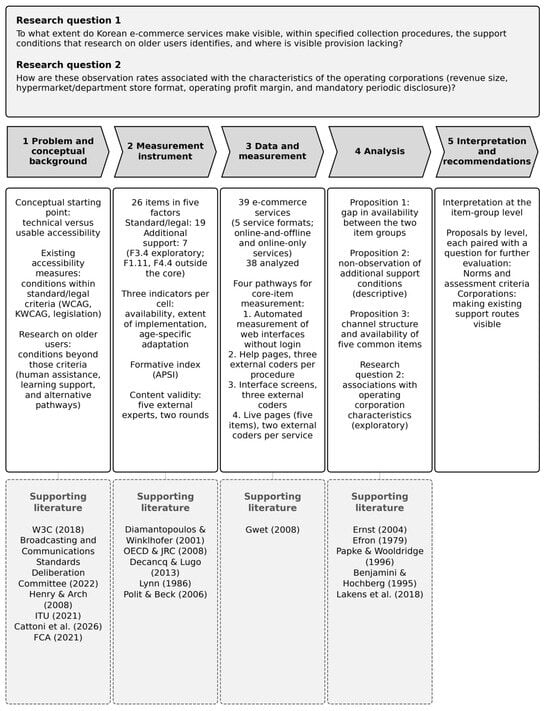
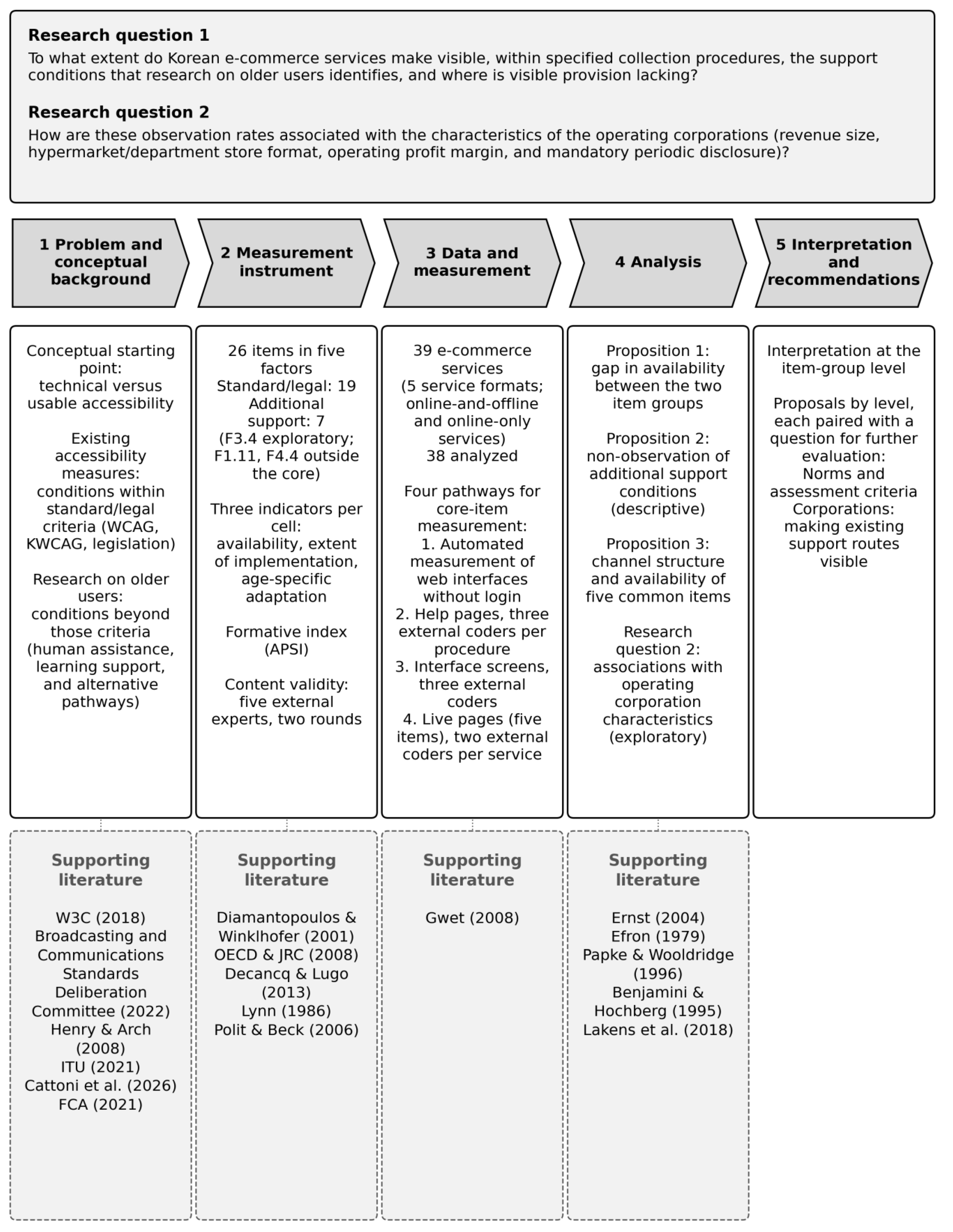
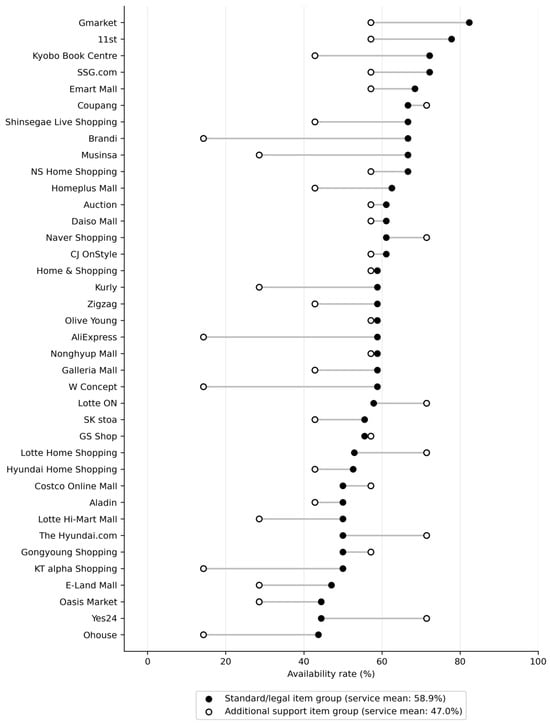
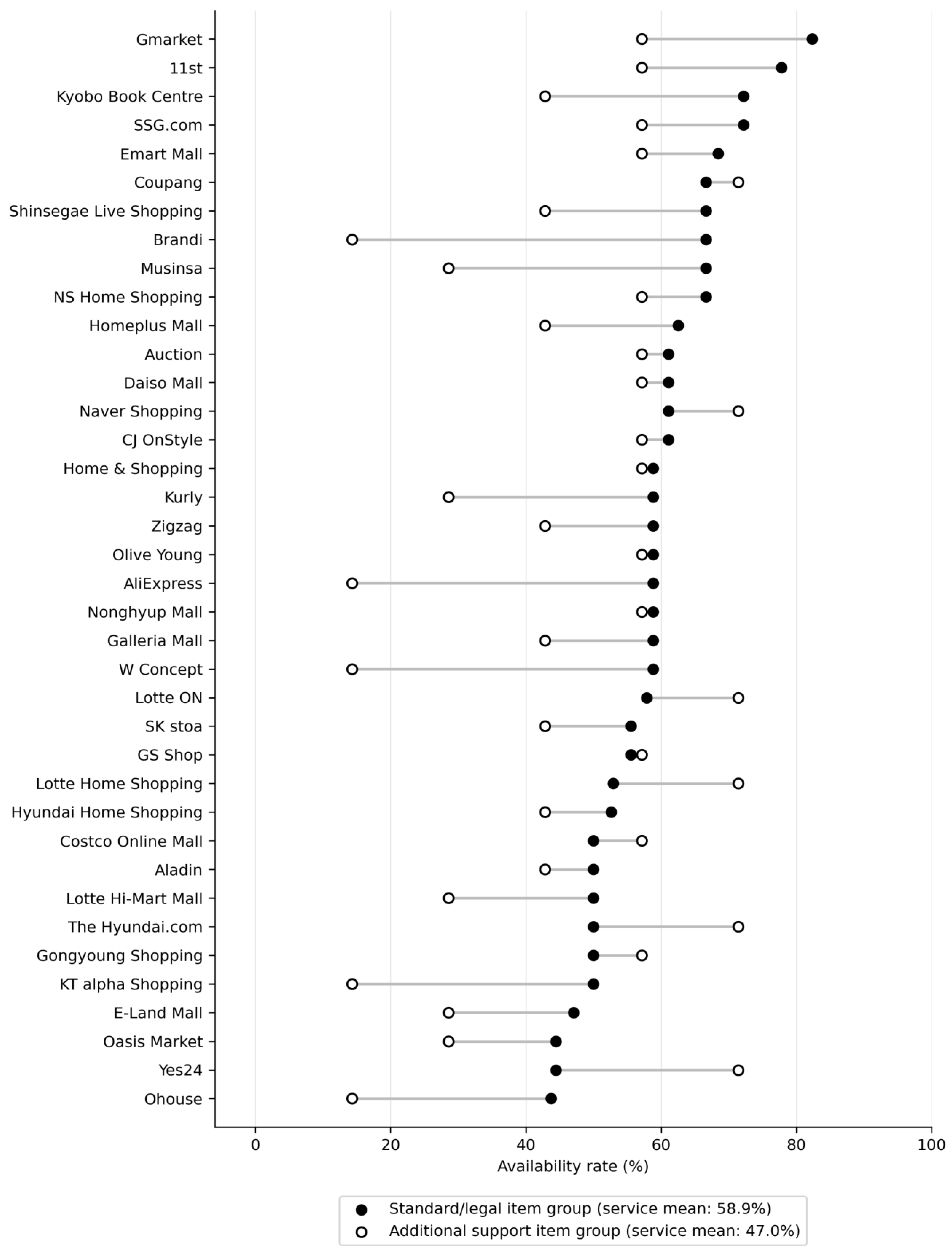

Disclaimer/Publisher’s Note: The statements, opinions and data contained in all publications are solely those of the individual author(s) and contributor(s) and not of MDPI and/or the editor(s). MDPI and/or the editor(s) disclaim responsibility for any injury to people or property resulting from any ideas, methods, instructions or products referred to in the content. |
© 2026 by the authors. Licensee MDPI, Basel, Switzerland. This article is an open access article distributed under the terms and conditions of the Creative Commons Attribution (CC BY) license.