


Abstract
Influencer–follower relationships combine felt closeness with uneven opportunities for reciprocal communication. This study explores how influencers and followers interpret these relationships on Instagram and the practices and conditions they associate with their continuity. Drawing on constructivist grounded theory, we analyzed in-depth interviews with 14 Slovenian influencers and two focus groups involving 14 followers. Five interrelated dimensions were developed: authenticity, benefits, follower experiences, interaction, and platform. Silent followers could experience closeness and a sense of friendship without reciprocal communication. The Insta relationship is proposed as an exploratory integrative framework. Its contribution lies in relating subjective closeness to exchange evaluations, communication practices, and platform-mediated exposure while distinguishing audience-level responsiveness from repeated individualized contact. The framework is context-specific, and the unpaired, cross-sectional design limits conclusions about dyadic relationships and change over time.
1. Introduction
Many companies and brands have recognized influencers’ ability to shape consumers’ opinions, attitudes, and behavior [1,2] and have begun incorporating them into their marketing communications, a practice known as influencer marketing. Influencer marketing has become an important component of marketing strategies for many companies worldwide [3,4]. Consequently, the global market has continued to grow year over year. Statista projects that the global influencer marketing platform market will reach USD 31.2 billion by 2027 [5].
Numerous studies have shown that the relationship established between influencers and followers on social media is one of the key factors contributing to the success of influencer marketing [6,7,8,9,10,11,12,13].
The importance of this relationship is reflected in several outcomes: a stronger relationship enhances the influencer’s perceived credibility and trustworthiness [1,2,13,14,15,16], reinforces followers’ sense of belonging to a community [17] and positively affects purchase intention and attitudes toward the brand [2,18,19]. At the same time, followers who have a stronger relationship with an influencer respond less critically to the influencer’s promotional content and are more likely to perceive it as friendly advice [13].
Numerous studies have used the concepts of parasocial interaction (PSI) and parasocial relationship (PSR) to explain the relationship between influencers and followers [2,3,11,13,20,21,22,23,24]. Both concepts originate from the theory proposed by Horton and Wohl [25], which was developed to describe relationships between mass media users and media figures. PSI and PSR describe an imagined, one-sided connection between a media user and a media figure: PSI refers to an individual media experience, whereas PSR refers to a more enduring relationship [26].
In recent years, several authors have highlighted the limitations of applying the concepts of PSI and PSR to explain influencer–follower relationships on social media, as these concepts were developed within the communication environment of mass media, which differs from social media in important respects [27,28,29,30].
The relationship between followers and influencers differs from a parasocial relationship in several respects. One key difference is that it unfolds on social media platforms, which facilitate two-way communication and interaction among users. Relationships on social media are therefore not necessarily entirely one-sided, as these platforms enable actual communication between influencers and followers [8].
Given the considerable popularity and influence of some influencers among social media users, as well as the growth and importance of influencer marketing, it is essential to examine and explain one of the key elements that shapes both influencers’ power and the effectiveness of influencer marketing—the relationship that develops between influencers and followers on social media.
Existing approaches already explain mediated intimacy, interactivity, collective reciprocity, and co-creation. The specific question addressed here is how participants interpret these practices together with perceived authenticity, benefits relative to investments, divergent emotional experiences, and platform-mediated continuity. We examine this question using accounts from both influencers and followers, without assuming that earlier approaches exclude these concerns.
The research gap is therefore an integrative and contextual one: how are the meanings and value attributed to the relationship connected to reported communication practices and perceived platform conditions in influencers’ and followers’ accounts? Addressing this question requires distinguishing subjective closeness from visible involvement, reciprocal exchanges, and repeated individualized recognition. This distinction matters because an emotionally close silent follower and a frequently responding follower need not have the same communication structure. The study does not claim that reciprocity or relational exchange is newly discovered.
This study uses constructivist grounded theory to develop a contextually bounded, exploratory integrative framework from influencers’ interview accounts and followers’ group discussions. We examine the meanings they attribute to relationships and the practices and conditions they associate with establishment and maintenance. The dimensions and the term Insta relationship were developed during analysis. Their integration is an interpretive contribution; the study does not establish an exhaustive taxonomy, a validated new relational construct, or a causal model.
In line with the study aim, we formulated the following overarching research question:
How can the relationship between influencers and followers on Instagram be conceptualized based on their experiences, practices, and interpretations in the context of influencer marketing?
Two subquestions complement the overarching research question:
RQ1: How do followers and influencers understand and experience their relationship on Instagram?
RQ2: How do influencers and followers describe the practices, processes, and conditions associated with establishing and maintaining this relationship?
2. Theoretical Framework
2.1. Definition of Key Concepts
Social media influencers are content creators who establish and maintain relationships with followers through personal branding and have the potential to influence their attitudes and behavior [8]. Their activities may center on expert or thematically focused content or on presenting their everyday and personal lives, and they often combine the two [20,31,32,33,34]. Regular content creation and the audience that follows them distinguish influencers from other online content creators [35]. Having followers is therefore one of the fundamental conditions for their activities [36,37].
Followers are social media users who voluntarily choose to follow influencers’ content, engage with it, and may communicate with the influencer and other followers [21]. They follow influencers for various reasons and to satisfy different needs or obtain different benefits [38,39,40,41]. Their role is not necessarily passive, as their responses and communication allow them to participate in the relationship with the influencer [42].
Companies have also recognized influencers’ ability to shape followers’ attitudes and behavior. Influencer marketing refers to collaborations between companies or brands and influencers in which influencers incorporate brands into their content with the aim of influencing followers’ perceptions, attitudes, and behavior [3,20,22,43].
An important part of this value stems from the relationships that influencers establish with their followers. Followers are more likely to trust information and recommendations when they come from a person they know, trust, or perceive as similar to themselves than when they come directly from an advertiser [44,45,46]. The influencer–follower relationship therefore constitutes an important foundation of influencer marketing and its operation.
2.2. The Importance of the Relationship and the Parasocial Framework
The relationship that influencers establish with their followers is a key element of their ability to exert influence and, consequently, of influencer marketing effectiveness [6,7,8,9,10,11,13]. Influencers are more persuasive when they establish stronger relationships with followers and when followers perceive them as familiar, similar to themselves, and trustworthy [45].
Studies assess the effectiveness of influencer marketing in terms of outcomes such as purchase intention, attitudes toward and trust in the featured brand, acceptance of recommendations, and other behavioral responses among followers [2,18,47]. When making purchase decisions, consumers rely more heavily on sources they trust and that reduce their perceived risk [48]. Accordingly, studies have identified direct or indirect associations between purchase intention and relationships with influencers, including those conceptualized as PSI and PSR [14,19,22,24,49,50,51,52,53,54,55,56,57].
The importance of the relationship is also evident in followers’ attitudes toward the brands promoted by influencers. A stronger relationship with an influencer is associated with greater trust in and interest in the brand, more favorable product perceptions, and greater engagement with branded content [2,11,14,49,51,58,59,60]. The relationship also affects followers’ willingness to accept influencers’ recommendations and incorporate them into their everyday decisions [18,61,62].
A strong relationship can also shape how followers respond to commercial content. Disclosing a paid partnership can increase awareness of persuasive intent and critical scrutiny of the content [63,64,65,66]. However, followers who have a stronger relationship with an influencer are generally less critical of the influencer’s advertising messages and are more likely to interpret them as well-intentioned recommendations [13,67,68,69]. The influencer–follower relationship is therefore not merely a backdrop to influencer marketing but an important mechanism through which followers’ trust, acceptance of recommendations, and behavioral responses are shaped.
Most studies that have examined this relationship have explained it using PSI and PSR [2,3,11,13,20,21,22,48]. PSI and PSR are among the most commonly used concepts in research on parasocial phenomena [70], and were first conceptualized in the context of mass media [25].
PSI refers to a situational experience of illusory social interaction that arises during exposure to a media figure. The media user feels personally addressed and experiences a sense of interaction, even though no actual reciprocal communication takes place [25,71,72,73]. PSR, by contrast, refers to a more enduring attachment to or relationship with a media figure that extends beyond a single exposure to content. Such a relationship may resemble friendship but remains one-sided, asymmetric, and nonreciprocal [25,72,74]. These fundamental characteristics of the parasocial framework become particularly important when it is applied beyond mass media to the interactive environment of social media.
2.3. Limitations of the Parasocial Framework in Explaining Influencer–Follower Relationships
Although parasocial interaction and parasocial relationship are frequently used to explain influencer–follower relationships, several authors have highlighted the limitations of transferring concepts developed in the mass media environment to social media [27,28,29]. Parasocial phenomena have been widely studied for nearly seventy years and, in recent years, have been applied extensively to research on social media, influencers, and influencer marketing [73]. PSI and PSR therefore remain important starting points for understanding feelings of closeness and attachment to media figures. However, whether these concepts alone can provide a sufficiently comprehensive explanation of a relationship that emerges in a fundamentally different communication environment remains open to question.
The key difference lies in the possibility of actual interaction. PSI and PSR originated in the mass media environment, where communication between a media figure and an audience is generally one-way and the relationship is nonreciprocal [25]. Social media platforms enable a different communication structure. Followers can comment on, like, and share content; send private messages to influencers; answer questions; participate in polls; or join live streams. Influencers can respond directly to followers’ reactions, reply to comments and messages, and incorporate followers’ responses and suggestions into subsequent content. The relationship is therefore not necessarily entirely one-sided, although neither is it a fully reciprocal interpersonal relationship.
Abidin [27] draws attention to this distinction and proposes the concept of perceived interconnectedness as an alternative to the parasocial relationship. According to Abidin, the influencer–follower relationship is not merely a transfer of the traditional relationship between media figures and audiences to a new technological environment. Influencers cultivate closeness through personal forms of address, portrayals of everyday life, and invitations to participate, while followers can respond to content and contribute to communication through their responses. Communication therefore occurs simultaneously on a one-to-many basis, when an influencer addresses the entire audience, and on a one-to-one basis, when the influencer responds to an individual follower. This combination of mass communication and the possibility of individual contact extends beyond the basic one-way logic of the parasocial relationship.
Similarly, Lou [28] conceptualizes the influencer–follower relationship as a trans-parasocial relationship and emphasizes collective reciprocity, interactivity, and co-creation. Given the size of their audiences, influencers cannot develop a reciprocal relationship with every follower, but they can reciprocate attention at the group level by responding to selected comments, addressing recurring questions and suggestions, and adapting subsequent content based on followers’ responses. Followers may recognize the limitations of this form of reciprocity yet still experience the relationship as more responsive and interactive than the traditional relationship between a media figure and an audience.
Kowert and Daniel [29] identify a similar conceptual tension in the context of live streaming, for which they use the term “one-and-a-half-sided parasocial relationship”. Such a relationship is neither fully symmetrical nor comparable to an interpersonal relationship, but it is also no longer entirely one-sided. Followers can communicate directly with an online personality, who may respond to their comments and incorporate them into the content as it unfolds. The authors thus demonstrate that interactive digital environments blur the clear boundary between parasocial and genuinely reciprocal relationships.
These conceptual shifts do not mean that PSI and PSR have become unsuitable for studying influencers. They continue to capture important elements of the relationship, particularly feelings of closeness, intimacy, and emotional attachment. Their limitation is that they do not, on their own, capture the full dynamics of a relationship that can develop on social media. The influencer–follower relationship may remain highly asymmetric and predominantly unfold between an individual and a larger audience while still allowing actual interaction, responsiveness, and shifts toward more direct contact between an influencer and an individual follower.
These approaches substantially overlap: perceived interconnectedness already includes commercial and disclosive intimacy, while trans-parasocial relationships incorporate collective reciprocity and co-creation. Collective reciprocity is a mechanism within the latter approach, rather than an independent rival theory. Lou also examines how followers evaluate sponsored content in relation to trust, content value, and expectations about the balance between sponsored and organic posts [28]. Kowert and Daniel connect potential reciprocity with community affiliation, emotional engagement, and presence [29]. The gap is not the absence of social-media reciprocity from existing theory. Instead, the present study asks how relational interpretations, exchange evaluations, interaction practices, and perceived platform conditions are connected in a particular Instagram context.
3. Materials and Methods
3.1. Research Approach
The study was conducted within a qualitative research paradigm. Its epistemological foundations were interpretivism and social constructivism, and constructivist grounded theory was used as the research method. This research design was selected because the influencer–follower relationship was not treated as a predetermined, objective, and uniform category, but as a subjectively perceived, socially constructed phenomenon that could be interpreted in diverse ways. The emphasis was therefore on understanding the meanings, experiences, and interpretations that influencers and followers attributed to the relationship, as well as the communication practices and interactions through which this relationship was manifested in the social media environment [75,76,77].
The research process followed the constructivist grounded theory approach developed by Charmaz [78,79]. The study did not aim to measure predetermined variables or test a previously formulated model, but to progressively develop categories and the connections among them from empirical data and integrate them into an empirically grounded conceptual framework. Accordingly, the categories, dimensions, and conceptual framework were not specified in advance but emerged through an iterative process of data collection and analysis [78,79,80]. In keeping with constructivist grounded theory, the data were not treated as neutral facts but as meanings produced and interpreted within the research process. The research process involved iteratively moving between data collection and analysis, constant comparison, analytic memo-writing, and the gradual development of a conceptual explanation of the relationship under study [78,81].
Reflexivity within the research team was an important component of the research process. The first author’s professional background in digital and influencer marketing provided greater sensitivity to the context, language, and practices of the field under study, while also posing a potential risk that certain interpretations might be taken for granted. Emerging codes, categories, and interpretations were therefore subjected to ongoing analytical scrutiny and discussion among the authors. We repeatedly returned to the original data, compared different data sources, and treated the categories as provisional analytical constructions that remained open to revision [78,79,80].
3.2. Data Collection
Data were collected from two sources: in-depth interviews with influencers and focus groups. The interviews and focus groups enabled us to incorporate the distinct perspectives of influencers and followers on the phenomenon under study. We did not examine matched pairs of influencers and their followers, nor did we compare accounts from both parties to the same specific relationship.
Empirical data were collected in 2023. The influencer interviews were conducted between January and July, and the focus groups were held in March. Data collection and analysis proceeded iteratively. Early analytical insights informed adjustments to the questions and follow-up questions used in subsequent interviews and guided the further development of emerging categories [78,79,80].
The sampling strategy varied by data source. The initial pool of influencers was constructed through purposive sampling based on predetermined inclusion criteria (criterion sampling): at least 10,000 followers on Instagram and collaborations with different companies during the preceding year. The pool included influencers who varied in gender, age, number of followers, length of activity, and content domain. Focus group participants were also selected through criterion sampling; the inclusion criteria were daily Instagram use and regularly following at least one influencer. The selected participants were assigned to two age groups. The iterative nature of constructivist grounded theory was reflected in the ongoing adjustment of the thematic emphasis of subsequent interviews and in the constant comparison of data within and across data sources [78,79,80].
Data collection and analysis proceeded iteratively. Following the analysis of the first six interviews, initial codes related to imperfection, self-disclosure, and selective non-disclosure emerged primarily from the experiences of influencers working in lifestyle, parenting, family life, cooking, and recreation. The emerging categories did not yet encompass a sufficiently broad range of contrasting cases involving profiles based primarily on expert and narrowly focused thematic content. We therefore subsequently included influencers working in the fields of automotive and mobility, health, and nutrition. These influencers were already on the initial list of 30 but were invited to participate only after the first six interviews had been analyzed. The comparison showed that expert-focused influencers generally imposed clearer limits on disclosures about their private lives and associated consistency with maintaining their core content domain. This helped us define the boundaries among self-disclosure, selective non-disclosure, and consistency within the authenticity dimension more precisely.
We ended data collection when comparison of later material with the developing categories no longer substantially expanded their properties, suggested important new connections, or altered the emerging explanation. This was an interpretive judgment of conceptual adequacy for a bounded exploratory framework. The contrast between everyday-life and expert-focused influencers, described above, illustrates how these comparisons refined the boundaries among self-disclosure, selective non-disclosure, and consistency. For follower experiences, accounts from the second focus group could be organized within the four provisional subcategories identified through preliminary analysis of the first group, and no additional subcategory of follower experience was identified. This supported retaining those subcategories within the framework, without establishing exhaustive saturation of their properties or connections or of follower perspectives more broadly. Table 1 presents the influencer participant profiles.
Table 1.
Influencer interview participants.
In-depth interviews were conducted with 14 Slovenian influencers. The initial list comprised 30 influencers who had at least 10,000 followers on Instagram and had collaborated with different companies during the preceding year. All were invited to participate, and some were subsequently contacted directly by telephone. Fourteen influencers participated in the study: nine women and five men, aged between 20 and 50 years, with approximately 21,000 to 98,000 followers. In constructing the sample, we sought to include participants who varied in gender, age, number of followers, length of activity, and content domain. Three influencers were aged 20–25 years, two 25–30, five 30–35, one 35–40, two 40–45, and one 45–50.
Table 1 reports the content domains of each participating influencer. These domains are descriptive and may overlap. The sample provides variation for analytic comparison, not statistical representation of Slovenian influencers; commercially inactive creators, smaller accounts, and larger celebrity accounts fall outside its observed range.
The first author conducted the interviews. Six were held in a meeting room at the Futura DDB advertising agency in Ljubljana, three in different cafés in Ljubljana, two via Zoom, one by telephone, one in an influencer’s office, and one at an influencer’s home. The interviews lasted between 50 and 90 min. All interviews were recorded and transcribed verbatim, and the transcripts were read in full before coding. The interview guide provided an overall structure for the conversations, while the questions and follow-up questions were adapted to individual participants and emerging analytical insights.
The follower perspective was incorporated through two focus groups, each comprising seven participants. Participants in the first group were aged between 18 and 29 years, while those in the second were aged between 30 and 38 years; each group included two men and five women. All participants used Instagram daily and regularly followed at least one influencer. The market research agency Mediana recruited the participants based on these criteria.
The first author moderated both focus groups in Slovenian, and both were held in a meeting room at her employer, the Futura DDB advertising agency. The participants did not know one another or the moderator before the study. The first focus group lasted 120 min and the second 140 min. Each of the 14 participants received a retail voucher worth EUR 40 for participating. Both discussions were recorded and transcribed verbatim. A flexible discussion guide was used, allowing topics that emerged during the discussions to be incorporated. Participants’ statements were anonymized during the analysis and presentation of the results. However, because of the group format, the confidentiality of statements among participants could not be fully controlled.
The follower sample comprised ten women and four men across the two groups. Participants were recruited using the eligibility criteria described above. The first focus group was held in the first week of March 2023. Preliminary analysis was conducted immediately afterwards and suggested four provisional subcategories within the follower experiences dimension: relatability, motivation, envy, and a sense of friendship. Based on this analysis, a second focus group was added and held in the last week of March 2023 to examine whether additional forms of experience would emerge and whether the provisional subcategories captured further follower accounts. The accounts from the second group could also be organized within these four subcategories, and no additional subcategory of follower experience was identified. This comparison supported retaining the four subcategories within the exploratory framework, without establishing exhaustive saturation of follower experiences. The two group discussions are not treated as equivalent to 14 independent individual interviews. Table 2 summarizes the characteristics of the two focus groups.
Table 2.
Follower focus groups.
3.3. Data Analysis
The analysis began after the first interview and proceeded concurrently with data collection. The interviews and focus groups were transcribed verbatim. The first author was primarily responsible for coding, while the second author also participated in coding and linking the categories. The analysis was based on the constant comparative method: new data were compared with previously analyzed data, codes, categories, and analytic memos, both within and across data sources. Cases that diverged from the emerging interpretations were also considered [78,80].
The coding process moved iteratively through initial, focused, and theoretical coding, and these phases were neither strictly separated nor linear. During initial coding, the material was analyzed without a predetermined coding framework, with attention to meanings, actions, feelings, and interpretations emerging from the data. The concepts of parasocial interaction (PSI) and parasocial relationship (PSR) formed part of the researchers’ prior knowledge of the field but were not used as a priori analytical categories.
The unit of coding could consist of a sentence fragment, a sentence, or a longer, meaningfully complete response.
Coding and analysis were conducted in Slovenian. Both authors translated the quotations selected for publication into English. An independent translator then translated the English versions back into Slovenian. The authors and the translator jointly reviewed the original quotations, the English translations, and the Slovenian back-translations and agreed on the final English wording, with the aim of preserving the meaning and context of participants’ original statements.
During focused coding, initial codes were compared and grouped into broader categories; during theoretical integration, connections among categories were interpreted as the five dimensions of the proposed framework. These dimensions are an economical organization of the material, not a claim that all relational attributes reduce to five categories. They distinguish authenticity judgments, benefits and investments, follower experiences, communication practices, and perceived platform conditions represented in the accounts. Supplementary Table S1 illustrates their empirical basis through excerpts, initial codes, and focused categories. Some concerns are addressed within existing dimensions: privacy boundaries within selective non-disclosure, perceived similarity within relatability, and the fit of commercial partnerships within consistency and the perceived balance between benefits and investments. The claim of adequacy concerns the analyzed accounts, rather than statistical representativeness; broader material may justify additional dimensions or different boundaries among them. The three analytical levels organize the explanation and were not independently generated empirical categories. The two relational forms are interpretive distinctions rather than verified developmental stages. Section 4.6.1 provides additional, within-manuscript examples linking excerpts already reported in the results or Supplementary Table S1 to cross-dimensional interpretations and the two proposed relational forms; these examples do not replace a full coding audit trail.
We then examined and refined the developing categories using other data sources. In two focus groups involving a total of 14 followers, we explored in greater depth how followers experienced influencers’ accessibility and how they used the available opportunities for interaction. Comparing their experiences with the influencer interviews enabled us to distinguish among silent observation, functional response, active communication, and intensive personal interaction. These cases contributed to more precise definitions of two-way communication, co-creation, and patterns of involvement within the interaction dimension. Comparison between the two focus groups also supported retaining four provisional subcategories of follower experiences: relatability, motivation, envy, and a sense of friendship. Supplementary Table S1 provides representative excerpts illustrating these subcategories and the distinctions among patterns of involvement. We supported the quality of the analysis through constant comparison, analytic memo-writing, repeated returns to the original data, and the involvement of both authors. Data that introduced ambiguities or did not support the initial interpretations were used to reassess the boundaries of the categories. The different data sources were not used to establish a single objective account of the relationship; rather, they provided complementary insights by enabling comparisons among the distinct perspectives of influencers and followers [78,82].
The first author’s professional background in digital and influencer marketing facilitated a deeper understanding of the context and practices but may also have influenced the selection of material, the interviews, and the interpretation. We mitigated the risk of taken-for-granted interpretations through analytic memo-writing, comparison across sources, repeated returns to the original material, and discussions among the authors. Their involvement was not intended to calculate intercoder reliability but to assess the empirical grounding, internal coherence, and boundaries of the conceptual framework [78]. Before the study, the first author had no direct business or contractual relationship with the interviewed influencers.
3.4. Ethical Considerations
The study was conducted in accordance with ethical principles for research involving human participants. Before taking part, all interview and focus group participants were informed about the purpose of the study, the recording of the discussions, the use of the data, confidentiality, and anonymization, and provided informed consent. When reporting the findings, their statements were anonymized and attributed using the generic labels (Influencer) and (Follower). Information that could enable individual participants to be identified was removed or modified. The research materials were stored securely and protected by a password.
On 14 April 2025, the Commission of the University of Primorska for Ethics in Human Subjects Research (KER UP) determined that the research was ethically acceptable and issued approval no. 4264-63-11/25. This decision followed data collection in 2023. The approval covered the use of the previously collected data. The Commission was informed of the methods and procedures used to collect the data.
4. Results
The analysis developed five interrelated dimensions: authenticity, benefits, follower experiences, interaction, and platform. They organize participants’ accounts of relational meanings and practices rather than constitute independent measured variables. Connections among them are interpretive syntheses of cross-sectional and retrospective material. References below to formation, deepening, maintenance, or weakening describe participants’ interpretations and possible processes; they do not establish temporal sequence or causal direction.
For clarity, we organized the five dimensions according to the aspect of the relationship they primarily explain. Authenticity and follower experiences relate primarily to how followers perceive and experience influencers and their relationships with them. Authenticity refers to a quality that followers attribute to influencers. Benefits and interaction primarily explain what occurs between influencers and followers. Within the benefits dimension, we consider not only the benefits received but also the investments made by both parties and the perceived balance between benefits and investments. Platform, in turn, explains how Instagram creates the conditions in which the relationship unfolds and how it actively shapes that relationship.
The three analytical levels distinguish the interpretive question being asked: how a relationship is experienced, what participants report exchanging or communicating, and under what platform conditions contact occurs. This helps prevent treating a feeling of friendship, a reciprocal message, and visibility as equivalent evidence of a relationship. The levels are an optional expository device, not necessary components of a new theory. Dimensions can span levels, and the framework remains intelligible without the grouping. No hierarchy, independent measurement, or causal ordering is implied.
Table 3 provides an overview of the dimensions, their primary analytical levels, and their respective subcategories.
Table 3.
Empirically developed dimensions of the influencer–follower relationship.
In the sections that follow, the dimensions are presented sequentially for clarity, although their order does not imply a hierarchical or linear understanding of the relationship. Authenticity is presented first because the analysis identified it as one of the most prominent and integrative dimensions. It is followed by benefits, follower experiences, interaction, and platform. The most important interconnections among these dimensions and their overarching conceptual definition are presented in Section 4.6.
4.1. Authenticity
The analysis showed that authenticity is one of the most prominent dimensions of the influencer–follower relationship. When asked why they followed a particular influencer, followers used expressions such as “because she is who she is,” “because she does not pretend,” “because she is honest,” “because she tells it like it is,” and “because with her, you can really see what their life is like”. As in direct personal relationships, they associated the quality of the relationship with being real, genuine, and honest. One follower described this type of authenticity as follows: “I find her interesting because she is so real, very honest—she just says what she thinks”.
In this context, authenticity is not understood as an objective characteristic of the influencer but as a quality attributed to the influencer by followers. Followers assess it through the content the influencer posts over time, their manner of addressing followers, the extent of their self-disclosure and selective non-disclosure, their responsiveness to followers, their choice of commercial partnerships, and other activities visible on Instagram.
Authenticity comprises four subcategories: imperfection, self-disclosure, selective non-disclosure, and consistency.
The first aspect of authenticity concerns imperfection and the portrayal of real life. The empirical material indicates that followers perceive authenticity primarily when influencers portray the realities of ordinary life, including difficulties, challenges, imperfections, mistakes, fatigue, emotions, doubts, and situations that followers themselves also encounter. Followers associated such self-presentation with recognizing aspects of their own lives in influencers, perceiving them as relatable, and feeling closer to them. One follower described this as follows: “I follow her because she really goes through the same things I do”.
Some followers described embellished, idealized, or highly staged portrayals of life as inauthentic and difficult to relate to, associating the influencer’s apparent perfection with insincerity.
The second important aspect of authenticity is self-disclosure. The classic definition describes self-disclosure as behavior through which individuals honestly, truthfully, and intentionally communicate information about themselves that is usually private to one or more other people [83].
The disclosure of influencers’ personal lives and private, intimate thoughts gives followers an opportunity to perceive them as authentic. Followers associated glimpses into influencers’ private, family, emotional, or intimate lives with closeness, trust, and accessibility. They described self-disclosure as contributing to their sense of knowing the influencer well. Such experiences also characterize real-life relationships. As a relationship deepens in real life, the people involved know more about one another than they did at the beginning [32,84,85]. Self-disclosure functions as an implicit invitation to a relationship. One influencer summarized the importance of such content as follows: “People are still interested in your private life. No matter how expert my content is, people want to see your private life”.
Selective non-disclosure complements self-disclosure. The analysis showed that authenticity emerges from the tension between self-disclosure and selective non-disclosure. Followers expect a certain degree of openness from influencers, but they may perceive excessive, inappropriate, or overly intimate self-disclosure as intrusive, distasteful, manipulative, or inauthentic.
As in real-life relationships, appropriateness also matters in this context. When self-disclosure crosses the threshold of appropriateness—which each follower determines subjectively—followers no longer associate it with authenticity but with manipulation or even provocation and attention-seeking. They interpret excessive self-disclosure as a tactic for increasing reach, views, likes, and interactions. The boundary between desirable openness and excess is likewise subjective and depends on each follower’s personal interpretation. Influencers must therefore continually decide which aspects of their private lives to include in their public communication and which to withhold. Selective non-disclosure thus functions as a strategy that complements self-disclosure rather than opposes it, enabling influencers to construct a public image that they consider acceptable and hope their followers will also accept.
Influencers themselves describe the combination of self-disclosure and selective non-disclosure as a strategy for shaping their public image as intended while also protecting their privacy and mental health.
The fourth subcategory of authenticity is consistency. Followers assess influencers over an extended period and consider whether their posts, values, recommendations, personal style, and commercial partnerships are mutually consistent. They examine whether influencers’ actions align with their statements and vice versa, and whether the statements and actions they observe over the years contradict one another. They are particularly critical of the values influencers communicate in the context of paid partnerships. Inconsistency may be reflected in an excessive departure from the influencer’s original topic, an excessive number of unrelated commercial partnerships, or a disconnect between actions and statements. In such cases, followers perceive the change as insincere, manipulative, or self-serving, which reduces the authenticity they attribute to the influencer. One follower described such a shift as follows:
“He’s totally gone off track. First it was cars, then family, and now even cooking. And he advertises everything!”
Taken together, the findings indicate that authenticity does not result from maximum openness on the part of the influencer but from the follower’s subjective judgment that the influencer’s self-presentation is sufficiently real, appropriately open, and consistent over time. Authenticity thus emerges from the tension between self-disclosure and selective non-disclosure: disclosure can reduce distance and create a sense of knowing the influencer, whereas excessive or inappropriate disclosure can raise doubts about the influencer’s motives. Consistency over time provides an additional test of this judgment, particularly when commercial partnerships become part of the relationship.
4.2. Benefits
We identified benefits as the second dimension. Participants described various material and non-material benefits while also making investments in the relationship. Their accounts linked continued involvement with perceiving sufficient value relative to these investments and not viewing the exchange as markedly one-sided.
Among the key non-material benefits that followers derive from the relationship are content-related benefits. These emerged in two forms. Followers value educational and informative content that enables them to acquire information and knowledge. This often occurs when an influencer is an expert in a particular field or presents themselves as someone who understands the subject and can make it accessible and explain it clearly. Followers also value content that helps them pass the time, including entertainment, amusement, humor, and other content that offers a more lighthearted viewing experience. They also follow influencers because their content provides an escape from everyday responsibilities, entertainment, or a sense of lightness. One follower compared this experience to watching television series or movies: “Or just as a way to relax, you know. I mean, we watch it in much the same way as TV series, movies, or whatever—we’re watching someone share part of their life with us”.
The second form of benefits for followers is material benefits. These most commonly take the form of discounts, promotional codes, giveaways, and other financial or tangible advantages. In such cases, followers also use influencers as a practical source of benefits. A material benefit may arise from already following an influencer, but it may also motivate followers to deliberately seek out the influencer’s content. One follower explained: “Sometimes, when I’m buying something, I specifically check some influencers to see whether they have an active code”. Influencers may thus also be perceived as a useful means of obtaining benefits, indicating that followers recognize their business model and, in some cases, use it entirely pragmatically.
The benefits that influencers derive from and experience within the relationship can likewise be divided into non-material and material benefits.
Based on the empirical material, we grouped the key non-material benefits for influencers into three categories. The first is the opportunity to raise awareness among followers and wider society about topics and issues that matter to them. These topics vary widely and may include, for example, same-sex relationships, healthy eating, self-confidence, child-rearing, animal training, or any number of other issues. The second non-material benefit is a sense of purpose that influencers derive from positive comments by followers, as these comments affirm that their content is valuable, meaningful, and useful. Such responses reassure influencers that their work is not in vain, that it reaches people, and, above all, that it has a positive impact on them. They can also give meaning to influencers’ work and activities. Some influencers also described content creation as a form of self-therapy, journaling, or a means of self-reflection, which constitutes the third non-material benefit.
Influencers’ material benefits fall into two categories. The first and most widely recognized consists of partnerships with companies that offer payment or other financial compensation in exchange for promoting their products and services; such partnerships also form the basis of influencer marketing. The second involves promoting influencers’ own businesses, such as fitness services, nutritional counseling, educational programs, clothing production, and similar activities. Monetizing the relationship may, however, increase some of the investments required from influencers and the demands placed on them, particularly the pressure to post regularly, accommodate clients, and maintain an appropriate balance between commercial and non-commercial content.
The empirical material showed that benefits cannot be understood separately from the investments that both parties make in the relationship. Followers invest their time, attention, reactions, likes, comments, direct messages, and occasionally purchases. Influencers invest their knowledge, time, and energy in creating content and responding to followers, and often also provide access to aspects of their personal and intimate lives.
The benefits dimension thus indicates that the influencer–follower relationship also entails an exchange logic. Both parties derive material and non-material benefits from the relationship while investing different resources in it. The accounts suggest that perceived value and balance may matter for continued involvement, without implying an objectively equal distribution of benefits and investments. Followers evaluate over time whether, in exchange for their attention, responses, and purchases, they continue to receive high-quality and useful content, authentic communication, responsiveness, insights into the influencer’s life, or material benefits.
Followers generally understand that influencers earn income from their work and do not necessarily reject paid partnerships. Dissatisfaction arising from a perceived imbalance occurs when followers encounter too many sponsored posts, the promotion of an excessively broad range of products, sponsored content that is low-quality or perceived as insincere, or major and sudden changes in an influencer’s content, particularly when the influencer begins posting content different from that which initially prompted the follower to follow them. Followers described reduced tolerance of commercial posts when they felt that they no longer received sufficient value for their attention. These accounts suggest that perceived imbalance may be associated with disengagement or withdrawal.
4.3. Follower Experiences
We identified follower experiences as the third dimension. This dimension encompasses the different ways in which followers subjectively experience influencers and their relationships with them. The analysis revealed four interrelated forms of experience: relatability, motivation, envy, and a sense of friendship.
The first and very frequently expressed form of experience is relatability. Followers connect more easily with influencers when they recognize similar values, interests, life circumstances, difficulties, ways of thinking, or everyday experiences. This is particularly evident among influencers who portray everyday situations, express personal views, or share experiences to which followers can relate. One follower described the importance of similarity as follows: “Yeah, sport is definitely what connects me with them, you know. I see a lot of myself in them. And I’ve realized that our social views and values are pretty similar too”. Relatability may thus stem from shared content interests, life circumstances, values, or a broader perceived similarity between the follower and the influencer.
Relatability is closely connected to authenticity and self-disclosure. When influencers disclose different aspects of their lives, followers have more opportunities to recognize experiences that are familiar from their own lives. Followers therefore perceive influencers as relatable when they reveal imperfections, everyday difficulties, emotions, or situations with which followers are familiar. In the data, relatability is therefore intertwined with authenticity and self-disclosure and may help reduce perceived distance and foster a sense of closeness to the influencer.
The second important set of follower experiences concerns motivation and envy. The analysis indicates that followers compare themselves with influencers in terms of their lifestyles, success, appearance, values, or everyday choices. Such comparisons may produce different and even opposing responses.
When followers perceive influencers as attainable, authentic, and sufficiently similar to themselves in terms of values, their content may motivate followers to make changes, exert greater effort, learn, explore a particular topic, or take better care of themselves. In such cases, influencers function as role models or sources of encouragement for improving a particular aspect of the follower’s life. Motivation may relate to lifestyle habits, personal development, the courage to make changes, or persistence in pursuing particular goals.
The same comparative dynamic may also elicit envy. This occurs primarily when followers interpret influencers’ content as portraying an unattainable, privileged, or unfairly advantaged life. Envy may arise from displays of wealth, material benefits, appearance, success, or a lifestyle that followers themselves cannot attain. It therefore does not result solely from comparison with the influencer but may also be associated with a sense that benefits, advantages, or life opportunities are distributed unfairly or unevenly. When followers perceive influencers as having more, having an easier life, or possessing advantages they consider undeserved, their sense of closeness may diminish.
An important finding of the analysis is that followers’ responses depend not only on the influencer’s content but also on how each follower interprets it and compares it with their own life. The same content or action by an influencer may therefore motivate one follower while eliciting envy in another. Motivation and envy thus demonstrate the highly subjective nature of follower experiences and the possibility that the same influencer may elicit different and even opposing responses among different followers.
The fourth subcategory is a sense of friendship. Through following influencers over an extended period, followers may develop a sense that they know them, are part of their world, or are keeping up with the life of a close acquaintance. Followers associated this experience with frequent exposure to content, influencer self-disclosure, and glimpses into private, family, emotional, or everyday moments. Followers report being interested in what is happening in influencers’ lives, empathizing with them during difficult times, and sharing their happiness during positive events. One follower described this sense of attachment as follows: “They mean something to us. I mean, if I think about something bad happening to these people, I’d feel for them; I’d be upset, you know. I wouldn’t wish that on them”.
A sense of friendship encompasses empathy, emotional connection, curiosity, and a sense of closeness, but it remains markedly asymmetric for most followers. Followers recognize that they do not know the influencer fully but primarily know the part of the influencer’s life that they are willing to share publicly. They are also aware of the unequal degree of mutual knowledge: over an extended period of following, a follower may learn a great deal about an influencer, whereas the influencer knows little or nothing about most followers. The sense of friendship may therefore be emotionally real for the follower, even though the relationship generally lacks the same degree of reciprocity and mutual knowledge as direct friendships.
Followers’ accounts associate relatability, motivation, and a sense of friendship with closeness, and envy with greater distance. These interpretations suggest possible links between experiences and continued involvement, rather than demonstrate that one dimension causes formation, deepening, or withdrawal. Their meaning depends on authenticity judgments, disclosure, perceived benefits, and communication. The emotional reality of felt friendship should therefore be distinguished from the extent of reciprocal contact.
4.4. Interaction
The fourth dimension to emerge from the analysis of the empirical material is interaction. This dimension encompasses two-way communication, co-creation, and different patterns of involvement among followers. The analysis showed that the possibility of actual communication is an important characteristic of the influencer–follower relationship. This possibility is not realized equally for all followers or across all relationships; however, it allows a relationship that predominantly takes the influencer–audience relational form to shift, in some cases, toward a more direct dyadic influencer–follower relational form.
Followers and influencers can communicate on Instagram in various ways: through likes and other platform features, comments, replies to Stories, private messages, and voice and video messages. Followers therefore do not merely consume influencers’ content; they can also respond to it, write to influencers, ask them for advice, or express support, criticism, or disagreement. Influencers, in turn, can respond directly and incorporate followers’ feedback into their subsequent content and behavior. The relationship on Instagram is therefore not necessarily two-way, but it has the potential for two-way communication, which is realized differently among followers.
Two-way communication may affect both parties to the relationship. It can give followers a sense of being noticed and personally acknowledged, while enabling influencers to better understand their audience’s interests, expectations, and responses. Because direct contact is possible, influencers may be perceived as more accessible and less distant than traditional media figures or celebrities. This sense of accessibility may reduce the perceived distance between influencers and followers and is connected with other dimensions of the relationship, particularly authenticity and a sense of friendship.
For followers, what matters is not merely the technical ability to write to an influencer but also the possibility that their response will be noticed and that the influencer will reply. One follower expressed this directly: “I like that accessibility, you know—like I said earlier, the fact that you can ask them anything. That’s what I like most”. A single response from an influencer may carry considerable symbolic meaning for a follower because, at least momentarily, it transforms one-to-many communication into direct one-to-one contact. One follower described this experience as follows: “I remember how surprised I was the first time I messaged her and she actually replied. Now I message her more often, and she always replies”.
Two-way communication also enables the co-creation of content and the relationship. In their posts, influencers address followers directly, ask for their opinions and suggestions, answer their questions, and raise topics proposed by followers. Followers’ responses may therefore influence the influencer’s subsequent content. Followers are thus not necessarily merely recipients of pre-formulated communication; through their questions, suggestions, and responses, they may participate in shaping how that communication subsequently develops.
The follower account above links an initial reply with more frequent subsequent contact, suggesting a possible reinforcing process. A related pattern appears in the influencer account below. When influencers disclose personal, sensitive, or emotionally intense experiences, followers may respond by disclosing their own experiences, often through private messages. One influencer described such responses from her followers: “OMG. When I said I’d had a miscarriage—OMG, the comments and stories I got in my DMs. The things we women wrote to each other. One told me how her child had died; another told me how many failed IVF attempts she’d had”.
The third subcategory of interaction consists of different patterns of involvement. The analysis showed that followers do not use the opportunities to interact with influencers in the same way. We identified four patterns:
- Silent observation;
- Functional response;
- Active communication;
- Intensive personal interaction.
These patterns are analytical descriptions of reported involvement, not fixed follower types or longitudinally observed transitions.
The first pattern is silent observation. These followers consume influencers’ content but do not respond to it visibly. They do not post comments or send private messages and either do not use or rarely use other options for responding directly. Influencers therefore know very little about them. Importantly, however, the absence of a visible response does not imply the absence of a relationship. Followers who merely observe an influencer may still regularly incorporate the influencer’s content into their daily lives, perceive the influencer as relatable, or develop a sense of closeness and friendship. Silent observation thus demonstrates that interaction is not necessarily a prerequisite for the subjective experience of a relationship.
The second pattern is functional response. These followers respond to content occasionally or regularly through the features provided by Instagram. They like posts, use sliders, respond to polls, vote, or use other rapid-response features. This represents a visible form of involvement but does not include more direct substantive communication with the influencer. Followers thus signal a response to the content without necessarily entering into a more personal exchange with the influencer.
The third pattern is active communication. This includes posting comments, replying to Stories, sending direct messages, and engaging more or less regularly in conversations with the influencer. Accounts of active communication included direct and individualized exchanges that could be consistent with the proposed dyadic influencer–follower relational form. The content of these conversations varies considerably. They may involve simple comments on content, questions, and requests for advice, as well as personal stories and the disclosure of more intimate experiences. The tone of the communication is not necessarily positive; it may include agreement and support but also criticism and disagreement. Influencers described recognizing some regular contributors and noticing their absence.
The fourth pattern is intensive personal interaction. Accounts of intensive personal interaction described personal, frequent, and individualized communication extending beyond occasional comments or private messages. Influencers described cases in which they connected with particular followers through other communication channels, maintained extended conversations with them, or met them in person. In these cases, the relationship extends beyond the typical communication between an influencer and a large audience and approaches a more direct dyadic influencer–follower relational form. Some influencers also described cases in which followers attributed considerable personal significance and a supportive role to them during difficult periods in their lives.
Participants’ descriptions suggest that involvement can vary, including periods of silent observation, visible response, or personal contact. Because individuals were not followed over time, the study cannot establish transition probabilities or a typical progression between these patterns. Interaction intensity and subjective closeness must be considered separately.
Taken together, the findings indicate that interaction is not a necessary condition for a subjectively strong relationship and that the reported patterns of involvement differ in their reciprocity. Instagram enables both silent observation of an influencer as part of a wider audience and direct, individualized communication between an influencer and a particular follower. This possibility is realized differently among followers and may change over time. The influencer–follower relationship therefore predominantly takes the influencer–audience relational form, with the possibility of shifting toward a dyadic influencer–follower relational form, rather than necessarily involving continuous two-way communication.
4.5. Platform
The fifth dimension to emerge from the analysis of the empirical material is platform. This dimension demonstrates that the influencer–follower relationship is shaped not only through the actions and experiences of both parties but is also continuously mediated by the platform on which it unfolds. Instagram influences how influencers plan their presence and posting activities, as well as which content followers see and how frequently they are exposed to it. The platform is therefore interpreted as part of the conditions for relationship formation and maintenance.
The platform dimension comprises three subcategories: algorithmic mediation, frequency, and replaceability.
The first subcategory is algorithmic mediation. The analysis showed that influencers do not experience their contact with followers as entirely direct because the visibility of their content is mediated by the platform. They therefore monitor analytics, experiment with different posting times and practices, observe follower responses, and seek ways to maintain their visibility.
At the same time, influencers perceive the algorithm as partly unpredictable. Although they develop their own assumptions and experiential knowledge about which content, posting practices, and follower responses increase visibility, the performance of individual posts is not always predictable. One influencer explained: “Last week, I had a viral video that, in my opinion, was similar to, if not worse than, all the others. But that one got almost a million views, while the others got about a thousand. I have no idea what the deal is”.
The perceived unpredictability of the algorithm places influencers in a position in which they must continually reconcile their content strategies and followers’ expectations with the demands they attribute to the platform. One influencer described this when explaining the rhythm of posting Stories: “If you post a Story in the morning and, I don’t know, one-fifth of your followers watch it, then that Story goes somewhere and isn’t shown to the other four-fifths. […] If you post again two hours later, Instagram automatically moves you back to the front […] and that also increases your views” (Influencer). Regardless of whether their interpretations accurately reflect how the algorithm actually operates, these interpretations substantially influence how influencers plan their posting activities and maintain their presence on the platform.
Platform mediation is also evident from the followers’ perspective. Followers report that they often do not actively seek out content from a particular influencer but primarily consume the content presented to them by the platform. The relationship thus depends partly on the follower’s choices and partly on platform-mediated exposure. When an influencer is regularly present in a follower’s digital environment, this may maintain a sense of familiarity, closeness, and continuity. If the influencer’s content does not appear for an extended period, their presence in the follower’s everyday life diminishes, which may also contribute to the weakening of the relationship. Even followers who feel strongly attached to their favorite influencers report that they often wait for the platform to show them the influencers’ content and rarely seek it out by visiting their profiles directly.
The second subcategory is frequency. The analysis identified influencers’ regular presence as an important element in maintaining the relationship. Influencers described regular posting as an attempt to remain visible, while followers described recurring exposure as a way of keeping up with influencers’ lives and work.
Frequency is related not only to the algorithm but also to the relationship. An influencer’s regular appearance may create a sense of continuity, habit, and familiarity. Influencers are aware of this and regard regular posting as an important part of their activities. One influencer stated, “I try to post every day. I try to, at least when it comes to Stories” while another described her posting frequency even more intensively: “I post Stories almost every hour […] every day, I post Stories at least four times a day”.
However, the analysis does not indicate that greater frequency necessarily results in a better or stronger relationship. Influencers attempt to establish a rhythm of presence that they perceive as sufficiently frequent to maintain visibility but not excessive. They are often uncertain whether weaker responses result from follower fatigue or the way the platform operates. One influencer explained: “On Instagram as a platform, it’s good to stay present in small doses […] but not too much. If you flood people with Stories, your reach will end up being much lower. You don’t know whether people get tired of you or the algorithm punishes you” (Influencer). Frequency is therefore not merely the number of posts but a way of managing presence through which influencers attempt to maintain visibility and continuity in the relationship.
The third subcategory is replaceability. Participants’ accounts linked replaceability to the platform environment. Instagram offers followers an abundance of different content and profiles, meaning that the absence of a particular influencer is not necessarily noticed. Replaceability is associated with the abundance of alternative content, the platform-mediated nature of visibility, and the fact that an influencer’s presence in a follower’s everyday life is often maintained through repeated exposure.
One follower expressed this very directly: “I’d say I don’t even notice if the algorithm simply doesn’t show me those people. I might watch them every day, but if that little circle isn’t there for a week, I’ll forget they exist” (Follower). This statement indicates that formally following an influencer does not necessarily ensure the influencer’s stable presence in a follower’s life. A follower may continue to follow and feel positively toward an influencer, yet reduced exposure may diminish the influencer’s presence in the follower’s everyday digital environment.
Influencers also recognized the possibility of replaceability. One influencer described the fleeting nature of digital attention as follows: “Followers forget about you after five minutes. Followers only know you when you’re useful to them. So […] they wouldn’t miss me at all” (Influencer). This statement indicates that some influencers also experience the relationship as fragile and highly dependent on their continuous presence, visibility, and usefulness to followers.
Replaceability does not mean that all influencers or all relationships are equally easy to replace. The analysis also revealed strong relationship experiences, a sense of friendship, and intensive personal interaction. Nevertheless, the platform environment creates conditions in which even an influencer who was part of a follower’s everyday life may gradually lose that presence when their visibility declines, while other content and influencers take their place.
Taken together, the findings indicate that the platform shapes the influencer–follower relationship primarily by mediating visibility and the rhythm of presence. Influencers adapt their posting practices and frequency to the perceived logic of the algorithm in an attempt to maintain their presence in followers’ everyday lives. Repeated visibility was associated with perceived relationship continuity in participants’ accounts, whereas reduced visibility and an abundance of alternative content were interpreted as possible conditions for weakening and replaceability. The platform thus both enables and constrains the relationship: it facilitates opportunities for repeated presence, contact, and interaction, while participants describe uncertainty about visibility and the continuity of contact.
4.6. Empirically Grounded Conceptual Framework of the Insta Relationship
We use the term Insta relationship to name an exploratory integrative framework for the multidimensional, subjectively interpreted relationships described in this Instagram study. The term does not designate a validated new psychological construct. The framework connects five dimensions while distinguishing audience-oriented relations from accounts of repeated individualized communication. Its empirical grounding concerns participants’ accounts and our interpretive integration, rather than direct observation of reciprocal dyads or longitudinal change.
The following sections explain the multidimensional and subjectively perceived nature of the relationship and its two relational forms.
4.6.1. Multidimensionality and Interconnections
The framework integrates five dimensions—authenticity, benefits, follower experiences, interaction, and platform—across three analytical levels. Authenticity and follower experiences operate primarily at the perceptual and experiential level, benefits and interaction at the relational and communication level, and platform at the platform and contextual level. This organization does not imply that the dimensions operate independently. Their connections are interpreted from participants’ accounts and illustrated through the examples below. Although the framework integrates the dimensions across three analytical levels, it does not assume a hierarchy, equal weight, or a causal sequence among them. Figure 1 presents the exploratory integrative framework of the Insta relationship.
Figure 1.
Exploratory integrative framework of the Insta relationship. The five dimensions derive from the qualitative analysis; the three levels organize their interpretation. Connections represent proposed interdependencies, not tested causal effects, temporal stages, or equivalent weights. The two relational forms are analytical distinctions based on unpaired accounts.
Processes within one dimension may facilitate or constrain processes within other dimensions, but the same conditions do not produce the same response among all followers.
At the perceptual and experiential level, followers attribute authenticity to influencers and subjectively experience both influencers and their relationships with them. They assess an influencer’s authenticity through imperfection, self-disclosure, selective non-disclosure, and consistency. When followers perceive an influencer as authentic, they may find the influencer more relatable, trust them more, and feel closer to them. However, greater self-disclosure does not necessarily result in greater authenticity. Excessive or inappropriate self-disclosure may raise doubts about the influencer’s motives and increase the perceived distance. Each follower subjectively determines what degree of self-disclosure and selective non-disclosure is appropriate. Followers may therefore experience the same content differently: some may perceive it as authentic and others as manipulative; it may motivate one follower while eliciting envy in another. Authenticity is directly connected with follower experiences through relatability, motivation, envy, and a sense of friendship. The perceptual and experiential level is also directly connected with the relational and communication level and the platform and contextual level.
At the relational and communication level, benefits reveal the exchange aspect of the relationship. Influencers and followers derive material and non-material benefits from the relationship while investing time, attention, knowledge, energy, content, responses, and other resources, although reciprocal interaction is not present in every relationship. The relationship does not require an objectively equal distribution of benefits and investments. Participants’ accounts linked continued involvement with sufficient perceived value and an exchange not experienced as markedly one-sided. Followers generally understand that influencers earn income from their work and therefore do not necessarily reject paid partnerships. Followers described reduced tolerance of commercial content when they felt that they no longer received sufficient value for their attention. A perceived imbalance may also reduce the authenticity attributed to the influencer and contribute to the weakening of the relationship.
Interaction indicates the extent to which and the ways in which two-way communication is actually realized within the relationship. Followers may silently observe an influencer without responding visibly, respond functionally to the influencer’s content, communicate actively with the influencer, or develop intensive personal interaction. These modes represent different patterns of involvement within the interaction dimension, not different relational forms of the Insta relationship. The patterns are also not tied to fixed groups of followers, as the same follower may move among them over time. The absence of a visible response therefore does not imply the absence of a relationship. Even followers who merely observe an influencer may experience a strong sense of closeness or friendship. An actual response from the influencer, however, may make followers feel noticed and encourage further communication. Responses from both parties may also lead to the co-creation of content and relationships. Accounts of repeated reciprocal communication, recognition of a particular follower as a continuing contact, and individualized responses are interpreted as consistent with the proposed dyadic influencer–follower relational form. The criteria for this interpretation are specified in Section 4.6.3.
Platform plays a distinct role in the framework because it creates the conditions under which the other dimensions operate and relationship processes unfold. Algorithmic mediation shapes content visibility, posting frequency structures the rhythm of the influencer’s presence, and replaceability indicates that when this presence declines, other content and influencers may take the influencer’s place within followers’ digital environments. Repeated visibility may support a sense of familiarity and relationship continuity, whereas reduced visibility may contribute to the weakening of the relationship. Influencers therefore adapt to the perceived logic of the algorithm and attempt to maintain their presence, while followers often consume primarily the content presented to them by the platform. Instagram enables one-to-many communication between influencers and their audiences while also supporting comments, replies to Stories, and private messages through which individualized one-to-one communication may develop.
The integrative value of the framework is reflected in five findings. First, platform-mediated visibility enables repeated exposure, but visibility alone does not constitute a relationship. Second, self-disclosure enables followers to learn about influencers, but it does not in itself ensure authenticity or closeness; its meaning depends on followers’ assessments of appropriateness, consistency, and the influencer’s motives. Third, the technical possibility of responding or visible involvement does not in itself constitute actual two-way communication. Such communication begins to be realized when the influencer recognizes a particular follower or their response and responds to it. Fourth, followers do not evaluate commercial content separately from the relationship but in connection with authenticity, benefits, their own investments, and the perceived balance between benefits and investments. Fifth, relationship continuity is conditioned by the platform but is neither linear nor guaranteed: repeated visibility may support familiarity, whereas reduced visibility, combined with an abundance of alternatives, may contribute to replaceability. Table 4 illustrates selected connections using excerpts from Section 4 and Supplementary Table S1. An influencer describes replying to messages and comments as giving something back to followers, linking interaction with the perceived balance between benefits and investments. A focus-group exchange describes evening viewing as saying goodnight to a friend, linking frequency with a sense of friendship.
Table 4.
Reported excerpts and cross-dimensional interpretations.
A process-oriented reading of the framework can distinguish possible entry, reinforcement, maintenance, and withdrawal. Entry may combine platform exposure with perceived relevance and authenticity; reinforcement may involve valued benefits, relatability, or a reply that encourages further contact; maintenance may depend on continued value, acceptable disclosure boundaries, and recurring visibility; withdrawal may be associated with perceived inconsistency, negative comparison, an imbalanced exchange, or declining exposure. For example, a follower described initially valuing a personal disclosure, then interpreting it as a sales strategy and unfollowing the influencer (Supplementary Table S1). We interpret this account as linking authenticity judgments and perceived content value with reported withdrawal. These processes can coexist and need not occur in this order. Table 4 shows the excerpt-based basis for selected connections. This is a proposed interpretation for longitudinal testing, not an observed relationship lifecycle.
4.6.2. Subjectivity
The second key characteristic of the Insta relationship is its subjectivity. The subjectivity that permeates the dimensions is evident in the fact that the same influencer may be perceived as authentic by one follower but not by another. The same content may motivate one follower while eliciting envy, discomfort, or a sense of unattainability in another. Similarly, one follower may accept commercial content when they perceive it as consistent with the influencer’s other activities and continue to derive sufficient value from the relationship, whereas another may interpret it as a sign of insincerity or an imbalanced exchange. Consequently, no individual dimension has a predetermined effect; rather, its meaning emerges through its interconnections with other dimensions and the follower’s interpretation.
4.6.3. Two Relational Forms
The influencer–audience form describes audience-oriented connection without established continuing individualized recognition. A dyadic form is proposed when accounts indicate three criteria together: repeated reciprocal communication, recognition of a particular follower as a continuing contact, and individualized rather than solely generic responses. These criteria specify the analytical distinction, not a validated threshold. A like, isolated reply, collective answer, or private message alone is insufficient. Reciprocal contact also need not imply friendship, equal power, or equal investment. Because participants were not matched, no particular dyad was verified from both sides; the present data support reports consistent with this form, not confirmation of mutual recognition in specific relationships.
Table 4 links examples from Supplementary Table S1 to the proposed relational forms: silent viewing illustrates audience-oriented following, recognition of regular contributors illustrates continuing recognition, and personal contact beyond Instagram illustrates individualized contact. These excerpts support the analytical distinction without being treated as a combined account of a single relationship.
The relational forms are not stages. Accounts of repeated replies and influencers’ descriptions of sustained contact suggest individualized communication, but the conditions causing a shift between forms were not observed. The framework therefore identifies criteria for examining a possible dyadic form, not necessary and sufficient causal conditions for reaching it.
5. Discussion
5.1. Explanatory Value of the Insta Relationship in Comparison with Related Conceptualizations
Because parasocial interaction (PSI) and parasocial relationship (PSR) were discussed in detail in Section 2, they are not defined again here. Both concepts retain important explanatory value for the subjectively experienced and predominantly one-sided aspect of the influencer–follower relationship. PSI explains the sense of personal contact and perceived reciprocity during exposure to a media figure, even though no actual mutual communication occurs. PSR explains the sense of knowing the media figure, closeness, attachment, and imagined friendship that extends beyond a single exposure to content [25,71,72,74]. Within the Insta relationship, followers may likewise follow an influencer without direct contact yet experience the relationship very intensely. The conceptual framework therefore does not reject the parasocial aspect of the relationship but incorporates it into a broader explanation.
Table 5 compares the approaches and identifies the more limited contribution claimed here.
Table 5.
Conceptual comparison and scope of the proposed integration.
The findings highlight the need to distinguish subjective closeness from actual two-way communication. Even actual two-way communication does not necessarily imply a symmetrical, friendship-like, or subjectively intense relationship. A follower may experience the relationship intensely without responding visibly, while frequent communication does not in itself indicate a strong sense of closeness.
Benefits, costs, and gratifications have already been examined in later PSR research, while more recent conceptualizations also incorporate engagement and co-creation [1,28,42,86,87,88]. The framework interprets material and non-material benefits alongside both parties’ investments [1,41,60,89]. What matters is not an objectively equal exchange but the perceived balance between benefits and investments. Followers may accept commercial content when they perceive it as consistent with the influencer’s other activities and continue to derive sufficient value from the relationship [13,69,90,91]. However, when they interpret commercialization as a sign of insincerity or a markedly imbalanced exchange, their assessment of the influencer’s authenticity may change, their involvement may decrease, or they may end the relationship. The framework therefore does not treat commercial content as an external factor that necessarily weakens the relationship but as part of the relational context that followers evaluate in conjunction with the other dimensions.
Existing research recognizes that social media enable more frequent access, responsiveness, and direct communication [27,28,92]. Recent empirical studies further indicate that these processes are not platform-neutral. Damaj and Nofal [24] found that the role of interactivity and follower engagement in the formation of PSR, as well as some of the effects of PSR, differ between Instagram and TikTok. Research on Instagram commerce likewise points to the need for conceptual frameworks that account for social embeddedness and the interactive features of platforms [93]. Algorithmically mediated visibility affects which content followers see, frequency shapes the influencer’s presence in their digital environments, and replaceability indicates that other content and influencers may take the influencer’s place [35,37]. Repeated visibility may support familiarity and relationship continuity, whereas reduced visibility, combined with an abundance of other content, may contribute to the weakening of the relationship [72,94,95]. However, visibility alone does not constitute a relationship or determine how a follower will experience the content or the influencer.
The framework additionally explains that the five dimensions do not carry equal weight for all followers and do not add up to a uniform level of relationship strength. Research on social comparison similarly indicates that responses to idealized content depend on followers’ characteristics and their perceptions of the discrepancy between their actual and ideal selves [96,97,98]. Likewise, commercial content may have no effect on the relationship for one follower but may alter another follower’s assessment of authenticity and the balance of the exchange [13,69]. No individual dimension therefore has a fixed relational effect; rather, its meaning emerges through its interplay with other dimensions and the subjective interpretation of a particular follower. The framework also does not assume a universal hierarchy among the dimensions. Although authenticity was prominent in the empirical material, this does not mean that it is the most important dimension for every follower.
The one-to-many and one-to-one communication discussed by Abidin [27] does not automatically correspond to the two proposed relational forms. Communication flow describes how communication is directed, whereas relational form describes the relationship between participants. The two relational forms do not represent developmental stages, and the more direct form does not in itself imply a stronger or more symmetrical relationship. The empirical data allow for the possibility that the relational form may change but do not support the identification of a universal sequence or the conditions under which such a change occurs.
The Insta relationship is offered as an exploratory integrative framework. Its theoretical contribution has three parts: connecting perceptions and emotional experiences with exchange evaluations and perceived platform continuity; separating subjective closeness, visible involvement, reciprocal communication, and relational form; and generating bounded process interpretations for further testing.
The integrative value of the framework lies in interpreting practices in relation to other aspects of the relationship. Self-disclosure, for example, may support relatability when followers recognize shared experiences, but may also raise doubts about authenticity when perceived as excessive or manipulative. The framework thus helps distinguish how a relationship is experienced and valued from how communication is reported to occur, while examining their connections. These are interpretive connections within the material, not tested causal effects.
Earlier approaches already explain intimacy, interactivity, and reciprocity. The present framework extends the organization of these insights in this empirical context rather than establishing their insufficiency or introducing a superior general theory. Future work must examine whether the integration offers explanatory value beyond existing constructs and whether the five dimensions remain adequate in other samples.
5.2. Practical Implications for Influencers, Brands, and Followers
The practical implications of the study vary in their proximity to the empirical data. The implications for influencers and followers derive directly from their experiences, whereas those for brands are derived indirectly because the study did not include brand representatives. The study also did not examine sales effects or campaign effectiveness. The findings therefore provide a basis for understanding and managing the Insta relationship rather than prescriptions for achieving specific marketing outcomes.
For influencers, an important finding is that authenticity is not an objective characteristic or a communication technique but a subjective assessment made by followers. Influencers can manage their communication practices, but they cannot ensure that all followers will interpret them in the same way. Greater self-disclosure therefore does not necessarily produce greater authenticity or closeness. More important are a carefully considered balance between self-disclosure and selective non-disclosure, clear privacy boundaries, and consistency among expressed values, regular content, behavior, and commercial partnerships. Paid partnerships likewise do not necessarily weaken the relationship. Their meaning depends on their consistency with the influencer’s other activities and on whether followers continue to receive sufficient value relative to their attention and other investments. Influencers should therefore not assess the relationship solely on the basis of visible engagement. Silent followers may experience the relationship intensely, whereas a large number of comments does not necessarily indicate actual two-way communication or a more direct dyadic influencer–follower relational form. Similarly, greater frequency does not in itself ensure a stronger relationship, although a sufficiently recognizable and consistent presence may support its continuity.
For brands, the framework suggests questions for evaluating partnerships rather than validated selection criteria. A qualitative review could examine content and value consistency, perceived follower benefits, and the distinction between audience responsiveness and individualized communication. Brand representatives and campaigns were not studied, so recommendations about creative autonomy, partnership design, or campaign performance remain extrapolations requiring research with firms and campaign data. No improvement in sales, return on investment, or other commercial outcomes can be inferred from this study.
For followers, the framework is particularly useful for distinguishing between the subjective experience and the actual structure of the relationship. A sense of being personally addressed, closeness, or imagined friendship may be real and intense for the follower, but it does not necessarily mean that the influencer knows that particular follower or that actual two-way communication exists between them. A single response from the influencer likewise does not establish a symmetrical or friendship-like relationship. Followers may therefore reflect more critically on the benefits they derive from the relationship, the amount of time, attention, emotional energy, or money they invest in it, and how the content affects their experiences. If the content primarily elicits discomfort, envy, or a sense of an imbalanced exchange, followers may change their pattern of involvement or end the relationship.
5.3. Limitations and Directions for Future Research
The limitations of the study define the scope of the empirically grounded conceptual framework of the Insta relationship. The framework was developed using constructivist grounded theory and is based on an interpretive analysis of influencers’ and followers’ experiences. Its purpose is therefore not statistical generalization, measurement of the strength of individual dimensions, or confirmation of causal relationships, but the conceptual explanation of the relationship under study. The researcher’s interpretation is an integral part of the approach employed. Comparing two data sources and analytically examining the emerging categories supported the empirical grounding of the framework but cannot eliminate its interpretive nature.
The study was conducted in Slovenia and included commercially active Instagram influencers within a particular range of follower counts and followers aged between 18 and 38, the majority of whom were women. The findings therefore cannot be transferred to other cultural and market contexts, older users, different categories of influencers, or other platforms without further examination. Moreover, the data were collected in 2023, while platform features, user practices, and forms of algorithmically mediated visibility continue to evolve. Future research should examine the transferability of the framework across different cultural contexts, demographic groups, influencer categories, and platforms. On other platforms, the five dimensions could guide inquiry, while their subcategories and interconnections would need to be examined in relation to platform-specific visibility, content practices, and opportunities for public and private communication.
The interviews and focus groups relied on self-reports, with possible selective recall and socially desirable responses. In the focus groups, uneven participation and conformity may have muted dissent or intimate experiences; two discussions do not establish follower-category saturation. Most importantly, no matched influencer–follower pairs were studied. Consequently, recognition and reciprocity cannot be verified from both sides of the same relationship, and the proposed dyadic form remains provisional. Individual follower interviews, additional theoretically selected groups, and matched-dyad studies with consented communication records are needed to refine or challenge the framework.
The cross-sectional material contains retrospective descriptions of formation, change, and withdrawal. It supports participants’ meanings and reported experiences but cannot establish temporal order, duration, prevalence, or causality. The proposed entry, reinforcement, maintenance, and withdrawal processes must therefore be treated as interpretive possibilities. Longitudinal research could examine whether and how dimensions interact over time and whether individualized contact meets the proposed dyadic criteria from both participants’ perspectives.
Finally, the study did not examine associations between the Insta relationship and purchasing behavior, attitudes toward brands, campaign effectiveness, or sales outcomes, nor did it include representatives of brands, influencer marketing clients, or platforms. Future research could operationalize the five dimensions of the framework and separately measure subjective relationship intensity, actual two-way communication, and the relational form of the relationship. Researchers could then examine the associations among these elements and their relationships with commercial outcomes. In doing so, the analytical levels should not be treated as additional dimensions or variables but as an organizational device for examining the connections among the perceptual, relational, and platform-related aspects of the Insta relationship.
6. Conclusions
This study contributes an exploratory integration of five dimensions drawn from Slovenian influencer interviews and follower focus groups. Its first contribution is to connect authenticity judgments and follower experiences with benefits relative to investments, communication practices, and perceived platform conditions. The contribution lies in this contextual organization of known concerns, not the discovery of interactivity or reciprocity.
Its second contribution is to distinguish subjective closeness, visible involvement, actual reciprocal exchanges, and relational form. These distinctions help interpret why silent followers may feel close while frequent replies do not establish friendship or a mutually recognized dyad. The audience and dyadic forms are analytical proposals based on unpaired accounts, not confirmed categories of reciprocal relationships.
Its third contribution is a set of process-oriented interpretations for future research on entry, reinforcement, maintenance, and withdrawal. These possibilities require individual follower interviews, broader sampling, matched dyads, and longitudinal examination. Instagram-specific visibility and communication practices anchor the framework; analogous processes on other platforms may be investigated, but transferability and added explanatory value remain open empirical questions.
Supplementary Materials
The following supporting information can be downloaded at: https://www.mdpi.com/article/10.3390/jtaer21110395/s1. Table S1. Representative examples of the analytical progression from empirical data through initial codes and focused categories to the dimensions of the Insta relationship conceptual framework.
Author Contributions
Conceptualization, B.B.Z.; methodology, B.B.Z. and A.F.; validation, B.B.Z. and A.F.; formal analysis, B.B.Z. and A.F.; investigation, B.B.Z.; writing—original draft preparation, B.B.Z. and A.F.; writing—review and editing, B.B.Z. and A.F.; visualization, B.B.Z. and A.F.; supervision, A.F.; project administration, B.B.Z. and A.F. All authors have read and agreed to the published version of the manuscript.
Funding
This research received no external funding.
Institutional Review Board Statement
The Commission of the University of Primorska for Ethics in Human Subjects Research (KER UP) determined that the research was ethically acceptable on 14 April 2025 (approval no. 4264-63-11/25). Approval was obtained after data collection in 2023 and covered the use of the previously collected data.
Informed Consent Statement
Informed consent was obtained from all participants involved in the study, including consent to audio-record the interviews and focus groups and to use anonymized quotations in research publications.
Data Availability Statement
The data generated and analyzed during this study are not publicly available due to privacy and ethical restrictions. The audio recordings and full interview and focus group transcripts contain potentially identifiable information. The informed consent obtained from participants covered the use of anonymized quotations in research publications and did not include the public sharing of audio recordings or full transcripts. Selected anonymized excerpts supporting the findings are included in the article (including Table 4) and Supplementary Table S1.
Conflicts of Interest
The authors declare no conflicts of interest.
Abbreviations
The following abbreviations are used in this manuscript:
| PSI | Parasocial interaction |
| PSR | Parasocial relationship |
References
- Wang, R.; Chan-Olmsted, S. Brand Communication Through Social Media Influencers: Trust Building and Trust Transfer Mechanisms. Int. J. Bus. Commun. 2026, 63, 761–782. [Google Scholar] [CrossRef] [Scilit]
- Reinikainen, H.; Munnukka, J.; Maity, D.; Luoma-aho, V. ‘You Really Are a Great Big Sister’–Parasocial Relationships, Credibility, and the Moderating Role of Audience Comments in Influencer Marketing. J. Mark. Manag. 2020, 36, 279–298. [Google Scholar] [CrossRef] [Scilit]
- De Veirman, M.; Cauberghe, V.; Hudders, L. Marketing through Instagram Influencers: The Impact of Number of Followers and Product Divergence on Brand Attitude. Int. J. Advert. 2017, 36, 798–828. [Google Scholar] [CrossRef] [Scilit]
- Barari, M.M.; Eisend, M.; Jain, S.P. A Meta-Analysis of the Effectiveness of Social Media Influencers: Mechanisms and Moderation. J. Acad. Mark. Sci. 2026, 54, 28–48. [Google Scholar] [CrossRef] [Scilit]
- Statista. Global Influencer Marketing Platform Market Size 2027. Available online: https://www.statista.com/statistics/1036560/global-influencer-marketing-platform-market-size/ (accessed on 10 September 2022).
- Archer, C.; Harrigan, P. Show Me the Money: How Bloggers as Stakeholders Are Challenging Theories of Relationship Building in Public Relations. Media Int. Aust. 2016, 160, 67–77. [Google Scholar] [CrossRef] [Scilit]
- Brubaker, P.J.; Wilson, C. Let’s Give Them Something to Talk about: Global Brands’ Use of Visual Content to Drive Engagement and Build Relationships. Public Relat. Rev. 2018, 44, 342–352. [Google Scholar] [CrossRef] [Scilit]
- Dhanesh, G.S.; Duthler, G. Relationship Management through Social Media Influencers: Effects of Followers’ Awareness of Paid Endorsement. Public Relat. Rev. 2019, 45, 101765. [Google Scholar] [CrossRef] [Scilit]
- Taillon, B.J.; Mueller, S.M.; Kowalczyk, C.M.; Jones, D.N. Understanding the Relationships between Social Media Influencers and Their Followers: The Moderating Role of Closeness. J. Prod. Brand Manag. 2020, 29, 767–782. [Google Scholar] [CrossRef] [Scilit]
- Shen, B. Creating a Parasocial Relationship on Social Media: Luxury Brands Playing Cute in China. Asian J. Commun. 2020, 30, 494–514. [Google Scholar] [CrossRef] [Scilit]
- Yuan, S.; Lou, C. How Social Media Influencers Foster Relationships with Followers: The Roles of Source Credibility and Fairness in Parasocial Relationship and Product Interest. J. Interact. Advert. 2020, 20, 133–147. [Google Scholar] [CrossRef] [Scilit]
- Yang, Y.; Ha, L. Why People Use TikTok (Douyin) and How Their Purchase Intentions Are Affected by Social Media Influencers in China: A Uses and Gratifications and Parasocial Relationship Perspective. J. Interact. Advert. 2021, 21, 297–305. [Google Scholar] [CrossRef] [Scilit]
- Breves, P.; Amrehn, J.; Heidenreich, A.; Liebers, N.; Schramm, H. Blind Trust? The Importance and Interplay of Parasocial Relationships and Advertising Disclosures in Explaining Influencers’ Persuasive Effects on Their Followers. Int. J. Advert. 2021, 40, 1209–1229. [Google Scholar] [CrossRef] [Scilit]
- Bi, N.C.; Zhang, R. “I Will Buy What My ‘Friend’ Recommends”: The Effects of Parasocial Relationships, Influencer Credibility and Self-Esteem on Purchase Intentions. J. Res. Interact. Mark. 2022, 17, 157–175. [Google Scholar] [CrossRef] [Scilit]
- Dam, L.; Borsai, A.M.B.; Burroughs, B. (Over)Eating with Our Eyes: An Examination of Mukbang Influencer Marketing and Consumer Engagement with Food Brands. J. Promot. Manag. 2023, 30, 227–251. [Google Scholar] [CrossRef] [Scilit]
- Koay, K.Y.; Cheah, C.W.; Yap, J.Y. Self-Influencer Congruence, Parasocial Relationships, Credibility, and Purchase Intentions: A Sequential Mediation Model. J. Relatsh. Mark. 2023, 23, 1–20. [Google Scholar] [CrossRef] [Scilit]
- Fazli-Salehi, R.; Jahangard, M.; Torres, I.M.; Madadi, R.; Zúñiga, M.Á. Social Media Reviewing Channels: The Role of Channel Interactivity and Vloggers’ Self-Disclosure in Consumers’ Parasocial Interaction. J. Consum. Mark. 2022, 39, 242–253. [Google Scholar] [CrossRef] [Scilit]
- Sakib, M.N.; Zolfagharian, M.; Yazdanparast, A. Does Parasocial Interaction with Weight Loss Vloggers Affect Compliance? The Role of Vlogger Characteristics, Consumer Readiness, and Health Consciousness. J. Retail. Consum. Serv. 2020, 52, 101733. [Google Scholar] [CrossRef] [Scilit]
- Al Sulaiti, S.; Ben Mimoun, M.S. Effect of Instagram Influencer Parasocial Relationship on Follower Behaviors: A Moderated Moderation Model of Expertise and Involvement. Int. J. Cust. Relatsh. Mark. Manag. 2023, 14, 1–20. [Google Scholar] [CrossRef] [Scilit]
- Lou, C.; Yuan, S. Influencer Marketing: How Message Value and Credibility Affect Consumer Trust of Branded Content on Social Media. J. Interact. Advert. 2019, 19, 58–73. [Google Scholar] [CrossRef] [Scilit]
- Sokolova, K.; Kefi, H. Instagram and YouTube Bloggers Promote It, Why Should I Buy? How Credibility and Parasocial Interaction Influence Purchase Intentions. J. Retail. Consum. Serv. 2019, 53, 101742. [Google Scholar] [CrossRef] [Scilit]
- Farivar, S.; Wang, F.; Yuan, Y. Opinion Leadership vs. Para-Social Relationship: Key Factors in Influencer Marketing. J. Retail. Consum. Serv. 2021, 59, 102371. [Google Scholar] [CrossRef] [Scilit]
- Lee, S.A.; Lee, M. Effects of Relationship Types on Customers’ Parasocial Interactions: Promoting Relationship Marketing in Social Media. J. Hosp. Tour. Technol. 2017, 8, 133–147. [Google Scholar] [CrossRef] [Scilit]
- Damaj, A.; Nofal, R. Influencers’ Persuasive Power and Parasocial Relationships in Digital Consumption: Insights from Instagram and TikTok. J. Theor. Appl. Electron. Commer. Res. 2026, 21, 112. [Google Scholar] [CrossRef] [Scilit]
- Horton, D.; Wohl, R. Mass Communication and Para-Social Interaction. Psychiatry 1956, 19, 215–229. [Google Scholar] [CrossRef] [Scilit]
- Horton, D.; Strauss, A. Interaction in Audience-Participation Shows. Am. J. Sociol. 1957, 62, 579–587. [Google Scholar] [CrossRef] [Scilit]
- Abidin, C. Communicative ❤ Intimacies: Influencers and Perceived Interconnectedness. Ada J. Gend. New Media Technol. 2015, 8, 1–16. [Google Scholar]
- Lou, C. Social Media Influencers and Followers: Theorization of a Trans-Parasocial Relation and Explication of Its Implications for Influencer Advertising. J. Advert. 2021, 51, 4–21. [Google Scholar] [CrossRef] [Scilit]
- Kowert, R.; Daniel, E. The One-and-a-Half Sided Parasocial Relationship: The Curious Case of Live Streaming. Comput. Hum. Behav. Rep. 2021, 4, 100150. [Google Scholar] [CrossRef] [Scilit]
- Lou, C.; Zhou, X.; Xu, Q. Social Media Influencers Helping the World? Uncovering Their Advantages and Tipping Factors in Cause-Related Marketing. Int. J. Advert. 2024, 43, 1315–1341. [Google Scholar] [CrossRef] [Scilit]
- Abidin, C.; Ots, M. Influencers Tell All? Unravelling Authenticity and Credibility in a Brand Scandal; Edström, M., Kenyon, A.T., Svensson, E.-M., Eds.; Nordicom: Göteborg, Sweden, 2016. [Google Scholar]
- Utz, S. The Function of Self-Disclosure on Social Network Sites: Not Only Intimate, but Also Positive and Entertaining Self-Disclosures Increase the Feeling of Connection. Comput. Hum. Behav. 2015, 45, 1–10. [Google Scholar] [CrossRef] [Scilit]
- Lin, R.; Utz, S. Self-Disclosure on SNS: Do Disclosure Intimacy and Narrativity Influence Interpersonal Closeness and Social Attraction? Comput. Hum. Behav. 2017, 70, 426–436. [Google Scholar] [CrossRef] [Scilit]
- Wang, E.S.T.; Hu, F.T. Influence of Self-Disclosure of Internet Celebrities on Normative Commitment: The Mediating Role of Para-Social Interaction. J. Res. Interact. Mark. 2022, 16, 292–309. [Google Scholar] [CrossRef] [Scilit]
- Tafesse, W.; Hussain, K. Steady Posts, Stronger Bonds? Examining Posting Consistency and Follower Engagement for Content Creators. J. Mark. Commun. 2026, 1–20. [Google Scholar] [CrossRef] [Scilit]
- Campbell, C.; Farrell, J.R. More than Meets the Eye: The Functional Components Underlying Influencer Marketing. Bus. Horiz. 2020, 63, 469–479. [Google Scholar] [CrossRef] [Scilit]
- Sun, L.; Zhou, K.; Li, L.; Cheung, W.M.; Lin, C.H. From Teachers to Influencers: Exploring Edu-Influencers’ Social Media Practices through Uses and Gratification Theory. System 2025, 133, 103774. [Google Scholar] [CrossRef] [Scilit]
- Hu, Q.; Pan, Z.; Lu, Y.; Wang, B. Heterophily or Homophily of Social Media Influencers: The Role of Dual Parasocial Relationships in Impulsive Buying. Int. J. Electron. Commer. 2023, 27, 558–589. [Google Scholar] [CrossRef] [Scilit]
- Leite, F.P.; Pontes, N.; de Paula Baptista, P. Oops, I’ve Overshared! When Social Media Influencers’ Self-Disclosure Damage Perceptions of Source Credibility. Comput. Hum. Behav. 2022, 133, 107274. [Google Scholar] [CrossRef] [Scilit]
- Wang, C.C.; Chang, S.C.; Hsieh, I.H. Motives for Following Social Media Influencers: Scale Development and Validation. Inf. Dev. 2025. [Google Scholar] [CrossRef] [Scilit]
- Wei, X.; Xu, Q.; Chen, H. Unlocking the Enigma: Understanding the Motives and Identities of Chinese Urban Youth as Influencer Followers. Qual. Mark. Res. 2025, 28, 353–375. [Google Scholar] [CrossRef] [Scilit]
- Kilumile, J.W.; Zuo, L.; John, J.K. How Influencer Content Credibility Drives Brand Co-Creation: Do Social Presence and Consumers’ Psychological Well-Being Matter? Sage Open 2025, 15, 21582440251363669. [Google Scholar] [CrossRef] [Scilit]
- Tafesse, W.; Wood, B.P. Followers’ Engagement with Instagram Influencers: The Role of Influencers’ Content and Engagement Strategy. J. Retail. Consum. Serv. 2021, 58, 102303. [Google Scholar] [CrossRef] [Scilit]
- Wallace, E.; Buil, I.; de Chernatony, L. Consumer Engagement with Self-Expressive Brands: Brand Love and WOM Outcomes. J. Prod. Brand Manag. 2014, 23, 33–42. [Google Scholar] [CrossRef] [Scilit]
- Djafarova, E.; Rushworth, C. Exploring the Credibility of Online Celebrities’ Instagram Profiles in Influencing the Purchase Decisions of Young Female Users. Comput. Hum. Behav. 2017, 68, 1–7. [Google Scholar] [CrossRef] [Scilit]
- Ismagilova, E.; Slade, E.L.; Rana, N.P.; Dwivedi, Y.K. The Effect of Electronic Word of Mouth Communications on Intention to Buy: A Meta-Analysis. Inf. Syst. Front. 2020, 22, 1203–1226. [Google Scholar] [CrossRef] [Scilit]
- Solomon, M.R.; Askegaard, S.; Hogg, M.K.; Bamossy, G.J. Consumer Behaviour: A European Perspective; Pearson: Harlow, UK, 2019. [Google Scholar]
- Lee, M.; Lee, H.H. Do Parasocial Interactions and Vicarious Experiences in the Beauty YouTube Channels Promote Consumer Purchase Intention? Int. J. Consum. Stud. 2022, 46, 235–248. [Google Scholar] [CrossRef] [Scilit]
- Lee, J.E.; Watkins, B. YouTube Vloggers’ Influence on Consumer Luxury Brand Perceptions and Intentions. J. Bus. Res. 2016, 69, 5753–5760. [Google Scholar] [CrossRef] [Scilit]
- Chung, S.; Cho, H. Fostering Parasocial Relationships with Celebrities on Social Media: Implications for Celebrity Endorsement. Psychol. Mark. 2017, 34, 481–495. [Google Scholar] [CrossRef] [Scilit]
- Gong, W.; Li, X. Engaging Fans on Microblog: The Synthetic Influence of Parasocial Interaction and Source Characteristics on Celebrity Endorsement. Psychol. Mark. 2017, 34, 720–732. [Google Scholar] [CrossRef] [Scilit]
- Hwang, K.; Zhang, Q. Influence of Parasocial Relationship between Digital Celebrities and Their Followers on Followers’ Purchase and Electronic Word-of-Mouth Intentions, and Persuasion Knowledge. Comput. Hum. Behav. 2018, 87, 155–173. [Google Scholar] [CrossRef] [Scilit]
- Zafar, A.U.; Qiu, J.; Shahzad, M. Do Digital Celebrities’ Relationships and Social Climate Matter? Impulse Buying in f-Commerce. Internet Res. 2020, 30, 1731–1762. [Google Scholar] [CrossRef] [Scilit]
- Leite, F.P.; de Paula Baptista, P. The Effects of Social Media Influencers’ Self-Disclosure on Behavioral Intentions: The Role of Source Credibility, Parasocial Relationships, and Brand Trust. J. Mark. Theory Pract. 2021, 30, 295–311. [Google Scholar] [CrossRef] [Scilit]
- Ashraf, A.; Hameed, I.; Saeed, S.A. How Do Social Media Influencers Inspire Consumers’ Purchase Decisions? The Mediating Role of Parasocial Relationships. Int. J. Consum. Stud. 2023, 47, 1416–1433. [Google Scholar] [CrossRef] [Scilit]
- de Sousa Pereira, M.J.; Cardoso, A.; Canavarro, A.; Figueiredo, J.; Garcia, J.E. Digital Influencers’ Attributes and Perceived Characterizations and Their Impact on Purchase Intentions. Sustainability 2023, 15, 12750. [Google Scholar] [CrossRef] [Scilit]
- Dou, W.; Wu, J.; Yan, M.; Tang, J. Impact of Influencers’ Influencing Strategy on Follower Outcomes: Evidence from China. Asia Pac. Bus. Rev. 2023, 30, 956–981. [Google Scholar] [CrossRef] [Scilit]
- Liu, L.; Lee, M.K.O.; Liu, R.; Chen, J. Trust Transfer in Social Media Brand Communities: The Role of Consumer Engagement. Int. J. Inf. Manag. 2018, 41, 1–13. [Google Scholar] [CrossRef] [Scilit]
- Buzeta, C.; De Pelsmacker, P.; Dens, N. Motivations to Use Different Social Media Types and Their Impact on Consumers’ Online Brand-Related Activities (COBRAs). J. Interact. Mark. 2020, 52, 79–98. [Google Scholar] [CrossRef] [Scilit]
- Cheung, M.L.; Leung, W.K.S.; Aw, E.C.X.; Koay, K.Y. “I Follow What You Post!”: The Role of Social Media Influencers’ Content Characteristics in Consumers’ Online Brand-Related Activities (COBRAs). J. Retail. Consum. Serv. 2022, 66, 102940. [Google Scholar] [CrossRef] [Scilit]
- Yılmazdoğan, O.C.; Doğan, R.Ş.; Altıntaş, E. The Impact of the Source Credibility of Instagram Influencers on Travel Intention: The Mediating Role of Parasocial Interaction. J. Vacat. Mark. 2021, 27, 299–313. [Google Scholar] [CrossRef] [Scilit]
- Kim, H.M.; Kim, M.; Cho, I. Home-Based Workouts in the Era of COVID-19 Pandemic: The Influence of Fitness YouTubers’ Attributes on Intentions to Exercise. Internet Res. 2023, 33, 1157–1178. [Google Scholar] [CrossRef] [Scilit]
- Hwang, Y.; Jeong, S.H. “This Is a Sponsored Blog Post, but All Opinions Are My Own”: The Effects of Sponsorship Disclosure on Responses to Sponsored Blog Posts. Comput. Hum. Behav. 2016, 62, 528–535. [Google Scholar] [CrossRef] [Scilit]
- Boerman, S.C.; Willemsen, L.M.; Van Der Aa, E.P. “This Post Is Sponsored”: Effects of Sponsorship Disclosure on Persuasion Knowledge and Electronic Word of Mouth in the Context of Facebook. J. Interact. Mark. 2017, 38, 82–92. [Google Scholar] [CrossRef] [Scilit]
- De Veirman, M.; Hudders, L.; Nelson, M.R. What Is Influencer Marketing and How Does It Target Children? A Review and Direction for Future Research. Front. Psychol. 2019, 10, 2685. [Google Scholar] [CrossRef] [Scilit]
- Boerman, S.C. The Effects of the Standardized Instagram Disclosure for Micro- and Meso-Influencers. Comput. Hum. Behav. 2020, 103, 199–207. [Google Scholar] [CrossRef] [Scilit]
- Munnukka, J.; Maity, D.; Reinikainen, H.; Luoma-Aho, V. “Thanks for Watching”. The Effectiveness of YouTube Vlogendorsements. Comput. Hum. Behav. 2019, 93, 226–234. [Google Scholar] [CrossRef] [Scilit]
- Boerman, S.C.; van Reijmersdal, E.A. Disclosing Influencer Marketing on YouTube to Children: The Moderating Role of Para-Social Relationship. Front. Psychol. 2020, 10, 3042. [Google Scholar] [CrossRef] [Scilit]
- Borchers, N.S.; Hagelstein, J.; Beckert, J. Are Many Too Much? Examining the Effects of Multiple Influencer Endorsements from a Persuasion Knowledge Model Perspective. Int. J. Advert. 2022, 41, 974–996. [Google Scholar] [CrossRef] [Scilit]
- Bizjak Zabukovec, B.; Faganel, A. The Issue of Scales for Measuring Parasocial Interaction and Parasocial Relationship between Followers and Influencers on Social Media. Sustainability 2024, 16, 7782. [Google Scholar] [CrossRef] [Scilit]
- Hartmann, T.; Goldhoorn, C. Horton and Wohl Revisited: Exploring Viewers’ Experience of Parasocial Interaction. J. Commun. 2011, 61, 1104–1121. [Google Scholar] [CrossRef] [Scilit]
- Dibble, J.L.; Hartmann, T.; Rosaen, S.F. Parasocial Interaction and Parasocial Relationship: Conceptual Clarification and a Critical Assessment of Measures. Hum. Commun. Res. 2016, 42, 21–44. [Google Scholar] [CrossRef] [Scilit]
- Liebers, N.; Schramm, H. Parasocial Interactions and Relationships with Media Characters–An Inventory of 60 Years of Research. Commun. Res. Trends 2019, 38, 1. [Google Scholar]
- Schramm, H.; Hartmann, T. The PSI-Process Scales. A New Measure to Assess the Intensity and Breadth of Parasocial Processes. Communications 2008, 33, 385–401. [Google Scholar] [CrossRef] [Scilit]
- Creswell, J.W. Qualitative Inquiry and Research Design: Choosing Among Five Approaches, 3rd ed.; SAGE Publications: Thousand Oaks, CA, USA, 2013. [Google Scholar]
- Guba, E.G.; Lincoln, Y.S. Competing Paradigms in Qualitative Research: Theories and Issues. In Approaches to Qualitative Research; Hesse-Bieber, S.N., Leavy, P., Eds.; Oxford University Press: New York, NY, USA, 2004; pp. 17–38. [Google Scholar]
- Bryman, A. Social Research Methods; Oxford University Press: Oxford, UK, 2012. [Google Scholar]
- Charmaz, K. Constructing Grounded Theory: A Practical Guide Through Qualitative Analysis; SAGE Publications Ltd.: London, UK, 2006. [Google Scholar]
- Charmaz, K. Grounded Theory: Objectivist and Constructivist Methods. In Handbook of Qualitative Research; Denzin, N.K., Lincoln, Y.S., Eds.; SAGE Publications: Thousand Oaks, CA, USA, 2000; pp. 509–535. [Google Scholar]
- Glaser, B.G.; Strauss, A.L. The Discovery of Grounded Theory: Strategies for Qualitative Research; Aldine de Gruyter: New York, NY, USA, 1967. [Google Scholar]
- Thornberg, R.; Charmaz, K. Grounded Theory and Theoretical Coding. In The SAGE Handbook of Qualitative Data Analysis; Flick, U., Ed.; SAGE Publications: London, UK, 2014; pp. 153–169. [Google Scholar]
- Charmaz, K.; Thornberg, R. The Pursuit of Quality in Grounded Theory. Qual. Res. Psychol. 2021, 18, 305–327. [Google Scholar] [CrossRef] [Scilit]
- Altman, I.; Taylor, D.A. Social Penetration: The Development of Interpersonal Relationships; Holt, Rinehart & Winston: New York, NY, USA, 1973. [Google Scholar]
- AlRabiah, S.; Marder, B.; Marshall, D.; Angell, R. Too Much Information: An Examination of the Effects of Social Self-Disclosure Embedded within Influencer EWOM Campaigns. J. Bus. Res. 2022, 152, 93–105. [Google Scholar] [CrossRef] [Scilit]
- Kim, J.; Song, H. Celebrity’s Self-Disclosure on Twitter and Parasocial Relationships: A Mediating Role of Social Presence. Comput. Hum. Behav. 2016, 62, 570–577. [Google Scholar] [CrossRef] [Scilit]
- Adam, A.; Sizemore, B. Parasocial Romance: A Social Exchange Perspective. Interpers. Int. J. Pers. Relatsh. 2013, 7, 12–25. [Google Scholar] [CrossRef] [Scilit]
- Phua, J.; Jin, S.V.; Kim, J. Gratifications of Using Facebook, Twitter, Instagram, or Snapchat to Follow Brands: The Moderating Effect of Social Comparison, Trust, Tie Strength, and Network Homophily on Brand Identification, Brand Engagement, Brand Commitment, and Membership Intention. Telemat. Inform. 2017, 34, 412–424. [Google Scholar] [CrossRef] [Scilit]
- Habib, S.M.A.S.; Saleem, I.; Rauf, A. Beyond Likes and Follows: How Social Media Influencers’ Community Orchestrate Customer Engagement Behavior through Perceived Interactivity and Digital Rituals. J. Prod. Brand Manag. 2026, 35, 906–920. [Google Scholar] [CrossRef] [Scilit]
- Ding, J.; Syed, M.A.M.; Shamshudeen, R.I. From Serendipity to Sustainability: Exploring the Content Creation and Sharing Experiences of Local Travel Influencers in China. Stud. Media Commun. 2023, 11, 34–49. [Google Scholar] [CrossRef] [Scilit]
- Hayes, J.L.; Golan, G.; Britt, B.; Applequist, J. How Advertising Relevance and Consumer–Brand Relationship Strength Limit Disclosure Effects of Native Ads on Twitter. Int. J. Advert. 2020, 39, 131–165. [Google Scholar] [CrossRef] [Scilit]
- Kay, S.; Mulcahy, R.; Parkinson, J. When Less Is More: The Impact of Macro and Micro Social Media Influencers’ Disclosure. J. Mark. Manag. 2020, 36, 248–278. [Google Scholar] [CrossRef] [Scilit]
- Boyd, A.T.; Morrow, J.A.; Rocconi, L.M. Development and Validation of the Parasocial Relationship in Social Media Survey. J. Soc. Media Soc. 2022, 11, 192–208. [Google Scholar]
- Veas-González, I.; Escobar-Farfán, M.; Pizarro-Veloso, G.; Carrión-Bosquez, N.; Sánchez Ortiz, A.; Aliaga-Blanco, C.; Rebolledo-Santander, G. Platform-Specific Quality Dimensions in Instagram Commerce: How Social Media Features Drive Consumer Behavior. J. Theor. Appl. Electron. Commer. Res. 2026, 21, 96. [Google Scholar] [CrossRef] [Scilit]
- Forster, R.T.; Vendemia, M.A.; Journeay, J.M.; Downey, S.E. Mixing Parasocial Friendship with Business. J. Media Psychol. 2023, 35, 241–252. [Google Scholar] [CrossRef] [Scilit]
- Kim, J.; Kim, M. Rise of Social Media Influencers as a New Marketing Channel: Focusing on the Roles of Psychological Well-Being and Perceived Social Responsibility among Consumers. Int. J. Environ. Res. Public Health 2022, 19, 2362. [Google Scholar] [CrossRef] [Scilit]
- Festinger, L. A Theory of Social Comparison Processes. Hum. Relat. 1954, 7, 117–140. [Google Scholar] [CrossRef] [Scilit]
- Shehzala; Jaiswal, A.K.; Vemireddy, V.; Angeli, F. Social Media “Stars” vs. “the Ordinary” Me: Influencer Marketing and the Role of Self-Discrepancies, Perceived Homophily, Authenticity, Self-Acceptance and Mindfulness. Eur. J. Mark. 2024, 58, 590–631. [Google Scholar] [CrossRef] [Scilit]
- Claeys, P.; Charry, K.; Tessitore, T. To Be Real or Not to Be Real? The Effect of Genuine (vs. Nongenuine) Depictions of Social Media Influencers on Followers’ Well-Being and Brand Purchase Intention. Psychol. Mark. 2024, 41, 203–222. [Google Scholar] [CrossRef] [Scilit]
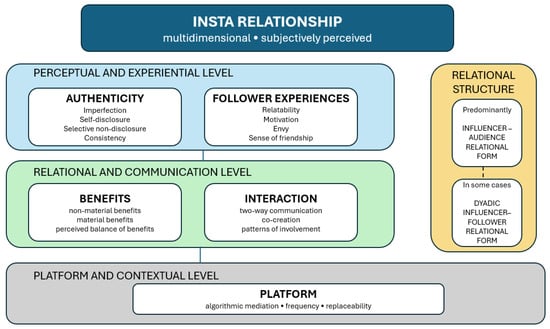
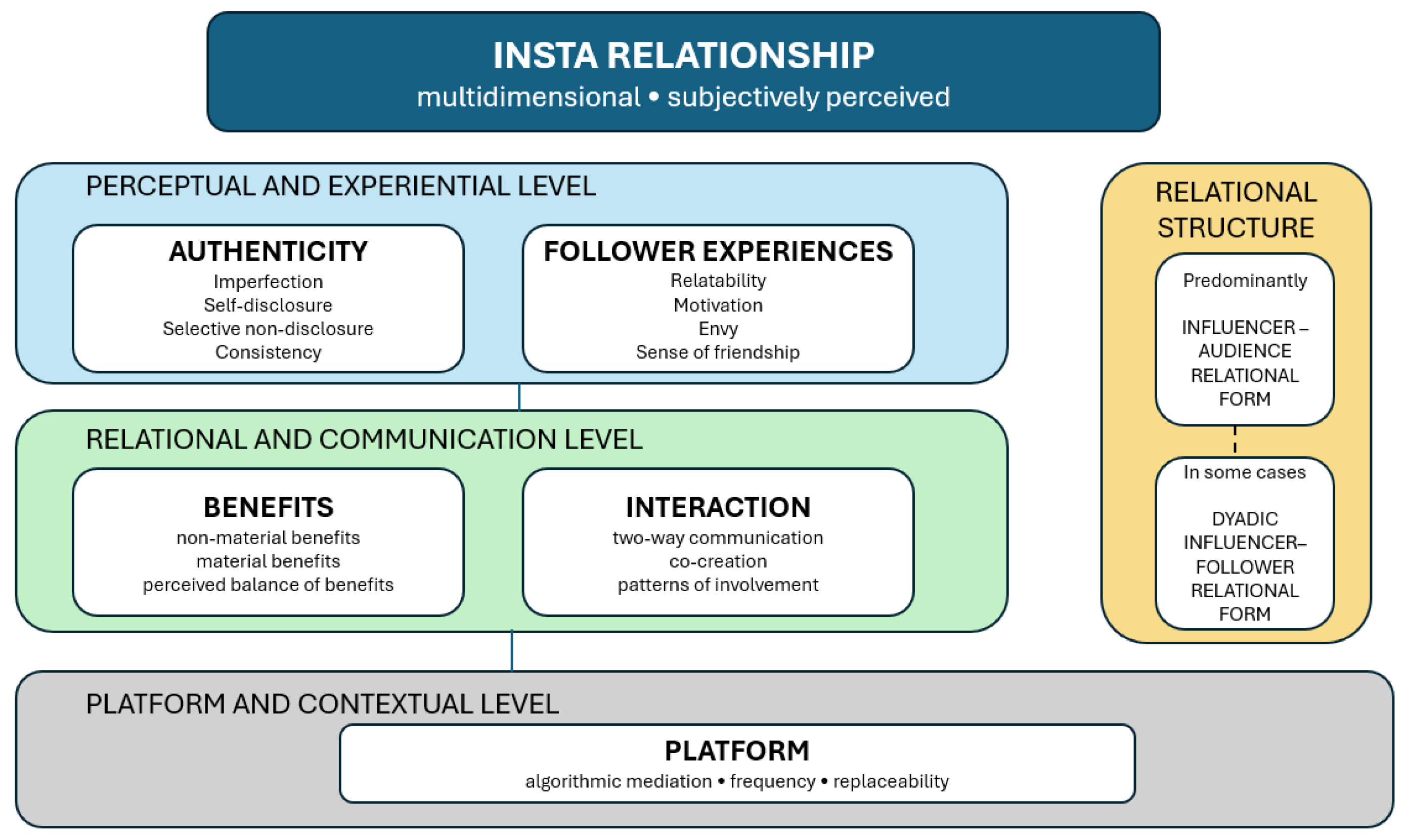

Disclaimer/Publisher’s Note: The statements, opinions and data contained in all publications are solely those of the individual author(s) and contributor(s) and not of MDPI and/or the editor(s). MDPI and/or the editor(s) disclaim responsibility for any injury to people or property resulting from any ideas, methods, instructions or products referred to in the content. |
© 2026 by the authors. Licensee MDPI, Basel, Switzerland. This article is an open access article distributed under the terms and conditions of the Creative Commons Attribution (CC BY) license.