


Abstract
Although emojis are widely used on social media brand pages, their effectiveness remains unclear. Drawing on the brand anthropomorphism literature, this research proposes that emojis function as anthropomorphic cues that simultaneously increase perceived warmth while decreasing perceived competence, and that their effectiveness depends on the role consumers assign to the brand. Two between-subjects experiments were conducted to test the proposed framework. Study 1 demonstrates that emoji use increases perceived warmth but decreases perceived competence and that these competing perceptions mediate the relationship between emoji use and purchase intention. Study 2 shows that brand role serves as a critical boundary condition. Specifically, emojis increase purchase intention for partner brands through enhanced perceived warmth, whereas they decrease purchase intention for servant brands through reduced perceived competence. By identifying brand role as a determinant of the psychological mechanism underlying emoji effectiveness, this research extends the brand anthropomorphism literature to the context of social media communication. The findings also provide practical guidance by suggesting that emoji use should be aligned with the role and image a brand seeks to communicate.
1. Introduction
With the rapid growth of social media platforms such as Instagram, brands increasingly interact with consumers and cultivate long-term relationships through their official brand pages. Beyond serving as channels for disseminating information, social media brand pages have become important touchpoints where brands can express their personalities and establish emotional connections with consumers [1]. As key platforms for direct brand–consumer communication, these pages use diverse forms of content to present brands as social actors rather than mere commercial entities [2]. For example, brands such as Coca-Cola and Duolingo frequently portray themselves as friends or supportive companions, engaging consumers through highly personalized interactions on their social media brand pages.
One of the communication tools most widely used to convey such social and humanlike characteristics is the use of emojis [3]. Emojis are graphic symbols that enrich text-based communication by conveying emotions, intentions, and social cues. Accordingly, brands actively incorporate emojis into posts, comments, and stories to facilitate their interactions with consumers [4,5]. Prior research suggests that emojis make messages appear warmer, friendlier, and “more human,” thereby increasing perceptions of warmth, intimacy, and social presence [6,7]. Consistent with these findings, recent studies have demonstrated that emoji use generally enhances consumer responses in the context of social media brand pages [3].
Despite these positive findings, the effects of emojis may not always be beneficial. While emojis can enhance perceptions of warmth, they may simultaneously undermine perceptions of professionalism and seriousness, thereby reducing a communication source’s or brand’s perceived competence [6]. Consequently, understanding the conditions in which emojis produce positive or negative effects is critical for developing effective brand communication strategies for social media. Nevertheless, relatively limited research has been devoted to identifying the boundary conditions of emoji effectiveness in brand communication.
The present research proposes that brand role represents an important boundary condition. Specifically, we expect that the increased warmth and decreased competence resulting from emoji use will have differential effects on purchase intention depending on brand role. Consumers have different expectations based on the role a brand assumes, and these expectations may shape the criteria they use to evaluate the brand [8]. Prior research distinguishes between two primary anthropomorphized brand roles: servant brands and partner brands. A servant brand functions as an instrumental helper that assists consumers in solving problems and achieving their goals. In contrast, a partner brand emphasizes emotional bonding and social companionship [9,10]. Consequently, consumers tend to place greater importance on competence, reliability, and problem-solving ability when evaluating servant brands, whereas emotional closeness and relational warmth become more important when evaluating partner brands.
Accordingly, the effects of emoji use on purchase intention may vary depending on brand role. For partner brands, the increased warmth resulting from emoji use is expected to enhance purchase intention, whereas for servant brands, the decreased competence resulting from emoji use is expected to reduce purchase intention. Thus, the relative importance of warmth and competence in shaping purchase intention is expected to depend on the role of the brand.
This study examines the effects of emoji use on consumer responses to social media brand pages and the underlying psychological mechanisms. Specifically, we investigate the roles of perceived warmth and perceived competence in explaining the effects of emoji use on purchase intention and examine brand role (servant vs. partner) as a boundary condition of these effects. By integrating research on emoji-based communication with the literature on brand anthropomorphism, this study provides a more nuanced understanding of how and when emoji use influences consumer responses in social media brand communication. The findings also provide practical implications for brands seeking to use emojis effectively on social media brand pages.
2. Theoretical Background
2.1. Social Media Brand Pages
Social media has become one of the most effective marketing channels for firms to communicate with consumers and build long-term relationships. Central to these interactions are social media brand pages, which function as official brand-managed online communities that facilitate communication and engagement between brands and consumers [1,3]. Rather than functioning solely as channels for disseminating information, social media brand pages enable brands to express their personalities, establish emotional connections with consumers, and foster ongoing interactions.
Although social media brand pages share many structural characteristics with personal social media profiles, they differ in several important respects. Unlike personal accounts created and managed by individual users, brand pages are officially operated by companies and are specifically designed to communicate with consumers who voluntarily follow the brand or subscribe to its page [3]. On platforms such as Instagram and Facebook, consumers can become followers of a brand by clicking the “Follow” or “Like” button, after which they receive the brand’s content in their feeds. Brands can then publish various forms of content, including stories, photographs, videos, and promotional posts, while consumers interact with these posts by liking, commenting, and sharing them [11].
For firms, social media brand pages represent an important platform for maintaining relationships with existing customers, attracting potential customers, promoting products and services, and, increasingly, facilitating online sales [3]. Thus, social media brand pages function as more than communication channels but also as valuable marketing and commerce platforms that strengthen brand–consumer relationships.
From the consumer perspective, participation in social media brand pages is motivated by the value these platforms are perceived to provide. Previous research suggests that consumers derive both functional value, such as obtaining product information and updates, and hedonic value, including entertainment and emotionally engaging brand-related content, by interacting with brand pages [1]. Additionally, consumers can communicate directly with brands by commenting on posts and can also interact with other followers who share similar interests. These interactions generate relational value that further enhances favorable attitudes toward the brand and increases purchase intentions [3]. Similarly, Patwardhan and Yang [12] demonstrated that consumers who perceive greater functional and hedonic value from brand page content develop more favorable attitudes toward the page, subsequently leading to stronger purchase intentions.
Together, social media brand pages provide substantial value for both firms and consumers by facilitating communication, building relationships, and fostering consumer engagement. Given that interactions on these platforms are primarily achieved through digital communication, the specific communication cues employed by brands may play a critical role in shaping consumer responses. Among these cues, emoji use has emerged as one of the most prevalent and influential features of contemporary social media communication.
2.2. Emojis
Emojis are graphic symbols used in digital communication to express emotions, attitudes, and social cues [13]. Unlike face-to-face communication, in which nonverbal cues such as facial expressions and gestures naturally convey emotional meaning, digital communication lacks these cues. Consequently, emojis have become an important means of enriching text-based communication by conveying emotional and interpersonal information [14]. Emojis enable users to express a wide range of emotions, including happiness, sadness, anger, and excitement [15], while simultaneously facilitating social interaction and eliciting emotional responses [16]. As emoji use has increased, firms have also adopted emojis across various marketing contexts, including social media brand pages [3,17], advertising [18,19], and mobile marketing [20,21].
Generally, prior research has reported positive effects of emoji use in communication. For example, communicators who use emojis are perceived as friendlier, more humorous, and more approachable, thereby enhancing social connectedness [16]. Consequently, emoji use has been shown to generate positive emotions, increase consumer engagement, and strengthen purchase intentions [19,20]. However, emojis’ effects are not uniformly positive. In service contexts, employees who use emojis are perceived as warmer but less competent than those who do not, leading to different evaluations and behavioral responses based on the interaction context [6]. Taken together, these findings suggest that the effects of emoji use are mixed: although emojis can facilitate positive consumer responses by enhancing social and emotional connection, they can also generate unfavorable evaluations by reducing perceived competence.
To explain the mixed findings associated with the effects of emojis in brand communication, the present research focuses on warmth and competence, the two fundamental dimensions underlying consumers’ evaluations of brands [22,23]. Warmth reflects perceptions of sincerity, friendliness, goodwill, and enthusiasm [24], while competence refers to perceptions of a brand’s capabilities, effectiveness, confidence, and expertise [25]. Consumers perceive a brand as warm when they believe it has positive and cooperative intentions toward them [22]. Brands perceived as warm are viewed as sincere, friendly, and caring, leading consumers to feel respected, understood, and emotionally valued. Consequently, perceptions of warmth contribute to more favorable brand evaluations. In contrast, consumers perceive a brand as competent when they believe it can successfully fulfill its intentions [26]. Brands perceived as competent are evaluated more favorably in terms of product quality and performance; this, in turn enhances consumers’ purchase intentions [27]. Perceived competence is particularly important for brands that are expected to provide services, solve consumers’ problems, or deliver effective solutions.
Prior research suggests that emojis affect how consumers perceive communication sources. Specifically, emojis increase perceived warmth by conveying friendliness, emotional expressiveness, and sociability [28,29]. In contrast, because emojis primarily function as informal emotional cues rather than signals of expertise, their use may reduce perceived professionalism and competence [6,30]. Accordingly, business communication guidance has long cautioned against using emojis in formal communication because they may undermine perceived professionalism [31,32].
Consistent with this reasoning, Li et al. [6] found that service employees who used emojis were perceived as warmer but less competent than those who did not. Similar mechanisms are likely to operate in the context of social media brand pages, where consumers frequently perceive brands as social actors and evaluate them similarly to human interaction [33]. Therefore, we expect that emoji use on social media brand pages will increase consumers’ perceptions of brand warmth while decreasing their perceptions of brand competence. Based on this reasoning, we propose the following hypotheses.
Hypothesis 1 (H1).
Emoji use on social media brand pages will increase consumers’ perceived warmth toward the brand.
Hypothesis 2 (H2).
Emoji use on social media brand pages will decrease consumers’ perceived competence toward the brand.
Given that warmth and competence are important dimensions of brand evaluation that influence consumers’ purchase decisions [22,23,27], these changes in brand perceptions are expected to subsequently affect purchase intention. Specifically, increased perceived warmth is expected to positively mediate the effect of emoji use on purchase intention, whereas decreased perceived competence is expected to negatively mediate this effect. Accordingly, we propose the following hypotheses.
Hypothesis 3a (H3a).
Perceived warmth will positively mediate the effect of emoji use on purchase intention.
Hypothesis 3b (H3b).
Perceived competence will negatively mediate the effect of emoji use on purchase intention.
2.3. Brand Role and the Effects of Emojis
As discussed, warmth and competence are the two fundamental dimensions underlying consumers’ evaluations of brands. However, warmth and competence do not always carry equal importance in brand evaluation. Rather, consumers form different expectations depending on the role a brand is perceived to perform and place greater weight on attributes congruent with that role [9,34].
Research on brand anthropomorphism suggests that brands can be perceived as occupying various social roles, most notably as servant brands or partner brands [34]. A servant brand is viewed as a helper that works for consumers and supports them in achieving their goals. In contrast, a partner brand is perceived as a companion that collaborates with consumers and builds relationships with them. Consequently, consumers develop different expectations of a brand based on the role it assumes [8,9].
When a brand is presented as a servant, consumers expect it to solve their problems and help them achieve their goals effectively. In this context, the brand’s expertise and ability to successfully fulfill its role become the primary criteria for evaluation. Consequently, consumers place greater weight on competence when evaluating servant brands. In contrast, when a brand is presented as a partner, consumers perceive it as a companion with whom they interact and build relationships [9]. Accordingly, consumers are more concerned with whether the brand is friendly, caring, and capable of establishing emotional connections with them. Thus, they place greater weight on warmth when evaluating partner brands.
From this perspective, brand role can serve as an important contextual cue that determines whether consumers place greater importance on warmth or competence when evaluating a brand. These differences in brand-role expectations suggest that perceived warmth and competence may have different implications for consumers’ purchase decisions. For servant brands, perceived competence should play a particularly important role in shaping purchase intention because consumers expect these brands to possess the ability and expertise necessary to effectively solve problems and help them achieve their goals. In contrast, for partner brands, perceived warmth should play a more important role in shaping purchase intention because consumers expect these brands to be friendly, caring, and capable of forming an emotional connection with them.
As discussed earlier, emoji use has dual effects on brand perceptions, increasing perceived warmth while decreasing perceived competence [6]. Accordingly, for partner brands, for which warmth is a particularly important evaluative criterion, the increased warmth resulting from emoji use is expected to enhance purchase intention. In contrast, for servant brands, for which competence is a particularly important evaluative criterion, the decreased competence resulting from emoji use is expected to reduce purchase intention. Thus, although emoji use may simultaneously increase perceived warmth and decrease perceived competence, these changes are expected to have different effects on purchase intention depending on brand role. Based on this reasoning, we propose the following hypotheses.
Hypothesis 4 (H4).
Brand role will moderate the effect of emoji use on purchase intention.
Hypothesis 4a (H4a).
For partner brands, emoji use will increase purchase intention through enhanced perceived warmth.
Hypothesis 4b (H4b).
For servant brands, emoji use will decrease purchase intention through reduced perceived competence.
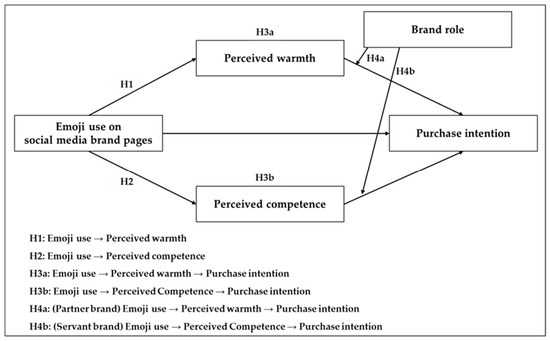
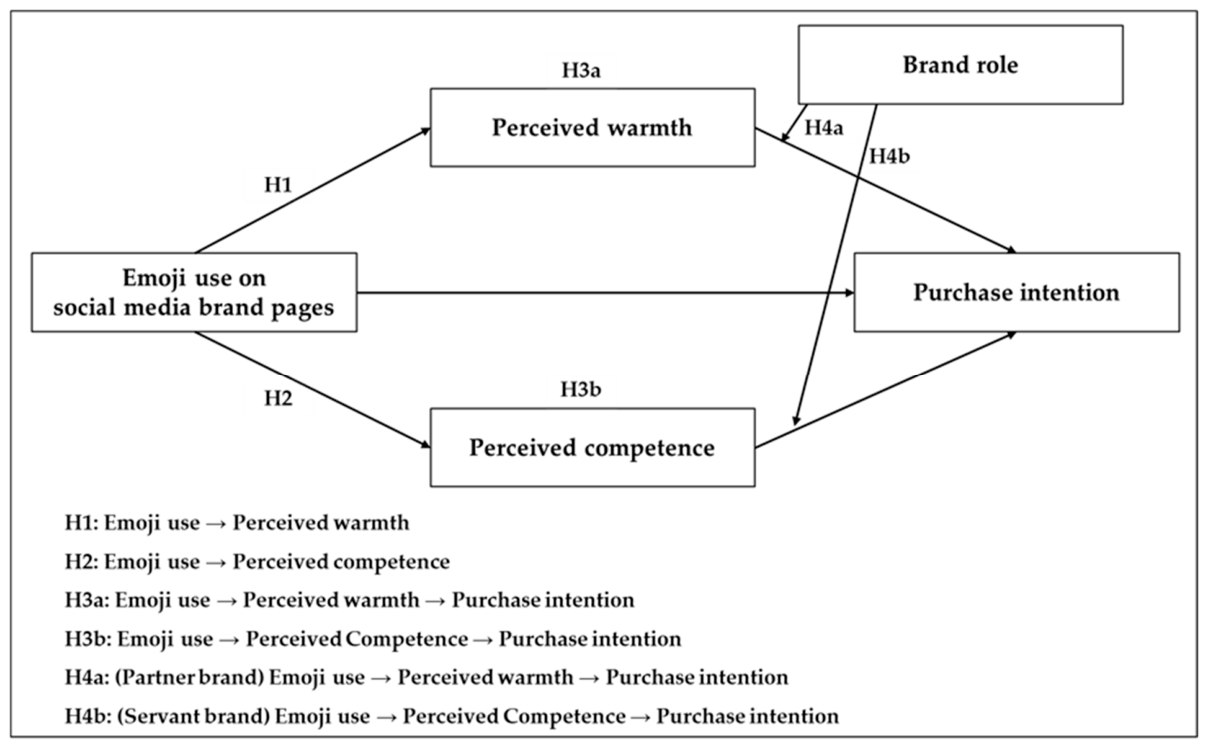
The conceptual model of this study is presented in Figure 1.
Figure 1.
Conceptual model.
3. Study 1
3.1. Methods
3.1.1. Experimental Design and Participants
Study 1 examined whether the use of emojis affects consumers’ purchase intention and whether the effect of emojis on purchase intention is mediated by perceived warmth and perceived competence. A one-factor between-subjects design was utilized, with emoji use (present vs. absent) as the independent variable. A total of 101 undergraduate students from a university in Seoul, South Korea, participated in the experiment (58 males, 57.4%; M_age = 22.33 years, SD = 1.65; age range = 20–25 years).
3.1.2. Stimulus Development and Procedure
Instagram was selected as the social media context because it provides a highly visual and interactive communication environment in which symbolic cues are widely used to facilitate brand–consumer interactions [35]. As emojis represent a prominent form of symbolic and nonverbal communication in social media, Instagram provides an appropriate context for examining how emoji use shapes consumers’ perceptions of brands. Participants were exposed to an Instagram brand page post created for a focal brand. Following Doh et al. [3], milk was selected as the product category, and Seoul Milk was used as the focal brand. Emoji use was operationalized as a binary factor (present vs. absent) because the primary objective of this study was to examine the general effect of emoji use rather than the effects of specific emoji types or frequencies. The emojis used in the experimental stimuli were selected with reference to emojis commonly observed on actual social media brand pages to create a realistic brand-post context. Two versions of the brand page were developed that differed only in the presence or absence of emojis (see Appendix A). Participants were instructed to carefully review the assigned brand page before completing measures of perceived warmth, perceived competence, and purchase intention. Finally, the participants provided demographic information.
3.1.3. Measures
Perceived warmth and perceived competence were measured using brand perception scales adapted from Kolbl et al. [23]. Perceived warmth was measured with four items (e.g., “[BRAND] is warm”; α = 0.865), and perceived competence was measured with four items (e.g., “[BRAND] is competent”; α = 0.865).
Purchase intention was measured using three items adapted from Kolbl et al. [23] (e.g., “It is very likely that I will buy [BRAND] in the future”; α = 0.835). All measures were assessed using seven-point Likert scales. The reliability coefficients for all constructs exceeded 0.80, indicating satisfactory internal consistency.
3.2. Results
3.2.1. Effects of Emoji Use on Perceived Warmth and Perceived Competence
A one-way ANOVA revealed a significant effect of emoji use on perceived warmth, with participants perceiving the brand as significantly warmer when emojis were present (M = 5.42) than when they were absent (M = 4.31; F = 58.780, p < 0.001). Thus, H1 was supported.
A one-way ANOVA also revealed a significant effect of emoji use on perceived competence. Participants perceived the brand as significantly less competent when emojis were present (M = 3.12) than when they were absent (M = 4.54; F = 92.691, p < 0.001). Therefore, H2 was supported.
In addition to the hypothesized effects on perceived warmth and perceived competence, we also examined whether purchase intention differed between the emoji-present and emoji-absent conditions. A one-way ANOVA revealed a significant difference in purchase intention between the two conditions. Participants reported higher purchase intention when emojis were present (M = 5.25) than when they were absent (M = 4.20; F = 61.584, p < 0.001).
3.2.2. Mediation Effects of Perceived Warmth and Perceived Competence
To examine the underlying mechanism through which emojis affect purchase intention, a mediation analysis was conducted using PROCESS macro model 4 [36] with 10,000 bootstrap resamples [37,38]. Emoji use was specified as the independent variable, perceived warmth and perceived competence as parallel mediators, and purchase intention as the dependent variable.
First, perceived warmth significantly mediated the effect of emoji use on purchase intention (indirect effect = 0.23, 95% CI [0.05, 0.44]). Specifically, emoji use increased perceived warmth, which in turn increased purchase intention, resulting in a positive indirect effect. Thus, H3a was supported. Second, perceived competence significantly mediated the effect of emoji use on purchase intention (indirect effect = −0.31, 95% CI [−0.60, −0.07]). Specifically, emoji use decreased perceived competence, which in turn decreased purchase intention, resulting in a negative indirect effect. Thus, H3b was supported. Because neither confidence interval included zero, both indirect effects were significant. Taken together, these findings indicate that perceived warmth and perceived competence serve as two competing mediating mechanisms through which emoji use influences purchase intention.
3.3. Discussion
Study 1 examined the effects of emoji use on consumers’ responses to social media brand pages and the psychological mechanisms underlying these effects. The findings demonstrate that emoji use increases consumers’ purchase intention while simultaneously enhancing perceived warmth and reducing perceived competence. These results suggest that emojis exert both positive and negative indirect effects through two competing psychological mechanisms, providing initial evidence for the dual effects of emoji use in brand communication. These findings are consistent with Li et al. [6], who found that emoji use can simultaneously increase perceived warmth and decrease perceived competence. The present findings extend this prior research to social media brand communication by demonstrating that these contrasting perceptions also function as competing mediating mechanisms through which emoji use influences purchase intention.
4. Study 2
4.1. Methods
Study 2 examined whether the effects of emojis identified in Study 1 vary depending on brand role (i.e., servant brand vs. partner brand). Specifically, this study investigated whether the effects of perceived warmth and perceived competence, elicited by the presence or absence of emojis, differ as a function of brand role with regard to shaping consumers’ purchase intention.
A total of 200 participants were recruited through Amazon Mechanical Turk (MTurk) (116 males, 58.0%; M_age = 39.38 years, SD = 12.53; age range = 20–60 years).
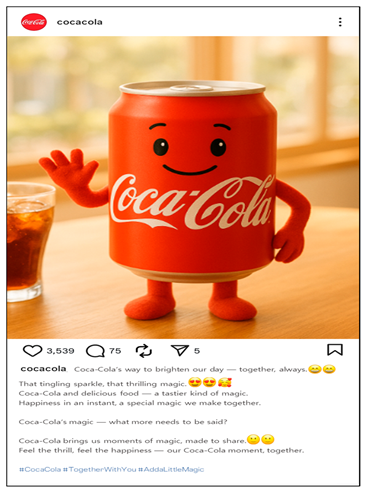
Following Doh et al. [3], carbonated soft drinks were selected as the product category, and Coca-Cola was used as the focal brand. Four versions of an Instagram brand page were developed that manipulated emoji use (present vs. absent) and brand role (servant vs. partner) (see Appendix A). As in Study 1, emoji use was manipulated as a binary factor (present vs. absent), using emojis selected with reference to those commonly observed on actual social media brand pages. Brand role was manipulated through the content of the brand post to isolate the effect of the role communicated by the brand while holding the focal brand and other aspects of the communication context constant. This controlled manipulation allowed us to examine whether consumers’ responses to emoji use differed depending on the role communicated by the brand in an otherwise comparable setting. The brand role manipulation was adapted from Kim and Kramer [10]. Specifically, within the servant brand condition, the stimulus included phrases such as “for you” along with messages emphasizing that the brand “takes responsibility” and “is devoted to serving you.” In the partner brand condition, the stimulus included the phrase “with you” together with messages emphasizing that the brand “protects together with you” and “creates together with you.”
After viewing the experimental stimulus, participants completed a manipulation check for brand role. Specifically, brand role was measured using six items adapted from Hsieh et al. [39], including three items that measured servant brand perceptions (e.g., “Coca-Cola obeys me”; α = 0.775) and three items that measured partner brand perceptions (e.g., “Coca-Cola works with me”; α = 0.763). Participants then completed measures of perceived warmth (four items; α = 0.722), perceived competence (four items; α = 0.867), and purchase intention (three items; α = 0.740). The measures of perceived warmth, perceived competence, and purchase intention matched those used in Study 1. All scales demonstrated acceptable reliability, with Cronbach’s α values exceeding 0.70. Finally, participants provided their demographic information.
4.2. Results
4.2.1. Manipulation Check
A 2 (emoji use: present vs. absent) × 2 (brand role: servant vs. partner) ANOVA on a perceived servant brand revealed a significant main effect of brand role (F = 467.037, p < 0.001). Participants perceived the brand as significantly more of a servant brand when it was presented as a servant (M = 5.56) than when it was presented as a partner (M = 3.15).
A 2 (emoji use: present vs. absent) × 2 (brand role: servant vs. partner) ANOVA on a perceived partner brand also revealed a significant main effect of brand role (F = 699.358, p < 0.001). Notably, participants perceived the brand as significantly more of a partner brand when it was presented as a partner (M = 5.50) than when it was presented as a servant (M = 2.87).
These results indicate that the brand role manipulation was successful.
4.2.2. Effects of Emoji Use on Perceived Warmth and Perceived Competence
To replicate the findings of Study 1, the effects of emoji use on perceived warmth and perceived competence were again examined.
A one-way ANOVA revealed a significant effect of emoji use on perceived warmth (F = 77.301, p < 0.001), with participants perceiving the brand as significantly warmer when emojis were present (M = 5.27) than when they were absent (M = 4.33). A one-way ANOVA also revealed a significant effect of emoji use on perceived competence (F = 156.287, p < 0.001), with participants perceiving the brand as significantly less competent when emojis were present (M = 3.38) than when they were absent (M = 4.82).
4.2.3. Moderating Effect of Brand Role on Purchase Intention
A 2 (emoji use: present vs. absent) × 2 (brand role: servant vs. partner) ANOVA on purchase intention revealed a significant main effect of brand role (F = 62.491, p < 0.001). Specifically, participants reported greater purchase intention when the brand was presented as a partner (M = 5.30) than as a servant (M = 4.37).
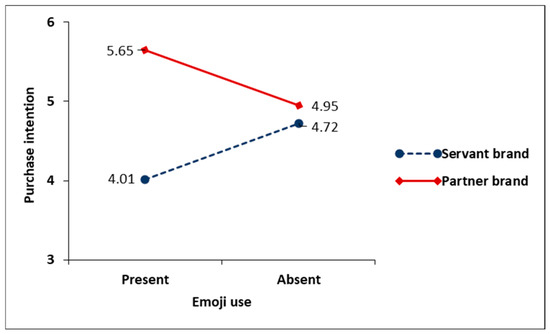
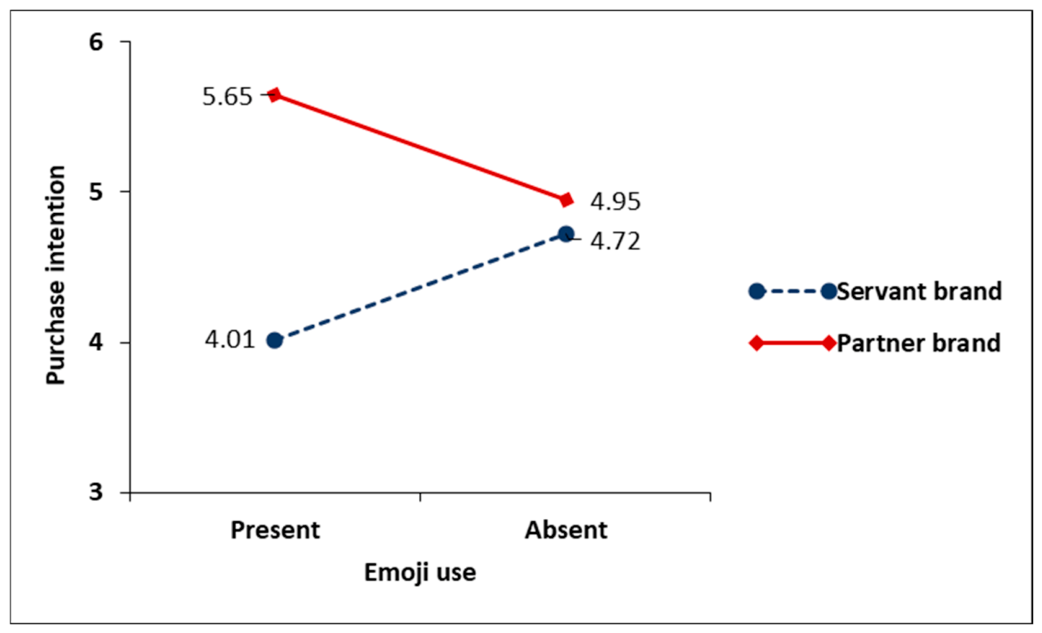
More importantly, the interaction between emoji use and brand role was significant (F = 35.151, p < 0.001) (Figure 2). Contrast analyses revealed that for the servant brand, participants reported significantly lower purchase intention when emojis were present (M = 4.01) than when they were absent (M = 4.72; F = 17.243, p < 0.001). In contrast, for the partner brand, participants reported significantly greater purchase intention when emojis were present (M = 5.65) than when they were absent (M = 4.95; F = 17.910, p < 0.001).
Figure 2.
Interaction effects on purchase intention.
4.2.4. Conditional Indirect Effects Through Perceived Warmth and Perceived Competence
To further clarify the underlying mechanism proposed by this study, whether brand role moderated the mediating effects of perceived warmth and perceived competence was examined. To this end, PROCESS macro Model 15 was employed [37], and a bootstrapping analysis with 10,000 resamples was conducted [38].
Emoji use was specified as the independent variable, perceived warmth and perceived competence were the mediators, brand role was the moderator, and purchase intention was the dependent variable. The results revealed significant indices of moderated mediation for both perceived warmth (Index of moderated mediation = 0.43, 95% CI [0.12, 0.82]) and perceived competence (Index of moderated mediation = 0.57, 95% CI [0.15, 1.01]). These findings indicate that the indirect effects of emoji use on purchase intention vary as a function of brand role.
To further examine the specific mechanisms underlying the moderated mediation effect, two separate mediation analyses (PROCESS macro Model 4) were conducted for each brand role. For partner brands, the indirect effect of emoji use on purchase intention was not significant through perceived competence (indirect effect = 0.24, 95% CI [−0.03, 0.58]); however. it was significant through perceived warmth (indirect effect = 0.19, 95% CI [0.02, 0.41]). These findings suggest that perceived warmth is the primary psychological mechanism underlying emoji use’s effect on purchase intention in the partner brand condition.
In contrast, for servant brands, the indirect effect of emoji use on purchase intention was not significant through perceived warmth (indirect effect = −0.24, 95% CI [−0.02, 0.55]) but was significant through perceived competence (indirect effect = −0.33, 95% CI [−0.62, −0.02]). These findings suggest that perceived competence is the primary psychological mechanism through which emoji use affects purchase intention in the servant brand condition. These findings support H4.
Together, these findings demonstrate that the psychological mechanism underlying emoji effectiveness depends on brand role. Specifically, perceived competence serves as the dominant mechanism for servant brands, whereas perceived warmth serves as the dominant mechanism for partner brands.
4.3. Discussion
The results of Study 2 demonstrate that effect of emoji use on purchase intention depends on brand role. Specifically, for servant brands, the effect of emoji use on purchase intention was primarily explained by perceived competence, while for partner brands, it was primarily explained by perceived warmth. These findings indicate that the positive effect of emojis emerges only when the psychological benefits conveyed by emojis are consistent with the evaluative criterion emphasized by the brand role. Consequently, emojis enhance purchase intention for partner brands but become less effective—and may even have detrimental effects—for servant brands. These findings are consistent with prior research suggesting that consumers evaluate brands according to the relational roles they assign to them [8,9,10]. In particular, the results support the view that relational warmth is especially important for partner brands, whereas competence and functional reliability are more central to evaluations of servant brands. Extending this literature, the present study demonstrates that brand role also determines which of the competing psychological consequences of emoji use becomes more influential in shaping purchase intention.
5. General Discussion
5.1. Summary
This research examined the effects of emoji use on consumers’ responses to social media brand pages and investigated the moderated mediating roles of brand role (servant vs. partner) and brand perception (warmth and competence). Two experiments were conducted to test a proposed framework.
The Study 1 results revealed that the use of emojis on social media brand pages increased consumers’ perceptions of brand warmth while simultaneously decreasing their perceptions of brand competence. Furthermore, emoji use affected purchase intention through these two competing psychological pathways, indicating that perceived warmth and perceived competence represent distinct mechanisms that underlie the effectiveness of emojis.
The results of Study 2 further demonstrated that emoji effectiveness depends on brand role. Specifically, for servant brands, the effect of emoji use on purchase intention was primarily explained by perceived competence, while for partner brands, it was primarily explained by perceived warmth. These findings indicate that the psychological mechanism through which emojis affect consumer responses varies according to the role consumers assign to a brand.
5.2. Theoretical Implications
This research offers several theoretical contributions. First, it contributes to the brand anthropomorphism literature by explaining the effects of emojis on social media brand pages from an anthropomorphic perspective. While prior studies have primarily viewed emojis as communication tools that enhance consumers’ positive emotions and engagement [19,20], the present research extends the brand anthropomorphism literature by including the context of social media communication, thus demonstrating that consumers interpret emoji use as an anthropomorphic cue that shapes their perceptions of a brand as a social actor.
Second, this study provides empirical evidence for the dual effects of emojis on brand evaluations. Specifically, emoji use was found to simultaneously increase perceived warmth while decreasing perceived competence. By demonstrating these competing effects, this research helps explain why prior studies have documented both favorable and unfavorable consequences of emoji use. It also shows that emoji effects operate through two distinct psychological dimensions rather than a uniformly positive process.
Third, this study identifies brand role as an important boundary condition of emoji effectiveness. While prior research has documented various effects of emoji use on consumer perceptions and responses [6,19,20], relatively less attention has been paid to the boundary conditions that determine when these effects are beneficial or detrimental. The present study addresses this gap by showing that the effectiveness of emoji use varies depending on the role consumers assign to the brand. More importantly, this study demonstrates that brand role determines which psychological mechanism underlies emoji effectiveness. Specifically, perceived warmth serves as the dominant mechanism for partner brands, while perceived competence serves as the dominant mechanism for servant brands. These findings suggest that the same anthropomorphic cue can produce different outcomes depending on the role consumers expect the brand to perform, thereby providing a more nuanced understanding of brand anthropomorphism.
5.3. Managerial Implications
This study’s findings provided several practical implications for firms’ social media communication strategies. First, when managing their social media brand pages, firms should not assume that emojis are universally beneficial. Rather, emoji use should be aligned with the role and image that the brand intends to convey to consumers. Although emojis can foster feelings of intimacy and approachability, they may simultaneously undermine perceptions of professionalism and competence.
Second, emojis can serve as an effective communication tool for partner brands, among which building emotional connections and fostering close relationships with consumers are key objectives. However, in contrast, for servant brands that emphasize expertise, reliability, and problem-solving ability, using emojis should be approached with caution because doing so may weaken consumers’ perceptions of brand competence and, consequently, reduce communication effectiveness.
Finally, when developing content for social media brand pages, firms should move beyond simply following current social media trends and instead design communication strategies that are consistent with the core value the brand seeks to convey. Specifically, managers should consider whether their brand aims to project warmth or competence and determine the appropriateness of emoji use accordingly. These findings suggest that emoji effectiveness depends on their consistency with the brand’s intended role. Therefore, maintaining communication strategies that align with brand role is essential for maximizing social media marketing effectiveness.
5.4. Limitations and Directions for Future Research
Despite its contributions, this study has several limitations that provide opportunities for future research. First, this study employed a limited range of product categories. However, consumers may form different expectations toward brands depending on product characteristics. For example, competence may serve as a more important evaluative criterion for high-involvement or high-priced products, whereas warmth may play a relatively greater role for low-involvement products. Similarly, luxury products may involve additional evaluative criteria, such as prestige or exclusivity, that could influence consumers’ responses to emoji use. Future research should therefore examine the generalizability of our findings across product types by considering characteristics such as product involvement, price level, and product positioning.
Second, this study focused exclusively on Instagram brand pages. Although the psychological mechanisms identified in this study may also operate on other social media platforms, their strength or direction may vary depending on platform-specific communication norms and interaction styles. For example, platforms may differ in the extent to which they emphasize visual content, information sharing, real-time interaction, or professional communication. Such differences may shape consumers’ expectations regarding the appropriateness of emoji use and, consequently, its effects on perceived warmth and competence. Future research should therefore examine whether the effects identified in this study are replicated across different social media platforms.
Third, Study 1 used South Korean university students, whereas Study 2 employed MTurk participants primarily from the United States. Although the basic pattern whereby emoji use increased perceived warmth and decreased perceived competence was observed across both studies, the present research was not designed to directly examine cultural differences. Cultural norms may influence how consumers interpret emojis as well as the expectations they hold regarding servant and partner brand roles. Therefore, the consistency observed across the two samples should not be interpreted as evidence of cross-cultural equivalence. Future research should systematically compare consumers from different cultural backgrounds using equivalent experimental designs to examine whether culture moderates the effects identified in this study.
Fourth, in Study 2, brand role was manipulated through the content of a single brand post. Although the effectiveness of this manipulation was supported by the manipulation checks, the controlled experimental setting may not fully capture how consumers form perceptions of brand roles in actual social media environments. In practice, brand roles may develop over time through repeated and interactive exchanges between brands and consumers, including posts, comments, replies to consumer comments, and real-time responses. Such dynamic interactions may strengthen or alter consumers’ perceptions of the role a brand plays in their relationship. Future research should therefore examine emoji use in more dynamic and interactive social media contexts in which brand roles emerge through repeated brand–consumer interactions.
Finally, the present research operationalized emoji use as a binary factor (present vs. absent) to isolate its general effect. However, the effects of emojis may vary depending on their type, frequency, and communication context, as these characteristics may convey different levels of warmth, informality, or professionalism. Future research should therefore examine how these specific characteristics of emoji use influence perceived warmth, perceived competence, and subsequent consumer responses.
Author Contributions
Conceptualization, J.-H.L. and Y.A.; methodology, D.Y. and Y.A.; analysis, D.Y.; writing—original draft preparation, J.-H.L. and D.Y.; writing—review and editing, Y.A. All authors have read and agreed to the published version of the manuscript.
Funding
This work was supported by a research grant from 2026 Halla University.
Institutional Review Board Statement
The study was conducted in accordance with the Declaration of Helsinki. Ethical review and approval were waived by the Public Institutional Review Board Designated by the Ministry of Health and Welfare because the study was determined to involve no more than minimal risk to participants (Exemption No. P01-202607-01-023, 7 July 2026).
Informed Consent Statement
Informed consent was obtained from all subjects involved in the study.
Data Availability Statement
The data are available from the corresponding author upon request.
Conflicts of Interest
The authors declare no conflicts of interest.
Appendix A. Examples of Experimental Stimuli
Appendix A.1. Example of Stimuli from Study 1 (Emoji Condition)
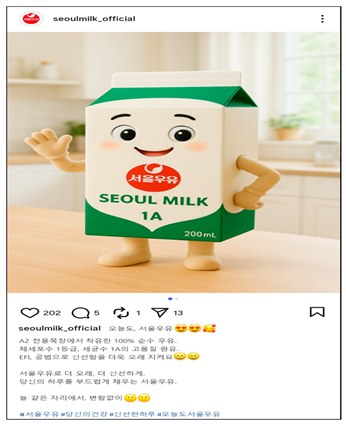
- Note. The original experimental stimulus was presented in Korean. The Korean brand name “서울우유” translates to “Seoul Milk.” The English translation of the post is as follows: “Today, Seoul Milk. 100% pure milk from A2-exclusive farms. High-quality raw milk with a somatic cell count of Grade 1 and a bacterial count of Grade 1A. EFL technology keeps it fresh for longer. Seoul Milk, fresher for longer. Seoul Milk that gently fills your day. Always in the same place, unchanged.” The hashtags translate to #SeoulMilk #YourHealth #FreshEveryDay #TodaysSeoulMilk.
Appendix A.2. Example of Stimuli from Study 2 (Emoji and Partner Brand Condition)
References
- Jahn, B.; Kunz, W. How to transform consumers into fans of your brand. J. Serv. Manag. 2012, 23, 344–361. [Google Scholar] [CrossRef] [Scilit]
- Borle, S.; Dholakia, U.M.; Singh, S.S.; Durham, E. The impact of Facebook fan page participation on customer behavior: An empirical investigation. SSRN Work. Pap. 2013. [Google Scholar] [CrossRef] [Scilit]
- Doh, S.-J.; Kim, E.-H.; Yoo, D. Emoticon effects in Facebook brand fan pages: The roles of product type, brand status, and the perceived value of brand fan pages. J. Theor. Appl. Electron. Commer. Res. 2025, 20, 62. [Google Scholar] [CrossRef] [Scilit]
- Cummings, C. Infographic: Emojis Are Becoming a Preferred Communication Tool Across Demographics. Adweek 5 October 2015. Available online: https://www.adweek.com/brand-marketing/infographic-emojis-are-becoming-preferred-communication-tool-across-demographics-167355/ (accessed on 5 October 2026).
- Huang, A.H.; Yen, D.C.; Zhang, X. Exploring the potential effects of emoticons. Inf. Manag. 2008, 45, 466–473. [Google Scholar] [CrossRef] [Scilit]
- Li, X.; Chan, K.W.; Kim, S. Service with emoticons: How customers interpret employee use of emoticons in online service encounters. J. Consum. Res. 2019, 45, 973–987. [Google Scholar] [CrossRef] [Scilit]
- Yoo, D.; Kim, J.-A.; Doh, S.-J. The dual processing of donation size in cause-related marketing (CRM): The moderating roles of construal level and emoticons. Sustainability 2018, 10, 4219. [Google Scholar] [CrossRef] [Scilit]
- Rai, D.; Lin, C.W.; Yang, C.M.; Saint Clair, J.K. Work with me or work for me: The effect of brand roles depends on implicit theories of self-change. J. Consum. Psychol. 2024, 34, 551–569. [Google Scholar] [CrossRef] [Scilit]
- Dong, P.; Aggarwal, P. Partner or servant? When relationship type affects trait expectations and evaluations of the brand. In Proceedings of the 47th Annual Conference of the Association for Consumer Research (ACR)/ACR North American Conference, Berlin, Germany, 27–30 October 2016; Association for Consumer Research: Duluth, MN, USA, 2016. [Google Scholar]
- Kim, H.C.; Kramer, T. Do materialists prefer the “brand-as-servant”? The interactive effect of anthropomorphized brand roles and materialism on consumer responses. J. Consum. Res. 2015, 42, 284–299. [Google Scholar] [CrossRef] [Scilit]
- De Vries, L.; Gensler, S.; Leeflang, P.S. Popularity of brand posts on brand fan pages: An investigation of the effects of social media marketing. J. Interact. Mark. 2012, 26, 83–91. [Google Scholar] [CrossRef] [Scilit]
- Patwardhan, P.; Yang, J. Internet dependency relations and online consumer behavior: A media system dependency theory perspective on why people shop, chat, and read news online. J. Interact. Advert. 2003, 3, 57–69. [Google Scholar]
- Derks, D.; Bos, A.E.; Von Grumbkow, J. Emoticons in computer-mediated communication: Social motives and social context. Cyberpsychology Behav. 2008, 11, 99–101. [Google Scholar] [CrossRef] [Scilit] [PubMed]
- Aldunate, N.; González-Ibáñez, R. An integrated review of emoticons in computer-mediated communication. Front. Psychol. 2017, 7, 2061. [Google Scholar] [CrossRef] [Scilit] [PubMed]
- Wang, W.; Zhao, Y.; Qiu, L.; Zhu, Y. Effects of emoticons on the acceptance of negative feedback in computer-mediated communication. J. Assoc. Inf. Syst. 2014, 15, 454–483. [Google Scholar] [CrossRef] [Scilit]
- Smith, L.W.; Rose, R.L. Service with a smiley face: Emojional contagion in digitally mediated relationships. Int. J. Res. Mark. 2020, 37, 301–319. [Google Scholar] [CrossRef] [Scilit]
- Casado-Molina, A.M.; Rojas-de Gracia, M.M.; Alarcón-Urbistondo, P.; Romero-Charneco, M. Exploring the opportunities of the emojis in brand communication: The case of the beer industry. Int. J. Bus. Commun. 2022, 59, 315–333. [Google Scholar] [CrossRef] [Scilit]
- Baek, T.H.; Kim, S.; Yoon, S.; Choi, Y.K.; Choi, D.; Bang, H. Emojis and assertive environmental messages in social media campaigns. Internet Res. 2022, 32, 988–1002. [Google Scholar] [CrossRef] [Scilit]
- Das, G.; Wiener, H.J.; Kareklas, I. To emoji or not to emoji? Examining the influence of emoji on consumer reactions to advertising. J. Bus. Res. 2019, 96, 147–156. [Google Scholar] [CrossRef] [Scilit]
- Lee, C.T.; Hsieh, S.H. Engaging consumers in mobile instant messaging: The role of cute branded emoticons. J. Prod. Brand Manag. 2019, 28, 849–863. [Google Scholar] [CrossRef] [Scilit]
- Li, Y.; Shin, H. Should a luxury brand’s chatbot use emoticons? Impact on brand status. J. Consum. Behav. 2023, 22, 569–581. [Google Scholar] [CrossRef] [Scilit]
- Fiske, S.T.; Cuddy, A.J.; Glick, P.; Xu, J. A model of (often mixed) stereotype content: Competence and warmth respectively follow from perceived status and competition. In Social Cognition; Routledge: London, UK, 2018; pp. 162–214. [Google Scholar]
- Kolbl, Ž.; Arslanagic-Kalajdzic, M.; Diamantopoulos, A. Stereotyping global brands: Is warmth more important than competence? J. Bus. Res. 2019, 104, 614–621. [Google Scholar] [CrossRef] [Scilit]
- Fiske, S.T.; Cuddy, A.J.; Glick, P. Universal dimensions of social cognition: Warmth and competence. Trends Cogn. Sci. 2007, 11, 77–83. [Google Scholar] [CrossRef] [Scilit] [PubMed]
- Aaker, J.; Vohs, K.D.; Mogilner, C. Nonprofits are seen as warm and for-profits as competent: Firm stereotypes matter. J. Consum. Res. 2010, 37, 224–237. [Google Scholar] [CrossRef] [Scilit] [PubMed]
- Gidaković, P.; Zabkar, V. The formation of consumers’ warmth and competence impressions of corporate brands: The role of corporate associations. Eur. Manag. Rev. 2022, 19, 639–653. [Google Scholar] [CrossRef] [Scilit]
- Xue, J.; Zhou, Z.; Zhang, L.; Majeed, S. Do brand competence and warmth always influence purchase intention? The moderating role of gender. Front. Psychol. 2020, 11, 248. [Google Scholar] [CrossRef] [Scilit] [PubMed]
- Beyersmann, E.; Wegener, S.; Kemp, N. That’s good news ☹: Semantic congruency effects in emoji processing. J. Media Psychol. Theor. Methods Appl. 2023, 35, 17–27. [Google Scholar] [CrossRef] [Scilit]
- Tang, Y.; Hew, K.F. Emoticon, emoji, and sticker use in computer-mediated communications: Understanding its communicative function, impact, user behavior, and motive. In Proceedings of the New Media for Educational Change: Selected Papers from HKAECT 2018 International Conference; Springer: Singapore, 2018; pp. 191–201. [Google Scholar]
- Walther, J.B.; D’addario, K.P. The impacts of emoticons on message interpretation in computer-mediated communication. Soc. Sci. Comput. Rev. 2001, 19, 324–347. [Google Scholar] [CrossRef] [Scilit]
- Loglia, J.M.; Bowers, C.A. Emoticons in business communication: Is the :) worth it? In Emotions, Technology, and Design; Elsevier: Amsterdam, The Netherlands, 2016; pp. 37–53. [Google Scholar]
- Skovholt, K.; Grønning, A.; Kankaanranta, A. The communicative functions of emoticons in workplace e-mails. J. Comput. Mediat. Commun. 2014, 19, 780–797. [Google Scholar] [CrossRef] [Scilit]
- Aggarwal, P.; McGill, A.L. Is that car smiling at me? Schema congruity as a basis for evaluating anthropomorphized products. J. Consum. Res. 2007, 34, 468–479. [Google Scholar] [CrossRef] [Scilit]
- Aggarwal, P.; McGill, A.L. When brands seem human, do humans act like brands? Automatic behavioral priming effects of brand anthropomorphism. J. Consum. Res. 2012, 39, 307–323. [Google Scholar] [CrossRef] [Scilit]
- Naeem, M.; Ozuem, W.; Ranfagni, S.; Howell, K. User Generated Content and Brand Engagement: Exploring the role of electronic semiotics and symbolic interactionism on Instagram. Comput. Hum. Behav. 2025, 168, 108642. [Google Scholar] [CrossRef] [Scilit]
- Hayes, A.F. Partial, conditional, and moderated moderated mediation: Quantification, inference, and interpretation. Commun. Monogr. 2018, 85, 4–40. [Google Scholar] [CrossRef] [Scilit]
- Preacher, K.J.; Hayes, A.F. Asymptotic and resampling strategies for assessing and comparing indirect effects in multiple mediator models. Behav. Res. Methods 2008, 40, 879–891. [Google Scholar] [CrossRef] [Scilit] [PubMed]
- Zhao, X.; Lynch, J.G., Jr.; Chen, Q. Reconsidering Baron and Kenny: Myths and truths about mediation analysis. J. Consum. Res. 2010, 37, 197–206. [Google Scholar] [CrossRef] [Scilit]
- Hsieh, M.-H.; Li, X.B.; Jain, S.P.; Swaminathan, V. Self-construal drives preference for partner and servant brands. J. Bus. Res. 2021, 129, 183–192. [Google Scholar] [CrossRef] [Scilit]
Disclaimer/Publisher’s Note: The statements, opinions and data contained in all publications are solely those of the individual author(s) and contributor(s) and not of MDPI and/or the editor(s). MDPI and/or the editor(s) disclaim responsibility for any injury to people or property resulting from any ideas, methods, instructions or products referred to in the content. |
© 2026 by the authors. Licensee MDPI, Basel, Switzerland. This article is an open access article distributed under the terms and conditions of the Creative Commons Attribution (CC BY) license.