


Abstract
This paper investigates the interactive effects of live streaming pre-sale modes and return policies within a manufacturer’s two-stage supply chain. On the one hand, in addition to traditional pre-sales, manufacturers can adopt merchant live streaming or commission influencer live streaming to stimulate demand, enhance consumer engagement, and generate social influence. On the other hand, a “Money-back guarantee (MBG)” policy can be implemented to mitigate consumers’ valuation uncertainty. Using a game-theoretic model, we examine the manufacturer’s optimal joint decisions across six scenarios, determining the optimal conditions for activating each pre-sale mode and the MBG policy. Our findings reveal that the effectiveness of an MBG in promoting pre-sales is not universal but highly contingent on factors such as return costs, product satisfaction, and the social influence generated through live streaming. Specifically, traditional pre-sales tend to adopt an MBG only when return costs are low, whereas merchant live streaming pre-sales consistently adopt it under weak social influence. In contrast, influencer live streaming pre-sales are more likely to adopt MBGs when return costs are low; however, with high return costs, the manufacturer’s profit may fall below that of not conducting pre-sales, leading to the abandonment of this mode. Regarding mode selection, under a no-return policy, manufacturers prefer influencer live streaming when social influence is weak but switch to merchant live streaming when it is strong. When offering an MBG, manufacturers tend to commission influencer live streaming when product satisfaction and return costs are low but revert to traditional pre-sales when satisfaction is high. Conversely, with high return costs, manufacturers prefer merchant live streaming under low satisfaction but favor influencer live streaming when satisfaction is high. These findings offer valuable theoretical insights and practical guidance for manufacturers to optimize their pre-sales and return strategies under diverse market conditions.
1. Introduction
1.1. Motivation and Background
In recent years, global e-commerce has continued to expand at a remarkable pace. In 2024, online shopping experienced a strong rebound worldwide, with both the number of consumers and total sales reaching record highs. Over 2.5 billion people made purchases through e-commerce platforms, representing an 8.5% year-on-year increase and driving global e-commerce sales to USD 4.12 trillion, a 15% rise from the previous year. According to data from China’s National Bureau of Statistics, the nation’s online sales reached 15.52 trillion in 2024, marking a 7.2% year-on-year growth. E-commerce has thus become not only the dominant retail channel but also a critical engine for consumption growth. With the rapid expansion of online consumers and continuous advances in e-commerce technologies, the pre-sale mode has emerged as a mainstream marketing strategy in the digital marketplace. Pre-sales serve as an essential mechanism for coordinating production and sales, encouraging consumers to place orders before the formal sales season and ensuring timely delivery once the sales period begins [1]. In practice, it is not uncommon for popular products to sell out quickly during the pre-sale period. For instance, when pre-sales opened for the iPhone 16 series, the website crashed due to overwhelming demand, with reservations exceeding 2.19 million units. Similarly, the Huawei Mate XT Master Edition has attracted widespread attention since its announcement; by the official release date, pre-orders on the Huawei Mall surpassed 6.85 million units, and the second batch sold out just as swiftly. These phenomena reflect not only consumers’ strong demand for trending products but also the critical role of the pre-sale mode in modern retail systems. This strategy represents a mutually beneficial mechanism for sellers and consumers: For sellers, it enables the collection of purchase intentions prior to production or shipment, allowing for more accurate demand forecasting and reducing the risks of overstock or shortage [2,3]. For consumers, it guarantees timely delivery during the regular sales period, helping them avoid product unavailability during peak seasons [4]. In fact, the pre-sale mode has transcended traditional retail boundaries, extending into industries such as hospitality [5], dining [6], and aviation [5,7], and has become an indispensable component of the modern service economy.
Although pre-sales have been widely adopted across various industries and offer substantial benefits to both consumers and sellers, consumers often face valuation uncertainty when making pre-purchase decisions. This uncertainty arises from an inability to fully experience the product’s features prior to purchase, which can lead to misjudgments regarding its actual value, quality, or suitability. Such misjudgments may result in lower satisfaction upon receipt or even return behavior. Accepting returns for products that fail to meet consumer expectations or esthetic standards is an effective approach to enhancing consumer satisfaction [8,9]. In practice, many retailers have implemented lenient return policies as a key mechanism to mitigate consumers’ perceived purchasing risks. Among these, the most common is the “Money-back guarantee (MBG)” policy. Under this policy, consumers are allowed to return products within a specified period if dissatisfied and receive a full refund [10,11,12], although they typically bear the shipping and handling costs [13]. However, overly lenient return policies also have disadvantages, as they may encourage excessive returns from consumers who are uncertain about their preferences or product fit [14]. For example, the return rate for women’s apparel purchased online rose sharply from approximately 30% in 2019 to 65–80% by 2024, with some merchants experiencing return rates exceeding 90%. This excessive return phenomenon places immense pressure on supply chains and severely erodes sellers’ profitability. Consequently, determining whether to offer an MBG policy during the pre-sale stage has become a critical operational decision. On the one hand, offering an MBG policy can alleviate consumers’ valuation uncertainty and increase pre-order conversion rates. On the other hand, it may also encourage excessive returns, significantly undermining sellers’ profits. Therefore, how to reduce consumer uncertainty while effectively curbing return abuse has emerged as a pressing issue in the pre-sale management of manufacturers.
In recent years, the rapid rise of live streaming has attracted widespread public attention and reshaped the retail landscape at an unprecedented pace [15,16,17,18]. Many manufacturers have leveraged social media platforms (e.g., Douyin) and online platforms (e.g., Taobao, JD.com) to establish live streaming sales channels that align with consumers’ lifestyles [19]. By integrating real-time product demonstrations, interactive communication between influencers and audiences, and instant Q&A sessions, live streaming transforms traditional one-way product information dissemination into a multidimensional, dynamic, and highly interactive shopping experience [20]. According to data from the National Bureau of Statistics, online retail sales in China exceeded CNY 18 trillion by June 2025, while live streaming e-commerce transactions reached CNY 4.3 trillion, representing a 27% year-on-year increase. In pre-sale contexts, live streaming significantly mitigates consumers’ concerns about product quality and suitability through physical demonstrations, usage scenario simulations, and real-time testing. It also further enhances pre-order conversion rates by leveraging limited-time offers and interactive incentives. Moreover, live streaming exerts a substantial social influence [19]. During the pre-sale stage, expert explanations from influencers and real-time Q&A sessions enhance consumer trust and stimulate impulse purchases [17]. Simultaneously, user feedback, live chat discussions, and secondary content dissemination (e.g., short video clips, social media discussions) generate strong word-of-mouth effects. These social interactions continuously influence potential consumers who did not watch the live sessions directly, thereby amplifying product exposure and driving additional demand during the subsequent regular sales period [4].
In practice, manufacturers primarily adopt two live streaming sales modes, depending on their relationship with streamers: merchant live streaming and influencer live streaming [19,21,22]. The merchant live streaming mode relies on a self-cultivated team of streamers, who are typically the company’s employees, and therefore possess relatively limited social influence [19]. In contrast, the influencer live streaming mode involves collaborating with professional influencers, who promote products within their own live streaming channels. Influencers such as Li Jiaqi and Dong Yuhui, for example, command massive fan bases and attract significantly larger audiences than merchant streamers, thereby generating substantial social influence [19]. For instance, during the pre-sale stage of the 2024 “Double 11” shopping festival, Li Jiaqi’s live streaming session consistently ranked first on Taobao’s overall sales leaderboard, with a cumulative pre-sale gross merchandise volume (GMV) surpassing CNY 100 million within seconds. This phenomenon highlights the immense power of top influencers in shaping consumer perceptions and driving social influence. However, such significant influence comes at a high cost. When commissioning influencer live streaming, manufacturers typically pay a fixed “pit fee” as well as a sales-based commission [19,21,22], with the latter varying according to industry norms. According to JD.com’s experience, commission rates generally range from 5% to 20% [23]. Some scholars suggest that these rates could be even higher, ranging from 20% to 50% [24]. Consequently, manufacturers face a critical strategic dilemma: should they invest through high commission costs to gain short-term exposure, higher conversion rates, and stronger social influence, or should they adopt the merchant live streaming mode, which offers greater cost control but limited influence? This decision directly affects both the effectiveness of pre-sale activities and overall profitability.
1.2. Research Questions
For manufacturers, determining which pre-sale strategy to adopt and whether to implement an MBG policy present a significant challenge. On the one hand, implementing an MBG policy is not always beneficial: while it can stimulate consumer demand, it also increases the risks and costs associated with product returns. On the other hand, both merchant and influencer live streaming pre-sales have their own advantages and drawbacks. Compared with merchant live streaming, commissioning influencer live streaming involves additional commission costs; however, the personal appeal and extensive fan base of influencers allow manufacturers to reach a broader audience and generate stronger social influence. In light of these trade-offs, this paper aims to address the following research questions, providing managerial insights for manufacturers in selecting optimal pre-sale strategies and return policies:
(1) How do the interactions among three pre-sale strategies (traditional pre-sale, merchant live streaming pre-sale, and influencer live streaming pre-sale) and two return policies (no-return and MBG) affect manufacturers’ decisions and outcomes?
(2) Under what conditions do manufacturers activate pre-sales across the three pre-sale strategies when implementing no-return and MBG policies?
(3) When do manufacturers choose to offer an MBG policy under different pre-sale strategies, and what are the conditions governing such decisions?
(4) What are the optimal pre-sale strategies choices for manufacturers under the no-return and MBG policy settings?
1.3. Contributions
The main contributions of this paper are as follows:
(1) This paper investigates the collaborative decision-making problem between manufacturers’ pre-sale strategies and return policies from a theoretical perspective. Unlike the existing literature, which predominantly focuses on a single pre-sale mode [4] or compares merchant and influencer live streaming sales under single-cycle settings [19], this paper innovatively constructs and compares three pre-sale modes: traditional pre-sale, merchant live streaming pre-sale, and influencer live streaming pre-sale.
(2) This paper reveals that the effectiveness of an MBG in promoting pre-sales is not universal but contingent on factors such as return costs, product satisfaction, and social influence, and accordingly identifies distinct adoption rules: traditional pre-sales adopt MBGs when return costs are low; merchant live streaming pre-sales adopt MBGs when their social influence is weak; and influencer live streaming pre-sales implement MBGs when return costs are low (they are otherwise abandoned).
(3) This paper provides decision conditions for the optimal pre-sale mode under different return policies. These findings offer valuable theoretical insights and practical guidance for manufacturers to optimize their pre-sales and return strategies under diverse market environments.
1.4. Organization of the Paper
The remainder of this paper is organized as follows: Section 2 reviews the main literature with relevance to this paper. Section 3 constructs the model framework for three pre-sale strategies: traditional, merchant live streaming, and influencer live streaming. Section 4 derives the activation conditions for pre-sales under each mode, as well as the equilibrium solutions for both the manufacturer and the influencer, followed by numerical analyses illustrating how key parameters affect these equilibrium outcomes. Section 5 compares profit outcomes across different modes, examines the conditions under which manufacturers should adopt an MBG policy, and identifies the most advantageous pre-sale strategy. Finally, the concluding section summarizes the main findings and outlines directions for future research. All proofs are provided in Appendix A.
2. Literature Review
The relevant literature primarily focuses on four key research areas: pre-sale strategies, return policies, live streaming e-commerce sales, and social influence.
2.1. Pre-Sale Strategies
Pre-sale is a sales mode in which sellers allow buyers to make purchases before the product is produced [25]. Its core objective is to encourage consumers to place pre-orders in prior to the sales season through certain incentive mechanisms and commit to payment during the regular sales period [1]. This mode separates purchasing behavior from actual consumption behavior along the time dimension [25], thereby dividing the sales cycle into a pre-sale stage and a regular sales stage [26]. By disrupting the synchrony between purchase and consumption in traditional retail, the pre-sale mode enhances resource allocation efficiency and capital turnover [7]. Consequently, it has been widely applied across various industries, including hospitality [5], catering, [6] and aviation [5,7].
The growing adoption of pre-sales has attracted extensive attention from scholars, with recent studies focusing on the optimal implementation conditions and profitability of pre-sale strategies. Xie et al. [7] examined the aviation industry and identified the conditions under which pre-sales can enhance profitability, as well as how pre-sale pricing should be determined. Zhang et al. [3] investigated omnichannel retailing, exploring whether pre-sale strategies are adopted when consumers seek to avoid risk. Their results indicated that pre-sales are not always beneficial, as their effectiveness depends on related costs and information transparency. Fan et al. [27] extended this line of research to the fresh agricultural product sector, exploring whether pre-sale strategies are employed in situations where consumers are trying to avoid risk. They found that pre-sales are only advantageous under specific conditions that benefit both online retailers and consumers. Papanastasiou et al. [28] analyzed how and when firms facing financial constraints employ pre-sale strategies to attract early payments, and how these strategies influence profitability. Meanwhile, the return policy, as an important factor affecting consumer purchasing behavior, has also been integrated into pre-sale strategy research. Chen et al. [29] examined the impact of consumers’ fairness concerns on the optimal refund policy during the pre-sale stage and found that when fairness concerns exceed a certain threshold, both consumer welfare and firm performance deteriorate. Situ et al. [30] examined optimal pre-sale strategies under deposit inflation models, noting that when consumers have a high awareness of logistics services and a moderate proportion of tail payment, the sunken pre-sale strategy offers greater advantages. Li et al. [4] further investigated the interaction between return mechanisms and online retail sales modes in the pre-sale stage. Their findings suggested that manufacturers tend to offer an MBG policy regardless of the sales mode; however, such policies do not always yield benefits. In particular, an MBG policy only promotes pre-sales when social influence is low.
Building upon these studies [3,4,27,28,29], this paper incorporates pre-sale strategies into a broader analytical framework to explore whether, and under what conditions, manufacturers choose to implement pre-sale modes. The contribution of this paper lies in extending the traditional pre-sale mode proposed in Li et al. [4] by introducing two emerging live streaming scenarios: merchant live streaming pre-sales and influencer live streaming pre-sales. The analyses reveal that pre-sale strategies are not universally advantageous; rather, they yield benefits for manufacturers only under specific conditions relating to return costs, consumer satisfaction, and social influence.
2.2. Return Policy
The issue of consumer returns has long posed a significant challenge to the retail industry [4]. According to the National Retail Federation (NRF), the average return rate for e-commerce in 2024 is expected to reach 16.9%, resulting in a total return processing cost of approximately USD 890 billion, making return management an important operational expense for e-commerce. To address this challenge, many retailers have adopted flexible return policies as a key strategy to mitigate consumers’ perceived purchasing risks. Such policies not only help stimulate consumer demand [31,32] and improve order conversion rates [33] but also enhance post-purchase satisfaction [13]. Consequently, lenient return policies are widely recognized as an essential competitive tool in the retail market. Currently, most retailers have introduced flexible return mechanisms, the most representative of which is the “Money back guarantee” (MBG) policy. Under this policy, consumers are entitled to return products and receive a full refund if they are dissatisfied with their purchase [10,11,12], although they typically bear the associated shipping and handling costs themselves [13]. A lenient return policy is a strategy for managing product returns [34], but it also presents new challenges. Lee et al. [35] pointed out that overly generous return policies can lead to excessive return rates, which directly erode sellers’ profits. In contrast, some retailers enforce a “no-return” policy, requiring consumers to retain purchased products regardless of satisfaction [10,12,36], in an effort to avoid the high costs associated with return processing.
The above-mentioned practical differences have drawn significant attention from the academic community. In recent years, numerous scholars have examined whether retailers should implement return policies and under what conditions the optimal return strategy should be adopted. Chen et al. [37] investigated competition between two retailers that simultaneously adopted pricing and return strategies, demonstrating that an MBG policy can mitigate price competition and potentially lead to a Pareto improvement in profits for both retailers. Chen et al. [38] explored how competing retailers should select product return and leadership strategies, revealing that when the transfer cost of returned products can be offset by their residual value, retailers should adopt MBG policies, regardless of product quality. Wang et al. [39] examined platform strategies for handling consumer returns and identified the conditions under which platforms should offer an MBG policy. Guo et al. [10] investigated the optimal return strategy, pre-sale service strategy, and supply chain contract between manufacturers and retailers, determining the circumstances under which retailers should provide pre-sale services and implement MBG policies. Li et al. [4] extended the analyses to a two-stage sales setting, examining the interaction between MBG policies and e-commerce platform sales modes. Their findings indicate that manufacturers consistently favor an MBG policy regardless of the sales mode, while for platforms, an MBG policy only enhances pre-sales when social influence is low.
Building upon these perspectives [4,10], this paper incorporates return policies into its research framework to explore whether, and under what conditions, manufacturers choose to offer an MBG policy. Similarly to [4], this paper extends beyond the single-cycle sales mode analyzed in [10] by examining a two-stage sales structure that includes both the pre-sale and regular sales periods. It specifically investigates whether MBG policies are implemented during the pre-sale stage and the corresponding conditions for their adoption. However, unlike [4], which focused solely on decisions under the traditional pre-sale mode, this paper broadens its analytical scope by examining return policy choices across three pre-sale modes: traditional pre-sale, merchant live streaming pre-sale, and influencer live streaming pre-sale. The findings suggest that manufacturers may only activate pre-sales through the implementation of an MBG policy when the return cost is low, or when the return cost is high but the social influence of live streaming is sufficiently strong.
2.3. Live Streaming Sales
The rapid development of the digital economy has enabled enterprises to transcend the limitations of traditional retail and expand their sales channels across diverse online platforms [40,41,42]. Amid this transformation, new business modes, such as O2O [41,43], new retail [42], and live-streaming sales, have emerged [15,16,17,18,19,44,45]. Live streaming represents an innovative sales mode that integrates real-time recording with online broadcasting, seamlessly combining entertainment interaction with instant consumption [15,16,17,18]. By delivering richer product information through video content [46], this mode enhances consumers’ sense of participation and improves their shopping experience, while also helping them gain a more comprehensive understanding of product features and make more rational purchasing decisions [46,47].
Research on live streaming sales can be broadly divided into empirical analyses and theoretical studies. From an empirical perspective, scholars mainly focus on the characteristics of live streaming [48,49]: how it stimulates consumers’ willingness to watch or purchase [47,50] and the factors influencing their live streaming shopping intentions [51,52]. These empirical studies provide a solid foundation for theoretical explorations of live streaming sales. From the perspective of strategic decision-making [15,17,44], Zhang et al. [44] explored how and whether e-commerce platforms should incorporate live streaming into their supply chains and demonstrated that introducing live streaming services benefits both platforms and live streaming service providers. Pan et al. [17] analyzed the role of influencer live streaming on sales ability and demand channel transfer, showing that expanding live streaming channels only improves profits when influencers possess sufficiently strong sales capabilities. Zhang et al. [53] observed that when platforms adopt an agency model, streamers invest greater marketing efforts, thereby securing higher returns than under a re-sale model. Gong et al. [15] pointed out that live streaming generates both advertising and cannibalization effects and explored the optimal sales strategy under the coexistence of these two effects. In terms of strategic choices for live streaming sales modes, Wang et al. [54] emphasized that the rapid growth of the live streaming industry provides consumers with more purchasing options and affects whether platforms adopt agency or re-sale mode. Hao et al. [55] examined different live streaming sales modes (agency and re-sale) under three pricing strategies (same high, same low, and differentiated pricing), and found that when consumer returns are considered, the re-sale mode tends to be optimal for both platforms and suppliers. Ji et al. [56] studied channel selection and discount strategies within supply chains under live streaming environments, revealing that under dynamic pricing schemes, decision-makers prefer to offer larger discounts on the live-streaming channel. Zhang et al. [19] compared two live streaming sales modes on retail platforms (merchant live streaming and influencer live streaming) and found that, although influencer live streaming requires greater effort, it does not always lead to the lowest retail prices or higher sales volumes.
Building upon [19], this paper also considers three live streaming sales modes: traditional sales, merchant live streaming, and influencer live streaming. However, unlike that study, this paper investigates these modes within a two-stage supply chain, focusing on merchant and influencer live streaming during the pre-sale period, while also examining whether to implement an MBG return policy in that stage. The findings reveal that introducing live streaming sales during the pre-sale period is not necessarily optimal, in contrast to the conclusion of [19]. Only when product satisfaction and the social influence generated by live streaming fall within certain ranges does the introduction of live streaming become more beneficial for the manufacturer.
2.4. Social Influence
The influence of others has always played an important role in consumers’ decision-making process when shopping, which was traditionally manifested through word-of-mouth communication, such as personal recommendations from friends and family [57]. With the advent of online shopping, however, the scope and speed of information dissemination have expanded dramatically, making social influence an increasingly prominent factor in consumer behavior [4]. Social influence refers to the process by which an individual’s beliefs and behaviors are shaped or altered through the influence of others in society [57,58,59]. In the context of e-commerce, this influence has been further amplified through user reviews [60], social media engagement [57], live streaming interactions [61], and other online mechanisms, all of which significantly shape consumers’ purchasing decisions.
The existing literature on social influence has been widely applied in the field of luxury and fashion consumption [62,63]. In this stream of research, consumers are typically categorized as fashion leaders and fashion followers, whose mutual interactions generate notable social influence effects [62,64]. In such studies, social influence generally reflects the anticipated impact of other consumers’ purchasing behaviors on an individual’s purchase decisions [62,63,64]. However, unlike this type of social influence, the present paper focuses on the intertemporal impact of pre-sale activities within a two-stage sales mode. Specifically, it emphasizes that sales performance during the pre-sale period can affect consumer purchasing behavior in the regular sales period, whereas purchasing decisions made during the pre-sale stage are not influenced by those occurring later in the regular sales period [4,65]. Li et al. [4] examined the interaction between pre-sale return policies and different online retail platform sales modes (re-sale, agency, and mixed) under the presence of social influence. Their findings revealed that implementing an MBG policy is only beneficial when social influence is weak. Similarly, Sun et al. [65] investigated the performance of two competing firms adopting single and dynamic pricing strategies across two sales periods in the presence of social influence and demonstrated that profits decrease as the level of social influence increases, regardless of the pricing strategy adopted.
Building upon [4,65], this paper also incorporates social influence factors into its analytical framework. However, unlike previous studies, it focuses on exploring how the social influence of live streaming affects a manufacturer’s decisions regarding return policies and the choice of live streaming sales modes during the pre-sale period.
2.5. Research Gaps and Theoretical Framework
As delineated in the preceding subsections, the existing literature has made significant strides in independently examining pre-sale strategies [3,29], return policies [10,29,39], live streaming sales modes [19,54], and the role of social influence [4,65] independently. Notably, recent studies have begun to explore the intersections between some of these elements. For example, research has investigated the interaction between return policies and pre-sales in traditional e-commerce settings [4], as well as the performance of different live streaming modes in single-period sales [19]. However, a critical theoretical gap remains: there is a lack of a unified framework that simultaneously analyzes how a manufacturer’s strategic decisions across these dimensions are interdependent within a two-stage (pre-sale and regular sale) live streaming context.
This paper analyzes manufacturers’ trade-off decisions by constructing a unified framework. The commission rate and pit fee represent the cost of commission influencer live streaming. This investment enables products to gain significant social influence, acting as a demand amplifier that drives pre-orders and disseminates product information to subsequent conventional markets. However, the effectiveness of this demand amplifier is strictly moderated by consumer satisfaction [4]. High satisfaction levels convert amplified interest into sales, while low satisfaction levels trigger product returns. MBG policies, which lead to high return rates, further complicate this dynamic. This paper analyzes the trade-offs that manufacturers’ face between commission rates, return risks, and the potential benefits from amplified social influence within a unified framework. It reveals the interactive mechanisms between pre-sale models and return policies, ultimately determining the optimal pre-sale strategy choices under varying market conditions and costs. The significant differences between this paper and previous research are shown in Table 1.
Table 1.
A comparison with the pertinent literature.
3. Model Description
3.1. Two Sales Stages
Consider a manufacturer (M) selling products through online retail platforms over two periods: the pre-sale period (Period 1) and the regular sale period (Period 2). The manufacturer incurs a unit production cost, and pays a unit platform service fee, . For analytical simplicity, we normalize the total unit cost to .
At the beginning of the selling season, the manufacturer announces the retail prices for the two periods, and , and determines the operational strategy. This consists of a pre-sale strategy, (where , and Y denote traditional, merchant live streaming, and influencer live streaming, respectively) [3,66], and a return policy, (where N denotes no-return and G denotes MBG) [4,12,67]. Subsequently, informed consumers (fraction of the market) then arrive and decide whether to pre-order. During the regular sale period, uninformed consumers (fraction ) and any remaining informed consumers make purchasing decisions [3,4]. Consumers who pre-ordered and received the product decide whether to return it if an MBG policy () is in effect [4,10].
Under the influencer live streaming strategy (), the manufacturer pays a commission rate of on pre-sale revenue [23,24,68]. To focus on the incentive effects of the sales-based commission, we assume that the fixed “pit fee” is zero, in accordance with [4]. Under the MBG policy (), we normalize the residual value s and the handling costs of returned products to zero (). Unlike studies emphasizing the operational cost-benefit analysis of returns [10], this assumption enables us to isolate the demand-side mechanisms, particularly how an MBG can serve as a strategic marketing tool to mitigate valuation uncertainty [4]. The manufacturer’s objective is to select the optimal combination of parameters, i.e., , , , and , to maximize their total profit, denoted as .
3.2. Consumer Valuation and Utility
The total market size is normalized to 1 [4,10]. Consumers’ valuations, v, are uniformly distributed with the rage [4]. During the pre-sale period, consumers face valuation uncertainty. In the traditional mode (N), consumers’ perceived valuation is discounted by a factor, . In live streaming modes (A or Y), the real-time interactivity fully resolves this uncertainty [3,20], restoring the effective base valuation to v. Additionally, influencer live streaming (Y) provides an extra service utility e [20]. To focus on economically viable scenarios for influencer collaboration, we assume that . This condition implies that the value created by the influencer must effectively cover the marginal cost of their commission.
Let denote the probability that the product matches a consumer’s preference (satisfaction rate) [10]. Under the no-return policy (N), consumers bear the risk of mismatch. If the product is unsuitable (with probability ), their realized valuation is 0 [4,10]. Under the MBG policy (G), consumers can return unsatisfactory products for a full refund, but this incurs a personal hassle cost of t [4,10]. We assume that to ensure that the return behaviour is economically viable for consumers [4,10]. Accordingly, the expected utility of an informed consumer in Period 1 is denoted as , and is summarized in Table 2.
Table 2.
Consumer expected utility in the pre-sale period (Period 1).
During the regular sales period, consumers have access to full product information (e.g., via physical stores or reviews) [69,70]. This resolves valuation uncertainty before a possible purchase. Consequently, consumers only make a purchase if they find the product suitable (with probability ). Therefore, no returns occur at this stage. The utility of uninformed consumers is further amplified by the social influence effect generated by the pre-sales volume, [62,65]. The social influence coefficient is denoted by , with . The utility of a consumer is given by the following:
Note that consumers who find the product unsuitable (with probability ) will not make a purchase and will obtain zero utility [4]. The notations and parameter definitions used in this paper are summarized in Table 3.
Table 3.
Summary of notations.
3.3. Game Order
We consider a Stackelberg game with complete information, in which the manufacturer acts as the leader and the consumers as the followers. All supply chain members are assumed to be rational and aim to maximize their own utility. The game unfolds in four stages, as illustrated in Figure 1.
Figure 1.
The game sequence diagram.
Stage 1: The pre-sale period begins. The manufacturer determines the pricing strategy by publicly announcing the pre-sale price, , and the regular sale price, .
Stage 2: Based on the pricing decisions, the manufacturer determines the operational strategies. Specifically, they decide on the return policy, (where N denotes no-return and G denotes MBG), and the pre-sale strategy, (where N, A, and Y denote traditional, merchant live streaming, and influencer live streaming, respectively).
Stage 3: Informed consumers enter the market. They observe the prices () and manufacturer’s strategies () and then decide whether to place a pre-order in order to maximize their expected utility.
Stage 4: The regular sale period begins. Uninformed consumers arrive at the market and decide whether to purchase based on . At the same time, informed consumers who pre-ordered in Stage 3 assess the actual value of the product and decide whether to exercise their return option (if the MBG policy, , is in effect).
Backward induction is employed to solve for the subgame perfect Nash equilibrium (SPNE) in order to determine the manufacturer’s optimal strategies and prices in the earlier stages.
4. Equilibrium and Sensitivity Analyses
This section focuses on six scenarios (, , , , , and ) arising from the three pre-sale strategies. For each scenario, we derive the equilibrium pre-sale price, equilibrium regular sale price, and equilibrium profits of both the manufacturer and influencer across the two sales stages.
4.1. Traditional Pre-Sale Strategy (N)
This paper takes the traditional pre-sale strategy as the benchmark mode.
4.1.1. Traditional Pre-Sale Mode with No-Return Policy ()
In the traditional pre-sale strategy, where returns are not permitted, the expected utility functions for consumers during the pre-sale and regular sale periods are , , respectively. For informed consumers, purchasing during the pre-sale period is optimal when and . This corresponds to the valuation interval . Conversely, informed consumers choose the regular sale period when and , which corresponds to . Therefore, the demand functions for informed consumers across the two periods are:
Uninformed consumers enter the market solely during the regular sale period and decide whether to purchase based on (i.e., ). Thus, the demand function for uninformed consumers is . In summary, under the non-empty domain condition of and , the demands for the pre-sale and regular sale periods are determined as described in the following:
Therefore, the manufacturer’s profit function is:
Using the backward induction method, the corresponding results of Mode are summarized in Proposition 1.
Proposition 1.
Under the traditional pre-sale mode with the no-return policy (), pre-sales are never activated. Consequently, the equilibrium degenerates to a single period regular sale period with optimal prices, , and the profit is .
Proposition 1 reveals the inherent limitation of the traditional pre-sale mode with a no-return policy (). First, it establishes the inevitability of pre-sale failure. Specifically, the equilibrium prices derived from the manufacturer’s profit maximization ( and ) satisfy . This violates the consumers’ participation constraint (), implying that rational consumers will derive higher utility from waiting until the regular sale period. In other words, even if the manufacturer is willing to lower the pre-sale price (), rational consumers would still not choose to pre-order. This is because, under a no-return policy, the combined uncertainty (where ), which reflects both the matching risk and the valuation discount, cannot be fully compensated by the price discount. Second, Proposition 1 characterizes the supply chain equilibrium under this strategy. Since pre-sales are effectively abandoned, the supply chain reverts to a single-cycle sales process. The equilibrium outcome under this strategy is independent of the parameters , , and and determined solely by the manufacturer’s total variable unit cost c.
In the following, we introduce an MBG policy to explore the necessary conditions for activating pre-sales under this policy and derive the corresponding equilibrium outcomes.
4.1.2. Traditional Pre-Sale Mode with MBG Policy ()
Similarly, if the manufacturer provides an MBG policy, under the non-empty domain condition of and , the demands for pre-sale and regular sale periods are determined as shown below:
The detailed derivation process is provided in the Appendix. Therefore, the manufacturer’s profit is as follows:
Using the backward induction method, the corresponding results of Mode are summarized in Proposition 2.
Proposition 2.
Under the traditional pre-sale mode with the MBG policy (), there exists a threshold , so that
Active Pre-sales: when the return cost is low (), the manufacturers choose to conduct pre-sales. The equilibrium results are given in the following:
Inactive Pre-sales: when the return cost is high (), pre-sales become unprofitable. The manufacturer optimally abandons the pre-sale strategy and reverts to the regular sales mode (Mode ). The equilibrium degenerates to regular sales, with and .
The threshold increases with the increase in γ.
Proposition 2 delineates the boundary conditions for the effectiveness of an MBG policy in traditional pre-sales. First, it identifies a cost-effectiveness threshold, . When the consumer’s return cost is lower is less than the threshold , the MBG policy can effectively stimulate pre-sales by compensating for consumers’ uncertainty and risk during the pre-sale period, thereby enabling manufacturers to gain profit from pre-sales. In this active region, the equilibrium results are as shown in Proposition 2(1). Second, when the return cost exceeds the threshold but remains below the satisfaction coefficient , the high return cost discourages rational consumers from pre-ordering, making pre-sales unprofitable for the manufacturer (see Figure 2). Furthermore, Proposition 2(3) reveals a positive relationship between the return cost threshold, and the satisfaction coefficient, , for products purchased during the pre-sale period, implying that products with higher satisfaction levels can sustain higher return costs while keeping the pre-sale window open. Correspondingly, consumer behavior transitions from “risk-averse” to “price-sensitive”; that is, consumers no longer care about the level of return costs. As long as the pre-sale price is lower than the regular sale price, they are willing to make a purchase.
Figure 2.
The area map under the traditional pre-sale mode with MBG policy.
Next, the effects of the proportion of informed consumers and product satisfaction coefficient on the equilibrium outcomes under mode are analyzed and summarized in Corollary 1.
Corollary 1.
Under the traditional pre-sale mode with the MBG policy (), when the return cost is low (), the following conclusions hold:
Both and increase with the increase in α, while decreases with the increase in α;
first increases and then decreases with the increase in γ, increases with the increase in γ, and first decreases and then increases with the increase in γ.
Corollary 1(1) indicates that as the proportion of informed consumers () increases, the pre-sale price () and total profit rise, whereas the regular sale price () declines (see Figure 3a). An increase in indicates that more consumers are entering the pre-sale market. Although consumers must bear the return cost if they return the product, the MBG policy serves as a critical risk mitigation mechanism, capping their potential loss at t rather than the full price. This encourages informed consumers to participate in the pre-sale to resolve valuation uncertainty early on. Consequently, the manufacturer can raise to directly enhance profits. However, as a larger share of consumers choose to purchase during the pre-sale period, price reductions become necessary during the regular sale period to attract the remaining uninformed consumers and sustain overall sales.
Figure 3.
The influence of key parameters on equilibrium solutions under Mode ((a): ; (b): ).
Corollary 1(2) indicates that as product satisfaction () increases, first rises and then declines, while decreases continuously, leading to a steady increase in manufacturer profits (see Figure 3b). Initially, a rising reduces the risk of returns, increasing consumers’ expected valuation and willingness to pay; the manufacturer capitalizes on this by raising . However, as satisfaction reaches a high threshold (), the product transitions from a “high-risk good” to a “standardized good”. The manufacturer strategically lowers to attract price-sensitive consumers who would otherwise wait, thereby maximizing the total transaction volume through the pre-sale channel.
Next, we introduce merchant live streaming into the pre-sale period, explore the two return policies during the pre-sale period, and investigate the equilibrium results under both strategies.
4.2. Merchant Live Streaming Pre-Sale Strategy (A)
In this subsection, we will consider the introduction of a merchant live streaming pre-sales mode.
4.2.1. Merchant Live Streaming Pre-Sale Mode with No-Return Policy ()
Under the merchant live streaming pre-sale strategy and if returns are not allowed, under the non-empty domain condition of and , the demand for pre-sale and regular sale periods is as follows:
Hence, the manufacturer’s profit is:
Using the backward induction method, the equilibrium results of Mode AN are summarized in Proposition 3.
Proposition 3.
Under the merchant live streaming pre-sale mode with the no-return policy (), there exists thresholds and , so that
Active Pre-sales: pre-sales are activated only when the product satisfaction is sufficiently high () and the social influence is sufficiently strong (). In this region, the equilibrium results are:
Inactive Pre-sales: if product satisfaction is low () or social influence is weak (), the pre-sale strategy becomes ineffective. The manufacturer optimally abandons the pre-sale strategy and reverts to the regular sales mode (Mode ). The equilibrium degenerates to regular sales, with and .
Proposition 3 identifies the necessary conditions for activating pre-sales when merchant live streaming is introduced during the pre-sale period. Specifically, pre-sales become feasible only when the product satisfaction is sufficiently high () and the social influence is sufficiently strong () (see Figure 4). Since consumers bear the full risk of mismatch (no-return), the activation of pre-sales depends strictly on the product satisfaction coefficient exceeding . However, high satisfaction alone is insufficient, as the manufacturer must also leverage merchant live streaming to generate social influence, with surpassing . In this active region, the manufacturer strategically sets prices to utilize the “word-of-mouth” effect generated by early adopters to stimulate subsequent regular sales. The equilibrium result is as shown in Proposition 3(1). If the product satisfaction coefficient is low () or social influence is weak (), the mechanism fails to attract pre-orders. Specifically, when , introducing merchant live streaming becomes a sunk cost, which fails to generate sufficient momentum. Consequently, as shown in Proposition 3(2), the manufacturer rationally abandons the pre-sale strategy, and the equilibrium degenerates to the single-cycle outcome, which is consistent with Proposition 1.
Figure 4.
The area map under the merchant live streaming pre-sale mode with no-return policy.
Next, we examine how the proportion of informed consumers, product satisfaction coefficient, and social influence coefficient jointly affect the equilibrium outcomes under Mode . These findings are summarized in Corollary 2.
Corollary 2.
Under the merchant live streaming pre-sale mode with the no-return policy (), when the product satisfaction is sufficiently high () and the social influence is sufficiently strong (), the following conclusions hold:
increases with the increase in α, while and first increase and then decrease with the increase in α;
, and all increase with the increase in γ;
decreases with the increase of , while and increase with the increase in .
Corollary 2(1)indicates that as the proportion of informed consumers () increases, the pre-sale price () rises, while the regular price () and total profit first increase and then decrease (see Figure 5a). Initially, a number of informed consumers strengthens the pre-sale channel, allowing the manufacturer to raise and leverage word-of-mouth to boost . However, as exceeds a saturation point, excessive price increases during the pre-sale period may suppress pre-sale demand. Consequently, the word-of-mouth effect during the regular sale period weakens, forcing manufacturers to lower the regular sale price to maintain their market share and stabilize profitability.
Figure 5.
The influence of key parameters on equilibrium solutions under Mode ((a): ; (b): ; (c): ).
Corollary 2(2) shows that as product satisfaction increases, , , and the total profit all experience steady growth (see Figure 5b). Higher product satisfaction enhances consumers’ willingness to pay a premium for pre-sale products, allowing manufacturers to raise and increase profits (consistent with Corollary 1(2)). Additionally, the social influence generated by merchant live streaming amplifies the word-of-mouth effect through pre-sale buyers, further boosting the willingness to pay among regular sale period consumers. This encourages manufacturers to raise , thereby improving overall profitability.
Corollary 2(3) indicates that as the social influence, , increases, the manufacturer lowers to drive volume, which conversely allows for a higher and increased total profit (see Figure 5c). As the strength of social influence continues to rise, larger pre-sale discounts further enhance word-of-mouth diffusion, boosting regular sale demand and enabling manufacturers to raise regular sales prices and achieve higher overall profits.
Next, we consider implementing an MBG policy to explore the necessary conditions for conducting pre-sales via merchant live streaming under this policy and examine the resulting equilibrium outcomes under this strategy.
4.2.2. Merchant Live Streaming Pre-Sale Mode with MBG Policy ()
Similarly to Modes NG and Mode AN, under the non-empty domain condition of and , the demand functions during two periods are as follows:
Hence, the manufacturer’s profit is:
Using the backward induction method, the equilibrium results of Mode AG are summarized in Proposition 4.
Proposition 4.
Under the merchant live streaming pre-sale mode with the MBG policy (), there exists thresholds and , so that
Active Pre-sales: the manufacturer chooses to conduct pre-sales in two scenarios: (i) when the return cost is low (); or (ii) when the return cost is high () but the social influence is sufficiently strong (). In these active regions, the equilibrium results are given by the following:
Inactive Pre-sales: when the return cost is high () and the social influence is weak (), pre-sales become unprofitable. The manufacturer optimally abandons the pre-sale strategy and reverts to the regular sales mode (Mode ). The equilibrium degenerates to regular sales, with and .
The threshold increases as the return cost t increases.
Proposition 4 reveals the necessary conditions for activating pre-sales when merchant live streaming is introduced during the pre-sale period under an MBG policy. Similarly to Proposition 2, when the return cost is low (), the MBG policy directly mitigates consumer risk, while live streaming further reduces valuation uncertainty (), making pre-sales highly effective (see Figure 6a). More importantly, this mode extends the feasibility boundary of pre-sales into high-return-cost scenarios () (see Figure 6b). In this region, where a traditional MBG strategy would fail (as shown in Proposition 2), merchant live streaming acts as a compensatory mechanism. As indicated in Proposition 4(1), if the social influence is strong (), the surge in regular-period demand driven by “word-of-mouth” effects offsets the losses from high return costs in the pre-sale period. The equilibrium results as shown in Proposition 4(1). However, when the return cost is high () and the social influence is weak (), pre-sales become unprofitable. Consequently, as shown in Proposition 4(2), the manufacturer rationally abandons pre-sales, reverting to the single-cycle equilibrium.
Figure 6.
The area map under the merchant live streaming pre-sale mode with MBG policy ((a): t = 0.1; (b): t = 0.55).
Next, we examine how the proportion of informed consumers, product satisfaction coefficient, and social influence coefficient jointly affect the equilibrium outcomes in Mode . These results are summarized in Corollary 3.
Corollary 3.
Under the merchant live streaming pre-sale mode with an MBG policy (), when , or and , the following conclusions hold:
increases with the increase in α, while and first increase and then decrease with the increase in α;
, and all increase with the increase in γ;
decreases with the increase in , while and increase with the increase in .
Corollary 3(1) indicates that, as the proportion of informed consumers () increases, the pre-sale price () gradually rises, while the regular sale price () and total profit first increase and then decrease (see Figure 7a). As grows, more consumers enter the pre-sale market (similar to Corollary 2(1)). On the one hand, the MBG policy reduces consumers’ perceived risk; on the other hand, live streaming alleviates consumers’ uncertainty regarding product valuation. Consequently, pre-sale orders increase, enabling the manufacturer to raise and enhance profitability. However, as expands excessively, the pre-sale channel cannibalizes the potential demand for the regular period. The shrinking pool of uninformed consumers forces the manufacturer to lower to clear the market, eventually eroding overall profitability (a mechanism consistent with Corollary 2(1)).
Figure 7.
The influence of key parameters on equilibrium solutions under Mode ((a): ; (b): ; (c): ).
Corollary 3(2) indicates that as product satisfaction () increases, , , and the total profit all rise steadily (see Figure 7b). The underlying mechanisms are consistent with those described in Corollaries 1(1) and 2(1) and will not be elaborated upon here. Corollary 3(3) indicates that as the social influence () increases, the manufacturer lowers to drive volume, resulting in and the total profit decreasing (see Figure 7c). The MBG policy transforms consumers’ uncertainty about product fit into a controllable return cost. Meanwhile, live streaming’s visual presentation and real-time interactivity eliminate consumers’ valuation uncertainty, enhancing their willingness to make pre-sale purchases. This enables manufacturers to strategically lower to stimulate early demand and accelerate the diffusion of social influence generated through live streaming (similar to Corollary 2(3)). As a result, consumers’ demand and willingness to pay during the regular sales period increase, motivating manufacturers to raise and ultimately enhancing overall profitability.
Compared with the merchant live streaming, influencer live streaming teams typically offer more reliable product quality assurance [20]. In addition, influencer streamers can leverage their established fan bases to deliver extra value, e, to consumers and exert stronger social influence than merchant live streaming, i.e., . From the manufacturer’s perspective, however, this advantage comes at the cost of paying a commission fee at a rate of . Next, we will consider the introduction of influencer live streaming during the pre-sale period, explore two return policies, and analyze the corresponding equilibrium outcomes under each strategy.
4.3. Influencer Live Streaming Pre-Sale Strategy (Y)
In this subsection, we will consider the introduction of an influencer live streaming pre-sale mode.
4.3.1. Influencer Live Streaming Pre-Sale Mode with No-Return Policy ()
Similarly to Mode , under the non-empty domain condition of and , the demand functions of informed consumers in the two periods are as follows:
Hence, the manufacturer’s and influencer’s profit are:
Using the backward induction method, the corresponding results of Mode YN are presented in Proposition 5.
Proposition 5.
Under the influencer live streaming pre-sale mode with the no-return policy (), there exists thresholds and , so that
Active Pre-sales: pre-sales are activated when the product satisfaction is sufficiently high () and the social influence is sufficiently strong (). In this active region, the equilibrium results are given in the following:
Inactive Pre-sales: if product satisfaction is low () or social influence is weak (), the pre-sale strategy fails. The manufacturer optimally abandons the pre-sale strategy and reverts to the regular sales mode (Mode ). The equilibrium degenerates to regular sales, with and .
Proposition 5 reveals the necessary conditions for activating pre-sales when introducing influencer live streaming during the pre-sale period. Compared with merchant live streaming (Proposition 3), the influencer mode incorporates an extra utility value e. This added value acts as a buffer against valuation uncertainty, effectively lowering the minimum requirements for both product satisfaction () and social influence () (see Figure 4 and Figure 8). Analytically, when comparing the thresholds and , we derive that . Given that the extra utility, e, that is provided by the influencer typically outweighs the unit commission, (), it strictly holds that . Consequently, as indicated in Proposition 5(1), the influencer mode creates a broader effective pre-sale region, allowing manufacturers to successfully launch products that might otherwise fail under merchant streaming due to insufficient organic traction. However, when the social influence is weak, with , the additional revenue that is generated from pre-sales cannot cover the opportunity costs and potential friction of the commission structure. As shown in Proposition 5(2), the manufacturer rationally abandons pre-sales, reverting to the single-cycle equilibrium.
Figure 8.
The area map under the influencer live streaming pre-sale mode with no-return policy.
Next, we analyze the effects of the proportion of informed consumers, product satisfaction coefficient, the social influence coefficient, and the unit commission on the equilibrium outcomes under Mode . These findings are summarized in Corollary 4.
Corollary 4.
Under the influencer live streaming pre-sale mode with the no-return policy (), when and , the following conclusions hold:
increases with the increase of α, while , and first increase and then decrease with the increase of α;
, , and all increase with the increase in γ;
decreases with the increase in , while , , and increase with the increase in ;
increases with the increase of δ, decreases with the increase in δ, first decreases and then increases with the increase in δ, and first increases, then decreases, and finally approaches 0 with the increase in δ.
Corollary 4(1) indicates that, as the proportion of informed consumers () increases, the pre-sale price () rises, while the regular sale price () and profits of both the manufacturer and influencer first increase and then decrease (see Figure 9a). Similarly to Corollaries 2(1) and 3(1), as grows, manufacturers benefit directly, while influencers benefit indirectly. However, when continues to increase, excessive price hikes during the pre-sale period reduce pre-sale orders, compelling manufacturers to lower to regain their market share. Ultimately, this leads to a decline in profits for both manufacturers and influencers.
Figure 9.
The influence of key parameters on equilibrium solutions under Mode ((a): ; (b): ; (c): ; (d): ).
Corollary 4(2) indicates that, as product satisfaction () increases, , , and profits of both the manufacturer and influencer gradually rise (see Figure 9b). With a higher , more consumers are willing to pre-order through influencer live streaming. Meanwhile, the influencer offers stronger assurance regarding product quality, prompting consumers to pay a premium to offset the perceived risks of pre-ordering. Consequently, manufacturers can increase to enhance profits, while influencers benefit indirectly from the higher sales volume and commission income.
Corollary 4(3) indicates that, as the social influence () increases, the manufacturer lowers to drive volume, resulting in a higher and an increase in profits (see Figure 9c). Similarly to Corollary 2(3), as expands, manufacturers strategically lower to maximize the diffusion of the influencer’s word-of-mouth. At the same time, the low-price strategy, combined with the strong word-of-mouth effect, stimulates greater demand during the regular sale period. This enables manufacturers to raise and ultimately enhance their overall profitability.
Corollary 4(4) indicates that as the unit commission () increases, the manufacturer is forced to raise to pass the cost burden on to consumers, which monotonically suppresses demand (see Figure 9d). The influencer’s profits first increase, then decrease, and eventually approach 0. This is because a higher initially incentivizes influencers to invest greater effort into live streaming promotions, thereby increasing their earnings and stimulating pre-sale demand in the short term. In response, manufacturers raise to partially pass the additional commission cost on to consumers. However, as the increases, demand diminishes, amplifying potential losses. Declining pre-sale profits force manufacturers to lower to clear inventory and stimulate demand. When becomes excessively high, manufacturers ultimately discontinue collaboration with influencers, causing the influencer’s profits to gradually decline until they reach 0.
Next, we consider implementing an MBG policy, examine the necessary conditions for conducting pre-sales through influencer live streaming under this policy, and to investigate the corresponding equilibrium outcomes under this strategy.
4.3.2. Influencer Live Streaming Pre-Sale Mode with MBG Policy ()
Similarly, under the non-empty domain condition of and , the demand functions for pre-sale and regular sale periods are as follows:
Hence, the manufacturer’s and influencer’s profit are:
Using the backward induction method, the corresponding results of Mode are summarized in Proposition 6.
Proposition 6.
Under the influencer live streaming pre-sale mode with the MBG return policy (), there exist thresholds and , so that
Active Pre-sales: the manufacturer activates pre-sales in two scenarios: (i) when the return cost is low (); or (ii) when the return cost is high () but the social influence is sufficiently strong (). In these active regions, the equilibrium results are:
Inactive Pre-sales: when the return cost is high () and the social influence is weak (), the pre-sale strategy fails. The manufacturer optimally abandons the pre-sale strategy and reverts to the regular sales mode (Mode ). The equilibrium degenerates to regular sales with and .
Proposition 6 reveals the necessary conditions for activating pre-sales when introducing influencer live streaming during the pre-sale period under the MBG policy. Similarly to the merchant mode Proposition 4, pre-sales are viable when the return costs are low () or when the social influence is strong enough to compensate for high return costs () (see Figure 6 and Figure 10). However, a critical distinction lies in the thresholds. Due to the influencer’s extra utility, e, and higher credibility, the minimum social influence that is required to activate pre-sales is lower than that of the merchant mode (). Analytically, the difference between the two thresholds is given by . Under the condition that the value-added effect dominates the commission expenditure (), we mathematically confirm that . This implies that influencer live streaming creates the broadest effective pre-sale region among all strategies. When the return cost is high () and the social influence is weak (), the revenue gains are insufficient to cover the triple burden of production costs, return handling, and influencer commissions. Consequently, as indicated in Proposition 6(2), the manufacturer abandons pre-sales to avoid profit erosion.
Figure 10.
The area map under the influencer live streaming pre-sale mode with MBG policy ((a): t = 0.1; (b): t = 0.55).
Next, we analyze the effects of the proportion of informed consumers, product satisfaction coefficient, social influence coefficient, and unit commission on the equilibrium outcomes under Mode . These findings are summarized in Corollary 5.
Corollary 5.
Under the influencer live streaming pre-sale mode with an MBG policy (), when , or and , the following conclusions hold:
increases with the increase in α, while , and first increase and then decrease with the increase in α;
, , and all increase with the increase in γ;
decreases with the increase in , while , and increase with the increase in ;
increases with the increase of δ, and decrease with the increase in δ, while first increases and then decreases with the increase in δ.
Corollary 5(1)–(3) confirm the consistency of market drivers. The impacts of the proportion of informed consumers (), product satisfaction (), and social influence () on equilibrium outcomes follow the same economic mechanisms that we established in the merchant mode (Corollary 3) and influencer mode (Corollary 4) (see Figure 11a–c).
Figure 11.
The influence of key parameters on equilibrium solutions under Mode ((a): ; (b): ; (c): ; (d): ).
Corollary 5(4) indicates that as the unit commission () increases, the manufacturer passes the cost to consumers via a higher , which suppresses demand and forces a lower . While the manufacturer’s profit declines monotonically due to margin erosion, the influencer’s profits first increase then decrease (see Figure 11d). It is worth noting that the influencer’s optimal commission peak is significantly higher under the MBG policy than in the no-return case. This occurs because the MBG policy effectively mitigates consumers’ purchasing concerns, enhances their willingness to buy, and amplifies the marginal effects and sales growth resulting from the influencer’s live streaming effort. Consequently, profits can continue to increase, even at higher commission rates. In contrast, with the no-return policy, consumers become more cautious, and manufacturers are more likely to trigger a decline in demand through price increases, leading to a relatively lower optimal commission rate.
Furthermore, by comparing Corollary 4 (4) and Corollary 5 (4), it is noteworthy that the manufacturer can sustain a significantly higher unit commission rate () under the MBG policy. This suggests that while the manufacturer assumes greater market risk (i.e., return risk) by offering MBG, this strategic move simultaneously amplifies the “demand-expansion effect” generated by the influencer’s efforts (Propositions 5 and 6). Consequently, the presence of MBG reshapes the economic balance and bargaining power between the two parties. For the manufacturer, providing MBG serves not only as a consumer protection mechanism but also as a strategic lever in commission negotiations to seek more favorable terms. Conversely, from the influencer’s perspective, since their marketing efforts can be more efficiently converted into realized sales under MBG, there is a stronger economic justification for demanding a higher share of the value created.
5. Discussion and Strategic Analyses
Building upon the equilibrium results derived in Section 4, this section systematically analyzes the manufacturer’s strategic decisions. We focus on two critical dimensions: (1) the selection of the optimal return policy (no-return vs. MBG) across different sales modes, and (2) the choice of the optimal pre-sale mode (traditional, merchant live streaming, or influencer live streaming) under a given return policy. By comparing the equilibrium profits across these scenarios, we aim to uncover the underlying economic mechanisms driving these choices and provide actionable insights for manufacturers.
5.1. Discussion of Return Policy Selection
The decision to offer an MBG fundamentally reduces consumers’ valuation uncertainty, thereby stimulating demand. In this subsection, we explore the selection of return policy for the manufacturer in three cases: the traditional pre-sale strategy (N), the merchant live streaming pre-sale strategy (A), and the influencer live streaming pre-sale strategy (Y).
5.1.1. Manufacturer’s Optimal Return Policy Under the Traditional Pre-Sale Strategy
We determine the optimal strategy by analyzing the profitability of the MBG policy relative to the no-return one under the traditional pre-sale strategy. The resulting equilibrium choices for the traditional pre-sale strategy are presented in Table 4.
Table 4.
Equilibrium choice of return policy under the traditional pre-sale strategy.
Table 4 reveals that the MBG policy is optimal only when the return cost is low (), as it mitigates valuation risk and enhances consumers’ willingness to pay. Conversely, high return costs () render pre-sales unprofitable, forcing a reversion to regular sales (see Figure 12). Interestingly, within the active MBG region, the manufacturer’s profit increases with t (see Figure 12). This occurs because higher return costs filter out highly risk-averse consumers, enabling the manufacturer to extract higher premiums from the remaining high-valuation segment.
Figure 12.
Comparison of mode NN and mode NG under traditional pre-sale strategy.
5.1.2. Manufacturer’s Optimal Return Policy Under the Merchant Live Streaming Pre-Sale Strategy
We determine the optimal strategy by analyzing the profitability of the MBG policy relative to the no-return one under the merchant live streaming pre-sale strategy. The resulting equilibrium choices for the merchant live streaming pre-sale strategy are presented in Table 5.
Table 5.
Equilibrium choice of return policy under the merchant live streaming pre-sale strategy.
Table 5 reveals how the consumer’s return cost (t) moderates the effectiveness of the MBG policy under the merchant live streaming pre-sale strategy. Under low return costs (), the friction of returning a product is minimal. Consequently, the MBG policy functions as a highly effective “low-cost trial” mechanism, significantly boosting consumers’ willingness to pay. As shown in Figure 13a, the manufacturer consistently adopts MBG under weak social influence () to maximize their pre-sale revenue. In contrast, under high return costs (), consumers face substantial hassle costs, even if a refund is available, rendering them more cautious. In this scenario, the risk-mitigating effect of the MBG is dampened. Pre-sales become viable only when social influence surpasses a survival threshold (, see Figure 13b). Between and , the manufacturer continues to adopt an MBG, as the synergy of risk protection and moderate social trust is necessary to overcome the barrier of high cost. However, once social influence becomes strong (), the robust word-of-mouth effect during the regular sales period effectively replaces the need for an MBG. To avoid profit erosion from returns, the manufacturer optimally switches to the no-return policy, as the demand driven by social influence outweighs the benefits of offering a return guarantee.
Figure 13.
Comparison of mode AN and mode AG under merchant live-streaming pre-sale strategy ((a): t = 0.1; (b): t = 0.55).
5.1.3. Manufacturer’s Optimal Return Policy Under the Influencer Live Streaming Pre-Sale Strategy
We determine the optimal strategy by analyzing the profitability of the MBG policy relative to the no-return one under the influencer live streaming pre-sale strategy. The resulting equilibrium choices for the influencer live streaming pre-sale strategy are presented in Table 6.
Table 6.
Equilibrium choice of return policy under the influencer live streaming pre-sale strategy.
Table 6 reveals how the social influence () and the consumer’s return cost (t) moderate the effectiveness of the MBG policy under the influencer live streaming pre-sale strategy. Under low consumer return costs (), allowing the MBG policy as a highly effective “risk-free trial” mechanism. In this scenario, the strong social influence that is generated by influencers acts as a demand multiplier, boosting the volume of regular sales significantly. This revenue surge is sufficient to fully offset the commission fees paid to the influencer. Consequently, the manufacturer consistently adopts the MBG policy to maximize this traffic and profit (see Figure 14a). Conversely, under high consumer return costs (), consumers face significant hassle and costs, even if a refund is available, which dampens their willingness to pre-order. Unlike the merchant mode, the influencer mode incurs commission costs, creating a “double burden” for the manufacturer, such as the high return cost suppressing the conversion efficiency of the influencer’s traffic, while commission fees continue to erode margins. Even if social influence is theoretically strong enough to activate demand, the revenue gains fail to cover the combined costs of return processing and commissions. Facing this “profit erosion” dilemma, the manufacturer rationally abandons influencer pre-sales entirely, reverting to regular sales to avoid losses (see Figure 14b).
Figure 14.
Comparison of mode YN and mode YG under influencer live-streaming pre-sale strategy ((a): t = 0.1; (b): t = 0.55).
5.2. Discussion of Optimal Pre-Sale Strategy Selection
In this subsection, we discuss the choice of pre-sale strategies under the two return policies of no-return (N) and MBG (G).
5.2.1. Manufacturer’s Optimal Pre-Sale Strategy Under the No-Return Policy
To determine the manufacturer’s optimal strategy under the no-return policy, we compare the equilibrium profits that are generated by the merchant live streaming strategy (A) with those from the influencer live streaming strategy (Y). By analyzing the profit functions derived in the previous sections, we identify the conditions under which each strategy yields the highest profit for the manufacturer. The resulting equilibrium choices for the no-return policy are presented in Table 7.
Table 7.
Equilibrium choice of pre-sale strategy under under the no-return policy.
Table 7 illustrates that the manufacturer’s optimal mode selection under the no-return policy hinges on the trade-off between commission costs and social influence. When social influence is weak (), the pre-sale period acts as the primary revenue driver. In this case, the influencer mode dominates. Influencers leverage their superior credibility and professional service to reduce consumer hesitation, generating a “demand premium” that significantly outweighs the moderate commission costs. Consequently, the influencer mode yields higher short-term profits than merchant streaming. This strategy is particularly effective for impulse-driven categories (e.g., cosmetics, snacks), where visual demonstration converts directly to immediate sales (see Figure 15a).
Figure 15.
Comparison of mode NN, mode AN and mode YN under no-return policy ((a): = 0.1; (b): = 0.2).
When social influence is weak (), as the “word-of-mouth” effect intensifies, the regular sales period becomes the main profit center. While influencers generate strong social influence, the associated commission burden increases, thus eroding margins. In contrast, merchant live streaming captures the spillover benefits of social influence on regular sales without incurring commission fees. Therefore, the manufacturer optimally switches to the merchant mode to maximize their overall profit margins. This strategy is well-suited for high-value durable goods (e.g., electronics, luxury items), where maximizing long-term margins is prioritized over short-term sales volume.
5.2.2. Manufacturer’s Optimal Live Streaming Strategy Under the MBG Policy
To determine the manufacturer’s optimal strategy under the MBG policy, we compare the equilibrium profits that are generated by the traditional pre-sale strategy (N), the merchant live streaming strategy (A), and the influencer live streaming strategy (Y). By analyzing the profit functions derived in the previous sections, we identify the conditions under which each strategy yields the highest profit for the manufacturer. The resulting equilibrium choices for the MBG policy are presented in Table 8.
Table 8.
Equilibrium choice of pre-sale strategy under the MBG policy.
Table 8 illustrates the manufacturer’s optimal strategy under the MBG policy, which is driven by the interplay between return costs (t) and product satisfaction (). Under low return costs (), the MBG policy effectively stimulates pre-sale demand, and the most strategic choice hinges on an efficiency trade-off between satisfaction and commission costs. For products with low satisfaction levels (), the manufacturer prefers influencer live streaming (Y), because the influencer generates a sales surge that significantly outweighs commission fees. Conversely, for products with high satisfaction levels (), consumer confidence is inherently strong, diminishing the marginal benefit of influencer promotion. Since the additional revenue fails to cover commission costs, the manufacturer rationally switches to traditional pre-sales (N), which offers the highest cost efficiency by avoiding live streaming expenses (see Figure 16a).
Figure 16.
Comparison of mode NG, mode AG and mode YG under MBG policy ((a): t = 0.1; (b): t = 0.55).
In contrast, under high return costs (), consumer caution necessitates a balance between risk mitigation and market penetration. When product satisfaction is low (), the combination of high return probability and high return costs creates significant operational risks. To avoid the high commissions and mass returns associated with influencers, the manufacturer opts for merchant live streaming (A) as a risk mitigation strategy, securing moderate demand without incurring commission expenses. However, when satisfaction is high (), the reduced probability of returns makes potential losses manageable. In this scenario, the manufacturer reverts to influencer live streaming (Y) to fully leverage strong social influence for maximum market penetration, whereas merchant live streaming would leave demand under-activated relative to the product’s high potential (see Figure 16b).
6. Conclusions
This paper investigates the interactive effects between three manufacturer pre-sale strategies (traditional pre-sale, merchant live streaming pre-sale, and influencer live streaming pre-sale) and two return policies (no-return and MBG policies). Using game-theoretic modeling, we construct a framework to elucidate the strategic interactions between manufacturers and influencers. By comparing the derived equilibrium solutions, this paper explores manufacturers’ optimal sale mode choices and provides theoretical insights into how manufacturers can effectively manage and optimize this emerging pre-sale business mode.
6.1. Main Findings
This paper first derives the equilibrium outcomes across six sales modes, encompassing pre-sale and regular sale prices, as well as the profits of both the manufacturer and influencer. The findings show that, relative to the benchmark mode (traditional pre-sale mode with a no-return policy), the traditional pre-sale mode fails to activate when a no-return policy is offered. Even with the introduction of live streaming, pre-sale activation is not guaranteed. Under the no-return policy, pre-sales can only be successfully activated through merchant or influencer live streaming when consumers exhibit high product satisfaction and the when live streaming generates strong social influence. Under the MBG policy, pre-sale activation depends jointly on the level of return costs and the magnitude of social influence. When return costs are low, all three pre-sale modes can be activated; when costs are high, activation becomes contingent upon sufficiently strong social influence.
In addition, this paper further examines a manufacturer’s optimal return policy under the three pre-sale strategies. The findings indicate that manufacturers tend to only adopt the MBG policy for traditional pre-sales when return costs are low. For merchant live streaming pre-sales, manufacturers favor the MBG policy, regardless of the level of return costs. In contrast, under influencer live streaming pre-sales, manufacturers prefer the MBG policy when return costs are low, but when they are high, offering an MBG policy reduces profits below those of the traditional pre-sale mode, prompting manufacturers to abandon the influencer live streaming strategy.
Finally, this paper analyzes the optimal manufacturer choices among the three pre-sale modes. Under the no-return policy, manufacturers prefer influencer live streaming pre-sales when social influence is weak, but shift to merchant live streaming pre-sales when social influence is strong. Under the MBG policy, manufacturers tend to commission influencer live streaming when both product satisfaction and return costs are low, but revert to traditional pre-sales when satisfaction is high. Conversely, when return costs are high, manufacturers favor merchant live streaming pre-sales when product satisfaction is low, but again prefer influencer live streaming pre-sales when satisfaction is high. Overall, these findings provide both theoretical and practical implications for manufacturers when selecting appropriate combinations of pre-sale modes and return policies.
6.2. Managerial Implications
Based on our findings, we offer three key strategic recommendations:
(1) For new product launches, manufacturers should prioritize influencer live streaming to leverage influencers’ strong social influence for rapid market entry. Conversely, for mature products with established market shares, switching to merchant live streaming is more cost-effective, as it sustains sales momentum while avoiding the high commissions associated with influencers.
(2) An MBG is not a one-size-fits-all solution. Manufacturers using merchant live streaming should actively adopt an MBG to build trust, especially when social influence is weak. However, when commissioning influencer live streaming, manufacturers must cautiously assess return costs; if return costs are high, avoiding an MBG is crucial to prevent profit erosion from the “double burden” of commissions and returns.
(3) Although the platform primarily functions as an intermediary, its infrastructure exerts a significant influence on manufacturers’ strategic choices. It is recommended that the platform operator optimise its logistics system and encourage manufacturers to adopt high-engagement sales models, thereby enhancing the platform’s overall transaction volume.
6.3. Limitations and Further Research
In order to focus on the research of this paper, our model relies on several simplifying assumptions. These limitations point to promising avenues for future investigation.
(1) We modeled the MBG policy primarily from a consumer perspective, treating it as a necessary mechanism to reduce valuation risk, and normalized the manufacturer’s operational return costs and salvage values to zero. In practice, however, the economic feasibility of returns is also constrained by supply-side costs. As demonstrated in [10], the net salvage value () is a critical determinant. Future research could relax this neutrality assumption to explore the trade-off between the marketing benefits of an MBG and the operational burdens of negative net salvage value.
(2) This paper assumes that the manufacturer adopts a pre-announced pricing strategy, where prices for the two periods are declared at the outset of the selling season. However, dynamic pricing is also prevalent in practice, involving adjustments based on real-time sales data and inventory levels. Consequently, future studies could explore how different pricing mechanisms (e.g., dynamic adjustments vs. price commitments) impact the equilibrium strategies.
(3) Our model employs a two-period framework to isolate the strategic interaction between the pre-sale and regular sale stages. While this parsimony enhances analytical clarity, it inherently overlooks long-term dynamics. Future work could extend this to a multi-period horizon to capture the evolution of brand equity and customer loyalty over repeated sales cycles.
(4) Our model captures the inherent valuation uncertainty in the pre-sale stage, assuming that consumers possess information of the product quality () and return policy parameters. However, in reality, information asymmetry is prevalent; for instance, consumers may not fully trust quality signals conveyed by influencers, or manufacturers may hold private information about a product’s reliability. Future research could relax this assumption by incorporating signaling games or screening mechanisms, thereby analyzing how information asymmetry influences strategic choices.
(5) The assumption of linear demand facilitates the derivation of closed-form equilibrium solutions. Future work could explore how demand functions with different curvatures (e.g., convex, concave) or how consumer valuation heterogeneity would alter the optimal strategy.
Author Contributions
Conceptualization, D.D. and G.D.; methodology, D.D. and X.Q.; formal analysis, D.D. and E.M.; writing—original draft preparation, D.D. and G.D.; writing—review and editing, D.R. and X.Q.; visualization, D.R. and E.M.; funding acquisition, G.D. and E.M. All authors have read and agreed to the published version of the manuscript.
Funding
This work was supported by the National Natural Science Foundation of China (No. 72403070), and the Major Project of Applied Research in Philosophy and Social Sciences in Universities in Henan Province (No. 2025-YYZD-10).
Institutional Review Board Statement
Not applicable.
Informed Consent Statement
Not applicable.
Data Availability Statement
The original contributions presented in this study are included in the article. Further inquiries can be directed to the corresponding author(s).
Conflicts of Interest
The authors declare no conflicts of interest.
Appendix A
Given the complexity of the analytical models and the resulting closed-form expressions, all algebraic derivations and equilibrium solutions presented in this paper were performed and cross-verified using the symbolic computation capabilities of Wolfram Mathematica.
Proof of Proposition 1.
When , the demand during the pre-sale period is given by: . The manufacturer’s profit is: , and the Hessian matrix of with respect to and is:
The determinant of the Hessian is . Since and , the profit function is jointly concave in and . Solving the first-order optimality conditions, and , yields the candidate prices: , . However, substituting these equilibrium prices back into the demand function yields , which implies . This indicates that the interior solution is infeasible. Therefore, the corner solution with is optimal. In this scenario, the manufacturer abandons the pre-sale strategy. The total demand in the regular period becomes . Given the marginal cost c, the manufacturer selects to maximize . Since , the second-order condition is satisfied. Solving , we obtain the equilibrium results for the regular sales period: , , and . □
Derivation of Mode
When the manufacturer provides an MBG policy, the expected utility functions for consumers during the pre-sale and regular sale periods are, respectively: , . For informed consumers, purchasing during the pre-sale period is optimal when and , which corresponds to the valuation interval . Conversely, informed consumers prefer the regular sales period when and , corresponding to . To ensure that the market segmentation for informed consumer is valid (i.e., the valuation intervals are non-empty and fall within ), we impose the condition that the indifferent valuation thresholds must satisfy . This implies a constraint on the pricing relationship: . Consequently, the demand functions of informed consumers during the two periods are:
For uninformed consumers, the decision is based solely on the second period utility (i.e., ). Thus, the demand function of uninformed consumers is: . In summary, if the manufacturer provides an MBG policy, under the non-empty domain condition and , the total demand for pre-sale and regular sale periods are: and . Therefore, the manufacturer’s profit is:
Proof of Proposition 2.
When and , the demand during the pre-sale period is given by: . The manufacturer’s profit function is: . The Hessian matrix of with respect to and is:
The determinant of the Hessian is . To ensure the second-order sufficient conditions for optimality, we assume , which implies , where and . Solving the first-order optimality conditions, and , yields the interior equilibrium prices: , . When the pre-sale strategy becomes unprofitable, the manufacturer reverts to the regular sales mode (Mode ). The transition occurs at the critical threshold where the pre-sale demand vanishes (). At this boundary, the regular period price simplifies to the single-period monopoly price, . Furthermore, utilizing the first-order condition , we derive the relationship between prices: . Substituting into this relationship yields the boundary pre-sale price . Finally, substituting these prices into the demand definition condition (which corresponds to ) allows us to solve for the threshold return cost: . Thus, the result of Proposition 2 is obtained. On the other hand, . As illustrated in Figure 2, holds within the feasible range . □
Derivation of Mode
Under the merchant live streaming pre-sale strategy, when returns are not allowed, the expected utility functions for consumers during the two periods can be expressed as: and , respectively. Therefore, the demand functions of informed consumers across the two periods are derived as:
For uninformed consumers, who enter the market only during the regular sale period, purchasing decision is influenced by the pre-sale activities. Specifically, merchant live streaming cultivates a base of loyal fans who generate positive social influence (e.g., via word-of-mouth) that spills over to the regular sale period [62,65]. Incorporating this effect, the expected utility for uninformed consumers is modeled as , where represents the intensity of social influence generated by the merchant live streaming. Uninformed consumers purchase the product if . Thus, their demand function is given by .
In summary, assuming the non-empty domain condition and , the total demand for pre-sale and regular sale periods are: and . Accordingly, the manufacturer’s profit function is
Proof of Proposition 3.
When and , the demand functions are given by: , . The manufacturer’s profit function is: . The Hessian matrix of with respect to and is:
The determinant of the Hessian is . To ensure the second-order sufficient conditions (), we assume , where . Solving the first-order optimality conditions, and , yields: , . Substituting these prices into the demand function , we obtain: . For the pre-sale strategy to be viable (i.e., ), the numerator must be positive, which implies . Given that , the condition must hold, which simplifies to .
If this condition is not met, the pre-sale demand vanishes (), effectively reducing the model to a single regular sales period. The boundary condition implies . At this boundary, the demand simplifies to . Substituting this into yields . Maximizing this boundary profit with respect to yields: and . It is straightforward to verify that the constraint holds for these values. Furthermore, the condition requires . □
Proof of Proposition 4–6.
The proofs for Propositions 4–6 can be similarly derived from Propositions 2 and 3. □
References
- Tang, C.S.; Rajaram, K.; Alptekinoglu, A. The benefits of advance booking discount programs, model and analysis. Manag. Sci. 2004, 50, 465–478. [Google Scholar] [CrossRef] [Scilit]
- Wu, M.; Zhu, S.X.; Teunter, R.H. Advance selling and advertising: A newsvendor framework. Decis. Sci. 2020, 36, 471–491. [Google Scholar] [CrossRef] [Scilit]
- Zhang, W.; He, Y.; Guo, Q.L.; Yang, W.Z. Optimal advance selling strategy with information provision for omni-channel retailers. Ann. Oper. Res. 2023, 329, 573–602. [Google Scholar] [CrossRef] [Scilit]
- Li, H.J.; Yang, K.; Yao, Y.; Zhang, G.Q. Selling mode choice and return policy for advance selling in an e-commerce platform with social influence. Comput. Ind. Eng. 2024, 197, 110620. [Google Scholar] [CrossRef] [Scilit]
- Noori-daryan, M.; Taleizadeh, A.A.; Aickelin, U. Time-sensitive cancellation refund in advance booking: Effect of online-to-offline marketing policy. Comput. Ind. Eng. 2023, 183, 109445. [Google Scholar] [CrossRef] [Scilit]
- Oh, J.; Su, X.M. Reservation policies in queues: Advance deposits, spot prices, and capacity allocation. Prod. Oper. Manag. 2018, 27, 680–695. [Google Scholar] [CrossRef] [Scilit]
- Xie, J.H.; Shugan, S.M. Eletronic tickets, smart cards, and online prepayments: When and how to advance sell. Manag. Sci. 2001, 20, 219–243. [Google Scholar]
- Zhang, J.Z.; Xu, Q.Y.; He, Y. Omnichannel retail operations with consumer returns and order cancellation. Transp. Res. Part E Logist. Transp. Rev. 2018, 118, 308–324. [Google Scholar] [CrossRef] [Scilit]
- Zhang, Q.; Chen, J.; Chen, B.T. Information strategy in a supply chain under asymmetric customer returns information. Transp. Res. Part E Logist. Transp. Rev. 2021, 155, 102511. [Google Scholar] [CrossRef] [Scilit]
- Guo, X.F.; Chen, J.; Wu, J.; Zhang, T.L.; Zhang, H. Returns policy, instore service, and contract strategies in the presence of customer returns. Transp. Res. Part Logist. Transp. Rev. 2024, 186, 103520. [Google Scholar] [CrossRef] [Scilit]
- Huang, Z.S.; Huang, L.C.; Zhao, Y.X.; Meng, X.G. Money-back guarantee in the presence of strategic customer behavior. Int. J. Prod. Econ. 2021, 239, 108191. [Google Scholar] [CrossRef] [Scilit]
- McWilliams, B. Money-back-guarantees: Helping the low-quality retailer. Manag. Sci. 2012, 58, 1521–1524. [Google Scholar] [CrossRef] [Scilit]
- Bahn, K.D.; Boyd, E. Information and its impact on consumers’ reactions to restrictive return policies. J. Retail. Consum. Serv. 2014, 21, 415–423. [Google Scholar] [CrossRef] [Scilit]
- Sun, M.; Chen, J.; Tian, Y.; Yan, Y.F. The impact of online reviews in the presence of customer returns. Int. J. Prod. Econ. 2021, 232, 107929. [Google Scholar] [CrossRef] [Scilit]
- Gong, H.Y.; Zhao, M.; Ren, J.L.; Hao, Z.H. Live streaming strategy under multi-channel sales of the online retailer. Electron. Commer. Res. Appl. 2022, 55, 101184. [Google Scholar] [CrossRef] [Scilit]
- Liu, S.; Hua, G.W.; Cheng, T.C.E.; Choi, T.M. Optimal pricing and quality decisions in supply chains with consumer’s anticipated regret and online celebrity retailers. IEEE Trans. Eng. Manag. 2023, 1, 1–13. [Google Scholar]
- Pan, R.; Feng, J.; Zhao, Z.L. Fly with the wings of live-stream selling-channel strategies with/without switching demand. Prod. Oper. Manag. Soc. 2022, 31, 3387–3399. [Google Scholar] [CrossRef] [Scilit]
- Xie, P.; Shi, R.X.; Xu, D. Retailer service strategy on livestreaming platforms considering free riding behavior. Ann. Oper. Res. 2023, 10, 1–31. [Google Scholar] [CrossRef] [Scilit]
- Zhang, W.; Yu, L.L.; Wang, Z.Z. Live-streaming selling modes on a retail platform. Transp. Res. Part E Logist. Transp. Rev. 2023b, 173, 103096. [Google Scholar] [CrossRef] [Scilit]
- Gu, Z.Y.; Zhao, X.Y.; Wu, D.J. A model of shoppertainment live streaming. Manag. Sci. 2024, 71, 6816–6835. [Google Scholar] [CrossRef] [Scilit]
- Xiao, Y.B.; Yu, J.; Zhou, S.X. Commit on effort or sales? value of commitment in live-streaming e-commerce. Prod. Oper. Manag. 2024, 33, 2241–2258. [Google Scholar] [CrossRef] [Scilit]
- Xu, X.P.; Wang, Y.T.; Cheng, T.C.E.; Choi, T.M. Should live broadcasting platforms adopt artificial intelligence? A sales effort perspective. Eur. J. Oper. Res. 2024, 218, 979–999. [Google Scholar] [CrossRef] [Scilit]
- Tian, L.; Vakharia, J.A.; Tan, Y.L.; Xu, Y.F. Marketplace, reseller, or hybrid: Strategic analysis of an emerging e-commerce model. Prod. Oper. Manag. 2018, 27, 1595–1610. [Google Scholar] [CrossRef] [Scilit]
- Pal, T.; Mucha, M. Commission Calculator. 2024. Available online: https://www.omnicalculator.com/finance/commission (accessed on 30 July 2025).
- Shugan, S.M.; Xie, J. Advance pricing of pricing of services and other implications of separating purchase and consumption. J. Serv. Res. 2000, 2, 227–239. [Google Scholar] [CrossRef] [Scilit]
- Xiao, L.; Xu, M.H.; Chen, Z.Y.; Guan, X. Optimal pricing for advance selling with uncertain product quality and consumer fitness. J. Oper. Res. Soc. 2019, 70, 1457–1474. [Google Scholar] [CrossRef] [Scilit]
- Fan, J.X.; Zhang, X.M.; Dan, B.; Bin, D.; Yu, T.; Chen, Z.J. Advance selling of fresh produce e-tailer with uncertain demand and risk-averse consumers. Manag. Decis. Econ. 2024, 45, 1702–1717. [Google Scholar] [CrossRef] [Scilit]
- Papanastasiou, Y.; Xiao, S.; Yang, A. Advance selling to ease financial distress. Manag. Sci. 2024, 71, 1–54. [Google Scholar]
- Chen, Y.; Du, S.F.; Liao, S.S.; Nie, T.F. Behavior based optimal refund policy under advance selling an analysis of the impact of loss fairness concerns. J. Oper. Res. Soc. 2025, 76, 804–827. [Google Scholar] [CrossRef] [Scilit]
- Situ, W.; Zhang, Y.; Lyu, X.; Zhang, W. Optimal presale strategy under the deposit inflation mode: Ordinary or sinking strategy. PLoS ONE 2025, 20, e0315275. [Google Scholar] [CrossRef] [Scilit]
- Ambilkar, P.; Dohale, V.; Gunaskaran, A.; Bilolikar, V. Product returns management: A comprehensive review and future research agenda. Int. J. Prod. Res. 2022, 60, 3920–3944. [Google Scholar] [CrossRef] [Scilit]
- Janakiraman, J.; Syrdal, H.A.; Fereling, R. The effect of return policy leniency on consumer purchase and return decisions: A meta-analytic review. J. Retail. 2016, 92, 226–235. [Google Scholar] [CrossRef] [Scilit]
- Mukhopadhyay, S.K.; Setoputro, R. Reverse logistics in e-business: Optimal price and return policy. Int. J. Phys. Distrib. Logist. Manag. 2004, 34, 70–89. [Google Scholar] [CrossRef] [Scilit]
- Dong, X.W.; Neto, J.Q.F.; Potter, A. Unboxing product returns: What drives return policy leniency in the fashion industry? Int. J. Oper. Prod. Manag. 2025, 45, 1461–1480. [Google Scholar] [CrossRef] [Scilit]
- Lee, C.H.; Rhee, B.D. Retailer-run resale market and supply chain coordination. Int. J. Prod. Econ. 2021, 235, 108089. [Google Scholar] [CrossRef] [Scilit]
- Li, D.; Chen, J.; Chen, B.T.; Liao, Y. Manufacturer’s contract choice and retailer’s returns management strategy. Transp. Res. Part E Logist. Transp. Rev. 2022, 165, 102862. [Google Scholar] [CrossRef] [Scilit]
- Chen, B.T.; Chen, J. Compete in price or service?—A study of personalized pricing and money back guarantees. J. Retail. 2017, 93, 154–171. [Google Scholar] [CrossRef] [Scilit]
- Chen, J.; Chen, B.T.; Wei, L. Who should be pricing leader in the presence of customer returns? Eur. J. Oper. Res. 2018, 165, 735–747. [Google Scholar] [CrossRef] [Scilit]
- Wang, L.S.; Chen, J.; Song, H.M. Marketplace or reseller? platform strategy in the presence of customer returns. Transp. Res. Part E Logist. Transp. Rev. 2021, 153, 102452. [Google Scholar] [CrossRef] [Scilit]
- Cui, X.W.; Xie, Q.H.; Zhu, J.; Shareef, M.A.; Goraya, M.A.S.; Akram, M.S. Understanding the omnichannel customer journey: The effect of online and offline channel interactivity on consumer value co-creation behavior. J. Retail. Consum. Serv. 2022, 65, 102869. [Google Scholar] [CrossRef] [Scilit]
- Tang, C.Q.; Zeng, Y.Q.; Ip, W.H.; Wu, C.H. B2C or O2O? The strategic implication for the fresh produce supply chain based on blockchain technology. Comput. Ind. Eng. 2023, 183, 109499. [Google Scholar]
- Tang, P.; Chen, J.Q.; Raghunathan, S. Physical stores as warehouses for online channels: Implications for channel choices under competition. Inf. Syst. Res. 2023, 34, 1554–1581. [Google Scholar] [CrossRef] [Scilit]
- Qiu, R.Z.; Yu, Y.; Sun, M.H. Supply chain coordination by contracts considering dynamic reference quality effect under the O2O environment. Comput. Ind. Eng. 2022, 163, 107802. [Google Scholar] [CrossRef] [Scilit]
- Zhang, X.M.; Chen, H.R.; Liu, Z. Operation strategy in an E-commerce platform supply chain: Whether and how to introduce live streaming services? Int. Trans. Oper. Res. 2024, 31, 1093–1121. [Google Scholar] [CrossRef] [Scilit]
- Zhang, Z.J.; Chen, Z.W.; Wan, M.Y.; Zhang, Z. Dynamic quality management of live streaming e-commerce supply chain considering streamer type. Comput. Indu. Eng. 2023, 182, 109357. [Google Scholar] [CrossRef] [Scilit]
- Gu, Y.; Cheng, X.S.; Shen, J. Design shopping as an experience: Exploring the effect of the live-streaming shopping characteristics on consumers’ participation intention and memorable experience. Inf. Manag. 2023, 60, 103810. [Google Scholar] [CrossRef] [Scilit]
- Sun, Y.; Shao, X.; Li, X.T.; Guo, Y.; Nie, K. How live streaming influences purchase intentions in social commerce: An IT affordance perspective. Electron. Commer. Res. Appl. 2019, 37, 100886. [Google Scholar] [CrossRef] [Scilit]
- Chen, H.; Chen, H.T.; Tian, X.X. The dual-process model of product information and habit in influencing consumer? purchase intention: The role of live streaming features. Electron. Commer. Res. Appl. 2022, 53, 101150. [Google Scholar] [CrossRef] [Scilit]
- Zhang, S.L.; Huang, C.Y.; Li, X.D.; Ren, A. Characteristics and roles of streamers in e-commerce live streaming. Serv. Ind. J. 2022, 42, 1001–1029. [Google Scholar] [CrossRef] [Scilit]
- Chen, C.C.; Lin, Y.C. What drives live-stream usage intention? the perspectives of flow, entertainment, social interaction, and endorsement. Telemat. Inform. 2018, 35, 293–303. [Google Scholar] [CrossRef] [Scilit]
- Wang, H.L.; Li, G.X.; Xie, X.D.; Wu, S.H. An empirical analysis of the impacts of live chat social interactions in live streaming commerce: A topic modeling approach. Electron. Commer. Res. Appl. 2024, 65, 101397. [Google Scholar] [CrossRef] [Scilit]
- Zhang, M.; Qin, F.; Wang, G.A.; Luo, C. The impact of live video streaming on online purchase intention. Serv. Ind. J. 2020, 40, 656–681. [Google Scholar] [CrossRef] [Scilit]
- Zhang, Z.; Zhang, K.; Liu, S.; Yin, W.L. An economic analysis on live-stream e-commerce supply chain: Impacts of sale mode and social influence. Technol. Anal. Strateg. Manag. 2025, 1–19. [Google Scholar] [CrossRef] [Scilit]
- Wang, Q.; Zhao, N.G.; Xiang, J. Reselling or agency selling? The strategic role of live streaming commerce in distribution contract selection. Electron. Commer. Res. 2024, 24, 983–1016. [Google Scholar] [CrossRef] [Scilit]
- Hao, C.X.; Yang, L. Resale or agency sale? Equilibrium analysis on the role of live streaming selling. Eur. J. Oper. Res. 2023, 307, 1117–1134. [Google Scholar] [CrossRef] [Scilit]
- Ji, G.J.; Fu, T.Y.; Li, S.H. Optimal selling format considering price discount strategy in live-streaming commerce. Eur. J. Oper. Res. 2023, 309, 529–544. [Google Scholar] [CrossRef] [Scilit]
- Hu, M.; Milner, J.; Wu, J.H. Liking and following and the newsvendor: Operations and maketing policies under social influence. Manag. Sci. 2016, 62, 867–879. [Google Scholar] [CrossRef] [Scilit]
- Zhang, C.; Zhang, Y.; Zhu, Y.; Ren, X.J.; Sun, S.X. Sourcing strategy for brand extension with social influence. Oper. Res. 2025, 25, 76. [Google Scholar] [CrossRef] [Scilit]
- Zhao, L.; Xu, Y.; Xu, X. The effects of trust and platform innovation characteristics on consumer behaviors in social commerce: A social influence perspective. Electron. Commer. Res. Appl. 2023, 60, 101284. [Google Scholar] [CrossRef] [Scilit]
- Huang, S.P.; Potter, A.; Eyers, D.; Li, Q.Y. The influence of online review adoption on the profitability of capacitated supply chains. Omega-Int. J. Manag. Sci. 2021, 105, 102501. [Google Scholar] [CrossRef] [Scilit]
- Niu, B.Z.; Yu, X.H.; Li, Q.Y.; Wang, Y.L. Gains and losses of key opinion leaders’ product promotion in livestream e-commerce. Omega 2023, 117, 102846. [Google Scholar] [CrossRef] [Scilit]
- Shen, B.; Qian, R.R.; Choi, T.M. Selling luxury fashion online with sociao influences considerations: Demand changes and supply chain coordination. Int. J. Prod. Econ. 2017, 185, 89–99. [Google Scholar] [CrossRef] [Scilit]
- Amaldoss, W.; Jain, S. Conspicuous consumption and sophisticated thinking. Manag. Sci. 2005, 51, 1449–1592. [Google Scholar] [CrossRef] [Scilit]
- Xia, Y.; Li, J.Y.; Xia, L.J. Launch strategies for luxury fashion products in dual-channel distributions: Impacts of social influences. Comput. Ind. Eng. 2022, 169, 108286. [Google Scholar] [CrossRef] [Scilit]
- Sun, S.X.; Zheng, X.N.; Sun, L.P. Multi-period pricing in the presence of competition and social influence. Int. J. Prod. Econ. 2020, 227, 107662. [Google Scholar] [CrossRef] [Scilit]
- Zhang, N.; He, Z.Y.; Wu, J.Y. Manufacturer vs. KOL: A comparative study of decision-making in live streaming e-commerce with consumers’ anticipated regret. Expert Syst. Appl. 2026, 295, 128875. [Google Scholar] [CrossRef] [Scilit]
- Li, W.; Chen, J.; Liang, G.Q.; Chen, B.T. Money-back guarantee and personalized pricing in a Stackelberg manufacturer’s dual-channel supply chain. Int. J. Prod. Econ. 2018, 197, 84–98. [Google Scholar]
- Ha, A.Y.; Tong, S.L.; Wang, Y.J. Channel structures of online retail platforms. Manag. Sci. 2022, 24, 1547–1561. [Google Scholar]
- Wu, M.; Teunter, R.H.; Zhu, S.X. Online marketing: When to offer a refund for advanced sales. Int. J. Res. Mark. 2019, 36, 471–491. [Google Scholar] [CrossRef] [Scilit]
- Zhang, Z.L.; Lin, W.S.; Cui, H.T.; Wang, Z. Partial refunds as a strategic price commitment device in advance selling in a service industry. Eur. J. Oper. Res. 2021, 291, 1062–1074. [Google Scholar] [CrossRef] [Scilit]
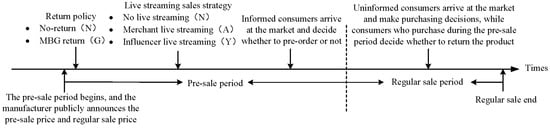
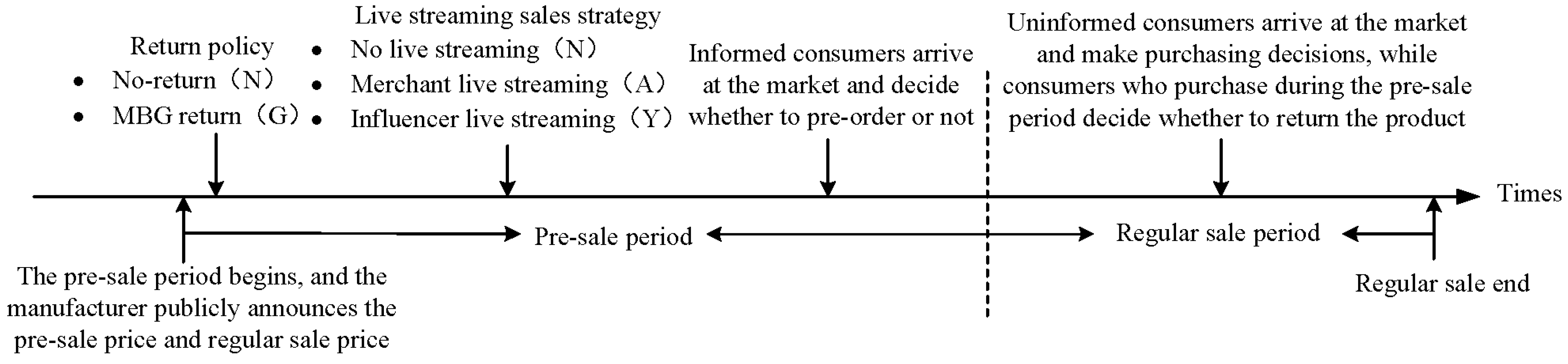
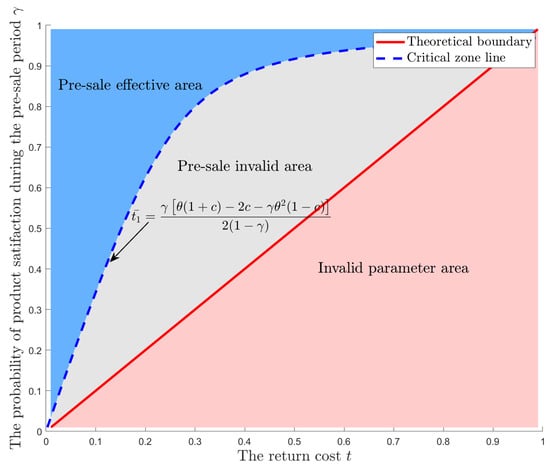
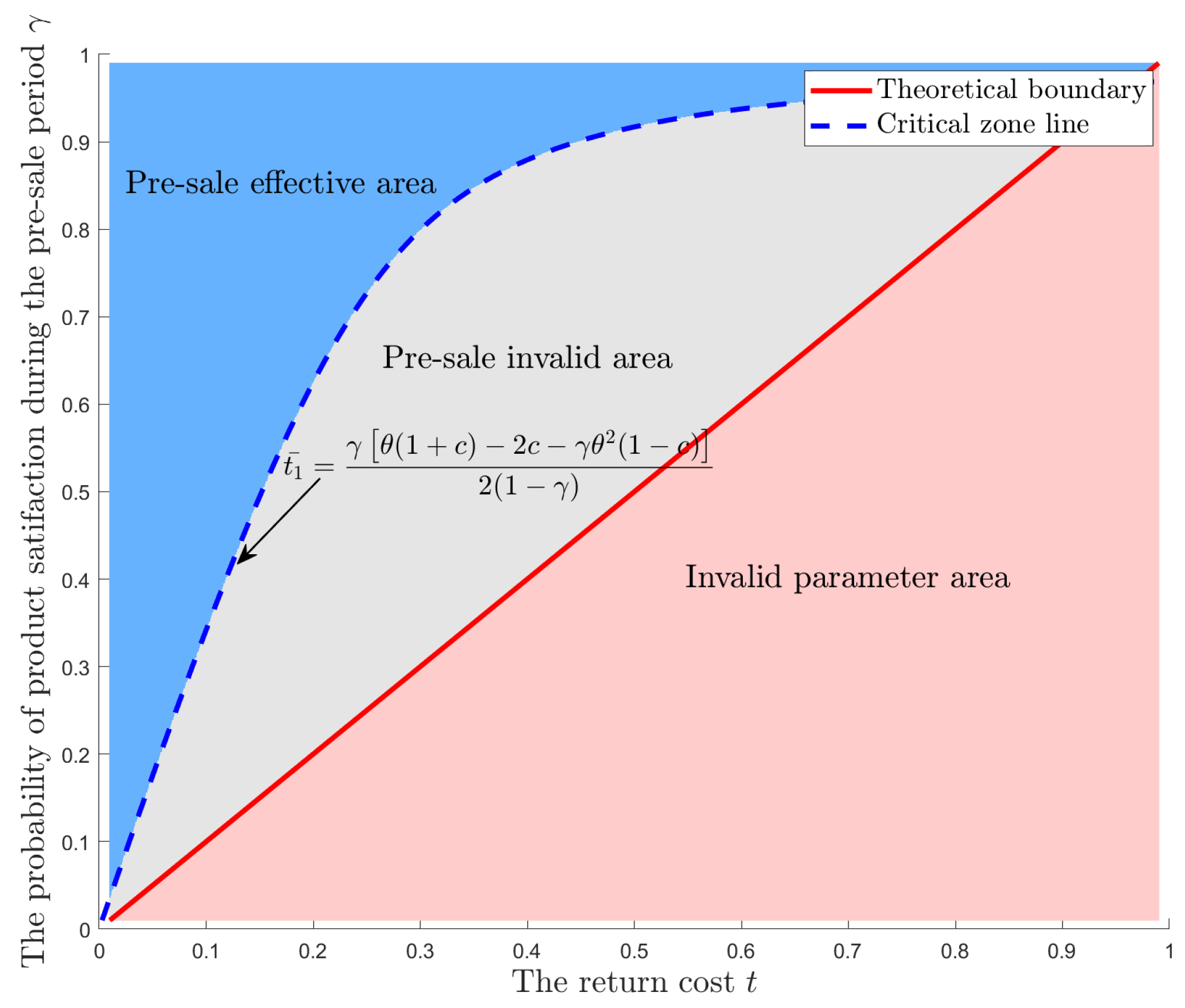
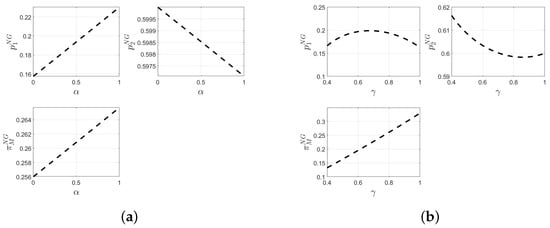
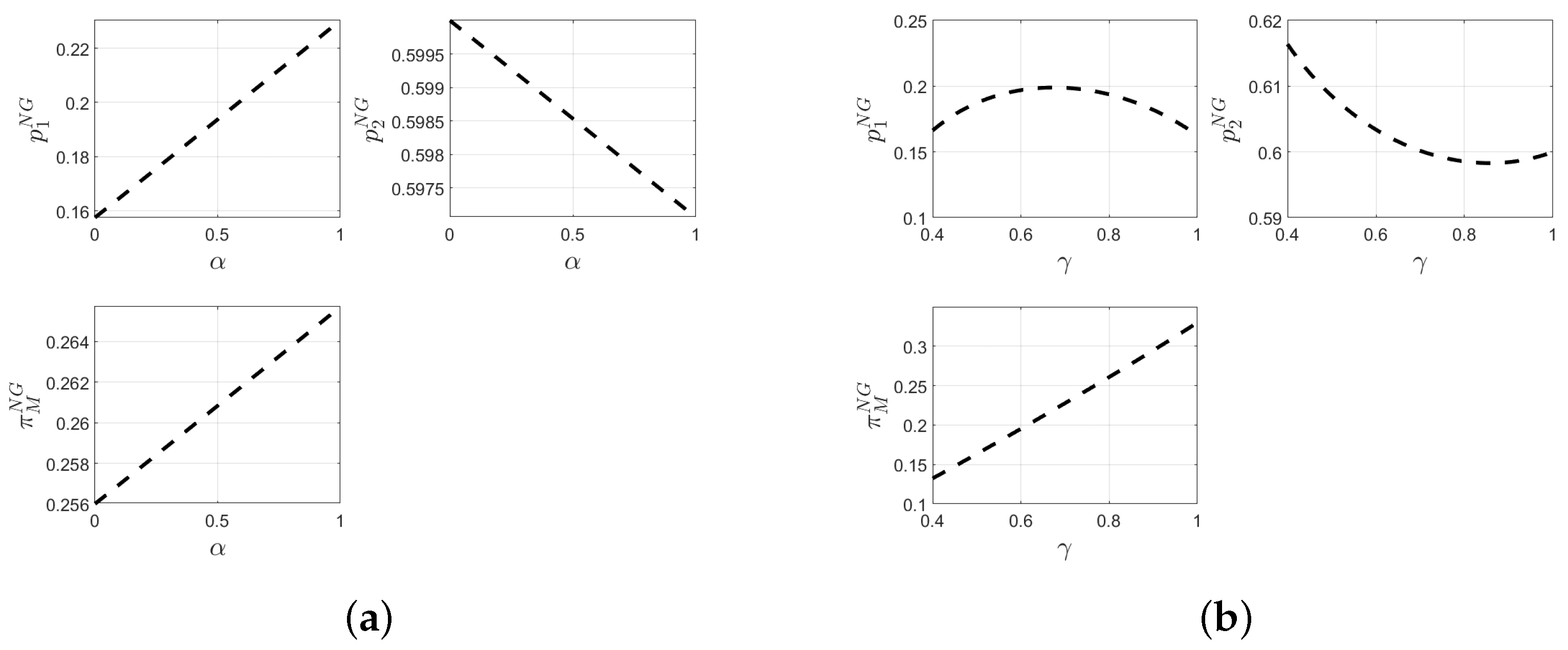
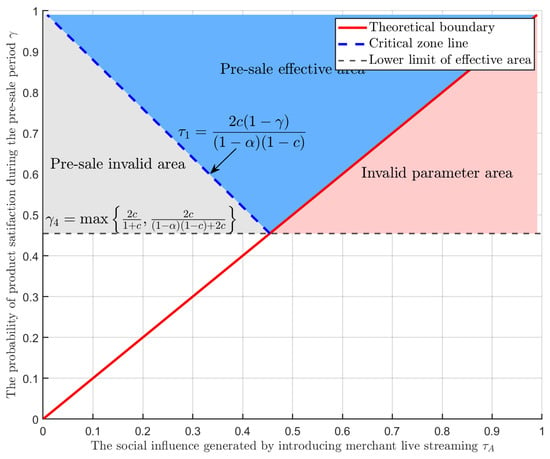
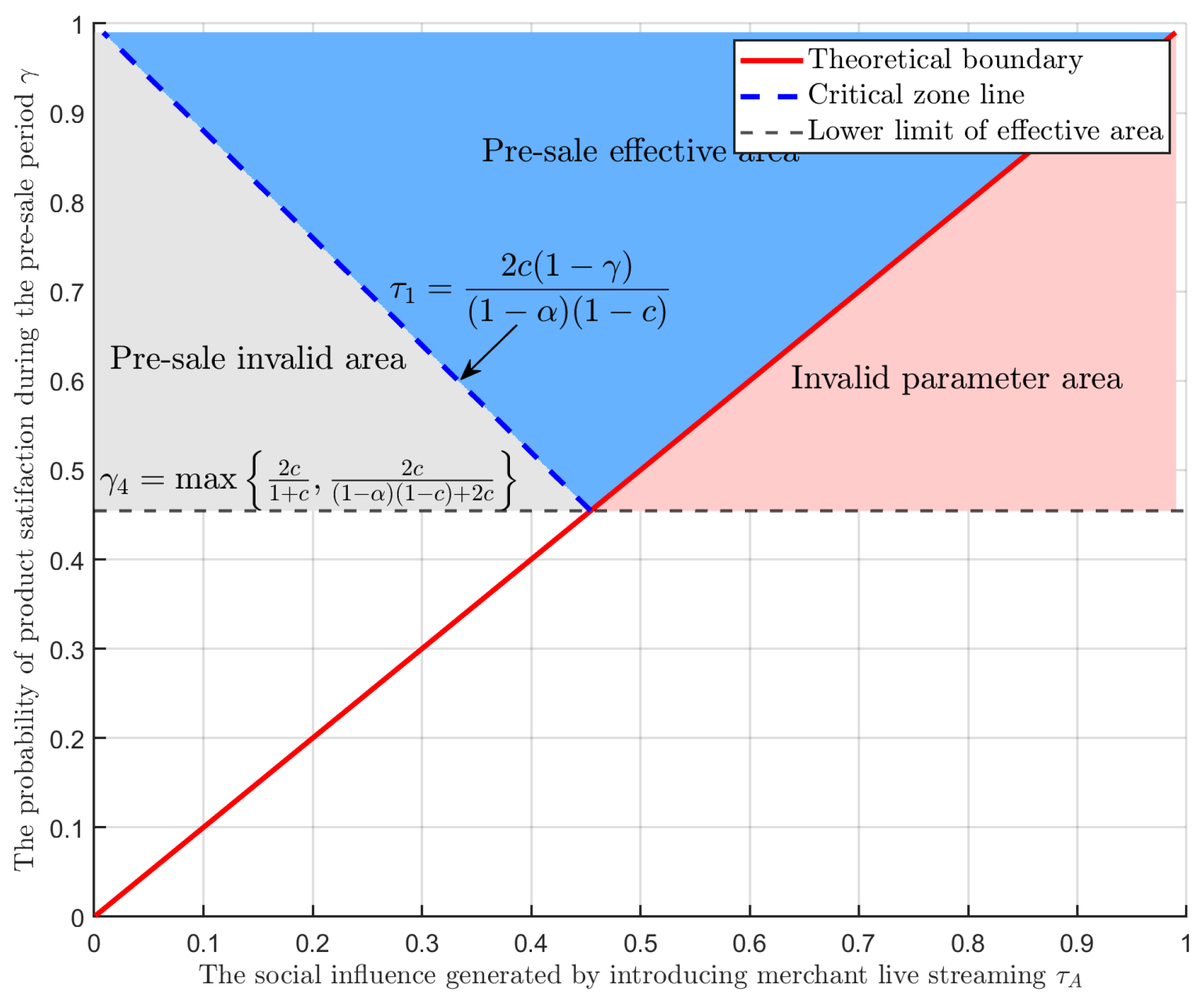
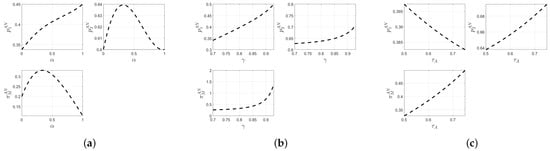
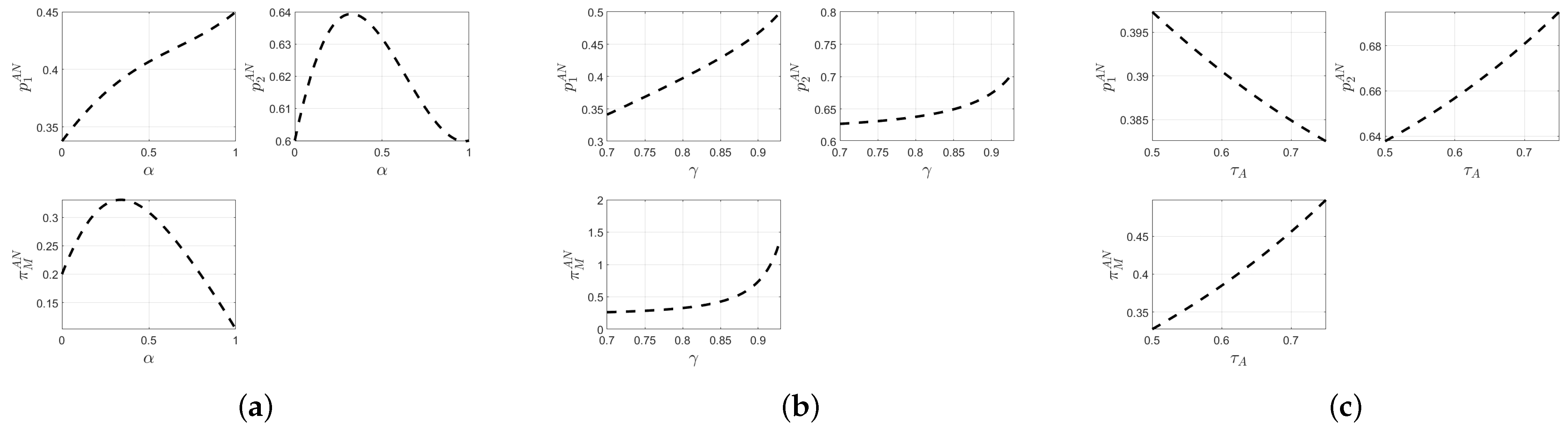
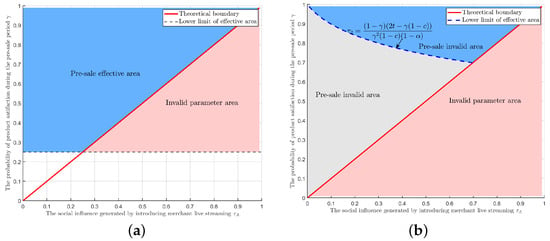
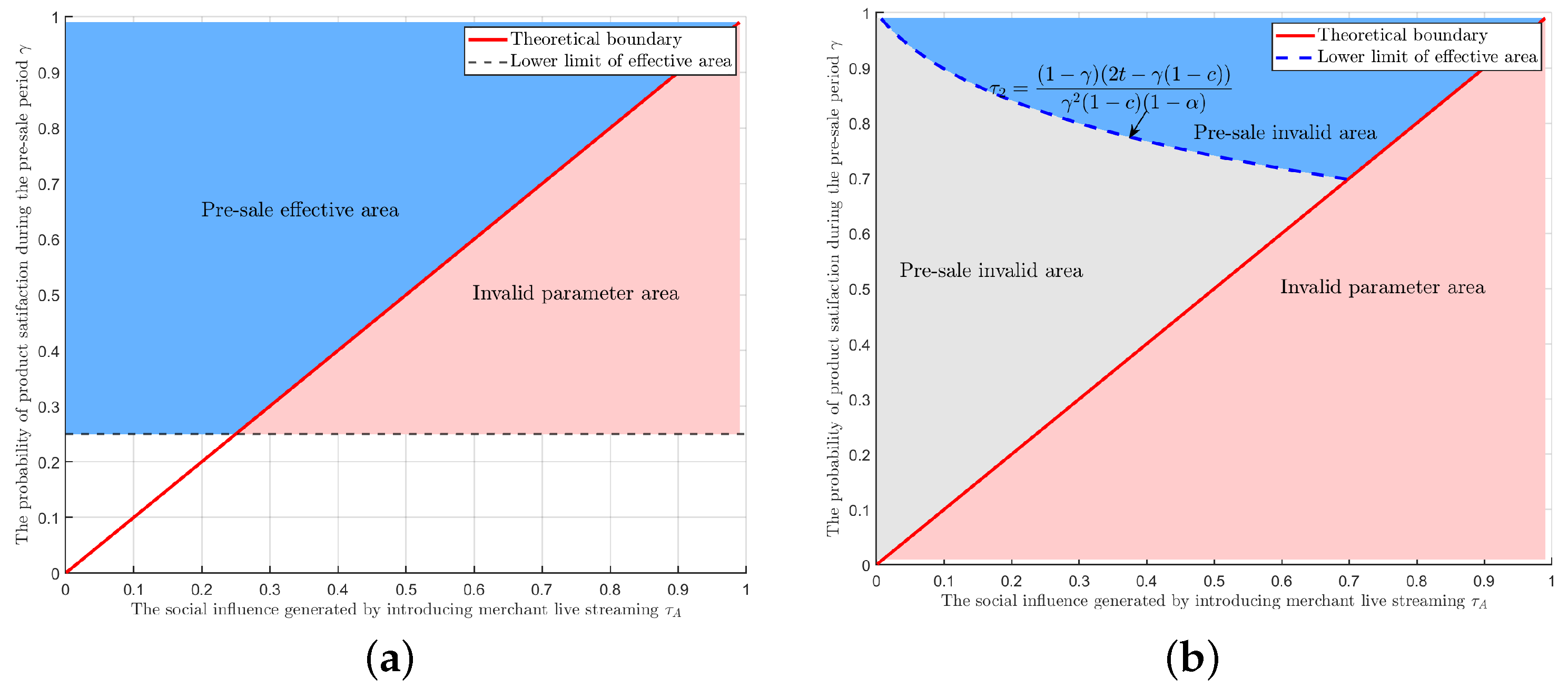
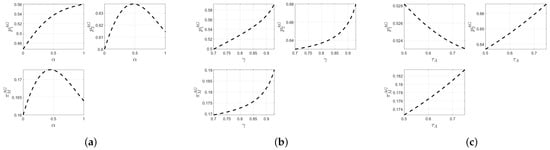
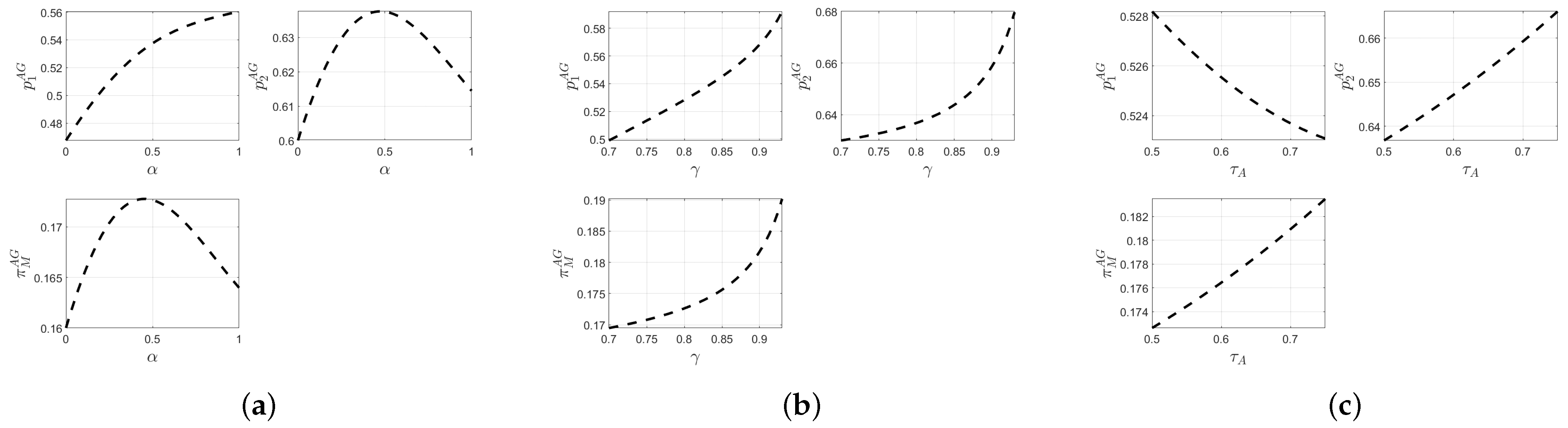
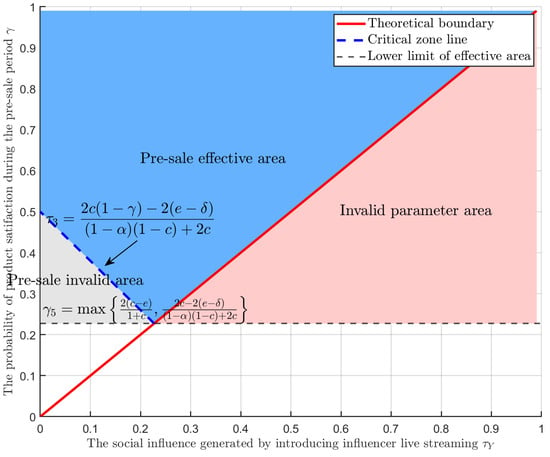
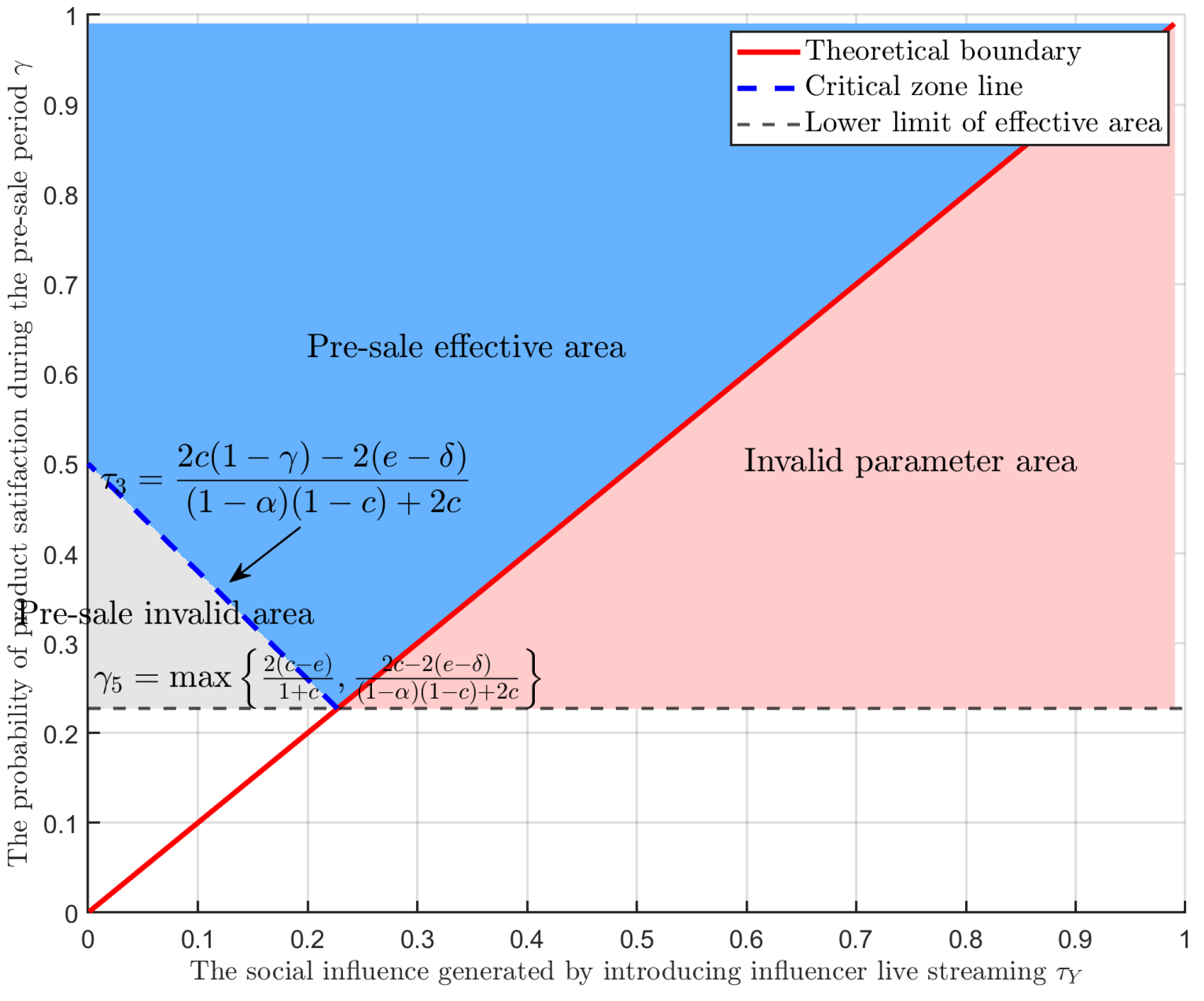
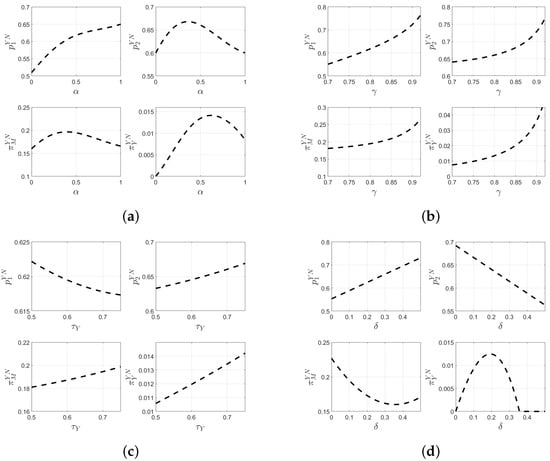
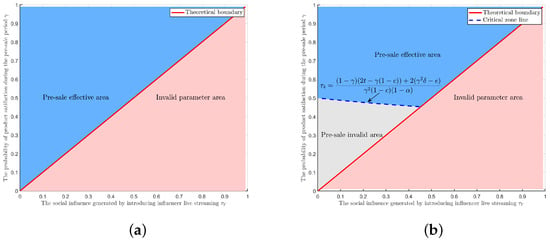
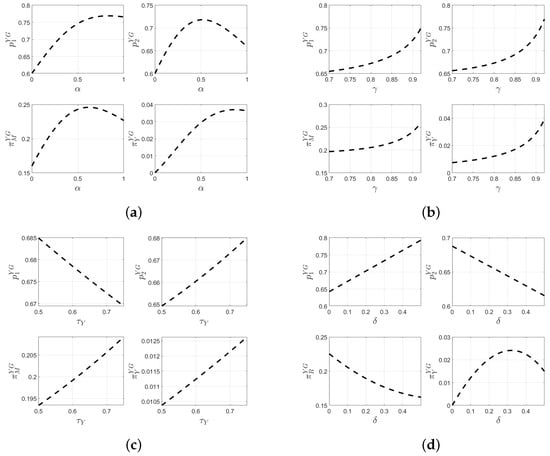
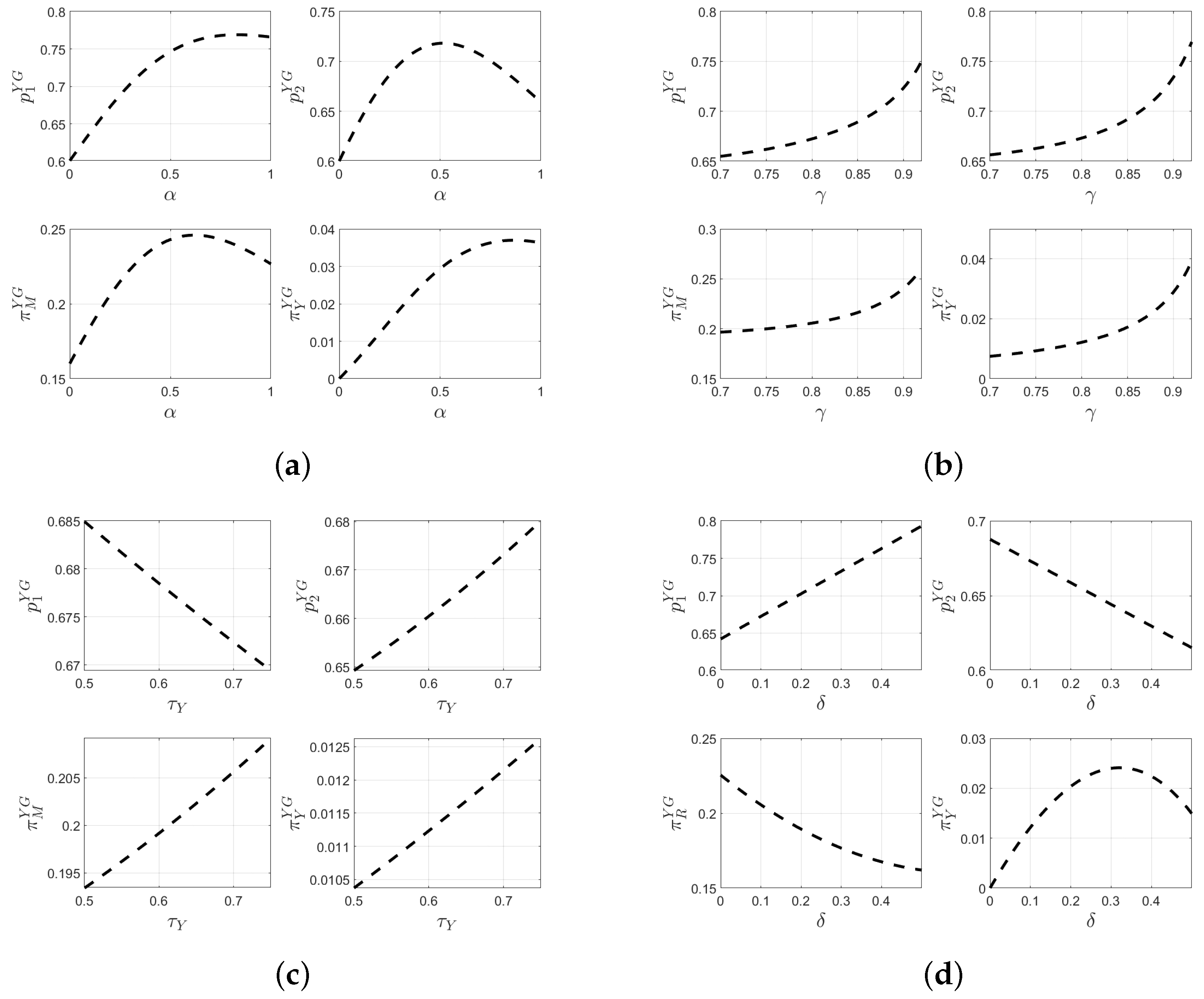
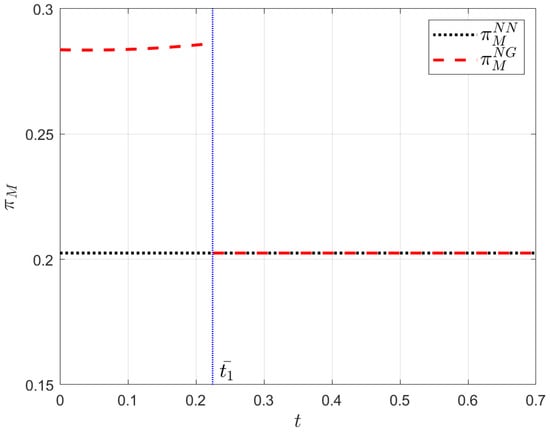
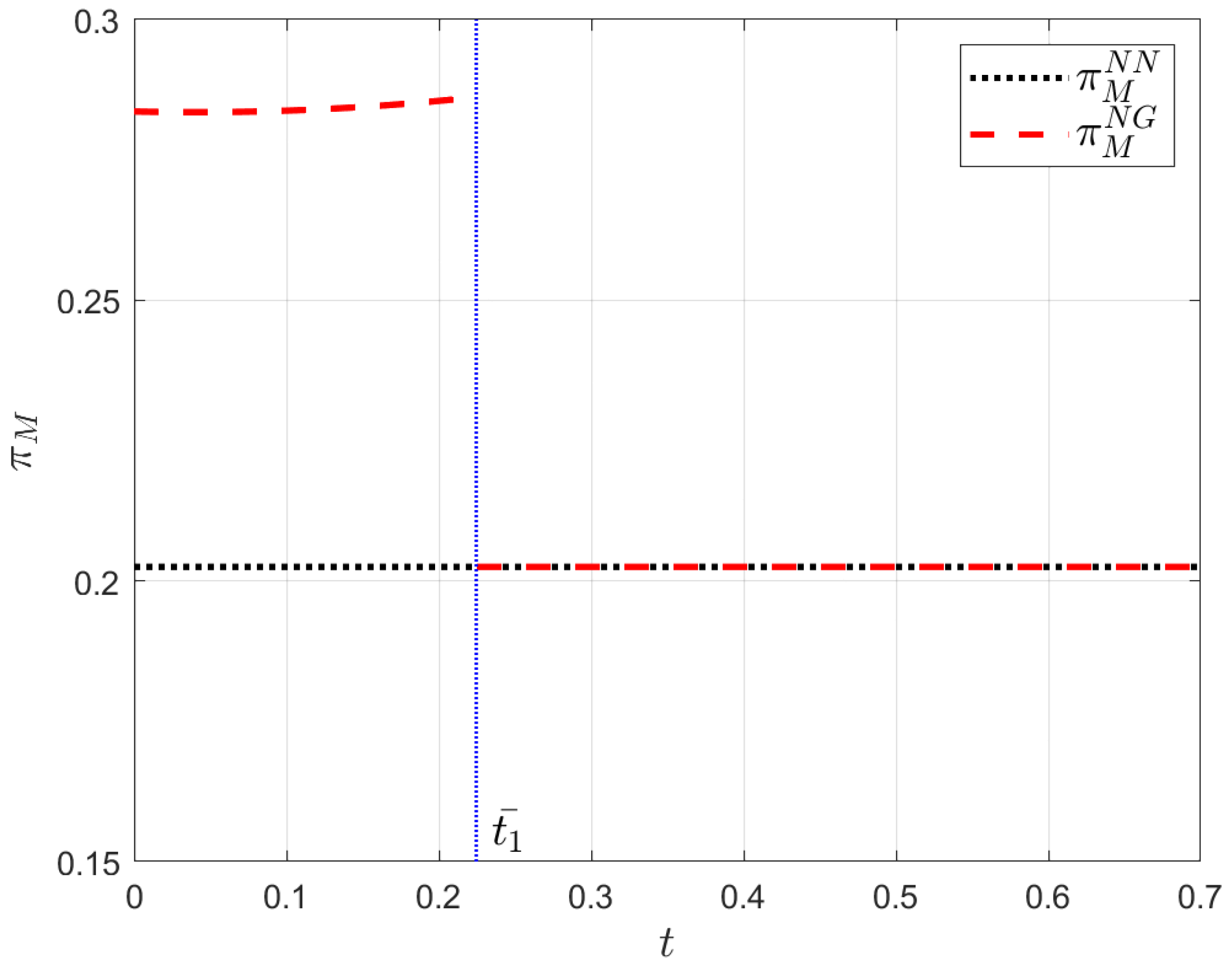
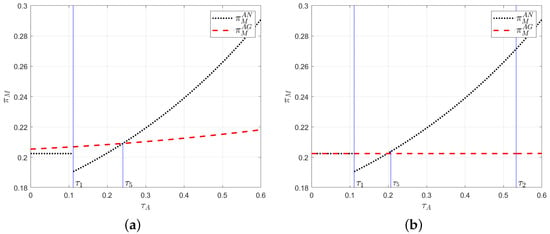
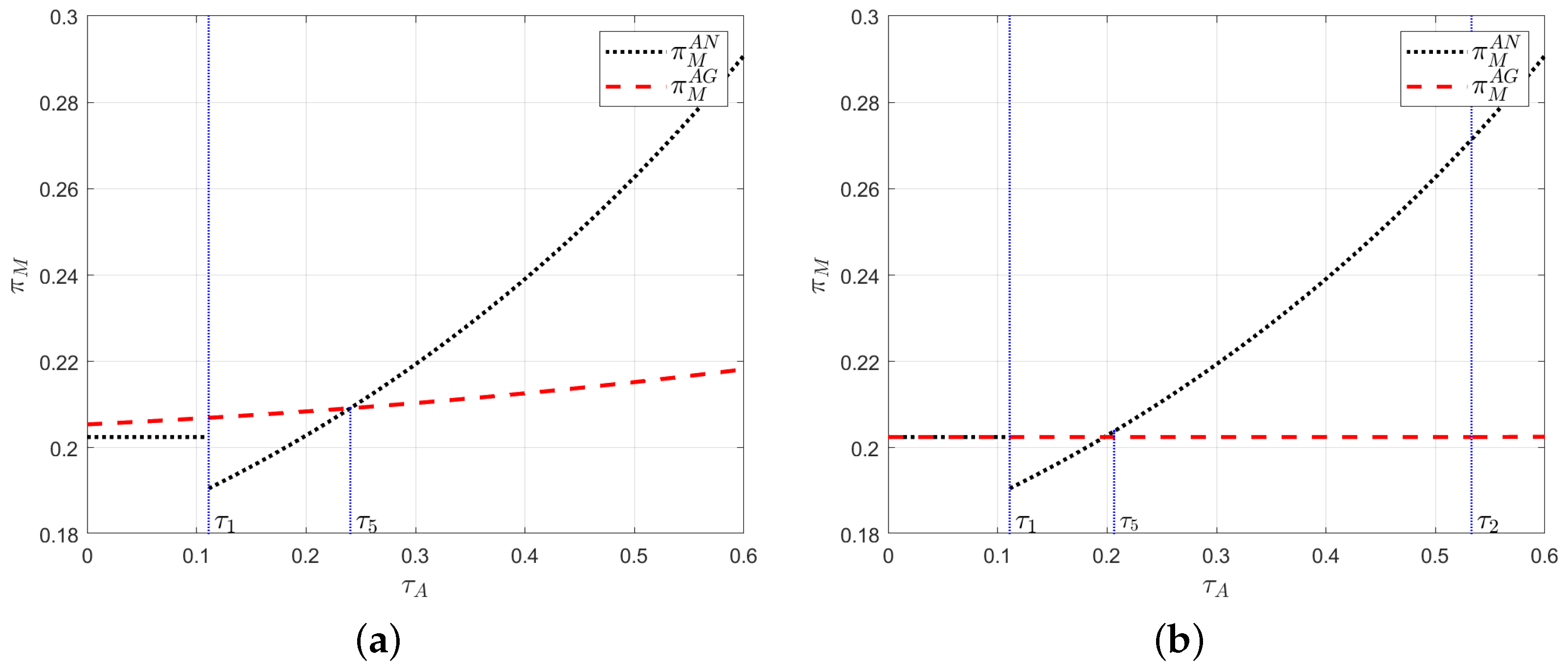
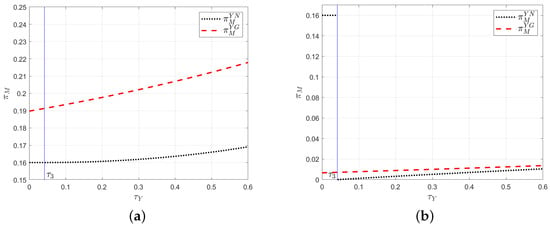
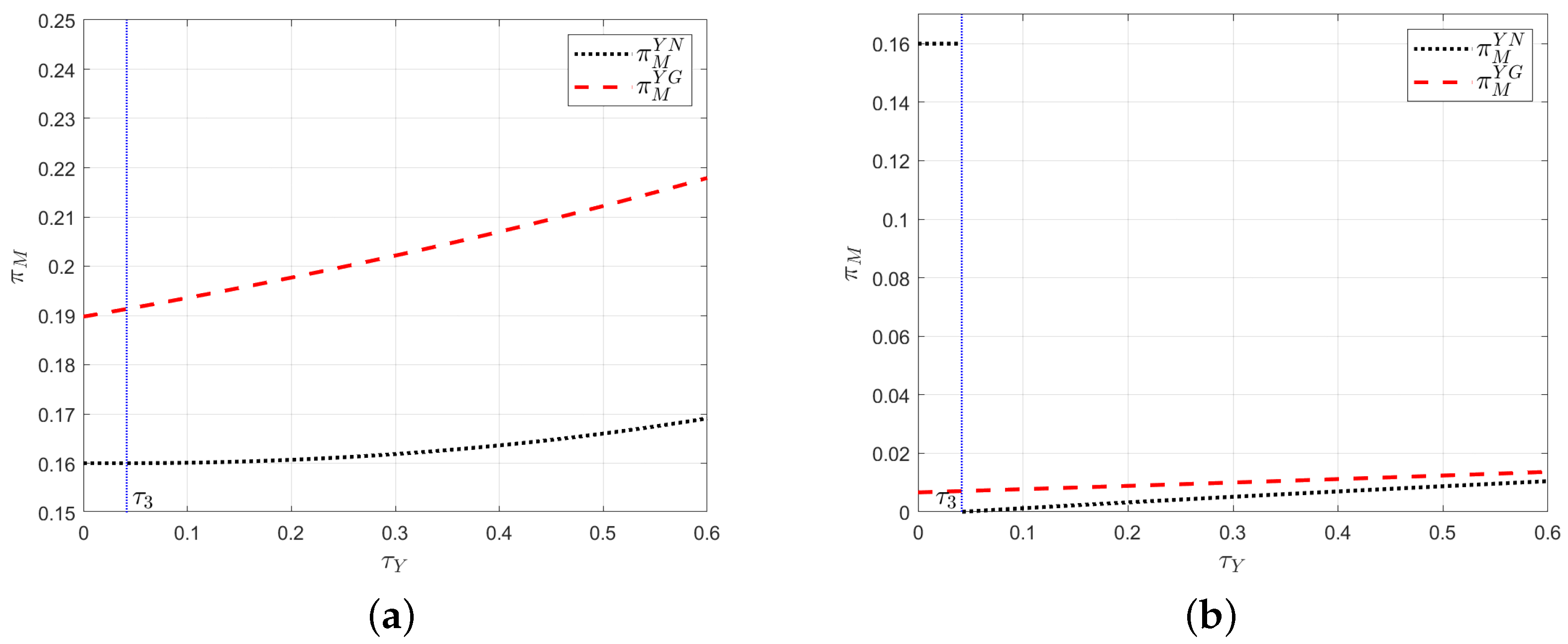
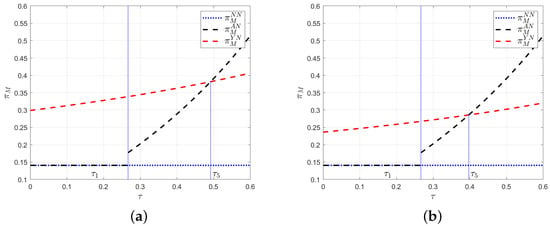
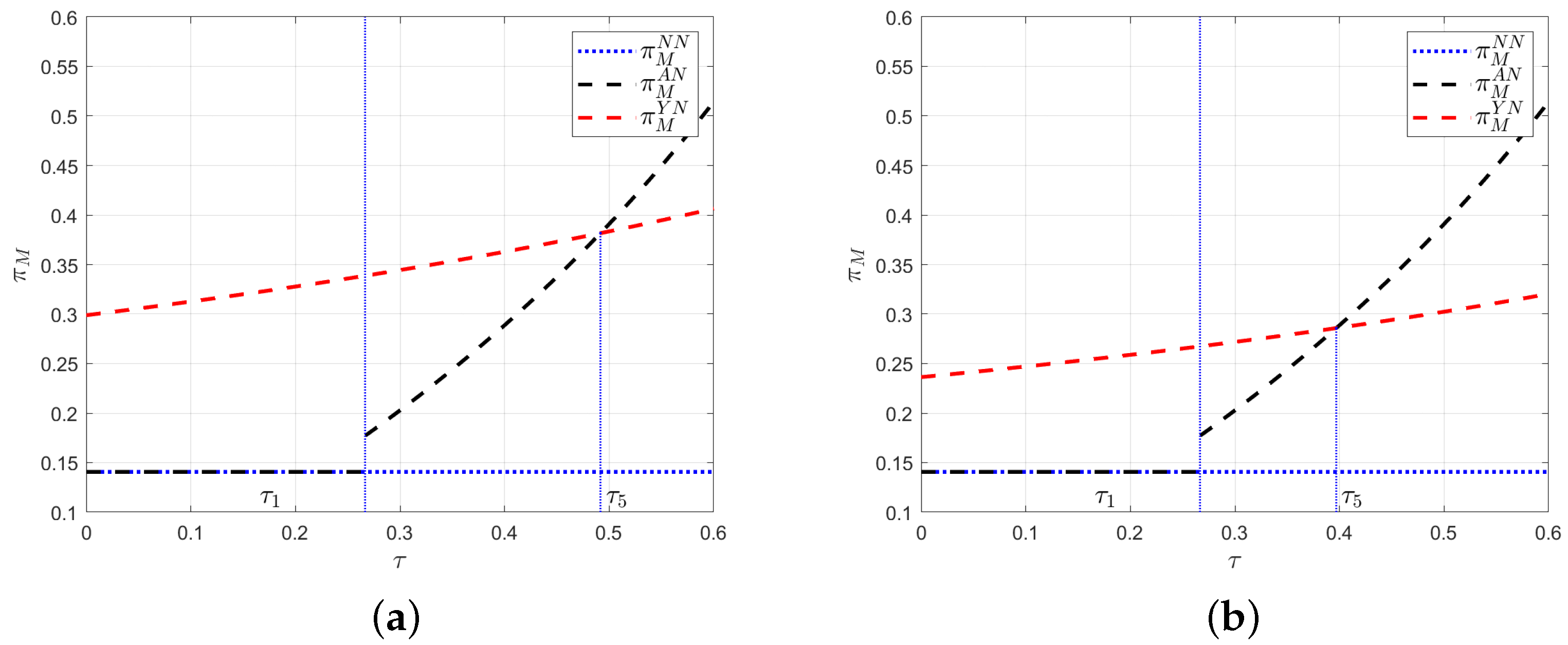
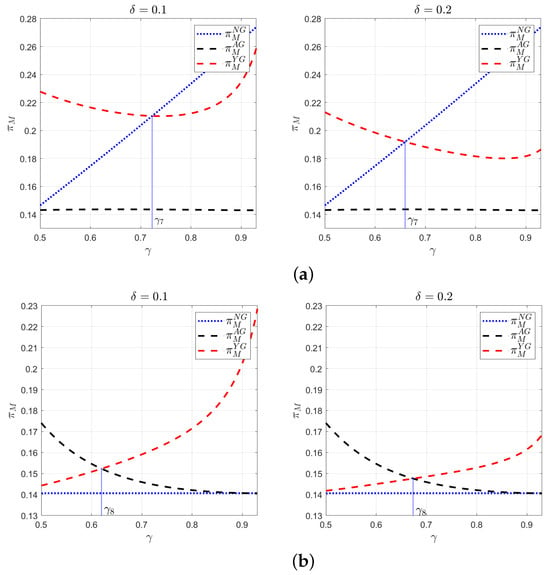
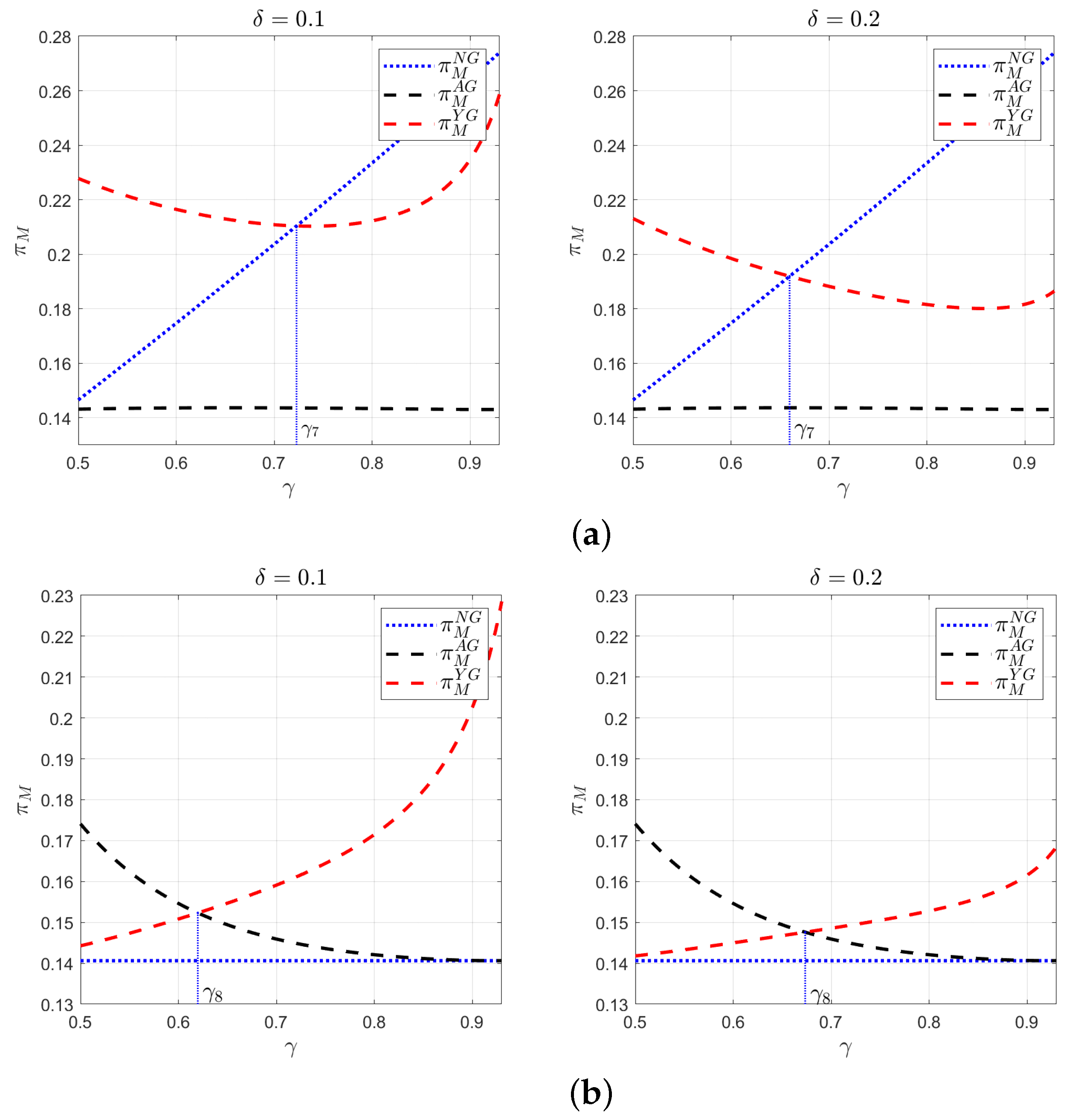

Disclaimer/Publisher’s Note: The statements, opinions and data contained in all publications are solely those of the individual author(s) and contributor(s) and not of MDPI and/or the editor(s). MDPI and/or the editor(s) disclaim responsibility for any injury to people or property resulting from any ideas, methods, instructions or products referred to in the content. |
© 2026 by the authors. Licensee MDPI, Basel, Switzerland. This article is an open access article distributed under the terms and conditions of the Creative Commons Attribution (CC BY) license.