


Abstract
Workplace stress and burnout are known as major contributors to deficits in cognitive functioning, including memory, attention, and executive functioning, leading to impairments in both well-being and performance. Our prior work showed a brief multi-modal physical and cognitive fitness (CF) training capable of improving the mood and resilience of both corporate employees and military personnel. Building on this evidence and on recent findings from a systematic review of hardiness in the workplace, our current study examined the effects of the refined multi-modal training program on multiple fitness and wellbeing outcomes among corporate professionals employed in high-pressure jobs, with a particular focus on psychological hardiness, cognitive performance, and overall well-being. The intervention resulted in significant improvements in inhibitory control (a key aspect of CF) and measures of wellbeing (mood, gratitude and perceived stress), as well as resilience and all three components of psychological hardiness (control, challenge and commitment) among participants who completed the program. Our findings confirm that hardiness is a modifiable construct associated with a broad range of beneficial workplace outcomes. The intervention produced no improvements in working memory, suggesting that this element of CF may be less trainable—or require different training regimes to succeed.
1. Effects of a Multimodal Training Intervention on Cognitive Fitness and Wellbeing of Corporate Professionals
Workplace stress represents one of the most pressing challenges in contemporary corporate environments, particularly in high-pressure roles that require sustained cognitive and psychological resilience. Chronic workplace stress has been associated with dysregulation of the hypothalamic-pituitary-adrenal (HPA) axis and the autonomic nervous system, leading to cognitive impairments, mood disturbances, and increased risk of burnout [1,2]. While acute stress can have adaptive effects—enhancing alertness and performance in the short term—prolonged stress exposure has been strongly linked to negative cognitive, emotional, and physiological outcomes, including executive dysfunction, attentional deficits, working memory impairments, and heightened emotional reactivity [3,4]. These neurocognitive deficits, in turn, contribute to reduced job performance, increased absenteeism, presenteeism, and poor decision-making in high-stakes professional settings [5].
The impact of chronic workplace stress extends beyond individual employees, placing significant economic and operational burdens on organisations. High levels of burnout, exhaustion, and psychological distress have been consistently linked to increased turnover rates, workplace errors, and diminished team cohesion [6,7]. The World Health Organization (WHO) has recognised burnout as an occupational phenomenon, highlighting its serious implications for global workforce sustainability [8]. Recent statistics underscore the urgency of this issue, with up to 90% of employees reporting heightened work challenges since the pandemic [9,10]. This troubling trend has persisted into the post-pandemic era, with 49% of employees across Australia and New Zealand [11], 66% of American employees [12], and 47% of employees in Singapore [13] reporting feelings of burnout in 2024. Given these concerns, there has been increasing interest in intervention strategies that enhance employees’ ability to cope with stress while maintaining cognitive efficiency, resilience, and psychological well-being.
In response to the rising prevalence of workplace stress and burnout, resilience training has emerged as a key intervention strategy aimed at fostering employees’ ability to adapt to adversity, regulate emotional responses, and maintain psychological stability under stress [14]. Resilience is broadly defined as the capacity to withstand and recover from stressors, maintaining psychological well-being and functional performance despite exposure to chronic or acute stress [15]. Within military and high-risk occupational settings, resilience is often conceptualised as the ability to sustain operational effectiveness under adversity, mitigating the psychological toll of prolonged exposure to stress and trauma [16].
However, traditional resilience training programs have yielded mixed results, with systematic reviews highlighting concerns about methodological inconsistencies, publication bias, and the absence of validated outcome measures [17,18].
Psychological hardiness is a closely related construct offering a complementary perspective on stress resilience and cognitive adaptation. Hardiness was originally operationalised by Kobasa [19] as consisting of three interrelated dimensions:
- Commitment—a deep sense of involvement and dedication to one’s life pursuits, and a strong sense of purpose and meaning in one’s activities, viewing them as significant and worthwhile.
- Control—A sense of personal agency and influence over life events, leading to proactive problem-solving.
- Challenge—viewing change and adversity as opportunities for growth and development rather than threats or obstacles, fostering adaptability and performance under pressure.
These three distinct components, often referred to as the “three Cs”, work synergistically, fostering a proactive and adaptive approach to stress [20]. High-hardiness individuals are known to exhibit superior cognitive flexibility, stress tolerance, and physiological resilience, making them less vulnerable to burnout, depression, and anxiety [1,21,22,23,24]. Hardiness has been identified as a key predictor of success in high- performance occupations, including military and law enforcement, where individuals with higher hardiness scores demonstrate lower stress-induced levels of psychological distress and physical ill-health and superior decision-making under pressure [24,25,26,27]. Importantly, a recent systematic review has highlighted cognitive hardiness as a key determinant of individuals’ capacity to cognitively appraise and adapt to stressors, fostering a range of both psychological and performance-related resilience across multiple workplace sectors, as shown in Table 1 [28].
Table 1.
Summary of hardiness effects in the workplace [28].
Beyond the impact on psychological well-being and performance, hardiness has demonstrable benefits for cardiovascular and immune system health, highlighting the mind-body connection in stress resilience [1,23,29]. In addition, numerous studies suggest that hardiness is not solely a fixed personality trait but can be enhanced through structured interventions. Despite there being numerous published studies on the benefits of hardiness, relatively few studies have attempted to enhance hardiness of individuals [30], and even fewer have attempted to quantify whether there are tangible reductions in stress-related disorders or improvements in workplace performance resulting from improvements in hardiness.
It has been suggested that resilience to stress is a complex phenomenon influenced by physiological, psychological, and social factors [16] and recent reviews have recommended a combined ‘psychophysiological’ approach to resilience training [16,31].
2. The Cognitive Fitness Framework: A Multimodal Approach
Recent advances in performance psychology and neuroscience suggest that a holistic approach to stress resilience—integrating cognitive fitness training with physical resilience strategies—may offer superior benefits compared to traditional psychological interventions alone [32,33,34,35,36]. The Cognitive Fitness Framework (CF2) provides a structured model for enhancing cognitive control, emotional regulation, and physiological adaptation to stress through multimodal training [32,37].
The CF2 framework is based on three key training phases; (1) Foundational Training (Cognitive Gym)—developing baseline cognitive and physical fitness, including attentional control, working memory, and stress regulation techniques; (2) Advanced Cognitive Readiness—strengthening higher-order cognitive skills, such as adaptive decision-making, real-time stress regulation, and resilience to cognitive fatigue, and; (3) Cognitive Recovery—implementing structured recovery protocols, including sleep hygiene, mindfulness, and physical recovery strategies to sustain long-term cognitive fitness [32].
A recent study [38] reported that a multimodal intervention based on the CF2 framework, with 3 h of instructor-led training and three weeks of self-paced practice supported by a web application, significantly improved resilience (p < 0.001) and mood (p < 0.001), whilst reducing the risk of the three components of burnout [increased professional efficacy (p < 0.002), reduced emotional exhaustion (p < 0.001) and reduced job cynicism (p < 0.005)] of active-duty military aviators. Another multimodal intervention with a similar cohort examined the efficacy of a combined multimodal physical and nutritional intervention on the physical and cognitive performance of active-duty Aircrew in a 12-week randomised controlled trial [39]. They reported that exercise training alone produced statistically significant improvements in several measures of physical function as well as some markers of cognitive function, and that the multimodal physical and nutritional fitness intervention further improved working memory, fluid intelligence reaction time, processing efficiency and lean muscle mass, demonstrating the additive effects of multimodal training.
3. Purpose of the Present Study
This study evaluated the effectiveness of an eight-week multimodal psychophysiological intervention designed to improve psychological hardiness, cognitive function, and well-being in a corporate employee cohort. The intervention, based on the Cognitive Gym model [32], integrates physical exercise, structured breathwork, cognitive reframing techniques, a whole-foods diet, cold showers and digital habit-forming tools to enhance resilience.
The primary outcome measures were changes in psychological hardiness and cognitive performance (inhibitory control and working memory). The secondary outcomes were changes in perceived stress, mood, gratitude, and resilience.
Given previous findings of reductions in burnout and improvements in resilience and mood with a multimodal intervention in active-duty military aviators [38], we hypothesised that the current intervention will similarly benefit a cohort of office workers through significant improvements in psychological hardiness, cognitive performance, resilience, and wellbeing.
4. Method
4.1. Participants
Fifty-eight (58) office workers (29 males, 27 females, Mean Age 36 years, SD = 9.2 years), from two corporate workplaces in New Zealand volunteered to participate between April and August 2024. Study eligibility required participants to (1) commit to study participation for 8 consecutive weeks, including a full-day (six-hour) instructor-led education session; and (2) be free from any medical condition that inhibited their ability to exercise. In total, 58 participants enrolled in the study and 54 completed it. Only the data for those who completed the study were analysed and their demographics are presented in Table 2.
Table 2.
Effects of the 8-week Cognitive Gym Intervention on Psychological and Cognitive Fitness Outcomes.
Reasons for the dropouts were (1) voluntary withdrawal, (2) absent from work on the day of retesting and (3) left the company.
4.2. Protocol Approval, Participant Consent and Recruitment
The study’s protocol was approved by DSTG Low Risk Ethics Panel (protocol number HADS-26-23) and was endorsed by the participants’ organisational leadership team. Participants were recruited through a workplace-approved email and online briefing session, provided informed consent prior to commencing their participation in the study, and were informed that they were free to withdraw at any time without detriment to their careers.
4.3. Study Design
A waitlist-controlled randomized control trial design was employed, with participants randomly allocated into one of two conditions:
- (i)
- Standard intervention group (Group A, n = 28): eight hours of face-to-face instruction plus access to a supporting web application and self-paced practice for eight weeks
- (ii)
- Waitlist control group (Group B, n = 30): delayed start to the program by eight weeks, while Group A undertook the intervention. Group B then commenced the intervention, which was identical to the program undertaken by Group A, with eight hours of face-to-face instruction plus web application & self-paced practice for eight weeks
A battery of self-report measures and cognitive tests were administered before (pre-intervention time) and immediately after the eight-week intervention (post-intervention time) for Group A. The same battery of tests was administered three times for Group B—at recruitment time (pre-waiting time) and immediately after Group A performed the intervention (post-intervention time for Group A, pre-intervention time for Group B) and then again once Group B had completed the eight-week intervention (post-intervention time for Group B).
The effects of waiting were examined for Group B to establish whether the results for Group A and Group B can be pooled for a combined analysis of the effects of the intervention.
5. Intervention Program
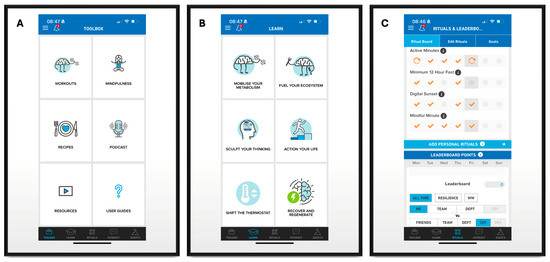
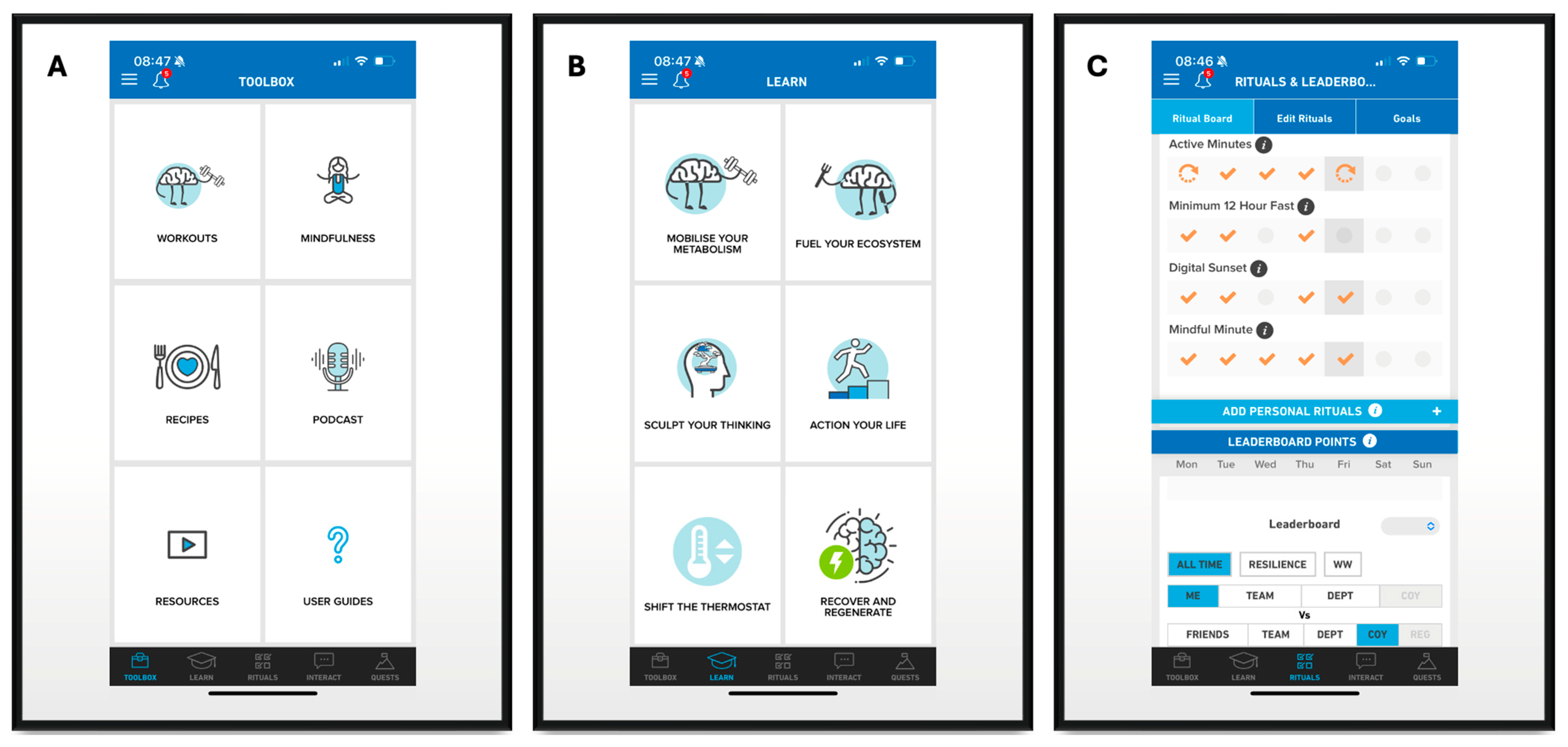
The program was a combined physical and psychological intervention with eight hours of face-to-face psychoeducation augmented with an eight-week supporting program via a web application that was designed to help participants form healthy habits and track their progress. The psychoeducation drew on Acceptance Commitment Therapy (ACT) [42], mindfulness techniques and cognitive reframing techniques, as well as the physical ‘rituals’ including exercise, healthy eating, cold showers, rhythmic breathing, and sleep hygiene. The web application contained educational videos, workouts, guided breathing, and meditation sessions, a ‘Ritual Board’ for logging suggested actions and leader boards for gamification (Figure 1).
Figure 1.
Screenshots of the web application. Note: This figure shows the screenshots of the web application and associated features. (A) Toolbox with resources for guided bodyweight workouts, guided meditation and breathing sessions, a range of healthy recipes, various mindset exercises, additional resources such as suggested books and videos reading and a range of video-based user guides for the app. (B) Learn section with a range of educational videos that participants could view at their leisure. (C) Ritual Board to track suggested habits and a points leaderboard. Participants earned points for ticking off rituals; completing workouts and guided meditation and breathing sessions; and posting on the social feed.
During the eight-week access to the web application participants were encouraged to perform guided workouts, breathing and meditation sessions and several key habits (rituals), which were pre-loaded onto a ‘Ritual Board’ for them to tick off when completed. Participants earned leaderboard points for all these activities and had the option of setting reminders for ‘rituals’, delivered in the form of a pop-up notification on their phone. Engagement with the platform was voluntary, with engagement time varying from a few minutes a week for those just checking off rituals to an hour or more per week for those highly engaged with educational videos, breathing and meditation sessions and workouts. See Table 3 for engagement metrics.
Table 3.
Engagement metrics for the app for weekly active users, rituals checked off, videos watched, and workouts performed.
6. Measures
6.1. Cognitive Performance
The cognitive assessment battery was assembled to assess the elements of cognitive fitness, including working memory, attention and cognitive control, established by the transdisciplinary expert consensus [37] as key drivers of performance in high-pressure operational contexts. The battery took around forty-five minutes to perform and was administered via the Inquisit web application. The 2-back version of the N-back letter test [43] was used to assess working memory. This 2-back version required participants to monitor a continuous stream of letters and respond whenever the current stimulus matched the one presented two trials earlier. Accuracy was calculated as the proportion of correct responses across three 30-trial blocks. The change detection task [44] was also used to assess working memory. Participants viewed a brief array of coloured squares followed by a second array and had to detect any change in spatial position of the squares. Two blocks of 60 trials each were administered without feedback. The Go/No-go test [45] assessed response inhibition and sustained attention. Participants to the presentation of “M” or “W” letters on screen in an 80/20 Go/No-go ratio over 250 trials, with the key outcome measure of commission errors indexing inhibitory control. The multisource interference test [41] was used to assess interference resolution and attentional control. Participants were presented with a sequence of three-digit numerical arrays (e.g., “1 0 1”) and asked to indicate the identity of the unique digit (i.e., the digit that differed from the other two) by pressing the corresponding key on a keyboard. Participants responded to numeric stimuli under control, Simon, flanker, and combined interference conditions. The primary score of interest was the flanker interference effect, where the interfering digits flanking the target created spatial conflict by appearing in non-target positions, requiring participants to inhibit surrounding distractions—serving as an index of attention and cognitive interference control. Finally, the continuous performance test, identical pairs (CTP-IP) [40] measured sustained attention and impulsivity control. Participants responded when two identical four-digit numbers were presented in sequence, across 150 trials. The key outcomes were hit rate and false alarms, the latter indexing inhibitory failure.
6.2. Hardiness
Hardiness was assessed by the 28-item Hardiness Resilience Gauge (HRG) [46] across the three dimensions of control, challenge, and commitment. Participants responded to items such as “I find the positives in any life change” on a five-point Likert scale, ranging from 1 (strongly disagree) to 5 (strongly agree). The HRG has shown good reliability coefficients with Cronbach’s α of 0.89 for total hardiness, as well as structural equivalence across gender and age. Validity has been demonstrated in multiple samples with predictive associations of hardiness scores with theoretically relevant outcome measures, including coping, life satisfaction, anxiety, and depression [46]. The current study also demonstrated good reliability with Cronbach’s α of 0.82 for total hardiness.
6.3. Mood
Mental wellbeing was assessed using the World Health Organizations’ Well-Being Index (WHO-5), which assesses mental wellbeing over the preceding two weeks with five questions. Participants respond to items such as “I have felt cheerful and in good spirits” on a five-point scale Likert scale, ranging from 0 (at no time) to 5 (all of the time). Raw scores range from 0 to 25, 0 representing worst possible and 25 representing best possible quality of life. The WHO-5 has been found to have adequate validity in screening for depression and in measuring outcomes in clinical trials, and item response theory analyses (IRT) in studies with youth and elderly indicate that the measure has good construct validity as a unidimensional measure of well-being in these populations [47]. The current study demonstrated good reliability of the WHO-5, with Cronbach’s α of 0.87.
6.4. Resilience
Psychological resilience was assessed using the Brief Resilience Scale (BRS) [48]. Participants respond to items such as “It is hard for me to snap back when something bad happen” on a five-point Likert scale, ranging from 1 (strongly disagree) to 5 (strongly agree). Half of the questions are reverse coded. Scores fed back to the participants ranged from 1 to 5, with scores below 3.00 indicating low resilience, above 4.30 indicating high resilience, and scores in between indicating average resilience. The BRS has been shown to have good reliability and validity estimates [49] and the current study also demonstrated good reliability, with Cronbach’s α of 0.91.
6.5. Perceived Stress
Perceived Stress was be measured by the Perceived Stress Scale, a commonly used stress assessment measure. The study employed the short form PSS-4, which has been derived from the original PSS-14 and assesses a person’s evaluation of stressful situations in the previous month of their life with four questions. Participants respond to items such as “In the last month how often have you felt you were unable to control the important things in your life” on a five-point Likert scale ranging from ‘never’ to ‘very often’ and half of the questions are reverse scored. Although the four item PSS-4 has a moderate loss in internal reliability in comparison to the 14-item scale (r = 0.60 vs. r = 0.85), it has been validated in a range of populations [50] and the brevity of this version was preferred for this study. Our population also demonstrated a lower reliability of the PSS-4, with a Cronbach’s α of 0.57.
6.6. Gratitude
Gratitude was assessed using The Gratitude Questionnaire, Six Item Form GQ-6 [51]. Participants responded to six items such as “I have so much in life to be thankful for” on a seven-point Likert scale, ranging from ‘strongly disagree’ (1) to ‘strongly agree’ (7). Two items (3 and 6) are reverse scored to mitigate response bias. Possible scores range from 6 to 42, with higher scores indicating a higher level of dispositional gratitude. The GQ-6 has good internal reliability, with Cronbach’s α between 0.82 and 0.87, which is consistent with a Cronbach’s α of 0.82 in the current population. Its validity is supported by evidence that it is positively related to optimism, life satisfaction, hope, spirituality and religiousness, forgiveness, empathy, and prosocial behaviour, and negatively related to depression, anxiety, materialism, and envy [52].
6.7. Data Analysis
The R-plm package was used to implement the repeated measures regressions and Holm-Bonferroni corrections were used to correct for multiple comparisons and control the family-wise error rate at 5% [53].
6.8. Waitlist Control Effects
The “intervention group” (Group A) who commenced the cognitive gym intervention immediately following recruitment and the “waitlist control group” (Group B) who commenced the same intervention following an eight-week waiting period, were compared on all outcome measures at Time 0 (baseline), Time 1 (post-intervention for Group A and pre-intervention for Group B) and Time 2 (post-intervention for Group B) in order to establish whether the pre- and post-intervention outcomes can be pooled across the two groups to enhance the statistical power of the analyses of intervention effects. Such pooling would be justified if the comparisons showed: (1) no difference between Group A at Time 0 and Group B at Time 1 (pre-intervention times for Groups A and B, respectively); (2) no significant waiting effects for Group B; and (3) no differences between pre- to post-intervention changes in Groups A and B. The data were analysed using a linear regression analysis for each outcome. Standard errors were Heteroskedasticity-consistent and clustered at the participant level. The significance of the effects was evaluated following the Holm-Bonferroni method to control the overall significance level at 0.05 across the 13 outcomes.
7. Results
The outcomes of preliminary comparisons are presented in Table 4. In particular, column (ii) shows no change in any outcomes for Group B from its baseline (Time 0) to pre-intervention (Time 1) this confirming no waiting-time effect. Column (iii) shows no differences between Group A on any outcome measures at their respective pre-intervention time points. This indicates that the two groups can be considered equivalent at pre-intervention. Column (v) shows no difference between the pre- to post-intervention changes in Groups A and B. This indicates no difference in intervention effects between the two groups. As a result, the data from the two groups could be pooled for a combined analysis of the effects of the intervention.
Table 4.
Comparison of the main “intervention group” (Group A) and “waitlist control group” (Group B) on all outcome measures at all pre- and post-intervention time points.
Table 2 presents analysis of the changes in the self-reported hardiness, self-reported well-being and cognitive performance outcomes for Groups A and B combined, following the eight-week cognitive gym intervention. For each outcome a linear regression was estimated on a constant term for the mean pre-intervention level and a post-intervention time indicator for the mean pre- to post-intervention changes, with heteroskedasticity-consistent standard errors clustered at the participant level. The significance of the pre- to post-intervention changes was evaluated following the Holm-Bonferroni method to control the overall significance level at 0.05 across the 13 outcomes. Significant changes are shown in bold in Table 2.
7.1. Effects of the Intervention
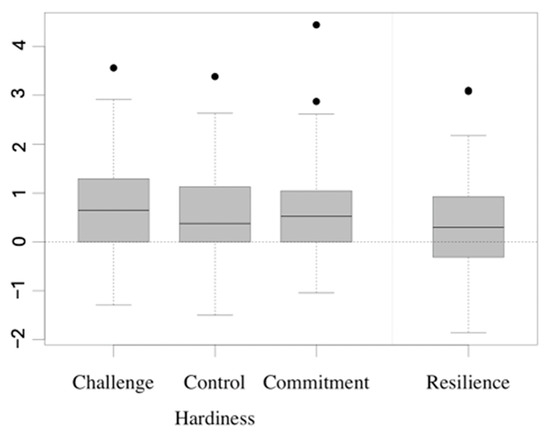
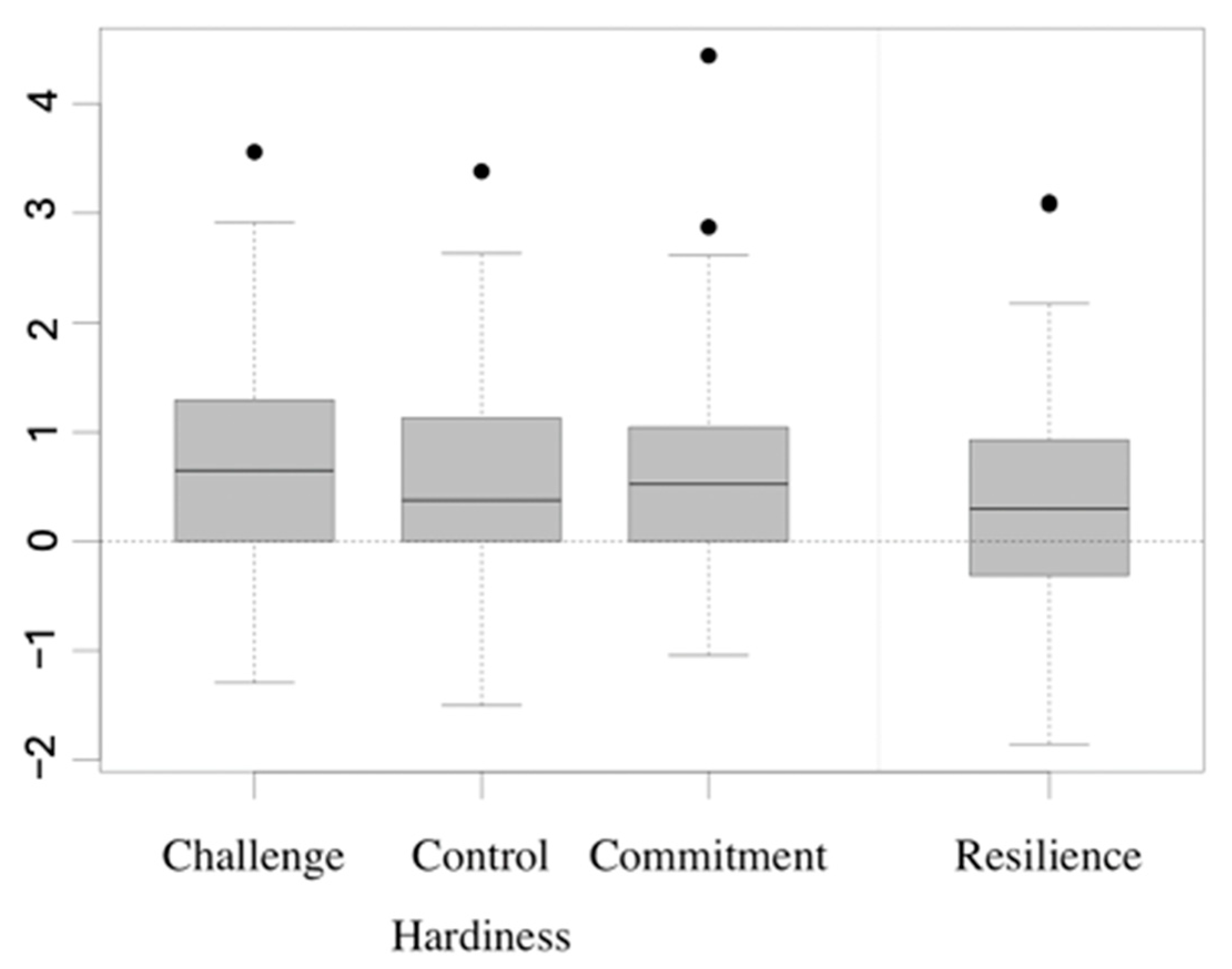
Significant improvements in ten of the thirteen outcome measures were observed following the intervention. In particular, all three hardiness measures—Challenge, Control and Commitment—improved from the baseline to post intervention, demonstrating that the intervention was effective at increasing participants’ hardiness. These improvements were all statistically significant (p < 0.001). The magnitudes of the improvements are shown in Table 2 in original units—Challenge increased by 2.185 points (95% CI = 1.344, 3.027) Control increased by 1.426 points (95% CI = 0.701, 2.151) and Commitment increased by 2.148 points (95% CI = 1.106, 3.191). For interpretation, the improvements may be transformed to percentage improvements relative to the baseline mean. The percentage changes were 11.2% (2.185/19.537) for Challenge, 7.9% (1.426/18.074) for Control and 10.9% (2.148/19.630) for Commitment.
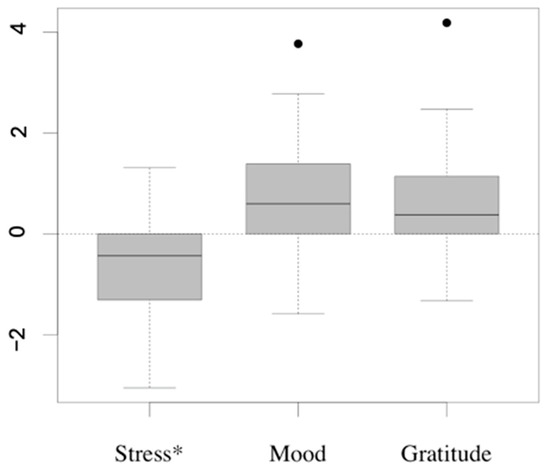
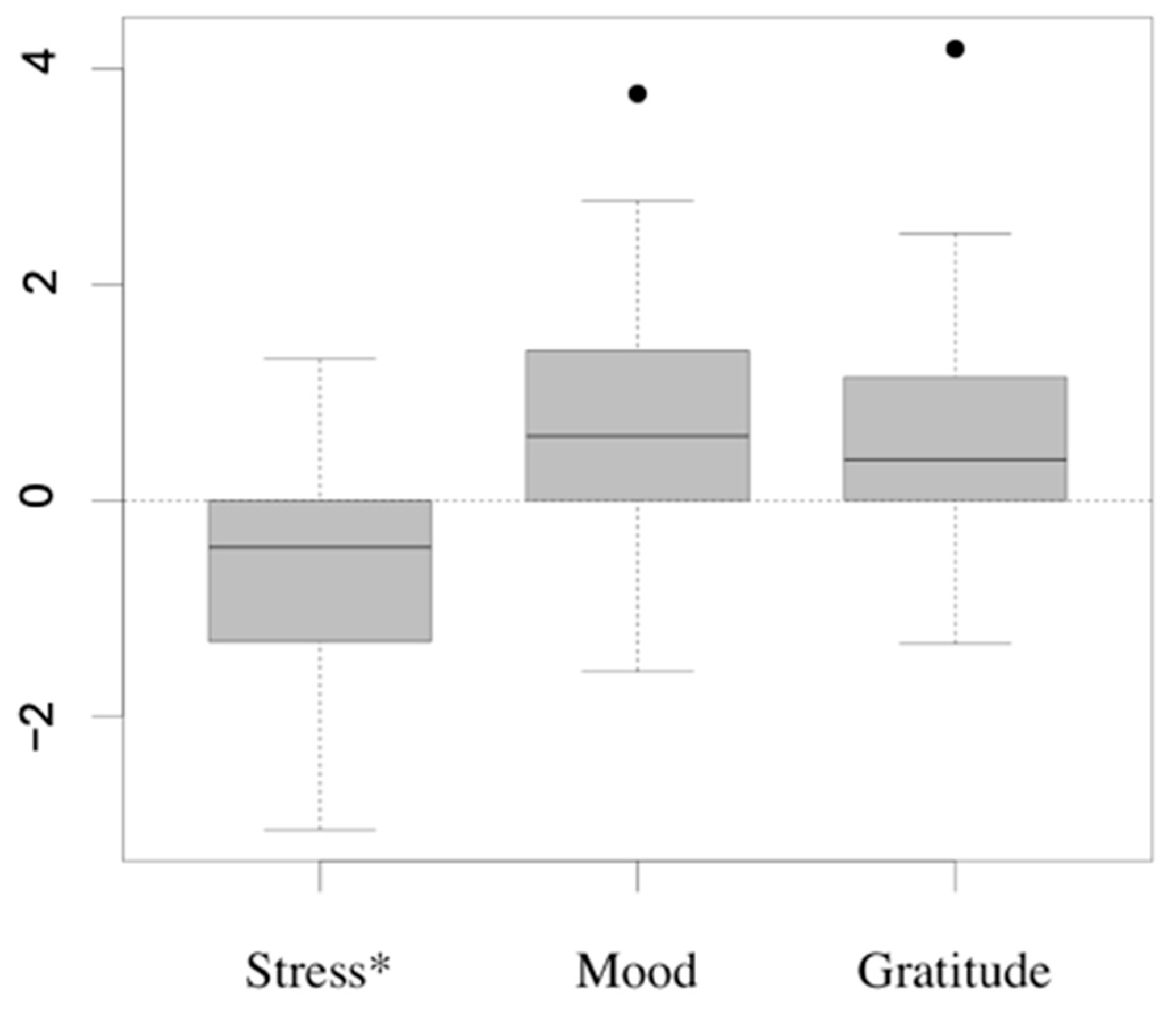
Self-reported trait resilience increased by 5.9% (0.214 points, 95% CI = 0.069, 0.359) from baseline and this change was statistically significant (p = 0.004). All self-reported well-being outcomes improved significantly from pre- to post-intervention. Perceived stress declined by 25.8% (p < 0.001) (−1.427 points, CI = −2.039, −0.815), with mood and gratitude increasing by 26.6% (p < 0.001) (14.714 points, CI = 9.359, 20.070) and 7.1% (p < 0.001) (0.424 points, CI = 0.190, 0.657) respectively.
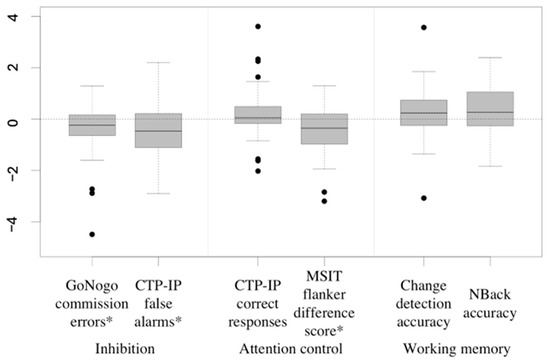
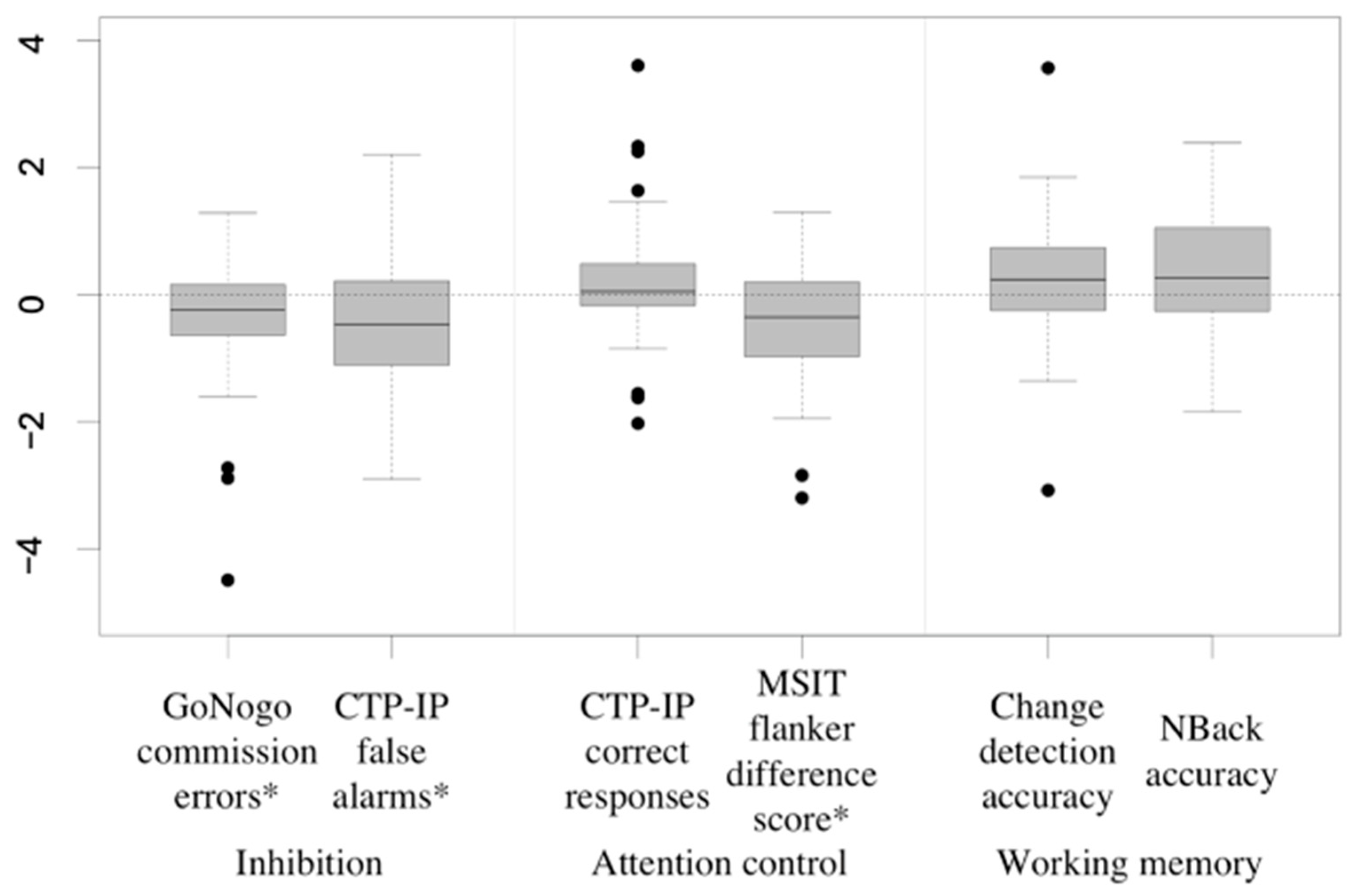
Three of the six cognitive performance outcomes improved significantly following the intervention—GoNogo commission errors (p = 0.01) (−0.048 points, CI = −0.084, −0.012), CTP-IP false alarms (p = 0.004) (−0.046 points, CI = −0.077, −0.016) and MSIT flanker difference score (p = 0.004) (−20.574 points, CI = −34.595, −6.554)—suggesting improvements in inhibition and attention control. There was no evidence of improvement in the working memory outcomes (accuracy measures for Change detection and N-Back tasks).
Box plots in Figure 2, Figure 3 and Figure 4 illustrate the intervention effects on hardiness and resilience (Figure 2), cognitive performance (Figure 3) and on perceived stress, mood and gratitude (Figure 4).
Figure 2.
Boxplots of changes in self-reported Hardiness and Resilience following the 8-week Cognitive Gym intervention. Notes: (1) Y-axis: pre- to post-intervention changes standardized to S.D. units; (2) X-axis: Hardiness sub-scales and Resilience scale; (3) The boxes span the first to third quartiles (Q1 and Q3) of each data distribution. The height of each box is the inter-quartile range (IQR). The upper and lower whiskers extend to min(max(Y), Q3 + 1.5 × IQR) and max(min(Y), Q1 − 1.5 × IQR) respectively, with any outliers individually plotted.
Figure 3.
Boxplots of changes in cognition outcomes following the 8-week Cognitive Gym intervention. Notes: (1) Y-axis: pre- to post-intervention changes standardized to S.D. units; (2) X-axis: cognition sub-scales; (3) The boxes span the first to third quartiles (Q1 and Q3) of each data distribution. The height of each box is the inter-quartile range (IQR). The upper and lower whiskers extend to min(max(Y), Q3 + 1.5 × IQR) and max(min(Y), Q1 − 1.5 × IQR) respectively, with any outliers individually plotted; (4) *: negative values are improvements.
Figure 4.
Boxplots of changes in well-being outcomes following the 8-week Cognitive Gym intervention. Notes: (1) Y-axis: pre- to post-intervention changes standardized to S.D. units; (2) X-axis: well-being sub-scales; (3) The boxes span the first to third quartiles (Q1 and Q3) of each data distribution. The height of each box is the inter-quartile range (IQR). The upper and lower whiskers extend to min(max(Y), Q3 + 1.5 × IQR) and max(min(Y), Q1 − 1.5 × IQR) respectively, with any outliers individually plotted. (4) *: negative values are improvements.
7.2. Potential Moderators of Training Effects
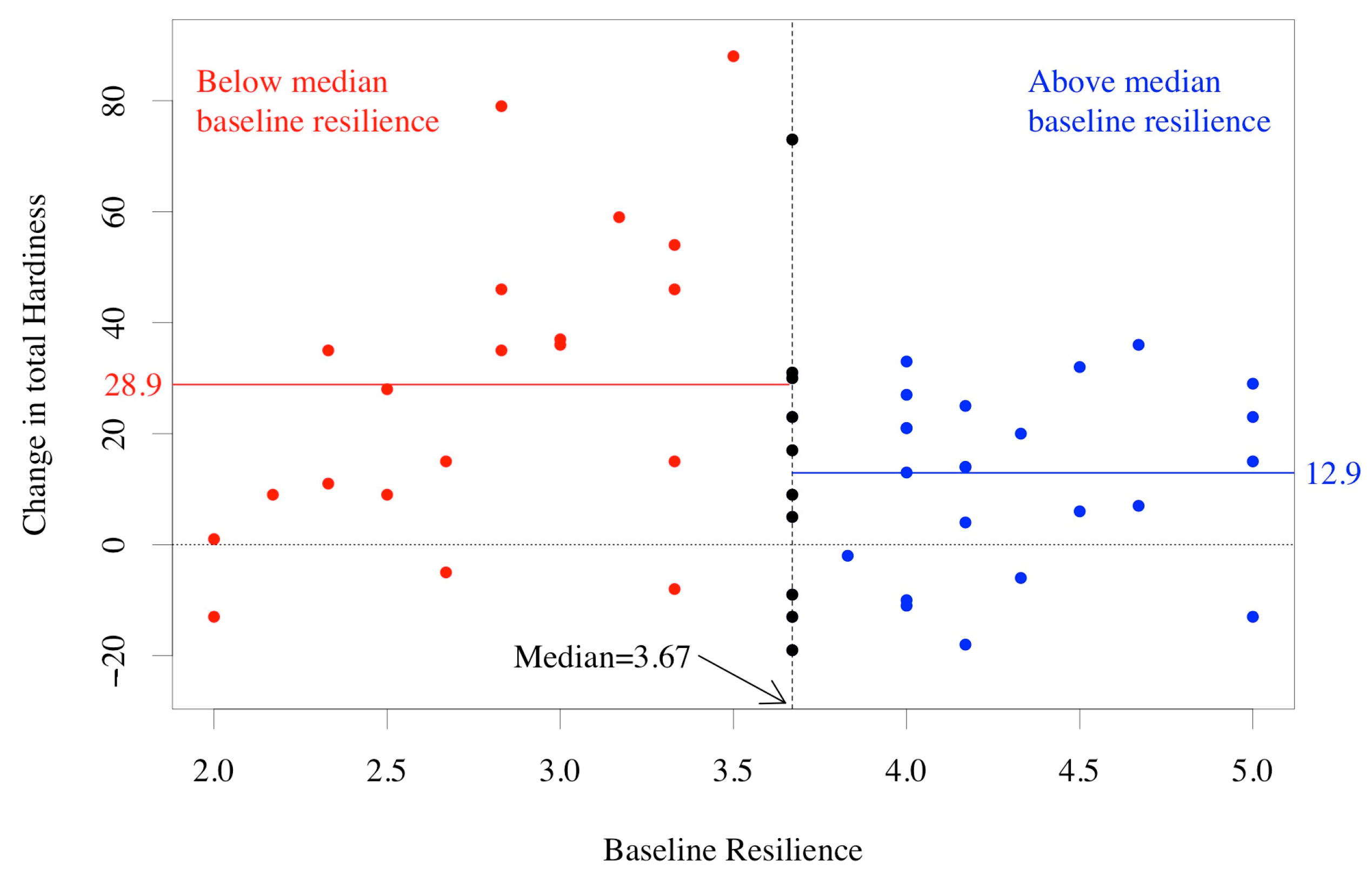
As can be seen in Figure 5, trait resilience moderated the magnitude of the intervention effect on Hardiness: the pre-to post-intervention improvement in Hardiness scores was significantly higher for low resilience scorers compared to high scorers at baseline. In particular, those participants who scored below median on resilience at baseline improved on average by 28.9 points on Total Hardiness scale after eight weeks of training, compared to an average 12.9-point improvement by those scoring above the median on resilience at baseline. This difference in the pre-to post-intervention improvement was significant (p = 0.036). This is consistent with ceiling effects often observed in training interventions: high-performing individuals tend to benefit less—if at all—from most interventions designed for broad training audiences [54].
Figure 5.
Moderation analysis: changes in total hardiness scores vs. baseline resilience. Notes: The difference between the mean total Hardiness changes for those participants with below-median baseline resilience (28.9) and those with above-median baseline resilience (12.9), was significant (p = 0.036).
7.3. Correlation Analysis
The intercorrelations between all outcome variables at baseline (Table 5) indicate several noteworthy patterns. Fist, the three dimensions of hardiness (Challenge, Control and Commitment) were moderately correlated (r = 0.510 to 0.557, p < 0.05) which is consistent with the oblique nature of the factorial structure of the Hardiness construct. The Hardiness dimensions also moderately correlated with resilience (rs ranging from 0.468 to 0.568, p < 0.05), which is consistent with the research suggesting that these psychological constructs are related but distinct [55]. Conversely, perceived stress demonstrated negative associations with all hardiness components (r = −0.471 to −0.689, p < 0.05) and resilience (r = −0.608, p < 0.05), consistent with the theoretical premise that hardiness and resilience function as stress-buffering traits [1,56]. Positive mood was significantly associated with Control (r = 0.572, p < 0.05), Commitment (r = 0.497, p < 0.05), and resilience (r = 0.618, p < 0.05), while showing a strong negative correlation with perceived stress (r = −0.734, p < 0.05).
Table 5.
Correlation matrix of baseline outcomes.
Gratitude positively correlated with all hardiness scores (r = 0.462 to 0.623, p < 0.05) and negatively—with perceived stress (r = −0.562, p < 0.05).
Notably, the relationships between all self-report variables and cognitive performance measures were weak and non-significant. The only significant cognitive intercorrelation was between Change detection accuracy and CTP-IP false alarms (r = −0.589, p < 0.05).
Table 6 shows the intercorrelations between outcome changes. Following the intervention, the strength of associations between the psychological variables generally weakened and the only correlations that remained significant were among the three dimensions of hardiness, which were all moderately correlated (r = 0.489 to 0.548, p < 0.05), reinforcing their stability as components of hardiness. However, the correlations between hardiness and resilience (rs = 0.123–0.324) were lower than at baseline, likely due to the moderating effect of trait resilience on changes in hardiness described above. Changes in self-reported mood were moderately correlated with changes in resilience (r = 0.394) and changes in gratitude (0.403) and moderately negatively correlated with changes in perceived stress (r = −0.43).
Table 6.
Correlation matrix of outcome changes.
Changes in gratitude were also moderately negatively correlated with changes in perceived stress (r = −0.41). No other changes in self-report measures were correlated, and neither did changes in cognitive performance.
8. Discussion
The findings of this study provide compelling evidence for the effectiveness of multimodal cognitive and physical fitness training in enhancing psychological hardiness, cognitive performance, and emotional well-being in two different corporate environments. It also confirms that hardiness is a modifiable psychological capacity. Consistent with our hypotheses, participants who underwent the eight-week intervention exhibited significant increases in psychological hardiness, with improvements observed across the dimensions of commitment, control, and challenge. These findings align with previous research indicating that high-hardiness individuals demonstrate greater stress resilience, cognitive flexibility, and overall mental well-being, particularly in high-stakes occupations [1,22].
The significant improvements in psychological hardiness and perceived stress observed in this study reinforce the role of hardiness as a key protective factor against workplace stress. Hardiness has been conceptualised as a stress-buffering trait, mitigating the negative effects of chronic stress on cognitive performance, mood, and physiological health [1]. The observed increase in hardiness following multimodal training suggests that interventions incorporating structured cognitive and physical training may enhance individuals’ ability to reframe stressors as challenges, exert greater control over their responses to stress, and sustain motivation under pressure.
Our findings have particular significance when viewed through the lens of the recent systematic review by Senewiratne et al. [28], which highlighted the diverse workplace benefits of cognitive hardiness across performance-related outcomes, work behaviours, work attitudes, and health and well-being indicators. The present study provides experimental evidence that hardiness is not merely a fixed personality trait but can be significantly enhanced through a structured psychophysiological multimodal intervention combining physical exercise, structured breathwork, cognitive reframing techniques, nutritional guidance, and digital habit formation tools. Our study is of particular relevance given Senewiratne et al.’s [28] observation that, despite numerous studies documenting the benefits of hardiness, relatively few have demonstrated effective methods to enhance it, particularly in non-military corporate settings. The integration of cognitive fitness principles with psychophysiological training in this study may have been the driver for these improvements that have not been observed elsewhere. Given the wide range of benefits of hardiness in the workplace identified by Senewiratne et al.’s [28] systematic review in the categories of Performance Outcomes, Work Behaviour, Work Attitude and Health and Wellbeing (as per Table 1), the improvements in hardiness observed in this study would likely, if sustained over time, result in significant benefits to both the individual and the organisation.
Beyond psychological hardiness, our findings indicate that the intervention led to statistically significant improvements in inhibitory control, a core component of cognitive fitness [37]. Inhibitory control refers to the ability to suppress impulsive responses, filter distractions, and maintain cognitive focus under pressure [57]. The observed gains in inhibitory control suggest that the Cognitive Gym framework, which incorporates attentional control exercises, breath regulation, and physical stress adaptation techniques, may enhance employees’ ability to manage cognitive demands in high-stress workplace settings. However, our results did not demonstrate significant improvements in working memory performance, which contrasts with some prior research suggesting that physical and cognitive training interventions can enhance working memory capacity [58,59]. One possible explanation for this discrepancy is that working memory may require a distinct set of intervention parameters and/or a longer intervention period to yield measurable improvements.
Notwithstanding this possible explanation, these results support the growing consensus that cognitive fitness is a multi-faceted construct composed of related but distinct components. Both inhibitory control and working memory are recognised as distinct cognitive fitness constructs, and our findings highlight their functional independence—as well as the need to treat these constructs as separate training targets. The statistically significant improvement in inhibitory control, contrasted with the absence of improvement in working memory, suggests that these two constructs may respond differently to training stimuli and may require different modalities or intensities of intervention. This interpretation is supported by the Cognitive Fitness Delphi Study [37], which reached expert consensus that both inhibitory control and working memory—while closely related—represent unique, trainable components of cognitive performance under pressure. Inhibitory control (a cognitive control construct labelled “Response Selection and Inhibition/Suppression”) and the working memory subdomains (“Active Maintenance,” “Flexible Updating,” and “Interference Control”) were all included in the top-ranked constructs essential for performance in high-stakes environments. However, the study also acknowledged that these constructs are underpinned by different neural substrates and may exhibit varied levels of trainability, depending on the population and context.
These findings are also consistent with the CF2 model of cognitive fitness [32], which conceptualises cognitive fitness as a layered, dynamic system of foundational and advanced cognitive capacities. Inhibitory control plays a foundational role in attentional regulation and task focus, making it more readily trainable through short-term interventions like the one applied in this study. In contrast, working memory may require longer-term or more targeted protocols to produce observable gains [60].
Future research should explore whether extended intervention periods or task-specific cognitive exercises can elicit stronger effects on working memory performance.
The significant improvements in all secondary outcome measures (mood, gratitude, resilience, and perceived stress) suggest that multimodal training not only enhances cognitive resilience and inhibitory control but also positively impacts emotional well-being. The improvement in perceived stress levels is particularly noteworthy, as chronic stress has been strongly linked to increased burnout risk, anxiety, depression, and cognitive decline [7,61]. The observed reduction in perceived stress may be attributable to physiological stress adaptation mechanisms facilitated by the intervention, including exercise-induced neuroplasticity, breath regulation, and exposure to controlled stressors such as cold immersion and high-intensity interval training [62,63]. Additionally, improvements in mood and gratitude align with existing research indicating that exercise, mindfulness, and structured cognitive reframing techniques can enhance positive affect, emotional regulation, and overall life satisfaction [64,65,66,67]. The incorporation of reflective and gratitude-based practices in this intervention may have played a crucial role in enhancing psychological well-being, providing employees with effective tools for reframing workplace challenges in a more positive and constructive manner.
These comprehensive improvements across psychological hardiness, cognitive control, and emotional well-being align with the findings reported by Senewiratne et al. [28], who documented similar multidimensional benefits of hardiness in the workplace. The improvements we observed in perceived stress (25.8% reduction) and mood (26.6% increase) are particularly noteworthy, as they address key dimensions of workplace well-being and may contribute to the performance and work behaviour benefits highlighted in previous research. Our findings provide experimental support for the proposition that hardiness can be enhanced through targeted interventions and that these improvements can simultaneously positively impact both cognitive performance and psychological well-being outcomes.
The absence of significant correlations between changes in psychological variables and cognitive performance measures suggests that while the intervention produced improvements in both domains, these improvements may have occurred through distinct mechanisms rather than as part of a unified process. This finding has important implications for understanding the potentially independent pathways through which multimodal training affects psychological hardiness versus cognitive performance.
The lack of strong correlations between outcome changes across different measurement domains could potentially be due to differences in baseline capabilities, learning styles or engagement with different aspects of the multimodal training program, leading to some individuals showing greater improvements in psychological measures and others in cognitive performance.
This study is one of the first to integrate cognitive fitness principles with structured psychophysiological training, offering a holistic and scalable intervention for workplace stress resilience, and the inclusion of both psychological (hardiness, resilience, mood, gratitude, perceived stress) and cognitive (inhibitory control, working memory) outcome measures improves the validity and generalizability of our findings. In addition, the intervention was conducted in two separate high-pressure corporate environments, increasing its practical relevance for workplace performance under pressure.
9. Limitations
There are several potential limitations to the study. Firstly, although validated scales were used, reliance on self-reported psychological measures may introduce subjective biases and there is potential that participants may have felt implicit pressure to report improvements due to the workplace context. However, the cognitive tests produced objective performance measures that are known to be immune to response distortions—either by deliberate manipulations or automatic biases. Work performance and absenteeism metrics would be worth adding to future studies, but these were not available for this study due to ethical constraints on participant recruitment. Secondly, the study assessed outcomes immediately post-intervention, but long-term effects remain unclear. Future studies should include follow-up assessments at 6-month and 12-month intervals to establish how these gains fade over time and what refresher training may be required to sustain these gains. Thirdly, the multimodal nature of the intervention made it impossible to isolate the specific elements responsible for the observed effects. Given the growing evidence in favour of combined/multimodal interventions [16,31,35,38,39], our intervention assembled several elements known for their stand-alone efficacy, but we did not attempt to isolate their respective effects. This may be worth pursuing in future studies, particularly with the aim of shedding those elements with weak contribution to the overall combined effect. Fourthly, participation in the study was voluntary and would likely attract individuals already motivated to improve their wellbeing, introducing the possibility of self-selection bias. Finally, the sample consisted of corporate employees, limiting generalisability to other high-risk occupational groups (e.g., military, first responders, healthcare professionals). Future research should explore whether similar interventions yield comparable benefits in these occupational contexts, explore the longitudinal durability of hardiness changes, and further unpack the neurocognitive mechanisms linking hardiness with performance.
10. Conclusions
Despite the study’s limitations, it adds new evidence to the growing expert consensus that cognitive fitness is a multi-faceted construct and provides strong empirical support for the effectiveness of a multimodal cognitive and physical fitness training program in enhancing psychological hardiness, inhibitory control, and wellbeing among corporate employees. By integrating cognitive fitness principles with structured physical training and stress adaptation techniques, this intervention represents a model for a scalable, evidence-based solution for mitigating workplace stress and improving performance. The high completion rate amongst our participants suggests that combining face-to-face instruction with a mobile app-supported self-directed practice may be optimal for interventions of this type. Future research should focus on long- term follow-up assessments and cross-industry applicability to further refine and optimise workplace resilience interventions. As workplace stress continues to pose significant challenges to employee well-being and organisational performance, the development of holistic, science-driven psychological and cognitive fitness training programs will be critical in fostering sustainable workforce health and productivity.
Author Contributions
Conceptualization, P.T. and E.A.; methodology, P.T. and E.A.; software, P.T.; validation, P.T. and E.A.; formal analysis, D.H., P.T. and E.A.; investigation, P.T.; resources, P.T.; data curation, P.T. and E.A.; writing—original draft preparation, P.T.; writing—review and editing, E.A. and D.H.; visualization, D.H., P.T. and E.A.; supervision, E.A.; project administration, P.T. All authors have read and agreed to the published version of the manuscript.
Funding
This research received no external funding.
Institutional Review Board Statement
The study was approved by the DEFENCE SCIENCE AND TECHNOLOGY GROUP’S Low-Risk Ethics Research Panel (LREP protocol number HADS-26-23) and was endorsed by the participants’ organisational leadership team.
Informed Consent Statement
Informed consent was obtained from all subjects involved in the study.
Data Availability Statement
The data presented in this study are available upon request from the corresponding author. The data are not publicly available due to privacy restrictions.
Conflicts of Interest
None of the authors have conflicts of interest of relevance to the submission of this project. The research did not receive any grants from funding agencies in the public, commercial, or not-for-profit sectors.
References
- Bartone, P.T.; Valdes, J.J.; Sandvik, A. Psychological hardiness predicts cardiovascular health. Psychol. Health Med. 2016, 21, 743–749. [Google Scholar] [CrossRef] [PubMed]
- Popoli, M.; Yan, Z.; McEwen, B.S.; Sanacora, G. The stressed synapse: The impact of stress and glucocorticoids on glutamate transmission. Nat. Rev. Neurosci. 2012, 13, 22–37. [Google Scholar] [CrossRef]
- Golonka, K.; Mojsa-Kaja, J.; Gawlowska, M.; Popiel, K. Cognitive Impairments in Occupational Burnout—Error Processing and Its Indices of Reactive and Proactive Control. Front. Psychol. 2017, 8, 676. [Google Scholar] [CrossRef]
- Oosterholt, B.G.; Maes, J.H.R.; Van der Linden, D.; Verbraak, M.J.P.M.; Kompier, M.A.J. Cognitive performance in both clinical and non-clinical burnout. Stress 2014, 17, 400–409. [Google Scholar] [CrossRef]
- Crosland, P.; Ananthapavan, J.; Davison, J.; Lambert, M.; Carter, R. The economic cost of preventable disease in Australia: A systematic review of estimates and methods. Aust. N. Z. J. Public Health 2019, 43, 484–495. [Google Scholar] [CrossRef]
- Aronsson, G.; Theorell, T.; Grape, T.; Hammarström, A.; Hogstedt, C.; Marteinsdottir, I.; Skoog, I.; Träskman-Bendz, L.; Hall, C. A systematic review including meta-analysis of work environment and burnout symptoms. BMC Public Health 2017, 17, 264. [Google Scholar] [CrossRef]
- Maslach, C.; Leiter, M.P. Understanding the burnout experience: Recent research and its implications for psychiatry. World Psychiatry 2016, 15, 103–111. [Google Scholar] [CrossRef]
- World Health Organization. International Classification of Diseases, 11th ed.; WHO: Geneva, Switzerland, 2019; Available online: https://icd.who.int/ (accessed on 1 May 2025).
- Deloitte. Inspiring Insights: Well-Being and Resilience in Senior Leaders—A Risk to Post-Pandemic Recovery. LifeWorks. 2021. Available online: https://www.deloitte.com/ca/en/services/consulting/research/well-being-and-resilience-of-senior-leaders.html (accessed on 5 March 2025).
- Moss, J. Beyond Burned Out. Harvard Business Review. 2021. Available online: https://hbr.org/2021/02/beyond-burned-out (accessed on 4 March 2025).
- Sonder. New Report: 49% of Employees Are Experiencing Burnout. Sonder, 2024. Available online: https://sonder.io/resources/blog/burnout-report/ (accessed on 3 May 2025).
- Robinson, B. Job Burnout at 66% on 2025, New Study Shows. Forbes. 2025. Available online: https://www.forbes.com/sites/bryanrobinson/2025/02/08/job-burnout-at-66-in-2025-new-study-shows/ (accessed on 4 May 2025).
- Cheng, I. The Straits Times. Exhausted from Work? Nearly Half of Workers in Singapore Polled Feel the Same. 2024. Available online: https://www.straitstimes.com/singapore/exhausted-from-too-much-work-half-of-workers-in-singapore-feel-the-same-survey (accessed on 4 May 2025).
- Joyce, S.; Shand, F.; Tighe, J.; Laurent, S.J.; Bryant, R.A.; Harvey, S.B. Road to resilience: A systematic review and meta-analysis of resilience training programmes and interventions. BMJ Open 2018, 8, e017858. [Google Scholar] [CrossRef] [PubMed]
- Fletcher, D.; Sarkar, M. A grounded theory of psychological resilience in Olympic champions. Psychol. Sport Exerc. 2012, 13, 669–678. [Google Scholar] [CrossRef]
- Nindl, B.C.; Billing, D.C.; Drain, J.R.; Beckner, M.E.; Greeves, J.; Groeller, H.; Teien, H.K.; Marcora, S.; Moffitt, A.; Reilly, T.; et al. Perspectives on resilience for military readiness and preparedness: Report of an international military physiology roundtable. J. Sci. Med. Sport 2018, 21, 1116–1124. [Google Scholar] [CrossRef]
- Brassington, K.; Lomas, T. Can resilience training improve well-being for people in high-risk occupations? A systematic review through a multidimensional lens. J. Posit. Psychol. 2021, 16, 573–592. [Google Scholar] [CrossRef]
- Chmitorz, A.; Kunzler, A.; Helmreich, I.; Tüscher, O.; Kalisch, R.; Kubiak, T.; Wessa, M.; Lieb, K. Intervention studies to foster resilience—A systematic review and proposal for a resilience framework in future intervention studies. Clin. Psychol. Rev. 2018, 59, 78–100. [Google Scholar] [CrossRef]
- Kobasa, S.C. Stressful life events, personality, and health: An inquiry into hardiness. J. Personal. Soc. Psychol. 1979, 37, 1–11. [Google Scholar] [CrossRef] [PubMed]
- Kobasa, S.C.O.; Maddi, S.R.; Puccetti, M.C.; Zola, M.A. Effectiveness of hardiness, exercise and social support as resources against illness. J. Psychosom. Res. 1985, 29, 525–533. [Google Scholar] [CrossRef] [PubMed]
- Orme, G.J.; Kehoe, E.J. Hardiness as a Predictor of Mental Health and Well-Being of Australian Army Reservists on and After Stability Operations. Mil. Med. 2014, 179, 404–412. [Google Scholar] [CrossRef] [PubMed]
- Sandvik, A.M.; Bartone, P.T.; Hystad, S.W.; Phillips, T.M.; Thayer, J.F.; Johnsen, B.H. Psychological hardiness predicts neuroimmunological responses to stress. Psychol. Health Med. 2013, 18, 705–713. [Google Scholar] [CrossRef]
- Sandvik, A.M.; Gjevestad, E.; Aabrekk, E.; Øhman, P.; Kjendlie, P.-L.; Hystad, S.W.; Bartone, P.T.; Hansen, A.L.; Johnsen, B.H. Physical Fitness and Psychological Hardiness as Predictors of Parasympathetic Control in Response to Stress: A Norwegian Police Simulator Training Study. J. Police Crim. Psychol. 2020, 35, 504–517. [Google Scholar] [CrossRef]
- Skoglund, T.H.; Lie, A.L.; Jakobsen, E.K.; Risan, P. Hardiness and baton performance among police student trainees. Polic. A J. Policy Pract. 2023, 17, paad077. [Google Scholar] [CrossRef]
- Bartone, P.T. Resilience Under Military Operational Stress: Can Leaders Influence Hardiness? Mil. Psychol. 2006, 18, S131–S148. [Google Scholar] [CrossRef]
- Bartone, P.T.; Spinosa, T.; Robb, J.; Pastel, R.H. Hardy-Resilient Style is Associated with Resilient Style is Associated with High-Density Lipoprotein Cholesterol Levels. In Proceedings of the Association of Military Surgeons of the United States Annual Meeting, San Antonio, TX, USA, 11 November 2008; Available online: https://www.researchgate.net/publication/264888709_Hardy_Hardy--resilient_style_is_associated_with_resilient_style_is_associated_with_high_high--density_lipoprotein_cholesterol_levels_density_lipoprotein_cholesterol_levels (accessed on 17 February 2025).
- Skomorovsky, A.; Sudom, K.A. Role of Hardiness in the Psychological Well-Being of Canadian Forces Officer Candidates. Mil. Med. 2011, 176, 7–12. [Google Scholar] [CrossRef]
- Senewiratne, S.; Sendjaya, S.; Gunasekara, A.; Newman, A. Cognitive hardiness in the workplace: A systematic review and call for future research. Manag. Rev. Q. 2025. [CrossRef]
- Lambert, C.E.; Lambert, V.A. Psychological Hardiness: State of the Science. Holist. Nurs. Pract. 1999, 13, 11–19. [Google Scholar] [CrossRef]
- Eschleman, K.J.; Bowling, N.A.; Alarcon, G.M. A meta-analytic examination of hardiness. Int. J. Stress Manag. 2010, 17, 277–307. [Google Scholar] [CrossRef]
- Kiratipaisarl, W.; Surawattanasakul, V.; Sirikul, W. Individual and organizational interventions to reduce burnout in resident physicians: A systematic review and meta-analysis. BMC Med. Educ. 2024, 24, 1234. [Google Scholar] [CrossRef]
- Aidman, E. Cognitive Fitness Framework: Towards Assessing, Training and Augmenting Individual-Difference Factors Underpinning High-Performance Cognition. Front. Hum. Neurosci. 2020, 13, 466. [Google Scholar] [CrossRef]
- Aidman, E.; Fogarty, G.J.; Crampton, J.; Bond, J.; Taylor, P.; Heathcote, A.; Zaichkowsky, L. An app-enhanced cognitive fitness training program for athletes: The rationale and validation protocol. Front. Psychol. 2022, 13, 957551. [Google Scholar] [CrossRef]
- Drummond, S.P.A.; Wiley, J.F.; Boardman, J.M.; Aidman, E.; Kensinger, E.A.; Cunningham, T.J. Trait-level cognitive and psychological factors associated with longitudinal resilience to sleep disturbance under chronic stress. Sleep 2022, 46, zsac249. [Google Scholar] [CrossRef] [PubMed]
- Fogarty, G.J.; Crampton, J.E.; Bond, J.W.; Zaichkowsky, L.D.; Taylor, P.D.; Aidman, E.V. The Sage Handbook of Cognitive and Systems Neuroscience; Sage: Thousand Oaks, CA, USA, 2024; pp. 574–590. [Google Scholar] [CrossRef]
- Kluge, M.G.; Maltby, S.; Kuhne, C.; Walker, N.; Bennett, N.; Aidman, E.; Nalivaiko, E.; Walker, F.R. Evaluation of a Virtual Reality Platform to Train Stress Management Skills for a Defense Workforce: Multisite, Mixed Methods Feasibility Study. J. Med. Internet Res. 2023, 25, e46368. [Google Scholar] [CrossRef]
- Albertella, L.; Kirkham, R.; Adler, A.B.; Crampton, J.; Drummond, S.P.A.; Fogarty, G.J.; Gross, J.J.; Zaichkowsky, L.; Andersen, J.P.; Bartone, P.T.; et al. Building a transdisciplinary expert consensus on the cognitive drivers of performance under pressure: An international multi-panel Delphi study. Front. Psychol. 2023, 13, 1017675. [Google Scholar] [CrossRef] [PubMed]
- Taylor, P.; Walker, F.R.; Heathcote, A.; Aidman, E. Effects of Multimodal Physical and Cognitive Fitness Training on Sustaining Mental Health and Job Readiness in a Military Cohort. Sustainability 2023, 15, 9016. [Google Scholar] [CrossRef]
- Zwilling, C.E.; Strang, A.; Anderson, E.; Jurcsisn, J.; Johnson, E.; Das, T.; Kuchan, M.J.; Barbey, A.K. Enhanced physical and cognitive performance in active duty Airmen: Evidence from a randomized multimodal physical fitness and nutritional intervention. Sci. Rep. 2020, 10, 17826. [Google Scholar] [CrossRef]
- Cornblatt, B.A.; Risch, N.J.; Faris, G.; Friedman, D.; Erlenmeyer-Kimling, L. The continuous performance test, identical pairs version (CPT-IP): I. new findings about sustained attention in normal families. Psychiatry Res. 1988, 26, 223–238. [Google Scholar] [CrossRef]
- Bush, G.; Shin, L.M.; Holmes, J.; Rosen, B.R.; Vogt, B.A. The Multi-Source Interference Task: Validation study with fMRI in individual subjects. Mol. Psychiatry 2003, 8, 60–70. [Google Scholar] [CrossRef] [PubMed]
- Hayes, S.C.; Luoma, J.B.; Bond, F.W.; Masuda, A.; Lillis, J. Acceptance and Commitment Therapy: Model, processes and outcomes. Behav. Res. Ther. 2006, 44, 1–25. [Google Scholar] [CrossRef]
- Jaeggi, S.M.; Studer-Luethi, B.; Buschkuehl, M.; Su, Y.-F.; Jonides, J.; Perrig, W.J. The relationship between n-back performance and matrix reasoning—Implications for training and transfer. Intelligence 2010, 38, 625–635. [Google Scholar] [CrossRef]
- Harris, A.M.; Jacoby, O.; Remington, R.W.; Becker, S.I.; Mattingley, J.B. Behavioral and electrophysiological evidence for a dissociation between working memory capacity and feature-based attention. Cortex 2020, 129, 158–174. [Google Scholar] [CrossRef]
- Votruba, K.L.; Langenecker, S.A. Factor structure, construct validity, and age- and education-based normative data for the Parametric Go/No-Go Test. J. Clin. Exp. Neuropsychol. 2013, 35, 132–146. [Google Scholar] [CrossRef]
- Bartone, P.T.; McDonald, K.; Hansma, B.J.; Stermac-Stein, J.; Escobar, E.M.R.; Stein, S.J.; Ryznar, R. Development and Validation of an Improved Hardiness Measure. Eur. J. Psychol. Assess. 2023, 39, 222–239. [Google Scholar] [CrossRef]
- Topp, C.W.; Østergaard, S.D.; Søndergaard, S.; Bech, P. The WHO-5 Well-Being Index: A systematic review of the literature. Psychother. Psychosom. 2015, 84, 167–176. [Google Scholar] [CrossRef] [PubMed]
- Smith, B.W.; Dalen, J.; Wiggins, K.; Tooley, E.; Christopher, P.; Bernard, J. The brief resilience scale: Assessing the ability to bounce back. Int. J. Behav. Med. 2008, 15, 194–200. [Google Scholar] [CrossRef] [PubMed]
- Rodríguez-Rey, R.; Alonso-Tapia, J.; Hernansaiz-Garrido, H. Reliability and validity of the Brief Resilience Scale (BRS) Spanish Version. Psychol. Assess. 2016, 28, e101–e110. [Google Scholar] [CrossRef]
- Warttig, S.L.; Forshaw, M.J.; South, J.; White, A.K. New, normative, English-sample data for the Short Form Perceived Stress Scale (PSS-4). J. Health Psychol. 2013, 18, 1617–1628. [Google Scholar] [CrossRef]
- Gouveia, V.V.; Ribeiro, M.G.C.; de Aquino, T.A.A.; Loureto, G.D.L.; Nascimento, B.S.; Rezende, A.T. Gratitude Questionnarie (GQ-6): Evidence of construct validity in Brazil. Curr. Psychol. 2021, 40, 2481–2489. [Google Scholar] [CrossRef]
- McCullough, M.E.; Emmons, R.A.; Tsang, J.-A. The grateful disposition: A conceptual and empirical topography. J. Pers. Soc. Psychol. 2002, 82, 112–127. [Google Scholar] [CrossRef] [PubMed]
- R Core Team. R: A Language and Environment for Statistical Computing; R Foundation for Statistical Computing: Vienna, Austria, 2010; Available online: https://www.R-project.org/ (accessed on 11 December 2023).
- Traut, H.J.; Guild, R.M.; Munakata, Y. Why Does Cognitive Training Yield Inconsistent Benefits? A Meta-Analysis of Individual Differences in Baseline Cognitive Abilities and Training Outcomes. Front. Psychol. 2021, 12, 662139. [Google Scholar] [CrossRef]
- Roslan, N.S.; Yusoff, M.S.B.; Morgan, K.; Ab Razak, A.; Shauki, N.I.A.; Malaysia, K.H.U.S. Evolution of Resilience Construct, Its Distinction with Hardiness, Mental Toughness, Work Engagement and Grit, and Implications to Future Healthcare Research. Educ. Med. J. 2022, 14, 99–114. [Google Scholar] [CrossRef]
- Sadeghi, A.; Einaky, S. Relationship between Psychological Hardiness and Resilience with Mental Health in Athlete Students in the Guilan Unit of University of Applied Science and Technology. Sociol. Mind 2020, 11, 10–24. [Google Scholar] [CrossRef]
- Diamond, A. Executive Functions. Annu. Rev. Psychol. 2013, 64, 135–168. [Google Scholar] [CrossRef] [PubMed]
- El Hayek, L.; Khalifeh, M.; Zibara, V.; Abi Assaad, R.; Emmanuel, N.; Karnib, N.; El-Ghandour, R.; Nasrallah, P.; Bilen, M.; Ibrahim, P.; et al. Lactate mediates the effects of exercise on learning and memory through SIRT1-dependent activation of hippocampal brain-derived neurotrophic factor (BDNF). J. Neurosci. 2019, 39, 2369–2382. [Google Scholar] [CrossRef]
- Portugal, E.M.M.; Cevada, T.; Monteiro-Junior, R.S.; Guimarães, T.T.; Rubini, E.d.C.; Lattari, E.; Blois, C.; Deslandes, A.C. Neuroscience of Exercise: From Neurobiology Mechanisms to Mental Health. Neuropsychobiology 2013, 68, 1–14. [Google Scholar] [CrossRef]
- Karbach, J.; Verhaeghen, P. Making Working Memory Work: A Meta-Analysis of Executive-Control and Working Memory Training in Older Adults. Psychol. Sci. 2014, 25, 2027–2037. [Google Scholar] [CrossRef] [PubMed]
- Hackney, A.C. Stress and the neuroendocrine system: The role of exercise as a stressor and modifier of stress. Expert Rev. Endocrinol. Metab. 2006, 1, 783–792. [Google Scholar] [CrossRef]
- Leak, R.K.; Calabrese, E.J.; Kozumbo, W.J.; Gidday, J.M.; Johnson, T.E.; Mitchell, J.R.; Ozaki, C.K.; Wetzker, R.; Bast, A.; Belz, R.G.; et al. Enhancing and Extending Biological Performance and Resilience. Dose-Response 2018, 16, 1559325818784501. [Google Scholar] [CrossRef]
- Lee, B.J.; Gibson, O.R.; Thake, C.D.; Tipton, M.; Hawley, J.A.; Cotter, J.D. Editorial: Cross Adaptation and Cross Tolerance in Human Health and Disease. Front. Physiol. 2019, 9, 1827. [Google Scholar] [CrossRef] [PubMed]
- Clarkson, M.; Heads, G.; Hodgson, D.; Probst, H. Does the intervention of mindfulness reduce levels of burnout and compassion fatigue and increase resilience in pre-registration students? A pilot study. Radiography 2019, 25, 4–9. [Google Scholar] [CrossRef] [PubMed]
- Jha, A.P.; Zanesco, A.P.; Denkova, E.; Morrison, A.B.; Ramos, N.; Chichester, K.; Gaddy, J.W.; Rogers, S.L. Bolstering Cognitive Resilience via Train-the-Trainer Delivery of Mindfulness Training in Applied High-Demand Settings. Mindfulness 2020, 11, 683–697. [Google Scholar] [CrossRef]
- Joyce, S.; Shand, F.; Lal, T.J.; Mott, B.; Bryant, R.A.; Harvey, S.B. Resilience@Work Mindfulness Program: Results From a Cluster Randomized Controlled Trial with First Responders. J. Med. Internet Res. 2019, 21, e12894. [Google Scholar] [CrossRef]
- Powers, M.B.; Asmundson, G.J.G.; Smits, J.A.J. Exercise for Mood and Anxiety Disorders: The State-of-the Science. Cogn. Behav. Ther. 2015, 44, 237–239. [Google Scholar] [CrossRef]

Disclaimer/Publisher’s Note: The statements, opinions and data contained in all publications are solely those of the individual author(s) and contributor(s) and not of MDPI and/or the editor(s). MDPI and/or the editor(s) disclaim responsibility for any injury to people or property resulting from any ideas, methods, instructions or products referred to in the content. |
© 2025 by the authors. Licensee MDPI, Basel, Switzerland. This article is an open access article distributed under the terms and conditions of the Creative Commons Attribution (CC BY) license (https://creativecommons.org/licenses/by/4.0/).