


You are currently viewing a new version of our website. To view the old version click .

Strategies to Minimising Mycotoxin Contamination in Foods and Feeds

This special issue belongs to the section “Mycotoxins“.

Special Issue Information

Dear Colleagues,

Contamination of foods and agricultural commodities by toxigenic fungi represents a significant hazard to consumer health and, is a major concern in food safety. Moulds naturally present in foods can produce mycotoxins and contaminate foodstuffs under favourable conditions of temperature, relative humidity, pH and nutrient availability.

Mycotoxins are in general stable molecules, difficult to remove from foods and feeds once they have been produced. On the other hand, there are compounds with very different toxic properties, and in addition to the most common mycotoxins, such as aflatoxins, DON, fumonisins, ochratoxins, zearalenone, etc., other mycotoxins such as eniantins, beauvericin, cyclopiazonic acid, sterigmatocystin, citrinin, etc. are emerging.

Their presence in foods and feeds is a recurrent problem and may also lead to significant economic losses, and the prevention of mycotoxin contamination is one of the main goals of agriculture and food industry. Therefore, the food safety demands permanent efforts on research for exploring new strategies to minimise mycotoxin contamination.

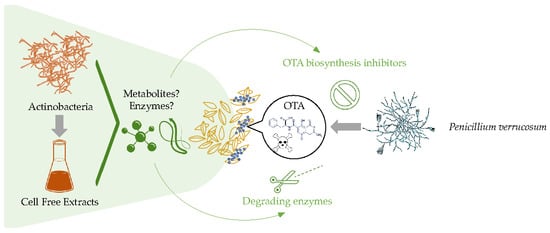
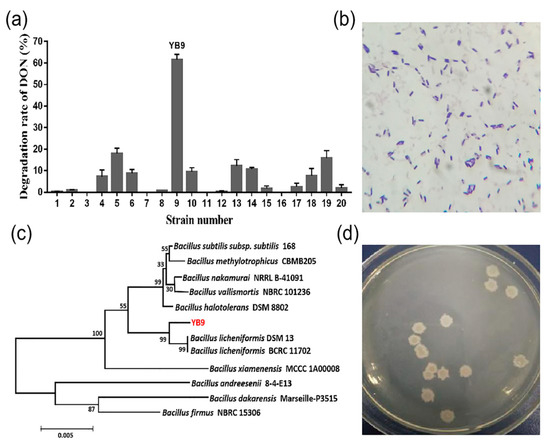
The aim of this topical collection is to gather the most recent research that provide data about effective strategies to prevent or reduce the presence of major and emerging mycotoxins in foods and feeds, including, but not limited to: biocontrol strategies including microorganisms producing of antifungal compounds, or able to compete for space and nutrients, studies about mechanisms of action of antifungal agents, detoxification technologies such as chemical removal, physical binding, or biological degradation of mycotoxins, and improved packaging materials.

Dr. Mar Rodriguez Jovita
Dr. Félix Núñez
Collection Editors

Manuscript Submission Information

Manuscripts should be submitted online at www.mdpi.com by registering and logging in to this website. Once you are registered, click here to go to the submission form. Manuscripts can be submitted until the deadline. All submissions that pass pre-check are peer-reviewed. Accepted papers will be published continuously in the journal (as soon as accepted) and will be listed together on the special issue website. Research articles, review articles as well as short communications are invited. For planned papers, a title and short abstract (about 250 words) can be sent to the Editorial Office for assessment.

Submitted manuscripts should not have been published previously, nor be under consideration for publication elsewhere (except conference proceedings papers). All manuscripts are thoroughly refereed through a double-blind peer-review process. A guide for authors and other relevant information for submission of manuscripts is available on the Instructions for Authors page. Toxins is an international peer-reviewed open access monthly journal published by MDPI.

Please visit the Instructions for Authors page before submitting a manuscript. The Article Processing Charge (APC) for publication in this open access journal is 2700 CHF (Swiss Francs). Submitted papers should be well formatted and use good English. Authors may use MDPI's English editing service prior to publication or during author revisions.

Keywords

  • Mycotoxins
  • Emerging mycotoxins
  • Food and feed
  • Biocontrol
  • Biological detoxification
  • Chemical detoxification
  • Physical detoxification
  • Improved packaging materials

Benefits of Publishing in a Special Issue

  • Ease of navigation: Grouping papers by topic helps scholars navigate broad scope journals more efficiently.
  • Greater discoverability: Special Issues support the reach and impact of scientific research. Articles in Special Issues are more discoverable and cited more frequently.
  • Expansion of research network: Special Issues facilitate connections among authors, fostering scientific collaborations.
  • External promotion: Articles in Special Issues are often promoted through the journal's social media, increasing their visibility.
  • e-Book format: Special Issues with more than 10 articles can be published as dedicated e-books, ensuring wide and rapid dissemination.

Published Papers

Get Alerted

Add your email address to receive forthcoming issues of this journal.

XFacebookLinkedIn
Toxins - ISSN 2072-6651