Skip Content
You are currently on the new version of our website. Access the old version .

Sustainability

Sustainability is an international, peer-reviewed, open-access journal on environmental, cultural, economic, and social sustainability of human beings, published semimonthly online by MDPI.
The Canadian Urban Transit Research & Innovation Consortium (CUTRIC), International Council for Research and Innovation in Building and Construction (CIB) and Urban Land Institute (ULI) are affiliated with Sustainability and their members receive discounts on the article processing charges.
Quartile Ranking JCR - Q2 (Environmental Studies | Environmental Sciences)

All Articles (101,002)

  • Systematic Review
  • Open Access

The Agenda 2030 for Sustainable Development was adopted by the United Nations (UN) to guide action towards sustainable development for humanity at every scale, as “Leave no one behind” is the central, transformative promise of the agenda. The 17 global Sustainable Development Goals (SDGs) provide ambitious political targets for every UN member state to shape the future univocally. However, the sustainability challenges faced at regional and subnational levels, e.g., community levels, are substantially diverse and the strategies for achieving the SDGs also vary across communities based on their context, agency and resources. We developed a pluralistic framework to guide policy action and grass-root transformation at every scale, aligning with the global SDGs, by systematically reviewing 79 sustainability transformation projects reported in the published literature. We analyzed what these diverse scale projects had in common regarding sustainability strategies, collaborations among societal actors and how new narratives were transferred into guided action. The framework comprises five consequent phases for the implementation of SDGs and SDG targets through problem formulation to project evaluation and four enabling factors comprising context, temporality, disciplines and stakeholders that crucially facilitate the implementation of SDGs and SDG targets. Our framework pursues the “leave no scale behind” aspiration, focusing on multi-stakeholder processes and inter- and transdisciplinary methods to strengthen collaboration among a diverse set of actors, joint learning, and coherent implementation across all relevant areas of society.

1 February 2026
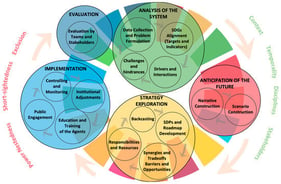
The “Leave no scale behind” framework comprising: (1) Five consequent phases for the implementation of Sustainable Development Goals (SDGs) and SDG targets at any scale, which are represented by the circles (big circles represent the major clustered phases while the small circles within the big circles represent the sub-phases constituting the major phases). The direction of arrows indicates the direction of phases conduction; (2) Four enabling factors supporting and facilitating the implementation of SDGs and SDG targets, represented by the green text on the right; (3) Three hindering factors challenging the implementation of SDGs and SDG targets, represented by the red text on the left.

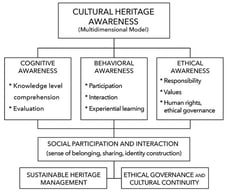
This study develops and validates the Cultural Heritage Awareness Scale (CHAS), a multidimensional measurement instrument designed to assess individuals’ awareness of cultural heritage within the context of sustainable heritage management. The study addresses the need to move beyond cognitively oriented awareness models by conceptualising cultural heritage awareness as an integrated construct encompassing ethical responsibility, functional engagement, and governance-oriented conservation. The scale was developed using a quantitative scale development design, informed by expert-generated items and psychometric validation procedures applied to university student samples. Factor analyses confirmed a stable three-dimensional structure with satisfactory model fit and strong internal consistency, indicating that the proposed model reliably captures distinct yet interrelated dimensions of heritage awareness. The findings demonstrate that cultural heritage awareness extends beyond recognition and appreciation to include ethical accountability, engagement with use, and participation in governance-related processes. By integrating ethical, functional, and governance dimensions within a single validated instrument, the CHAS offers an original contribution to heritage awareness measurement. The scale provides a practical tool for assessing heritage awareness in educational, planning, and policy-related contexts, particularly in relation to participatory and sustainability-oriented heritage governance. While the scale shows robust performance within a university-based sample, further research is recommended to examine its applicability across more diverse socio-cultural contexts.

1 February 2026

Conceptual model of the multidimensional structure of cultural heritage awareness (developed by the authors).

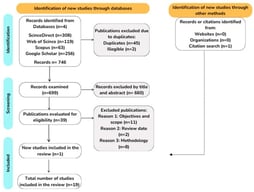
Food waste generated by hospitalized patients represents a significant challenge with environmental, economic, and social implications. In this context, Sustainable Development Goal 12, which promotes responsible consumption and production patterns, highlights the urgency of reducing this waste as an essential measure to mitigate climate change, optimize resource use, and improve the sustainability of health and food systems. This study presents a narrative review of the literature, complemented by a bibliometric analysis, aimed at synthesizing the available evidence on food waste in hospitals. Based on the identification of 746 records in different databases published between 2019 and 2024, studies focusing on the determining factors, quantification methods, and sustainable strategies to mitigate hospital food waste were included. The lack of menu personalization, the perceived low quality of food, operational disorganization, and reduced patient appetite are identified as relevant factors associated with waste at the hospital level, while direct weighing remains the most accurate quantification method. The sustainable strategies reviewed can reduce food waste and improve hospital sustainability; however, there remains limited assessment of their long-term impact. Our results highlight the urgent need to address food waste in hospitals through the implementation of comprehensive, evidence-based strategies.

1 February 2026

Selection of studies in the narrative review.

News & Conferences

Issues

Open for Submission

Editor's Choice

Reprints of Collections

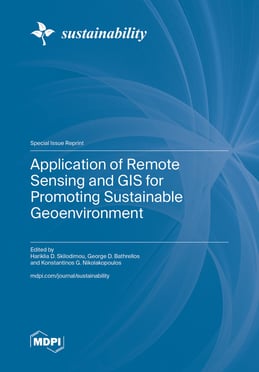
Application of Remote Sensing and GIS for Promoting Sustainable Geoenvironment
Reprint

Application of Remote Sensing and GIS for Promoting Sustainable Geoenvironment

Editors: Hariklia D. Skilodimou, George D. Bathrellos, Konstantinos G. Nikolakopoulos
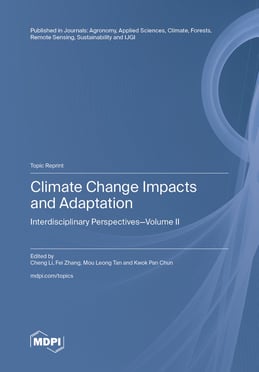
Climate Change Impacts and Adaptation
Reprint

Climate Change Impacts and Adaptation

Interdisciplinary Perspectives—Volume II
Editors: Cheng Li, Fei Zhang, Mou Leong Tan, Kwok Pan Chun

Get Alerted

Add your email address to receive forthcoming issues of this journal.

XFacebookLinkedIn
Sustainability - ISSN 2071-1050