


Special Issue "Soil Health Restoration and Environmental Management"

A special issue of Sustainability (ISSN 2071-1050). This special issue belongs to the section "Social Ecology and Sustainability".

Deadline for manuscript submissions: 30 April 2022.

Special Issue Editors

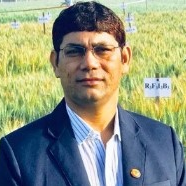
Dr. Ram Swaroop Meena
E-Mail Website
Guest Editor
Department of Agronomy, Institute of Agricultural Sciences, Banaras Hindu University, Varanasi 221005, India
Interests: soil health restoration and policies; carbon sequestration and stabilization; resources use efficiency; climate change; crop; productivity; sustainability
Special Issues and Collections in MDPI journals
Dr. Sandeep Kumar
E-Mail Website
Guest Editor
Indian Institute of Pulses Research, Kanpur 208024, India
Interests: agronomy; resource conservation technology; enhancing input use efficiency and productivity of pulse production systems
Special Issues and Collections in MDPI journals
Dr. Manoj Kumar Jhariya
E-Mail Website
Guest Editor
Department of Farm Forestry, Sant Gahira Guru Vishwavidyalaya (Formerly, Sarguja University), Sarguja, Ambikapur 497001, India
Interests: forestry; ecology; agroforestry; biodiversity assessment; climate change
Special Issues and Collections in MDPI journals

Special Issue Information

Dear Colleagues,

Climate change and soil health are two interrelated factors that affect the food, nutritional, environmental, and economic status of a country. However, most of the soils are less fertile and have low soil organic carbon (SOC) stock. Thus, it is time to focus on the restoration of SOC for food, nutritional, and environmental security for the developing world. It is important to formulate and implement policies for soil health restoration to strengthen agricultural soil systems. Redesigned policies should be focused on soil, environmental, and human health through soil health restoration. Through planning to manage the agroecosystem, it is possible to establish a link between soil and human wellbeing toward achieving sustainability. Now there is an urgency to take needful actions for the implementation of best management practices (BMPs) and different policies and planning for sustainable and eco-friendly agricultural systems to achieve advanced sustainability. This calls for better coordination among scientists, farmers, and land managers for designing efficient policy. It will help to generate a holistic approach for developing an action plan by taking advantage of available technical and scientific resources to restore the soil health of terrestrial ecosystems. The science and policy need to be brought together at a common platform that is useful to all living entities, including soil.

Dr. Ram Swaroop Meena
Dr. Sandeep Kumar
Dr. Manoj Kumar Jhariya
Guest Editors

Manuscript Submission Information

Manuscripts should be submitted online at www.mdpi.com by registering and logging in to this website. Once you are registered, click here to go to the submission form. Manuscripts can be submitted until the deadline. All papers will be peer-reviewed. Accepted papers will be published continuously in the journal (as soon as accepted) and will be listed together on the special issue website. Research articles, review articles as well as short communications are invited. For planned papers, a title and short abstract (about 100 words) can be sent to the Editorial Office for announcement on this website.

Submitted manuscripts should not have been published previously, nor be under consideration for publication elsewhere (except conference proceedings papers). All manuscripts are thoroughly refereed through a single-blind peer-review process. A guide for authors and other relevant information for submission of manuscripts is available on the Instructions for Authors page. Sustainability is an international peer-reviewed open access semimonthly journal published by MDPI.

Please visit the Instructions for Authors page before submitting a manuscript. The Article Processing Charge (APC) for publication in this open access journal is 1900 CHF (Swiss Francs). Submitted papers should be well formatted and use good English. Authors may use MDPI's English editing service prior to publication or during author revisions.

Keywords

  • soil organic carbon
  • active and passive carbon pool
  • carbon sequestration
  • soil health restoration, food and environmental security
  • resource use efficiency
  • macro- and micronutrient cycling in soil
  • soil biodiversity
  • agroecosystem services
  • energy consumption in agriculture
  • soil organic matter stability and microbial interaction
  • crop productivity
  • sustainability

Published Papers (4 papers)

Order results
Result details
Select all
Export citation of selected articles as:

Research

Article
Mineralization of Farm Manures and Slurries under Aerobic and Anaerobic Conditions for Subsequent Release of Phosphorus and Sulphur in Soil
Sustainability 2021, 13(15), 8605; https://doi.org/10.3390/su13158605 - 02 Aug 2021
Viewed by 337
Abstract
A good understanding of nutrient release from manure or compost after application through mineralization is important to assure meeting the nutrient demand of crops, to secure timely fertilizer application and to enhance nutrient use efficiency. The current study was done to evaluate phosphorus [...] Read more.
A good understanding of nutrient release from manure or compost after application through mineralization is important to assure meeting the nutrient demand of crops, to secure timely fertilizer application and to enhance nutrient use efficiency. The current study was done to evaluate phosphorus (P) and sulphur (S) release patterns from different types of manures viz. cow dung, cow dung slurry, tricho-compost, vermicompost, poultry manure, poultry manure slurry and mungbean residues. The mineralization study was performed under aerobic (field capacity) and anaerobic (waterlogging) conditions for 180 days at 25 ± 1 °C in the laboratory. The release of P and S showed the highest values within 75–180 and 75–150 days, respectively, and was always higher in aerobic conditions than in anaerobic conditions. The first-order kinetic cumulative model was a good fit for mineralization, which was significantly influenced by manure type, soil moisture level and incubation period. Poultry manure slurry exerted the highest P and S release under both moisture conditions. Both slurries showed higher potential mineralization, with a lower rate constant for these elements compared to that in their manure states. Hence, appropriate manures should be chosen and applied in the proper quantity to provide exact amounts of nutrients, to increase crops nutrient use efficiency and to formulate correct fertilizer recommendations. Full article
(This article belongs to the Special Issue Soil Health Restoration and Environmental Management)
Show Figures

Figure 1

Article
Macadamia Husk Compost Improved Physical and Chemical Properties of a Sandy Loam Soil
Sustainability 2021, 13(13), 6997; https://doi.org/10.3390/su13136997 - 22 Jun 2021
Viewed by 534
Abstract
Poor soil fertility caused mainly by low and declining soil organic carbon is one of the major constraints limiting crop productivity in tropical and subtropical regions of South Africa. We evaluated the effect of macadamia husk compost (MHC) on selected chemical and physical [...] Read more.
Poor soil fertility caused mainly by low and declining soil organic carbon is one of the major constraints limiting crop productivity in tropical and subtropical regions of South Africa. We evaluated the effect of macadamia husk compost (MHC) on selected chemical and physical properties of a sandy loam soil in NE South Africa in two successive seasons. The treatments, laid out in randomised, complete block design and replicated four times, were: (i) zero control, (ii) inorganic fertilizer (100:60:60 NPK Kg ha−1), (iii) MHC at 15 t ha−1, and (iv) MHC at 30 t ha−1. Soil bulk density; water holding capacity; soil pH; electrical conductivity (EC); organic carbon; total N; and available P, K, Ca, Mg, Al, Zn, and Cu were determined at 0–15 cm soil depth. Macadamia husk compost application decreased bulk density and increased water holding capacity. MHC and inorganic fertilizer increased soil pH, organic carbon, total N, C:N ratio, available P, exchangeable cations, and micronutrients but the effect was more pronounced under MHC treatments in both seasons. The positive effect of MHC on soil physicochemical properties was associated with an increase in soil organic carbon due to MHC application; hence, MHC may offer a sustainable option of increasing soil productivity, particularly in areas characterised by low SOC. Full article
(This article belongs to the Special Issue Soil Health Restoration and Environmental Management)
Article
Chemical and Biological Enhancement Effects of Biochar on Wheat Growth and Yield under Arid Field Conditions
Sustainability 2021, 13(11), 5890; https://doi.org/10.3390/su13115890 - 24 May 2021
Cited by 2 | Viewed by 540
Abstract
Nitrogen (N) losses are prevalent under South East Asia’s due to high N fertilizer inputs, but low N fertilizer use efficiency. This leaves a large quantity of reactive N at risk of loss to the environment. Biochar has been found to reduce N [...] Read more.
Nitrogen (N) losses are prevalent under South East Asia’s due to high N fertilizer inputs, but low N fertilizer use efficiency. This leaves a large quantity of reactive N at risk of loss to the environment. Biochar has been found to reduce N losses across a variety of soil types, however, there is limited data available for semi-arid climates, particularly at a field-scale. Herein we present an exploration of the biological and chemical enhancement effects observed of a cotton stalk-based biochar on wheat growth and yield under arid field conditions. The biochar was treated with urea-N and biofertilizer (bio-power) in different treatment setups. The six experimental treatments included; (i) a full N dose “recommended for wheat crops in the region” (104 kg N ha−1) as a positive control; (ii) a half N dose (52 kg N ha−1); (iii) a half N dose + biofertilizer (4.94 kg ha−1) as a soil mixture; (iv) a half N dose + biofertilizer as a seed inoculation; (v) a full N dose as broadcast + biochar (5 t ha−1) inoculated with biofertilizer; and (vi) a full N dose loaded on biochar + biofertilizer applied as a soil mixture. The half dose N application or biofertilizer addition as soil mix/seed inoculated/biochar inoculation with biofertilizer caused reduced wheat growth and yield compared to the control (conventional N fertilization). However, co-application of chemically enhanced biochar (loaded with a full N dose) and biofertilizer as soil mixture significantly increased the crop growth rate (CGR) and leaf area index (LAI). A significantly higher crop growth and canopy development led to a higher light interception and radiation use efficiency (RUE) for total dry matter (TDM) and grain yield (11% greater than control) production compared to the control. A greater grain yield, observed for the full N dose loaded on biochar + biofertilizer applied as a soil mixture, is attributed to prolonged N availability as indicated by greater plant and soil N content at harvest and different crop growth stages, respectively. The present study has improved our understanding of how the application of nitrogen loaded biochar and biofertilizer as soil mixtures can synergize to positively affect wheat growth and soil-nitrogen retention under arid environmental conditions. Full article
(This article belongs to the Special Issue Soil Health Restoration and Environmental Management)
Show Figures

Figure 1

Article
Post-Emergence Herbicides for Effective Weed Management, Enhanced Wheat Productivity, Profitability and Quality in North-Western Himalayas: A ‘Participatory-Mode’ Technology Development and Dissemination
Sustainability 2021, 13(10), 5425; https://doi.org/10.3390/su13105425 - 12 May 2021
Viewed by 433
Abstract
‘Participatory-mode’ adaptive research was conducted in wheat in north-western Himalayas (NWH) during 2008–2014 to develop an improved chemical weed management (ICWM) technology. First of all, two years ‘on-farm experimentation’ was performed in a randomized block design at 10 locations in NWH using seven [...] Read more.
‘Participatory-mode’ adaptive research was conducted in wheat in north-western Himalayas (NWH) during 2008–2014 to develop an improved chemical weed management (ICWM) technology. First of all, two years ‘on-farm experimentation’ was performed in a randomized block design at 10 locations in NWH using seven treatments (Clodinafop @ 60 g a.i./ha (Clod); Clod followed by 2,4-D (Na-salt) @ 1.0 kg a.i./ha (Clod-fb-D); Isoproturon 75 WP @ 1.0 kg a.i./ha (Iso); Iso + D; Sulfosulfuron 75% WG @ 25 g a.i./ha + Metsulfuron 5% WG @ 2 g a.i./ha (Sulf + Met); weed-free-check; and un-weeded-check). In this study, the post-emergence application of Sulf + Met reported the lowest weed-index and NPK depletion by weeds with higher weed control efficiency (86.4%), weed control index (81.1%) and herbicide efficiency index (2.62) over other herbicides. Sulf + Met exhibited significantly higher wheat productivity (3.57 t/ha), protein yield, net-returns and water-productivity, which was followed by Iso + D and Clod-fb-D, all of which remained statistically at par with each other. An impact assessment of intensive technology-transfer programme (2008–2014) revealed a higher technology adoption rate (71–98%) of ICWM leading to higher wheat productivity (~22%) and net income gains (2.8–26.4%) in NWH. Overall, Sulf + Met proved highly effective against mixed weed flora in wheat to boost wheat productivity, profitability, quality and water productivity in addition to a higher technology adoption rate and NIGs to transform rural livelihoods in NWH. Full article
(This article belongs to the Special Issue Soil Health Restoration and Environmental Management)
Show Figures

Figure 1

Back to TopTop