
You are currently viewing a new version of our website. To view the old version click .
  • Tracked forImpact Factor
  • 4.3CiteScore
  • 22 daysTime to First Decision

Solar

Solar is an international, peer-reviewed, open access journal on all aspects of solar energy and photovoltaic systems published quarterly online by MDPI.

All Articles (164)

Floating photovoltaic systems represent a promising solution for renewable energy generation, offering an alternative to agricultural land consumption. However, these installations have the potential to exert an effect on the aquatic ecosystem, emphasizing the necessity of effective monitoring strategies also related to system management issues. In this paper, the use of an unmanned surface vehicle, which can also operate as an autonomous surface vehicle, is proposed to overcome many difficulties of maintenance and monitoring in aquatic environments. A review of the extant literature reveals the scarcity of a cohesive monitoring framework for these plants, highlighting the urgent need for standardized guidelines for plant management and water quality monitoring. The implementation of automated plants directly addresses this gap by providing a tool for efficient and sustainable monitoring tasks, enabling, at the same time, aquatic ecosystem protection and energy production optimization. To address these challenges, a low-cost prototype of an autonomous surface vehicle is proposed. Preliminary test results on trajectory control and obstacle recognition are reported.
4 December 2025

Floating pontoon with walkway—© 1996–2025 MDPI image. Adapted from [23].

Efficient utilization of solar energy in equatorial regions depends on accurately determining the optimal tilt and azimuth angles of fixed photovoltaic (PV) systems. This study presents a three-dimensional vector-based methodology that employs Direct Normal Irradiance (DNI) to estimate the mean direction of incident solar flux. Hourly DNI data from 2020–2024 for the city of Guayaquil, Ecuador, were transformed into spatial vectors and integrated to obtain a resultant vector representing the average orientation and elevation of direct solar radiation. The analysis yielded an optimal tilt angle of 5.73° and an azimuth of 59.15°, values consistent with Guayaquil’s equatorial latitude and previous studies conducted in tropical environments. The low tilt angle reflects the persistently high solar elevation typical of equatorial zones, while the slight northeastward orientation deviation corresponds to the asymmetric diurnal distribution of solar irradiance. The main contribution of this work lies in providing a geometrically rigorous and computationally efficient approach capable of synthesizing the directional behavior of solar flux without relying on complex transposition models. The proposed method enhances the optimization of PV system design, urban energy planning, and renewable microgrid modeling in data-scarce contexts, supporting the sustainable development of solar energy in equatorial regions.
1 December 2025

The position of the Sun in the sky in June the 21st at 12:00 h for the geographical location studied: (a) azimuth angle; (b) altitude angle [14].

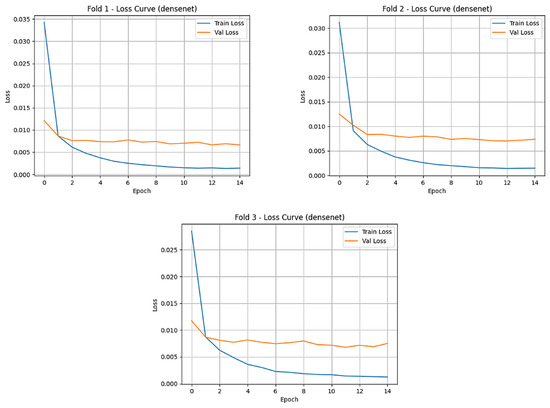
Accurate day-ahead solar forecasting is essential for grid stability and energy planning. This study introduces a specialized forecasting framework that enhances accuracy by training models on specific day-to-day sky condition transitions. The framework employs a dual-attention transformer model, which captures complex temporal and feature-wise relationships, using a dataset of approximately 5000 daily sequences from three sites in Mongolia (2018–2024). Our core contribution is a specialized training strategy where the dataset is first classified into nine distinct classes based on the sky condition transition from the previous day to the forecast day, such as ‘Clear’ to ‘Partly cloudy’. A dedicated transformer model is then trained for each transitional state, enabling it to become an expert on that specific weather dynamic. This specialized framework is benchmarked against a naive persistence model, a standard, generalized transformer trained on all data and a ‘cluster-then-forecast’ approach. Results show the proposed approach achieves superior performance improvement compared to baseline models (p < 0.001) across all error metrics, demonstrating the value of modeling inter-day weather dynamics. Furthermore, the framework is extended to probabilistic forecasting using quantile regression to generate 80% prediction intervals, providing crucial uncertainty information for operational decision-making in power grids.

20 November 2025

Hourly average global horizontal irradiance (GHI) records at ground sites.

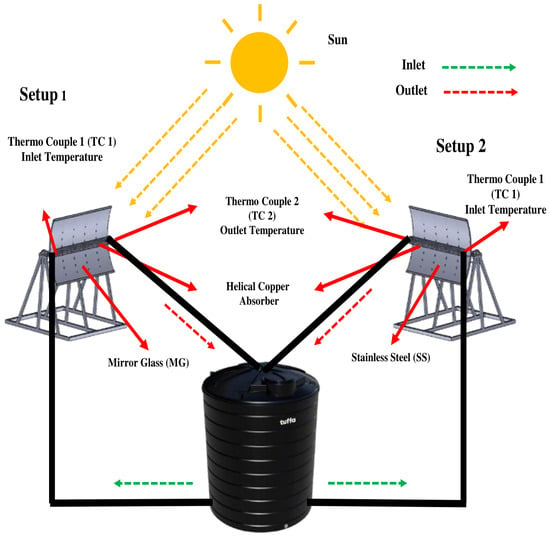
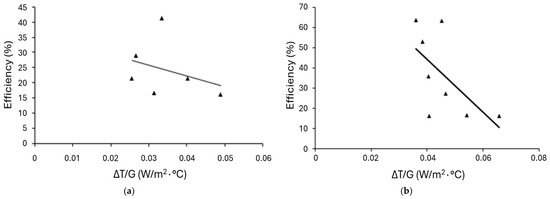
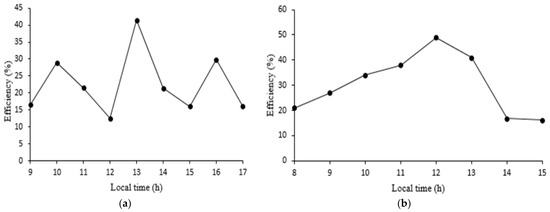
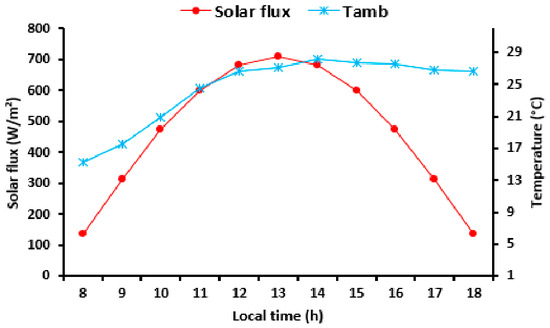
This study evaluates the thermal performance of a prototype vacuum-tube solar cooker adapted to the climatic conditions of the Amazon region, Peru. Four grain types (Zea mays L., Triticum aestivum, Zea mays var. morochon, and Hordeum vulgare) were tested to assess temperature evolution, exposure time, and incident solar radiation. Hordeum vulgare was selected as a food model for calibration due to its well-characterized thermophysical properties and reproducible heating behavior. The results showed individual thermal efficiencies ranging from 19.3% to 35.3%, with an average of 27.3% across the three tubes. The most efficient treatment, obtained with Zea mays L., reached 180 °C under an irradiance of approximately 980 W/m2. A direct relationship was observed between solar radiation intensity, exposure time, and thermal efficiency. These findings confirm that the proposed hybrid design combining a cylindrical parabolic collector with vacuum U-tubes achieves higher and more stable performance than conventional box-type cookers. The system allows complete grain cooking without fossil fuels, demonstrating its potential as a sustainable and low-cost solution for rural communities in the Andean Amazonian region, promoting clean energy adoption and reducing environmental impact.

10 November 2025

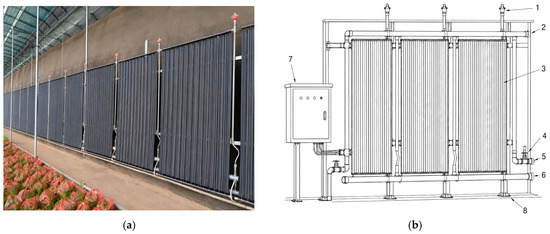
Solar cooker.

News & Conferences

Issues

Open for Submission

Editor's Choice

Reprints of Collections

Sustainable Energy Technology
Reprint

Sustainable Energy Technology

Editors: Wei-Hsin Chen, Aristotle T. Ubando, Chih-Che Chueh, Liwen Jin
Advances in Renewable Energy and Energy Storage
Reprint

Advances in Renewable Energy and Energy Storage

Editors: Luis Hernández-Callejo, Jesús Armando Aguilar Jiménez, Carlos Meza Benavides

Get Alerted

Add your email address to receive forthcoming issues of this journal.

XFacebookLinkedIn
Solar - ISSN 2673-9941