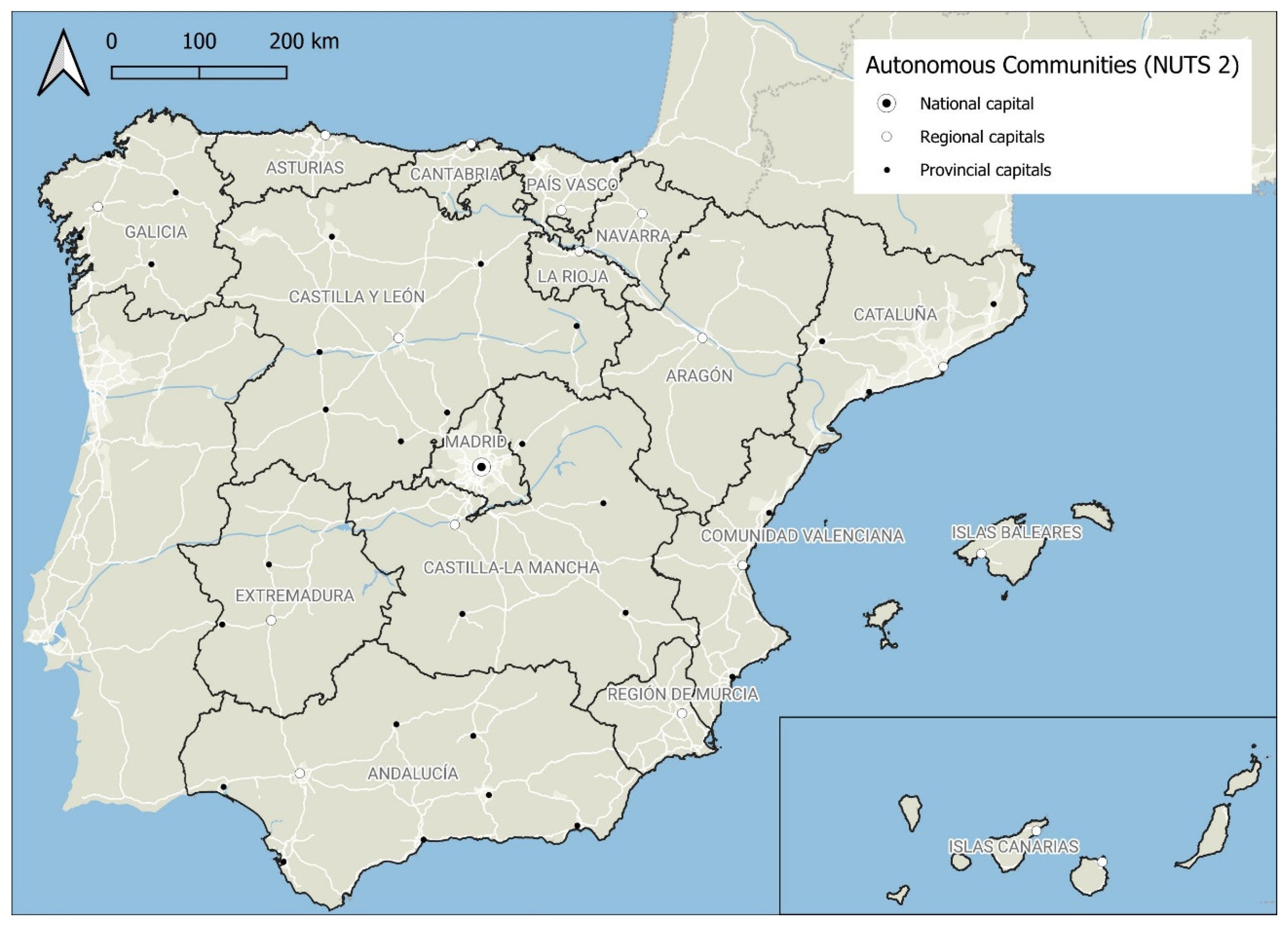
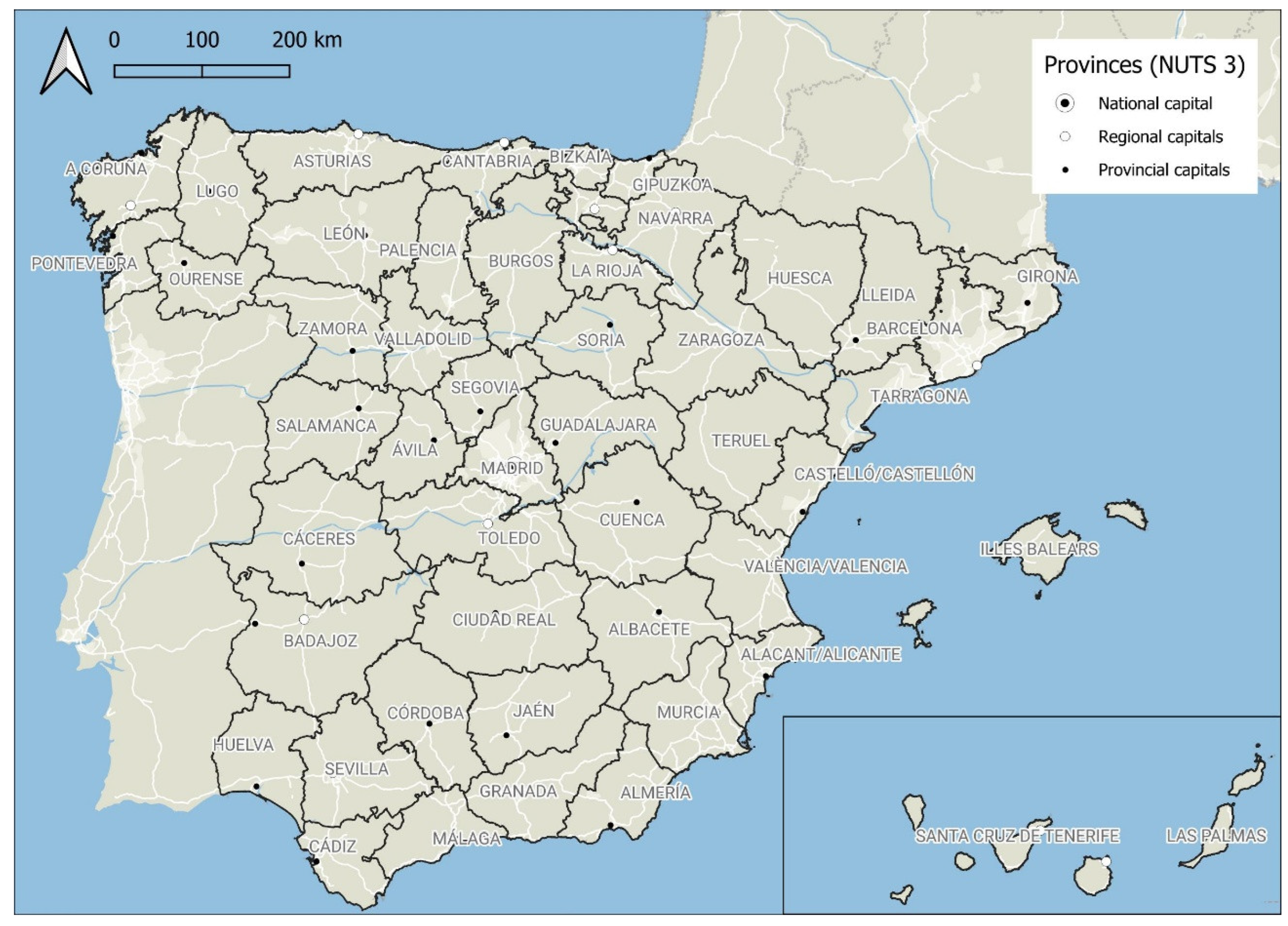
The RAIPEE database contains a total of 63,489 registered facilities. Additionally, a separate register of 408 facilities that obtained a favourable EIS up to 2023 was compiled. Since the municipality of installation has been recorded for all entries, it is possible to map their location.
For the chronology of the EIS-registered facilities, the date of publication in the Official State Gazette (BOE) was considered. A comparative analysis between the register of favourable EIS and the RAIPEE revealed an overlap, as 15 facilities with a favourable EIS were already registered in the RAIPEE between 2019 and 2022.
3.1. Autocorrelation Patterns
When all PV facilities are considered collectively, the analysis reveals a positive Moran’s I, with a high z-score of 35.92 and p-value < 0.01. These results provide significant statistical evidence to reject the null hypothesis () of spatial randomness. Consequently, it is concluded that the distribution of PV facilities in Spain, when taken in its entirety, reflects positive spatial autocorrelation; that is, there is a tendency for facilities to cluster in proximity.
However, when performing the analysis by separating facilities into distinct power ranges, an interesting trend is observed: spatial autocorrelation decreases as the installed capacity of the facilities increases.
For the lower power ranges (0–5 kW and 5–100 kW), the positive Moran’s I is more pronounced (z = 13.84 p < 0.01 and z = 20.09 p < 0.01, respectively), indicating a strong tendency towards clustering. This is likely attributable to the mass installation of rooftop PV systems in urban and peri-urban areas. These zones, characterized by a high density of buildings, naturally induce an aggregation of smaller-capacity facilities, as the availability of rooftops and local energy demand drive their proliferation in geographic proximity.
Power ranges between 100 kW and 10 MW show a similar tendency but with lower z-scores (z = 1.99 for facilities from 100 kW to 1 MW and z = 4.12 for facilities from 1 MW to 10 MW). While still statistically significant, the reduced z-score suggests a weaker degree of positive spatial autocorrelation compared to the smallest-scale facilities.
Conversely, the power ranges exceeding 10 MW exhibit seemingly random distribution patterns. For these large-scale facilities, the obtained values are p > 0.01 and z < 1.5 (specifically z = 1.44 for 10 MW to 50 MW facilities and z = 0.71 for 50 MW to 600 MW facilities), which precludes the rejection of the null hypothesis of randomness. This suggests that large PV plants, which are often subject to requirements for vast tracts of land and specific grid connection conditions, do not show a marked tendency to cluster spatially with other facilities of similar capacity.
3.2. PV Energy Cartographies
Generally, it is observed that the development of installed PV capacity tends to diffuse from urban cores toward peripheral areas. These urban cores, being centres of high economic activity and energy consumption, act as development poles for PV facilities, particularly those associated with self-consumption and smaller facilities.
The greatest concentrations of development are primarily located around major urban centres, though significant expansion is also evident beyond these densely populated areas. This trend is particularly pronounced in the southern half of the country, where solar radiation conditions are optimally more favourable than in the north.
3.2.1. PV Facilities with Capacity of 0–5 kW
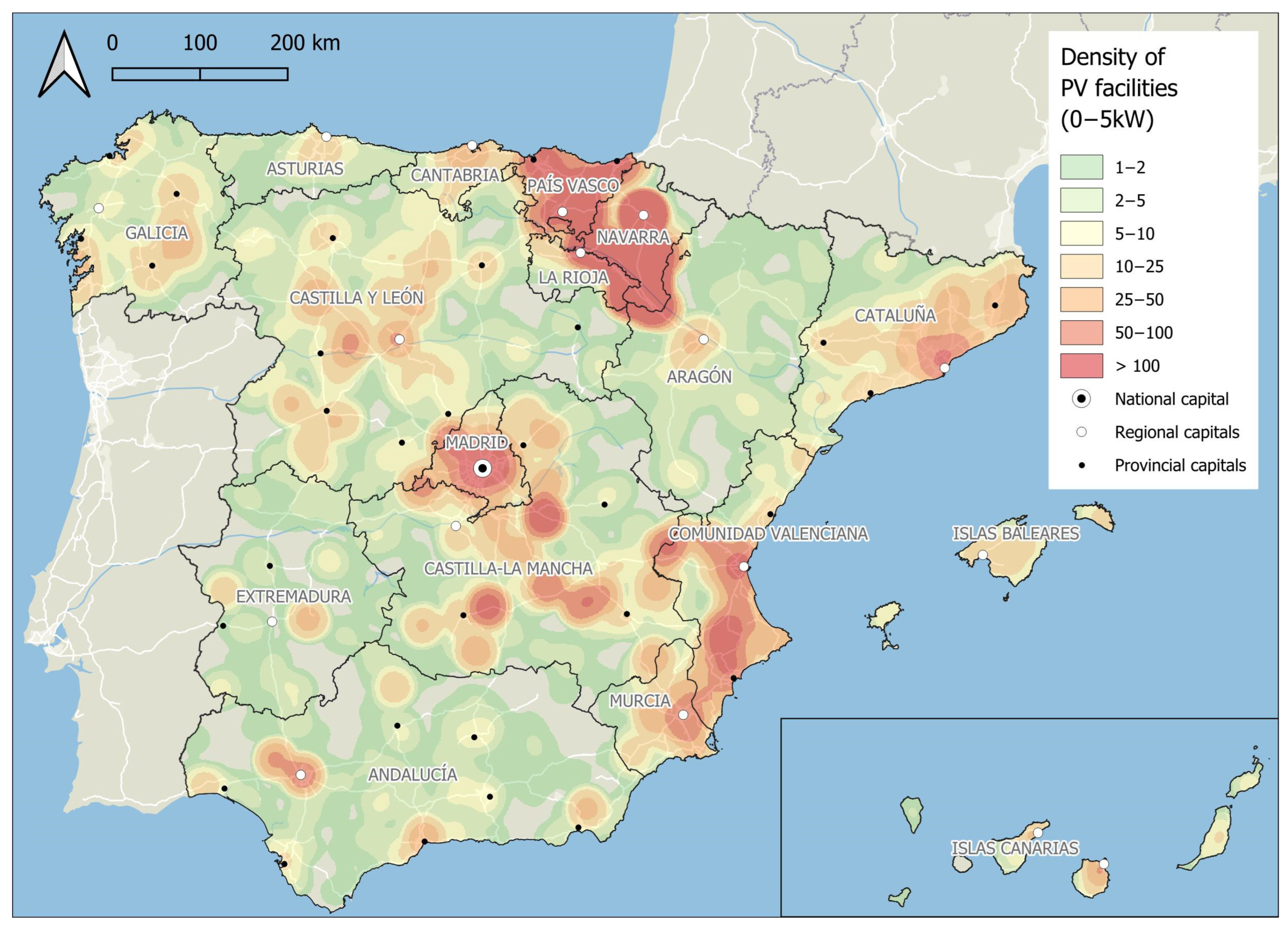
PV facilities with capacities ranging from 0 to 5 kW represent a significant portion of registered units but contribute marginally to Spain’s overall installed capacity. As of 2023, these low-capacity units totalled 12,937 operative facilities, accounting for 20.70% of all registered PV units, yet only 0.27% of the total national installed PV capacity (60.88 MW). The geographical distribution of these facilities varies considerably across the Autonomous Communities, revealing distinct regional density clusters (
Figure 3).
A particularly dense cluster is observed in southern Navarra, which alone concentrates 41.90% of the total facilities and 44.14% of the capacity within the 0–5 kW range. Combined with País Vasco, these two Autonomous Communities account for over half (51.01%) of all facilities in this category (6599 units).
Along the Mediterranean coast, a substantial number of facilities are located, forming an urban-energy continuum. Comunidad Valenciana hosts 1192 facilities (9.21% of the total, 5409 kW), primarily distributed across the metropolitan areas of Valencia and Alicante. Concurrently, Murcia (300 facilities) exhibits a marked concentration within its capital city.
Castilla-La Mancha hosts a significant share of the facilities (1251 units, 9.67%, 6076 kW). However, the largest density centres in this power range are not located in the provincial capitals but rather in smaller municipalities (e.g., Daimiel, Socuéllamos, Munera). This spatial pattern distinguishes it from the urban-centric model of other regions, potentially reflecting the greater availability of peri-urban land or the proliferation of small-scale rural projects.
Madrid (756 facilities, 5.84%) and Cataluña (667 facilities, 5.16%) display a deployment pattern tightly linked to major urban centres. The majority of facilities and capacity (3405 kW and 2616 kW, respectively) are concentrated within the capital cities of Madrid and Barcelona and their corresponding metropolitan areas.
The remaining low-capacity facilities are distributed relatively equitably among the other Autonomous Communities (2172 facilities, 16.79%). In these territories, the density clusters predominantly occur in the provincial capitals and adjacent municipalities, such as Sevilla, Valladolid, Zaragoza, and Santander, reinforcing the urban-centric development model.
In summary, the dominant deployment pattern for the smallest capacity facilities is concentrated within provincial capitals and large urban areas. Cities such as Pamplona, Murcia, Madrid, Vitoria-Gasteiz, Sevilla, Valladolid, Bilbao, and Barcelona are prominent, all hosting over 30 facilities; Pamplona, notably, has 834 registered units. The high volume of low-capacity facilities within major urban areas strongly suggests that these facilities are predominantly self-consumption systems installed on building rooftops.
3.2.2. PV Facilities with Capacity of 5–100 kW
PV facilities with capacities between 5 and 100 kW represent the single largest group in Spain’s registered PV fleet by unit count. As of 2023, these facilities totalled 47,595 operative units, comprising 76.17% of all PV facilities registered in the RAIPEE. While their number is dominant, they collectively aggregate a total installed power of 3211.74 MW, which accounts for 14.16% of the country’s total PV capacity.
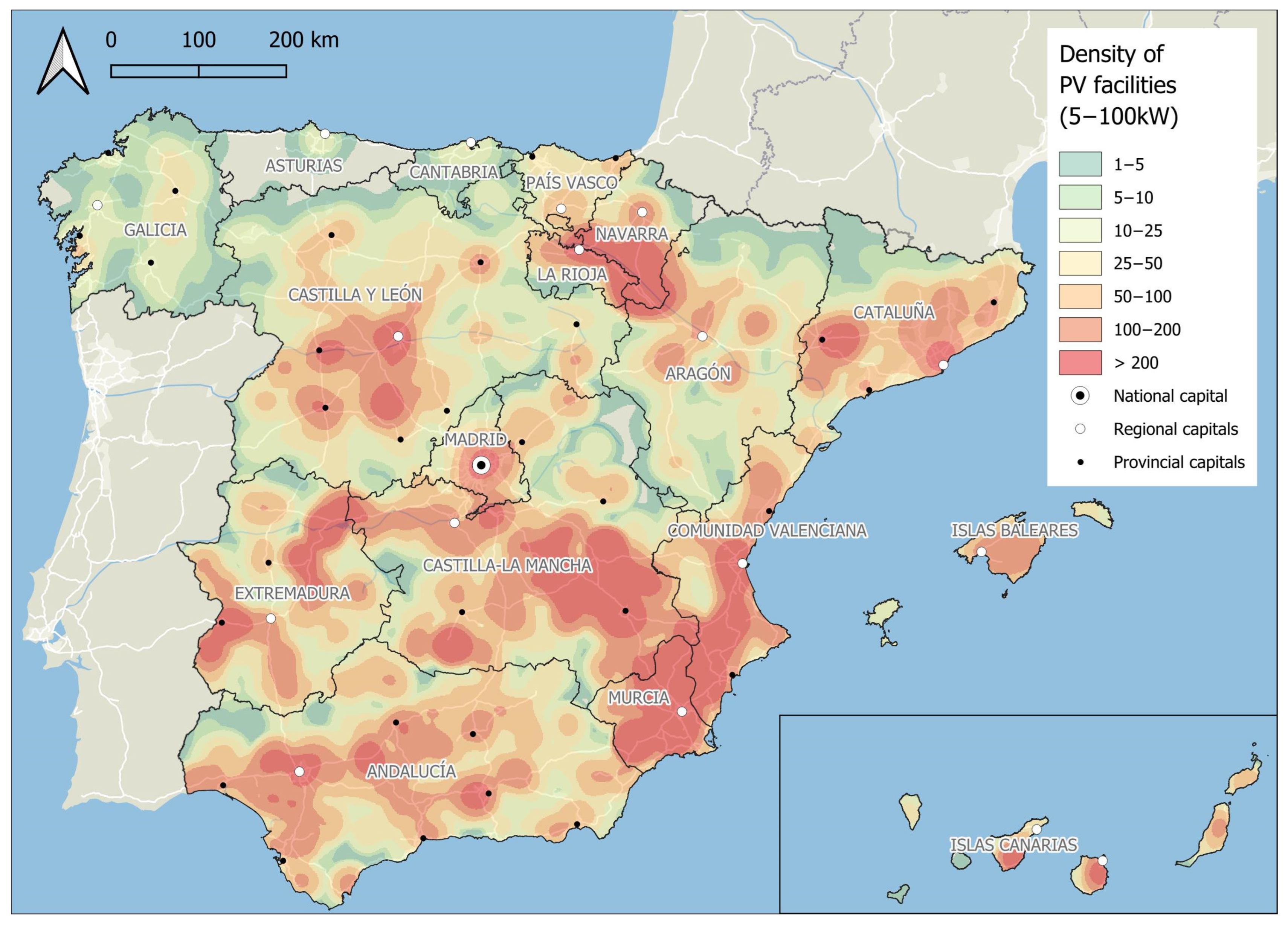
The territorial distribution of 5–100 kW facilities exhibit significant dispersion across the entire Spanish territory (
Figure 4). Like the 0–5 kW group, urban centres, particularly provincial capitals, remain important concentration points. However, within this medium-capacity range, the area of concentration tends to expand considerably, extending into peri-urban zones.
Furthermore, a notable proliferation is observed in large rural areas, particularly across Castilla-La Mancha, Murcia, Valencia, Extremadura, and Castilla y León. These regions, characterized by greater land availability, facilitate the development of projects at this intermediate scale. Similarly, the Guadalquivir Valley in Andalucía and the Ebro Valley in Aragón constitute significant areas of high concentration.
The largest concentrations of power and facilities are found in the following territories: Castilla-La Mancha leads the national deployment of these facilities, concentrating 10,264 units (21.57%) and 791.56 MW (24.65% of the group’s capacity). Its development is primarily centred in the provinces of Albacete, Cuenca, and Ciudad Real. Andalucía ranks as the second community in this segment, hosting 7357 facilities 15.46%) with an aggregate capacity of 617.02 MW (19.21%). The province of Sevilla is particularly prominent, concentrating a quarter of the Autonomous Community’s facilities, with the remainder distributed relatively equally among the other provinces. Following these leaders, Castilla y León concentrates 10.03% of the facilities (4775) and 10.58% of the capacity (339.83 MW), distributed primarily across the provinces of Valladolid, Zamora, Salamanca, and Ávila.
The remaining Autonomous Communities fall below 10% in both facilities and installed capacity within the 5 kW to 100 kW range. Notably, there is a low proliferation of this type of facility in the northern territories of the peninsula, which show very low percentages: Asturias (0.04%), Cantabria (0.11%), Galicia (0.88%), and País Vasco (0.87%). The situation in País Vasco is particularly noteworthy and contrasting, given its high concentration of very low-capacity (0–5 kW) facilities. This disparity suggests a greater regional preference for, or viability of, domestic rooftop self-consumption over larger-scale commercial and industrial projects.
3.2.3. PV Facilities with Capacity of 100 kW–1 MW
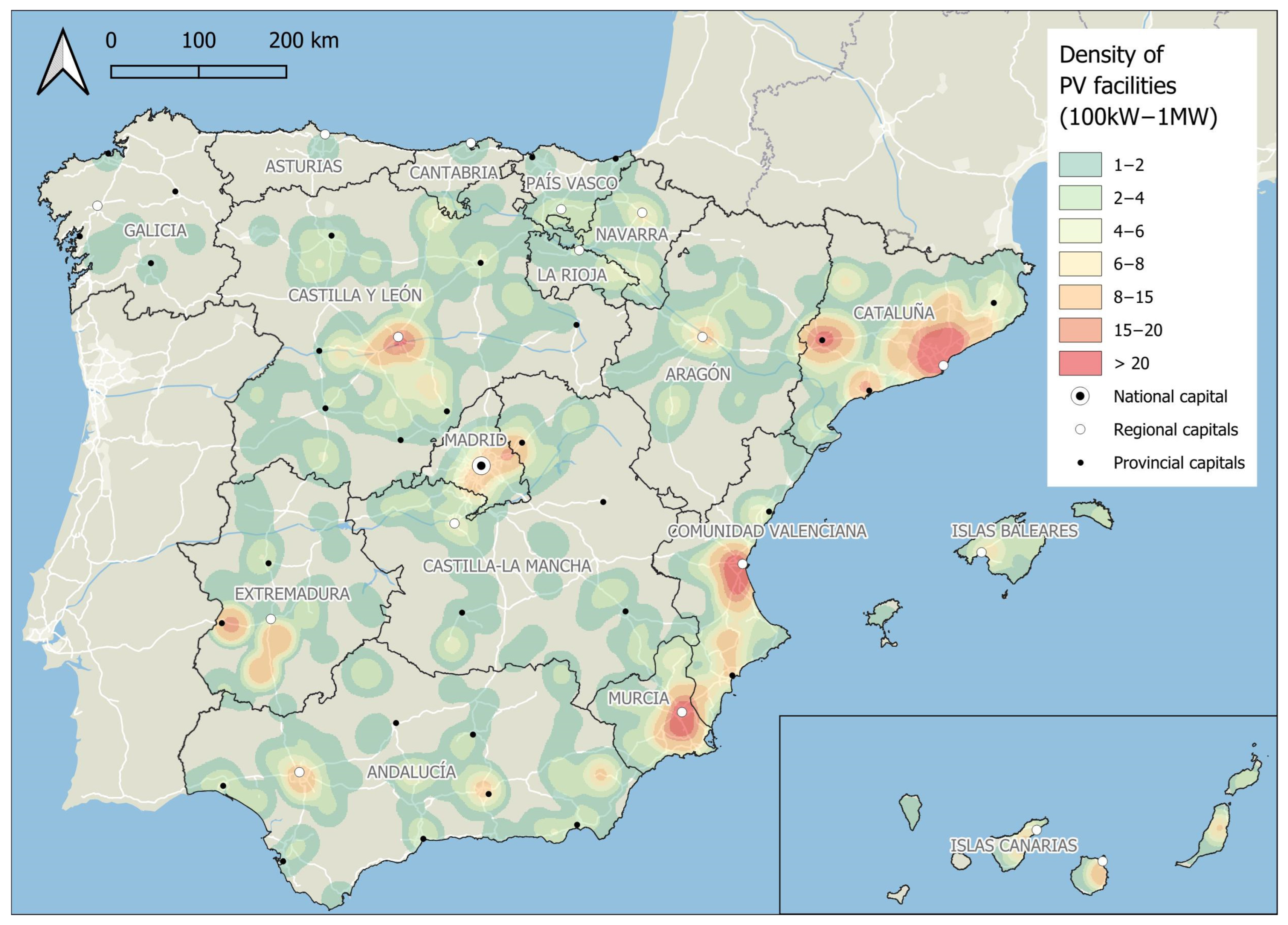
PV facilities with capacities between 100 kW and 1 MW reveal distinct spatial dynamics within the Spanish territory compared to the patterns observed in lower power ranges. This group comprises 1024 registered facilities, equivalent to only 1.64% of Spain’s total PV facilities, yet they aggregate 490.64 MW, constituting 2.16% of the country’s total installed PV power.
Functional urban areas and metropolitan peripheries constitute the primary settings for the proliferation of these facilities (
Figure 5). Unlike smaller-capacity facilities, the concentration of the 100 kW–1 MW power range tends to be situated in zones characterized by industrial activity.
An illustrative example of this trend is observed in the Community of Madrid, where the density core shifts away from the city centre toward the Henares industrial axis (northeast of the region). This geographical distribution strongly suggests that a significant fraction of the facilities in this power group corresponds to industrial or tertiary PV self-consumption systems, typically installed on factory rooftops or available land within industrial areas. Similarly, density clusters around provincial capitals tend to diffuse into their metropolitan coronas, where major industrial zones are commonly located. This phenomenon is notably evident in cities such as Valencia, Murcia, Seville, Badajoz, and Valladolid, thereby reinforcing the hypothesis that this power range is functionally linked to the electrification of industrial processes.
The distribution of these mid-range power facilities shows the following particularities by Autonomous Community. Cataluña concentrates the largest share of the facilities in this power range, accounting for 22.56% (231 units) and 90.25 MW installed capacity. Concentrations stand out in Barcelona, Lleida, and Tarragona, as well as their respective metropolitan areas. Castilla y León follows, concentrating 13.96% of the total facilities (143 units) and 16.29% of the capacity (79.93 MW), with the main density cluster found in and around Valladolid. The remaining Autonomous Communities collectively account for 63.48% of the facilities (650 units) and 65.32% of the total capacity (320.47 MW). The principal clusters of both facilities and capacity in these territories typically correspond to provincial capitals such as Granada, Zaragoza, Pamplona, León, Palencia, and Burgos.
3.2.4. PV Facilities with Capacity of 1–10 MW
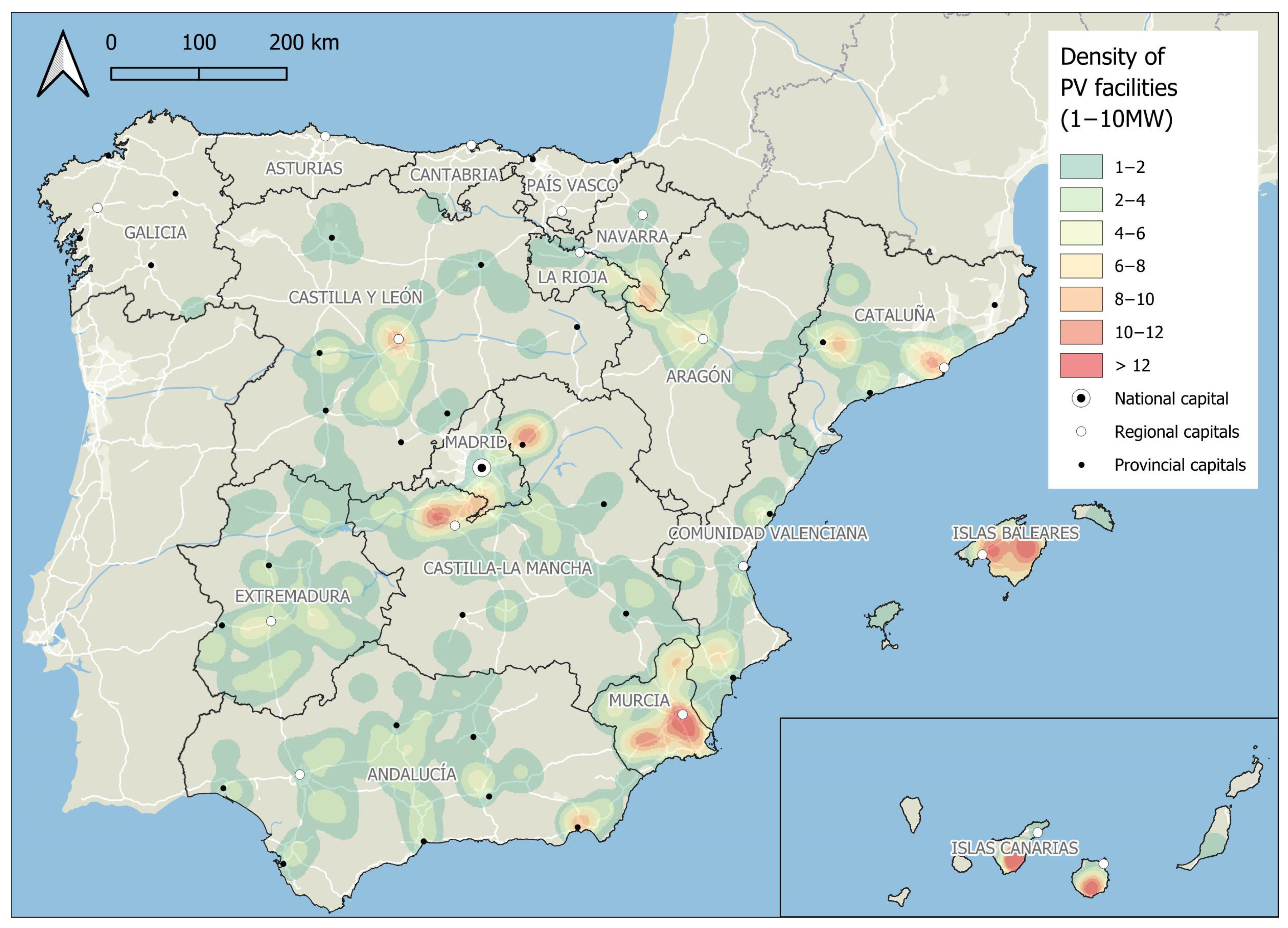
The development of PV facilities with capacities between 1 MW and 10 MW is less numerous than lower-capacity categories, yet their contribution to the total installed power is substantial. This range includes 566 registered facilities, representing a small fraction (0.91%) of the total PV facilities nationwide. However, despite their low unit count, these facilities aggregate 1974.36 MW, constituting 8.70% of the country’s total installed PV capacity.
The spatial distribution reveals that peri-urban areas concentrate a significant number of these facilities, demonstrating a clear functional link to areas with greater land availability and lower urban development pressure (
Figure 6). These locations allow projects to benefit from proximity to the infrastructure and electricity demand associated with large urban agglomerations without incurring the cost or complexity of dense urban sites.
The distribution of these facilities shows a significant concentration across four specific Autonomous Communities, which collectively host just over half (50.18%) of all units in this range: Castilla-La Mancha (80 facilities), Andalucía (79 facilities), Murcia (73 facilities), and Castilla y León (52 facilities).
A particular spatial pattern is observed in Castilla-La Mancha, where the majority of 1–10 MW facilities are in the provinces of Toledo and Guadalajara. This reveals a clear “border effect,” characterized by significant concentration clusters in the areas contiguous to the Community of Madrid. These border zones offer critical advantages: proximity to the capital for accessing high demand and robust grid infrastructure, coupled with a significantly greater availability of rural land compared to the central Madrid region itself.
3.2.5. PV Facilities with Capacity of 10–50 MW
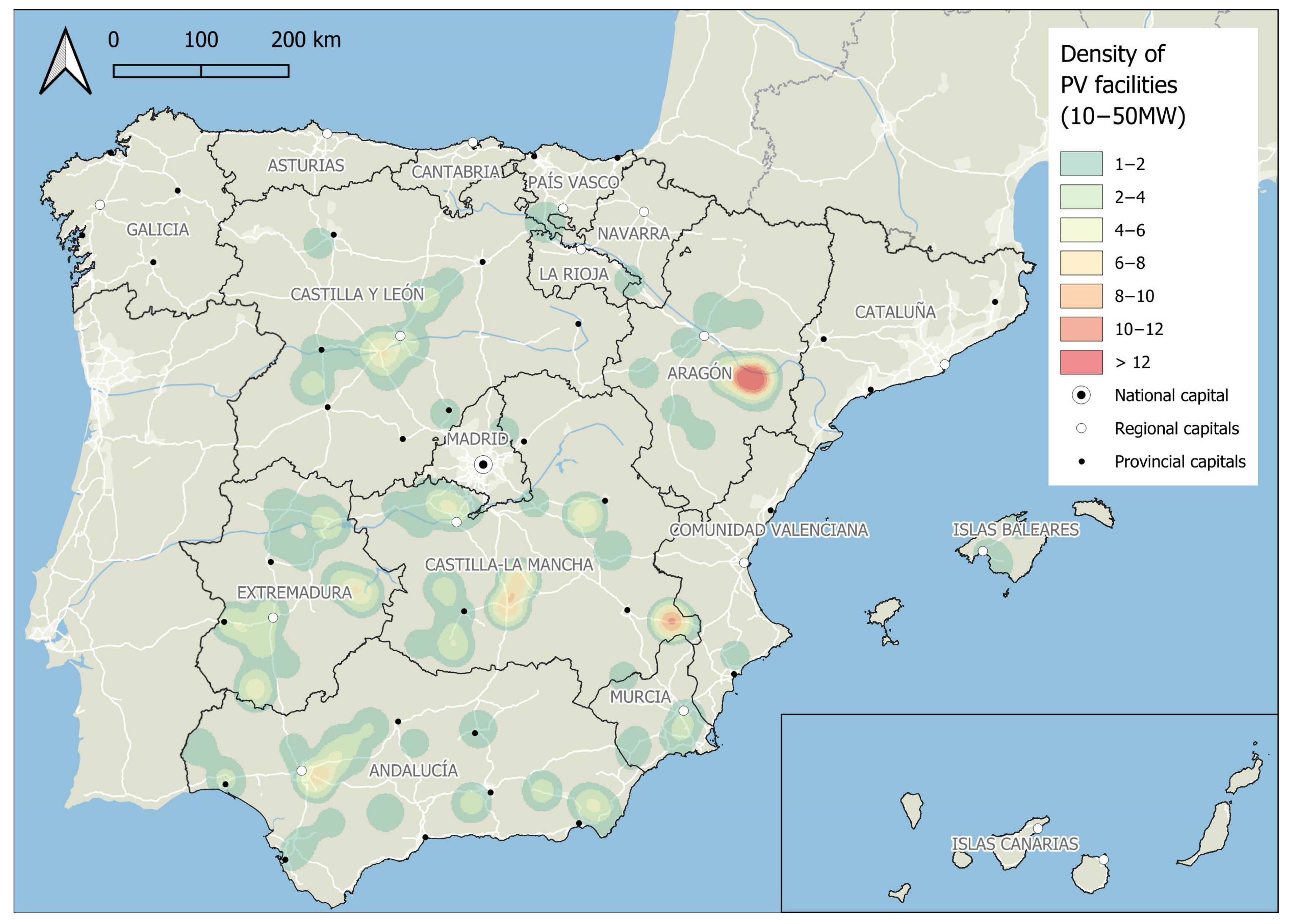
PV facilities with capacities between 10 MW and 50 MW constitute the largest share of solar generation capacity in Spain, despite their low unit count. These facilities account for only 348 facilities (0.56% of the national total) but contribute 12,829.24 MW, which is 56.55% of the country’s total installed PV power.
The spatial distribution of facilities in this power group exhibits a distinct behaviour compared to lower power ranges: the clusters of highest density decouple from major urban cores. Instead, peri-urban and rural areas act as the primary regions where these utility-scale facilities proliferate. The main concentration clusters are observed in Aragon, as well as in areas near important urban centres such as Valladolid, Guadalajara, Albacete, Badajoz, and Seville (
Figure 7).
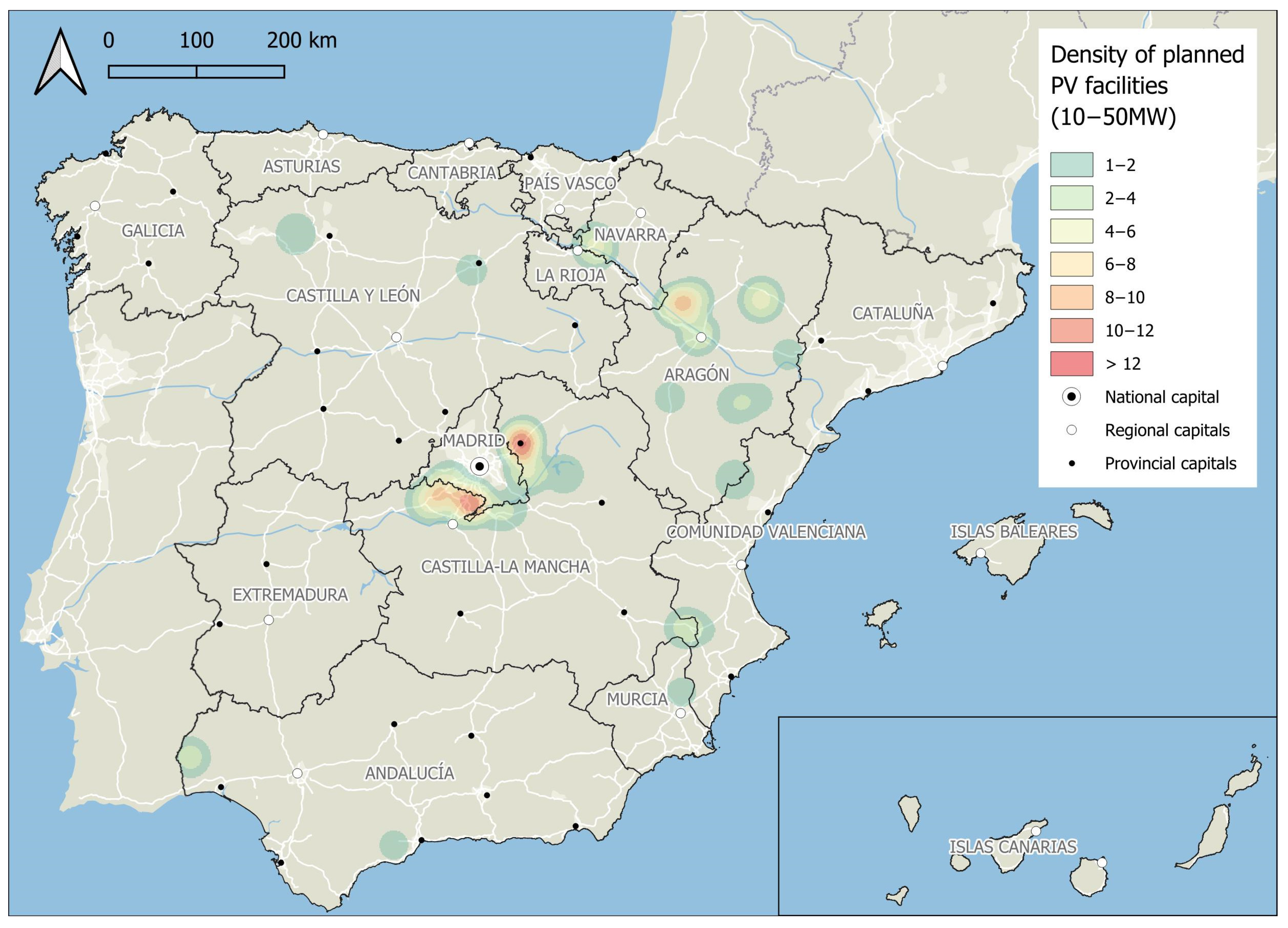
Complementing the data on operative facilities, the Environmental Impact Statements (EIS) approved up to December 2023 reveal a clear trend toward increasing installed capacity on the Madrid border with the contiguous provinces of Guadalajara and Toledo. Furthermore, significant prospective developments are evident on the periphery of Zaragoza and at isolated points in León, Navarra, Teruel, Huesca, and Huelva (
Figure 8). This prospective EIS map strongly suggests a continuous expansion of large-scale PVs toward areas with high solar potential and extensive land availability.
The concentration of these large-scale facilities is particularly notable within a few Autonomous Communities, which collectively aggregate most of the installed capacity in this range. Castilla-La Mancha leads the implementation of these projects, concentrating 30.17% of the facilities (105 units) and 29.99% of the associated capacity (3847.17 MW). More than half of these facilities are in the provinces of Ciudad Real (34 facilities) and Cuenca (28 facilities), though all provinces within the community host at least 11 facilities of this range. Andalucía ranks as the second region in this segment, hosting 73 facilities (22.04%) with a total capacity of 2927.50 MW (22.82%). Notably, one-third of these facilities are concentrated in the province of Sevilla. Extremadura shows a high concentration with 69 facilities (19.83%) and 2706.13 MW (21.09%). With 44 facilities in Badajoz and 25 in Cáceres, the region stands as one of the areas with the highest density of large-scale PV capacity, largely driven by its high solar potential and land availability. Aragon hosts 51 facilities (14.66%) totalling 1913.64 MW (14.92%), with the majority of these situated near the city of Zaragoza.
In synthesis, the analysis of the 10 MW to 50 MW PV facilities reveals an implementation pattern that decouples from the densest urban centres to seek locations in peri-urban and rural areas offering large extensions of available land.
3.2.6. PV Facilities with Capacity of 50–600 MW
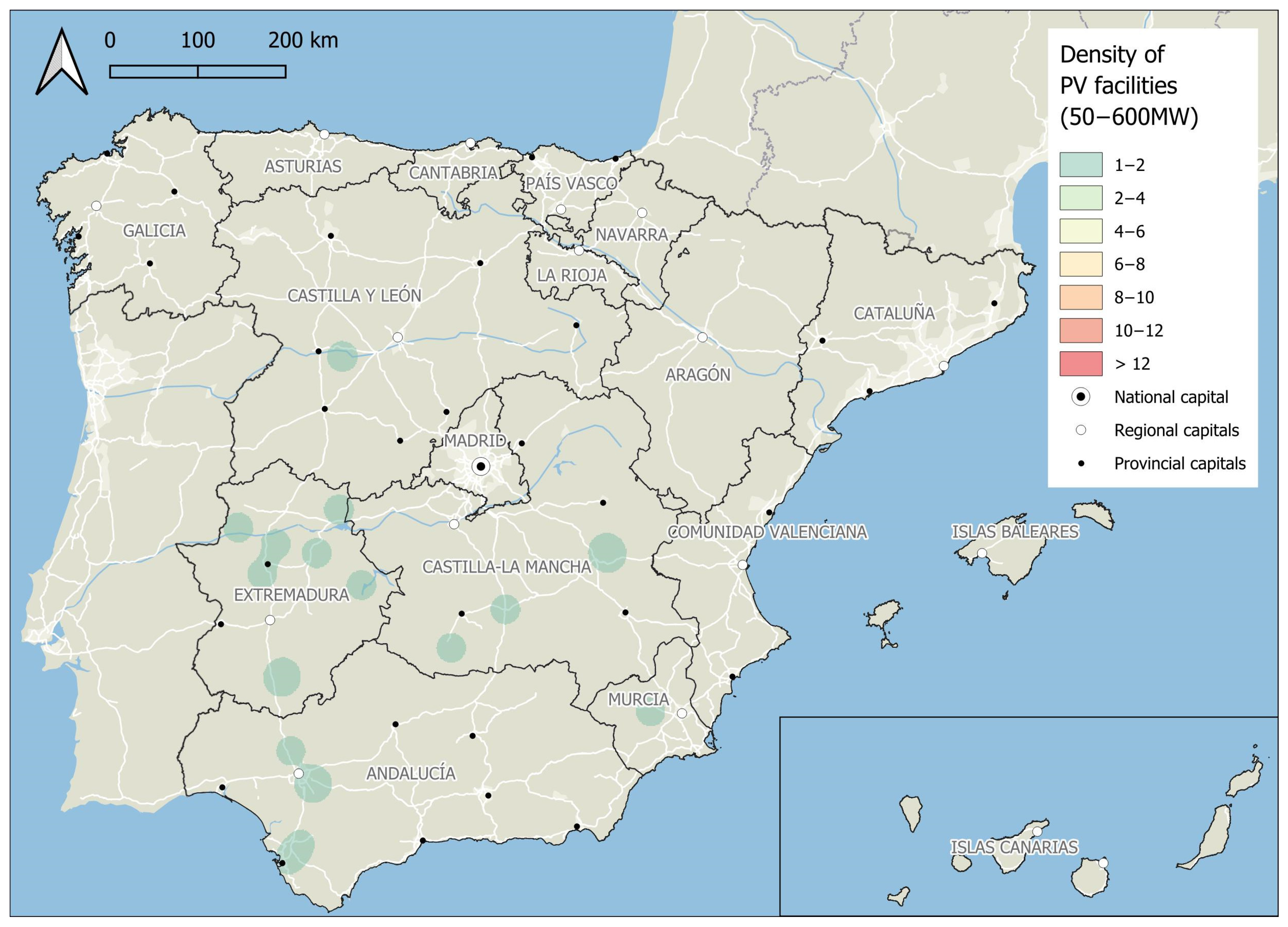
As of 2023, only 19 active facilities are registered in this capacity group. However, their impact on the generation fleet is significantly high: these 19 large-scale facilities account for 4118.94 MW, representing 18.16% of all installed PV capacity in the country.
The distribution of these facilities shows a concentration in the southern half of the country, a domain boasting one of the highest solar irradiances in Europe. Extremadura is consolidated as the leading Autonomous Community in this power group, hosting 8 facilities that collectively aggregate a total of 2345.70 MW (
Figure 9).
Andalucía hosts 5 facilities, 3 of which are in Sevilla and 2 in Cádiz. In total, the Autonomous Community concentrates an installed capacity of 676.99 MW. Castilla-La Mancha host 4 facilities (2 in Cuenca and 2 in Ciudad Real) totalling 471.39 MW. Meanwhile, the Murcia has 1 facility with 493.66 MW. Finally, Castilla y León has 1 facility in the province of Zamora with a capacity of 131.20 MW.
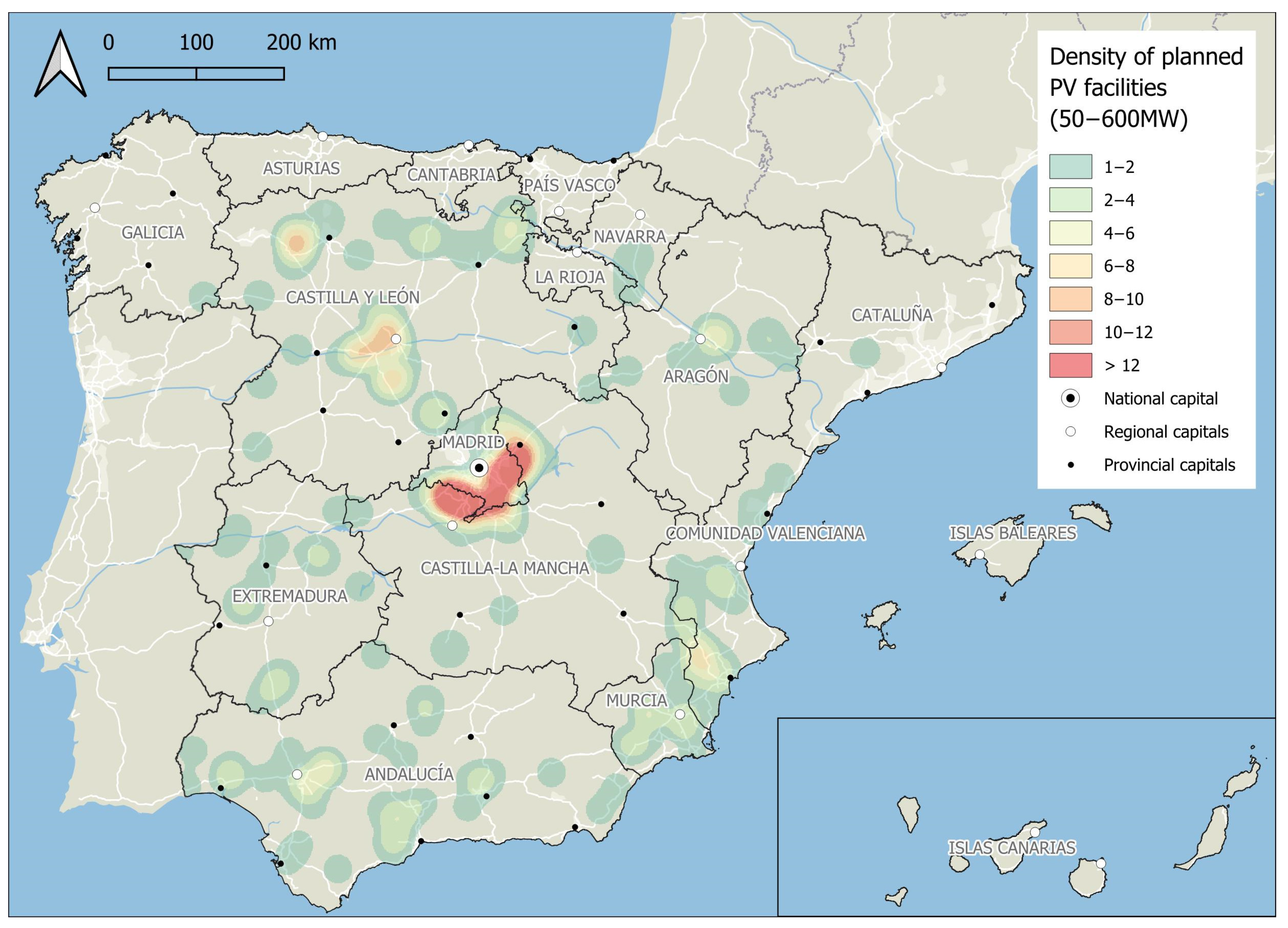
The analysis of favourable EIS is fundamental for clearly observing the future orientation of large-scale PV development. These EIS act as a prospective window into projects that could materialize in the coming years.
A notable feature is the formation of a high-power facilities ring to the south and east of Madrid, which complements and expands upon the 10–50 MW developments analysed previously. This ring not only encompasses the border zones of Guadalajara and Toledo but also shows expansion into the interior of the Autonomous Community of Madrid, specifically in the south-east of the region (
Figure 10).
Furthermore, important generation clusters are projected in the peri-urban and rural areas of Valladolid, Zaragoza, Sevilla and León, as well as along the Mediterranean coast.
In sum, 50–600 MW facilities tend to be situated primarily in peri-urban areas and rural areas with large extensions of available land.
3.2.7. Main Spatial Patterns for PV Facilities
Despite the territorial heterogeneity in the distribution dynamics of PV facilities across Spain’s Autonomous Communities, it is possible to establish the following general location patterns based on the defined power groups.
Pattern 1: Urban concentration of low-capacity facilities. Low-capacity installations, corresponding to the groups 0–5 kW, 5–100 kW, and 100 kW–1 MW, exhibit a tendency toward concentration within urban centres. This dynamic is particularly noticeable in regions housing the country’s largest metropolitan agglomerations, such as Madrid and Catalonia. This concentration is highly likely attributable to the proliferation of residential self-consumption PV on rooftops. Nevertheless, the 100 kW–1 MW group may include self-consumption installations for small industries, located on both rooftops and ground-mounted sites.
Pattern 2: Peri-urban location of medium-capacity facilities. Higher-capacity facilities (group 1–10 MW) tend to move away from urban centres, concentrating instead in metropolitan rings. A preference is observed for municipalities that host large industrial areas. The capacity and distribution of these facilities strongly suggest they are primarily industrial self-consumption projects, sited on factory rooftops or adjacent industrial land. A prime example of this dynamic is found in the industrial area of Zaragoza (Aragón). However, it cannot be ruled out that a fraction of the installations at the upper end of this group may correspond to utility-scale generation facilities.
Pattern 3: Rural location proximate to urban centres for high-capacity facilities. The highest-capacity facilities (groups 10–50 MW and 50–600 MW) show a more dispersed territorial distribution, yet their location is frequently circumscribed to rural areas near urban centres. Given their size, these are unequivocally ground-mounted generation facilities that require extensive land areas. This land requirement and the pursuit of lower land costs explain their placement in rural zones. Proximity to the main energy consumption centres (cities) implies a higher density of existing transport and distribution infrastructure, which potentially reduces grid connection costs and minimizes energy losses during transmission. This trend is evident in the rural areas of Guadalajara and Toledo bordering Madrid, as well as in the region’s southeastern rural area.