
You are currently viewing a new version of our website. To view the old version click .

Smart Cities

Smart Cities is an international, scientific, peer-reviewed, open access journal on the science and technology of smart cities, published bimonthly online by MDPI. 
The International Council for Research and Innovation in Building and Construction (CIB) is affiliated with Smart Cities and its members receive discounts on the article processing charges.
Quartile Ranking JCR - Q1 (Urban Studies | Engineering, Electrical and Electronic)

All Articles (796)

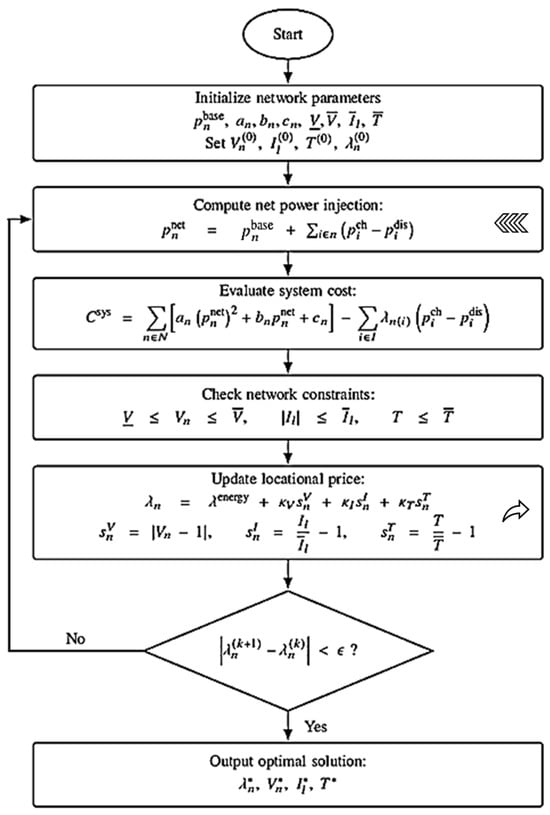
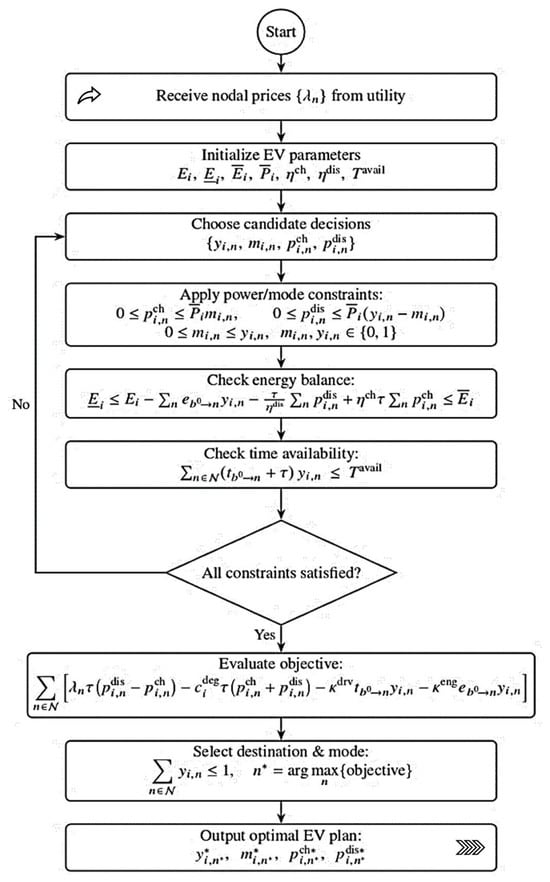
Urban air mobility (UAM) introduces electric vertical takeoff and landing (eVTOL) systems, creating new requirements for infrastructure planning. Vertiport siting is central, yet existing approaches such as multi-criteria decision analysis and optimization often rely on fixed criteria and seldom integrate ground transportation, which is critical for first- and last-mile access. Large language models (LLMs) show strong capabilities in reasoning and tool orchestration, but their role in siting tasks remains underexplored. This study proposes a strategy-aware LLM-based framework that connects heterogeneous spatial data with planning strategies expressed in natural language. A reflective loop connects the planner, executor, and validator for iterative refinement using two methods: multi-criteria decision analysis for interpretable mapping and a genetic algorithm for nonlinear optimization. Experiments in Los Angeles highlight both the potential and challenges of applying LLM agents to siting: outcome evaluation shows that strategies can be translated into distinct trade-offs, while process evaluation demonstrates the benefits of iterative refinement. The study suggests that LLM-based agents can formalize qualitative strategies into reproducible workflows, indicating their potential for UAM siting and promise for broader use in urban planning.
30 November 2025

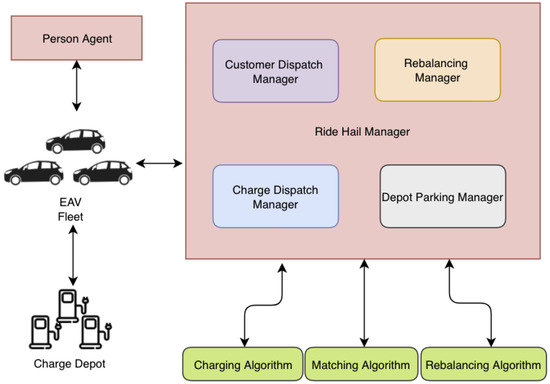
Strategy-aware agent framework for vertiport siting.

This paper presents a comprehensive review of emerging innovations and future research directions leveraging Large Language Models (LLMs) for urban data analytics, examining how cities generate, structure, and use information to support planning and operational decisions. While LLMs show promise in addressing critical challenges faced by urban stakeholders—including data integration, accessibility, and cross-domain analysis—their applications and effectiveness in urban contexts remain largely unexplored and fragmented across disciplines. Through our systematic analysis of 178 papers, we examine the impact of LLMs across the four key stages of urban data analytics: collection, preprocessing, modeling, and post-analysis. Our review encompasses various urban domains, including transportation, urban planning, disaster management, and environmental monitoring, identifying how LLMs can transform analytical approaches in these fields. We identify current trends, innovative applications, and challenges in integrating LLMs into urban analytics workflows. Based on our findings, we propose a 3E framework for future research directions: Expanding information dimensions, Enhancing model capabilities, and Executing advanced applications. This framework provides a structured approach to emphasize key opportunities in the field. Our study concludes by discussing critical challenges, including hallucination, scalability, fairness, and ethical concerns, emphasizing the need for interdisciplinary collaboration to fully realize the potential of LLMs in creating smarter, more sustainable urban environments for researchers and urban practitioners working to integrate LLMs into data-driven decision processes.
28 November 2025

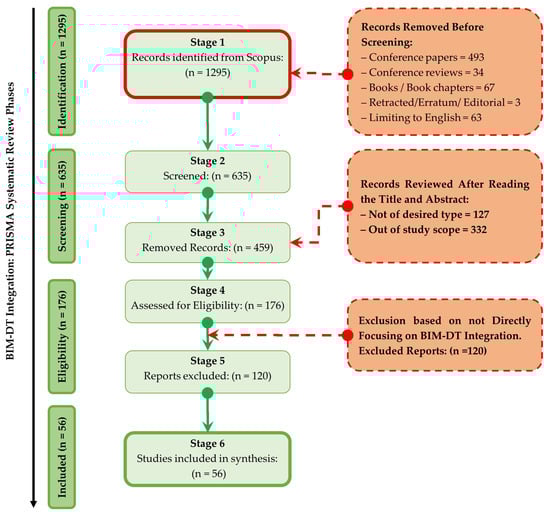
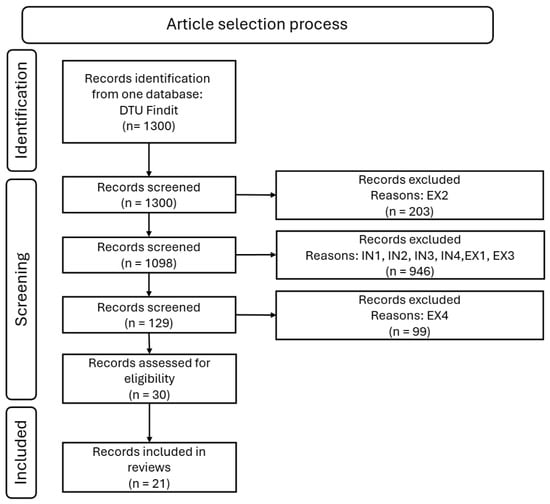
Study selection by the PRISMA method.

Leveraging Low-Cost Sensor Data and Predictive Modelling for IoT-Driven Indoor Air Quality Monitoring

  • Patricia Camacho-Magriñán,
  • Diego Sales-Lerida and
  • Alejandro Lara-Doña
  • + 1 author

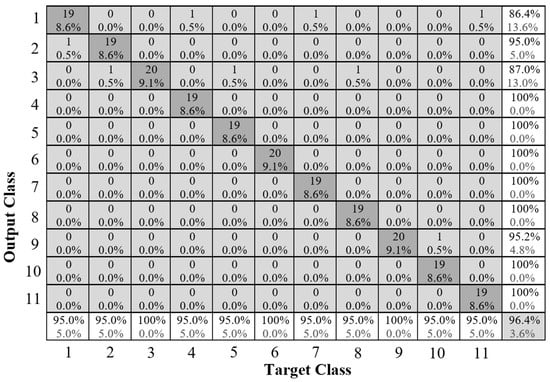
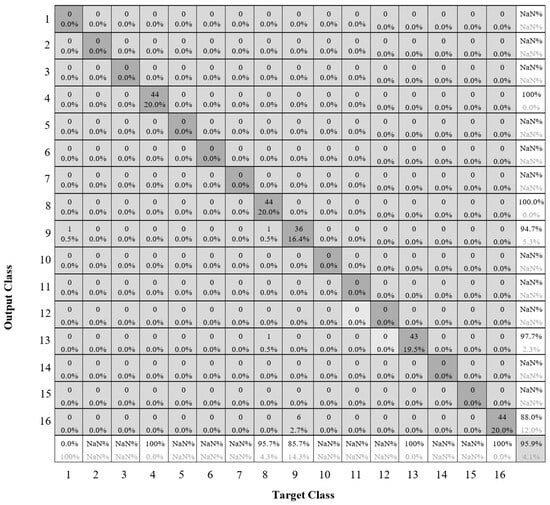
Indoor air quality (IAQ) in residential settings is often dominated by high-concentration pollutant events from activities such as cooking and occupancy, which are overlooked by traditional 24 h average assessments. In this, we have designed and implemented a low-cost unit for remote IAQ monitoring. We deployed these units for high-resolution remote monitoring of CO2, particulate matter (PM), and volatile organic compounds (VOCs) in three different domestic environments: a kitchen, a living room, and a bedroom. The monitoring campaign confirmed that, while daily averages frequently remained below guideline limits, transient peaks (e.g., CO2 exceeding 2800 ppm in bedrooms and significant increases in PM during cooking) posed acute exposure risks. This dataset was used to train and evaluate machine learning models for 10 min ahead pollutant forecasting. Ensemble tree-based methods (Random Forest) and gradient boosting algorithms (XGBoost, LGBM, and CatBoost) were effective and robust. The predictability of the models correlated with room dynamics: performance improved under clear cyclical patterns (bedroom) and remained stable under stochastic events (kitchen). This work shows that integrating low-cost IoT sensing with machine learning enables proactive IAQ management, supporting health interventions driven by predictive risk rather than static averages.
28 November 2025

Block diagram of the test bench for evaluating and selecting sensors.

Accurate short-term load forecasting is vital for smart-city energy management, enabling real-time grid stability and sustainable demand response. This study introduces a cloud-enabled hybrid forecasting framework that integrates Seasonal Autoregressive Integrated Moving Average with Exogenous variables (SARIMAX), Random Forest (RF), and Long Short-Term Memory (LSTM) models, unified through a residual-correction mechanism to capture both linear seasonal and nonlinear temporal dynamics. The framework performs fine-grained 5 min forecasting at both appliance and aggregate levels, revealing that the aggregate forecast achieves higher stability and accuracy than the sum of appliance-level predictions. To ensure operational resilience, three independent hybrid models are deployed across distinct cloud platforms with a two-out-of-three voting scheme, that guarantees continuity if a single-cloud interruption occurs. Using a real residential dataset from a house in Summerlin, Las Vegas (2022), the proposed system achieved a Root Mean Squared Logarithmic Error (RMSLE) of 0.0431 for aggregated load prediction representing a 35% improvement over the next-best model (Random Forest) and maintained consistent prediction accuracy during simulated cloud outages. These results demonstrate that the proposed framework provides a scalable, fault-tolerant, and accurate energy forecasting.

27 November 2025

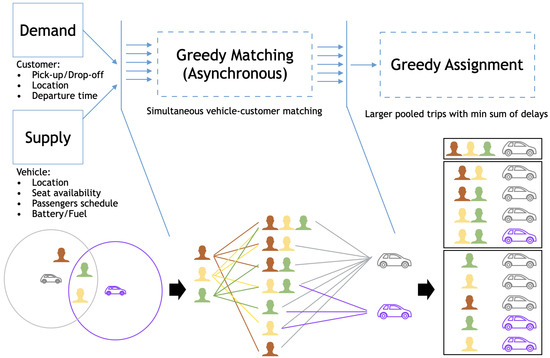
Architecture and procedures of proposed method.

News & Conferences

Issues

Open for Submission

Editor's Choice

Reprints of Collections

Inclusive Smart Cities
Reprint

Inclusive Smart Cities

Editors: Thomas Bock, Rongbo Hu
Smart Cities
Reprint

Smart Cities

Infrastructure, Innovation, Technology, Governance and Citizenship Volume II
Editors: Luis Hernández-Callejo, Sergio Nesmachnow, Pedro Moreno-Bernal

Get Alerted

Add your email address to receive forthcoming issues of this journal.

XFacebookLinkedIn
Smart Cities - ISSN 2624-6511