



Design and Optimisation of Solar Energy Systems

A Special Issue of Processes (ISSN 2227-9717) belonging to the section "Energy Systems".

Deadline for manuscript submissions: closed (31 July 2026) | Viewed by 12690
Editors


E-Mail Website1 Website2
Guest Editor
Energy Department, Universidad Autónoma de Campeche, Campeche 24085, Mexico
Interests: semiconductor oxides; solar water splitting; renewable energy; solar cells

E-Mail Website
Guest Editor
Applied Physics Department, CINVESTAV, Mérida, Yucatán 78390, Mexico
Interests: perovskite solar cells; energy storage; solar energy conversion

E-Mail Website
Guest Editor
Energy Department, Universidad Autónoma de Campeche, Campeche 24085, Mexico
Interests: solar thermal energy; passive ventilation in buildings; computational fluid and conjugate heat transfers; applied computational modeling for thermal and energy systems

Special Issue Information

Dear Colleagues,

Solar energy is the most abundant renewable energy source on Earth, with the potential to meet global energy demands many times over. It is widely used to produce heat, electricity, and even solar fuels through innovative solar energy systems. These systems have evolved to address the increasing energy needs of a growing and urbanizing global population while significantly reducing greenhouse gas emissions. By facilitating the transition from fossil fuels, such as coal and oil, to sustainable energy sources, solar technologies play a crucial role in mitigating climate change and shaping a cleaner global energy economy. The growing interest in renewable energy has spurred extensive research to enhance the technology, efficiency, and integration of solar energy systems. These efforts aim to overcome existing challenges and expand the applicability of solar power in diverse sectors.

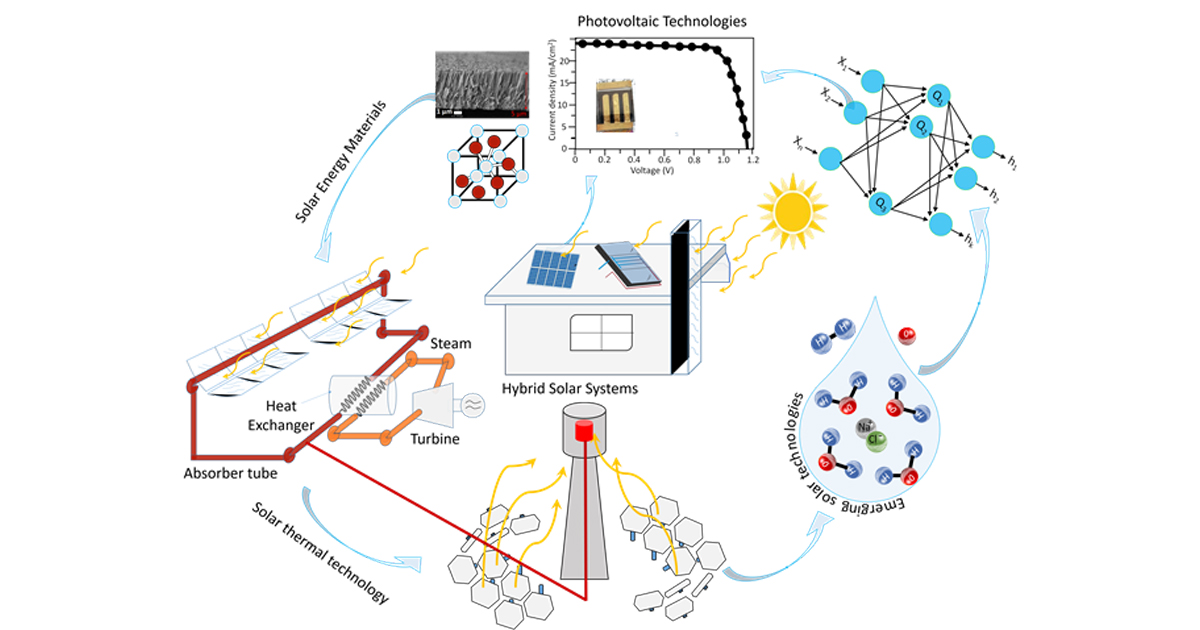
This Special Issue on the “Design and Optimisation of Solar Energy Systems” invites high-quality contributions focused on innovative materials, advanced system applications, and cutting-edge methodologies for solar energy harvesting and utilization. Topics of interest include, but are not limited to, the following:

  • Advances in solar power systems, including next-generation photovoltaic technologies (e.g., perovskite solar cells, bifacial panels, and concentrated photovoltaic systems);
  • Novel approaches in solar thermal energy systems, including solar collectors, space heating, water heating, thermal cooling, passive solar systems, and industrial process heat;
  • Modeling, simulation, and optimization techniques for the design, control, and analysis of solar energy systems, including AI-driven approaches and multi-objective optimization;
  • Emerging solar technologies, such as hybrid systems, photoelectrochemical systems, and integrated solar desalination processes.

Prof. Dr. Manuel Jesús Rodríguez-Pérez
Dr. David Meneses Rodríguez
Dr. Felipe Noh Pat
Guest Editors

Manuscript Submission Information

Manuscripts should be submitted online at www.mdpi.com by registering and logging in to this website. Once you are registered, click here to go to the submission form. Manuscripts can be submitted until the deadline. All submissions that pass pre-check are peer-reviewed. Accepted papers will be published continuously in the journal (as soon as accepted) and will be listed together on the special issue website. Research articles, review articles as well as short communications are invited. For planned papers, a title and short abstract (about 250 words) can be sent to the Editorial Office for assessment.

Submitted manuscripts should not have been published previously, nor be under consideration for publication elsewhere (except conference proceedings papers). All manuscripts are thoroughly refereed through a single-anonymized peer-review process. A guide for authors and other relevant information for submission of manuscripts is available on the Instructions for Authors page. Processes is an international peer-reviewed open access semimonthly journal published by MDPI.

Please visit the Instructions for Authors page before submitting a manuscript. The Article Processing Charge (APC) for publication in this open access journal is 2400 CHF (Swiss Francs). Submitted papers should be well formatted and use good English. Authors may use MDPI's English editing service prior to publication or during author revisions.

Keywords

  • photovoltaic technologies
  • solar thermal energy collectors, storage, and conversion
  • energy system modeling and optimization
  • renewable energy modeling and optimization
  • passive, active, and hybrid solar thermal systems
  • photoelectrochemical processes
  • sustainable energy solutions
  • solar energy harvesting
  • advanced solar materials
  • solar energy materials: synthesis and characterization
  • nanomaterials for photovoltaic applications
  • characterization and structure–property relations of new energy materials

Benefits of Publishing in a Special Issue

  • Ease of navigation: Grouping papers by topic helps scholars navigate broad scope journals more efficiently.
  • Greater discoverability: Special Issues support the reach and impact of scientific research. Articles in Special Issues are more discoverable and cited more frequently.
  • Expansion of research network: Special Issues facilitate connections among authors, fostering scientific collaborations.
  • External promotion: Articles in Special Issues are often promoted through the journal's social media, increasing their visibility.
  • Reprint: MDPI Books provides the opportunity to republish successful Special Issues in book format, both online and in print.

Further information on MDPI's Special Issue policies can be found here.

Published Papers (7 papers)

Order results
Result details
Select all
Export citation of selected articles as:

Research

32 pages, 432 KB  
Article
Interpretable Evidence Fusion for Controlled Fraud-Episode Screening in Advanced Metering Infrastructure
by Javier E. Duarte, Rodolfo Garcia Sierra and Javier Rosero-Garcia
Processes 2026, 14(18), 2904; https://doi.org/10.3390/pr14182904 - 12 Sep 2026
Viewed by 354
Abstract
Non-technical losses are difficult to identify from Advanced Metering Infrastructure (AMI) data because fraud has different physical signatures, communication failures can resemble manipulation, and field-confirmed labels are scarce. This paper proposes an evidence-fusion methodology that transforms hourly consumption into traceable inspection events. The [...] Read more.
Non-technical losses are difficult to identify from Advanced Metering Infrastructure (AMI) data because fraud has different physical signatures, communication failures can resemble manipulation, and field-confirmed labels are scarce. This paper proposes an evidence-fusion methodology that transforms hourly consumption into traceable inspection events. The method verifies reading provenance, estimates expected profiles from previous observations, evaluates mechanism-specific experts, and consolidates persistent detections under fixed inspection capacity. Because no open hourly AMI dataset with field-confirmed fraud dates was identified, evaluation used controlled episodes on real consumption backgrounds and TDD2022, an open benchmark with synthetic theft events. In a user-disjoint controlled cohort, the policy detected 108 of 150 episodes within seven days (recall 0.720), 17 more than the reference workflow (exact McNemar p=0.0115). On TDD2022, evidence fusion obtained a recall of 0.689, a precision of 0.998, an F1 score of 0.816, and an area under the precision–recall curve (PR–AUC) of 0.928, with two false alerts among 2455 normal days. The results show that causal and mechanism-specific evidence can produce a capacity-aware inspection list across two controlled benchmarks. Field inspections remain necessary to estimate diagnostic accuracy. Full article
(This article belongs to the Special Issue Design and Optimisation of Solar Energy Systems)
Show Figures

Figure 1

36 pages, 4647 KB  
Article
Climate-Driven Changes in Photovoltaic and Solar Thermal Operating Conditions in Slovakia: Implications for Solar System Design and Optimisation
by Martin Beer and Radim Rybár
Processes 2026, 14(11), 1805; https://doi.org/10.3390/pr14111805 - 1 Jun 2026
Cited by 1 | Viewed by 475
Abstract
Climate change alters not only the availability of solar radiation, but also the thermal, humidity, and cloudiness conditions under which solar energy systems operate. However, limited attention has been paid to the simultaneous comparison of photovoltaic and solar thermal responses using a common [...] Read more.
Climate change alters not only the availability of solar radiation, but also the thermal, humidity, and cloudiness conditions under which solar energy systems operate. However, limited attention has been paid to the simultaneous comparison of photovoltaic and solar thermal responses using a common hourly climate-based framework under Central European conditions. This study evaluates long-term climate-driven changes in the operating conditions of photovoltaic (PV) panels and solar thermal collectors across five Slovak locations representing contrasting local climatic and topographic settings. Hourly ERA5-Land data for 1985–2024 were used to derive climatic indicators, photovoltaic operating indicators, and solar thermal performance indicators. The analysis combined long-term Mann–Kendall and Sen’s slope trend assessment with a comparison between the reference period 1985–1994 and the recent period 2015–2024. The results show that mean air temperature increased by 1.50–1.69 °C, global horizontal irradiance by 3.24–5.66%, and high-irradiance hours increased substantially across all sites. Photovoltaic yield increased by 2.21–4.52%, but this improvement was accompanied by higher PV cell temperature, more hot operating hours, and increased temperature losses. Solar thermal collectors showed a stronger relative response, with useful thermal gains increasing by 7.27–12.33% at 35 °C and by 9.00–15.73% at 50 °C. The Relative Solar Thermal Gain Advantage was positive at all locations, indicating that recent climatic conditions favored solar thermal gain more strongly than PV yield under the applied assumptions. The findings demonstrate that recent climatic data should be used in solar-system design and that photovoltaic and solar thermal technologies require separate interpretation because they respond differently to warming and changing radiation conditions. Full article
(This article belongs to the Special Issue Design and Optimisation of Solar Energy Systems)
Show Figures

Figure 1

21 pages, 2886 KB  
Article
A Spectroradiometric Analysis of Alterations in Spectral Distribution and Their Impact on UV Index Estimation for Solar Resource Assessment
by Francesco Nicoletti, Piero Bevilacqua, Daniela Cirone, Carmen Fabbricatore and Natale Arcuri
Processes 2026, 14(4), 701; https://doi.org/10.3390/pr14040701 - 19 Feb 2026
Viewed by 804
Abstract
The accurate estimation of the instantaneous UV Index (UVI) is critical for public health, yet it is often attempted using broadband pyranometers (measuring Global Horizontal Irradiance GHI) or photometers (measuring Lux). This approach is known to be unreliable, particularly under the complex radiative [...] Read more.
The accurate estimation of the instantaneous UV Index (UVI) is critical for public health, yet it is often attempted using broadband pyranometers (measuring Global Horizontal Irradiance GHI) or photometers (measuring Lux). This approach is known to be unreliable, particularly under the complex radiative conditions induced by clouds. However, the physical mechanisms driving this failure, specifically the changes in the spectral quality of sunlight, are not fully quantified. This study utilizes a high-resolution spectroradiometer and pyranometer at a Mediterranean site (Rende, Italy), analyzing instantaneous UVI, GHI and a set of derived analytical metrics: the Erythemal Efficacy, the UV Spectral Quality Ratio and the Clearness Index. The core metric of the paper is the Erythemal Efficacy, designed to quantify the “spectral quality” or “biological hazard” per unit of total energy. It is defined as the ratio of the instantaneous UV Index to the instantaneous GHI measured by the pyranometer. The analysis confirms a decoupling between instantaneous UVI and broadband GHI, exhibiting a wide, non-functional scatter. The paper shows that this failure is caused by the high variability of the Erythemal Efficacy, which is not a constant. Its variability is shown to be linearly governed by the internal Ultraviolet A to Ultraviolet B (UVA/UVB) spectral ratio. Most critically, the Erythemal Efficacy was found to follow a counter-intuitive trend, increasing significantly as the Clearness Index decreases. The common assumption of clouds as spectrally “grey” attenuators is flawed. Clouds act as selective filters, attenuating the GHI, dominated by Visible to Near-Infrared (VIS/NIR), more severely than the UVI. This increases the relative biological hazard of the light that penetrates thick cloud cover. This study provides a physical explanation for the failure of broadband proxies and demonstrates that instantaneous GHI or Lux-based UVI alerts are fundamentally unreliable, as they fail to capture the critical variability of spectral quality. Full article
(This article belongs to the Special Issue Design and Optimisation of Solar Energy Systems)
Show Figures

Figure 1

25 pages, 2318 KB  
Article
Experimental Assessment of Dynamic Stability and Energy Performance in Evacuated Tube Solar Collectors Incorporating Metal Foam Heat-Exchange Chambers
by Martin Beer and Radim Rybár
Processes 2026, 14(4), 627; https://doi.org/10.3390/pr14040627 - 11 Feb 2026
Viewed by 468
Abstract
The paper presents an experimental comparison between a standard evacuated tube solar collector and a collector featuring a modified internal manifold architecture with an integrated metal-foam heat-exchange chamber. Both collectors have an identical geometric volume of the heat-exchange region, ensuring that the measured [...] Read more.
The paper presents an experimental comparison between a standard evacuated tube solar collector and a collector featuring a modified internal manifold architecture with an integrated metal-foam heat-exchange chamber. Both collectors have an identical geometric volume of the heat-exchange region, ensuring that the measured differences in performance are exclusively attributable to changes in the internal design of the manifold. The experimental validation comprised five measurements conducted at two mass flow rate levels, 60 and 120 kg·h−1, under real outdoor operating conditions. The evaluation was based on time-resolved performance data and included instantaneous, cumulative, and dynamic indicators, such as energy yield, volumetric energy density, performance stability, dynamic sensitivity, and energy inertia. The results show that the solar collector with the modified manifold consistently achieves a higher energy yield, higher volumetric efficiency, and lower dynamic sensitivity than the standard collector. These benefits are obtained at the cost of increased pressure losses, indicating a trade-off between energy performance and hydraulic demand under real operating conditions. Full article
(This article belongs to the Special Issue Design and Optimisation of Solar Energy Systems)
Show Figures

Figure 1

26 pages, 485 KB  
Article
An Integrated Methodology and Novel Index for Assessing Distributed Photovoltaic Deployment in Energy Transition Pathways: Evidence from Ecuador
by Alfonso Gunsha-Morales, Marcos A. Ponce-Jara, G. Jiménez-Castillo, J. L. Sánchez-Jiménez and Catalina Rus-Casas
Processes 2026, 14(2), 388; https://doi.org/10.3390/pr14020388 - 22 Jan 2026
Viewed by 1134
Abstract
This study aims to develop and apply a novel methodology to assess the scope, benefits and challenges of distributed photovoltaic generation (DG-PV). The research provides a replicable framework applicable to any country, as long as official energy consumption data are available and the [...] Read more.
This study aims to develop and apply a novel methodology to assess the scope, benefits and challenges of distributed photovoltaic generation (DG-PV). The research provides a replicable framework applicable to any country, as long as official energy consumption data are available and the nation is seeking to modify its energy matrix as part of a sustainable transition through the design of renewable-energy-based policies. To support the viability of the proposal, data from the Ecuadorian electrical system for the period between 2014 and 2024 were analyzed using technical, operational and socio-economic indicators defined in the methodology. These include renewable participation, energy diversification, DG-PV, technical efficiency, regulatory index, operational resilience and electrical coverage. The investigation concludes with the definition of a Distributed Photovoltaic Integration Index (DPII), which can be used to measure a country’s progress toward the proper implementation of renewable energy. The DPII supports informed decision-making by allowing utilities and policymakers to prioritize distributed photovoltaic integration and compare alternative energy transition scenarios. In the case of Ecuador, a DPII of 0.170 is obtained for 2024 compared to a value of 0 for 2014. This result is mainly due to an increase in renewable energy participation (P1), which rose from 0.49 to 0.76 during this period, largely supported by hydropower expansion. This value was obtained because over the last ten years, Ecuador has committed to implementing active policies that incorporate renewable energies, as well as other aspects such as technical efficiency and the expansion of electrical coverage. This approach offers a replicable quantitative tool for evaluating the integration of DG-PV, providing key information for energy planning and for the formulation of policies that promote the decarbonization, decentralization and digitalization of the national electrical system. Full article
(This article belongs to the Special Issue Design and Optimisation of Solar Energy Systems)
Show Figures

Figure 1

11 pages, 2523 KB  
Article
A New Methodology for Film Preparation: Comparison Between Doctor Blading and Airbrushing Methods on Scaffold Materials
by Hagata Emmanuely Slusarski Fonseca, Gideã Taques Tractz, Ana Paula Peron, Wesley Kordiak, Maria Vitória França Corrêa, Maico Taras da Cunha and Everson do Prado Banczek
Processes 2025, 13(8), 2537; https://doi.org/10.3390/pr13082537 - 12 Aug 2025
Cited by 2 | Viewed by 991
Abstract
This paper explores the potential of the airbrushing method as a novel and cost-effective method for producing uniform titanium dioxide (TiO2) films, crucial for enhancing the efficiency of dye-sensitized solar cells. The techniques performed were SEM and EDS images, OCP curves, [...] Read more.
This paper explores the potential of the airbrushing method as a novel and cost-effective method for producing uniform titanium dioxide (TiO2) films, crucial for enhancing the efficiency of dye-sensitized solar cells. The techniques performed were SEM and EDS images, OCP curves, photochronoamperometry, j-V curves, and impedance spectroscopy. Comparative analysis with the doctor blade methodology has noted a higher uniformity compared to the AB method, with the ability to improve the charge transportation and PCE (1.987%) and reduce the recombination process in the TiO2/electrolyte interface (ԏe = 0.012 s). Insights from EIS spectroscopy and intensity-modulated spectroscopy offer mechanistic elucidations of the enhanced performance. Overall, this study highlights airbrushing as a promising approach for advancing the development of high-performance solar energy systems. Full article
(This article belongs to the Special Issue Design and Optimisation of Solar Energy Systems)
Show Figures

Figure 1

32 pages, 7126 KB  
Article
Switchable Building-Integrated Photovoltaic–Thermal Curtain Wall for Building Integration
by Masoud Valinejadshoubi, Anna-Maria Sigounis, Andreas K. Athienitis and Ashutosh Bagchi
Processes 2025, 13(8), 2512; https://doi.org/10.3390/pr13082512 - 9 Aug 2025
Cited by 2 | Viewed by 1797
Abstract
This study presents a novel switchable multi-inlet Building integrated photovoltaic/thermal (BIPV/T) curtain wall system designed to enhance solar energy utilization in commercial buildings. The system integrates controllable air inlets and motorized dampers that dynamically adjust airflow patterns in response to real-time environmental conditions [...] Read more.
This study presents a novel switchable multi-inlet Building integrated photovoltaic/thermal (BIPV/T) curtain wall system designed to enhance solar energy utilization in commercial buildings. The system integrates controllable air inlets and motorized dampers that dynamically adjust airflow patterns in response to real-time environmental conditions such as solar irradiance, ambient air temperature, and PV panel temperature. A steady-state energy balance model, developed using a thermal network analogy and implemented in Python, was used to simulate winter operation in Montréal, Canada. Three operating modes with different air inlet configurations were assessed to evaluate system performance across variable air velocities and solar conditions. Results indicate that the switchable system improves combined thermal and electrical generation by 2% to 25% compared to fixed one- or two-inlet systems. Under low irradiance and air velocity, one-inlet operation is dominant, while higher solar gain and airflow favor two-inlet configurations. The system demonstrates effective temperature control and enhanced energy yield through optimized airflow management. This work highlights the potential of integrated control strategies and modular façade design in improving the efficiency of solar building envelope systems and offers practical implications for scalable deployment in energy-efficient, heating-dominated climates. Full article
(This article belongs to the Special Issue Design and Optimisation of Solar Energy Systems)
Show Figures

Figure 1

Back to TopTop