1. Introduction
Evacuated tube solar collectors rank among the most efficient devices for converting solar radiation into usable heat, particularly in applications with higher operating temperatures [
1,
2]. Their structural advantage lies in the separation of the absorbing section from the hydraulic circuit, which enables reduced thermal losses and more stable operation compared to flat-plate collectors [
3,
4]. Despite these advantages, the internal architecture of the heat-exchange space of the manifold remains one of the key factors that significantly influences both the energy performance and the dynamic response of the collector.
In commonly available design solutions, heat transfer from the heat pipe condenser to the heat-transfer fluid is achieved via a simple cylindrical or slightly finned surface of the condenser casing, which is washed by the flowing fluid in a serially connected hydraulic arrangement [
5]. Such a solution leads to a non-uniform distribution of the temperature field within the manifold, a gradual reduction of the temperature gradient between the condensers and the heat-transfer fluid in the direction of flow, as well as increased thermal inertia of the entire collector [
6]. These effects are most pronounced during operation under fluctuating solar irradiance, where the dynamic response of the collector plays a role equally important as its steady-state performance.
One of the promising approaches to improving the heat-exchange properties of the manifold is the modification of its internal architecture through porous metallic structures [
7,
8,
9,
10]. Open-cell metal foams are characterized by a high specific heat-exchange surface area [
11], good thermal conductivity of the solid phase [
12], and the ability to interact intensively with the flowing fluid [
13]. Their application in the field of heat exchangers has repeatedly been demonstrated as an effective means of increasing heat transfer density, albeit at the cost of increased pressure losses [
14]. In the context of evacuated tube solar collectors, the key question therefore is whether this trade-off can be exploited in a manner that leads to an overall improvement in the energetic and dynamic operation of the system.
Numerous scientific studies have addressed the investigation of overall operating parameters, or the improvement of operational efficiency, of evacuated tube solar collectors. In the field of enhancing the efficiency, research has focused on design improvements and the integration of advanced materials. Hassan et al. [
15] demonstrated in their study that a combination of helical turbulators, a copper mesh, and a hot–cold water separation system can achieve a peak efficiency of up to 77.3%, representing an increase of 12.08% compared to conventional collectors. Similar conclusions regarding the importance of turbulence were reached by Bartali et al. [
16], who demonstrated a 25% improvement in heat transfer using 3D-printed swirl generators due to disruption of the flow boundary layer. Supankanok et al. [
6] confirmed in their research that modification of the internal architecture of the absorber significantly enhances convective heat transfer, thereby increasing the overall thermal gain of the system. In another study, Said et al. [
17] presented a new collector design with an integrated parabolic concentrator and a spiral heat exchanger, which achieved a 15% higher outlet water temperature compared to traditional solutions for domestic water heating.
Operational and economic aspects are equally critical for practical deployment. Porras-Prieto et al. [
18] found that variability in the water draw-off schedule can cause differences in the annual profitability of the system of up to 14%, with systems operating under continuous low draw-off exhibiting the highest efficiency. Kim et al. [
19], through testing in accordance with international standards, demonstrated that an optimal working-fluid flow rate can increase the thermal performance of the collector by 7–10%, depending on solar irradiance intensity. Under Central European conditions, experimental measurements were carried out by Siuta-Olcha et al. [
20], whose results showed that the energy efficiency of an evacuated tube solar collectors reaches average values of around 60% during summer months, whereas the exergy efficiency is significantly lower and strongly dependent on ambient temperature. Experimental operation of evacuated tube solar collectors and their mutual comparison were also addressed by Said et al. [
5]; however, in contrast to the present study, their work focused on laboratory-based comparisons.
The present study focuses on an experimental comparison of two evacuated tube solar collectors with identical external and geometric parameters of the heat-exchange region, differing exclusively in the internal architecture of the manifold. The reference collector employs a standard design in which the heat-transfer fluid fills the entire geometric volume of the heat-exchange section. The modified collector incorporates a heat-exchange chamber formed by metal foam and foam-glass blocks that create flow channels for the heat-transfer fluid. This approach ensures that the performance comparison of the two solar collectors is not influenced by differences in geometric volume, but solely by differences in the heat-transfer architecture.
In contrast to most existing studies, which focus primarily on steady-state parameters [
21,
22,
23,
24] or numerical simulations [
25,
26,
27,
28], this work places emphasis on the analysis of time-resolved experimental data. The evaluation of collector performance is extended by a set of global and dynamic metrics, including energy yield, energy density normalized to the heat-exchange volume, performance stability, dynamic sensitivity to changes in operating conditions, and the ratio of energy gain to hydraulic demand. Such an approach enables a more comprehensive assessment of the benefits of the new manifold design, particularly under real operating conditions with variable solar irradiance.
The objective of this study is to experimentally demonstrate that an appropriately designed internal architecture of the heat-exchange space, based on a combination of metal foam and foam glass, can lead to an increase in the energy yield and energy density of the solar collector, an improvement in performance stability, and a reduction in dynamic sensitivity, even at the expense of increased pressure losses, which remain acceptable from the perspective of the overall operation of the solar system.
2. Materials and Methods
2.1. Design Concept of a Metal Foam-Enhanced Heat Exchange Chamber
The structural innovation evaluated in this study consists of a modification of the internal architecture of the heat-exchange space of the manifold of an evacuated tube solar collector.
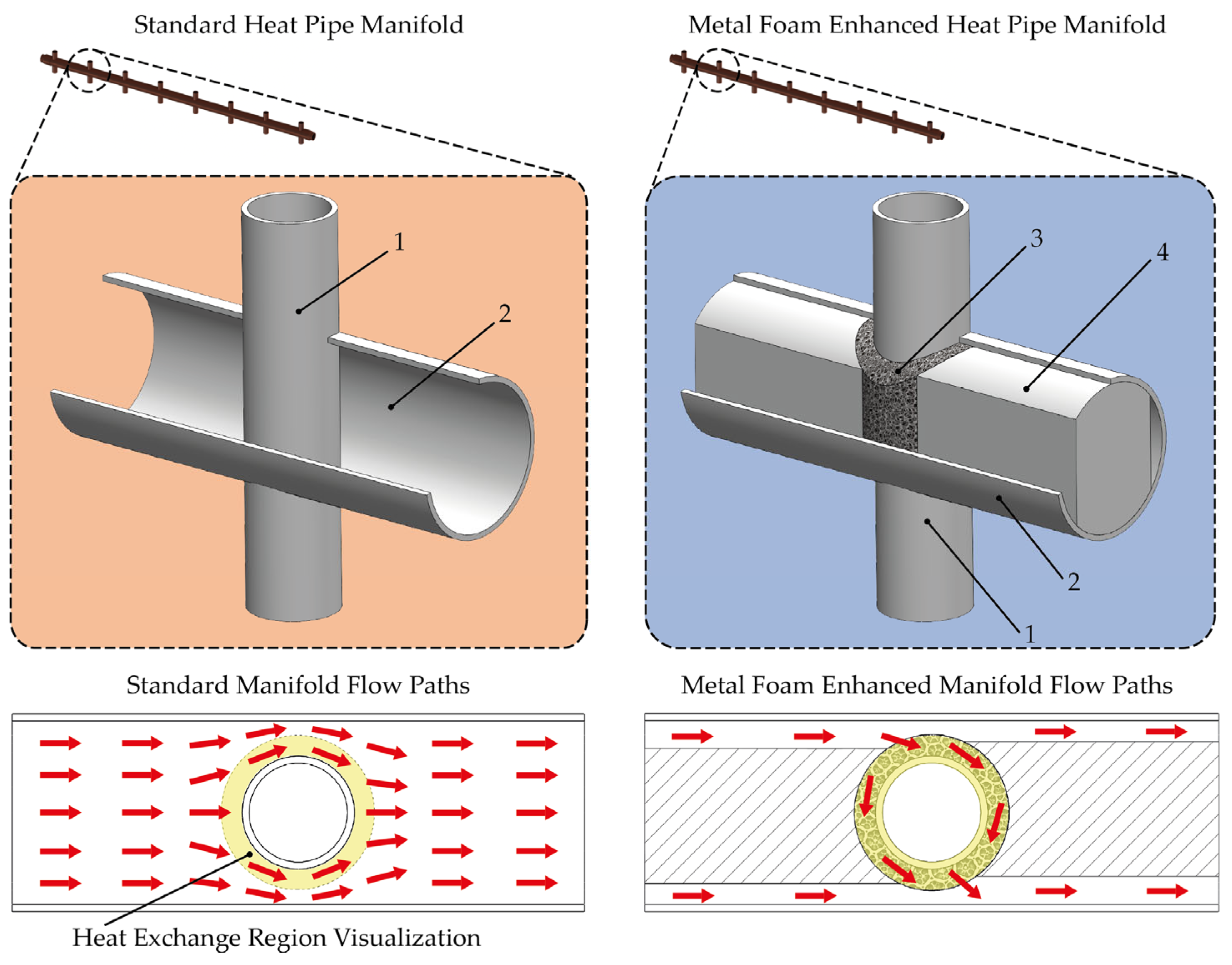
Figure 1 schematically compares the standard design with the modified design featuring an integrated heat-exchange chamber composed of metal foam and foam-glass blocks. The proposed design preserves the same external dimensions of the manifold as well as an identical geometric volume of the heat-exchange region, while fundamentally altering its internal architecture.
Around each condenser casing, an annular heat-exchange chamber filled with open-cell metal foam is formed. In this configuration, the heat-transfer fluid is forced to pass through the pores of the metal foam, which significantly increases the effective heat-exchange surface area and the intensity of heat transfer within the same geometric volume.
It should be emphasized that the heat-exchange region is defined exclusively as the geometric volume of the condenser–fluid interaction zone surrounding each heat pipe condenser. The foam glass elements are located outside this region and act solely as flow-directing and thermally insulating components. Therefore, despite the reduction and shaping of the flow channels, the effective heat-exchange volume remains identical for both the standard and modified manifolds.
The flow direction of the fluid and the separation of individual heat-exchange chambers are ensured by structural blocks made of foam glass, which form flow channels that change the character of the heat-transfer fluid flow from a serial arrangement to a parallel arrangement with respect to the position of the condenser casing. At the same time, these blocks prevent bypass flow around the active heat-exchange region outside the metal foam. The metal-foam heat-exchange chamber tightly encloses the condenser casing and is surrounded by foam glass blocks forming the flow channels. The channels visible in the lower part of
Figure 1 guide the heat-transfer fluid from the gradually narrowing upper channel into the expanding lower channel, ensuring an identical flow rate through each heat-exchange chamber. The resulting change in the flow pattern in the vicinity of the condenser is schematically illustrated in the lower part of
Figure 1.
The interaction between the metal foam heat-exchange chambers, foam-glass structural blocks, and the manifold wall may raise concerns regarding unintended heat-loss paths or thermal short-circuiting. In the proposed design, however, the foam-glass blocks serve not only as flow-guiding elements but also as thermal barriers due to their low thermal conductivity. This significantly limits conductive heat transfer from the metal foam toward the manifold wall. Furthermore, the manifold wall and external insulation are identical for both the modified and reference collectors; therefore, any residual conductive or convective losses through the manifold structure affect both configurations in a similar manner. As a result, such losses do not influence the relative performance comparison, and the measured energy gains can be attributed primarily to enhanced internal heat transfer between the heat pipe condensers and the heat transfer fluid.
The prototype of the modified manifold was designed for a solar collector with eight dry connection vacuum tubes. The heat-exchange chamber had the shape of an annulus surrounding the condenser casing. The inner diameter of the chamber corresponds to the outer diameter of the condenser casing, 16 mm; the outer diameter of the chamber is 24 mm, and the axial height of the chamber is 26 mm. The resulting cylindrical volume had rounded edges consistent with the inner diameter of the manifold tube. The dimensions and shape of the geometric volume of the heat-exchange chamber were derived from numerical analyses of the standard and modified manifolds, which were the subject of previously published studies [
29,
30]. The geometric volume of a single heat-exchange chamber is thus 5.34 × 10
−6 m
3. This volume is identical to the volume of the heat-exchange region in the standard manifold, ensuring geometric comparability of both solutions.
The heat-exchange chamber is filled with open-cell copper metal foam with a pore density of 20 PPI (pores per inch) and a relative density of 300 kg·m−3. The thickness of the metal-foam layer is 4 mm. The applied type of metal foam achieves a specific surface area of 1400 m2·m−3, which means that a single heat-exchange chamber provides an effective heat-exchange area of 0.0075 m2. For comparison, the smooth surface of the condenser casing in the standard manifold provides a heat-exchange area of 0.0012 m2, representing an increase in the active heat-exchange surface area of more than 600% while maintaining the same geometric volume.
Although the modified exotic materials or manufacturing techniques, the metal foam inserts and foam-glass blocks used in the prototype are commercially available products, while the manifold body itself can be manufactured using standard forming and joining processes commonly employed in solar collector production. Importantly, the proposed modification is confined to the manifold region and does not require changes to the evacuated tubes, absorbers, or external collector geometry. This modularity supports reproducibility and scalability, as the metal foam elements can be pre-fabricated and assembled using established production workflows. Although a detailed cost analysis was not within the scope of the present study, the limited increase in component complexity suggests that the proposed design is compatible with industrial-scale manufacturing and warrants further techno-economic evaluation.
2.2. Experimental Setup and Hydraulic Configuration
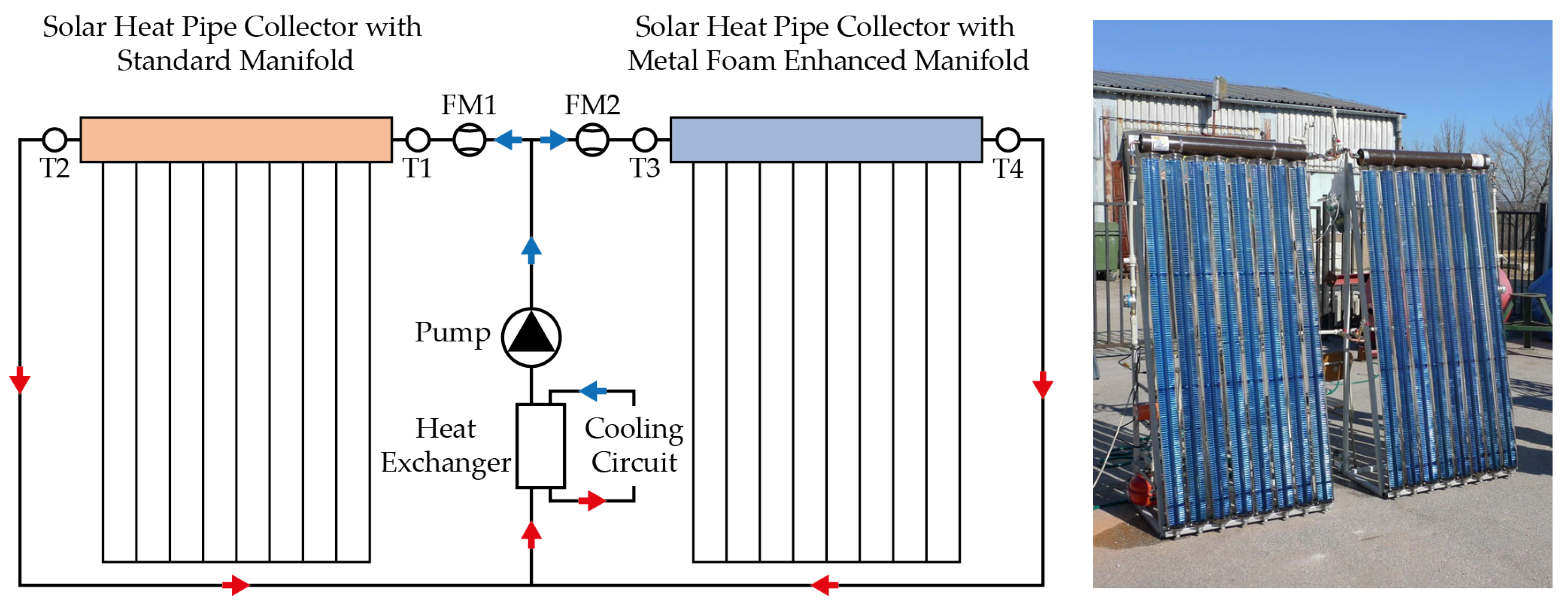
The experimental comparison of the standard manifold of and the modified manifold with a metal-foam heat-exchange chamber was carried out by their simultaneous operation within a single hydraulic circuit, as schematically illustrated in
Figure 2.
Such an arrangement ensures that both collectors are exposed to identical boundary conditions throughout the entire experiment, in particular the same solar irradiance intensity, the same climatic conditions, and the same hydraulic operating regime. Both collectors are connected to a common inlet and outlet of the heat-transfer fluid. The heat-transfer fluid is circulated by a single circulation pump, which provides a stable flow to the distribution node. At this node, the fluid stream is divided into two branches, each supplying one collector. Downstream of the collectors, the flows are recombined into a common pipeline and the extracted heat is transferred to a secondary cooling circuit via a spiral heat exchanger.
Each branch of the hydraulic circuit is equipped with an individual flow meter (FM1 and FM2), allowing independent control and adjustment of the mass flow rate of the heat-transfer fluid for each collector. During the experiments, measurements were carried out at two nominal flow-rate levels, 60 kg·h−1 and 120 kg·h−1, which represent typical operating regimes of vacuum tube collectors in real solar systems. Water at an inlet temperature of 15 °C was used as the heat-transfer medium. The selected mass flow rates of 60 and 120 kg·h−1 represent typical and upper-bound operating conditions for evacuated tube solar collectors of this size. The lower value corresponds to the manufacturer-recommended nominal operating regime, while the higher value was intentionally selected to investigate collector behavior under increased heat removal demand and reduced thermal resistance conditions. Although intermediate and lower flow rates were not explicitly investigated in this study, the observed performance trends are primarily driven by changes in internal heat-transfer mechanisms and thermal inertia, suggesting that the relative performance advantages of the modified manifold are expected to persist beyond the investigated operating window.
The thermal conditions of the heat-transfer fluid were monitored using temperature sensors installed at the inlet and outlet of each collector, as illustrated in
Figure 2. For the standard collector, temperatures T1 (inlet) and T2 (outlet) were measured, while for the modified collector temperatures T3 (inlet) and T4 (outlet) were recorded. Based on these measurements, the instantaneous thermal power of each collector was calculated with a time step of 10 s. The same time step was applied for recording the flow rate and other operating parameters.
The experiments were conducted under outdoor conditions on days with different solar irradiance characteristics, ranging from relatively stable clear-sky conditions to days with pronounced variability due to cloud cover. For the purpose of detailed analysis of the dynamic behavior of the collectors, representative time intervals of individual measurements are presented in this study. The recorded data were processed only after the hydraulic regime of the system had stabilized, approximately fifteen minutes after the start of operation. The length of the presented time intervals varies depending on the nature of the measurement and was selected to capture the dominant transient phenomena associated with changes in the operating conditions of the compared solar collectors. These time intervals were identified based on the occurrence of pronounced performance dynamics in both collectors under comparable operating conditions, enabling a relevant assessment of their dynamic response and stability.
The presented methodology is particularly suited for comparative prototype evaluation and early-stage design validation, where the primary objective is the isolation of internal design effects rather than certification-oriented efficiency testing.
Solar irradiance intensity was not measured directly during the experiments, as the objective of this study was not to determine the standardized efficiency of the collectors, but rather to perform their mutual experimental comparison in terms of energetic, dynamic, and hydraulic characteristics. The influence of variable irradiance is therefore evaluated indirectly through the temporal evolution of the thermal power and its time derivatives. This experimentally conceived procedure makes it possible to isolate the effect of the structural innovation of the heat-exchange section of the collector from other factors and provides a robust basis for comparing the behavior of both collectors under real operating conditions. It should be noted that direct measurements of solar irradiance (e.g., using a pyranometer) were not included in the experimental campaign. The experiments were performed under real outdoor conditions without artificial control of solar irradiance. Insolation was not prescribed or stabilized; instead, both collectors were operated simultaneously in a parallel hydraulic configuration, ensuring exposure to identical instantaneous irradiance and environmental conditions. Consequently, the comparison focuses on relative energetic and dynamic performance rather than on absolute efficiency normalized to irradiance.
As a consequence, the results cannot be directly used for the derivation of standardized efficiency curves according to ISO 9806. The adopted approach focuses on relative thermal power comparison under simultaneous operation, where both collectors are subjected to identical and time-synchronized irradiance and ambient conditions. Under these conditions, irradiance acts as a common-mode input and does not affect the validity of the comparative assessment, but it limits direct benchmarking against standardized collector performance metrics.
2.3. Instrumentation, Data Acquisition, and Measurement Uncertainty
The measurement apparatus was designed with the objective of minimizing the number of measured quantities and, consequently, reducing the propagation of uncertainties into the final comparison. The temperature of the heat-transfer fluid was measured using KIMO TTKE-363 thermocouples (type K, range −40 to +400 °C) (An Avnet Company, Bordeaux, France), which were installed in threaded housings at the inlet and outlet of each manifold (positions T1–T4 in
Figure 2). The declared accuracy of the thermocouples is ±0.1 °C within the relevant temperature range.
Signals from the thermocouples were recorded using a multifunction measuring instrument KIMO AMI 300 (An Avnet Company, Bordeaux, France) with an integrated data logger. The data logging time step was set to 10 s, allowing the dynamic response of the collectors to be captured during rapid changes in operating conditions, particularly under variable cloud cover.
The mass flow rate of the heat-transfer fluid was measured separately for each collector using mechanical differential direct-reading flow meters SMART+ JS-02, installed downstream of the control valves in the individual branches of the hydraulic circuit (FM1 and FM2 in
Figure 2). The manufacturer-specified accuracy of flow measurement and adjustment was ±5% of the full scale of the instrument. Although the modified manifold introduces higher pressure losses, the use of independent flow control and continuous flow-rate monitoring ensured identical nominal mass flow rates in both branches throughout all experiments.
The overall analysis of the modified manifold also included the determination of pressure losses. Pressure-drop measurements of the prototype were performed using the AMI 300 measuring system with a pressure module (accuracy 0.2% of full scale) from Kimo Instruments. During these measurements, the same mass flow rates of the heat-transfer medium were applied as those planned for the experimental trial operation of the collector. The comparison of results showed that the prototype of the modified manifold exhibited a pressure drop of 1844 Pa at a flow rate of 60 kg·h−1, which is 1256 Pa higher than that of the standard manifold, while at a flow rate of 120 kg·h−1 the pressure drop reached 4463 Pa, which is 3090 Pa higher than that of the standard manifold.
The uncertainty of the calculated thermal power was analyzed using the uncertainty propagation method according to Kline–McClintock [
31,
32,
33]. The analysis included the uncertainty of temperature measurement by the KIMO TTKE-363 thermocouples (An Avnet Company, Bordeaux, France), the uncertainty of the KIMO AMI 300 data logger, and the uncertainty of flow measurement by the SMART+ JS-02 flow meters (Apator Powogaz Czechia, Šumperk, Czech Republic).
The results of the uncertainty analysis showed that the average relative uncertainty of the calculated thermal power of the collector is ±1.9%, with the maximum uncertainty not exceeding ±2.8%. This level of uncertainty is fully acceptable considering the experimental and comparative nature of the measurements and allows reliable evaluation of differences between the assessed collectors.
All performance indicators evaluated in this study are derived from the thermal power signal P(t), for which the measurement uncertainty was quantified. As a result, the uncertainty of the derived metrics is inherently linked to that of P(t) and does not represent an independent error source. Indicators based on integration or statistical aggregation of P(t), such as energetic inertia Θ or power stability indices, are less sensitive to instantaneous measurement uncertainty, as random errors tend to average out over time. In contrast, derivative-based indicators such as dP/dt are more sensitive to short-term fluctuations; therefore, these metrics were evaluated using time-smoothed power signals. Under these conditions, the magnitude of the observed differences between the compared collectors significantly exceeds the expected uncertainty-related variability.
The evaluation therefore emphasizes temporal trends, power stability, and relative performance differences rather than absolute efficiency values. The observed power differences consistently exceeded the estimated combined measurement uncertainty (±1.9%), confirming that the reported performance improvements are statistically significant despite the absence of irradiance normalization.
2.4. Evaluated Performance Metrics and Data Processing
The objective of evaluating the experimental measurements was not to determine the standardized efficiency of the solar collectors, but to perform a comprehensive comparison of their energetic, dynamic, and hydraulic behavior under identical operating conditions. For this reason, data processing was based on a combination of time-resolved performance characteristics and global (cumulative) indicators, which together allow the impact of the structural innovation of the heat-exchange space to be assessed.
For each experiment, the following time-dependent parameters were evaluated from the measured data: Thermal Power P(t) [W], Normalized Power Pnorm(t) [–], Volumetric Power Density qV(t) [kW·m−3], Hydraulic–Energetic Performance Index Π(t) [W·Pa−1·m−3] and Time derivative of thermal power dP/dt(t) [W·s−1].
The fundamental parameter used for comparison is the instantaneous thermal power of the collector [
34]:
where
is the mass flow rate of the heat-transfer fluid,
is its specific heat capacity and
is the instantaneous temperature difference between the inlet and outlet of the collector. The other evaluated parameters are primarily based on the work in [
35] and the technical standard ISO 9806:2017 [
36]. The normalized power according to Equation (2) enables comparison of the dynamic behavior of the collectors independently of the absolute power level and is used mainly for assessing stability and sensitivity to changes in operating conditions, where P
max denotes the maximum measured value during a given experiment.
The volumetric power density according to Equation (3) relates the instantaneous power P(t) to the geometric volume of the heat-exchange region V
HX and represents a key parameter for assessing the efficiency of utilizing the same volume with different internal architectures.
The hydraulic–energetic performance index
, calculated according to Equation (4), is introduced to evaluate compact manifold concepts where thermal benefit and hydraulic penalty must be assessed simultaneously. The index can be interpreted as a volumetrically normalized extension of the conventional ratio
. While
indicates how much thermal power is obtained per unit pressure drop, it does not account for compactness of the heat-exchange region. Conversely, the volumetric power density
captures compactness but neglects hydraulic demand. The proposed index
therefore combines both aspects and quantifies the instantaneous thermal power obtained per unit pressure drop and per unit heat-exchange volume. This makes it especially suitable for comparing designs that target performance intensification by internal architecture rather than geometric scaling.
where P(t) is the instantaneous power, Δp is the pressure drop, and the volume of the heat-exchange region V
HX into a single parameter, enabling evaluation of the trade-off between energy benefit and hydraulic demand of the design.
The time derivative of the power dP/dt was calculated numerically from the time history of the power and used as an indicator of the dynamic response of the collector to changes in solar irradiance intensity. This parameter is essential for assessing operation under non-stationary conditions.
Based on the time histories, the following global indicators were calculated for each experiment: Cumulative Energy Gain E [kWh], Volumetric Energy Density eV [kWh·m−3], Power Output Stability σP [W], Normalized Power Output Stability σP* [–], Area-Based Thermal Performance ηA [W·m−2], Power-to-Pressure Drop Ratio P/Δp [W·Pa−1], Maximum Dynamic Sensitivity max|dP/dt| [W·s−1], Maximum Power Increase Rate (dP/dt)max [W·s−1], Maximum Power Decrease Rate (dP/dt)min [W·s−1], Normalized Dynamic Sensitivity (dP/dt)* [–], Energy Gain per Unit Pressure Drop E/Δp [kWh·Pa−1] and Energetic Inertia Index Θ [–].
The cumulative energy gain was determined by time integration of the power:
The volumetric energy density:
enables a direct comparison of the energetic efficiency of the collectors for an identical geometric volume of the heat-exchange region by relating the produced energy E to the volume of the heat-exchange region V
HX.
Performance stability was characterized by the standard deviation of the power according to Equation (7):
where the normalized performance stability was referenced to the mean power value. These indicators are used to quantify power fluctuations over time.
Parameters based on the power derivative—maximum dynamic sensitivity, maximum rate of power increase, and maximum rate of power decrease—were used to evaluate the response of the collector to rapid changes in boundary conditions. The normalized dynamic sensitivity enables comparison of the collectors without the influence of the absolute power level.
Energy inertia, as defined by Equation (8), is a dimensionless metric quantifying the trade-off between dynamic response and performance stability, enabling assessment of whether reduced power fluctuations are achieved without introducing excessive response delay.
3. Results
The results of the experimental validation of the structural innovation are presented through five separate experimental measurements, identified as 60-1, 60-2, 120-1, 120-2, and 120-3. The individual experiments differed primarily in the set level of the mass flow rate of the heat-transfer fluid and in the character of the temporal variability of operating conditions, particularly the intensity of solar irradiance.
The dynamic indicators introduced in this study are intended to describe aspects of collector behavior that are directly relevant to real system operation and control. Energetic inertia Θ characterizes the ability of the collector–manifold assembly to store and release thermal energy, and thus directly influences start-up behavior and temperature decay during periods of reduced solar irradiance. A lower energetic inertia implies a faster thermal response, reduced start-up losses, and improved utilization of short irradiance peaks, which is particularly relevant under intermittent cloud-covered conditions.
The normalized dynamic sensitivity reflects how rapidly the thermal power output responds to changes in solar input. From a control perspective, higher sensitivity corresponds to a more responsive system that can better track fluctuating irradiance without excessive delay, reducing the need for conservative pump control strategies.
Stability-related metrics quantify short-term power fluctuations around a mean operating level and are directly linked to control robustness. Improved power stability reduces frequent on–off cycling of circulation pumps and control valves, thereby enhancing system reliability and reducing parasitic losses. In this context, the introduced indicators provide a complementary description to steady-state efficiency metrics by capturing operational behavior under realistic, non-stationary conditions.
3.1. Performance Comparison Under Moderately Stable Insolation (60-1)
Experiment 60-1 was carried out at a nominal mass flow rate of 60 kg·h−1. The course of the measurement corresponds to a gradual increase in solar irradiance intensity during the initial phase of the experiment, followed by relatively stable conditions with short-term fluctuations in irradiance intensity.
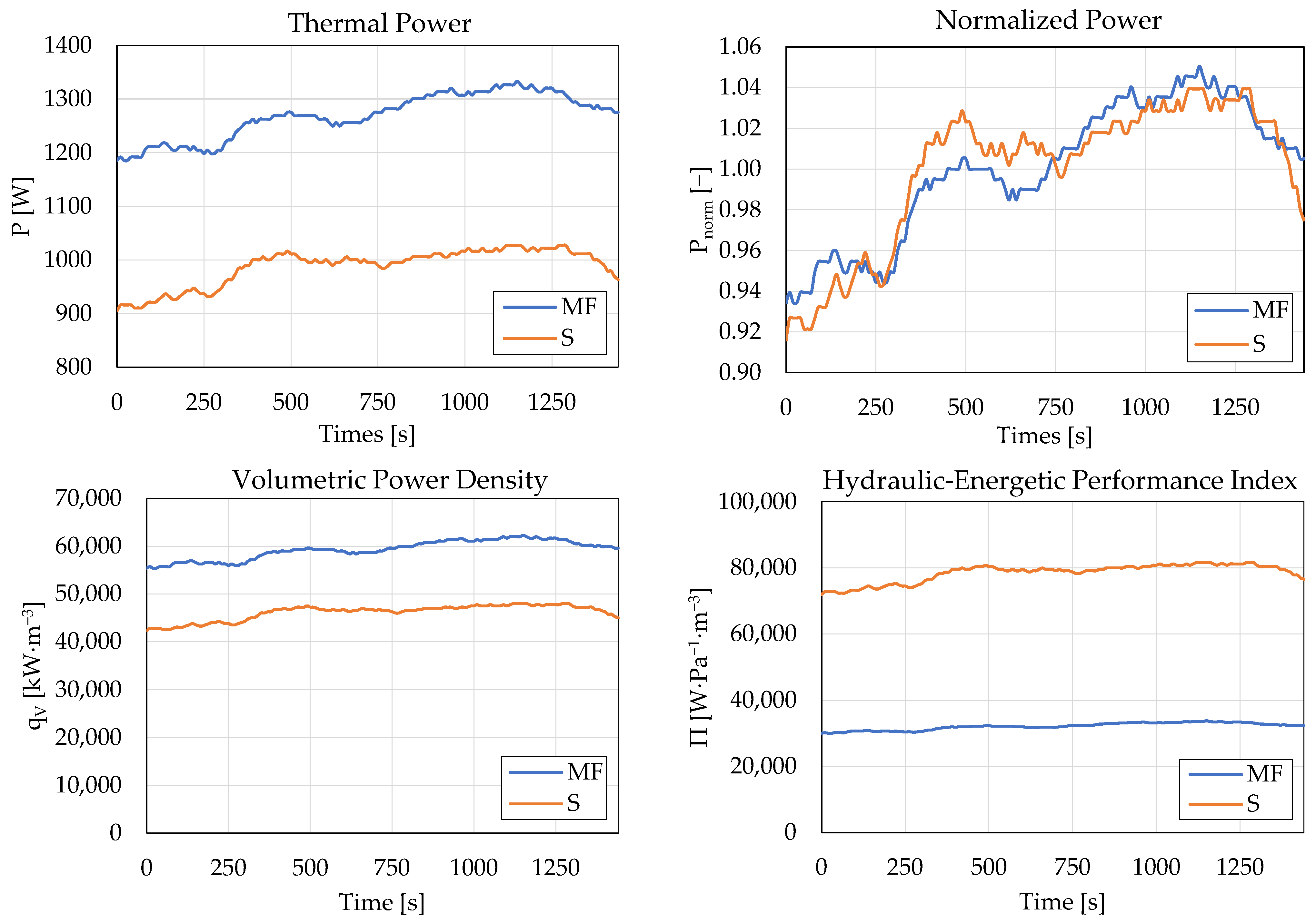
The collector with the manifold incorporating a metal-foam heat-exchange chamber (denoted as MF) achieves a higher instantaneous thermal power than the standard collector (denoted as S) throughout the entire experiment. From the time history of P(t) (see
Figure 3), it follows that the power output of the modified collector ranges between 1.18–1.33 kW, whereas the standard collector reaches 0.90–1.03 kW, representing a systematic difference on the order of 25–30%. This difference in absolute power is directly reflected in the volumetric power density q
V(t) (see
Figure 3). For an identical geometric volume of the heat-exchange section, the modified collector reaches values of 55–62 kW·m
−3, while the standard collector attains 42–48 kW·m
−3 (see
Figure 3). The higher power of the modified collector is therefore achieved without enlarging the heat-exchange area, but through more efficient utilization of the same volume, which confirms the importance of the internal architecture of the heat-exchange chamber.
The increased intensity of heat transfer is simultaneously reflected in the hydraulic–energetic parameters. The values of the index Π(t) are significantly lower for the modified collector (30–34 W·Pa
−1·m
−3) than for the standard collector (72–82 W·Pa
−1·m
−3), which directly reflects the higher pressure loss associated with fluid flow through the porous structure of the metal foam (see
Figure 3). Higher energy performance is thus achieved at the expense of increased hydraulic demand, while this trade-off remains stable throughout the entire experiment.
Unlike qV, which reflects compactness alone, and P/Δp, which reflects hydraulic efficiency alone, Π(t) provides a single-view quantification of the energetic–hydraulic trade-off at a fixed heat-exchange volume, which is the central design constraint of the present study.
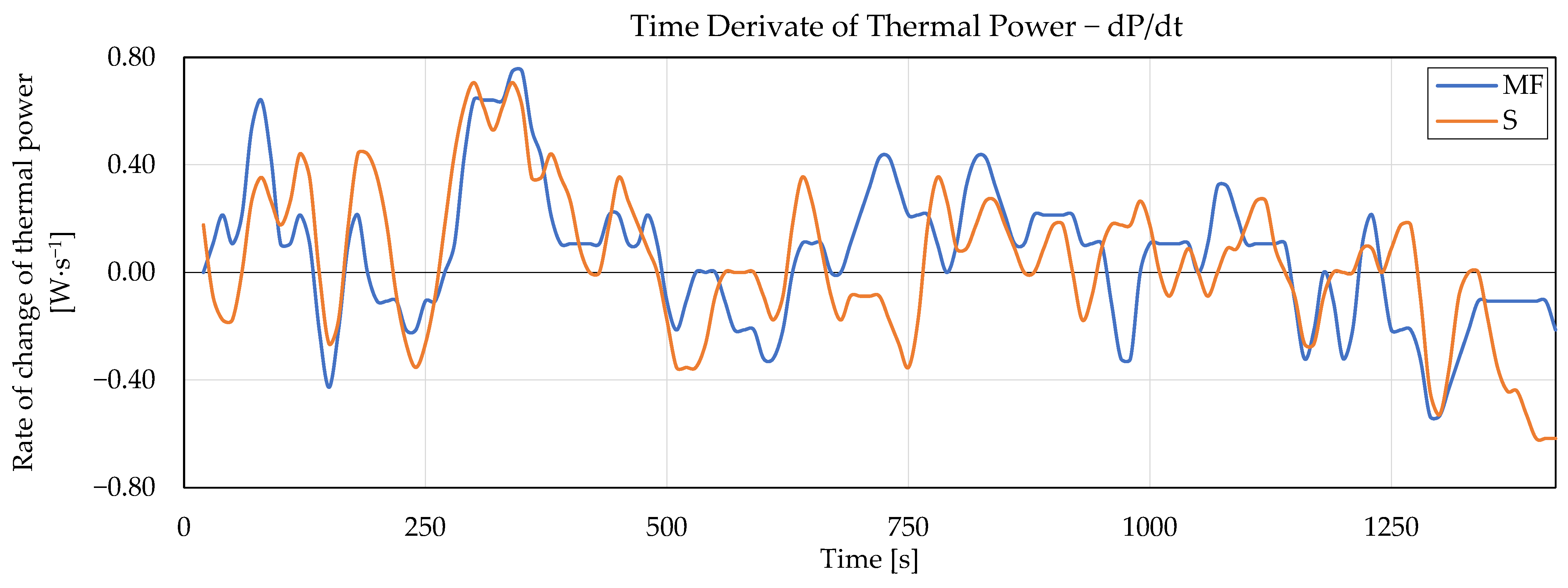
From the perspective of dynamic behavior, the higher heat-transfer intensity in the modified collector manifests itself in reduced sensitivity of the power output to short-term changes in operating conditions. The time history of the power derivative dP/dt (see
Figure 4) shows that the modified collector exhibits smaller extreme values, typically up to ±0.4 W·s
−1, whereas the standard collector reaches extremes of approximately ±0.6–0.7 W·s
−1. The higher and simultaneously more stable heat transfer in the metal-foam chamber therefore leads to suppression of rapid power fluctuations.
This effect is also consistent with the time history of the normalized power Pnorm(t), which shows that both collectors respond to changes in operating conditions with a similar trend; however, the modified collector maintains a slightly higher and smoother normalized power level. The higher absolute power of the modified collector is therefore not the result of short-term peaks, but rather a consequence of more stable heat transfer over time. Experiment 60-1 thus demonstrates a mutually linked chain of effects: a more efficient internal architecture of the heat-exchange chamber leads to higher power output and volumetric power density, which is accompanied by increased hydraulic demand, but at the same time by lower dynamic sensitivity of the power output. Under low mass flow rate conditions, these effects manifest consistently throughout the entire experiment.
3.2. Collector Response Under Highly Variable Insolation (60-2)
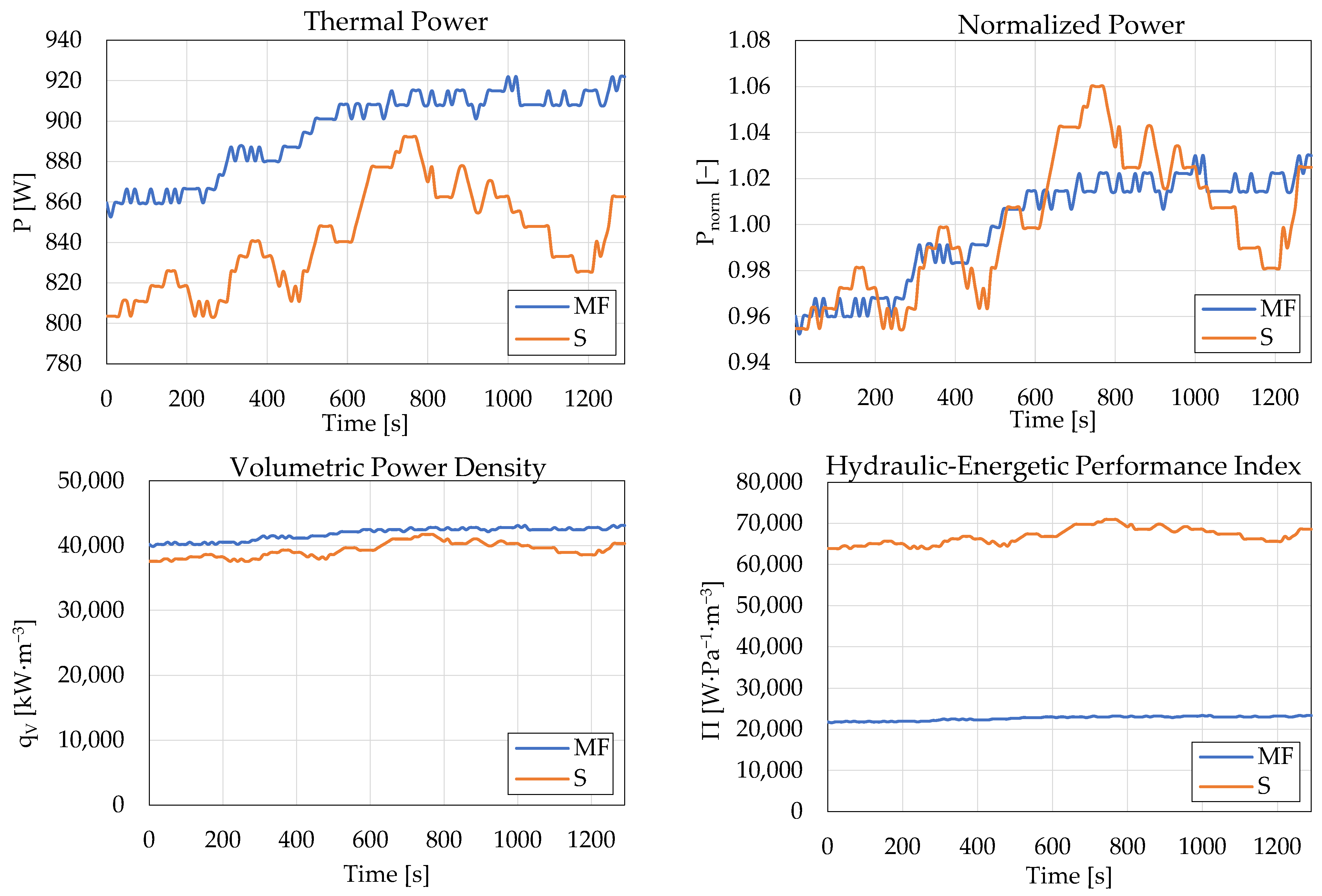
Experiment 60-2 was carried out at the same nominal mass flow rate as experiment 60-1, but under a different temporal evolution of operating conditions. The experiment was conducted under conditions of highly variable solar irradiance intensity, characterized by frequent and rapid changes in insolation typical of scattered cloud cover. From the time history of the instantaneous thermal power P(t) (see
Figure 5), it follows that the modified collector also achieves systematically higher power than the standard collector in this experiment. The power output of the modified collector ranges between 860–920 W, whereas the standard collector reaches 800–890 W, corresponding to a difference on the order of 5–10%. Compared to experiment 60-1, the absolute power difference is smaller, indicating a stronger influence of instantaneous boundary conditions; however, the ranking of the collectors remains unchanged.
This difference is directly reflected in the volumetric power density q
V(t) (see
Figure 5). The modified collector reaches values of 40–43 kW·m
−3, while the standard collector attains 37–41 kW·m
−3. Although the difference is smaller than in experiment 60-1, the modified collector also maintains higher volumetric efficiency in this case, confirming that the benefit of the modified architecture persists even under less favorable distributions of operating conditions. The hydraulic–energetic index Π(t) (see
Figure 5) exhibits a similar character to that observed in experiment 60-1. The standard collector reaches values of 63–70 W·Pa
−1·m
−3, whereas the modified collector attains 21–23 W·Pa
−1·m
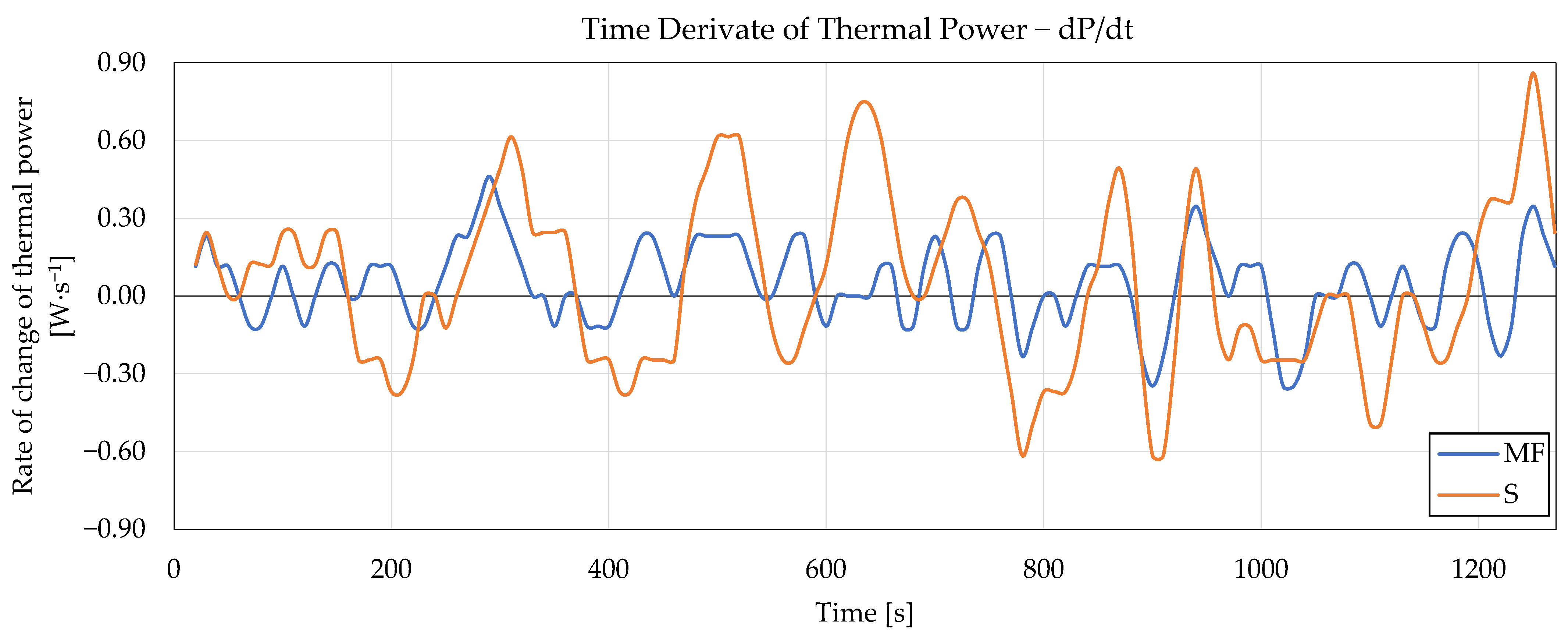
−3. The higher power output of the modified collector is therefore again accompanied by higher hydraulic demand, while the difference in the index Π(t) remains stable over time. Differences in dynamic response are clearly evident from the time history of the power derivative dP/dt (see
Figure 6).
The standard collector reaches extreme derivative values of up to ±0.8–0.9 W·s−1, whereas the modified collector typically does not exceed ±0.4 W·s−1. This indicates that the modified collector exhibits significantly lower dynamic sensitivity, which is even more pronounced than in experiment 60-1. The normalized power Pnorm(t) confirms this trend. Both collectors follow a similar temporal evolution; however, the standard collector exhibits larger short-term deviations, while the modified collector maintains a smoother normalized profile. The higher stability of the normalized power is consistent with the suppression of extreme values of dP/dt. Compared to experiment 60-1, experiment 60-2 shows a smaller difference in absolute power output but a more pronounced difference in dynamic response. This suggests that under conditions with higher temporal variability, the benefit of the metal-foam heat-exchange chamber manifests primarily in increased performance stability, while the energetic benefit remains preserved, albeit to a lesser extent than under the more favorable conditions of experiment 60-1.
Compared to experiment 60-1, experiment 60-2 was performed under less stable operating conditions, characterized by intermittent cloud cover and short-term fluctuations in solar irradiance. These variations resulted in repeated quasi-steady operating intervals (plateaus) interspersed with abrupt changes in the thermal power signal. Such behavior reflects the collector response to rapidly changing boundary conditions rather than steady operation and is therefore consistent with the outdoor quasi-dynamic nature of the experiment. Under such transient input, the two manifold concepts do not respond as a simple magnitude-scaled pair: the MF heat-exchange chamber introduces damping and a smoother thermal response, while the standard manifold exhibits higher dynamic sensitivity and more fluctuation-prone behavior. Consequently, the time histories of thermal power P(t) and volumetric power density qV(t) may differ in trend shape during rapid transitions, which is consistent with the reduced dP/dt extremes and improved stability indicators observed for the MF collector in this experiment.
3.3. High-Flow Operation Under Stable Insolation Conditions (120-1)
Experiment 120-1 was conducted at a mass flow rate of 120 kg·h
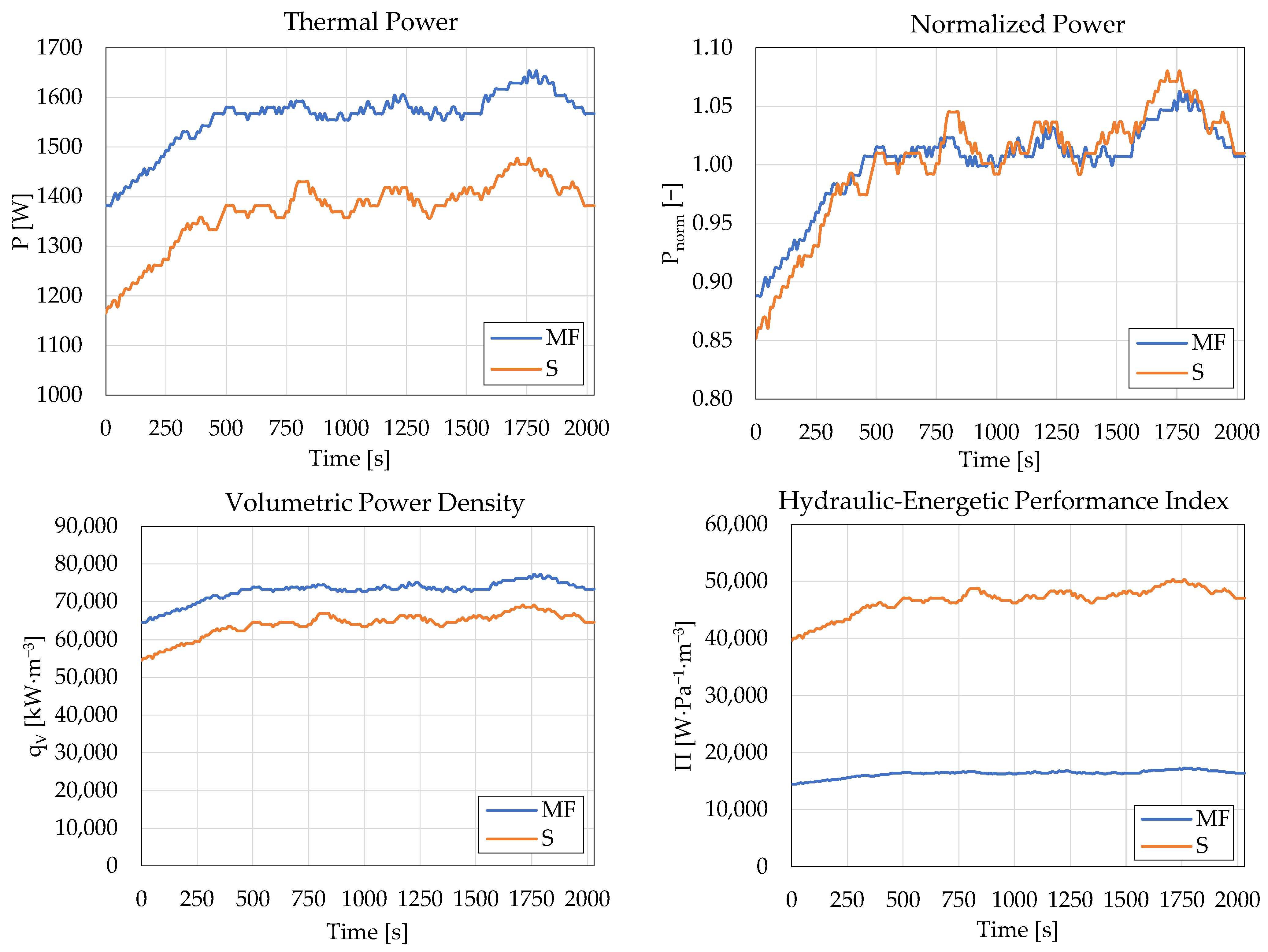
−1. The measurement was carried out under predominantly stable irradiance conditions, with a slight increase in solar irradiance intensity in the initial phase followed by a steady operating regime. The increased flow rate leads to higher absolute power output for both collectors, while the modified collector also maintains a systematically higher instantaneous thermal power than the standard collector in this regime. The power output (see
Figure 7) of the modified collector ranges between 1.45–1.65 kW, whereas the standard collector reaches 1.20–1.45 kW, representing a difference on the order of 15–20%.
The higher power of the modified collector simultaneously ensures a higher volumetric power density (see
Figure 7), reaching 70–76 kW·m
−3 compared to 60–68 kW·m
−3 for the standard collector. This indicates that even at increased flow rates, the modified internal architecture of the manifold remains more efficient in terms of utilizing the same geometric heat-exchange volume, although the relative difference is smaller than at lower flow rates. The increased intensity of heat transfer in the modified collector is again accompanied by higher hydraulic demand, which is reflected in significantly lower values of the hydraulic–energetic index Π(t) (15–18 W·Pa
−1·m
−3) compared to the standard collector (45–50 W·Pa
−1·m
−3). Although the increased flow rate reduces the absolute value of the index for both collectors, the difference between them remains preserved.
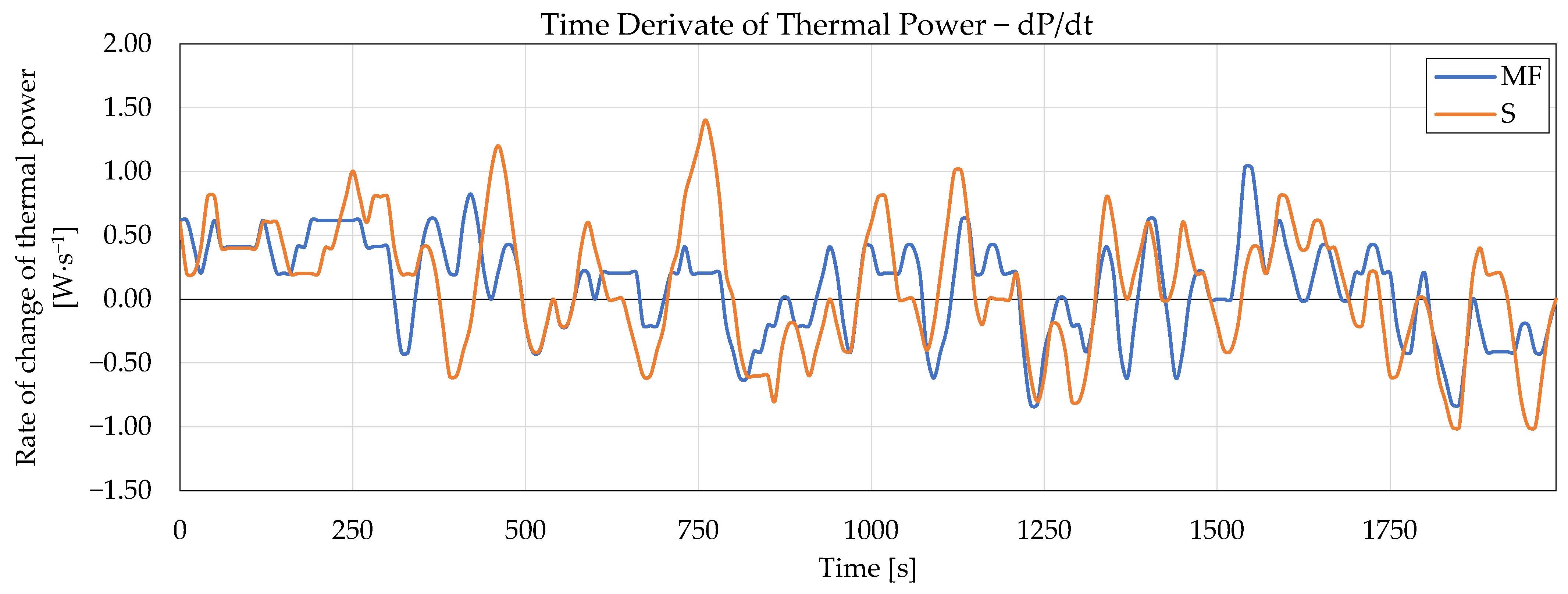
From the perspective of dynamic response, the higher flow rate leads to larger absolute power fluctuations in both collectors, manifested by increased extreme values of dP/dt (see
Figure 8). Nevertheless, the modified collector exhibits lower dynamic extremes (up to ±1.0 W·s
−1) than the standard collector (up to ±1.5 W·s
−1), indicating that the higher and more uniform heat transfer in the metal-foam chamber contributes to the suppression of rapid power changes even at elevated flow rates.
Experiment 120-1 thus shows that at higher mass flow rates, the benefit of the metal-foam heat-exchange chamber manifests as a combination of higher power output, more effective utilization of the heat-exchange volume, and lower dynamic sensitivity, while hydraulic penalization remains present but is relatively less dominant in the context of higher power output.
3.4. Performance Degradation During Decreasing Insolation (120-2)
Experiment 120-2 was conducted at a mass flow rate of 120 kg·h−1 and is characterized by a pronounced decrease in power over time, indicating deteriorating boundary conditions during the experiment. Despite this trend, the modified collector maintains higher instantaneous thermal power than the standard collector throughout the entire experiment. The course of the experiment was influenced by a gradual decrease in solar irradiance intensity, with short-term partial recoveries of insolation also recorded.
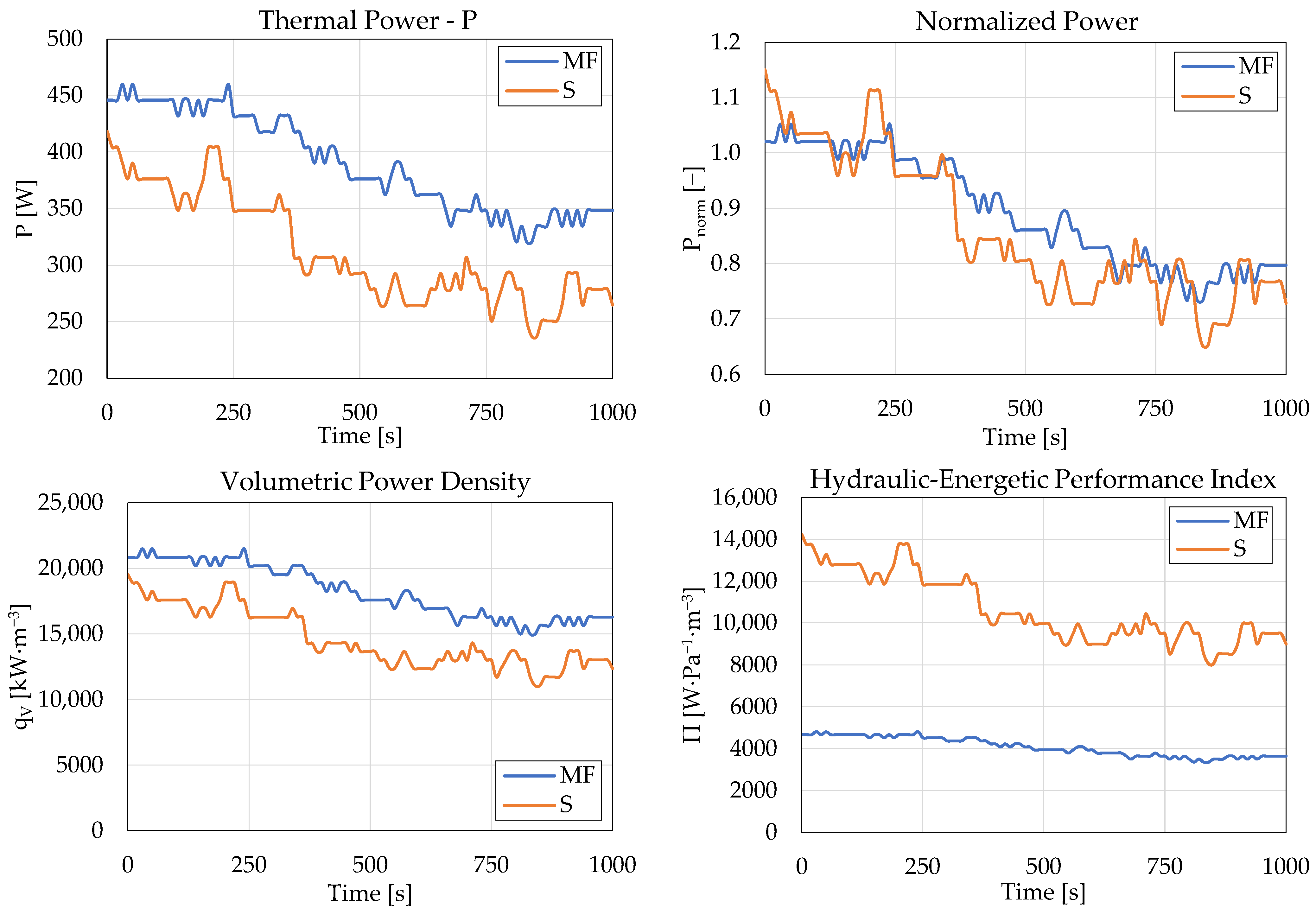
From the time history of P(t) (see
Figure 9), it follows that the power of the modified collector decreases from 450 W to 340 W, whereas the power of the standard collector decreases from 400 W to 260–280 W, and the MF collector exhibits an approximately 10–30% higher thermal power than the standard collector throughout the experiment, depending on the instantaneous operating conditions. The higher absolute power of the modified collector is consistently reflected in a higher volumetric power density, ranging between 16–21 kW·m
−3, while the standard collector reaches 12–19 kW·m
−3.
Thus, even under conditions of decreasing available energy, the modified architecture utilizes the same geometric volume of the heat-exchange section more effectively. The increased heat transfer in the modified collector is again accompanied by higher hydraulic demand (see
Figure 9), which is reflected in lower values of the hydraulic–energetic index Π(t) (3.5–4.5 kW·Pa
−1·m
−3) compared to the standard collector (9–14 kW·Pa
−1·m
−3). This difference persists throughout the entire experiment, even as the power gradually decreases.
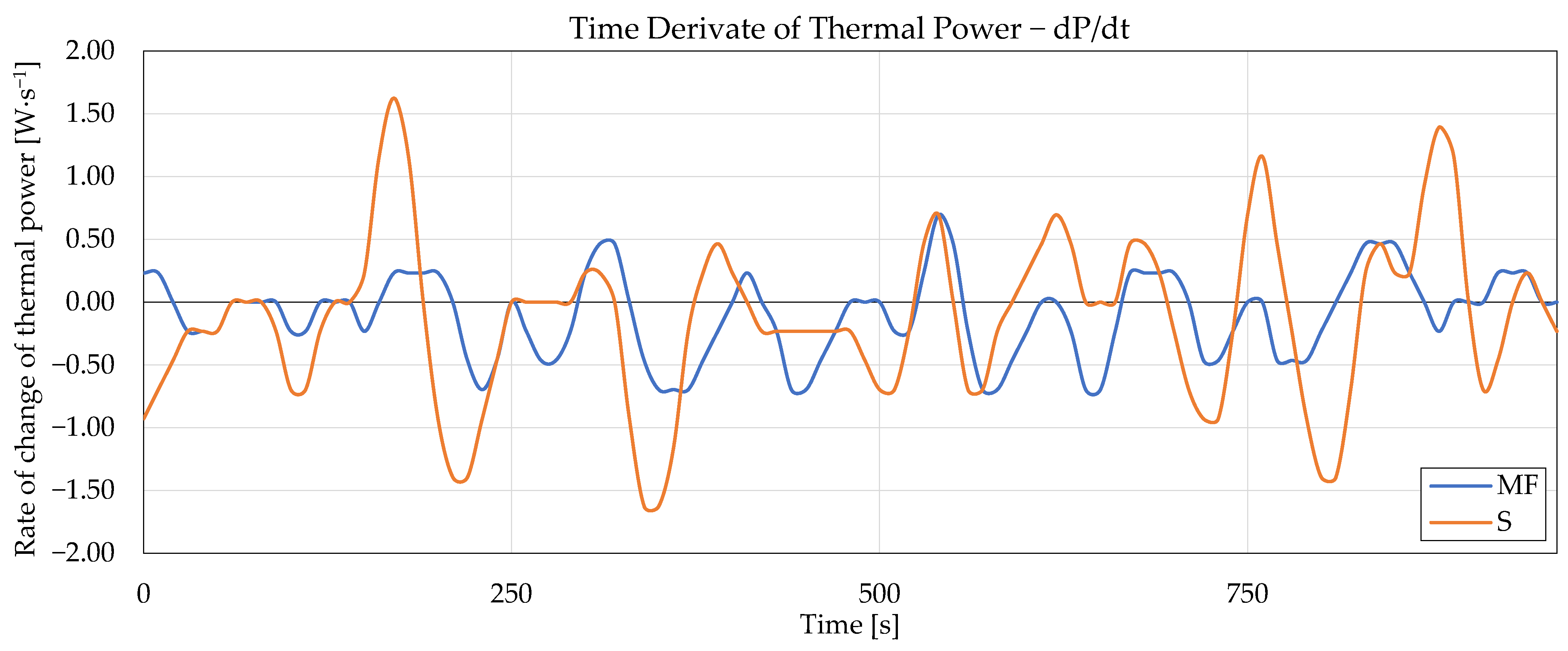
The dynamic behavior of the collectors, expressed through dP/dt, indicates significant differences in their response to rapid changes in operating conditions (see
Figure 10). The standard collector reaches extreme derivative values of up to ±1.5–1.8 W·s
−1, whereas the modified collector typically does not exceed ±0.6–0.8 W·s
−1.
This indicates that even under pronounced non-stationary input conditions, the modified collector exhibits lower dynamic sensitivity. Experiment 120-2 thus confirms that the benefit of the metal-foam heat-exchange chamber is preserved even under unfavorable and temporally variable conditions: higher power output and volumetric efficiency are achieved at the expense of increased hydraulic demand, while rapid power fluctuations are simultaneously suppressed.
3.5. Dynamic Behavior Under Strongly Transient Insolation (120-3)
Experiment 120-3 was conducted at a mass flow rate of 120 kg·h−1 and is characterized by a strongly non-stationary evolution of operating conditions. This experiment represents the most demanding test in terms of dynamics and intermittent energy input. The experiment was carried out under highly non-stationary conditions with abrupt and repeated changes in solar irradiance intensity, including sudden drops followed by rapid increases.
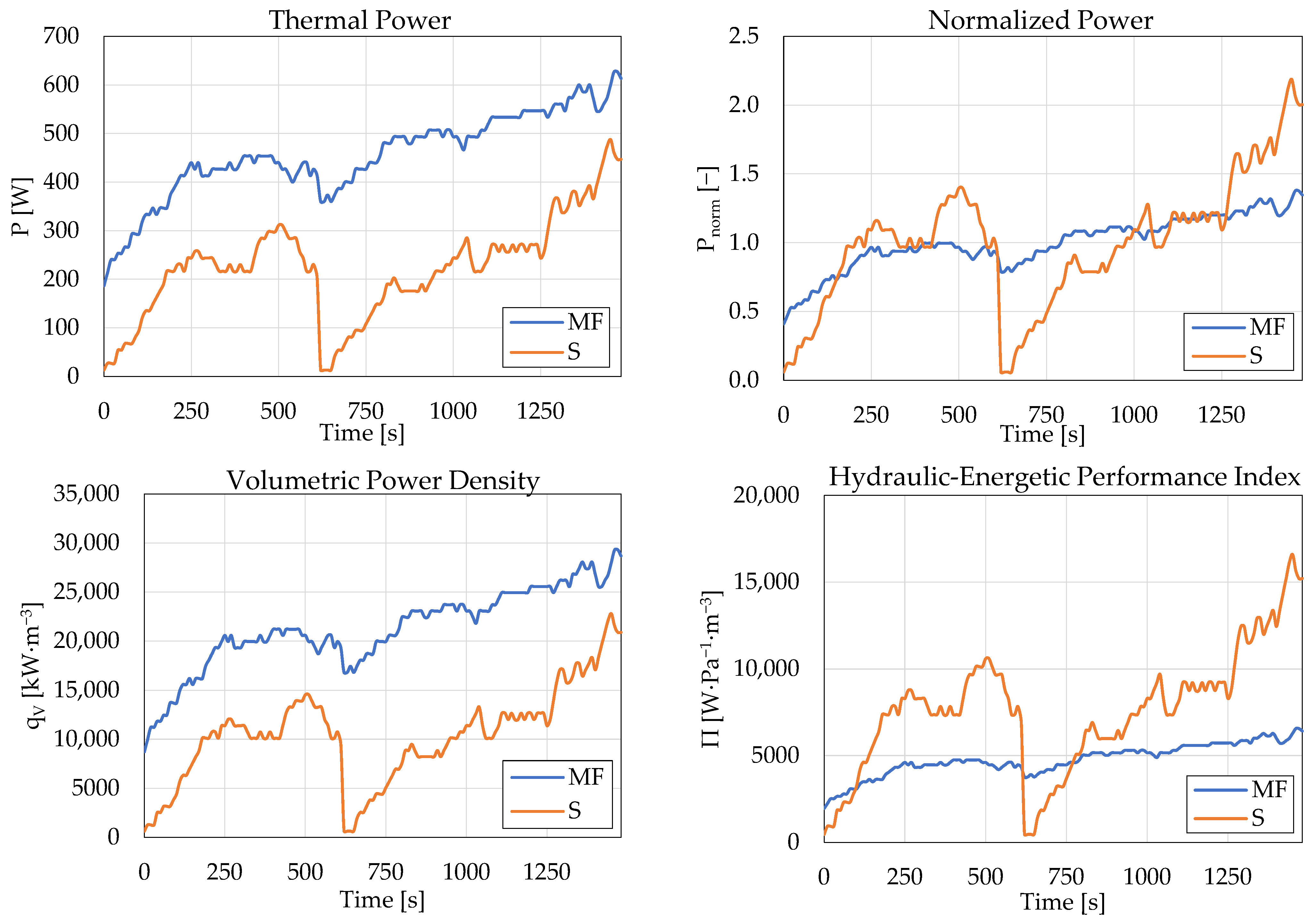
From the time history of P(t) (see
Figure 11), it follows that the modified collector achieves a higher instantaneous thermal power than the standard collector throughout the entire experiment, even during periods of pronounced reduction in available energy. The power output of the modified collector ranges between 200–620 W, whereas the standard collector fluctuates from nearly zero values up to 480 W, the MF collector achieves up to 20–30% higher thermal power than the standard collector during periods of non-zero output, while additionally maintaining a non-zero power level during irradiance drops where the standard collector output approaches zero. Compared to the previous experiments, the difference between the collectors is manifested primarily in the ability of the modified collector to maintain a non-zero power output even under abrupt changes in operating conditions.
This difference is clearly reflected in the volumetric power density q
V(t) (see
Figure 11). The modified collector reaches values of 10–29 kW·m
−3, while the standard collector exhibits pronounced drops to very low values. The more effective utilization of the heat-exchange region in the case of the modified collector is therefore most pronounced under transitional and intermittent operating regimes.
The increased hydraulic demand of the modified manifold architecture is again reflected in lower values of the hydraulic–energetic index Π(t), which for the modified collector range between 3–6 kW·Pa
−1·m
−3, whereas the standard collector reaches significantly higher but strongly fluctuating values. In this experiment, however, the hydraulic penalization is less dominant than the effect of performance instability of the standard collector (see
Figure 11). In experiment 120-3, occasional intervals can be observed where the hydraulic–energetic performance index of the standard collector locally drops below that of the MF collector. This behavior is a direct consequence of the strongly transient operating conditions and the definition of the index as a ratio between instantaneous thermal power and pressure drop. During abrupt irradiance fluctuations, the standard collector exhibits pronounced short-term power excursions and rapid power decay, which temporarily reduces the index. In contrast, the MF collector maintains a smoother power response and non-zero output, resulting in a more stable index evolution. These short-term crossings are therefore transient in nature and do not alter the overall performance trend.
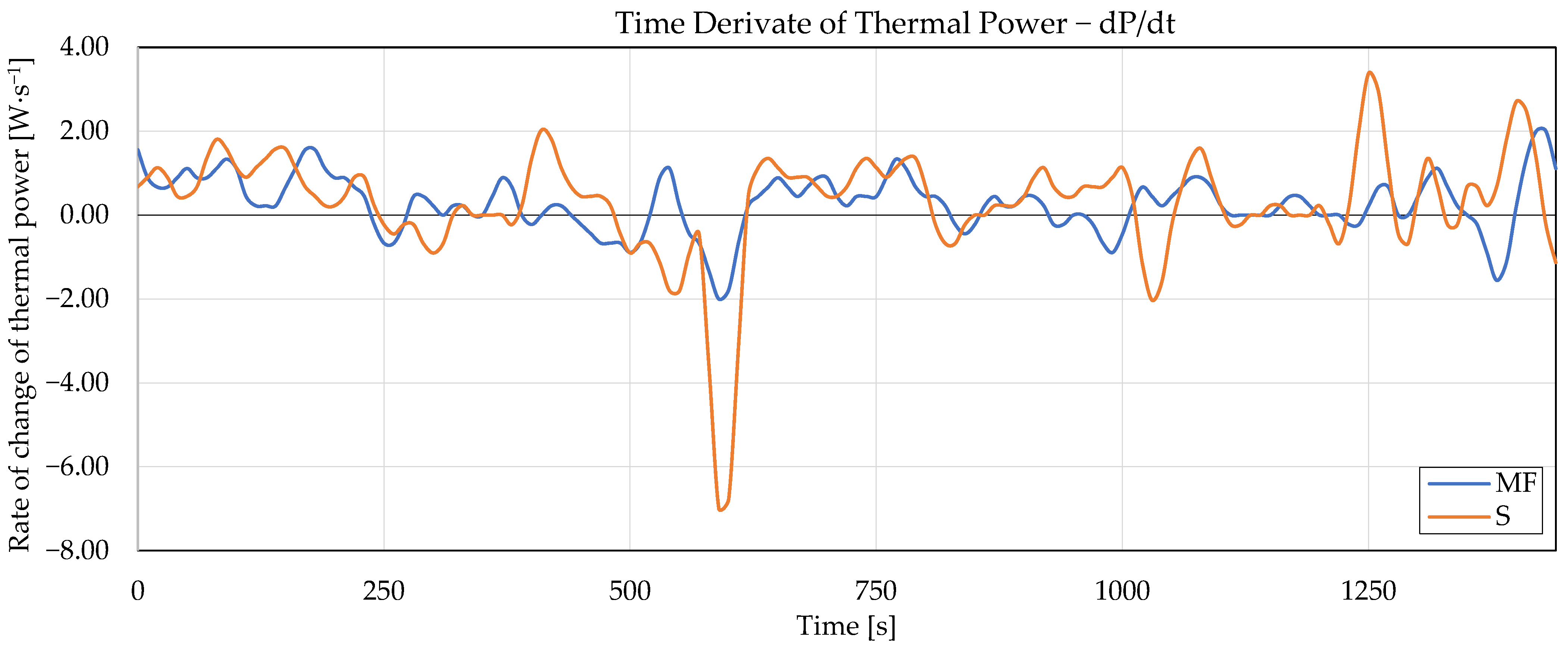
Differences in dynamic response are most pronounced in the time history of dP/dt (see
Figure 12). The standard collector exhibits extreme negative and positive derivative peaks, with minima reaching approximately −7 W·s
−1, whereas the modified collector maintains significantly constrained dynamic fluctuations, typically within ±2 W·s
−1. This indicates the ability of the metal foam to strongly damp rapid power changes under sharply varying input conditions.
Experiment 120-3 thus confirms that under conditions of pronounced dynamics and intermittent energy input, the benefit of the metal-foam heat-exchange chamber manifests primarily as a more stable power profile and suppression of extreme dynamic phenomena.
4. Discussion
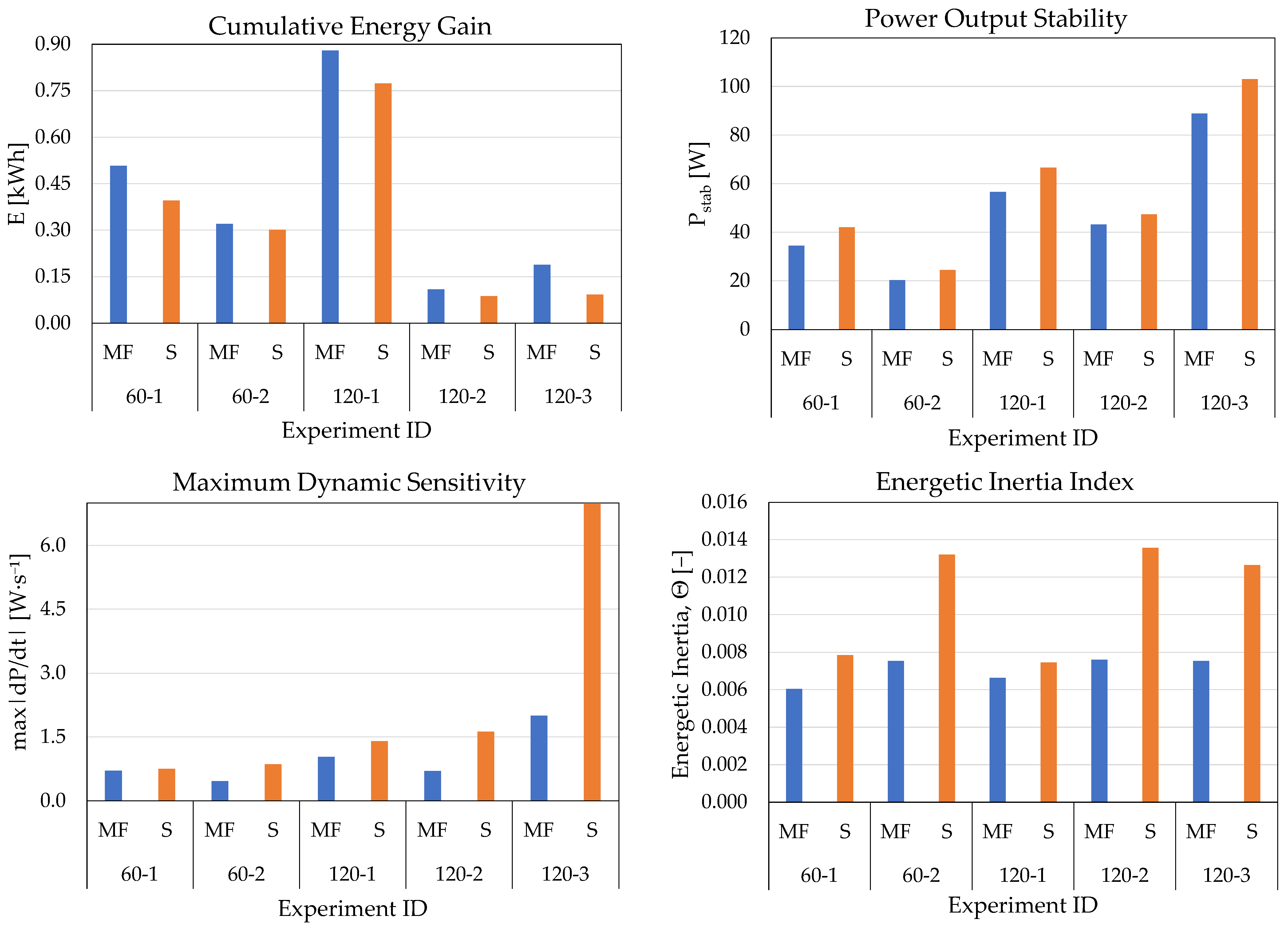
The objective of this study was to experimentally compare the performance of a conventional evacuated tube solar collector manifold with that of a manifold incorporating a modified internal heat-exchange architecture based on integrated metal-foam heat-exchange chambers. The results of all five experiments (60-1, 60-2, 120-1, 120-2, and 120-3) exhibit a high degree of consistency with respect to the comparison of the two collectors. Despite significant differences in operating conditions—ranging from relatively stable regimes (60-1, 120-1) to strongly non-stationary and intermittent regimes (120-2, 120-3)—the modified collector maintains a higher cumulative energy gain than the standard collector in all cases, as evident from
Figure 13 as well as from the summary values presented in
Table 1.
The higher energy gain of the modified collector is not confined to a single specific operating regime, but occurs at both levels of mass flow rate. This indicates that the benefit of the modified architecture is not limited to a narrow range of operating parameters, but represents a robust property of the internal heat-exchange configuration.
From the perspective of energetic indicators, the modified collector consistently achieves higher values of cumulative energy gain as well as volumetric energy density (
Table 1). This difference is most pronounced in experiments conducted under more favorable conditions (60-1, 120-1), but it also persists in experiments with low or intermittent energy input (120-2, 120-3).
Since both collectors have an identical geometric volume of the heat-exchange region, the higher volumetric energy density of the modified collector directly indicates more efficient utilization of the same space. This result supports the original hypothesis of the study that a change in internal architecture—specifically, replacing free liquid flow with flow through a porous metallic structure—leads to an increased intensity of heat transfer without the need to enlarge the heat-exchange volume.
One of the most pronounced differences between the two solutions is the behavior of the collectors in terms of performance stability and dynamic sensitivity. As shown in
Figure 13 and confirmed by the values in
Table 1, the modified collector exhibits a lower standard deviation of power (P
stab) and lower normalized performance stability in all experiments, indicating a smoother and less fluctuating power output.
This effect is even more evident in the dynamic indicators. The maximum dynamic sensitivity, the maximum rates of power increase and decrease, as well as the normalized dynamic sensitivity are systematically lower for the modified collector. These differences are particularly pronounced in experiments 120-2 and 120-3, where the standard collector exhibits extreme dynamic peaks, while the modified collector maintains a significantly more damped response.
These observations suggest that the metal-foam heat-exchange chamber acts not only as a heat-transfer intensification element, but also as a dynamic damping component that limits rapid power variations caused by fluctuations in input conditions. From an operational perspective, this is a critical property, especially when supplying thermal storage systems or integrating the collector into more complex thermal installations.
The energy inertia Θ, defined as the ratio of the variance of the dynamic response to the variance of the power output, reaches lower values for the modified collector in all experiments (
Table 1,
Figure 13). Lower energy inertia means that the system is able to achieve a more stable power output without excessive delay or accumulation of dynamic fluctuations. In the context of strongly non-stationary conditions (120-3), this difference is particularly significant. While the standard collector exhibits pronounced power fluctuations and abrupt dynamic transitions, the modified collector provides a smoother power profile, even though the absolute power level is lower due to reduced energy input. This indicates higher operational robustness of the modified manifold.
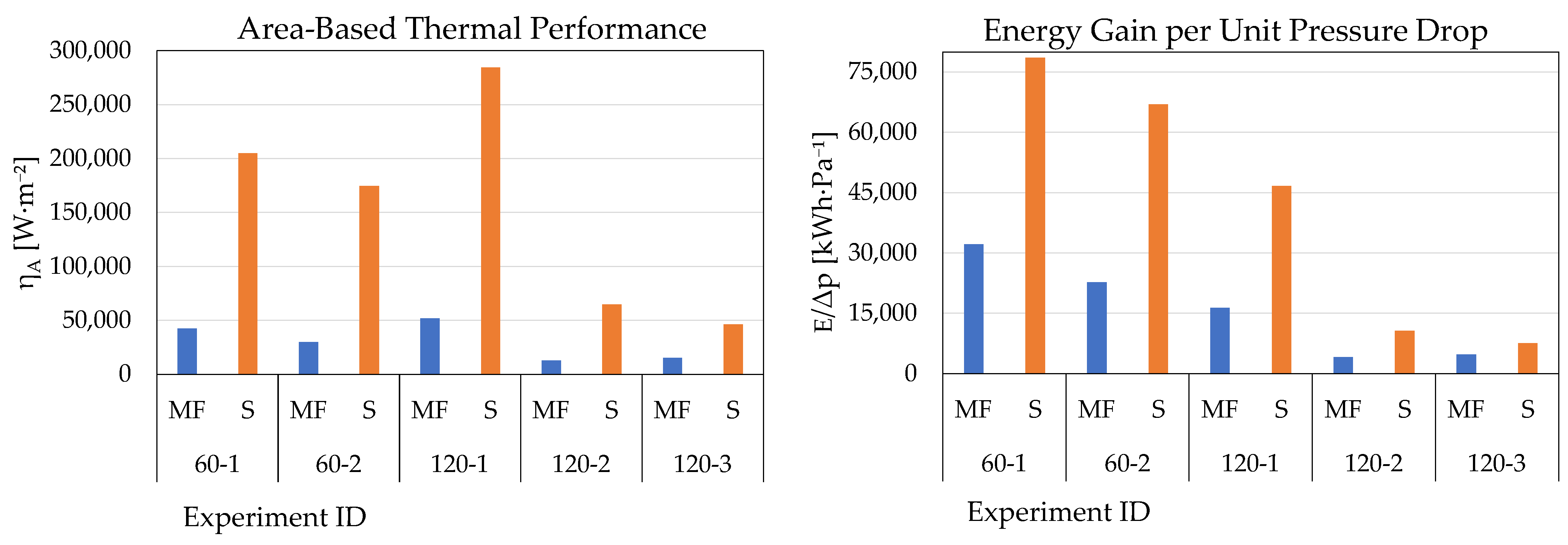
The results presented in
Figure 14 clearly show that the modified collector exhibits poorer values of indicators related to pressure loss, specifically the area-based thermal performance η
A and the energy gain per unit pressure drop (E/Δp). This outcome is expected and is directly associated with fluid flow through the porous structure of the metal foam, which increases hydraulic resistance.
It is important, however, that this hydraulic penalization is systematic, stable, and predictable, whereas the benefits of the modified design—higher energy gain, higher performance stability, and lower dynamic sensitivity—are manifested consistently across all experiments. In other words, the modified manifold does not provide low-cost power in terms of pressure loss, but offers a qualitatively different type of operational behavior. To interpret the hydraulic penalty at the system level, the additional pumping power associated with the increased pressure drop was estimated using:
where
and η is the pump efficiency. Relative to the standard manifold, the modified manifold increased the pressure drop by 1256 Pa at 60 kg·h
−1 and by 3090 Pa at 120 kg·h
−1. These increments correspond to an additional hydraulic power of approximately 0.021 W and 0.103 W, respectively. Assuming typical small circulation pump efficiencies (η = 0.15–0.30), the resulting increase in parasitic electrical consumption is only about 0.07–0.14 W (60 kg·h
−1) and 0.34–0.69 W (120 kg·h
−1). In contrast, the measured thermal power gain of the modified collector is on the order of tens to hundreds of W·m
−2, therefore the net energy balance remains clearly positive and the hydraulic penalty represents an acceptable trade-off.
From the perspective of real operation of solar thermal systems, where stability, smooth heat delivery, and mitigation of dynamic shocks are of importance, this compromise may be advantageous, particularly if the increased pressure loss is accounted for in the design of the hydraulic circuit. Based on five independent experiments, it can be concluded that the integration of metal-foam heat-exchange chambers into the manifold of an evacuated tube solar collector leads to higher cumulative energy gain, better utilization of the heat-exchange section, significantly higher performance stability, and lower dynamic sensitivity and energy inertia, at the cost of increased pressure loss and lower hydraulic–energetic indicators. The results thus indicate that the modified design does not represent a simple optimization of an existing concept, but rather a shift toward a more stable and operationally robust solar collector, whose benefits are most pronounced under real, non-stationary operating conditions.
The experimental results presented in this study were obtained using a single metal foam configuration with fixed pore density (20 PPI), thickness, and material. As such, the quantitative results are specific to the investigated design. From a physical perspective, variations in pore density, foam thickness, and base material are expected to influence the balance between heat-transfer enhancement and hydraulic resistance. Increasing pore density or foam thickness would generally increase the effective heat-transfer surface area and thermal interaction with the heat transfer fluid, but at the cost of higher pressure losses. Conversely, lower pore density or thinner foam structures would reduce hydraulic resistance while potentially limiting thermal performance gains. The choice of base material primarily affects effective thermal conductivity and long-term stability. The present results therefore establish the feasibility and energetic relevance of the metal foam-based manifold concept, while systematic parametric optimization of foam properties is identified as an important subject for future investigation.
The consistent performance advantage observed at both nominal and elevated mass flow rates indicates that the proposed manifold concept is not optimized for a single operating point, but exhibits robust behavior across different thermal–hydraulic regimes.
A direct quantitative comparison with other heat-transfer enhancement strategies reported in the literature—such as fins, turbulators, or swirl generators—is challenging due to differences in collector geometry, operating conditions, and performance metrics. Nevertheless, a normalized comparison based on relative performance improvement provides useful context. Reported enhancement strategies in solar thermal collectors and heat exchangers typically yield thermal performance increases in the range of approximately 10–40%, depending on flow regime and pressure-drop penalties. In the present study, the proposed metal foam-based manifold achieved an average thermal power increase of approximately 12–26% under nominal operating conditions, and up to 50% under highly non-stationary irradiance. Importantly, these gains were achieved without modifying the absorber surface or the heat pipe itself, but solely through changes in the manifold architecture. This distinguishes the proposed approach from many state-of-the-art enhancement techniques and highlights its complementary nature.
The present study represents an initial performance-oriented assessment of the proposed metal foam-based manifold concept. From an engineering development perspective, it is first necessary to establish whether the integration of metal foam provides a sufficiently large and robust thermal performance benefit to justify further investigation. Only after such a benefit is demonstrated does it become meaningful to address long-term operational aspects, including fouling, clogging, corrosion, or mechanical degradation, as well as potential mitigation measures such as the use of corrosion inhibitors, surface treatments, or alternative working fluids. The results presented here confirm the energetic relevance of the concept and thus provide a justified basis for future long-term durability studies under extended outdoor operation.