






Skip to Content
  • 4.7
    Impact Factor
  • 8.5
    CiteScore
  • 15 days
    Submission to First Decision
  • 3 days
    Acceptance to Publication

Plants

Plants is an international, scientific, peer-reviewed, open access journal on plant science published semimonthly online by MDPI. The Spanish Phytopathological Society (SEF), the Spanish Society of Plant Biology (SEBP), the Spanish Society of Horticultural Sciences (SECH) and the Italian Society of Phytotherapy (S.I.Fit.) are affiliated with Plants and their members receive a discount on the article processing charges.
  • Open Access— free for readers, with article processing charges (APC) paid by authors or their institutions.
  • High Visibility: indexed within Scopus, SCIE (Web of Science), PubMed, PMC, PubAg, AGRIS, CAPlus / SciFinder, and other databases.
  • Journal Rank: JCR - Q1 (Plant Sciences) / CiteScore - Q1 (Ecology, Evolution, Behavior and Systematics)
  • Rapid Publication: manuscripts are peer-reviewed and a first decision is provided to authors approximately 14.8 days after submission; acceptance to publication is undertaken in 2.9 days (median values for papers published in this journal in the first half of 2026).
  • Recognition of Reviewers: Reviewers whose reports are timely and of high quality receive an APC discount voucher for a future publication in an MDPI journal. Become a reviewer.
  • Companion Journal: Legumes.

Get Alerted

Add your email address to receive forthcoming issues of this journal.

All Articles (23,947)

  • Article
  • Open Access

Seasonal climatic variability represents a major constraint on sunflower (Helianthus annuus L.) production in semi-arid environments, yet interannual and cultivar-related variation under long-term no-till management remains insufficiently characterized. This study evaluated interannual and cultivar-related variation in sunflower productivity and seed quality during three consecutive growing seasons (2023–2025) under rainfed long-term no-till conditions in the Dobrogea Region of Romania. Three commercial hybrids (Averon SU, Demetra, and Helesun) were evaluated in a randomized complete block design with three replications, while agronomic management remained unchanged throughout the experimental period. Agronomic traits, yield components, and seed quality parameters were analyzed using analysis of variance, paired t-tests, Pearson’s correlation analysis, and partial redundancy analysis (RDA). Pronounced interannual climatic variability was accompanied by substantial differences in sunflower performance. Mean seed yield reached 2169.06 kg ha−1 in 2023, declined to 848.08 kg ha−1 in the drought-affected 2024 season, which had the lowest March–August precipitation total, and partially recovered to 1178.68 kg ha−1 in 2025. Similar seasonal responses were observed for plant density at harvest, seed weight per capitulum, thousand grain weight, test weight, and number of seeds per capitulum, whereas oil content remained comparatively stable (45.19–46.88%). Analysis of variance showed significant interannual variation across all evaluated traits, while significant cultivar effects were detected for plant density, number of seeds per capitulum, seed weight per capitulum, thousand grain weight, and seed yield. Partial RDA further detected a significant joint cultivar effect across the eight standardized response traits after conditioning on study year and block (F = 11.49, R2 = 0.53, exact p = 0.027). Under the specific environmental conditions observed during the three study years, interannual variation in sunflower performance was substantial; however, annual climatic conditions were not independently replicated and therefore remain confounded with year. Consequently, the observed relationships describe associations within the 2023–2025 site conditions rather than establishing a general causal ranking of climatic and cultivar effects. The results highlight the importance of improving rainfall-use efficiency and integrating cultivar selection with climate-adaptive agronomic management to increase the resilience of sunflower production in water-limited environments.

Plants

9 October 2026

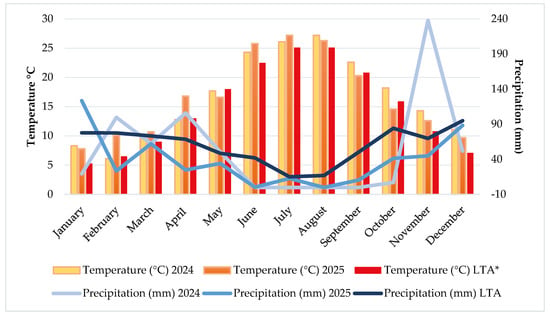
Interannual climatic variability during the 2023–2025 sunflower growing seasons in relation to long-term reference conditions. (a) Monthly precipitation and mean air temperature during the sunflower growing seasons (March–August) of 2023, 2024, and 2025 compared with the corresponding long-term climatic reference values. (b) Distribution of monthly precipitation and mean air temperature during the 2023–2025 sunflower growing seasons and the corresponding long-term reference period.
  • Article
  • Open Access

Physiological and Transcriptome Analysis of Drought Tolerance in Barley

  • Farzaneh Karamzadeh,
  • Ahmad Arzani and
  • Fabrizio Araniti
  • + 2 authors

Drought stress is the major environmental constraint in crop production. As climate change increases drought frequency, enhancing drought tolerance has become a major goal in barley breeding. Hordeum vulgare ssp. spontaneum, the wild and closest relative of cultivated barley, is a valuable genetic resource for breeding and developing drought-tolerant cultivars. This study aimed to compare physiological and transcriptomic responses of a drought-tolerant wild genotype (H. vulgare ssp. spontaneum) and a drought-sensitive cultivated barley genotype (‘Mona’ cultivar) under control and drought stress conditions. The wild genotype exhibited less physiological and growth impairment than the ‘Mona’ cultivar under drought stress. Transcriptome profiling identified 2564 differentially expressed genes (DEGs) in the drought-tolerant wild genotype and 2163 DEGs in the drought-sensitive cultivar. Notably, in the tolerant genotype, most DEGs were up-regulated, whereas in the sensitive cultivar, down-regulation was more frequently induced by drought. GO enrichment analysis revealed that the DEGs were predominantly associated with key stress-related biological processes, including cellular component organization, signaling pathways, ion transport, regulatory protein activity, reactive oxygen species (ROS) scavenging, hormone biosynthesis, and osmotic homeostasis. Comparative analysis showed that the drought-tolerant genotype harbored more functionally effective drought-responsive genes and had higher transcript abundance than the sensitive genotype. Overall, the tolerant genotype consistently exhibited superior physiological and functional performance under drought stress. These findings deepened our understanding of the evolutionary basis of drought tolerance in wild barley, while the shared functional mechanisms between the two subspecies identified physiological and transcriptional traits that could be exploited to improve barley under water-limited environments.

Plants

9 October 2026

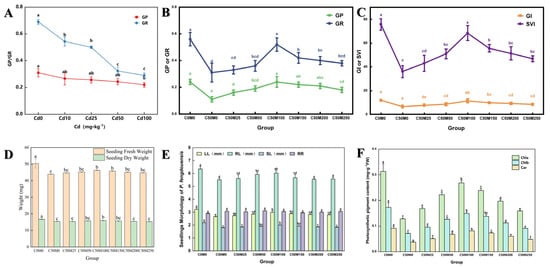
Mean comparisons of (a) plant hormones [abscisic acid (ABA), indole-3-acetic acid (IAA) and gibberellin (GB)], (b) enzymatic antioxidants [Guaiacol peroxidase activity (POX), Ascorbate peroxidase activity (APX) and Catalase activity (CAT)] and non-enzymatic antioxidants [total phenolic content (TPC), total flavonoid content (TFC) and 2,2-diphenyl-1-picrylhydrazyl (DPPH)], (c) Physiological parameters (membrane stability index (MSI), relative water content (RWC), chlorophyll a content, chlorophyll b content, carotenoids and proline content, (d) oxidative stress indicators [malondialdehyde (MDA) and hydrogen peroxide (H2O2)] (e) plant height and yield of wild drought-tolerant and ‘Mona’ drought-sensitive barleys genotypes under control and drought stress conditions. Bars represent means ± SE. For each trait, bars with the same letter are not significantly different at p < 0.05 according to the LSD test, across the genotypes grown under control and drought stress conditions.
  • Article
  • Open Access

The integrated effects of biochar and humate on soil nutrient status, shoot nutrient accumulation, and grain composition and quality remain underexplored. This field study evaluated four treatments—control, rice husk biochar (RHB; 15 t/ha), potassium humate (KH; 6.3 kg/ha), and RHB + KH—on soil properties, shoot nutrient accumulation, grain nutrient composition, yield, and grain quality in a premium Thai rice production system. Compared with the control, RHB significantly increased soil pH and shoot accumulation of nitrogen (N; +93%), phosphorus (P; +321%), and potassium (K; +75%) and resulted in a greater grain P concentration and milled grain yield (+56%). RHB also increased volumetric expansion (+42%), with a significant RHB main effect detected in the factorial analysis. KH significantly increased soil total N (+11%) and ammonium (+19%), shoot N (+79%) and P (+363%) accumulation, and grain N concentration relative to the control, while also increasing milled grain yield (+144%) and grain protein content. KH also produced numerical increases in volumetric expansion (+21%) and grain elongation (+4%), although these responses were not significant in the factorial analysis. The RHB + KH treatment significantly increased soil total N (+18%), shoot N (+70%) and P (+423%) accumulation, and the grain K concentration relative to the control and produced treatment-specific changes in the amino acid profile. The amendment treatments generally decreased residual soil nitrate and available P concentrations, although the factorial response of nitrate included a significant RHB effect and RHB × KH interaction but no significant KH main effect. Grain carbohydrate content decreased under the amendment treatments, whereas TPC showed a treatment-specific response characterized by a significant KH effect and RHB × KH interaction. Principal component analysis revealed associations among soil properties, shoot nutrient accumulation, grain nutrient composition, yield, and grain quality attributes. These findings demonstrate distinct effects of RHB and KH, individually and in combination, on soil properties, shoot nutrient accumulation, and grain composition and quality. Overall, the amendments showed potential for modifying soil nutrient dynamics and shoot nutrient accumulation while altering selected grain nutritional and market-relevant quality attributes, although responses varied among individual parameters.

Plants

9 October 2026

Soil properties at post-harvest, including (a) pH, (b) electrical conductivity (EC), (c) total nitrogen (TN; left y-axis) and nitrate (NO3−) and ammonium (NH4+) concentrations (right y-axis), and (d) available phosphorus (P) and exchangeable potassium (K). Values are means ± standard deviation (SD; n = 4). Different lowercase letters indicate significant differences among treatments (p < 0.05).
  • Article
  • Open Access

Cenchrus pauciflorus is a major invasive plant in the sandy lands of northern China, with the Horqin Sandy Land being a hotspot of its invasion, where soil phosphorus availability may influence its spread through arbuscular mycorrhizal fungi (AMF). To elucidate the effects of soil phosphorus on AMF communities and their role in the invasion of C. pauciflorus, we conducted a field survey at two sites with contrasting phosphorus backgrounds: Chajintai Ranch (high phosphorus) and Bahuta Sumu (low phosphorus). Rhizosphere soil and root samples of C. pauciflorus and the co-occurring native grass Setaria viridis were collected for high-throughput sequencing of 18S SSU rRNA gene to analyze AMF community composition and diversity. Two AMF species, Funneliformis mosseae and Diversispora epigaea, were selected for a pot experiment with C. pauciflorus. Five phosphorus treatments were established under high- and low-phosphorus conditions using different phosphorus forms. The effects of the two AMF species on the growth and reproduction of C. pauciflorus under different phosphorus treatments were analyzed. The results showed that Glomeraceae and Glomus were the predominant family and genus, respectively. Under Bahuta Sumu, Diversispora was relatively enriched in the roots of C. pauciflorus compared with S. viridis roots. However, other nutrient factors also varied between the two field sites, the independent effect of phosphorus on AMF community composition and diversity could not be fully disentangled. The pot experiment revealed that AMF inoculation did not significantly promote the growth of C. pauciflorus under high-phosphorus treatment. In contrast, when phosphorus was low and supplied in insoluble forms, both AMF species significantly promoted the growth and reproduction of C. pauciflorus. D. epigaea exhibited a stronger growth-promoting effect than F. mosseae, with significantly higher colonization rates in most treatments. In summary, C. pauciflorus is associated with the enrichment of specific AMF taxa in low-phosphorus habitats, which may in turn promote its growth by enhancing the acquisition of insoluble phosphorus. This may represent an important belowground symbiotic mechanism underlying its successful invasion in nutrient-poor sandy habitats.

Plants

9 October 2026

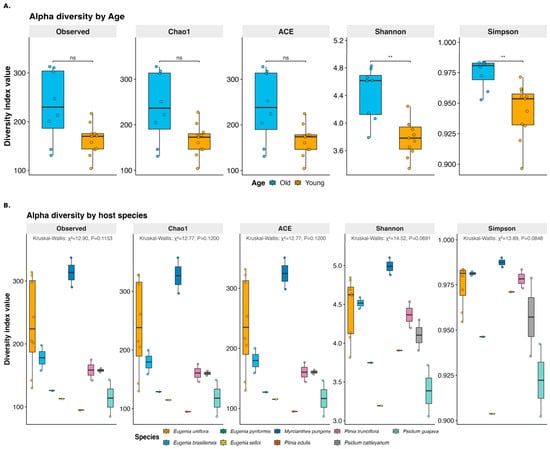
AMF OTU distribution, α-diversity, and taxonomic composition at the family and genus levels across sample groups. (A) Venn diagram of AMF OTUs among sample groups; (B–E) Ace index (B), Chao index (C), Shannon index (D), and Simpson index (E) across sample groups. The horizontal lines in the boxplots represent medians, and lowercase letters indicate significant differences among groups (p < 0.05); (F) relative abundance of AMF at the family level; (G) relative abundance of AMF at the genus level. Unclassified sequences were defined as those that failed to match any sequence in the database at a 70% confidence leve. Sample codes: BSG, rhizosphere soil of S. viridis from Bahuta Sumu; BRG, roots of S. viridis from Bahuta Sumu; CSG, rhizosphere soil of S. viridis from Chajintai Ranch; CRG, roots of S. viridis from Chajintai Ranch; BSS, rhizosphere soil of C. pauciflorus from Bahuta Sumu; BRS, roots of C. pauciflorus from Bahuta Sumu; CSS, rhizosphere soil of C. pauciflorus from Chajintai Ranch; CRS, roots of C. pauciflorus from Chajintai Ranch; n = 6 for each group.

Featured Articles of Last Quarter

Inflorescences and flowers of M. scorpioides (C,H,H’) and M. sylvatica (A,B,D,E–G’); stereoscopic microscopy (SM)—(B,D), scanning electron microscopy (SEM)—(C,H,H’), light microscopy (LM)—(E–G’). (A) Flowers borne on scorpioid cymes. (B) Magnification of a flower with visible faucal scales and white appendages on petals (yellow arrow). (C) Flower with velvety texture of petals; blue arrow shows an appendage of stamen connectives. (D) Faucal scales and anthers on the longitudinal section of a flower. (E) Inner part of the flower with faucal scales, appendages on petals (yellow arrows), and basal scales (red arrowheads). (F) Parts of petals with faucal scales, appendages on petals (yellow arrows), and trichomes beneath them (yellow arrowheads). (G) Faucal scale with a vascular bundle running through its centre. (G’) Magnification of a vascular bundle of the faucal scale with helical vessels. (H) Part of the longitudinal section of a flower with the ovary and receptacle parenchyma with visible calcium oxalate crystals (white arrows). (H’) Magnification of receptacle parenchyma cells with prismatic calcium oxalate crystals. (F,G) Staining with Sudan Red B; a—anther, f—faucal scale, o—ovary, ps—pistil. Scale bars = 3 mm (A); 1 mm (B,D); 0.7 mm (C); 0.5 mm (F); 200 µm (G); 100 µm (E,H), 50 µm (H’), 5 µm (G’).
Germination curves for experimentally aged Funaria hygrometrica spores at different maturity stages: (A) most immature spores in green capsules, (B) near-full maturity spores in yellow capsules, (C) fully mature spores in brown capsules. In each curve, symbols represent the proportion of germination over time measured for each aging time assayed (indicated with different symbols). The resultant germination curves (solid lines) follow a sigmoidal distribution obtained after fitting the experimental points of each aging time to a Boltzmann curve.
General components of CRISPR/Cas delivery in plants. Created in BioRender. Huiban, F. (2026) https://BioRender.com/pl7bf0a.

Highly Accessed Articles

News & Conferences

Latest Issues

Open for Submission

Journal Sections

XFacebookLinkedIn
Plants - ISSN 2223-7747