Skip to Content

Medical Sciences

Medical Sciences is an international, peer-reviewed, open access journal, providing a platform for advances in basic, translational and clinical research, published quarterly online by MDPI.
The Korean Society of Physical Medicine (KSPM) is affiliated with Medical Sciences and its members receive discounts on the article processing charges.
Indexed in PubMed | Quartile Ranking JCR - Q1 (Medicine, General and Internal)

All Articles (1,094)

  • Systematic Review
  • Open Access

Background/Objectives: Diagnostic evaluation and management of nontraumatic osteonecrosis of the femoral head (ONFH) vary substantially. This systematic review was conducted to inform development of the Association Research Circulation Osseous (ARCO) clinical practice guideline for diagnosis and treatment of ARCO stages I to III ONFH. Methods: We searched MEDLINE, EMBASE, Web of Science, SCOPUS, Global Index Medicus, and the Cochrane Library for studies evaluating imaging modalities and treatments for adult ONFH. We assessed risk of bias using the QUADAS-2, the ROB-2, and the ROBINS-I tools; conducted meta-analyses using random-effects regression; and evaluated certainty of evidence using GRADE methodology. Results: Among 36 included studies, 18 addressed diagnostic test accuracy and 18 addressed comparative effectiveness of treatments. Magnetic resonance imaging (MRI) demonstrated the highest pooled sensitivity (0.91; 95% confidence interval (CI), 0.87 to 0.94) and specificity (0.96; 95% CI, 0.87 to 0.99) for ONFH diagnosis. Bone marrow edema and grade 2+ joint effusion on MRI differentiated symptomatic versus asymptomatic disease. Computed tomography and MRI better detected subchondral fractures than plain radiography. Very low-grade evidence suggested lower rates of femoral head collapse with core decompression plus bone marrow concentrate compared with core decompression alone (pooled relative risk [RR], 0.55; 95% CI, 0.36 to 0.83), and with vascularized versus non-vascularized bone grafting (RR, 0.35; 95% CI, 0.14 to 0.84) over a ≤5-year follow-up. Based on three non-comparative case series, osteotomies might have a lower risk of collapse over a 10- to 20-year follow-up, but this needs to be evaluated in future comparative research. Inconsistent outcome reporting hindered treatment outcome pooling. There were no comparative studies that evaluated observation only versus intervention in asymptomatic disease or strategies for monitoring treatment response. Conclusions: Evidence supporting optimal imaging modalities and early joint-preserving interventions remains limited and predominantly observational, underscoring the need for high-quality comparative studies with consistently defined core outcomes to guide clinical decision-making.

23 February 2026

PRISMA Flow Diagram for Study Selection for Systematic Review: Diagnosis and Treatment of Osteonecrosis of Femoral Head. KQ: Key Question; Source: Page et al. [10]. This work is licensed under CC BY 4.0. To view a copy of this license, visit https://creativecommons.org/licenses/by/4.0/ (accessed on 17 February 2026).

Alpha-1 Antitrypsin Deficiency Beyond COPD and Emphysema: A Narrative Review

  • Lucia Pastoressa,
  • Vanessa Pivetti and
  • Stefania Cerri
  • + 4 authors

Background/Objectives: Alpha-1 antitrypsin deficiency (AATD) is a genetic disorder classically associated with emphysema and COPD. However, emerging evidence indicates that its clinical spectrum extends to airway-predominant diseases such as bronchiectasis and asthma, where protease–antiprotease imbalance and neutrophilic inflammation may drive tissue injury. This narrative review aims to synthesize current evidence on the relationship between AATD and airway diseases beyond emphysema, focusing on epidemiological patterns, underlying mechanisms, diagnostic strategies, and therapeutic implications. Methods: A narrative synthesis of the literature was performed, integrating data from registries, with observational and translational studies addressing the prevalence, pathobiology, and therapeutic implications of AATD in bronchiectasis, asthma, and severe asthma. Epidemiologic and mechanistic insights were analyzed to identify overlapping pathways and evidence gaps. Results: Evidence supports a non-negligible prevalence of bronchiectasis and asthma among AATD individuals, particularly in severe or heterozygous genotypes. Neutrophil elastase overactivity, impaired mucociliary clearance, and chronic neutrophilic inflammation emerge as shared mechanisms promoting bronchial remodeling and airflow limitation. In asthma, AATD appears linked to T2-low, steroid-resistant phenotypes and persistent obstruction, whereas in severe asthma cohorts, up to 20% may carry non-PiMM SERPINA 1 variants. No randomized trials have evaluated augmentation therapy and standardized screening algorithms are lacking. Conclusions: AATD represents a systemic disorder with clinically relevant airway manifestations beyond COPD and emphysema. Targeted testing should be considered in patients with idiopathic bronchiectasis or severe asthma. Future genotype-stratified, prospective studies are required to clarify causality, define biomarkers of disease activity, and evaluate the potential role of anti-protease-based therapeutic strategies.

22 February 2026

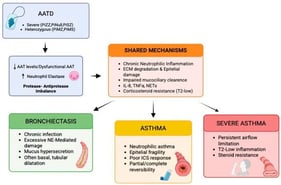
Shared and distinct pathophysiological pathways linking alpha-1 antitrypsin deficiency (AATD) to bronchiectasis, asthma and severe asthma. Abbreviations: AATD, alpha-1 antitrypsin deficiency; AAT, alpha-1 antitrypsin; NE, Neutrophil Elastase; ECM, extracellular matrix; NETs, neutrophil extracellular traps; ICS, inhaled corticosteroids.

Background: Modulated electro-hyperthermia (mEHT) is one of the latest advancements in the field of oncological hyperthermia. Previous studies investigating mEHT revealed that it is safe and effective; however, no meta-analysis was conducted either in cervical or ovarian cancer. Methods: A single-institute pilot case series and a meta-analysis were conducted. Advanced stage cervical and ovarian cancer cases were included. In the pilot study, mEHT treatments were conducted using the Oncotherm EHY-2000+ and the EHY-2030 devices with 2–3 treatment sessions per week. Results: For the meta-analysis, a total of five studies were identified, with 160 and 31 cervical and ovarian cancer patients, respectively. In addition, 175 standard-of-care-treated cervical cancer patients were also identified as controls. The 1- and 2-year survival rate of the cervical cancer patients treated with mEHT was 87.61% [95% confidence interval (CI): 71.31–100%] and 78.13% (95% CI: 53.02–100%). Compared to the controls, the 2-year survival rates (78.13% vs. 58.86%) were significantly better in the mEHT-treated cohorts (odds ratio: 0.4143, p = 0.0441; hazard rate: 0.6607, p = 0.0103). The 1- and 2-year survival rates of ovarian cancer patients were 45.46% (95% CI: 5.97–84.95%) and 32.83% (95% CI: 0–79.57%), respectively. The result of our institutional data strengthened the results of the meta-analysis. Conclusions: Using mEHT, a significantly higher 2-year survival rate can be achieved in cervical cancer. In this setting, a wider testing/application of the modality is warranted. In the case of ovarian tumors, the available knowledge is minimal, and applicability and efficacy studies are urgently needed.

22 February 2026

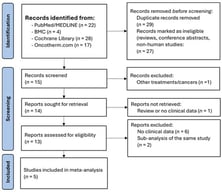
PRISMA flow diagram of studies about modulated electro-hyperthermia in gynecological cancers. BMC: BioMed Central; MEDLINE: Medical Literature Analysis and Retrieval System Online; PRISMA: Preferred Reporting Items for Systematic Reviews and Meta-Analyses.

Background: Traditional echocardiographic assessment of aortic stenosis (AS) using aortic valve area (AVA) may overestimate severity due to pressure recovery phenomena, while subclinical myocardial dysfunction remains undetected despite preserved ejection fraction. This study evaluated whether energy loss index (ELI)—which accounts for pressure recovery—demonstrates superior correlation with global longitudinal strain (GLS), a marker of subclinical myocardial dysfunction, compared to conventional AVA-based classification in patients with moderate-to-severe AS and preserved left ventricular ejection fraction (LVEF). Methods: This retrospective single-center study analyzed 149 patients with moderate-to-severe AS (AVA < 1.5 cm2) and LVEF > 50% from 2015 to 2019. Among 97 patients with severe AS by AVA (<1.0 cm2), ELI was calculated using the formula ELI = (AVA × Aa)/(Aa − AVA) ÷ BSA, where Aa represents sinotubular junction cross-sectional area. Patients with ELI ≥ 0.6 cm2/m2 were reclassified as moderate AS. Spearman correlation assessed relationships between AVA, ELI, and GLS. Multivariable linear regression models determined independent predictors of myocardial dysfunction, adjusting for age, body surface area, hypertension, LVEF, and mean pressure gradient. Results: ELI reclassified 28 of 97 patients (29%) from severe to moderate AS. Reclassified patients had significantly better myocardial function, with less impaired GLS (−15.0 ± 3.9% vs. −12.1 ± 5.0%, p = 0.013) and higher LVEF (60.1 ± 6.2% vs. 56.5 ± 9.1%, p = 0.017) compared to non-reclassified patients. In the overall cohort, ELI demonstrated stronger correlation with GLS than AVA (r = −0.307, p = 0.0003 vs. r = −0.209, p = 0.0115). Critically, among patients with severe AS by AVA criteria, ELI maintained significant correlation with GLS (r = −0.443, p = 0.0003) while AVA showed no correlation (r = −0.144, p = 0.159). In multivariable analysis, ELI independently predicted GLS (β = 5.847, 95% CI: 2.85–8.84, p = 0.0002; adjusted R2 = 0.289), whereas AVA did not (β = 2.234, 95% CI: −1.08 to 5.55, p = 0.188; adjusted R2 = 0.234). When both parameters were included simultaneously, only ELI remained significant (p = 0.0024). Conclusions: In this retrospective cohort, ELI-based reclassification identified a subgroup of patients with less severe myocardial dysfunction as measured by GLS and LVEF, and ELI demonstrated superior correlation with subclinical myocardial dysfunction compared to AVA. These findings suggest ELI may provide a more physiologically reflective assessment of hemodynamic burden in AS with preserved LVEF. However, the absence of systematic symptom assessment and clinical outcome data represents critical limitations. Prospective studies with standardized symptom evaluation, longitudinal follow-up, and adjudicated clinical endpoints are required to determine whether ELI-based reclassification improves risk stratification and clinical decision-making before this approach can be recommended for routine practice.

20 February 2026

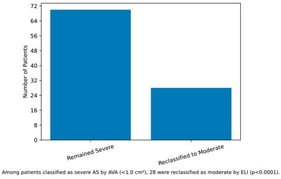
Reclassification of severe aortic stenosis by energy loss index. Among 98 patients classified as severe AS by AVA (&lt;1.0 cm2), 28 (29%) were reclassified as moderate by ELI (≥0.6 cm2/m2).

News & Conferences

Issues

Open for Submission

Editor's Choice

Get Alerted

Add your email address to receive forthcoming issues of this journal.

XFacebookLinkedIn
Med. Sci. - ISSN 2076-3271