


materials-logo

Journal Browser

Journal Browser

Additive Manufacturing of Metallic Alloys and Composite Materials—Process, Structure, Properties and Part Performance: Experimental and Computer Methods

A special issue of Materials (ISSN 1996-1944). This special issue belongs to the section "Metals and Alloys".

Deadline for manuscript submissions: closed (20 May 2026) | Viewed by 7330

Editors


E-Mail Website
Guest Editor
Department of Applied Science and Technology (DISAT), Politecnico di Torino, Corso Duca degli Abruzzi, 24, 10129 Turin, Italy
Interests: instrumented indentation; additive manufacturing; metallic materials; welding and welded joints; materials and process multiphysics modeling
Special Issues, Collections and Topics in MDPI journals

E-Mail Website
Guest Editor

Special Issue Information

Dear Colleagues,

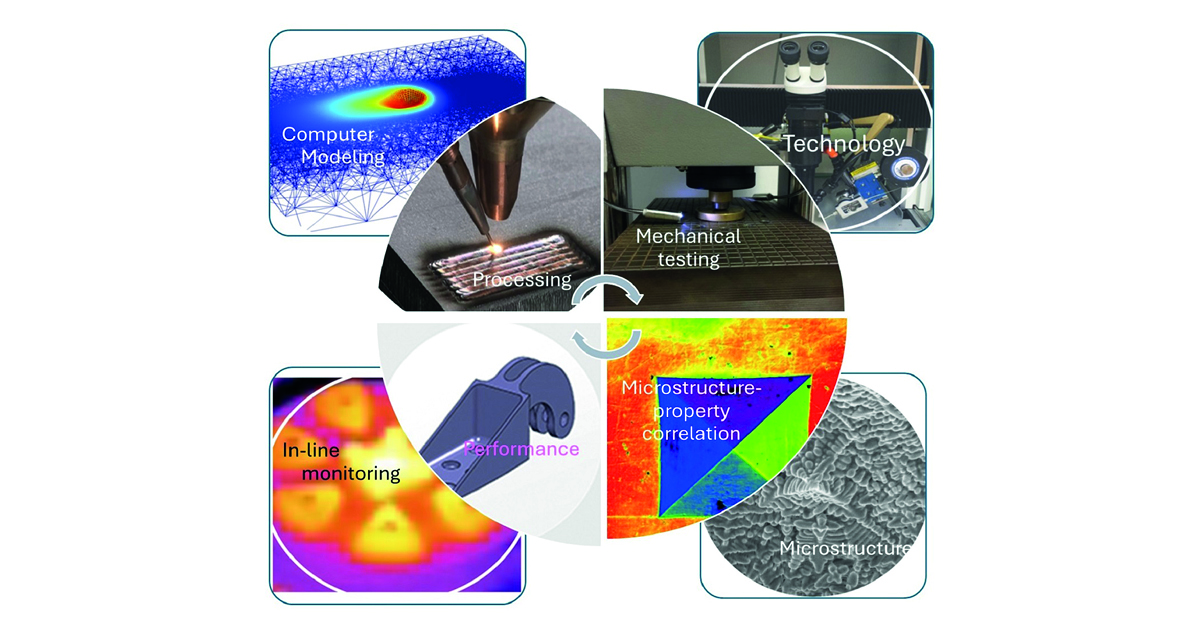
Additive manufacturing (AM) has, for some time, been experiencing an explosion of research in the field of materials science and non-equilibrium processing aimed at designing novel high-value products for potential new engineering applications. The unique shaping versatility of AM offers an unprecedent advantage in the fabrication of more efficient, sustainable, reliable and durable products. However, although many materials, geometries and fabrication methods have been investigated, our ability to systematically and unambiguously determine the mechanical performances, detect the actual 3D microstructures and, thus, tailor the mechanical properties to specific applications remains fragmented and unsatisfactory. Moreover, the basic principles needed to design and verify the structural performance of such fabricated AM components have not yet been established. Multiscale indentation testing is a promising technique in this direction, as it virtually allows a fully automated assessment to be made of the local properties and quality of AM products in a semi-destructive manner. However, the available international standard guidelines have so far failed to include this form of testing for materials containing residual stresses. Thus, new testing protocols need to be developed to progress in the mechanical characterization of AM products affected by such stresses. Furthermore, harsh operating conditions may prematurely alter or degrade AM components, such as expensive and complex tooling products. Appropriate, quick and effective repair methodologies are also necessary to minimize high-cost manufacturing downtimes. Non-destructive diagnostic and non-intrusive monitoring techniques represent a valuable means of inspecting materials and products in the laboratory, although appropriate adjustments and evaluations are needed for in-line AM processing and the in situ inspection of metallurgical and inherent stress–strain phenomena.

This Special Issue calls for contributions (critical reviews and articles) that focus on advanced AM methods, in combination with new alloy and composite materials; in-line and/or in situ monitoring techniques for process and microstructure control; 3D microstructure characterization to better clarify the non-equilibrium microstructure of AM products and its correlation with process parameters and properties; the elucidation of deformation modes during mechanical testing, with special attention to non-destructive testing; measurement techniques and strategies to discern mechanical properties from residual stresses; the optimization of metallurgical/mechanical properties in additive repair operations; and computer modelling and simulation to verify new theories and optimize the AM process, material properties and performance of components.

Prof. Dr. Giovanni Maizza
Prof. Dr. Dario Croccolo
Guest Editors

Manuscript Submission Information

Manuscripts should be submitted online at www.mdpi.com by registering and logging in to this website. Once you are registered, click here to go to the submission form. Manuscripts can be submitted until the deadline. All submissions that pass pre-check are peer-reviewed. Accepted papers will be published continuously in the journal (as soon as accepted) and will be listed together on the special issue website. Research articles, review articles as well as short communications are invited. For planned papers, a title and short abstract (about 250 words) can be sent to the Editorial Office for assessment.

Submitted manuscripts should not have been published previously, nor be under consideration for publication elsewhere (except conference proceedings papers). All manuscripts are thoroughly refereed through a single-anonymized peer-review process. A guide for authors and other relevant information for submission of manuscripts is available on the Instructions for Authors page. Materials is an international peer-reviewed open access semimonthly journal published by MDPI.

Please visit the Instructions for Authors page before submitting a manuscript. The Article Processing Charge (APC) for publication in this open access journal is 2600 CHF (Swiss Francs). Submitted papers should be well formatted and use good English. Authors may use MDPI's English editing service prior to publication or during author revisions.

Keywords

  • additive manufacturing
  • alloys and metal–matrix composites
  • instrumented indentation test
  • residual stresses
  • microstructure–property correlation
  • mechanical properties and performance
  • metallurgical optimization in repair
  • AM processing monitoring
  • computer modeling and simulation
  • non-destructive testing
  • in-line process monitoring

Benefits of Publishing in a Special Issue

  • Ease of navigation: Grouping papers by topic helps scholars navigate broad scope journals more efficiently.
  • Greater discoverability: Special Issues support the reach and impact of scientific research. Articles in Special Issues are more discoverable and cited more frequently.
  • Expansion of research network: Special Issues facilitate connections among authors, fostering scientific collaborations.
  • External promotion: Articles in Special Issues are often promoted through the journal's social media, increasing their visibility.
  • Reprint: MDPI Books provides the opportunity to republish successful Special Issues in book format, both online and in print.

Further information on MDPI's Special Issue policies can be found here.

Published Papers (8 papers)

Order results
Result details
Select all
Export citation of selected articles as:

Research

20 pages, 5209 KB  
Article
Effect of Cu Particle Cross-Contamination in AlSi10Mg Powder Feedstock: Tensile and Strain-Hardening Behaviour of Multi-Material Laser Powder Bed Fusion Parts
by Nikolaos Alexopoulos, Ioanna Giavrouta, Leonard Alberty, Max Horn, Ismail Ünsal and Georg Schlick
Materials 2026, 19(16), 3367; https://doi.org/10.3390/ma19163367 - 7 Aug 2026
Viewed by 264
Abstract
Cross-contamination during metal powder blending in multi-material laser powder bed fusion (PBF-LB/M) is a common production challenge and a key barrier to the wider industrial adoption of the process. In the present investigation, the effect of different CuCr1Zr foreign-particle cross-contamination rates of up [...] Read more.
Cross-contamination during metal powder blending in multi-material laser powder bed fusion (PBF-LB/M) is a common production challenge and a key barrier to the wider industrial adoption of the process. In the present investigation, the effect of different CuCr1Zr foreign-particle cross-contamination rates of up to 5.0 wt.%, simulating different cross-contamination levels in an AlSi10Mg feedstock for PBF-LB/M, is examined. The resulting metallurgical features and tensile mechanical properties of the produced components were compared to those of reference specimens manufactured from uncontaminated powder. A microstructural analysis of CuCr1Zr contaminated samples revealed characteristic Cu-rich regions, demonstrating that the higher the level of cross-contamination is, the larger these regions are. Tensile yield stress is almost linearly increased with the contamination level while the opposite trend is noticed for tensile elongation at fracture. Two different stages of strain-hardening were noticed, with Stage I exhibiting a lower strain-hardening exponent, while higher strain-hardening exponents (>0.27) were noticed for Stage II, with the latter decreasing with increasing cross-contamination level. The tensile mechanical behaviour of PBF-LB/M specimens was evaluated for the first time with appropriate quality indices, which were initially developed for similar cast aluminium alloys. Overall, the quality index accounting for global tensile performance was decreased for all build directions with increasing cross-contamination level. Despite the lower quality index at the non-contamination level, the inclined (45°) printed specimens presented quality indices that were almost unaffected by the cross-contamination level. Full article
Show Figures

Figure 1

23 pages, 14851 KB  
Article
Characterization of Powder Bed Fusion–Laser Beam Ti6Al4V Samples in the As-Built and Stress-Relief States
by Paola Leo, Gilda Renna, Andrea Amleto De Luca, Chiara Scaramuzzi, Neetesh Soni, Francesco Willem Panella, Teresa Primo and Gabriele Papadia
Materials 2026, 19(13), 2888; https://doi.org/10.3390/ma19132888 - 6 Jul 2026
Viewed by 406
Abstract
Despite the advantages of powder bed fusion–laser beam (PBF-LB), Ti6Al4V components often exhibit high yield strength but limited ductility, which restricts their use in critical structural applications. This study aims to identify the most effective heat treatment to optimize the strength–ductility balance in [...] Read more.
Despite the advantages of powder bed fusion–laser beam (PBF-LB), Ti6Al4V components often exhibit high yield strength but limited ductility, which restricts their use in critical structural applications. This study aims to identify the most effective heat treatment to optimize the strength–ductility balance in Ti6Al4V parts produced by PBF-LB and to establish direct correlations between microstructural states, mechanical properties and corrosion behavior. Two distinct post-processing heat treatments were applied, specifically, the first at 500 °C for 5 h and the second at 800 °C for 2 h, both followed by air cooling. The microstructure was characterized using optical microscopy (OM), scanning electron microscopy (SEM), and X-ray diffraction (XRD). Mechanical behavior was assessed through Vickers microhardness testing and tensile testing, while corrosion resistance was evaluated via electrochemical measurements. Residual stress profiles were determined using the hole-drilling strain gauge method, in both as-built and heat-treated conditions. The as-built samples displayed a fully martensitic α′ structure with columnar grains aligned parallel to the laser scanning direction, resulting from rapid solidification. Heat treatment at 500 °C caused only partial decomposition of acicular martensite into substructures without altering its acicular morphology, leading to a strengthening effect alongside a reduction in ductility. Conversely, heat treatment at 800 °C offered the most balanced combination of strength and ductility among the conditions studied, albeit with a moderate reduction in corrosion resistance. Full article
Show Figures

Graphical abstract

13 pages, 1820 KB  
Article
Elastic Properties of Reinforced Body-Centered Cubic Lattice Structures
by Mauro Giacalone and Sara Mantovani
Materials 2026, 19(13), 2852; https://doi.org/10.3390/ma19132852 - 3 Jul 2026
Viewed by 285
Abstract
Lattice structures have gained particular interest in the last years, because of the spread of Additive Manufacturing, which allowed their production with ease. These structures may be used as functionally graded materials for lightweighting in structural components, or they can be tailored to [...] Read more.
Lattice structures have gained particular interest in the last years, because of the spread of Additive Manufacturing, which allowed their production with ease. These structures may be used as functionally graded materials for lightweighting in structural components, or they can be tailored to match the mechanical properties of bone tissue for orthopedic implants. To reduce the computational time and costs of structural simulation and optimization, this study presents a numerical homogenization to determine the main elastic constants of the BCCz lattice, over its relative density. Numerical simulations are carried out on a lattice with a nominal geometry, made from a homogeneous isotropic material. Results present charts and interpolating functions of the elastic constants of the lattice, over its relative density, that may help the designer in tailoring the lattice structure to the desired applications. Results show that the BCCz presents a substantial influence of the load direction on the mechanical properties, with the z direction showing superior properties than the transverse direction. This makes the BCCz lattice ideal for those structures where the main load directions are easily predictable. Full article
Show Figures

Figure 1

18 pages, 3987 KB  
Article
Numerical Simulation of Laser Cladding Using Cable Wires
by Weihang Liu, Xueping Guo, Kaiyong Jiang, Jian Liu, Zhaoju Peng, Xizhao Lu, Jianming Zhang, Zhihai Cai, Dehua Wu, Yuchao Xu and Binggong Yan
Materials 2026, 19(11), 2326; https://doi.org/10.3390/ma19112326 - 1 Jun 2026
Viewed by 395
Abstract
Cable wires provide a viable technical pathway for the laser additive manufacturing of high-entropy alloys (HEAs). However, the complex interplay of structural and material parameters of cable wires leads to significant variations in molten pool dynamics, which poses challenges to the fabrication of [...] Read more.
Cable wires provide a viable technical pathway for the laser additive manufacturing of high-entropy alloys (HEAs). However, the complex interplay of structural and material parameters of cable wires leads to significant variations in molten pool dynamics, which poses challenges to the fabrication of high-quality HEA coatings. To clarify the effects of these key factors on molten pool behavior, a multi-physics numerical model for the laser cladding of Al50Si6Ti8Cr12Cu12Ni12 cable wires was established in this study. A dedicated physical model for cable wires was developed, and the Level Set Method was employed to track fluid interfaces throughout the cladding process. Based on the proposed model, the temperature distribution, stress fields, and elemental homogeneity within the molten pool were systematically investigated. The results reveal that chromium (Cr) addition induces a viscosity reduction, and a torsional pitch of ≤4 mm is critical for achieving defect-free, compositionally uniform HEA coatings, which provides novel insights for process optimization and alloy design of cable-wire laser cladding. Full article
Show Figures

Figure 1

20 pages, 19188 KB  
Article
Electrospark Deposition and Ultrasonic Peening Treatment on AlSi10Mg Powder Bed Fusion–Laser Beam Parts: Microstructure and Properties
by Paola Leo, Gilda Renna, Andrea Amleto De Luca, Riccardo Nobile, Caterina Casavola, Vincenzo Moramarco, Simone Carone and Michele Angelo Attolico
Materials 2026, 19(10), 2041; https://doi.org/10.3390/ma19102041 - 13 May 2026
Viewed by 544
Abstract
Additive manufacturing (AM) has revolutionized industrial production. However, the repair of AM components remains a critical challenge due to their unique microstructural features. While repair approaches for conventionally manufactured alloys are well established, their direct transferability to AM parts remains largely unexplored due [...] Read more.
Additive manufacturing (AM) has revolutionized industrial production. However, the repair of AM components remains a critical challenge due to their unique microstructural features. While repair approaches for conventionally manufactured alloys are well established, their direct transferability to AM parts remains largely unexplored due to the unique thermal history and anisotropic microstructure of additive components. This study investigates a novel repair and improvement strategy for Powder Bed Fusion–Laser Beam/Metal (PBF-LB/M)-fabricated AlSi10Mg components, combining Electrospark Deposition (ESD) for dimensional restoration with subsequent Ultrasonic Peening Treatment (UPT) for surface enhancement. Microstructure, porosity, surface roughness, hardness profiles, residual stresses, and corrosion behaviour were systematically characterized using SEM, optical microscopy, profilometry, Vickers microhardness testing, XRD, and electrochemical polarization tests. The results show that the ESD process is capable of producing coatings with excellent interfacial adhesion to the substrate, with an initial porosity of 3.6 ± 0.5%. The subsequent UPT induces a significant densification effect on the deposited material, reducing porosity by approximately 50% and increasing surface hardness by up to 48% in the upper region of the coating. Furthermore, XRD analysis reveals that UPT completely reverses the residual stress state from tensile (typical of the ESD process) to compressive in all measured directions, thereby improving the overall structural integrity. Ultimately, the combined ESD + UPT alters the electrochemical response of AlSi10Mg deposits, resulting in a nobler corrosion potential, albeit with a slightly higher corrosion current density. Full article
Show Figures

Graphical abstract

21 pages, 9775 KB  
Article
Microstructural Stability of 316 L Produced by Additive Manufacturing for Nuclear Applications
by Roberto Montanari, Alessandra Palombi, Maria Richetta, Giulia Stornelli, Alessandra Varone and Ali Zahid
Materials 2026, 19(8), 1610; https://doi.org/10.3390/ma19081610 - 17 Apr 2026
Viewed by 629
Abstract
Additive manufacturing (AM) represents a quite interesting technology for manufacturing components of nuclear reactors. This work investigated the microstructural stability of 316 L steel fabricated via Laser Powder Bed Fusion (L-PBF) from room temperature to 650 °C. Despite the reduced susceptibility of the [...] Read more.
Additive manufacturing (AM) represents a quite interesting technology for manufacturing components of nuclear reactors. This work investigated the microstructural stability of 316 L steel fabricated via Laser Powder Bed Fusion (L-PBF) from room temperature to 650 °C. Despite the reduced susceptibility of the material to sensitization owing to its low carbon content, temperature variations may induce deleterious effects in nuclear safety-critical components. In as-printed condition, the microstructure is not stable and undergoes significant changes induced by thermal cycling up to 650 °C in Mechanical Spectroscopy (MS) tests: the typical melt-pool pattern disappears, a population of equiaxed grains substitutes the original ones elongated in the build direction, the average size of the cells forming a finer sub-structure inside the grains increases, texture changes, and the excess of vacancies induced by the rapid cooling is recovered. Although the current literature reports that the microstructure is stable up to 500 °C, MS results indicate that the aforesaid irreversible phenomena start at a lower temperature (~230 °C). The present results suggest that the microstructure of the printed material must be stabilized through suitable heat treatments before its application in structural components for nuclear reactors. Full article
Show Figures

Figure 1

34 pages, 12784 KB  
Article
On the Mechanical Performance of an L-PBF 316l Part Using the Performance-Line Instrumented Indentation Test (PL-IIT)
by Giovanni Maizza, Faisal Hafeez, Alessandra Varone and Roberto Montanari
Materials 2025, 18(7), 1462; https://doi.org/10.3390/ma18071462 - 25 Mar 2025
Cited by 3 | Viewed by 1441
Abstract
While L-PBF research continuously expands technologically towards more complex-shaped components and effective scanning strategies, the customization of the mechanical performance of these components to specific applications is still challenging. The presence of high process-induced residual stress levels frequently makes the current (standard) mechanical [...] Read more.
While L-PBF research continuously expands technologically towards more complex-shaped components and effective scanning strategies, the customization of the mechanical performance of these components to specific applications is still challenging. The presence of high process-induced residual stress levels frequently makes the current (standard) mechanical testing procedures ineffective or even inappropriate. The current engineering design principles cannot be applied to L-PBF components as the available mechanical properties are apparent (i.e., space and residual stress dependent properties). It is the aim of this work to overcome the aforementioned limitations by presenting a comprehensive methodology that can be used to determine the mechanical performance of an L-PBF 316L deposit along (five) pre-specified directions, denoted as performance lines (PLs), and in six special key regions, denoted as performance zones (PZs), through the nanoindentation test (PL-nIIT). The PLs determine the gradients of the indentation properties across the deposit, while the PZs exhibit the orientation-dependent mechanical performance in a specified number of regions of the deposit. The latter can be used for benchmarking, mechanical design, or performance customization. The frequently resorted to indentation modulus and hardness have thus been complemented with a new indentation size effect-free property (i.e., the loading stiffness rate, LSR) to help discriminate the presence of residual stress at different depths in the given deposit. A decreasing mild compressive residual stress was determined along the build direction of the deposit as revealed by the decreasing values of the relative LSR, HIT, and EIT (from the root to the top dome, i.e., 47.8 to 43.4, 2.57 to 2.49, and 216 to 202 GPa, respectively). Full article
Show Figures

Figure 1

21 pages, 30751 KB  
Article
Abrasive Wear Performance of Spherical Hierarchical Structured TiC/High-Manganese Steel Composites
by Tao He, Shengnian Zhao, Dehong Lu, Yehua Jiang and Mojin Zhou
Materials 2025, 18(1), 130; https://doi.org/10.3390/ma18010130 - 31 Dec 2024
Cited by 7 | Viewed by 1921
Abstract
The abrasive wear performance of TiC particle-reinforced high-manganese steel matrix composites with a spherical hierarchical structure under moderate impact energy was investigated. In the composites, TiC particles (10 μm in diameter) were concentrated within discrete spherical composite regions with diameters of about 100 [...] Read more.
The abrasive wear performance of TiC particle-reinforced high-manganese steel matrix composites with a spherical hierarchical structure under moderate impact energy was investigated. In the composites, TiC particles (10 μm in diameter) were concentrated within discrete spherical composite regions with diameters of about 100 μm. Impact abrasive wear tests were conducted to evaluate the wear performance of the composites with different volume fractions (30%, 40%, and 50%) of TiC particles compared with the matrix and a uniformly distributed TiC particle composite. The applied impact energy was 3 J. The results show that the hierarchical composite with 40% TiC particles exhibits the best wear resistance, with the wear rate reduced by 43.5% and 75.4% compared to the matrix steel and the uniformly distributed composite, respectively. The primary wear mechanism of the hierarchical composite is abrasive cutting. The design of the hierarchical configuration significantly enhances the material’s toughness, reducing fatigue spalling in the composite region during wear, thereby improving its wear resistance. Full article
Show Figures

Figure 1

Back to TopTop