J. Nucl. Eng. 2026, 7(2), 37; https://doi.org/10.3390/jne7020037 (registering DOI) - 21 May 2026
Abstract
►
Show Figures
In molten salt reactors (MSRs), molten salt performs dual essential roles as fuel and coolant. The continuous circulation of the fuel salt in the primary loop inevitably leads to significant neutron activation of loop components, particularly the structural alloys of the heat exchanger
[...] Read more.
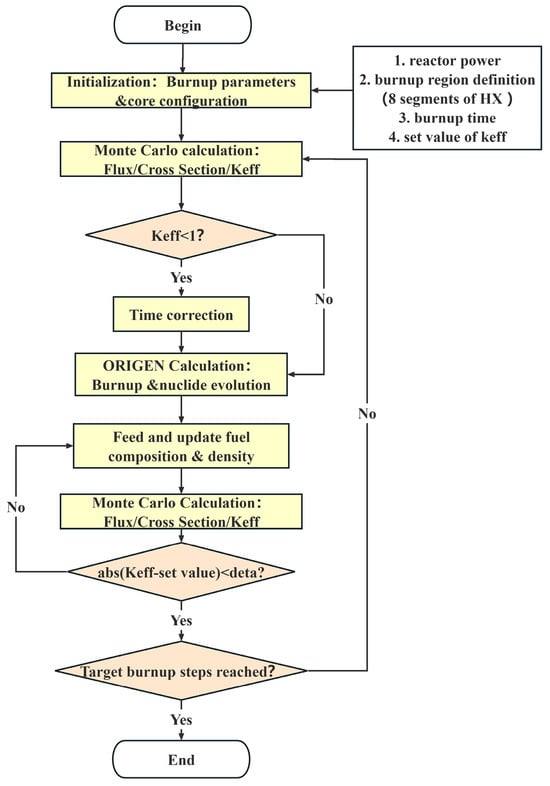
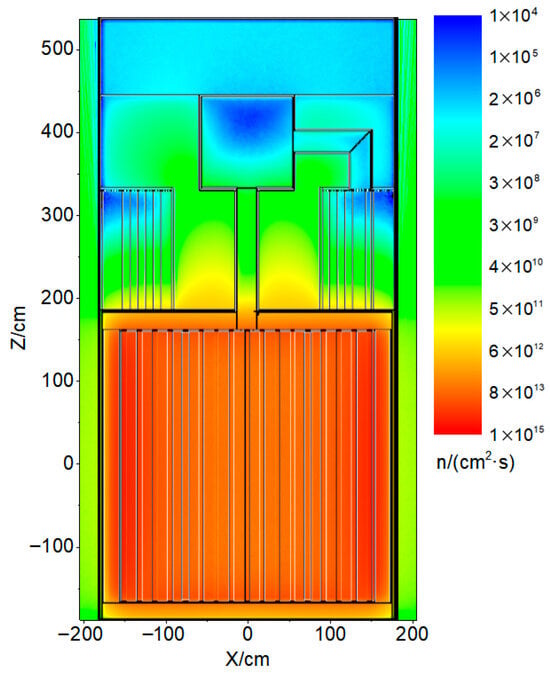
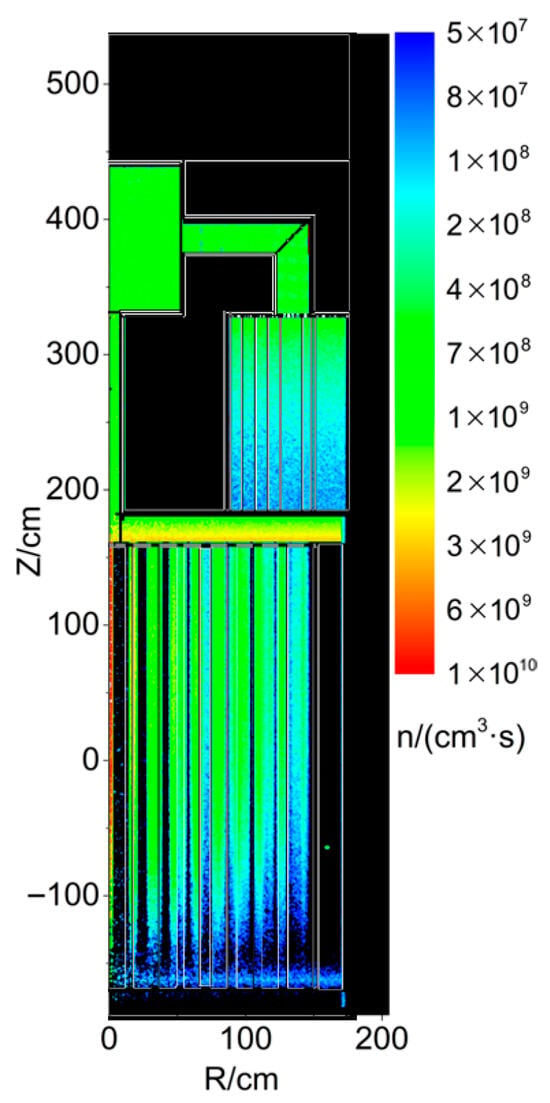
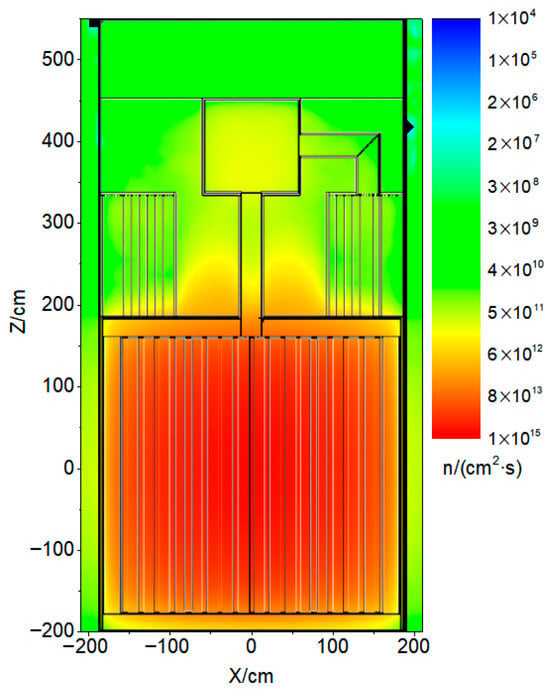
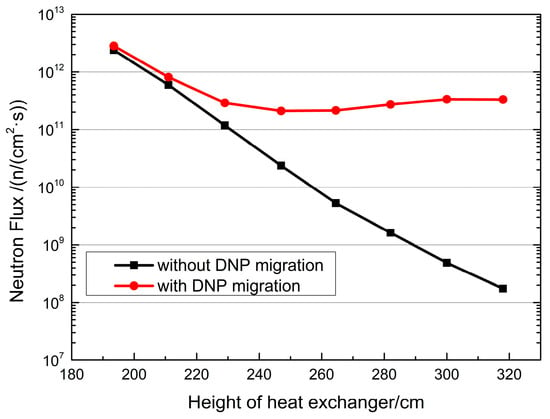
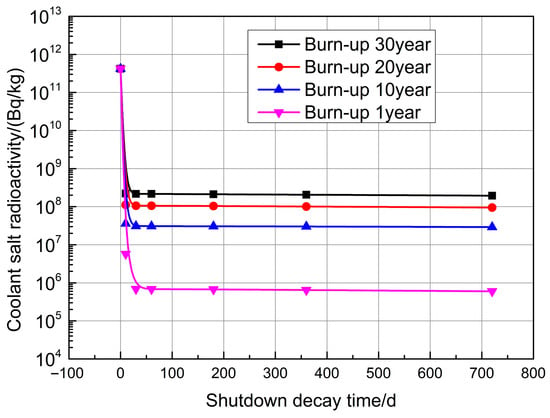
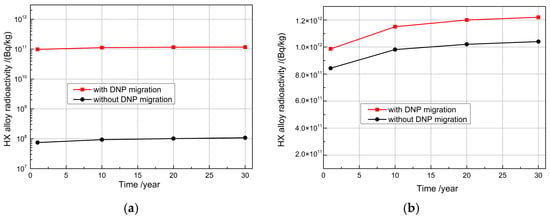
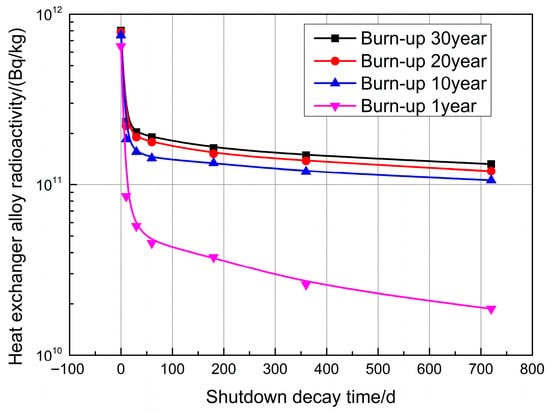
In molten salt reactors (MSRs), molten salt performs dual essential roles as fuel and coolant. The continuous circulation of the fuel salt in the primary loop inevitably leads to significant neutron activation of loop components, particularly the structural alloys of the heat exchanger (HX) and the coolant salt within the HX. This activation is strongly influenced by delayed neutron fluxes generated by the migration of delayed neutron precursors (DNPs) within the flowing fuel salt. Accurate quantification of the radioactivity of primary HX components is essential for establishing reliable modular replacement strategies, optimizing shutdown maintenance schedules, and ensuring operational safety. To address this requirement, a comprehensive simulation methodology has been developed to model the DNP transport through the primary HX in a small modular molten salt reactor (SM-MSR). It aims to quantitatively evaluate activation levels of HX structural alloys and circulating coolant salt within the HX. Comparative simulations were conducted to contrast scenarios with dynamic DNP migration and static-fuel scenarios excluding it. The results indicate that consideration of DNP migration increases the neutron flux at the top region of the HX by approximately three orders of magnitude compared with the static-fuel scenario. This elevates coolant salt radioactivity by over 50%. Significant increases in irradiation damage parameters (displacements per atom and helium production) are observed in the upper sections of HX structural alloys. These findings highlight the necessity of incorporating DNP migration effects for accurate prediction of primary loop component neutron activation. This provides a reference for future shielding design optimization, irradiation damage assessments, and shutdown dose rate calculations in the SM-MSR.
Full article
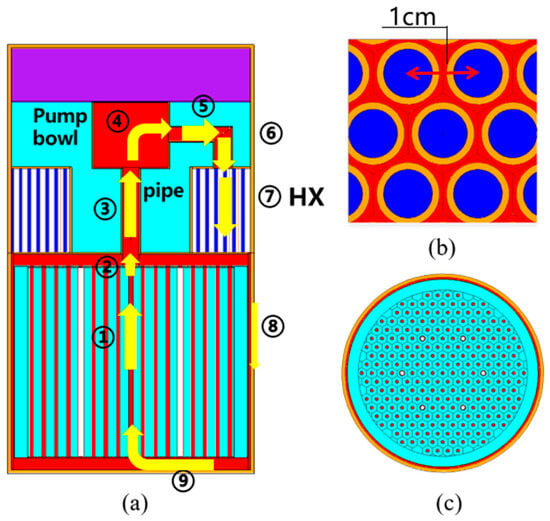
Figure 1