





Energies 2023, 16(13), 5234; https://doi.org/10.3390/en16135234 - 7 Jul 2023
Cited by 2 | Viewed by 2509
Abstract
►
Show Figures
This article proposes an approach and develops an appropriate method of applying linear non-equilibrium thermodynamics to analyze energy processes, in particular using the example of the wind energy conversion system (WECS) with a directly connected vertical axis wind turbine (VAWT) and vector-controlled permanent
[...] Read more.
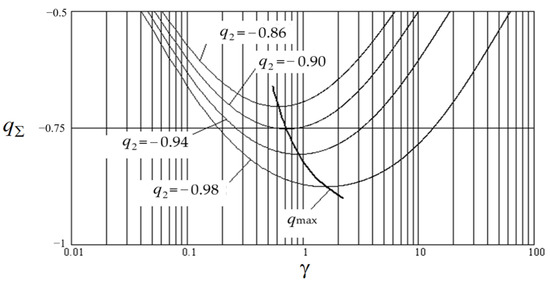
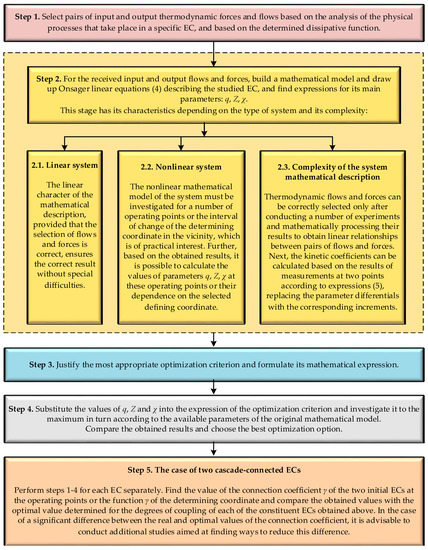
This article proposes an approach and develops an appropriate method of applying linear non-equilibrium thermodynamics to analyze energy processes, in particular using the example of the wind energy conversion system (WECS) with a directly connected vertical axis wind turbine (VAWT) and vector-controlled permanent magnet synchronous generator (PMSG). The main steps of the proposed approach are the description of the component subsystems as universal linear or linearized energy converters (ECs), which are characterized by several dimensionless parameters, the main one of which is the degree of coupling between their input and output. According to their value, as well as justified efficiency criteria, the optimal operating points of each ECs can be easily found. Such an approach makes it possible to abstract from physical laws of a different nature and equally assess the work of each of the subsystems. The next step is a connection of the received ECs. As shown in the paper, for the most common cascade connection of ECs, there are the best conditions for their connection, under which the newly formed equivalent EC can have maximum efficiency. This opens up an opportunity to analyze the influence of already real parameters of cascaded interconnected subsystems on the quality of their connection and justify specific solutions that would not have been seen without this approach. For example, in this study, from all parameters of the PMSG, only the selection of the optimal rated inductance of the armature winding made it possible to improve the quality of the connection of the PMSG with a specific VAWT and approximate the efficiency of the entire WECS to the maximum possible, especially in medium and high winds.
Full article
Figure 1