You are currently viewing a new version of our website. To view the old version click .

Compounds

Compounds is an international, peer-reviewed, open access journal on chemical compounds published quarterly online by MDPI.

Quartile Ranking JCR - Q3 (Chemistry, Multidisciplinary)

All Articles (191)

Efficient Microwave-Assisted Extraction of Polyphenol-Rich Extract from Salvia dumetorum Leaves

  • Yana K. Levaya,
  • Karakoz Zh. Badekova and
  • Mussa E. Zholdasbayev
  • + 4 authors

Salvia dumetorum Andrz. ex Besser is a promising non-pharmacopoeial plant species with traditional medicinal potential. This study aimed to determine the optimal microwave-assisted extraction (MAE) conditions for obtaining a polyphenol-rich ethanolic extract from the S. dumetorum leaves. Dried and powdered leaves were extracted using 40% ethanol with different power of microwaves varying from 200 to 800 W and time of extraction 2–8 min. The extract was filtered, concentrated, and evaluated for yield, identification of phenolic compounds using high-performance liquid chromatography (HPLC), total phenolic content (TPC), and total flavonoid content (TFC). Extraction yields ranged from 2.20% to 25.80% based on dry weight. TPC and TFC were determined using Folin–Ciocalteu and aluminum chloride colorimetric assays, respectively, and are expressed as mg GAE/g and mg RUE/g of dry extract. The antioxidant activity of the extracts was evaluated using the DPPH (2,2-diphenyl-1-picrylhydrazyl radical) assay. According to HPLC analysis, the main phenolic components of the extracts were rosmarinic acid (1.78–2.95 mg/mL), chlorogenic acid (0.31–0.54 mg/mL), caffeic acid (0.11–0.20 mg/mL), rutin (up to 0.47 mg/mL) and ferulic acid (0.13–0.33 mg/mL); traces of myricetin were found only in isolated samples. The optimum extraction conditions were found to be 400 W microwave power, 8 min extraction time, one MAE cycle, and a 1:30 g/mL solvent-to-material loading ratio; TPC and TFC were evaluated as 35.23 ± 0.50 mg GAE/g DW and 19.94 ± 0.14 mg RuE/g DW, respectively, indicating the highest yield of polyphenolic compounds, antioxidant potential inhibiting 96.68% ± 0.27 of DPPH radicals, and IC50 = 10.24 µg/mL. These findings highlight the efficiency of MAE in producing a bioactive ethanolic extract of S. dumetorum, which can be further explored for potential applications as a natural antioxidant in pharmaceutical or cosmetic formulations.

11 December 2025

Effect of microwave power and time on yield of S. dumetorum leaf extract obtaining using MAE.

Antibiotics are increasingly detected in aquatic environments, raising environmental and public health concerns due to their persistence and contribution to antimicrobial resistance. This study examines copper sulfide (CuS) nanostructures as potential materials for sustainable water remediation. CuS nanoparticles were synthesized in aqueous media using thioglycolic acid (TGA) as a stabilizing ligand and characterized by UV–Vis, FTIR, XRD, TEM, SEM, and EDS. An optimized Cu:TGA molar ratio of 1:6 yielded stable nanoparticles with a distinct excitonic absorption at 312 nm, strong ligand coordination, and a covellite-type hexagonal crystalline phase. These nanoparticles were subsequently immobilized within calcium–alginate hydrogel beads of two controlled size regimes, producing structurally uniform and recoverable composites. SEM imaging revealed qualitative increases in surface texturing following CuS incorporation, while bead diameter analyses indicated minimal changes in morphology. Overall, the results confirm the successful synthesis, stabilization, and immobilization of CuS nanoparticles within alginate beads and establish a robust materials platform with potential for future adsorption and photocatalytic applications targeting antibiotic contaminants in water.

11 December 2025

Absorbance spectra of TGA-capped CuS nanoparticles.

The effect of Ag2Se content on the structure and mechanical properties of (1−x) (0.73GeSe2-0.27Sb2Se3)-xAg2Se glasses is analyzed. The glass structure is studied using XRD and NMR analyses. A particular consideration relates to a multiple increase in plasticity with increasing silver selenide content in chalcogenide glasses. The observed effects are attributed to the formation of silver–silver metallophilic interactions.

8 December 2025

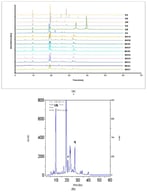
Total structure factor of the glasses in the system (1−x) (0.73GeSe2-0.27Sb2Se3)-xAg2Se. The corresponding x values are indicated in the insert.

Mexican Fruits of the Stenocereus Genus: Characterization, Physicochemical, Nutritional, and Content of Bioactive Compounds

  • Alma Delia Noriega-Juárez,
  • Yolanda Nolasco-González and
  • Oswaldo Alejandro Arellano-Machuca
  • + 4 authors

Stenocereus fruits are appreciated for their flavor and color, and their cultivation is highly sustainable, as they grow in arid zones without the need for fertilizers or agrochemicals. However, their nutritional and bioactive composition remains underexplored. This study evaluated the physicochemical and nutritional properties, bioactive compound content, and antioxidant capacity (AOX) of Stenocereus thurberi (red, white, purple, and orange), Stenocereus martinezzi (red), and Stenocereus gummosus (red). All fruits exhibited low total soluble solids (12.6 ± 0.2–14.7 ± 0.3 °Brix), acidity (0.81 ± 0.03–1.12 ± 0.03%), and moderate dietary fiber content (3.71 ± 0.05–4.86 ± 0.09%). S. martinezzi stood out for its high levels of betalains (33.7 ± 0.65 mg/100 g_fw), vitamin E (84.7 ± 0.2 µg/100 g_fw), and vitamin C (147.6 ± 11.4 mg/100 g_fw). At the same time, potassium, magnesium, and calcium were the predominant minerals in all samples. S. gummosus showed the highest total soluble phenols (120.6 ± 2.2 mg/100 g_fw) and was also notable for its flavonoid content. Flavonoids, hydroxycinnamic, and hydroxybenzoic acids were detected in all fruits. Red fruits had the highest AOX levels, followed by white, orange, and purple varieties. In conclusion, these fruits are nutritious, low in sugars, and rich in bioactive compounds, suggesting their potential as functional foods, particularly beneficial for individuals with chronic degenerative diseases.

2 December 2025

Stenocereus thurberi fruits: (A) white, (B) red, (C) yellow, and (D) purple. Stenocereus martinezzi fruits (E). Stenocereus gummosus fruits (F).

News & Conferences

Issues

Open for Submission

Editor's Choice

Get Alerted

Add your email address to receive forthcoming issues of this journal.

XFacebookLinkedIn
Compounds - ISSN 2673-6918