


Abstract
Humulus lupulus L. (hops) is essential in brewing due to its contributions to bitterness, flavor, and aroma. This study compared the volatile profiles of five commercially important hop varieties—Amarillo, Ariana, Cascade, Centennial, and El Dorado—grown in their main regions of origin (United States for Amarillo, Cascade, and El Dorado; Germany for Ariana; and Brazil for Centennial). Headspace solid-phase microextraction coupled with gas chromatography–mass spectrometry (HS-SPME/GC-MS) enabled the identification of 312 volatile compounds, including monoterpenes (e.g., myrcene, linalool, geraniol), sesquiterpenes (e.g., humulene, caryophyllene), esters, alcohols, aldehydes, and ketones. Amarillo showed the highest myrcene content (22.61% of the total volatile area), while Centennial was distinguished by elevated γ-muurolene (20.59%), and El Dorado by the highest level of undecan-2-one (10.47%), highlighting marked varietal differences in key aroma-active constituents. Multivariate, including principal component analysis (PCA) and partial least squares discriminant analysis (PLS-DA), clearly discriminated the five varieties: PC1 (41.04% of the variance) separated samples enriched in fruity/floral monoterpenes and esters from those dominated by woody/resinous sesquiterpenes, whereas PC2 (25.93% of the variance) reflected variation in medium-chain esters, ketones, and waxy compounds. These chemometric patterns demonstrate that both genetic background and growing region terroir strongly shape hop volatile composition and, consequently, aroma potential, providing brewers with objective criteria for selecting hop varieties to achieve specific sensory profiles in beer.
Keywords:
Humulus lupulus; hops; aroma profiles; terroir; volatile compounds; gas chromatography-mass spectrometry; brewing science; PLS-DA; PCA Key Contribution:
This study provides a comprehensive characterization of the volatile compound profiles of five major hop varieties—Amarillo, Ariana, Cascade, Centennial, and El Dorado—using HS-SPME/GC-MS and advanced multivariate statistical analysis, demonstrating that both genetic background and terroir significantly influence hop aroma and flavor. The findings underscore the importance of regional cultivation in shaping the sensory qualities of hops, paving the way for a more nuanced selection of hops to enhance beer complexity and potential health benefits.
1. Introduction
Humulus lupulus, commonly known as hops, is a climbing perennial plant of the Cannabaceae family, indigenous to Europe, Asia, and North America, and best known for its essential role in brewing [1]. Hops are dioecious, with separate male and female plants; only the latter produce cone-shaped structures called strobiles. These female cones, rich in lupulin glands, are crucial for brewing, as they concentrate the essential oils and acids that contribute to beer’s typical bitterness, flavor, and aroma [2,3].
Among the wide range of hop cultivars currently used in brewing, varieties such as Amarillo, Ariana, Cascade, Centennial, and El Dorado are particularly valued for their distinctive aromatic signatures. Amarillo and El Dorado are typically associated with intense citrus, tropical fruit, and stone fruit notes [4], whereas Cascade and Centennial are widely recognized for delivering floral, citrus, and resinous characters in classic American-style ales [5]. Ariana, a relatively recent German variety, has been described as exhibiting a more complex profile, combining fruity, berry-like, and spicy notes. Nevertheless, the detailed volatile composition responsible for these perceived aromas—and potential differences arising from cultivation conditions or processing—remains only partially characterized [6]. A deeper chemical characterization of these hop varieties can provide brewers with more precise guidelines for optimizing hop selection and usage.
Recent studies have deepened the understanding of the hop genome, particularly the Cascade cultivar, which is widely recognized for its floral and citrus aroma. A notable study conducted by Padgitt-Cobb et al. (2022) presented a chromosome-level assembly of the Cascade genome, revealing that the cultivar has a significant genomic content, with approximately 64% of repetitions [7]. This advancement in genomic research promises to benefit hop cultivation by enhancing disease resistance strategies and enriching the flavor characteristics of hops.
Besides the well-known bitter acids (α- and β-acids)—responsible for the characteristic bitterness in beer [8]—hop cones contain a wide variety of bioactive compounds. These include essential oils, polyphenols, and prenylated flavonoids, which have drawn scientific attention due to their broad range of biological and potential health effects [2,8,9]. Some of these compounds, such as phytoestrogens, are being investigated for their impact on hormone regulation and possible roles in alleviating menopausal symptoms [10]. Flavonoids like xanthohumol also exhibit notable antioxidant and sedative properties [11,12]. The hop extract may also be utilized to formulate dietary supplements that promote satiety, having the potential to assist in preventing or combating obesity [13].
The presence of powerful antioxidants—mainly polyphenols—may help reduce oxidative stress and lower the risk of chronic diseases [12]. In addition, volatile compounds such as humulene and myrcene have been linked to relaxing and anti-inflammatory effects [14,15]. From a technical viewpoint, hop essential oils are exceptionally complex: hundreds of distinct volatile compounds together represent only 0.5% to 3% of the dried hop mass [8,16]. This complexity renders the sensory characterization of hop aroma a persistent challenge.
Recent studies utilizing advanced techniques—such as headspace solid-phase microextraction coupled with gas chromatography–mass spectrometry (HS-SPME/GC-MS)—have underscored the variability of hop aromatic profiles. HS-SPME/GC-MS has become a key analytical technique for characterizing hop volatile profiles. HS-SPME offers a solvent-free, miniaturized, and highly sensitive approach for extracting volatile organic compounds (VOCs) directly from the headspace of solid or semi-solid samples. When combined with GC-MS, this technique enables the separation and identification of a broad range of chemical families, including esters, aldehydes, alcohols, monoterpenes, and sesquiterpenes, which are crucial to hop aroma. HS-SPME/GC-MS has been successfully applied to investigate varietal differences, environmental effects, and processing impacts on hop aroma, and thus represents an appropriate and robust approach for the comprehensive evaluation of hop volatile composition [17,18].
It is now well recognized that the abundance and type of important volatile classes, such as esters, monoterpenes, and sesquiterpenes, depend greatly on both genetic factors and the environment in which hops are cultivated [3]. For example, Su and Yin (2021) used HS-SPME/GC-MS to show that Cascade and Chinook hops grown in different locations in Virginia exhibited distinct volatile profiles, differing in 33 compounds including esters, terpenoids, aldehydes, and alcohols, thereby underscoring the decisive influence of growing region and terroir on hop aroma [19]. Similarly, Mozzon et al. [20] applied multivolatile fingerprinting by HS-SPME/GC-MS to evaluate the brewing quality of hop varieties cultivated in central Italy, demonstrating the usefulness of this approach for varietal classification and quality assessment.
Likewise, Herkenhoff et al. (2024) [3] performed an in-depth comparative analysis of five classic hop varieties grown both in Brazil and in their traditional regions of origin. Using HS-SPME/GC-MS and chemometric analysis, they found significant differences in the spectrum and abundance of volatile compounds between the countries of origin and the Brazilian-grown samples. These findings reinforce the notion that the complex chemistry and sensorial qualities of hops are deeply influenced not only by variety but also by environmental and regional factors, making the study of terroir crucial for both the brewing industry and for the broader food, flavor, and health sciences [3].
Building on these principles, this study aimed to evaluate the aromatic profile of the hop varieties Amarillo, Ariana, Cascade, Centennial and El Dorado, using the HS-SPME/GC-MS methodology (headspace solid-phase microextraction coupled with gas chromatography–mass spectrometry).
2. Materials and Methods
2.1. Samples
In this research, pelletized hop samples (50 g each) were collected from five different varieties. Ariana was sourced from Germany, while Amarillo, Cascade, and El Dorado originated from the United States. All supplied by Barth Haas (Barth Haas, Nuremberg, Germany). The Centennial variety was obtained from Dalcin (Dalcin, Taguaí, SP, Brazil) (Table 1).
Table 1.
Characteristics of the five hop (Humulus lupulus) varieties used in the present study. Green-filled cells in the table indicate that the hop in question already has those sensory characteristics documented.
Each sample was manually pulverized into a fine powder using a mortar and pestle prior to analysis. Subsequently, approximately 40 mg (±0.5 mg) of the ground hops were weighed and transferred into 20 mL glass vials equipped with an automated sampler. The vials were securely sealed with PTFE/silicone septa and aluminum caps (Macherey-Nagel, Bethlehem, PA, USA) to preserve sample integrity.
2.2. Instrumentation
The analysis of volatile profiles was performed utilizing headspace solid-phase microextraction (HS-SPME) in conjunction with gas chromatography–mass spectrometry (GC–MS). An advanced instrument setup was employed, comprising the GCMSQP2020 NX system outfitted with a Nexis GC-2030 gas chromatograph, a quadrupole mass spectrometer, and an AOC-6000 Plus autosampler (Shimadzu, Nakagyo-ku, Kyoto, Japan). A DVB/CAR/PDMS (divinylbenzene/carboxen/polydimethylsiloxane) Smart Fiber, 80 μm in thickness (Shimadzu), was used during the HS-SPME extraction step.
Prior to sample introduction, the SPME fiber underwent a preconditioning cycle at 240 °C, and two blanks were injected for system stabilization following the manufacturer’s recommendations. Hop samples were equilibrated at 50 °C for 10 min in the autosampler’s heated block before extraction commenced. The SPME fiber was then exposed to the sample headspace for 50 min to allow adsorption of volatile components. Afterward, the fiber was transferred into the gas chromatograph’s injection port, where thermal desorption of the analytes occurred at 230 °C for 3 min in splitless mode, utilizing an SPME glass liner with a 0.75 mm internal diameter.
Chromatographic separation was accomplished using a PEG capillary column (HP-INNOWAX, 30 m length × 0.25 mm internal diameter × 0.15 μm film thickness, Shimadzu) with a constant helium flow of 1 mL/min. The oven temperature program began at 40 °C, increasing at 5 °C per minute up to 150 °C, then accelerating to 225 °C at 20 °C per minute, with holding periods of 5 min at the start and 20 min at the end, in alignment with the procedure outlined by Su and Yin [19].
Detection by mass spectrometry utilized electron impact ionization at 70 eV, operating in full scan mode across an m/z range of 40 to 350 amu. The temperatures of the transfer line and ion source were stabilized at 250 °C. All data were acquired under total ion current (TIC) mode.
2.3. Volatile Compounds Identification and Statistical Analysis
Volatile compounds were identified by comparing the molecular fragmentation patterns of each chromatographic peak to reference spectra contained in the 2020 NIST MS library (National Institute of Standards and Technology, Gaithersburg, MD, USA). Only compounds exhibiting a similarity index (SI) above 85 were considered positively identified. For peaks where identification was uncertain, retention indices were determined using a homologous series of n-alkanes (C8–C23) to further confirm compound identity.
To interpret the complex chromatographic data, chemometric classification techniques were applied. These analytical approaches utilize experimental data to predict the qualitative groupings—such as aroma profiles—within the set of samples. In particular, this study implemented partial least squares discriminant analysis (PLS-DA), a multivariate statistical method, to develop a robust classification model that could distinguish the different aroma attributes among the hop varieties under investigation. PLS-DA models were built in the R environment using the ropls package [21]. The PLS-DA model showed good performance (R2Y = 0.92, Q2 = 0.85 by seven-fold cross-validation; 200-run permutation test, p < 0.01), supporting the robustness of the varietal discrimination and the reliability of VIP-based compound selection.
2.4. Database Software Analysis
For each compound identified, its CAS Registry Number was used to retrieve detailed information from the PubChem database (https://pubchem.ncbi.nlm.nih.gov/, accessed on 1 January 2020), accessed on 10 October 2025. Additionally, the specific flavor and aroma characteristics associated with these compounds were investigated by consulting the Perflavory database (https://perflavory.com/search.php, accessed on 1 January 2020).
All data are presented as mean ± standard deviation (SD). Volatile compounds detected in at least two hop varieties were semi-quantified by expressing the chromatographic peak areas as a percentage of the total ion current (Area %) using LabSolutions GCMSolutions software v.2.0 (Shimadzu). When comparing two groups, Student’s t-test was applied after verifying normality of the data distribution. For comparisons involving three or more groups, one-way analysis of variance (ANOVA) followed by Tukey’s post hoc test was used. Statistical significance was set at p ≤ 0.05. Principal component analysis (PCA) was performed in R (R Development Core Team, 2018) using the adegenet [22] and ggplot2 [23] packages to explore the relationships among hop varieties based on their volatile profiles.
3. Results and Discussion
3.1. Classification by PLS-DA
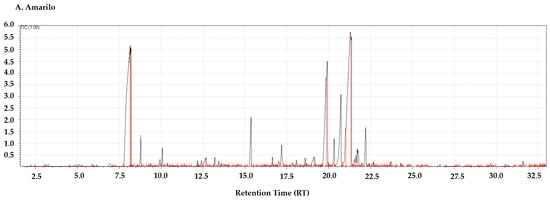
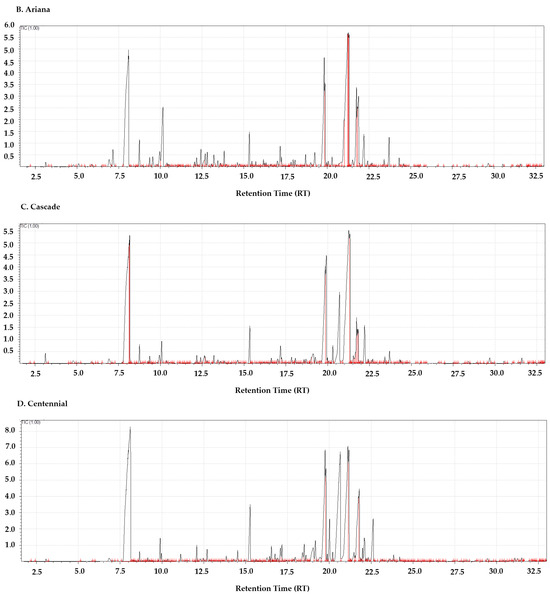
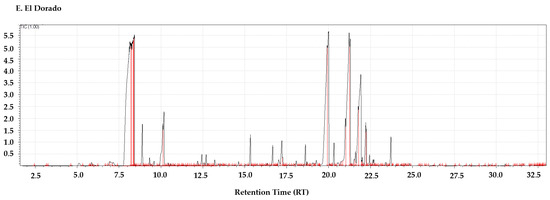
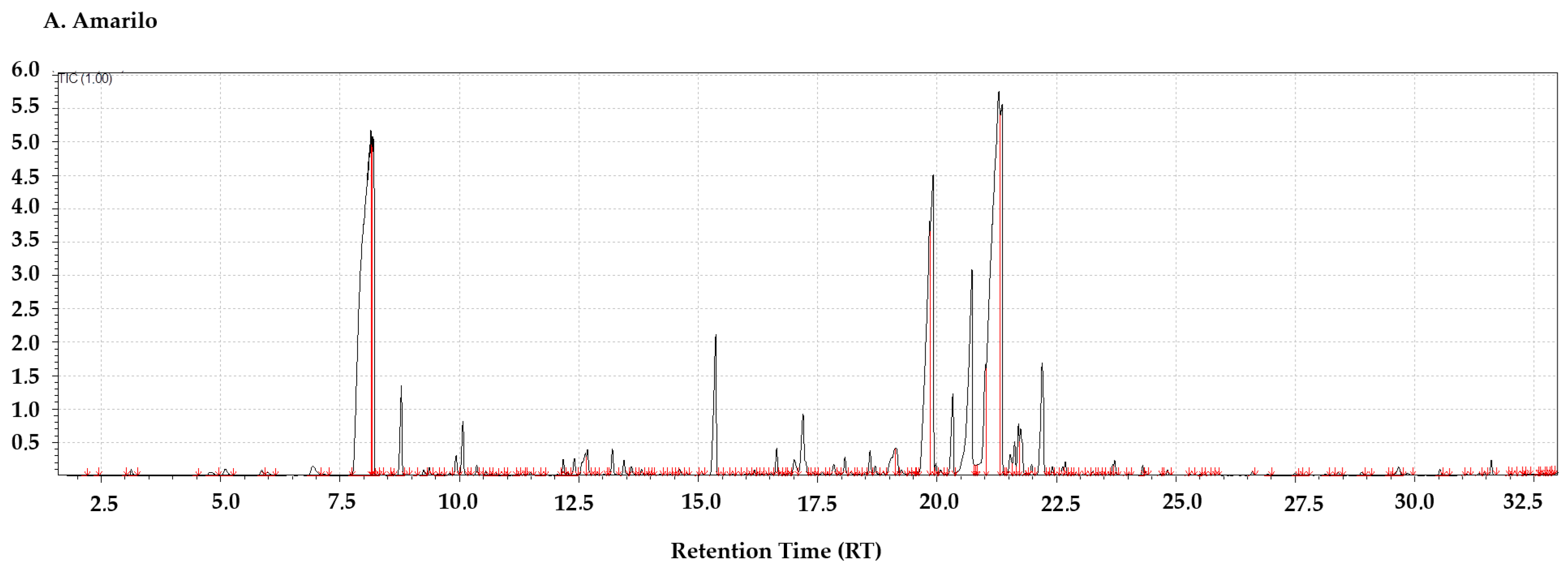
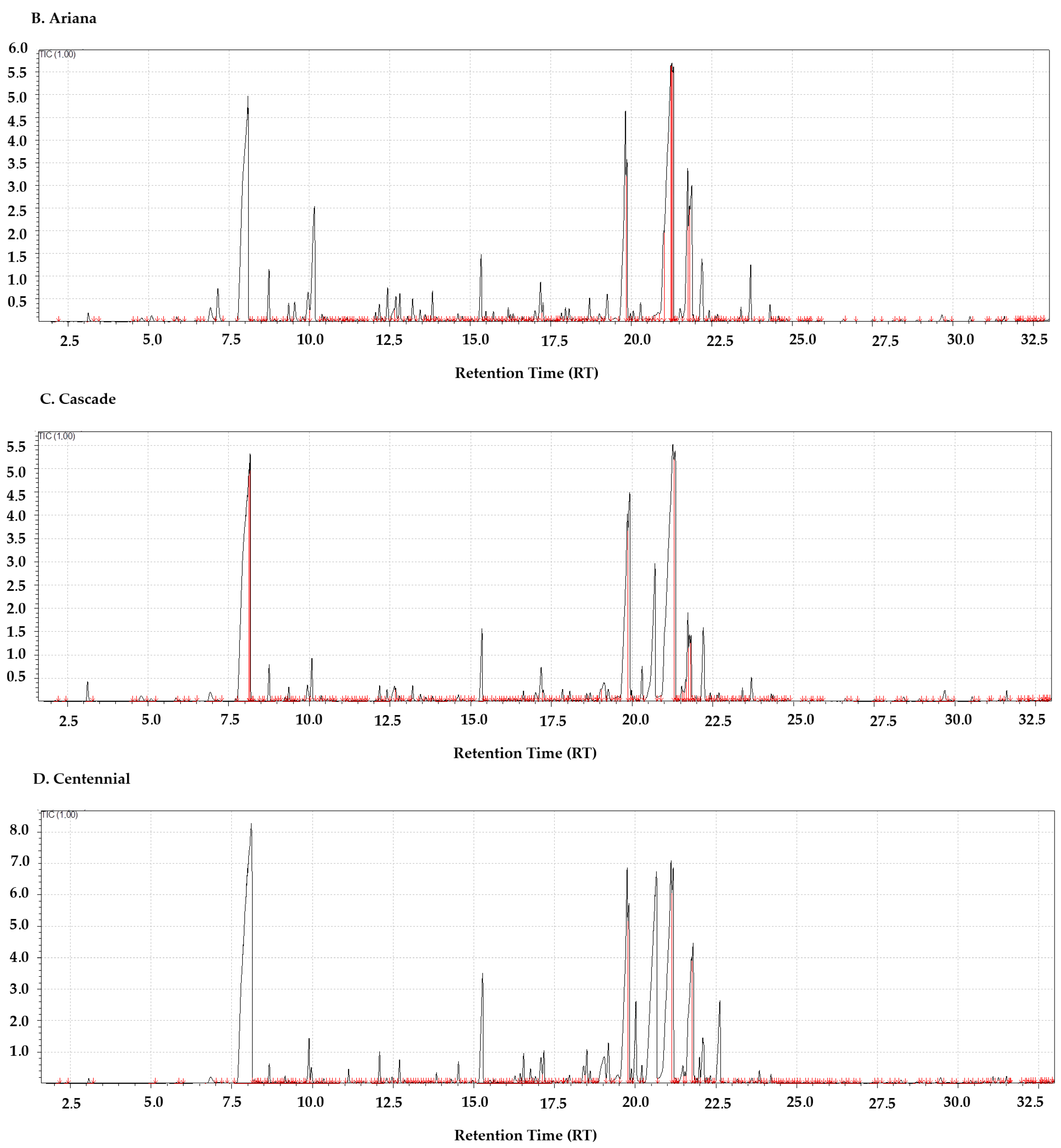
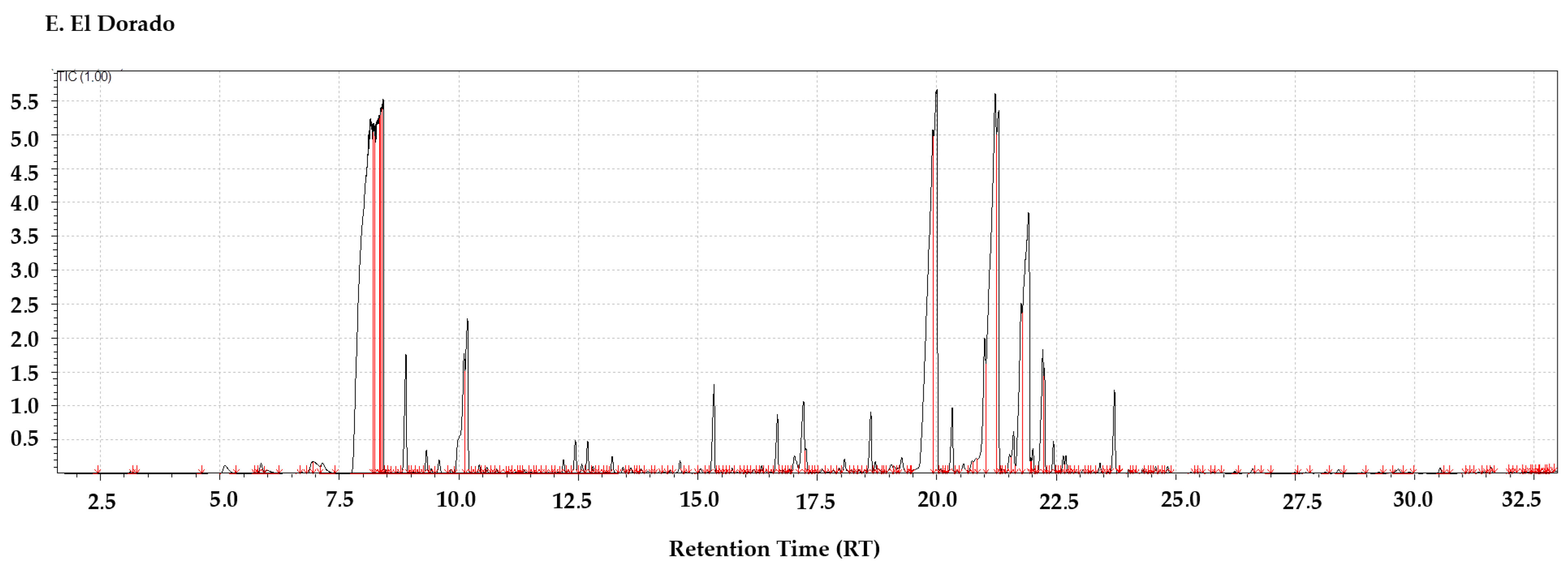
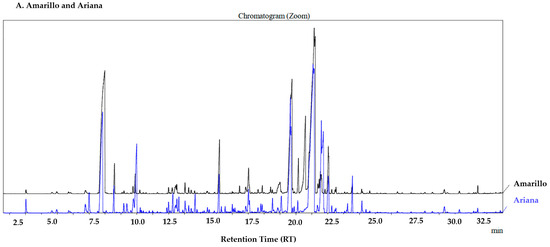
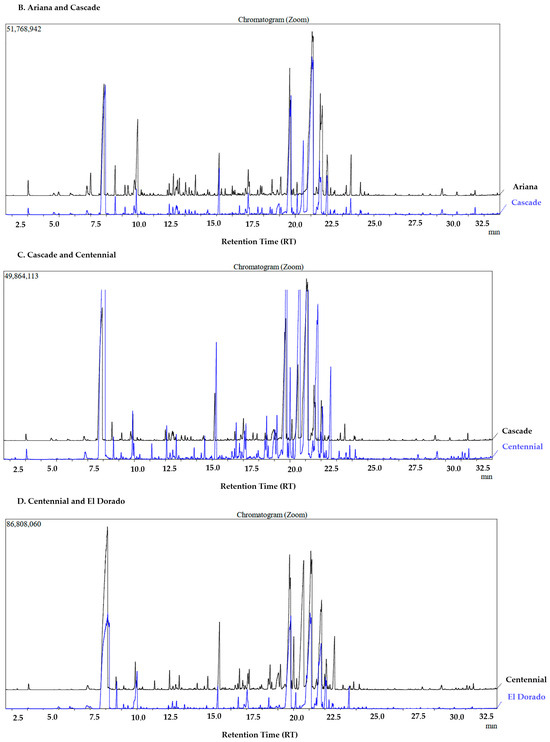
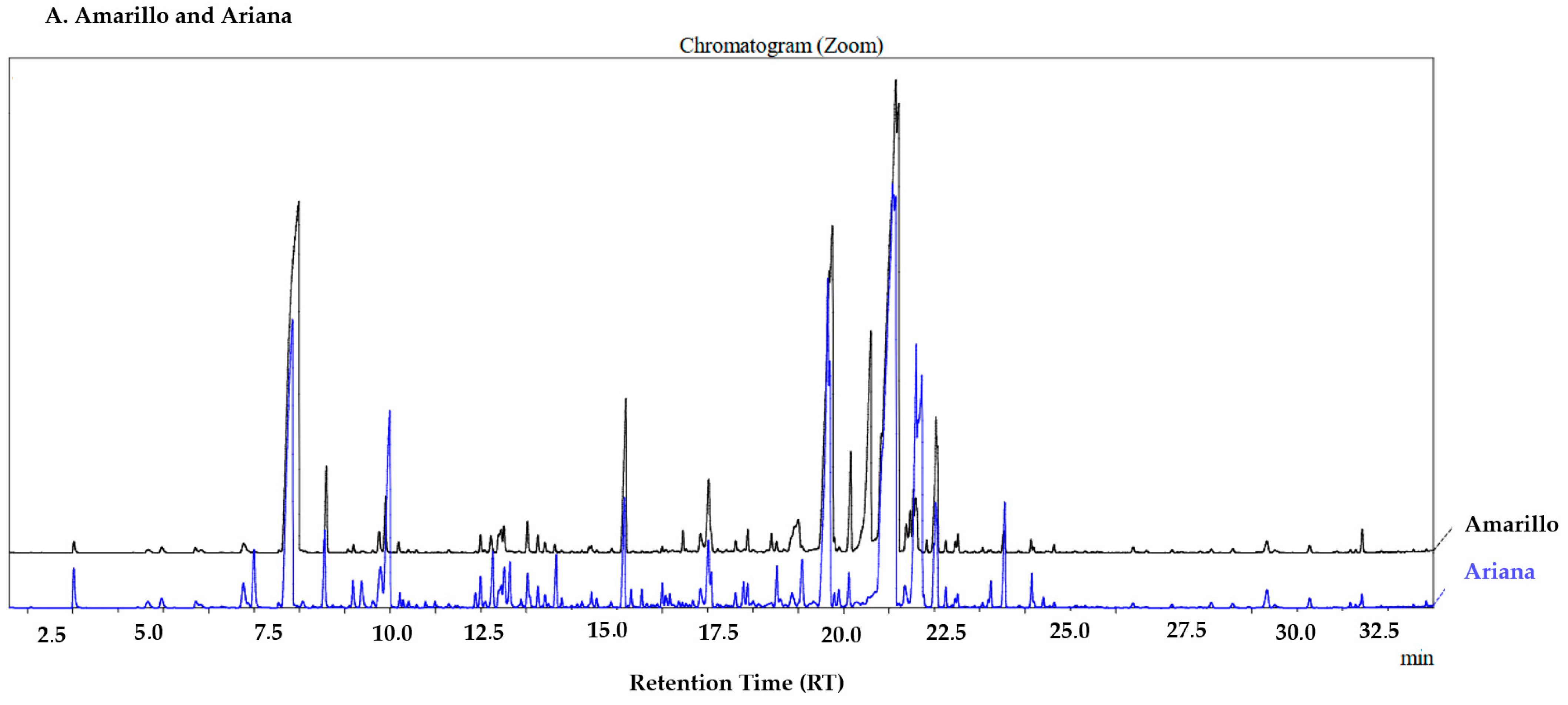
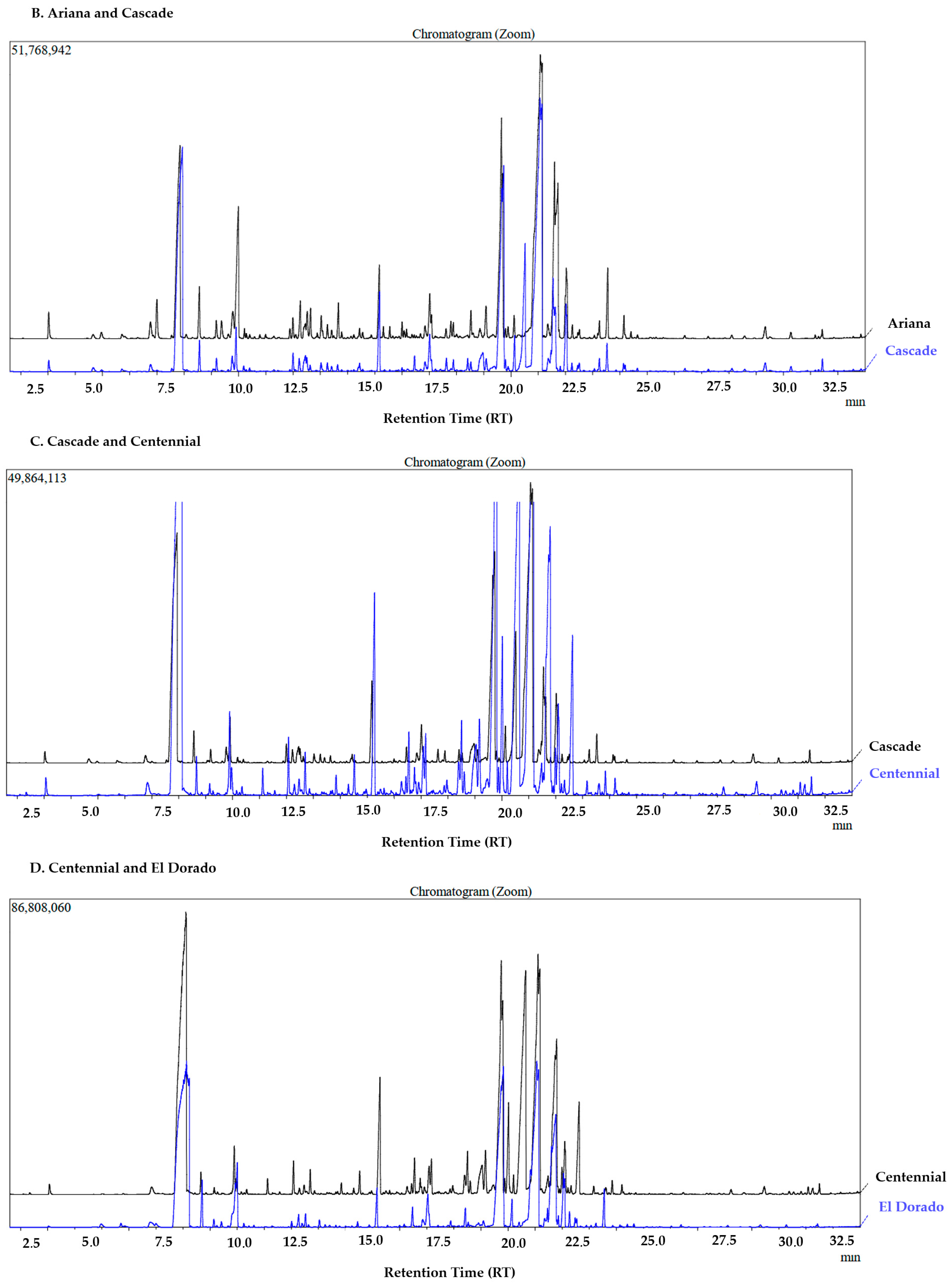
A classification model was developed specifically to reveal differences arising from the method of production. Chromatographic data, represented by GC–MS total ion current (TIC) profiles, were analyzed using PLS-DA to distinguish between hop varieties (Figure 1 and Figure 2).
Figure 1.
Chemical interpretation of the PLS-DA model. Samples are based on VIP scores and regression coefficients. The selected hop varieties were (A) Amarillo, (B) Ariana, (C) Cascade, (D) Centennial, and (E) El Dorado. The chromatogram regions significantly contribute to the PLS-DA model. Red indicates that the compound identity is more than 85%. The colors served as a contrast between blue and black to facilitate the visualization of the comparison between each hop.
Figure 2.
Comparison of Hop Varieties Based on the PLS-DA Model. The zoomed-in chromatogram illustrates the separation of compounds present in the samples of the selected hop varieties and comparison with (A) Amarillo and Ariana, (B) Ariana and Cascade, (C) Cascade and Centennial, (D) Centennial and El Dorado. The black and blue lines represent intensity curves associated with the different chemical profiles observed. The chromatogram regions showing prominent peaks, especially around 20 min, significantly contribute to the PLS-DA model based on variable importance scores (VIP) and regression coefficients, highlighting chemical differences among the analyzed hops.
To further assess the chemical distinctions among the beer groups studied, Variable Importance in Projection (VIP) scores were derived from the PLS-DA model. These scores quantify the influence of each variable within the model, with higher values indicating greater relevance. Variables with normalized VIP scores exceeding 1 are typically regarded as significant. By integrating PLS regression coefficients with the corresponding VIP scores, it is possible to pinpoint the compounds that are most critical for differentiating the sample groups, as well as interpret the direction and nature of the observed differences. This separation pattern was supported by the statistical performance of the model, with high goodness-of-fit and predictive ability (R2Y = 0.92, Q2 = 0.85; 200-run permutation test, p < 0.01), indicating that the discrimination among hop varieties is robust and that VIP-selected variables are reliable markers of varietal differences.
3.2. Aromatic Hop Profile
As shown in Table 2 and Table S1, the relative abundance of each volatile was expressed as the mean percentage contribution of its chromatographic peak area to the total ion current (Area %), along with the corresponding standard deviation. This semi-quantitative approach allows for direct comparison of the relative importance of each compound among the different hop varieties. A total of 312 volatile compounds were identified by HS-SPME/GC-MS across all hop samples (Table 2 and Table S1). These compounds encompassed several chemical classes, including alcohols, aldehydes, ketones, esters, monoterpenes, and sesquiterpenes. The overall number of volatiles detected per variety ranged from 136 in Ariana to 141 in Cascade, indicating differences in chemical complexity among the hops.
Table 2.
Main volatile compounds identified in Amarillo, Ariana, Cascade, Centennial, and El Dorado hop varieties by HS-SPME/GC-MS. Values are expressed as mean relative peak area (% of total ion current, Area %) ± standard deviation (SD). Odor and flavor descriptors are based on https://perflavory.com, accessed on 10 October 2025. ‘–’ indicates that the compound was not detected or was present below the reporting threshold.
Monoterpenes such as myrcene, linalool, and geraniol, as well as sesquiterpenes like humulene and caryophyllene, were among the most abundant constituents, consistent with previous reports for aroma hops [3,19,20]. However, the relative proportions of these key terpenes varied markedly between varieties. For example, Amarillo and El Dorado showed higher relative levels of fruity and floral monoterpenes (e.g., linalool, geraniol), whereas Cascade and Centennial displayed a more pronounced contribution from resinous and spicy sesquiterpenes (e.g., humulene, caryophyllene). Ariana exhibited an intermediate profile with notable contributions from both fruity monoterpenes and herbal/spicy sesquiterpenes.
These differences in volatile composition help explain the sensory descriptions commonly associated with these hops. Varieties enriched in floral and fruity monoterpenes tend to be linked to citrus, tropical fruit, and stone fruit notes, whereas those dominated by sesquiterpenes such as humulene and caryophyllene are more often described as herbal, woody, or resinous. Thus, the chemical data in Table 2 and Table S1 provide a detailed molecular basis for the distinct aromatic profiles of Amarillo, Ariana, Cascade, Centennial, and El Dorado
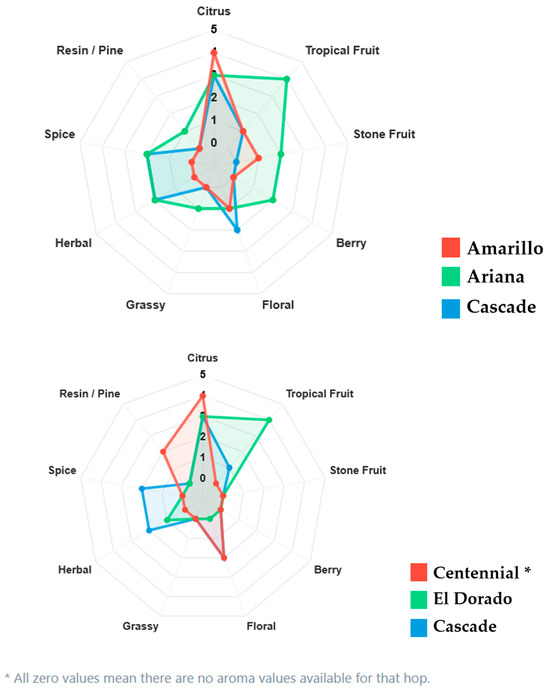
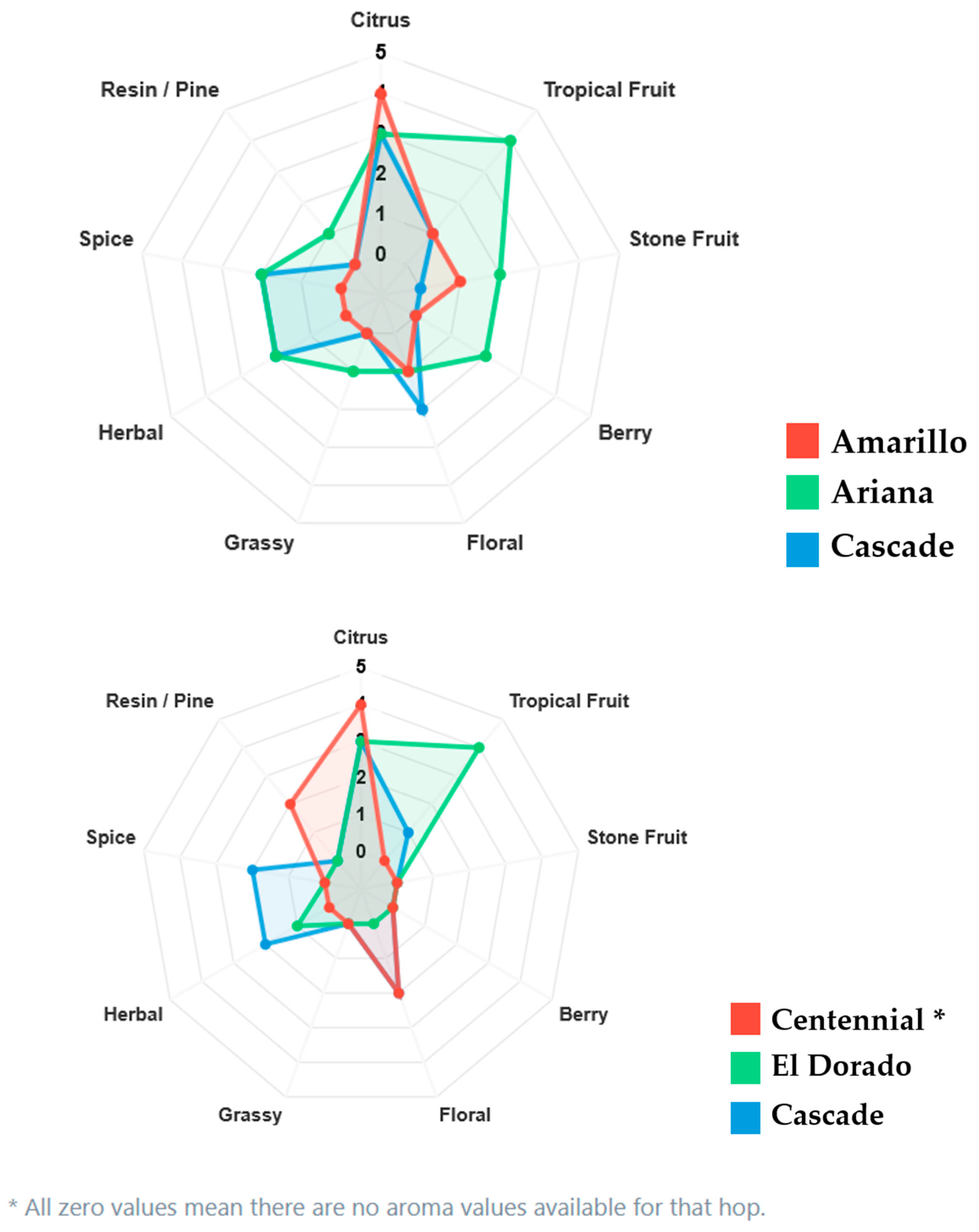
In addition to the findings by Lyu et al. [24], the study by Mozzon et al. [20] further highlights the chemical profiles of hop varieties cultivated in Central Italy, particularly emphasizing the high content of α- and β-acids and myrcene in Centennial, Brewer’s Gold, and other notable varieties. These compounds contribute significantly to the aromatic profiles and overall brewing quality of these hops (Figure 3). The recent study by Resende et al. [25] also emphasizes the complexity of hop metabolite profiles, identifying 137 compounds through comprehensive two-dimensional gas chromatography coupled with mass spectrometry (GC × GC–MS). This study demonstrates not only the advantages of enhanced detection but also reveals significant variations in the chemical composition among different hop varieties, such as higher concentrations of sesquiterpene hydrocarbons in Enigma and notable concentrations of monoterpene hydrocarbons in Zappa.
Figure 3.
Aromatic profiles according to the hop (Humulus lupulus) strain producers for the varieties used in this study grown and according to Beer Maverick (https://beermaverick.com/) (accessed on 8 August 2025). * The mentioned profile of Centennial refers to American cultivars. We do not have data on the profile of cultivars planted in Brazil, as were the samples used in the present study.
The study by Lyu et al. [24] finds that humulone is the most abundant phenolic compound in hop strobiles, with concentrations ranging from 50.44 to 193.25 µg/g. These compounds are important for the aromatic profile and antioxidant activity of hops, which can influence the sensory characteristics of the beers produced.
3.3. Amarillo: Fruity-Floral Complexity with Resinous Depth
Amarillo, an aroma hop from the United States, is noted for its floral, spicy, and tropical fruit characteristics, including citrus, orange, lemon, melon, apricot, peach, grapefruit, and dank. Chemically, its profile is dominated by (E)-myrcene (22.61%), responsible for spicy and slightly herbal notes, and γ-muurolene (24.74%), which contributes woody and resinous undertones. Geraniol (2.39%) enhances the sweet floral aroma, while (E,E,E)-humulene (5.24%) provides dry, woody, and mildly spicy balance. This composition gives Amarillo its characteristic blend of citrus freshness with resinous depth, confirmed by studies such as Cibaka et al. [26] and Kankolongo Cibaka et al. [27], which also highlighted its thiol derivatives (e.g., 3-sulfanyl-4-methylpentan-1-ol) contributing grapefruit-like flavors.
The study of Cibaka et al. [26] showed that among the compounds that enable discrimination, Amarillo was identified as being rich in monoterpenes, in addition to exhibiting unique aromatic characteristics that contribute to the flavor of the beer. The recent findings indicate that Amarillo also contains significant concentrations of 3-sulfanyl-4-methylpentan-1-ol, a compound contributing grapefruit-like flavors, at levels that surpass initial expectations based on its thiol content in hop. This aligns with the discovery by Kankolongo Cibaka et al. [27], which highlighted the presence of glutathione S-conjugates in Amarillo, suggesting that these precursors can further enhance its aromatic complexity.
3.4. Ariana: Resinous and Fruity with Herbal Nuances
Ariana, an aroma hop from Germany, offers citrus, tangerine, passion fruit, pineapple, jasmine, herbal notes, fruity, and gooseberry aromas. Its chemical profile features copa-3,8-diene (1.42%), delivering a deep resinous backbone, and undecan-2-one (8.00%), which provides a fruity-waxy character. (−)-trans-caryophyllene (5.71%) adds warm spiciness, and (E)-β-farnesene (5.96%) contributes herbal–green nuances. Together, these compounds make Ariana versatile for beers aiming for a balanced, fruity yet structured profile.
(E)-Myrca-1,3-diene and other terpenes are present, though less aggressively than in Amarillo. They add subtle herbal and mild earthy aromas, while superior esters and alcohols impart intense fruitiness (peach, grape, strawberry, red berries). Other compounds, like 2,2,4,6,6-Pentamethylheptane, give woody and softly sweet floral notes, with a delicately spicy, mentholated touch underneath.
3.5. Cascade: Citrus–Resinous and Bioactive Potential
Cascade, a dual-purpose hop from the United States, is characterized by grapefruit, floral, spicy, citrus, and pine attributes. Key compounds include (E)-3,7-dimethylocta-2,6-dien-1-yl acetate (4.77%), which imparts fresh floral and fruity notes, (E,E)-α-farnesene (5.08%) with herbal–green aromas, geraniol (2.39%) for sweet floral tones, and (1S-cis)-4,7-dimethyl-1-(propan-2-yl)decahydronaphthalene (2.47%) enhancing herbal depth.
Cascade is a hop variety with over 70% of its genome being repetitive, which implies complexity relative to plant genomes. Furthermore, genome analysis identified a homolog of cannabidiolic acid synthase (CBDAS) that is expressed in multiple tissues, which may have implications for the production of desirable metabolites [28]. Although the Cascade cultivar shows partial resistance to powdery mildew (Podosphaera macularis), recent studies indicate that this resistance can be overcome by virulent isolates of the pathogen, especially under supra-optimal temperature conditions. This factor makes the implementation of active management strategies essential to minimize crop damage. Data suggest that exposure of Cascade plants to elevated temperatures before or after inoculation may moderate the risk of powdery mildew development, making disease management a constant need in hop production [29].
The results of the studies conducted by Visin et al. [30] suggest that the Cascade hop, cultivated in Brazil, has potential as a valuable source of bioactive compounds, which could benefit its applications in the food and pharmaceutical industries. Cascade, along with other tested cultivars, exhibited qualitative similarities in their profiles but marked quantitative differences in specific compounds, highlighting its individuality in terms of acid and flavonoid content [30].
In the study conducted by Leto et al. [31], it was observed that the viability of the Cascade explants was influenced by the type of cytokinin used in the culture medium. Cultures with 6-(γ,γ-Dimethylallylamino)purine (2iP) and meta-topolin showed a higher viability rate (99.17% and 95.00%, respectively) compared to those cultured with kinetin. The differences in response to the cytokinins and in the production of bioactive compounds reinforce the potential of the Cascade cultivar as a valuable source of bioactive substances, with potential applications in the food and pharmaceutical industries [31].
The addition of Cascade hops to fermented beverages, particularly during the pre-fermentation phase, results in a significant reduction in the formation of free radicals in kombucha, as measured by electron spin resonance spectroscopy (ESR) [32]. This has contributed to enhanced DPPH antiradical activity and increased levels of α-acids. Furthermore, it has been demonstrated that hop fortification not only improves the sensory and antioxidant characteristics of kombucha but may also offer additional health benefits, such as a reduced risk of diseases associated with oxidative stress [32,33].
The study by Monacci et al. [34] discusses the influence of different drying techniques and the use of the dry-hopping method with Cascade hops on the chemical, aromatic, and sensory quality of beer. The dry-hopping technique resulted in a significant increase in the bitterness index and a reduction in the titratable acidity of the beer. The addition of hops during the fermentation or maturation phases enhanced the perception of bitterness and aroma. The presence of volatile compounds, such as isoamyl acetate and esters, was noted, indicating that Cascade hops, particularly through the dry-hopping technique, can enrich the sensory complexity of the beer [34].
3.6. Centennial: The “Super Cascade” with Strong Resinous Character
Centennial, also a dual-purpose hop from the United States, displays pine, citrus, floral, grapefruit, and tangerine notes. Its chemical composition highlights γ-muurolene (20.59%), (E)-β-farnesene (5.96%), caryophyllene (5.71%), and humulene (4.54%), forming an intense herbal-resinous profile with citrus layers. Centennial, a dual-purpose hop from the United States, features pine, citrus, floral, grapefruit, and tangerine notes, as corroborated by Mozzon et al. [20], who emphasized its role in producing high-quality bitterness and aroma.
Centennial boasts (E)-Myrca-1,3-diene at levels comparable to Amarillo, leading to strong pine, resin, and spicy herbal notes. Monoterpenes and sesquiterpenes enhance its pronounced herbal-citrus character, with aldehydes and green alcohols layering in hints of grass, lemon zest, and Sicilian lemon, further validating the findings of Mozzon et al. [20] regarding its brewing quality. It is important to emphasize here that the Centennial samples in this study were obtained from Brazilian cultivars of this variety. Evidence shows that the notable differences in aromatic profiles highlight how terroir affects the production of volatile compounds in hops. Hops cultivated in Brazil may offer unique characteristics, enhancing their utilization in the beer industry, particularly in styles that value distinctive aromatic profiles [3].
3.7. El Dorado: Intensely Fruity with Tropical Dominance
El Dorado, another dual-purpose hop from the United States, is distinguished by tropical fruit flavors such as pear, watermelon, candy, and stone fruit. It exhibits high concentrations of (E)-myrcene (13.93%), (E)-3,7-dimethylocta-2,6-dien-1-yl butanoate (1.36%), geraniol (1.62%), and γ-muurolene (10.47%), creating a vivid fruity-tropical profile. Esters such as 2-Methylbutyl acetate/propanoate further enhance its juicy aroma (pineapple, mango, lychee), while green notes (hexanal, (E)-pent-2-enal) add freshness. Compared to other varieties, El Dorado is less mentholated or piney and instead lingers as sweet, juicy, and candy-like.
El Dorado stands out for its extremely high ester concentration (e.g., 2-Methylbutyl acetate/propanoate), resulting in a vivid, tropical fruit profile (pineapple, pear, mango, melon, green apple, lychee). Terpenes supply a touch of herbal and citrus, but fruitiness always dominates. It’s less mentholated or piney than the other hops and instead lingers as sweet and juicy on the nose.
Although the present study focuses on the brewing relevance of hop volatile profiles, it is worth noting that several of the identified terpenes (e.g., geraniol, γ-muurolene, undecan-2-one, (E)-β-farnesene, and (E,E)-α-farnesene) have been reported to display diverse biological activities and applications in pharmaceutical, food, and cosmetic contexts [35,36,37,38,39,40,41,42,43,44,45,46], aspects that lie beyond the scope of the current work.
3.8. Principal Component Analysis (PCA) of Hop Varieties
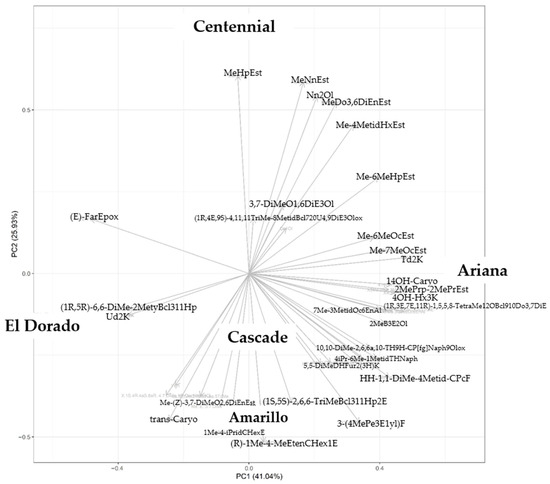
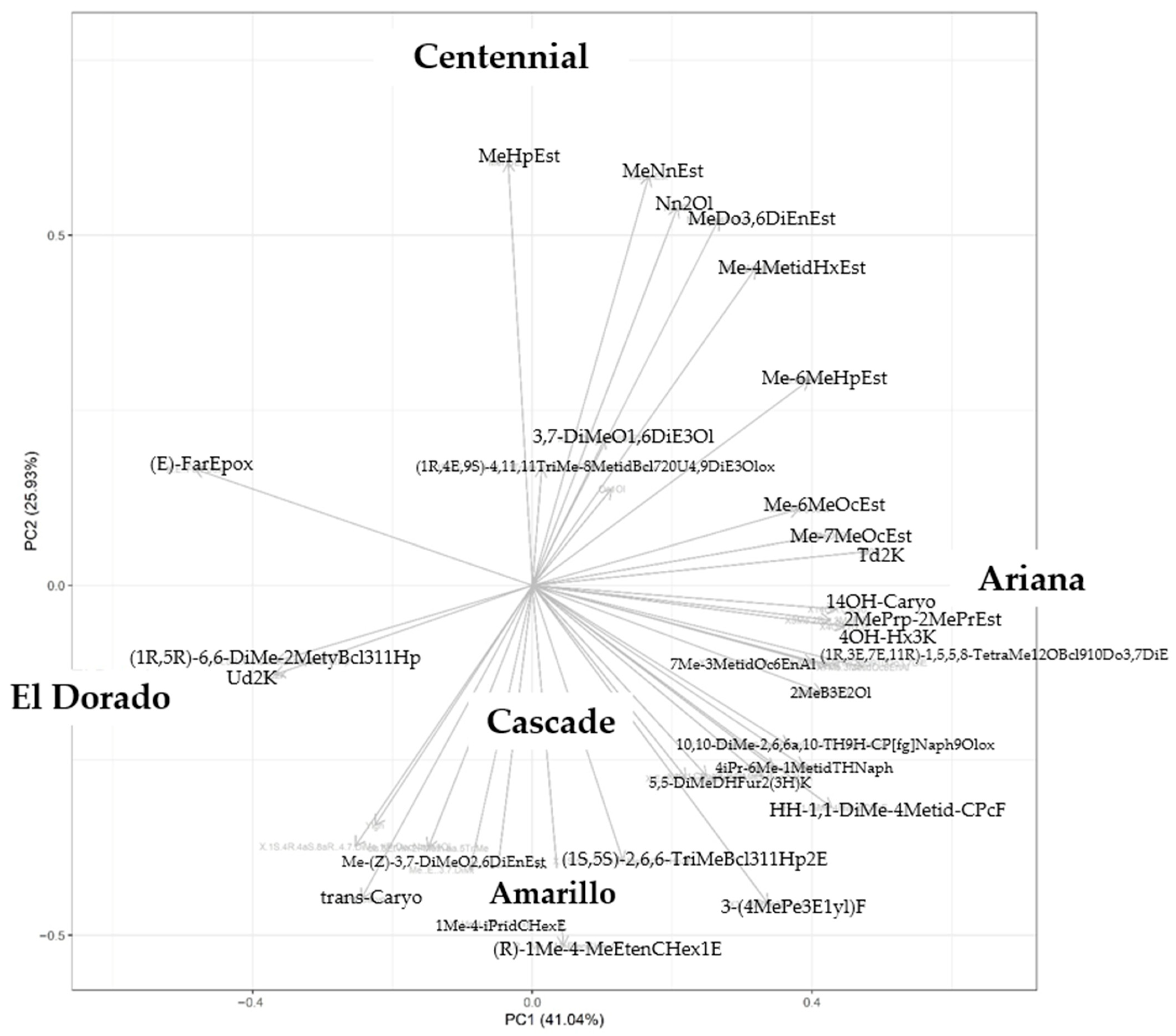
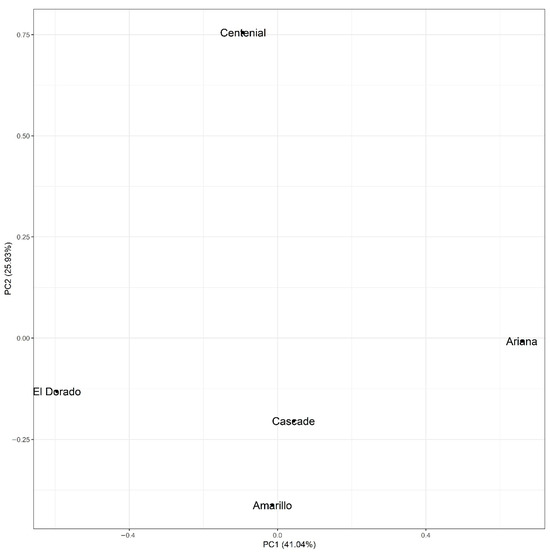
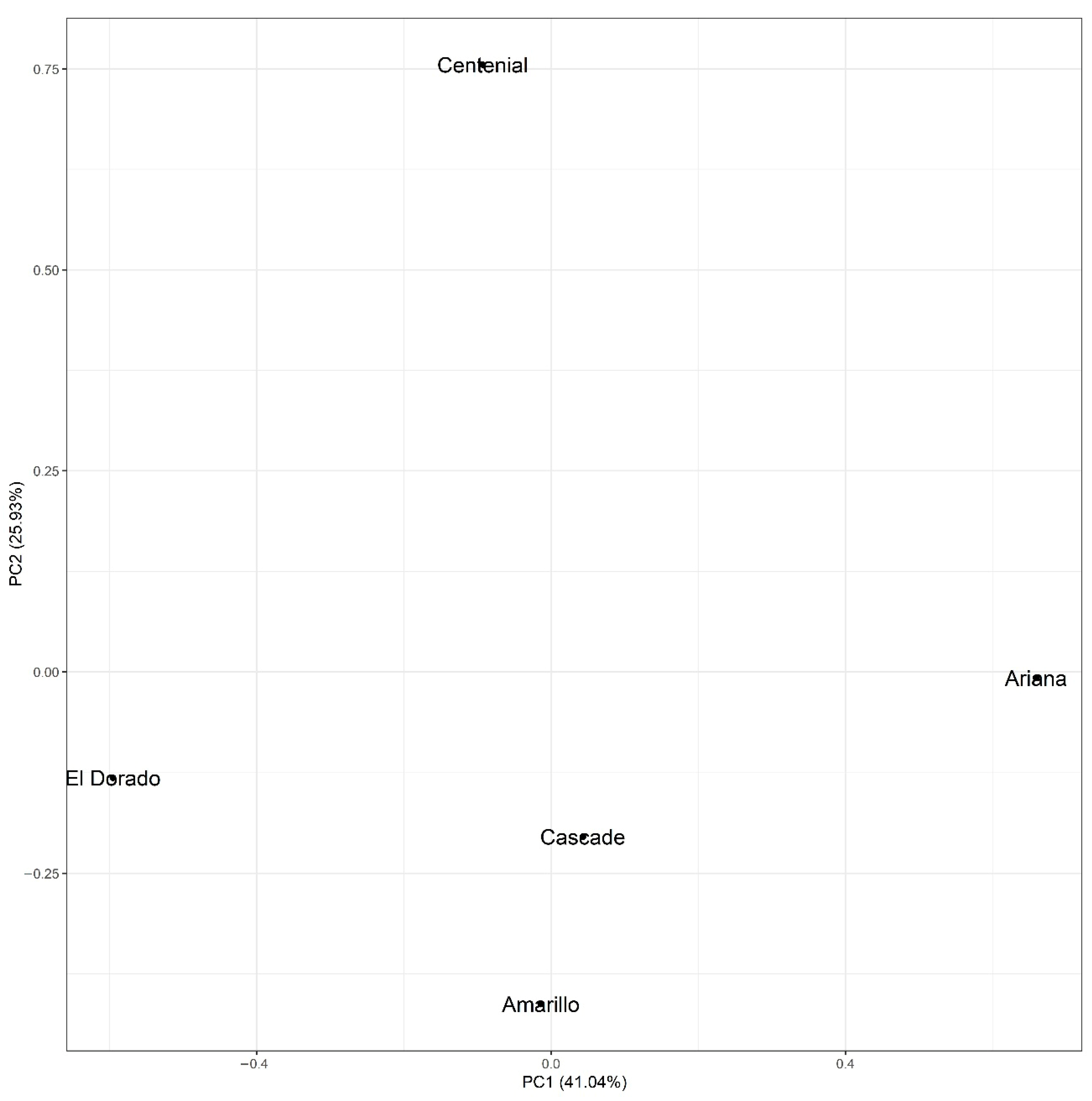
The scatter plots generated from the Principal Component Analysis (PCA) provide insightful visualizations of the relationships among different hop varieties: El Dorado, Centennial, Ariana, Cascade, and Amarillo (Figure 4 and Figure 5). These varieties were analyzed based on their chemical profiles, allowing for a deeper understanding of their varying aromatic and flavor characteristics.
Figure 4.
Scatter plot showing the Principal Component Analysis (PCA) of hop varieties: El Dorado, Centennial, Ariana, Cascade, and Amarillo. The X-axis represents the first principal component (PC1), which accounts for 41.04% of the variance, while the Y-axis represents the second principal component (PC2), which accounts for 25.93% of the variance. The arrows (vectors) indicate the direction and magnitude of various chemical compounds associated with the varieties, suggesting their relationships and influences on aromatic characteristics. The arrangement of points in the plot illustrates the similarities and differences among the hop varieties, highlighting how their chemical compositions impact their sensory profiles. Methyl heptanoate → MeHpEst; Methyl nonanoate → MeNnEst; Nonan-2-ol → Nn2Ol; Methyl dodeca-3,6-dienoate → MeDo3,6DiEnEst; Methyl 4-methylenehexanoate → Me-4MetidHxEst; Methyl 6-methylheptanoate → Me-6MeHpEst; 3,7-Dimethylocta-1,6-dien-3-ol → 3,7-DiMeO1,6DiE3Ol; Methyl 6-methyloctanoate → Me-6MeOcEst; Methyl 7-methyloctanoate → Me-7MeOcEst; Tridecan-2-one → Td2K; 14-Hydroxycaryophyllene → 14OH-Caryo; 2-Methylpropyl 2-methylpropanoate → 2MePrp-2MePrEst; 4-Hydroxyhexan-3-one → 4OH-Hx3K; 7-Methyl-3-methyleneoct-6-enal → 7Me-3MetidOc6EnAl; 2-Methylbut-3-en-2-ol → 2MeB3E2Ol; 4-Isopropyl-6-methyl-1-methylenetetrahydronaphthalene → 4iPr-6Me-1MetidTHNaph; 5,5-Dimethyldihydrofuran-2(3H)-one → 5,5-DiMeDHFur2(3H)K; Hexahydro-1,1-dimethyl-4-methylene-4H-cyclopenta[c]furan → HH-1,1-DiMe-4Metid-CPcF; 3-[4-Methylpent-3-en-1-yl]furan → 3-(4MePe3E1yl)F; (1S,5S)-2,6,6-Trimethylbicyclo[3.1.1]hept-2-ene → (1S,5S)-2,6,6-TriMeBcl311Hp2E; (R)-1-Methyl-4-(1-methylethenyl)cyclohex-1-ene → (R)-1Me-4-MeEtenCHex1E; 1-Methyl-4-(propan-2-ylidene)cyclohexene → 1Me-4-iPridCHexE; Methyl (Z)-3,7-dimethylocta-2,6-dienoate → Me-(Z)-3,7-DiMeO2,6DiEnEst; (−)-trans-Caryophyllene ((1R,4E,9S)-4,11,11-TriMe-8MetidBcl720U4,9DiE) → trans-Caryo; Undecan-2-one → Ud2K; (1R,5R)-6,6-Dimethyl-2-methylenebicyclo[3.1.1]heptane → (1R,5R)-6,6-DiMe-2MetyBcl311Hp; (E)-Farnesene epoxide → (E)-FarEpox; (1R,4E,9S)-4,11,11-Trimethyl-8-methylenebicyclo[7.2.0]undeca-4,9-dien-3-ol oxide → (1R,4E,9S)-4,11,11TriMe-8MetidBcl720U4,9DiE3Olox; (1R,3E,7E,11R)-1,5,5,8-Tetramethyl-12-oxabicyclo[9.1.0]dodeca-3,7-diene → (1R,3E,7E,11R)-1,5,5,8-TetraMe12OBcl910Do3,7DiE; 10,10-dimethyl-2,6,6a,10-tetrahydro-9H-cyclopropa[fg]naphthalene-9-ol oxide → 10,10-DiMe-2,6,6a,10-TH9H-CP[fg]Naph9Olox.
Figure 5.
Scatter plot representing the Principal Component Analysis (PCA) of hop varieties: El Dorado, Centennial, Ariana, Cascade, and Amarillo. The X-axis denotes the first principal component (PC1), which accounts for 41.04% of the variance, while the Y-axis denotes the second principal component (PC2), which accounts for 25.93% of the variance. This plot provides a clear visualization of the distribution of hop varieties based solely on their aromatic profiles without the influence of specific chemical vectors. The arrangement of points illustrates the relationships and distinctions among the varieties, highlighting their unique sensory characteristics.
The El Dorado cultivar, identified in the study by Lyu et al. [24] as exhibiting significant antioxidant activity with a high concentration of phenolic compounds such as humulone, was noted for its intense fruity notes, including mango and watermelon, highlighting its distinctive position in the PCA plot.
In light of the study by Mozzon et al. [20], it becomes clear that Centennial and other varieties cultivated in Central Italy demonstrate consistent flavor profiles and chemical properties that further elucidate their application in brewing. The findings indicate the significance of regional variations in chemical composition, reinforcing the necessity for brewers to consider local hop cultivation when choosing ingredients for specific beer styles.
The first two principal components explained 67.0% of the total variance in the volatile composition of the hop samples (PC1 = 41.04%, PC2 = 25.93%; Figure 4 and Figure 5). PC1 mainly separated samples according to the relative contribution of fruity/floral esters and monoterpenoid alcohols versus more resinous sesquiterpenoids. Positive loadings on PC1 were associated with several esters and oxygenated terpenes, such as methyl 4-methylenehexanoate (Me-4MetidHxEst), methyl 6-methylheptanoate (Me-6MeHpEst), methyl 6- and 7-methyloctanoate (Me-6MeOcEst, Me-7MeOcEst), and 3,7-dimethylocta-1,6-dien-3-ol (3,7-DiMeO1,6DiE3Ol), which are typically linked to fruity and floral/citrus notes. In contrast, negative loadings on PC1 were driven mainly by sesquiterpenes and related hydrocarbons, including (E)-farnesene epoxide ((E)-FarEpox), (1R,5R)-6,6-dimethyl-2-methylenebicyclo[3.1.1]heptane, γ-muurolene and other woody/spicy terpenoids, reflecting more resinous and herbal characters.
PC2 captured additional variability related to differences in medium- and long-chain esters, ketones and alcohols. High positive loadings on PC2 were observed for compounds such as methyl heptanoate (MeHpEst), methyl nonanoate (MeNnEst), nonan-2-ol (Nn2Ol) and other waxy/fruity volatiles, whereas negative scores on PC2 were more closely associated with higher contributions of certain sesquiterpene derivatives and oxygenated terpenoids, including 10,10-dimethyl-2,6,6a,10-tetrahydro-9H-cyclopropa[fg]naphthalene-9-ol oxide and related structures.
In the scores plot (Figure 5), Ariana is clearly positioned on the positive side of PC1, indicating a volatile profile enriched in fruity and floral components. This is consistent with its higher relative levels of several esters (e.g., 2-methylpropyl 2-methylpropanoate, 2-methylbutyl propanoate, methyl 4-methylenehexanoate) and oxygenated monoterpenes, which collectively support the fruity–floral descriptors typically attributed to this variety. Centennial, in turn, appears at positive values of PC2 and slightly negative PC1, reflecting a greater influence of medium-chain esters and ketones such as methyl heptanoate, methyl nonanoate and nonan-2-one, and a comparatively lower contribution from the more intensely fruity monoterpenes that dominate Ariana.
Amarillo and Cascade cluster in the lower half of the plot with negative PC2 scores, and Amarillo also exhibits slightly negative PC1 values. This region of the biplot is associated with higher relative contributions from sesquiterpenes and terpene-derived compounds such as (-)-trans-caryophyllene (trans-Caryo), humulene-type structures and several bicyclic/azulene-like sesquiterpenoids, which are linked to herbal, spicy and woody notes. These patterns are in line with the more resinous and citrus–resin character often reported for Amarillo and Cascade. El Dorado is positioned on the negative side of PC1 and close to the origin of PC2, indicating a profile intermediate between the richly fruity Ariana and the more sesquiterpene-dominated Amarillo/Cascade cluster, but still influenced by farnesene-type and other sesquiterpenoid compounds.
Conclusively, this analysis illustrates that PCA serves as an effective tool in visualizing and understanding the dynamics among hop varieties. The identification of distinct clusters and the importance of specific chemical compounds can inform future brews, encouraging innovations in hop utilization and beer production. Future studies incorporating a broader array of hop varieties and additional chemical analyses, as suggested by the findings of both Lyu et al. [24] and Mozzon et al. [20], can further elucidate the intricate flavor and aroma profiles that define the rich diversity of hops in brewing.
4. Conclusions
In conclusion, this study highlights the significant chemical diversity among various hop strains and their potential implications for the brewing industry. Through the application of PLS-DA and PCA, the analyses reveal distinct aromatic profiles and critical compounds that differentiate each hop variety. Notably, the presence of specific terpenes, such as geraniol and γ-muurolene, demonstrates promising pharmacological attributes, linking the natural properties of hops to potential therapeutic applications. The findings underscore the importance of regional varieties and cultivation methods, reinforcing the idea that terroir plays a crucial role in the aromatic characteristics of hops. By providing insights into the chemical compositions and their influence on flavor, this research paves the way for innovative brewing practices and the development of unique beer styles. Future investigations into a wider range of hop varieties and their interactions will further enhance our understanding of this essential ingredient in brewing, driving advancements in both flavor profile development and health-related applications.
Supplementary Materials
The following supporting information can be downloaded at: https://www.mdpi.com/article/10.3390/compounds6010004/s1, Table S1: Volatile compounds identified in Amarillo, Ariana, Cascade, Centennial, and El Dorado hop varieties by HS SPME/GC MS. Values are expressed as mean relative peak area (% of total ion current, Area %) ± standard deviation (SD, n = X). Odor and flavor descriptors are based on [source/database]. ‘–’ indicates that the compound was not detected or was present below the reporting threshold.
Author Contributions
Conceptualization, M.E.H.; methodology, M.E.H. and O.B.; formal analysis, M.E.H.; investigation, M.E.H. and O.B.; data curation, M.E.H., O.B., G.D. and M.M.B.; writing—original draft preparation, M.E.H.; writing—review and editing, M.E.H., O.B., G.D., M.M.B., M.F. and C.A.d.V.L.R.C.; supervision, M.F. and C.A.d.V.L.R.C. All authors have read and agreed to the published version of the manuscript.
Funding
This research was funded by Fundação de Amparo à Pesquisa do Estado de São Paulo (FAPESP) (Project #2013/07914-8 and fellowships #2019/02583-0 and #2021/08621-0).
Data Availability Statement
The original contributions presented in this study are included in the article/Supplementary Material. Further inquiries can be directed to the corresponding author.
Acknowledgments
We would like to thank Fundação de Amparo à Pesquisa do Estado de São Paulo (FAPESP), Santa Catarina State University and University of São Paulo for the support.
Conflicts of Interest
The authors declare no conflicts of interest. The funders had no role in the design of the study; in the collection, analyses, or interpretation of data; in the writing of the manuscript; or in the decision to publish the results.
References
- Przybyś, M.; Skomra, U. Hops as a source of biologically active compounds. Pol. J. Agron. 2020, 43, 83–102. [Google Scholar] [CrossRef]
- Kowalska, G.; Bouchentouf, S.; Kowalski, R.; Wyrostek, J.; Pankiewicz, U.; Mazurek, A.; Sujka, M.; Włodarczyk-Stasiak, M. The hop cones (Humulus lupulus L.): Chemical composition, antioxidant properties and molecular docking simulations. J. Herb. Med. 2022, 33, 100566. [Google Scholar] [CrossRef] [Scilit]
- Herkenhoff, M.E.; Brödel, O.; Frohme, M. Hops across continents: Exploring how terroir transforms the aromatic profiles of five hop (Humulus lupulus) varieties grown in their countries of origin and in Brazil. Plants 2024, 13, 2675. [Google Scholar] [CrossRef] [Scilit]
- Takoi, K.; Tokita, K.; Usami, Y.; Matsumoto, I.; Nakayama, Y.-Y.; Takoi, K.; Tokita, K.; Sanekata, A.; Usami, Y.; Itoga, Y.; et al. Varietal Difference of Hop-Derived Flavour Compounds in Late-Hopped/Dry-Hopped Beers. Brew. Sci. 2016, 69, 1–7. Available online: https://www.brewingscience.de/ (accessed on 19 November 2025).
- Kishimoto, T.; Wanikawa, A.; Kono, K.; Shibata, K. Comparison of the odor-active compounds in unhopped beer and beers hopped with different hop varieties. J. Agric. Food Chem. 2006, 54, 8855–8861. [Google Scholar] [CrossRef] [Scilit] [PubMed]
- Dias, G.S.; Gallon, M.E.; Gobbo-Neto, L. Mapping Metabolomic Relationships of Hop Cultivars in an Ancestral Lineage Context. ACS Omega 2025, 10, 47281–47291. [Google Scholar] [CrossRef] [Scilit]
- Padgitt-Cobb, L.K.; Pitra, N.J.; Matthews, P.D.; Henning, J.A.; Hendrix, D.A. An improved assembly of the “Cascade” hop (Humulus lupulus) genome uncovers signatures of molecular evolution and refines time of divergence estimates for the Cannabaceae family. Hortic. Res. 2022, 10, uhac281. [Google Scholar] [CrossRef] [Scilit]
- Almaguer, C.; Schönberger, C.; Gastl, M.; Arendt, E.K.; Becker, T. Humulus lupulus—A story that begs to be told: A review. J. Inst. Brew. 2014, 120, 289–314. [Google Scholar] [CrossRef] [Scilit]
- Tyśkiewicz, K.; Gieysztor, R.; Konkol, M.; Szałas, J.; Rój, E. Essential oil from Humulus lupulus scCO2 extract by hydrodistillation and microwave-assisted hydrodistillation. Molecules 2018, 23, 2866. [Google Scholar] [CrossRef] [Scilit]
- Miranda, C.L.; Stevens, J.F.; Helmrich, A.; Henderson, M.C.; Rodriguez, R.J.; Yang, Y.H.; Deinzer, M.L.; Barnes, D.W. Antiproliferative and cytotoxic effects of prenylated flavonoids from hops (Humulus lupulus) in human cancer cell lines. Food Chem. Toxicol. 1999, 37, 271–285. [Google Scholar] [CrossRef] [Scilit]
- Franco, L.; Sánchez, C.; Bravo, R.; Rodríguez, A.B.; Barriga, C.; Romero, E. The sedative effect of non-alcoholic beer in healthy female nurses. PLoS ONE 2012, 7, e37290. [Google Scholar] [CrossRef] [Scilit]
- Stevens, J.F.; Page, J.E. Xanthohumol and related prenylflavonoids from hops and beer: To your good health! Phytochemistry 2004, 65, 1317–1330. [Google Scholar] [CrossRef] [Scilit]
- Lela, L.; Carlucci, V.; Kioussi, C.; Choi, J.; Stevens, J.F.; Milella, L.; Russo, D. Humulus lupulus L.: Evaluation of phytochemical profile and activation of bitter taste receptors to regulate appetite and satiety in intestinal secretin tumor cell line (STC-1 cells). Mol. Nutr. Food Res. 2024, 68, e2400559. [Google Scholar] [CrossRef] [Scilit] [PubMed]
- Hartsel, J.A.; Eades, J.; Hickory, B.; Makriyannis, A. Cannabis sativa and hemp. In Nutraceuticals, 2nd ed.; Elsevier: Amsterdam, The Netherlands, 2016. [Google Scholar]
- Rufino, A.T.; Ribeiro, M.; Sousa, C.; Judas, F.; Salgueiro, L.; Cavaleiro, C.; Mendes, A.F. Evaluation of the anti-inflammatory, anti-catabolic and pro-anabolic effects of E.-caryophyllene, myrcene and limonene in a cell model of osteoarthritis. Eur. J. Pharmacol. 2015, 750, 141–150. [Google Scholar] [CrossRef] [Scilit]
- Rettberg, N.; Biendl, M.; Garbe, L.A. Hop aroma and hoppy beer flavor: Chemical backgrounds and analytical tools—A review. J. Am. Soc. Brew. Chem. 2018, 76, 1–20. [Google Scholar] [CrossRef] [Scilit]
- Peña, R.M.; Barciela, J.; Herrero, C.; García-Martín, S. Headspace solid-phase microextraction gas chromatography-mass spectrometry analysis of volatiles in orujo spirits from a defined geographical origin. J. Agric. Food Chem. 2008, 56, 2788–2794. [Google Scholar] [CrossRef] [Scilit] [PubMed]
- Babič, K.; Strojnik, L.; Ćirić, A.; Ogrinc, N. Optimization and validation of an HS-SPME/GC-MS method for determining volatile organic compounds in dry-cured ham. Front. Nutr. 2024, 11, 1342417. [Google Scholar] [CrossRef] [Scilit] [PubMed]
- Su, X.; Yin, Y. Aroma characterization of regional Cascade and Chinook hops (Humulus lupulus L.). Food Chem. 2021, 364, 130410. [Google Scholar] [CrossRef] [Scilit] [PubMed]
- Mozzon, M.; Foligni, R.; Mannozzi, C. Brewing quality of hop varieties cultivated in central Italy based on multivolatile fingerprinting and bitter acid content. Foods 2020, 9, 541. [Google Scholar] [CrossRef] [Scilit]
- Thévenot, E.A.; Roux, A.; Xu, Y.; Ezan, E.; Junot, C. Analysis of the Human Adult Urinary Metabolome Variations with Age, Body Mass Index, and Gender by Implementing a Comprehensive Workflow for Univariate and OPLS Statistical Analyses. J. Proteome Res. 2015, 14, 3322–3335. [Google Scholar] [CrossRef] [Scilit]
- Jombart, T. adegenet: A R package for the multivariate analysis of genetic markers. Bioinformatics 2008, 24, 1403–1405. [Google Scholar] [CrossRef] [Scilit]
- Wickham, H. Ggplot2: Elegant Graphics for Data Analysis, 2nd ed.; Springer: New York, NY, USA, 2009. [Google Scholar]
- Lyu, J.I.; Ryu, J.; Seo, K.S.; Kang, K.Y.; Park, S.H.; Ha, T.H.; Ahn, J.W.; Kang, S.Y. Comparative study on phenolic compounds and antioxidant activities of hop (Humulus lupulus L.) strobile extracts. Plants 2022, 11, 135. [Google Scholar] [CrossRef] [Scilit]
- Resende, G.A.P.; Amaral, M.S.S.; Botelho, B.G.; Marriott, P.J. Comprehensive two-dimensional gas chromatography–mass spectrometry as a tool for the untargeted study of hop and their metabolites. Metabolites 2024, 14, 237. [Google Scholar] [CrossRef] [Scilit]
- Cibaka, M.L.; Gros, J.; Nizet, S.; Collin, S. Quantitation of selected terpenoids and mercaptans in the dual-purpose hop varieties Amarillo, Citra, Hallertau Blanc, Mosaic, and Sorachi Ace. J. Agric. Food Chem. 2015, 63, 3022–3030. [Google Scholar] [CrossRef] [Scilit] [PubMed]
- Kankolongo Cibaka, M.L.; Decourrière, L.; Lorenzo-Alonso, C.J.; Bodart, E.; Robiette, R.; Collin, S. 3-Sulfanyl-4-methylpentan-1-ol in Dry-Hopped Beers: First Evidence of Glutathione S-Conjugates in Hop (Humulus lupulus L.). J. Agric. Food Chem. 2016, 64, 8572–8582. [Google Scholar] [CrossRef] [Scilit] [PubMed]
- Padgitt-Cobb, L.K.; Kingan, S.B.; Wells, J.; Elser, J.; Kronmiller, B.; Moore, D.; Concepcion, G.; Peluso, P.; Rank, D.; Jaiswal, P.; et al. A draft phased assembly of the diploid Cascade hop (Humulus lupulus) genome. Plant Genome 2021, 14, e20072. [Google Scholar] [CrossRef] [Scilit] [PubMed]
- Gent, D.H.; Claassen, B.J.; Wiseman, M.S.; Wolfenbarger, S.N. Temperature influences on powdery mildew susceptibility and development in the hop cultivar Cascade. Plant Dis. 2022, 106, 1681–1689. [Google Scholar] [CrossRef] [Scilit] [PubMed]
- Visin, Y.L.; de Souza, B.C.; Da Costa, F.B. Metabolic profile comparison of hop (Humulus lupulus) cultivars grown in Brazil. Chem. Biodivers. 2025, 1, e01728. [Google Scholar] [CrossRef] [Scilit]
- Leto, L.; Guarrasi, V.; Agosti, A.; Nironi, M.; Chiancone, B.; Juan Vicedo, J. Effects of cytokinins on morphogenesis, total (poly)phenolic content and antioxidant capacity of in vitro-cultured hop plantlets, cvs. Cascade and Columbus. Plants 2025, 14, 418. [Google Scholar] [CrossRef] [Scilit]
- Ditrych, M.; Jędrasik, J.; Królak, K.; Guzińska, N.; Pielech-Przybylska, K.; Ścieszka, S.; Andersen, M.L.; Kordialik-Bogacka, E. Kombucha fortified with Cascade hops (Humulus lupulus L.): Enhanced antioxidative and sensory properties. Appl. Microbiol. Biotechnol. 2025, 109, 27. [Google Scholar] [CrossRef] [Scilit]
- Qi, F.; Yan, Q.; Zheng, Z.; Liu, J.; Chen, Y.; Zhang, G. Geraniol and geranyl acetate induce potent anticancer effects in colon cancer Colo-205 cells by inducing apoptosis, DNA damage and cell cycle arrest. J. BUON 2018, 23, 346–352. [Google Scholar]
- Monacci, E.; Baris, F.; Bianchi, A.; Vezzulli, F.; Pettinelli, S.; Lambri, M.; Mencarelli, F.; Chinnici, F.; Sanmartin, C. Influence of the drying process of Cascade hop and the dry-hopping technique on the chemical, aromatic and sensory quality of the beer. Food Chem. 2024, 460, 140594. [Google Scholar] [CrossRef] [Scilit]
- Shanmugapriya, S.; Subramanian, P.; Kanimozhi, S. Geraniol inhibits endometrial carcinoma via downregulating oncogenes and upregulating tumour suppressor genes. Indian J. Clin. Biochem. 2017, 32, 214–219. [Google Scholar] [CrossRef] [Scilit]
- Zhang, Z.; Zhao, S.; Li, X.; Zhuo, X.; Zhang, W.; Nie, Q.; Wang, S.; Yan, L.; Sun, Y. Amentoflavone inhibits osteoclastogenesis and wear debris-induced osteolysis via suppressing NF-κB and MAPKs signaling pathways. Planta Med. 2018, 84, 759–767. [Google Scholar] [CrossRef] [Scilit] [PubMed]
- Lei, Y.; Fu, P.; Jun, X.; Cheng, P. Pharmacological properties of geraniol—A review. Planta Med. 2019, 85, 48–55. [Google Scholar] [CrossRef] [Scilit] [PubMed]
- Antonova-Nedeltcheva, D.; Dobreva, A.; Gechovska, K.; Antonov, L. Volatile compounds profiling of fresh R. alba L. blossom by headspace-solid phase microextraction and gas chromatography. Molecules 2025, 30, 3102. [Google Scholar] [CrossRef] [Scilit]
- Stojković, M.; Marjanović, D.S.; Medić, D.; Charvet, C.L.; Trailović, S.M. Neuromuscular system of nematodes is a target of synergistic pharmacological effects of carvacrol and geraniol. Pharmaceuticals 2025, 18, 1232. [Google Scholar] [CrossRef] [Scilit] [PubMed]
- Rezod, U.J.; Salleh, W.M.N.H.W.; Salihu, A.S.; Ab Ghani, N. Chemical composition, anticholinesterase activity, and molecular docking studies of Piper crassipes Korth. ex Miq. essential oil. Nat. Prod. Res. 2025, 39, 4513–4519. [Google Scholar] [CrossRef] [Scilit]
- Cartuche, L.; Guayllas-Avila, M.; Castillo, L.N.; Morocho, V. Roupala montana Aubl. essential oil: Chemical composition and emerging biological activities. Molecules 2025, 30, 3323. [Google Scholar] [CrossRef] [Scilit]
- Jiao, Y.; Wang, S.; Jiang, L.; Sun, X.; Li, J.; Liu, X.; Yao, X.; Zhang, C.; Wang, N.; Deng, H.; et al. 2-Undecanone protects against fine particles-induced heart inflammation via modulating Nrf2/HO-1 and NF-κB pathways. Environ. Toxicol. 2022, 37, 1642–1652. [Google Scholar] [CrossRef] [Scilit]
- Bargali, P.; Kumar, R.; Joshi, S.; Karakoti, H.; Gautam, S.; Rawat, S.; Rawat, D.S. Artemisia annua L. essential oil-loaded chitosan nanoparticles: Synthesis, characterization, in-vitro release kinetics, and acetylcholinesterase inhibition as a mode of action against plant-parasitic nematodes. Int. J. Biol. Macromol. 2025, 313, 144221. [Google Scholar] [CrossRef] [Scilit]
- Onjura, C.O.; Peter, E.; Asudi, G.O.; Gicheru, M.M.; Mohamed, S.A.; Bruce, T.J.A.; Tamiru, A. Differential responses of the egg-larval parasitoid Chelonus bifoveolatus to fall armyworm-induced and constitutive volatiles of diverse maize genotypes. J. Chem. Ecol. 2025, 51, 34. [Google Scholar] [CrossRef] [Scilit] [PubMed]
- Jin, J.; Kim, M.J.; Dhandapani, S.; Tjhang, J.G.; Yin, J.L.; Wong, L.; Sarojam, R.; Chua, N.H.; Jang, I.C. The floral transcriptome of ylang ylang (Cananga odorata var. fruticosa) uncovers biosynthetic pathways for volatile organic compounds and a multifunctional and novel sesquiterpene synthase. J. Exp. Bot. 2015, 66, 3959–3975. [Google Scholar] [CrossRef] [Scilit] [PubMed]
- Dhandapani, S.; Tjhang, J.G.; Jang, I.C. Production of multiple terpenes of different chain lengths by subcellular targeting of multi-substrate terpene synthase in plants. Metab. Eng. 2020, 61, 397–405. [Google Scholar] [CrossRef] [Scilit] [PubMed]

Disclaimer/Publisher’s Note: The statements, opinions and data contained in all publications are solely those of the individual author(s) and contributor(s) and not of MDPI and/or the editor(s). MDPI and/or the editor(s) disclaim responsibility for any injury to people or property resulting from any ideas, methods, instructions or products referred to in the content. |
© 2026 by the authors. Licensee MDPI, Basel, Switzerland. This article is an open access article distributed under the terms and conditions of the Creative Commons Attribution (CC BY) license.