Article

Mechanical and Candida albicans Response of Bombyx mori Silk Fibroin Nanoparticles Incorporated into Self-Curing Poly(methylmethacrylate) (PMMA)


by
Letícia Pena Botelho
1,
Daniele Morais Dias
2,
Karine Taís Aguiar Tavano
1,
Adriana da Silva Torres
1,
Moisés de Matos Torres
1,
Larissa Doalla Almeida e Silva
1,
Renan Leonardi de Oliveira Rigotti
2 and
Rodrigo Galo
2,*
1
Department of Dentistry, Federal University of the Vales do Jequitinhonha e Mucuri, Diamantina 39100-000, MG, Brazil
2
Department of Dental Materials and Prosthodontics, Ribeirão Preto School of Dentistry, University of São Paulo, Ribeirão Preto 14040-904, SP, Brazil
*
Author to whom correspondence should be addressed.
Compounds 2026, 6(1), 15; https://doi.org/10.3390/compounds6010015
Submission received: 13 December 2025 / Revised: 10 January 2026 / Accepted: 3 February 2026 / Published: 5 February 2026

Abstract

This study evaluated the effects of incorporating silk fibroin nanoparticles into self-curing polymethyl methacrylate (PMMA) on the mechanical and Candida albicans responses of provisional dental prostheses. Rectangular specimens (64 × 10 × 3 mm) were fabricated and assigned to three groups (n = 10): G1 (control), PMMA without reinforcement; G2, PMMA with 0.5% silk nanoparticles; and G3, PMMA with 1% silk nanoparticleScheme4. 4 × 6 mm) were prepared. Scanning electron microscopy (SEM) was used to assess nanoparticle incorporation within the polymer matrix. No significant differences were observed in surface roughness (G1 = 0.4118 ± 0.100; G2 = 0.3245 ± 0.072; G3 = 0.3269 ± 0.076) or microhardness (G1 = 12.21 ± 0.351; G2 = 12.72 ± 0.213; G3 = 12.53 ± 0.177). Flexural strength differed significantly among the groups (p = 0.009), with higher values in nanoparticle-reinforced specimens (G1 = 79.142 ± 3.202; G2 = 87.089 ± 2.756; G3 = 92.412 ± 1.963). None of the tested concentrations exhibited antifungal activity against C. albicans. In conclusion, the incorporation of silk fibroin nanoparticles enhanced the flexural strength of self-curing PMMA without adversely affecting surface roughness or microhardness, although no antifungal effect was detected at the evaluated concentrations.

1. Introduction

Although advances in preventive strategies and restorative materials have led to measurable improvements in oral health, edentulism and the need for prosthetic rehabilitation remain ongoing challenges, especially in aging populations, where functional and esthetic demands increasingly overlap [1]. In these cases, provisional prostheses play a vital role, not just as temporary replacements but as therapeutic tools crucial for shaping soft-tissue architecture, maintaining occlusal stability, and supporting staged or immediate implant therapies [2,3].
Within this clinical framework, polymethyl methacrylate (PMMA) has established itself as the primary material for provisional restorations, due to its easy handling, esthetic versatility, low weight, and affordability [4,5]. Its widespread use in denture bases, maxillofacial prostheses, relining procedures, artificial teeth, and provisional crowns shows both its versatility and its key role in modern prosthodontics [2,6,7,8]. However, conventional PMMA has inherent limitations, including moderate flexural and impact strength, thermal instability, and a tendency for bacterial colonization [4,9,10] and fungal colonization, especially by Candida albicans, which is directly implicated in denture-related stomatitis, the most prevalent secondary pathological condition affecting PMMA-based prostheses, which may affect the durability and biocompatibility of provisional prostheses [11,12,13]. Given that heat-polymerized PMMA systems exhibit higher flexural strength and improved clinical durability, enhancing this parameter in self-polymerizing materials is a promising strategy to approach the clinical performance of heat-polymerized PMMAs [14,15].
To address these limitations, many reinforcement strategies have been proposed, including the addition of fibers, metallic particles, or bioactive fillers to improve mechanical performance [16,17] and potentially provide antifungal properties [11,18]. Among the materials studied, silk fibroin derived from Bombyx mori has become a promising option due to its high tensile strength, toughness, excellent biocompatibility [17,19,20], slow degradation in vivo, and impressive versatility, enabling its processing into fibers, gels, films, and nanoparticles [20,21].
Given these advantageous properties, incorporating silk fibroin nanoparticles into self-curing PMMA could be an innovative approach to enhancing mechanical performance and exploring potential antifungal effects of provisional materials. Similarly, Torres et al. (2023) [22] demonstrated that silk fibroin nanoparticles, due to their highly crystalline β-sheet structure, reinforce the polymeric matrix and improve the mechanical properties of dental composites. These findings, along with evidence that silk fibroin can render surfaces less prone to microorganism adhesion, are related to reduced roughness and changes in wettability [5,19,23], which could corroborate and promote antifungal properties by disrupting hydrophobic interactions and Als-mediated adhesion pathways involved in the initial attachment of C. albicans to acrylic surfaces, thereby reducing fungal proliferation [24,25]; these results highlight the potential benefits of incorporating it into PMMA-based resins.
Therefore, this study aimed to assess the effect of adding silk nanoparticles extracted from Bombyx mori to self-curing PMMA used in provisional prostheses, with emphasis on the resulting mechanical properties and their response to C. albicans. The null hypothesis was that adding silk fibroin nanoparticles would not produce significant improvements in any of the evaluated outcomes.

2. Materials and Methods

2.1. Synthesis of Silk Fibroin Nanoparticles

Silk fibroin nanoparticles were synthesized following the protocol described by Rockwood et al. (2011) [20], with methodological adjustments to optimize purification. Initially, 5 g of cut Bombyxmori silk cocoons (raw material, Rio Grande do Sul, Brazil) was subjected to a degumming process to remove sericin. The material was immersed in a solution containing 5 g of anhydrous sodium carbonate (Batch 88682, Dinâmica Química Contemporânea Ltda., Indaiatuba, SP, Brazil) dissolved in 1 L of deionized water and heated at 100 °C for 30 min. This procedure was repeated twice to ensure complete sericin removal. The fibers were then rinsed thoroughly with deionized water and dried in an oven (SL-104/30, SOLAB, Piracicaba, SP, Brazil) at 40 °C until completely dehydrated.
For fibroin dissolution, 5 g of dried, degummed fibers was immersed and stirred in a ternary solvent system consisting of 1 mol of anhydrous calcium chloride (Lot 212377, Synth Labsynth, Diadema, SP, Brazil), 2 mol of ethanol (Lot 140548, Dinâmica Química Contemporânea Ltda., Indaiatuba, SP, Brazil), and 8 mol of deionized water. The mixture was heated at 90 °C for 2 h using a heating mantle (TE-0851, Tecnal, Piracicaba, SP, Brazil). A reflux apparatus was used to prevent ethanol evaporation during heating. The resulting solution was briefly centrifuged (Sorvall Legend Mach 1.6R, Thermo Scientific, Waltham, MA, USA) at 4000 rpm to sediment undissolved residues.
The supernatant was transferred to smaller flasks containing semipermeable cellulose acetate membranes (UNIFIL, Membrana Filtrante, São Paulo, SP, Brazil) for dialysis. The membranes were immersed in deionized water for 96 h, with the water renewed every 24 h, allowing complete removal of residual salts and solvents. The resulting purified fibroin solution, at approximately 5% (w/v), was precipitated dropwise (one drop per second) into 75% (v/v) aqueous acetone (Lot AC0224, Dinâmica Química Contemporânea Ltda., Indaiatuba, SP, Brazil). The suspension was centrifuged at 4000 rpm for 1 h, and the supernatant was discarded.
The precipitate was resuspended in a small volume of deionized water, vortexed for 20 s (VX-28, Warmnes, Shenzhen, China), and sonicated (Q55 Sonicator, Qsonica, Newtown, CT, USA) at 55 W and 40% amplitude for 30 s, twice, to ensure complete nanoparticle dispersion. The suspension was centrifuged again at 4000 rpm for 1 h, and this washing procedure was repeated once. The final nanoparticle suspension was lyophilized to remove residual moisture before incorporation into acrylic resin. More than 85% of the resulting nanoparticles were smaller than 100 nm, as verified by DLS and confirmed by SEM morphology.

2.2. Incorporation of Silk Fibroin Nanoparticles into PMMA

Silk fibroin nanoparticles were incorporated into self-curing acrylic resin powder (JET Clássico, Artigos Odontológicos Clássico Ltda., Campo Limpo Paulista, SP, Brazil) at concentrations of 0.5% and 1% by weight, measured using an analytical precision balance (AL204, Mettler Toledo, Columbus, OH, USA). The nanoparticle–powder mixtures were homogenized in Eppendorf tubes using an amalgamator (YG-100 Digital Amalgamator, Kondentech, São Carlos, SP, Brazil) for 30 s.
The powder-to-liquid ratio was prepared according to the manufacturer’s instructions. Specimens were assigned to three groups (Table 1).

2.3. Preparation of Acrylic Resin Specimens

Rectangular specimens were fabricated to final dimensions of 64.0 × 10.0 × 3.0 mm. To ensure accurate final measurements, the specimens were initially fabricated with slightly larger dimensions (65.0 × 11.0 × 4.0 mm). These specimens were allocated for flexural strength testing, SEM analysis, and Knoop microhardness evaluation (n = 10 per group). For the antifungal activity assay, cylindrical specimens (4.0 × 6.0 mm) were produced (n = 3 per group). Silicone molds were obtained by duplicating an acrylic matrix using condensation silicone (Perfil, Vigodent Ind. e Com. Ltda., Bonsucesso, RJ, Brazil) according to the manufacturer’s instructions.
The resin mixture was inserted into the silicone molds during its plastic phase using a No. 24 spatula (ABC Instrumentos Cirúrgicos, São João Clímaco, SP, Brazil). Ten molds were prepared, and specimens were fabricated in batches of five per group until the required sample size was reached.
Following polymerization, the specimens were removed and finished by a calibrated operator. Excess resin was removed using a fine-cut milling bur (Malleifer AS, Ballaiguer, Switzerland). Final specimen dimensions were achieved using a horizontal polishing device (Arotec, Arapol E, Cotia, SP, Brazil) with silicon carbide papers of grit sizes 120, 240, 400, 600, and 1200 (Norton Indústria Brasileira, São Paulo, SP, Brazil).
Final polishing was performed using white Spain paste (Asfer Indústria Química Ltda., São Caetano do Sul, SP, Brazil) and a felt wheel (KOTA Indústria e Comércio Ltda., São Paulo, SP, Brazil) mounted on a polishing lathe (Nova OGP Indústria e Comércio, Bragança Paulista, SP, Brazil). Dimensions were verified with a digital caliper (CD-6″ CSX-B, Mitutoyo Sul Americana Ltda., Suzano, SP, Brazil). Each specimen was labeled with a permanent marker and stored in distilled water at 37 °C for 24 h (Odontobrás Ind. e Com. Equip. Med. Odont. Ltda., Ribeirão Preto, SP, Brazil) to eliminate residual monomer.

2.4. Scanning Electron Microscopy (SEM) Analysis

Nanoparticles were mounted on aluminum stubs using double-sided carbon tape and sputter-coated with metal using a Q150RS coater (Quorum Technologies Ltd., Laughton, East Sussex, UK). Morphology was evaluated using a JSM-610F SEM (JEOL, Tokyo, Japan) operated at 30 kV.
Acrylic resin specimens were mounted on aluminum stubs with carbon adhesive tape and sputter-coated with gold for 120 s, producing a 100 nm film (Q150RS, Quorum Technologies Ltd., Laughton, East Sussex, UK). Imaging was performed using a VEGA3 LMH SEM (TESCAN, Brno, Czech Republic) at 30 kV, with magnifications of 100× and 50,000×.

2.5. Surface Roughness Measurement

Surface roughness was assessed at three locations on each specimen: a central point and two lateral points, each 5 mm from the center. Three Ra measurements were obtained per specimen, and the mean value was used for analysis. The profilometer was calibrated using a standard reference block (1.80 µm Ra), yielding a calibration reading of 1.813 µm. The Ra parameter represents the arithmetic mean deviation of the surface profile.
Measurements were performed using a contact profilometer (Surftest SJ-201P, Mitutoyo Corporation, Tokyo, Japan) with a 0.8 mm cut-off value. The stylus traversed 4.8 mm during each reading.

2.6. Three-Point Bending Resistance Test

Specimen thickness was measured using a digital caliper. The three-point bending test was performed on a universal testing machine (MEM 2000, EMIC, São José dos Pinhais, PR, Brazil), using two supports spaced 50 mm apart and a centrally applied load. A crosshead speed of 5 mm/min and a 50 kgf load cell were used. Flexural strength (σ) was calculated according to the three-point bending formula σ = 3FL/2bd2, as specified in ISO 20795-1 [26], where F is the maximum load at fracture (N), L is the span length (mm), b is the specimen width (mm), and d is the specimen thickness (mm), expressed in megapascals (MPa).

2.7. Knoop Microhardness Test

Microhardness specimens were sectioned from the ends of the bending test samples. Surface microhardness was measured using a Knoop microhardness tester (HVS-50, Laizhou Huayin Testing Instrument Co., Ltd., Laizhou, Shandong, China). Three indentations were made on each specimen surface, 10 mm from the margin and spaced 5 mm apart.
Specimens were stabilized on utility wax (Clássico, Campo Limpo Paulista, SP, Brazil) to ensure a flat testing plane. A 200 g load was applied for 15 s for each indentation. The mean of the three indentations was used for statistical analysis.

2.8. Microbiological Test

Antifungal activity was evaluated at the Department of Dental Materials and Prosthesis (Ribeirão Preto School of Dentistry, University of São Paulo—USP) using C. albicans (ATCC 10231) (antifungal activity was evaluated using C. albicans (ATCC 10231). The strain was kindly provided by the Department of Clinical Analysis, Toxicology and Food Science, Faculty of Pharmaceutical Sciences of Ribeirão Preto (FCFRP/USP), University of São Paulo, Ribeirão Preto, SP, Brazil, having been originally acquired from the American Type Culture Collection (Manassas, VA, USA).
The strain was reactivated in Brain Heart Infusion (BHI) agar (Laboratorios Conda S.A., Spain) and then seeded onto Müller–Hinton agar using a swab saturated with a standardized fungal suspension adjusted according to the McFarland scale. Specimens were placed at equal intervals on the agar surface in sterile 75 mm2 Petri dishes.
Plates were incubated at 37 °C for 24 h. Inhibition zone diameters were measured in millimeters along the most significant distance across the halo formed around each specimen. All assays were performed in triplicate, and arithmetic means were used to assess antifungal activity.

2.9. Statistical Analysis

Data normality was assessed using the Shapiro–Wilk test. Variables with normal distributions were analyzed using one-way ANOVA followed by post hoc multiple-comparison testing. At the same time, non-normally distributed data were evaluated using the Mann–Whitney or Kruskal–Wallis tests. Additionally, effect size measures (Cohen’s d and Hedges’ g) were calculated to assess the practical magnitude of differences between groups, providing an additional interpretation beyond statistical significance. A significance level of 5% (α = 0.05) was adopted. SEM micrographs were analyzed qualitatively. All statistical analyses were performed in SPSS for Windows, version 20.0 (SPSS Inc., Chicago, IL, USA).

3. Results

3.1. SEM Morphological Analysis

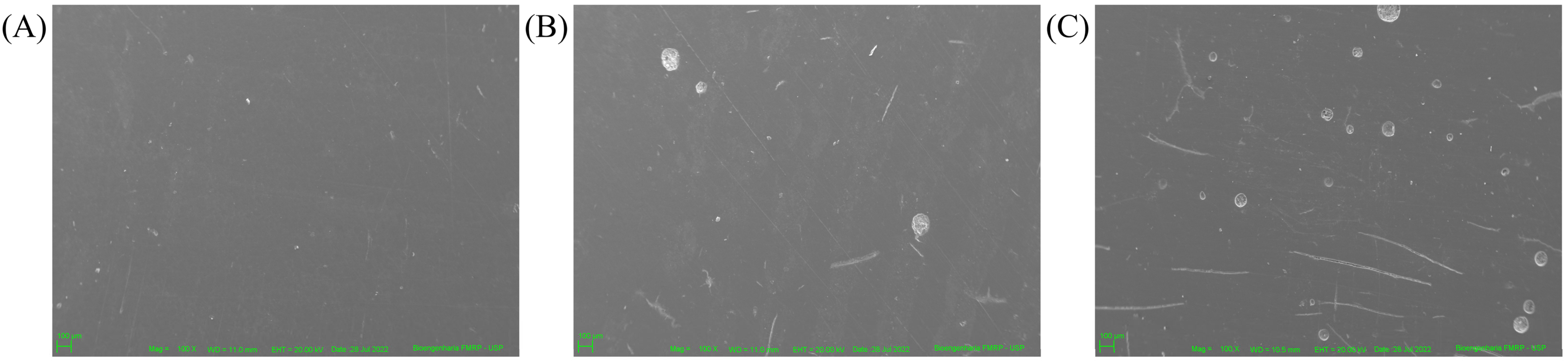
SEM analysis at low magnification (100×) revealed distinct surface patterns among the groups (Figure 1). The control specimens (G1) exhibited a relatively homogeneous and smooth surface, whereas the modified groups (G2 and G3) showed irregular features compatible with the incorporation of silk fibroin nanoparticles. In G2 (0.5%), small and discrete surface irregularities were visible, while G3 (1.0%) displayed more numerous and pronounced agglomerate-like regions, indicating increased particulate accumulation. Although individual nanoparticles were not discernible at this magnification, the progressive surface heterogeneity was concentration dependent.
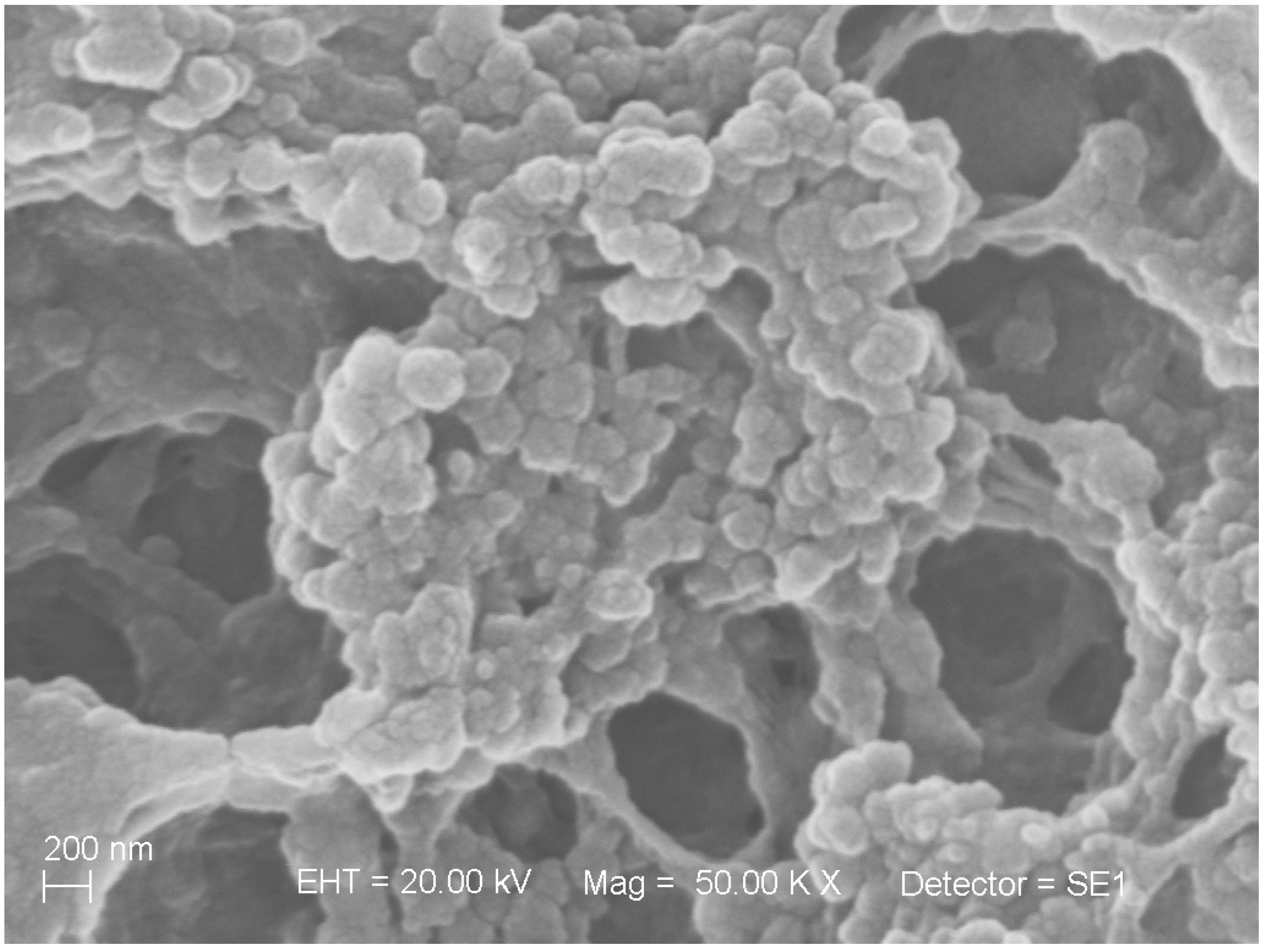
At higher magnification, the silk fibroin nanoparticles exhibited a densely aggregated particulate morphology (Figure 2), forming an irregular three-dimensional network of nanometric clusters characteristic of Bombyxmori-derived fibroin particulate systems. This morphology confirms the heterogeneous and interconnected nature of the nanoparticle population used for PMMA modification.
Together, these SEM findings confirm the successful incorporation of silk fibroin nanoparticles into the PMMA matrix. Both experimental groups contained embedded particulate clusters, and some degree of agglomeration persisted despite homogenization.

3.2. Surface Roughness Results

Surface roughness results are presented in Table 2. Mean roughness values (Ra) were similar across all groups, and data normality allowed analysis by one-way ANOVA. No statistically significant differences were detected among the control and experimental groups (p = 0.707), although a slight numerical reduction in Ra was observed in the nanoparticle-modified resins.
Effect size analysis indicated that incorporating silk fibroin nanoparticles had a minimal impact on surface roughness. Compared with the control, both 0.5% and 1.0% concentrations produced minor effects (Hedges g = −0.31 and −0.30, respectively), indicating that fibroin addition did not meaningfully modify the topographic profile of PMMA.

3.3. Flexural Strength

The flexural strength values obtained from the three-point bending test are presented in Table 3. Since the data did not meet the assumption of homogeneity, the Kruskal–Wallis test was applied, followed by pairwise comparisons using the Mann–Whitney test with Bonferroni correction.
The incorporation of silk fibroin nanoparticles significantly increased the flexural strength of PMMA (p = 0.009). The 0.5% and 1.0% nanoparticle groups exhibited higher strength than the unmodified resin, and the two groups did not differ significantly from each other. Specifically, the 1.0% concentration produced the highest mean flexural strength (92.412 ± 1.963 MPa), followed by the 0.5% group (87.089 ± 2.756 MPa), whereas the control group showed the lowest mean value (79.142 ± 3.202 MPa).
In addition to statistical significance, the magnitude of mechanical differences among groups was quantified using effect size statistics. Compared with the control PMMA, the incorporation of 0.5% silk fibroin nanoparticles produced a significant effect (Cohen’s d = 0.84; Hedges g = 0.81), while 1.0% resulted in a very large effect (Cohen’s d = 1.58; Hedges g = 1.52). These results demonstrate that the mechanical reinforcement observed is not only statistically significant but also clinically meaningful.

3.4. Knoop Microhardness

The Knoop microhardness results, summarized in Table 4, showed a homogeneous distribution and were analyzed using one-way ANOVA. No statistically significant differences were identified among the groups.
Although one-way ANOVA did not reach statistical significance (F(2.27) = 3.23, p = 0.053), effect size values ranged from small to moderate (Hedges g = 0.40–0.75).
Given the close similarity among group means and the low observed variability, increasing the sample size would be unlikely to substantially alter the statistical outcome. Accordingly, the lack of statistical significance suggests a negligible effect of silk fibroin nanoparticles on microhardness at the tested concentrations.

3.5. Antifungal Activity by Inhibition Zones

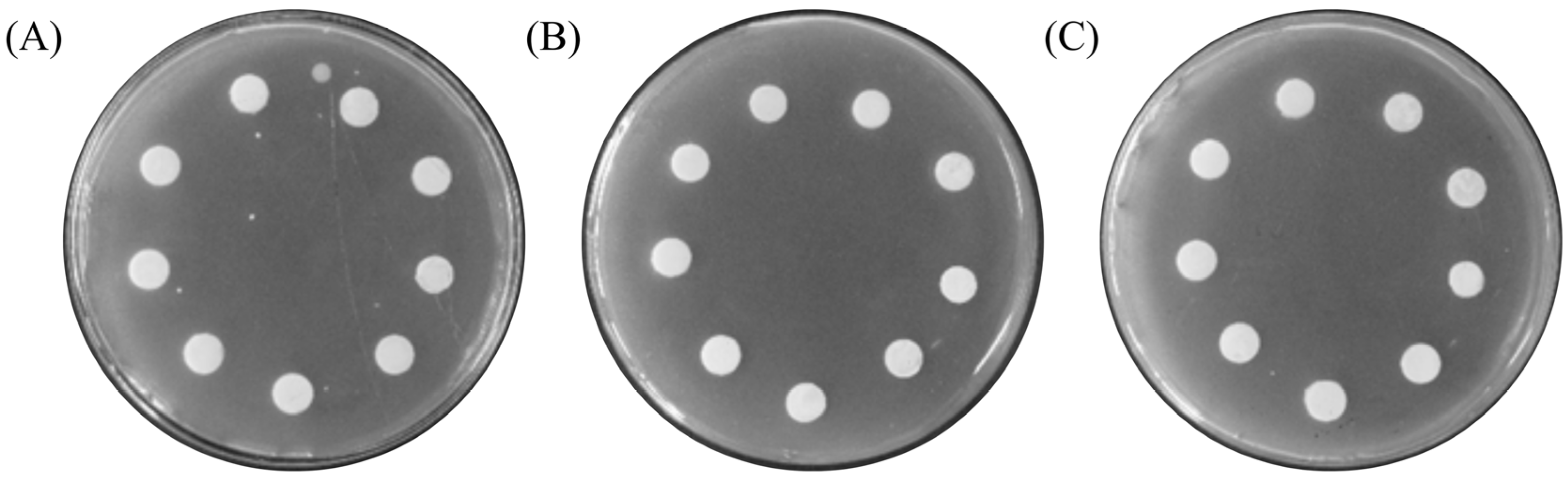
The microbiological assay showed no inhibition halos in any of the tested groups, indicating that neither 0.5% nor 1.0% silk fibroin nanoparticles conferred antifungal activity against C. albicans. Figure 3 shows the Petri dishes for the evaluated samples, in which no inhibition zones were observed against C. albicans (shown in triplicate).

4. Discussion

Several strategies have been explored to enhance the performance of self-polymerizing PMMA, particularly by incorporating fibers, fillers, and nanoparticles, yielding generally favorable effects on mechanical and functional properties [5,27]. Gad et al. (2019) [28] demonstrated, in a comprehensive review, that reinforcement systems based on glass fibers, zirconia nanoparticles, carbon-based nanofillers, and silicate structures can significantly improve the physical and mechanical properties of PMMA. Although numerous proposals have been made to modify this polymer, studies using silk fibroin nanoparticles as reinforcing agents remain limited, underscoring the originality and significance of this research.
Based on the study’s findings, the null hypothesis was only partially rejected. The addition of silk fibroin nanoparticles significantly enhanced the flexural strength of PMMA [29,30]. However, microhardness, roughness, surface roughness, and C. albicans response did not differ significantly at the chosen significance level (α = 0.05). This result is clinically significant because provisional prostheses are constantly exposed to functional deformation, cyclic loading, and fatigue during mastication [2,31], and even moderate increases in bending strength generally improve the clinical longevity of these devices.
The increase in flexural strength observed at both concentrations is consistent with previously employed reinforcement strategies for polymeric materials. Mosharraf et al. (2019) [32] demonstrated that reinforcing provisional restorative materials with glass fibers enhances flexural performance by promoting a more uniform distribution of stress within the matrix. Similarly, Algahtani (2020) [33] observed increases in the flexural strength of PMMA modified with hexagonal boron nitride nanoparticles, supporting the idea that nanoscale additives can promote load transfer and decrease stress concentrations. In this context, the high specific surface area of nanoparticles enhances interfacial interactions with the matrix, fills microvoids, and inhibits microcrack growth, thereby improving overall mechanical performance. Studies on ZrO2, TiO2, and ZnO nanoparticles incorporated into PMMA support this mechanism, highlighting consistent increases in flexural strength attributable to modification of the composite’s internal microstructure [5,27,34].
In this context, nanoparticulate silk fibroin acts as an effective reinforcing agent due to its hierarchical molecular structure, characterized by highly crystalline β-sheet domains interspersed with flexible amorphous regions [29]. This organization confers high intrinsic mechanical strength and enables strong intermolecular interactions with polymeric matrices, promoting efficient stress transfer across the nanoparticle–PMMA interface, as demonstrated in classical studies by Hu, Kaplan, and Cebe (2006) [30] and recent reviews by Dorishetty, Dutta, and Choudhury (2020) [35]. At the nanoscale, well-dispersed fibroin particles and controlled nanoparticulate clusters function as rigid heterogeneities within the matrix, absorbing and redistributing applied stresses and thereby reducing stress concentration at critical sites, a phenomenon known as stress shielding [36,37]. Under flexural loading, these mechanisms collectively delay crack initiation and propagation, which is consistent with the progressive increase in flexural strength observed in this study. Notably, the reinforcing effect was achieved without the use of coupling agents or particle pre-impregnation, indicating an inherent physicochemical compatibility between silk fibroin nanoparticles and the PMMA matrix.
The flexural strength values reported in the literature support this interpretation. Barbosa et al. (2007) [31] stated that heat-polymerizable PMMA has an average strength of 90–110 MPa, while self-polymerizable PMMA ranges from 55 to 85 MPa, depending on the polymerization conditions. Alla et al. (2013) [2] suggested that the superior performance of thermopolymerizable PMMA systems is mainly associated with higher degrees of monomer conversion and increased cross-linking density within the polymer network. In the present study, the self-curing PMMA control exhibited flexural strength values within the range commonly reported for autopolymerizing PMMA resins. Adding silk fibroin caused a consistent increase, reaching 87.08 ± 2.75 MPa (0.5%) and 92.41 ± 1.96 MPa (1%), making the composite’s mechanical properties more comparable to those of some unmodified heat-polymerizable PMMAs. This pattern of response aligns with the growing interest in fibroin as a polymeric reinforcement, supported by its high β-sheet organization, good processability, and biocompatibility [30,35].
Considering the microstructural findings and their link to mechanical behavior, the addition of fibroin nanoparticles appears to inhibit the formation, growth, and merging of cracks in PMMA. SEM images showed the presence of nanoparticulate clusters in the experimental groups but not in the control group. These clusters act as rigid heterogeneities that locally redistribute applied stresses, thereby demonstrating a stress-shielding effect in the polymer matrix [38]. Under flexural loading, these agglomerates serve as physical barriers to crack propagation, triggering traditional toughening mechanisms such as crack deflection, crack bridging, fracture path modification, and localized energy dissipation, as observed in fiber- or nanoparticle-reinforced composites [36,39]. As a result, the composite’s toughness increases without compromising the evaluated mechanical and surface properties. Although ANOVA did not demonstrate statistically significant differences in microhardness among groups (p > 0.05), the mean values were numerically close and showed a slight increasing trend in the experimental groups. Effect size analysis revealed small-to-moderate values (Hedges g = 0.40–0.75), which should be interpreted cautiously and considered exploratory rather than confirmatory. Under the conditions of this study, the incorporation of silk fibroin nanoparticles did not produce a statistically significant change in microhardness; however, the observed numerical trend, together with the microstructural features identified by SEM, suggests that subtle reinforcement-related effects cannot be excluded and may become more evident with refined dispersion control and quantitative microstructural analyses [39].
Changes in surface roughness were clinically negligible, with minimal effects (Hedges g = −0.30). Maintaining roughness values near the control, despite the presence of nanoparticulate agglomerates observed in SEM, indicates that adding fibroin did not cause significant surface changes, which is essential for the material’s clinical acceptance [5]. This stability is crucial because roughness values greater than 0.2 µm are associated with greater biofilm retention and bacterial plaque accumulation [40,41]. In nanocomposites, reductions in microhardness can occur when particles interfere with polymer conversion or introduce interfacial defects [39]; however, microhardness remained stable in this study, suggesting that fibroin did not induce relevant molecular changes in the PMMA matrix. Furthermore, although they did not adversely affect the surface topography, the internal agglomerates can act as stress-reducing microstructures under bending, thereby increasing mechanical strength through stress shielding, a phenomenon intrinsically linked to the composite’s internal architecture rather than its surface characteristics [36,37].
Regarding C. albicans response, several studies indicate that pure silk fibroin does not exhibit intrinsic antifungal activity and primarily serves as a carrier matrix [42]. Reports of antibacterial activity associated with fibroin generally involve its functionalization or combination with metal ions or other bioactive additives, such as silver, zinc oxide, or chitosan [43]. In this context, the incorporation of pure fibroin into the PMMA matrix has not been previously explored from an antifungal standpoint, as its primary effect is expected to be mechanical reinforcement of the composite. Nevertheless, given that molecular interactions between fibroin and the polymeric matrix could, in principle, favor the generation or release of reactive species with antifungal potential, the agar diffusion assay was conducted as an exploratory study. It should be emphasized that the agar diffusion assay is designed to detect antifungal activity exclusively mediated by the leaching of diffusible compounds from the material into the surrounding medium [44].
On the other hand, no antifungal activity against C. albicans was detected by the agar diffusion assay, suggesting that the incorporation of silk fibroin does not promote the release of diffusible antifungal components, and that any interaction between the material and fungal cells is likely governed by contact-dependent mechanisms at the material surface [24,40,41,42]. Therefore, future studies should include quantitative assays in direct contact (such as counting adhered CFU, biofilm analysis, and surface microscopy), linking these results with topography and wettability parameters, as well as examining the relationship between fibroin and previously studied antifungal agents, provided this does not compromise the material’s physical–chemical, mechanical, or esthetic properties. In this context, silk fibroin is a promising candidate for developing hybrid systems with antifungal potential while maintaining the structural integrity and esthetics of PMMA.
Although the number of specimens per group in the agar diffusion assays (n = 3) is relatively limited, it is consistent with exploratory screening approaches previously described in the literature [45] and suitable as an initial evaluation step. Because the PMMA/fibroin combination does not release substances with measurable antifungal effects via diffusion, it is rational to consider additional strategies, such as doping with metal ions or incorporating bioactive agents, to develop composites with enhanced antifungal activity.
In an integrated manner, the results of this study indicate that the main impact of incorporating fibroin nanoparticles is on mechanical performance, especially flexural strength, without compromising critical surface properties and, in its pure form, without conferring an antifungal effect measurable by the methods used. Flexural modulus was not evaluated, as flexural strength remains the primary clinically relevant mechanical outcome for self-polymerizing PMMA; however, stiffness-related parameters will be addressed in future studies. This focus aligns with the prevalent emphasis in the dental literature on flexural strength for provisional restorative materials, which is directly correlated with fracture resistance under masticatory loads [31]. While flexural modulus offers valuable insights into the elastic behavior of materials, its historical clinical relevance for conventional and modified PMMA systems in dentistry has often centered on ultimate strength rather than stiffness-related parameters. Thus, supported by the linear increase in flexural strength and the preservation of the other evaluated properties, future investigations should explore higher nanoparticle concentrations and hybrid or coupled reinforcement strategies, as well as long-term aging and fatigue behavior using thermomechanical cycling and extended water storage, in parallel with complementary analyses such as dye penetration, surface functionalization approaches, and biological assessments. Finally, this in vitro study did not include artificial aging methods, such as thermocycling, mechanical fatigue, or prolonged water sorption, which are known to influence the long-term behavior of PMMA. The findings of this study establish a consistent basis for the initial mechanical performance of fibroin-reinforced PMMA, demonstrating significant gains in flexural strength without compromising critical surface properties. Although simulated aging protocols were not included at this stage, future studies incorporating these conditions will enable us to better understand the composite’s long-term behavior in scenarios increasingly similar to clinical reality.

5. Conclusions

The incorporation of silk fibroin nanoparticles into self-curing PMMA increased its flexural strength, while microhardness and surface roughness remained statistically unchanged. However, microhardness and surface roughness were statistically comparable among the experimental groups, indicating that the incorporation of silk fibroin nanoparticles preserved these surface characteristics. No antifungal activity against C. albicans was observed at the tested concentrations. Within the limitations of this in vitro study, including the evaluation of only two nanoparticle concentrations, the absence of coupling agents, and the lack of long-term degradation or fatigue analyses, silk fibroin nanoparticles demonstrated potential as reinforcing agents for provisional PMMA-based prostheses. Future studies should explore additional concentrations, surface modification strategies, functionalized nanoparticles with antifungal properties, and mechanical performance under simulated long-term clinical conditions.

Author Contributions

Conceptualization, D.M.D. and L.P.B.; methodology, L.P.B., K.T.A.T., A.d.S.T. and M.d.M.T.; software, A.d.S.T. and M.d.M.T.; validation, R.G.; formal analysis, D.M.D.; data curation, R.L.d.O.R. and D.M.D.; writing—original draft preparation, D.M.D. and L.D.A.e.S.; writing—review and editing, D.M.D.; supervision, R.G.; project administration, D.M.D. All authors have read and agreed to the published version of the manuscript.

Funding

This study received financial support from the Coordination for the Improvement of Higher Education Personnel (CAPES), Brazil, under Grant Financial Code Number 001.

Data Availability Statement

The original contributions presented in this study are included in the article. Further inquiries can be directed to the corresponding author.

Acknowledgments

The authors would like to thank the Faculty of Dentistry, University of São Paulo, and the Federal University of the Jequitinhonha and Mucuri Valleys for providing access to their laboratories, which were essential for the development of this project.

Conflicts of Interest

The authors declare no conflicts of interest.

Abbreviations

The following abbreviations are used in this manuscript:
PMMAPolymethyl methacrylate
SEMScanning electron microscopy
RaArithmetic mean surface roughness
BHIBrain Heart Infusion
CFUColony-forming units
ANOVAAnalysis of variance
DLSDynamic Light Scattering
MPaMegapascal
gGram
LLiter
°CDegrees Celsius
rpmRevolutions per minute
w/vWeight/volume
v/vVolume/volume
αSignificance level

References

  1. Lauritano, D.; Moreo, G.; Della Vella, F.; Di Stasio, D.; Carinci, F.; Lucchese, A.; Petruzzi, M. Oral Health Status and Need for Oral Care in an Aging Population: A Systematic Review. Int. J. Environ. Res. Public Health 2019, 16, 4558. [Google Scholar] [CrossRef]
  2. Alla, R.K.; Sajjan, S.; Alluri, V.R.; Ginjupalli, K.; Upadhya, N. Influence of Fiber Reinforcement on the Properties of Denture Base Resins. J. Biomater. Nanobiotechnol. 2013, 4, 91–97. [Google Scholar] [CrossRef]
  3. Rickman, L.J.; Padipatvuthikul, P.; Satterthwaite, J.D. Contemporary Denture Base Resins: Part 1. Dent. Update 2012, 39, 25–30. [Google Scholar] [CrossRef]
  4. Jagger, D.C.; Harrison, A.; Jandt, K.D. The Reinforcement of Dentures. J. Oral Rehabil. 1999, 26, 185–194. [Google Scholar] [CrossRef]
  5. Gad, M.M.; Fouda, S.M.; Al-Harbi, F.A.; Näpänkangas, R.; Raustia, A. PMMA Denture Base Material Enhancement: A Review of Fiber, Filler, and Nanofiller Addition. Int. J. Nanomed. 2017, 12, 3801–3812. [Google Scholar] [CrossRef]
  6. Sasaki, H.; Hamanaka, I.; Takahashi, Y.; Kawaguchi, T. Effect of Long-Term Water Immersion or Thermal Shock on Mechanical Properties of High-Impact Acrylic Denture Base Resins. Dent. Mater. J. 2016, 35, 204–209. [Google Scholar] [CrossRef] [PubMed]
  7. Goiato, M.C.; dos Santos, D.M.; Haddad, M.F.; Pesqueira, A.A. Effect of Accelerated Aging on the Microhardness and Color Stability of Flexible Resins for Dentures. Braz. Oral Res. 2010, 24, 114–119. [Google Scholar] [CrossRef]
  8. Narva, K.K.; Lassila, L.V.; Vallittu, P.K. The Static Strength and Modulus of Fiber Reinforced Denture Base Polymer. Dent. Mater. 2005, 21, 421–428. [Google Scholar] [CrossRef] [PubMed]
  9. Kostoulas, I.; Kavoura, V.T.; Frangou, M.J.; Polyzois, G.L. Fracture Force, Deflection, and Toughness of Acrylic Denture Repairs Involving Glass Fiber Reinforcement. J. Prosthodont. 2008, 17, 257–261. [Google Scholar] [CrossRef] [PubMed]
  10. Yu, S.H.; Lee, Y.; Oh, S.; Cho, H.W.; Oda, Y.; Bae, J.M. Reinforcing Effects of Different Fibers on Denture Base Resin Based on the Fiber Type, Concentration, and Combination. Dent. Mater. J. 2012, 31, 1039–1046. [Google Scholar] [CrossRef]
  11. Al-Thobity, A.M.; Al-Khalifa, K.S.; Gad, M.M.; Al-Hariri, M.; Ali, A.A.; Alnassar, T.; Al-Thobity, A.M.; Al-Khalifa, K.S.; Gad, M.M.; Al-Hariri, M.; et al. In Vitro Evaluation of the Inhibitory Activity of Thymoquinone in Combatting Candida Albicans in Denture Stomatitis Prevention. Int. J. Environ. Res. Public Health 2017, 14, 743. [Google Scholar] [CrossRef] [PubMed]
  12. Al-Fouzan, A.F.; Al-Mejrad, L.A.; Albarrag, A.M. Adherence of Candida to Complete Denture Surfaces in Vitro: A Comparison of Conventional and CAD/CAM Complete Dentures. J. Adv. Prosthodont. 2017, 9, 402–408. [Google Scholar] [CrossRef]
  13. Gad, M.M.; Fouda, S.M. Current Perspectives and the Future of Candida Albicans-Associated Denture Stomatitis Treatment. Dent. Med. Probl. 2020, 57, 95–102. [Google Scholar] [CrossRef]
  14. Ali, I.L.; Yunus, N.; Abu-Hassan, M.I. Hardness, Flexural Strength, and Flexural Modulus Comparisons of Three Differently Cured Denture Base Systems. J. Prosthodont. 2008, 17, 545–549. [Google Scholar] [CrossRef]
  15. Al-Dwairi, Z.N.; Tahboub, K.Y.; Baba, N.Z.; Goodacre, C.J. A Comparison of the Flexural and Impact Strengths and Flexural Modulus of CAD/CAM and Conventional Heat-Cured Polymethyl Methacrylate (PMMA). J. Prosthodont. 2020, 29, 341–349. [Google Scholar] [CrossRef]
  16. John, J.; Gangadhar, S.A.; Shah, I. Flexural Strength of Heat-Polymerized Polymethyl Methacrylate Denture Resin Reinforced with Glass, Aramid, or Nylon Fibers. J. Prosthet. Dent. 2001, 86, 424–427. [Google Scholar] [CrossRef]
  17. Karatepe, U.Y.; Ozdemir, T. Improving Mechanical and Antibacterial Properties of PMMA via Polyblend Electrospinning with Silk Fibroin and Polyethyleneimine towards Dental Applications. Bioact. Mater. 2020, 5, 510–515. [Google Scholar] [CrossRef]
  18. Peter, M.; Bembalagi, M.; Kanathila, H.; Santhosh, V.N.; Roy, T.R.; Monsy, M. Comparative Evaluation of Antifungal Property of Acrylic Resin Reinforced with Magnesium Oxide and Silver Nanoparticles and Their Effect on Cytotoxic Levels: An In Vitro Study. J. Microsc. Ultrastruct. 2023, 13, 193–198. [Google Scholar] [CrossRef] [PubMed]
  19. Nguyen, T.P.; Nguyen, Q.V.; Nguyen, V.H.; Le, T.H.; Huynh, V.Q.N.; Vo, D.V.N.; Trinh, Q.T.; Kim, S.Y.; Van Le, Q. Silk Fibroin-Based Biomaterials for Biomedical Applications: A Review. Polymers 2019, 11, 1933. [Google Scholar] [CrossRef] [PubMed]
  20. Rockwood, D.N.; Preda, R.C.; Yücel, T.; Wang, X.; Lovett, M.L.; Kaplan, D.L. Materials Fabrication from Bombyx Mori Silk Fibroin. Nat. Protoc. 2011, 6, 1612–1631. [Google Scholar] [CrossRef]
  21. Murphy, A.R.; Kaplan, D.L. Biomedical Applications of Chemically-Modified Silk Fibroin. J. Mater. Chem. 2009, 19, 6443–6450. [Google Scholar] [CrossRef]
  22. Torres, A.d.S.; Silveira, J.V.W.d.; Torres, M.d.M.; Araujo, C.T.P.d.; Galo, R.; Oliveira, S.G.D.d. Composite Resin Reinforced with Silk Nanoparticles from Bombyx Mori Cocoon for Dental Applications. Braz. Dent. J. 2023, 34, 67–74. [Google Scholar] [CrossRef]
  23. Ghalei, S.; Handa, H. A Review on Antibacterial Silk Fibroin-Based Biomaterials: Current State and Prospects. Mater. Today Chem. 2022, 23, 100673. [Google Scholar] [CrossRef] [PubMed]
  24. Al–Mashhadane, F.A. Tea Tree Oil: Anew Antifungal Agents Against Candida Albicans Cells on Heat– Cured Acrylic Resin Denture Base Material. An In Vitro Study. Al-Rafidain Dent. J. 2007, 7, 54–57. [Google Scholar] [CrossRef]
  25. Amirabad, L.M.; Tahriri, M.; Zarrintaj, P.; Ghaffari, R.; Tayebi, L. Preparation and Characterization of TiO2-Coated Polymerization of Methyl Methacrylate (PMMA) for Biomedical Applications: In Vitro Study. Asia-Pac. J. Chem. Eng. 2022, 17, e2761. [Google Scholar] [CrossRef] [PubMed]
  26. JIS Z 2801:2010; Antibacterial Products—Test for Antibacterial Activity and Efficacy. Japanese Standards Association: Tokyo, Japan, 2010.
  27. Gad, M.M.; Al-Thobity, A.M.; Rahoma, A.; Abualsaud, R.; Al-Harbi, F.A.; Akhtar, S. Reinforcement of PMMA Denture Base Material with a Mixture of ZrO2 Nanoparticles and Glass Fibers. Int. J. Dent. 2019, 2019, 2489393. [Google Scholar] [CrossRef]
  28. Al-Harbi, F.A.; Abdel-Halim, M.S.; Gad, M.M.; Fouda, S.M.; Baba, N.Z.; AlRumaih, H.S.; Akhtar, S. Effect of Nanodiamond Addition on Flexural Strength, Impact Strength, and Surface Roughness of PMMA Denture Base. J. Prosthodont. 2019, 28, e417–e425. [Google Scholar] [CrossRef]
  29. Pal, R.K.; Kurland, N.E.; Wang, C.; Kundu, S.C.; Yadavalli, V.K. Biopatterning of Silk Proteins for Soft Micro-Optics. ACS Appl. Mater. Interfaces 2015, 7, 8809–8816. [Google Scholar] [CrossRef]
  30. Hu, X.; Kaplan, D.; Cebe, P. Determining Beta-Sheet Crystallinity in Fibrous Proteins by Thermal Analysis and Infrared Spectroscopy. Macromolecules 2006, 39, 6161–6170. [Google Scholar] [CrossRef]
  31. Barbosa, D.B.; De Souza, R.F.; Pero, A.C.; Marra, J.; Compagnoni, M.A. Flexural Strength of Acrylic Resins Polymerized by Different Cycles. J. Appl. Oral Sci. 2007, 15, 424–428. [Google Scholar] [CrossRef]
  32. Mosharraf, R.; Givehchian, P.; Ansaripour, F. Comparison of Color Stability and Fracture Resistance of Two Temporary Fiber-Reinforced Fixed Partial Denture Materials. Dent. Res. J. 2019, 16, 185. [Google Scholar] [CrossRef]
  33. Alqahtani, M.; Alqahtani, M. Effect of Hexagonal Boron Nitride Nanopowder Reinforcement and Mixing Methods on Physical and Mechanical Properties of Self-Cured PMMA for Dental Applications. Materials 2020, 13, 2323. [Google Scholar] [CrossRef] [PubMed]
  34. Alhotan, A.; Yates, J.; Zidan, S.; Haider, J.; Silikas, N. Flexural Strength and Hardness of Filler-Reinforced PMMA Targeted for Denture Base Application. Materials 2021, 14, 2659. [Google Scholar] [CrossRef] [PubMed]
  35. Dorishetty, P.; Dutta, N.K.; Choudhury, N.R. Silk Fibroins in Multiscale Dimensions for Diverse Applications. RSC Adv. 2020, 10, 33227–33247. [Google Scholar] [CrossRef] [PubMed]
  36. Fu, S.Y.; Feng, X.Q.; Lauke, B.; Mai, Y.W. Effects of Particle Size, Particle/Matrix Interface Adhesion and Particle Loading on Mechanical Properties of Particulate–Polymer Composites. Compos. Part B Eng. 2008, 39, 933–961. [Google Scholar] [CrossRef]
  37. Jordan, J.; Jacob, K.I.; Tannenbaum, R.; Sharaf, M.A.; Jasiuk, I. Experimental Trends in Polymer Nanocomposites—A Review. Mater. Sci. Eng. A 2005, 393, 1–11. [Google Scholar] [CrossRef]
  38. Sezavar, A.; Zebarjad, S.M.; Sajjadi, S.A.; Sezavar, A.; Zebarjad, S.M.; Sajjadi, S.A. A Study on the Effect of Nano Alumina Particles on Fracture Behavior of PMMA. Technologies 2015, 3, 94–102. [Google Scholar] [CrossRef]
  39. Muhammad Firdaus, S.; Sheng, T.J.; Ariffin, Z.; Mariatti, M. Properties Improvement of Acrylic Resin for Denture Application: Effect of Single and Hybrid Types of Fillers with Different Weight Loadings. Plast. Rubber Compos. 2021, 50, 329–339. [Google Scholar] [CrossRef]
  40. Quirynen, M.; Van Der Mei, H.C.; Bollen, C.M.L.; Van Den Bossche, L.H.; Doornbusch, G.I.; van Steenberghe, D.; Busscher, H.J. The Influence of Surface-Free Energy on Supra- and Subgingival Plaque Microbiology. An In Vivo Study on Implants. J. Periodontol. 1994, 65, 162–167. [Google Scholar] [CrossRef]
  41. Bollen, C.M.L.; Papaioanno, W.; Van Eldere, J.; Schepers, E.; Quirynen, M.; Van Steenberghe, D. The Influence of Abutment Surface Roughness on Plaque Accumulation and Peri-Implant Mucositis. Clin. Oral Implant. Res. 1996, 7, 201–211. [Google Scholar] [CrossRef]
  42. Chomchalao, P.; Saelim, N.; Lamlertthon, S.; Sisopa, P.; Tiyaboonchai, W.; Chomchalao, P.; Saelim, N.; Lamlertthon, S.; Sisopa, P.; Tiyaboonchai, W. Mucoadhesive Hybrid System of Silk Fibroin Nanoparticles and Thermosensitive In Situ Hydrogel for Amphotericin B Delivery: A Potential Option for Fungal Keratitis Treatment. Polymers 2024, 16, 148. [Google Scholar] [CrossRef] [PubMed]
  43. Tuwalska, A.; Grabska-Zielińska, S.; Sionkowska, A. Chitosan/Silk Fibroin Materials for Biomedical Applications—A Review. Polymers 2022, 14, 1343. [Google Scholar] [CrossRef]
  44. Schäfer, S.; Aavani, F.; Köpf, M.; Drinic, A.; Stürmer, E.K.; Fuest, S.; Grust, A.L.C.; Gosau, M.; Smeets, R. Silk Proteins in Reconstructive Surgery: Do They Possess an Inherent Antibacterial Activity? A Systematic Review. Wound Repair Regen. 2023, 31, 99–110. [Google Scholar] [CrossRef] [PubMed]
  45. Traitanon, N.; Dechkunakorn, S.; Tantivitayakul, P.; Punnakitikashem, P.; Wichai, W.; Whitis, P.P.; Anuwongnukroh, N. Antibacterial Effect of Gold Nanoparticles Coated Dental Floss against Cariogenic Bacteria. Key Eng. Mater. 2021, 904, 293–300. [Google Scholar] [CrossRef]
Figure 1. Scanning electron microscopy (SEM) micrographs (magnification 100×) of the polished surface of the resin specimens: (A) Control group (G1), (B) PMMA modified with 0.5% silk fibroin nanoparticles (G2), and (C) PMMA modified with 1.0% silk fibroin nanoparticles (G3). Distinct patterns of nanoparticle distribution and surface agglomerates can be observed as the concentration increases.
Compounds 06 00015 g001
Figure 2. Scanning electron microscopy (SEM) images of silk fibroin nanoparticles derived from Bombyxmori. Magnification 50,000×.
Compounds 06 00015 g002
Figure 3. Petri dishes of the tested samples showing no inhibition zones against Candida albicans, presented in triplicate: (A) control group; (B) 0.5% silk fibroin nanoparticles; (C) 1.0% silk fibroin nanoparticles.
Compounds 06 00015 g003
Table 1. Experimental groups and respective interventions.
Groupn
(64.0 × 10.0 × 3.0 mm)
n
(4.0 × 6.0 mm)
Intervention
G1103Self-curing acrylic resin without nanoparticle addition
G2103Self-curing acrylic resin modified with 0.5% silk fibroin nanoparticles
G3103Self-curing acrylic resin modified with 1% silk fibroin nanoparticles
Table 2. Means and standard errors of the studied groups when subjected to the surface roughness test (Ra).
GroupsMeans and Standard Errors (Ra)
Without nanoparticles0.4118 ± 0.100 a
0.5% nanoparticles0.3245 ± 0.072 a
1.0% nanoparticles0.3269 ± 0.076 a
Identical lowercase letters indicate similarity between the groups.
Table 3. Mean, standard deviation, median, and 95% confidence intervals of the flexural strength values obtained from the three-point bending test.
GroupsMean ± SD (MPa)Median95% CI (MPa)
Without nanoparticles79.142 ± 3.202 a78.27576.85–81.43
0.5% nanoparticles87.089 ± 2.756 b86.63585.12–89.06
1.0% nanoparticles92.412 ± 1.963 b91.73791.01–93.82
Identical lowercase letters indicate no significant differences, whereas different letters indicate significant differences. (Mann–Whitney test with Bonferroni correction).
Table 4. Means and standard errors of the groups when subjected to the Knoop microhardness test.
GroupsMeans and Standard Errors (KN)
Without nanoparticles12.21 ± 0.351 a
0.5% nanoparticles12.72 ± 0.213 a
1.0% nanoparticles12.53 ± 0.177 a
Identical lowercase letters indicate similarity between the groups.
Disclaimer/Publisher’s Note: The statements, opinions and data contained in all publications are solely those of the individual author(s) and contributor(s) and not of MDPI and/or the editor(s). MDPI and/or the editor(s) disclaim responsibility for any injury to people or property resulting from any ideas, methods, instructions or products referred to in the content.