



- 2.8Impact Factor
- 5.4CiteScore
- 15 daysTime to First Decision
Pulsed Laser Deposition of Thin Films: Recent Advances and Challenges
This special issue belongs to the section “Laser Coatings“.
Special Issue Information
Dear Colleagues,
Since its first introduction several decades ago, Pulsed Laser Deposition (PLD), proved a powerful technique for the synthesis of a broad spectrum of functional thin films. Indeed, with respect to other conventional physical vapor deposition techniques, PLD exhibits several advantages, such as control of stoichiometry especially for materials with complex composition, adherent coatings, easy to obtain multi-layered thin films and combinatorial maps, good versatility of experimental design, and morphology and crystallinity control, to mention a few. Moreover, tailoring the composition-structure-properties relationship of the coatings is possible by adjusting the deposition conditions.
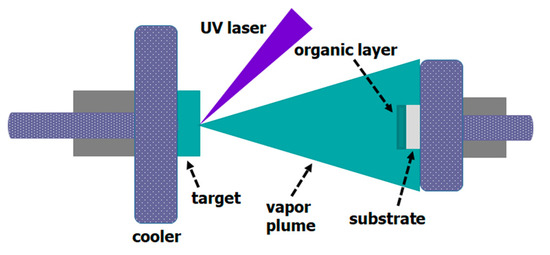
Matrix-assisted pulsed laser evaporation (MAPLE) is a complementary deposition technique derived from PLD, extensively explored for the deposition of thin organic nanoparticle and composite coatings. High experimental versatility allows synthesis of delicate compounds such as proteins or polymers, without impeding the stability of their functional characteristics. Although initially designed for polymers, MAPLE evolved into various applications in biomimetic coatings, energy, sensing, wearable electronics, and photonic devices.
In view of creating a knowledge platform devoted to laser-based deposition technologies, we kindly invite you to submit your recent work to our Special Issue entitled “Pulsed Laser Deposition of Thin Films: Recent Advances and Challenges.”
This Special Issue is devoted to recent advances and further challenges of PLD and its derivate MAPLE techniques applied but not limited to:
- Biomimetic coatings (bioactive Calcium Phosphates, bio-glasses, biopolymers, and drug delivery systems)
- Sensors and biosensors
- Oxides and Transparent Conductive Oxides (TCO)
- Organic and inorganic solar cells layers and multilayers
- Smart windows and efficient energy coatings
- Catalysts and energy storage devices
- Hard carbides, nitrides and carbo-nitrides coatings
- Coatings for extreme enviroments
- Novel composites thin-films synthesis via material blending or multilayer assembling
- Modelling and/or theoretical studies devoted to laser-matter interactions and thin films growth leading to innovative functionalities
Dr. Emanuel Axente
Dr. Gabriel Socol
Guest Editors
Manuscript Submission Information
Manuscripts should be submitted online at www.mdpi.com by registering and logging in to this website. Once you are registered, click here to go to the submission form. Manuscripts can be submitted until the deadline. All submissions that pass pre-check are peer-reviewed. Accepted papers will be published continuously in the journal (as soon as accepted) and will be listed together on the special issue website. Research articles, review articles as well as short communications are invited. For planned papers, a title and short abstract (about 250 words) can be sent to the Editorial Office for assessment.
Submitted manuscripts should not have been published previously, nor be under consideration for publication elsewhere (except conference proceedings papers). All manuscripts are thoroughly refereed through a single-blind peer-review process. A guide for authors and other relevant information for submission of manuscripts is available on the Instructions for Authors page. Coatings is an international peer-reviewed open access monthly journal published by MDPI.
Please visit the Instructions for Authors page before submitting a manuscript. The Article Processing Charge (APC) for publication in this open access journal is 2600 CHF (Swiss Francs). Submitted papers should be well formatted and use good English. Authors may use MDPI's English editing service prior to publication or during author revisions.
Keywords
- laser-matter interactions
- biomimetic coatings
- organic, inorganic and hybrid thin films
- pulsed laser deposition (PLD)
- matrix assisted pulsed laser evaporation (MAPLE)
- combinatorial laser technologies
- surface micro-processing
- tissue engineering
- drug delivery
- sensors
- solar cells
Benefits of Publishing in a Special Issue
- Ease of navigation: Grouping papers by topic helps scholars navigate broad scope journals more efficiently.
- Greater discoverability: Special Issues support the reach and impact of scientific research. Articles in Special Issues are more discoverable and cited more frequently.
- Expansion of research network: Special Issues facilitate connections among authors, fostering scientific collaborations.
- External promotion: Articles in Special Issues are often promoted through the journal's social media, increasing their visibility.
- e-Book format: Special Issues with more than 10 articles can be published as dedicated e-books, ensuring wide and rapid dissemination.