

Need Help?
Announcements
25 October 2021
Open Access Week 2021 | It Matters How We Open Knowledge: Building Structural Equity, 25–31 October
Founded in 1996, MDPI was one of the first fully Open Access publisher. Over 25 years MDPI has grown to become the largest Open Access publisher globally, publishing over 160,000 articles across more than 350 journals in 2020. At the core, MDPI was founded in response to a pressing need of fast publication and inclusion. The scholar was set at the centre of the publication process for the first time. Acting as a service provider, rather than a product provider, MDPI exists to help scientists achive their objective to disseminate research results. At MDPI, we believe scientists deserve a better service from the publishing world.
The International Open Access Week (Open Access Week), founded by the SPARC (the Scholarly Publishing and Academic Resources Coalition) Alliance and student partners in 2008, has been successfully running for 13 years. As an advocate and pioneer of open access publishing, MDPI actively responds to the call of International Open Access Week. This year’s theme of “It Matters How We Open Knowledge: Building Structural Equity” highlights the Recommendation’s call for equitable participation from all authors and readers.
For the last 25 years, MDPI has been committed to disseminating open research. Here is a video showing MDPI’s Commitment to Equity, Inclusion and Diversity for More than 25 Years.
International Open Access Week is an important opportunity to catalyze new conversations, create connections across and between communities that can facilitate this co-design, and advance progress in the building of more equitable foundations for opening knowledge—discussions and actions that need to be continued, year in and year out. MDPI has always aimed to provide professional and efficient publishing services to scholars around the world.
Our mission is to make scientific research accessible to everyone; this year, we interview and hold discussions with open science ambassadors on how to build an equal and inclusive environment for open science. Academic editors help us collaborate with more institutions to advocate for open access ideas.
Besides this, our scientific community is a key driver of our success and MDPI’s remarkable growth. Despite the pandemic, we have prepared online conferences and workshops to gather scholars from different communities.
The Basel Sustainable Publishing online forum provides an equal opportunity for stakeholders and researchers from multi-cultural environments to exchange ideas and eliminate barriers to participation.

Conference date: 25 October 2021, online
Conference website: https://bspf2021.sciforum.net/
Main topics: MDPI discusses the current dilemma of open access science from various perspectives such as governments, libraries, and publishers, and related measures on how to change the status quo of discrimination from a global perspective.
We aim to support equality, inclusion, diversity, and accessibility in scholarly communications. We collaborate with universities and key laboratories and have scholarly communications with researchers, teachers, and students on open access workshops.

- 25 October 2021
Energies journal and Institute of Mechanics, Chinese Academy of Sciences
- 28 October 2021
Machines journal and State Key Laboratory of Traction Power, Southwest Jiaotong University
- 29 October 2021
Processes journal and Beijing Institute of Technology
- 29 October 2021
Coatings journal and Wuhan University of Technology
MDPI is committed to providing open access and high-quality publishing services for scholars and promoting rapid dissemination of academic achievements. We hope to promote the practices and policies of open access publishing and diversify the dissemination of academic achievements.
23 September 2021
2020 MDPI Top Reviewer Award—Winners Announced

Rigorous peer-review is the cornerstone of high-quality academic publishing. Over 369,916 scholars served as reviewers for MDPI journals in 2020. We are extremely appreciative of all those who made a contribution to the editorial process in this capacity. At the beginning of every year, journal editorial offices publish a list of all reviewers’ names to express our gratitude. In addition, this year, the MDPI Top Reviewer Award was announced, to recognize the very best reviewers for their expertise and dedication, and their high-quality, and timely review reports. We are pleased to announce the following winners of the 2020 MDPI Top Reviewer Award:
- Adriana Burlea-Schiopoiu;
- Alban Kuriqi;
- Álvaro González-Vila;
- Alessandro Alaimo;
- Alexey Beskopylny;
- Alexander Yu Churyumov;
- Alberto Fernández-Isabel;
- Andrea Mastinu;
- Antonios N. Papadopoulos;
- Anton Rassõlkin;
- Antonio Humberto Hamad Minervino;
- Arkadiusz Matwijczuk;
- Artur Słomka;
- Baojie He;
- Bartłomiej Potaniec;
- Bojan Đurin;
- Camilo Arturo Rodriguez Diaz;
- Carmelo Maria Musarella;
- Chiachung Chen;
- Chiman Kwan;
- Cristian Busu;
- Danil Pimenov;
- Dan-Cristian Dabija;
- Delfín Ortega-Sánchez;
- Demetrio Antonio Zema;
- Denis Butusov;
- Elena Lucchi;
- Gaurab Dutta;
- Livia Anastasiu;
- M. R. Safaei.
For more information about how to become a reviewer of MDPI journals, please see: www.mdpi.com/reviewers.
22 September 2021
MDPI Joins SDG Publishers Compact
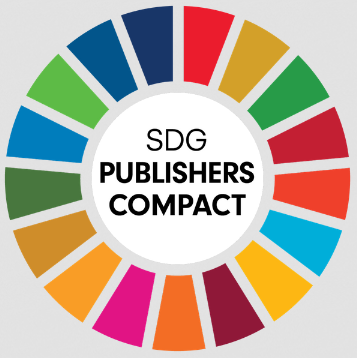
UN's 17 Sustainable Development Goals (SDGs) are the blueprint to achieve a better and more sustainable future for all. In 2020 the SDG Publishers Compact was launched, aimed to inspire publishers and accelerate progress to achieve the 17 goals by 2030. Members of the programme are committed to support the publication of materials that will promote and inspire actions towards SDGs.
MDPI is an eager advocate of SDGs and has already been supporting the programme by creating Special Issues and publishing a series of books on SDGs prior to joining the Compact in 2021. MDPI's Sustainability Foundation initiated the World Sustainability Awards in 2016. We fully support UN's goals to promote sustainable actions that make the world a better place for all and, as part of its commitment, we will focus our actions on SDG10: Reduced Inequalities whilst promoting all 17 SDGs. For more details, please visit the programme’s website: https://www.un.org/sustainabledevelopment/sdg-publishers-compact/.
Joining this initiative was a unanimous decision. MDPI has in its core values the dissemination of science for all, breaking the wall between research access and under-represented members of the scientific community and the general population. To support this initiative further and continue to support under-represented scientists, MDPI will take a series of actions that will be announced once ready.
The first action MDPI takes is to nominate Dr. Liliane Auwerter as the coordinator of the programme. Dr. Auwerter studied Environmental Process Technology (UTFPR, Brazil), obtained her MSc degree in Water and Environmental Engineering (University of Surrey, UK) and in 2020 completed her PhD in self-healing low-friction materials for water transport (Imperial College London, UK), always focusing on diverse scientific projects that would potentially bring sustainability to industrial processes. As a student in Brazil, she engaged in volunteering activities focused on environmental education and took part in the Millennial Development Goals meetings held at the university.
For more information, please contact:
Dr. Liliane Auwerter
Scientific Officer
liliane.auwerter@mdpi.com
15 September 2021
Meet Us at the 20th National Catalysis Conference, Wuhan, China, 15–20 October 2021

MDPI will be attending the 20th National Catalysis Conference in Wuhan, China, which will take place from 15 to 20 October 2021. The theme of the conference is “Catalytic Science and Technology for Green, Low-Carbon, High-Quality Economic Development”. The topics include the science and technology of catalytic materials and catalyst preparation, catalytic materials and catalytic reaction characterization technology and theory, green catalysis, environmental catalysis, energy catalysis, and science and technology in the catalysis process of petroleum and chemical industry.
The following MDPI journals will be represented:
- Catalysts;
- Nanomaterials;
- Coatings;
- Inorganics;
- Applied Sciences;
- Sustainable Chemistry;
- Chemistry;
- Processes;
- Reactions;
- Toxics.
If you are attending this conference, please feel free to stop by our booth. Our delegates look forward to meeting you in person to answer any questions you may have. For more information about the conference, please visit the following link: http://20ncc.mzpco.com/.
3 August 2021
Announcement on Japanese Consumption Tax (JCT)
This serves to announce to our valued authors based in Japan that value-added tax, or consumption tax will now be imposed on article processing fees and other service fees for all papers submitted, or resubmitted (assigned new paper IDs), effective from 15 August 2021. The change is in accordance with the Japanese "Act for Partial Revision of the Income Tax Act and Other Acts" (Act No. 9 of 2015), which includes a revision of consumption taxation on cross-border supplies of services such as digital content distribution.
For additional information from the National Tax Agency please see here ("Cross-border supplies of electronic services").
Contact: Setsuko Nishihara, MDPI Tokyo
14 July 2021
Prof. Dr. George A. O'Doherty Appointed Section Editor-in-Chief of “Biological and Natural Products” in Chemistry
We are pleased to announce that Prof. Dr. George A. O'Doherty has been appointed Section Editor-in-Chief of the “Biological and Natural Products” Section in Chemistry (ISSN: 2624-8549).
Born in Kilkenny, Ireland, the son of two organic chemists, he grew into the family business. He received his B.S. degree from RPI working with Professor Alan R. Cutler. After earning his Ph.D. with Professor Leo A. Paquette at OSU, he pursued postdoctoral studies with Professor Barry M. Trost and then Anthony G. M. Barrett. His independent career began at the University of Minnesota. In 2002, he moved to West Virginia University. He moved again in 2010, to Northeastern University, where he has been ever since. His laboratory is interested in the asymmetric synthesis and study of biologically important carbohydrate and natural products, with the aim of exploring their stereochemical structure–activity relationship.

Name: Prof. Dr. George A. O'Doherty
Email: G.ODoherty@northeastern.edu
Affiliation: College of Science, Northeastern University, Boston, MA 02115, USA
Interests: organic synthesis; carbohydrate synthesis; natural product synthesis; asymmetric synthesis; medicinal chemistry; natural product medicinal chemistry
25 June 2021
Prof. Dr. José Antonio Odriozola Appointed as Section Editor-in-Chief of “Catalysis” in Chemistry
We are pleased to announce that Prof. Dr. José Antonio Odriozola has been appointed as Section Editor-in-Chief of the “Catalysis” Section in Chemistry (ISSN: 2624-8549).
José A. Odriozola obtained his Ph.D. in chemistry in 1981 in the field of catalysis. In 1997, he obtained his current position of Full Professor in the Department of Inorganic Chemistry at the University of Sevilla. His research interest is the study of catalysts and catalytic reactions, within operando methods being the focus of his research interests from electrons to reactors. He has more than 350 peer-reviewed publications in the fields of catalysis and chemical engineering, with more than 10,600 citations and an h-index of 56 (Google Academic). He is a referee for most catalytic and chemical engineering journals and has been Editor of three Special Issues and Co-Editor of two books, “Engineering Solutions for CO2 Conversion” (Wiley) and “Heterogeneous Catalysis for Energy Applications” (Royal Society of Chemistry). Since the late 1980s, he has been studying the nature of adsorbed surface species during reactions, developing a mechanism for the selective catalytic reduction of NOx, and further pioneering the use of in operando Diffuse Reflectance Infrared Fourier Transform Spectroscopy for the understanding of catalytic reactions. In 1995, structured catalysts have been added to his research interests. The study of metal alloy oxidation and their reactivity with rare earth elements set the background for understanding the behavior of structured catalysts and the influence of the metal alloy on the activity and selectivity of wash-coated catalysts, ending with the development of wall-coated microchannel reactors for hydrogen cleanup and Fischer–Tropsch reactions. In the last few years, his studies have focused on the application of catalysts and structured reactors to recent environmental challenges, CO2 abatement, and bio-based processes, combining the design of active sites with the tailoring of Au/TiO2 interfaces for the reverse water-gas-shift reaction or Au/Zr(Ce)O2 interfaces for the oxidation of HMF to FDCA, as well as for heat and mass transport in structured microchannel reactors.
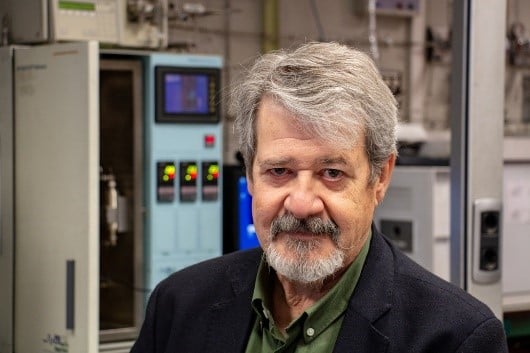
Name: Prof. Dr. José A. Odriozola
Email: odrio@us.es
Affiliation: Department of Inorganic Chemistry, University of Sevilla, Calle Profesor García González, s/n, 41012 Sevilla, Spain.
Instituto de Ciencia de Materiales de Sevilla, Centro Mixto Universidad de Sevilla-Consejo Superior de Investigaciones Científicas, Av. Américo Vespucio 49, 41092 Sevilla, Spain.
Department of Chemical and Process Engineering, University of Surrey, Guildford Surrey GU2 7XH, United Kingdom.
Interests: structured catalysts and reactors in operando spectroscopies; heterogeneous catalysis for energy and environmental applications
Homepage: https://surfcat.icms.us-csic.es/
28 May 2021
Prof. Dr. Luis R. Domingo Appointed Editor-in-Chief of the “Theoretical Chemistry” Section in Chemistry
We are pleased to announce that Prof. Dr. Luis R. Domingo has been appointed as Section Editor-in-Chief of the “Theoretical Chemistry” Section in Chemistry (ISSN: 2624-8549).
Luis R. Domingo obtained his Ph.D. in Chemistry in 1987 in the field of organic synthesis. In 2010, he obtained his current position of Full Professor in the Department of Organic Chemistry at the University of Valencia. His research interest is the study of organic chemical reactivity using quantum chemical procedures based on the analysis of electron density. He has more than 340 peer-reviewed publications in the field of Theoretical Organic Chemistry, with more than 13,400 citations and h-index 55 (Google Academic). He is a referee for most organic and multidisciplinary chemical journals, having reviewed more than 600 articles, and he has been Editor of eight Special Issues. In 2014, he was named Fellow of the Royal Society of Chemistry. In 2009, he proposed the mechanism of polar Diels–Alder reactions, against the “pericyclic mechanism”, and, in 2019, he established the relationship between the structure and reactivity of the three atom components participating in [3+2] cycloaddition reactions, proposing four different reaction mechanisms. He has developed several reactivity indices within the Conceptual Density Functional Theory (CDFT), such as the nucleophilicity N index, and the electrophilic and nucleophilic Parr functions, allowing the study of polar organic reactions. In 2014, he proposed the global electron density transfer (GEDT) as one of the main factors controlling polar reactions. After 20 years working in the field of Theoretical Organic Chemistry, in 2016, he proposed a new reactivity theory named Molecular Electron Density Theory (MEDT) based on the analysis of the changes of the electron density along with an organic chemical reaction, revealing that established theories based on molecular orbital analyses, such as the Frontier Molecular Orbital (FMO) theory, are today entirely outdated.

Name: Prof. Dr. Luis R. Domingo
Email: domingo@utopia.uv.es
Affiliation: Department of Organic Chemistry, University of Valencia, Dr. Moliner 50, Burjassot, 46100 Valencia, Spain
Interests: chemical organic reactivity; molecular electron density theory; conceptual density functional theory applied to the organic chemistry; topology of the electron density
Homepage: https://www.luisrdomingo.com
12 May 2021
Chemistry Included in the Emerging Sources Citation Index in Web of Science
We are pleased to announce that the journal Chemistry (ISSN 2624-8549) has been accepted for inclusion in the Emerging Sources Citation Index (ESCI) in the Web of Science Core Collection! We would like to extend our sincerest gratitude to all authors, reviewers, and editors who have contributed to the journal and made this achievement possible.
Chemistry (ISSN 2624-8549) is an international, peer-reviewed, open access journal that presents the latest research on all aspects of chemistry. Submission to first decision is usually completed within 14 days, and acceptance to publication within 6.3 days.
To make the most of this opportunity, we would like to invite you to make a submission to Chemistry. If you have a paper on any topic within the scope of the journal, please feel free to submit it https://www.mdpi.com/journal/chemistry.
We look forward to working with you in the future.
Chemistry Editorial Office
28 April 2021
Book Builder—Compile a Customized E-Book from Your Favorite MDPI Open Access Content
MDPI Books recently released Book Builder, a new online tool to conveniently arrange, design and produce an eBook from any content published in MDPI journals. Book Builder offers two functions: on the one hand (1) Selections, available to every registered user of MDPI; on the other hand (2) Special Issue Reprints, which can be used exclusively by Guest Editors of Special Issues.
Selections
In just a matter of a few clicks, all users are now able to assemble books from MDPI articles and receive instantaneous feedback in the form of a fully produced and compiled book (PDF), which can be downloaded or ordered as print copy. Selections can include any paper published with MDPI, picking and combining content from different journals and special issues.
This way, the user may for example choose to compile an ebook focusing around a particular topic, or assemble articles from a group of others.
We invite you to make yourself familiar with the new tool! The Book Builder can be found here: https://www.mdpi.com/books/book_builder.
Special Issue Reprints
The Book Builder allows Guest Editors of MDPI journals to create a reprint from a successfully completed Special Issue or Topical Collection in book format. If you are a Guest Editor for an MDPI journal, you can use the new tool to create an PDF document which includes all articles published in the Special Issue as well as a book cover and table of contents.
For Special Issues containing a minimum of 5 articles, the Guest Editor can request its publication on the MDPI Book platform. Published reprints are assigned an ISBN and DOI.
In addition to the PDF copy of the Reprint Book, as a token of our gratitude, MDPI offers every Guest Editor one (1) complimentary print copy (via print-on-demand). All contributors benefit from a discount on orders of any additional print copies, to share with colleagues or libraries or others.

Why choose MDPI Books?
In line with our organization's values, MDPI Books publishes all content in open access, promoting the exchange of ideas and knowledge in a globalized world. MDPI Books encompasses all the benefits of open access—high availability and visibility, as well as wide and rapid dissemination. MDPI Books are distributed under the terms and conditions of the Creative Commons Attribution License, meaning as an author you retain the copyright for your work. In addition, with MDPI Books you can complement the digital version of your work with a high-quality printed counterpart.
If you are interested in editing a book volume or series, or have a monograph manuscript to be considered for publication, please submit your proposal online and look at our Information for Authors.
Contact: Laura Wagner, MDPI Books Manager (email)
