


You are currently viewing a new version of our website. To view the old version click .

Molecular Function and Clinical Value of Non-coding RNAs (ncRNAs) in Cancer Regulation

This special issue belongs to the section “Methods and Technologies Development“.

Special Issue Information

Dear Colleagues,

Only 2% of the human genome consists of protein-coding genes, while the ENCODE project has shown that >75% of the genome is actively transcribed into noncoding RNAs (ncRNAs). The increase of ncRNAs and their active implication in most cellular/molecular processes have challenged the concept of “junk DNA”, leading to a novel biochemically functional RNA family and to a modern dogma of gene expression regulation.

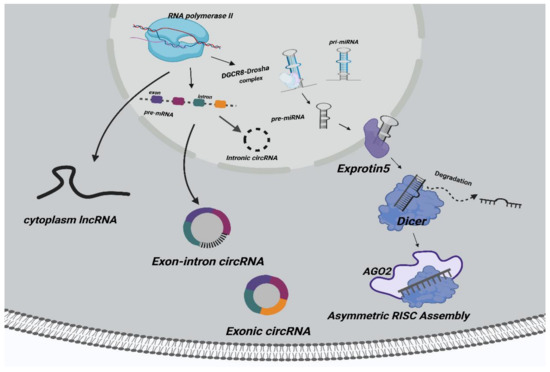
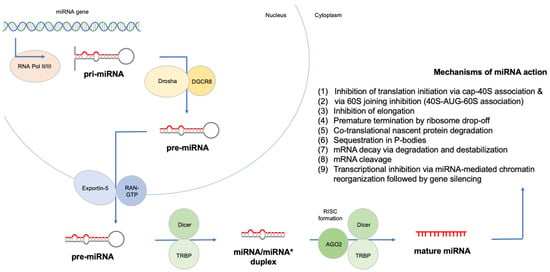
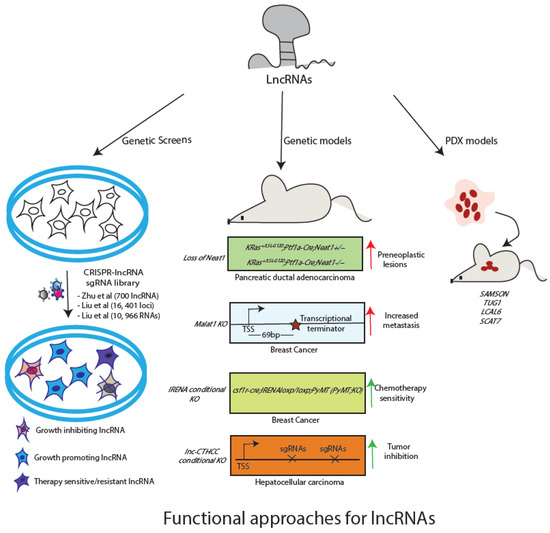
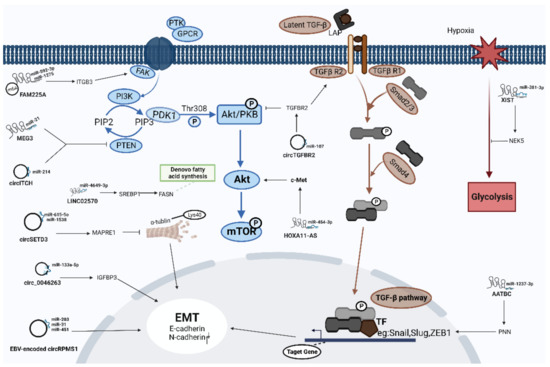
Although cancer research remains focused on protein-coding genes, non-coding genome regions and ncRNAs have gained ever-growing attention due to their central implication in regulation of gene expression and, thus, to tumorigenesis and cancer progression. Undoubtedly, microRNAs (miRNAs) and long noncoding RNAs (lncRNAs) represent the most studied classes of the family, but piwi-interacting RNAs (piRNAs), short-interfering RNAs (siRNAs), tRNA-derived fragments (tRFs), and circular RNAs (circRNAs) are emerging as novel promising targets of modern translational cancer research.

This Topical Collection of Cancers will focus on the molecular/biochemical functions of ncRNAs (miRNAs, lncRNAs, tRFs, piRNAs, circRNAs, etc.) in the complex background of tumorigenesis, cancer progression, and metastasis, as well as their clinical utility in modern molecular diagnostics for cancer diagnosis, prognosis, and treatment decisions/monitoring, supporting personalized disease management and precision medicine.

Dr. Margaritis Avgeris
Dr. Andreas Scorilas
Collection Editors

Manuscript Submission Information

Manuscripts should be submitted online at www.mdpi.com by registering and logging in to this website. Once you are registered, click here to go to the submission form. Manuscripts can be submitted until the deadline. All submissions that pass pre-check are peer-reviewed. Accepted papers will be published continuously in the journal (as soon as accepted) and will be listed together on the special issue website. Research articles, review articles as well as communications are invited. For planned papers, a title and short abstract (about 250 words) can be sent to the Editorial Office for assessment.

Submitted manuscripts should not have been published previously, nor be under consideration for publication elsewhere (except conference proceedings papers). All manuscripts are thoroughly refereed through a single-blind peer-review process. A guide for authors and other relevant information for submission of manuscripts is available on the Instructions for Authors page. Cancers is an international peer-reviewed open access semimonthly journal published by MDPI.

Please visit the Instructions for Authors page before submitting a manuscript. The Article Processing Charge (APC) for publication in this open access journal is 2900 CHF (Swiss Francs). Submitted papers should be well formatted and use good English. Authors may use MDPI's English editing service prior to publication or during author revisions.

Keywords

  • ncRNAs
  • miRNAs
  • lncRNAs
  • tRFs
  • tiRNAs
  • cricRNAs
  • siRNAs
  • piRNAs
  • exosomes
  • circulating ncRNAs
  • gene expression regulation
  • epigenetics
  • tumor heterogeneity
  • chemoresistance
  • tumor immunogenicity
  • miRISC
  • cancer progression
  • diagnosis
  • prognosis
  • personalized treatment
  • treatment monitoring

Benefits of Publishing in a Special Issue

  • Ease of navigation: Grouping papers by topic helps scholars navigate broad scope journals more efficiently.
  • Greater discoverability: Special Issues support the reach and impact of scientific research. Articles in Special Issues are more discoverable and cited more frequently.
  • Expansion of research network: Special Issues facilitate connections among authors, fostering scientific collaborations.
  • External promotion: Articles in Special Issues are often promoted through the journal's social media, increasing their visibility.
  • e-Book format: Special Issues with more than 10 articles can be published as dedicated e-books, ensuring wide and rapid dissemination.

Published Papers

Get Alerted

Add your email address to receive forthcoming issues of this journal.

XFacebookLinkedIn
Cancers - ISSN 2072-6694