Seismic Safety Assessment and Strengthening of Existing Constructions
Share This Topical Collection
Editor
Topical Collection Information
Dear Colleagues,
Earthquake engineering experts, public authorities, and the general public agree on the idea that the seismic safety and performance of the built environment is a matter of high priority. Furthermore, the widespread interest in methods addressing the seismic safety assessment of existing constructions reflects the global perception that such constructions are often exposed to disproportionate levels of seismic risk, as well as the need for rational and cost-effective interventions on the built environment. These methods range from standard-based approaches, that in many cases are based on simplified assumptions to ease their application, to fully probabilistic performance-based procedures that can express expected earthquake impacts using metrics more relevant to stakeholders.
In light of these considerations, the objective of this Topical Collection is to present and discuss different methodologies for the seismic safety assessment of existing constructions, ranging from simplified to fully probabilistic structure-specific approaches, as well as their application to different types of constructions. Original contributions containing fundamental and applied research, case studies, or reviewing the state-of-the-art are encouraged for submission to this Topical Collection.
Dr. Xavier Romão
Collection Editor
Manuscript Submission Information
Manuscripts should be submitted online at www.mdpi.com by registering and logging in to this website. Once you are registered, click here to go to the submission form. All submissions that pass pre-check are peer-reviewed. Accepted papers will be published continuously in the journal (as soon as accepted) and will be listed together on the collection website. Research articles, review articles as well as short communications are invited. For planned papers, a title and short abstract (about 250 words) can be sent to the Editorial Office for assessment.
Submitted manuscripts should not have been published previously, nor be under consideration for publication elsewhere (except conference proceedings papers). All manuscripts are thoroughly refereed through a single-blind peer-review process. A guide for authors and other relevant information for submission of manuscripts is available on the Instructions for Authors page. Buildings is an international peer-reviewed open access semimonthly journal published by MDPI.
Please visit the Instructions for Authors page before submitting a manuscript.
The Article Processing Charge (APC) for publication in this open access journal is 2600 CHF (Swiss Francs).
Submitted papers should be well formatted and use good English. Authors may use MDPI's
English editing service prior to publication or during author revisions.
Keywords
- standard-based method
- performance-based seismic assessment
- probabilistic risk assessment
- probabilistic loss assessment
- displacement-based assessment
- advanced modeling of structures
- simplified modeling of structures
- seismic performance criteria
Related Special Issues
Published Papers (19 papers)
Open AccessArticle
Cyclic Response Characteristics of SCC Extended End-Plate Reduced Web Section (RWS) Connections
by
Fahad Falah Almutairi and Konstantinos Daniel Tsavdaridis
Viewed by 289
Abstract
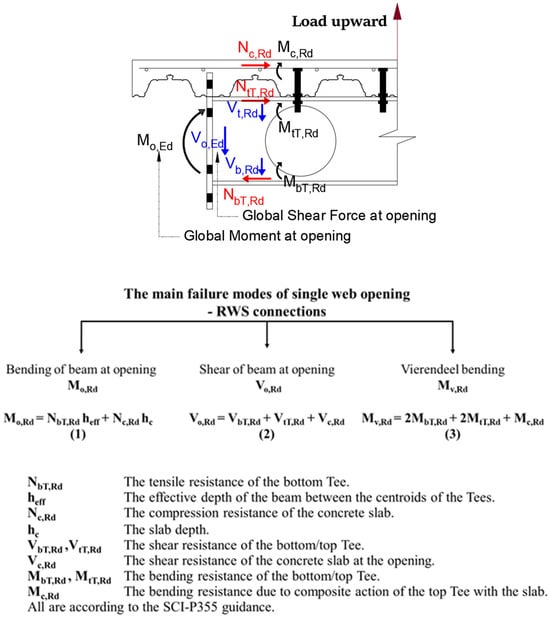
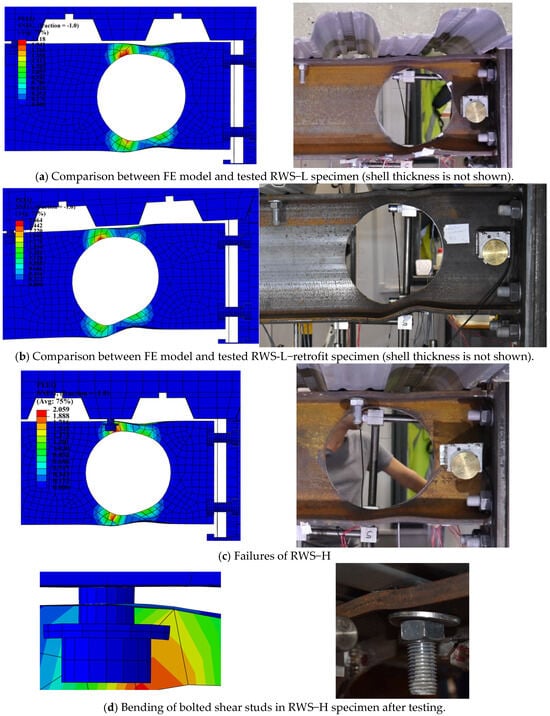
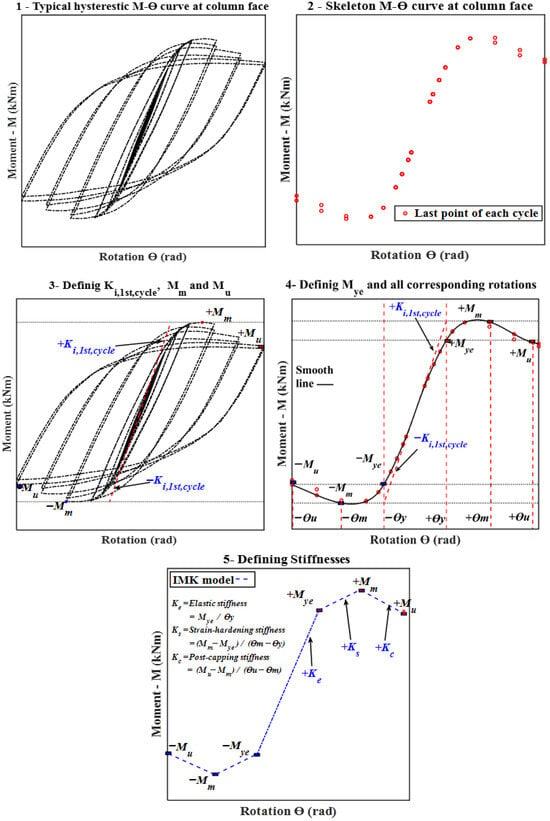
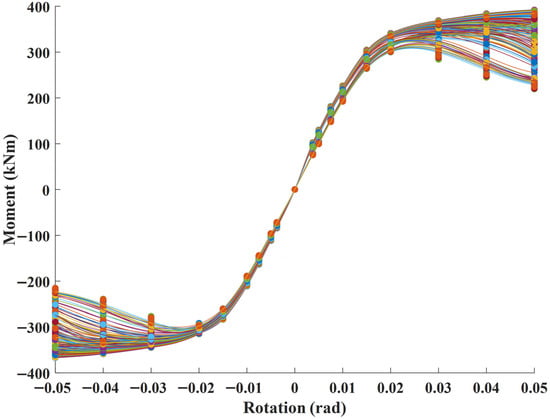
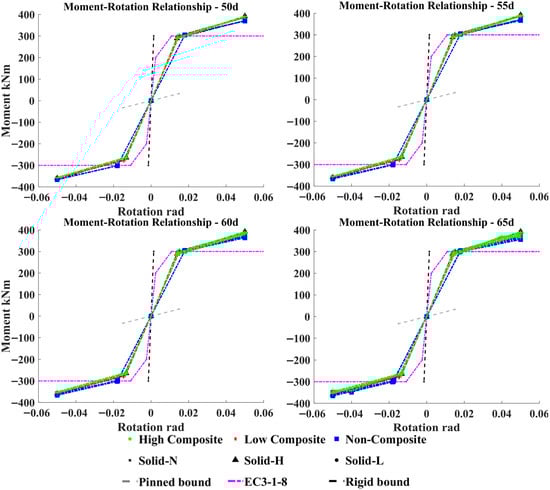
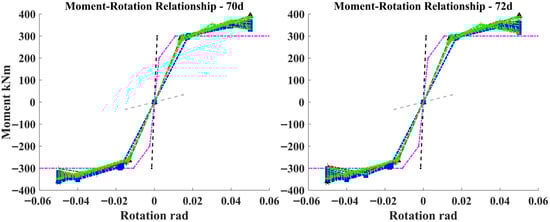
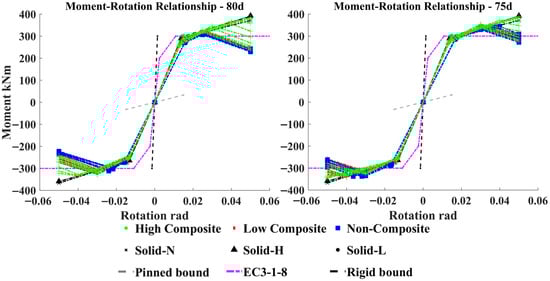
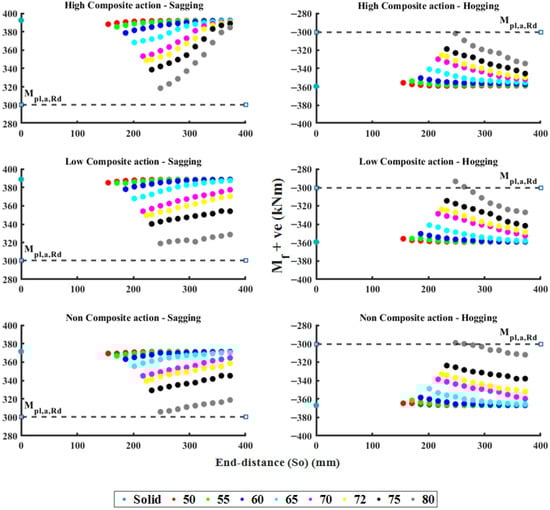
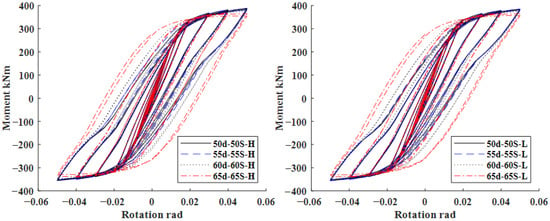
This study investigates the cyclic behaviour of demountable steel–concrete composite extended end-plate reduced web section (RWS) connections for the first time, aiming to facilitate post-seismic beam replacement. A validated high-fidelity finite element (FE) model was developed to analyse 285 FE models, evaluating response
[...] Read more.
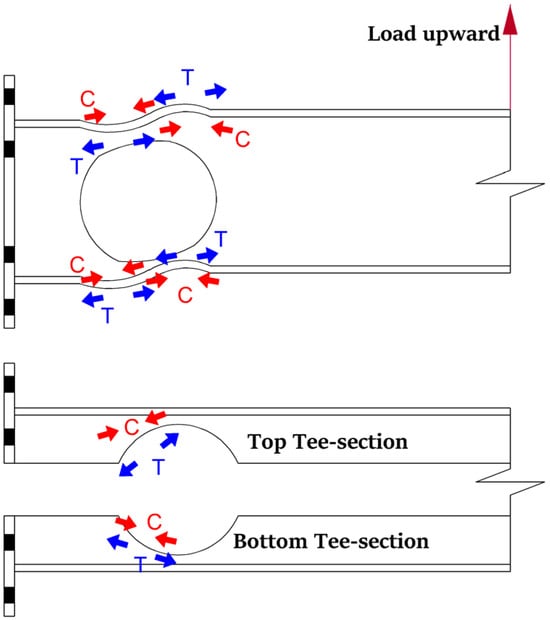
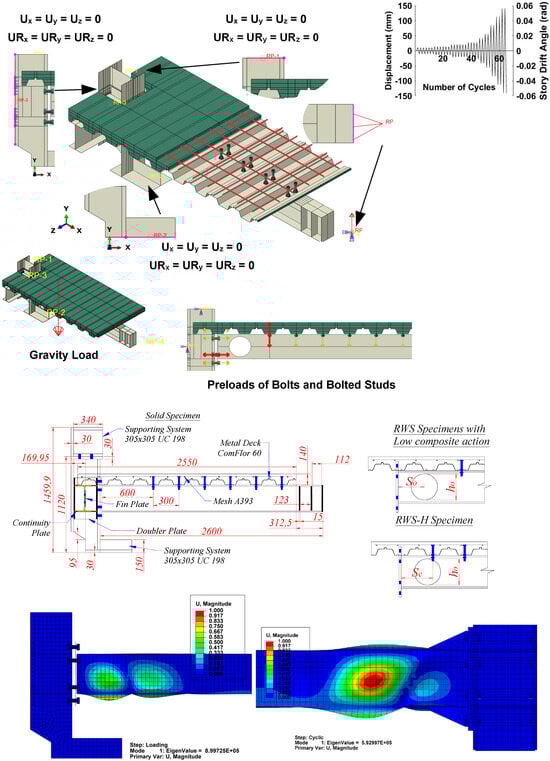
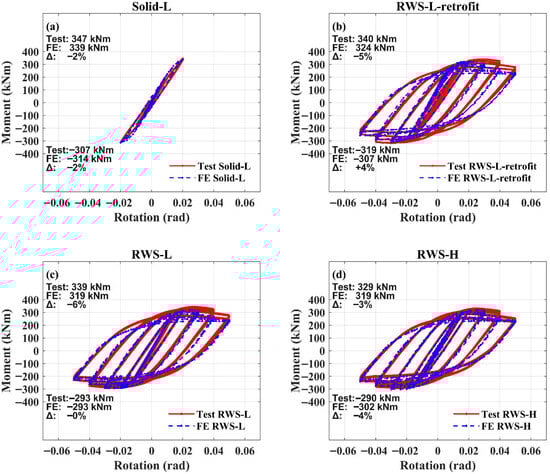
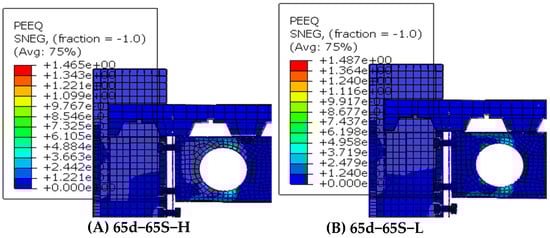
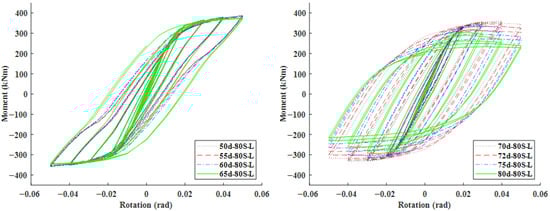
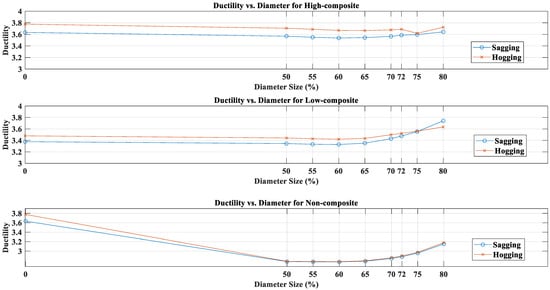
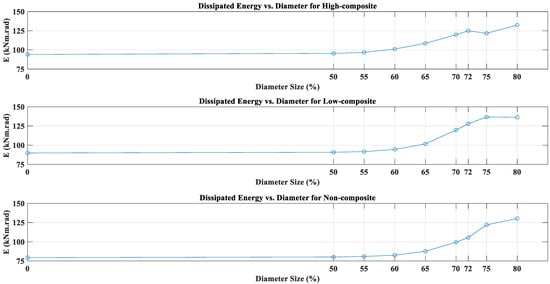
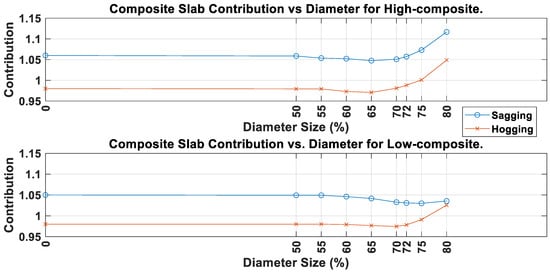
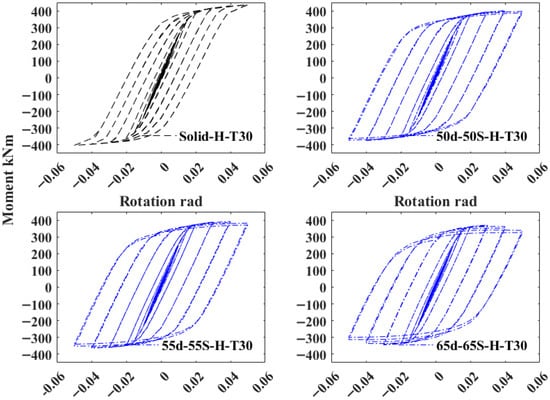
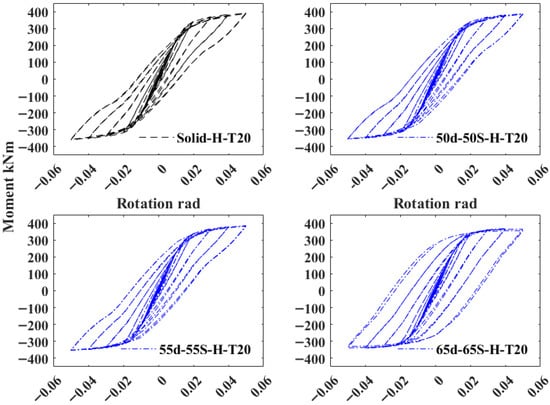
This study investigates the cyclic behaviour of demountable steel–concrete composite extended end-plate reduced web section (RWS) connections for the first time, aiming to facilitate post-seismic beam replacement. A validated high-fidelity finite element (FE) model was developed to analyse 285 FE models, evaluating response characteristics based on the Ibarra–Medina–Krawinkler model. Key parameters, including the influence of composite action over the web opening, web opening diameter, and end-distance, were considered. Findings indicate that RWS connections with medium to large web openings experience cyclic strength degradation while remaining compliant with American and European seismic standards. Additionally, bolted shear studs yielded a more stable and predictable contribution to the connection’s strength up to 5%, outperforming traditional welded studs in consistency. This research emphasises the importance of aligning web opening size and location with capacity design ratios between connection components for acceptable seismic performance, proposing specific web opening sizes and locations to enhance structural resilience.
Full article
►▼
Show Figures
Open AccessArticle
Preliminary Diagnostic Seismic Analysis of an In-Service Curved Prestressed Concrete Box Girder Bridge with a Mid-Span Hinge
by
Stefano Bozza, Alessandro Mazelli, Marco Fasan, Eric Puntel, Natalino Gattesco and Chiara Bedon
Viewed by 398
Abstract
Since a significant part of the Italian territory was not seismically classified until 2003, most existing bridges have been designed—for decades—disregarding earthquake-induced excitations. In fact, this means that load-bearing devices and shear keys of presently in-service infrastructures may not be up to current
[...] Read more.
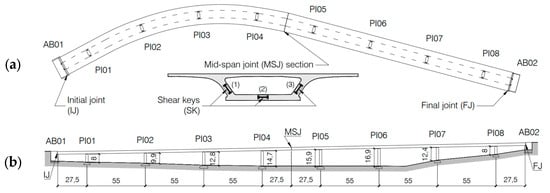
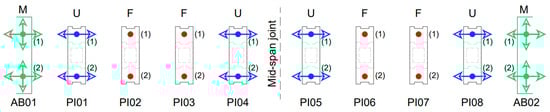
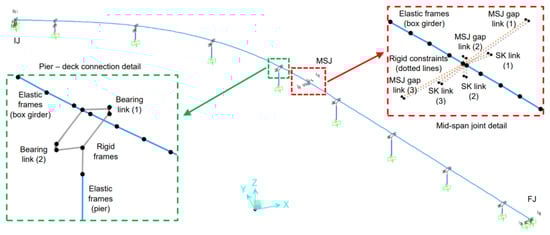
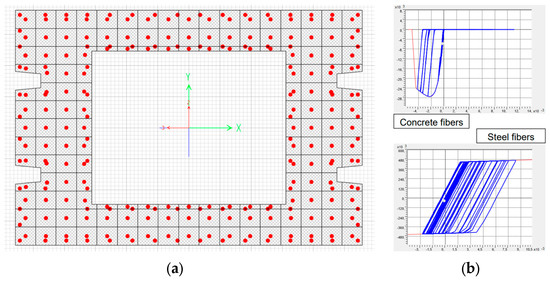
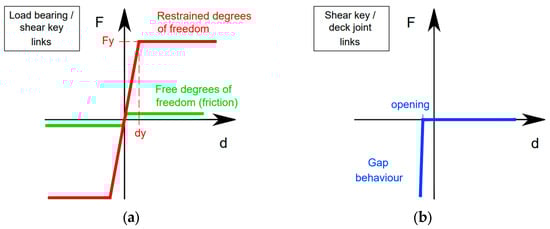
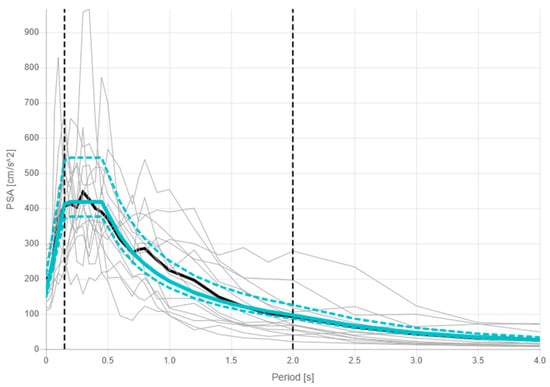
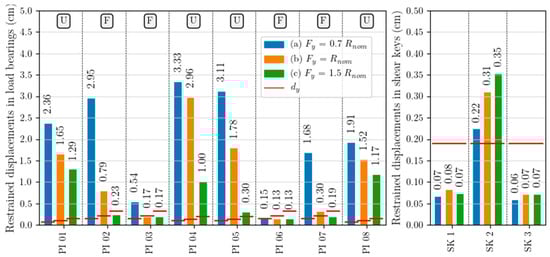
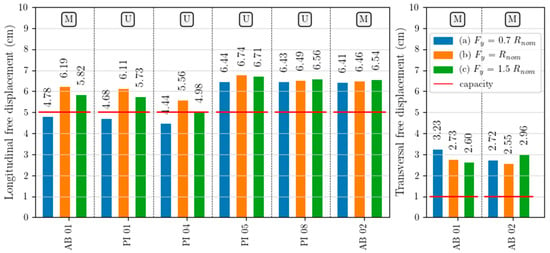
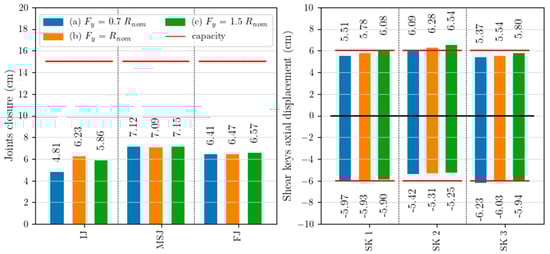
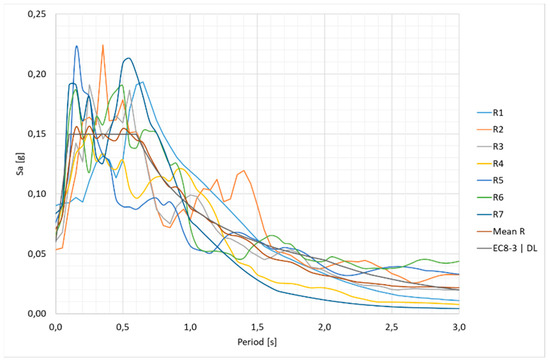
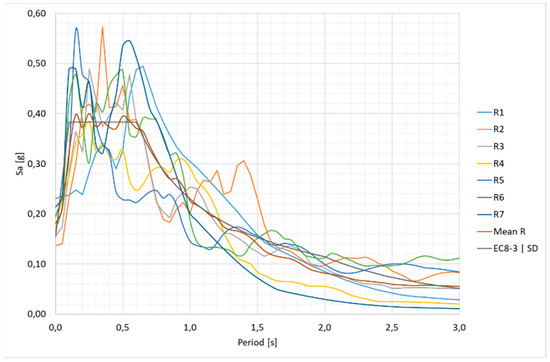
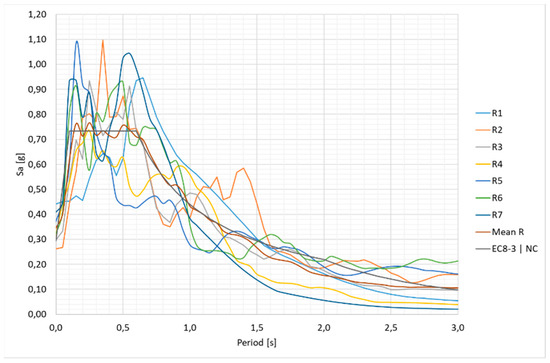
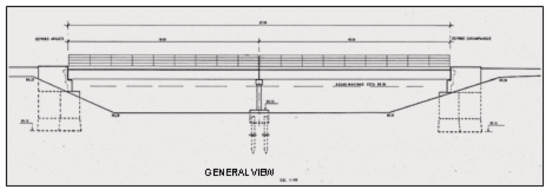
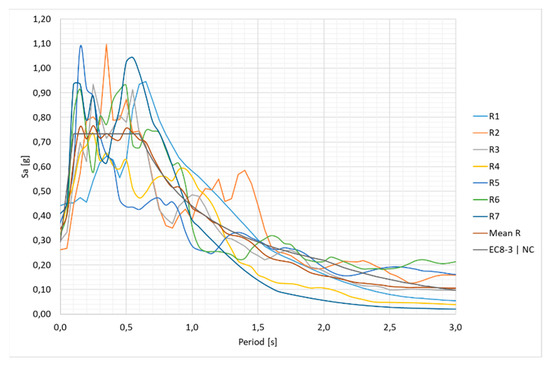
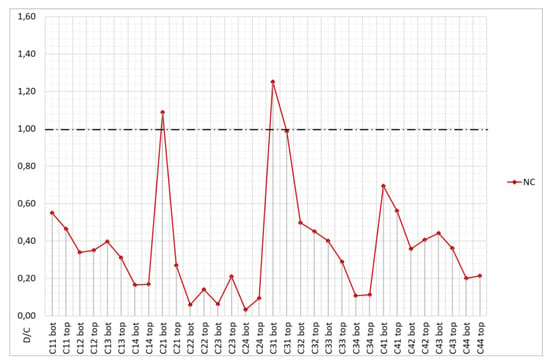
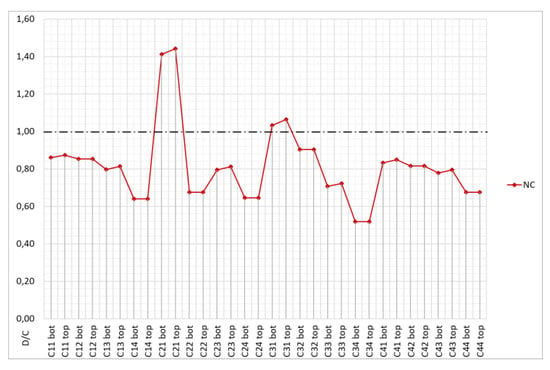
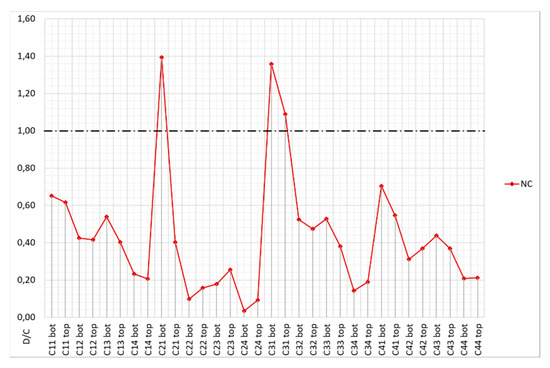
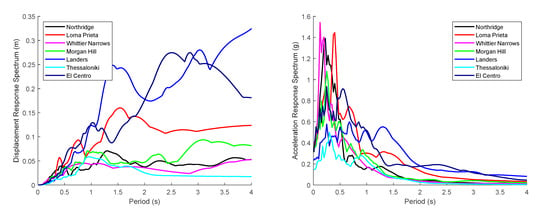
Since a significant part of the Italian territory was not seismically classified until 2003, most existing bridges have been designed—for decades—disregarding earthquake-induced excitations. In fact, this means that load-bearing devices and shear keys of presently in-service infrastructures may not be up to current codes, both in terms of resistance and displacement capacity. Robust investigations are hence required for verifications and possible retrofit. In this study, the seismic behaviour of a case study post-tensioned concrete bridge built in the 1980s is numerically analysed. The examined structure is 440 m long and composed of nine spans, built with precast segments using the balance cantilever construction method. The deck is divided into two parts connected by a hinged joint in the middle of the central span, obtained with three shear keys and originally designed to allow for thermal expansion only. Most importantly, the mid-span hinge, the end joints and the bearing devices were originally designed without considering the effects of seismic action. In order to preliminarily investigate the performance of devices and joints, the case study bridge is analysed by means of non-linear dynamic time history simulations, formulating different hypotheses about the non-linear behaviour of the load bearings. Forces and displacements over time are obtained for a set of seven accelerograms, and maximum values are compared to the capacity of the bridge devices. Results are then critically discussed.
Full article
►▼
Show Figures
Open AccessArticle
Attention-Enhanced Progressive Transfer Learning for Scalable Seismic Vulnerability Assessment of RC Frame Buildings
by
Kaushik M. Gondaliya, Konstantinos Daniel Tsavdaridis, Aanal Raval, Jignesh A. Amin and Komal Borisagar
Viewed by 725
Abstract
Urban infrastructure in seismic zones demands efficient and scalable tools for damage prediction. This study introduces an attention-integrated progressive transfer learning (PTL) framework for the seismic vulnerability assessment (SVA) of reinforced concrete (RC) frame buildings. Traditional simulation-based vulnerability models are computationally expensive and
[...] Read more.
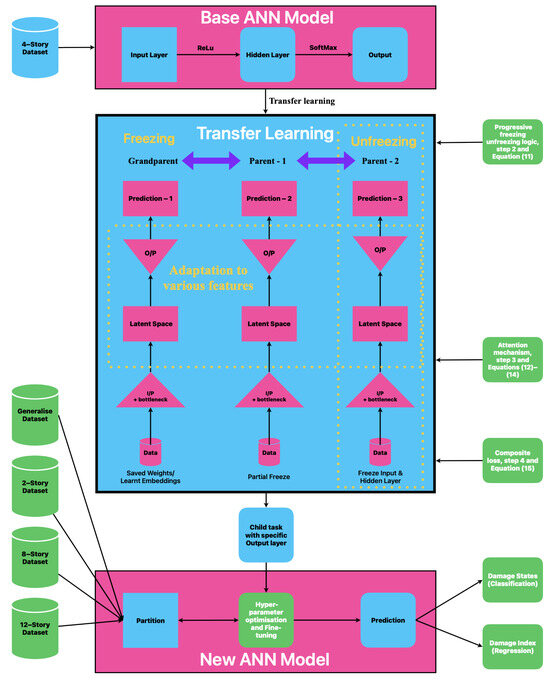
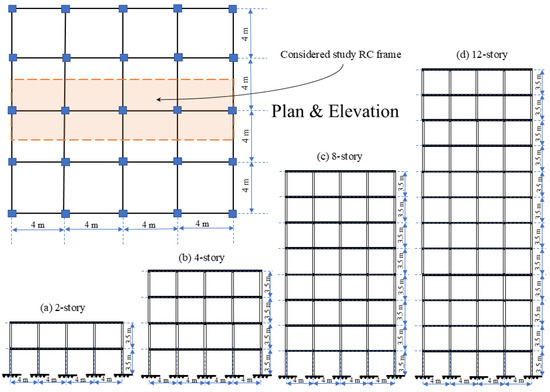
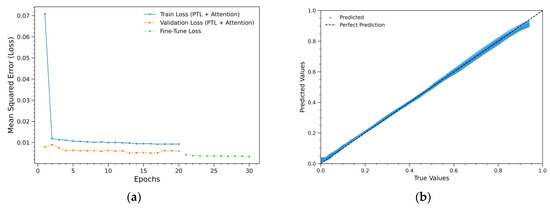
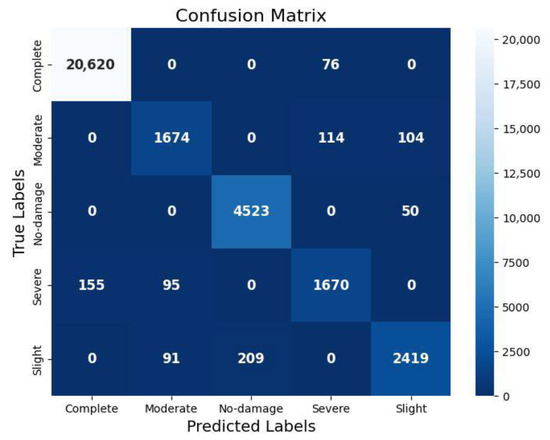
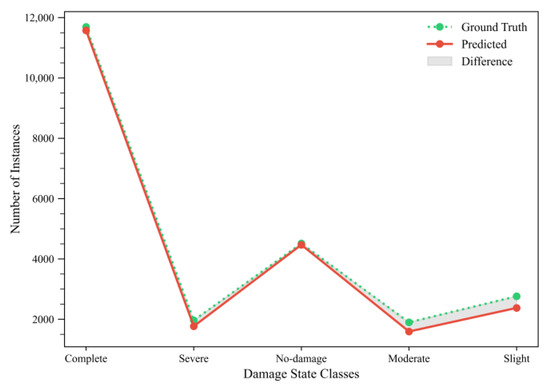
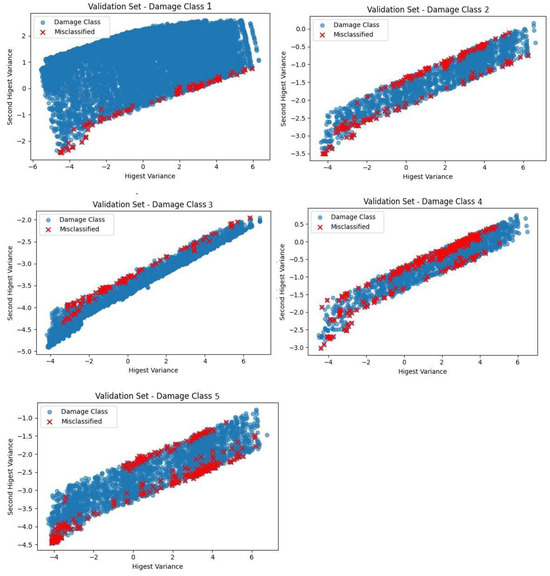
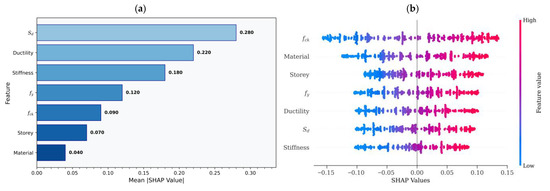
Urban infrastructure in seismic zones demands efficient and scalable tools for damage prediction. This study introduces an attention-integrated progressive transfer learning (PTL) framework for the seismic vulnerability assessment (SVA) of reinforced concrete (RC) frame buildings. Traditional simulation-based vulnerability models are computationally expensive and dataset-specific, limiting their adaptability. To address this, we leverage a pretrained artificial neural network (ANN) model based on nonlinear static pushover analysis (NSPA) and Monte Carlo simulations for a 4-story RC frame, and extended its applicability to 2-, 8-, and 12-story configurations via PTL. An attention mechanism is incorporated to prioritize critical features, enhancing interpretability and classification accuracy. The model achieves 95.64% accuracy across five damage categories and an R
2 of 0.98 for regression-based damage index predictions. Comparative evaluation against classical and deep learning models demonstrates superior generalization and computational efficiency. The proposed framework reduced retraining requirements across varying building heights, shows potential adaptability to other structural typologies, and maintains high predictive fidelity, making it a practical AI solution for structural risk evaluation in seismically active regions.
Full article
►▼
Show Figures
Open AccessArticle
Numerical Modelling and Damage Assessment Criteria for FRP-Retrofitted RC Columns
by
Inês Sousa, Rita Peres, Rita Couto, Rita Bento and José Miguel Castro
Cited by 4 | Viewed by 1252
Abstract
The numerical modelling procedures and damage criteria of both existing and retrofitted reinforced concrete (RC) elements are crucial for reliable seismic assessment and the retrofitting of existing RC buildings. A widely used retrofitting technique involves the application of fiber-reinforced polymers (FRPs) to vulnerable
[...] Read more.
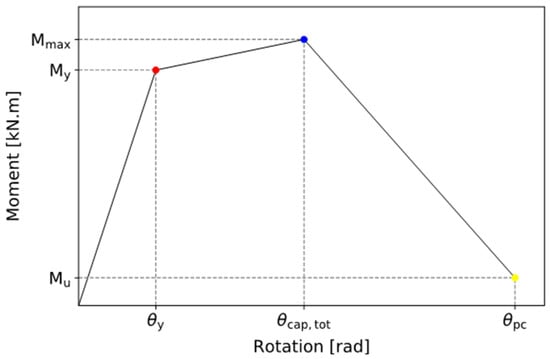
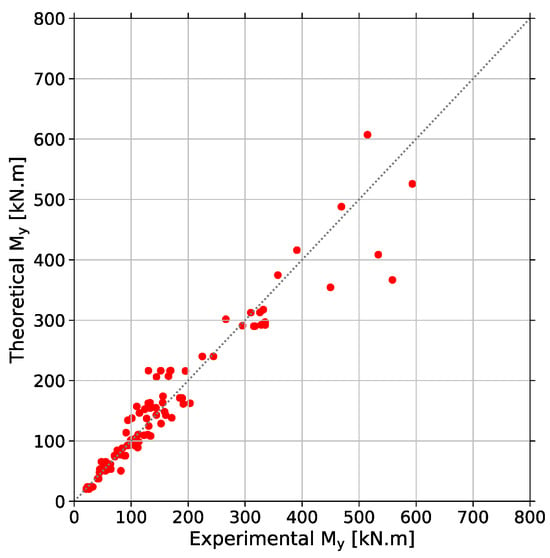
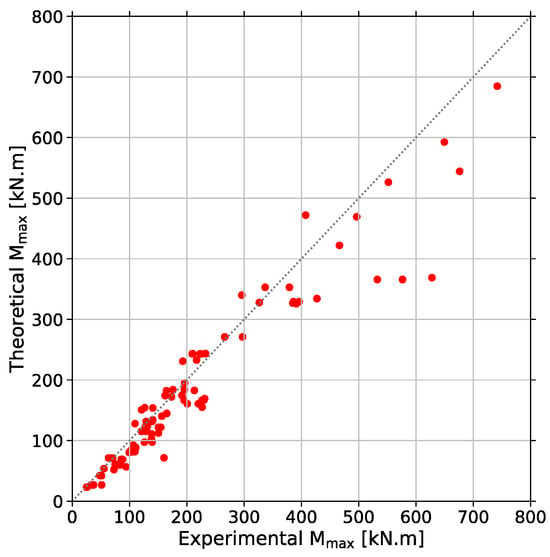
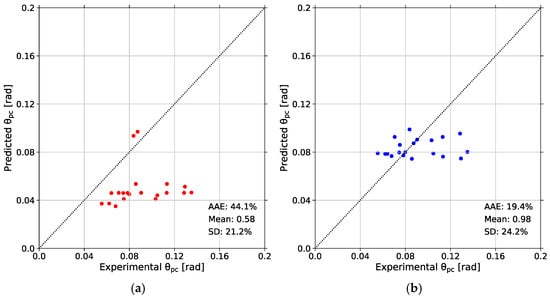
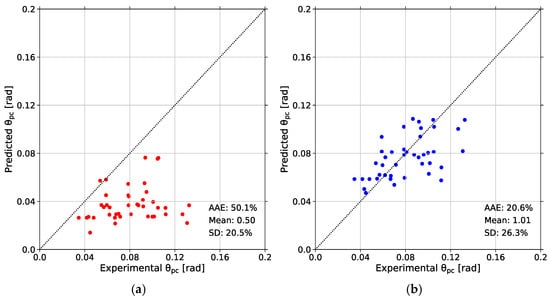
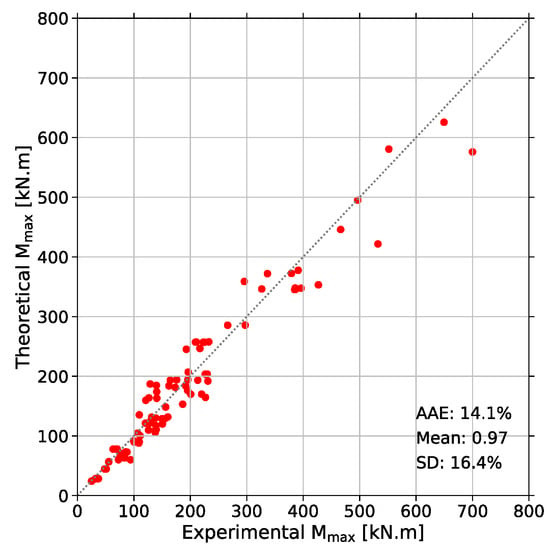
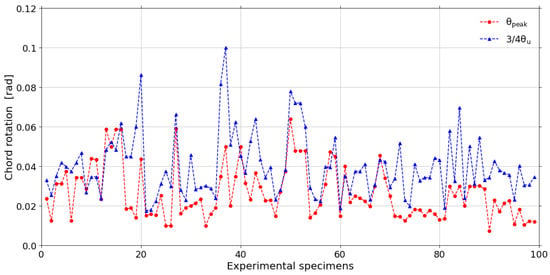
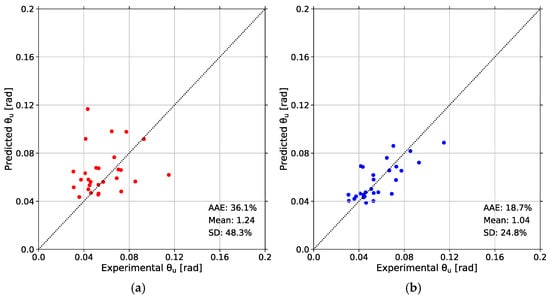
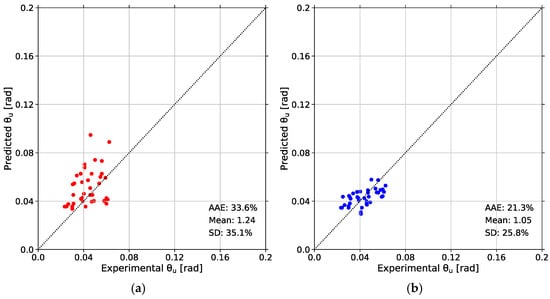
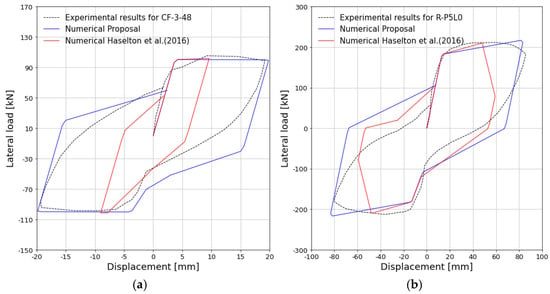
The numerical modelling procedures and damage criteria of both existing and retrofitted reinforced concrete (RC) elements are crucial for reliable seismic assessment and the retrofitting of existing RC buildings. A widely used retrofitting technique involves the application of fiber-reinforced polymers (FRPs) to vulnerable RC elements, enhancing their flexural and shear capacities. However, the current version of EC8-3 does not explicitly provide guidelines for numerical modelling, nor does it offer specific information on the assessment of retrofitting elements. This study focuses on developing a concentrated plasticity modelling approach and defining the damage state criteria for retrofitted RC columns with FRPs, based on experimental data from the literature. A database comprising 99 FRP-retrofitted RC columns was compiled, and regression analysis procedures were used to calibrate the peak load rotation, ultimate rotation, and post-capping rotation capacities. The modelling approach was validated through comparison with existing formulations using OpenSees, and the results indicate its adequacy for the seismic assessment of retrofitted buildings. This research advances the seismic assessment of FRP-retrofitted RC elements by introducing a novel trilinear moment–rotation model and refined damage criteria, which provide higher predictive accuracy in comparison to existing proposals. It also addresses critical gaps in seismic assessment practices by proposing the peak load rotation as a more reliable SD limit state threshold for retrofitted columns.
Full article
►▼
Show Figures
Open AccessArticle
Numerical Seismic Fragility Analysis of Glass Curtain Walls: Gaps and Challenges in Modelling Optimization and Limit Performance Indicators
by
Nicola Cella and Chiara Bedon
Cited by 2 | Viewed by 2288
Abstract
Glass facades are known to be fascinating building systems that require specific design strategies, experimental protocols and simulation tools. Especially for seismic-resistant buildings, their mechanical performance should be verified against possible failure mechanisms. For this, both numerically optimized and robust approaches are needed,
[...] Read more.
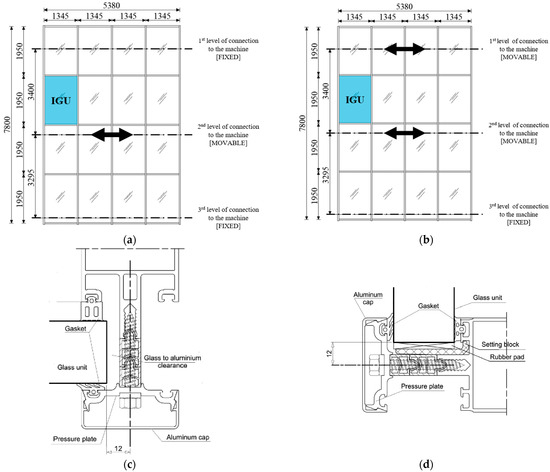
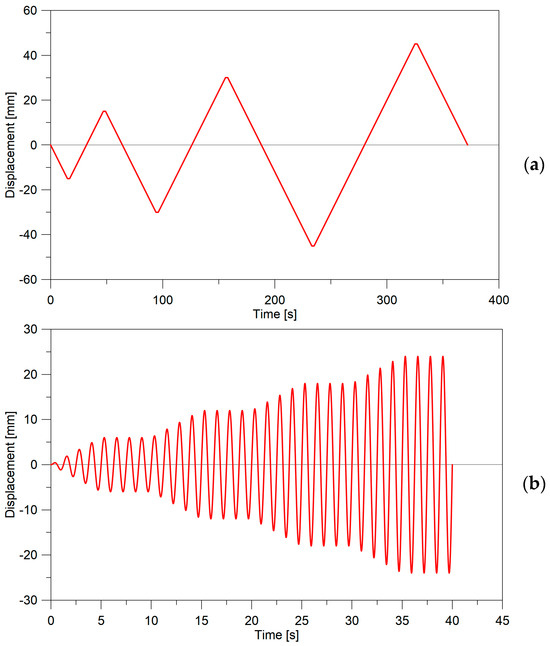
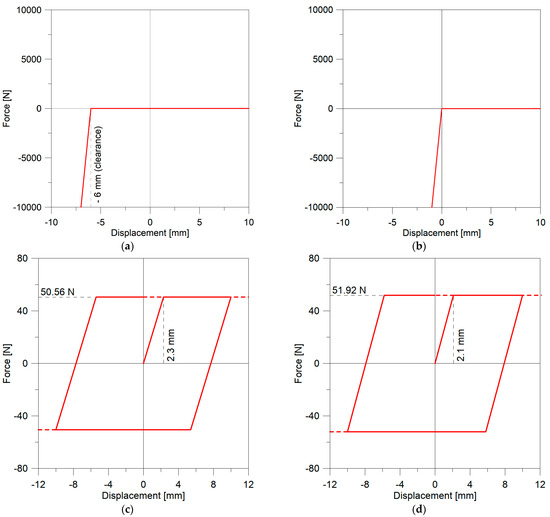
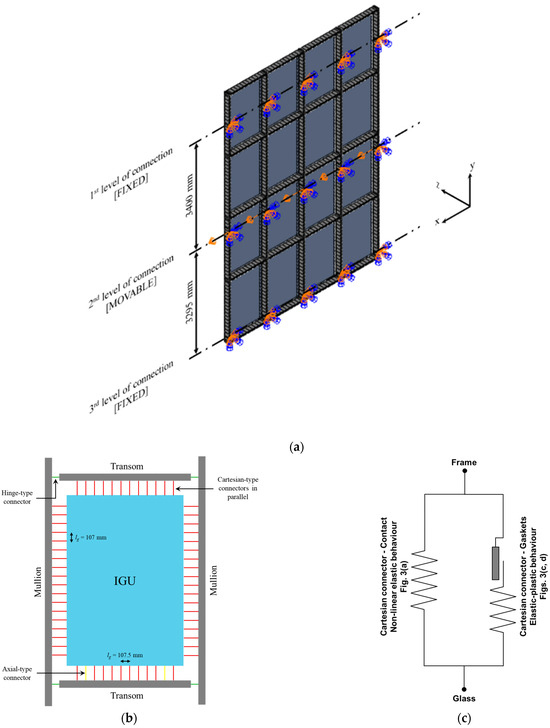
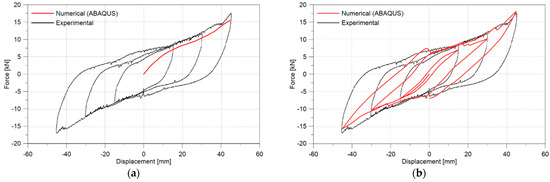
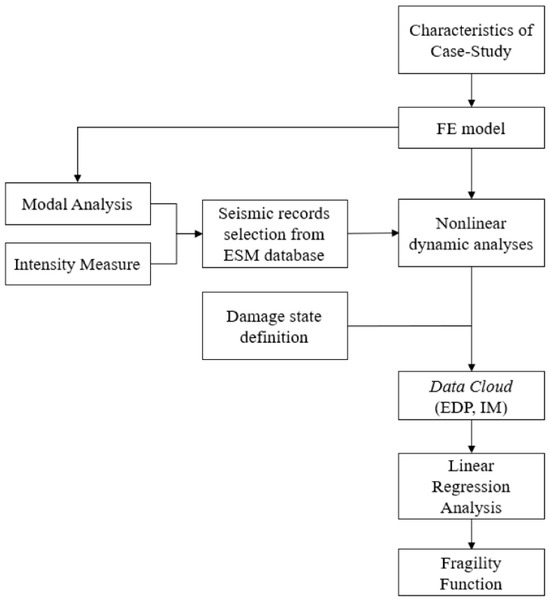
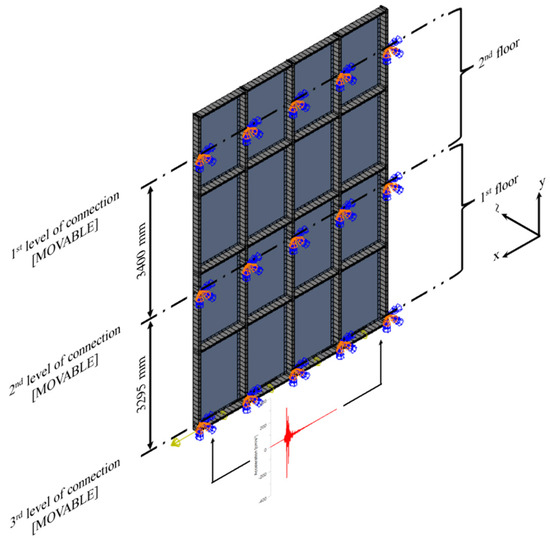
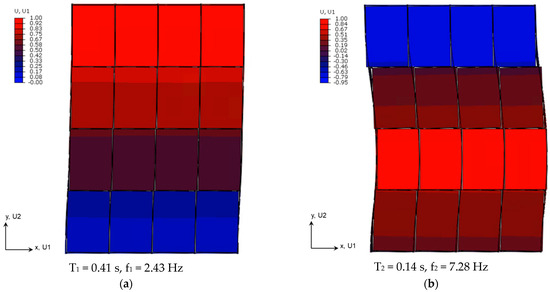
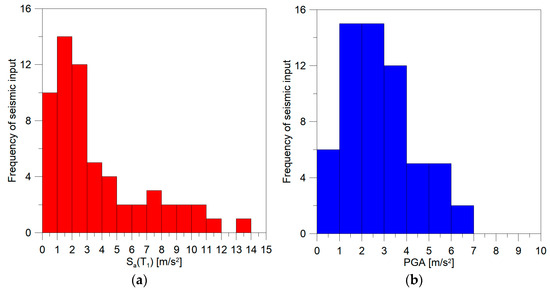
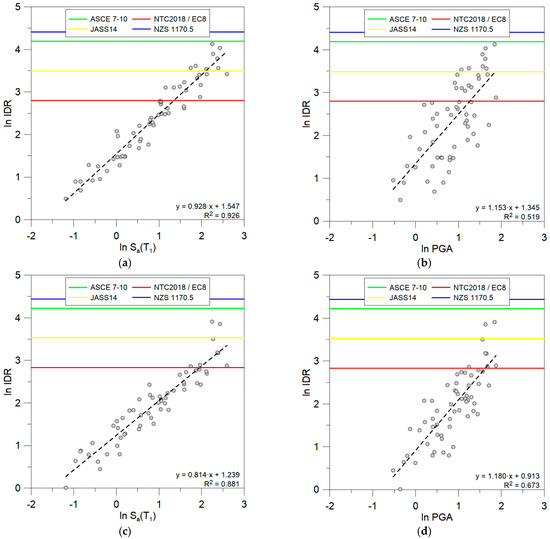
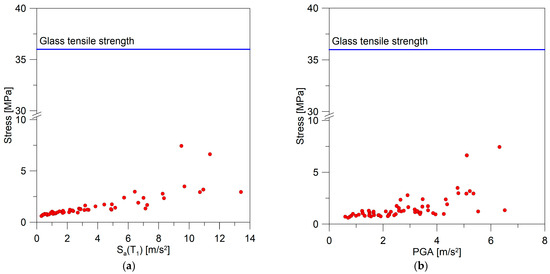
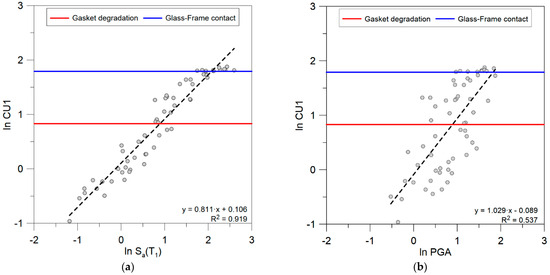
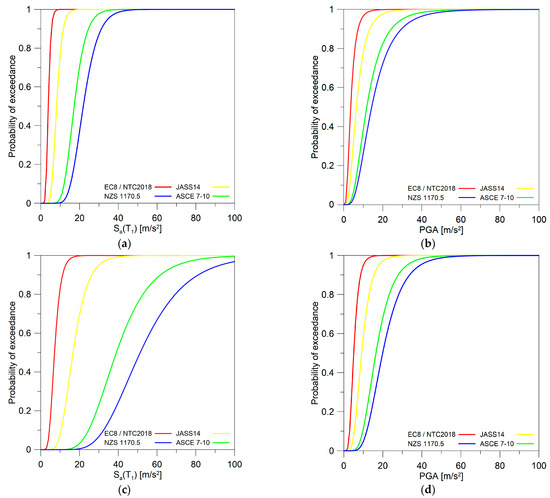
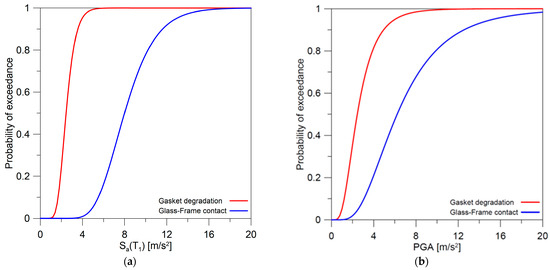
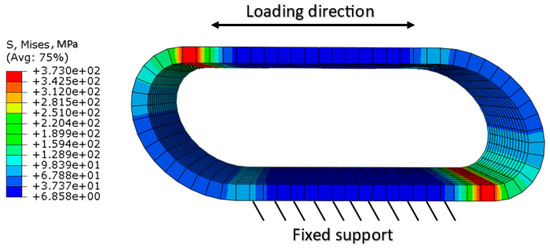
Glass facades are known to be fascinating building systems that require specific design strategies, experimental protocols and simulation tools. Especially for seismic-resistant buildings, their mechanical performance should be verified against possible failure mechanisms. For this, both numerically optimized and robust approaches are needed, along with tools to support designers. Fragility curves represent, in this sense, a practical approach for many structural typologies and systems. In this paper, attention is given to the development and assessment of a geometrically simplified and mechanically optimized FE numerical model for the non-linear dynamic analysis of glass curtain walls (GCWs). Its potential and gaps in its calibration and prediction capacity, both at the global and local level, are addressed on the base of earlier experimental and numerical studies. A fragility analysis is then carried out by taking advantage of the cloud analysis method to verify the real capacity of a typical GCW and the performance restrictions that are presently recommended by existing standards for construction. A total of 60 non-linear dynamic analyses are carried out for GCWs under real seismic acceleration to capture the maximum effects and possible failure mechanisms. An analysis of the parametric results is then carried out for several performance indicators of practical interest and various technical documents of the literature. As shown, there is a major effect of global and local mechanisms that optimized numerical models should properly capture. At the same time, according to existing technical documents, there is a clear need for more efficient limit values and performance indicators for the design of safe and optimized seismic-resistant GCWs.
Full article
►▼
Show Figures
Open AccessArticle
Effect of U-Shaped Metallic Dampers on the Seismic Performance of Steel Structures based on Endurance-Time Analysis
by
Farhad Farajiani, Farzaneh Elyasigorji, Sina Elyasigorji, Mohammad Javad Moradi and Visar Farhangi
Cited by 12 | Viewed by 3566
Abstract
Seismic performance of steel moment-resisting frames is investigated through the incorporation of U-shaped metallic dampers. The primary objective is to assess the effectiveness of these dampers in mitigating seismic responses by utilizing various analysis techniques. Two representative structural configurations (5 and 10-story) are
[...] Read more.
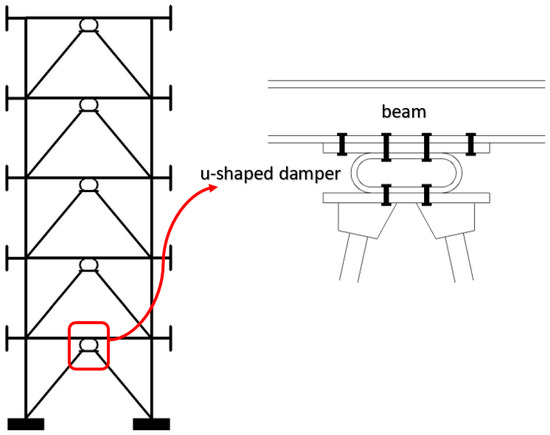
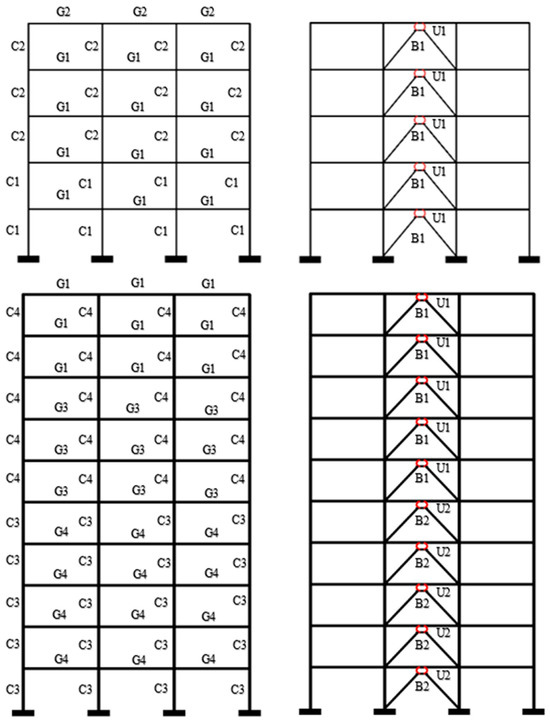
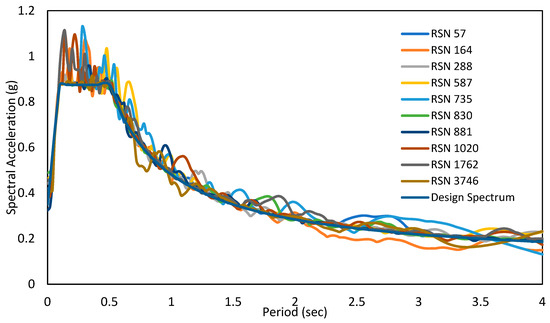
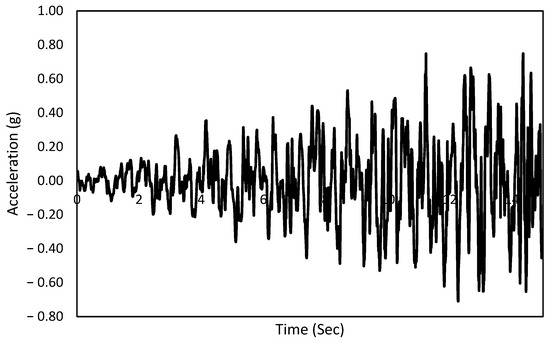
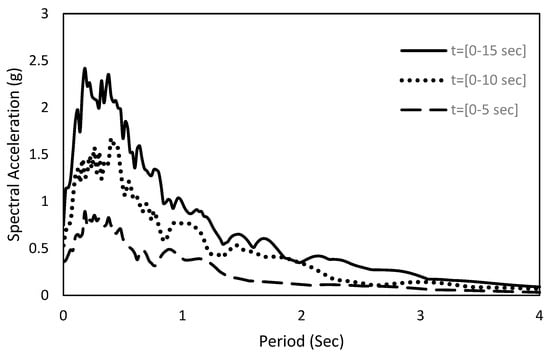
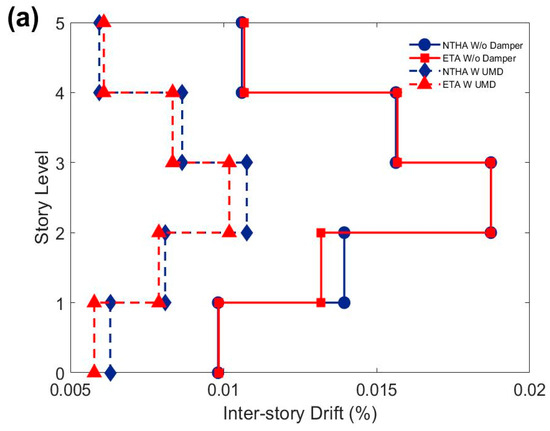
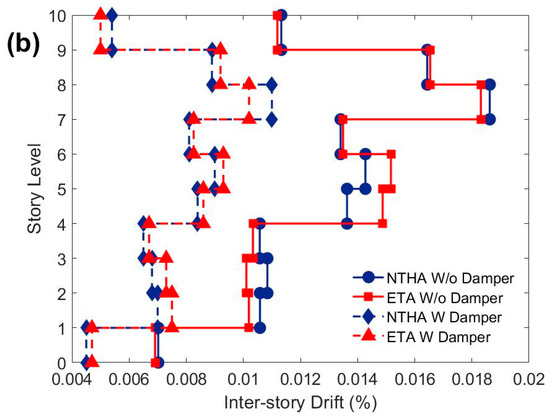
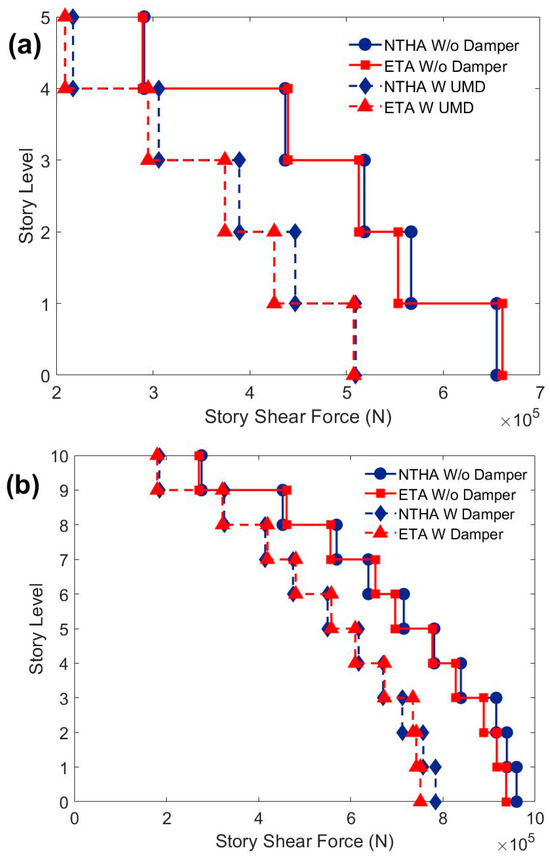
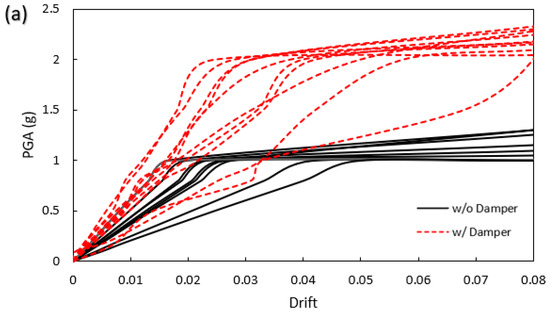
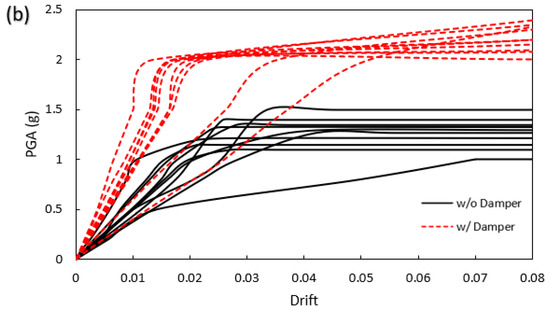
Seismic performance of steel moment-resisting frames is investigated through the incorporation of U-shaped metallic dampers. The primary objective is to assess the effectiveness of these dampers in mitigating seismic responses by utilizing various analysis techniques. Two representative structural configurations (5 and 10-story) are studied in both damped and undamped states to reveal the impact of dampers on seismic response reduction. The study utilizes the endurance time analysis (ETA) method, known for its efficiency in evaluating structural seismic performance. To validate the analysis results, a benchmark comparison is made through nonlinear time history analysis (NTHA). Incremental dynamic analysis (IDA) is also conducted to assess structures’ intensity measures with respect to their damage intensity index. The findings demonstrate that U-shaped metallic dampers substantially reduce inter-story drift and story shear forces. Importantly, a close alignment between the results obtained from ETA and NTHA underscores the reliability of the former in assessing seismic performance with supplemental damping devices.
Full article
►▼
Show Figures
Open AccessArticle
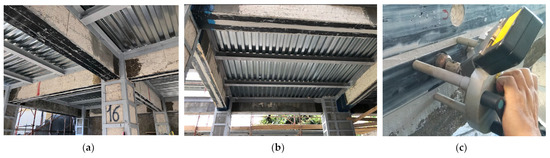
Seismic Retrofit of Concrete Buildings Damaged by Corrosion: A Case Study in Southern Italy
by
Michele Fabio Granata
Cited by 11 | Viewed by 4775
Abstract
A case study of a building in southern Italy, subjected to high degradation by corrosion and waiting to be assessed for retrofit interventions, is presented. The owner required modifications to the building configuration, including a new layout of the floors and retrofitting for
[...] Read more.
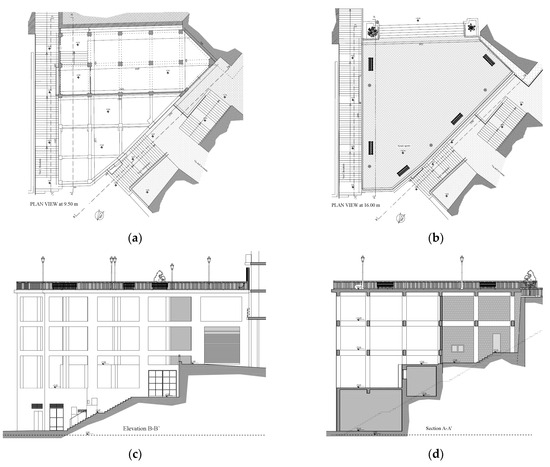
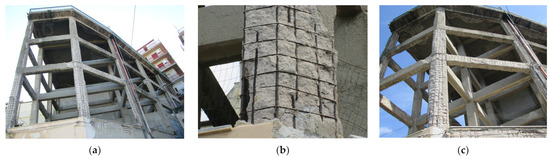
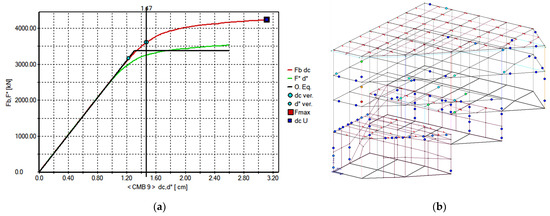
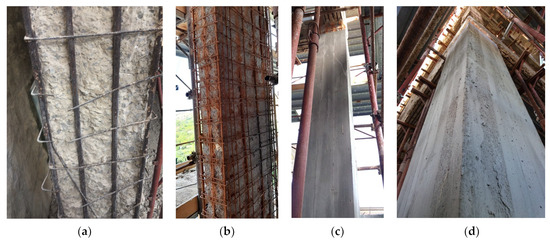
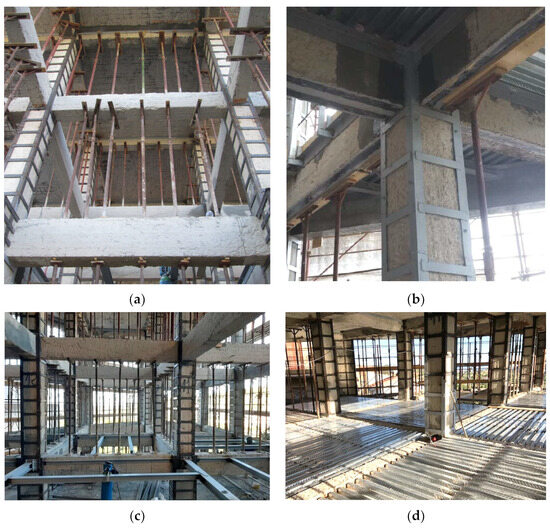
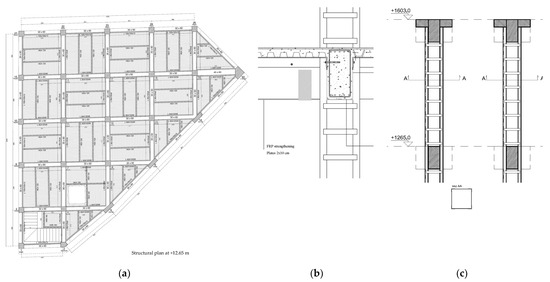
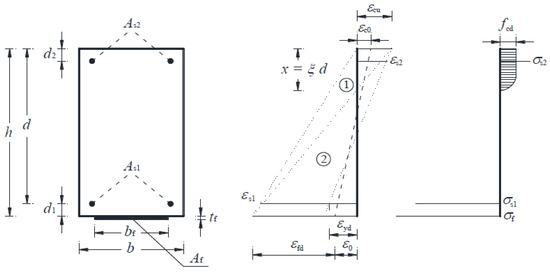
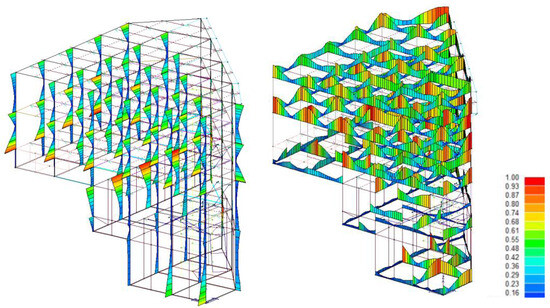
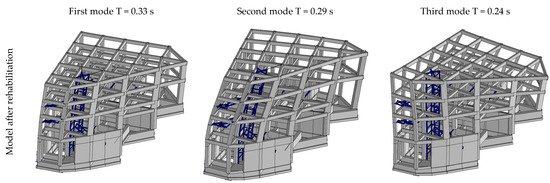
A case study of a building in southern Italy, subjected to high degradation by corrosion and waiting to be assessed for retrofit interventions, is presented. The owner required modifications to the building configuration, including a new layout of the floors and retrofitting for a high level of seismic load. A double strategy of an assessment and retrofit was carried out: dynamic linear and static non-linear analyses were performed, and the results were compared. Afterwards, a global strategy of mass and stiffness redistribution was implemented together with different retrofit interventions on the foundations, columns, and beams of the framed structure, such as reinforced concrete and steel jacketing, the application of FRP plates and fabrics, new steel elements, and steel–concrete composite floors. The results of the intervention are discussed and the implications of corrosion on the structures are explored. From the results obtained, it is possible to see how the use of different techniques for strengthening and passive seismic protection strategy can allow engineers to obtain the result of structural adaptation to earthquakes with low-cost interventions. The widespread adoption of steel jackets, coupled with the construction of floors using a steel–concrete composite structure, grants a good confinement of the beam–column r.c. joints, together with the overall strengthening of the existing structure. The adoption of CFRP wrapping at the lower edge of the beams implies a limited increase in thickness and the limited interventions of partial demolition from the existing structural members. A critical review of the steel jacketing aspects in terms of bending and shear strengthening is reported by considering this technique in the form of a steel exoskeleton containing the damaged concrete structure, by confining concrete elements, and by increasing the performance for both gravitational and seismic loads.
Full article
►▼
Show Figures
Open AccessEditor’s ChoiceArticle
Influence of Masonry Infill Walls on the Seismic Assessment of Non-Seismically Designed RC Framed Structures
by
Rodrigo Falcão Moreira, Humberto Varum and José Miguel Castro
Cited by 20 | Viewed by 4428
Abstract
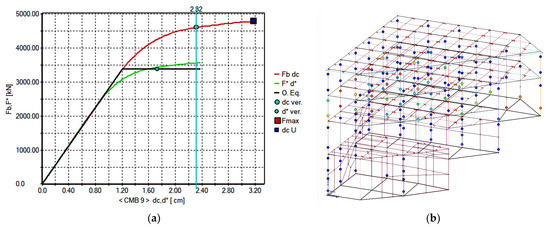
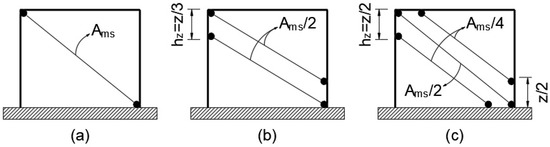
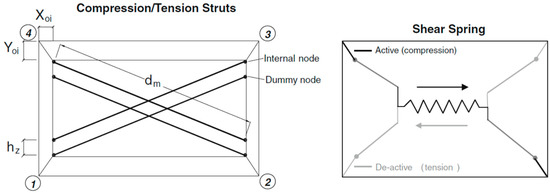
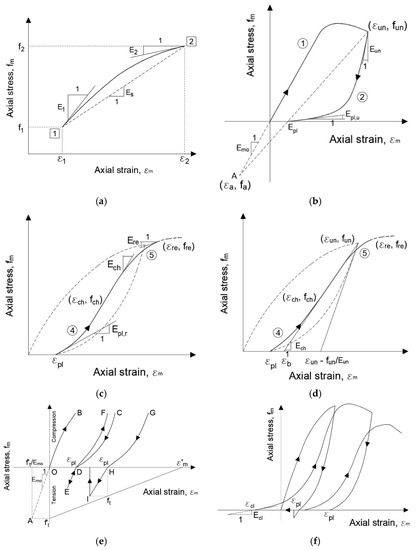
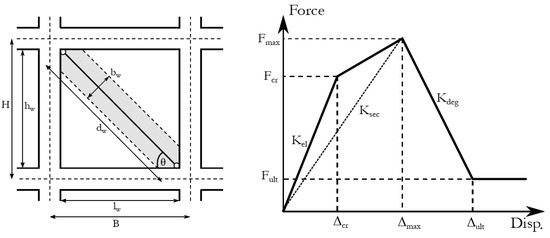
This paper examines how the decision to include (or exclude) masonry infill walls in the modelling of non-seismically designed RC framed structures can affect the results of the EC8-3 seismic assessment process. A frequently used macro-modelling technique for the simulation of infill panels
[...] Read more.
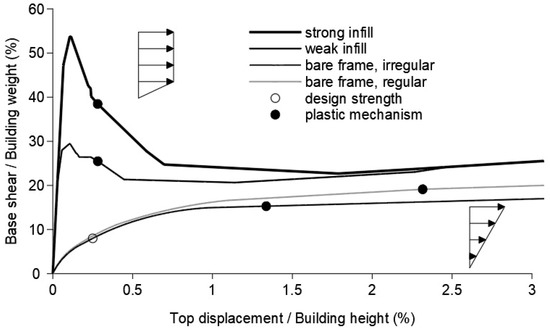
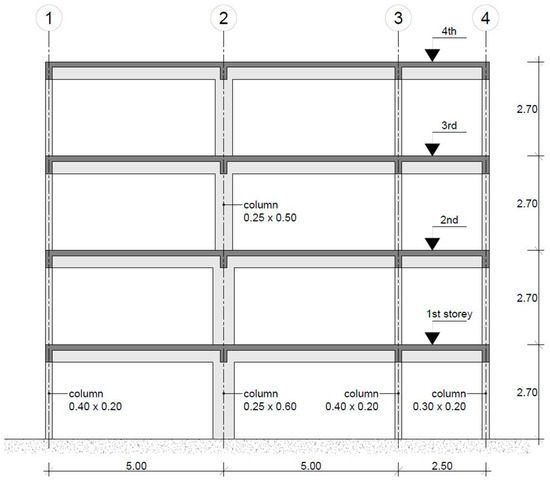
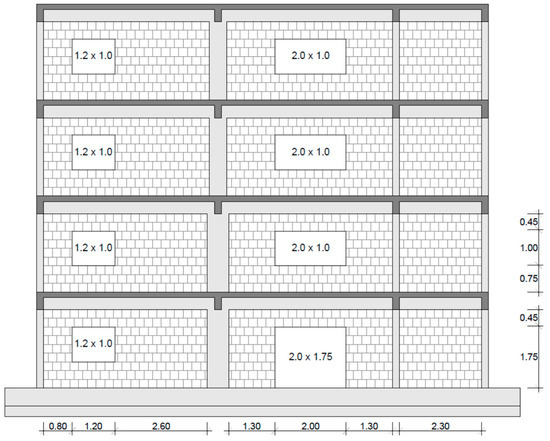
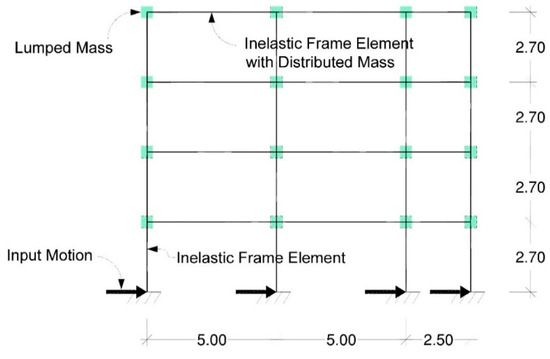
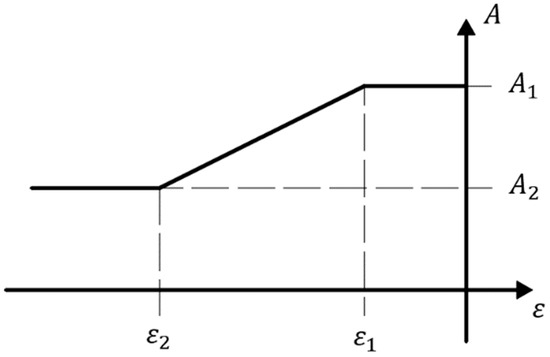
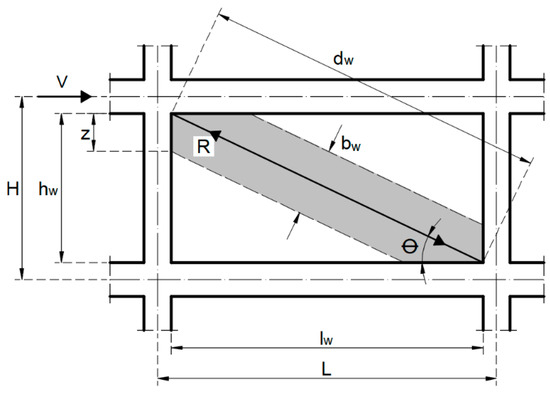
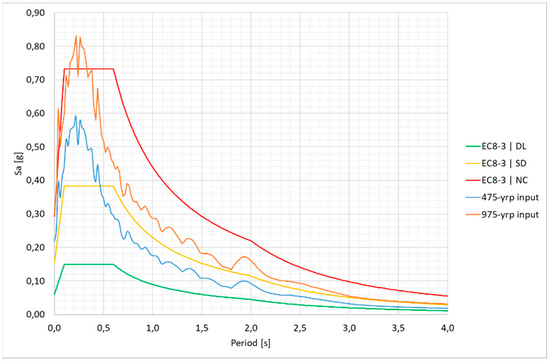
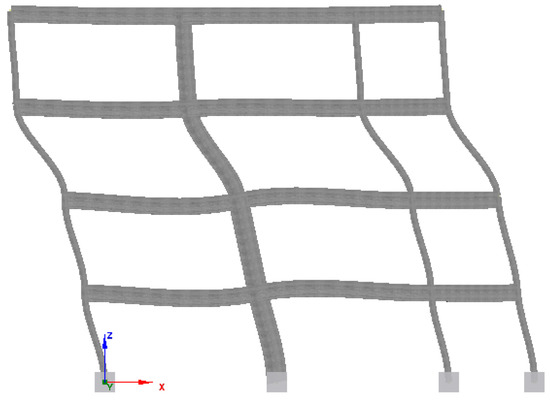
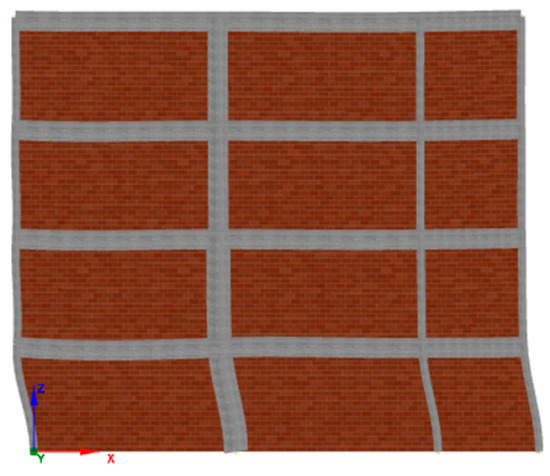
This paper examines how the decision to include (or exclude) masonry infill walls in the modelling of non-seismically designed RC framed structures can affect the results of the EC8-3 seismic assessment process. A frequently used macro-modelling technique for the simulation of infill panels within bounding RC members is first reviewed. A case-study application follows in which the seismic assessment of a sample structure is carried out, with and without considering the effect of its infill walls, using nonlinear static and dynamic analysis models. The obtained results are then discussed according to the applicable limit states’ performance requirements, and conclusions are drawn regarding the overall outcome. The study indicates that, when low and medium seismic input motions constitute the base demand for the assessment of older-type RC framed buildings, the protection provided to the RC members by the confined masonry infill panels should not be neglected. Moreover, it shows that the identification of the most likely collapse mechanism might also be significantly influenced by the modelling decision in question. As such, the default recommendation is to include masonry infill walls in the modelling of such structures.
Full article
►▼
Show Figures
Open AccessArticle
Predicting Seismic Collapse Safety of Post-Fire Steel Moment Frames
by
Esmaeil Mohammadi Dehcheshmeh, Parya Rashed, Vahid Broujerdian, Ayoub Shakouri and Farhad Aslani
Cited by 13 | Viewed by 3555
Abstract
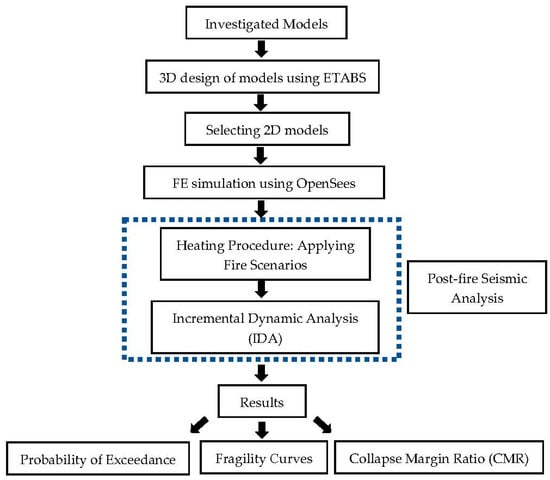
This paper summarizes a study focused on evaluating the post-fire performance of steel Intermediate Moment Frames (IMFs) following earthquakes. To this aim, archetypes comprising 3-bay IMFs with three different heights were seismically designed, and their two-dimensional finite element models were created in OpenSees
[...] Read more.
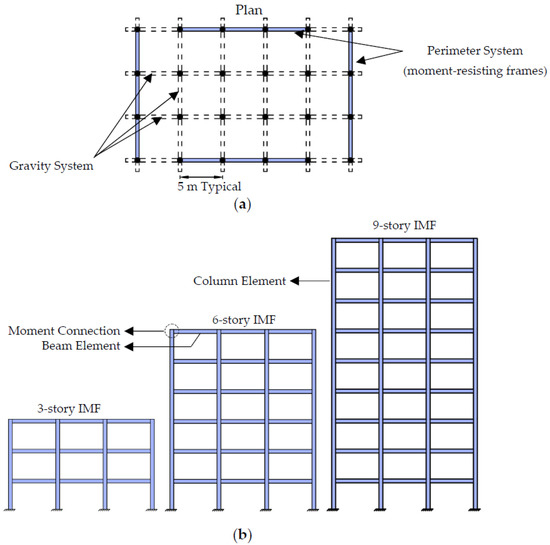
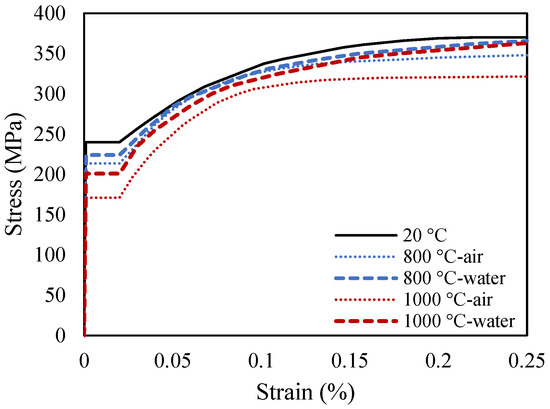
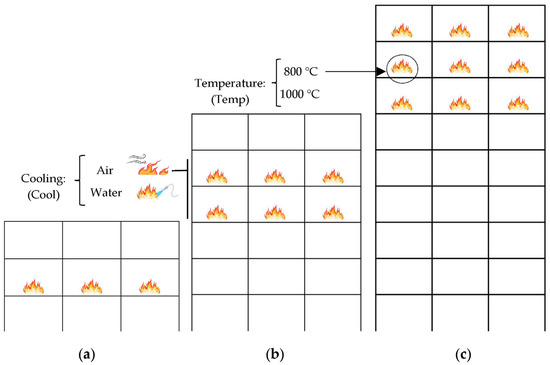
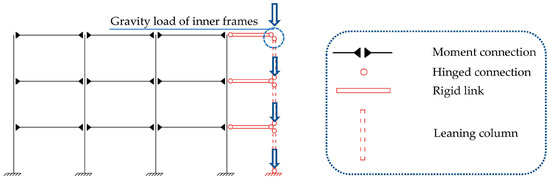
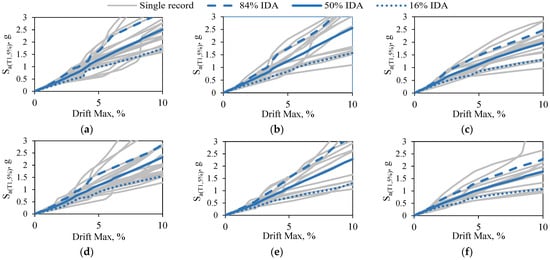
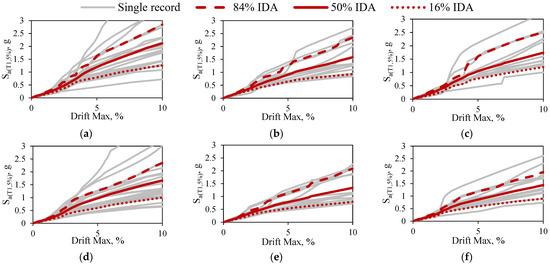
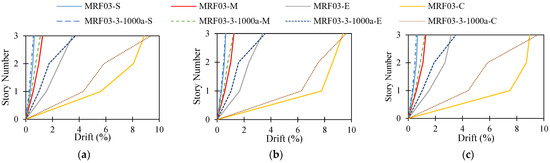
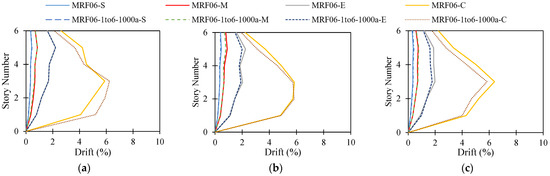
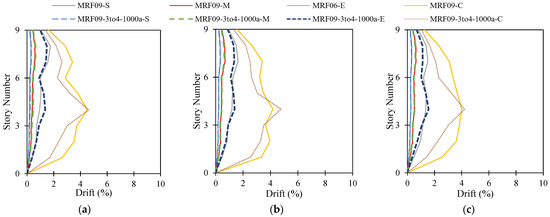
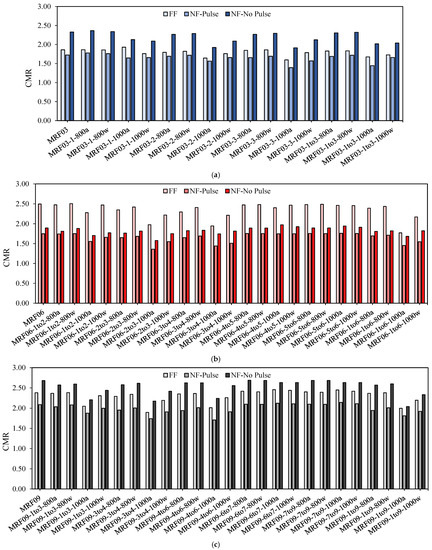
This paper summarizes a study focused on evaluating the post-fire performance of steel Intermediate Moment Frames (IMFs) following earthquakes. To this aim, archetypes comprising 3-bay IMFs with three different heights were seismically designed, and their two-dimensional finite element models were created in OpenSees software. The post-fire mechanical properties of steel were inserted into the models based on 64 different fire scenarios. The effects of different cooling methods are scrutinized at system level. To develop seismic fragility curves, Incremental Dynamic Analysis (IDA) was performed using 50 suites of far-field and near-field records, according to FEMA-P695. Then, the Collapse Margin Ratio (CMR) of each model was calculated based on the data from the fragility analysis. The results show that the seismic resistance of structures that experienced fire declines to some extent. In addition, the lowest safety level was observed when the structures were subjected to pulse-like near-field records.
Full article
►▼
Show Figures
Open AccessArticle
Architectural Characteristics and Determination Seismic Risk Priorities of Traditional Masonry Structures: A Case Study for Bitlis (Eastern Türkiye)
by
Enes Arkan, Ercan Işık, Ehsan Harirchian, Mine Topçubaşı and Fatih Avcil
Cited by 19 | Viewed by 3161
Abstract
The loss of life due to large-scale structural damage has again demonstrated the importance of taking precautions before an earthquake. In this context, determining the risk priorities for the existing building stock and making the final decisions about the buildings is one of
[...] Read more.
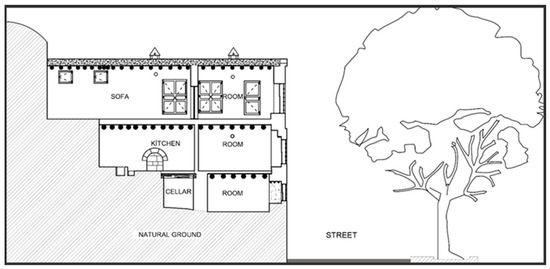
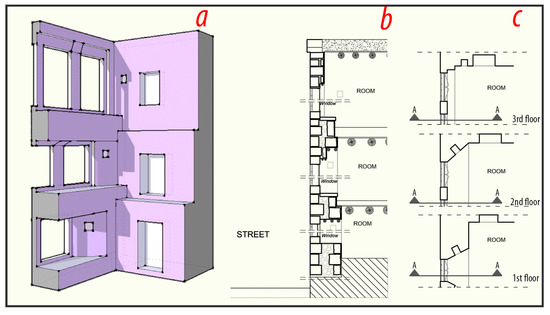
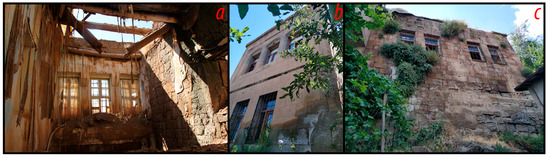
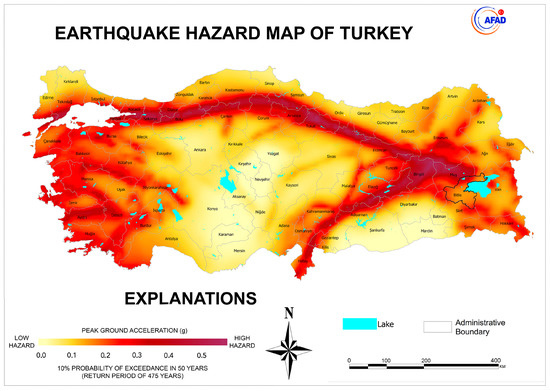
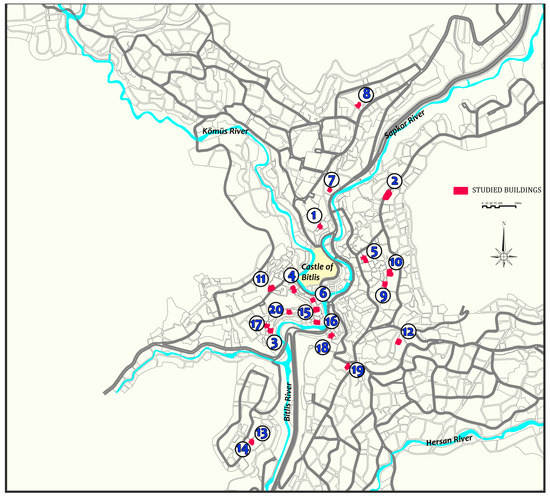
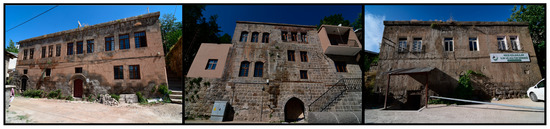
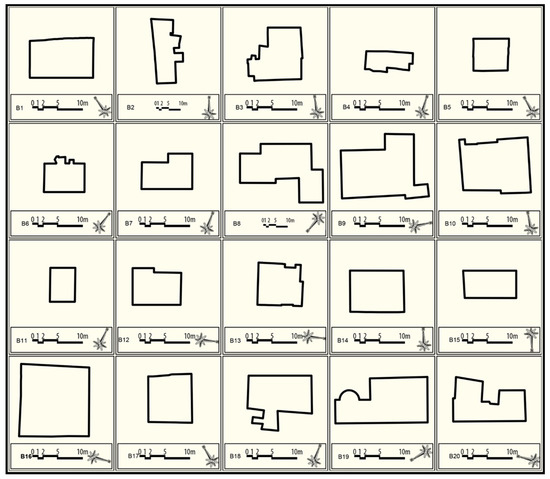
The loss of life due to large-scale structural damage has again demonstrated the importance of taking precautions before an earthquake. In this context, determining the risk priorities for the existing building stock and making the final decisions about the buildings is one of the basic measures to be taken before an earthquake. Within the scope of this study, the regional risk priorities have been determined for twenty different masonry buildings in Bitlis (Türkiye), located in the Lake Van Basin, which has a high earthquake risk. The Turkish Rapid Assessment Method was used for masonry structures in this study which was updated in 2019 using the necessary data obtained for each structure on site. In addition, information about the architectural characteristics and current structural conditions of traditional Bitlis houses is given in this study. Current seismic parameters are also obtained for the location of each building. All data in the article were obtained from field research, and this is one of the first studies in which the rapid assessment method was used. In this method, buildings with low scores have a higher risk priority, and building performance scores were obtained between 25 and 85. With this and similar studies, regional risk priorities can be determined, and the number of buildings subjected to detailed assessment can be reduced.
Full article
►▼
Show Figures
Open AccessArticle
Development of the Historical Analysis of the Seismic Parameters for Retroffiting Measures in Chilean Bridges
by
Enrique Calderón, Matías Valenzuela, Vinicius Minatogawa and Hernán Pinto
Cited by 9 | Viewed by 3528
Abstract
Chile is exposed to the occurrence of medium- and large-magnitude earthquakes. As a result, national and international design codes have been developed, whose objectives are to grant an ideal behavior to the structures. However, in Chile, many of these structures do not comply
[...] Read more.
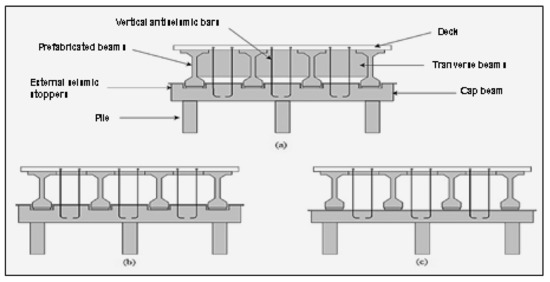
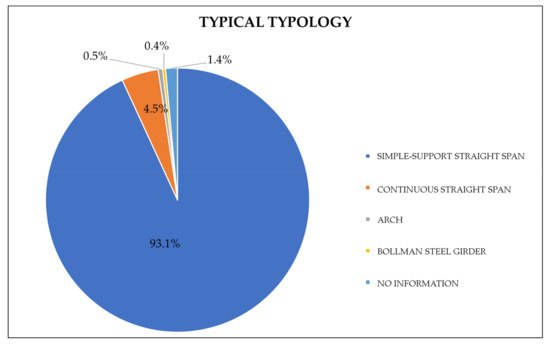
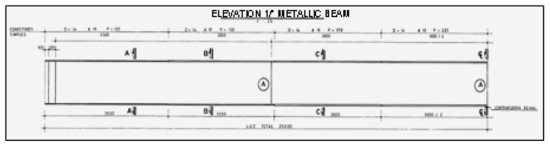
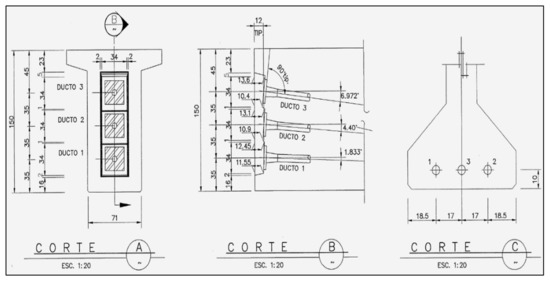
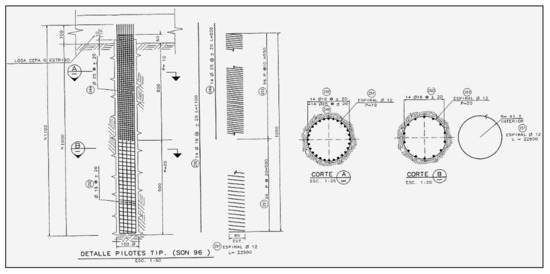
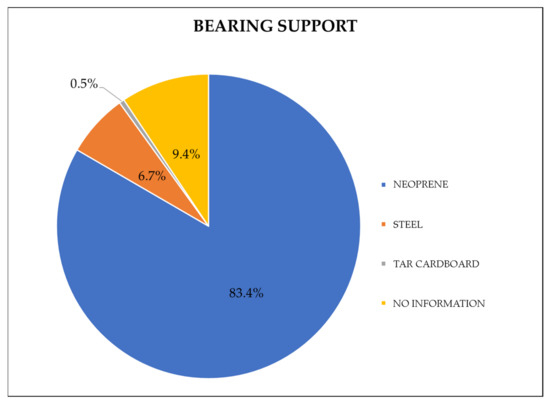
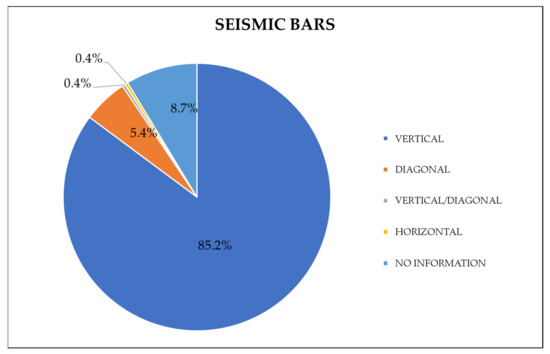
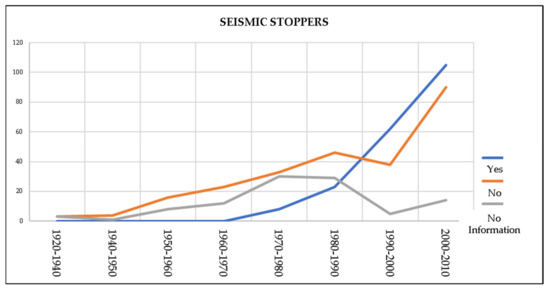
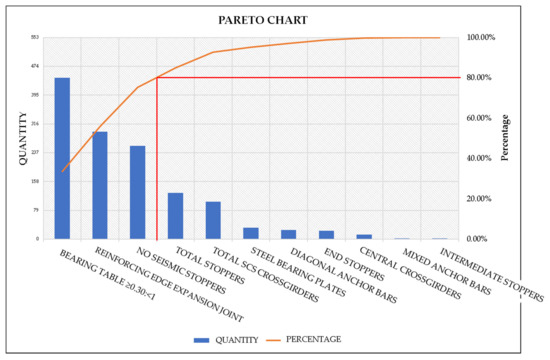
Chile is exposed to the occurrence of medium- and large-magnitude earthquakes. As a result, national and international design codes have been developed, whose objectives are to grant an ideal behavior to the structures. However, in Chile, many of these structures do not comply with the design and construction standards of current regulations. Therefore, we propose to carry out a historical compilation that allows establishing the components that present the seismic vulnerability in bridges built from 1920 to 2010. We explored information gathered from the Government of Chile. We analyzed 553 bridges out of a total of 6835, considering superstructure and infrastructure components and seismic design evolution. The analysis emphasizes the elements that help improve the seismic performance of a bridge when natural or induced dynamic forces act on it, such as the length support, elastomeric bearing, seismic hold-down bars, transverse girders, seismic stoppers, bracing, and expansion joints. We identified that the most significant problems in bridges are the lack of seismic stoppers, both interior and exterior; lack of development length in the support tables; use of deficient expansion joints; and the inefficient construction of cross girders and baring support; in addition to the presence of differential settlements in elements of the infrastructure.
Full article
►▼
Show Figures
Open AccessArticle
Seismic Fragility of Aging Elevated Water Tank with Smooth Bars Considering Soil Structure Interaction
by
Hariram Rimal, Piyush Pradhan, Dipendra Gautam and Rajesh Rupakhety
Cited by 10 | Viewed by 9865
Abstract
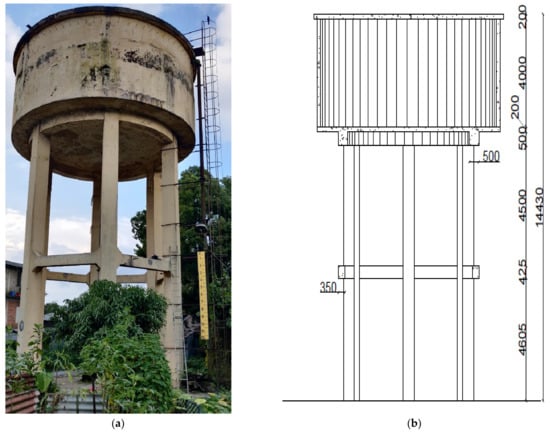
The functionality of elevated water tanks is pivotal to assure after an earthquake as water supply is expected to be uninterrupted. Although elevated water tanks with deformed bars are widely studied, limited works exist for water tanks with smooth bars, although such tanks
[...] Read more.
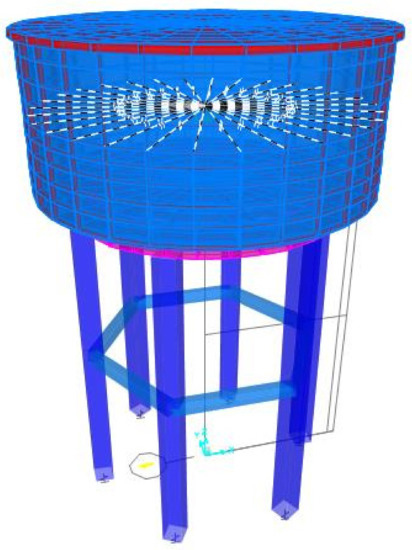
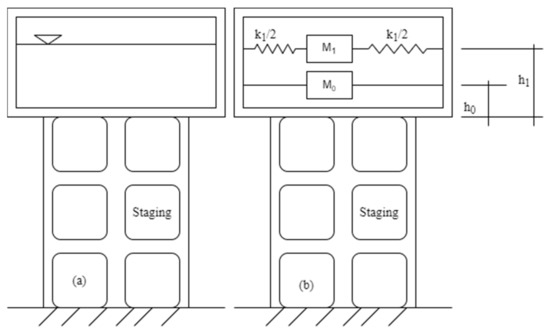
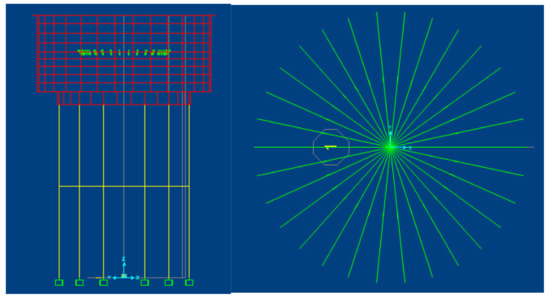
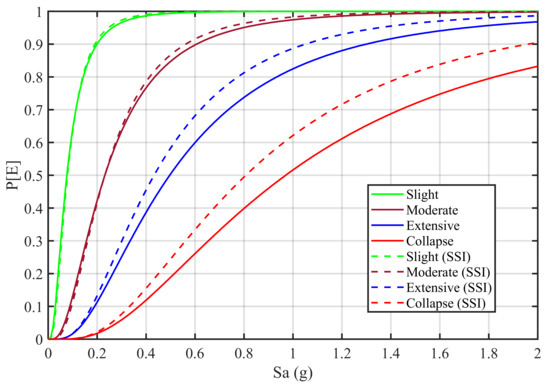
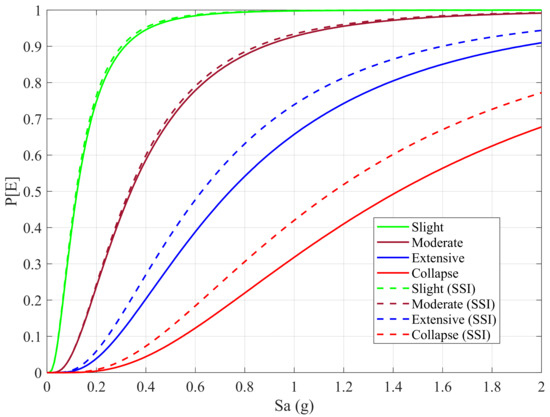
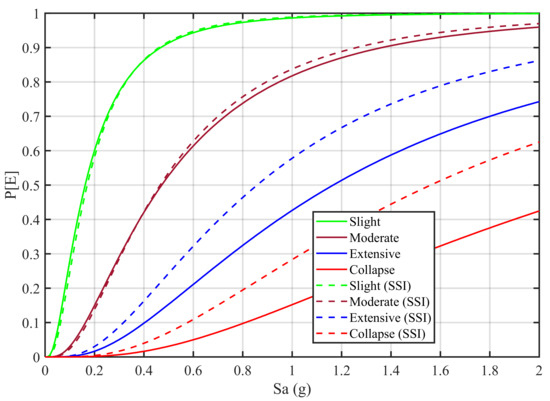
The functionality of elevated water tanks is pivotal to assure after an earthquake as water supply is expected to be uninterrupted. Although elevated water tanks with deformed bars are widely studied, limited works exist for water tanks with smooth bars, although such tanks comprise a considerable fraction, even in the high seismic regions. To quantify the seismic vulnerability of aging elevated water tanks with smooth bars, we created analytical fragility functions for full, half, and empty reservoir conditions, considering fluid–structure and soil–structure interactions. The sum of findings reflects that soil flexibility and the amount of water present in the tank have a significant effect on overall seismic fragility, especially at higher damage states. The tanks are found to be most vulnerable when they are fully filled with water. The effect of soil flexibility is more pronounced at higher damage states. The difference between the fragility of flexible base and fixed base structures is found to increase with increasing ground motion intensity and it is the highest for the empty tank condition.
Full article
►▼
Show Figures
Open AccessArticle
On the Applicability of Conventional Seismic Design Methodologies to Hybrid RC-Steel Systems
by
Rodrigo Falcão Moreira, Humberto Varum and José Miguel Castro
Cited by 4 | Viewed by 2633
Abstract
This paper addresses the application of conventional (force-based) seismic design methodologies to hybrid RC-steel systems. The
q-factor-based EC8-3 seismic assessment procedure is first reviewed. A case-study application follows, analyzing and discussing the difficulties a practitioner will face when assessing the efficiency of
[...] Read more.
This paper addresses the application of conventional (force-based) seismic design methodologies to hybrid RC-steel systems. The
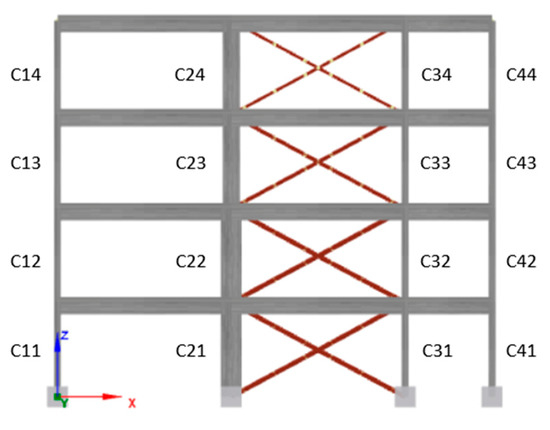
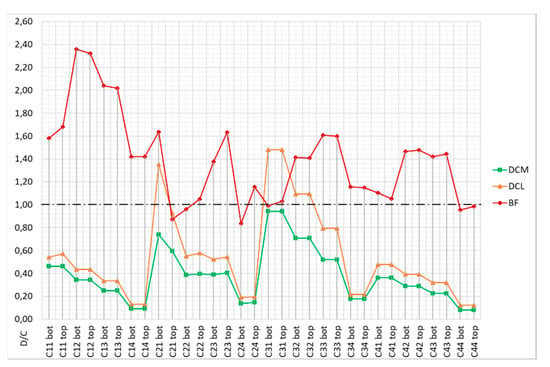
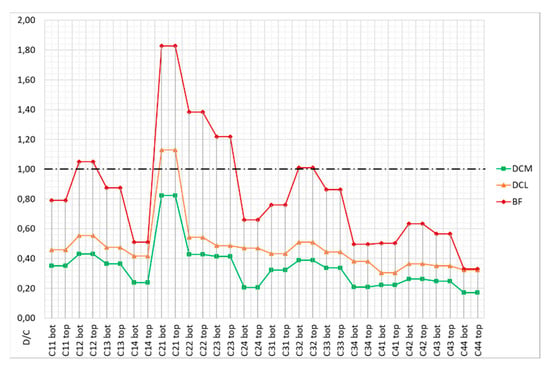
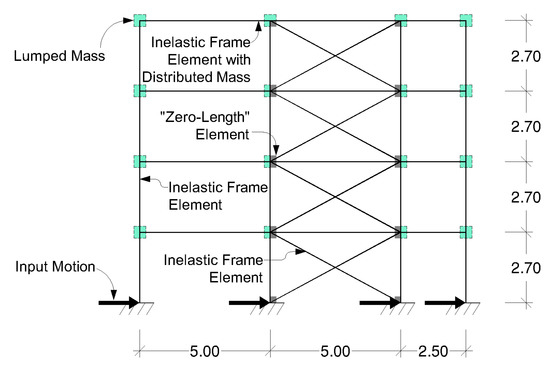
q-factor-based EC8-3 seismic assessment procedure is first reviewed. A case-study application follows, analyzing and discussing the difficulties a practitioner will face when assessing the efficiency of a steel-brace retrofitting system designed within the framework of EC8-1. Afterward, the performance of the obtained retrofitted structure is evaluated using nonlinear analysis. The obtained results are discussed in light of the EC8-3 performance requirements, and conclusions are drawn about the adequacy of the force-based design (FBD) methodology (and associated
q-factors) for such situations. The study shows that the process does not ensure the adequate seismic behavior of the retrofitted structures. It thus calls for the development of an effective performance-based design methodology that explicitly considers the interaction between the two structural systems (RC structure and steel braces), namely the influence of the steel braces’ resistance on the deformation capacity of RC members.
Full article
►▼
Show Figures
Open AccessArticle
Development of Exclusive Seismic Fragility Curves for Critical Infrastructure: An Oil Pumping Station Case Study
by
Alon Urlainis and Igal M. Shohet
Cited by 10 | Viewed by 4121
Abstract
Fragility curves are a common tool to appraise the expected damage to critical infrastructure (CI) after an earthquake event. Previous studies offer fragility curve parameters for CI that are suitable for a vast range of systems, without an in-depth examination of the system
[...] Read more.
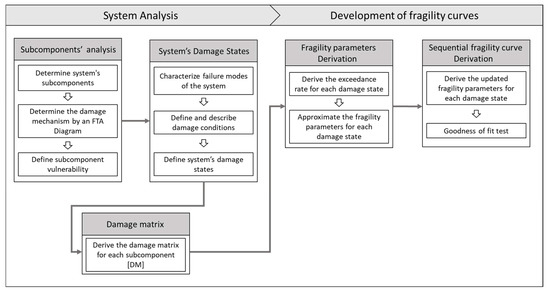
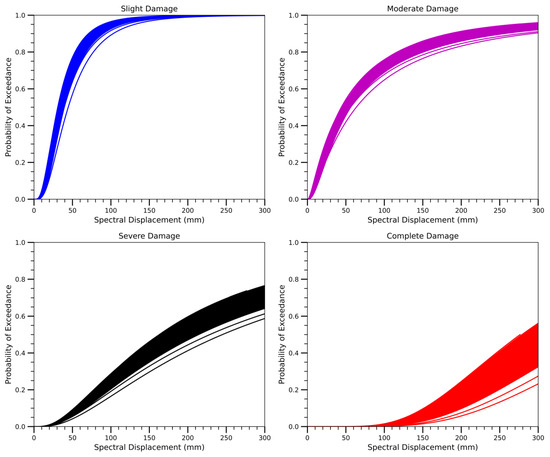
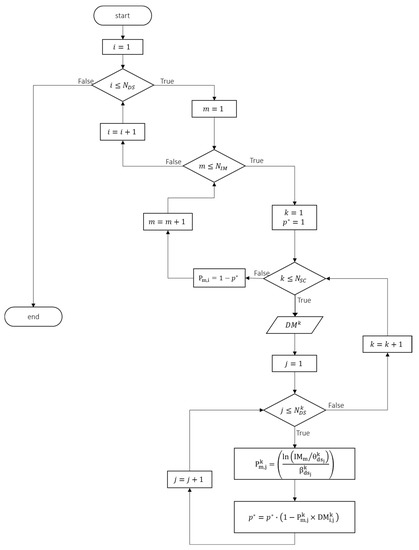
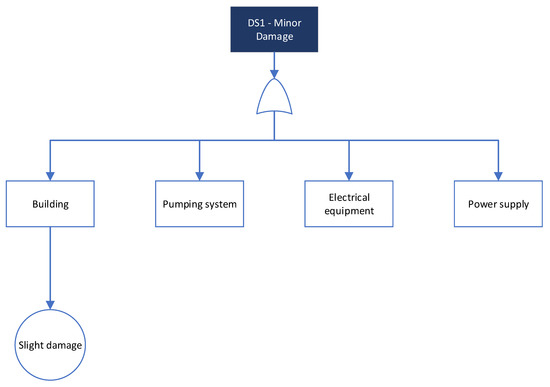
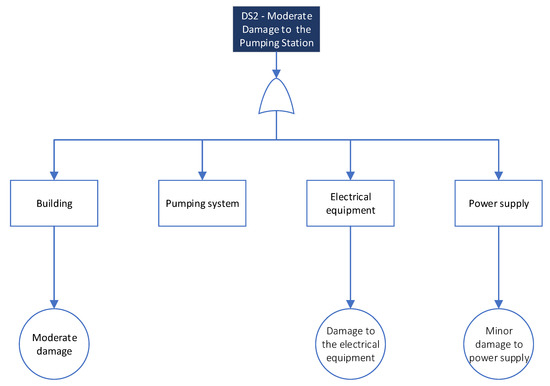
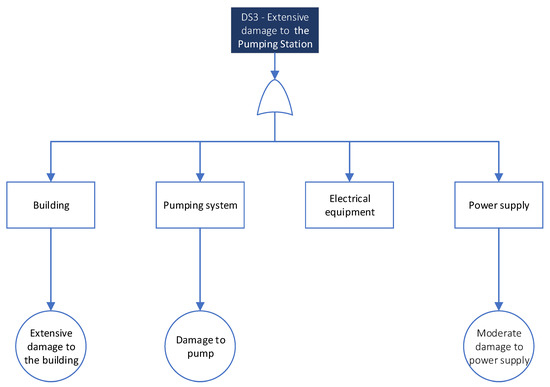
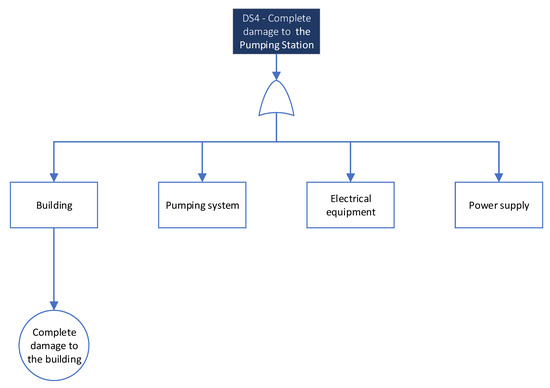
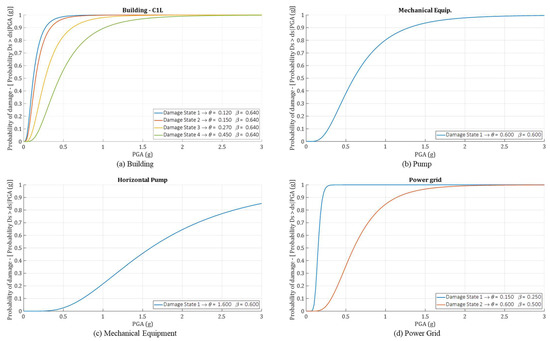
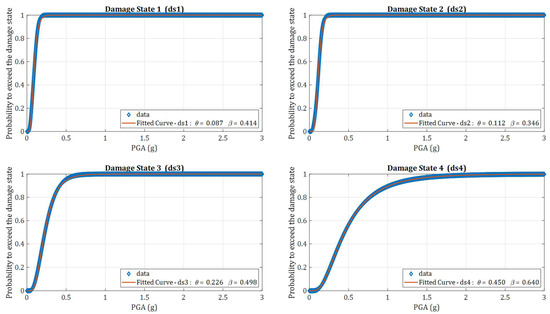
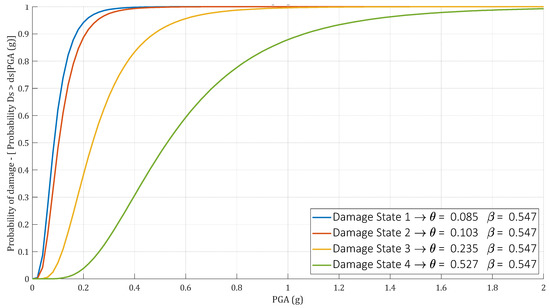
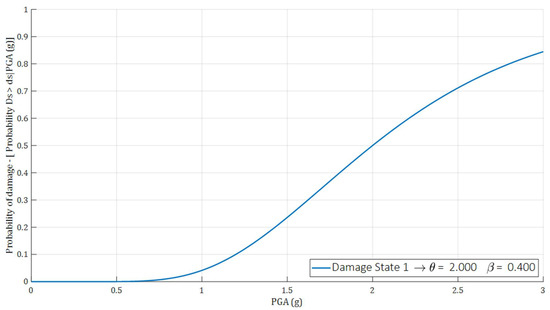
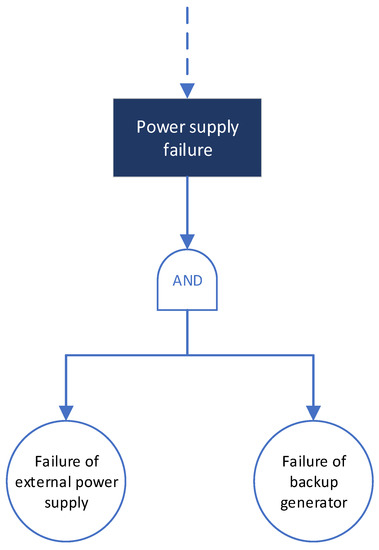
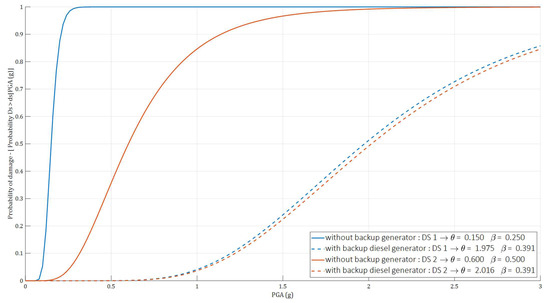
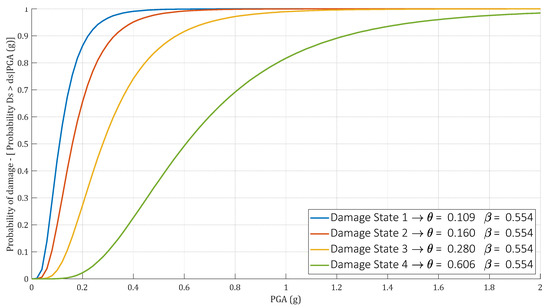
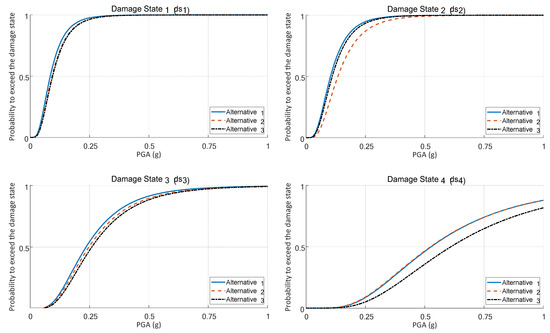
Fragility curves are a common tool to appraise the expected damage to critical infrastructure (CI) after an earthquake event. Previous studies offer fragility curve parameters for CI that are suitable for a vast range of systems, without an in-depth examination of the system architecture and subcomponents. These curves are applicable in cases where a thorough analysis is not required or when the information related to a single system is poor. This paper proposes an original approach and presents a comprehensive methodology for developing exclusive fragility curves for critical infrastructure systems. In the proposed methodology, the fragility curves are developed by a decomposition of the system into its main subcomponents and determination of the failure mechanisms. The derivation of the fragility parameters includes failure analysis for each damage state by a Fault Tree Analysis and approximation of the fragility parameters in accordance with the rate of exceedance. The implementation of the methodology is demonstrated by a case study with three alternatives of an oil pumping plant configuration. It was found that a change of a subcomponent has an effect on the derived values of the fragility parameters. Moreover, the variances in the fragility parameters have implications for the effectiveness of each alternative to resist different levels of severity.
Full article
►▼
Show Figures
Open AccessArticle
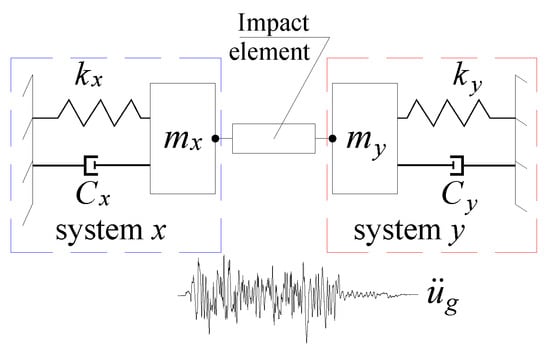
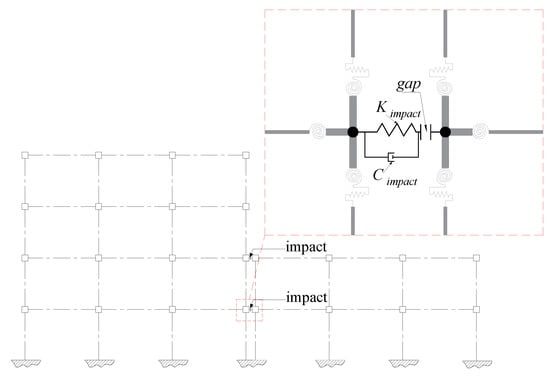
Seismic Fragility Functions for Non-Seismically Designed RC Structures Considering Pounding Effects
by
Hossameldeen Mohamed and Xavier Romão
Cited by 17 | Viewed by 4551
Abstract
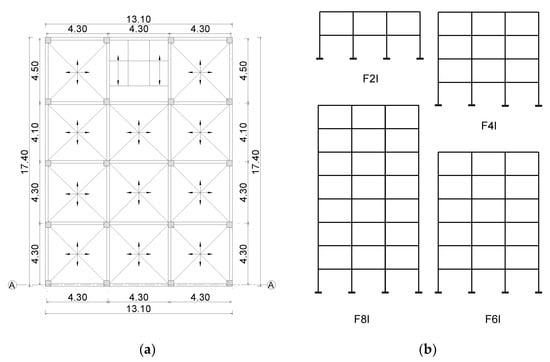
The proposed study develops fragility functions for non-seismically designed reinforced concrete structures considering different pounding configurations. The study addresses an existing research gap, since large-scale seismic risk assessment studies involving the seismic performance assessment of building portfolios usually do not involve fragility functions
[...] Read more.
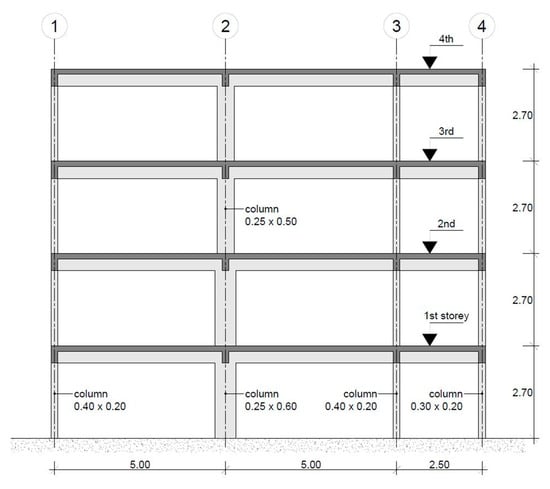
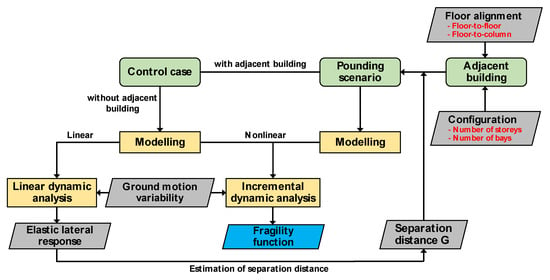
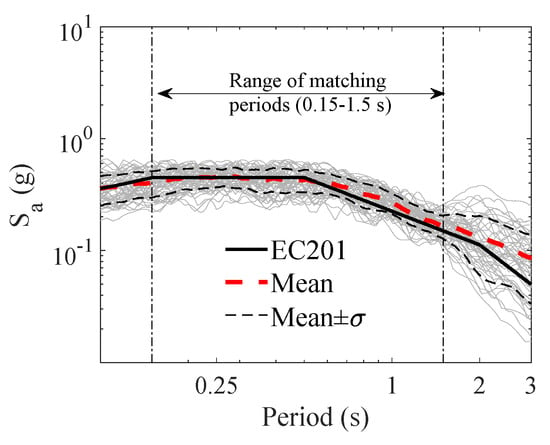
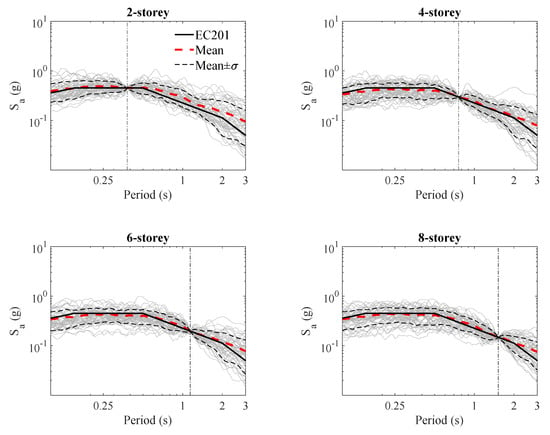
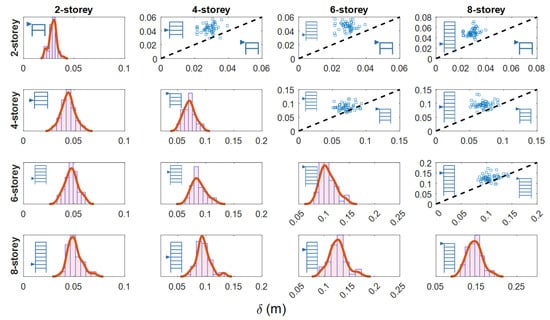
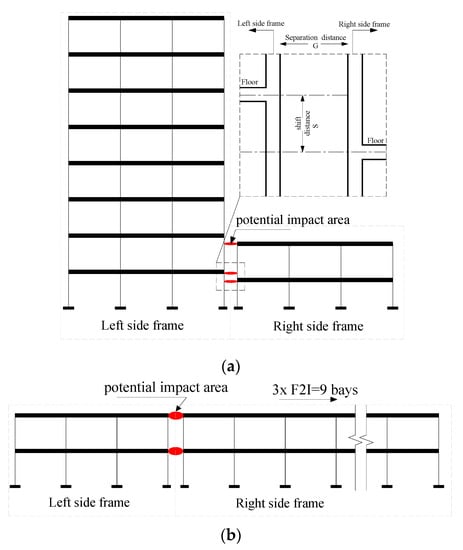
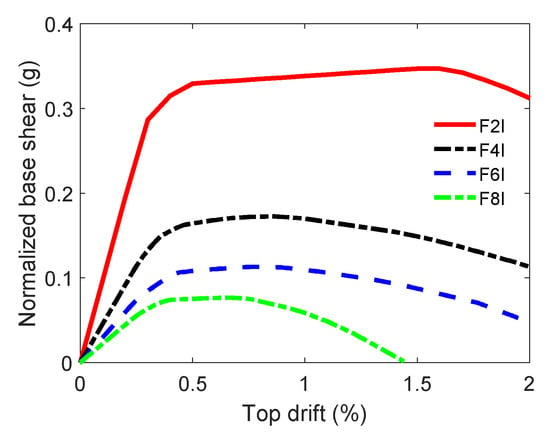
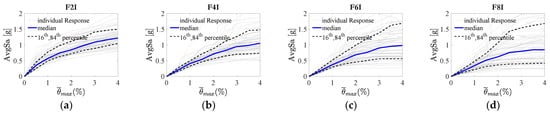
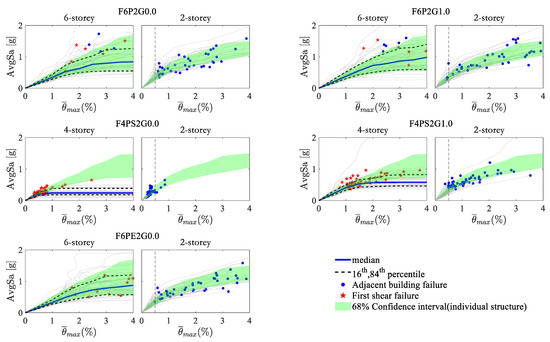
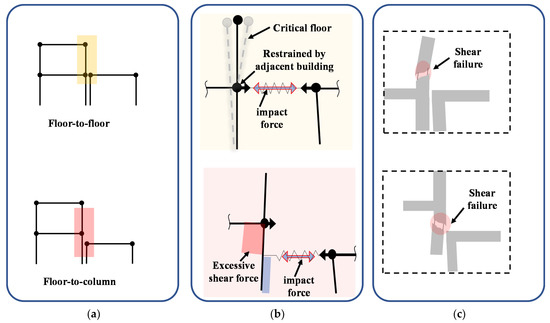
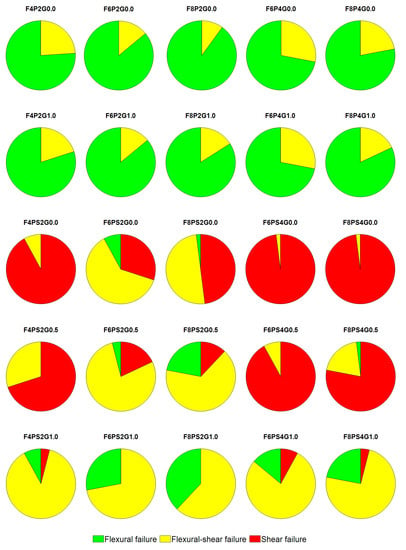
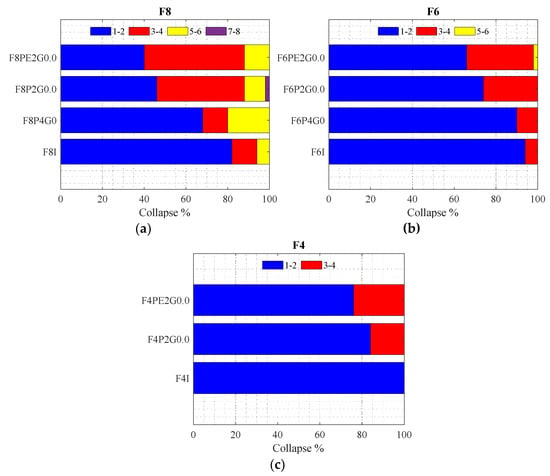
The proposed study develops fragility functions for non-seismically designed reinforced concrete structures considering different pounding configurations. The study addresses an existing research gap, since large-scale seismic risk assessment studies involving the seismic performance assessment of building portfolios usually do not involve fragility functions accounting for the possibility of pounding. The selected structures include configurations involving different separation distance values and exhibiting floor-to-floor pounding, floor-to-column pounding, pounding between structures with a significant height difference, and pounding between structures with a significant mass difference. The behaviour of these pounding configurations was analysed using incremental dynamic analysis and compared with that of the corresponding control cases (i.e., individual structures with no interaction with other structures). The results indicate the type of failure mechanism that contributes to the global collapse of the different configurations and the influence of the separation distance. Results highlight the main differences between the expected performance of different pounding configurations with respect to the occurrence of the failure mechanism that governs their collapse. Finally, results indicate that large-scale seismic risk assessment studies should consider fragility functions accounting for different pounding configurations when the possibility of pounding is not negligible, except in cases involving floor-to-floor pounding.
Full article
►▼
Show Figures
Open AccessArticle
Assessment of Seismic Building Vulnerability Using Rapid Visual Screening Method through Web-Based Application for Malaysia
by
Moustafa Moufid Kassem, Salmia Beddu, Jun Hao Ooi, Chee Ghuan Tan, Ahmad Mohamad El-Maissi and Fadzli Mohamed Nazri
Cited by 39 | Viewed by 13990
Abstract
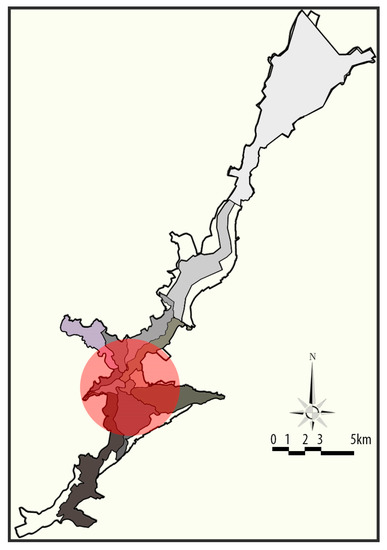
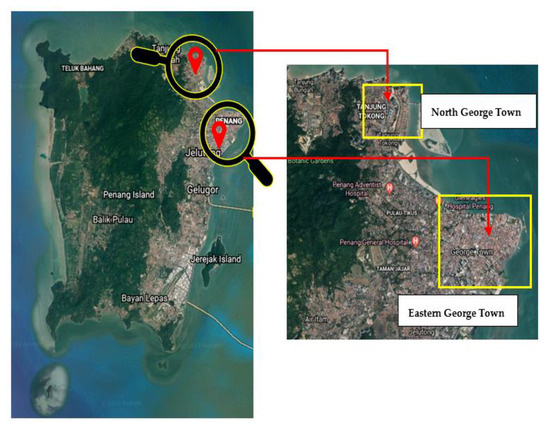
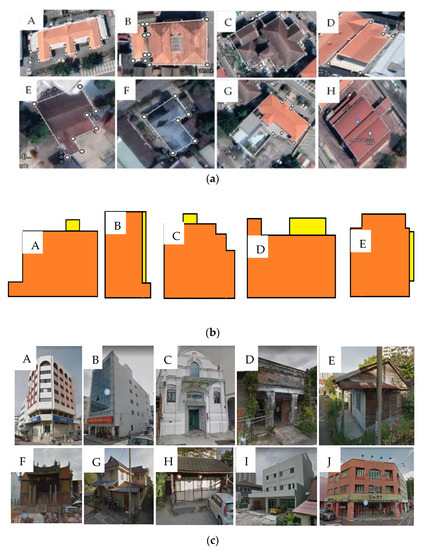
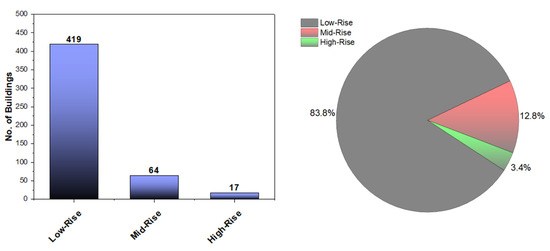
Rapid visual screening is a quick and simple approach often used by researchers to estimate the seismic vulnerability of buildings in an area. In this study, preliminary seismic vulnerability assessment of 500 buildings situated at Northern and Eastern George Town, Malaysia, was carried
[...] Read more.
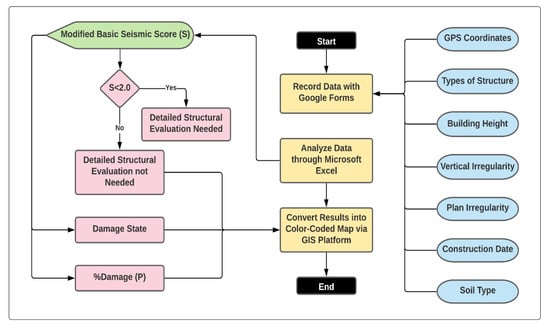
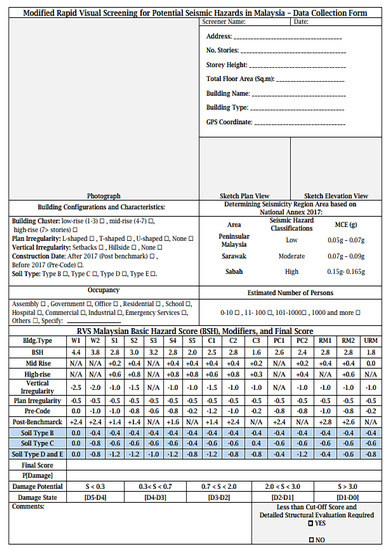
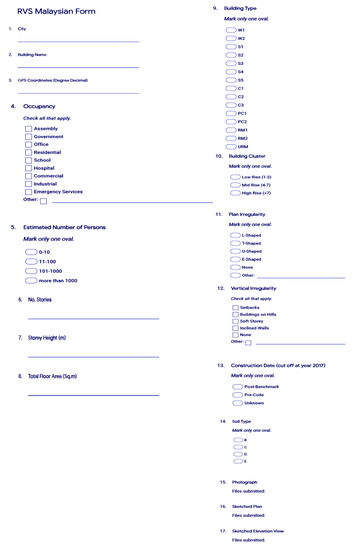
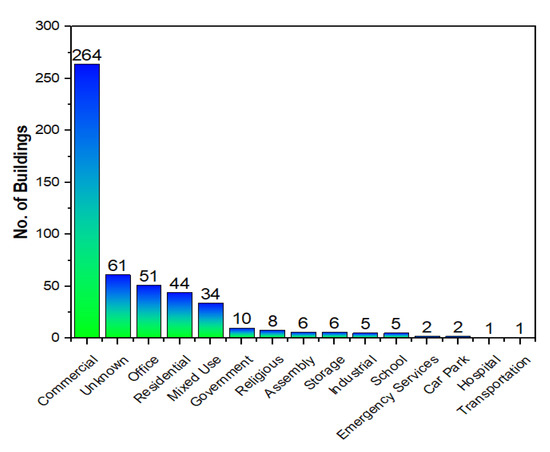
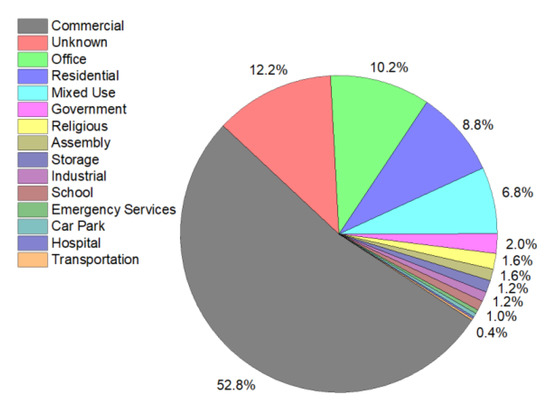
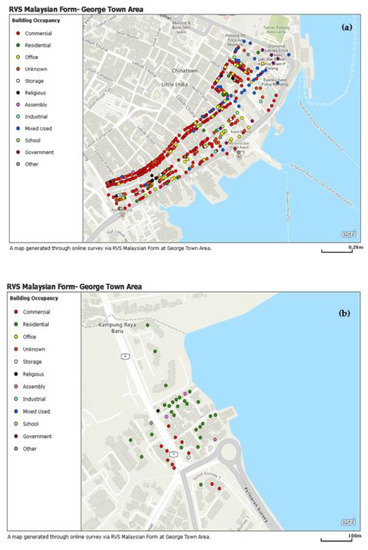
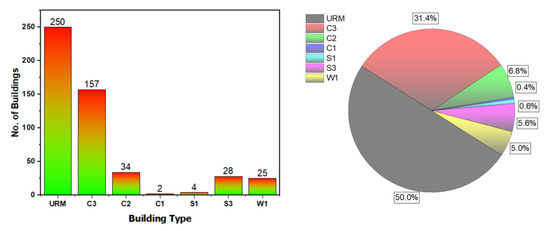
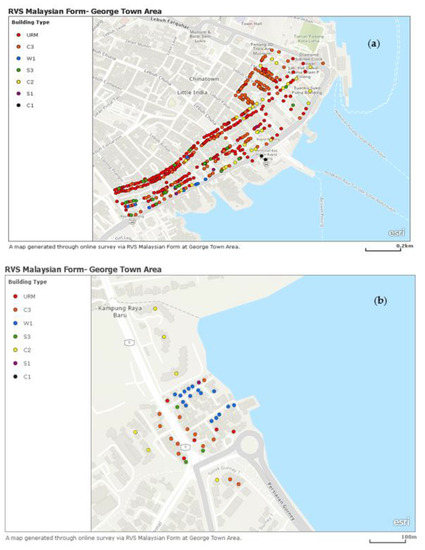
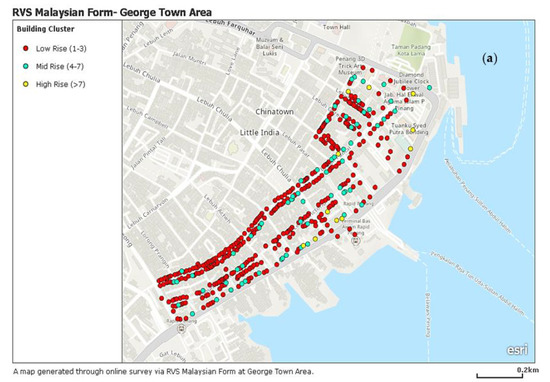
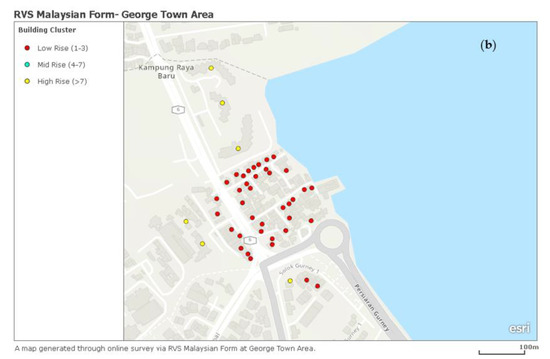
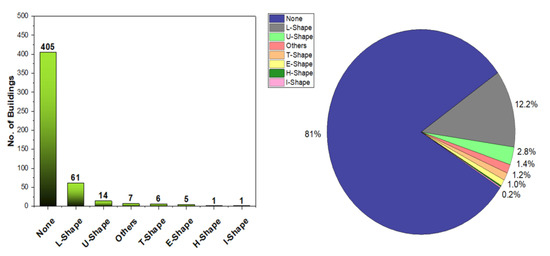
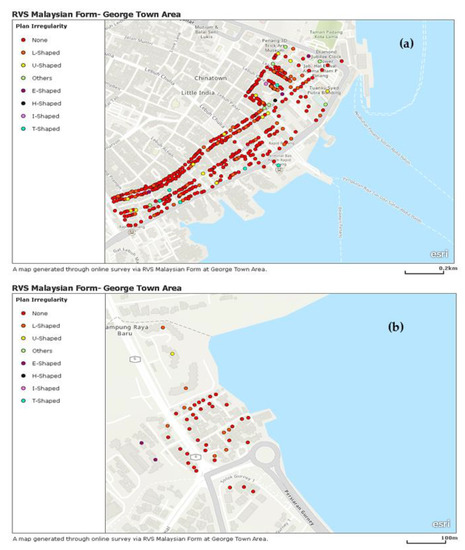
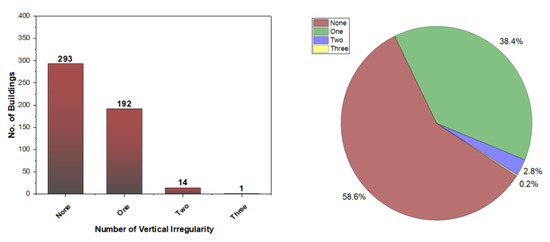
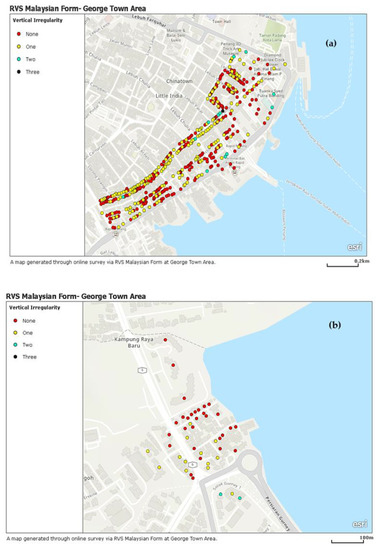
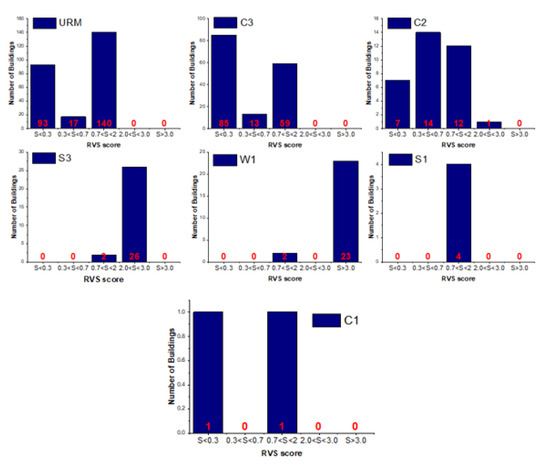
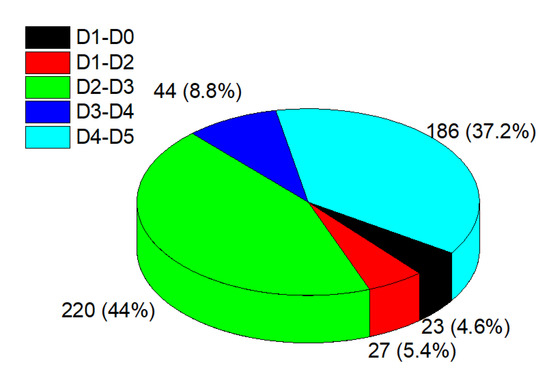
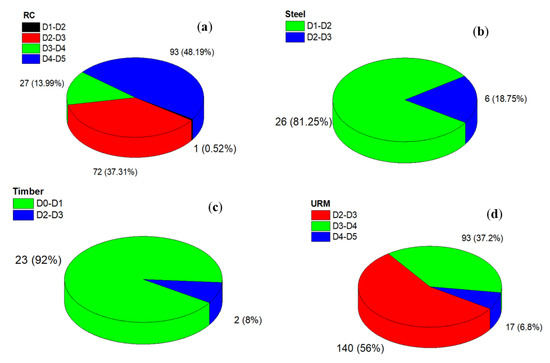
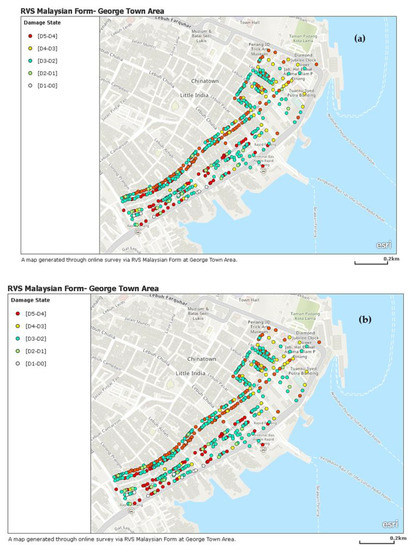
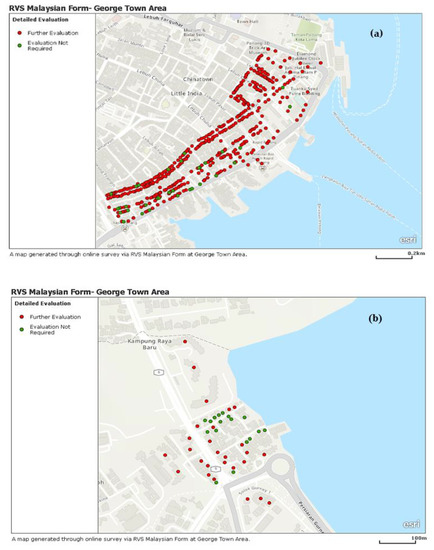
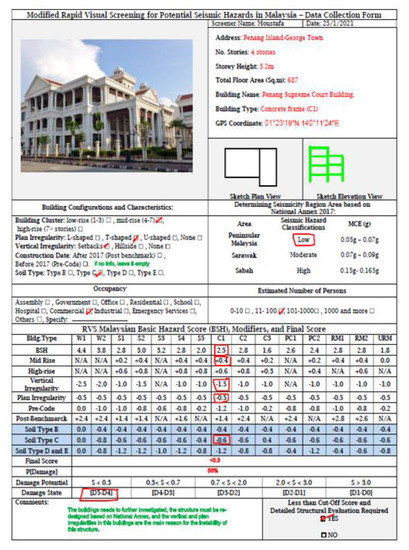
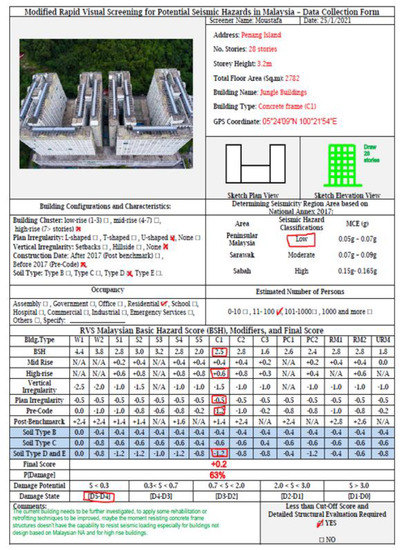
Rapid visual screening is a quick and simple approach often used by researchers to estimate the seismic vulnerability of buildings in an area. In this study, preliminary seismic vulnerability assessment of 500 buildings situated at Northern and Eastern George Town, Malaysia, was carried out by utilizing a modified FEMA-154 (2002) method that suits Malaysian conditions. Data were collected from online sources via Google Maps and Google Earth instead of traditional surveying data collection through street screening. The seismic assessment analysis of this study was based on the RVS performance score and the damage state classification for each building typology. This approach generates, for each building, a final performance score based on governing parameters such as structural resisting system, height, structural irregularities, building age, and soil type. The findings revealed the immediate need for effective seismic mitigation strategies, as 90% of the studied buildings required a further detailed analyses to pinpoint their exact seismic vulnerability performance. Most of the surveyed buildings were predicted to experience moderate-to-substantial damage, with 220 out of 500 being classed as damage state 2 (D2) and damage state 3 (D3). A GIS map, “RVS Malaysian Form-George Town Area”, was generated via ArcGIS and shared with the public to provide vital information for further research.
Full article
►▼
Show Figures
Open AccessArticle
Stochastic Dynamic Analysis of Cultural Heritage Towers up to Collapse
by
Emmanouil-Georgios S. Kouris, Leonidas-Alexandros S. Kouris, Avraam A. Konstantinidis, Stavros K. Kourkoulis, Chris G. Karayannis and Elias C. Aifantis
Cited by 10 | Viewed by 4107
Abstract
This paper deals with the seismic vulnerability of monumental unreinforced masonry (URM) towers, the fragility of which has not yet been sufficiently studied. Thus, the present paper fills this gap by developing models to investigate the seismic response of URM towers up to
[...] Read more.
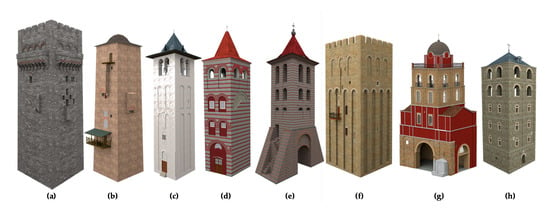
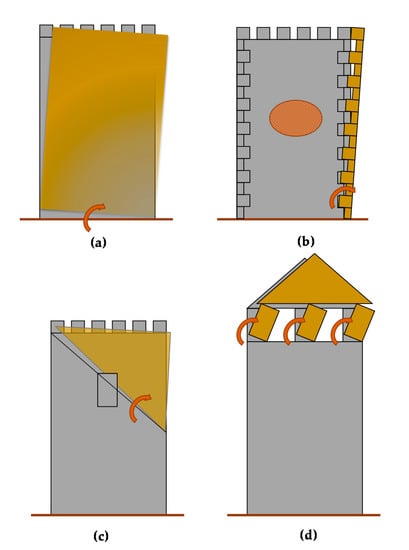
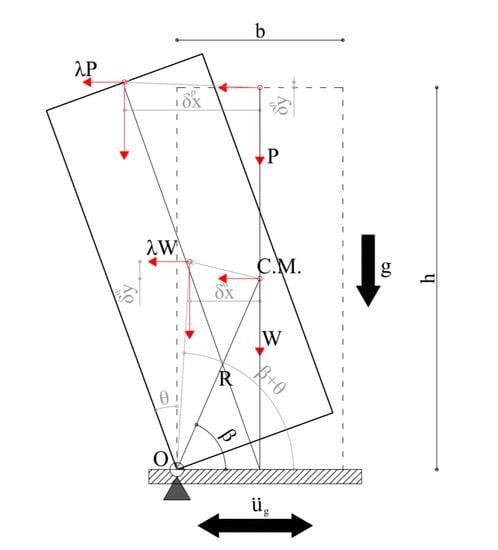
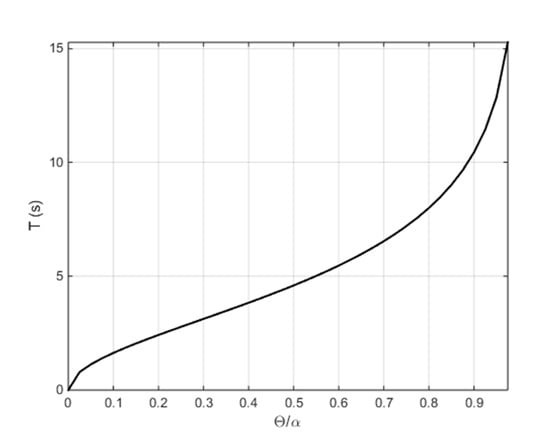
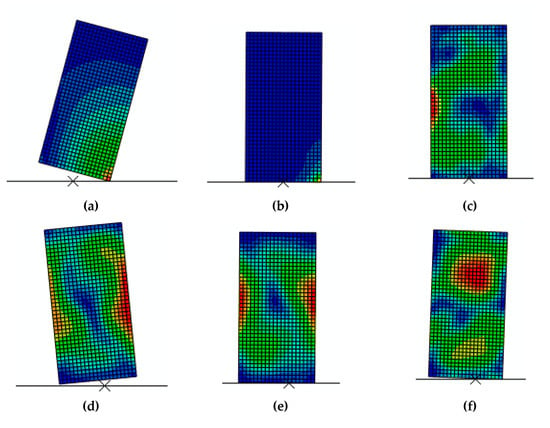
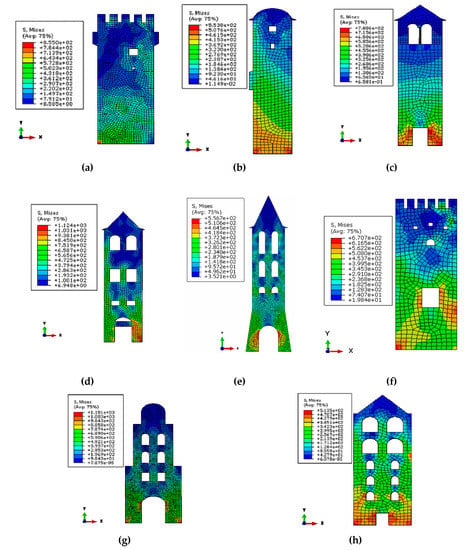
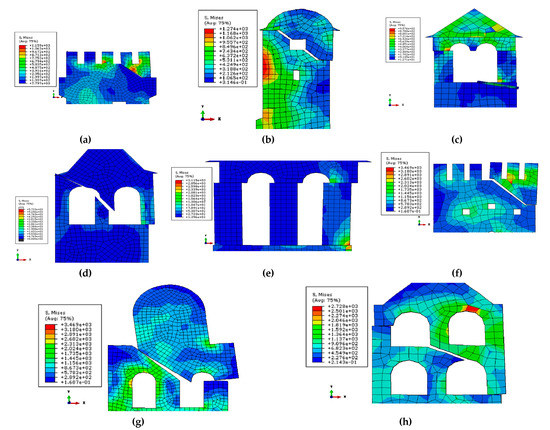
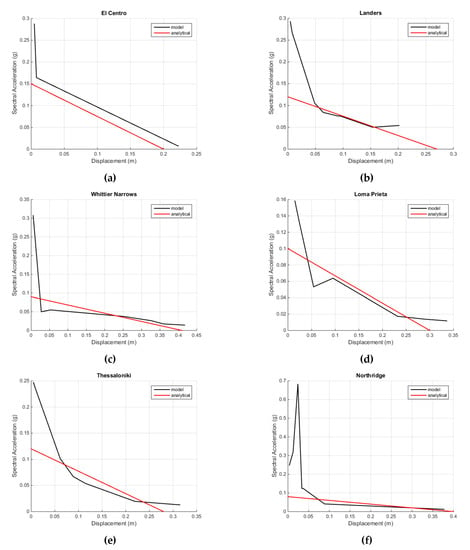
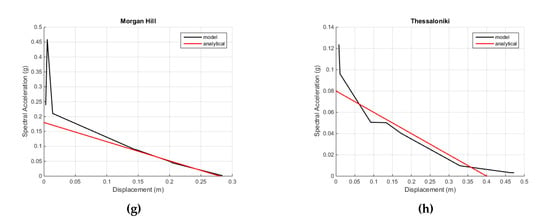
This paper deals with the seismic vulnerability of monumental unreinforced masonry (URM) towers, the fragility of which has not yet been sufficiently studied. Thus, the present paper fills this gap by developing models to investigate the seismic response of URM towers up to collapse. On mount Athos, Greece, there exist more than a hundred medieval towers, having served mainly as campaniles or fortifications. Eight representative towers were selected for a thorough investigation to estimate their seismic response characteristics. Their history and architectural features are initially discussed and a two-step analysis follows: (i) limit analysis is performed to estimate the collapse mechanism and the locations of critical cracks, (ii) non-linear explicit dynamic analyses are then carried out, developing finite element (FE) simulations, with cracks modelled as interfacial surfaces to derive the capacity curves. A meaningful definition of the damage states is proposed based on the characteristics of their capacity curves, with the ultimate limit state related to collapse. The onset of slight damage-state is characterised by the formation and development of cracks responsible for the collapse mechanism of the structure. Apart from these two, another two additional limit states are also specified: the moderate damage-state and the extensive one. Fragility and vulnerability curves are finally generated which can help the assessment and preservation of cultural heritage URM towers.
Full article
►▼
Show Figures
Open AccessArticle
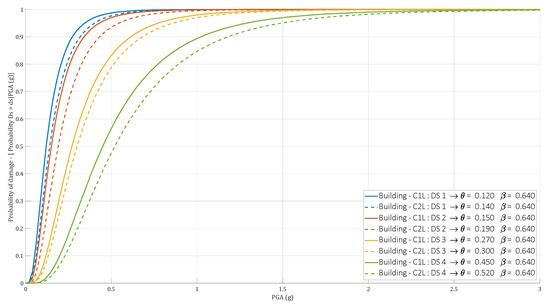
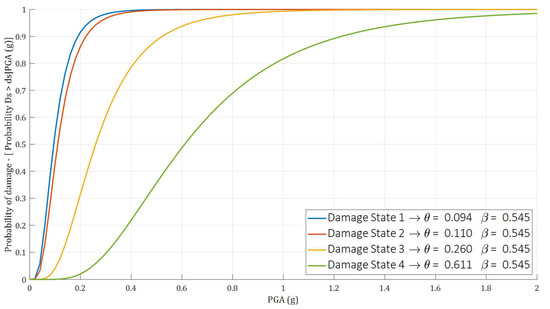
Kriging Metamodel-Based Seismic Fragility Analysis of Single-Bent Reinforced Concrete Highway Bridges
by
Phuong Hoa Hoang, Hoang Nam Phan, Duy Thao Nguyen and Fabrizio Paolacci
Cited by 21 | Viewed by 5382
Abstract
Uncertainty quantification is an important issue in the seismic fragility analysis of bridge type structures. However, the influence of different sources of uncertainty on the seismic fragility of the system is commonly overlooked due to the costly re-evaluation of numerical model simulations. This
[...] Read more.
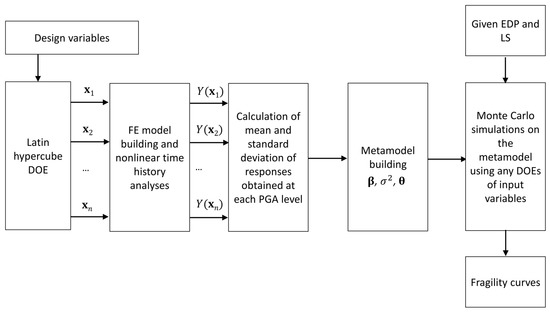
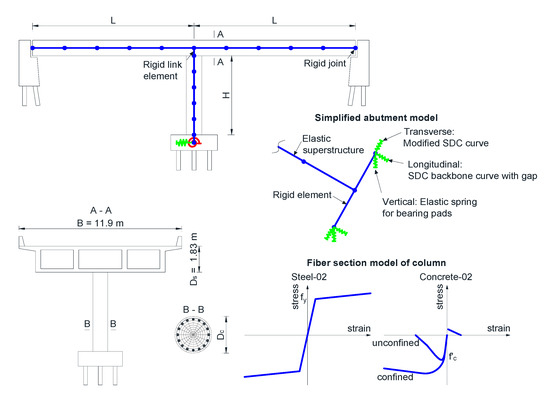
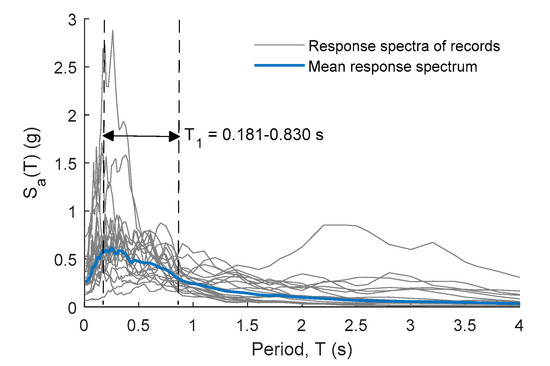
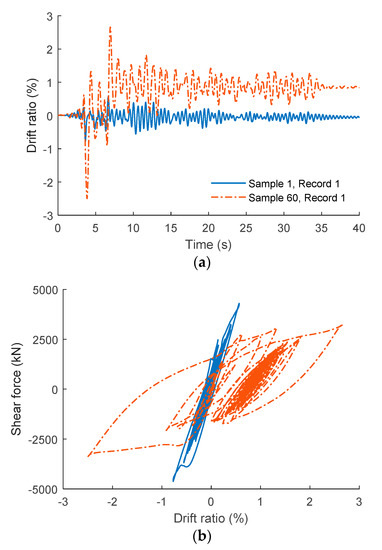
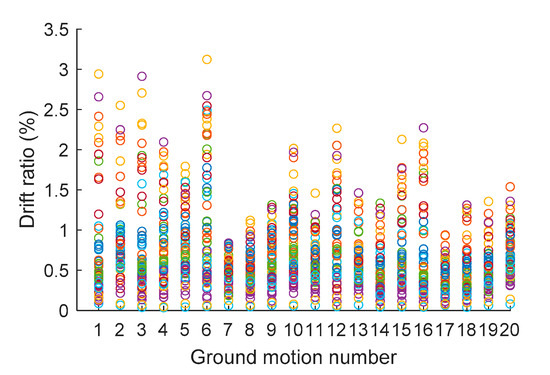
Uncertainty quantification is an important issue in the seismic fragility analysis of bridge type structures. However, the influence of different sources of uncertainty on the seismic fragility of the system is commonly overlooked due to the costly re-evaluation of numerical model simulations. This paper aims to present a framework for the seismic fragility analysis of reinforced concrete highway bridges, where a data-driven metamodel is developed to approximate the structural response to structural and ground motion uncertainties. The proposed framework to generate fragility curves shows its efficiency while using a few finite element simulations and accounting for various modeling uncertainties influencing the bridge seismic fragility. In this respect, a class of single-bent bridges available in the literature is taken as a case study, whose three-dimensional finite element model is established by the OpenSees software framework. Twenty near-source records from different sources are selected and the Latin hypercube method is applied for generating the random samples of modeling and ground motion parameters. The Kriging metamodel is then driven on the structural response obtained from nonlinear time history analyses. Component fragility curves of the reinforced concrete pier column are derived for different damage states using the Kriging metamodel whose parameters are established considering different modeling parameters generated by Monte Carlo simulations. The results demonstrate the efficiency of the proposed framework in interpolating the structural response and deriving the fragility curve of the case study with any input conditions of the random variables.
Full article
►▼
Show Figures
Open AccessArticle
Seismic and Coastal Vulnerability Assessment Model for Buildings in Chile
by
Catalina Quiñones-Bustos, Maria Teresa Bull and Claudio Oyarzo-Vera
Cited by 6 | Viewed by 6347
Abstract
This article proposes a vulnerability assessment model for evaluating buildings’ expected seismic performance, as well as their vulnerability to tsunamis. The objective of this assessment is to provide appropriate information for decision makers regarding the need of repairs and reinforcement of buildings or
[...] Read more.
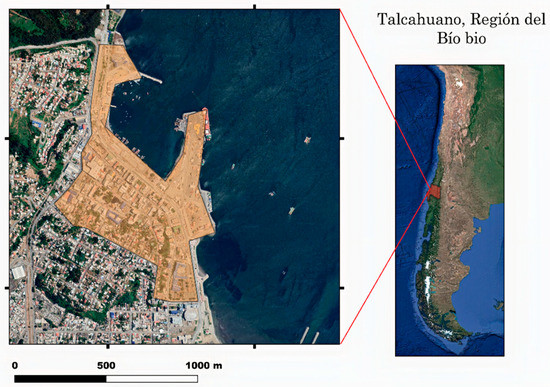
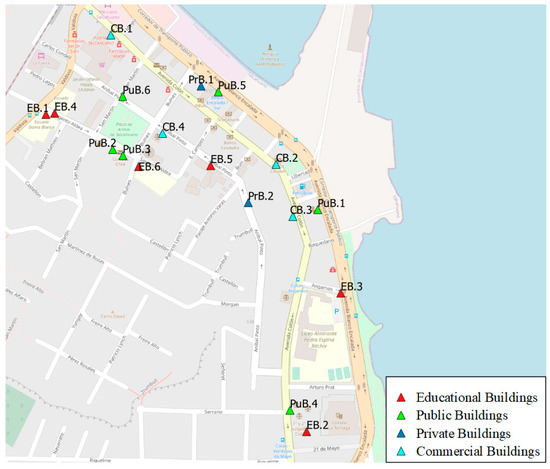
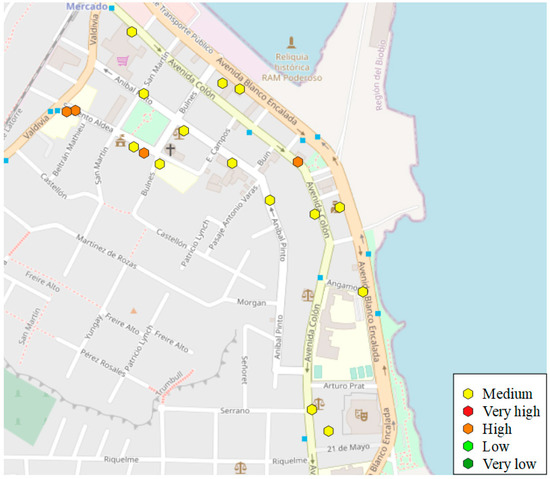
This article proposes a vulnerability assessment model for evaluating buildings’ expected seismic performance, as well as their vulnerability to tsunamis. The objective of this assessment is to provide appropriate information for decision makers regarding the need of repairs and reinforcement of buildings or other mitigation measures that need to be applied in a territory. A procedure for assessing seismic vulnerability and another methodology for evaluating tsunami vulnerability faced by coastal structures is presented. Finally, a method that integrates both procedures is proposed, providing a combined index of vulnerability. The assessment model was applied to the central area of the city of Talcahuano, Chile, which was affected by the 2010 Maule earthquake and tsunami.
Full article
►▼
Show Figures