Skip to Content
  • 1.6
    Impact Factor
  • 22 days
    Time to First Decision

Axioms

Axioms is an international, peer-reviewed, open access journal of mathematics, mathematical logic and mathematical physics, published monthly online by MDPI.
The International Fuzzy Systems Association (IFSA), Union of Slovak Mathematicians and Physicists (JSMF) and Eurekas Community are affiliated with Axioms and their members receive discounts on the article processing charges.
Quartile Ranking JCR - Q2 (Mathematics, Applied)

Get Alerted

Add your email address to receive forthcoming issues of this journal.

All Articles (5,007)

Graph-Structured Persistent Memory for Efficient LLM-Based Computer Use Agents

  • Danylo Vorvul,
  • Andrii Musienko and
  • Andrii Sobchuk
  • + 2 authors

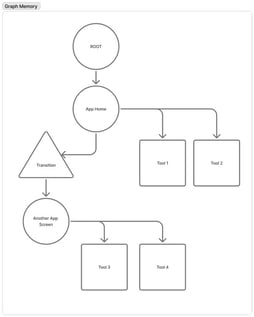
Large language model (LLM)-driven computer use agents (CUAs) automate graphical user interface (GUI) tasks but often re-solve previously encountered subtasks, increasing token use and latency. We address this limitation with a directed graph-based persistent memory in which nodes represent observable GUI states and edges encode executable action sequences. We formalize the memory-augmented agent as , define task reachability and memory-coverage conditions inspired by functional stability theory, and derive token-cost efficiency bounds. In control-theoretic terms, the Manager–Worker architecture can be interpreted as a closed-loop system where memory provides experience-based feedback; this interpretation is used as an analogy rather than a full model-reference adaptive control proof. Experiments on OSWorld show that the proposed agent cuts both the LLM token consumption and execution time by about 50% versus a memoryless baseline while preserving comparable success rates (≈36.9% on 15-step and ≈46.9% on 50-step tasks). The demonstrated contribution is therefore operational efficiency through reusable graph memory, not a claim of improved task success or classical Lyapunov stability.

2 June 2026

Directed graph-based persistent memory structure. Nodes encode observable GUI states with associated tools, while directed edges represent executable action transitions and reusable task trajectories.

A fundamental objective in the study of convex cones is the description and analysis of their extreme rays. In the case of the copositive cone, these rays are generated by extremal copositive matrices, which encode the boundary structure of the cone and are closely related to challenging instances of copositive and completely positive programming. In this work, we propose a constructive framework for generating copositive matrices from a given extremal copositive matrix of a smaller order and establish conditions under which copositivity and extremality are preserved. This approach highlights the interplay between the zero structure of a copositive matrix, its minimal zeros, and the facial geometry of the copositive cone. The results obtained allow one to generate new families of extremal copositive matrices in higher dimensions.

2 June 2026

Fuzzy Nilpotent Lie Algebras: Bases, Isomorphisms, and a Measure of Nilpotency

  • Giuseppe Filippone,
  • Mario Galici and
  • Marco Elio Tabacchi
  • + 2 authors

This paper investigates the structure of fuzzy Lie subalgebras, with particular emphasis on isomorphisms and nilpotency. Building on two prior conference contributions, one of which established foundational results on fuzzy bases of Lie algebras, we develop here a more complete and unified treatment of these themes. We introduce a notion of isomorphism between fuzzy Lie subalgebras based on the transfer principle via t-cut sets, and we prove that isomorphic fuzzy Lie subalgebras necessarily share the same nilpotency measure. The central contribution of the paper is a fuzzy measure of nilpotency , defined for any non-constant fuzzy Lie subalgebra μ of a Lie algebra g. This invariant equals 1 precisely when μ is fuzzy nilpotent, and decreases as the subalgebra departs from nilpotency. We show that nilpotency of the underlying Lie algebra implies , but that the converse fails in general, as witnessed by an explicit counterexample.

2 June 2026

This paper aims to introduce a real four-component integrable extension of the complex Kaup–Newell soliton hierarchy. Following a general idea for extending the standard Kaup–Newell spectral matrix, we propose a specific matrix eigenvalue problem involving four real potentials and construct the corresponding integrable Hamiltonian hierarchy via the zero-curvature formulation. A recursion operator and a bi-Hamiltonian structure are presented to demonstrate the Liouville integrability of the resulting hierarchy. As an illustrative example, we derive an integrable system of four real derivative nonlinear Schrödinger equations, each containing two linear dispersion terms and generalizing the standard complex derivative nonlinear Schrödinger equations.

1 June 2026

News & Conferences

Volumes

Latest Issues

Open for Submission

Editor's Choice

XFacebookLinkedIn
Axioms - ISSN 2075-1680