


- 2.5Impact Factor
- 5.5CiteScore
- 20 daysTime to First Decision
The Application of Disruptive Technologies for More Sustainable, Resilient and Smart Supply Chains
This special issue belongs to the section “Applied Industrial Technologies“.
Special Issue Information
Dear Colleagues,
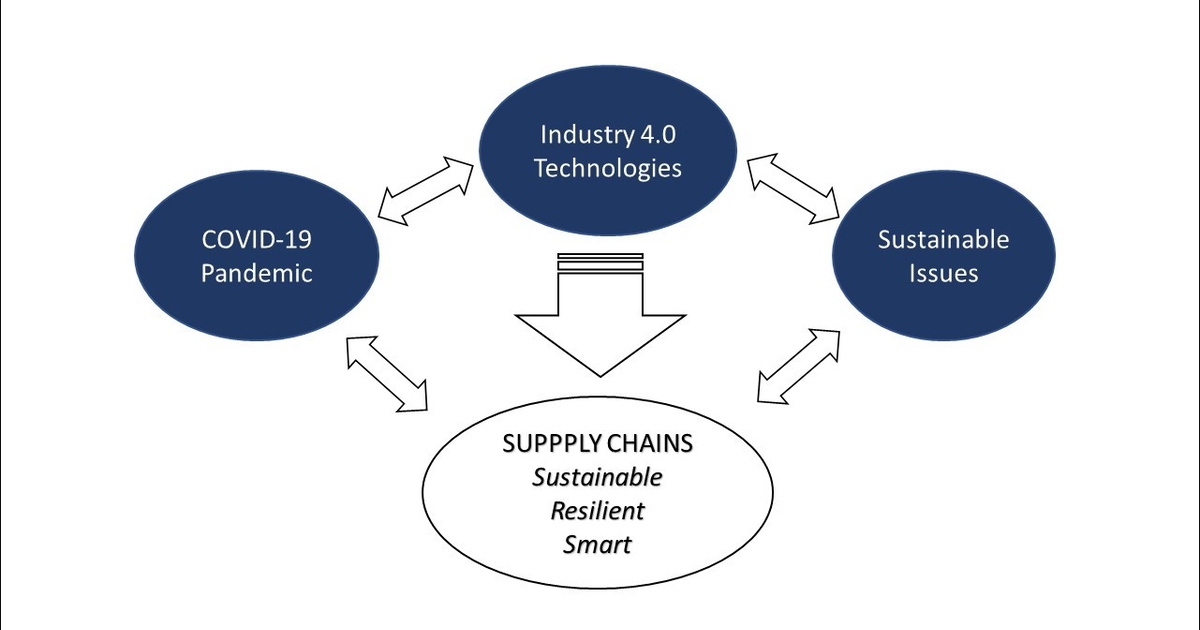
The current World’s context has challenged supply chains, especially with regard the resilience and sustainability aspects. The COVID-19 pandemic brought unprecedented issues to supply chains in terms of keeping their continuity on delivering products and services. Concurrently, the World is facing many never seen climate issues, which has fostered several discussions on how supply chains can produce and delivery products and services in a more sustainable way. At the same time that pandemic and climate issues have been arisen in the world, the fourth industrial revolution (Industry 4.0) brings many opportunities for supply chains by the adoption of disruptive technologies. This includes data, information and knowledge technologies, which are integrated with physical technologies allowing to generate more efficient, integrated, transparent and smarter supply chain’s processes. Moreover, discussions in how supply chains can act for a more sustainable and smart societies (Society 5.0) are also in the arena. Therefore, this special issue aims to answer a key question which is how the application of disruptive technologies can contribute for a more sustainable and resilient supply chains. Following this purpose, below are the potential topics for this special issue but not limited to:
- Big Data Analytics in Supply Chains
- Internet of Things in Supply Chains
- Artificial Intelligence and Machine Learning in Supply Chains
- Blockchain Technology in Supply Chains
- Cloud Technologies in Supply Chains
- Digital Twins in Supply Chains
- Robotics and Autonomous Vehicles in Supply Chains
- Cobots and Multi-Agent Systems in Supply Chains
- Additive Manufacturing in Supply Chains
- Augmented and Virtual Reality in Supply Chains
- Interoperability of Technologies in Supply Chains
Papers must cover the application of the afore listed technologies with a clear evidence of impacts on the resilience, sustainability and smart aspects of supply chains.
Authors must strictly follow the guidelines of the Applied Sciences Journal.
Prof. Dr. Guilherme F. Frederico
Dr. Anil Kumar
Prof. Dr. Mohamed Mahjoub Dhiaf
Guest Editors
Manuscript Submission Information
Manuscripts should be submitted online at www.mdpi.com by registering and logging in to this website. Once you are registered, click here to go to the submission form. Manuscripts can be submitted until the deadline. All submissions that pass pre-check are peer-reviewed. Accepted papers will be published continuously in the journal (as soon as accepted) and will be listed together on the special issue website. Research articles, review articles as well as short communications are invited. For planned papers, a title and short abstract (about 250 words) can be sent to the Editorial Office for assessment.
Submitted manuscripts should not have been published previously, nor be under consideration for publication elsewhere (except conference proceedings papers). All manuscripts are thoroughly refereed through a single-blind peer-review process. A guide for authors and other relevant information for submission of manuscripts is available on the Instructions for Authors page. Applied Sciences is an international peer-reviewed open access semimonthly journal published by MDPI.
Please visit the Instructions for Authors page before submitting a manuscript. The Article Processing Charge (APC) for publication in this open access journal is 2400 CHF (Swiss Francs). Submitted papers should be well formatted and use good English. Authors may use MDPI's English editing service prior to publication or during author revisions.
Benefits of Publishing in a Special Issue
- Ease of navigation: Grouping papers by topic helps scholars navigate broad scope journals more efficiently.
- Greater discoverability: Special Issues support the reach and impact of scientific research. Articles in Special Issues are more discoverable and cited more frequently.
- Expansion of research network: Special Issues facilitate connections among authors, fostering scientific collaborations.
- External promotion: Articles in Special Issues are often promoted through the journal's social media, increasing their visibility.
- e-Book format: Special Issues with more than 10 articles can be published as dedicated e-books, ensuring wide and rapid dissemination.
Published Papers
Get Alerted
Add your email address to receive forthcoming issues of this journal.


