



Robotic Weeding
A special issue of Agronomy (ISSN 2073-4395). This special issue belongs to the section "Precision and Digital Agriculture".
Deadline for manuscript submissions: closed (20 June 2022) | Viewed by 29865
Editor

Interests: integrated weed management; precision farming in weed management; weed biology; weed diversity; herbicide resistance
Special Issues, Collections and Topics in MDPI journals
Special Issue Information
Dear Colleagues,
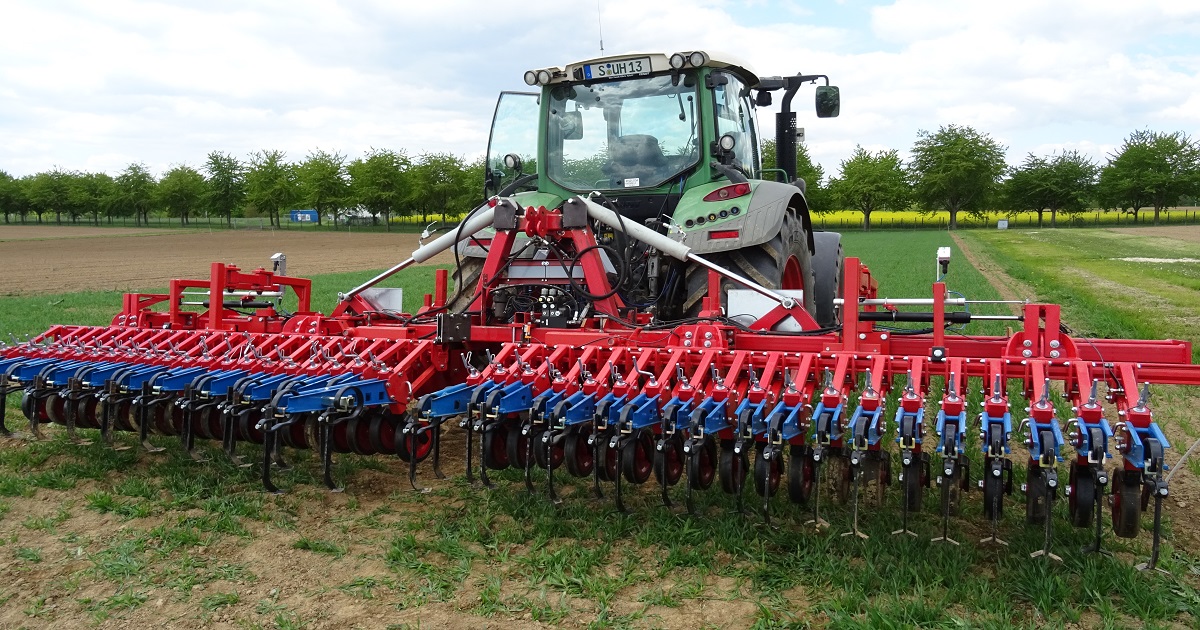
Robotic weeding is a new approach of site-specific weed management. It is mostly targeted at single weeds instead of larger patches of weeds. Similar to site-specific weed control, it uses modern sensor and information technologies to assess and classify crops and weed species in agricultural fields. Those sensors can be cameras, spectrometers, very precise positioning systems, and other innovative tools to determine the position of weeds. Robotic weeding includes offline and online applications for weed control. Data processing is often performed using Artificial Intelligence. Mostly physical and chemical control methods of weed control are applied with robotic weeding. Robots usually have a higher degree of automation than previous applications of site-specific weed control. However, robots do not only imply completely autonomous systems. They can also be implemented on vehicles that are driven by humans.
We invite authors to submit manuscripts on the technical development and practical performance (weed control, selectivity, etc.) of robotic weeding. However, manuscripts on the environmental and socioeconomic impact of robotic weeding systems on farming will also be appreciated. If results of greenhouse and field studies are presented in the manuscript, we expect that those experiments are repeated over time and/or in different locations. Since a lot of progress has been made in robotic weeding over the last five years and several commercial systems of robotic weeding have been introduced, reviews summarizing the progress and comparing the benefits and limitations of those systems are also welcome in the Special Issue.
Prof. Dr. Roland Gerhards
Guest Editor
Manuscript Submission Information
Manuscripts should be submitted online at www.mdpi.com by registering and logging in to this website. Once you are registered, click here to go to the submission form. Manuscripts can be submitted until the deadline. All submissions that pass pre-check are peer-reviewed. Accepted papers will be published continuously in the journal (as soon as accepted) and will be listed together on the special issue website. Research articles, review articles as well as short communications are invited. For planned papers, a title and short abstract (about 250 words) can be sent to the Editorial Office for assessment.
Submitted manuscripts should not have been published previously, nor be under consideration for publication elsewhere (except conference proceedings papers). All manuscripts are thoroughly refereed through a single-anonymized peer-review process. A guide for authors and other relevant information for submission of manuscripts is available on the Instructions for Authors page. Agronomy is an international peer-reviewed open access semimonthly journal published by MDPI.
Please visit the Instructions for Authors page before submitting a manuscript. The Article Processing Charge (APC) for publication in this open access journal is 2600 CHF (Swiss Francs). Submitted papers should be well formatted and use good English. Authors may use MDPI's English editing service prior to publication or during author revisions.
Keywords
- Artificial Intelligence
- weed classification
- spot spraying
- sensor-controlled hoeing and harrowing
- physical weed control
- sensor technologies
Benefits of Publishing in a Special Issue
- Ease of navigation: Grouping papers by topic helps scholars navigate broad scope journals more efficiently.
- Greater discoverability: Special Issues support the reach and impact of scientific research. Articles in Special Issues are more discoverable and cited more frequently.
- Expansion of research network: Special Issues facilitate connections among authors, fostering scientific collaborations.
- External promotion: Articles in Special Issues are often promoted through the journal's social media, increasing their visibility.
- Reprint: MDPI Books provides the opportunity to republish successful Special Issues in book format, both online and in print.
Further information on MDPI's Special Issue policies can be found here.
