


Abstract
Chronic lower-extremity wounds represent a significant and growing challenge in podiatric practice, particularly among patients with advanced vascular disease, diabetes, malignancy, and medical frailty. Despite substantial advances in wound care technologies and limb preservation strategies, a considerable proportion of wounds remain biologically nonhealable or clinically incompatible with aggressive curative treatment. In these contexts, the traditional paradigm of wound closure as the primary outcome becomes insufficient and may contribute to unnecessary treatment burden and patient suffering. This paper reframes palliative wound care as an essential component of foot and ankle practice, emphasizing symptom management, patient-centered goals, and quality of life. Chronic wounds are conceptualized as multidimensional conditions that extend beyond tissue loss to include pain, odor, exudate, impaired mobility, social isolation, and loss of independence. For many patients, these symptoms define the lived experience of disease more than wound size or appearance. To support clinical decision-making, two complementary frameworks are introduced: the CORE Framework for Palliative Wound Care (Categorize, Orient, Relieve, Enable) and the Symptom Quadrant of Palliative Wound Care (pain, odor, exudate, infection). Together, these models provide structured, practical approaches for aligning treatment with biologic reality and patient-defined priorities. Palliative wound care is not the absence of treatment, but a deliberate and goal-concordant approach to reducing suffering and preserving dignity. In patients with nonhealable wounds, success is not always defined by closure, but by the ability to improve comfort, maintain function, and enhance quality of life.
Keywords:
palliative wound care; chronic wounds; limb preservation; diabetic foot ulcers; symptom burden; quality of life; podiatry; comfort-focused care; wound healability; patient-centered care; pain management; odor control; exudate management; infection management; clinical decision-making; ethics; social isolation; goals of care; CORE Framework for Palliative Wound Care; Symptom Quadrant of Palliative Wound Care 1. Introduction
Modern wound care has achieved remarkable advances in biologics, offloading strategies, revascularization, infection management, reconstructive surgery, and multidisciplinary limb-preservation programs. These developments have significantly improved healing outcomes for many patients with lower-extremity wounds. However, despite these advances, a substantial proportion of chronic wounds remain biologically nonhealable or clinically incompatible with aggressive curative treatment goals. Chronic wounds affect an estimated 6.5 to 6.7 million individuals in the United States, with prevalence expected to rise alongside aging populations, diabetes mellitus, peripheral arterial disease (PAD), and increasing medical frailty [1,2].
Within podiatric practice, clinicians frequently encounter patients with advanced systemic disease states, including severe PAD, diabetes with neuropathy and microvascular compromise, end-stage renal disease, advanced malignancy, and progressive functional decline. These populations are particularly vulnerable to the development of chronic lower-extremity wounds and demonstrate disproportionately poor healing outcomes [3,4]. In many cases, wounds persist despite technically appropriate care, reflecting underlying biological limitations rather than deficiencies in treatment.
Despite these realities, the dominant culture within wound care has historically emphasized closure as the primary marker of success. This paradigm is reinforced by clinical training, quality metrics, reimbursement structures, and procedural incentives that prioritize measurable wound reduction. While appropriate in many contexts, this approach may inadvertently frame nonclosure as therapeutic failure, even when healing is biologically improbable or misaligned with patient-centered goals.
As a result, patients with nonhealable wounds may undergo repeated cycles of debridement, painful dressing changes, prolonged antibiotic exposure, frequent clinical encounters, hospital admissions, and surgical interventions with diminishing likelihood of meaningful benefit. In such cases, the burden of treatment itself may become a significant contributor to morbidity, compounding physical discomfort with emotional distress, fatigue, and loss of autonomy.
Emerging evidence demonstrates that wound healing is influenced not only by biological factors such as perfusion, infection, and tissue viability, but also by behavioral and psychosocial determinants. Social isolation, in particular, has been shown to alter inflammatory signaling, immune response, neuroendocrine function, and pain perception, while also impairing adherence to medical treatment and follow-up [5,6]. These effects are especially relevant in podiatric populations, which disproportionately include older adults, individuals with chronic disease, rural residents, and socially vulnerable groups.
Furthermore, chronic wounds produce multidimensional suffering that extends beyond the physical wound itself. Pain, odor, exudate, impaired mobility, sleep disruption, social withdrawal, caregiver burden, and loss of independence frequently define the lived experience of patients more than wound size or appearance [7,8,9,10]. For many individuals, the burden of these symptoms has a greater impact on quality of life than wound closure itself, underscoring the importance of evaluating outcomes beyond epithelialization alone.
Palliative wound care seeks to address this gap by reframing the purpose of treatment in patients for whom healing is unlikely or inconsistent with patient priorities. Importantly, palliative wound care should not be interpreted as passive management, therapeutic abandonment, or withdrawal of care. Rather, it represents an active, deliberate, and goal-concordant approach centered on symptom mitigation, preservation of dignity, and alignment with patient-defined outcomes [11].
Despite its clinical relevance, palliative wound care remains underdeveloped within podiatric literature and training. Compared to other disciplines, there is limited structured guidance for when and how to transition from healing-focused to comfort-focused care in patients with lower-extremity wounds. This gap contributes to variability in practice patterns and may result in care that is misaligned with patient needs and values.
This paper focuses specifically on patients with nonhealable or maintenance wounds, in whom traditional healing paradigms are either biologically unrealistic or inconsistent with patient-centered goals. The purpose of this paper is to reframe palliative wound care within foot and ankle medicine as an essential extension of limb-preservation practice rather than a departure from it. In this context, palliative wound care refers to symptom-focused management of wounds that are unlikely to heal, and is not limited to end-of-life care. Additionally, we introduce two conceptual frameworks to support clinical decision-making in this setting: the CORE Framework for Palliative Wound Care and the Symptom Quadrant of Palliative Wound Care. Together, these models provide structured, clinically actionable strategies for aligning care with biologic reality and patient-centered goals while maintaining compassionate, evidence-informed practice.
This work argues that closure is not the only meaningful outcome in wound care. For many patients, the relief of suffering is the most important and most attainable therapeutic objective.
Importantly, patient-centered care is not unique to palliative wound management and should guide treatment across the entire spectrum of wound healability. Even when a wound is considered healable, treatment decisions should incorporate the patient’s goals, preferences, functional priorities, tolerance for treatment burden, and desired quality of life. Palliative wound care therefore should not be viewed as a separate philosophy of care, but rather as one application of patient-centered wound management in circumstances where wound closure is biologically improbable or no longer represents the patient’s primary goal. The distinction lies not in whether care is patient-centered, but in how patient-defined priorities are translated into therapeutic goals based on wound healability and clinical context.
2. Healing Is Not Always the Goal
A fundamental decision in wound care is determining whether a wound is realistically capable of healing. This determination serves as the foundation for all subsequent clinical decision-making, yet it is often underemphasized in routine practice. Contemporary wound management frameworks commonly categorize wounds into three broad groups: healable, maintenance, and nonhealable wounds, each reflecting distinct biologic and clinical trajectories [4,12,13]. Published estimates from the Wound Bed Preparation framework suggest that approximately two-thirds of wounds encountered in the community are healable, approximately one-quarter are maintenance wounds, and roughly 5% to 10% are nonhealable. These estimates should be interpreted as broad clinical proportions rather than population-level prevalence figures, as the distribution varies according to wound etiology, patient population, care setting, and available resources [13].
Healable wounds possess adequate perfusion and a reversible underlying etiology, allowing for progression through the expected phases of healing when appropriately managed. Maintenance wounds demonstrate theoretical healing potential but are limited by systemic illness, behavioral factors, resource constraints, or social determinants that impair consistent adherence to treatment. Nonhealable wounds occur in the context of irreversible ischemia, advanced malignancy, or severe systemic decline, where tissue repair is biologically improbable regardless of intervention intensity [4,12,13]. Recognizing these constraints is essential; even the most advanced wound care cannot overcome irreversible barriers to healing, and failure to acknowledge when a wound is nonhealable may expose patients to burdensome interventions without meaningful clinical benefit. In many cases, these limitations reflect not a failure of treatment, but a failure of expectation.
Failure to accurately identify nonhealable wounds can result in a pattern of therapeutic escalation without proportional benefit. Patients may undergo repeated cycles of debridement, complex dressing regimens, prolonged antibiotic exposure, surgical intervention, and hospitalization, often accompanied by significant procedural pain and cumulative treatment burden. In such cases, the continuation of aggressive wound-directed therapy may paradoxically worsen quality of life, contributing to fatigue, distress, and loss of autonomy without altering the underlying disease trajectory [12,13].
Importantly, the inability to heal is not always a reflection of inadequate care, but rather of underlying physiologic limitations. Factors such as impaired perfusion, microvascular dysfunction, chronic inflammation, and systemic disease burden play a central role in determining healing potential [4]. Recognition of these constraints is essential to avoiding unrealistic treatment goals and preventing iatrogenic harm through unnecessary intervention.
The transition from a healing-focused approach to a comfort-focused strategy represents a critical inflection point in wound care. This therapeutic pivot should not be interpreted as surrender or abandonment, but rather as a recalibration of clinical priorities based on biologic reality, prognosis, and patient-defined goals. In this context, success is no longer defined solely by wound closure, but by the reduction in suffering, preservation of function, and maintenance of dignity.
For clinicians, this shift requires both technical judgment and psychological adaptability. Training environments often emphasize escalation, intervention, and measurable outcomes; however, high-quality care in palliative wound management frequently requires restraint, nuance, and a willingness to prioritize patient experience over procedural action. The most skilled decision, in many cases, is not determining what more can be done, but recognizing when the therapeutic goal should shift from wound closure to comfort, function, and quality of life.
3. The Hidden Burden of Chronic Wounds
Chronic wounds produce multidimensional suffering that extends far beyond tissue loss alone. While wound size, depth, and appearance are traditionally used to guide clinical decision-making, they often fail to capture the full extent of the patient’s experience. Individuals with chronic wounds frequently endure persistent pain, malodor, exudate leakage, impaired sleep, reduced mobility, social isolation, caregiver burden, and loss of independence [7,8,10]. These overlapping domains contribute to a profound reduction in quality of life, which has been shown to rival or exceed that observed in other major chronic diseases [7].
Pain remains one of the most common and distressing symptoms, often persistent and multifactorial, encompassing nociceptive, neuropathic, ischemic, and procedural components [10]. At the same time, other symptoms, particularly odor and exudate, can become equally or more disruptive in the patient’s daily life. Notably, these symptoms frequently interact, compounding overall burden and amplifying the patient’s sense of distress.
Malodor is among the most psychologically devastating aspects of chronic wounds. Generated largely by anaerobic bacterial metabolism and tissue necrosis, odor carries significant social and emotional consequences. Patients commonly report embarrassment, avoidance of social interaction, and progressive withdrawal from family and community environments [8]. In advanced or malignant wounds, malodor may become the defining feature of the illness experience, contributing to profound loss of dignity and identity.
Exudate, similarly, represents more than a physiologic byproduct of inflammation. Excessive wound drainage contributes to maceration of surrounding skin, increased pain and irritation, dressing failure, and disruption of sleep and daily activities [9]. Persistent leakage can affect clothing, bedding, and mobility, further reinforcing social isolation and functional decline. Importantly, inadequate exudate control can lead to progressive wound enlargement through periwound breakdown, creating a cycle of deterioration despite ongoing intervention [9].
Equally significant is the recognition that objective wound characteristics often correlate poorly with patient suffering. Small ischemic ulcers may produce severe, unremitting pain due to compromised perfusion, while relatively modest levels of exudate can dominate daily function through repeated dressing changes and constant leakage. In this context, traditional metrics of wound progress, such as size reduction or epithelialization, may fail to reflect the outcomes that matter most to patients.
These observations underscore a critical shift in perspective: in many cases, the primary therapeutic target in chronic wound care is not the wound itself, but the symptom burden it produces. By recognizing pain, odor, exudate, and functional impairment as central drivers of patient experience, clinicians can begin to align treatment strategies with outcomes that meaningfully improve quality of life. Chronic wounds are not purely physical entities. The wound the patient lives with is not always the one we see, as these conditions affect emotional well-being, identity, and social participation.
4. The Therapeutic Pivot
A central challenge in wound care lies not in determining how to treat a wound, but in recognizing when to fundamentally change the goals of treatment. This transition, referred to here as the therapeutic pivot, represents a shift from healing-focused intervention toward comfort-focused, patient-centered care. While often conceptually straightforward, this transition is clinically and emotionally complex, requiring careful integration of biologic reality, prognosis, and patient values.
Certain clinical scenarios should prompt reconsideration of aggressive wound-directed therapy. These include progressive ischemia without viable revascularization options, recurrent or refractory infection despite appropriate treatment, advanced malignancy, severe frailty, nonambulatory status, limited life expectancy, or explicit patient preference against escalation [3,4]. In such settings, continued pursuit of wound closure may be inconsistent with both the underlying pathophysiology and the patient’s priorities.
Despite these signals, clinicians are frequently trained, and incentivized, to escalate care. This reflex toward intervention is embedded within procedural training models, performance metrics, and broader health system structures that equate activity with effectiveness. However, escalating treatment in the absence of realistic healing potential may expose patients to repeated procedural pain, increased healthcare utilization, and cumulative treatment burden without improving meaningful outcomes [4,12].
The therapeutic pivot therefore requires a shift in clinical reasoning. Rather than asking, “What additional interventions are available?”, the guiding question becomes, “Will this intervention meaningfully improve the patient’s experience?” This reframing aligns with principles of proportionality in palliative medicine, in which treatments are evaluated based on their ability to provide benefit relative to burden [14].
Importantly, the decision not to escalate care is not synonymous with inaction. Instead, it represents a deliberate and purposeful redirection of treatment priorities. Interventions may be simplified rather than intensified, focusing on reducing pain, controlling odor, managing exudate, and minimizing disruption to the patient’s daily life. In many cases, avoiding or limiting procedures such as debridement may reduce suffering without compromising meaningful outcomes.
This transition requires careful communication with patients and caregivers. Clear, compassionate discussions regarding prognosis and expected outcomes are essential to establishing shared understanding and aligning treatment goals. Patients often prioritize comfort, independence, and remaining in their home environment over procedural interventions or uncertain attempts at limb salvage [14].
For clinicians, the therapeutic pivot represents a shift not only in clinical strategy but also in professional identity. The traditional emphasis on curing disease must expand to include the equally important role of relieving suffering. Recognizing when to pivot, and doing so intentionally, reflects clinical maturity and judgment rather than therapeutic failure.
High-quality wound care is not defined solely by the ability to close wounds, but by the ability to align treatment with what matters most to the patient. In many cases, this alignment requires restraint, thoughtful decision-making, and the willingness to redefine success. The most skilled decision may be knowing when not to intervene, reflecting maturity in clinical judgment rather than therapeutic failure.
5. Pain as the Primary Outcome
Pain is one of the most prevalent and distressing symptoms experienced by patients with chronic wounds and often serves as the dominant determinant of quality of life. Studies suggest that a substantial proportion of individuals with chronic wounds experience persistent pain, with many reporting moderate-to-severe intensity that interferes with sleep, mobility, and daily function [10]. Pain in this population is frequently underrecognized and undertreated, particularly when clinical attention remains disproportionately focused on wound appearance rather than patient experience.
Chronic wound pain is inherently multifactorial, encompassing nociceptive, neuropathic, ischemic, inflammatory, and procedural components. Ischemic pain, for example, may be severe and refractory due to compromised perfusion and tissue hypoxia, while neuropathic pain is common in diabetic populations with peripheral neuropathy [3,4,10]. Additionally, inflammatory mediators and local tissue injury contribute to ongoing nociceptive signaling, further complicating pain management.
Procedural pain represents a particularly important and often preventable contributor to overall suffering. Dressing changes, wound cleansing, and debridement are frequently performed on a recurring basis and may generate significant discomfort, particularly when conducted without appropriate analgesia or attention to atraumatic technique [10]. Small modifications in care delivery, including warming irrigation solutions, using nonadherent dressings, minimizing unnecessary manipulation, and premedicating prior to procedures, can result in substantial reductions in pain burden and improved patient tolerance.
Importantly, effective pain management in palliative wound care extends beyond escalation of systemic analgesics. While systemic therapies, including opioid and non-opioid agents, play an important role, reliance on dose escalation alone may be insufficient and can introduce unintended adverse effects such as sedation, constipation, and cognitive impairment [15]. A multimodal and targeted approach is therefore essential.
Topical therapies, including lidocaine preparations and topical opioids (e.g., morphine gel), have demonstrated benefit in managing localized wound pain while minimizing systemic exposure [11]. Adjunctive agents targeting neuropathic mechanisms, such as gabapentinoids, may provide additional relief in appropriate patients [15]. Importantly, matching the analgesic approach to the underlying pain mechanism can improve outcomes while reducing unnecessary medication burden.
Within a palliative framework, pain should be understood not simply as a symptom to be reduced, but as a primary clinical outcome guiding treatment decisions. Interventions that fail to improve or that exacerbate pain, regardless of their theoretical benefit to wound healing, should be carefully reconsidered. This principle reinforces a fundamental shift in wound care philosophy: the success of treatment is measured less by changes in wound dimensions and more by the patient’s lived experience.
When pain remains uncontrolled, other therapeutic goals become secondary. Effective palliative wound care therefore requires prioritizing analgesia, minimizing iatrogenic harm, and recognizing that relief of pain is often the most meaningful and achievable outcome. If wound care causes pain without improving quality of life, it ceases to be therapeutic. From the patient perspective, uncontrolled wound pain can profoundly affect daily function and quality of life, making effective pain management a central component of patient-centered wound care.
6. Odor, Exudate, and the Loss of Dignity
Among the symptoms associated with chronic wounds, few are as psychologically and socially impactful as malodor and exudate. While often classified as secondary clinical concerns, these factors frequently become the dominant drivers of patient suffering, influencing daily function, interpersonal relationships, and overall quality of life [7,8,9]. In many cases, the burden of these symptoms exceeds that of the wound itself.
Malodor arises primarily from anaerobic bacterial metabolism, necrotic tissue breakdown, and high bioburden within hypoxic wound environments [11]. The production of volatile compounds contributes to the characteristic odor associated with chronic and malignant wounds. However, the clinical significance of odor extends far beyond its biologic origin. Studies have demonstrated that malodor is one of the most distressing symptoms reported by patients with advanced wounds and is strongly associated with social withdrawal, embarrassment, and loss of self-esteem [8].
Patients frequently describe avoiding social interactions, family gatherings, and public spaces due to fear of being perceived as unclean or stigmatized. Over time, this can lead to progressive isolation, diminished interpersonal relationships, and a profound sense of disconnection. These psychosocial effects are not incidental but represent a critical component of the disease experience. As highlighted in prior work examining the Podiatric Connection Model, social isolation itself functions as a clinically meaningful comorbidity, influencing both physiologic healing pathways and behavioral adherence [5,6].
Exudate represents a parallel but equally disruptive challenge. While exudate is a natural component of wound healing, excessive or poorly controlled drainage can contribute to a cascade of complications, including periwound maceration, tissue breakdown, increased pain, and risk of infection. Accordingly, protection of the periwound should be considered an integral component of symptom-focused wound management, particularly when wound closure is not the primary therapeutic objective [9]. Persistent leakage may compromise clothing, bedding, and mobility, leading to sleep disruption and constant vigilance in managing dressings.
Importantly, exudate also carries a significant psychosocial burden. Patients often report embarrassment related to visible drainage, odor, and the need for frequent dressing changes, all of which can reinforce withdrawal from daily activities. In severe cases, the practical demands of managing exudate may limit a patient’s ability to leave the home, further contributing to functional decline and caregiver dependence.
A critical clinical insight is that objective measures of wound severity often correlate poorly with the impact of these symptoms. Relatively small wounds may produce disproportionate distress due to pain or odor, while moderate exudate can dominate the patient’s daily experience through its constant and intrusive nature. This disconnect highlights the limitations of traditional wound assessment metrics when applied in isolation.
Within a palliative framework, the management of odor and exudate should be understood not as cosmetic or secondary concerns, but as central therapeutic priorities. Interventions such as topical metronidazole, charcoal-based dressings, absorptive materials, moisture-balancing strategies, and barrier protection can significantly reduce symptom burden when applied thoughtfully [8,9]. Importantly, these strategies should be tailored to the patient’s environment, resources, and goals, with an emphasis on simplicity and consistency.
The control of odor and exudate serves a purpose that extends beyond symptom reduction; it contributes to the preservation of dignity, restoration of social participation, and improvement of overall quality of life. In this sense, addressing these symptoms is not merely a clinical task, but a fundamental component of compassionate, patient-centered care. For many patients, odor is the moment their world becomes smaller.
7. The CORE Framework for Palliative Wound Care
To operationalize the transition from healing-focused to comfort-focused management, a structured approach is necessary. While existing wound care frameworks emphasize tissue debridement, infection control, and moisture balance, there remains limited guidance for aligning treatment strategies with nonhealable wound states and patient-centered goals [12,13].
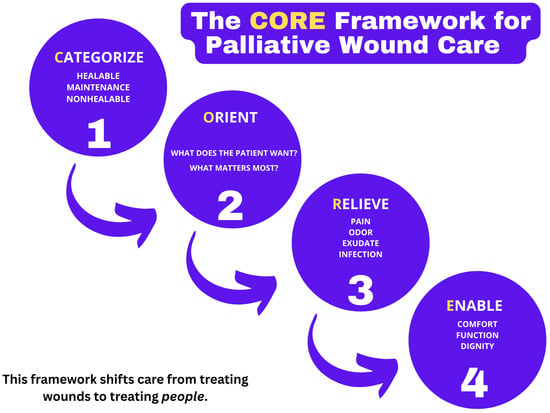
To address this gap, we propose the CORE Framework for Palliative Wound Care, a conceptual clinical model designed to support decision-making in patients for whom wound closure is unlikely or inappropriate. To our knowledge, this represents one of the first structured frameworks specifically designed to guide palliative wound care decision-making within podiatric practice. The CORE framework provides a practical, reproducible approach that integrates biologic assessment with symptom management and patient priorities (Figure 1).
Figure 1.
The CORE Framework for Palliative Wound Care. A conceptual model illustrating the four-step CORE Framework: Categorize (wound healability), Orient (patient goals), Relieve (symptom burden including pain, odor, exudate, and infection), and Enable (comfort, function, and dignity). The framework is iterative and emphasizes alignment of treatment with patient-centered outcomes rather than wound closure alone.
7.1. Categorize
The first step involves determining wound healability. Wounds are categorized as healable, maintenance, or nonhealable based on perfusion, underlying pathology, systemic health, and modifiable barriers [4,12,13]. Accurate categorization establishes the foundation for realistic goal setting and prevents inappropriate escalation of care.
7.2. Orient
After the wound has been categorized as healable, maintenance, or nonhealable, care is oriented toward the patient’s goals, priorities, and acceptable treatment burden. These goals frequently differ from traditional clinician-driven objectives and may include pain relief, preservation of mobility, avoidance of hospitalization, remaining at home, or minimizing treatment burden [14]. Clarifying these priorities ensures that subsequent interventions align with outcomes that are meaningful to the patient.
7.3. Relieve
The third component focuses on the targeted management of symptom burden. Pain, odor, exudate, and infection represent the primary drivers of suffering in chronic wounds and form the basis for intervention within a palliative framework [3,8,9,10]. Rather than prioritizing wound appearance alone, this step emphasizes symptom-based outcomes as the central therapeutic objective. In this model, symptom control is not a secondary goal, but the primary therapeutic objective.
7.4. Enable
The final component centers on preserving and enhancing patient dignity, function, and autonomy. This includes simplifying care regimens, supporting caregiver involvement, reducing treatment-related disruption, and facilitating social engagement when possible. The goal is not merely symptom reduction, but sustaining meaningful participation in daily life.
Importantly, the CORE framework should be understood as a dynamic and iterative process, rather than a rigid algorithm. Changes in patient condition, symptom burden, and goals of care require ongoing reassessment and adjustment. This adaptability allows the framework to be applied across diverse clinical scenarios, including ischemic wounds, malignant wounds, frailty-associated ulcers, and end-of-life care.
The CORE framework shifts the emphasis of wound care from procedural intervention to clinical judgment and goal alignment. Rather than reflexively escalating treatment, clinicians are guided to evaluate whether each intervention meaningfully improves the patient’s experience.
In this context, success is redefined. While wound closure remains an important outcome when achievable, it is no longer the sole determinant of effective care. For many patients, particularly those with limited healing potential, success is better measured by the reduction in suffering and preservation of dignity.
As illustrated in Figure 1, this framework reorients care from treating wounds in isolation to treating the patient as a whole, integrating biologic, symptomatic, and psychosocial considerations into a unified clinical approach. The plan must fit the patient, not the wound.
8. The Symptom Quadrant of Palliative Wound Care
While wound care has traditionally emphasized structural characteristics such as size, depth, and tissue composition, these parameters often fail to reflect the aspects of disease that most directly impact patient well-being. As discussed in prior sections, the burden of chronic wounds is driven less by anatomic features and more by the symptoms patients experience in daily life [7,8,9,10]. While these symptom domains have been discussed individually, they are best understood in practice as interacting and interdependent components of overall patient burden.
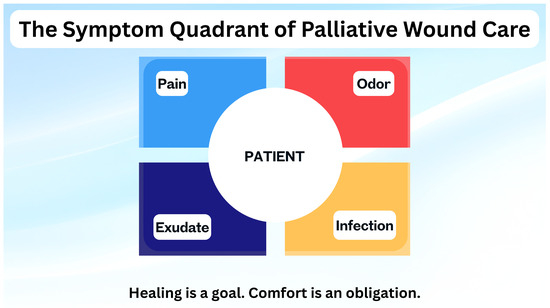
To better conceptualize and prioritize these factors, we propose the Symptom Quadrant of Palliative Wound Care, a simplified clinical framework that organizes the primary drivers of suffering into four domains: pain, odor, exudate, and infection (Figure 2).
Figure 2.
A conceptual model illustrating four primary domains of symptom burden in palliative wound care: pain, odor, exudate, and infection. The patient is positioned centrally, emphasizing that interventions should focus on improving quality of life rather than wound appearance. The framework highlights the interdependence of symptom domains and supports proportional, individualized treatment decision-making.
These domains represent the most common and clinically significant sources of distress in patients with chronic and nonhealable wounds. Pain frequently dominates the patient experience, affecting mobility, sleep, and overall quality of life [10]. Odor, as previously described, contributes to social withdrawal and loss of dignity, particularly in malignant and heavily colonized wounds [8]. Exudate can disrupt daily function through leakage, maceration, and the need for frequent dressing changes [9]. Infection, when clinically significant, may further exacerbate pain, drainage, and systemic decline [3].
Importantly, these symptom domains are interdependent rather than isolated. Interventions targeting one domain may influence others, sometimes in unintended ways. For example, debridement may reduce bacterial burden and odor but increase procedural pain [16]. Occlusive dressings may decrease pain while allowing accumulation of exudate. Frequent dressing changes may reduce odor and drainage but increase procedural discomfort. This dynamic interplay highlights the limitations of rigid treatment algorithms and underscores the need for individualized, proportional care.
The Symptom Quadrant framework therefore emphasizes a central principle: every intervention should be evaluated based on its impact on symptom burden rather than its effect on wound appearance alone. This approach aligns closely with palliative care principles, prioritizing the patient’s lived experience over surrogate clinical endpoints [11].
As illustrated in Figure 2, the patient remains positioned at the center of the model, emphasizing that these symptom domains are not independent targets but interconnected aspects of a single clinical objective, improving quality of life. The framework encourages clinicians to continuously reassess whether treatments are achieving meaningful symptom relief without introducing disproportionate burden. In patients with nonhealable wounds, the goal is not to control the wound, but to control the suffering it produces.
The Symptom Quadrant also complements the CORE framework by providing a practical structure for the “Relieve” component. While CORE defines the sequence of decision-making, the Symptom Quadrant identifies the specific domains in which intervention is most likely to improve patient outcomes. Together, these models form a cohesive approach to palliative wound care that integrates biologic assessment, goal alignment, and symptom-focused management.
The Symptom Quadrant reinforces a critical shift in clinical perspective: in patients with nonhealable wounds, the goal is not to normalize the wound, but to minimize the suffering it produces. By directing attention to pain, odor, exudate, and infection, clinicians can prioritize interventions that have the greatest impact on patient comfort, dignity, and daily function.
9. Clinical Application of the CORE Framework and Symptom Quadrant
The following hypothetical scenarios illustrate how the CORE Framework and Symptom Quadrant may be applied in clinical practice.
Consider a patient with a painful ischemic foot wound and severe peripheral arterial disease for whom revascularization is not feasible. Within the CORE Framework, the wound is categorized as nonhealable, and care is oriented toward the patient’s priorities, such as pain control, preservation of mobility, avoidance of hospitalization, and remaining at home. Treatment is then directed toward relieving the dominant sources of suffering while enabling a plan that is practical for the patient and caregivers. The Symptom Quadrant can further guide management by identifying the relative burden of pain, odor, exudate, and infection risk. Rather than pursuing wound closure through increasingly burdensome interventions, treatment success may be defined by improved comfort, preservation of function, reduced symptom burden, and care that remains concordant with the patient’s goals.
A different application may occur in a patient with a neuropathic diabetic plantar ulcer that is biologically capable of healing but persists because occupational, functional, or social circumstances prevent consistent adherence to an optimal offloading regimen. The wound may therefore function clinically as a maintenance wound despite having healing potential. Using CORE, treatment is oriented toward understanding the patient’s functional priorities and identifying a realistic level of treatment burden. The Symptom Quadrant can then identify and prioritize pain, exudate, odor, and infection risk while the clinician works with the patient to develop feasible offloading, local wound care, and surveillance strategies. In this setting, patient-centered care does not abandon wound closure as a goal; rather, it balances healing with function, feasibility, symptom control, and the patient’s ability to participate in the treatment plan.
10. The Ethics of Comfort-Focused Care
Palliative wound care introduces a series of complex ethical considerations that extend beyond technical management and into the domains of professional responsibility, patient autonomy, and the definition of appropriate care. At its core, the transition from healing-focused to comfort-focused treatment challenges longstanding assumptions about what constitutes clinical success.
Modern medical practice frequently emphasizes intervention, escalation, and measurable improvement. Within wound care, this often translates into a primary focus on wound closure as the benchmark of effective treatment. However, for patients with nonhealable wounds or advanced illness, continued pursuit of closure may conflict with the principles of beneficence and nonmaleficence, particularly when interventions increase suffering without a realistic expectation of meaningful benefit [11,12,17].
In this context, clinicians must evaluate not only what can be done, but what should be done. This requires a shift toward proportionality, in which interventions are assessed based on their ability to improve the patient’s experience relative to the burden they impose [11,14]. Treatments that result in procedural pain, repeated clinic visits, hospitalization, or functional decline without clear improvement in quality of life may represent a form of iatrogenic harm, even when technically appropriate. In this way, overtreatment may unintentionally violate the same ethical principles it aims to uphold.
Respect for patient autonomy plays a central role in this decision-making process. Patients may prioritize outcomes such as pain control, maintaining independence, avoiding hospitalization, or remaining in their home environment over attempts at wound closure or limb preservation [14]. These preferences should not be viewed as a rejection of care, but rather as a redefinition of what constitutes meaningful care within the context of serious illness.
Importantly, the clinician’s role shifts in this setting from directing care toward biologic endpoints to facilitating goal-concordant decision-making. Clear, compassionate communication is essential to ensure that patients and caregivers understand prognosis, treatment options, and the potential trade-offs associated with continued intervention [14]. Avoiding these conversations may lead to misaligned expectations, unnecessary escalation, and increased distress for both patients and families.
There is also an ethical responsibility to recognize the broader consequences of overtreatment. Repeated interventions that do not meaningfully improve outcomes may consume healthcare resources, contribute to clinician moral distress, and place unnecessary strain on patients and caregivers. A comfort-focused approach, when appropriately applied, represents high-value care that aligns medical therapy with patient-defined priorities.
Within this framework, choosing not to escalate treatment is not equivalent to withholding care. Rather, it reflects a deliberate and thoughtful clinical decision grounded in the principles of palliative medicine. The goal is not to do less, but to do what is most appropriate. Despite this, systemic factors, including reimbursement models, procedural incentives, and training paradigms, may continue to favor intervention over restraint.
The ethics of palliative wound care require a redefinition of success. For many patients, the preservation of dignity, relief of suffering, and maintenance of meaningful daily function represent outcomes of equal or greater importance than wound closure. Recognizing and respecting these priorities is central to ethical and compassionate practice. Palliative wound care is intentional, not absent care, requiring thoughtful communication in which clarity with compassion builds trust.
11. Limitations
This manuscript presents a conceptual, experience-informed framework for palliative wound care rather than a prospective, outcomes-based study. The proposed CORE Framework and Symptom Quadrant of Palliative Wound Care are intended to provide structured, clinically accessible approaches to decision-making, but they have not yet undergone formal validation in controlled clinical settings. As such, their direct impact on measurable outcomes, including wound healing trajectories, symptom burden reduction, healthcare utilization, and patient-reported quality of life, remains to be determined.
In addition, a significant portion of the recommendations within this paper are derived from extrapolation of existing literature in chronic wound management, palliative care, and symptom control, rather than from wound-specific randomized controlled trials. While this reflects the reality that palliative wound care remains underrepresented in the literature, it also highlights a gap in high-quality evidence directly addressing this patient population.
Another limitation lies in the heterogeneity of patients requiring palliative wound care. Individuals with ischemic ulcers, malignant wounds, diabetic foot complications, frailty-associated ulcers, and end-of-life skin failure represent diverse clinical groups with distinct pathophysiology, prognostic trajectories, and care needs. Although the CORE Framework and Symptom Quadrant are designed to be broadly applicable, their implementation may require modification based on individual patient characteristics and clinical context.
Furthermore, while this manuscript acknowledges the importance of psychosocial factors, including social isolation, caregiver burden, and loss of independence, it does not formally quantify their impact on wound outcomes within this framework. As demonstrated in prior work on the Podiatric Connection Model, these variables represent clinically meaningful determinants of healing, adherence, and patient experience, and their integration into structured wound care models warrants further study.
There is also an inherent limitation in the subjectivity of symptom-focused care. Outcomes such as pain, odor burden, and quality of life are variably perceived and influenced by individual patient expectations, coping mechanisms, and social environments. While this reinforces the importance of patient-centered care, it may complicate standardization and comparative evaluation across populations.
Finally, the implementation of palliative wound care principles may be influenced by systemic factors, including clinician training, institutional culture, reimbursement models, and access to resources. In environments where procedural intervention and wound closure metrics remain prioritized, clinicians may encounter barriers to adopting comfort-focused approaches despite clinical appropriateness.
Future research should prospectively evaluate the CORE Framework and Symptom Quadrant across diverse wound etiologies and care settings. Initial validation could include prospective cohort studies assessing changes in symptom burden and wound-related quality of life using validated patient-reported outcome measures, supplemented by qualitative interviews exploring patient and caregiver experiences, treatment priorities, and perceived treatment burden. Studies should also examine healthcare utilization, including wound-related hospitalizations, emergency department visits, antimicrobial use, procedural burden, and frequency of clinical encounters. Additional investigation should evaluate the reliability of wound-healability categorization and determine whether framework-guided care improves goal concordance, symptom control, quality of life, and healthcare utilization compared with usual wound care. Such studies would help establish the clinical validity, reproducibility, and practical utility of these proposed frameworks. Despite these limitations, the proposed frameworks offer a clinically relevant starting point for integrating palliative principles into routine podiatric wound care.
12. Conclusions
Palliative wound care represents an essential, yet underdeveloped, component of foot and ankle medicine. As the prevalence of chronic disease, vascular compromise, and medical frailty continues to increase, clinicians will encounter a growing population of patients for whom wound healing is biologically improbable or clinically inconsistent with patient-centered goals. In these cases, the traditional paradigm of wound closure as the primary measure of success becomes insufficient. Not all wounds are meant to heal.
This recognition does not represent failure, it represents clinical clarity. The inability to achieve wound closure in certain contexts is not a reflection of inadequate care, but rather of underlying physiologic limitations. What remains within the clinician’s control, however, is the ability to reduce suffering, preserve dignity, and improve the patient’s lived experience. Chronic wounds are not purely physical entities; they are complex conditions that affect pain, mobility, sleep, social participation, identity, and independence. For many patients, these factors, not wound size or appearance, become the defining elements of quality of life. Pain, in particular, frequently serves as the primary outcome from the patient’s perspective. If the wound hurts, little else matters. Similarly, odor and exudate are not minor clinical inconveniences but central contributors to social isolation, embarrassment, and withdrawal. In this context, symptom control is not ancillary to wound care, it is the foundation of it.
The CORE Framework for Palliative Wound Care and the Symptom Quadrant of Palliative Wound Care provide structured approaches for translating this philosophy into practice. Together, these models shift clinical focus from treating wounds in isolation to treating the patient as a whole, emphasizing the importance of categorizing healability, aligning care with patient-defined goals, relieving symptom burden, and enabling comfort, function, and dignity. These frameworks reinforce a critical principle: more intervention does not necessarily result in better care. In many cases, the most meaningful improvements in patient well-being arise not from escalation, but from intentional restraint, avoiding unnecessary debridement, minimizing procedural pain, simplifying care plans, and recognizing when further intervention may contribute more to suffering than to benefit. Together, the CORE Framework and Symptom Quadrant provide a unified model for aligning biologic reality with patient-centered outcomes.
In this context, success is not always defined by improvement, but by stability. Preventing deterioration, maintaining skin integrity, reducing symptom burden, and preserving quality of life may represent the most realistic and meaningful outcomes. This requires a shift in perspective from prioritizing closure to prioritizing comfort, from reflexive intervention to intentional care, and from wound-centered to patient-centered practice. It also requires a shift in communication; clear, honest, and compassionate conversations are essential to ensuring that patients and caregivers understand the goals of care. When these conversations are avoided, clinicians risk providing treatments that are technically appropriate yet misaligned with patient priorities.
Ultimately, high-quality wound care is not defined solely by what we are able to do, but by what we are willing to consider. The most skilled decisions in palliative wound care often involve recognizing when not to escalate, when to simplify, and when to refocus on what matters most. The wounds we do not heal still demand our highest level of clinical attention, judgment, and compassion. Because healing is a goal, but comfort is an obligation. Success is not always healing; sometimes it is preventing decline and preserving dignity.
Funding
This research received no external funding.
Institutional Review Board Statement
Not applicable.
Informed Consent Statement
Not applicable.
Data Availability Statement
No new data were created or analyzed in this study. Data sharing is not applicable to this article.
Acknowledgments
During the writing and preparation of this manuscript, the author used ChatGPT-5.3 (OpenAI, San Francisco, CA, USA) to aid in literature organization, language refinement, and reference verification. The author reviewed and edited the content and takes full responsibility for the accuracy, integrity, and originality of the work.
Conflicts of Interest
The author declares no conflicts of interest. No external funding, commercial sponsorship, or industry support was received for the development of the CORE Framework for Palliative Wound Care or Symptom Quadrant of Palliative Wound Care or the preparation of this article.
References
- Sen, C.K. Human Wounds and Its Burden: An Updated Compendium of Estimates. Adv. Wound Care 2019, 8, 39–48. [Google Scholar] [CrossRef] [Scilit] [PubMed] [PubMed Central]
- Nussbaum, S.R.; Carter, M.J.; Fife, C.E.; DaVanzo, J.; Haught, R.; Nusgart, M.; Cartwright, D. An Economic Evaluation of the Impact, Cost, and Medicare Policy Implications of Chronic Nonhealing Wounds. Value Health 2018, 21, 27–32. [Google Scholar] [CrossRef] [Scilit] [PubMed]
- Armstrong, D.G.; Boulton, A.J.M.; Bus, S.A. Diabetic Foot Ulcers and Their Recurrence. N. Engl. J. Med. 2017, 376, 2367–2375. [Google Scholar] [CrossRef] [Scilit] [PubMed]
- Guo, S.; Dipietro, L.A. Factors affecting wound healing. J. Dent. Res. 2010, 89, 219–229. [Google Scholar] [CrossRef] [Scilit] [PubMed] [PubMed Central]
- Evensen, A.C.; Moore, J.L. Social isolation and limb preservation: The case for the podiatric connection model. J. Am. Podiatr. Med. Assoc. 2026, 116, 31. [Google Scholar] [CrossRef] [Scilit] [PubMed]
- Cacioppo, J.T.; Cacioppo, S. Social Relationships and Health: The Toxic Effects of Perceived Social Isolation. Soc. Personal. Psychol. Compass 2014, 8, 58–72. [Google Scholar] [CrossRef] [Scilit] [PubMed] [PubMed Central]
- Lindholm, C.; Searle, R. Wound management for the 21st century: Combining effectiveness and efficiency. Int. Wound J. 2016, 13, 5–15. [Google Scholar] [CrossRef] [Scilit] [PubMed] [PubMed Central]
- Gethin, G.; Grocott, P.; Probst, S.; Clarke, E. Current practice in the management of wound odour: An international survey. Int. J. Nurs. Stud. 2014, 51, 865–874. [Google Scholar] [CrossRef] [Scilit] [PubMed]
- World Union of Wound Healing Societies (WUWHS). Wound Exudate: Effective Assessment and Management; A Consensus Document; Wounds International: London, UK, 2019. [Google Scholar]
- Briggs, M.; Collinson, M.; Wilson, L.; Rivers, C.; McGinnis, E.; Dealey, C.; Brown, J.; Coleman, S.; Stubbs, N.; Stevenson, R.; et al. The prevalence of pain at pressure areas and pressure ulcers in hospitalised patients. BMC Nurs. 2013, 12, 19. [Google Scholar] [CrossRef] [Scilit] [PubMed] [PubMed Central]
- Woo, K.; Sibbald, G.; Fogh, K.; Glynn, C.; Krasner, D.; Leaper, D.; Osterbrink, J.; Price, P.; Teot, L. Assessment and management of persistent (chronic) and total wound pain. Int. Wound J. 2008, 5, 205–215. [Google Scholar] [CrossRef] [Scilit] [PubMed] [PubMed Central]
- Sibbald, R.G.; Woo, K.; Ayello, E.A. Increased bacterial burden and infection: The story of NERDS and STONES. Adv. Skin Wound Care 2006, 19, 447–461; 461–463. [Google Scholar] [CrossRef] [Scilit] [PubMed]
- Sibbald, R.G.; Elliott, J.A.; Persaud-Jaimangal, R.; Goodman, L.; Armstrong, D.G.; Harley, C.; Coelho, S.; Xi, N.; Evans, R.; Mayer, D.O.; et al. Wound Bed Preparation 2021. Adv. Skin Wound Care 2021, 34, 183–195. [Google Scholar] [CrossRef] [Scilit] [PubMed]
- Bernacki, R.E.; Block, S.D.; American College of Physicians High Value Care Task Force. Communication about serious illness care goals: A review and synthesis of best practices. JAMA Intern. Med. 2014, 174, 1994–2003. [Google Scholar] [CrossRef] [Scilit] [PubMed]
- Scholz, J.; Finnerup, N.B.; Attal, N.; Aziz, Q.; Baron, R.; Bennett, M.I.; Benoliel, R.; Cohen, M.; Cruccu, G.; Davis, K.D.; et al. The IASP classification of chronic pain for ICD-11: Chronic neuropathic pain. Pain 2019, 160, 53–59. [Google Scholar] [CrossRef] [Scilit] [PubMed] [PubMed Central]
- Bowler, P.G.; Duerden, B.I.; Armstrong, D.G. Wound microbiology and associated approaches to wound management. Clin. Microbiol. Rev. 2001, 14, 244–269. [Google Scholar] [CrossRef] [Scilit] [PubMed] [PubMed Central]
- Beauchamp, T.; Childress, J. Principles of Biomedical Ethics: Marking Its Fortieth Anniversary. Am. J. Bioeth. 2019, 19, 9–12. [Google Scholar] [CrossRef] [Scilit] [PubMed]
Disclaimer/Publisher’s Note: The statements, opinions and data contained in all publications are solely those of the individual author(s) and contributor(s) and not of MDPI and/or the editor(s). MDPI and/or the editor(s) disclaim responsibility for any injury to people or property resulting from any ideas, methods, instructions or products referred to in the content. |
© 2026 by the author. Published by MDPI on behalf of the American Podiatric Medical Association. Licensee MDPI, Basel, Switzerland. This article is an open access article distributed under the terms and conditions of the Creative Commons Attribution (CC BY) license.